Data Analysis Fundamentals/Eduphoria Tutorial

Dr. Michael G. Richards
Director, Data & Accountability
District Testing Coordinator
What is a Relational Database?
• The invention of this database system has standardized the
way that data is stored and processed.
• A relational database consists of a collection of tables that
store particular sets of data.
• The concept of a relational database derives from the
principles of relational algebra, developed by E. F. Codd in the
1970s.
• Relational databases are built-in to software like EDUPHORIA,
so the database is generally invisible to the user.
What Does One Do With a Relational
Database?
1.
2.

Upload data
Query
Querying

1.
2.

Write code (SQL, R, SAS)
Employ a Graphic User Interface (GUI)
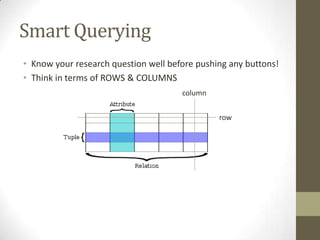
Smart Querying
• Know your research question well before pushing any buttons!
• Think in terms of ROWS & COLUMNS
column
row
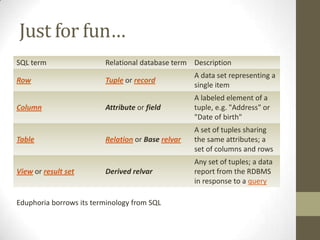
Just for fun…
SQL term

Relational database term Description

Row

Tuple or record

A data set representing a
single item

Attribute or field

A labeled element of a
tuple, e.g. "Address" or
"Date of birth"

Relation or Base relvar

A set of tuples sharing
the same attributes; a
set of columns and rows

Derived relvar

Any set of tuples; a data
report from the RDBMS
in response to a query

Column

Table

View or result set

Eduphoria borrows its terminology from SQL
Shopping Analogy
Choosing
your mall is
equivalent
to choosing
ROWS

Filling your
shopping
cart is
equivalent
to choosing
COLUMNS
ROW/COLUMN Quiz
Q1. There is a teacher of 32 8th-grade math students and the teacher
has just given a DA and wants to debrief with her students. She
needs a quick read on how they did on each item.

A1. ROWS: students; COLUMNS: test items
Bonus: What will appear in the table cells?
answer choice and disposition
Let’s Complicate Things (Slightly)
• The BY function
• It is hidden by the GUI in Eduphoria
• Often used to create additional levels in either ROWS or
COLUMNS
• Ex: Scores: SE% correct BY ethnicity (extra level of COLUMNS)
• Student scores BY teacher (could be extra level of ROWS)
ROW/COLUMN Quiz
Q2. I want to know if the fifth graders did better this year on STAAR
math than they did last year.

A2. ROWS: students; COLUMNS: scores by test
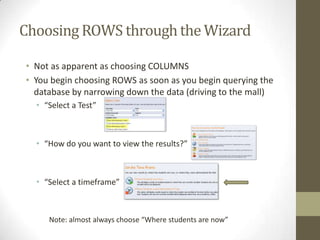
Choosing ROWS through the Wizard
• Not as apparent as choosing COLUMNS
• You begin choosing ROWS as soon as you begin querying the
database by narrowing down the data (driving to the mall)
• “Select a Test”

• “How do you want to view the results?”

• “Select a timeframe”

Note: almost always choose “Where students are now”
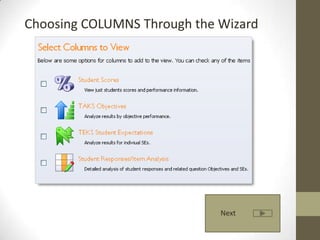
Choosing COLUMNS Through the Wizard

Next
COLUMNS

My preference:

Next
Let’s Run the 2 Quiz Questions in Eduphoria

1.
2.
3.
4.
5.
6.
7.

Using (on not using) the Wizard
Color coding/heat mapping
Data pivot
Summary view options
Graphing
Editing
Exporting
The 2 Questions
• Q1. There is a teacher of 32 8th-grade math students and the
teacher has just given a DA and wants to debrief with her
students. She needs a quick read on how they did on each
item.
• Q2. I want to know if all 5th-graders did better this year on
STAAR math than they did last year.
Exporting Data from Eduphoria
• For distribution analysis
• For inferential analysis
Descriptive Stats
12 13
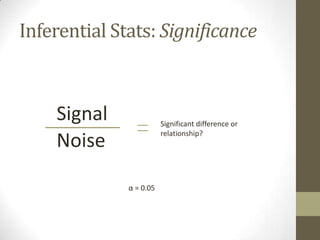
Inferential Stats: Significance

Signal
Noise

Significant difference or
relationship?

α = 0.05
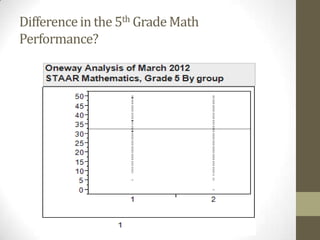
Difference in the 5th Grade Math
Performance?
We are only 74% sure
FERPA
• Do not send emails with text or datasets (attached or
otherwise) that contain information identifying students
• All data analysis that leaves the campus or the district offices
must be vetted through C&I
Q&A

Foundations of Data Analytics

  • 1.
    Data Analysis Fundamentals/EduphoriaTutorial Dr. Michael G. Richards Director, Data & Accountability District Testing Coordinator
  • 2.
    What is aRelational Database? • The invention of this database system has standardized the way that data is stored and processed. • A relational database consists of a collection of tables that store particular sets of data. • The concept of a relational database derives from the principles of relational algebra, developed by E. F. Codd in the 1970s. • Relational databases are built-in to software like EDUPHORIA, so the database is generally invisible to the user.
  • 3.
    What Does OneDo With a Relational Database? 1. 2. Upload data Query
  • 4.
    Querying 1. 2. Write code (SQL,R, SAS) Employ a Graphic User Interface (GUI)
  • 5.
    Smart Querying • Knowyour research question well before pushing any buttons! • Think in terms of ROWS & COLUMNS column row
  • 6.
    Just for fun… SQLterm Relational database term Description Row Tuple or record A data set representing a single item Attribute or field A labeled element of a tuple, e.g. "Address" or "Date of birth" Relation or Base relvar A set of tuples sharing the same attributes; a set of columns and rows Derived relvar Any set of tuples; a data report from the RDBMS in response to a query Column Table View or result set Eduphoria borrows its terminology from SQL
  • 7.
    Shopping Analogy Choosing your mallis equivalent to choosing ROWS Filling your shopping cart is equivalent to choosing COLUMNS
  • 8.
    ROW/COLUMN Quiz Q1. Thereis a teacher of 32 8th-grade math students and the teacher has just given a DA and wants to debrief with her students. She needs a quick read on how they did on each item. A1. ROWS: students; COLUMNS: test items Bonus: What will appear in the table cells? answer choice and disposition
  • 9.
    Let’s Complicate Things(Slightly) • The BY function • It is hidden by the GUI in Eduphoria • Often used to create additional levels in either ROWS or COLUMNS • Ex: Scores: SE% correct BY ethnicity (extra level of COLUMNS) • Student scores BY teacher (could be extra level of ROWS)
  • 10.
    ROW/COLUMN Quiz Q2. Iwant to know if the fifth graders did better this year on STAAR math than they did last year. A2. ROWS: students; COLUMNS: scores by test
  • 11.
    Choosing ROWS throughthe Wizard • Not as apparent as choosing COLUMNS • You begin choosing ROWS as soon as you begin querying the database by narrowing down the data (driving to the mall) • “Select a Test” • “How do you want to view the results?” • “Select a timeframe” Note: almost always choose “Where students are now”
  • 12.
    Choosing COLUMNS Throughthe Wizard Next
  • 13.
  • 14.
    Let’s Run the2 Quiz Questions in Eduphoria 1. 2. 3. 4. 5. 6. 7. Using (on not using) the Wizard Color coding/heat mapping Data pivot Summary view options Graphing Editing Exporting
  • 15.
    The 2 Questions •Q1. There is a teacher of 32 8th-grade math students and the teacher has just given a DA and wants to debrief with her students. She needs a quick read on how they did on each item. • Q2. I want to know if all 5th-graders did better this year on STAAR math than they did last year.
  • 16.
    Exporting Data fromEduphoria • For distribution analysis • For inferential analysis
  • 17.
  • 18.
    Inferential Stats: Significance Signal Noise Significantdifference or relationship? α = 0.05
  • 19.
    Difference in the5th Grade Math Performance?
  • 20.
    We are only74% sure
  • 21.
    FERPA • Do notsend emails with text or datasets (attached or otherwise) that contain information identifying students • All data analysis that leaves the campus or the district offices must be vetted through C&I
  • 22.