IDENTITY
FORMATION
Dr.G.M.Sunagar
Asst.professor
Vijayanagar College of Education
Hubballi-31
Sense of Identification
 Who am I?
 self-concept - beliefs
 How good am I as a person?
 self-esteem - worthiness
 self-efficacy - accomplishments
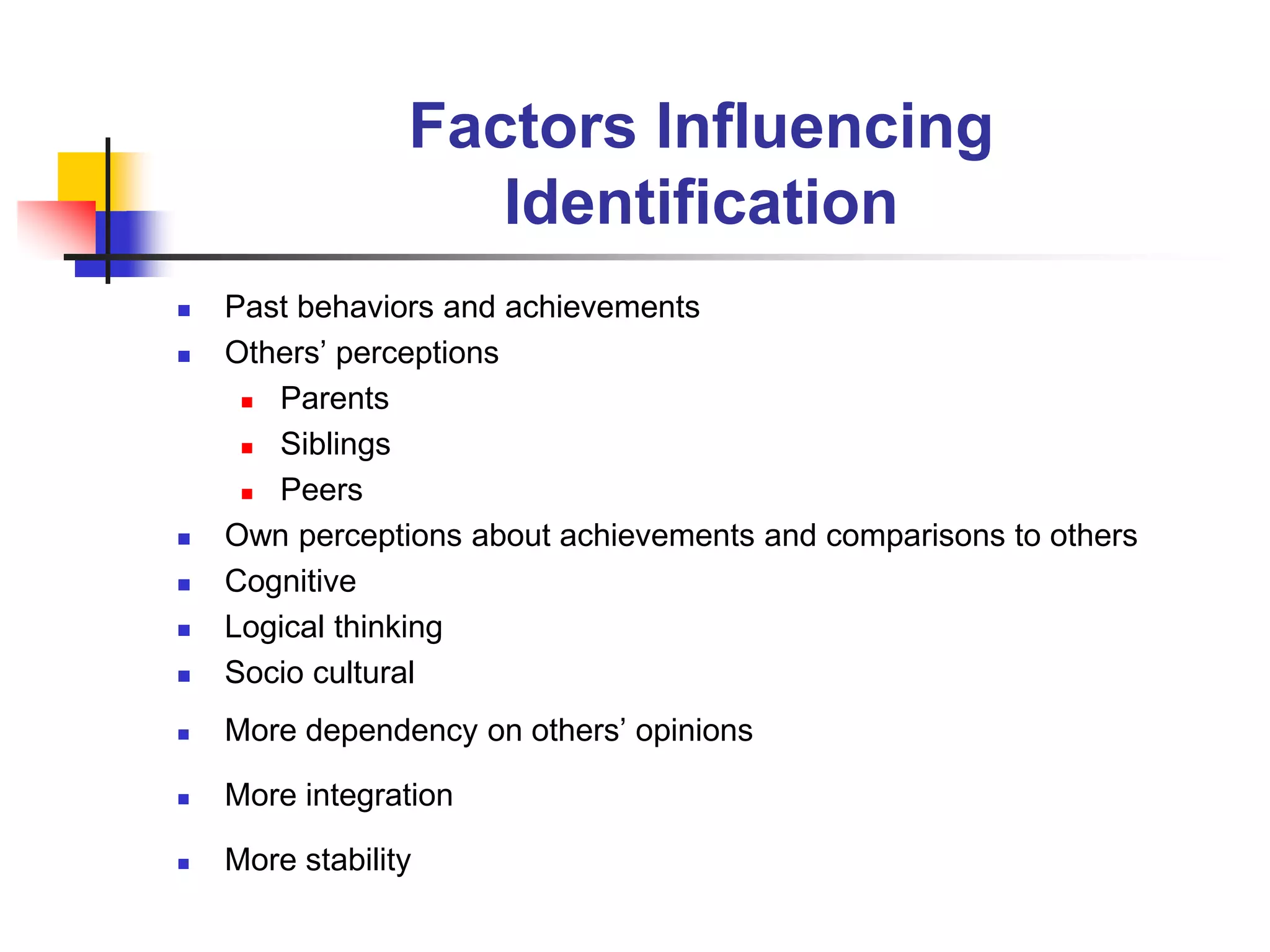
Factors Influencing
Identification
 Past behaviors and achievements
 Others’ perceptions
 Parents
 Siblings
 Peers
 Own perceptions about achievements and comparisons to others
 Cognitive
 Logical thinking
 Socio cultural
 More dependency on others’ opinions
 More integration
 More stability
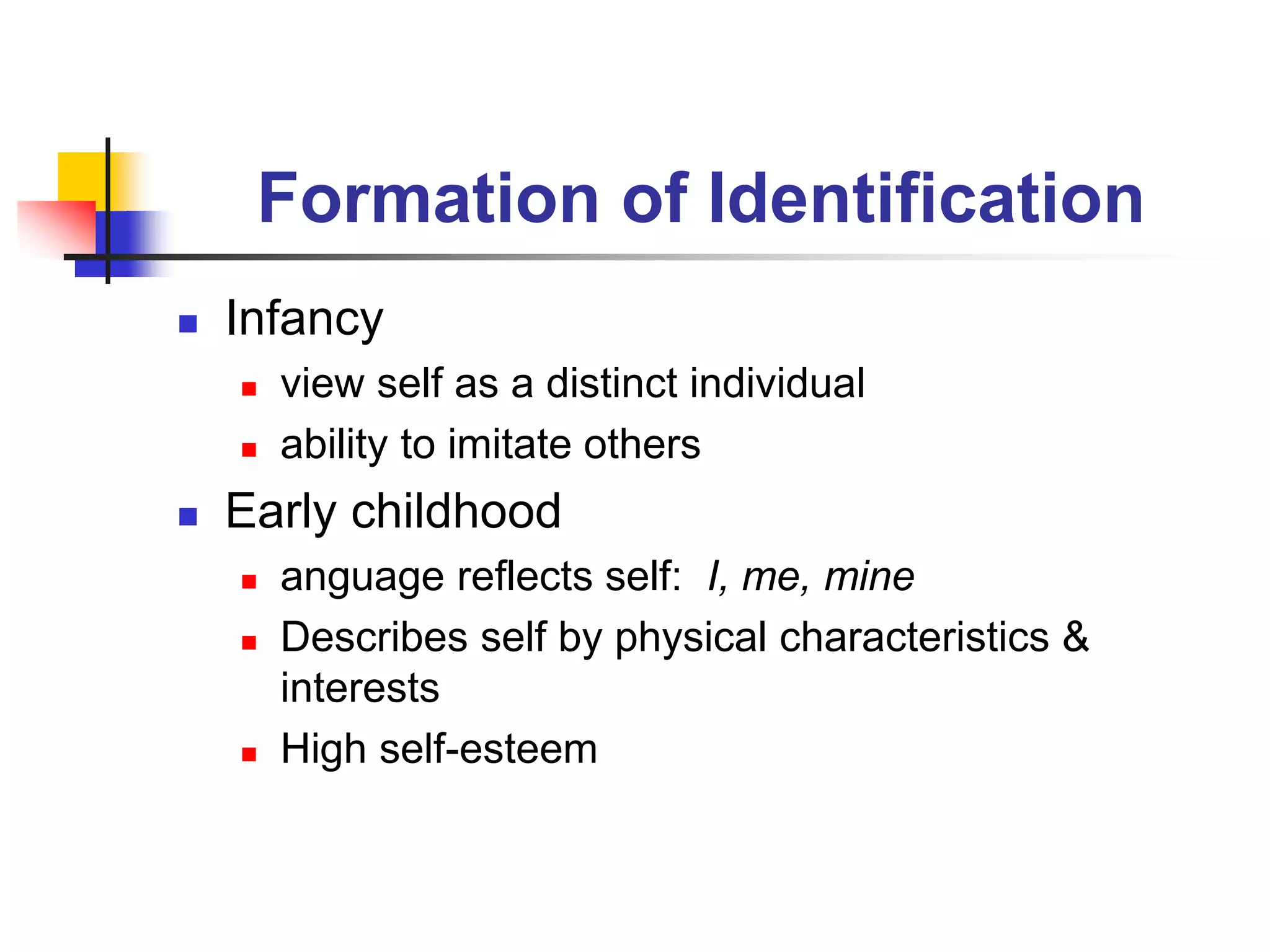
Formation of Identification
 Infancy
 view self as a distinct individual
 ability to imitate others
 Early childhood
 anguage reflects self: I, me, mine
 Describes self by physical characteristics &
interests
 High self-esteem
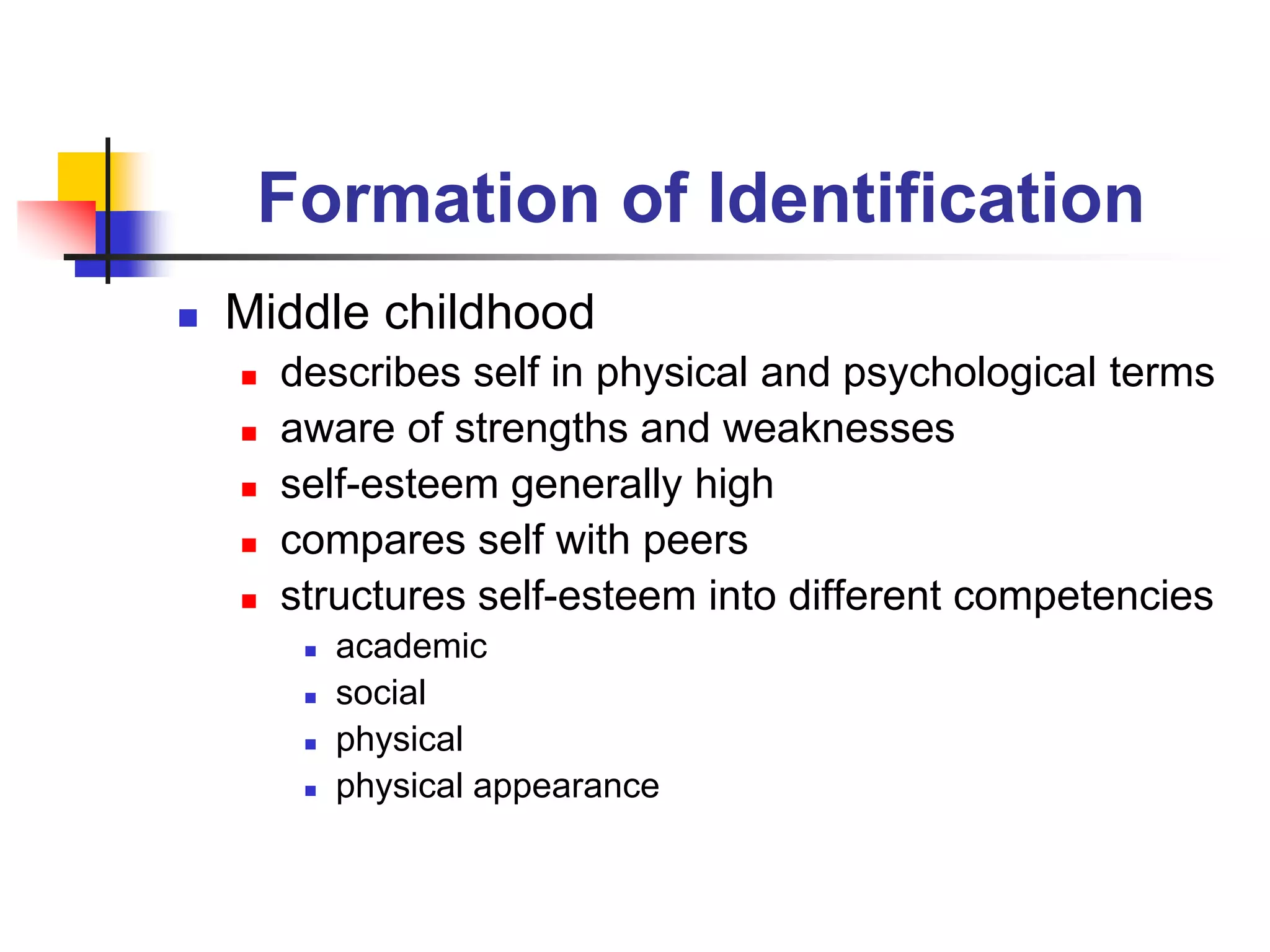
Formation of Identification
 Middle childhood
 describes self in physical and psychological terms
 aware of strengths and weaknesses
 self-esteem generally high
 compares self with peers
 structures self-esteem into different competencies
 academic
 social
 physical
 physical appearance
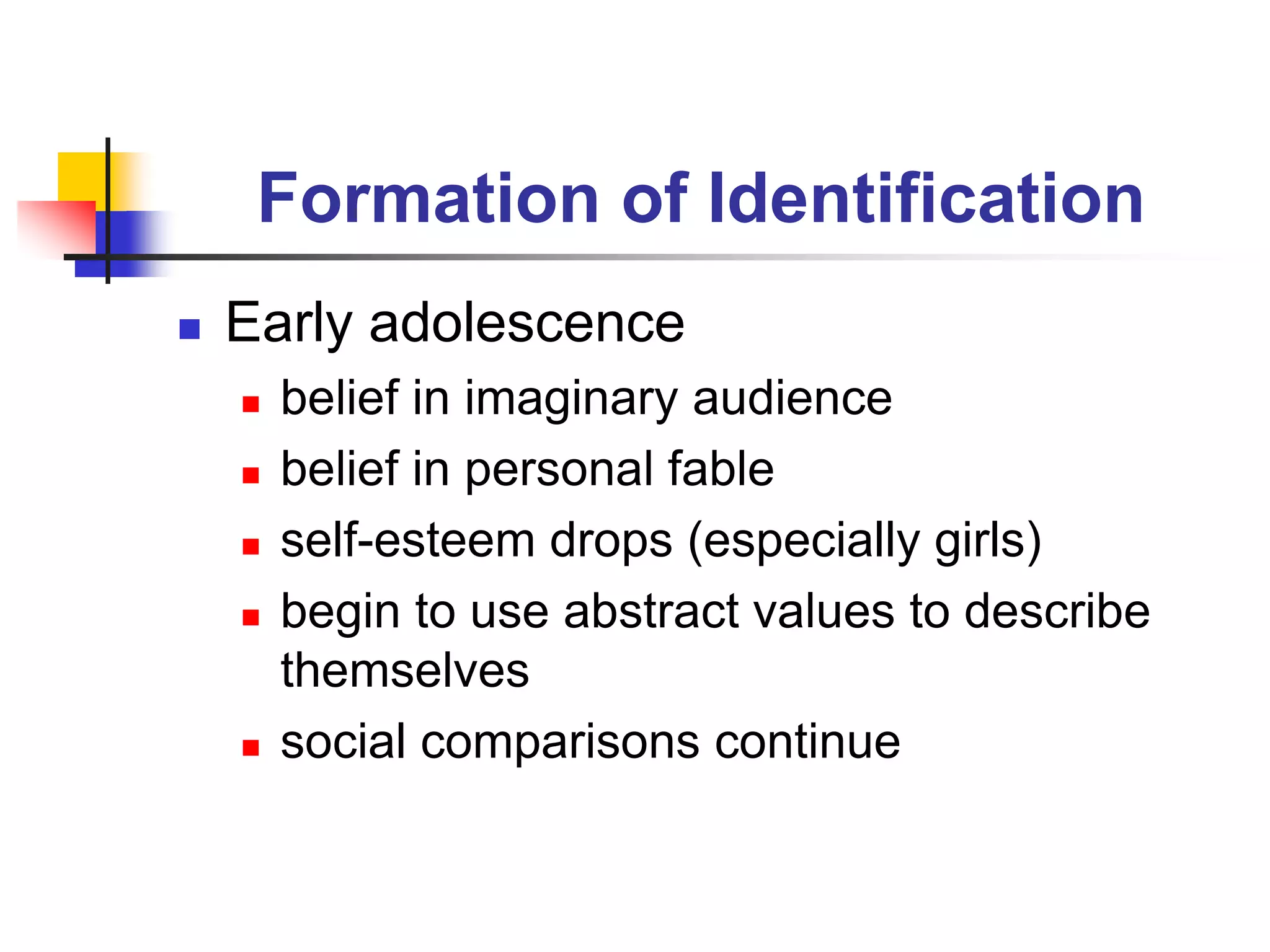
Formation of Identification
 Early adolescence
 belief in imaginary audience
 belief in personal fable
 self-esteem drops (especially girls)
 begin to use abstract values to describe
themselves
 social comparisons continue
Formation of Identification
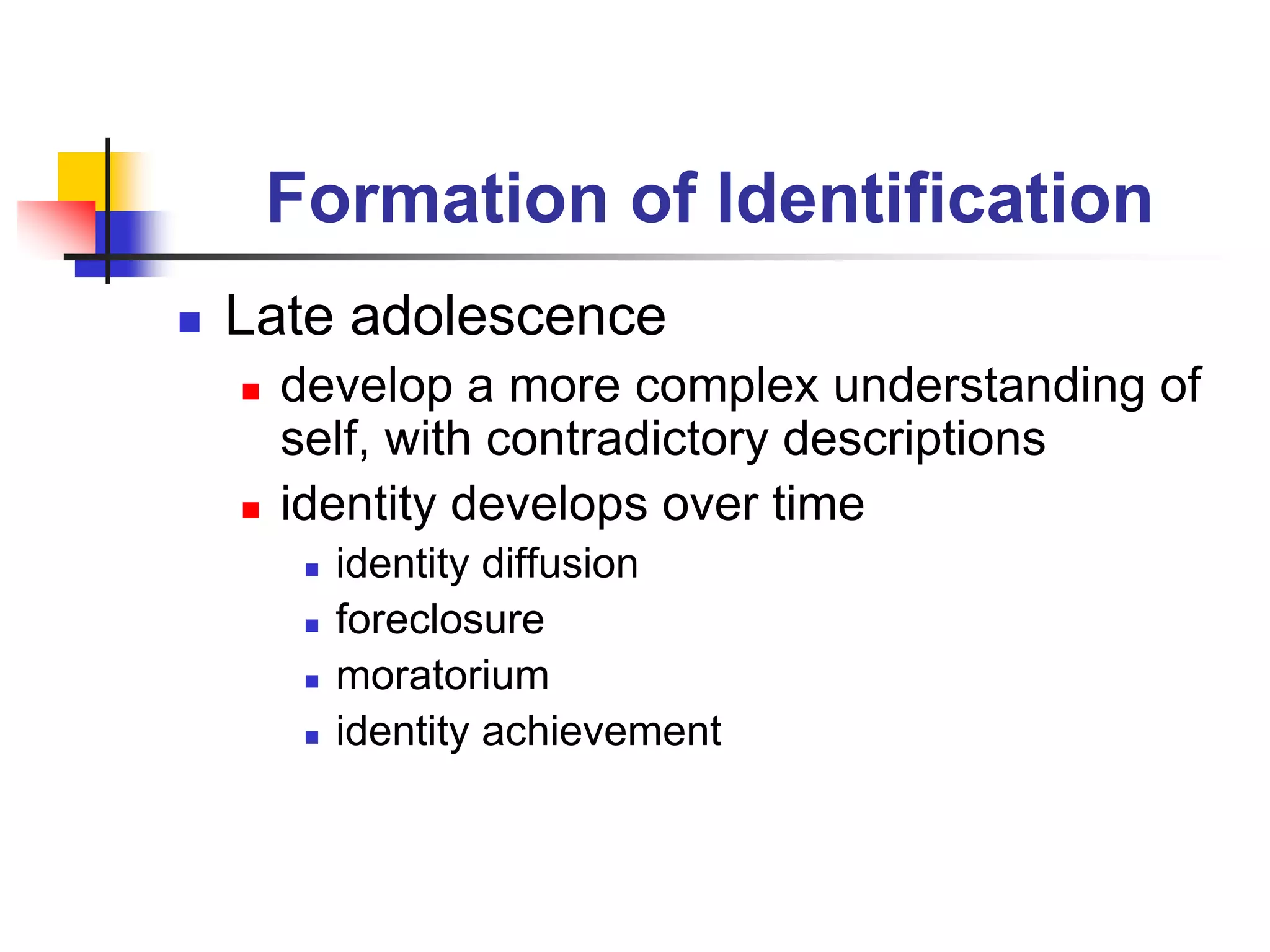
 Late adolescence
 develop a more complex understanding of
self, with contradictory descriptions
 identity develops over time
 identity diffusion
 foreclosure
 moratorium
 identity achievement
Approach to Identification in
Classroom
 Learning environment
 Opposing Teachers
 Challenging the problems
 Achievement
 Value
 Habits

Formation of Identity

  • 1.
  • 2.
    Sense of Identification Who am I?  self-concept - beliefs  How good am I as a person?  self-esteem - worthiness  self-efficacy - accomplishments
  • 3.
    Factors Influencing Identification  Pastbehaviors and achievements  Others’ perceptions  Parents  Siblings  Peers  Own perceptions about achievements and comparisons to others  Cognitive  Logical thinking  Socio cultural  More dependency on others’ opinions  More integration  More stability
  • 4.
    Formation of Identification Infancy  view self as a distinct individual  ability to imitate others  Early childhood  anguage reflects self: I, me, mine  Describes self by physical characteristics & interests  High self-esteem
  • 5.
    Formation of Identification Middle childhood  describes self in physical and psychological terms  aware of strengths and weaknesses  self-esteem generally high  compares self with peers  structures self-esteem into different competencies  academic  social  physical  physical appearance
  • 6.
    Formation of Identification Early adolescence  belief in imaginary audience  belief in personal fable  self-esteem drops (especially girls)  begin to use abstract values to describe themselves  social comparisons continue
  • 7.
    Formation of Identification Late adolescence  develop a more complex understanding of self, with contradictory descriptions  identity develops over time  identity diffusion  foreclosure  moratorium  identity achievement
  • 8.
    Approach to Identificationin Classroom  Learning environment  Opposing Teachers  Challenging the problems  Achievement  Value  Habits