Volcanoes How are they formed?
Volcanoes Volcanoes are openings or ‘vents’ in the earth’s crust. They are  usually  located on plate boundaries. They are  only  found on Tensional  and  Compressional  (destructive) plate boundaries. We shall study the formation of Mt St Helens.
Mount St Helens Mount St Helens  is part of t he  Cascade mountains  which lie along the western coast of the United States.  This area is one subjected to frequent earth movements and has a long history of volcanic activity.  The denser oceanic crust of the ‘ Juan de Fuca’  plate is being  subducted  below the lighter, continental  North American  plate because it is heavier.
Mount St Helens As the descending Juan de Fuca plate is  subducted  it is subjected to increasing pressure and friction it becomes hotter and begins to partially melt.  The molten rock, called  magma  begins to rise towards the surface.  When it reaches the surface it erupts and a volcano is formed.
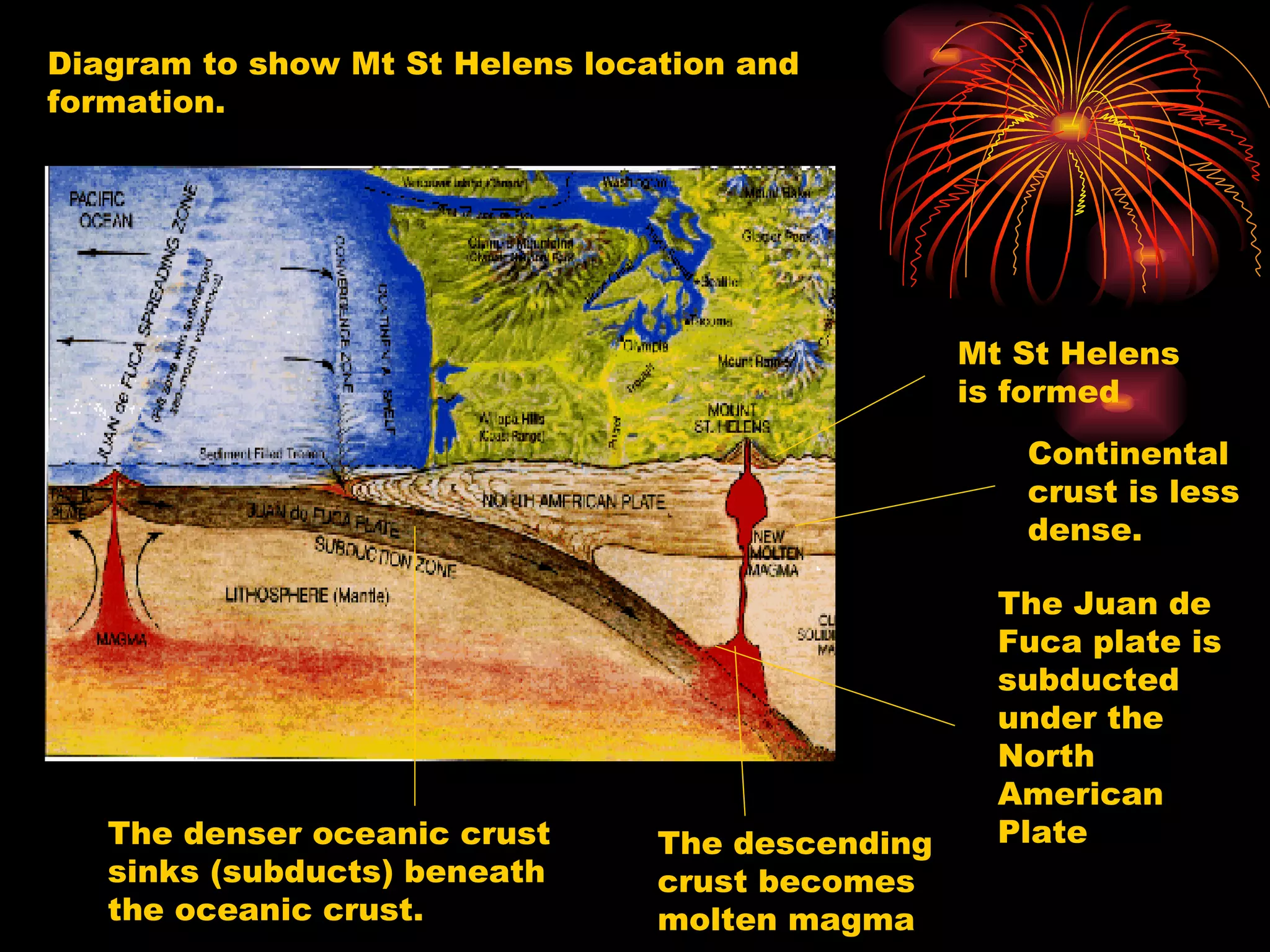
Diagram to show Mt St Helens location and formation. Mt St Helens is formed Continental crust is less dense. The Juan de Fuca plate is subducted under the North American Plate The denser oceanic crust sinks (subducts) beneath the oceanic crust. The descending crust becomes molten magma
The images on this page are within the Public Domain. Thanks to the the USGS/Cascades Volcano Observatory  Images of Mt St Helens

Formation of Composite Volcanoes

  • 1.
    Volcanoes How arethey formed?
  • 2.
    Volcanoes Volcanoes areopenings or ‘vents’ in the earth’s crust. They are usually located on plate boundaries. They are only found on Tensional and Compressional (destructive) plate boundaries. We shall study the formation of Mt St Helens.
  • 3.
    Mount St HelensMount St Helens is part of t he Cascade mountains which lie along the western coast of the United States. This area is one subjected to frequent earth movements and has a long history of volcanic activity. The denser oceanic crust of the ‘ Juan de Fuca’ plate is being subducted below the lighter, continental North American plate because it is heavier.
  • 4.
    Mount St HelensAs the descending Juan de Fuca plate is subducted it is subjected to increasing pressure and friction it becomes hotter and begins to partially melt. The molten rock, called magma begins to rise towards the surface. When it reaches the surface it erupts and a volcano is formed.
  • 5.
    Diagram to showMt St Helens location and formation. Mt St Helens is formed Continental crust is less dense. The Juan de Fuca plate is subducted under the North American Plate The denser oceanic crust sinks (subducts) beneath the oceanic crust. The descending crust becomes molten magma
  • 6.
    The images onthis page are within the Public Domain. Thanks to the the USGS/Cascades Volcano Observatory Images of Mt St Helens