The document discusses key aspects of processing a crime scene:
1. Recognition, preservation, identification, comparison, individualization, interpretation, and reconstruction are the seven major activities of forensic investigations.
2. Evidence must be collected, packaged, and maintained in a proper chain of custody. Photographs, sketches, and notes are used to document the crime scene.
3. A crime scene may be searched using line, grid, zone, or wheel/spiral methods depending on the type of scene. The body is processed by the coroner or medical examiner.
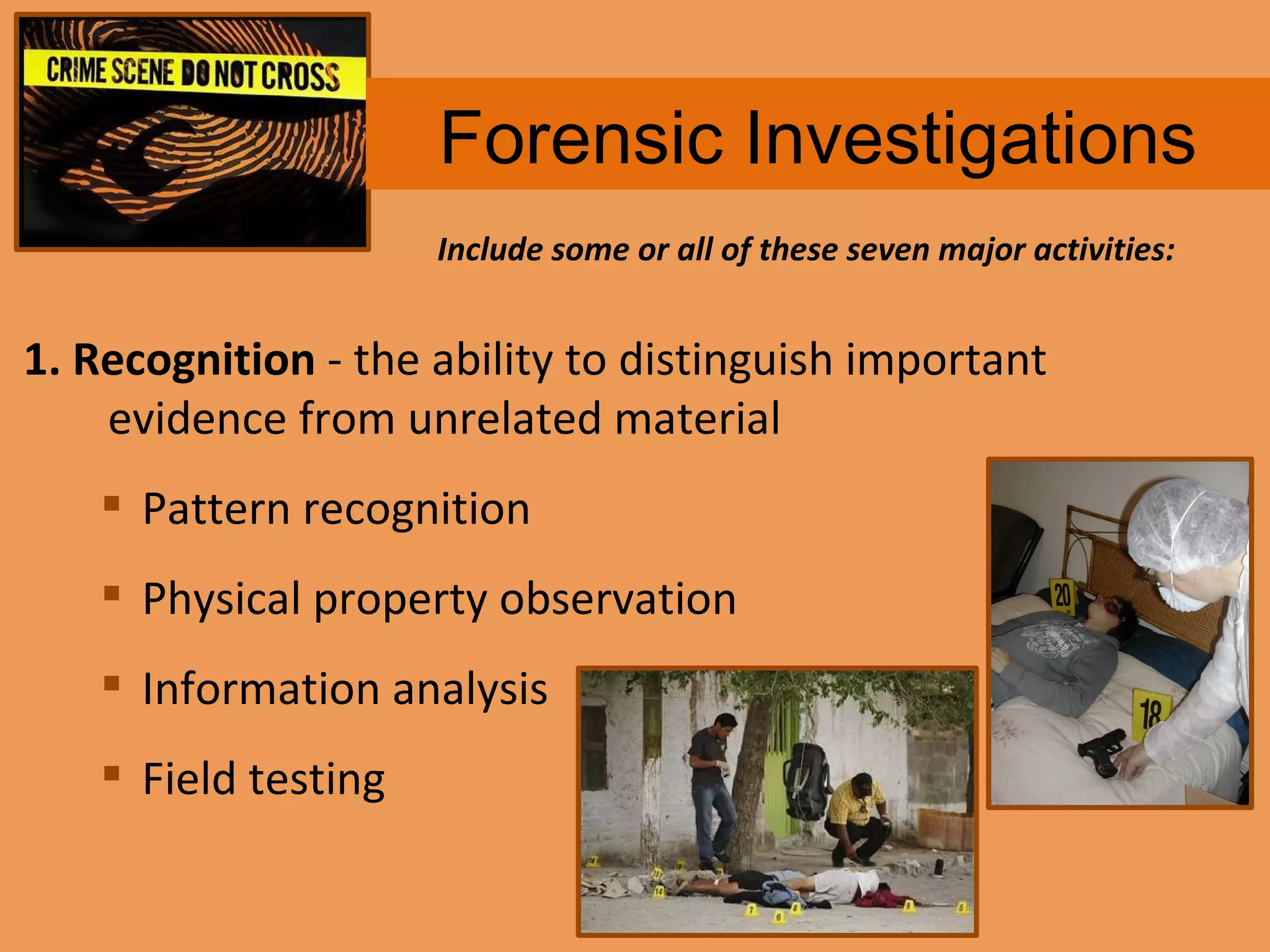
Forensic Investigations 1.Recognition - the ability to distinguish important evidence from unrelated material Pattern recognition Physical property observation Information analysis Field testing Include some or all of these seven major activities:
3.
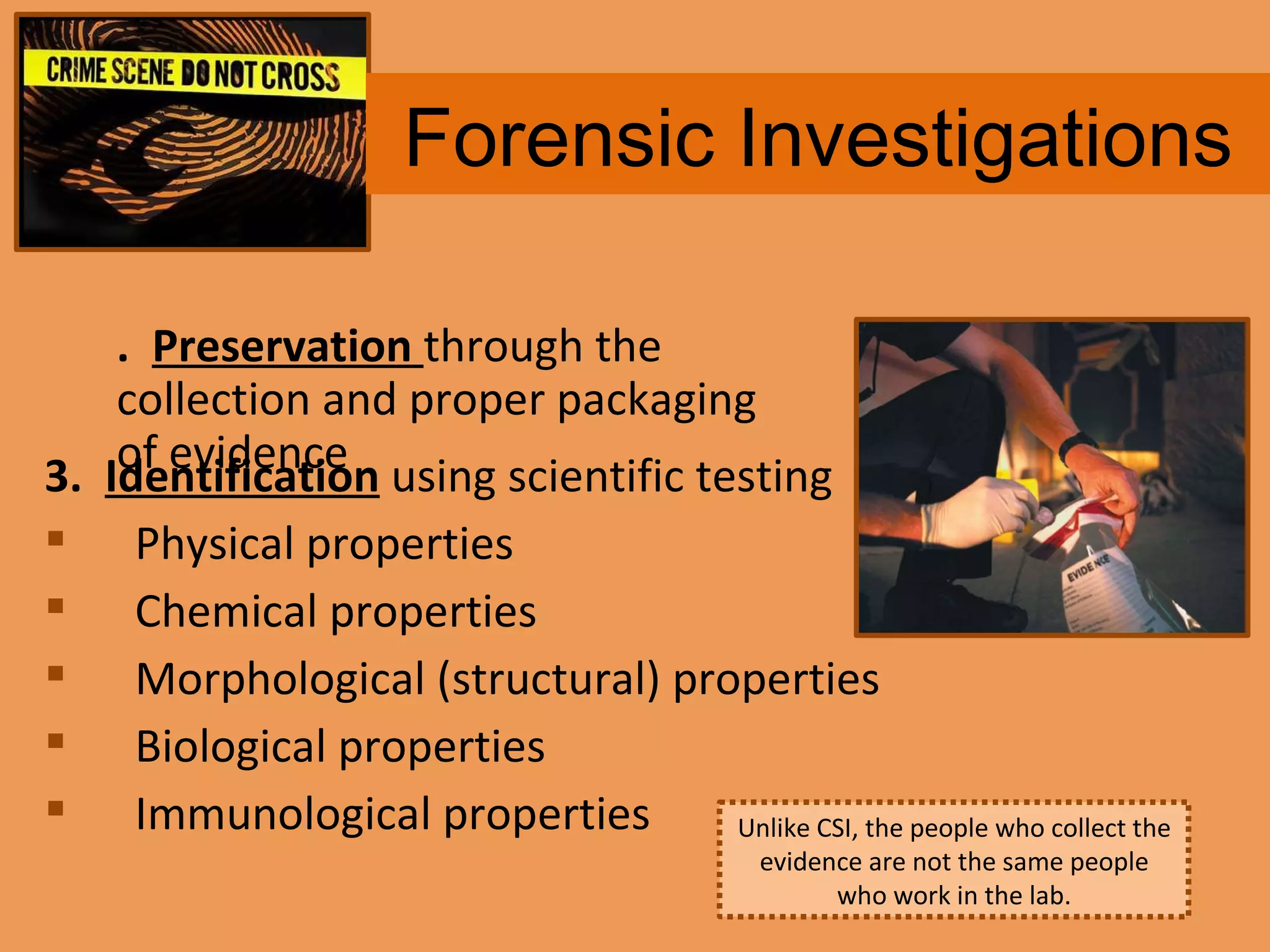
Forensic Investigations 2. Preservation through the collection and proper packaging of evidence 3. Identification using scientific testing Physical properties Chemical properties Morphological (structural) properties Biological properties Immunological properties Unlike CSI, the people who collect the evidence are not the same people who work in the lab.
4.
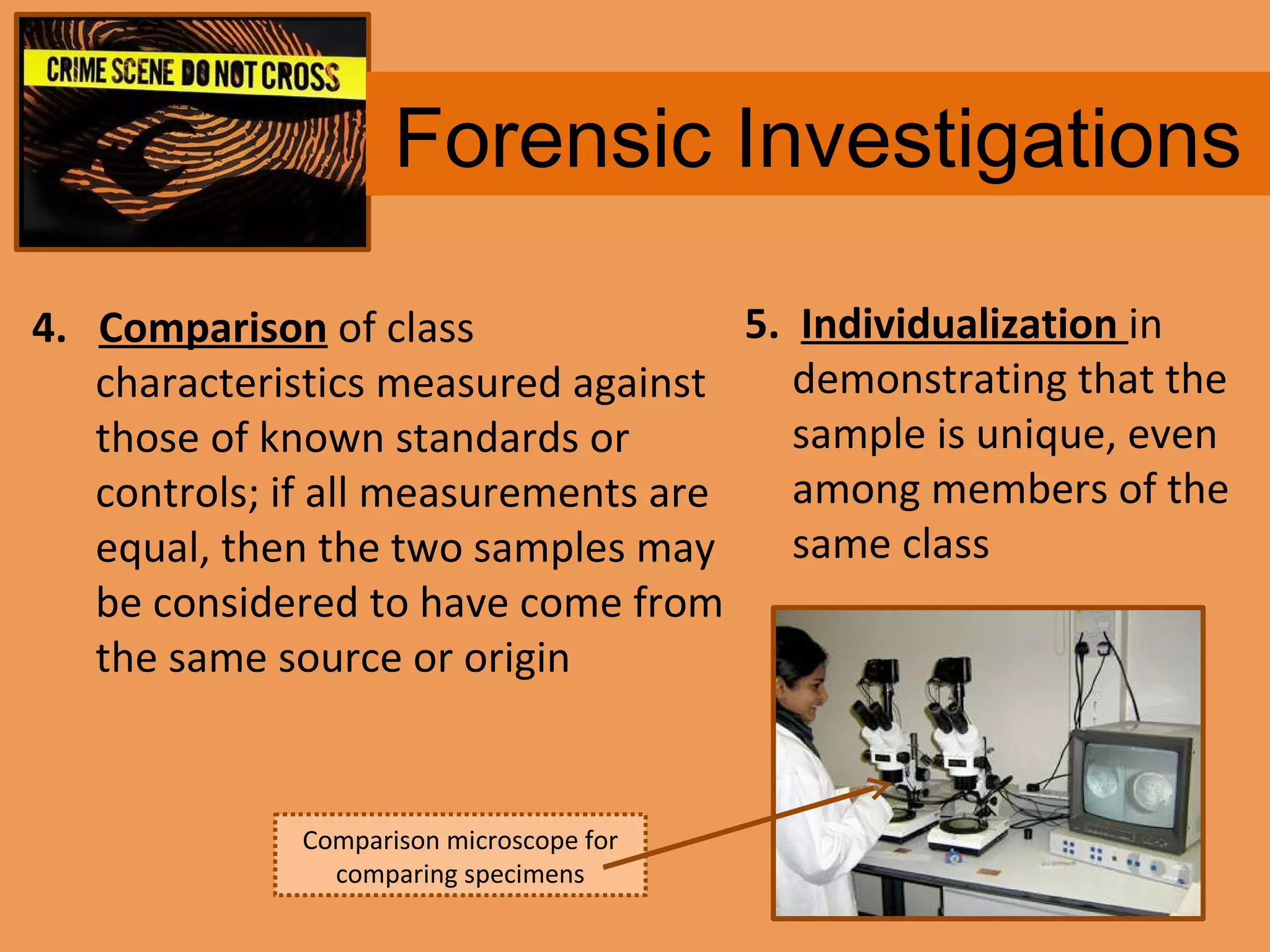
Forensic Investigations 4. Comparison of class characteristics measured against those of known standards or controls; if all measurements are equal, then the two samples may be considered to have come from the same source or origin 5. Individualization in demonstrating that the sample is unique, even among members of the same class Comparison microscope for comparing specimens
5.
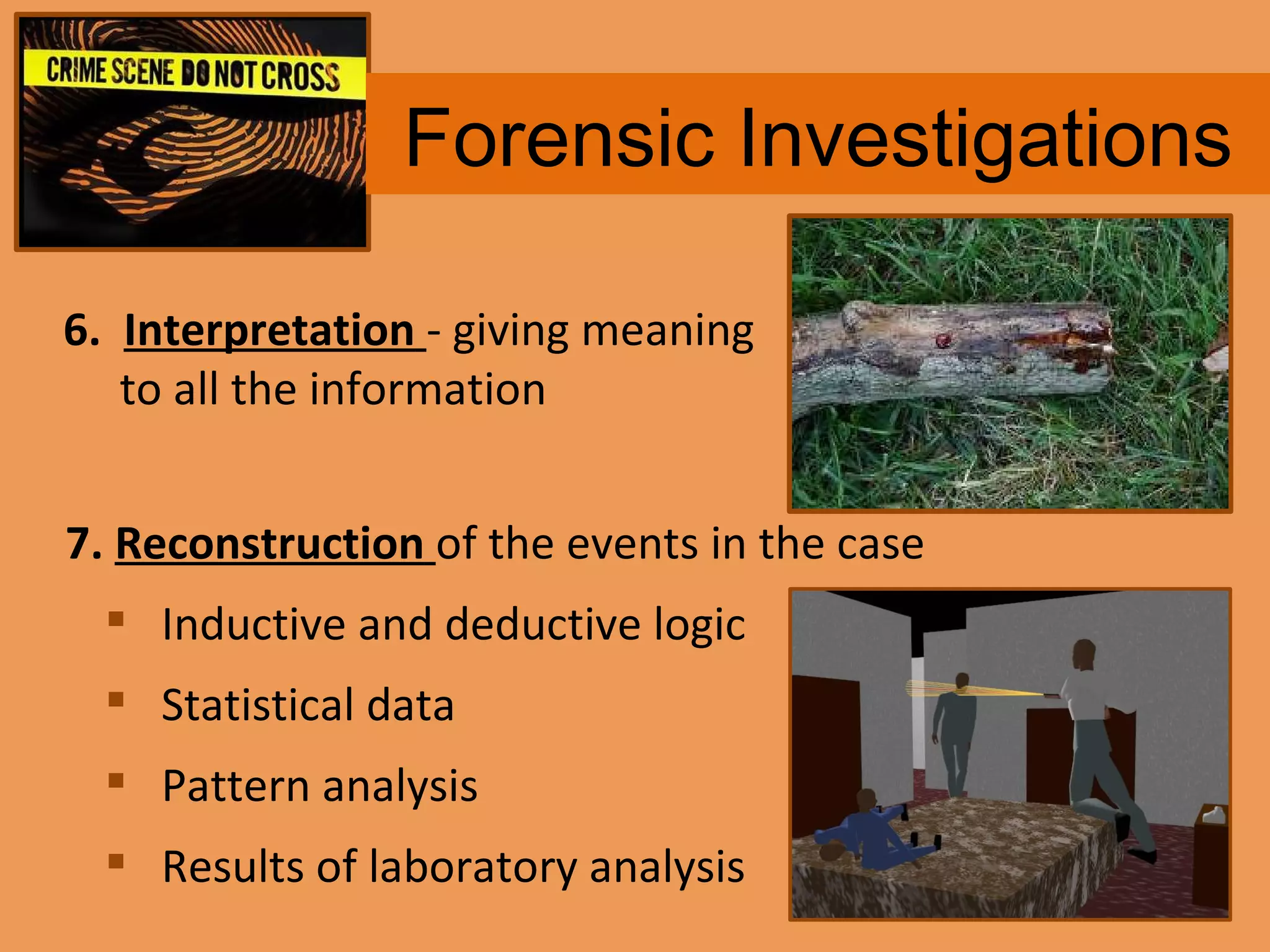
Forensic Investigations 6. Interpretation - giving meaning to all the information 7. Reconstruction of the events in the case Inductive and deductive logic Statistical data Pattern analysis Results of laboratory analysis
6.
Corpus Delicti “Bodyof the Crime” Authorities must prove: That a crime occurred That the person charged with the crime was responsible for the crime Top reasons for committing a crime Money Revenge Emotion—love, hate, anger Sources of evidence Body Primary and/or secondary crime scene Suspect(s)
7.
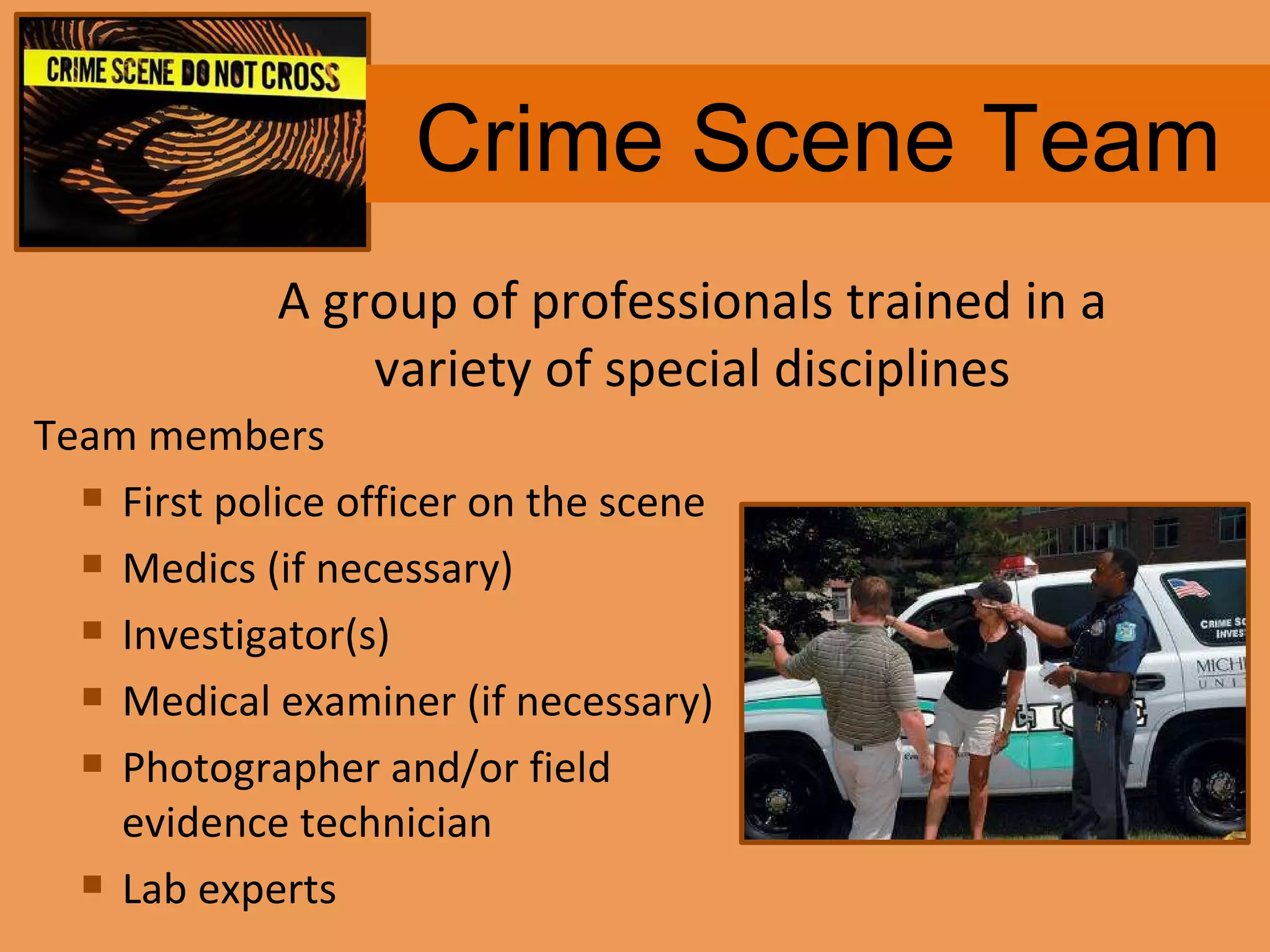
Crime Scene TeamTeam members First police officer on the scene Medics (if necessary) Investigator(s) Medical examiner (if necessary) Photographer and/or field evidence technician Lab experts A group of professionals trained in a variety of special disciplines
8.
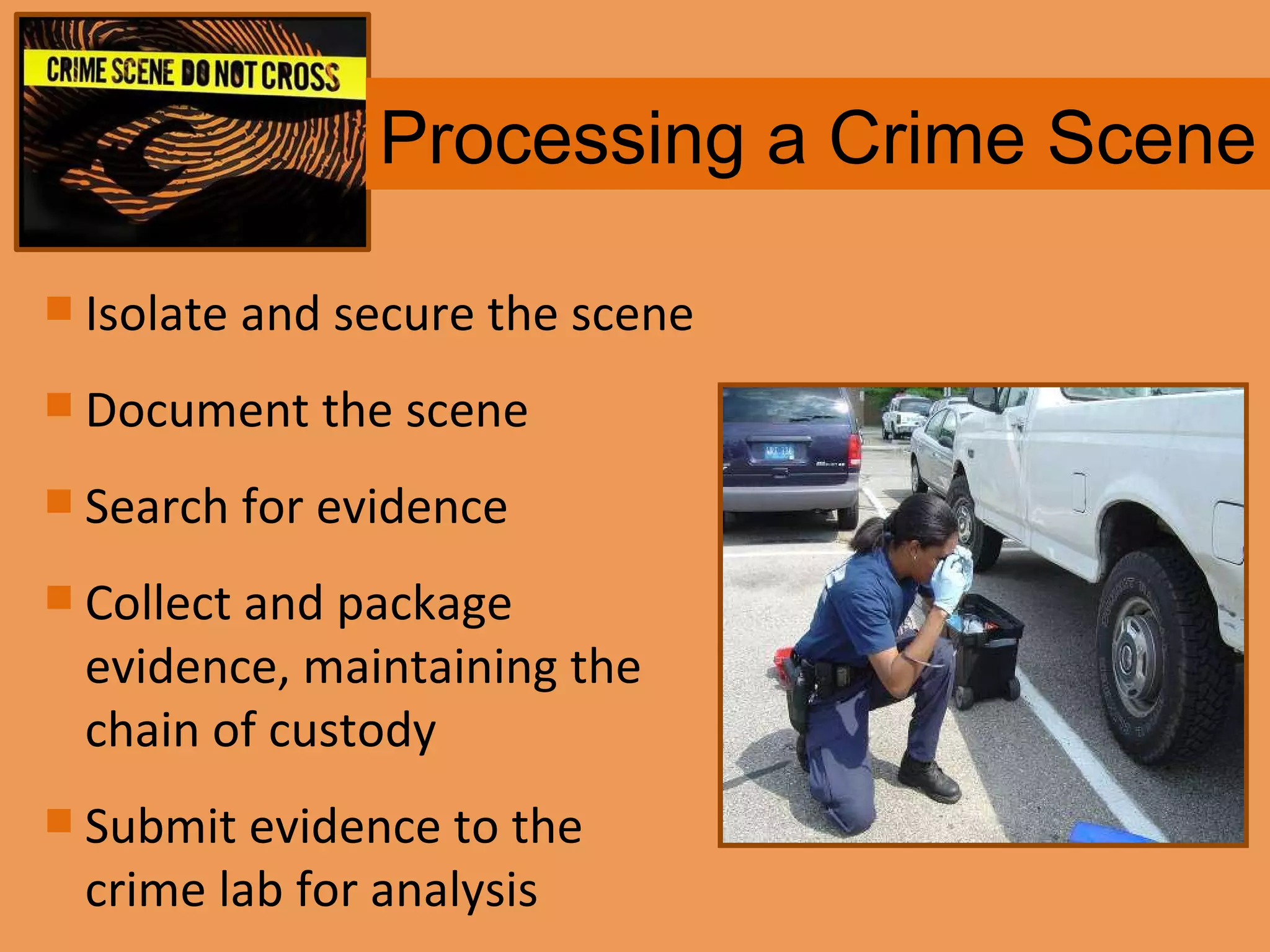
Processing a CrimeScene Isolate and secure the scene Document the scene Search for evidence Collect and package evidence, maintaining the chain of custody Submit evidence to the crime lab for analysis
9.
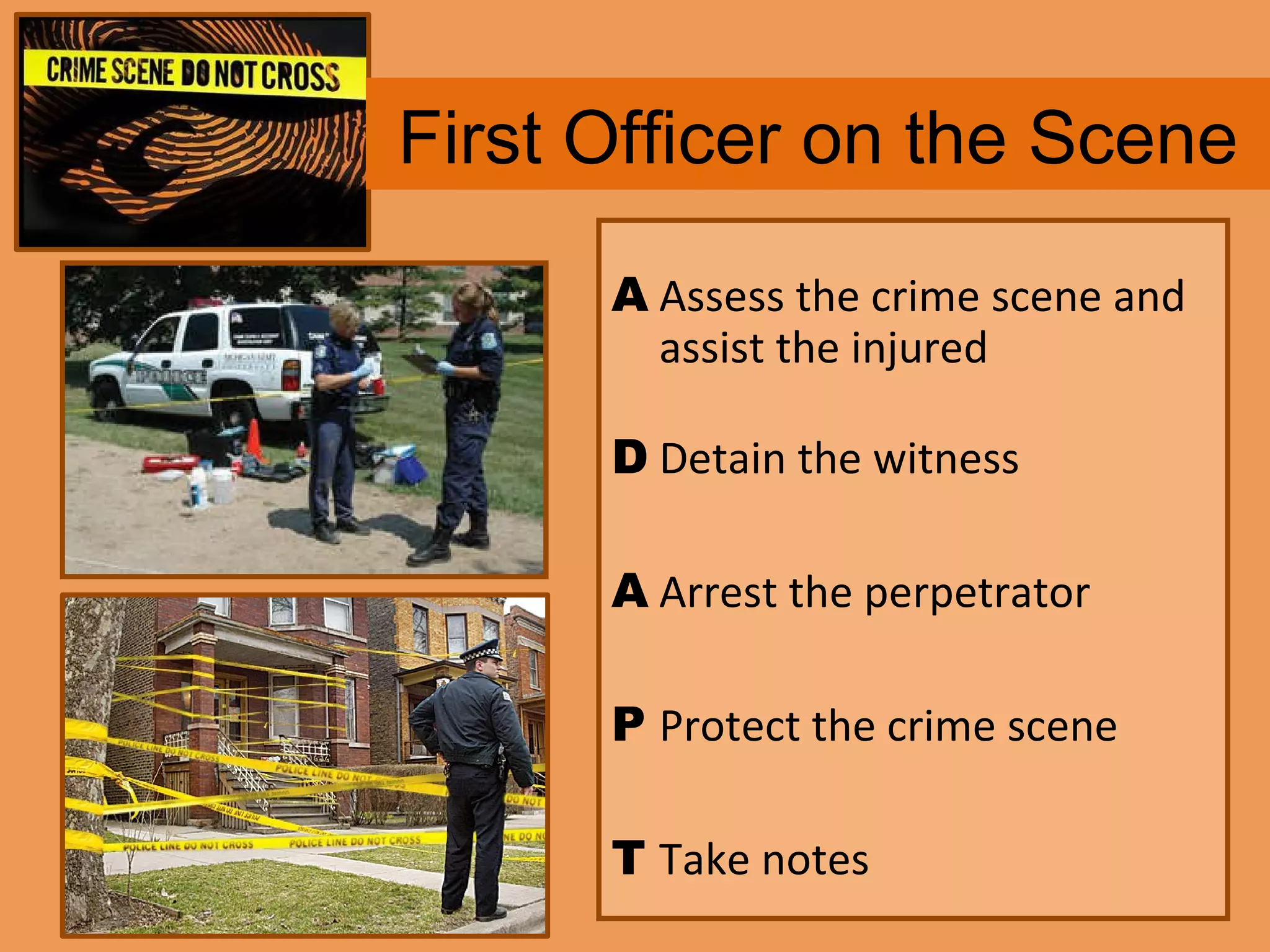
First Officer onthe Scene A Assess the crime scene and assist the injured D Detain the witness A Arrest the perpetrator P Protect the crime scene T Take notes
10.
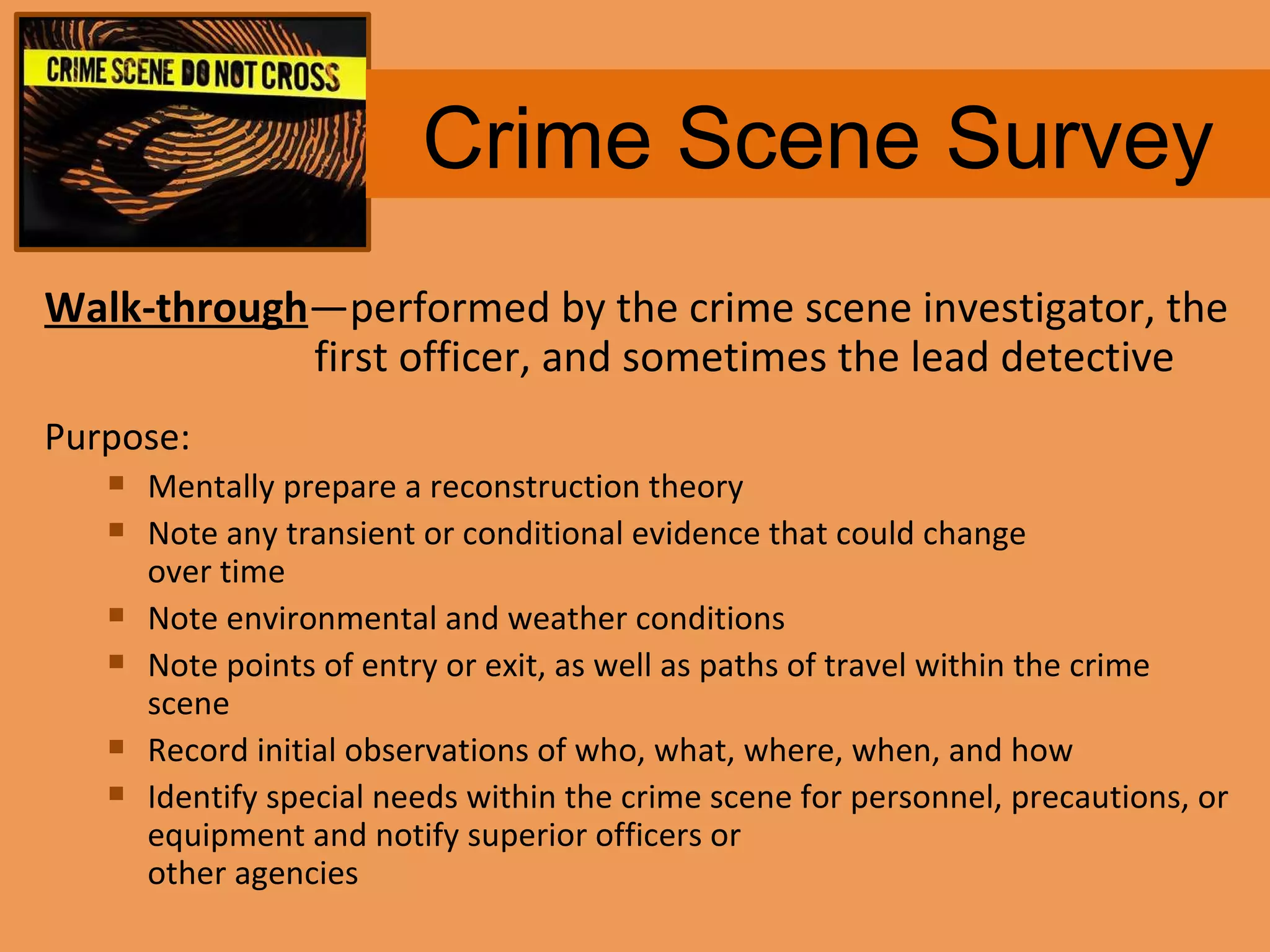
Crime Scene SurveyWalk-through — performed by the crime scene investigator, the first officer, and sometimes the lead detective Purpose: Mentally prepare a reconstruction theory Note any transient or conditional evidence that could change over time Note environmental and weather conditions Note points of entry or exit, as well as paths of travel within the crime scene Record initial observations of who, what, where, when, and how Identify special needs within the crime scene for personnel, precautions, or equipment and notify superior officers or other agencies
11.
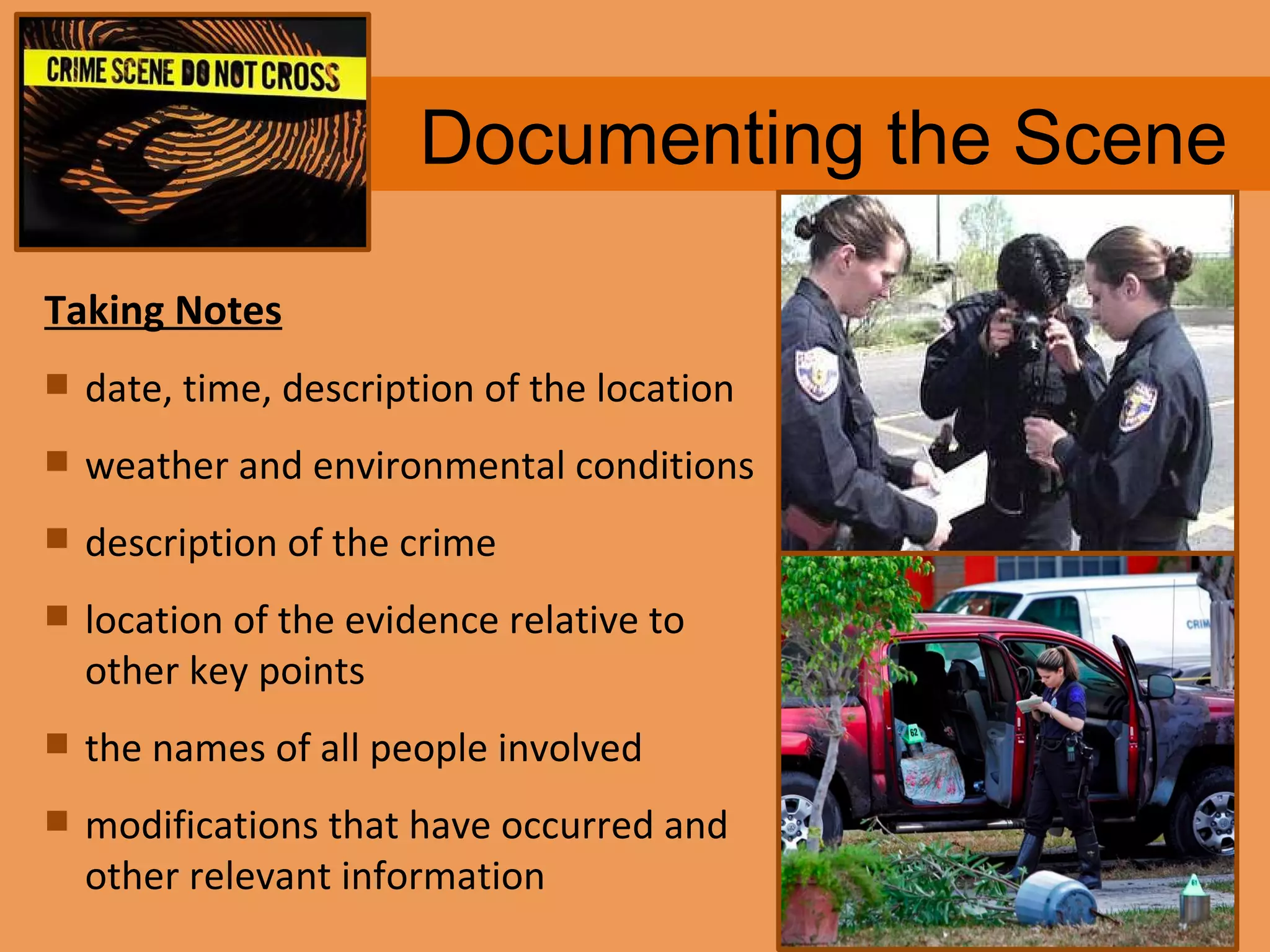
Documenting the SceneTaking Notes date, time, description of the location weather and environmental conditions description of the crime location of the evidence relative to other key points the names of all people involved modifications that have occurred and other relevant information
12.
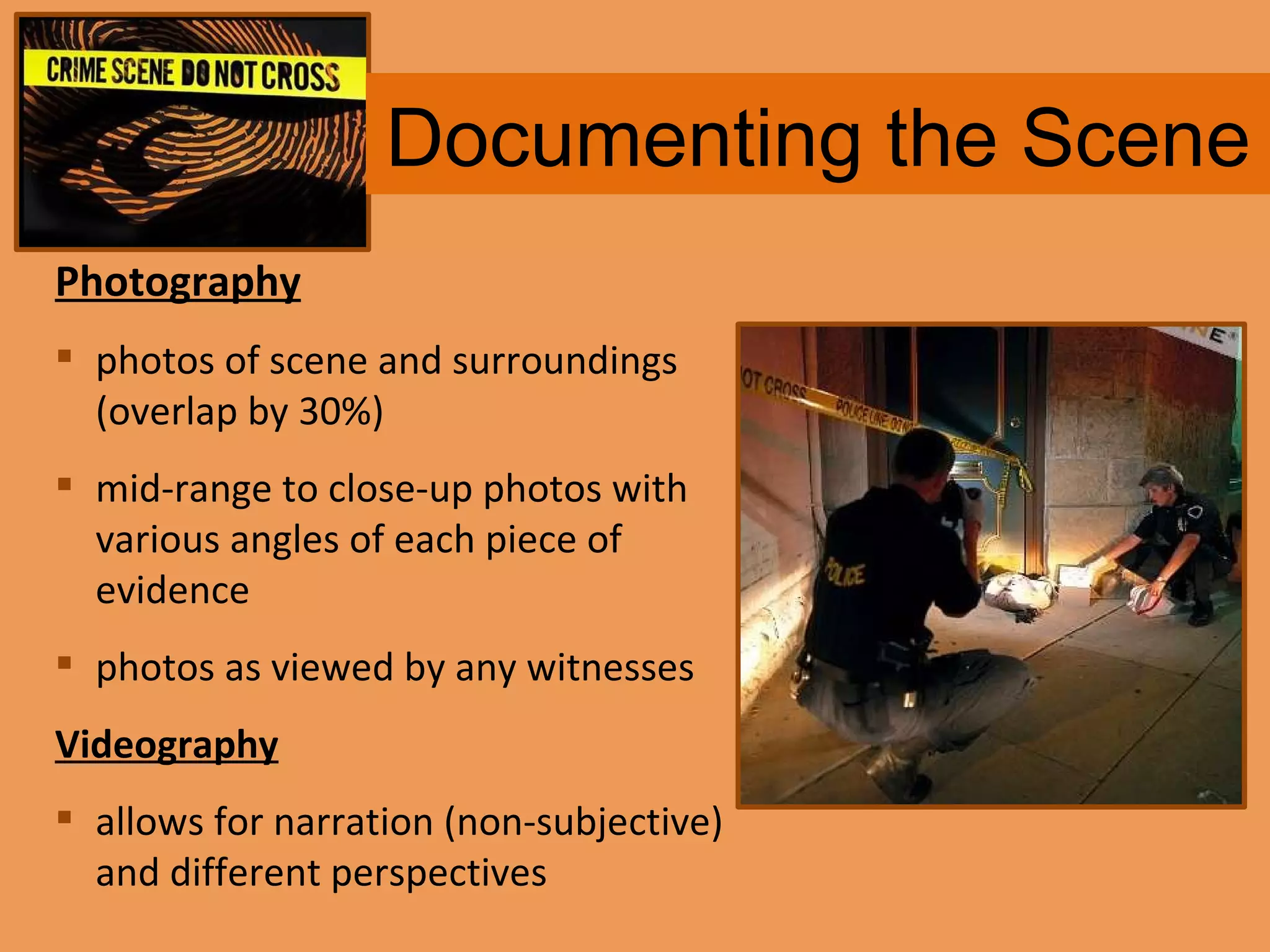
Documenting the ScenePhotography photos of scene and surroundings (overlap by 30%) mid-range to close-up photos with various angles of each piece of evidence photos as viewed by any witnesses Videography allows for narration (non-subjective) and different perspectives
13.
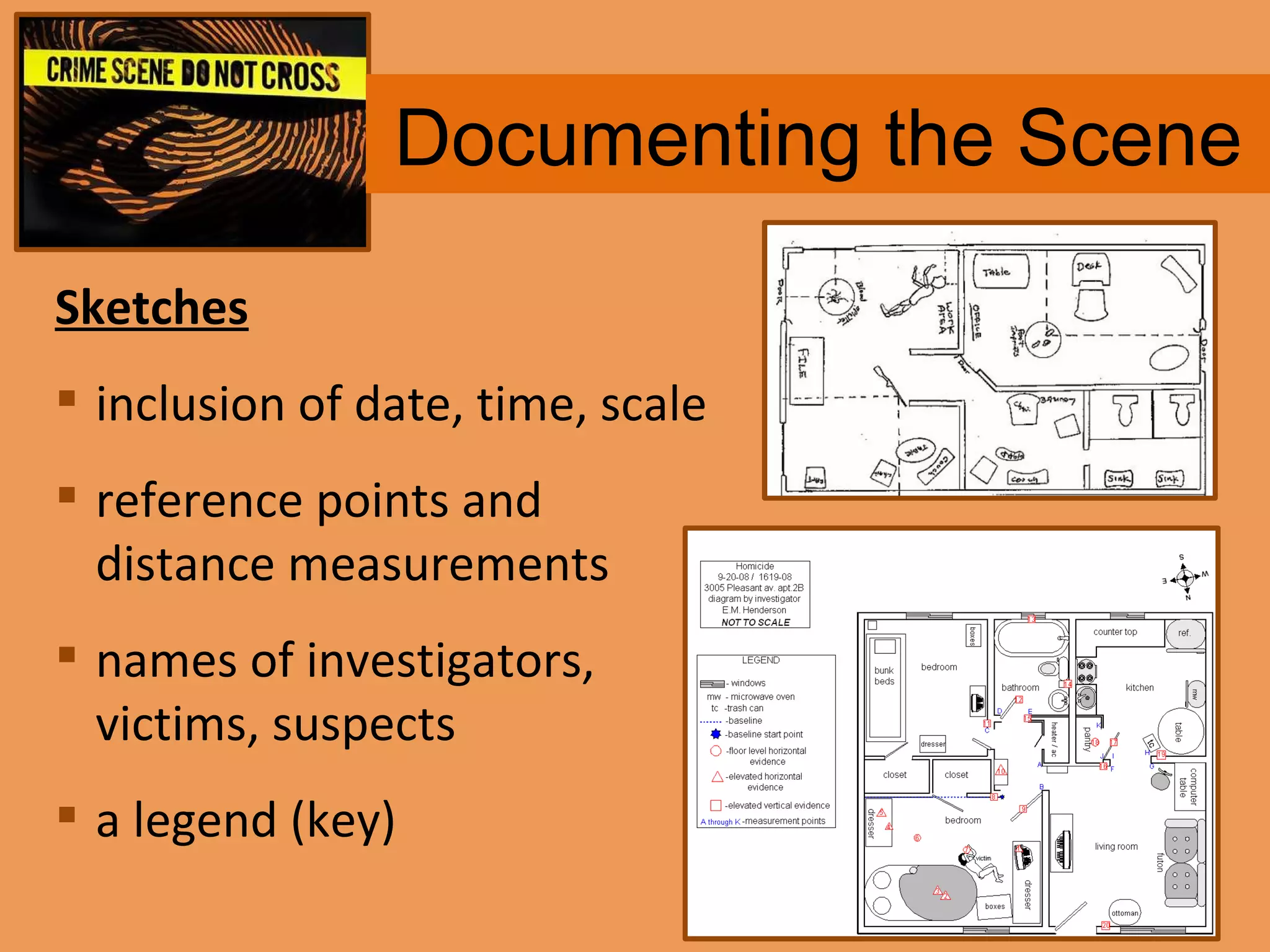
Documenting the SceneSketches inclusion of date, time, scale reference points and distance measurements names of investigators, victims, suspects a legend (key)
14.
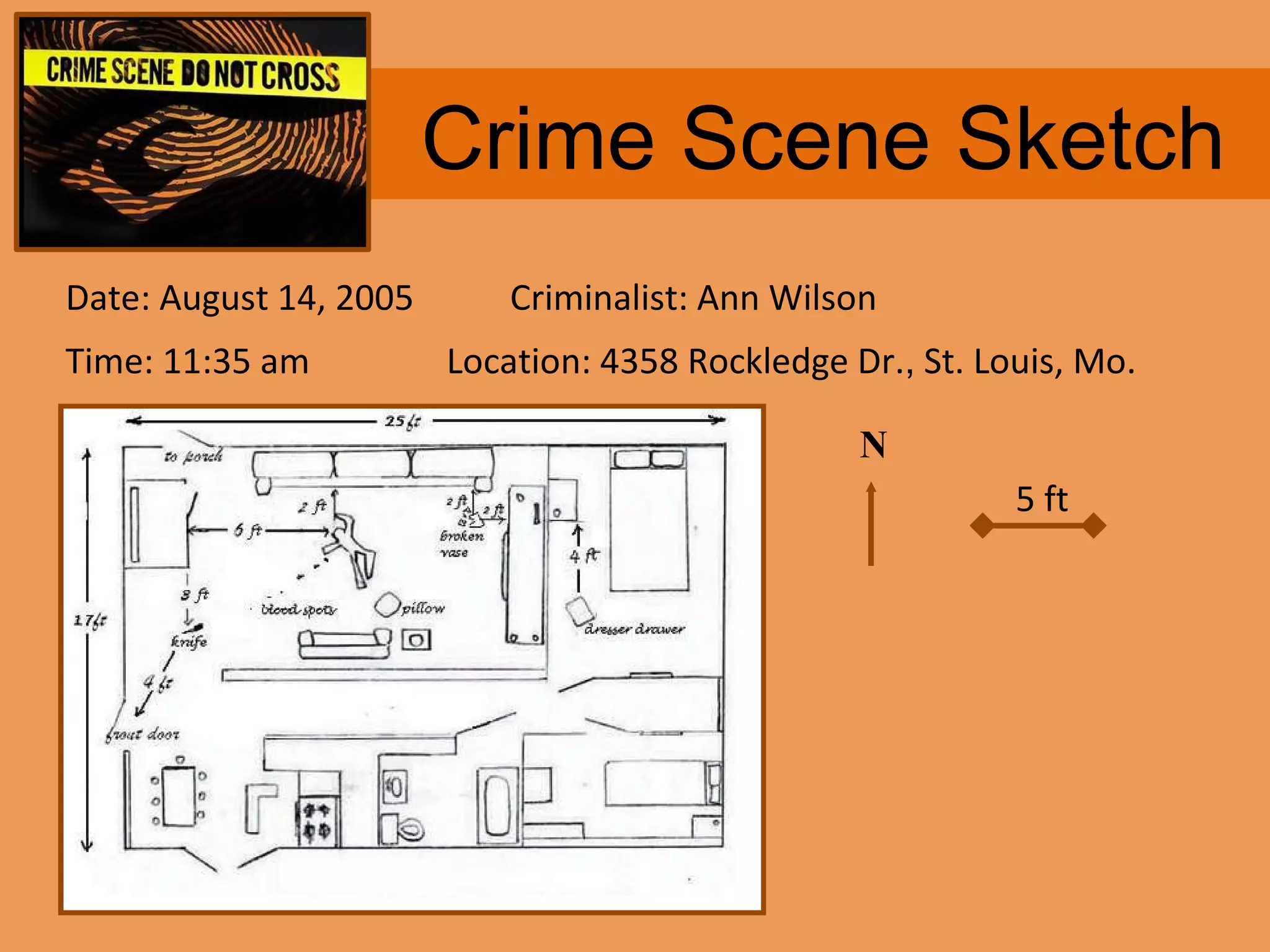
Crime Scene SketchDate: August 14, 2005 Criminalist: Ann Wilson Time: 11:35 am Location: 4358 Rockledge Dr. , St. Louis, Mo. N 5 ft
15.
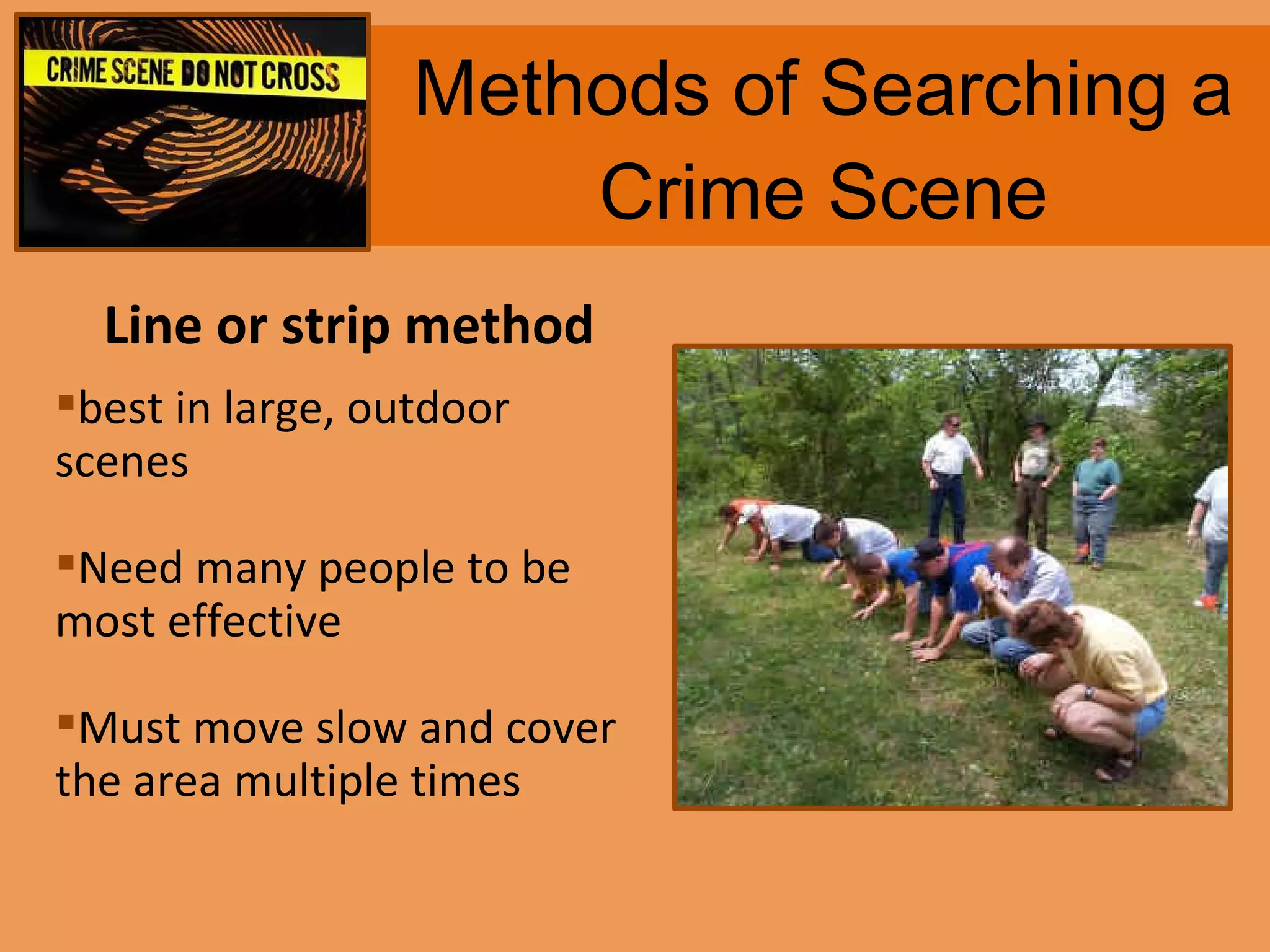
Methods of Searchinga Crime Scene Line or strip method best in large, outdoor scenes Need many people to be most effective Must move slow and cover the area multiple times
16.
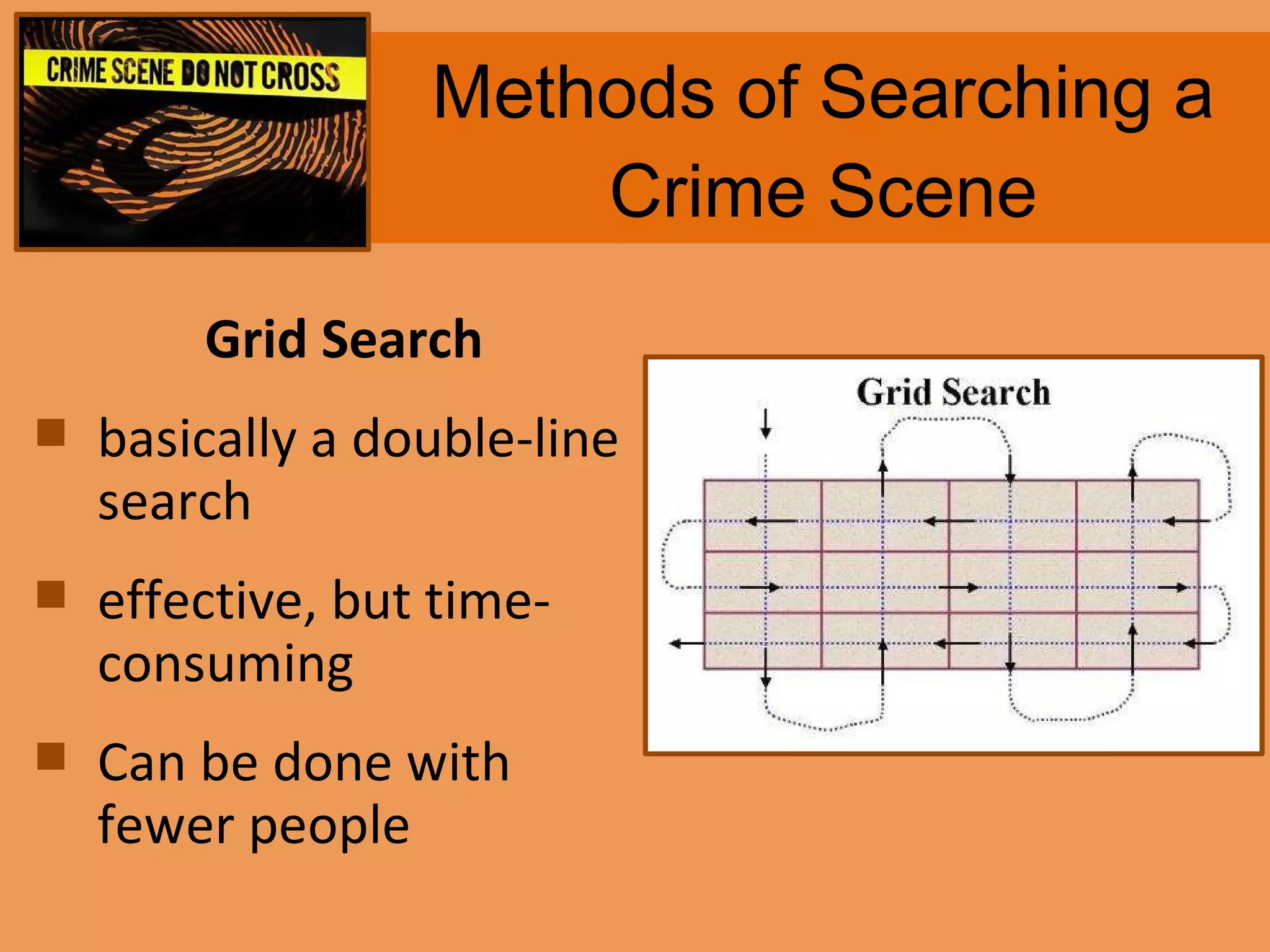
Methods of Searchinga Crime Scene Grid Search basically a double-line search effective, but time-consuming Can be done with fewer people
17.
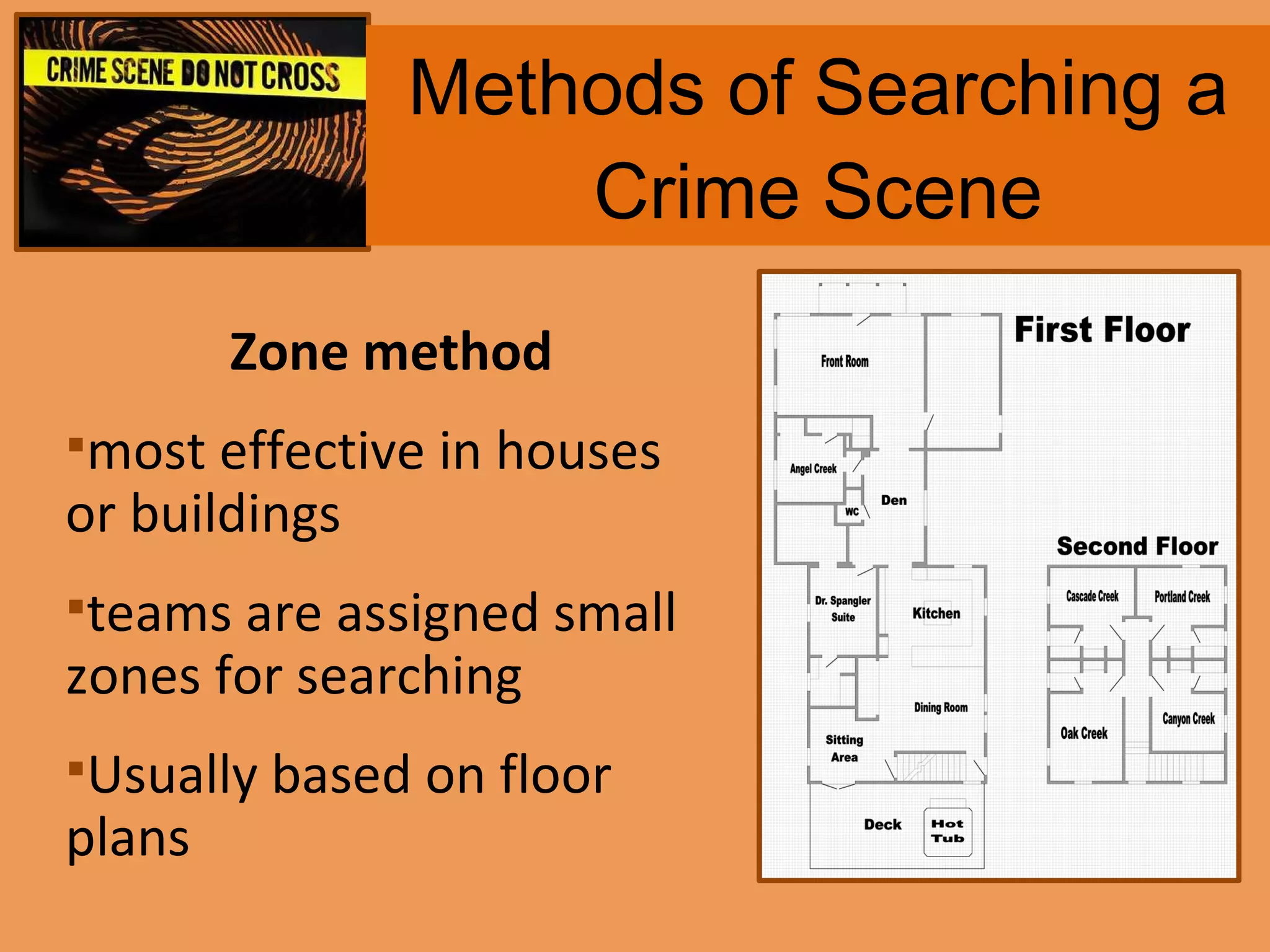
Methods of Searchinga Crime Scene Zone method most effective in houses or buildings teams are assigned small zones for searching Usually based on floor plans
18.
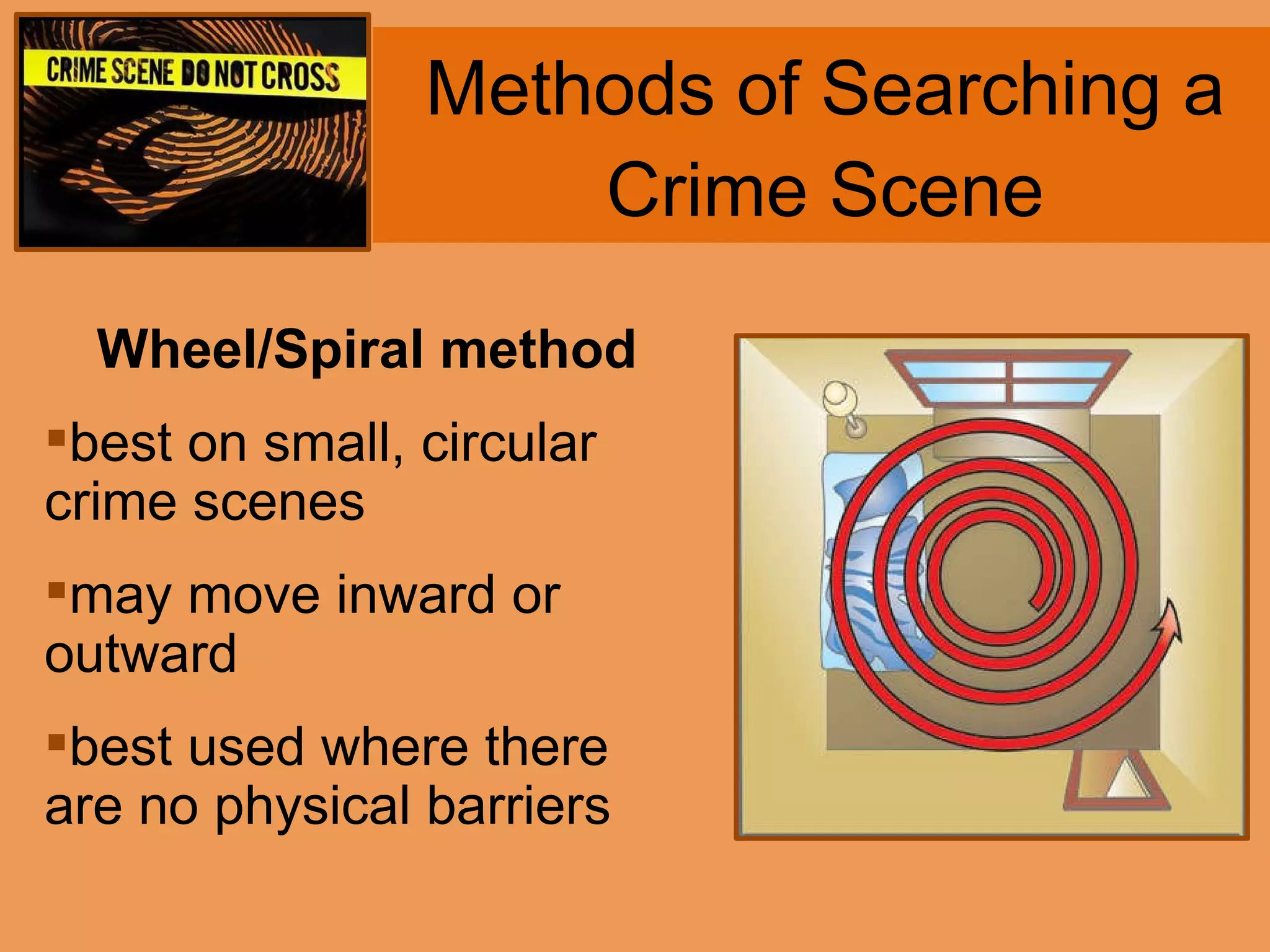
Methods of Searchinga Crime Scene Wheel/Spiral method best on small, circular crime scenes may move inward or outward best used where there are no physical barriers
19.
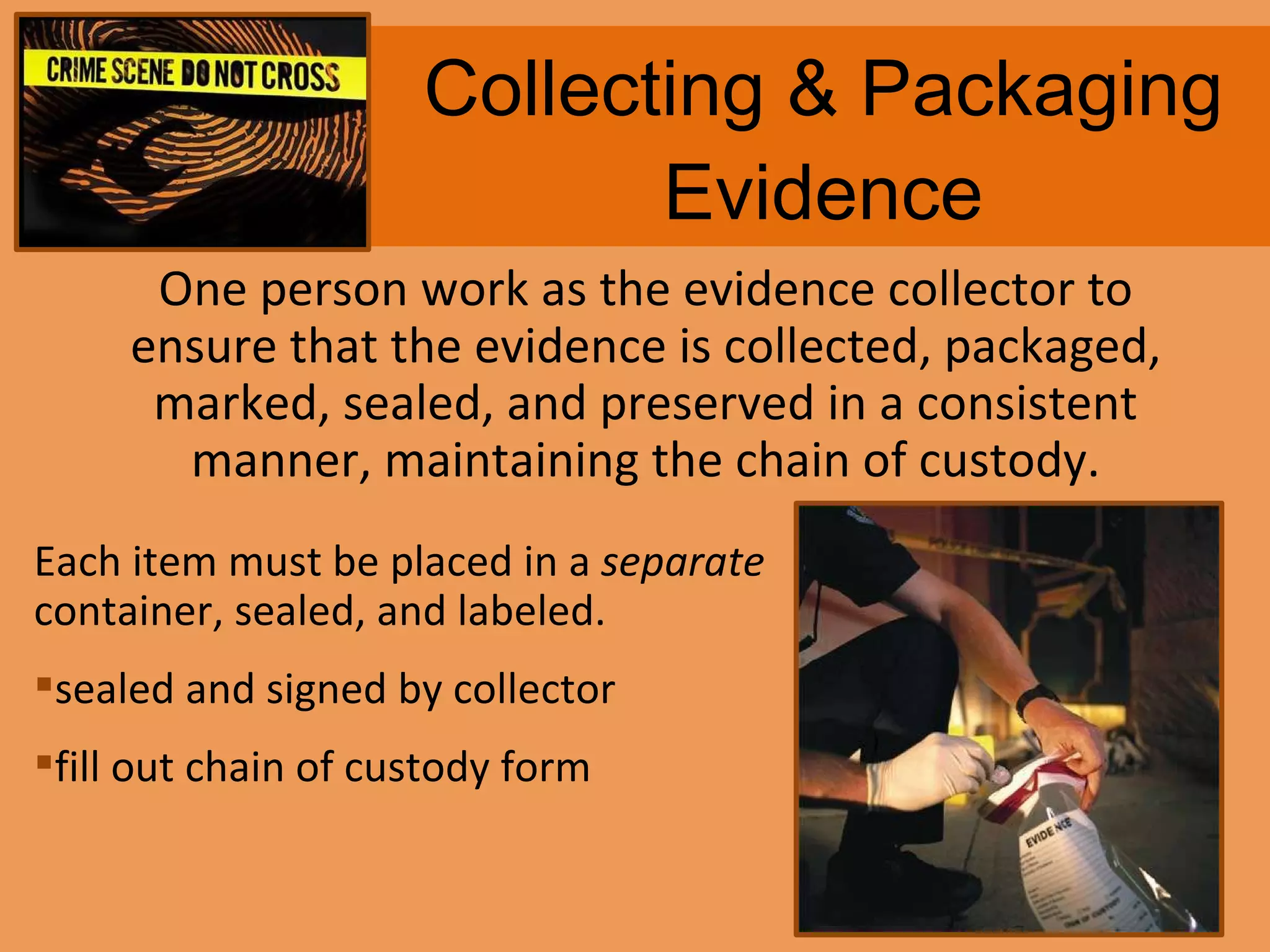
Collecting & PackagingEvidence One person work as the evidence collector to ensure that the evidence is collected, packaged, marked, sealed, and preserved in a consistent manner, maintaining the chain of custody. Each item must be placed in a separate container, sealed, and labeled. sealed and signed by collector fill out chain of custody form
20.
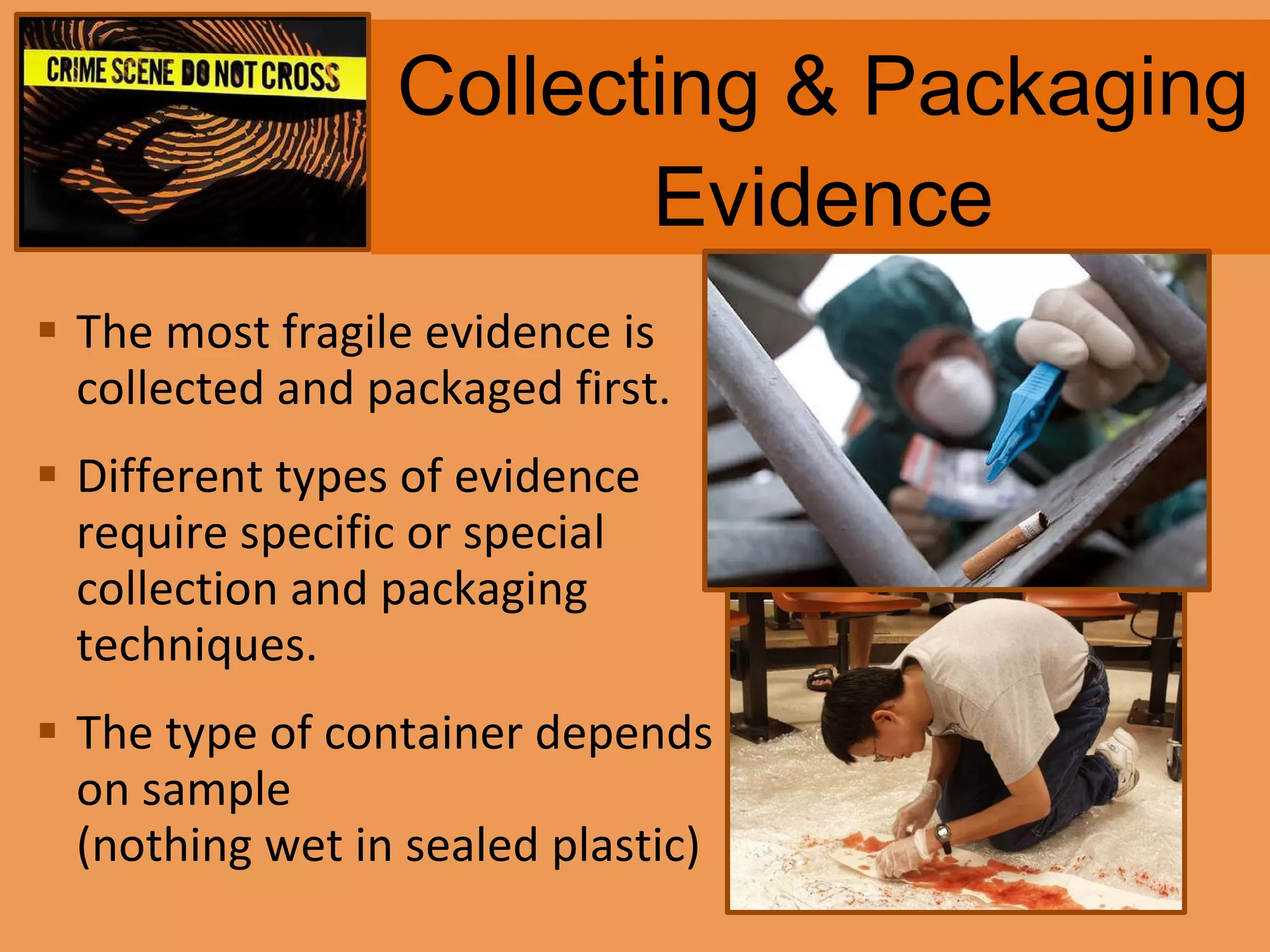
Collecting & PackagingEvidence The most fragile evidence is collected and packaged first. Different types of evidence require specific or special collection and packaging techniques. The type of container depends on sample (nothing wet in sealed plastic)
21.
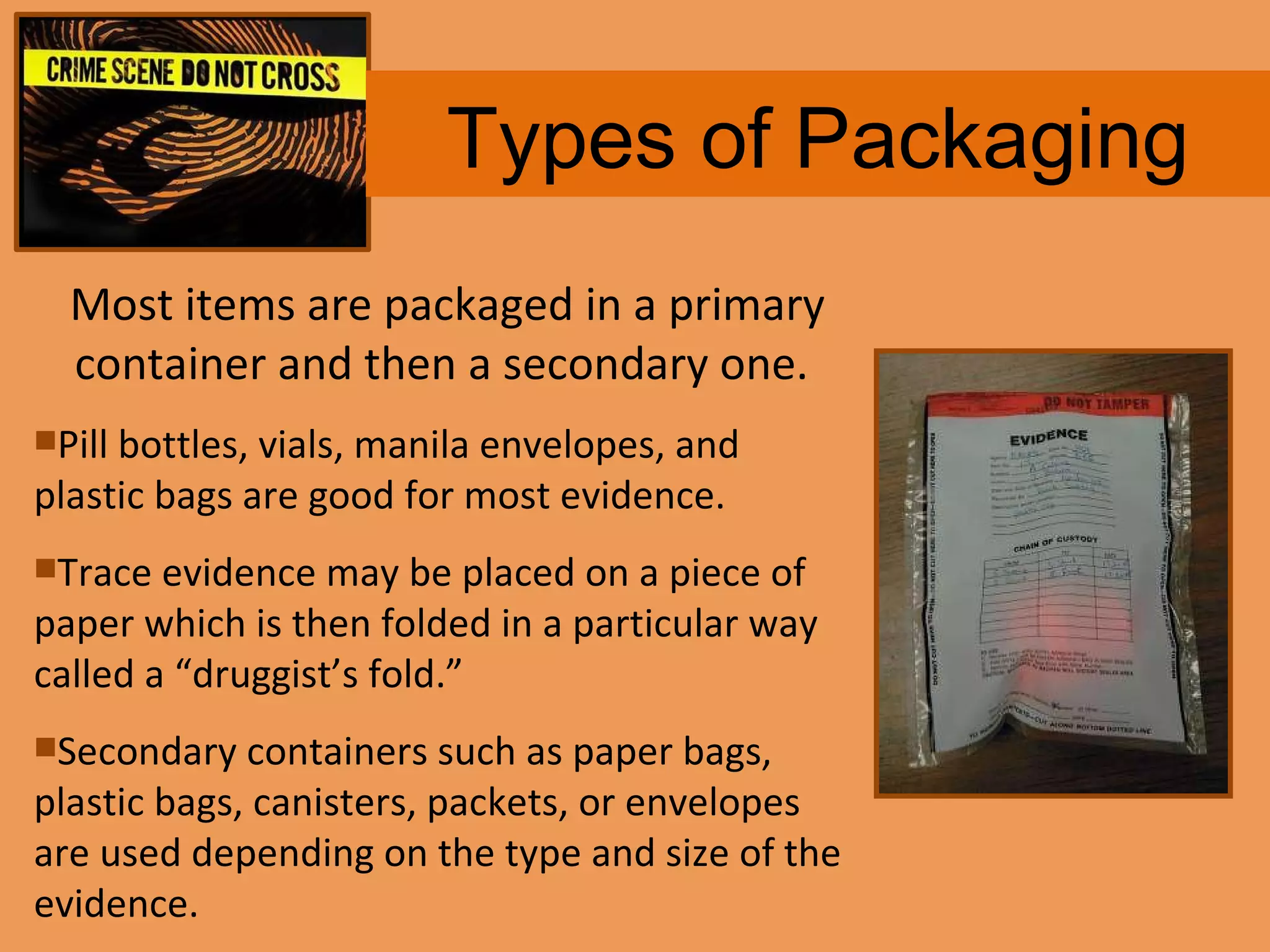
Types of PackagingMost items are packaged in a primary container and then a secondary one. Pill bottles, vials, manila envelopes, and plastic bags are good for most evidence. Trace evidence may be placed on a piece of paper which is then folded in a particular way called a “druggist’s fold.” Secondary containers such as paper bags, plastic bags, canisters, packets, or envelopes are used depending on the type and size of the evidence.
22.
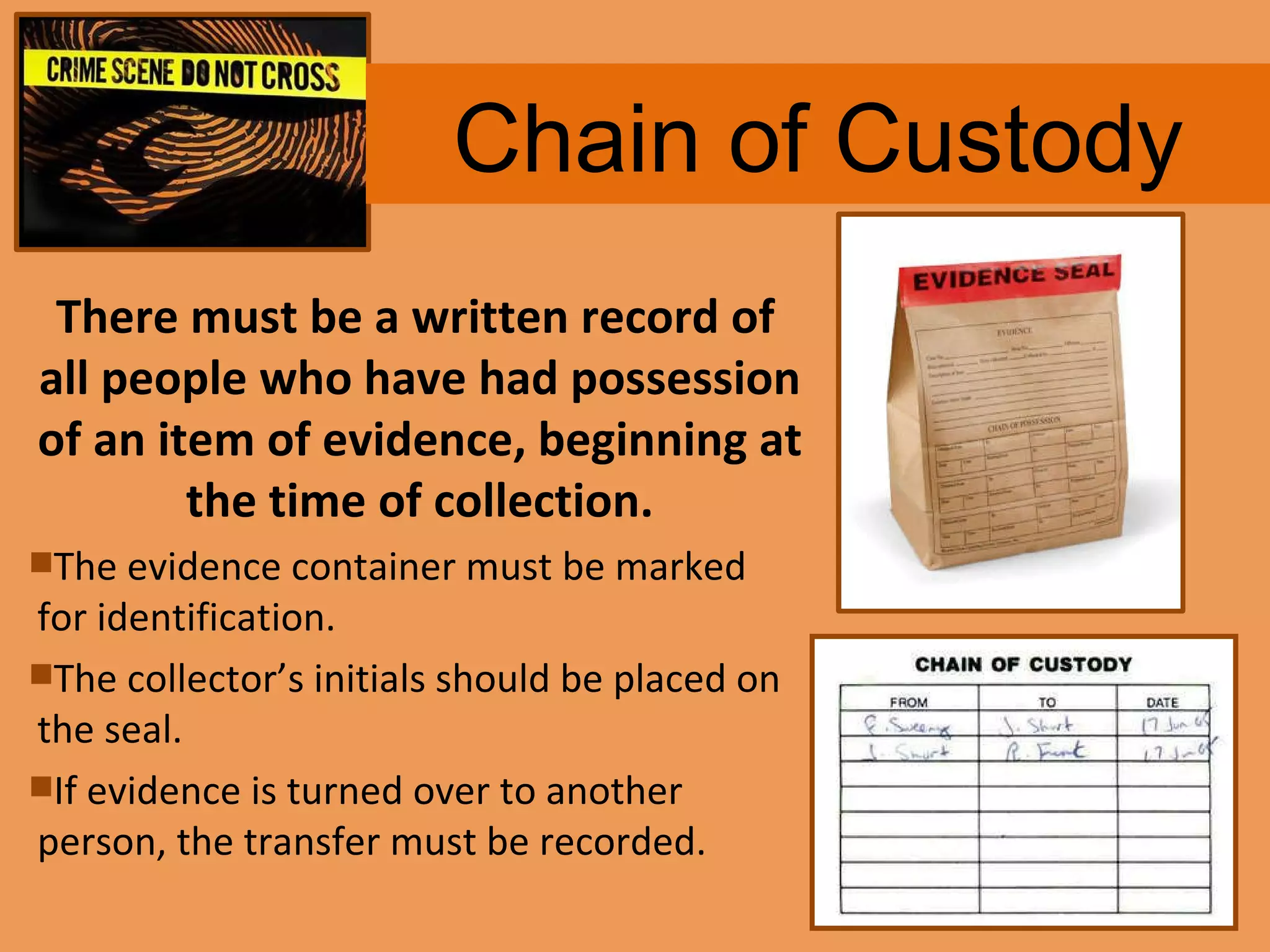
Chain of CustodyThere must be a written record of all people who have had possession of an item of evidence, beginning at the time of collection. The evidence container must be marked for identification. The collector’s initials should be placed on the seal. If evidence is turned over to another person, the transfer must be recorded.
23.
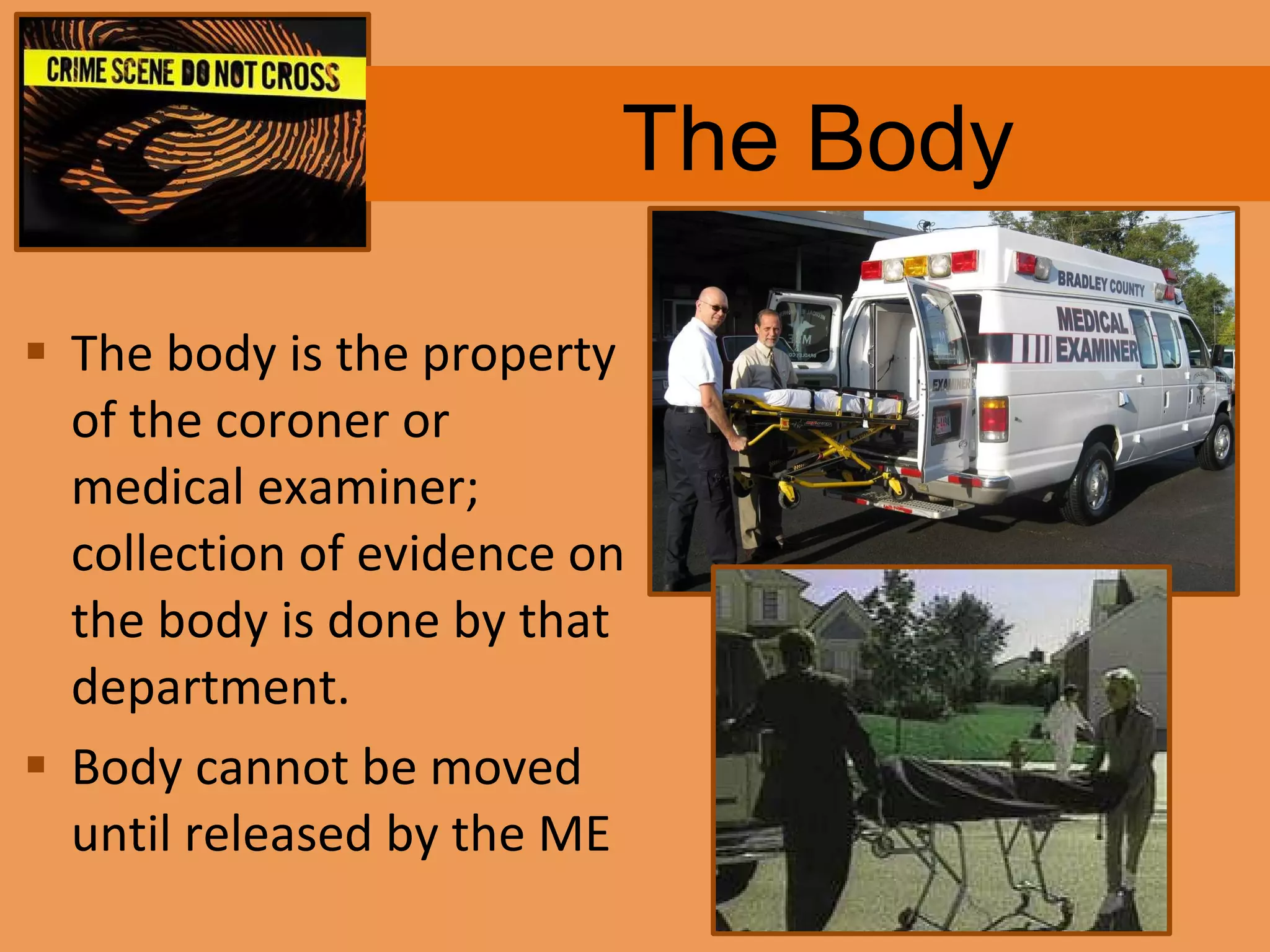
The Body Thebody is the property of the coroner or medical examiner; collection of evidence on the body is done by that department. Body cannot be moved until released by the ME