DISCOVER . LEARN . EMPOWER
Daubert’s, Frye’s law and
Report writing
INSTITUTE UIS
Department Forensic Science
Masters of Forensic Science
Subject Name: Crime Scene Management and Criminal Justice System
Code: 20FST611
Sahil Sharma
Assistant Professor
(Lecture- 07)
https://www.cwcboe.org/cms/lib/NJ01001185/Centricity/D
omain/129/Animations/detective_crime_scene_lg_clr.gif
2
The objectives of this lecture are;
 To understand the admissibility of Forensic scientist as expert in court.
 To understand the admissibility of opinion of Forensic scientist as
evidence in court of law.
The outcomes of this lecture are:
 Student will learn about the importance of forensic scientists and their
admissibility in the court as expert.
 Student will learn about the admissibility of report by forensic lab or
forensic scientist as evidence in the court.
Objectives and Outcomes to be covered
Expert
• Person skillful in a particular area.
• Vetting an expert
• Admissibility of expert’s testimony in court
• In-admissibility of testimony may leads to hazardous
• Two major governing standards: Dauber and Frye
Daubert’s standard or Law
• Daubert v. Merrell Dow Pharmaceuticals, Inc., 509 U.S. 579 (1993)
• U.S. Supreme Court decision
• Relevance and reliability
• Incompatible with the stricter “general acceptance” test
Daubert’s standard or Law
• Importance to a trial judge’s
• Petitioners Jason Daubert and Eric Schuller born with serious birth
defects
• Ingestion of Bendectin (anti nausea drug) by Mother
• Respondent submitted an affidavit of physician and epidemiologist
Daubert’s standard or Law
• Steven H. Lamm, expert on the risks from exposure to various
chemical substances
• Lamm stated that he had reviewed all the literature
• Medicine tested on 130,000 patients
• No study on Bendectin as Human teratogen (i.e., a substance capable
of causing malformations in fetuses)
Daubert’s standard or Law
• Petitioner’s have reports from 8 experts
• Court stated that scientific evidence is admissible only if the principle
upon which it is based is "sufficiently established to have general
acceptance in the field to which it belongs”
• Concluded that petitioner’s evidence did not meet this standard
Poll 1
Q. Do you think that court should have considered the petitioner’s
report?
1. Yes
2. No
Frye’s Law
• General Acceptance in the Scientific Community
• Expert opinion is admissible if the scientific technique on which the
opinion is based is “generally accepted” as reliable in the relevant
scientific community
• Expert testimony concerning a lie detector test
Poll 2
Q. Is there any difference in Daubert and Frye standard?
1. Yes
2. No
Difference
• Frye essentially focuses on one question that expert’s opinion is
generally accepted by the relevant scientific community
• Daubert offers a list of factors that affect the opinion
Report writing
• Not about art of spin rather a responsibility
• Who,
• When,
• How and
• Why?
6 standards
• Clear & Concise
• Structure
• Relevant & Logic
• Accurate & Complete
• Impartial & Objective
• Professional
Components
• Background
• Scope and mandate
• Methodology & limitation (if any)
• Summery of evidence
• Findings
• Conclusion
• Recommendation (if any)
Self test
• Does the reader understand the purpose / goal / objective of the
report?
• Is the reader sensitized on the purpose (relevance) of each ‘category /
section’ of the report?
• Is the report structured according to logical relevance of content?
• Structure of report should be reflective of logical relevance / mind-
map
Report writing
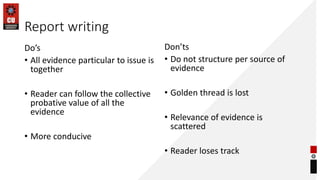
Do’s
• All evidence particular to issue is
together
• Reader can follow the collective
probative value of all the
evidence
• More conducive
Don’ts
• Do not structure per source of
evidence
• Golden thread is lost
• Relevance of evidence is
scattered
• Reader loses track
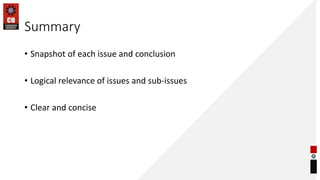
Summary
• Snapshot of each issue and conclusion
• Logical relevance of issues and sub-issues
• Clear and concise
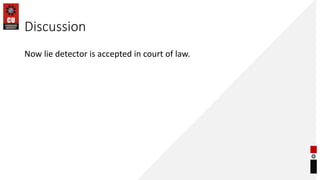
Discussion
Now lie detector is accepted in court of law.
References
• https://www.expertinstitute.com/resources/insights/daubert-vs-frye-
navigating-the-standards-of-admissibility-for-expert-testimony/
• https://www.law.cornell.edu/supct/html/92-102.ZO.html
• https://www.expertinstitute.com/resources/insights/the-history-of-
daubert-v-merrell-dow-pharmaceuticals/
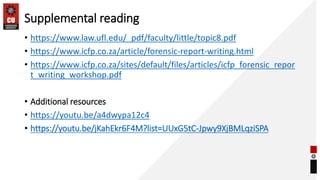
Supplemental reading
• https://www.law.ufl.edu/_pdf/faculty/little/topic8.pdf
• https://www.icfp.co.za/article/forensic-report-writing.html
• https://www.icfp.co.za/sites/default/files/articles/icfp_forensic_repor
t_writing_workshop.pdf
• Additional resources
• https://youtu.be/a4dwypa12c4
• https://youtu.be/jKahEkr6F4M?list=UUxG5tC-Jpwy9XjBMLqziSPA
Summary
• What are the qualifications to become forensic scientists?
• What is the required qualification to achieve different laboratory
ranks?
• What are different duties of Forensic scientist towards society and
court of law?
• Importance and duties of Forensic scientist and experts.
THANK YOU
For queries
Email: sahilsharma.uiahs@cumail.com

Daubert and Frye Law.pptx

  • 1.
    DISCOVER . LEARN. EMPOWER Daubert’s, Frye’s law and Report writing INSTITUTE UIS Department Forensic Science Masters of Forensic Science Subject Name: Crime Scene Management and Criminal Justice System Code: 20FST611 Sahil Sharma Assistant Professor (Lecture- 07) https://www.cwcboe.org/cms/lib/NJ01001185/Centricity/D omain/129/Animations/detective_crime_scene_lg_clr.gif
  • 2.
    2 The objectives ofthis lecture are;  To understand the admissibility of Forensic scientist as expert in court.  To understand the admissibility of opinion of Forensic scientist as evidence in court of law. The outcomes of this lecture are:  Student will learn about the importance of forensic scientists and their admissibility in the court as expert.  Student will learn about the admissibility of report by forensic lab or forensic scientist as evidence in the court. Objectives and Outcomes to be covered
  • 3.
    Expert • Person skillfulin a particular area. • Vetting an expert • Admissibility of expert’s testimony in court • In-admissibility of testimony may leads to hazardous • Two major governing standards: Dauber and Frye
  • 4.
    Daubert’s standard orLaw • Daubert v. Merrell Dow Pharmaceuticals, Inc., 509 U.S. 579 (1993) • U.S. Supreme Court decision • Relevance and reliability • Incompatible with the stricter “general acceptance” test
  • 5.
    Daubert’s standard orLaw • Importance to a trial judge’s • Petitioners Jason Daubert and Eric Schuller born with serious birth defects • Ingestion of Bendectin (anti nausea drug) by Mother • Respondent submitted an affidavit of physician and epidemiologist
  • 6.
    Daubert’s standard orLaw • Steven H. Lamm, expert on the risks from exposure to various chemical substances • Lamm stated that he had reviewed all the literature • Medicine tested on 130,000 patients • No study on Bendectin as Human teratogen (i.e., a substance capable of causing malformations in fetuses)
  • 7.
    Daubert’s standard orLaw • Petitioner’s have reports from 8 experts • Court stated that scientific evidence is admissible only if the principle upon which it is based is "sufficiently established to have general acceptance in the field to which it belongs” • Concluded that petitioner’s evidence did not meet this standard
  • 8.
    Poll 1 Q. Doyou think that court should have considered the petitioner’s report? 1. Yes 2. No
  • 9.
    Frye’s Law • GeneralAcceptance in the Scientific Community • Expert opinion is admissible if the scientific technique on which the opinion is based is “generally accepted” as reliable in the relevant scientific community • Expert testimony concerning a lie detector test
  • 10.
    Poll 2 Q. Isthere any difference in Daubert and Frye standard? 1. Yes 2. No
  • 11.
    Difference • Frye essentiallyfocuses on one question that expert’s opinion is generally accepted by the relevant scientific community • Daubert offers a list of factors that affect the opinion
  • 12.
    Report writing • Notabout art of spin rather a responsibility • Who, • When, • How and • Why?
  • 13.
    6 standards • Clear& Concise • Structure • Relevant & Logic • Accurate & Complete • Impartial & Objective • Professional
  • 14.
    Components • Background • Scopeand mandate • Methodology & limitation (if any) • Summery of evidence • Findings • Conclusion • Recommendation (if any)
  • 15.
    Self test • Doesthe reader understand the purpose / goal / objective of the report? • Is the reader sensitized on the purpose (relevance) of each ‘category / section’ of the report? • Is the report structured according to logical relevance of content? • Structure of report should be reflective of logical relevance / mind- map
  • 16.
    Report writing Do’s • Allevidence particular to issue is together • Reader can follow the collective probative value of all the evidence • More conducive Don’ts • Do not structure per source of evidence • Golden thread is lost • Relevance of evidence is scattered • Reader loses track
  • 17.
    Summary • Snapshot ofeach issue and conclusion • Logical relevance of issues and sub-issues • Clear and concise
  • 18.
    Discussion Now lie detectoris accepted in court of law.
  • 19.
  • 20.
    Supplemental reading • https://www.law.ufl.edu/_pdf/faculty/little/topic8.pdf •https://www.icfp.co.za/article/forensic-report-writing.html • https://www.icfp.co.za/sites/default/files/articles/icfp_forensic_repor t_writing_workshop.pdf • Additional resources • https://youtu.be/a4dwypa12c4 • https://youtu.be/jKahEkr6F4M?list=UUxG5tC-Jpwy9XjBMLqziSPA
  • 21.
    Summary • What arethe qualifications to become forensic scientists? • What is the required qualification to achieve different laboratory ranks? • What are different duties of Forensic scientist towards society and court of law? • Importance and duties of Forensic scientist and experts.
  • 22.
    THANK YOU For queries Email:sahilsharma.uiahs@cumail.com