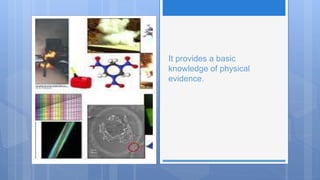
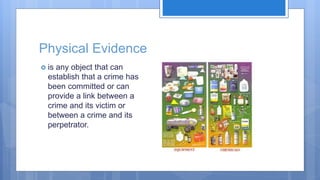
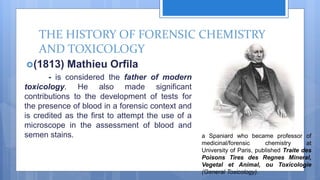
Forensic chemistry and toxicology are discussed. Key points include defining forensic science as the application of scientific techniques to solve crimes, providing knowledge of physical evidence. The history of the fields is reviewed, noting figures like Orfila and Marsh who advanced techniques like toxicology. Crime laboratories are introduced as the place where physical and chemical analysis is conducted to study evidence like drugs, fingerprints, firearms. The roles of forensic chemists are outlined in collecting, examining, and communicating results of samples to help solve legal cases.





![FORENSIC CHEMISTRY AND TOXICOLOGY [Autosaved] - Copy [Autosaved].pdf](https://cdn.slidesharecdn.com/ss_thumbnails/forensicchemistryandtoxicologyautosaved-copyautosaved-241017231040-bdfaa3c0-thumbnail.jpg?width=640&height=640&fit=bounds)


