Download to read offline


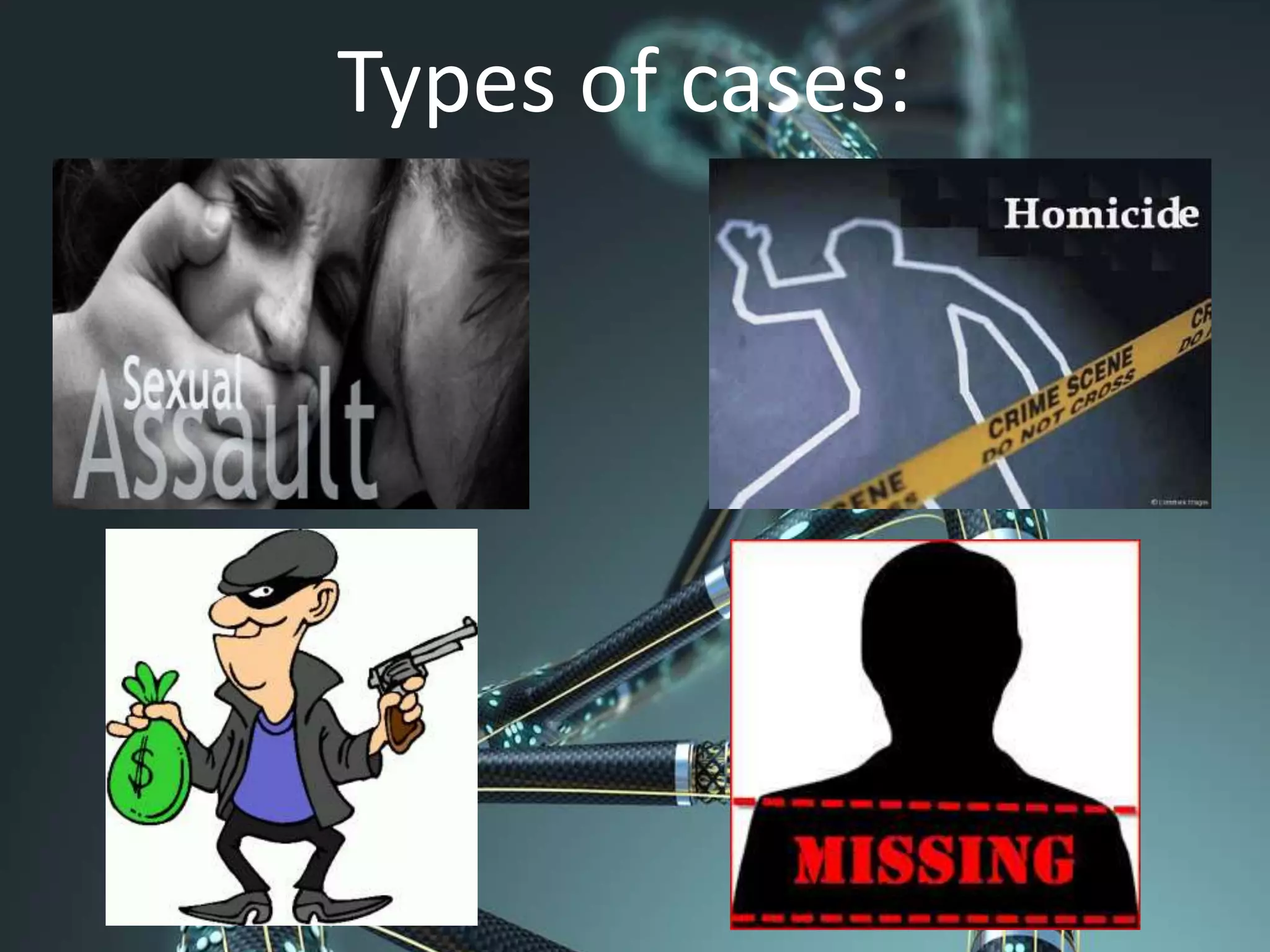
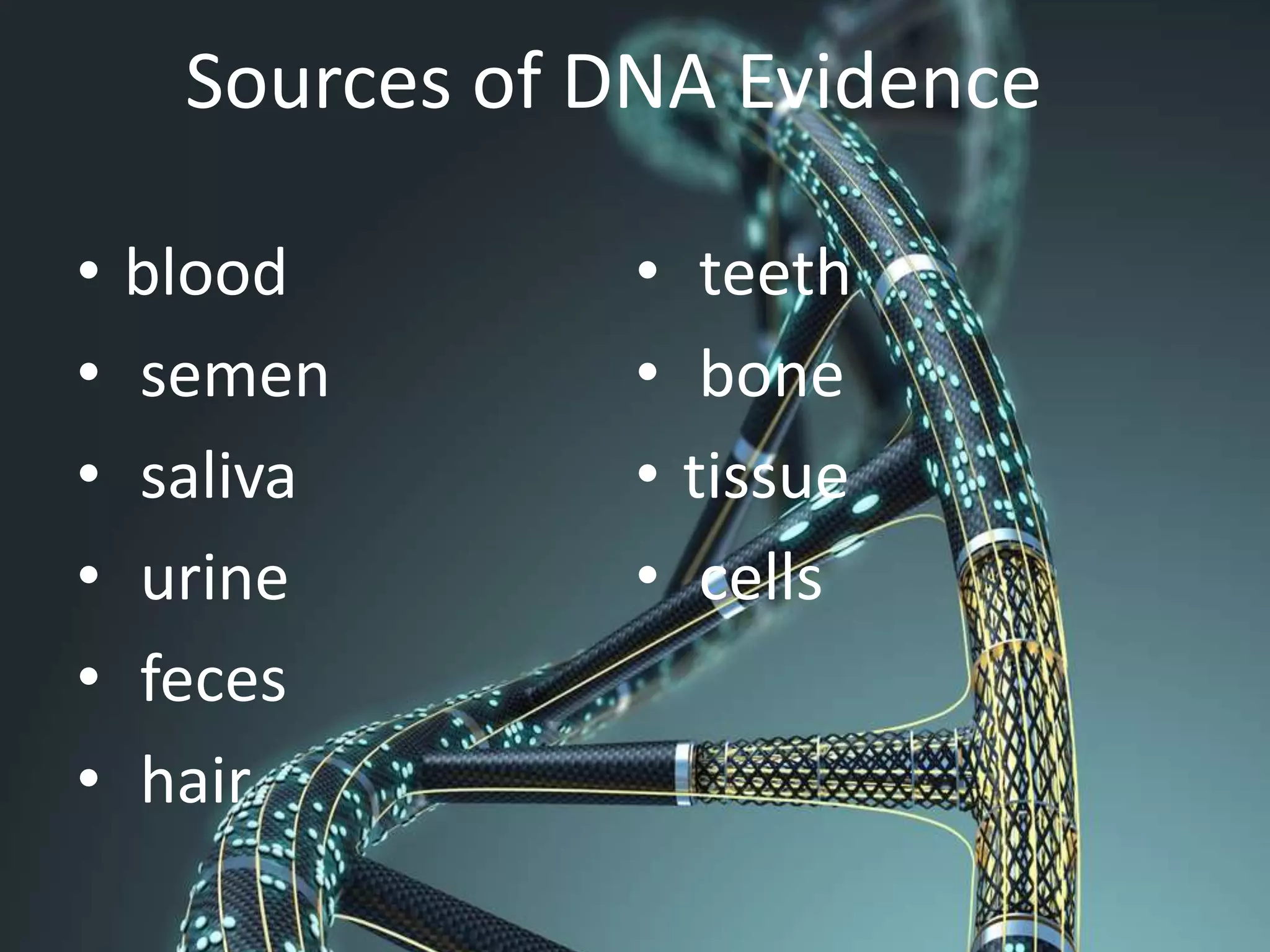
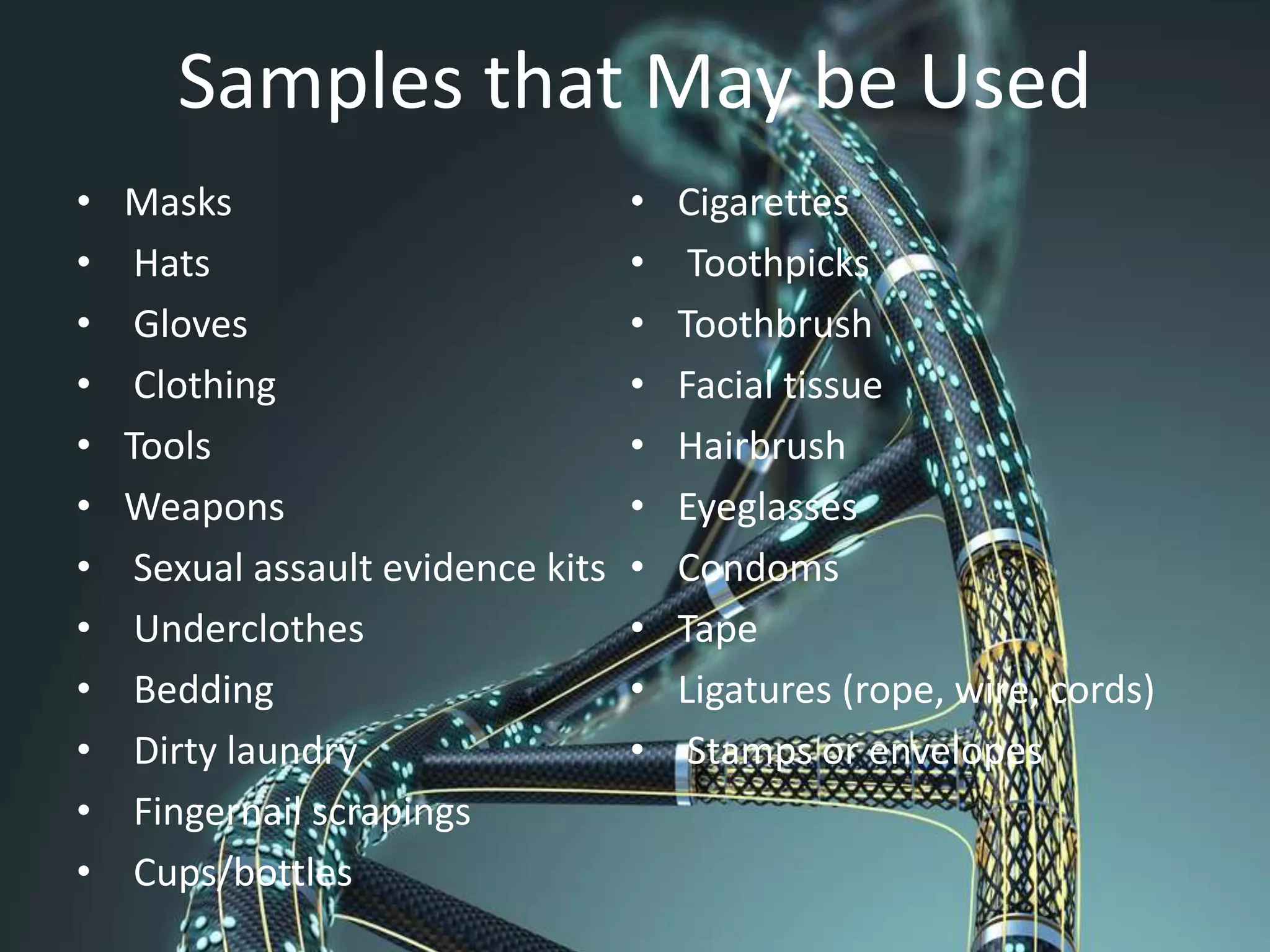


Forensic DNA analysis uses DNA evidence found at crime scenes to help solve legal cases. DNA can be obtained from bodily fluids like blood, semen, saliva, and skin cells left on various surfaces and objects at a crime scene. Common sources of DNA evidence include clothing, tools, weapons, sexual assault kits, undergarments, bedding, and items touched with bare hands. The accuracy of DNA analysis makes it a valuable tool for identifying suspects but also for exonerating innocent individuals wrongly convicted of crimes.


![Growth and development [autosaved]](https://cdn.slidesharecdn.com/ss_thumbnails/growthanddevelopmentautosaved-210921102415-thumbnail.jpg?width=640&height=640&fit=bounds)


