


FOREIGN DIRECT INVESTMENT 
FLOWS IN INDIA – 
AN EMPIRICAL ASSESSMENT 
BY: 
M SAIRAM 
Siva Sivani Institute of Management
IMPORTANCE OF STUDY 
As Foreign Direct Investment (FDI) is one and only major 
instrument of attracting economic integration in any economy.
OBJECTIVES OF STUDY 
This study covers the following objectives: 
 To study the trends and pattern of flow of FDI. 
 To identify the factors which influence the flow of FDI in India. 
RESEARCH OF METHODALAGY 
 The data is collected from secondary sources and RBI website. 
 The magnitude of FDI inflows is analyzed for a period from 2000 to 
2014. The factors which influence the flow of FDI into the country is 
analyzed during post period i.e., 2000 to 2014.
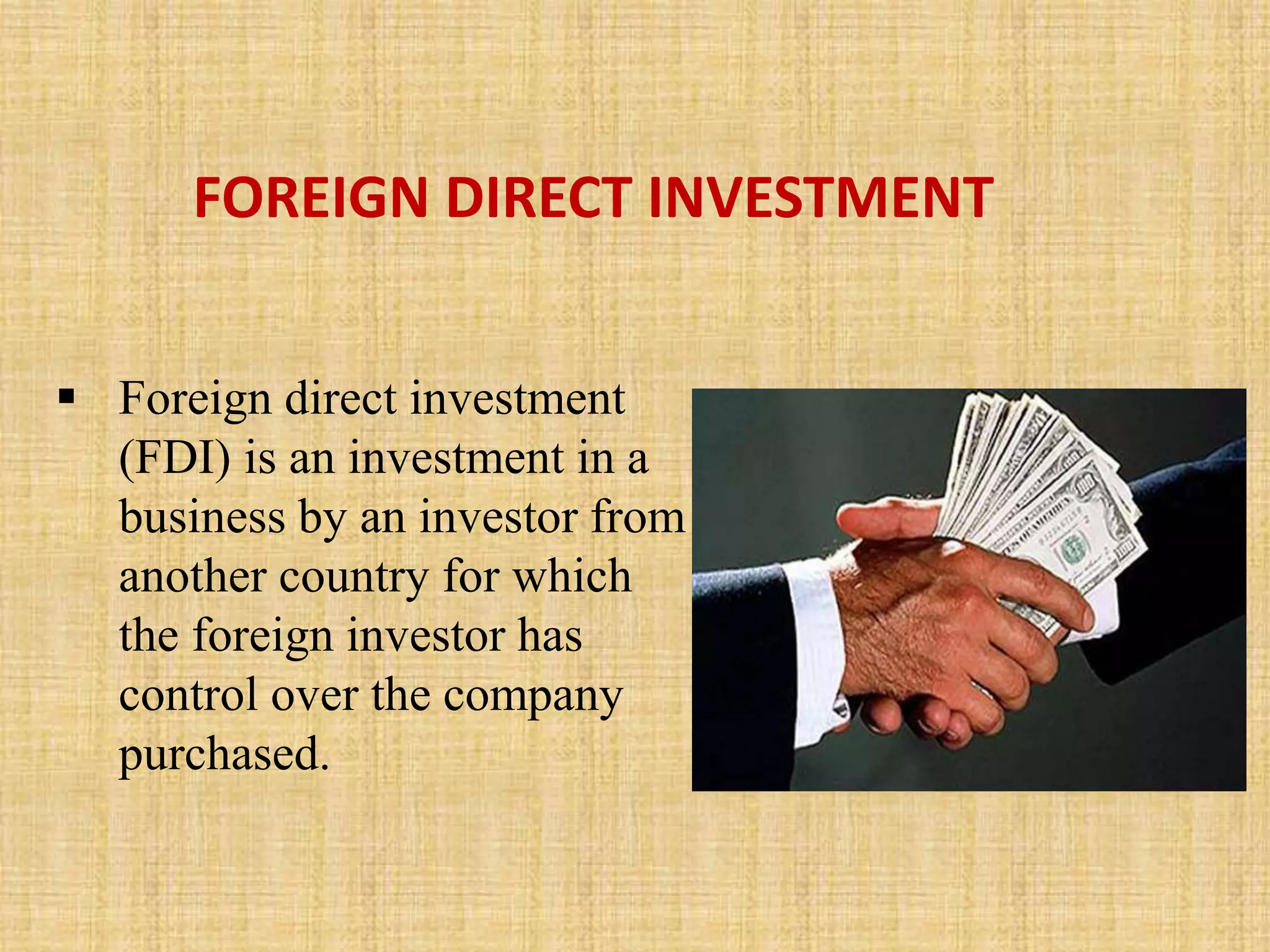
FOREIGN DIRECT INVESTMENT 
 Foreign direct investment 
(FDI) is an investment in a 
business by an investor from 
another country for which 
the foreign investor has 
control over the company 
purchased.
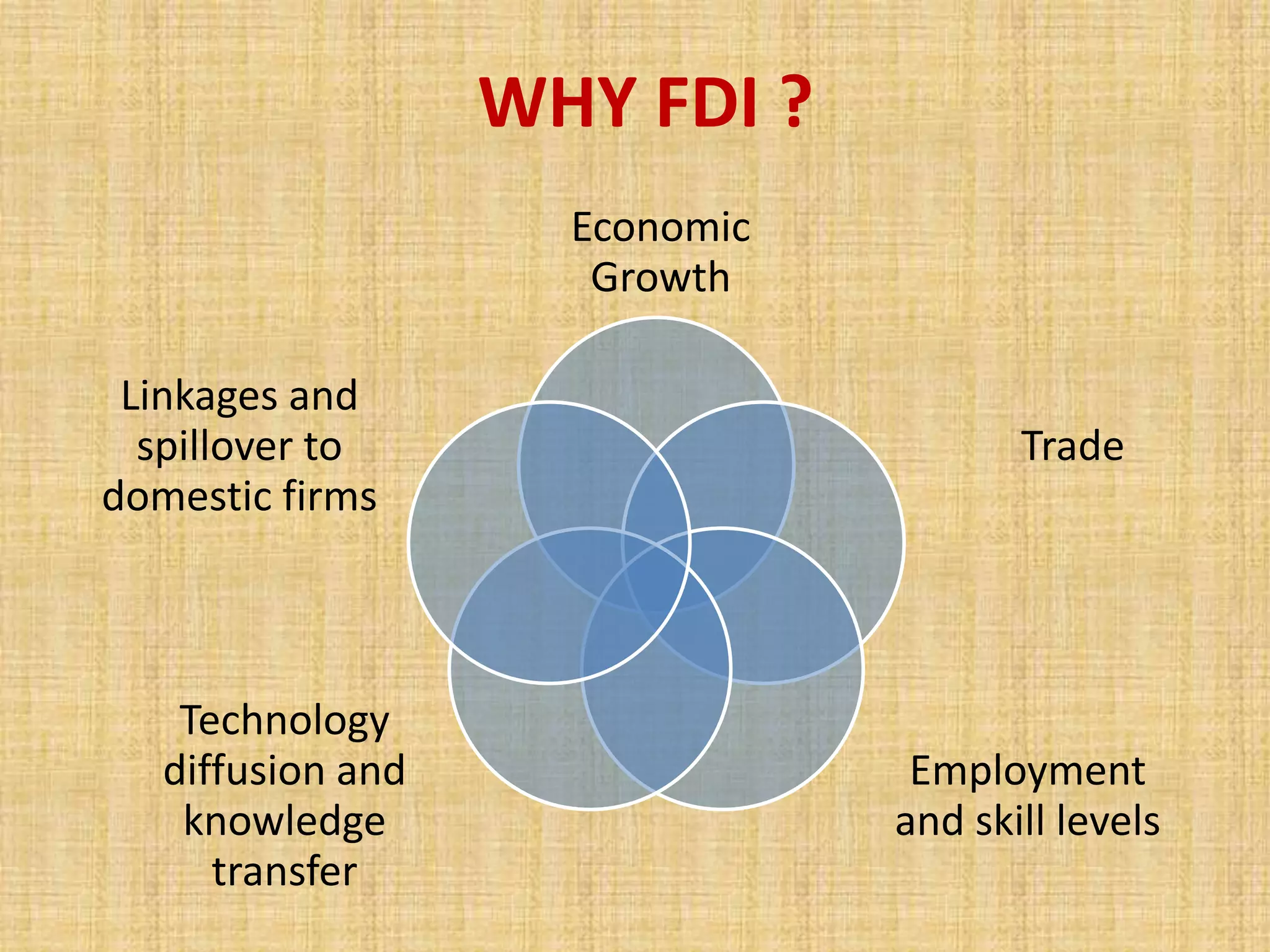
Economic 
Growth 
Trade 
Employment 
and skill levels 
Linkages and 
spillover to 
domestic firms 
Technology 
diffusion and 
knowledge 
transfer 
WHY FDI ?
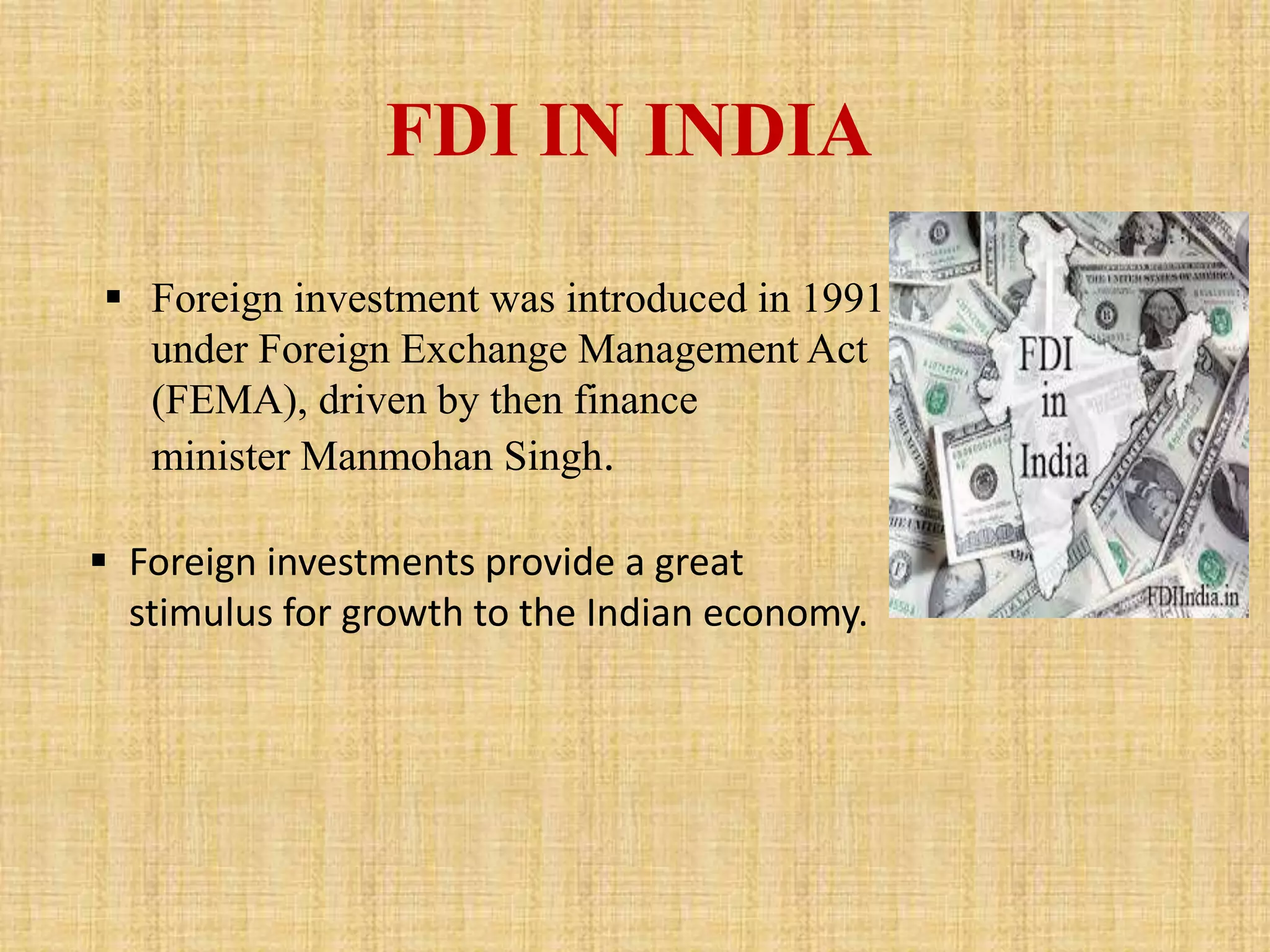
FDI IN INDIA 
 Foreign investment was introduced in 1991 
under Foreign Exchange Management Act 
(FEMA), driven by then finance 
minister Manmohan Singh. 
 Foreign investments provide a great 
stimulus for growth to the Indian economy.
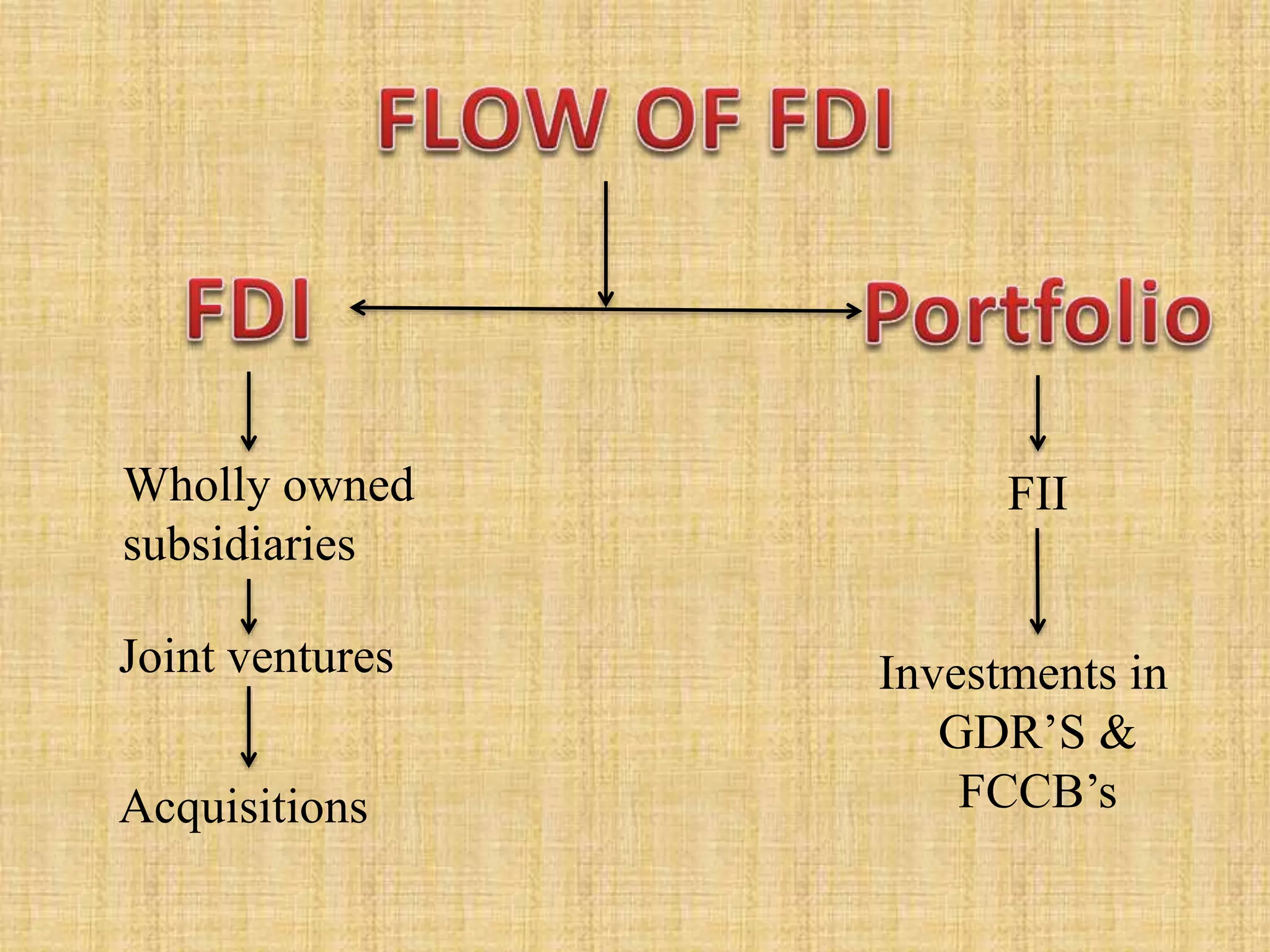
Wholly owned 
subsidiaries 
Joint ventures 
Acquisitions 
FII 
Investments in 
GDR’S & 
FCCB’s
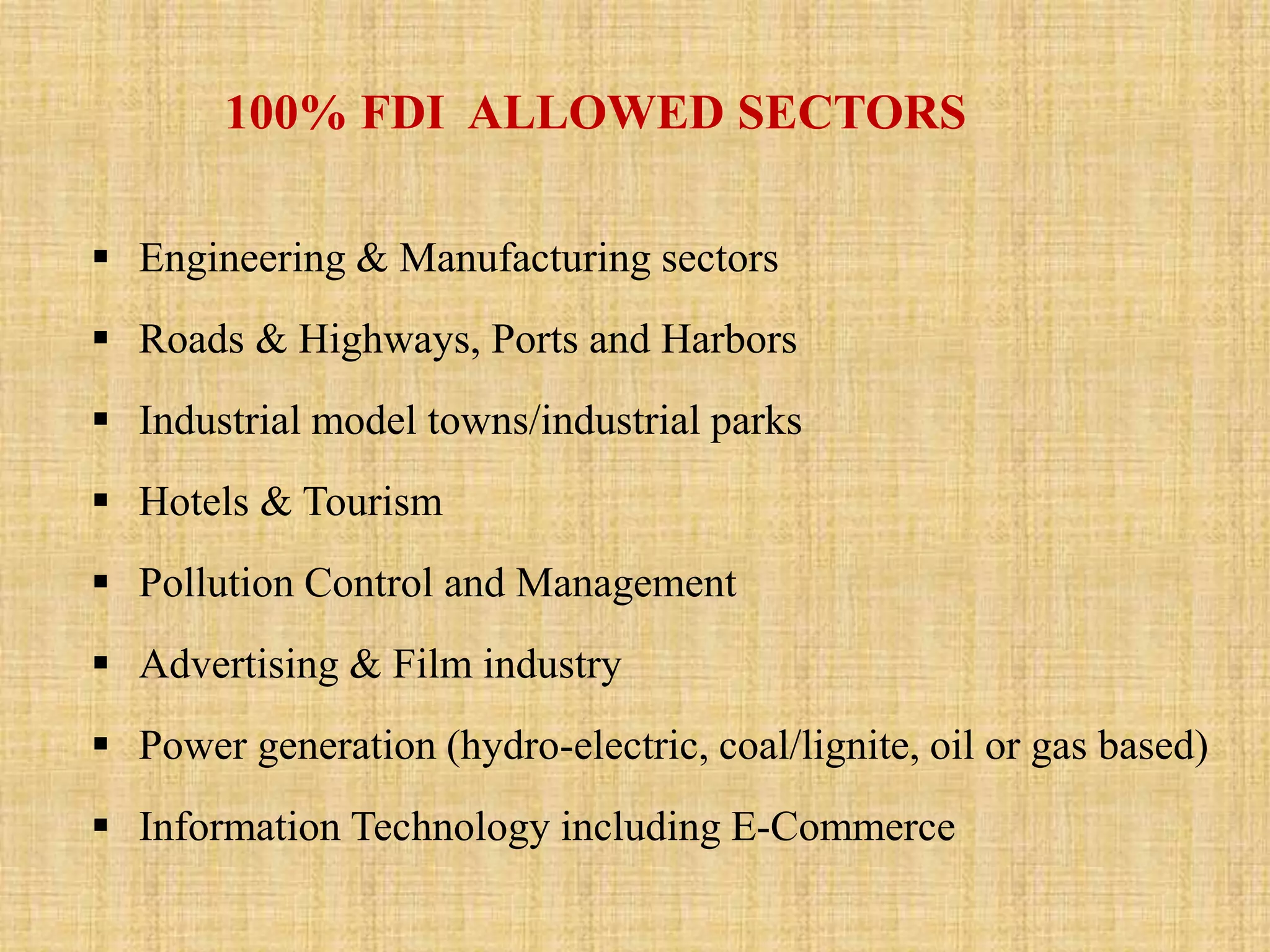
100% FDI ALLOWED SECTORS 
 Engineering & Manufacturing sectors 
 Roads & Highways, Ports and Harbors 
 Industrial model towns/industrial parks 
 Hotels & Tourism 
 Pollution Control and Management 
 Advertising & Film industry 
 Power generation (hydro-electric, coal/lignite, oil or gas based) 
 Information Technology including E-Commerce
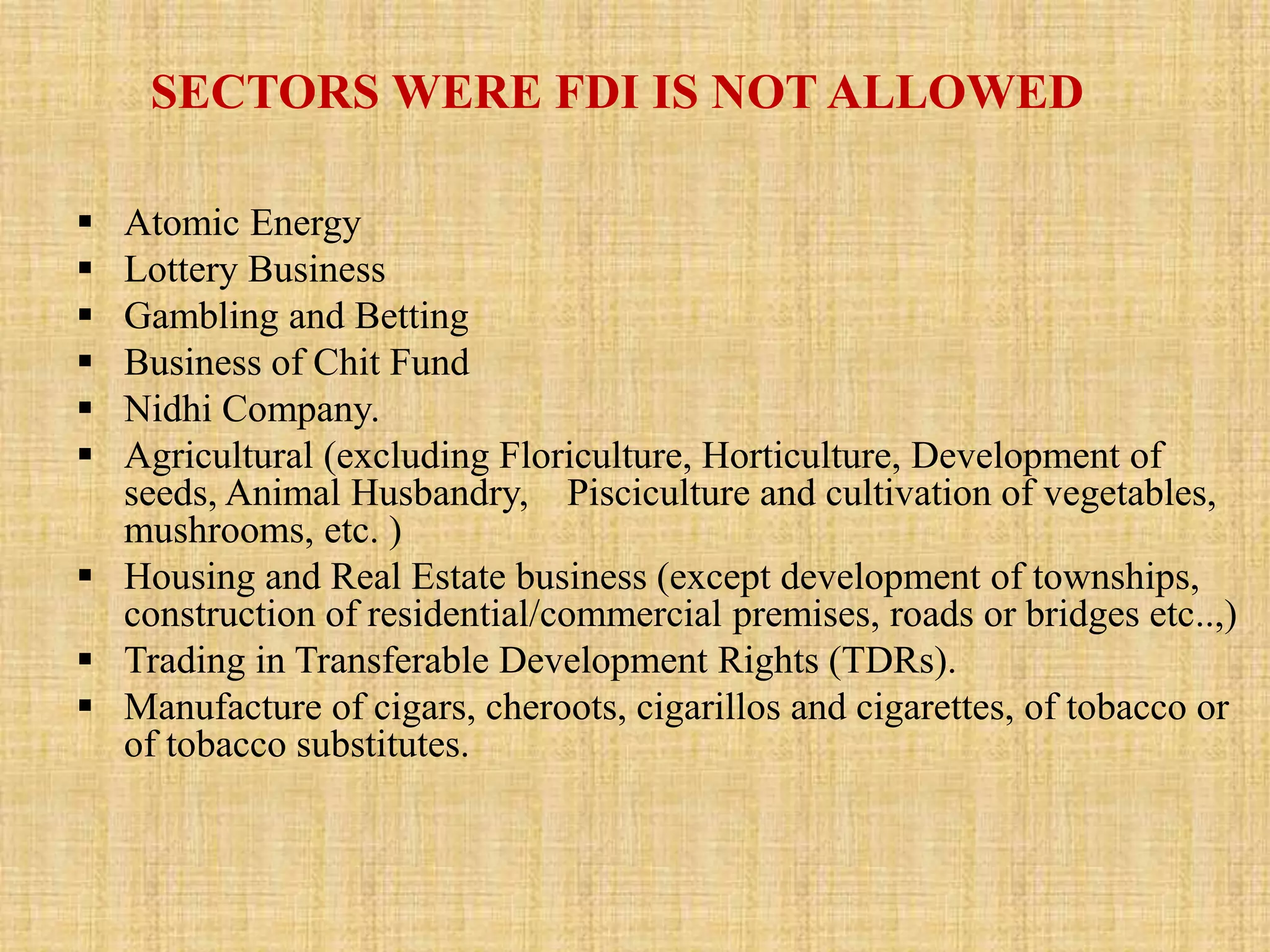
SECTORS WERE FDI IS NOT ALLOWED 
 Atomic Energy 
 Lottery Business 
 Gambling and Betting 
 Business of Chit Fund 
 Nidhi Company. 
 Agricultural (excluding Floriculture, Horticulture, Development of 
seeds, Animal Husbandry, Pisciculture and cultivation of vegetables, 
mushrooms, etc. ) 
 Housing and Real Estate business (except development of townships, 
construction of residential/commercial premises, roads or bridges etc..,) 
 Trading in Transferable Development Rights (TDRs). 
 Manufacture of cigars, cheroots, cigarillos and cigarettes, of tobacco or 
of tobacco substitutes.
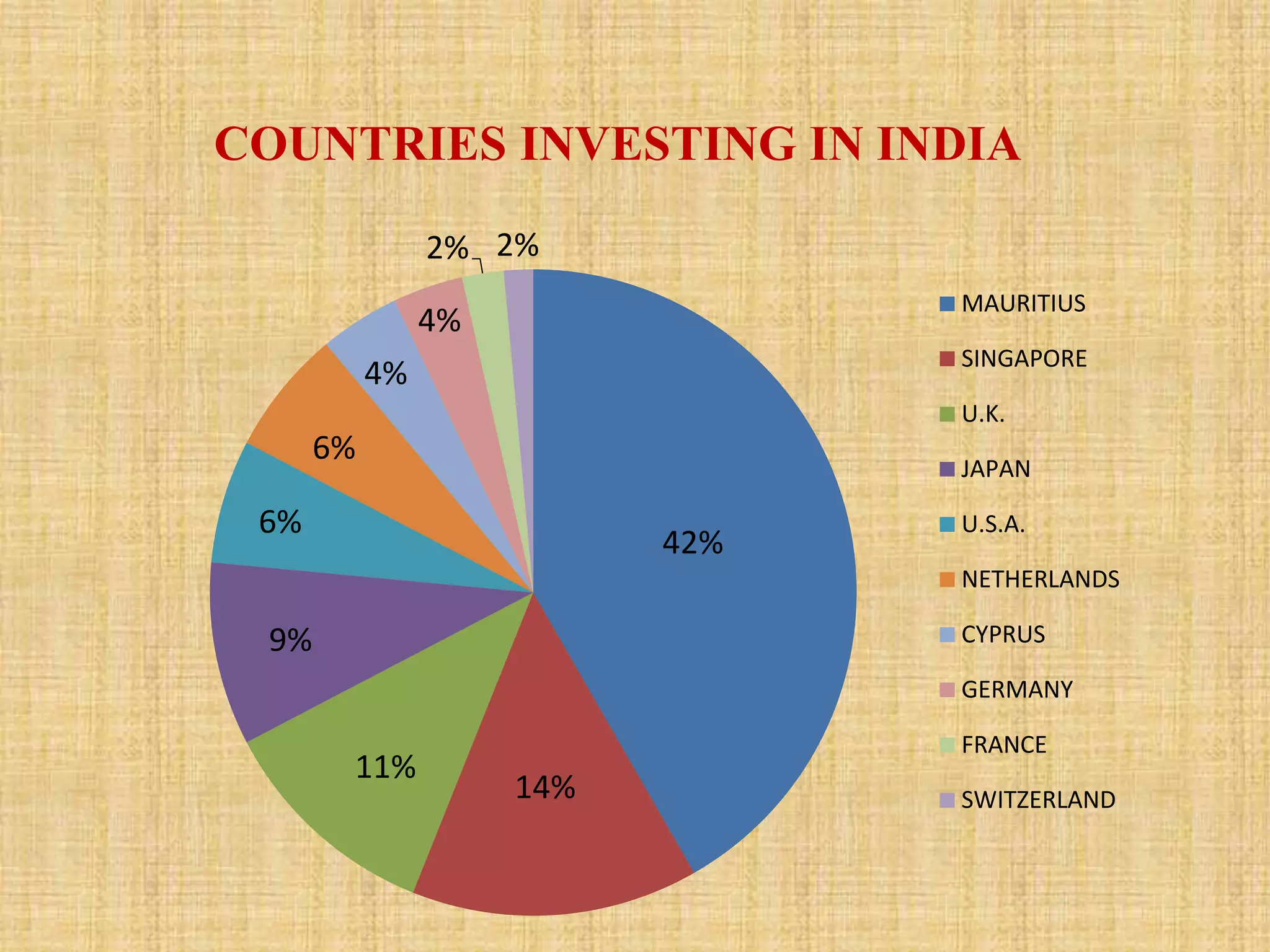
COUNTRIES INVESTING IN INDIA 
42% 
2% 2% 
14% 
11% 
6% 
9% 
6% 
4% 
4% 
MAURITIUS 
SINGAPORE 
U.K. 
JAPAN 
U.S.A. 
NETHERLANDS 
CYPRUS 
GERMANY 
FRANCE 
SWITZERLAND
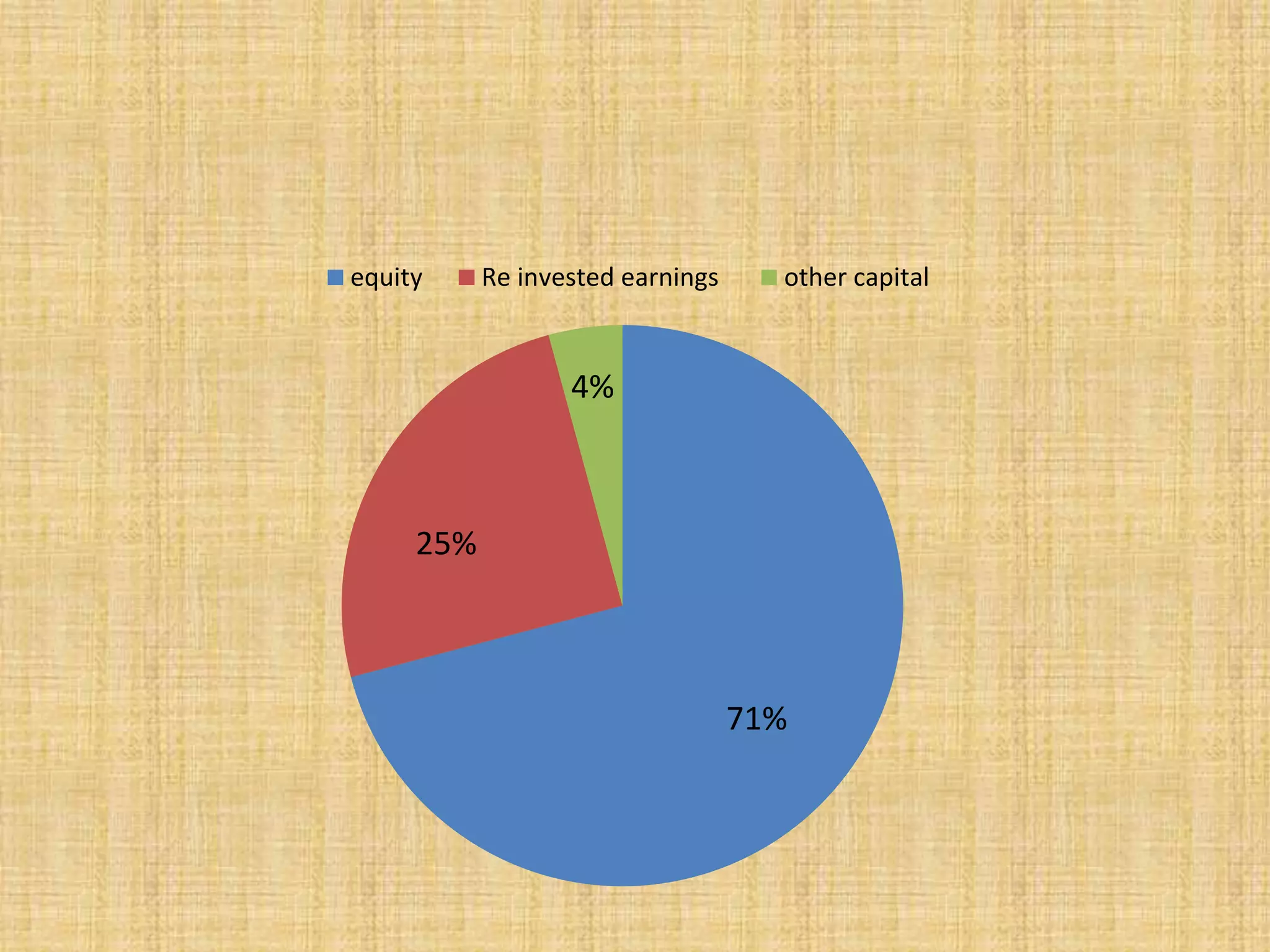
equity Re invested earnings other capital 
71% 
25% 
4%
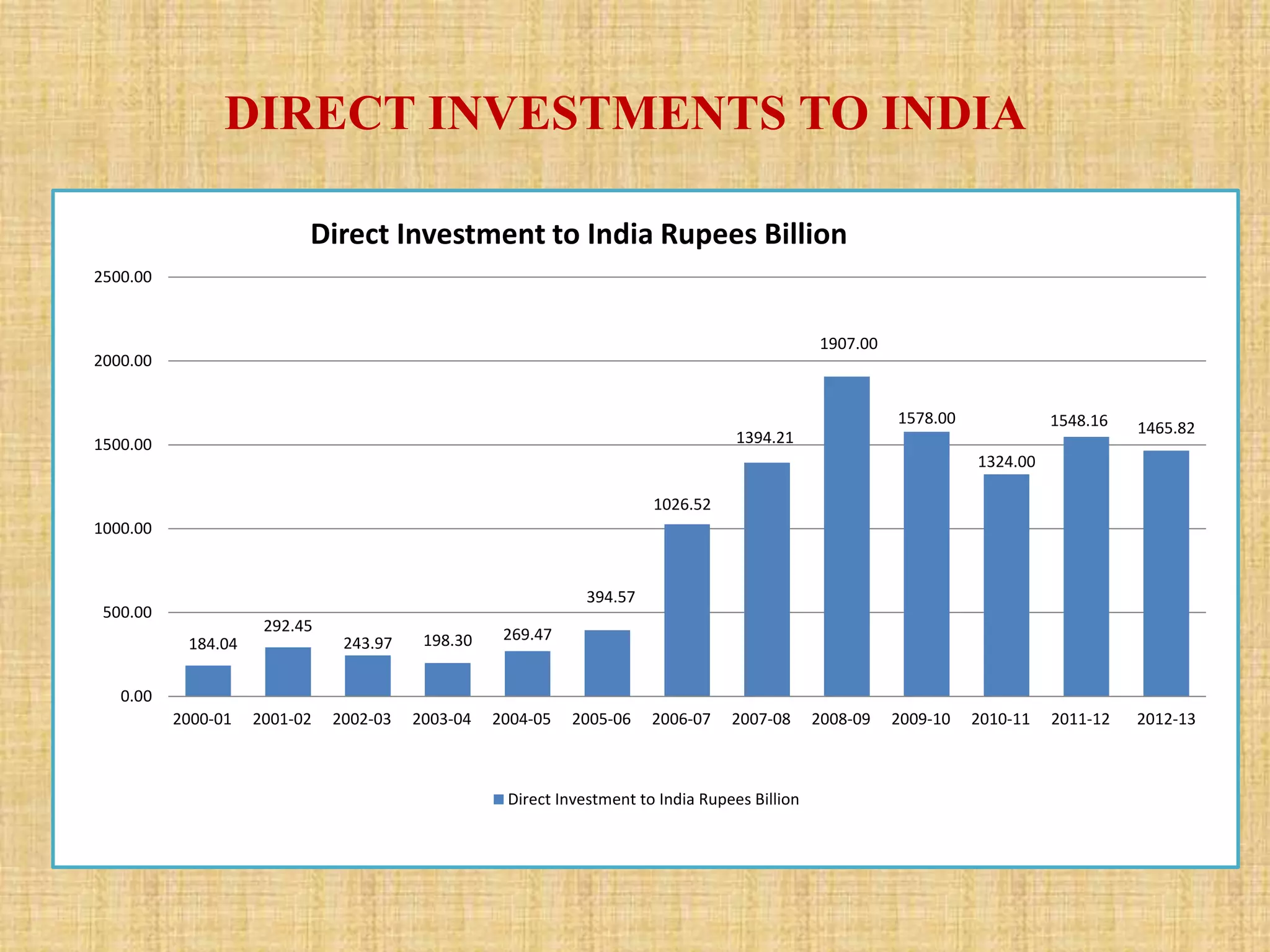
DIRECT INVESTMENTS TO INDIA 
184.04 
Direct Investment to India Rupees Billion 
292.45 
243.97 198.30 269.47 
394.57 
1026.52 
1394.21 
1907.00 
1578.00 
1324.00 
1548.16 1465.82 
2500.00 
2000.00 
1500.00 
1000.00 
500.00 
0.00 
2000-01 2001-02 2002-03 2003-04 2004-05 2005-06 2006-07 2007-08 2008-09 2009-10 2010-11 2011-12 2012-13 
Direct Investment to India Rupees Billion
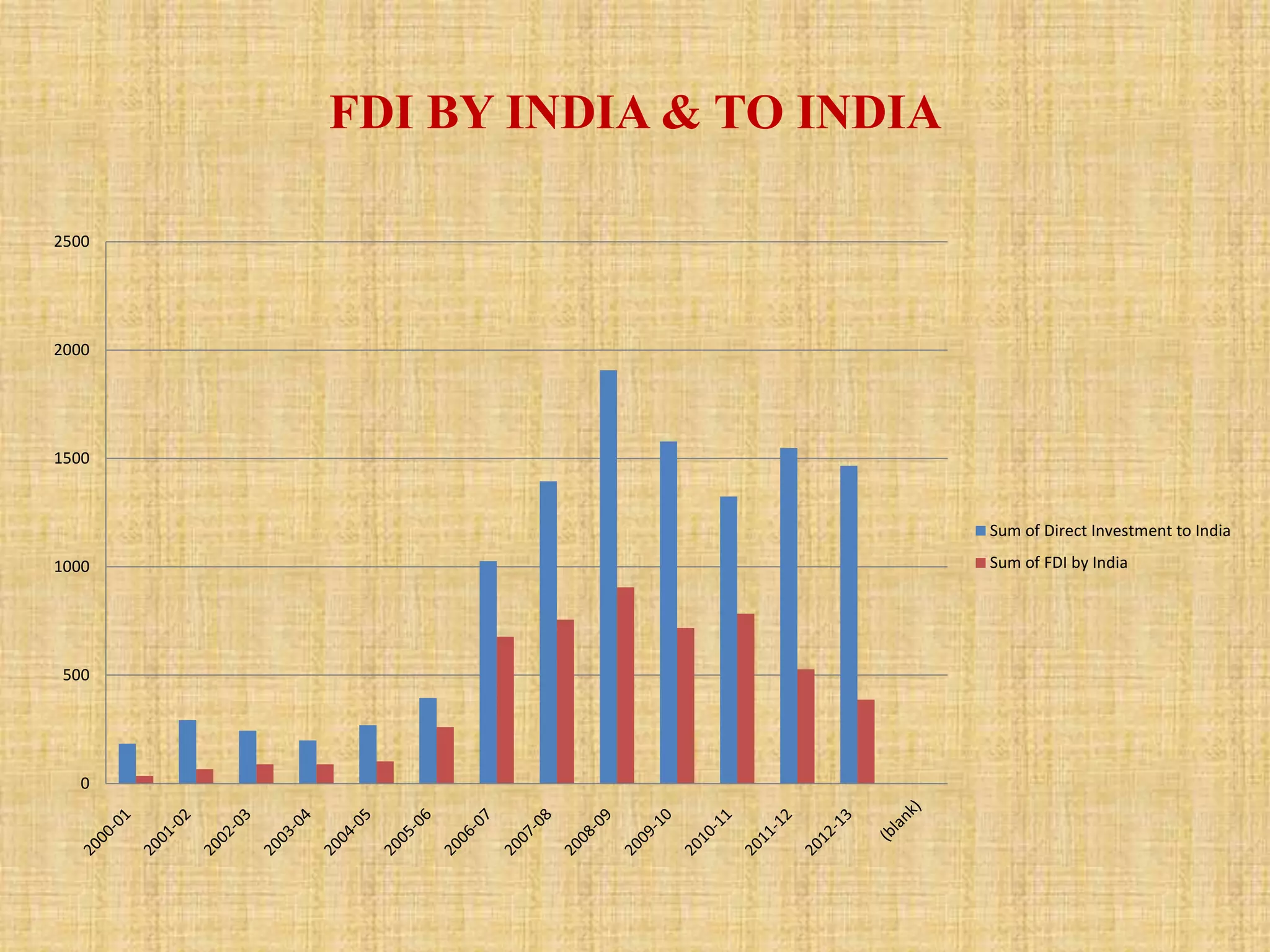
FDI BY INDIA & TO INDIA 
2500 
2000 
1500 
1000 
500 
0 
Sum of Direct Investment to India 
Sum of FDI by India
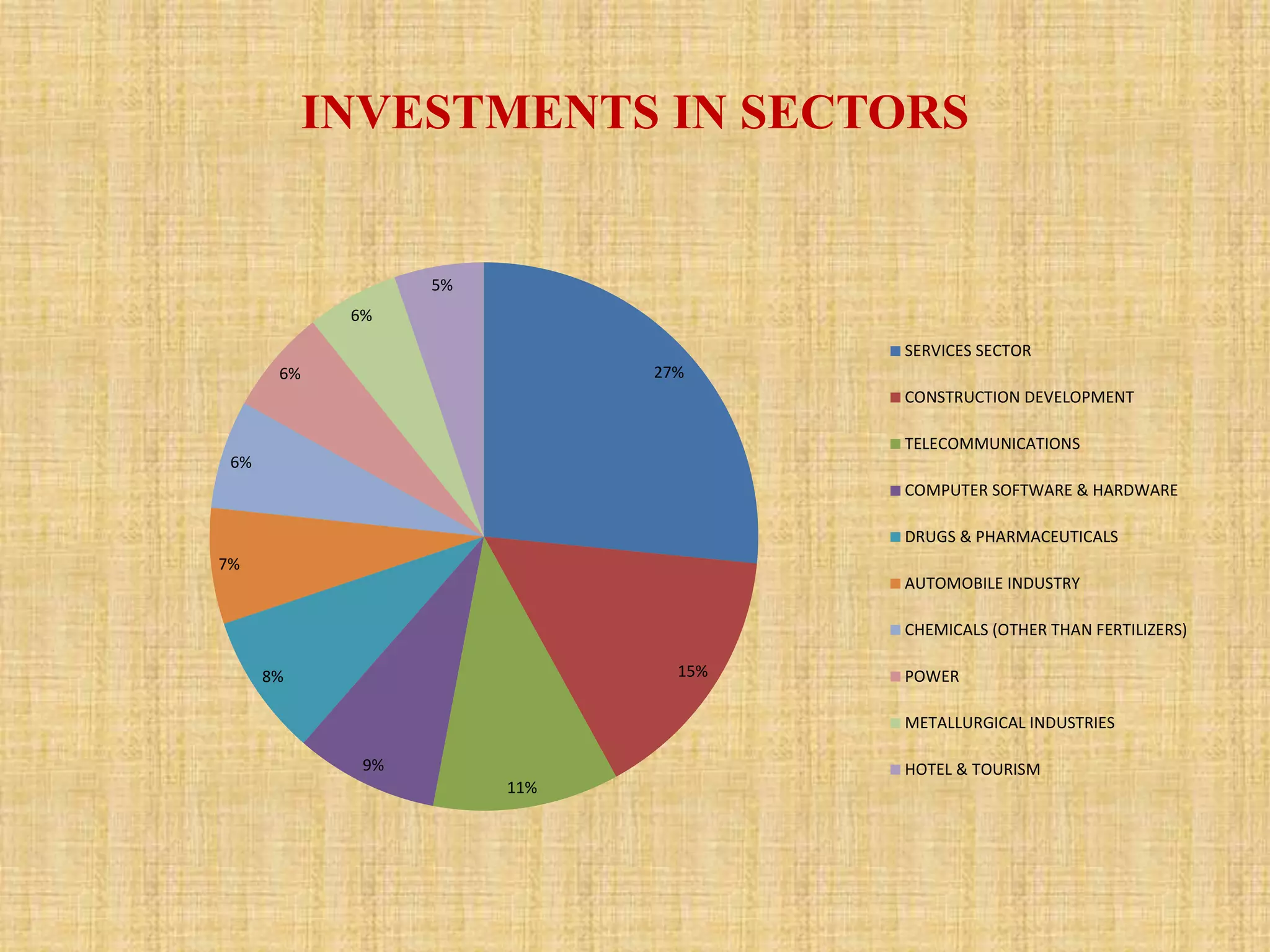
INVESTMENTS IN SECTORS 
27% 
15% 
11% 
9% 
8% 
6% 
7% 
6% 
6% 
5% 
SERVICES SECTOR 
CONSTRUCTION DEVELOPMENT 
TELECOMMUNICATIONS 
COMPUTER SOFTWARE & HARDWARE 
DRUGS & PHARMACEUTICALS 
AUTOMOBILE INDUSTRY 
CHEMICALS (OTHER THAN FERTILIZERS) 
POWER 
METALLURGICAL INDUSTRIES 
HOTEL & TOURISM
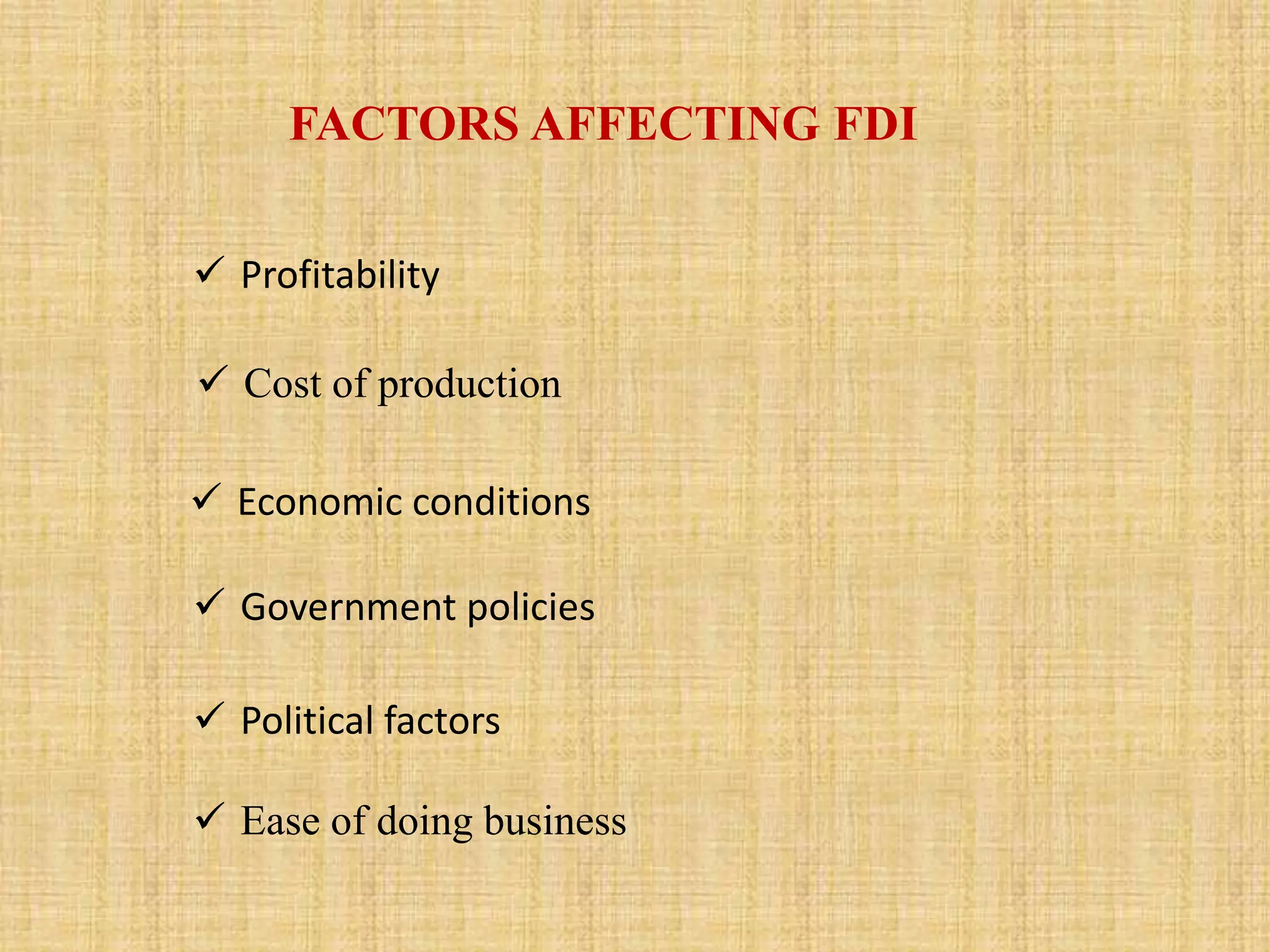
FACTORS AFFECTING FDI 
 Profitability 
 Cost of production 
 Economic conditions 
 Government policies 
 Political factors 
 Ease of doing business
FDI flows in India
FDI flows in India

FDI flows in India

  • 1.
    FOREIGN DIRECT INVESTMENT FLOWS IN INDIA – AN EMPIRICAL ASSESSMENT BY: M SAIRAM Siva Sivani Institute of Management
  • 2.
    IMPORTANCE OF STUDY As Foreign Direct Investment (FDI) is one and only major instrument of attracting economic integration in any economy.
  • 3.
    OBJECTIVES OF STUDY This study covers the following objectives:  To study the trends and pattern of flow of FDI.  To identify the factors which influence the flow of FDI in India. RESEARCH OF METHODALAGY  The data is collected from secondary sources and RBI website.  The magnitude of FDI inflows is analyzed for a period from 2000 to 2014. The factors which influence the flow of FDI into the country is analyzed during post period i.e., 2000 to 2014.
  • 4.
    FOREIGN DIRECT INVESTMENT  Foreign direct investment (FDI) is an investment in a business by an investor from another country for which the foreign investor has control over the company purchased.
  • 5.
    Economic Growth Trade Employment and skill levels Linkages and spillover to domestic firms Technology diffusion and knowledge transfer WHY FDI ?
  • 6.
    FDI IN INDIA  Foreign investment was introduced in 1991 under Foreign Exchange Management Act (FEMA), driven by then finance minister Manmohan Singh.  Foreign investments provide a great stimulus for growth to the Indian economy.
  • 7.
    Wholly owned subsidiaries Joint ventures Acquisitions FII Investments in GDR’S & FCCB’s
  • 8.
    100% FDI ALLOWEDSECTORS  Engineering & Manufacturing sectors  Roads & Highways, Ports and Harbors  Industrial model towns/industrial parks  Hotels & Tourism  Pollution Control and Management  Advertising & Film industry  Power generation (hydro-electric, coal/lignite, oil or gas based)  Information Technology including E-Commerce
  • 9.
    SECTORS WERE FDIIS NOT ALLOWED  Atomic Energy  Lottery Business  Gambling and Betting  Business of Chit Fund  Nidhi Company.  Agricultural (excluding Floriculture, Horticulture, Development of seeds, Animal Husbandry, Pisciculture and cultivation of vegetables, mushrooms, etc. )  Housing and Real Estate business (except development of townships, construction of residential/commercial premises, roads or bridges etc..,)  Trading in Transferable Development Rights (TDRs).  Manufacture of cigars, cheroots, cigarillos and cigarettes, of tobacco or of tobacco substitutes.
  • 10.
    COUNTRIES INVESTING ININDIA 42% 2% 2% 14% 11% 6% 9% 6% 4% 4% MAURITIUS SINGAPORE U.K. JAPAN U.S.A. NETHERLANDS CYPRUS GERMANY FRANCE SWITZERLAND
  • 11.
    equity Re investedearnings other capital 71% 25% 4%
  • 12.
    DIRECT INVESTMENTS TOINDIA 184.04 Direct Investment to India Rupees Billion 292.45 243.97 198.30 269.47 394.57 1026.52 1394.21 1907.00 1578.00 1324.00 1548.16 1465.82 2500.00 2000.00 1500.00 1000.00 500.00 0.00 2000-01 2001-02 2002-03 2003-04 2004-05 2005-06 2006-07 2007-08 2008-09 2009-10 2010-11 2011-12 2012-13 Direct Investment to India Rupees Billion
  • 13.
    FDI BY INDIA& TO INDIA 2500 2000 1500 1000 500 0 Sum of Direct Investment to India Sum of FDI by India
  • 14.
    INVESTMENTS IN SECTORS 27% 15% 11% 9% 8% 6% 7% 6% 6% 5% SERVICES SECTOR CONSTRUCTION DEVELOPMENT TELECOMMUNICATIONS COMPUTER SOFTWARE & HARDWARE DRUGS & PHARMACEUTICALS AUTOMOBILE INDUSTRY CHEMICALS (OTHER THAN FERTILIZERS) POWER METALLURGICAL INDUSTRIES HOTEL & TOURISM
  • 15.
    FACTORS AFFECTING FDI  Profitability  Cost of production  Economic conditions  Government policies  Political factors  Ease of doing business