Foreign Direct Investment 
IN 
INDIA 
Presented By; 
Aswathy Chandrakumar 
Chandrashekar G 
Mani V 
Srikanth Choudary 
Shanabhogha M B 
Rajendra Prasad S
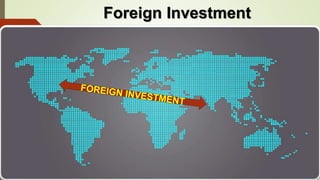
Foreign Investment
Meaning of FDI 
1. FDI stands for Foreign Direct Investment, a component of a country's 
national financial accounts. 
2. Foreign direct investment is investment of foreign assets into domestic 
structures, equipment, and organizations. 
3. It does not include foreign investment into the stock markets. 
4. FDI is thought to be more useful to a country than investments in the 
equity of its companies because equity investments are potentially 
"hot money" which can leave at the first sign of trouble, whereas FDI is 
durable and generally useful whether things go well or badly. 
5. FDI‘ Means Investment By Non-resident Entity/Person Resident Outside 
India In The Capital Of An Indian Company Under Schedule 1 Of Foreign 
Exchange Management (Transfer Or Issue Of Security By A Person 
Resident Outside India)
Types Of FDI 
 Investment In Indian Companies Can Be Made Both By 
Non-resident As Well As Resident Indian Entities. 
 Any Non-resident Investment In An Indian Company Is 
Direct Foreign Investment. 
 Investment By Resident Indian Entities Could Again 
Comprise Of Both Resident And Non-resident 
Investment. Thus, Such An Indian Company Would Have 
Indirect Foreign Investment If The Indian Investing 
Company Has Foreign Investment In It. The Indirect 
Investment Can Also Be A Cascading Investment I.E. 
Through Multi-layered Structure.
Factors Affecting Foreign Investment 
Rate Of Interest 
Speculation 
Profitability 
Costs Of Production 
Economic Condition 
Government Policies 
Political Policies
Significances Of Foreign Investment 
 Expansion In Employment 
 Consumer Benefit 
 Technological Improvement 
 Cultural Improvement 
 Import Export 
 Growth In Economy 
 Government Benefits 
 Competition 
 Managerial Revolution 
 Global Exposer 
 Global Relationship
Limitations Of Foreign Investment 
Work On The High Profit Areas Rather Than 
Priority Sector 
Technological Advancement 
Evading Nature 
Unfavourable Effect Towards Balance Of Payment
Limitations Of Foreign Investment 
Interferes In The National Politics 
Unfair& Unethical Trade Practices 
Bulldogging Nature Towards Nation Market 
Unfavourable For Countries Economy
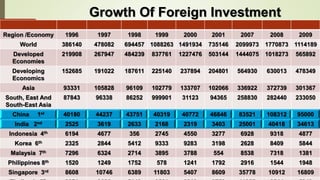
Growth Of Foreign Investment 
Region /Economy 1996 1997 1998 1999 2000 2001 2007 2008 2009 
World 386140 478082 694457 1088263 1491934 735146 2099973 1770873 1114189 
Developed 
Economies 
219908 267947 484239 837761 1227476 503144 1444075 1018273 565892 
Developing 
Economics 
152685 191022 187611 225140 237894 204801 564930 630013 478349 
Asia 93331 105828 96109 102779 133707 102066 336922 372739 301367 
South, East And 
South-East Asia 
87843 96338 86252 999901 31123 94365 258830 282440 233050 
China 1st 40180 44237 43751 40319 40772 46846 83521 108312 95000 
India 2nd 2525 3619 2633 2168 2319 3403 25001 40418 34613 
Indonesia 4th 6194 4677 356 2745 4550 3277 6928 9318 4877 
Korea 6th 2325 2844 5412 9333 9283 3198 2628 8409 5844 
Malaysia 7th 7296 6324 2714 3895 3788 554 8538 7318 1381 
Philippines 8th 1520 1249 1752 578 1241 1792 2916 1544 1948 
Singapore 3rd 8608 10746 6389 11803 5407 8609 35778 10912 16809 
Thailand 5th 2271 3626 5143 3561 2813 3759 11355 8544 5949
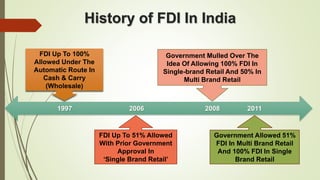
History of FDI In India 
FDI Up To 100% 
Allowed Under The 
Automatic Route In 
Cash & Carry 
(Wholesale) 
Government Mulled Over The 
Idea Of Allowing 100% FDI In 
Single-brand Retail And 50% In 
1997 2006 2008 2011 
Government Allowed 51% 
FDI In Multi Brand Retail 
And 100% FDI In Single 
Brand Retail 
FDI Up To 51% Allowed 
With Prior Government 
Approval In 
‘Single Brand Retail’ 
Multi Brand Retail
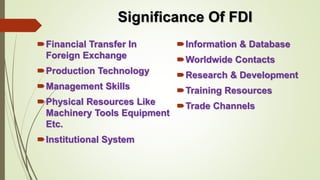
Significance Of FDI 
Financial Transfer In 
Foreign Exchange 
Production Technology 
Management Skills 
Physical Resources Like 
Machinery Tools Equipment 
Etc. 
Institutional System 
Information & Database 
Worldwide Contacts 
Research & Development 
Training Resources 
Trade Channels
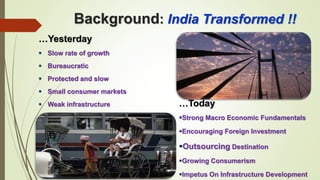
Background: India Transformed !! 
…Today 
Strong Macro Economic Fundamentals 
Encouraging Foreign Investment 
Outsourcing Destination 
Growing Consumerism 
Impetus On Infrastructure Development 
…Yesterday 
 Slow rate of growth 
 Bureaucratic 
 Protected and slow 
 Small consumer markets 
 Weak infrastructure
Factors Affecting FDI To Come In INDIA 
 Stable democratic environment over 60 years of 
independence 
 Large size of the economy, particularly the large and 
growing middle class 
 Open door policy towards FDI 
 Abundance of natural resources 
 Diversified industrial sectors 
 Large and growing market 
 Cost-effective and skilled labour
Factors Affecting FDI To Come In INDIA 
 World class scientific, technical and managerial manpower 
 Cheap and abundant availability of technical manpower at 
various level of skills 
 Large English speaking population 
 Stable political system 
 Well-established legal system with independent judiciary
Factors Affecting FDI To Come In INDIA 
Well Developed Accountancy, Legal, Actuarial And Consultancy Profession 
Emerging trends towards deregulation/privatisation and globalisation 
large network of banking institutions 
Liberal policy towards technology and capital goods imports 
Gradual reduction in barriers to trade 
High level of compliance towards the polices of multilateral economic 
institution like WTO, IMF & world Bank
Factors Affecting FDI To Come In INDIA 
Comfortable size of foreign exchange reserves & current account 
convertibility 
Price stability 
Declining structure of interest rates in-tune with global trends 
Good international economical & political relations 
Strong advertising media 
Large base of existing MNC’s in number of industrial segment
Regulation For FDI Formation 
Automatic Approval By RBI – 
 The Reserve Bank Of India Accords Automatic Approval Within 
A Period Of Two Weeks (Subject To Compliance Of Norms) To 
All Proposals And Permits Foreign Equity Up To 24%; 50%; 51%; 
74% And100% Is Allowed Depending On The Category Of 
Industries And The Sectorial Caps Applicable. 
 The Lists Are Comprehensive And Cover Most Industries Of 
Interest To Foreign Companies. 
 Investments In High Priority Industries Or For Trading 
Companies Primarily Engaged In Exporting Are Given Almost 
Automatic Approval By The RBI.
Regulation For FDI Formation 
The FIPB Route – Processing Of Non-automatic Approval Cases 
 FIPB Stands For Foreign Investment Promotion Board Which Approves All 
Other Cases Where The Parameters Of Automatic Approval Are Not Met. 
 Normal Processing Time Is 4 To 6 Weeks. 
 Its Approach Is Liberal For All Sectors And All Types Of Proposals, And 
Rejections Are Few. 
 It Is Not Necessary For Foreign Investors To Have A Local Partner, Even 
When The Foreign Investor Wishes To Hold Less Than The Entire Equity Of 
The Company. 
 The Portion Of The Equity Not Proposed To Be Held By The Foreign 
Investor Can Be Offered To The Public.
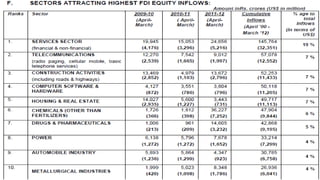
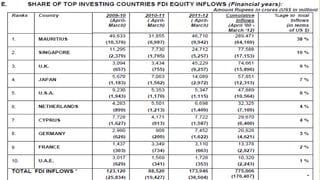
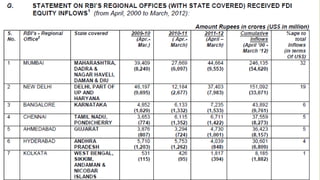
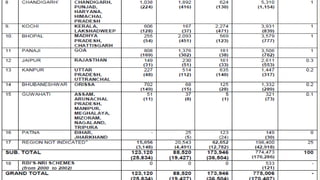
India's Hottest FDI Destinations 
1. Maharashtra 
Maharashtra received the lion's share of the FDI US $2.43 billion 
(₹ 11,154 Cr), which is 35% of the total FDI inflows in to the country 
2. National Capital Region 
NCR received US $1.85 billion (₹ 8,476 Cr) in FDI during the 
period. The region accounted for 20% of the total FDI. 
3. West Bengal, Sikkim, Andaman & Nicobar Islands 
These states attracted the third highest FDI inflows worth 
US $1.416 billion (₹ 6,050 Cr) 
4. Karnataka US $936 million (₹ 4,333 Cr) 
5. Punjab, Haryana, Himachal Pradesh US $904 million (₹ 4,141 Cr)
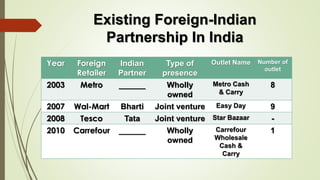
Existing Foreign-Indian 
Partnership In India 
Year Foreign 
Retailer 
Indian 
Partner 
Type of 
presence 
Outlet Name Number of 
outlet 
2003 Metro ______ Wholly 
owned 
Metro Cash 
& Carry 
8 
2007 Wal-Mart Bharti Joint venture Easy Day 9 
2008 Tesco Tata Joint venture Star Bazaar - 
2010 Carrefour ______ Wholly 
owned 
Carrefour 
Wholesale 
Cash & 
Carry 
1
Culture OF FDI In INDIA 
FDI culture 
 1991 foreign investment promotion board (FIPB) 
 1996 foreign investment promotion council (FIPC) 
 1999 foreign investment implementation authority (FIIA) 
 2004 investment commission 
 Project approval board (PAB) 
 Licensing committee (LC) 
 Secretariat for industrial approval (SIA) 
 Investment promotion & infrastructure development cell (IPIDC)
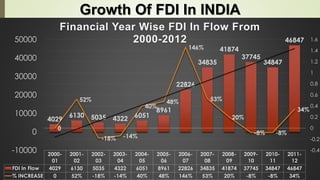
Growth Of FDI In INDIA 
4029 
0 
2000- 
01 
52% 
40% 
6130 5035 4322 6051 
2001- 
02 
-18% -14% 
2002- 
03 
2003- 
04 
2004- 
05 
48% 
8961 
2005- 
06 
146% 
22826 
2006- 
07 
34835 
53% 
2007- 
08 
41874 
20% 
2008- 
09 
37745 
-8% -8% 
2009- 
10 
34847 
2010- 
11 
46847 
34% 
2011- 
12 
50000 
40000 
30000 
20000 
10000 
0 
-10000 
FDI In Flow 4029 6130 5035 4322 6051 8961 22826 34835 41874 37745 34847 46847 
% INCREASE 0 52% -18% -14% 40% 48% 146% 53% 20% -8% -8% 34% 
1.6 
1.4 
1.2 
1 
0.8 
0.6 
0.4 
0.2 
0 
-0.2 
-0.4 
Financial Year Wise FDI In Flow From 
2000-2012
Advantages For FDI In India 
 30% Of Products Should Be Sourced From Small Industries With 
Infrastructure Investment Not Exceeding $ 1 Million(₹ 5.36 Cr) 
 Retail Trading Through E Commerce Will Not Be Permissible For 
Companies Invest In Retail FDI 
 Present Indian Retail Market Is Around $435 Billion And Growing At A 
CAGR Of 10-12% 
 Indian Retail Market Is Still Dominated By The Unorganised Sector 
 FDI In Retail Is Supposed To Create Around 1crore New Jobs In 
Organised Sector But On The Flip Side Will Deplete Jobs From The 
Unorganized Sector
Advantages For FDI In INDIA 
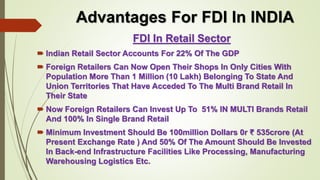
FDI In Retail Sector 
 Indian Retail Sector Accounts For 22% Of The GDP 
 Foreign Retailers Can Now Open Their Shops In Only Cities With 
Population More Than 1 Million (10 Lakh) Belonging To State And 
Union Territories That Have Acceded To The Multi Brand Retail In 
Their State 
 Now Foreign Retailers Can Invest Up To 51% IN MULTI Brands Retail 
And 100% In Single Brand Retail 
 Minimum Investment Should Be 100million Dollars 0r ₹ 535crore (At 
Present Exchange Rate ) And 50% Of The Amount Should Be Invested 
In Back-end Infrastructure Facilities Like Processing, Manufacturing 
Warehousing Logistics Etc.
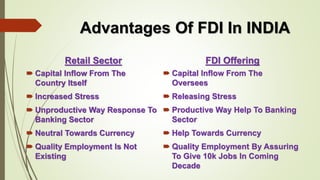
Advantages Of FDI In INDIA 
Retail Sector 
 Capital Inflow From The 
Country Itself 
 Increased Stress 
 Unproductive Way Response To 
Banking Sector 
 Neutral Towards Currency 
 Quality Employment Is Not 
Existing 
FDI Offering 
 Capital Inflow From The 
Oversees 
 Releasing Stress 
 Productive Way Help To Banking 
Sector 
 Help Towards Currency 
 Quality Employment By Assuring 
To Give 10k Jobs In Coming 
Decade
100% 
80% 
60% 
40% 
20% 
0% 
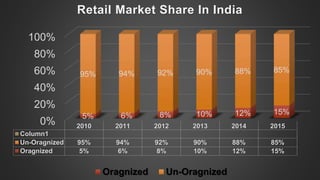
Retail Market Share In India 
95% 94% 92% 90% 88% 85% 
5% 6% 8% 10% 12% 15% 
2010 2011 2012 2013 2014 2015 
Column1 
Un-Oragnized 95% 94% 92% 90% 88% 85% 
Oragnized 5% 6% 8% 10% 12% 15% 
Oragnized Un-Oragnized
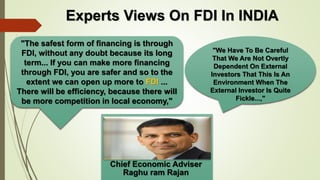
Experts Views On FDI In INDIA 
"The safest form of financing is through 
FDI, without any doubt because its long 
term... If you can make more financing 
through FDI, you are safer and so to the 
extent we can open up more to FDI ... 
There will be efficiency, because there will 
be more competition in local economy," 
Chief Economic Adviser 
Raghu ram Rajan 
"We Have To Be Careful 
That We Are Not Overtly 
Dependent On External 
Investors That This Is An 
Environment When The 
External Investor Is Quite 
Fickle...,"
100% 
80% 
60% 
40% 
20% 
0% 
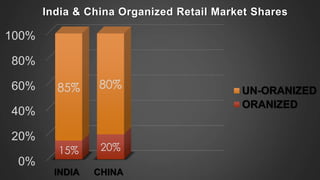
India & China Organized Retail Market Shares 
85% 80% 
15% 20% 
INDIA CHINA 
UN-ORANIZED 
ORANIZED
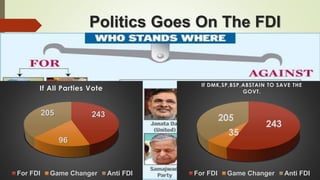
Politics Goes On The FDI 
If All Parties Vote 
243 
96 
205 
For FDI Game Changer Anti FDI 
If DMK,SP,BSP,ABSTAIN TO SAVE THE 
243 
205 
35 
GOVT. 
For FDI Game Changer Anti FDI
Limitation Of FDI In INDIA 
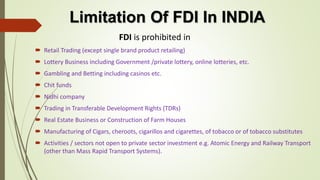
FDI is prohibited in 
 Retail Trading (except single brand product retailing) 
 Lottery Business including Government /private lottery, online lotteries, etc. 
 Gambling and Betting including casinos etc. 
 Chit funds 
 Nidhi company 
 Trading in Transferable Development Rights (TDRs) 
 Real Estate Business or Construction of Farm Houses 
 Manufacturing of Cigars, cheroots, cigarillos and cigarettes, of tobacco or of tobacco substitutes 
 Activities / sectors not open to private sector investment e.g. Atomic Energy and Railway Transport 
(other than Mass Rapid Transport Systems).
Impact Of FDI In INDIA 
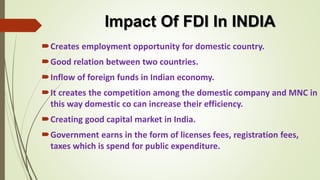
Creates employment opportunity for domestic country. 
Good relation between two countries. 
Inflow of foreign funds in Indian economy. 
It creates the competition among the domestic company and MNC in 
this way domestic co can increase their efficiency. 
Creating good capital market in India. 
Government earns in the form of licenses fees, registration fees, 
taxes which is spend for public expenditure.
"If there is one place on the face of this earth 
where all the dreams of living men have found a 
home when man began the dream of existence, 
it is India". 
Romaine Rolland, 
French philosopher

FDI IN INDIA

  • 1.
    Foreign Direct Investment IN INDIA Presented By; Aswathy Chandrakumar Chandrashekar G Mani V Srikanth Choudary Shanabhogha M B Rajendra Prasad S
  • 2.
  • 3.
    Meaning of FDI 1. FDI stands for Foreign Direct Investment, a component of a country's national financial accounts. 2. Foreign direct investment is investment of foreign assets into domestic structures, equipment, and organizations. 3. It does not include foreign investment into the stock markets. 4. FDI is thought to be more useful to a country than investments in the equity of its companies because equity investments are potentially "hot money" which can leave at the first sign of trouble, whereas FDI is durable and generally useful whether things go well or badly. 5. FDI‘ Means Investment By Non-resident Entity/Person Resident Outside India In The Capital Of An Indian Company Under Schedule 1 Of Foreign Exchange Management (Transfer Or Issue Of Security By A Person Resident Outside India)
  • 4.
    Types Of FDI  Investment In Indian Companies Can Be Made Both By Non-resident As Well As Resident Indian Entities.  Any Non-resident Investment In An Indian Company Is Direct Foreign Investment.  Investment By Resident Indian Entities Could Again Comprise Of Both Resident And Non-resident Investment. Thus, Such An Indian Company Would Have Indirect Foreign Investment If The Indian Investing Company Has Foreign Investment In It. The Indirect Investment Can Also Be A Cascading Investment I.E. Through Multi-layered Structure.
  • 5.
    Factors Affecting ForeignInvestment Rate Of Interest Speculation Profitability Costs Of Production Economic Condition Government Policies Political Policies
  • 6.
    Significances Of ForeignInvestment  Expansion In Employment  Consumer Benefit  Technological Improvement  Cultural Improvement  Import Export  Growth In Economy  Government Benefits  Competition  Managerial Revolution  Global Exposer  Global Relationship
  • 7.
    Limitations Of ForeignInvestment Work On The High Profit Areas Rather Than Priority Sector Technological Advancement Evading Nature Unfavourable Effect Towards Balance Of Payment
  • 8.
    Limitations Of ForeignInvestment Interferes In The National Politics Unfair& Unethical Trade Practices Bulldogging Nature Towards Nation Market Unfavourable For Countries Economy
  • 9.
    Growth Of ForeignInvestment Region /Economy 1996 1997 1998 1999 2000 2001 2007 2008 2009 World 386140 478082 694457 1088263 1491934 735146 2099973 1770873 1114189 Developed Economies 219908 267947 484239 837761 1227476 503144 1444075 1018273 565892 Developing Economics 152685 191022 187611 225140 237894 204801 564930 630013 478349 Asia 93331 105828 96109 102779 133707 102066 336922 372739 301367 South, East And South-East Asia 87843 96338 86252 999901 31123 94365 258830 282440 233050 China 1st 40180 44237 43751 40319 40772 46846 83521 108312 95000 India 2nd 2525 3619 2633 2168 2319 3403 25001 40418 34613 Indonesia 4th 6194 4677 356 2745 4550 3277 6928 9318 4877 Korea 6th 2325 2844 5412 9333 9283 3198 2628 8409 5844 Malaysia 7th 7296 6324 2714 3895 3788 554 8538 7318 1381 Philippines 8th 1520 1249 1752 578 1241 1792 2916 1544 1948 Singapore 3rd 8608 10746 6389 11803 5407 8609 35778 10912 16809 Thailand 5th 2271 3626 5143 3561 2813 3759 11355 8544 5949
  • 10.
    History of FDIIn India FDI Up To 100% Allowed Under The Automatic Route In Cash & Carry (Wholesale) Government Mulled Over The Idea Of Allowing 100% FDI In Single-brand Retail And 50% In 1997 2006 2008 2011 Government Allowed 51% FDI In Multi Brand Retail And 100% FDI In Single Brand Retail FDI Up To 51% Allowed With Prior Government Approval In ‘Single Brand Retail’ Multi Brand Retail
  • 11.
    Significance Of FDI Financial Transfer In Foreign Exchange Production Technology Management Skills Physical Resources Like Machinery Tools Equipment Etc. Institutional System Information & Database Worldwide Contacts Research & Development Training Resources Trade Channels
  • 12.
    Background: India Transformed!! …Today Strong Macro Economic Fundamentals Encouraging Foreign Investment Outsourcing Destination Growing Consumerism Impetus On Infrastructure Development …Yesterday  Slow rate of growth  Bureaucratic  Protected and slow  Small consumer markets  Weak infrastructure
  • 13.
    Factors Affecting FDITo Come In INDIA  Stable democratic environment over 60 years of independence  Large size of the economy, particularly the large and growing middle class  Open door policy towards FDI  Abundance of natural resources  Diversified industrial sectors  Large and growing market  Cost-effective and skilled labour
  • 14.
    Factors Affecting FDITo Come In INDIA  World class scientific, technical and managerial manpower  Cheap and abundant availability of technical manpower at various level of skills  Large English speaking population  Stable political system  Well-established legal system with independent judiciary
  • 15.
    Factors Affecting FDITo Come In INDIA Well Developed Accountancy, Legal, Actuarial And Consultancy Profession Emerging trends towards deregulation/privatisation and globalisation large network of banking institutions Liberal policy towards technology and capital goods imports Gradual reduction in barriers to trade High level of compliance towards the polices of multilateral economic institution like WTO, IMF & world Bank
  • 16.
    Factors Affecting FDITo Come In INDIA Comfortable size of foreign exchange reserves & current account convertibility Price stability Declining structure of interest rates in-tune with global trends Good international economical & political relations Strong advertising media Large base of existing MNC’s in number of industrial segment
  • 17.
    Regulation For FDIFormation Automatic Approval By RBI –  The Reserve Bank Of India Accords Automatic Approval Within A Period Of Two Weeks (Subject To Compliance Of Norms) To All Proposals And Permits Foreign Equity Up To 24%; 50%; 51%; 74% And100% Is Allowed Depending On The Category Of Industries And The Sectorial Caps Applicable.  The Lists Are Comprehensive And Cover Most Industries Of Interest To Foreign Companies.  Investments In High Priority Industries Or For Trading Companies Primarily Engaged In Exporting Are Given Almost Automatic Approval By The RBI.
  • 18.
    Regulation For FDIFormation The FIPB Route – Processing Of Non-automatic Approval Cases  FIPB Stands For Foreign Investment Promotion Board Which Approves All Other Cases Where The Parameters Of Automatic Approval Are Not Met.  Normal Processing Time Is 4 To 6 Weeks.  Its Approach Is Liberal For All Sectors And All Types Of Proposals, And Rejections Are Few.  It Is Not Necessary For Foreign Investors To Have A Local Partner, Even When The Foreign Investor Wishes To Hold Less Than The Entire Equity Of The Company.  The Portion Of The Equity Not Proposed To Be Held By The Foreign Investor Can Be Offered To The Public.
  • 19.
    India's Hottest FDIDestinations 1. Maharashtra Maharashtra received the lion's share of the FDI US $2.43 billion (₹ 11,154 Cr), which is 35% of the total FDI inflows in to the country 2. National Capital Region NCR received US $1.85 billion (₹ 8,476 Cr) in FDI during the period. The region accounted for 20% of the total FDI. 3. West Bengal, Sikkim, Andaman & Nicobar Islands These states attracted the third highest FDI inflows worth US $1.416 billion (₹ 6,050 Cr) 4. Karnataka US $936 million (₹ 4,333 Cr) 5. Punjab, Haryana, Himachal Pradesh US $904 million (₹ 4,141 Cr)
  • 20.
    Existing Foreign-Indian PartnershipIn India Year Foreign Retailer Indian Partner Type of presence Outlet Name Number of outlet 2003 Metro ______ Wholly owned Metro Cash & Carry 8 2007 Wal-Mart Bharti Joint venture Easy Day 9 2008 Tesco Tata Joint venture Star Bazaar - 2010 Carrefour ______ Wholly owned Carrefour Wholesale Cash & Carry 1
  • 25.
    Culture OF FDIIn INDIA FDI culture  1991 foreign investment promotion board (FIPB)  1996 foreign investment promotion council (FIPC)  1999 foreign investment implementation authority (FIIA)  2004 investment commission  Project approval board (PAB)  Licensing committee (LC)  Secretariat for industrial approval (SIA)  Investment promotion & infrastructure development cell (IPIDC)
  • 26.
    Growth Of FDIIn INDIA 4029 0 2000- 01 52% 40% 6130 5035 4322 6051 2001- 02 -18% -14% 2002- 03 2003- 04 2004- 05 48% 8961 2005- 06 146% 22826 2006- 07 34835 53% 2007- 08 41874 20% 2008- 09 37745 -8% -8% 2009- 10 34847 2010- 11 46847 34% 2011- 12 50000 40000 30000 20000 10000 0 -10000 FDI In Flow 4029 6130 5035 4322 6051 8961 22826 34835 41874 37745 34847 46847 % INCREASE 0 52% -18% -14% 40% 48% 146% 53% 20% -8% -8% 34% 1.6 1.4 1.2 1 0.8 0.6 0.4 0.2 0 -0.2 -0.4 Financial Year Wise FDI In Flow From 2000-2012
  • 27.
    Advantages For FDIIn India  30% Of Products Should Be Sourced From Small Industries With Infrastructure Investment Not Exceeding $ 1 Million(₹ 5.36 Cr)  Retail Trading Through E Commerce Will Not Be Permissible For Companies Invest In Retail FDI  Present Indian Retail Market Is Around $435 Billion And Growing At A CAGR Of 10-12%  Indian Retail Market Is Still Dominated By The Unorganised Sector  FDI In Retail Is Supposed To Create Around 1crore New Jobs In Organised Sector But On The Flip Side Will Deplete Jobs From The Unorganized Sector
  • 28.
    Advantages For FDIIn INDIA FDI In Retail Sector  Indian Retail Sector Accounts For 22% Of The GDP  Foreign Retailers Can Now Open Their Shops In Only Cities With Population More Than 1 Million (10 Lakh) Belonging To State And Union Territories That Have Acceded To The Multi Brand Retail In Their State  Now Foreign Retailers Can Invest Up To 51% IN MULTI Brands Retail And 100% In Single Brand Retail  Minimum Investment Should Be 100million Dollars 0r ₹ 535crore (At Present Exchange Rate ) And 50% Of The Amount Should Be Invested In Back-end Infrastructure Facilities Like Processing, Manufacturing Warehousing Logistics Etc.
  • 29.
    Advantages Of FDIIn INDIA Retail Sector  Capital Inflow From The Country Itself  Increased Stress  Unproductive Way Response To Banking Sector  Neutral Towards Currency  Quality Employment Is Not Existing FDI Offering  Capital Inflow From The Oversees  Releasing Stress  Productive Way Help To Banking Sector  Help Towards Currency  Quality Employment By Assuring To Give 10k Jobs In Coming Decade
  • 30.
    100% 80% 60% 40% 20% 0% Retail Market Share In India 95% 94% 92% 90% 88% 85% 5% 6% 8% 10% 12% 15% 2010 2011 2012 2013 2014 2015 Column1 Un-Oragnized 95% 94% 92% 90% 88% 85% Oragnized 5% 6% 8% 10% 12% 15% Oragnized Un-Oragnized
  • 31.
    Experts Views OnFDI In INDIA "The safest form of financing is through FDI, without any doubt because its long term... If you can make more financing through FDI, you are safer and so to the extent we can open up more to FDI ... There will be efficiency, because there will be more competition in local economy," Chief Economic Adviser Raghu ram Rajan "We Have To Be Careful That We Are Not Overtly Dependent On External Investors That This Is An Environment When The External Investor Is Quite Fickle...,"
  • 32.
    100% 80% 60% 40% 20% 0% India & China Organized Retail Market Shares 85% 80% 15% 20% INDIA CHINA UN-ORANIZED ORANIZED
  • 33.
    Politics Goes OnThe FDI If All Parties Vote 243 96 205 For FDI Game Changer Anti FDI If DMK,SP,BSP,ABSTAIN TO SAVE THE 243 205 35 GOVT. For FDI Game Changer Anti FDI
  • 34.
    Limitation Of FDIIn INDIA FDI is prohibited in  Retail Trading (except single brand product retailing)  Lottery Business including Government /private lottery, online lotteries, etc.  Gambling and Betting including casinos etc.  Chit funds  Nidhi company  Trading in Transferable Development Rights (TDRs)  Real Estate Business or Construction of Farm Houses  Manufacturing of Cigars, cheroots, cigarillos and cigarettes, of tobacco or of tobacco substitutes  Activities / sectors not open to private sector investment e.g. Atomic Energy and Railway Transport (other than Mass Rapid Transport Systems).
  • 35.
    Impact Of FDIIn INDIA Creates employment opportunity for domestic country. Good relation between two countries. Inflow of foreign funds in Indian economy. It creates the competition among the domestic company and MNC in this way domestic co can increase their efficiency. Creating good capital market in India. Government earns in the form of licenses fees, registration fees, taxes which is spend for public expenditure.
  • 36.
    "If there isone place on the face of this earth where all the dreams of living men have found a home when man began the dream of existence, it is India". Romaine Rolland, French philosopher