
They (Foreground, Background and Point of
View) bound with visual perception
through multi-angles. (Pope 208)
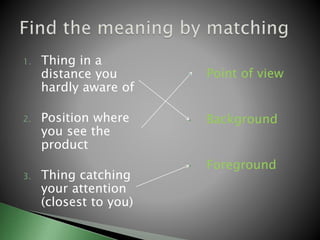
1. Thing in a
distance you
hardly aware of
2. Position where
you see the
product
3. Thing catching
your attention
(closest to you)
• Point of view
• Background
• Foreground
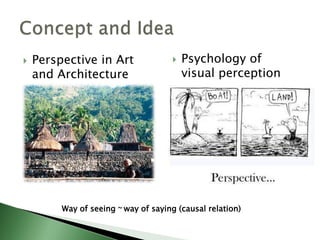
 Perspective in Art
and Architecture
 Psychology of
visual perception
Way of seeing ~ way of saying (causal relation)
 Language modern psychological terms, is the
primary symbolic system through which we
differentiate and categorize the worlds within
and around us.
 Lacan, Subject’s entry into language is the
primary condition for the perception of
difference.
 Words = expression and repression
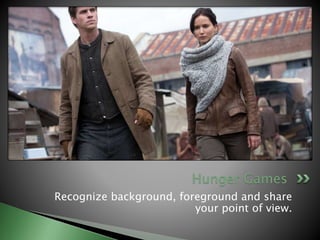
Recognize background, foreground and share
your point of view.
Hunger Games
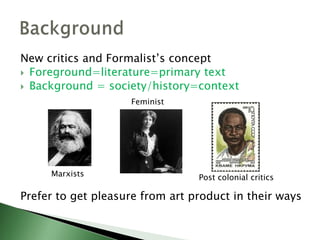
New critics and Formalist’s concept
 Foreground=literature=primary text
 Background = society/history=context
Prefer to get pleasure from art product in their ways
Marxists
Feminist
Post colonial critics
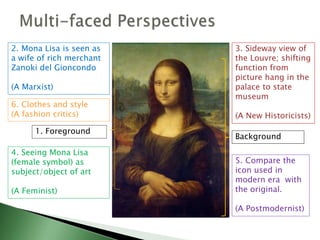
1. Foreground
Background
2. Mona Lisa is seen as
a wife of rich merchant
Zanoki del Gioncondo
(A Marxist)
3. Sideway view of
the Louvre; shifting
function from
picture hang in the
palace to state
museum
(A New Historicists)
4. Seeing Mona Lisa
(female symbol) as
subject/object of art
(A Feminist)
5. Compare the
icon used in
modern era with
the original.
(A Postmodernist)
6. Clothes and style
(A fashion critics)
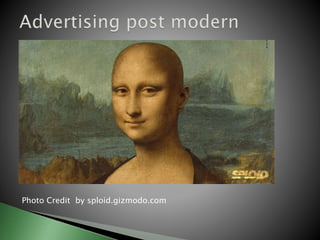
Photo Credit by sploid.gizmodo.com
 Foregrounding – Functionalism
The object is turned to be noticeable/
conspicuous through imagery, unusual words
combinations, sound patterning, metre, rhyme,
inverted or unusual word order.
 Existence of defamiliarisation
i.e., in pun
A: My dog smells awful. How does yours smell?
B: With his nose
in quips; Today I got up at the crack of lunchtime.
Within and outside text
 Actual author’s attitudes and values
i.e., a book by Benjamin Franklin called The
Way to Wealth or Shakespeare's Scarlet Letter
(overtly author gives his/her words to the
reader; sometimes a kind of judgment line)
 Narrator’s point of view
1. First
2. Second
3. Third
 Character’s point of view
 Implied reader’s point of view
“The hypothetical reader that a work is
addressed to, whose thoughts, attitudes, etc.”
(collinsdictionary.com)
 Actual reader’s responses (opposite of
implied)
 Background, Foreground and point of view
are here to proffer viewers, readers, and art-
product consumers to enjoy artist’s creation
with a certain flavor, and other options are
the compliments.
If you are a dietitian, food combining is
healthier than one menu, only.
Pope, Rob. The English Studies Book: An
introduction to language, literature and
culture. 2002. New York: Routledge. Print
Collinsdictionary.com
Picture credit:
stdaily.ghost.io
wikipedia.com
sploid.gizmodo.com

Foreground, background & point of view

  • 2.
    They (Foreground, Backgroundand Point of View) bound with visual perception through multi-angles. (Pope 208)
  • 3.
    1. Thing ina distance you hardly aware of 2. Position where you see the product 3. Thing catching your attention (closest to you) • Point of view • Background • Foreground
  • 4.
     Perspective inArt and Architecture  Psychology of visual perception Way of seeing ~ way of saying (causal relation)
  • 5.
     Language modernpsychological terms, is the primary symbolic system through which we differentiate and categorize the worlds within and around us.  Lacan, Subject’s entry into language is the primary condition for the perception of difference.  Words = expression and repression
  • 6.
    Recognize background, foregroundand share your point of view. Hunger Games
  • 7.
    New critics andFormalist’s concept  Foreground=literature=primary text  Background = society/history=context Prefer to get pleasure from art product in their ways Marxists Feminist Post colonial critics
  • 8.
    1. Foreground Background 2. MonaLisa is seen as a wife of rich merchant Zanoki del Gioncondo (A Marxist) 3. Sideway view of the Louvre; shifting function from picture hang in the palace to state museum (A New Historicists) 4. Seeing Mona Lisa (female symbol) as subject/object of art (A Feminist) 5. Compare the icon used in modern era with the original. (A Postmodernist) 6. Clothes and style (A fashion critics)
  • 9.
    Photo Credit bysploid.gizmodo.com
  • 10.
     Foregrounding –Functionalism The object is turned to be noticeable/ conspicuous through imagery, unusual words combinations, sound patterning, metre, rhyme, inverted or unusual word order.  Existence of defamiliarisation i.e., in pun A: My dog smells awful. How does yours smell? B: With his nose in quips; Today I got up at the crack of lunchtime.
  • 11.
    Within and outsidetext  Actual author’s attitudes and values i.e., a book by Benjamin Franklin called The Way to Wealth or Shakespeare's Scarlet Letter (overtly author gives his/her words to the reader; sometimes a kind of judgment line)
  • 12.
     Narrator’s pointof view 1. First 2. Second 3. Third  Character’s point of view
  • 13.
     Implied reader’spoint of view “The hypothetical reader that a work is addressed to, whose thoughts, attitudes, etc.” (collinsdictionary.com)  Actual reader’s responses (opposite of implied)
  • 14.
     Background, Foregroundand point of view are here to proffer viewers, readers, and art- product consumers to enjoy artist’s creation with a certain flavor, and other options are the compliments. If you are a dietitian, food combining is healthier than one menu, only.
  • 15.
    Pope, Rob. TheEnglish Studies Book: An introduction to language, literature and culture. 2002. New York: Routledge. Print Collinsdictionary.com Picture credit: stdaily.ghost.io wikipedia.com sploid.gizmodo.com