

FORECASTING AT ROSS
PRODUCTS

By: Ravi Kanudawala (3905139)
Mayur Somaiya (3905128)
Ajay Raval (3905225)
FORECASTING

 Forecasting is the process of making statements about events whose

actual outcomes (typically) have not yet been observed.
For example, it might be estimation for some variable of interest at

some specified value date.
 Forecasting is used in the practice of Customer Demand Planning in

every day business forecasting for manufacturing companies.
TYPES OF FORECASTING

 Quantitative forecasting
 Naïve forecasting Approach
Time Series Forecasting methods
 Causal / econometric forecasting methods
Judgmental forecasting methods
Artificial Intelligence forecasting methods
REGRESSION ANALYSIS

 The Regression Analysis is part of Causal / econometric forecasting

methods.
It includes a large group of methods that can be used to predict future

values of a variable using information about other variables.
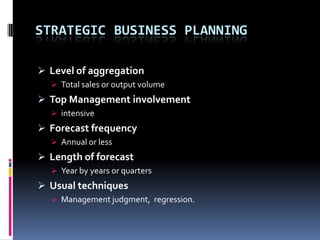
STRATEGIC BUSINESS PLANNING
 Level of aggregation
 Total sales or output volume

 Top Management involvement
 intensive

 Forecast frequency
 Annual or less

 Length of forecast
 Year by years or quarters

 Usual techniques
 Management judgment, regression.
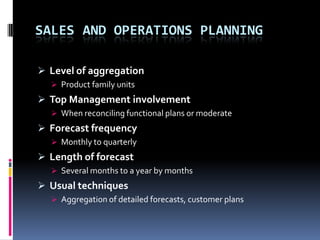
SALES AND OPERATIONS PLANNING
 Level of aggregation
 Product family units

 Top Management involvement
 When reconciling functional plans or moderate

 Forecast frequency
 Monthly to quarterly

 Length of forecast
 Several months to a year by months

 Usual techniques
 Aggregation of detailed forecasts, customer plans
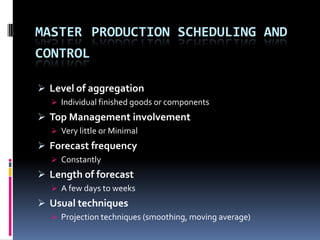
MASTER PRODUCTION SCHEDULING AND
CONTROL
 Level of aggregation
 Individual finished goods or components

 Top Management involvement
 Very little or Minimal

 Forecast frequency
 Constantly

 Length of forecast
 A few days to weeks

 Usual techniques
 Projection techniques (smoothing, moving average)
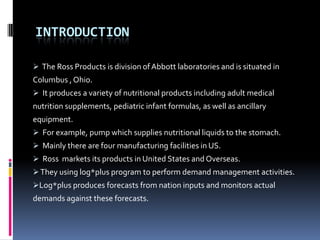
INTRODUCTION
 The Ross Products is division of Abbott laboratories and is situated in

Columbus , Ohio.
 It produces a variety of nutritional products including adult medical

nutrition supplements, pediatric infant formulas, as well as ancillary
equipment.
 For example, pump which supplies nutritional liquids to the stomach.
 Mainly there are four manufacturing facilities in US.
 Ross markets its products in United States and Overseas.
 They using log*plus program to perform demand management activities.
Log*plus produces forecasts from nation inputs and monitors actual

demands against these forecasts.
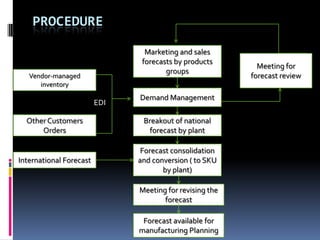
PROCEDURE
Marketing and sales
forecasts by products
groups

Vendor-managed
inventory

EDI

Demand Management

Other Customers
Orders

Breakout of national
forecast by plant

International Forecast

Forecast consolidation
and conversion ( to SKU
by plant)

Meeting for revising the
forecast
Forecast available for
manufacturing Planning

Meeting for
forecast review
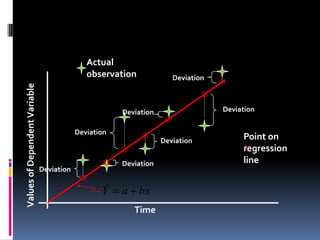
Values of Dependent Variable

Actual
observation

Deviation

Deviation

Deviation
Deviation
Deviation
Deviation

Deviation

ˆ
Y

a bx
Time

Point on
regression
line
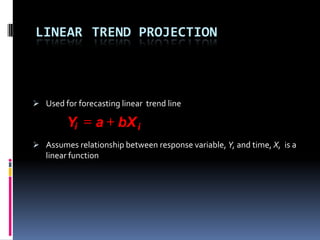
LINEAR TREND PROJECTION

 Used for forecasting linear trend line

Yi

a

bX i

 Assumes relationship between response variable, Y, and time, X, is a

linear function
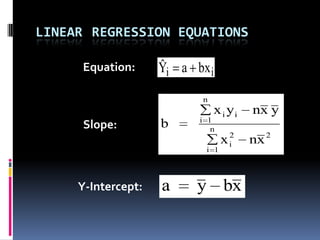
LINEAR REGRESSION EQUATIONS
Equation:

ˆ
Yi a bxi
n

Slope:

b

x i yi

i 1
n

i 1

Y-Intercept:

a

x i2

y bx

nx y
nx 2
Forecasting Presentation

Forecasting Presentation

  • 1.
    FORECASTING AT ROSS PRODUCTS By:Ravi Kanudawala (3905139) Mayur Somaiya (3905128) Ajay Raval (3905225)
  • 2.
    FORECASTING  Forecasting isthe process of making statements about events whose actual outcomes (typically) have not yet been observed. For example, it might be estimation for some variable of interest at some specified value date.  Forecasting is used in the practice of Customer Demand Planning in every day business forecasting for manufacturing companies.
  • 3.
    TYPES OF FORECASTING Quantitative forecasting  Naïve forecasting Approach Time Series Forecasting methods  Causal / econometric forecasting methods Judgmental forecasting methods Artificial Intelligence forecasting methods
  • 4.
    REGRESSION ANALYSIS  TheRegression Analysis is part of Causal / econometric forecasting methods. It includes a large group of methods that can be used to predict future values of a variable using information about other variables.
  • 5.
    STRATEGIC BUSINESS PLANNING Level of aggregation  Total sales or output volume  Top Management involvement  intensive  Forecast frequency  Annual or less  Length of forecast  Year by years or quarters  Usual techniques  Management judgment, regression.
  • 6.
    SALES AND OPERATIONSPLANNING  Level of aggregation  Product family units  Top Management involvement  When reconciling functional plans or moderate  Forecast frequency  Monthly to quarterly  Length of forecast  Several months to a year by months  Usual techniques  Aggregation of detailed forecasts, customer plans
  • 7.
    MASTER PRODUCTION SCHEDULINGAND CONTROL  Level of aggregation  Individual finished goods or components  Top Management involvement  Very little or Minimal  Forecast frequency  Constantly  Length of forecast  A few days to weeks  Usual techniques  Projection techniques (smoothing, moving average)
  • 8.
    INTRODUCTION  The RossProducts is division of Abbott laboratories and is situated in Columbus , Ohio.  It produces a variety of nutritional products including adult medical nutrition supplements, pediatric infant formulas, as well as ancillary equipment.  For example, pump which supplies nutritional liquids to the stomach.  Mainly there are four manufacturing facilities in US.  Ross markets its products in United States and Overseas.  They using log*plus program to perform demand management activities. Log*plus produces forecasts from nation inputs and monitors actual demands against these forecasts.
  • 9.
    PROCEDURE Marketing and sales forecastsby products groups Vendor-managed inventory EDI Demand Management Other Customers Orders Breakout of national forecast by plant International Forecast Forecast consolidation and conversion ( to SKU by plant) Meeting for revising the forecast Forecast available for manufacturing Planning Meeting for forecast review
  • 10.
    Values of DependentVariable Actual observation Deviation Deviation Deviation Deviation Deviation Deviation Deviation ˆ Y a bx Time Point on regression line
  • 11.
    LINEAR TREND PROJECTION Used for forecasting linear trend line Yi a bX i  Assumes relationship between response variable, Y, and time, X, is a linear function
  • 12.
    LINEAR REGRESSION EQUATIONS Equation: ˆ Yia bxi n Slope: b x i yi i 1 n i 1 Y-Intercept: a x i2 y bx nx y nx 2