KEY PERFORMANCE
INDICATORS
measurement = management
AGENDA
 What are Key Performance Indicators (KPIs)?
 Examples of KPIs
 How are KPIs selected?
 Alignment to Strategic Goals
 IT KPI Examples
 Questions
KPI DEFINITION
At an organizational level, a Key Performance
Indicator (KPI) is a quantifiable metric that reflects
how well an organization is achieving its stated
goals and objectives.
EXAMPLES OF KPIS
 HEALTHCARE – READMISSION RATES, CLINICAL OUTCOMES, COSTS PER
TREATMENT, MORTALITY RATES, TIME BETWEEN ED ADMIT AND SEEING
PHYSICIAN, LOS, HCAHPS SCORES, PROFIT MARGIN, COSTS AS A % OF
REVENUE, FTE PER ADJUSTED OCCUPIED BED, PATIENT ENGAGEMENT
 SUPPLY CHAIN – COSTS PER UNIT, SALES YOY, ON-TIME SCHEDULING AND
DELIVERY
 FINANCIAL – RETURN ON INVESTMENT, COSTS OF CAPITAL, REVENUES PER
EMPLOYEE, MARGINS BY PRODUCT LINE
IT KPI EXAMPLES (NOT ALL-INCLUSIVE LIST)
 Costs – Costs of IT as a % of budget, IT costs per
employee, Avg costs per IT project, TCO, IT
investments as a % of total investments
 Incident Management – Uptime, response time,
resolution time, MTBF (mean time between failures),
avg # of complaints per employee, # tickets closed
first call
 Data Warehousing – Costs per terabyte
(acquisition costs), Avg storage costs per terabyte
KPI SELECTION measurement = management
KEY FACTORS TO CONSIDERUnderstanding the Context
 What is the vision for the future?
 What is the strategy? How will the strategic
vision be accomplished?
 What are the organization's objectives? What
needs to be done to keep moving in the strategic
direction?
 What are the Critical Success Factors? Where
should the focus be to achieve the vision?
KEY FACTORS TO CONSIDERKPI Development
 Which metrics will indicate that you are successfully pursuing
your vision and strategy?
 How many metrics should you have? (Enough, but not too
many!)
 How often should you measure?
 Who is accountable for the metric?
 How complex should the metric be?
KEY FACTORS TO CONSIDERKPI Development
 What should you use as a benchmark? Standards?
 How do you ensure the metrics reflect strategic drivers for
organizational success?
 How could the metrics be cheated, and how will you
guard against this?
 What negative incentives would be set up if this metric
was used, and how will you ensure these incentives are not
created?
TOOLS TO USE measurement = management
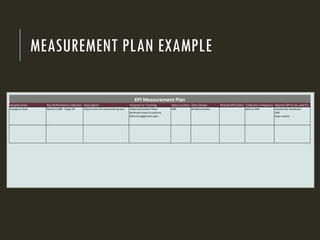
MEASUREMENT PLAN EXAMPLE
Hospital Area Key Performance Indicator Description Purpose for Tracking Data Location Data Owner Related KPIs/Data Collection Frequency Reports KPI to be used for
Emergency Dept Patients LWBS - Target 2% Patients who left without being seen Understand patient flows
Workload impact on patients
Patient engagement opp's
EMR ED Administrator Daily at 7AM Hospital Ops Dashboard
CMS
Payer reports
KPI Measurement Plan
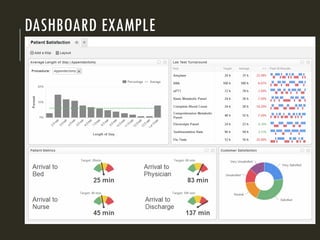
DASHBOARD EXAMPLE
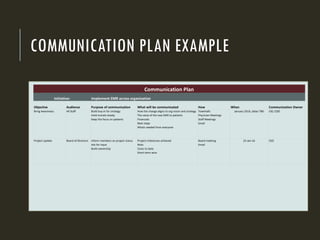
COMMUNICATION PLAN EXAMPLE
Objective Audience Purpose of communication What will be communicated How When Communication Owner
Bring Awareness All Staff Build buy-in for strategy
Hold morale steady
Keep the focus on patients
How the change aligns to org vision and strategy
The value of the new EMR to patients
Financials
Next steps
Whats needed from everyone
Townhalls
Physician Meetings
Staff Meetings
Email
January 2016, dates TBD CIO, COO
Project Update Board of Directors Inform members on project status
Ask for input
Build ownership
Project milestones achieved
Risks
Costs to date
Short-term wins
Board meeting
Email
25-Jan-16 CEO
Communication Plan
Initiative: Implement EMR across organization
QUESTIONS measurement =
management

GBlackard USCPPD512B - KPI Development

  • 1.
  • 2.
    AGENDA  What areKey Performance Indicators (KPIs)?  Examples of KPIs  How are KPIs selected?  Alignment to Strategic Goals  IT KPI Examples  Questions
  • 3.
    KPI DEFINITION At anorganizational level, a Key Performance Indicator (KPI) is a quantifiable metric that reflects how well an organization is achieving its stated goals and objectives.
  • 4.
    EXAMPLES OF KPIS HEALTHCARE – READMISSION RATES, CLINICAL OUTCOMES, COSTS PER TREATMENT, MORTALITY RATES, TIME BETWEEN ED ADMIT AND SEEING PHYSICIAN, LOS, HCAHPS SCORES, PROFIT MARGIN, COSTS AS A % OF REVENUE, FTE PER ADJUSTED OCCUPIED BED, PATIENT ENGAGEMENT  SUPPLY CHAIN – COSTS PER UNIT, SALES YOY, ON-TIME SCHEDULING AND DELIVERY  FINANCIAL – RETURN ON INVESTMENT, COSTS OF CAPITAL, REVENUES PER EMPLOYEE, MARGINS BY PRODUCT LINE
  • 5.
    IT KPI EXAMPLES(NOT ALL-INCLUSIVE LIST)  Costs – Costs of IT as a % of budget, IT costs per employee, Avg costs per IT project, TCO, IT investments as a % of total investments  Incident Management – Uptime, response time, resolution time, MTBF (mean time between failures), avg # of complaints per employee, # tickets closed first call  Data Warehousing – Costs per terabyte (acquisition costs), Avg storage costs per terabyte
  • 6.
  • 7.
    KEY FACTORS TOCONSIDERUnderstanding the Context  What is the vision for the future?  What is the strategy? How will the strategic vision be accomplished?  What are the organization's objectives? What needs to be done to keep moving in the strategic direction?  What are the Critical Success Factors? Where should the focus be to achieve the vision?
  • 8.
    KEY FACTORS TOCONSIDERKPI Development  Which metrics will indicate that you are successfully pursuing your vision and strategy?  How many metrics should you have? (Enough, but not too many!)  How often should you measure?  Who is accountable for the metric?  How complex should the metric be?
  • 9.
    KEY FACTORS TOCONSIDERKPI Development  What should you use as a benchmark? Standards?  How do you ensure the metrics reflect strategic drivers for organizational success?  How could the metrics be cheated, and how will you guard against this?  What negative incentives would be set up if this metric was used, and how will you ensure these incentives are not created?
  • 10.
    TOOLS TO USEmeasurement = management
  • 11.
    MEASUREMENT PLAN EXAMPLE HospitalArea Key Performance Indicator Description Purpose for Tracking Data Location Data Owner Related KPIs/Data Collection Frequency Reports KPI to be used for Emergency Dept Patients LWBS - Target 2% Patients who left without being seen Understand patient flows Workload impact on patients Patient engagement opp's EMR ED Administrator Daily at 7AM Hospital Ops Dashboard CMS Payer reports KPI Measurement Plan
  • 12.
  • 13.
    COMMUNICATION PLAN EXAMPLE ObjectiveAudience Purpose of communication What will be communicated How When Communication Owner Bring Awareness All Staff Build buy-in for strategy Hold morale steady Keep the focus on patients How the change aligns to org vision and strategy The value of the new EMR to patients Financials Next steps Whats needed from everyone Townhalls Physician Meetings Staff Meetings Email January 2016, dates TBD CIO, COO Project Update Board of Directors Inform members on project status Ask for input Build ownership Project milestones achieved Risks Costs to date Short-term wins Board meeting Email 25-Jan-16 CEO Communication Plan Initiative: Implement EMR across organization
  • 14.