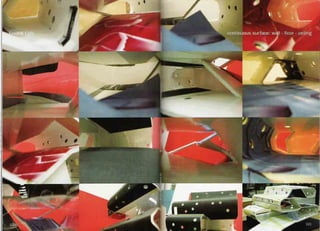
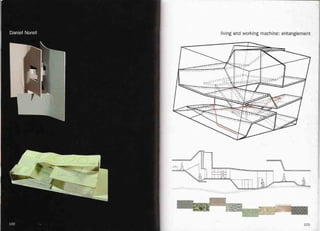
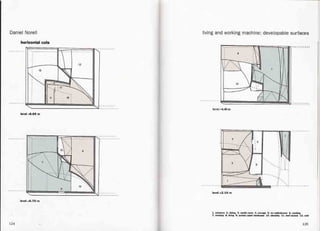
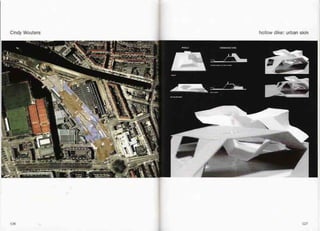
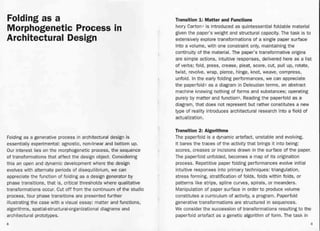
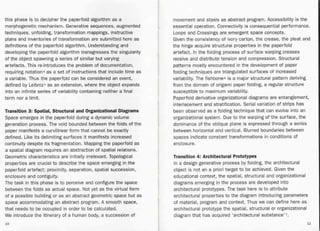
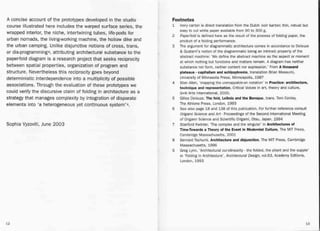
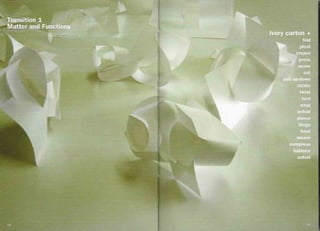
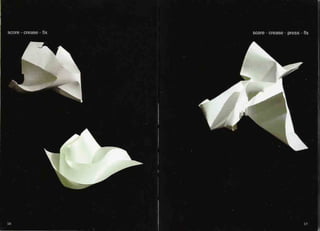
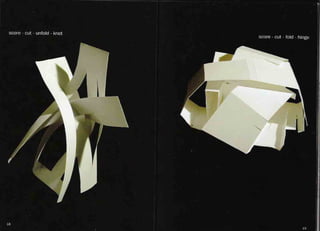
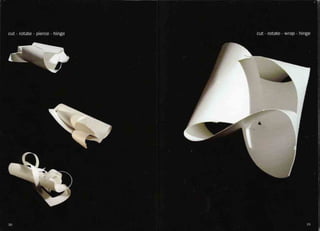
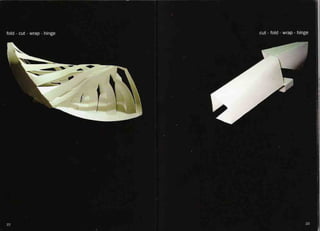
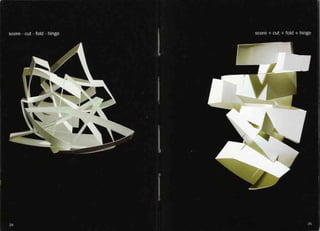
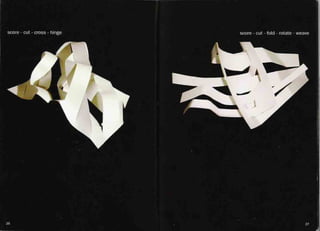
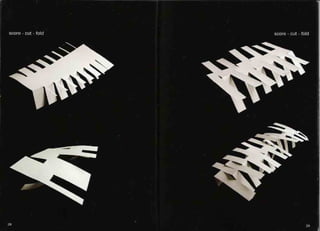
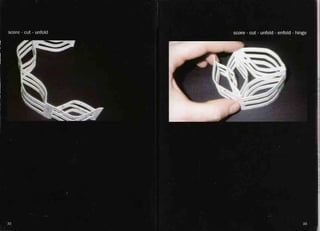
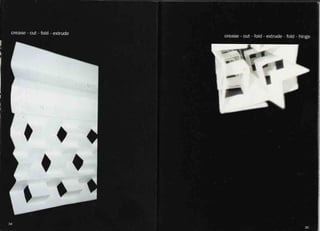
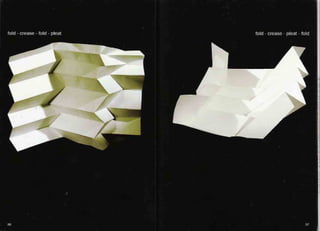
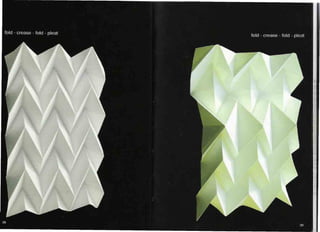
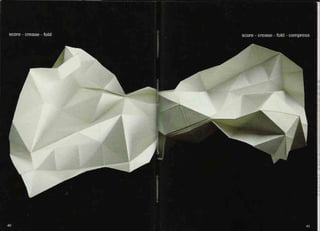
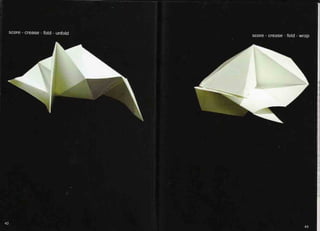
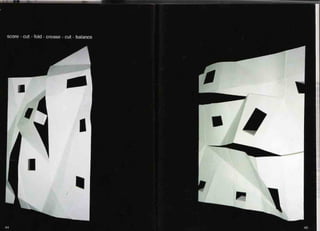
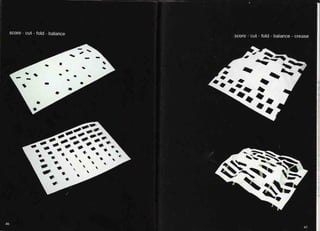
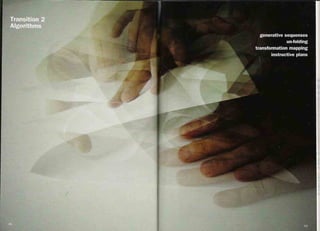
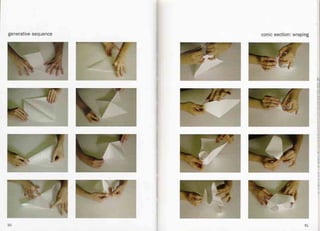
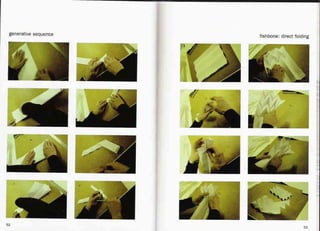
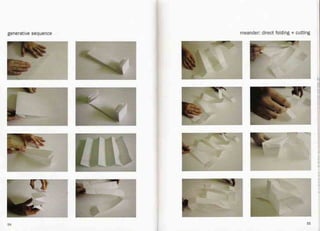
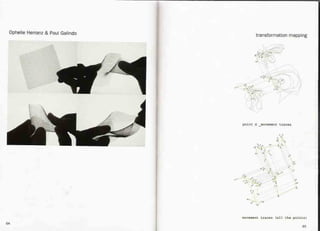
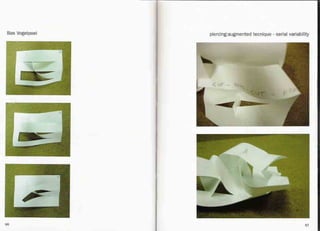
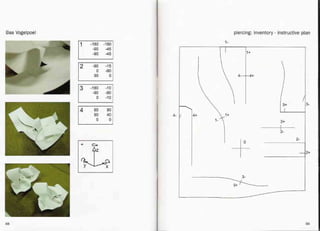
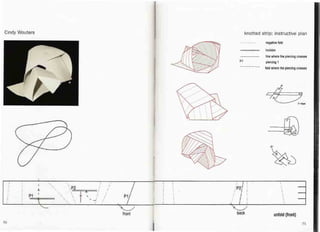
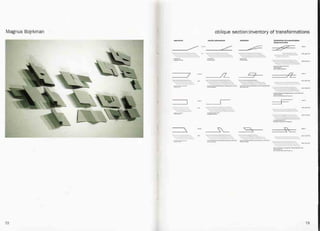
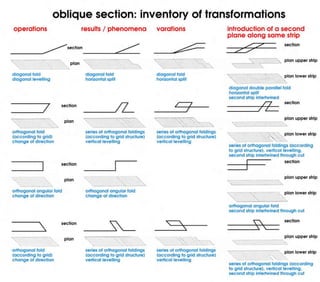
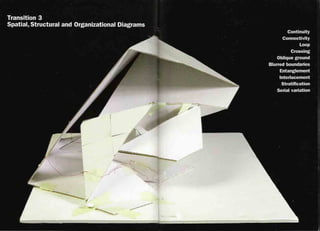
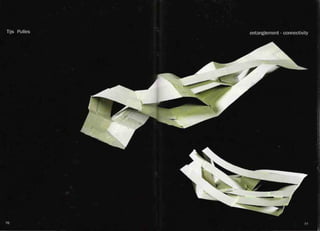
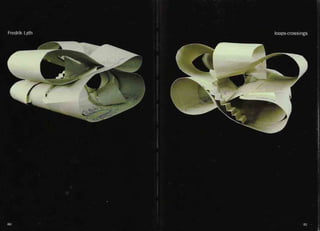
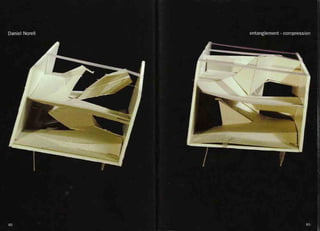
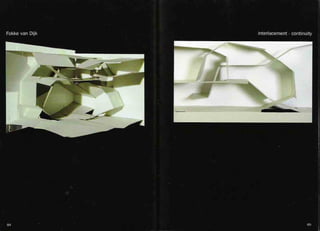
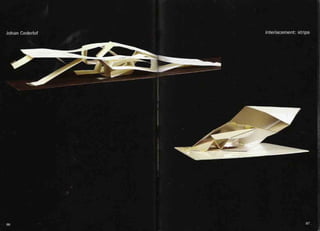
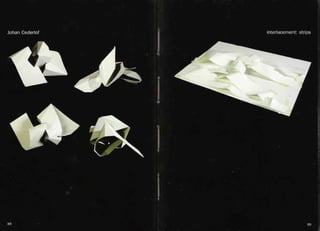
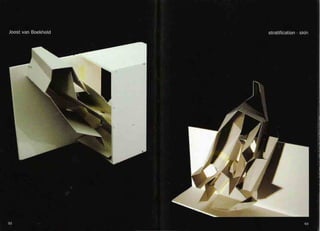
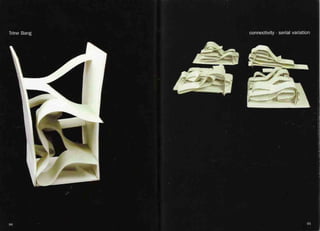
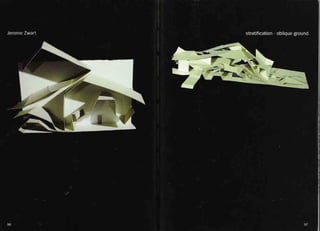
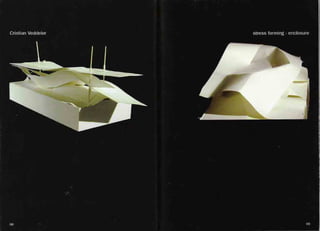
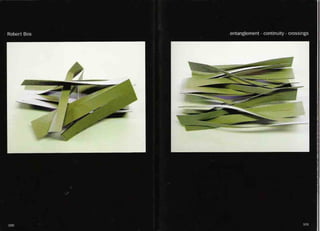
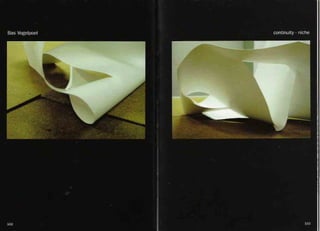
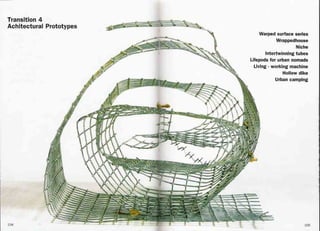
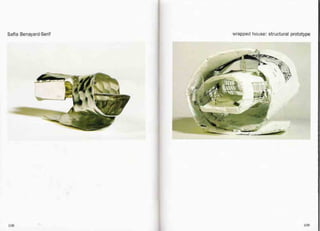
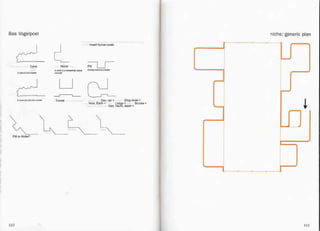
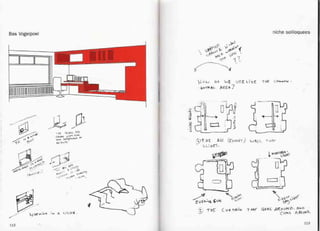
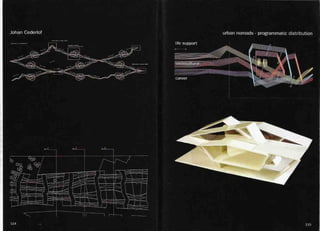
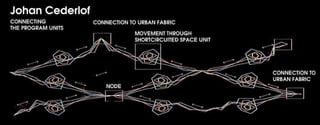
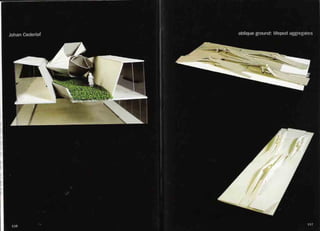
The document discusses folding as a generative process in architectural design. It explores folding as a way to transform a single paper surface into a volume through a series of actions like folding, pressing, scoring, etc. It examines four phase transitions in the folding process: 1) exploring the material properties and transformations of paper; 2) developing folding techniques into algorithms; 3) mapping the folded paper as spatial, structural, and organizational diagrams; 4) developing the diagrams into architectural prototypes. Examples of prototypes include warped surface structures, wrapped interiors, niches, intertwining tubes, and urban encampments. The folding process is described as a way to manage complexity in architecture by integrating disparate elements.




![Fredrik Lyth
SECTION
I
n'
] gsJi
8~
80
CI WI GI HI
PARK YOUR CAR
GO TO YOUR HOUSE
WALKTHROUGH PARK
lEAVE FOR WORK
~CV
GJ'j0
~ 0~00
00 G70 (0(0 GROUNDLEVEL
CI W+GI HI
WORK INA PATIO
WALKBY SHOPS
ON THE WAYHOME
C+GI W+HI
CAR IN GARDEN
WORK INBED
C+HIWIGI
DRIVE INTOTHE HOUSE
lEAVE FOR WORK
WAlK THROUGH PARK
C+W+HI GI
CAR DOCKED TO WORK
ESCAPE BORING
MEETING THROUGH
BACK ENTRANCE TO
YOUR HOUSE
TAKEA WALK
(}
" ~'
.
. --
..
'~4 ,
ill
PRIVATE! SEMIPRIVATE
EXTERIOR SPACE
"
'E
CJ
I LEVEL 3
118
, "
:-1,
"
I,
LEVEL1
Q
'
, .. I
, 0";
.- ,
1.1
, ','1
I
1
LEVEL<
1
intertwinning tubes
LEVEL 2
~
~(~t
SECTION
SITUATION
119](https://image.slidesharecdn.com/folding-architecture-sophia-vyzoviti-230201190540-ecac4f73/85/Folding-architecture-sophia-vyzoviti-pdf-63-320.jpg)