FLUID & ELECTROLYTE
NEEDS OF THE
PATIENTS
By: Prof Sathish Rajamani
HOD – Department of Psychiatric Nursing
INTRODUCTION
 Water balance is the balance between water intake and
water output.
 Water is the single component of the body (60 %) of the
average adult’s weight is fluid.
 Proportion of water is lower in women, obese and older
adults, but higher in children.
 Fluid imbalance is evaluated based on the amount of
sodium lost or gained in relationship to water.
DISTRIBUTION OF BODY FLUIDS
Body fluids
Intracellular
fluids
Extracellular
fluids
Intracellular fluids
 ICF comprises all fluid within the cells of the body.
 About 42 % of the total body weight is made of ICF.
 Average weight of adult male’s body have 28 L and in female
it was 20 L.
Extracellular fluids
 ECF is all the fluid outside a cell, which is divided into three smaller
compartments:
 Interstitial fluid, Intravascular fluid and Transcellular fluid.
 Interstitial fluids – Lymph. These are the fluids between the cells and
outside of the blood vessels.
 Intravascular fluid – Blood Plasma. It is found in the vascular system.
 Transcellular fluid – it is the fluid separated from other fluids by a
cellular barrier and consists of cerebrospinal, pleural, gastrointestinal,
intraocular, peritoneal and synovial fluids.
 Note: loss of transcellular fluid can produce fluid and electrolyte
disturbance.
COMPOSITION OF BODY FLUIDS
 Electrolyte – It is an element or compound that, when dissolved or
dissociated in water or another solvent. Separates into ions that are
electrically charged,
 Positively charged electrolytes are cations (e.g., Sodium Na+, Potassium K+,
Calcium Ca+.
 Negatively charged electrolytes are anions (e.g., chloride Cl -, Bicarbonates
HC03-, Sulfate SO4 -.
 Electrolytes are vital to body functions. The value milliequivalents per litrer
(mEq/L) represents the number of grams of the specific electrolyte (Solute)
dissolved in a liter of plasma (Solution).
COMPOSITION OF BODY FLUIDS
 Minerals are ingested as compounds and are constituents of all body
tissues and fluids.
 Minerals maintains physiological processes, and also act as
catalysts in nerve response, muscle contractions and metabolism of
nutrients in foods.
 Minerals also regulates electrolyte balance, hormone production and
strengthen skeletal structures.
 Examples of minerals are iron and zinc.
MOVEMENT OF BODY FLUIDS
 Each body compartment is separated by a cell wall and capillary
membrane.
 Fluids and electrolytes constantly shift from compartment to
compartment to facilitate body processes such as tissue
oxygenation, acid – base balance and urine formation.
 The larger the ion molecule, the more slowly passes through the
membranes.
 Fluids and membranes moves across the membranes through four
processes: Osmosis, diffusion, filtration and active transport.
OSMOSIS
 “Osmosis is a process by which the molecules of a solvent pass
from a solution of low concentration to a solution of high
concentration through a semi-permeable membrane.”
DIFFUSION
 Diffusion is defined as the movement of individual molecules of a substance
through a semipermeable barrier from an area of higher concentration to an
area of lower concentration.
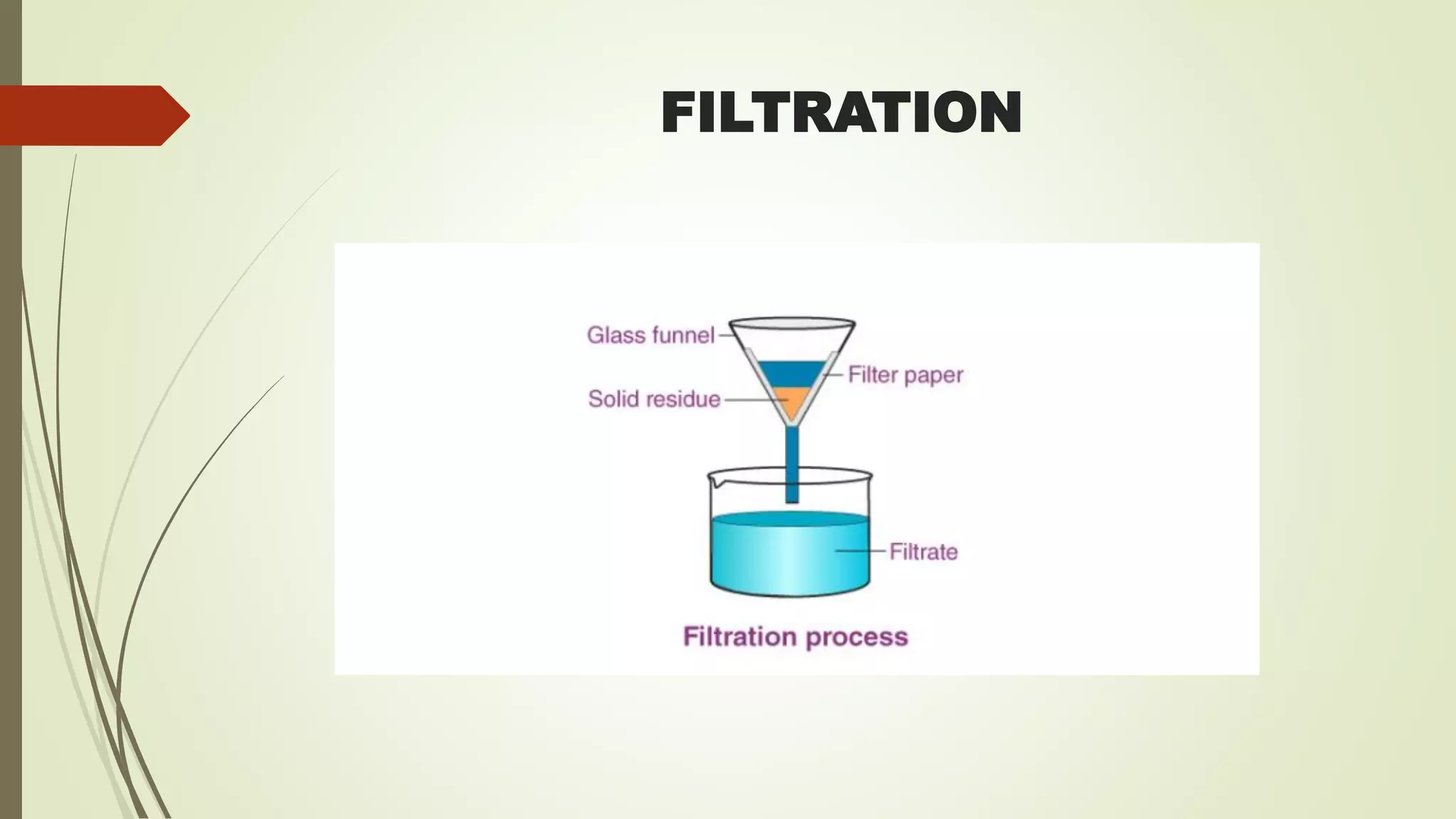
FILTRATION
 The most common example is making tea. While preparing tea, a filter or a
sieve is used to separate tea leaves from the water.
 Through the sieve pores, only water will pass. The liquid which has obtained
after filtration is called the filtrate; in this case, water is the filtrate. The filter
can be a paper, cloth, cotton-wool, asbestos, slag- or glass-wool, unglazed
earthenware, sand, or any other porous material.
 Filtration is used in water treatment and sewage treatment.
FILTRATION
ACTIVE TRANSPORT
 Active transport is the process of moving molecules across
a cellular membrane through the use of cellular energy. ...
Active transport is used by cells to accumulate needed
molecules such as glucose and amino acids. Active transport
powered by adenosine triphosphate (ATP) is known as
primary active transport.
ACTIVE TRANSPORT
Fluid and electrolyte needs 1

Fluid and electrolyte needs 1

  • 1.
    FLUID & ELECTROLYTE NEEDSOF THE PATIENTS By: Prof Sathish Rajamani HOD – Department of Psychiatric Nursing
  • 2.
    INTRODUCTION  Water balanceis the balance between water intake and water output.  Water is the single component of the body (60 %) of the average adult’s weight is fluid.  Proportion of water is lower in women, obese and older adults, but higher in children.  Fluid imbalance is evaluated based on the amount of sodium lost or gained in relationship to water.
  • 3.
    DISTRIBUTION OF BODYFLUIDS Body fluids Intracellular fluids Extracellular fluids
  • 4.
    Intracellular fluids  ICFcomprises all fluid within the cells of the body.  About 42 % of the total body weight is made of ICF.  Average weight of adult male’s body have 28 L and in female it was 20 L.
  • 5.
    Extracellular fluids  ECFis all the fluid outside a cell, which is divided into three smaller compartments:  Interstitial fluid, Intravascular fluid and Transcellular fluid.  Interstitial fluids – Lymph. These are the fluids between the cells and outside of the blood vessels.  Intravascular fluid – Blood Plasma. It is found in the vascular system.  Transcellular fluid – it is the fluid separated from other fluids by a cellular barrier and consists of cerebrospinal, pleural, gastrointestinal, intraocular, peritoneal and synovial fluids.  Note: loss of transcellular fluid can produce fluid and electrolyte disturbance.
  • 6.
    COMPOSITION OF BODYFLUIDS  Electrolyte – It is an element or compound that, when dissolved or dissociated in water or another solvent. Separates into ions that are electrically charged,  Positively charged electrolytes are cations (e.g., Sodium Na+, Potassium K+, Calcium Ca+.  Negatively charged electrolytes are anions (e.g., chloride Cl -, Bicarbonates HC03-, Sulfate SO4 -.  Electrolytes are vital to body functions. The value milliequivalents per litrer (mEq/L) represents the number of grams of the specific electrolyte (Solute) dissolved in a liter of plasma (Solution).
  • 7.
    COMPOSITION OF BODYFLUIDS  Minerals are ingested as compounds and are constituents of all body tissues and fluids.  Minerals maintains physiological processes, and also act as catalysts in nerve response, muscle contractions and metabolism of nutrients in foods.  Minerals also regulates electrolyte balance, hormone production and strengthen skeletal structures.  Examples of minerals are iron and zinc.
  • 8.
    MOVEMENT OF BODYFLUIDS  Each body compartment is separated by a cell wall and capillary membrane.  Fluids and electrolytes constantly shift from compartment to compartment to facilitate body processes such as tissue oxygenation, acid – base balance and urine formation.  The larger the ion molecule, the more slowly passes through the membranes.  Fluids and membranes moves across the membranes through four processes: Osmosis, diffusion, filtration and active transport.
  • 9.
    OSMOSIS  “Osmosis isa process by which the molecules of a solvent pass from a solution of low concentration to a solution of high concentration through a semi-permeable membrane.”
  • 10.
    DIFFUSION  Diffusion isdefined as the movement of individual molecules of a substance through a semipermeable barrier from an area of higher concentration to an area of lower concentration.
  • 11.
    FILTRATION  The mostcommon example is making tea. While preparing tea, a filter or a sieve is used to separate tea leaves from the water.  Through the sieve pores, only water will pass. The liquid which has obtained after filtration is called the filtrate; in this case, water is the filtrate. The filter can be a paper, cloth, cotton-wool, asbestos, slag- or glass-wool, unglazed earthenware, sand, or any other porous material.  Filtration is used in water treatment and sewage treatment.
  • 12.
  • 13.
    ACTIVE TRANSPORT  Activetransport is the process of moving molecules across a cellular membrane through the use of cellular energy. ... Active transport is used by cells to accumulate needed molecules such as glucose and amino acids. Active transport powered by adenosine triphosphate (ATP) is known as primary active transport.
  • 14.