Apache Flink®
A System Overview
Timo Walther
Apache Flink PMC
@twalthr
Flink Meetup @ Zurich, April 18th, 2017
2
Original creators of Apache Flink® Providers of the
dA Platform, a supported Flink
distribution
What is Flink?
3
4
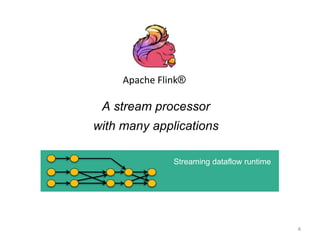
A stream processor
with many applications
Streaming dataflow runtime
Apache Flink®
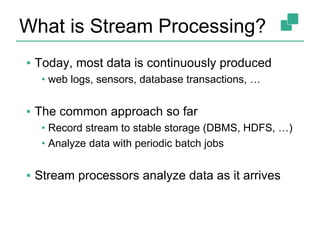
What is Stream Processing?
▪ Today, most data is continuously produced
• web logs, sensors, database transactions, …
▪ The common approach so far
• Record stream to stable storage (DBMS, HDFS, …)
• Analyze data with periodic batch jobs
▪ Stream processors analyze data as it arrives
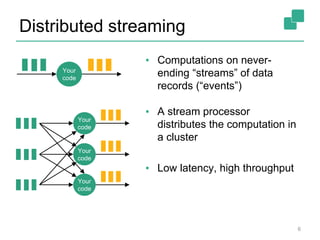
Distributed streaming
▪ Computations on never-
ending “streams” of data
records (“events”)
▪ A stream processor
distributes the computation in
a cluster
▪ Low latency, high throughput
6
Your
code
Your
code
Your
code
Your
code
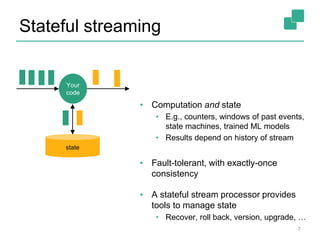
Stateful streaming
▪ Computation and state
• E.g., counters, windows of past events,
state machines, trained ML models
• Results depend on history of stream
▪ Fault-tolerant, with exactly-once
consistency
▪ A stateful stream processor provides
tools to manage state
• Recover, roll back, version, upgrade, …
7
Your
code
state
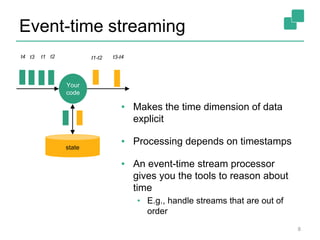
Event-time streaming
▪ Makes the time dimension of data
explicit
▪ Processing depends on timestamps
▪ An event-time stream processor
gives you the tools to reason about
time
• E.g., handle streams that are out of
order
8
Your
code
state
t3 t1 t2t4 t1-t2 t3-t4
9
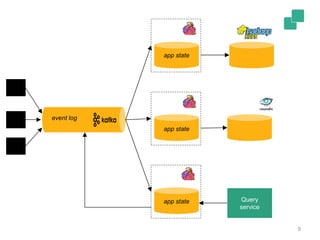
app state
app state
app state
event log
Query
service
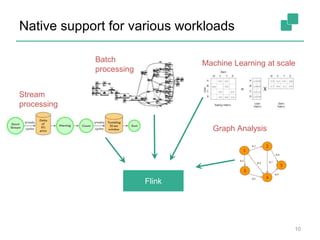
Native support for various workloads
10
Flink
Stream
processing
Batch
processing
Machine Learning at scale
Graph Analysis
Benefits of a streaming architecture
▪ More real-time reaction to events
▪ Robust continuous applications
• Continuous batch apps are duck-taped
together from many tools
▪ Process both real-time and historical data
• Using exactly the same application
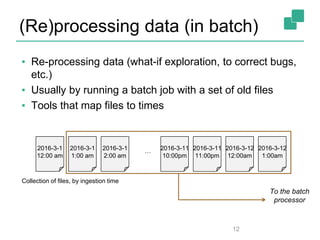
(Re)processing data (in batch)
▪ Re-processing data (what-if exploration, to correct bugs,
etc.)
▪ Usually by running a batch job with a set of old files
▪ Tools that map files to times
12
2016-3-1
12:00 am
2016-3-1
1:00 am
2016-3-1
2:00 am
2016-3-11
11:00pm
2016-3-12
12:00am
2016-3-12
1:00am
…
Collection of files, by ingestion time
2016-3-11
10:00pm
To the batch
processor
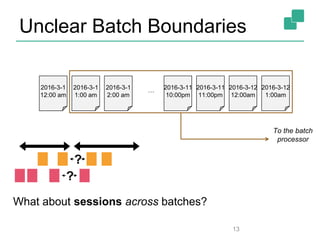
Unclear Batch Boundaries
13
2016-3-1
12:00 am
2016-3-1
1:00 am
2016-3-1
2:00 am
2016-3-11
11:00pm
2016-3-12
12:00am
2016-3-12
1:00am
… 2016-3-11
10:00pm
To the batch
processor
?
?
What about sessions across batches?
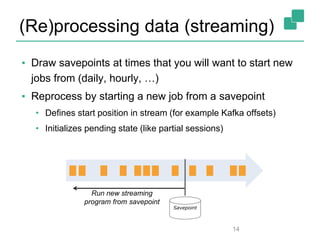
(Re)processing data (streaming)
▪ Draw savepoints at times that you will want to start new
jobs from (daily, hourly, …)
▪ Reprocess by starting a new job from a savepoint
• Defines start position in stream (for example Kafka offsets)
• Initializes pending state (like partial sessions)
14
Savepoint
Run new streaming
program from savepoint
Accurate computation
▪ Batch processing is not an accurate
computation model for continuous data
• Misses the right concepts and primitives
• Time handling, state across batch boundaries
▪ Stateful stream processing a better model
• Can achieve high throughput and low latency while
robustly delivering accurate results
• Real-time/low-latency is the icing on the cake
15
How does Flink execute my
application?
16
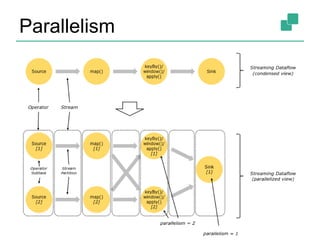
Parallelism
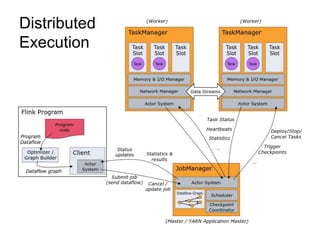
Distributed
Execution
Flink in the real world
20
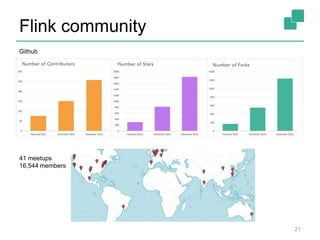
Flink community
21
41 meetups
16,544 members
Github
Flink Forward 2016 & 2017
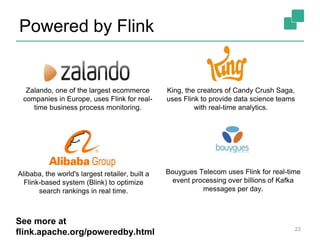
Powered by Flink
23
Zalando, one of the largest ecommerce
companies in Europe, uses Flink for real-
time business process monitoring.
King, the creators of Candy Crush Saga,
uses Flink to provide data science teams
with real-time analytics.
Bouygues Telecom uses Flink for real-time
event processing over billions of Kafka
messages per day.
Alibaba, the world's largest retailer, built a
Flink-based system (Blink) to optimize
search rankings in real time.
See more at
flink.apache.org/poweredby.html
24
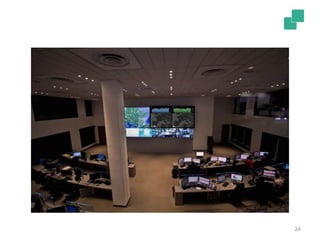
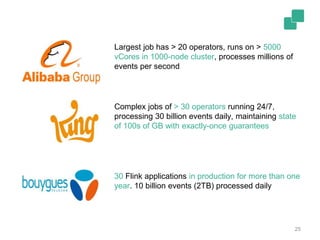
30 Flink applications in production for more than one
year. 10 billion events (2TB) processed daily
Complex jobs of > 30 operators running 24/7,
processing 30 billion events daily, maintaining state
of 100s of GB with exactly-once guarantees
Largest job has > 20 operators, runs on > 5000
vCores in 1000-node cluster, processes millions of
events per second
25
We are hiring!
data-artisans.com/careers
2
7
Thank you!
@twalthr
@ApacheFlink
@dataArtisans

Flink System Overview

  • 1.
    Apache Flink® A SystemOverview Timo Walther Apache Flink PMC @twalthr Flink Meetup @ Zurich, April 18th, 2017
  • 2.
    2 Original creators ofApache Flink® Providers of the dA Platform, a supported Flink distribution
  • 3.
  • 4.
    4 A stream processor withmany applications Streaming dataflow runtime Apache Flink®
  • 5.
    What is StreamProcessing? ▪ Today, most data is continuously produced • web logs, sensors, database transactions, … ▪ The common approach so far • Record stream to stable storage (DBMS, HDFS, …) • Analyze data with periodic batch jobs ▪ Stream processors analyze data as it arrives
  • 6.
    Distributed streaming ▪ Computationson never- ending “streams” of data records (“events”) ▪ A stream processor distributes the computation in a cluster ▪ Low latency, high throughput 6 Your code Your code Your code Your code
  • 7.
    Stateful streaming ▪ Computationand state • E.g., counters, windows of past events, state machines, trained ML models • Results depend on history of stream ▪ Fault-tolerant, with exactly-once consistency ▪ A stateful stream processor provides tools to manage state • Recover, roll back, version, upgrade, … 7 Your code state
  • 8.
    Event-time streaming ▪ Makesthe time dimension of data explicit ▪ Processing depends on timestamps ▪ An event-time stream processor gives you the tools to reason about time • E.g., handle streams that are out of order 8 Your code state t3 t1 t2t4 t1-t2 t3-t4
  • 9.
    9 app state app state appstate event log Query service
  • 10.
    Native support forvarious workloads 10 Flink Stream processing Batch processing Machine Learning at scale Graph Analysis
  • 11.
    Benefits of astreaming architecture ▪ More real-time reaction to events ▪ Robust continuous applications • Continuous batch apps are duck-taped together from many tools ▪ Process both real-time and historical data • Using exactly the same application
  • 12.
    (Re)processing data (inbatch) ▪ Re-processing data (what-if exploration, to correct bugs, etc.) ▪ Usually by running a batch job with a set of old files ▪ Tools that map files to times 12 2016-3-1 12:00 am 2016-3-1 1:00 am 2016-3-1 2:00 am 2016-3-11 11:00pm 2016-3-12 12:00am 2016-3-12 1:00am … Collection of files, by ingestion time 2016-3-11 10:00pm To the batch processor
  • 13.
    Unclear Batch Boundaries 13 2016-3-1 12:00am 2016-3-1 1:00 am 2016-3-1 2:00 am 2016-3-11 11:00pm 2016-3-12 12:00am 2016-3-12 1:00am … 2016-3-11 10:00pm To the batch processor ? ? What about sessions across batches?
  • 14.
    (Re)processing data (streaming) ▪Draw savepoints at times that you will want to start new jobs from (daily, hourly, …) ▪ Reprocess by starting a new job from a savepoint • Defines start position in stream (for example Kafka offsets) • Initializes pending state (like partial sessions) 14 Savepoint Run new streaming program from savepoint
  • 15.
    Accurate computation ▪ Batchprocessing is not an accurate computation model for continuous data • Misses the right concepts and primitives • Time handling, state across batch boundaries ▪ Stateful stream processing a better model • Can achieve high throughput and low latency while robustly delivering accurate results • Real-time/low-latency is the icing on the cake 15
  • 16.
    How does Flinkexecute my application? 16
  • 18.
  • 19.
  • 20.
    Flink in thereal world 20
  • 21.
  • 22.
  • 23.
    Powered by Flink 23 Zalando,one of the largest ecommerce companies in Europe, uses Flink for real- time business process monitoring. King, the creators of Candy Crush Saga, uses Flink to provide data science teams with real-time analytics. Bouygues Telecom uses Flink for real-time event processing over billions of Kafka messages per day. Alibaba, the world's largest retailer, built a Flink-based system (Blink) to optimize search rankings in real time. See more at flink.apache.org/poweredby.html
  • 24.
  • 25.
    30 Flink applicationsin production for more than one year. 10 billion events (2TB) processed daily Complex jobs of > 30 operators running 24/7, processing 30 billion events daily, maintaining state of 100s of GB with exactly-once guarantees Largest job has > 20 operators, runs on > 5000 vCores in 1000-node cluster, processes millions of events per second 25
  • 26.
  • 27.