A	
  Memory	
  Capacity	
  Model	
  for	
  High	
  
Performing	
  Data-­‐filtering	
  
Applica:ons	
  in	
  Samza	
  Framework	
  
1	
  
Tao	
  Feng,	
  	
  Zhenyun	
  Zhuang,	
  Yi	
  Pan,	
  Haricharan	
  Ramachandra	
  
LinkedIn	
  Corp	
  
Agenda	
  
•  Introduc:on	
  
•  Memory	
  capacity	
  model	
  	
  
•  Evalua:on	
  
•  Summary	
  
2	
  
INTRODUCTION	


3	
  
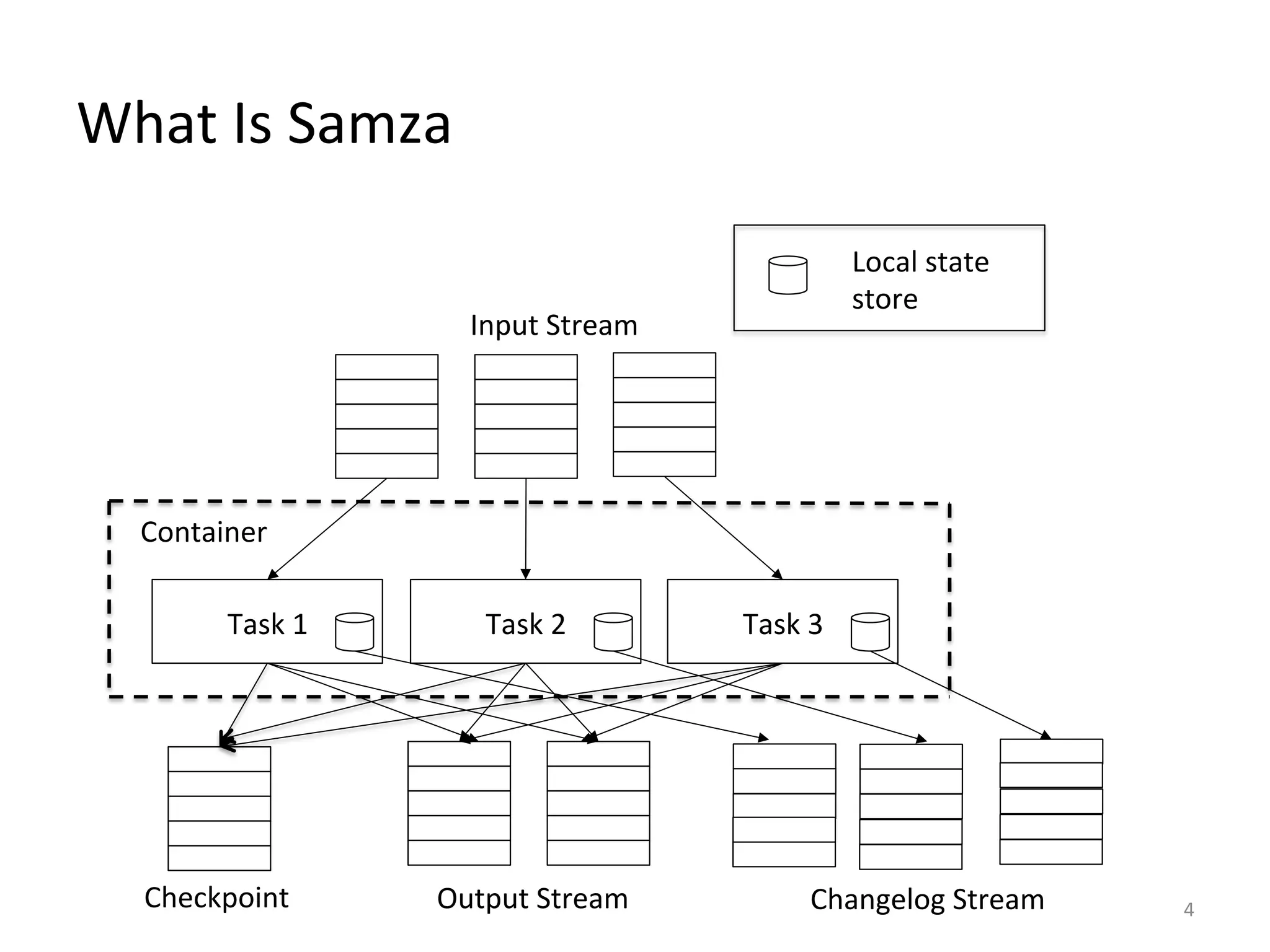
What	
  Is	
  Samza	
  
4	
  
Input	
  Stream	
  
Task	
  1	
   Task	
  2	
   Task	
  3	
  
Output	
  Stream	
   Changelog	
  Stream	
  
Local	
  state	
  
store	
  
Checkpoint	
  
Container	
  
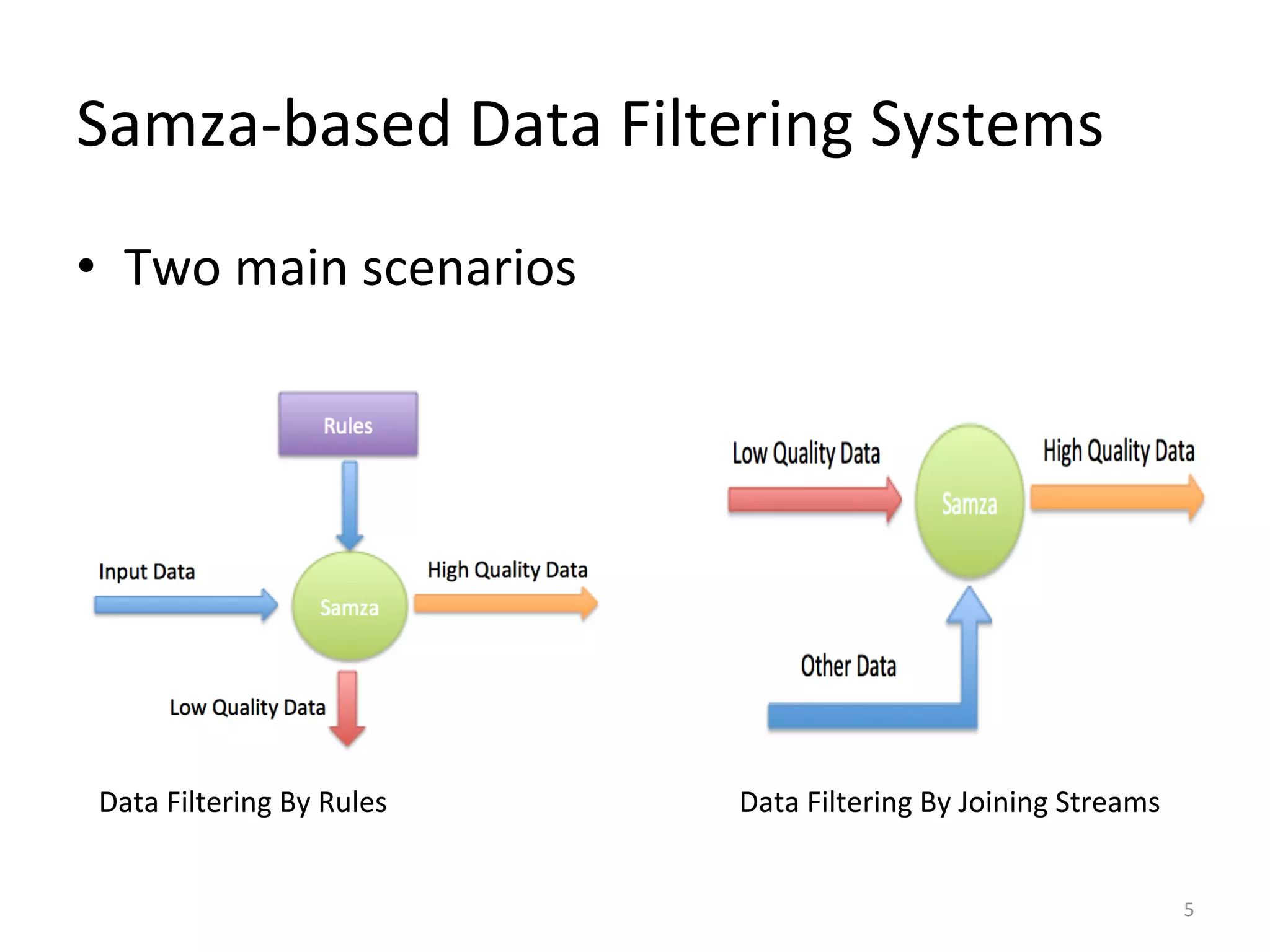
Samza-­‐based	
  Data	
  Filtering	
  Systems	
  
•  Two	
  main	
  scenarios	
  
5	
  
Data	
  Filtering	
  By	
  Rules	
   Data	
  Filtering	
  By	
  Joining	
  Streams	
  
MEMORY	
  CAPACITY	
  MODEL	
  	
  
6	
  
Mo:va:on	
  
•  We	
  need	
  an	
  accurate	
  resource	
  predic:ve	
  
model	
  for	
  beSer	
  capacity	
  planning	
  
•  We	
  could	
  have	
  more	
  containers	
  within	
  single	
  
node	
  
•  Higher	
  density	
  without	
  SLA	
  viola:on	
  
•  Lower	
  business	
  cost	
  
7	
  
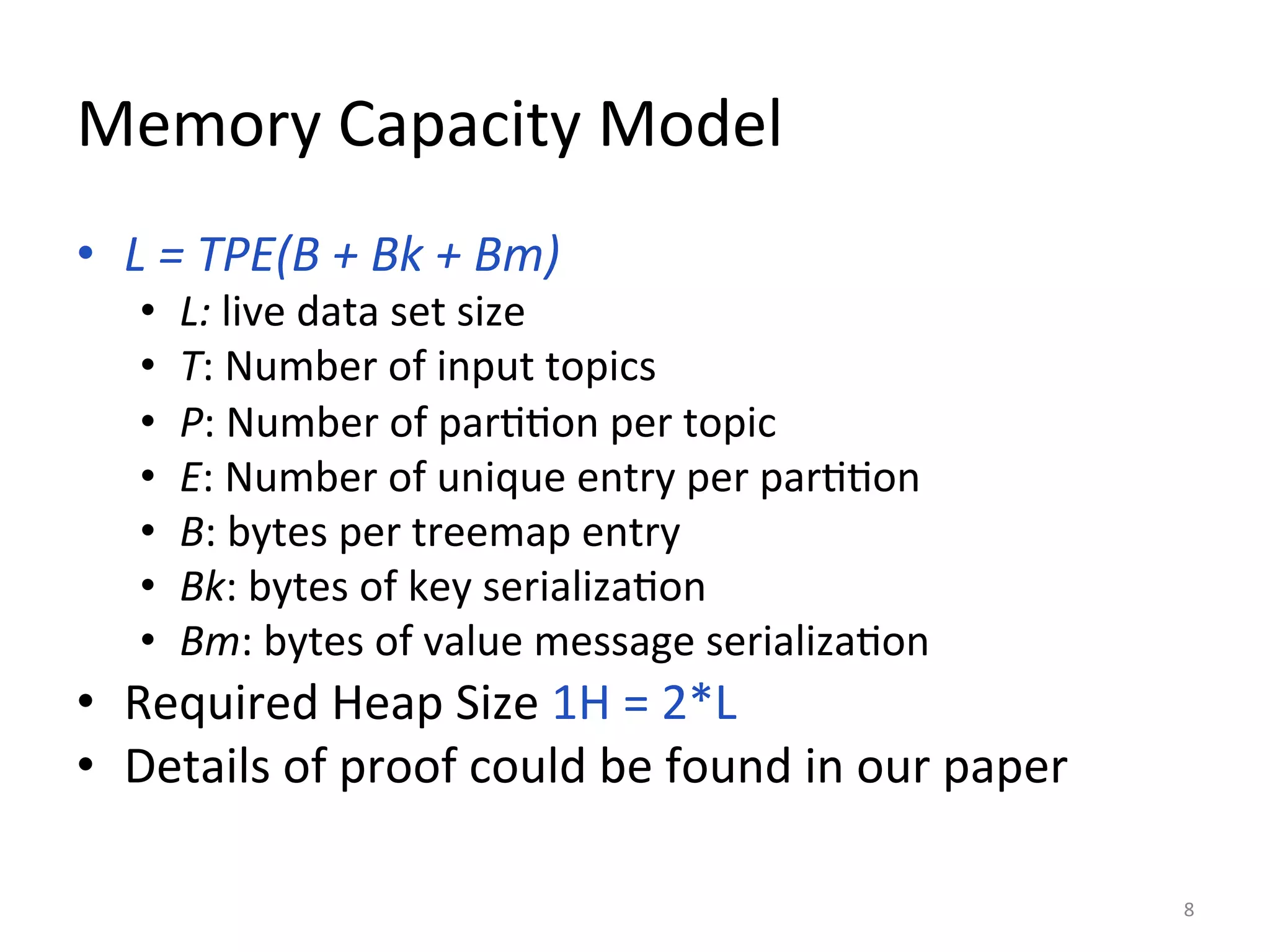
Memory	
  Capacity	
  Model	
  
•  L	
  =	
  TPE(B	
  +	
  Bk	
  +	
  Bm)	
  	
  
•  L:	
  live	
  data	
  set	
  size	
  
•  T:	
  Number	
  of	
  input	
  topics	
  
•  P:	
  Number	
  of	
  par::on	
  per	
  topic	
  
•  E:	
  Number	
  of	
  unique	
  entry	
  per	
  par::on	
  
•  B:	
  bytes	
  per	
  treemap	
  entry	
  
•  Bk:	
  bytes	
  of	
  key	
  serializa:on	
  
•  Bm:	
  bytes	
  of	
  value	
  message	
  serializa:on	
  
•  Required	
  Heap	
  Size	
  1H	
  =	
  2*L	
  
•  Details	
  of	
  proof	
  could	
  be	
  found	
  in	
  our	
  paper	
  
8	
  
EVALUATION	
  
9	
  
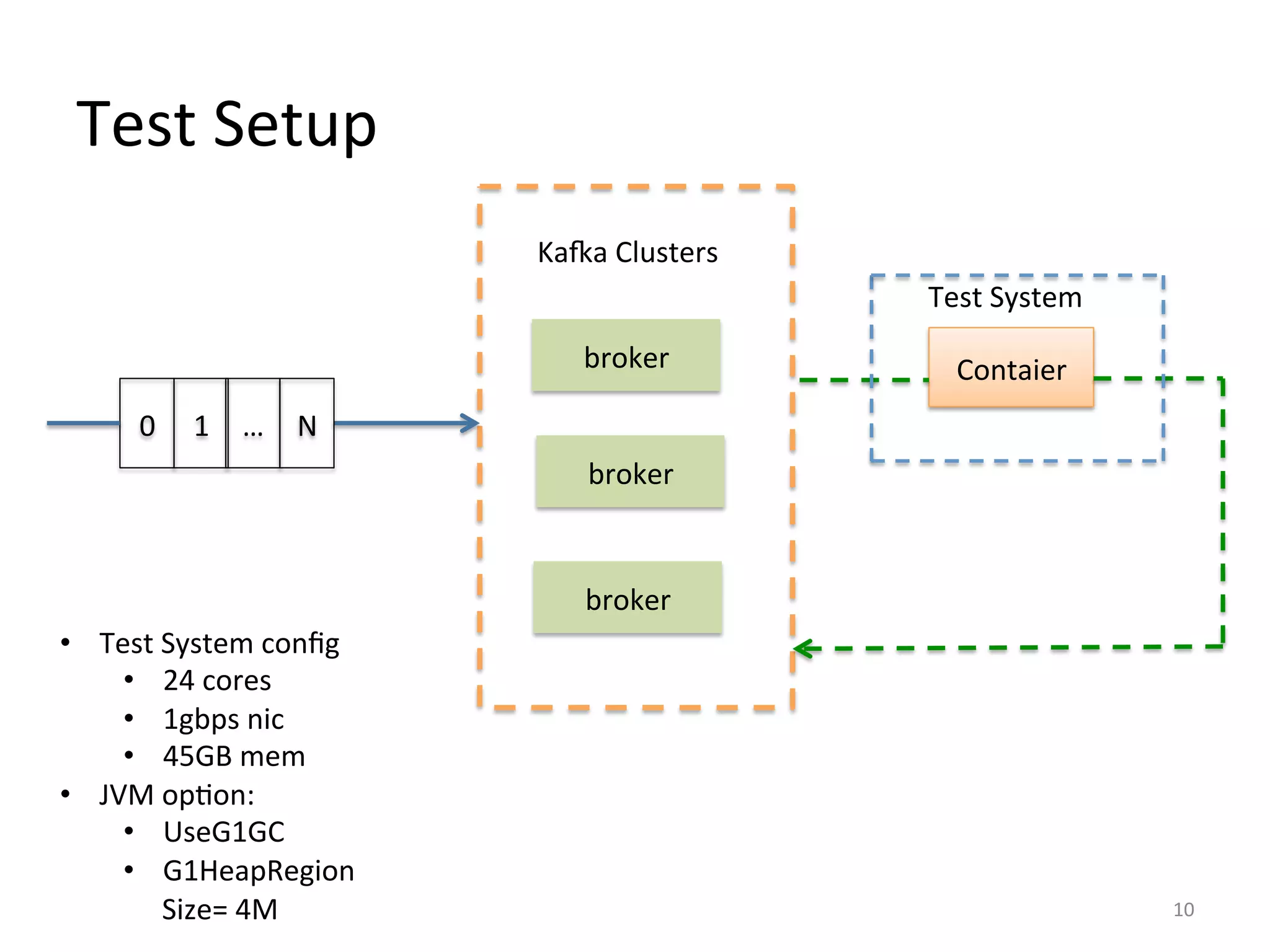
Test	
  Setup	
  
10	
  
0	
  
broker	
  
Ka^a	
  Clusters	
  
1	
   …	
   N	
  
Contaier	
  
Test	
  System	
  
•  Test	
  System	
  config	
  
•  24	
  cores	
  
•  1gbps	
  nic	
  
•  45GB	
  mem	
  
•  JVM	
  op:on:	
  
•  UseG1GC	
  
•  G1HeapRegion
Size=	
  4M	
  
broker	
  
broker	
  
Evalua:on	
  Methodology	
  
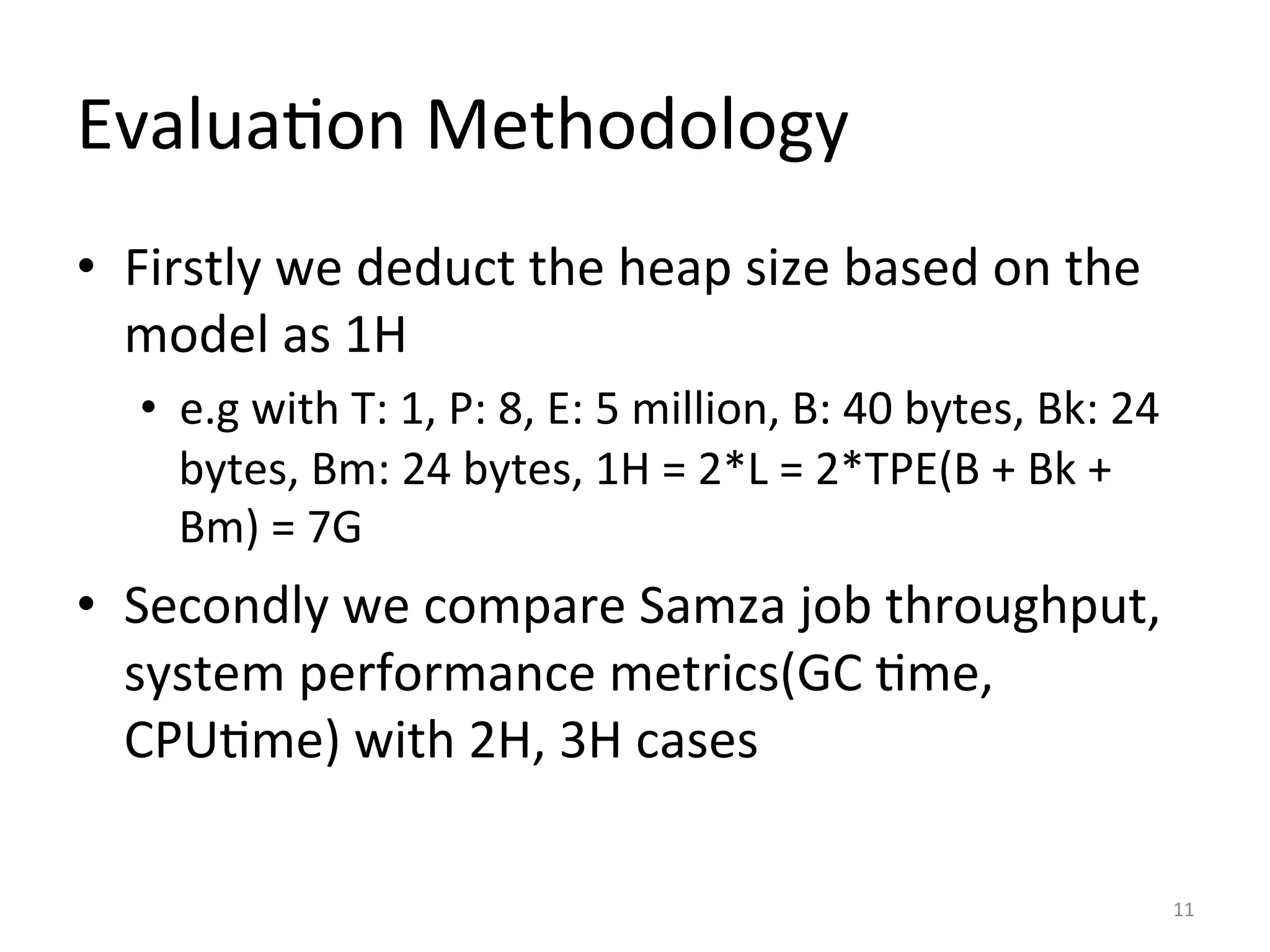
•  Firstly	
  we	
  deduct	
  the	
  heap	
  size	
  based	
  on	
  the	
  
model	
  as	
  1H	
  
•  e.g	
  with	
  T:	
  1,	
  P:	
  8,	
  E:	
  5	
  million,	
  B:	
  40	
  bytes,	
  Bk:	
  24	
  
bytes,	
  Bm:	
  24	
  bytes,	
  1H	
  =	
  2*L	
  =	
  2*TPE(B	
  +	
  Bk	
  +	
  
Bm)	
  =	
  7G	
  
•  Secondly	
  we	
  compare	
  Samza	
  job	
  throughput,	
  
system	
  performance	
  metrics(GC	
  :me,	
  
CPU:me)	
  with	
  2H,	
  3H	
  cases	
  
11	
  
Performance	
  Results	
  
12	
  
Performance	
  Results(conc)	
  
13	
  
Performance	
  Results(conc)	
  
14	
  
1H	
   2H	
   3H	
  
Young	
  GC	
  of	
  G1	
   Count	
   88	
   29	
   32	
  
Total	
  :me(ms)	
   9850	
   5063	
   6144	
  
Mixed	
  GC	
  of	
  G1	
   Count	
   24	
   0	
   0	
  
Total	
  :me(ms)	
   70166	
   0	
   0	
  
Total	
   Count	
   112	
   29	
   31	
  
Total	
  :me(ms)	
   80117	
   5063	
   6144	
  
•  No	
  full	
  GC	
  involved	
  in	
  1H	
  case	
  	
  
•  Expected	
  Higher	
  CPU	
  :me	
  and	
  GC	
  :me	
  for	
  1H	
  case	
  
Summary	
  
•  The	
  model	
  predicts	
  memory	
  usage	
  of	
  Samza	
  
accurately	
  and	
  guarantees	
  Samza	
  job	
  SLA	
  w/o	
  
much	
  Samza	
  SLA	
  viola:on	
  
•  It	
  allows	
  2X	
  dense	
  Samza	
  containers	
  
deployments	
  within	
  the	
  same	
  node	
  with	
  the	
  
accurate	
  memory	
  es:ma:on	


15	
  
Q	
  &	
  A	
  
16	
  

Samza memory capacity_2015_ieee_big_data_data_quality_workshop

  • 1.
    A  Memory  Capacity  Model  for  High   Performing  Data-­‐filtering   Applica:ons  in  Samza  Framework   1   Tao  Feng,    Zhenyun  Zhuang,  Yi  Pan,  Haricharan  Ramachandra   LinkedIn  Corp  
  • 2.
    Agenda   •  Introduc:on   •  Memory  capacity  model     •  Evalua:on   •  Summary   2  
  • 3.
  • 4.
    What  Is  Samza   4   Input  Stream   Task  1   Task  2   Task  3   Output  Stream   Changelog  Stream   Local  state   store   Checkpoint   Container  
  • 5.
    Samza-­‐based  Data  Filtering  Systems   •  Two  main  scenarios   5   Data  Filtering  By  Rules   Data  Filtering  By  Joining  Streams  
  • 6.
  • 7.
    Mo:va:on   •  We  need  an  accurate  resource  predic:ve   model  for  beSer  capacity  planning   •  We  could  have  more  containers  within  single   node   •  Higher  density  without  SLA  viola:on   •  Lower  business  cost   7  
  • 8.
    Memory  Capacity  Model   •  L  =  TPE(B  +  Bk  +  Bm)     •  L:  live  data  set  size   •  T:  Number  of  input  topics   •  P:  Number  of  par::on  per  topic   •  E:  Number  of  unique  entry  per  par::on   •  B:  bytes  per  treemap  entry   •  Bk:  bytes  of  key  serializa:on   •  Bm:  bytes  of  value  message  serializa:on   •  Required  Heap  Size  1H  =  2*L   •  Details  of  proof  could  be  found  in  our  paper   8  
  • 9.
  • 10.
    Test  Setup   10   0   broker   Ka^a  Clusters   1   …   N   Contaier   Test  System   •  Test  System  config   •  24  cores   •  1gbps  nic   •  45GB  mem   •  JVM  op:on:   •  UseG1GC   •  G1HeapRegion Size=  4M   broker   broker  
  • 11.
    Evalua:on  Methodology   • Firstly  we  deduct  the  heap  size  based  on  the   model  as  1H   •  e.g  with  T:  1,  P:  8,  E:  5  million,  B:  40  bytes,  Bk:  24   bytes,  Bm:  24  bytes,  1H  =  2*L  =  2*TPE(B  +  Bk  +   Bm)  =  7G   •  Secondly  we  compare  Samza  job  throughput,   system  performance  metrics(GC  :me,   CPU:me)  with  2H,  3H  cases   11  
  • 12.
  • 13.
  • 14.
    Performance  Results(conc)   14   1H   2H   3H   Young  GC  of  G1   Count   88   29   32   Total  :me(ms)   9850   5063   6144   Mixed  GC  of  G1   Count   24   0   0   Total  :me(ms)   70166   0   0   Total   Count   112   29   31   Total  :me(ms)   80117   5063   6144   •  No  full  GC  involved  in  1H  case     •  Expected  Higher  CPU  :me  and  GC  :me  for  1H  case  
  • 15.
    Summary   •  The  model  predicts  memory  usage  of  Samza   accurately  and  guarantees  Samza  job  SLA  w/o   much  Samza  SLA  viola:on   •  It  allows  2X  dense  Samza  containers   deployments  within  the  same  node  with  the   accurate  memory  es:ma:on     15  
  • 16.
    Q  &  A   16