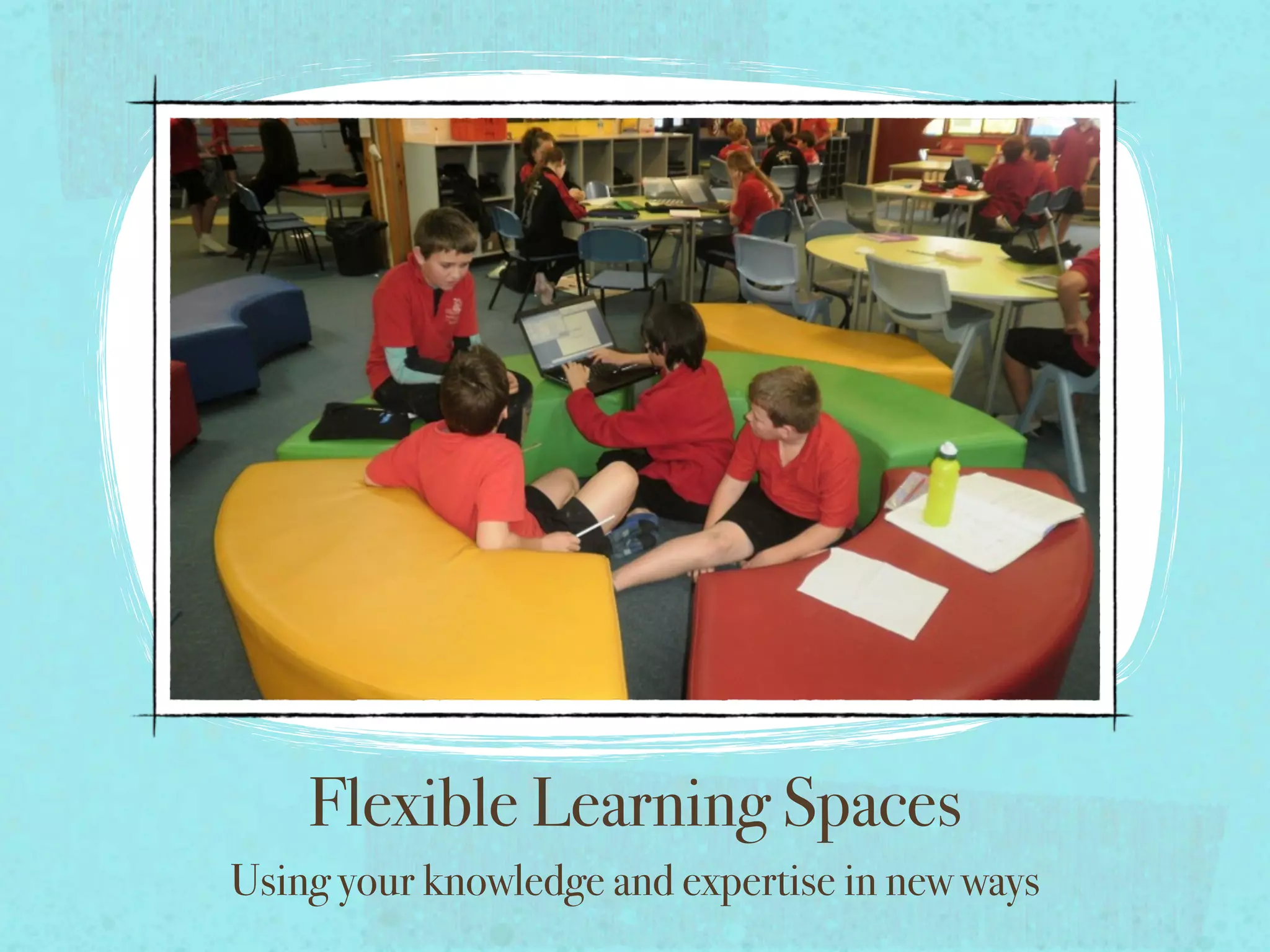
Flexible Learning Spaces
Using your knowledge and expertise in new ways
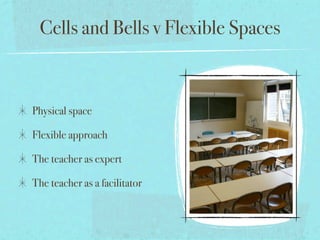
Cells and Bells v Flexible Spaces


Physical space

Flexible approach

The teacher as expert

The teacher as a facilitator
Physical space: flexible approach

                   It’s not what you’ve got, it’s
                   how you use it

                   Moving yourself around the
                   room

                   Student transition to ‘new’
                   classrooms will be informed
                   by primary school
                   experience
The Teacher as Expert?


Wanting to ‘direct’ student
learning is different from...

Wanting to ‘assist’ student
learning

Allowing students time to
think & interact
Getting the most out of the space


The importance of learning goals and clear objectives

Individual activities are not as important as achieving learning
goals

Feeling ‘in control’

Allowing for the different pace of learners

Accepting student control of own learning
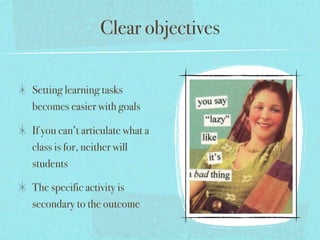
Clear objectives

Setting learning tasks
becomes easier with goals

If you can’t articulate what a
class is for, neither will
students

The specific activity is
secondary to the outcome
Controlled vs ‘uncontrolled’ classes

If students don’t know
exactly what they should be
achieving, they won’t be ‘on
task’

Giving smaller, discrete
tasks for students to begin
with will be more effective

Helping students to
organise their time
“Engaging” students: the first step

The objective: Establishing what you know, asking you to think
about new ideas.

Knowledge, beliefs and predictions

‘Answer Garden’ or ‘Flisti’

Adjective grouping

Survey of opposites

Visual representations
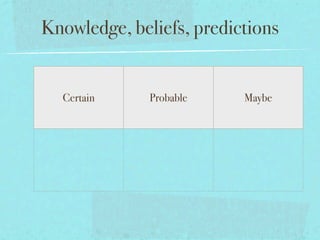
Knowledge, beliefs, predictions


  Certain     Probable    Maybe
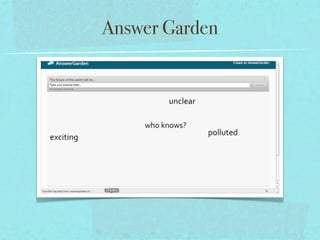
Answer Garden
Flisti
Adjective Grouping; Opposite Survey


 Adjective Grouping

 Opposites Survey
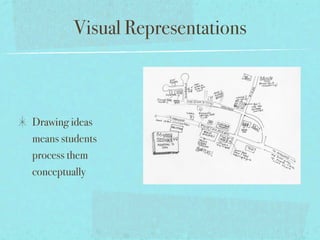
Visual Representations


Drawing ideas
means students
process them
conceptually
Revisiting our objectives

Remember that our objective was : Establishing what you know,
asking you to think about new ideas.

It does not particularly matter which activity you completed,
what matters was that the objective was achieved.

In class, students will be interested in completing all of the
activities; in different units they will get the opportunity to use
different tools

differentiation of delivery
Exploring, elaborating & explaining
                       The Objective:
To try a range of different activities that will broaden their
understanding of the topic & articulate this understanding
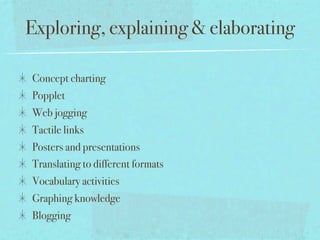
Exploring, explaining & elaborating

Concept charting
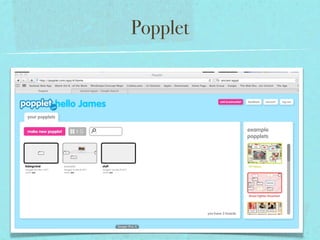
Popplet
Web jogging
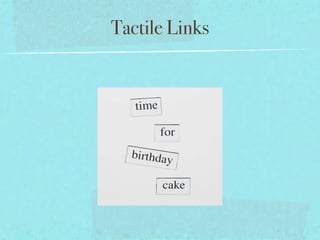
Tactile links
Posters and presentations
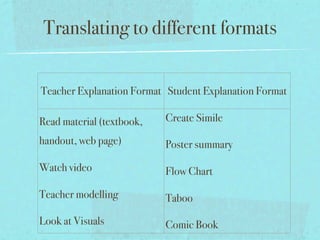
Translating to different formats
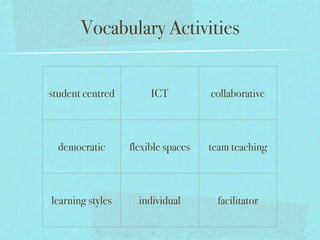
Vocabulary activities
Graphing knowledge
Blogging
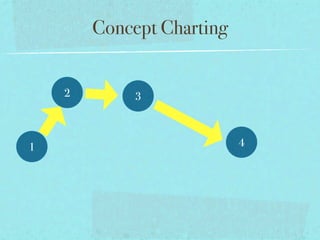
Concept Charting


    2        3


1                          4
Popplet
Web Jogging
Tactile Links
Posters & Presentations
Translating to different formats


Teacher Explanation Format Student Explanation Format

Read material (textbook,   Create Simile

handout, web page)         Poster summary

Watch video                Flow Chart

Teacher modelling          Taboo

Look at Visuals            Comic Book
Vocabulary Activities


student centred        ICT          collaborative


  democratic      flexible spaces   team teaching


learning styles     individual        facilitator
Graphing Knowledge
Blogging
Evaluating


Increased interaction with students

Opportunities for feedback

Meaningful tasks to complete

Student self-evaluation

Reducing your own workload
Applying your own experience


Don’t assume that you are doing something entirely new

Activities are ‘the same, but different’

Adapting your knowledge to new space

Flexible spaces

  • 1.
    Flexible Learning Spaces Usingyour knowledge and expertise in new ways
  • 2.
    Cells and Bellsv Flexible Spaces Physical space Flexible approach The teacher as expert The teacher as a facilitator
  • 3.
    Physical space: flexibleapproach It’s not what you’ve got, it’s how you use it Moving yourself around the room Student transition to ‘new’ classrooms will be informed by primary school experience
  • 4.
    The Teacher asExpert? Wanting to ‘direct’ student learning is different from... Wanting to ‘assist’ student learning Allowing students time to think & interact
  • 5.
    Getting the mostout of the space The importance of learning goals and clear objectives Individual activities are not as important as achieving learning goals Feeling ‘in control’ Allowing for the different pace of learners Accepting student control of own learning
  • 6.
    Clear objectives Setting learningtasks becomes easier with goals If you can’t articulate what a class is for, neither will students The specific activity is secondary to the outcome
  • 7.
    Controlled vs ‘uncontrolled’classes If students don’t know exactly what they should be achieving, they won’t be ‘on task’ Giving smaller, discrete tasks for students to begin with will be more effective Helping students to organise their time
  • 8.
    “Engaging” students: thefirst step The objective: Establishing what you know, asking you to think about new ideas. Knowledge, beliefs and predictions ‘Answer Garden’ or ‘Flisti’ Adjective grouping Survey of opposites Visual representations
  • 9.
    Knowledge, beliefs, predictions Certain Probable Maybe
  • 10.
  • 11.
  • 12.
    Adjective Grouping; OppositeSurvey Adjective Grouping Opposites Survey
  • 13.
    Visual Representations Drawing ideas meansstudents process them conceptually
  • 14.
    Revisiting our objectives Rememberthat our objective was : Establishing what you know, asking you to think about new ideas. It does not particularly matter which activity you completed, what matters was that the objective was achieved. In class, students will be interested in completing all of the activities; in different units they will get the opportunity to use different tools differentiation of delivery
  • 15.
    Exploring, elaborating &explaining The Objective: To try a range of different activities that will broaden their understanding of the topic & articulate this understanding
  • 16.
    Exploring, explaining &elaborating Concept charting Popplet Web jogging Tactile links Posters and presentations Translating to different formats Vocabulary activities Graphing knowledge Blogging
  • 17.
  • 18.
  • 19.
  • 20.
  • 21.
  • 22.
    Translating to differentformats Teacher Explanation Format Student Explanation Format Read material (textbook, Create Simile handout, web page) Poster summary Watch video Flow Chart Teacher modelling Taboo Look at Visuals Comic Book
  • 23.
    Vocabulary Activities student centred ICT collaborative democratic flexible spaces team teaching learning styles individual facilitator
  • 24.
  • 25.
  • 26.
    Evaluating Increased interaction withstudents Opportunities for feedback Meaningful tasks to complete Student self-evaluation Reducing your own workload
  • 27.
    Applying your ownexperience Don’t assume that you are doing something entirely new Activities are ‘the same, but different’ Adapting your knowledge to new space