GROUP 2:
MUHAMMAD AWAIS (2016-AG-7405)
ZUBAIR ABDULLAH (2016-AG-7404)
HAMZA NISAR (2016-AG-7406)
DEGREE :
B.Sc TEXTILE TECHNOLOGY
SUBJECT :
PBG-317
COURSE:
(INTRODUCTION TO BAST FIBER CROPS )
TEACHER :
HAFIZA MASOOMA NASEER
• Linum usitatissium L.
• Common flax/ linseed
• Family = Linaceae
• Genus = Linum
• Specie = L. usitatissimum
FLAX WORD
“Unspun fiber of flax plant”
• It is a food and fiber crop, grown in cooler
regions of the world.
• Native to the region extending from the
eastern Middle east, through Western
Asia and the Middle East, to India.
• STEM
• Upright and 1.2 m tall, slender
stem.
• LEAF:
• Glacuous green, 20-40 mm long,
3 mm broad.
• Lanceolate.
FLOWER :
• Pure blue – bright red, 5 sepals
FRUIT :
• Round dry capsule, 5-9 mm dia.
• Glossy brown seeds like apple pip.
• 4-7 mm long.
HISTORY
• Flax is the oldest fiber crops in the
world
• Some spun dyed, wild flax found in
Georgia, is dated 30,000 years ago.
• Flax extensively cultivated
in China &Egypt
• Pictures on tombs and temple
walls.
FLAX FIBER
• Extracted from the bast or skin of the stem of
the flax plant.
 Flax fiber is
– Soft
– Lustrous
– Flexible
• Bundles of fiber have the appearance of
blonde hair, hence the description "flaxen".
• It is stronger than cotton fiber but less elastic.
• The best grades are used for linen
Fabrics
• Coarser grades
are used for the manufacturing of:
– Twine and rope
• Flax fiber is also a raw material for
– high-quality paper industry
– printed banknotes
– rolling paper for cigarettes and tea bags.
USES:
• Edible oil (lindseed/flex oil)
• A nutritional supplement
• An ingredient in many wood
finishing products.
• Ornamental plant
• Linen making
• Fiber taken from stem, 2-3 times
stronger than cotton.
• Naturally smooth and straight
• F l a x seeds come in
t w o b a s i c v a r i e t i e s
PRODUCTION
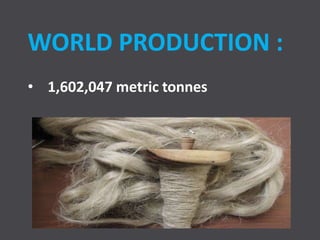
WORLD PRODUCTION :
• 1,602,047 metric tonnes
SOIL :
• Besides the alluvial kind:
–Deep loams, and containing a
large proportion of organic
matter.
FERTILIZERS OR PESTS :
• Farming flax requires few Fertilizers or
pesticides.
• Within 8 weeks of sowing, the plant
will reach 10–15 cm in height, and
growth conditions, reaching 70–80 cm
within 15 days.
HARVESTING :
• Harvested for fiber production after
approximately 100 days
OR
• Month after the plant flowers
• Two weeks after the seed capsules form.
• The base of the plant will
begin to turn yellow. If the
plant is still green the seed will
not be useful, and the fiber
will be underdeveloped. The
fiber degrades once the plant
is brown.
HARVESTING METHODS :
• One involving mechanized instrument
• Second method, more manual and
tageted towards maximizing the fiber
length.
• Before the flax fibers can be spun into
linen, they must be separated from the
rest of the stalk.
• The first step in this process is called
retting.
“Removing the straw from the fibers”
• Dressing consists of three steps:
1. Breaking
2. Scutching
3. Heckling
DRESSING THE FLAX
B
R
E
A
K
I
N
G
Flax plant

Flax plant

  • 2.
    GROUP 2: MUHAMMAD AWAIS(2016-AG-7405) ZUBAIR ABDULLAH (2016-AG-7404) HAMZA NISAR (2016-AG-7406)
  • 3.
    DEGREE : B.Sc TEXTILETECHNOLOGY SUBJECT : PBG-317 COURSE: (INTRODUCTION TO BAST FIBER CROPS ) TEACHER : HAFIZA MASOOMA NASEER
  • 4.
    • Linum usitatissiumL. • Common flax/ linseed • Family = Linaceae • Genus = Linum • Specie = L. usitatissimum
  • 5.
    FLAX WORD “Unspun fiberof flax plant” • It is a food and fiber crop, grown in cooler regions of the world. • Native to the region extending from the eastern Middle east, through Western Asia and the Middle East, to India.
  • 6.
    • STEM • Uprightand 1.2 m tall, slender stem. • LEAF: • Glacuous green, 20-40 mm long, 3 mm broad. • Lanceolate.
  • 7.
    FLOWER : • Pureblue – bright red, 5 sepals FRUIT : • Round dry capsule, 5-9 mm dia. • Glossy brown seeds like apple pip. • 4-7 mm long.
  • 10.
  • 11.
    • Flax isthe oldest fiber crops in the world • Some spun dyed, wild flax found in Georgia, is dated 30,000 years ago.
  • 12.
    • Flax extensivelycultivated in China &Egypt • Pictures on tombs and temple walls.
  • 13.
  • 14.
    • Extracted fromthe bast or skin of the stem of the flax plant.  Flax fiber is – Soft – Lustrous – Flexible • Bundles of fiber have the appearance of blonde hair, hence the description "flaxen". • It is stronger than cotton fiber but less elastic.
  • 15.
    • The bestgrades are used for linen Fabrics • Coarser grades are used for the manufacturing of: – Twine and rope • Flax fiber is also a raw material for – high-quality paper industry – printed banknotes – rolling paper for cigarettes and tea bags.
  • 16.
  • 17.
    • Edible oil(lindseed/flex oil) • A nutritional supplement • An ingredient in many wood finishing products. • Ornamental plant • Linen making • Fiber taken from stem, 2-3 times stronger than cotton.
  • 18.
    • Naturally smoothand straight • F l a x seeds come in t w o b a s i c v a r i e t i e s
  • 20.
  • 21.
    WORLD PRODUCTION : •1,602,047 metric tonnes
  • 22.
    SOIL : • Besidesthe alluvial kind: –Deep loams, and containing a large proportion of organic matter.
  • 23.
    FERTILIZERS OR PESTS: • Farming flax requires few Fertilizers or pesticides. • Within 8 weeks of sowing, the plant will reach 10–15 cm in height, and growth conditions, reaching 70–80 cm within 15 days.
  • 24.
    HARVESTING : • Harvestedfor fiber production after approximately 100 days OR • Month after the plant flowers • Two weeks after the seed capsules form.
  • 25.
    • The baseof the plant will begin to turn yellow. If the plant is still green the seed will not be useful, and the fiber will be underdeveloped. The fiber degrades once the plant is brown.
  • 26.
    HARVESTING METHODS : •One involving mechanized instrument • Second method, more manual and tageted towards maximizing the fiber length.
  • 27.
    • Before theflax fibers can be spun into linen, they must be separated from the rest of the stalk. • The first step in this process is called retting.
  • 28.
    “Removing the strawfrom the fibers” • Dressing consists of three steps: 1. Breaking 2. Scutching 3. Heckling DRESSING THE FLAX
  • 29.