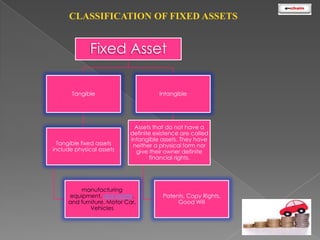
CLASSIFICATION OF FIXED ASSETS

Fixed Asset
Tangible

Tangible fixed assets
include physical assets

Intangible

Assets that do not have a
definite existence are called
intangible assets. They have
neither a physical form nor
give their owner definite
financial rights.

manufacturing
equipment, real estate,
and furniture, Motor Car,
Vehicles

Patents, Copy Rights,
Good Will
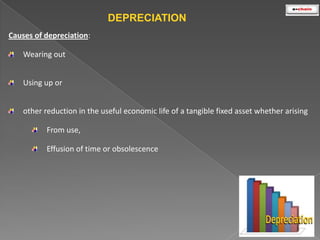
DEPRECIATION
Causes of depreciation:
Wearing out
Using up or
other reduction in the useful economic life of a tangible fixed asset whether arising
From use,
Effusion of time or obsolescence
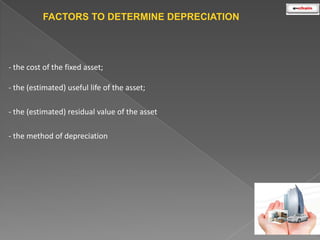
FACTORS TO DETERMINE DEPRECIATION

- the cost of the fixed asset;
- the (estimated) useful life of the asset;

- the (estimated) residual value of the asset
- the method of depreciation
STRAIGHT LINE METHOD
• It is simplest and most commonly used method

• Calculation based on Purchase or acquisition price
• Salvage value / Scrap Value / Residual Value divided by the total productive
years
• Till the end of life of asset, Depreciation will not vary and remains constant
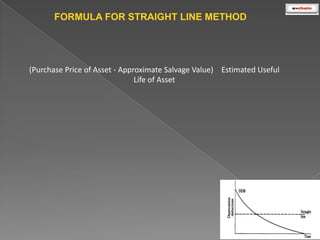
FORMULA FOR STRAIGHT LINE METHOD

(Purchase Price of Asset - Approximate Salvage Value) Estimated Useful
Life of Asset
WRITTEN DOWN VALUE METHOD
 Applicable to machines that have high rates of depreciation in the initial year or
two, and later taper it e.g. a car, is a usable method.
 Written-down value is also called book value or net book value. It is calculated by
subtracting accumulated depreciation or amortization from the asset's original
value.
 Also called as diminishing balance method or Reducing Instalment Method. This
accounting technique reduces the value of an asset by a set percentage each year
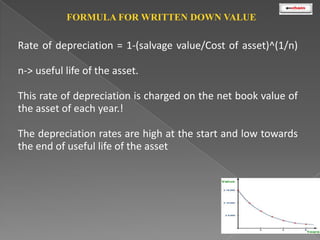
FORMULA FOR WRITTEN DOWN VALUE

Rate of depreciation = 1-(salvage value/Cost of asset)^(1/n)
n-> useful life of the asset.
This rate of depreciation is charged on the net book value of
the asset of each year.!

The depreciation rates are high at the start and low towards
the end of useful life of the asset
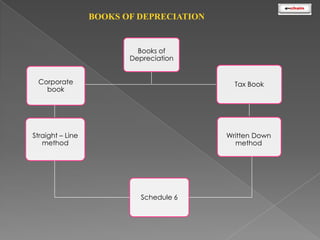
BOOKS OF DEPRECIATION

Books of
Depreciation

Corporate
book

Tax Book

Straight – Line
method

Written Down
method

Schedule 6
e.Chain Fixed Asset
Management
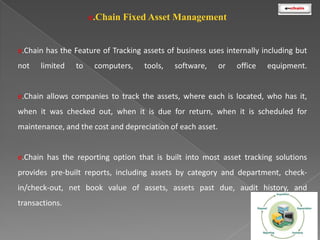
e.Chain Fixed Asset Management

e.Chain has the Feature of Tracking assets of business uses internally including but
not

limited

to

computers,

tools,

software,

or

office

equipment.

e.Chain allows companies to track the assets, where each is located, who has it,
when it was checked out, when it is due for return, when it is scheduled for
maintenance, and the cost and depreciation of each asset.

e.Chain has the reporting option that is built into most asset tracking solutions
provides pre-built reports, including assets by category and department, checkin/check-out, net book value of assets, assets past due, audit history, and
transactions.
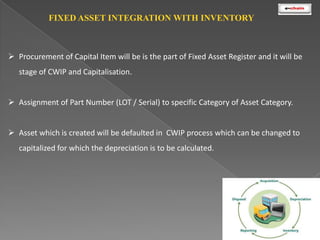
FIXED ASSET INTEGRATION WITH INVENTORY

 Procurement of Capital Item will be is the part of Fixed Asset Register and it will be

stage of CWIP and Capitalisation.
 Assignment of Part Number (LOT / Serial) to specific Category of Asset Category.
 Asset which is created will be defaulted in CWIP process which can be changed to
capitalized for which the depreciation is to be calculated.
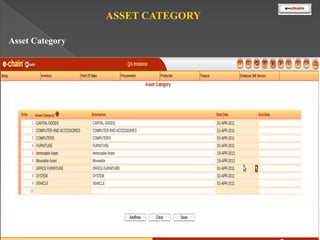
ASSET CATEGORY
Asset Category
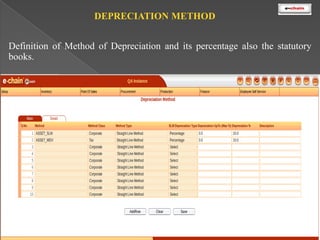
DEPRECIATION METHOD
Definition of Method of Depreciation and its percentage also the statutory
books.
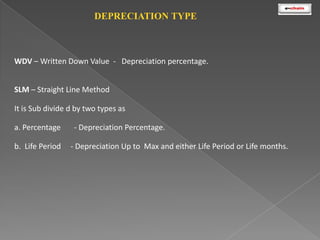
DEPRECIATION TYPE

WDV – Written Down Value - Depreciation percentage.

SLM – Straight Line Method
It is Sub divide d by two types as
a. Percentage
b. Life Period

- Depreciation Percentage.
- Depreciation Up to Max and either Life Period or Life months.
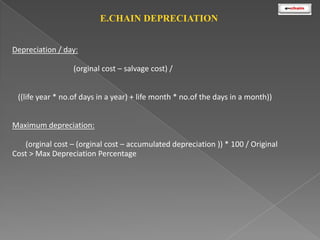
E.CHAIN DEPRECIATION
Depreciation / day:
(orginal cost – salvage cost) /
((life year * no.of days in a year) + life month * no.of the days in a month))

Maximum depreciation:
(orginal cost – (orginal cost – accumulated depreciation )) * 100 / Original
Cost > Max Depreciation Percentage
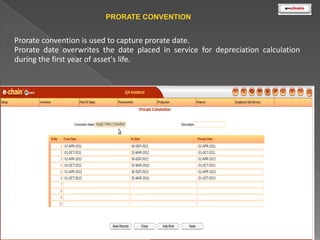
PRORATE CONVENTION

Prorate convention is used to capture prorate date.
Prorate date overwrites the date placed in service for depreciation calculation
during the first year of asset's life.
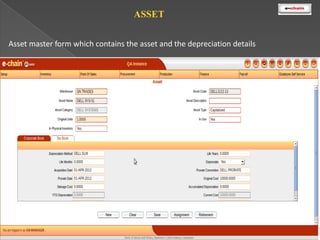
ASSET
Asset master form which contains the asset and the depreciation details
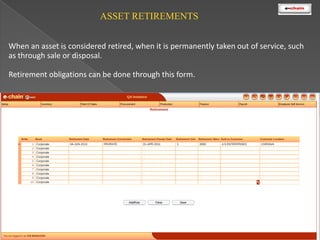
ASSET RETIREMENTS
When an asset is considered retired, when it is permanently taken out of service, such
as through sale or disposal.
Retirement obligations can be done through this form.
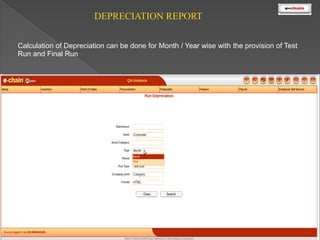
DEPRECIATION REPORT
Calculation of Depreciation can be done for Month / Year wise with the provision of Test
Run and Final Run
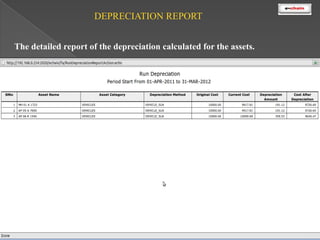
DEPRECIATION REPORT
The detailed report of the depreciation calculated for the assets.
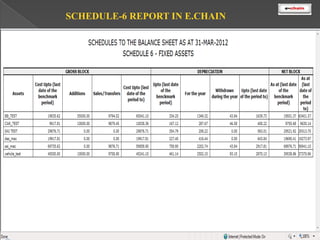
SCHEDULE-6 REPORT IN E.CHAIN
Prepared & Presented By
SIVAKUMAR.T.R
Senior Project Manager
Chain-Sys India Pvt Ltd.,
Chennai

Fixed asset with capax

  • 2.
    CLASSIFICATION OF FIXEDASSETS Fixed Asset Tangible Tangible fixed assets include physical assets Intangible Assets that do not have a definite existence are called intangible assets. They have neither a physical form nor give their owner definite financial rights. manufacturing equipment, real estate, and furniture, Motor Car, Vehicles Patents, Copy Rights, Good Will
  • 3.
    DEPRECIATION Causes of depreciation: Wearingout Using up or other reduction in the useful economic life of a tangible fixed asset whether arising From use, Effusion of time or obsolescence
  • 4.
    FACTORS TO DETERMINEDEPRECIATION - the cost of the fixed asset; - the (estimated) useful life of the asset; - the (estimated) residual value of the asset - the method of depreciation
  • 5.
    STRAIGHT LINE METHOD •It is simplest and most commonly used method • Calculation based on Purchase or acquisition price • Salvage value / Scrap Value / Residual Value divided by the total productive years • Till the end of life of asset, Depreciation will not vary and remains constant
  • 6.
    FORMULA FOR STRAIGHTLINE METHOD (Purchase Price of Asset - Approximate Salvage Value) Estimated Useful Life of Asset
  • 7.
    WRITTEN DOWN VALUEMETHOD  Applicable to machines that have high rates of depreciation in the initial year or two, and later taper it e.g. a car, is a usable method.  Written-down value is also called book value or net book value. It is calculated by subtracting accumulated depreciation or amortization from the asset's original value.  Also called as diminishing balance method or Reducing Instalment Method. This accounting technique reduces the value of an asset by a set percentage each year
  • 8.
    FORMULA FOR WRITTENDOWN VALUE Rate of depreciation = 1-(salvage value/Cost of asset)^(1/n) n-> useful life of the asset. This rate of depreciation is charged on the net book value of the asset of each year.! The depreciation rates are high at the start and low towards the end of useful life of the asset
  • 9.
    BOOKS OF DEPRECIATION Booksof Depreciation Corporate book Tax Book Straight – Line method Written Down method Schedule 6
  • 10.
  • 11.
    e.Chain Fixed AssetManagement e.Chain has the Feature of Tracking assets of business uses internally including but not limited to computers, tools, software, or office equipment. e.Chain allows companies to track the assets, where each is located, who has it, when it was checked out, when it is due for return, when it is scheduled for maintenance, and the cost and depreciation of each asset. e.Chain has the reporting option that is built into most asset tracking solutions provides pre-built reports, including assets by category and department, checkin/check-out, net book value of assets, assets past due, audit history, and transactions.
  • 12.
    FIXED ASSET INTEGRATIONWITH INVENTORY  Procurement of Capital Item will be is the part of Fixed Asset Register and it will be stage of CWIP and Capitalisation.  Assignment of Part Number (LOT / Serial) to specific Category of Asset Category.  Asset which is created will be defaulted in CWIP process which can be changed to capitalized for which the depreciation is to be calculated.
  • 13.
  • 14.
    DEPRECIATION METHOD Definition ofMethod of Depreciation and its percentage also the statutory books.
  • 15.
    DEPRECIATION TYPE WDV –Written Down Value - Depreciation percentage. SLM – Straight Line Method It is Sub divide d by two types as a. Percentage b. Life Period - Depreciation Percentage. - Depreciation Up to Max and either Life Period or Life months.
  • 16.
    E.CHAIN DEPRECIATION Depreciation /day: (orginal cost – salvage cost) / ((life year * no.of days in a year) + life month * no.of the days in a month)) Maximum depreciation: (orginal cost – (orginal cost – accumulated depreciation )) * 100 / Original Cost > Max Depreciation Percentage
  • 17.
    PRORATE CONVENTION Prorate conventionis used to capture prorate date. Prorate date overwrites the date placed in service for depreciation calculation during the first year of asset's life.
  • 18.
    ASSET Asset master formwhich contains the asset and the depreciation details
  • 19.
    ASSET RETIREMENTS When anasset is considered retired, when it is permanently taken out of service, such as through sale or disposal. Retirement obligations can be done through this form.
  • 20.
    DEPRECIATION REPORT Calculation ofDepreciation can be done for Month / Year wise with the provision of Test Run and Final Run
  • 21.
    DEPRECIATION REPORT The detailedreport of the depreciation calculated for the assets.
  • 22.
  • 23.
    Prepared & PresentedBy SIVAKUMAR.T.R Senior Project Manager Chain-Sys India Pvt Ltd., Chennai