1
2
3
4
5
6
7
8
9
10
11
12
13
14
15
16
17
18
19
20
21
22
23
24
25
26
27
28
29
30
31
32
33
34
35
36
37
38
39
40
41
42
43
44
45
46
47
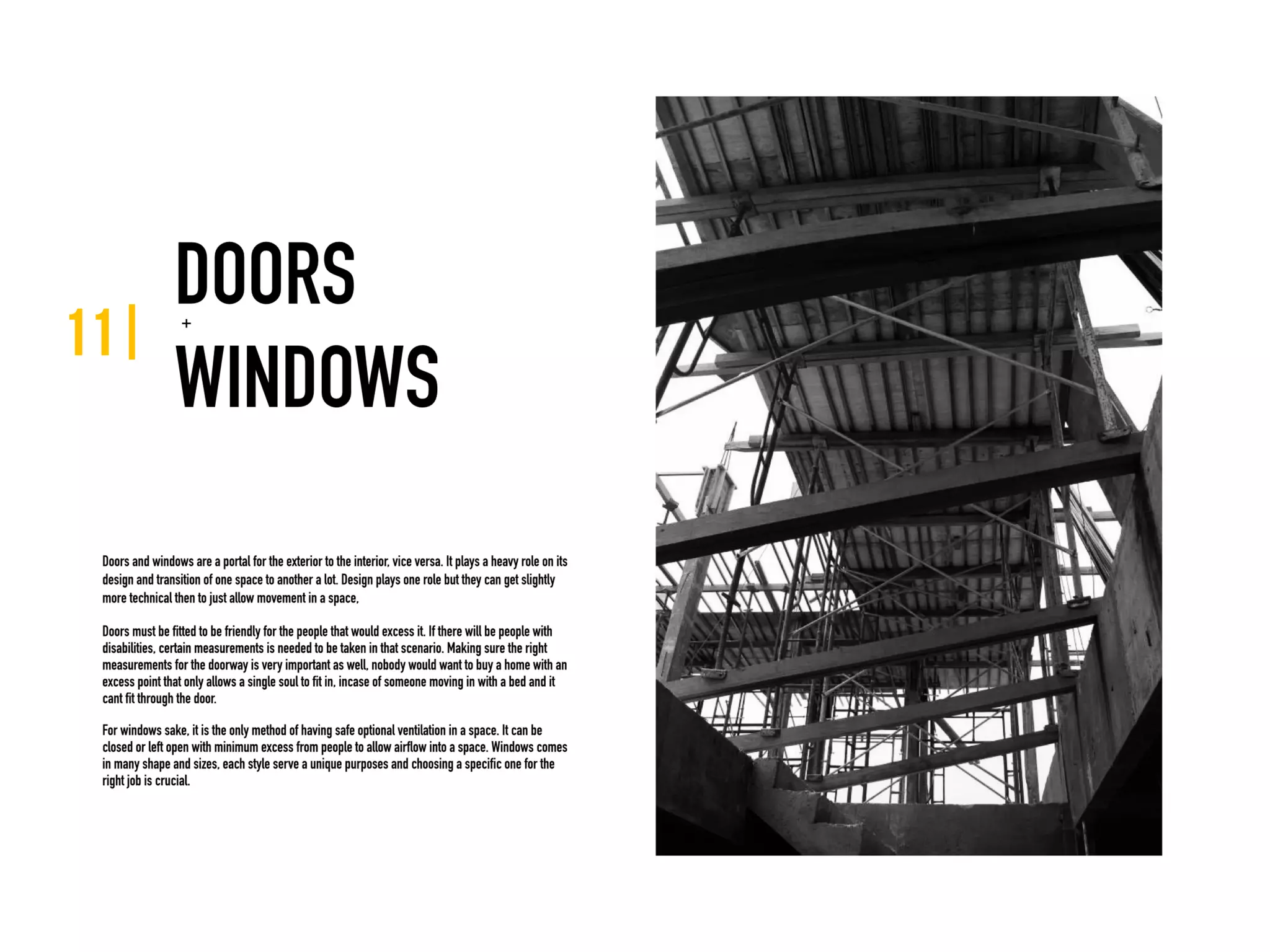
11|
INSTALLATION OF DOORS
Step 1
!Confirm the location of the door on the plan. Verify the dimensions
of the opening that is instructed in the plans.
!Ensure that the rough whole to be slightly larger then the door
frame and sub-frame.
HEADER
STUD
Door Terms
Rough Door
Opening
HINGES
SILL
DOOR PANELS
CASTING
TRIM
JAMB
Step 2
Align the sub-frame and frame accordingly to the setting
out line. In our site, sub frame plaster is used on the
setting out line to grout the gap in so that it will
disallow water flow between the sub-frame and the wall
from external sources like blown rain fall etc.
Step 3
After reconfirming the alignment of the door frame.
Secure the frame temporarily using timber wedges while
ensuring the vertical and horizontal alignments are
intact. This is to insure that the doors would not collide
with the floor, ceilings or walls when being interacted
with.
Step 4
The main frame, architrave and door panels should
already be delivered to the unit where the door is being
installed at. Insure the openings for the installation of
the ironmongery such as the hinges and the lock set
should already been cut out to minimize site cutting.
Mortice
Lock
Lever
Handles
Cylinder
Locks
Step 5
Apply bonding agents on the main frame and the
sub-frame. On our site, silicon was requested because it
is resistant to water. Once the agent is secures, only
remove the timber wedges to reduce any chances of the
frame moving when the bonding is still hardening.
Step 6
Secure the main frame with nails to further secure it in
place.
Step 7
Select the correct door panel and install it with the
hinges. A electric screwdriver is recommended for
consistency on the security on all hinges.
Step 8
Check and select the proper lockset for the doors and
install it. Insure that the ironmongery are working
smoothly by just swinging the door open and close.
• Mortise lock is housed within a mortise
cut into a door edge so that the lock
mechanism covered and concealed on
both sides
• The faceplate at the door edge, knobs
and operating trim are not concealed
• Requires a backset : 64mm for 35mm
doors or 70mm for 45mm doors
• Lever handles are generally used more in
this site
• Push-type mechanism are more easier
for people with disabilities as well
• Lever Handles can be incorporated with
mortise locks as well, which would be
the case in our site
• Cylinder locks houses two holes that is
right angle to each other, one through
the lock stile of a door and the other in
the door edge
• This locks are inexpensive and are really
easy to install
• Requires a backset : 2-3/8” (60mm) is
standard but 2-3/4 (70mm) for heavier
duty doors
INSTALLATION OF WINDOWS
Step 1
Confirm the setting out of the sub-frame and anchor the sub-frames
to the wall. The sub-frame would be bonded with sub frame plaster
as well.
Step 2
The anchor heads and joints should be sealed with
sealant for effective water tightness.
Step 3
After completion of all the water trades around the
window opening, the main frame is then fixed onto the
sub-frame. Be careful when installing, might cause
physical damage to the sub-frames.
Step 4
After completion of all the water trades around the
window opening, the main frame is then fixed onto the
sub-frame. Be careful when installing, might cause
physical damage to the sub-frames.
Main Window Frame
• The main frame is
fitted into the
sub-frame
• Followed by the
inner frame
• And lastly an
aluminum exterior
casing for the
finishing
Rough Opening
• Confirmed setting
out for the sub-
frame
Casing Trim
• This casing refers
to the finishing
trimwork
generally on the
inside of the
building.
• A form of
beautifying the
interior
Inner Window Frame
• This is the frame
where the sash
and glazed
window panels are
fitted in
Step 5
Non-shrink grout should then be used to prevent cracks
and water seepage around the window. Approved
waterproofing compound should be used in the mortar
mix to enhance the water tightness performance of the
grout.
Advantages
• More economical
• Factory mass produced, more convenient
• Easy maintenance
• Easy to install
• Efficient conduction for heat
• Comes in many finishes
• Required more shipping space but it
reduces field labor
Aluminium
Frame
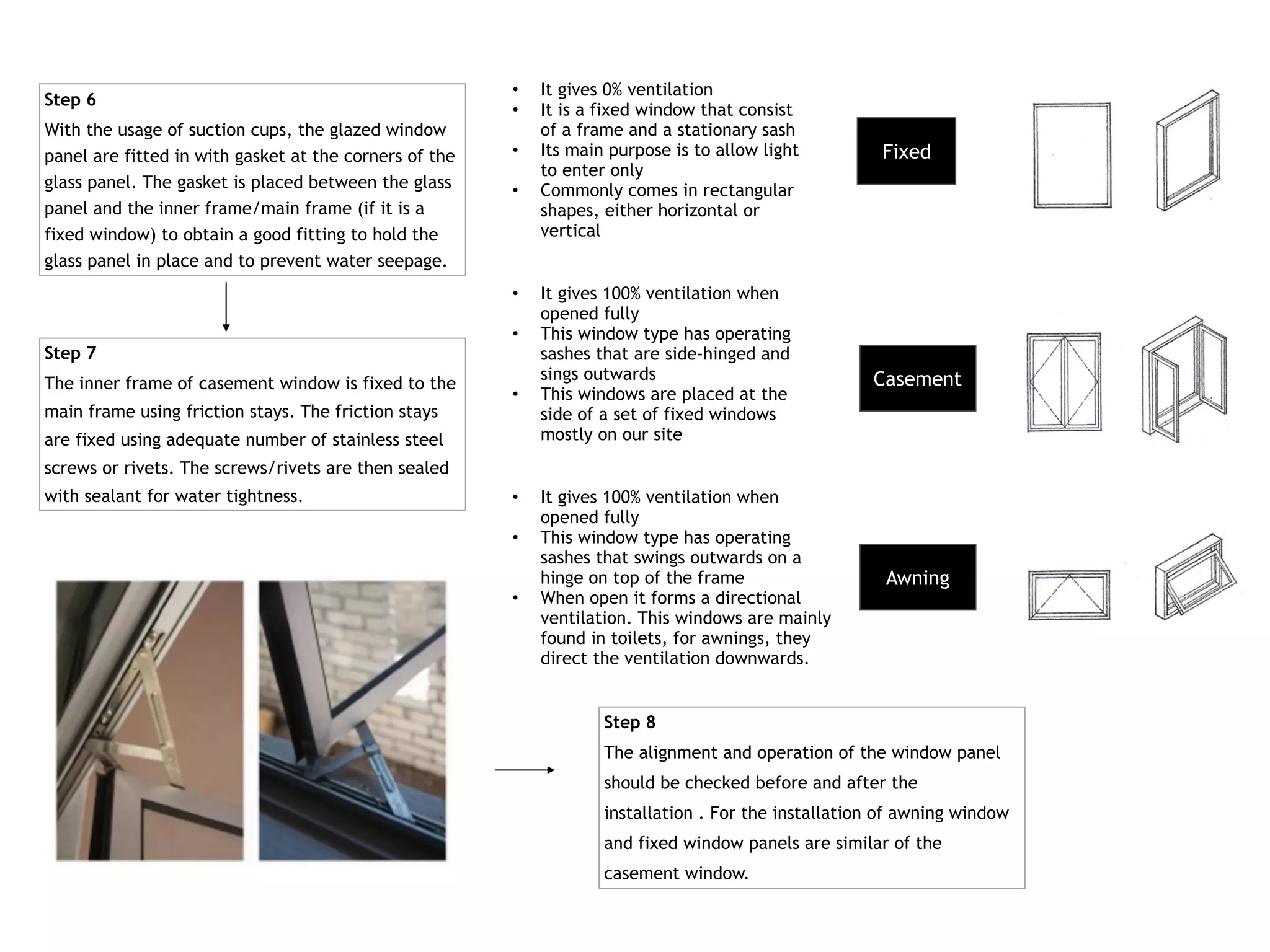
Step 6
With the usage of suction cups, the glazed window
panel are fitted in with gasket at the corners of the
glass panel. The gasket is placed between the glass
panel and the inner frame/main frame (if it is a
fixed window) to obtain a good fitting to hold the
glass panel in place and to prevent water seepage.
Step 7
The inner frame of casement window is fixed to the
main frame using friction stays. The friction stays
are fixed using adequate number of stainless steel
screws or rivets. The screws/rivets are then sealed
with sealant for water tightness.
Step 8
The alignment and operation of the window panel
should be checked before and after the
installation . For the installation of awning window
and fixed window panels are similar of the
casement window.
• It gives 0% ventilation
• It is a fixed window that consist
of a frame and a stationary sash
• Its main purpose is to allow light
to enter only
• Commonly comes in rectangular
shapes, either horizontal or
vertical
• It gives 100% ventilation when
opened fully
• This window type has operating
sashes that are side-hinged and
sings outwards
• This windows are placed at the
side of a set of fixed windows
mostly on our site
• It gives 100% ventilation when
opened fully
• This window type has operating
sashes that swings outwards on a
hinge on top of the frame
• When open it forms a directional
ventilation. This windows are mainly
found in toilets, for awnings, they
direct the ventilation downwards.
Fixed
Casement
Awning
52
ROOFING+ROOFING
ELEMENTS
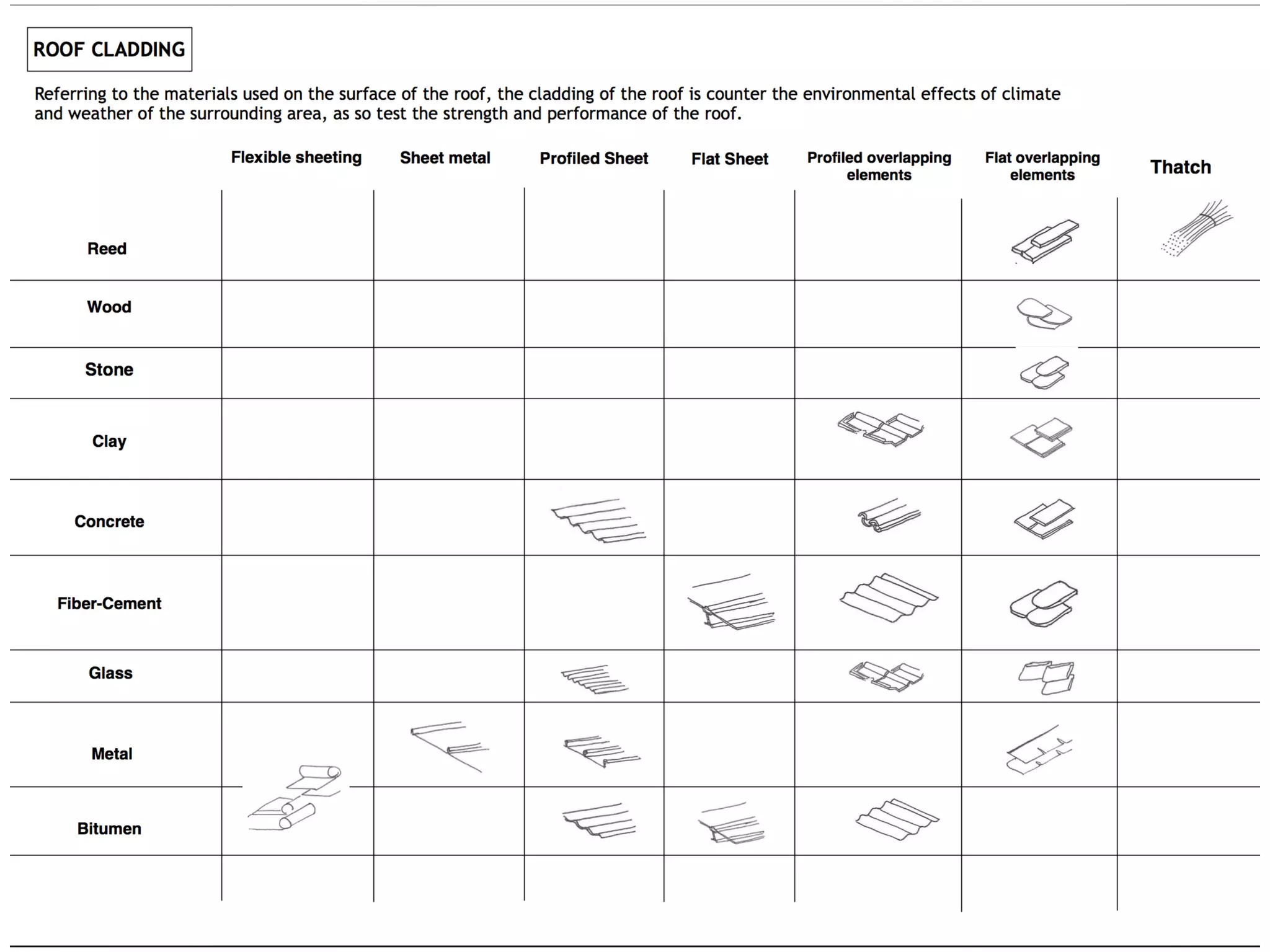
THERE ARE MULTIPLE FORMS OF ROOFING THAT ARE USED IN THE CONSTRUCTION INDUSTRY. THE WHOLE
IDEA OF A ROOF IS TO ACT AS A BUILDING EVELOPE, WHICH IS TO PROVIDE A SHEILDING FROM THE
EXTERNAL NATURAL ENVIRONMENT ( RAIN, SUNLIGHT, HEAT, WIND & SNOW DEPENDING ON THE
GEOLOGICAL LOCATION OF THE SITE. FURTHERMORE IT ACTS AS A FRAMING STRUCTURE THAT
COMPLETES THE STRUCTURE OF A CONSTRUCTION.
!
OFTEN THE CHARECTERISITICS OF THE ROOF DEPENDS UPON THE CONCEPT AND/OR THE PURPOSE OF
THE BUILDING. THE TYPE OF CLADDING THAT IS USED FOR SURFACE AS WELL AS THE CHOICE OF
MATERIAL.
10
53
54
55
56

Final bcon

  • 1.
  • 2.
  • 3.
  • 4.
  • 5.
  • 6.
  • 7.
  • 8.
  • 9.
  • 10.
  • 11.
  • 12.
  • 13.
  • 14.
  • 15.
  • 16.
  • 17.
  • 18.
  • 19.
  • 20.
  • 21.
  • 22.
  • 23.
  • 24.
  • 25.
  • 26.
  • 27.
  • 28.
  • 29.
  • 30.
  • 31.
  • 32.
  • 33.
  • 34.
  • 35.
  • 36.
  • 37.
  • 38.
  • 39.
  • 40.
  • 41.
  • 42.
  • 43.
  • 44.
  • 45.
  • 46.
  • 47.
  • 48.
    INSTALLATION OF DOORS Step1 !Confirm the location of the door on the plan. Verify the dimensions of the opening that is instructed in the plans. !Ensure that the rough whole to be slightly larger then the door frame and sub-frame. HEADER STUD Door Terms Rough Door Opening HINGES SILL DOOR PANELS CASTING TRIM JAMB Step 2 Align the sub-frame and frame accordingly to the setting out line. In our site, sub frame plaster is used on the setting out line to grout the gap in so that it will disallow water flow between the sub-frame and the wall from external sources like blown rain fall etc. Step 3 After reconfirming the alignment of the door frame. Secure the frame temporarily using timber wedges while ensuring the vertical and horizontal alignments are intact. This is to insure that the doors would not collide with the floor, ceilings or walls when being interacted with. Step 4 The main frame, architrave and door panels should already be delivered to the unit where the door is being installed at. Insure the openings for the installation of the ironmongery such as the hinges and the lock set should already been cut out to minimize site cutting.
  • 49.
    Mortice Lock Lever Handles Cylinder Locks Step 5 Apply bondingagents on the main frame and the sub-frame. On our site, silicon was requested because it is resistant to water. Once the agent is secures, only remove the timber wedges to reduce any chances of the frame moving when the bonding is still hardening. Step 6 Secure the main frame with nails to further secure it in place. Step 7 Select the correct door panel and install it with the hinges. A electric screwdriver is recommended for consistency on the security on all hinges. Step 8 Check and select the proper lockset for the doors and install it. Insure that the ironmongery are working smoothly by just swinging the door open and close. • Mortise lock is housed within a mortise cut into a door edge so that the lock mechanism covered and concealed on both sides • The faceplate at the door edge, knobs and operating trim are not concealed • Requires a backset : 64mm for 35mm doors or 70mm for 45mm doors • Lever handles are generally used more in this site • Push-type mechanism are more easier for people with disabilities as well • Lever Handles can be incorporated with mortise locks as well, which would be the case in our site • Cylinder locks houses two holes that is right angle to each other, one through the lock stile of a door and the other in the door edge • This locks are inexpensive and are really easy to install • Requires a backset : 2-3/8” (60mm) is standard but 2-3/4 (70mm) for heavier duty doors
  • 50.
    INSTALLATION OF WINDOWS Step1 Confirm the setting out of the sub-frame and anchor the sub-frames to the wall. The sub-frame would be bonded with sub frame plaster as well. Step 2 The anchor heads and joints should be sealed with sealant for effective water tightness. Step 3 After completion of all the water trades around the window opening, the main frame is then fixed onto the sub-frame. Be careful when installing, might cause physical damage to the sub-frames. Step 4 After completion of all the water trades around the window opening, the main frame is then fixed onto the sub-frame. Be careful when installing, might cause physical damage to the sub-frames. Main Window Frame • The main frame is fitted into the sub-frame • Followed by the inner frame • And lastly an aluminum exterior casing for the finishing Rough Opening • Confirmed setting out for the sub- frame Casing Trim • This casing refers to the finishing trimwork generally on the inside of the building. • A form of beautifying the interior Inner Window Frame • This is the frame where the sash and glazed window panels are fitted in Step 5 Non-shrink grout should then be used to prevent cracks and water seepage around the window. Approved waterproofing compound should be used in the mortar mix to enhance the water tightness performance of the grout. Advantages • More economical • Factory mass produced, more convenient • Easy maintenance • Easy to install • Efficient conduction for heat • Comes in many finishes • Required more shipping space but it reduces field labor Aluminium Frame
  • 51.
    Step 6 With theusage of suction cups, the glazed window panel are fitted in with gasket at the corners of the glass panel. The gasket is placed between the glass panel and the inner frame/main frame (if it is a fixed window) to obtain a good fitting to hold the glass panel in place and to prevent water seepage. Step 7 The inner frame of casement window is fixed to the main frame using friction stays. The friction stays are fixed using adequate number of stainless steel screws or rivets. The screws/rivets are then sealed with sealant for water tightness. Step 8 The alignment and operation of the window panel should be checked before and after the installation . For the installation of awning window and fixed window panels are similar of the casement window. • It gives 0% ventilation • It is a fixed window that consist of a frame and a stationary sash • Its main purpose is to allow light to enter only • Commonly comes in rectangular shapes, either horizontal or vertical • It gives 100% ventilation when opened fully • This window type has operating sashes that are side-hinged and sings outwards • This windows are placed at the side of a set of fixed windows mostly on our site • It gives 100% ventilation when opened fully • This window type has operating sashes that swings outwards on a hinge on top of the frame • When open it forms a directional ventilation. This windows are mainly found in toilets, for awnings, they direct the ventilation downwards. Fixed Casement Awning
  • 52.
    52 ROOFING+ROOFING ELEMENTS THERE ARE MULTIPLEFORMS OF ROOFING THAT ARE USED IN THE CONSTRUCTION INDUSTRY. THE WHOLE IDEA OF A ROOF IS TO ACT AS A BUILDING EVELOPE, WHICH IS TO PROVIDE A SHEILDING FROM THE EXTERNAL NATURAL ENVIRONMENT ( RAIN, SUNLIGHT, HEAT, WIND & SNOW DEPENDING ON THE GEOLOGICAL LOCATION OF THE SITE. FURTHERMORE IT ACTS AS A FRAMING STRUCTURE THAT COMPLETES THE STRUCTURE OF A CONSTRUCTION. ! OFTEN THE CHARECTERISITICS OF THE ROOF DEPENDS UPON THE CONCEPT AND/OR THE PURPOSE OF THE BUILDING. THE TYPE OF CLADDING THAT IS USED FOR SURFACE AS WELL AS THE CHOICE OF MATERIAL. 10
  • 53.
  • 54.
  • 55.
  • 56.