A transient elastography
Presented by
DR.MD.SHAWKAT ALI
phase B resident
HEPATOBILIARY PANCREATIC AND LIVER TRANSPLANT SURGERY
INTRODUCTION
Prolonged or repeated liver damage forced to replace
and repair damaged tissue over and over. This leads to
the accumulation of scar tissue (fibrotic tissue) which
cannot self-repair and, over time, become thick and
stiff. Which ultimately limit or block blood flow within
the liver, causing healthy liver cells to die. This leads to
the creation of more scar tissue. It’s a bit of a vicious
cycle.So which one is best to detect that fibrosis?
FIBROSCAN
What is fibroscan?
A fibroscan is a test used to help measure the
amount of scarring (fibrotic tissue) in the liver. It’s
essentially a specialized ultrasound specifically for
the liver which can be used alone or with other tests
(such as blood tests, imaging scans, or biopsies) that
also measure scarring or fatty change in your liver.
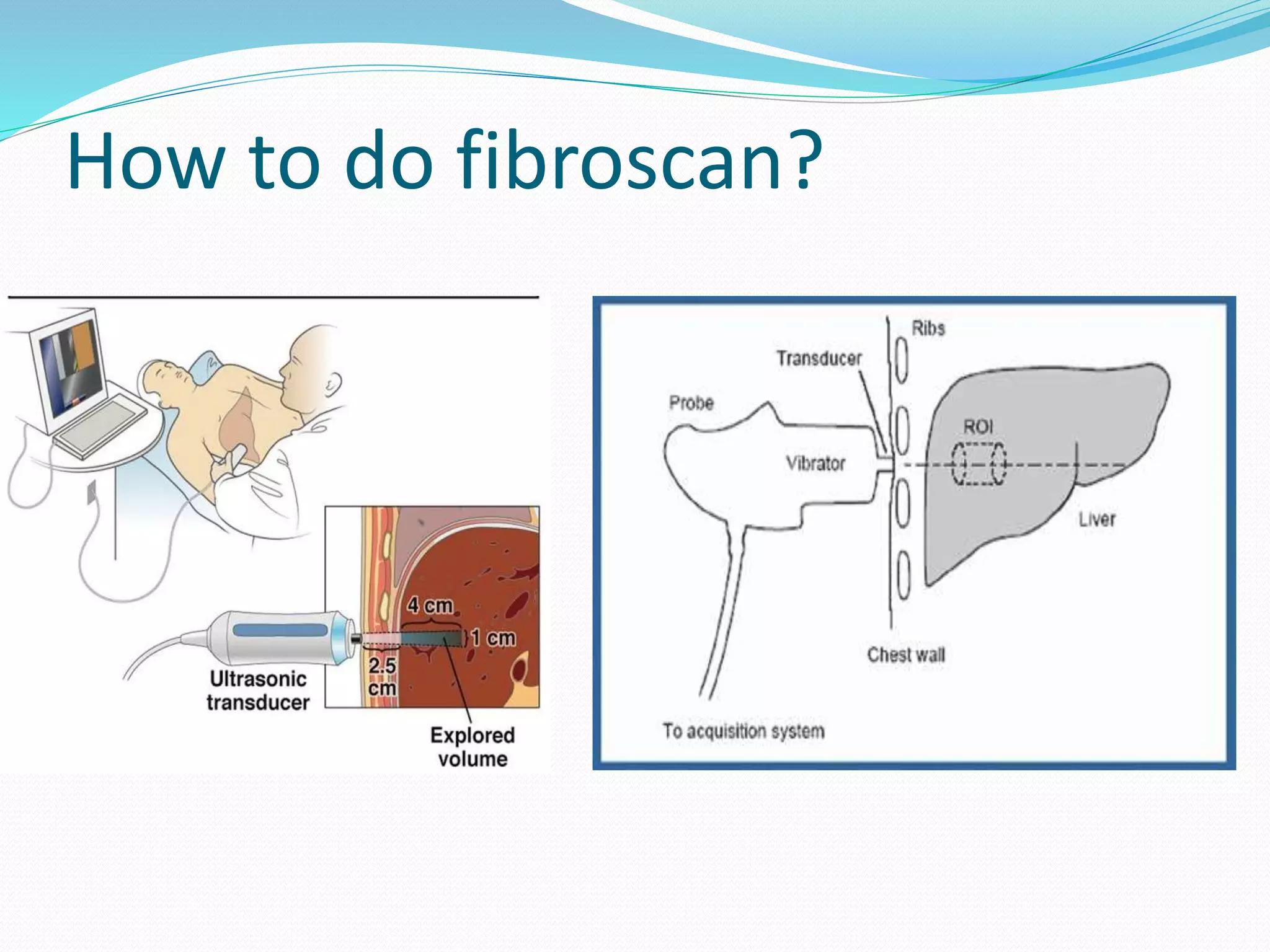
How fibroscan works?
simply Fibroscan transducer is just a vibrator and a
sensor.it sends a low frequency sound wave through the
liver and measures the speed at which that sound wave
passes through the liver. This is then converted into a
measurement of liver stiffness measurement or fibrosis.
Technically this process is often called liver
ultrasonographic elastography.
How to do fibroscan?
INDICATION
Chronicc liver disease:
1.Hepatitis B & C infection
2.Alcoholic liver disease
3.Fattty liver
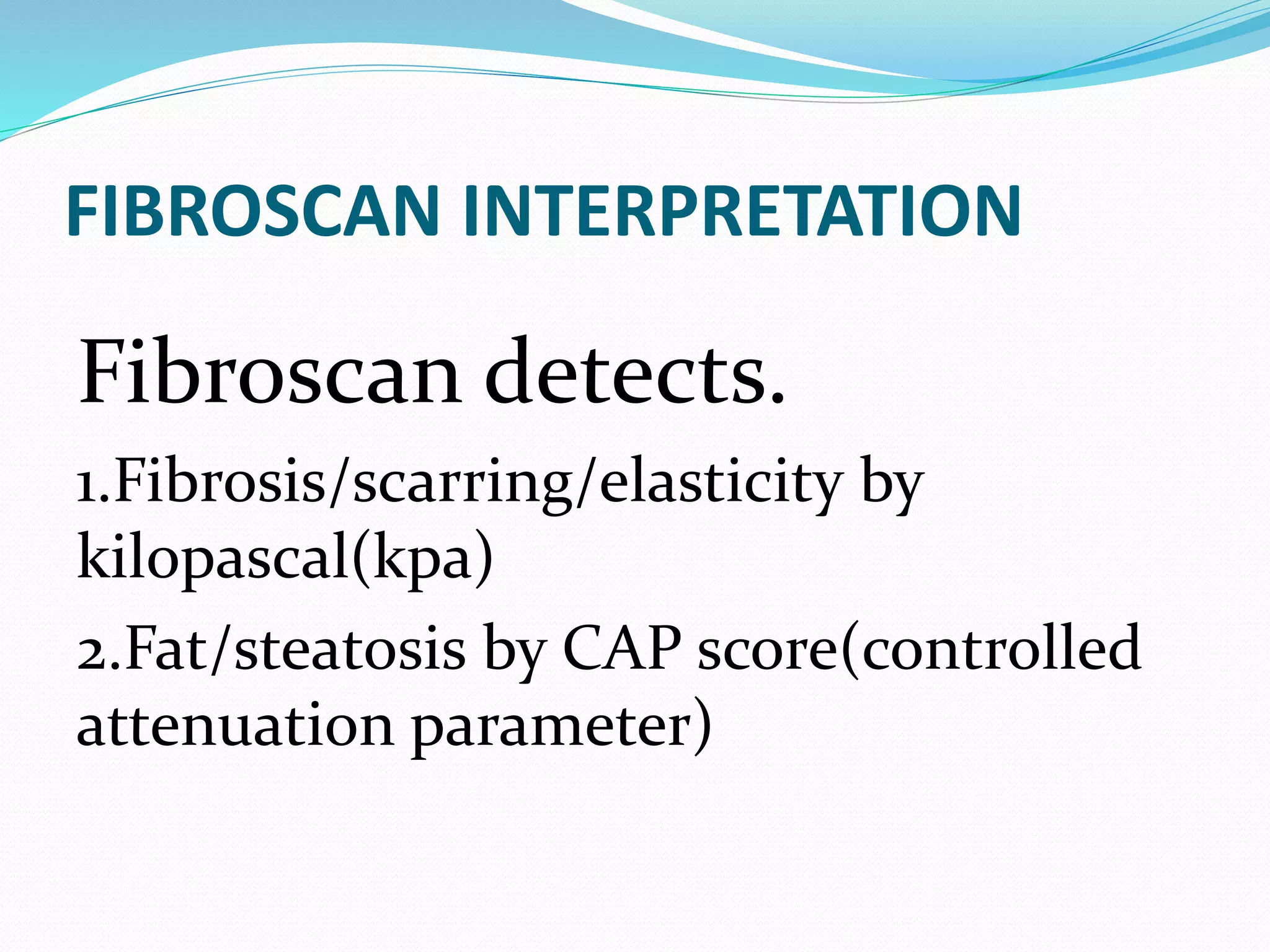
FIBROSCAN INTERPRETATION
Fibroscan detects.
1.Fibrosis/scarring/elasticity by
kilopascal(kpa)
2.Fat/steatosis by CAP score(controlled
attenuation parameter)
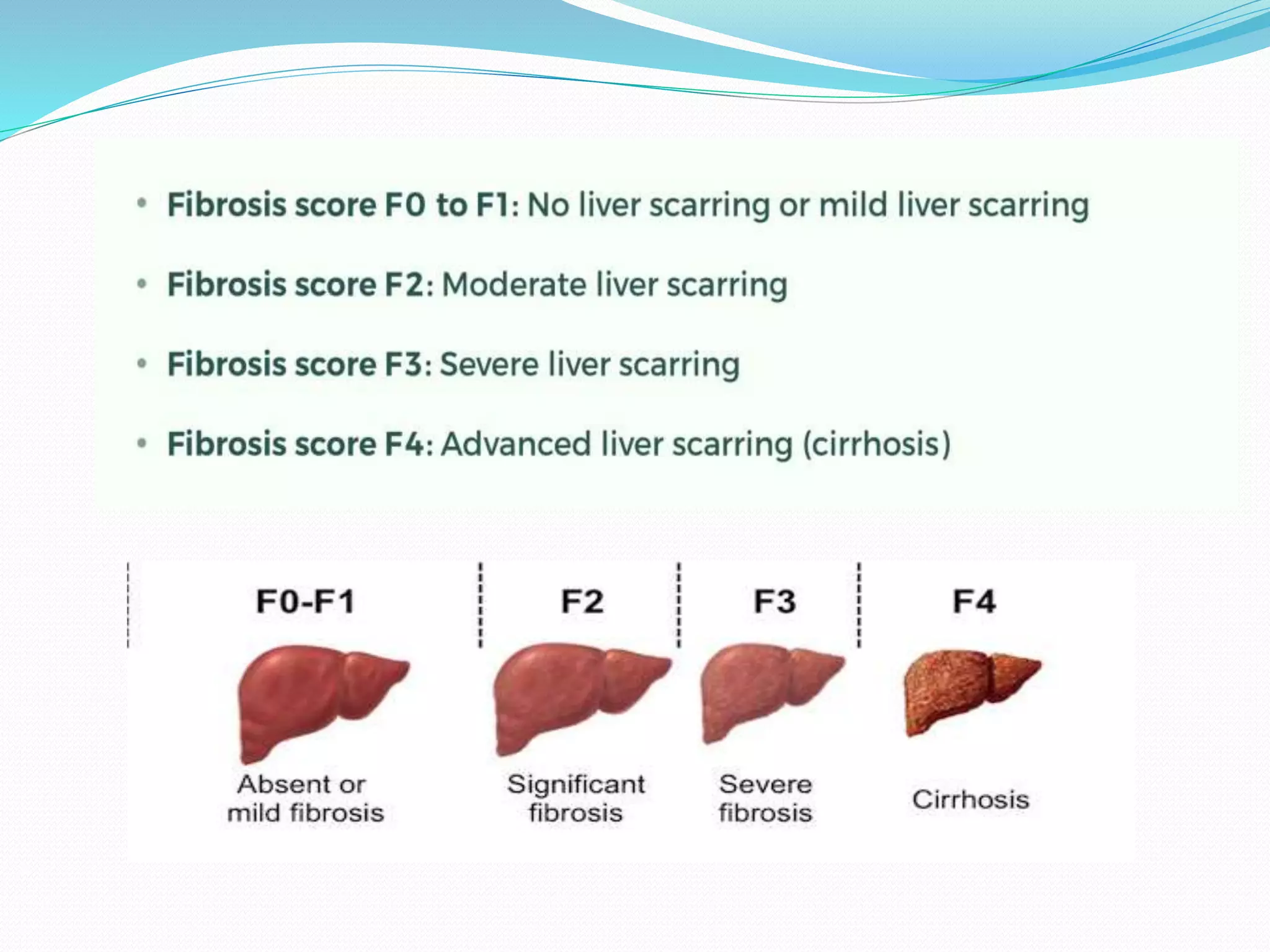
Fibrosis/scarring/elasticity
measurement
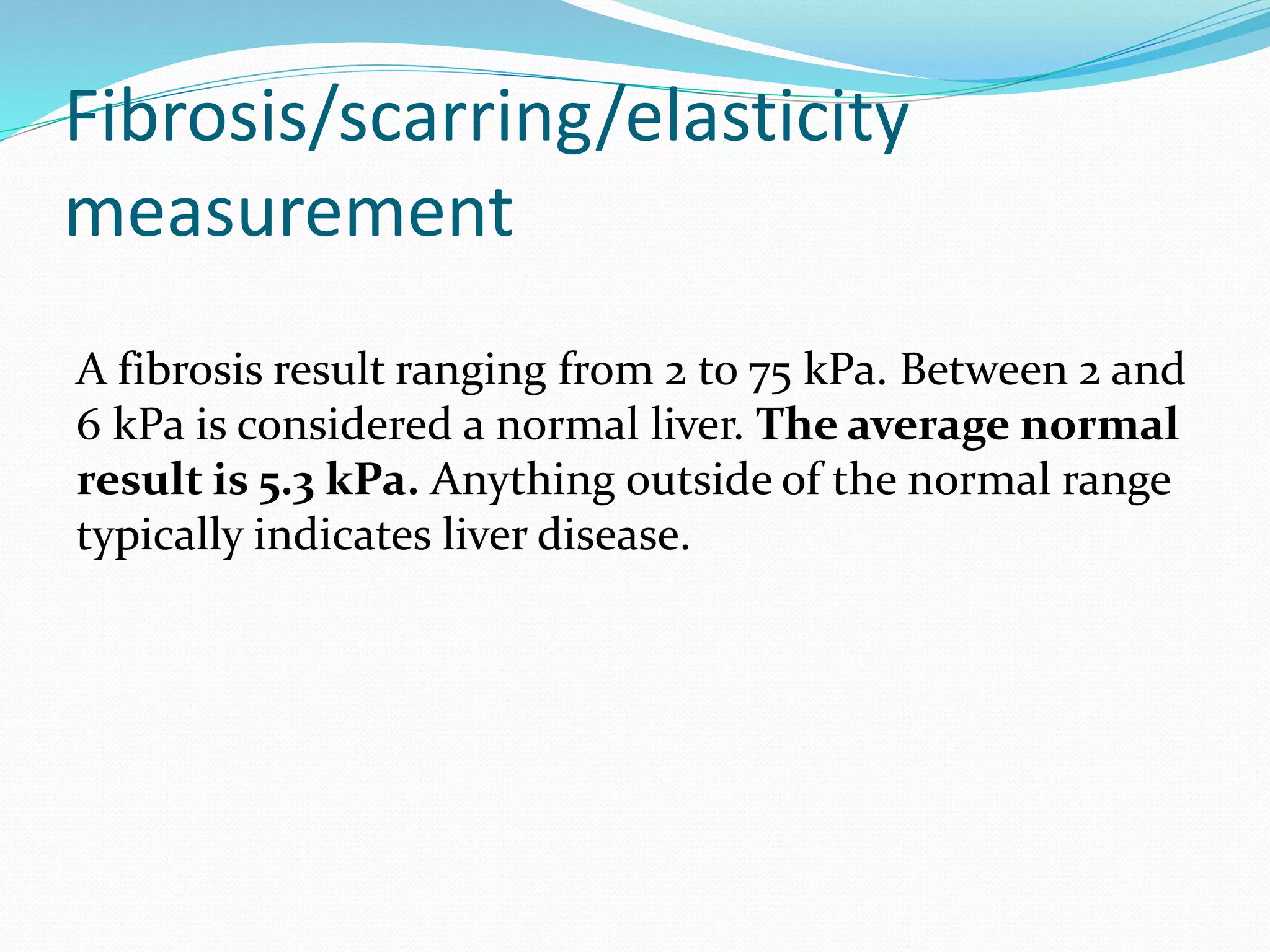
A fibrosis result ranging from 2 to 75 kPa. Between 2 and
6 kPa is considered a normal liver. The average normal
result is 5.3 kPa. Anything outside of the normal range
typically indicates liver disease.
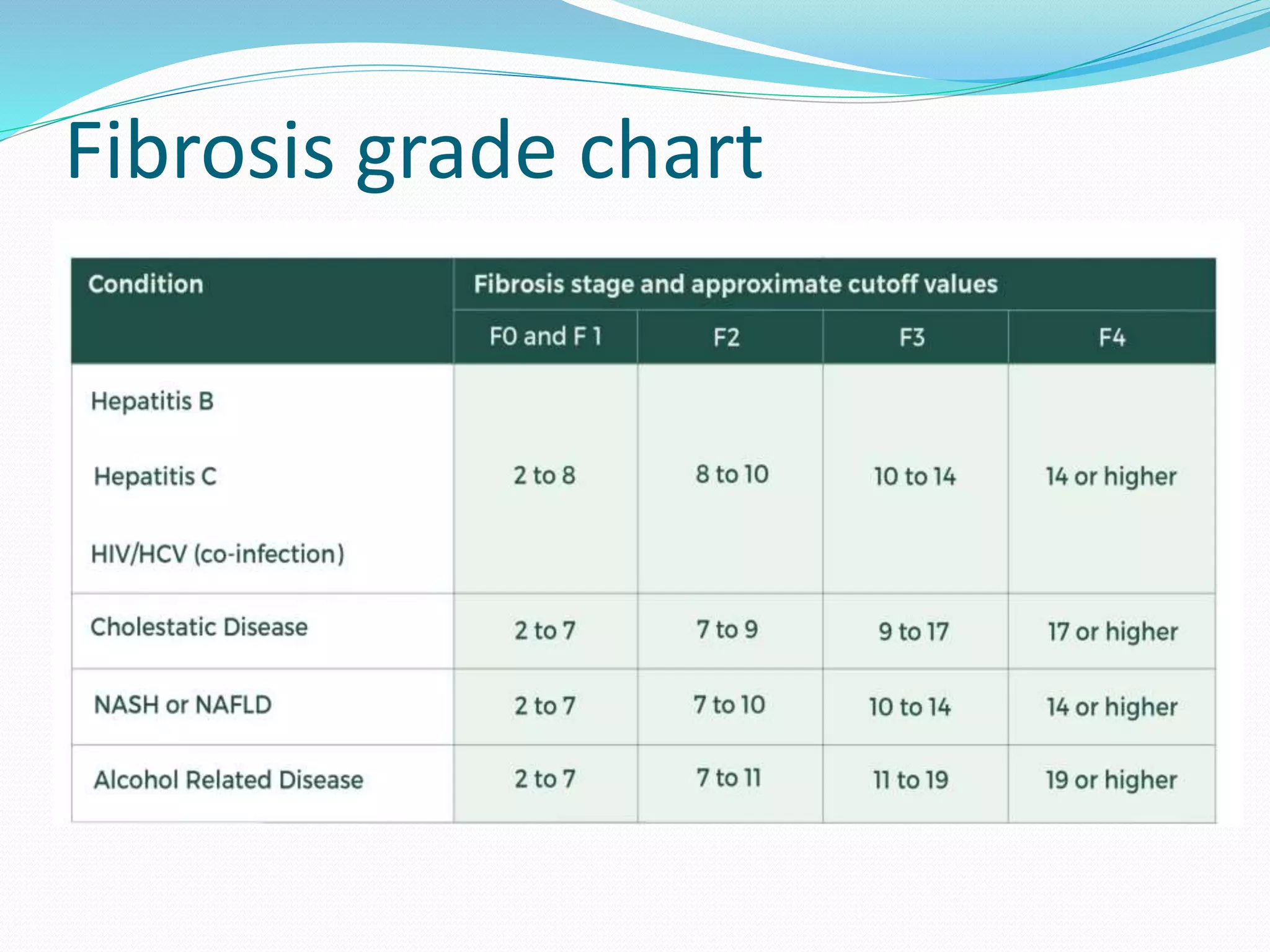
Fibrosis grade chart
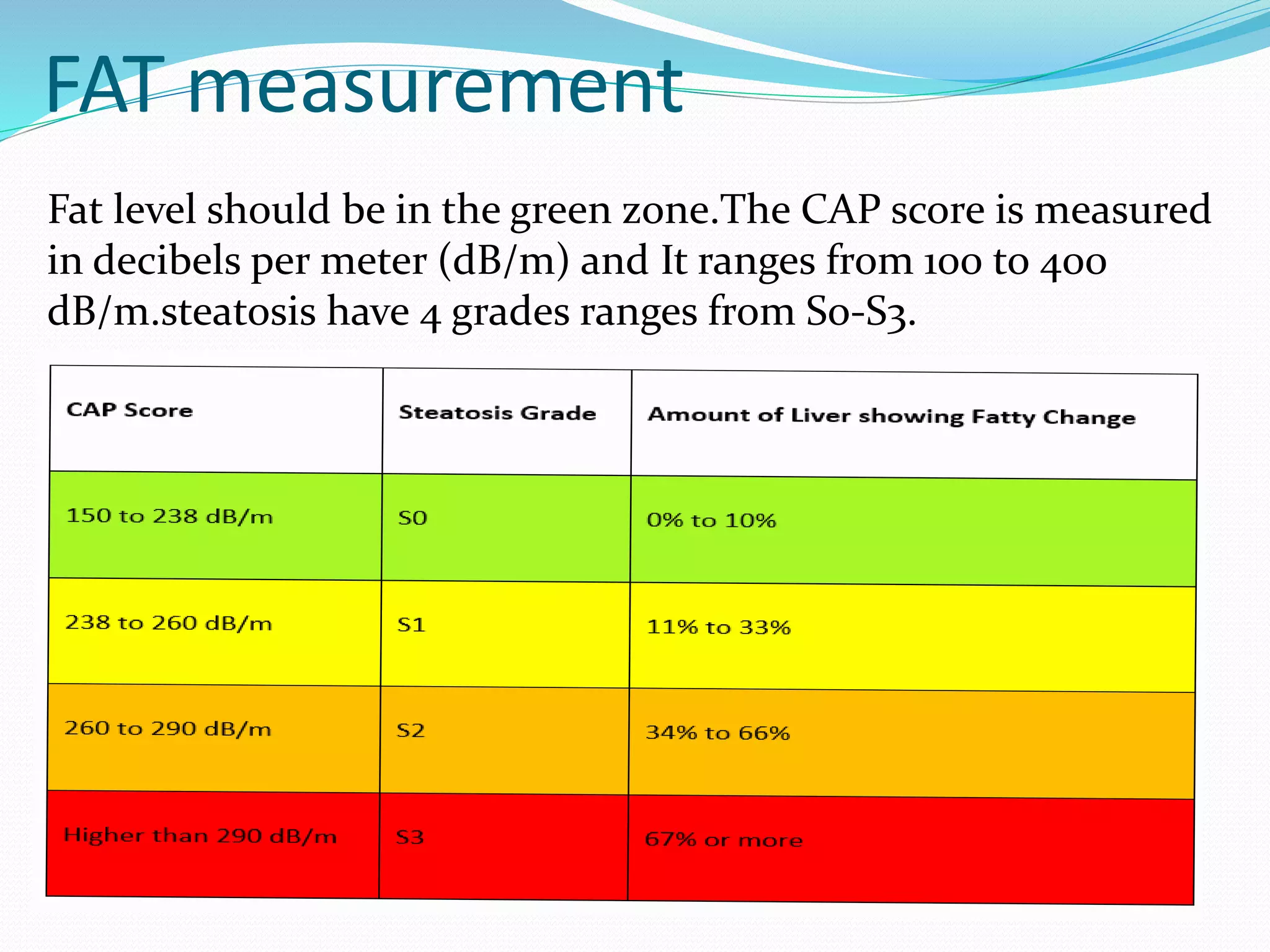
FAT measurement
Fat level should be in the green zone.The CAP score is measured
in decibels per meter (dB/m) and It ranges from 100 to 400
dB/m.steatosis have 4 grades ranges from So-S3.
What we see in ward...
Solve this....
Over-estimated result founds in:
 Liver inflammation. This can be caused by a recent
liver illness or drinking alcohol.
 Benign (not cancerous) or cancerous tumors in
your liver.
 Liver congestion (when your liver is too full of
blood or other fluids). This is usually caused by
heart failure.
Less accurate results found if you
have:
 A body mass index (BMI) higher than 30 (obesity)
 A build-up of fluid in your abdomen (ascites)
 Too little bile flowing out of your liver (biliary
obstruction)
Conclusion
The liver is a complicated part of the body to image. For
this reason, a FibroScan is best used in addition to other
medical exams, such as liver ultrasound or MRI.
THANK YOU

Fibroscan.dr quiyum

  • 1.
  • 2.
    Presented by DR.MD.SHAWKAT ALI phaseB resident HEPATOBILIARY PANCREATIC AND LIVER TRANSPLANT SURGERY
  • 3.
    INTRODUCTION Prolonged or repeatedliver damage forced to replace and repair damaged tissue over and over. This leads to the accumulation of scar tissue (fibrotic tissue) which cannot self-repair and, over time, become thick and stiff. Which ultimately limit or block blood flow within the liver, causing healthy liver cells to die. This leads to the creation of more scar tissue. It’s a bit of a vicious cycle.So which one is best to detect that fibrosis? FIBROSCAN
  • 4.
    What is fibroscan? Afibroscan is a test used to help measure the amount of scarring (fibrotic tissue) in the liver. It’s essentially a specialized ultrasound specifically for the liver which can be used alone or with other tests (such as blood tests, imaging scans, or biopsies) that also measure scarring or fatty change in your liver.
  • 5.
    How fibroscan works? simplyFibroscan transducer is just a vibrator and a sensor.it sends a low frequency sound wave through the liver and measures the speed at which that sound wave passes through the liver. This is then converted into a measurement of liver stiffness measurement or fibrosis. Technically this process is often called liver ultrasonographic elastography.
  • 6.
    How to dofibroscan?
  • 7.
    INDICATION Chronicc liver disease: 1.HepatitisB & C infection 2.Alcoholic liver disease 3.Fattty liver
  • 8.
    FIBROSCAN INTERPRETATION Fibroscan detects. 1.Fibrosis/scarring/elasticityby kilopascal(kpa) 2.Fat/steatosis by CAP score(controlled attenuation parameter)
  • 9.
    Fibrosis/scarring/elasticity measurement A fibrosis resultranging from 2 to 75 kPa. Between 2 and 6 kPa is considered a normal liver. The average normal result is 5.3 kPa. Anything outside of the normal range typically indicates liver disease.
  • 10.
  • 12.
    FAT measurement Fat levelshould be in the green zone.The CAP score is measured in decibels per meter (dB/m) and It ranges from 100 to 400 dB/m.steatosis have 4 grades ranges from So-S3.
  • 13.
    What we seein ward...
  • 14.
  • 15.
    Over-estimated result foundsin:  Liver inflammation. This can be caused by a recent liver illness or drinking alcohol.  Benign (not cancerous) or cancerous tumors in your liver.  Liver congestion (when your liver is too full of blood or other fluids). This is usually caused by heart failure.
  • 16.
    Less accurate resultsfound if you have:  A body mass index (BMI) higher than 30 (obesity)  A build-up of fluid in your abdomen (ascites)  Too little bile flowing out of your liver (biliary obstruction)
  • 17.
    Conclusion The liver isa complicated part of the body to image. For this reason, a FibroScan is best used in addition to other medical exams, such as liver ultrasound or MRI.
  • 18.