Jordan Field Epidemiology Training Program
Outbreak Investigation
Dr Ghazi Sharkas
Jordan FETP (2009-2011)
2
Jordan-FETP 1999-2009
How outbreaks are
recognized
 The occurrence of an unusual disease, or
an unusual number of cases of a disease
 By revision of the ordinary surveillance data
 By the patients or their relatives
 Rumors
 Some outbreaks are recognized through
newspapers, television news, or Police
departments
3
Jordan-FETP 1999-2009
Why to investigate an
outbreak
 Uncover a much more serious public health
problem
 Identify risk factors associated with infection
under study, that can be preventable
4
Jordan-FETP 1999-2009
Why to investigate an
outbreak
 Increasing knowledge of disease:
Help Preventing future outbreaks
Provide a base line for research about the
disease under investigation
 Opportunities for training of health staff on
problem investigation and rapid response
Cont…
5
Jordan-FETP 1999-2009
What to do after outbreak
detection
 Epidemiological investigation
 Environmental investigations
 Interaction with the public, the media and
sometimes the legal authorities
6
Jordan-FETP 1999-2009
Epidemiological
outbreak investigation
steps
7
Jordan-FETP 1999-2009
1. Confirm the existence of
the outbreak
Compare with
 Baseline surveillance data
 Data from local sources, neighboring areas
or national data
 lab diagnosis of the pathogen
Apply immediate control measures if the
source is obviously defined
8
Jordan-FETP 1999-2009
2. Verify the diagnosis
 Rule out laboratory error
 Interview / examine case patients
 Review medical records
9
Jordan-FETP 1999-2009
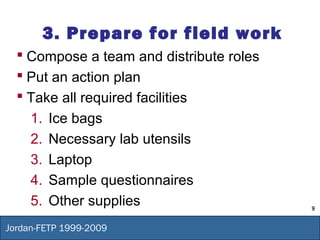
3. Prepare for field work
 Compose a team and distribute roles
 Put an action plan
 Take all required facilities
1. Ice bags
2. Necessary lab utensils
3. Laptop
4. Sample questionnaires
5. Other supplies
10
Jordan-FETP 1999-2009
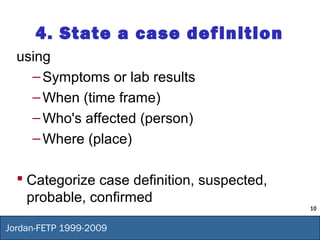
4. State a case definition
using
–Symptoms or lab results
–When (time frame)
–Who's affected (person)
–Where (place)
 Categorize case definition, suspected,
probable, confirmed
11
Jordan-FETP 1999-2009
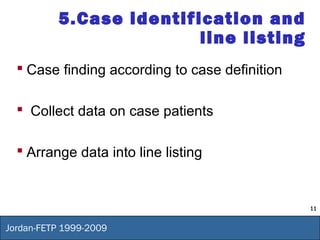
5.Case identification and
line listing
 Case finding according to case definition
 Collect data on case patients
 Arrange data into line listing
12
Jordan-FETP 1999-2009
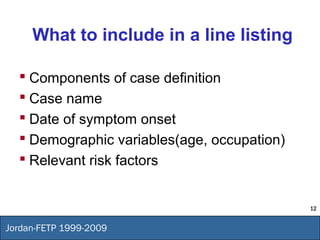
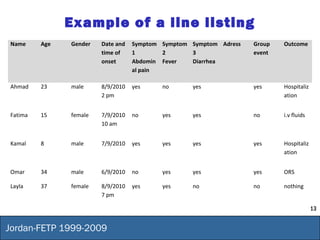
What to include in a line listing
 Components of case definition
 Case name
 Date of symptom onset
 Demographic variables(age, occupation)
 Relevant risk factors
13
Jordan-FETP 1999-2009
Name Age Gender Date and
time of
onset
Symptom
1
Abdomin
al pain
Symptom
2
Fever
Symptom
3
Diarrhea
Adress Group
event
Outcome
Ahmad 23 male 8/9/2010
2 pm
yes no yes yes Hospitaliz
ation
Fatima 15 female 7/9/2010
10 am
no yes yes no i.v fluids
Kamal 8 male 7/9/2010 yes yes yes yes Hospitaliz
ation
Omar 34 male 6/9/2010 no yes yes yes ORS
Layla 37 female 8/9/2010
7 pm
yes yes no no nothing
Example of a line listing
14
Jordan-FETP 1999-2009
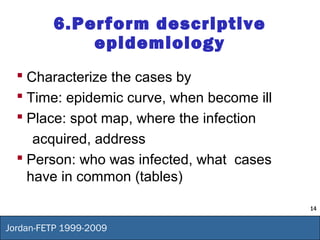
6.Perform descriptive
epidemiology
 Characterize the cases by
 Time: epidemic curve, when become ill
 Place: spot map, where the infection
acquired, address
 Person: who was infected, what cases
have in common (tables)
15
Jordan-FETP 1999-2009
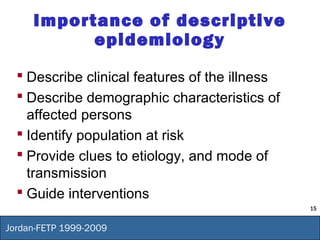
Importance of descriptive
epidemiology
 Describe clinical features of the illness
 Describe demographic characteristics of
affected persons
 Identify population at risk
 Provide clues to etiology, and mode of
transmission
 Guide interventions
16
Jordan-FETP 1999-2009
7. Generate a hypothesis
guided by:
 Literature review
 Information from previous outbreaks
 Nature of suspected pathogen
 Interviews with case patients
 Local health officials opinion
17
Jordan-FETP 1999-2009
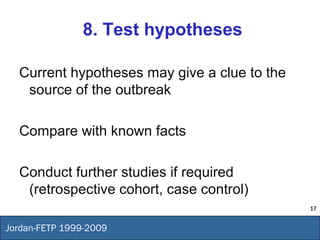
8. Test hypotheses
Current hypotheses may give a clue to the
source of the outbreak
Compare with known facts
Conduct further studies if required
(retrospective cohort, case control)
18
Jordan-FETP 1999-2009
Which study to conduct
 Retrospective cohort:
Done for well defined relatively small
population, every one is included, calculate
and compare attack rates (relative risk)
 Case-control:
Done for larger population, controls
selection is crucial, calculate odds ratio
19
Jordan-FETP 1999-2009
9. Implement control
measures
 Take control measures as early as possible
in order to:
 Eliminate the source
 Interrupt transmission
 Reduce susceptibility
20
Jordan-FETP 1999-2009
9. Implement control
measures
 Control measures are guided by the results
of epidemiological investigation and
sometimes environmental specimens
 Control measures should be carefully
implemented and justified especially if
closure of restaurants and institutions is
included
Cont…
21
Jordan-FETP 1999-2009
10. Communicate findings
Communicate findings through dissemination
of summary investigation and
recommendations for control to the public
and the press
Communication helps to:
 Document your findings
 Justify your recommendations and control
measures
 Protect against legal issues
22
Jordan-FETP 1999-2009
THANK YOU
Jordan FETP 2009-2011

Fetp outbreak i

  • 1.
    Jordan Field EpidemiologyTraining Program Outbreak Investigation Dr Ghazi Sharkas Jordan FETP (2009-2011)
  • 2.
    2 Jordan-FETP 1999-2009 How outbreaksare recognized  The occurrence of an unusual disease, or an unusual number of cases of a disease  By revision of the ordinary surveillance data  By the patients or their relatives  Rumors  Some outbreaks are recognized through newspapers, television news, or Police departments
  • 3.
    3 Jordan-FETP 1999-2009 Why toinvestigate an outbreak  Uncover a much more serious public health problem  Identify risk factors associated with infection under study, that can be preventable
  • 4.
    4 Jordan-FETP 1999-2009 Why toinvestigate an outbreak  Increasing knowledge of disease: Help Preventing future outbreaks Provide a base line for research about the disease under investigation  Opportunities for training of health staff on problem investigation and rapid response Cont…
  • 5.
    5 Jordan-FETP 1999-2009 What todo after outbreak detection  Epidemiological investigation  Environmental investigations  Interaction with the public, the media and sometimes the legal authorities
  • 6.
  • 7.
    7 Jordan-FETP 1999-2009 1. Confirmthe existence of the outbreak Compare with  Baseline surveillance data  Data from local sources, neighboring areas or national data  lab diagnosis of the pathogen Apply immediate control measures if the source is obviously defined
  • 8.
    8 Jordan-FETP 1999-2009 2. Verifythe diagnosis  Rule out laboratory error  Interview / examine case patients  Review medical records
  • 9.
    9 Jordan-FETP 1999-2009 3. Preparefor field work  Compose a team and distribute roles  Put an action plan  Take all required facilities 1. Ice bags 2. Necessary lab utensils 3. Laptop 4. Sample questionnaires 5. Other supplies
  • 10.
    10 Jordan-FETP 1999-2009 4. Statea case definition using –Symptoms or lab results –When (time frame) –Who's affected (person) –Where (place)  Categorize case definition, suspected, probable, confirmed
  • 11.
    11 Jordan-FETP 1999-2009 5.Case identificationand line listing  Case finding according to case definition  Collect data on case patients  Arrange data into line listing
  • 12.
    12 Jordan-FETP 1999-2009 What toinclude in a line listing  Components of case definition  Case name  Date of symptom onset  Demographic variables(age, occupation)  Relevant risk factors
  • 13.
    13 Jordan-FETP 1999-2009 Name AgeGender Date and time of onset Symptom 1 Abdomin al pain Symptom 2 Fever Symptom 3 Diarrhea Adress Group event Outcome Ahmad 23 male 8/9/2010 2 pm yes no yes yes Hospitaliz ation Fatima 15 female 7/9/2010 10 am no yes yes no i.v fluids Kamal 8 male 7/9/2010 yes yes yes yes Hospitaliz ation Omar 34 male 6/9/2010 no yes yes yes ORS Layla 37 female 8/9/2010 7 pm yes yes no no nothing Example of a line listing
  • 14.
    14 Jordan-FETP 1999-2009 6.Perform descriptive epidemiology Characterize the cases by  Time: epidemic curve, when become ill  Place: spot map, where the infection acquired, address  Person: who was infected, what cases have in common (tables)
  • 15.
    15 Jordan-FETP 1999-2009 Importance ofdescriptive epidemiology  Describe clinical features of the illness  Describe demographic characteristics of affected persons  Identify population at risk  Provide clues to etiology, and mode of transmission  Guide interventions
  • 16.
    16 Jordan-FETP 1999-2009 7. Generatea hypothesis guided by:  Literature review  Information from previous outbreaks  Nature of suspected pathogen  Interviews with case patients  Local health officials opinion
  • 17.
    17 Jordan-FETP 1999-2009 8. Testhypotheses Current hypotheses may give a clue to the source of the outbreak Compare with known facts Conduct further studies if required (retrospective cohort, case control)
  • 18.
    18 Jordan-FETP 1999-2009 Which studyto conduct  Retrospective cohort: Done for well defined relatively small population, every one is included, calculate and compare attack rates (relative risk)  Case-control: Done for larger population, controls selection is crucial, calculate odds ratio
  • 19.
    19 Jordan-FETP 1999-2009 9. Implementcontrol measures  Take control measures as early as possible in order to:  Eliminate the source  Interrupt transmission  Reduce susceptibility
  • 20.
    20 Jordan-FETP 1999-2009 9. Implementcontrol measures  Control measures are guided by the results of epidemiological investigation and sometimes environmental specimens  Control measures should be carefully implemented and justified especially if closure of restaurants and institutions is included Cont…
  • 21.
    21 Jordan-FETP 1999-2009 10. Communicatefindings Communicate findings through dissemination of summary investigation and recommendations for control to the public and the press Communication helps to:  Document your findings  Justify your recommendations and control measures  Protect against legal issues
  • 22.