Presented By: Dr. Roma Goyal
Assistant Professor
Microbiology Department
Objectives
At the end of the session, participants shall be able to
 Appreciate concept of giving feedback
 Enumerate components of giving feedback
 Explore the ways of delivering the feedback
 State role of feedback in learning
• Feedback – seeking it, giving it and receiving it
– is one of the most effective tools we have for
harnessing and promoting change so that it is
to our benefit.
• Feedback is a great and powerful tool if used
right.
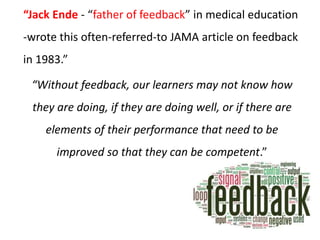
“Jack Ende - “father of feedback” in medical education
-wrote this often-referred-to JAMA article on feedback
in 1983.”
“Without feedback, our learners may not know how
they are doing, if they are doing well, or if there are
elements of their performance that need to be
improved so that they can be competent.”
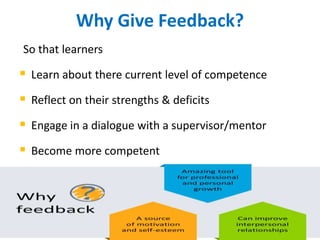
Why Give Feedback?
So that learners
 Learn about there current level of competence
 Reflect on their strengths & deficits
 Engage in a dialogue with a supervisor/mentor
 Become more competent
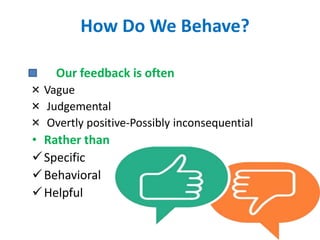
How Do We Behave?
• Our feedback is often
× Vague
× Judgemental
× Overtly positive-Possibly inconsequential
• Rather than
Specific
Behavioral
Helpful
Criteria of a Good Feedback
Constructive Appropriate
Constructive Feedback
• Constructive feedback can help trainee to improve
their knowledge, skills and attitudes
• Helps to rate their clinical practice in a realistic way
• Helps to be more self-regulated about their
learning
• Should be focused on behaviour & observations.
Appropriate Feedback
Feedback should be completed as
soon as possible after the event,
before they forget details of the events
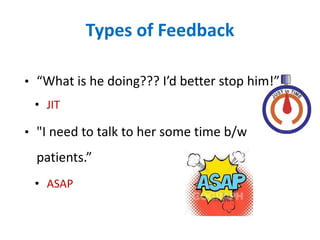
Types of Feedback
• “What is he doing??? I’d better stop him!”
• JIT
• "I need to talk to her some time b/w
patients.”
• ASAP
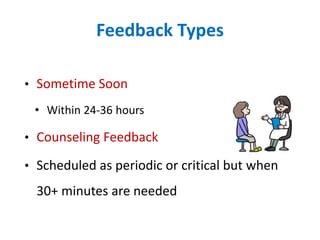
Feedback Types
• Sometime Soon
• Within 24-36 hours
• Counseling Feedback
• Scheduled as periodic or critical but when
30+ minutes are needed
Essential Components of Feedback?
• What was done well
• What could be done better
• What could be done to improve next time
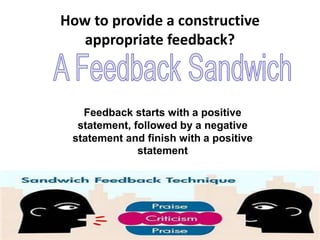
How to provide a constructive
appropriate feedback?
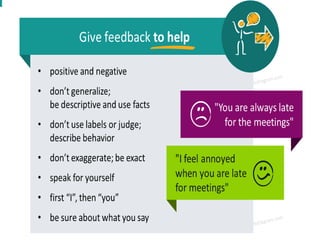
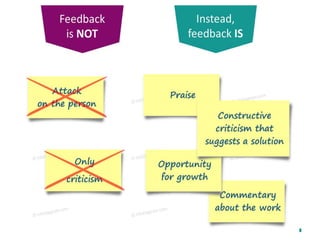
Feedback starts with a positive
statement, followed by a negative
statement and finish with a positive
statement
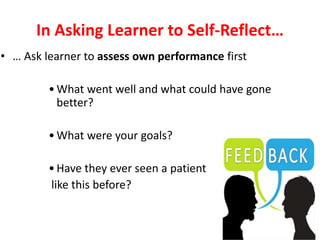
In Asking Learner to Self-Reflect…
• … Ask learner to assess own performance first
•What went well and what could have gone
better?
•What were your goals?
•Have they ever seen a patient
like this before?
Tell
• Tell what you observed:
–diagnosis & explanation about specific observed
behaviors
– React to the learner’s observation
• Feedback on self-assessment
– Include both positive and corrective elements
• “I observed….”
– Give reasons in the context of well-defined
shared goals
Ask (again)
• Ask about recipients understanding and
strategies for improvement
– What could you do differently?
• Again, give ample time
– Give own suggestions
– Perhaps even replay parts of the encounter:
“show me”
– Commit to monitoring improvement together
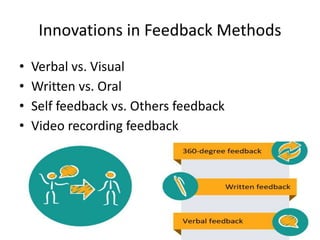
Innovations in Feedback Methods
• Verbal vs. Visual
• Written vs. Oral
• Self feedback vs. Others feedback
• Video recording feedback
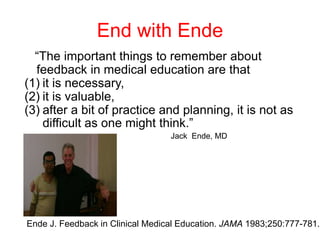
End with Ende
“The important things to remember about
feedback in medical education are that
(1) it is necessary,
(2) it is valuable,
(3) after a bit of practice and planning, it is not as
difficult as one might think.”
Jack Ende, MD
»
Ende J. Feedback in Clinical Medical Education. JAMA 1983;250:777-781.
Feedback for medical students

Feedback for medical students

  • 1.
    Presented By: Dr.Roma Goyal Assistant Professor Microbiology Department
  • 2.
    Objectives At the endof the session, participants shall be able to  Appreciate concept of giving feedback  Enumerate components of giving feedback  Explore the ways of delivering the feedback  State role of feedback in learning
  • 3.
    • Feedback –seeking it, giving it and receiving it – is one of the most effective tools we have for harnessing and promoting change so that it is to our benefit. • Feedback is a great and powerful tool if used right.
  • 4.
    “Jack Ende -“father of feedback” in medical education -wrote this often-referred-to JAMA article on feedback in 1983.” “Without feedback, our learners may not know how they are doing, if they are doing well, or if there are elements of their performance that need to be improved so that they can be competent.”
  • 5.
    Why Give Feedback? Sothat learners  Learn about there current level of competence  Reflect on their strengths & deficits  Engage in a dialogue with a supervisor/mentor  Become more competent
  • 6.
    How Do WeBehave? • Our feedback is often × Vague × Judgemental × Overtly positive-Possibly inconsequential • Rather than Specific Behavioral Helpful
  • 8.
    Criteria of aGood Feedback Constructive Appropriate
  • 9.
    Constructive Feedback • Constructivefeedback can help trainee to improve their knowledge, skills and attitudes • Helps to rate their clinical practice in a realistic way • Helps to be more self-regulated about their learning • Should be focused on behaviour & observations.
  • 10.
    Appropriate Feedback Feedback shouldbe completed as soon as possible after the event, before they forget details of the events
  • 11.
    Types of Feedback •“What is he doing??? I’d better stop him!” • JIT • "I need to talk to her some time b/w patients.” • ASAP
  • 12.
    Feedback Types • SometimeSoon • Within 24-36 hours • Counseling Feedback • Scheduled as periodic or critical but when 30+ minutes are needed
  • 13.
    Essential Components ofFeedback? • What was done well • What could be done better • What could be done to improve next time
  • 14.
    How to providea constructive appropriate feedback? Feedback starts with a positive statement, followed by a negative statement and finish with a positive statement
  • 16.
    In Asking Learnerto Self-Reflect… • … Ask learner to assess own performance first •What went well and what could have gone better? •What were your goals? •Have they ever seen a patient like this before?
  • 17.
    Tell • Tell whatyou observed: –diagnosis & explanation about specific observed behaviors – React to the learner’s observation • Feedback on self-assessment – Include both positive and corrective elements • “I observed….” – Give reasons in the context of well-defined shared goals
  • 18.
    Ask (again) • Askabout recipients understanding and strategies for improvement – What could you do differently? • Again, give ample time – Give own suggestions – Perhaps even replay parts of the encounter: “show me” – Commit to monitoring improvement together
  • 19.
    Innovations in FeedbackMethods • Verbal vs. Visual • Written vs. Oral • Self feedback vs. Others feedback • Video recording feedback
  • 21.
    End with Ende “Theimportant things to remember about feedback in medical education are that (1) it is necessary, (2) it is valuable, (3) after a bit of practice and planning, it is not as difficult as one might think.” Jack Ende, MD » Ende J. Feedback in Clinical Medical Education. JAMA 1983;250:777-781.