FEED ADDITIVES
THAT ALTER
METABOLISM.
AN EFFORT BY:
TEAN ZAHEER
DVM,FVS
Feed Additives:
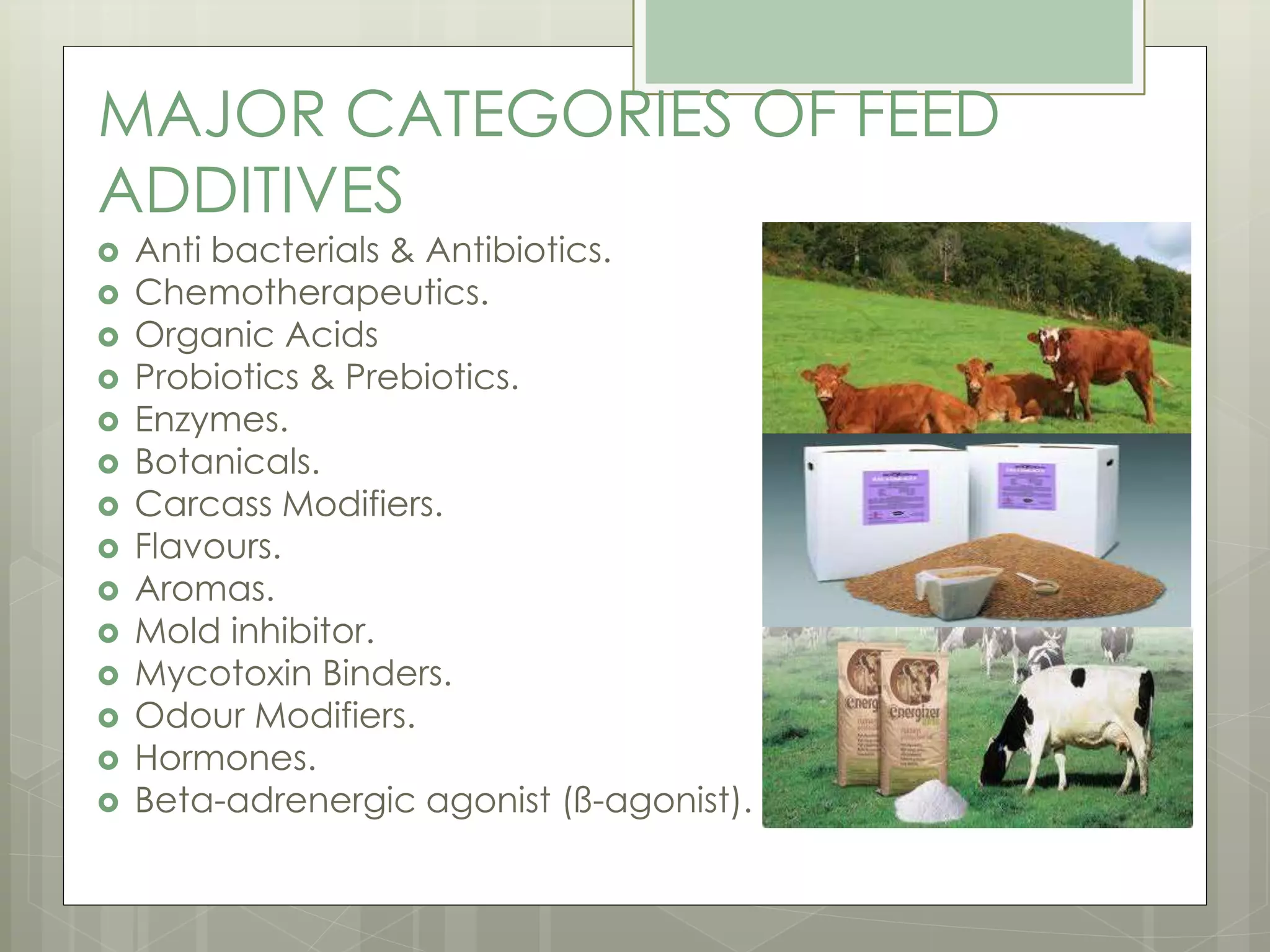
Materials used in animal
nutrition to :
-improve feed efficiency
-promote faster gains
-improve animal health
-increase production of animal products
MAJOR CATEGORIES OF FEED
ADDITIVES
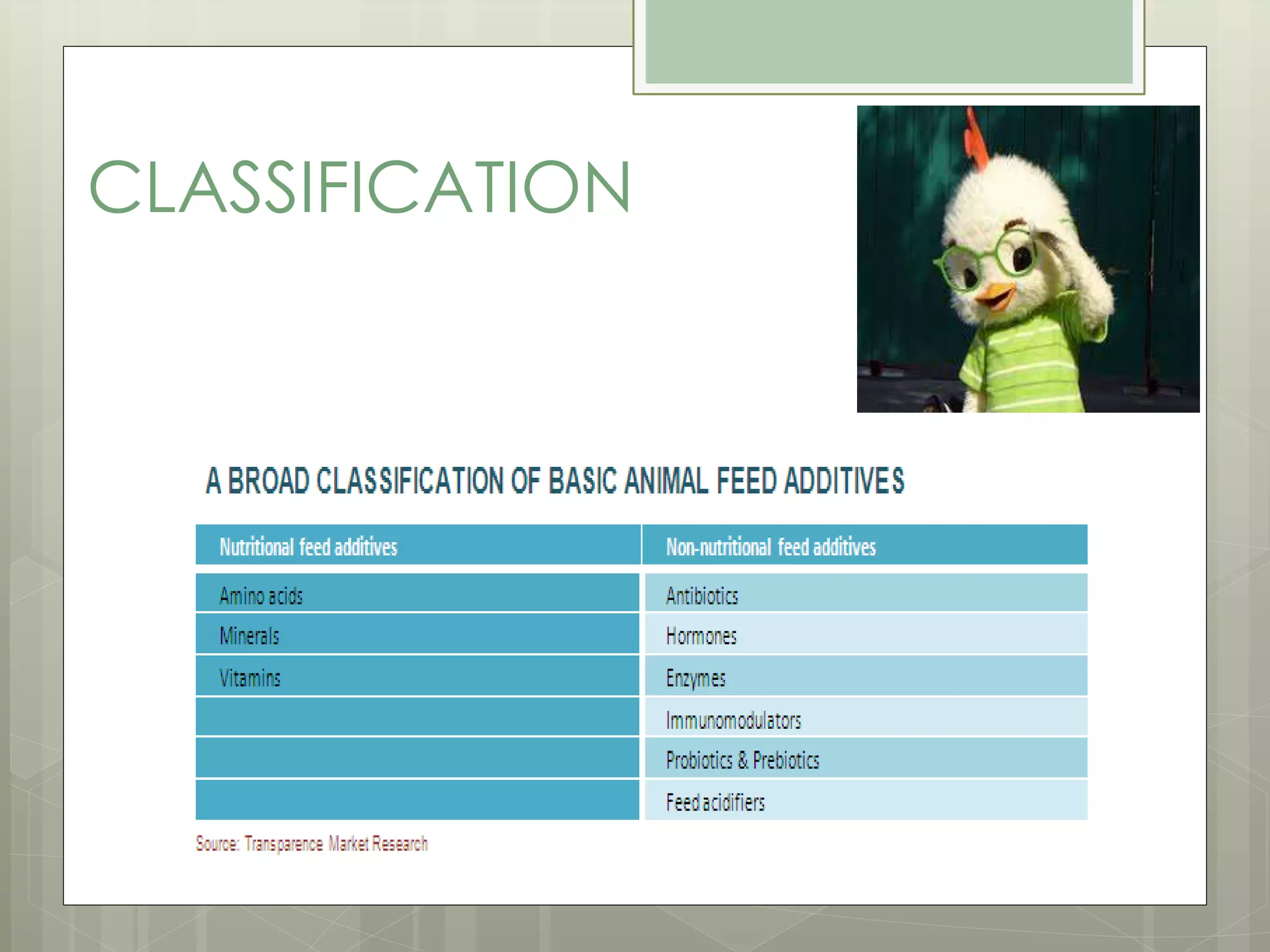
 Anti bacterials & Antibiotics.
 Chemotherapeutics.
 Organic Acids
 Probiotics & Prebiotics.
 Enzymes.
 Botanicals.
 Carcass Modifiers.
 Flavours.
 Aromas.
 Mold inhibitor.
 Mycotoxin Binders.
 Odour Modifiers.
 Hormones.
 Beta-adrenergic agonist (ß-agonist).
CLASSIFICATION
FEED ADDITIVES THAT ALTER
METABOLISM
 Beta-adrenergic agonist (ß-agonist).
 Hormones (somatotropin (ST) growth hormones).
 Organic Acids
 Probiotics & Prebiotics.
 Enzymes.
 Botanicals.
 Carcass Modifiers.
Beta-agonists
 naturally occurring and synthetic organic compounds.
 share a common chemical structure with “phenethanolamines”.
 Orally effective dose is 5-30 ppm.
 Only two such compounds are approved by FDA (ractopamine
hydrochloride).
 FUNCTION:
 Increase skeletal muscle growth and
 decrease adipose tissue accumulation in growing animals.
Hormones
 Anabolic hormones and somatotrophins influence metabolism.
 FUNCTIONS:
 Co-ordinates lipid, protein & mineral metabolism.
 Increase muscle growth.
 Decreases fat accumulation in growing animals.
 Increase milk yield.
Organic acids
is an organic compound with acidic properties.
 FUNCTIONS:
o organic acids reduce pH in the stomach, which
optimises conditions for pepsin activity, and
o increases the digestibility of nitrogen, phosphorus and
several minerals.
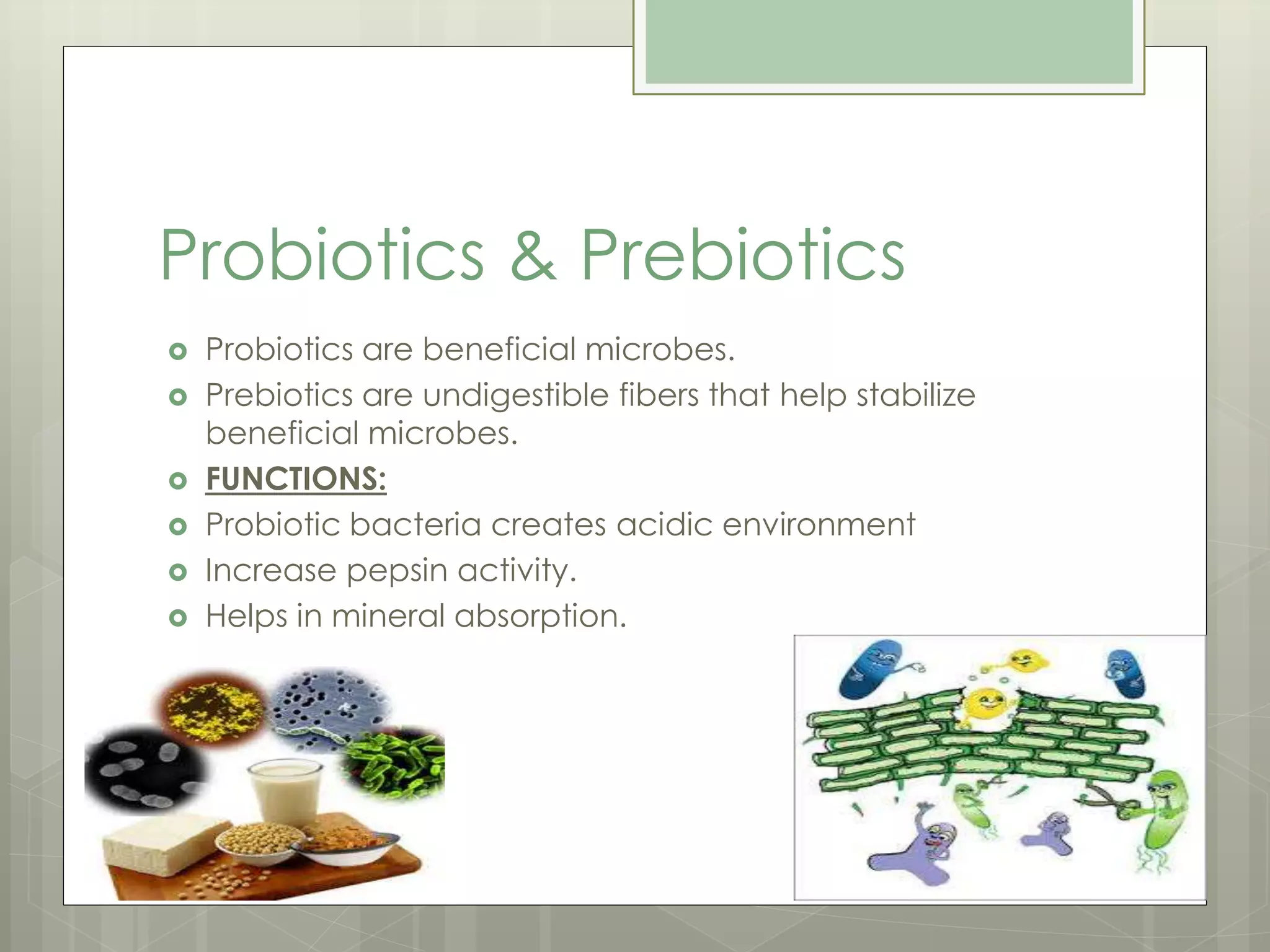
Probiotics & Prebiotics
 Probiotics are beneficial microbes.
 Prebiotics are undigestible fibers that help stabilize
beneficial microbes.
 FUNCTIONS:
 Probiotic bacteria creates acidic environment
 Increase pepsin activity.
 Helps in mineral absorption.
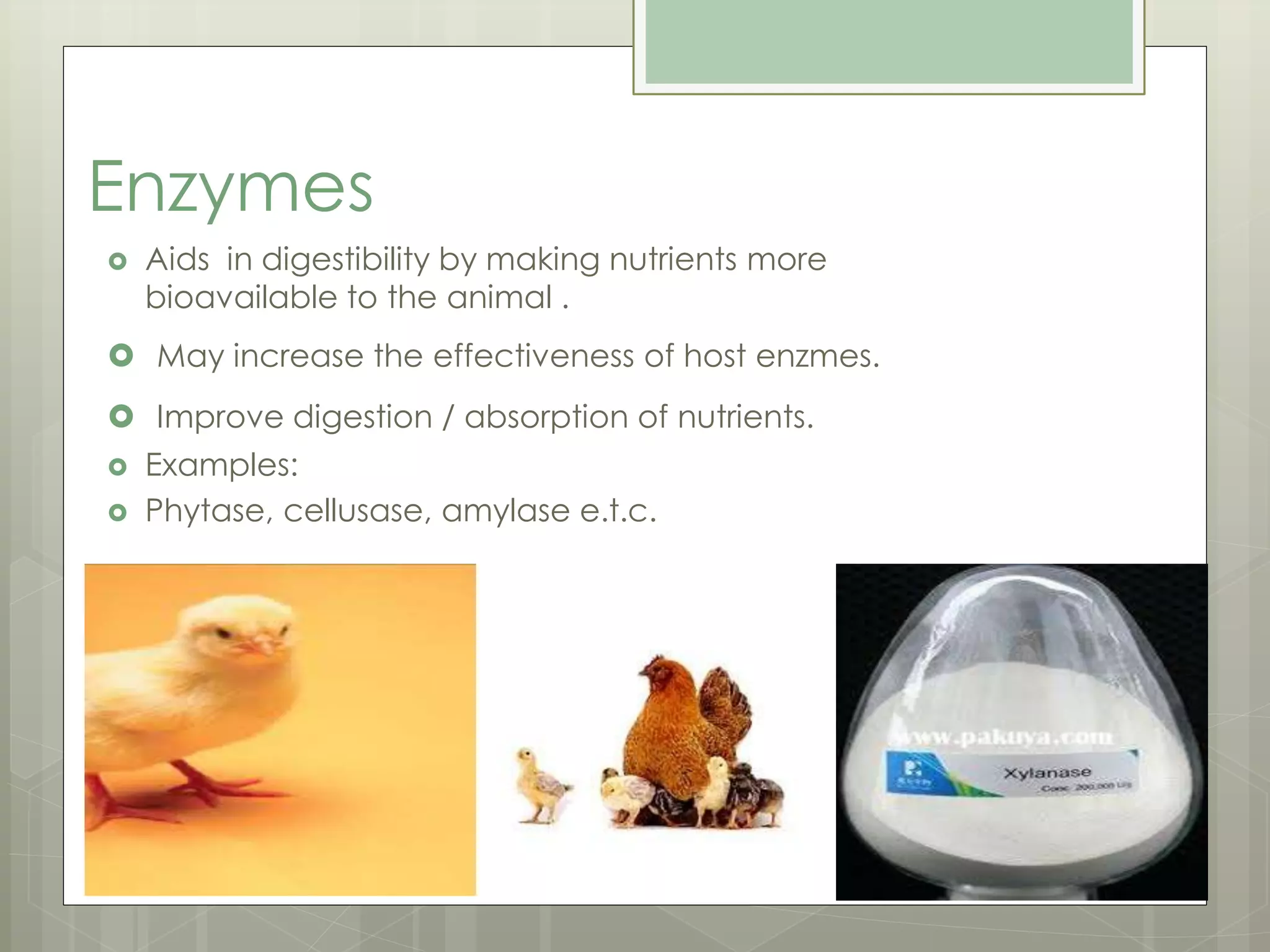
Enzymes
 Aids in digestibility by making nutrients more
bioavailable to the animal .
 May increase the effectiveness of host enzmes.
 Improve digestion / absorption of nutrients.
 Examples:
 Phytase, cellusase, amylase e.t.c.
Botanicals
 comprise a wide variety of herbs, spices, and products
derived thereof, and are mainly essential oils.
 FUNCTIONS:
o reduced bacterial colony counts
o a greater nutrient digestion
o reflecting an overall improved gut equilibrium.
If we stop using these then it
may:
 Lessen meat and livestock production.
 Higher production costs.
 More feed may be required.
 Increase in death loss.
 Increase vet bills.
REFERENCES
 Banerjee,G.C.1999.Feeds & Principles of Animal
Nutrition. Oxford, IBH Publishing Co . Pvt .New Delhi
India.
 www.fefana.org
 www.poultry Hub.org
 www.biofeedtech.com/en/products/poultry.html
 www.fao.org.
Feed additives

Feed additives

  • 1.
    FEED ADDITIVES THAT ALTER METABOLISM. ANEFFORT BY: TEAN ZAHEER DVM,FVS
  • 2.
    Feed Additives: Materials usedin animal nutrition to : -improve feed efficiency -promote faster gains -improve animal health -increase production of animal products
  • 3.
    MAJOR CATEGORIES OFFEED ADDITIVES  Anti bacterials & Antibiotics.  Chemotherapeutics.  Organic Acids  Probiotics & Prebiotics.  Enzymes.  Botanicals.  Carcass Modifiers.  Flavours.  Aromas.  Mold inhibitor.  Mycotoxin Binders.  Odour Modifiers.  Hormones.  Beta-adrenergic agonist (ß-agonist).
  • 4.
  • 5.
    FEED ADDITIVES THATALTER METABOLISM  Beta-adrenergic agonist (ß-agonist).  Hormones (somatotropin (ST) growth hormones).  Organic Acids  Probiotics & Prebiotics.  Enzymes.  Botanicals.  Carcass Modifiers.
  • 6.
    Beta-agonists  naturally occurringand synthetic organic compounds.  share a common chemical structure with “phenethanolamines”.  Orally effective dose is 5-30 ppm.  Only two such compounds are approved by FDA (ractopamine hydrochloride).  FUNCTION:  Increase skeletal muscle growth and  decrease adipose tissue accumulation in growing animals.
  • 7.
    Hormones  Anabolic hormonesand somatotrophins influence metabolism.  FUNCTIONS:  Co-ordinates lipid, protein & mineral metabolism.  Increase muscle growth.  Decreases fat accumulation in growing animals.  Increase milk yield.
  • 8.
    Organic acids is anorganic compound with acidic properties.  FUNCTIONS: o organic acids reduce pH in the stomach, which optimises conditions for pepsin activity, and o increases the digestibility of nitrogen, phosphorus and several minerals.
  • 9.
    Probiotics & Prebiotics Probiotics are beneficial microbes.  Prebiotics are undigestible fibers that help stabilize beneficial microbes.  FUNCTIONS:  Probiotic bacteria creates acidic environment  Increase pepsin activity.  Helps in mineral absorption.
  • 10.
    Enzymes  Aids indigestibility by making nutrients more bioavailable to the animal .  May increase the effectiveness of host enzmes.  Improve digestion / absorption of nutrients.  Examples:  Phytase, cellusase, amylase e.t.c.
  • 11.
    Botanicals  comprise awide variety of herbs, spices, and products derived thereof, and are mainly essential oils.  FUNCTIONS: o reduced bacterial colony counts o a greater nutrient digestion o reflecting an overall improved gut equilibrium.
  • 12.
    If we stopusing these then it may:  Lessen meat and livestock production.  Higher production costs.  More feed may be required.  Increase in death loss.  Increase vet bills.
  • 13.
    REFERENCES  Banerjee,G.C.1999.Feeds &Principles of Animal Nutrition. Oxford, IBH Publishing Co . Pvt .New Delhi India.  www.fefana.org  www.poultry Hub.org  www.biofeedtech.com/en/products/poultry.html  www.fao.org.