
Dr Shahjada Selim
Assistant Professor
Department of Endocrinology
Bangabandhu Sheikh Mujib Medical University, Dhaka
Email: selimshahjada@gmail.com
Fibrocalculous Pancreatic
Diabetes (FCPD)
1
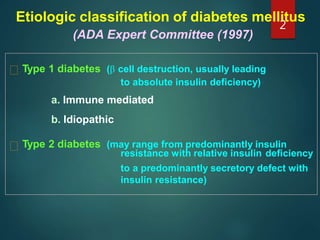
Etiologic classification of diabetes mellitus
(ADA Expert Committee (1997)
resistance with relative insulin deficiency
Type 1 diabetes (β cell destruction, usually leading
to absolute insulin deficiency)
a. Immune mediated
b. Idiopathic
Type 2 diabetes (may range from predominantly insulin
to a predominantly secretory defect with
insulin resistance)
2
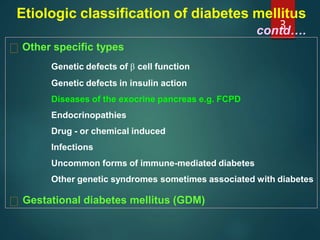
Etiologic classification of diabetes mellitus
contd….
Other specific types
Genetic defects of β cell function
Genetic defects in insulin action
Diseases of the exocrine pancreas e.g. FCPD
Endocrinopathies
Drug - or chemical induced
Infections
Uncommon forms of immune-mediated diabetes
Other genetic syndromes sometimes associated with diabetes
Gestational diabetes mellitus (GDM)
3
HISTORICAL BACKGROUND OF FCPD
1959 Zudeima’s first description from Indonesia
1960 Shaper’s report from Uganda
Geevarghese’s first study from Kerala,
1962 world’s largest series around 1700 patients
cases - considered to be the Father of TCP
1962 Existence of FCPD confirmed in Brazil, Kenya,
- 1981 Nigeria and several countries in
Asia eg. Thailand, Bangladesh, Sri Lanka
4
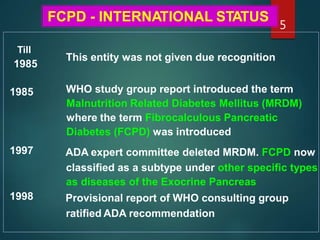
FCPD - INTERNATIONAL STATUS
This entity was not given due recognition
1985
Till
1985 WHO study group report introduced the term
Malnutrition Related Diabetes Mellitus (MRDM)
where the term Fibrocalculous Pancreatic
Diabetes (FCPD) was introduced
1997 ADA expert committee deleted MRDM. FCPD now
classified as a subtype under other specific types
as diseases of the Exocrine Pancreas
1998 Provisional report of WHO consulting group
ratified ADA recommendation
5
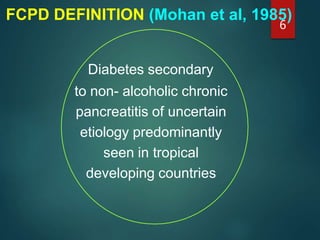
FCPD DEFINITION (Mohan et al, 1985)
Diabetes secondary
to non- alcoholic chronic
pancreatitis of uncertain
etiology predominantly
seen in tropical
developing countries
6
FCPD DEFINITION
 Severe diabetes
 Associated with undernutrition
 Usually non ketotic
 Presence of pancreatic calculi on X-ray abdomen
or evidence of
chronic pancreatitis on ultrasound or CT
 Usually requires insulin for control
 Usually seen in poor people
7
WORLDWIDE DISTRIBUTION OF MRDM (FCPD) AND PDDM
Reproduced from WHO study Group on Diabetes Mellitus (1985) with permission
8
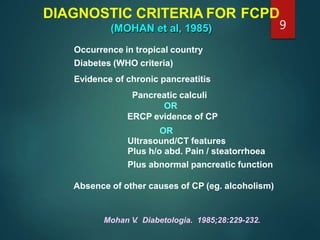
DIAGNOSTIC CRITERIA FOR FCPD
(MOHAN et al, 1985)
Mohan V. Diabetologia. 1985;28:229-232.
Occurrence in tropical country
Diabetes (WHO criteria)
Evidence of chronic pancreatitis
Pancreatic calculi
OR
ERCP evidence of CP
OR
Ultrasound/CT features
Plus h/o abd. Pain / steatorrhoea
Plus abnormal pancreatic function
Absence of other causes of CP (eg. alcoholism)
9
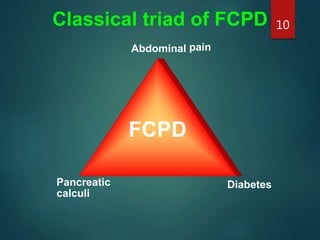
Classical triad of
pain
FCPD
Abdominal
FCPD
Pancreatic
calculi
Diabetes
10
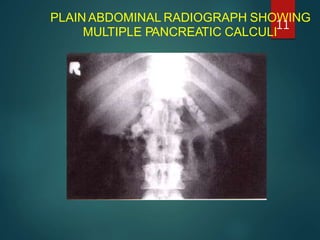
PLAIN ABDOMINAL RADIOGRAPH SHOWING
MULTIPLE PANCREATIC CALCULI
11
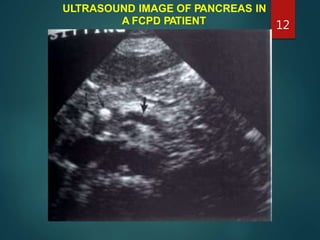
ULTRASOUND IMAGE OF PANCREAS IN
A FCPD PATIENT 12
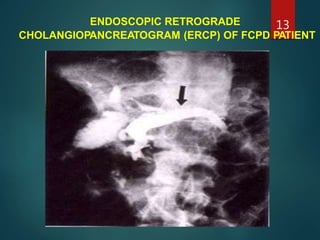
ENDOSCOPIC RETROGRADE
CHOLANGIOPANCREATOGRAM (ERCP) OF FCPD PATIENT
13
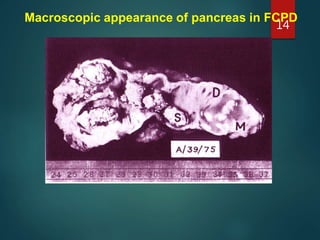
Macroscopic appearance of pancreas in FCPD
14
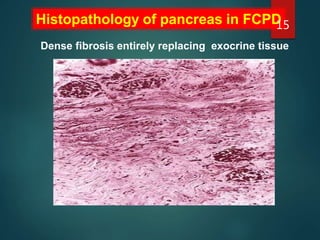
Histopathology of pancreas in FCPD
Dense fibrosis entirely replacing exocrine tissue
15
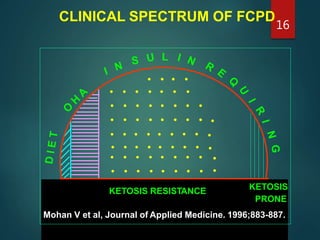
CLINICAL SPECTRUM OF FCPD
PRONE
• • • • • • • • •
• • • •
• • • • • • •
• • • • • • • •
• • • • • • • • •
• • • • • • • • •
• • • • • • • • •
• • • • • • • • •
KETOSIS RESISTANCE KETOSIS
Mohan V et al, Journal of Applied Medicine. 1996;883-887.
16
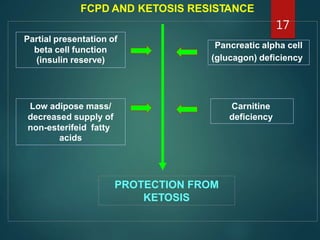
FCPD AND KETOSIS RESISTANCE
Pancreatic alpha cellbeta cell function
Partial presentation of
(insulin reserve) (glucagon) deficiency
Low adipose mass/ Carnitine
decreased supply of deficiency
non-esterifeid fatty
acids
PROTECTION FROM
KETOSIS
17
FCPD
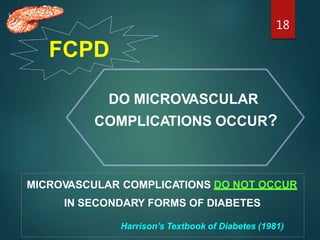
DO MICROVASCULAR
COMPLICATIONS OCCUR?
MICROVASCULAR COMPLICATIONS DO NOT OCCUR
IN SECONDARY FORMS OF DIABETES
Harrison’s Textbook of Diabetes (1981)
18
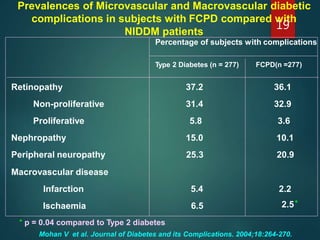
Prevalences of Microvascular and Macrovascular diabetic
complications in subjects with FCPD compared with
NIDDM patients
* p = 0.04 compared to Type 2 diabetes
Mohan V et al. Journal of Diabetes and its Complications. 2004;18:264-270.
Percentage of subjects with complications
Type 2 Diabetes (n = 277) FCPD(n =277)
Retinopathy
Non-proliferative
Proliferative
Nephropathy
Peripheral neuropathy
Macrovascular disease
Infarction
Ischaemia
37.2
31.4
5.8
15.0
25.3
5.4
6.5
36.1
32.9
3.6
10.1
20.9
2.2
2.5*
19
FCPD WITHO
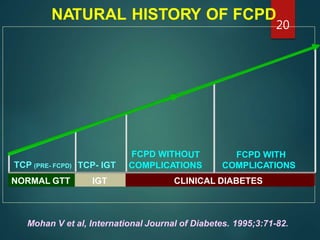
NATURAL HISTORY OF FCPD
Mohan V et al, International Journal of Diabetes. 1995;3:71-82.
UT FCPD WITH
TCP (PRE- FCPD) TCP- IGT COMPLICATIONS COMPLICATIONS
NORMAL GTT IGT CLINICAL DIABETES
20
21
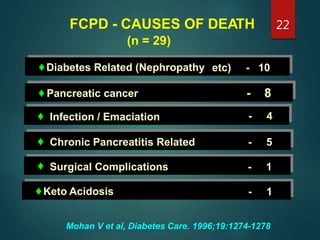
FCPD - CAUSES OF DEATH
(n = 29)
♦Diabetes Related (Nephropathy etc) - 10
♦ Pancreatic cancer -
-
8
4♦ Infection / Emaciation
♦
♦
Chronic Pancreatitis Related - 5
Surgical Complications - 1
♦Keto Acidosis - 1
Mohan V et al, Diabetes Care. 1996;19:1274-1278
22
JOP. Journal of Pancreas. 2012 Mar 10;13(2):205 - 20923
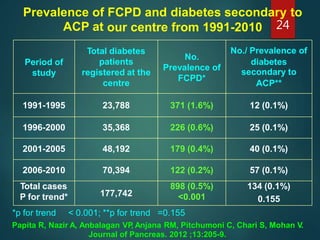
Prevalence
ACP
of
at
FCPD and diabetes secondary to
our centre from 1991-2010
diabetes
ACP**
0.155
*p for trend < 0.001; **p for trend =0.155
Papita R, Nazir A, Anbalagan VP, Anjana RM, Pitchumoni C, Chari S, Mohan V.
Journal of Pancreas. 2012 ;13:205-9.
Period of
study
Total diabetes
patients
registered at the
centre
No.
Prevalence of
FCPD*
No./ Prevalence of
secondary to
1991-1995 23,788 371 (1.6%) 12 (0.1%)
1996-2000 35,368 226 (0.6%) 25 (0.1%)
2001-2005 48,192 179 (0.4%) 40 (0.1%)
2006-2010 70,394 122 (0.2%) 57 (0.1%)
Total cases
P for trend* 177,742
898 (0.5%)
<0.001
134 (0.1%)
24
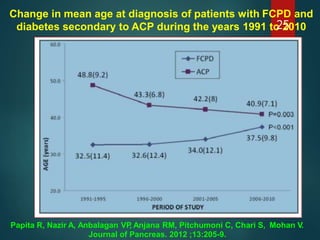
Change in mean age at diagnosis of patients with FCPD and
diabetes secondary to ACP during the years 1991 to 2010
Papita R, Nazir A, Anbalagan VP, Anjana RM, Pitchumoni C, Chari S,
Journal of Pancreas. 2012 ;13:205-9.
Mohan V.
25
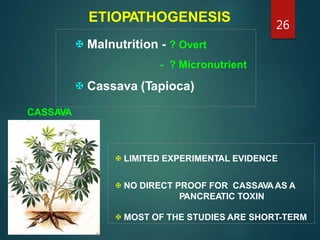
ETIOPATHOGENESIS
CASSAVA
 LIMITED EXPERIMENTAL EVIDENCE
 NO DIRECT PROOF FOR CASSAVAAS A
PANCREATIC TOXIN
 MOST OF THE STUDIES ARE SHORT-TERM
 Malnutrition - ? Overt
- ? Micronutrient
 Cassava (Tapioca)
26
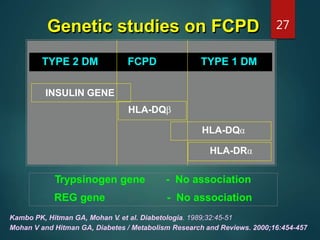
Genetic studies on FCPD
TYPE 2 DM FCPD TYPE 1 DM
Kambo PK, Hitman GA, Mohan V. et al. Diabetologia. 1989;32:45-51
Mohan V and Hitman GA, Diabetes / Metabolism Research and Reviews. 2000;16:454-457
Trypsinogen gene - No association
REG gene - No association
INSULIN GENE
HLA-DQβ
HLA-DQα
HLA-DRα
27
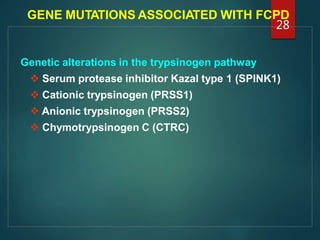
GENE MUTATIONS ASSOCIATED WITH FCPD
Genetic alterations in the trypsinogen pathway
 Serum protease inhibitor Kazal type 1 (SPINK1)
 Cationic trypsinogen (PRSS1)
 Anionic trypsinogen (PRSS2)
 Chymotrypsinogen C (CTRC)
28
GENE MUTATIONS ASSOCIATED WITH FCPD
Alteration in other genes
 Cystic fibrosis transmembrane conductance
regulator
(CFTR)
 Regenerating islet-derived genes 1α (REG1A &
REG1B)
 Cathepsin B (CTSB)
 Angiotensin converting enzyme (ACE)
 Calcium-sensing receptor (CASR)
29
ASSOCIATION OF SPINK GENE WITH FCPD
o Pfützer RH, Barmada MM, Brunskill AP, Finch R, Hart PS,
Neoptolemos J, Furey WF, Whitcomb DC. SPINK1/PSTI
polymorphisms act as disease modifiers in familial and idiopathic
chronic pancreatitis. Gastroenterology. 2000.
o Witt H, Luck W, Hennies HC et al. Mutations in the gene encoding
the serine protease inhibitor, Kazal type 1 are associated with
chronic pancreatitis. Nature Genetics. 2000.
o Hassan Z, Mohan V, Ali L et al, SPINK1 is a susceptibility gene for
fibrocalculous pancreatic diabetes in subjects from the Indian
subcontinent. American Journal of Human Genetics. 2002.
30
ASSOCIATION OF SPINK GENE WITH FCPD
o Schneider A, et al. SPINK1/PSTI mutations are associated with tropical
pancreatitis and type II diabetes mellitus in Bangladesh
Gastroenterology. 2002.
o Chandak G.R., Idris M.M., Reddy D.N., Bhaskar S., Sriram P.V. and Singh
L. Mutations in the pancreatic secretory trypsin inhibitor gene
(PSTI/SPINK1) rather than the cationic trypsinogen gene (PRSS1) are
significantly associated with tropical calcific pancreatitis, J Med
Genet.,2002.
o Noone P.G., Zhou Z., Silverman L.M., Jowell P.S., Knowles M.R., Cohn
J.A., Cystic fibrosis gene mutations and pancreatitis risk: relation to
epithelial ion transport and trypsin inhibitor gene mutations,
Gastroenterology. 2001
31
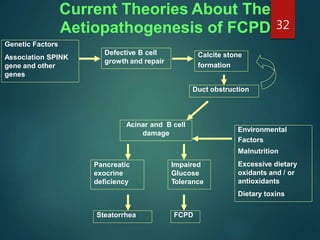
Current Theories About The
Aetiopathogenesis of FCPD
formation
Factors
FCPDSteatorrhea
Impaired
Glucose
Tolerance
Pancreatic
exocrine
deficiency
Environmental
Malnutrition
Excessive dietary
oxidants and / or
antioxidants
Dietary toxins
Acinar and B cell
damage
Duct obstruction
Calcite stoneDefective B cell
growth and repair
Genetic Factors
Association SPINK
gene and other
genes
32
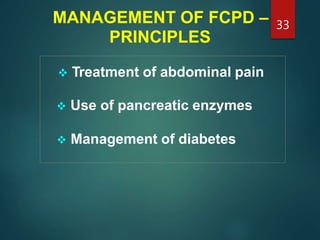
MANAGEMENT OF FCPD –
PRINCIPLES
 Treatment of abdominal pain
 Use of pancreatic enzymes
 Management of diabetes
33
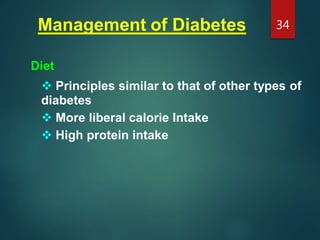
Management of Diabetes
Diet
 Principles similar to that of other types of
diabetes
 More liberal calorie Intake
 High protein intake
34
Management of Diabetes
Pharmacotherapy
Oral Antidiabetic Drugs
 Sulphonyureas can be used if β cell function is good
 Biguanides usually not used as the FCPD
patients are lean
Insulin
 Would be needed in majority of the cases to
achieve
blood sugar control in FCPD patients
35
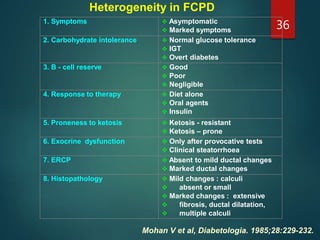
Heterogeneity in FCPD
Mohan V et al, Diabetologia. 1985;28:229-232.
1. Symptoms  Asymptomatic
 Marked symptoms
2. Carbohydrate intolerance  Normal glucose tolerance
 IGT
 Overt diabetes
3. B - cell reserve  Good
 Poor
 Negligible
4. Response to therapy  Diet alone
 Oral agents
 Insulin
5. Proneness to ketosis  Ketosis - resistant
 Ketosis – prone
6. Exocrine dysfunction  Only after provocative tests
 Clinical steatorrhoea
7. ERCP  Absent to mild ductal changes
 Marked ductal changes
8. Histopathology  Mild changes : calculi
 absent or small
 Marked changes : extensive
 fibrosis, ductal dilatation,
 multiple calculi
36
37
Thanks

FCPD by Dr Shahjada Seim

  • 1.
    Dr Shahjada Selim AssistantProfessor Department of Endocrinology Bangabandhu Sheikh Mujib Medical University, Dhaka Email: selimshahjada@gmail.com Fibrocalculous Pancreatic Diabetes (FCPD) 1
  • 2.
    Etiologic classification ofdiabetes mellitus (ADA Expert Committee (1997) resistance with relative insulin deficiency Type 1 diabetes (β cell destruction, usually leading to absolute insulin deficiency) a. Immune mediated b. Idiopathic Type 2 diabetes (may range from predominantly insulin to a predominantly secretory defect with insulin resistance) 2
  • 3.
    Etiologic classification ofdiabetes mellitus contd…. Other specific types Genetic defects of β cell function Genetic defects in insulin action Diseases of the exocrine pancreas e.g. FCPD Endocrinopathies Drug - or chemical induced Infections Uncommon forms of immune-mediated diabetes Other genetic syndromes sometimes associated with diabetes Gestational diabetes mellitus (GDM) 3
  • 4.
    HISTORICAL BACKGROUND OFFCPD 1959 Zudeima’s first description from Indonesia 1960 Shaper’s report from Uganda Geevarghese’s first study from Kerala, 1962 world’s largest series around 1700 patients cases - considered to be the Father of TCP 1962 Existence of FCPD confirmed in Brazil, Kenya, - 1981 Nigeria and several countries in Asia eg. Thailand, Bangladesh, Sri Lanka 4
  • 5.
    FCPD - INTERNATIONALSTATUS This entity was not given due recognition 1985 Till 1985 WHO study group report introduced the term Malnutrition Related Diabetes Mellitus (MRDM) where the term Fibrocalculous Pancreatic Diabetes (FCPD) was introduced 1997 ADA expert committee deleted MRDM. FCPD now classified as a subtype under other specific types as diseases of the Exocrine Pancreas 1998 Provisional report of WHO consulting group ratified ADA recommendation 5
  • 6.
    FCPD DEFINITION (Mohanet al, 1985) Diabetes secondary to non- alcoholic chronic pancreatitis of uncertain etiology predominantly seen in tropical developing countries 6
  • 7.
    FCPD DEFINITION  Severediabetes  Associated with undernutrition  Usually non ketotic  Presence of pancreatic calculi on X-ray abdomen or evidence of chronic pancreatitis on ultrasound or CT  Usually requires insulin for control  Usually seen in poor people 7
  • 8.
    WORLDWIDE DISTRIBUTION OFMRDM (FCPD) AND PDDM Reproduced from WHO study Group on Diabetes Mellitus (1985) with permission 8
  • 9.
    DIAGNOSTIC CRITERIA FORFCPD (MOHAN et al, 1985) Mohan V. Diabetologia. 1985;28:229-232. Occurrence in tropical country Diabetes (WHO criteria) Evidence of chronic pancreatitis Pancreatic calculi OR ERCP evidence of CP OR Ultrasound/CT features Plus h/o abd. Pain / steatorrhoea Plus abnormal pancreatic function Absence of other causes of CP (eg. alcoholism) 9
  • 10.
  • 11.
    PLAIN ABDOMINAL RADIOGRAPHSHOWING MULTIPLE PANCREATIC CALCULI 11
  • 12.
    ULTRASOUND IMAGE OFPANCREAS IN A FCPD PATIENT 12
  • 13.
  • 14.
    Macroscopic appearance ofpancreas in FCPD 14
  • 15.
    Histopathology of pancreasin FCPD Dense fibrosis entirely replacing exocrine tissue 15
  • 16.
    CLINICAL SPECTRUM OFFCPD PRONE • • • • • • • • • • • • • • • • • • • • • • • • • • • • • • • • • • • • • • • • • • • • • • • • • • • • • • • • • • • • • • • • KETOSIS RESISTANCE KETOSIS Mohan V et al, Journal of Applied Medicine. 1996;883-887. 16
  • 17.
    FCPD AND KETOSISRESISTANCE Pancreatic alpha cellbeta cell function Partial presentation of (insulin reserve) (glucagon) deficiency Low adipose mass/ Carnitine decreased supply of deficiency non-esterifeid fatty acids PROTECTION FROM KETOSIS 17
  • 18.
    FCPD DO MICROVASCULAR COMPLICATIONS OCCUR? MICROVASCULARCOMPLICATIONS DO NOT OCCUR IN SECONDARY FORMS OF DIABETES Harrison’s Textbook of Diabetes (1981) 18
  • 19.
    Prevalences of Microvascularand Macrovascular diabetic complications in subjects with FCPD compared with NIDDM patients * p = 0.04 compared to Type 2 diabetes Mohan V et al. Journal of Diabetes and its Complications. 2004;18:264-270. Percentage of subjects with complications Type 2 Diabetes (n = 277) FCPD(n =277) Retinopathy Non-proliferative Proliferative Nephropathy Peripheral neuropathy Macrovascular disease Infarction Ischaemia 37.2 31.4 5.8 15.0 25.3 5.4 6.5 36.1 32.9 3.6 10.1 20.9 2.2 2.5* 19
  • 20.
    FCPD WITHO NATURAL HISTORYOF FCPD Mohan V et al, International Journal of Diabetes. 1995;3:71-82. UT FCPD WITH TCP (PRE- FCPD) TCP- IGT COMPLICATIONS COMPLICATIONS NORMAL GTT IGT CLINICAL DIABETES 20
  • 21.
  • 22.
    FCPD - CAUSESOF DEATH (n = 29) ♦Diabetes Related (Nephropathy etc) - 10 ♦ Pancreatic cancer - - 8 4♦ Infection / Emaciation ♦ ♦ Chronic Pancreatitis Related - 5 Surgical Complications - 1 ♦Keto Acidosis - 1 Mohan V et al, Diabetes Care. 1996;19:1274-1278 22
  • 23.
    JOP. Journal ofPancreas. 2012 Mar 10;13(2):205 - 20923
  • 24.
    Prevalence ACP of at FCPD and diabetessecondary to our centre from 1991-2010 diabetes ACP** 0.155 *p for trend < 0.001; **p for trend =0.155 Papita R, Nazir A, Anbalagan VP, Anjana RM, Pitchumoni C, Chari S, Mohan V. Journal of Pancreas. 2012 ;13:205-9. Period of study Total diabetes patients registered at the centre No. Prevalence of FCPD* No./ Prevalence of secondary to 1991-1995 23,788 371 (1.6%) 12 (0.1%) 1996-2000 35,368 226 (0.6%) 25 (0.1%) 2001-2005 48,192 179 (0.4%) 40 (0.1%) 2006-2010 70,394 122 (0.2%) 57 (0.1%) Total cases P for trend* 177,742 898 (0.5%) <0.001 134 (0.1%) 24
  • 25.
    Change in meanage at diagnosis of patients with FCPD and diabetes secondary to ACP during the years 1991 to 2010 Papita R, Nazir A, Anbalagan VP, Anjana RM, Pitchumoni C, Chari S, Journal of Pancreas. 2012 ;13:205-9. Mohan V. 25
  • 26.
    ETIOPATHOGENESIS CASSAVA  LIMITED EXPERIMENTALEVIDENCE  NO DIRECT PROOF FOR CASSAVAAS A PANCREATIC TOXIN  MOST OF THE STUDIES ARE SHORT-TERM  Malnutrition - ? Overt - ? Micronutrient  Cassava (Tapioca) 26
  • 27.
    Genetic studies onFCPD TYPE 2 DM FCPD TYPE 1 DM Kambo PK, Hitman GA, Mohan V. et al. Diabetologia. 1989;32:45-51 Mohan V and Hitman GA, Diabetes / Metabolism Research and Reviews. 2000;16:454-457 Trypsinogen gene - No association REG gene - No association INSULIN GENE HLA-DQβ HLA-DQα HLA-DRα 27
  • 28.
    GENE MUTATIONS ASSOCIATEDWITH FCPD Genetic alterations in the trypsinogen pathway  Serum protease inhibitor Kazal type 1 (SPINK1)  Cationic trypsinogen (PRSS1)  Anionic trypsinogen (PRSS2)  Chymotrypsinogen C (CTRC) 28
  • 29.
    GENE MUTATIONS ASSOCIATEDWITH FCPD Alteration in other genes  Cystic fibrosis transmembrane conductance regulator (CFTR)  Regenerating islet-derived genes 1α (REG1A & REG1B)  Cathepsin B (CTSB)  Angiotensin converting enzyme (ACE)  Calcium-sensing receptor (CASR) 29
  • 30.
    ASSOCIATION OF SPINKGENE WITH FCPD o Pfützer RH, Barmada MM, Brunskill AP, Finch R, Hart PS, Neoptolemos J, Furey WF, Whitcomb DC. SPINK1/PSTI polymorphisms act as disease modifiers in familial and idiopathic chronic pancreatitis. Gastroenterology. 2000. o Witt H, Luck W, Hennies HC et al. Mutations in the gene encoding the serine protease inhibitor, Kazal type 1 are associated with chronic pancreatitis. Nature Genetics. 2000. o Hassan Z, Mohan V, Ali L et al, SPINK1 is a susceptibility gene for fibrocalculous pancreatic diabetes in subjects from the Indian subcontinent. American Journal of Human Genetics. 2002. 30
  • 31.
    ASSOCIATION OF SPINKGENE WITH FCPD o Schneider A, et al. SPINK1/PSTI mutations are associated with tropical pancreatitis and type II diabetes mellitus in Bangladesh Gastroenterology. 2002. o Chandak G.R., Idris M.M., Reddy D.N., Bhaskar S., Sriram P.V. and Singh L. Mutations in the pancreatic secretory trypsin inhibitor gene (PSTI/SPINK1) rather than the cationic trypsinogen gene (PRSS1) are significantly associated with tropical calcific pancreatitis, J Med Genet.,2002. o Noone P.G., Zhou Z., Silverman L.M., Jowell P.S., Knowles M.R., Cohn J.A., Cystic fibrosis gene mutations and pancreatitis risk: relation to epithelial ion transport and trypsin inhibitor gene mutations, Gastroenterology. 2001 31
  • 32.
    Current Theories AboutThe Aetiopathogenesis of FCPD formation Factors FCPDSteatorrhea Impaired Glucose Tolerance Pancreatic exocrine deficiency Environmental Malnutrition Excessive dietary oxidants and / or antioxidants Dietary toxins Acinar and B cell damage Duct obstruction Calcite stoneDefective B cell growth and repair Genetic Factors Association SPINK gene and other genes 32
  • 33.
    MANAGEMENT OF FCPD– PRINCIPLES  Treatment of abdominal pain  Use of pancreatic enzymes  Management of diabetes 33
  • 34.
    Management of Diabetes Diet Principles similar to that of other types of diabetes  More liberal calorie Intake  High protein intake 34
  • 35.
    Management of Diabetes Pharmacotherapy OralAntidiabetic Drugs  Sulphonyureas can be used if β cell function is good  Biguanides usually not used as the FCPD patients are lean Insulin  Would be needed in majority of the cases to achieve blood sugar control in FCPD patients 35
  • 36.
    Heterogeneity in FCPD MohanV et al, Diabetologia. 1985;28:229-232. 1. Symptoms  Asymptomatic  Marked symptoms 2. Carbohydrate intolerance  Normal glucose tolerance  IGT  Overt diabetes 3. B - cell reserve  Good  Poor  Negligible 4. Response to therapy  Diet alone  Oral agents  Insulin 5. Proneness to ketosis  Ketosis - resistant  Ketosis – prone 6. Exocrine dysfunction  Only after provocative tests  Clinical steatorrhoea 7. ERCP  Absent to mild ductal changes  Marked ductal changes 8. Histopathology  Mild changes : calculi  absent or small  Marked changes : extensive  fibrosis, ductal dilatation,  multiple calculi 36
  • 37.