Brendan Spillane and James Nottingham
Perth
March 2012
Escaping the Groundhog Years:
Building inquiry culture in schools
Our hopes for today
• Resolve
• Routines
• Reconnection
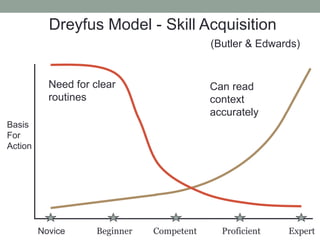
Basis
For
Action
Novice
Need for clear
routines
Can read
context
accurately
Beginner ProficientCompetent Expert
Dreyfus Model - Skill Acquisition
(Butler & Edwards)
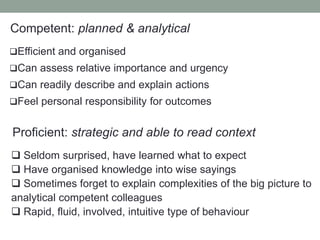
Efficient and organised
Can assess relative importance and urgency
Can readily describe and explain actions
Feel personal responsibility for outcomes
Competent: planned & analytical
Proficient: strategic and able to read context
 Seldom surprised, have learned what to expect
 Have organised knowledge into wise sayings
 Sometimes forget to explain complexities of the big picture to
analytical competent colleagues
 Rapid, fluid, involved, intuitive type of behaviour
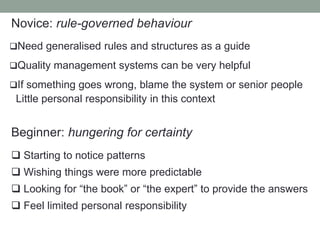
Need generalised rules and structures as a guide
Quality management systems can be very helpful
If something goes wrong, blame the system or senior people
Little personal responsibility in this context
Novice: rule-governed behaviour
Beginner: hungering for certainty
 Starting to notice patterns
 Wishing things were more predictable
 Looking for “the book” or “the expert” to provide the answers
 Feel limited personal responsibility
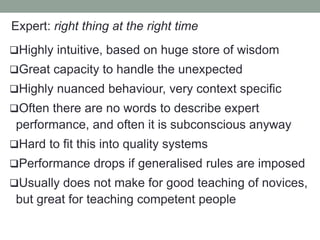
Highly intuitive, based on huge store of wisdom
Great capacity to handle the unexpected
Highly nuanced behaviour, very context specific
Often there are no words to describe expert
performance, and often it is subconscious anyway
Hard to fit this into quality systems
Performance drops if generalised rules are imposed
Usually does not make for good teaching of novices,
but great for teaching competent people
Expert: right thing at the right time
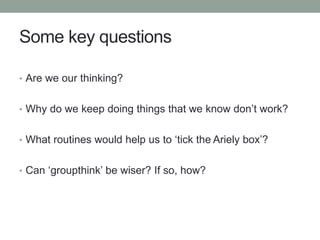
Some key questions
• Are we our thinking?
• Why do we keep doing things that we know don’t work?
• What routines would help us to ‘tick the Ariely box’?
• Can ‘groupthink’ be wiser? If so, how?
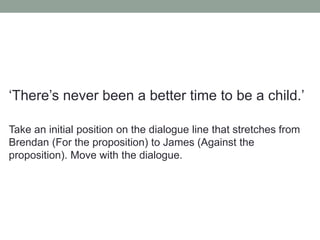
‘There’s never been a better time to be a child.’
Take an initial position on the dialogue line that stretches from
Brendan (For the proposition) to James (Against the
proposition). Move with the dialogue.
The anatomy of trust
•Organic
•Contractual
•Relational
The logic of trust
• Why we trust-trust is supremely practical
• How we trust-trust is context-specific and
conditionally extended
• What we trust-capability and commitment
• When we trust-When we infer that capability and
commitment are there
• When we lose trust-we feel disappointed when
capability isn’t there, we feel betrayed when
commitment isn’t there
(Perkins, 2006)
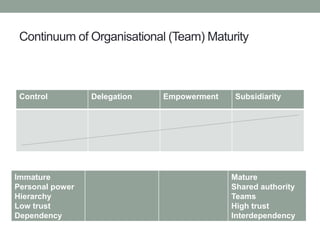
Continuum of Organisational (Team) Maturity
Control Delegation Empowerment Subsidiarity
Immature
Personal power
Hierarchy
Low trust
Dependency
Mature
Shared authority
Teams
High trust
Interdependency
Can we trust ourselves?
• It’s true because I believe it.
• It’s true because we believe it.
• It’s true because I want to believe it.
• It’s true because I’ve always believed it.
• It’s true because it is in my interest to believe it.
1. The only true wisdom is in knowing you know
nothing
6. By all means, marry. If you get a good wife, you'll
become happy; if you get a bad one, you'll become a
philosopher
4. It is not living that matters, but living rightly
3. Wisdom begins in wonder
2. The unexamined life is not worth living
5. True wisdom comes to each of us when we realize
how little we understand about life, ourselves, and the
world around us
Quotes from Socrates (469 – 399 BC)
An Ethos for Learning
Not all of our questions
answered …
… but all of our answers
questioned
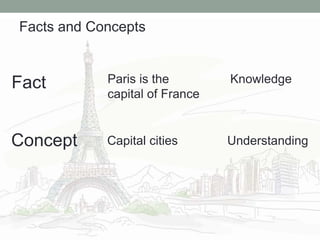
Facts and Concepts
Fact Paris is the
capital of France
Concept Capital cities
Knowledge
Understanding
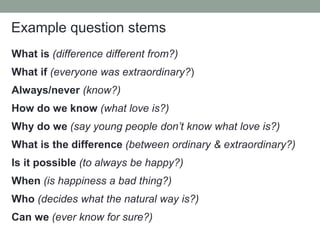
Example question stems
What is (difference different from?)
What if (everyone was extraordinary?)
Always/never (know?)
How do we know (what love is?)
Why do we (say young people don’t know what love is?)
What is the difference (between ordinary & extraordinary?)
Is it possible (to always be happy?)
When (is happiness a bad thing?)
Who (decides what the natural way is?)
Can we (ever know for sure?)
The power of a real question
Why do we keep doing things
that we know don’t work?
Pursue this question as a group.
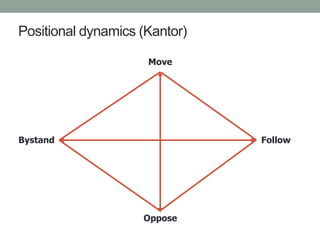
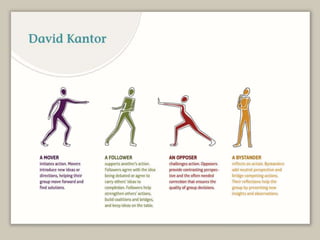
Positional dynamics (Kantor)
Bystand Follow
Oppose
Move
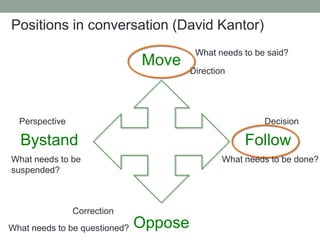
Positions in conversation (David Kantor)
Move
Oppose
Bystand Follow
What needs to be said?
What needs to be done?
What needs to be questioned?
What needs to be
suspended?
Direction
Decision
Correction
Perspective
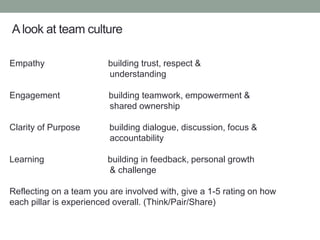
Alook at team culture
Empathy building trust, respect &
understanding
Engagement building teamwork, empowerment &
shared ownership
Clarity of Purpose building dialogue, discussion, focus &
accountability
Learning building in feedback, personal growth
& challenge
Reflecting on a team you are involved with, give a 1-5 rating on how
each pillar is experienced overall. (Think/Pair/Share)
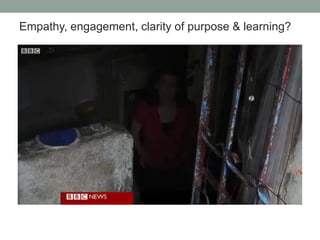
Empathy, engagement, clarity of purpose & learning?
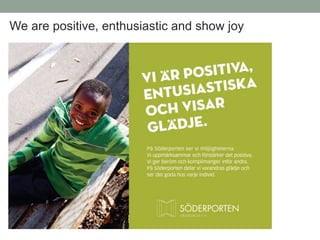
We are positive, enthusiastic and show joy
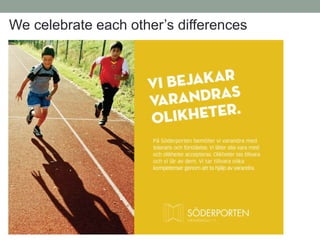
We celebrate each other’s differences
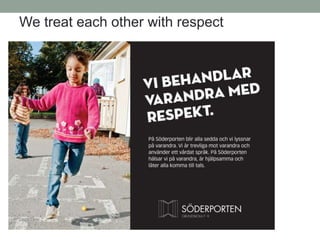
We treat each other with respect
Söderporten school, Norrköping
The school is extremely multi-cultural, with most children having recently
arrived in the country and speaking Swedish as a second language.
Their Core Values have helped to:
 Achieve in 2010 the best exam results since the national grading system
was introduced in Sweden in 1997
 Switch off the school´s video surveillance in autumn 2010
Inquiry walk - (not a pub crawl!)
Generate one inquiry or question that you
would like the group to pursue in its final
session.
As a result of today
• Are you stronger in your resolve that you can escape the
‘groundhog years’?
• Do you feel that you have some routines that could help
you to further develop an inquiry mindset?
• Do you have a stronger sense of having inquiry allies?
• Do you have any other feedback regarding our process,
what you would have liked more/less of, a key learning
moment, opportunities we missed, what we could include
in a follow-up session etc?

Groundhog Inquiry

  • 1.
    Brendan Spillane andJames Nottingham Perth March 2012 Escaping the Groundhog Years: Building inquiry culture in schools
  • 2.
    Our hopes fortoday • Resolve • Routines • Reconnection
  • 3.
    Basis For Action Novice Need for clear routines Canread context accurately Beginner ProficientCompetent Expert Dreyfus Model - Skill Acquisition (Butler & Edwards)
  • 4.
    Efficient and organised Canassess relative importance and urgency Can readily describe and explain actions Feel personal responsibility for outcomes Competent: planned & analytical Proficient: strategic and able to read context  Seldom surprised, have learned what to expect  Have organised knowledge into wise sayings  Sometimes forget to explain complexities of the big picture to analytical competent colleagues  Rapid, fluid, involved, intuitive type of behaviour
  • 5.
    Need generalised rulesand structures as a guide Quality management systems can be very helpful If something goes wrong, blame the system or senior people Little personal responsibility in this context Novice: rule-governed behaviour Beginner: hungering for certainty  Starting to notice patterns  Wishing things were more predictable  Looking for “the book” or “the expert” to provide the answers  Feel limited personal responsibility
  • 6.
    Highly intuitive, basedon huge store of wisdom Great capacity to handle the unexpected Highly nuanced behaviour, very context specific Often there are no words to describe expert performance, and often it is subconscious anyway Hard to fit this into quality systems Performance drops if generalised rules are imposed Usually does not make for good teaching of novices, but great for teaching competent people Expert: right thing at the right time
  • 7.
    Some key questions •Are we our thinking? • Why do we keep doing things that we know don’t work? • What routines would help us to ‘tick the Ariely box’? • Can ‘groupthink’ be wiser? If so, how?
  • 8.
    ‘There’s never beena better time to be a child.’ Take an initial position on the dialogue line that stretches from Brendan (For the proposition) to James (Against the proposition). Move with the dialogue.
  • 9.
    The anatomy oftrust •Organic •Contractual •Relational
  • 10.
    The logic oftrust • Why we trust-trust is supremely practical • How we trust-trust is context-specific and conditionally extended • What we trust-capability and commitment • When we trust-When we infer that capability and commitment are there • When we lose trust-we feel disappointed when capability isn’t there, we feel betrayed when commitment isn’t there (Perkins, 2006)
  • 11.
    Continuum of Organisational(Team) Maturity Control Delegation Empowerment Subsidiarity Immature Personal power Hierarchy Low trust Dependency Mature Shared authority Teams High trust Interdependency
  • 12.
    Can we trustourselves? • It’s true because I believe it. • It’s true because we believe it. • It’s true because I want to believe it. • It’s true because I’ve always believed it. • It’s true because it is in my interest to believe it.
  • 13.
    1. The onlytrue wisdom is in knowing you know nothing 6. By all means, marry. If you get a good wife, you'll become happy; if you get a bad one, you'll become a philosopher 4. It is not living that matters, but living rightly 3. Wisdom begins in wonder 2. The unexamined life is not worth living 5. True wisdom comes to each of us when we realize how little we understand about life, ourselves, and the world around us Quotes from Socrates (469 – 399 BC)
  • 14.
    An Ethos forLearning Not all of our questions answered … … but all of our answers questioned
  • 15.
    Facts and Concepts FactParis is the capital of France Concept Capital cities Knowledge Understanding
  • 17.
    Example question stems Whatis (difference different from?) What if (everyone was extraordinary?) Always/never (know?) How do we know (what love is?) Why do we (say young people don’t know what love is?) What is the difference (between ordinary & extraordinary?) Is it possible (to always be happy?) When (is happiness a bad thing?) Who (decides what the natural way is?) Can we (ever know for sure?)
  • 18.
    The power ofa real question
  • 19.
    Why do wekeep doing things that we know don’t work? Pursue this question as a group.
  • 20.
  • 21.
    Positions in conversation(David Kantor) Move Oppose Bystand Follow What needs to be said? What needs to be done? What needs to be questioned? What needs to be suspended? Direction Decision Correction Perspective
  • 23.
    Alook at teamculture Empathy building trust, respect & understanding Engagement building teamwork, empowerment & shared ownership Clarity of Purpose building dialogue, discussion, focus & accountability Learning building in feedback, personal growth & challenge Reflecting on a team you are involved with, give a 1-5 rating on how each pillar is experienced overall. (Think/Pair/Share)
  • 24.
    Empathy, engagement, clarityof purpose & learning?
  • 25.
    We are positive,enthusiastic and show joy
  • 26.
    We celebrate eachother’s differences
  • 27.
    We treat eachother with respect
  • 28.
    Söderporten school, Norrköping Theschool is extremely multi-cultural, with most children having recently arrived in the country and speaking Swedish as a second language. Their Core Values have helped to:  Achieve in 2010 the best exam results since the national grading system was introduced in Sweden in 1997  Switch off the school´s video surveillance in autumn 2010
  • 29.
    Inquiry walk -(not a pub crawl!) Generate one inquiry or question that you would like the group to pursue in its final session.
  • 31.
    As a resultof today • Are you stronger in your resolve that you can escape the ‘groundhog years’? • Do you feel that you have some routines that could help you to further develop an inquiry mindset? • Do you have a stronger sense of having inquiry allies? • Do you have any other feedback regarding our process, what you would have liked more/less of, a key learning moment, opportunities we missed, what we could include in a follow-up session etc?

Editor's Notes

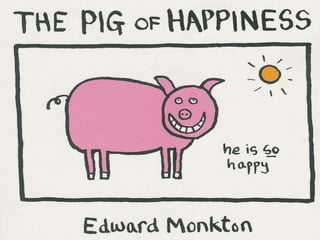
  • #17 The story of the Pig of Happiness has been scanned into a separate PPT. So, if it’s possible to create a link here that will start up another PPT (just put in a dummy PPT for now) to save me than having to come out of this PPT and going into another PPT, then that would be great.