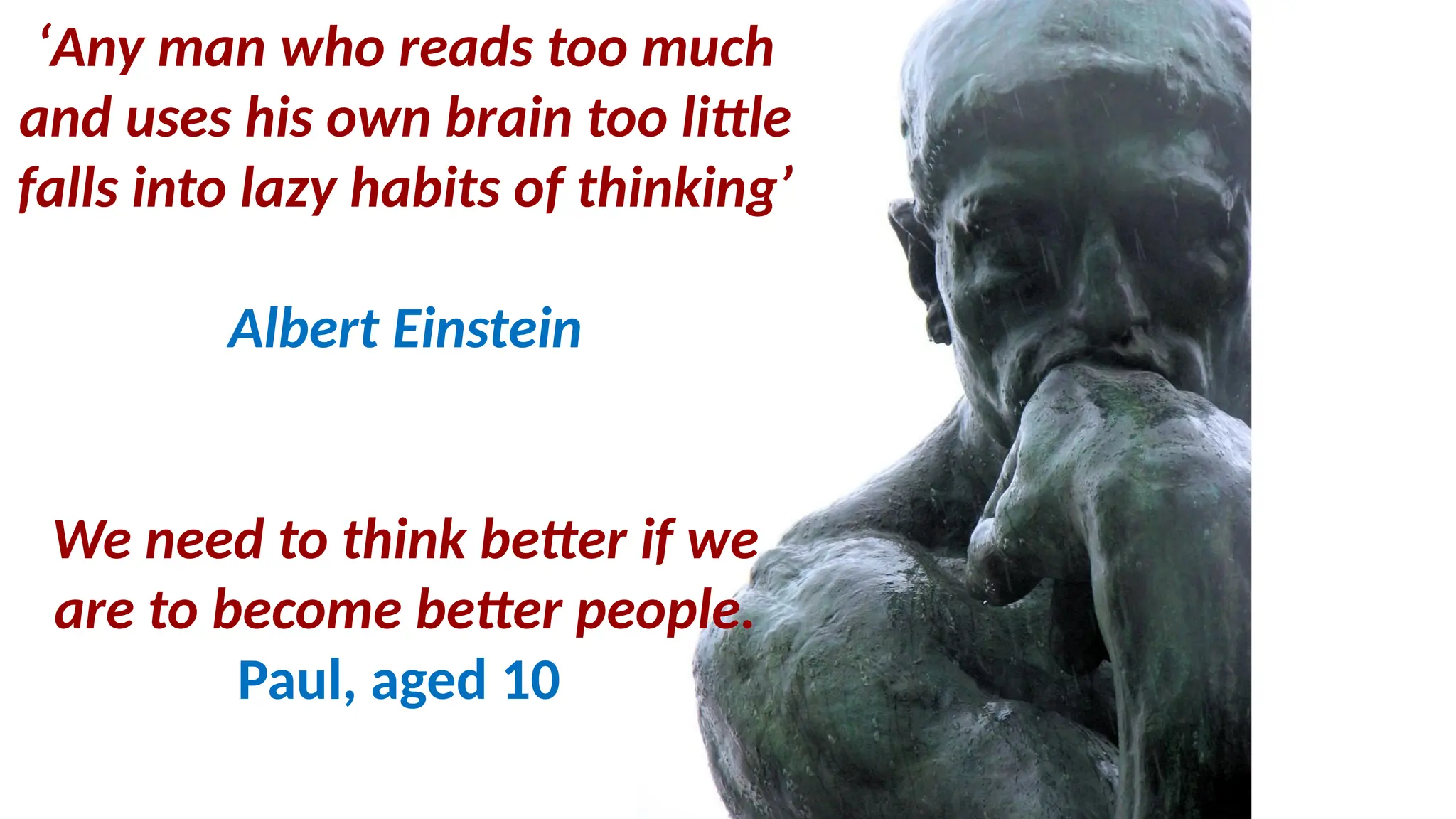
‘Any man who reads too much
and uses his own brain too little
falls into lazy habits of thinking’
Albert Einstein
We need to think better if we
are to become better people.
Paul, aged 10
THE NEW GERMAN COASTGUARD
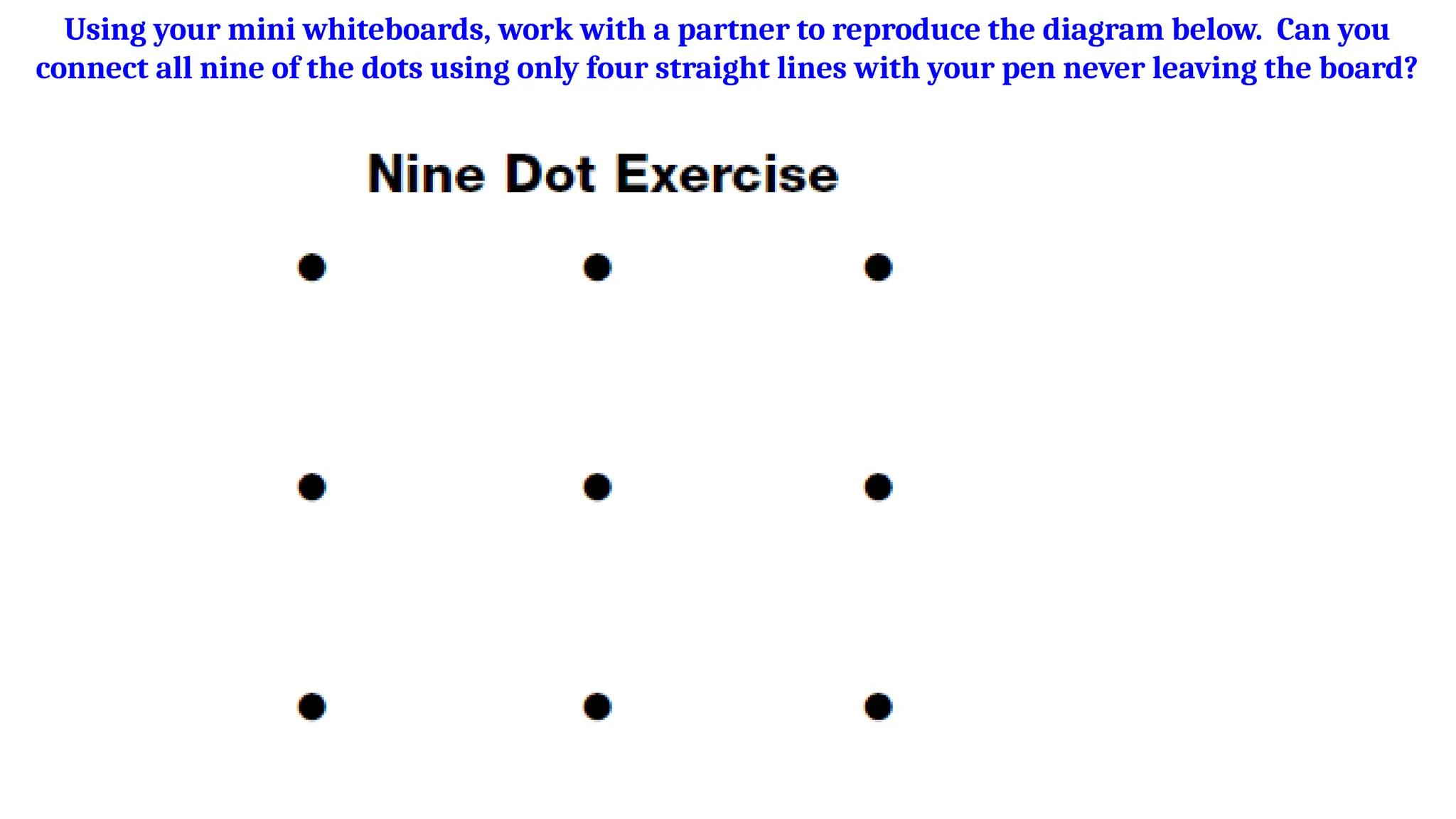
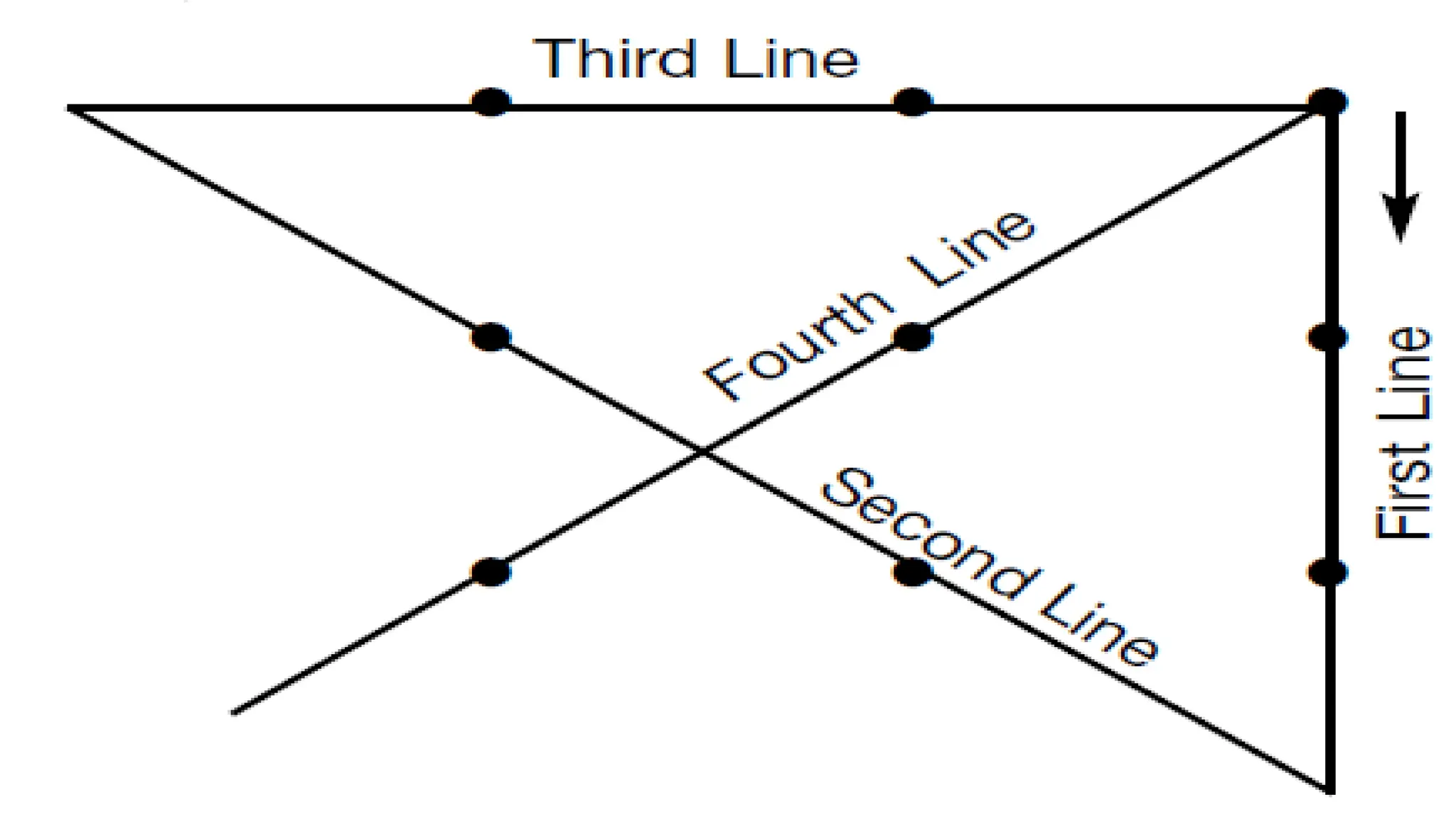
Using your mini whiteboards, work with a partner to reproduce the diagram below. Can you
connect all nine of the dots using only four straight lines with your pen never leaving the board?
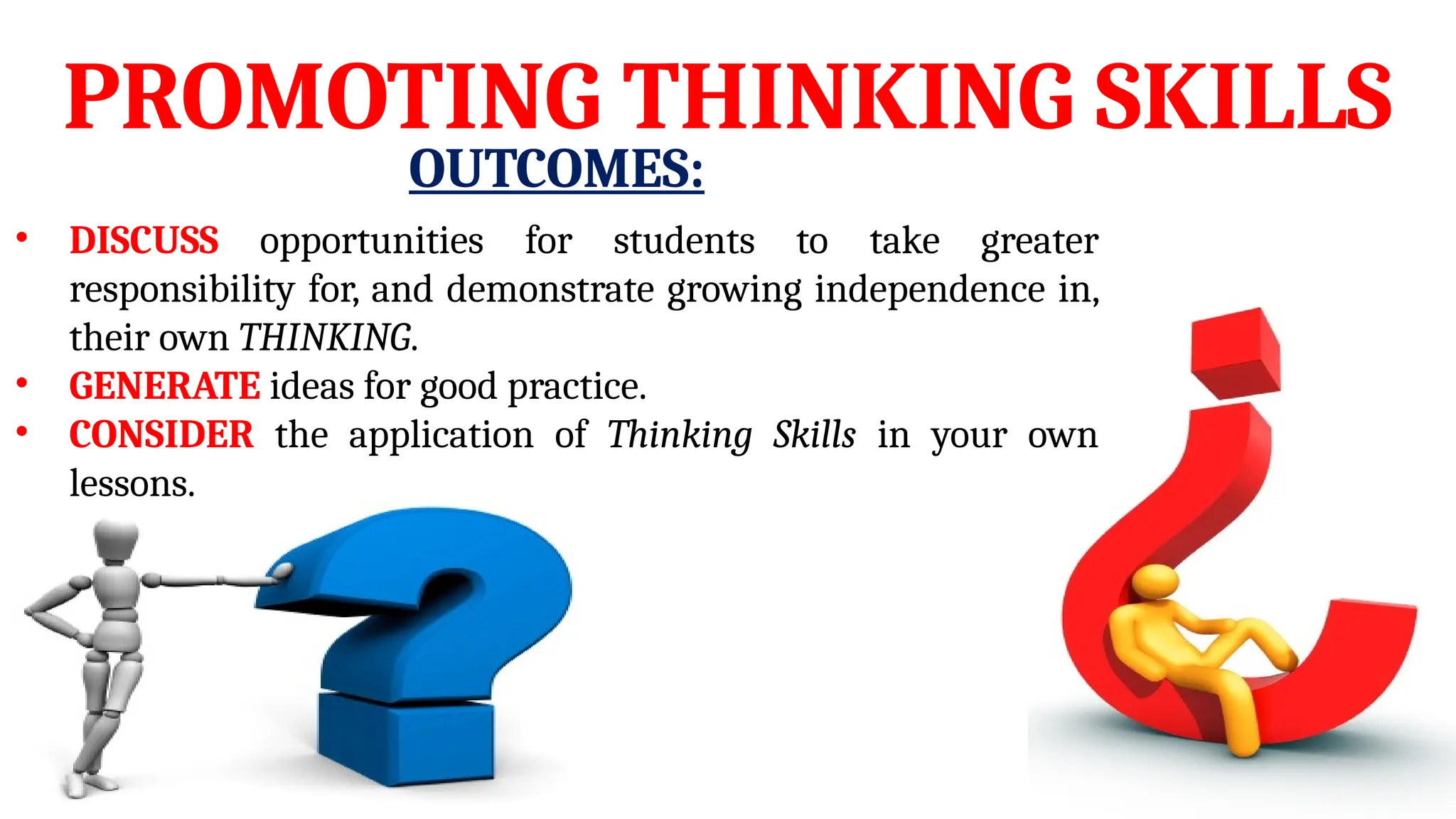
PROMOTING THINKING SKILLS
OUTCOMES:
• DISCUSS opportunities for students to take greater
responsibility for, and demonstrate growing independence in,
their own THINKING.
• GENERATE ideas for good practice.
• CONSIDER the application of Thinking Skills in your own
lessons.
WHAT ARE THINKING SKILLS?
Thinking Skills are the mental processes we use to do things like:
• solve problems
• make decisions
• ask questions
• make plans
• pass judgements
• organise information
• create new ideas.
Often we're not aware of our thinking - it happens automatically - but if we take time to
ponder what's going on then we can become more efficient and more creative with our
minds.
Thinking about thinking is called Metacognition
GET
THINKING!
Working with a partner,
record your answers on
your mini-whiteboards!
USE OF ANAGRAMS
TO GENERATE
THINKING &
DEVELOP SUBJECT
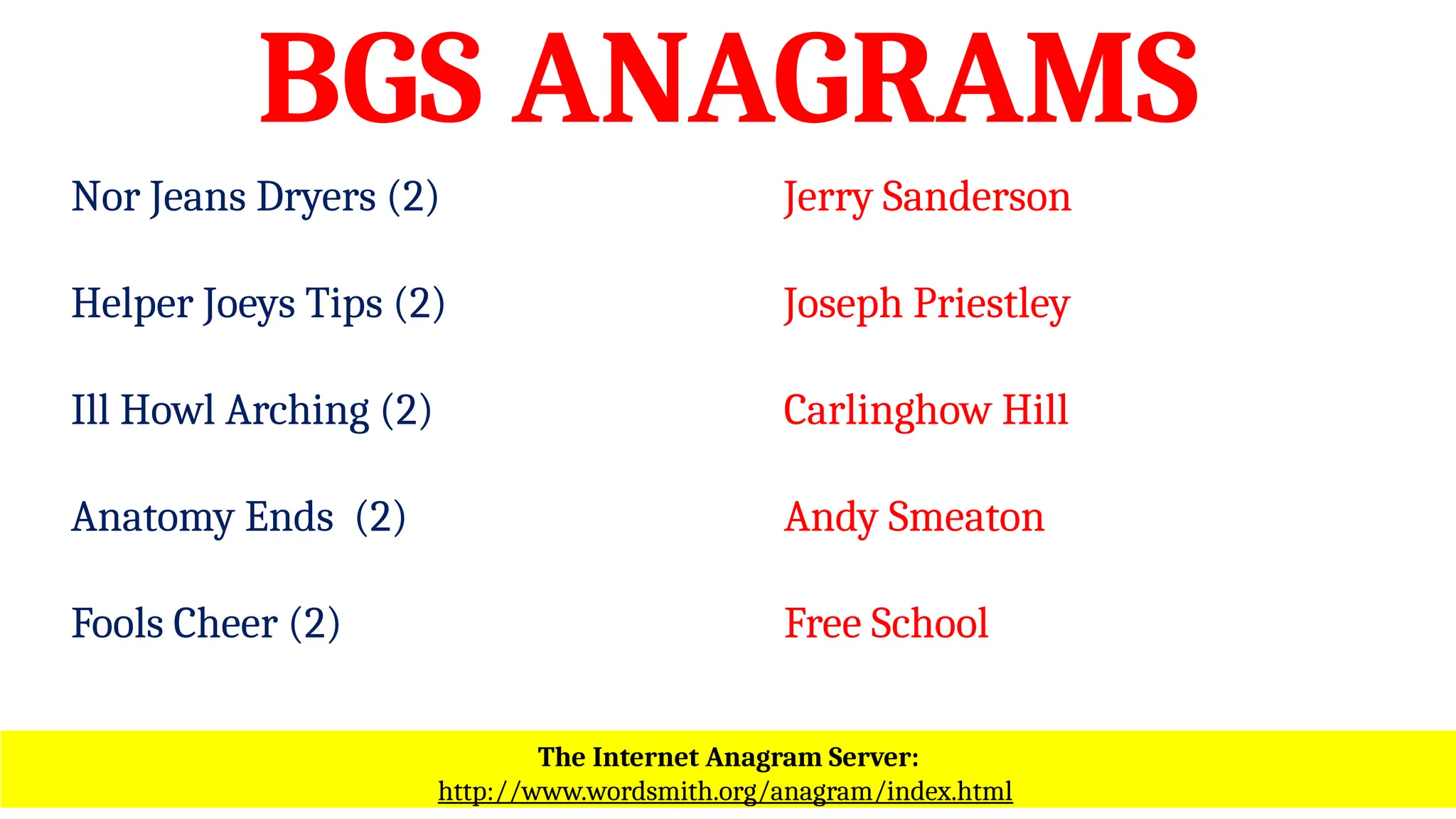
BGS ANAGRAMS
Nor Jeans Dryers (2)
Helper Joeys Tips (2)
Ill Howl Arching (2)
Anatomy Ends (2)
Fools Cheer (2)
The Internet Anagram Server:
http://www.wordsmith.org/anagram/index.html
Jerry Sanderson
Joseph Priestley
Carlinghow Hill
Andy Smeaton
Free School
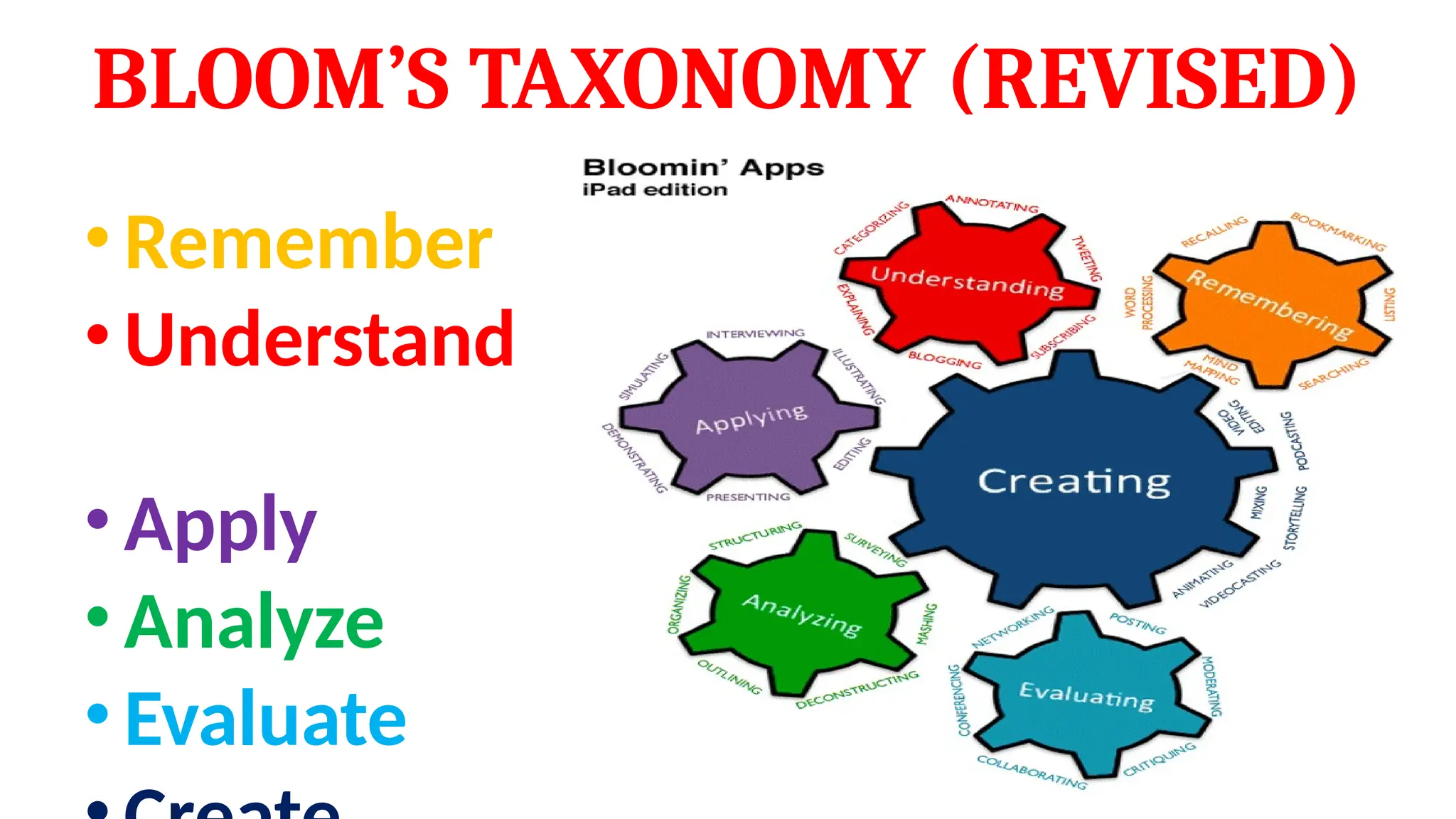
BLOOM’S TAXONOMY (REVISED)
• Remember
• Understand
• Apply
• Analyze
• Evaluate
USE OF
CLASSROOM
DISPLAY
Questions for a Thinking Classroom!
LATERAL
THINKING
STARTERS
• Can you guess the next letter in
this sequence?
WORD SCRAMBLE
Rearrange these words to make one word only:
NOW LO YONDER
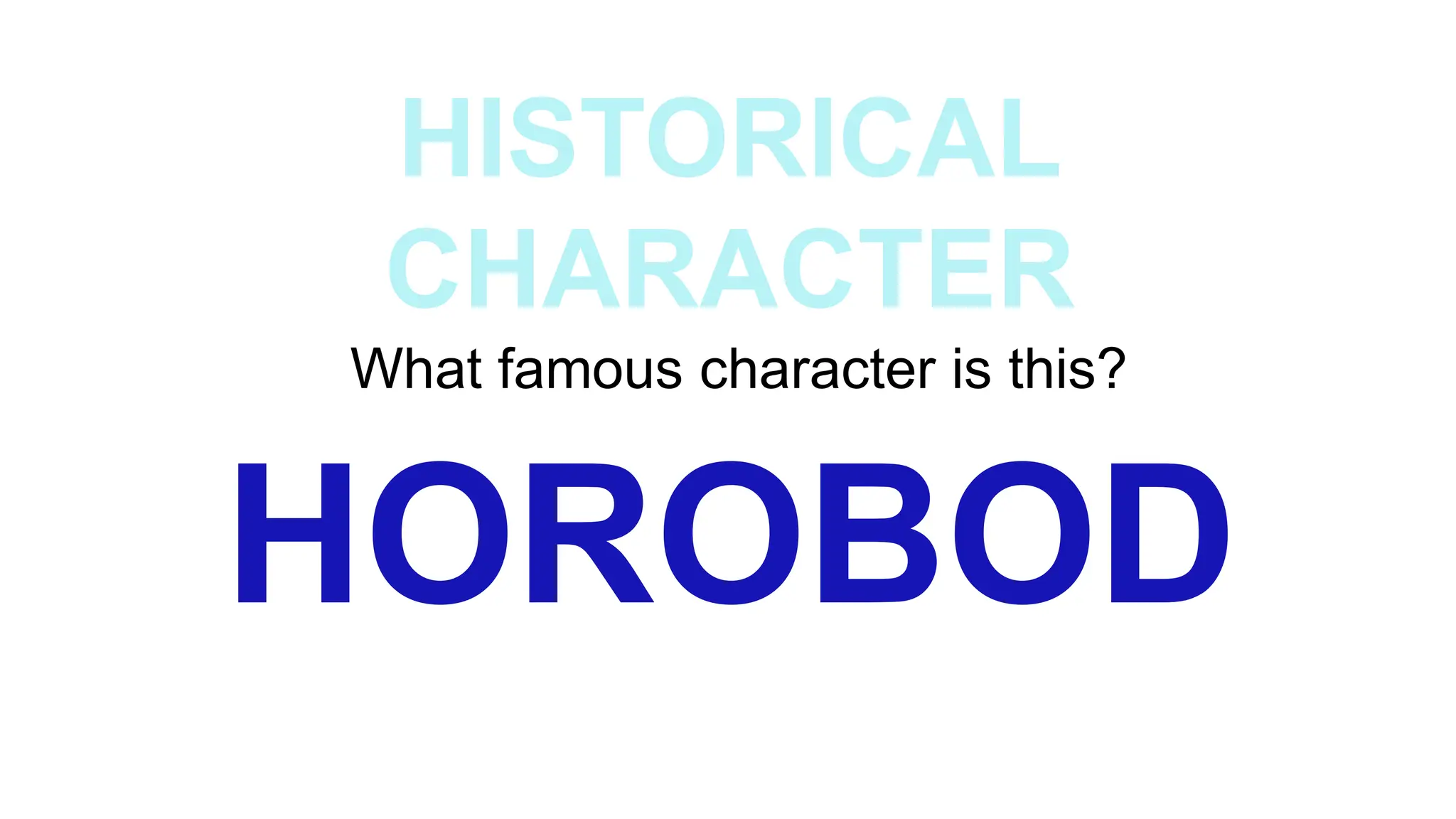
HISTORICAL
CHARACTER
What famous character is this?
HOROBOD
THUNKS OR
INSOLUBLE
PROBLEMS
Is war a good thing?
HISTORY
RS
PSHCE
When does loud start?
Is there more future or
more past?
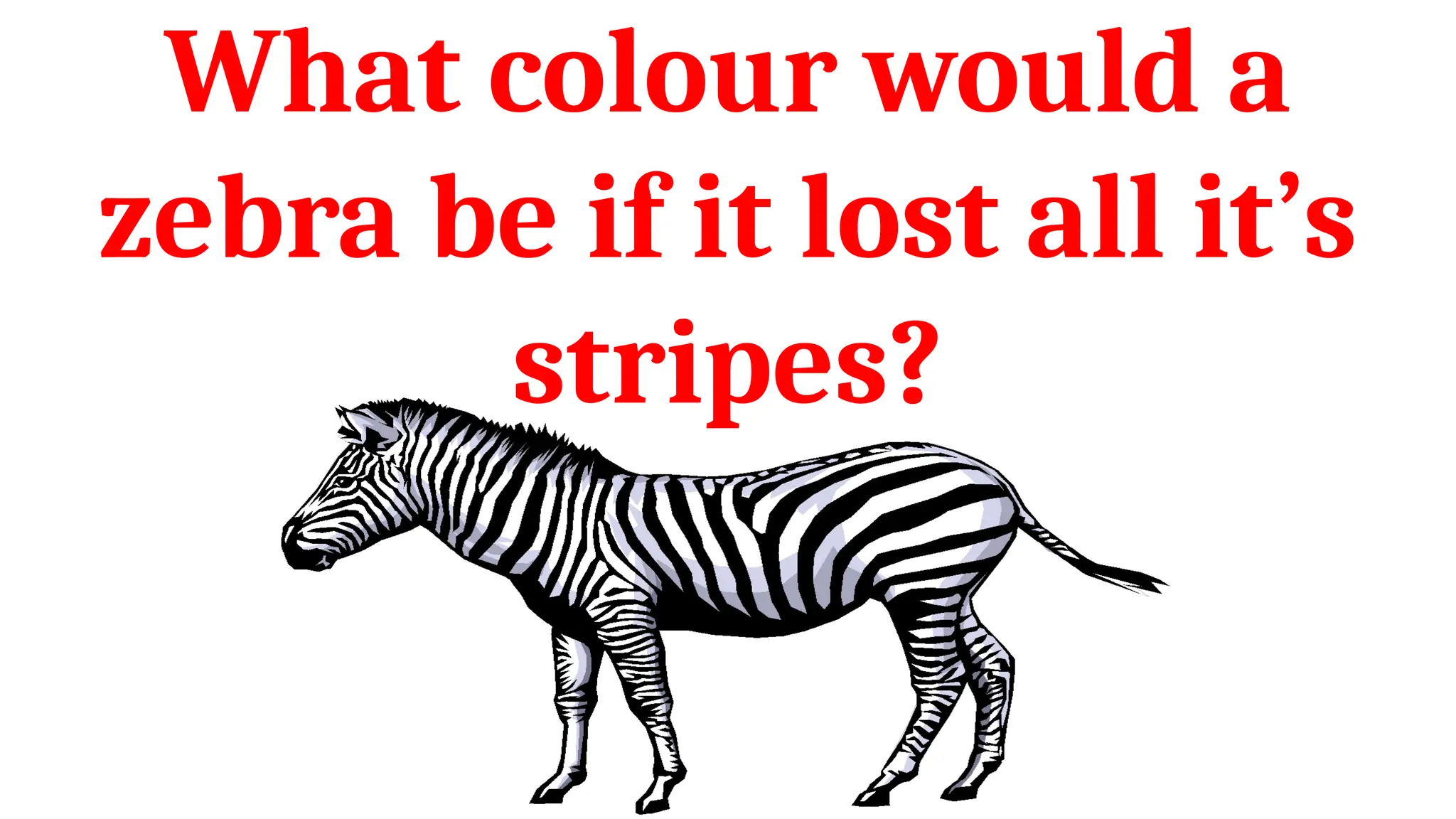
What colour would a
zebra be if it lost all it’s
stripes?
How many bricks is a
wall?
Does everything have a
taste?
OTHER THINKING
SKILLS
ACTIVITIES
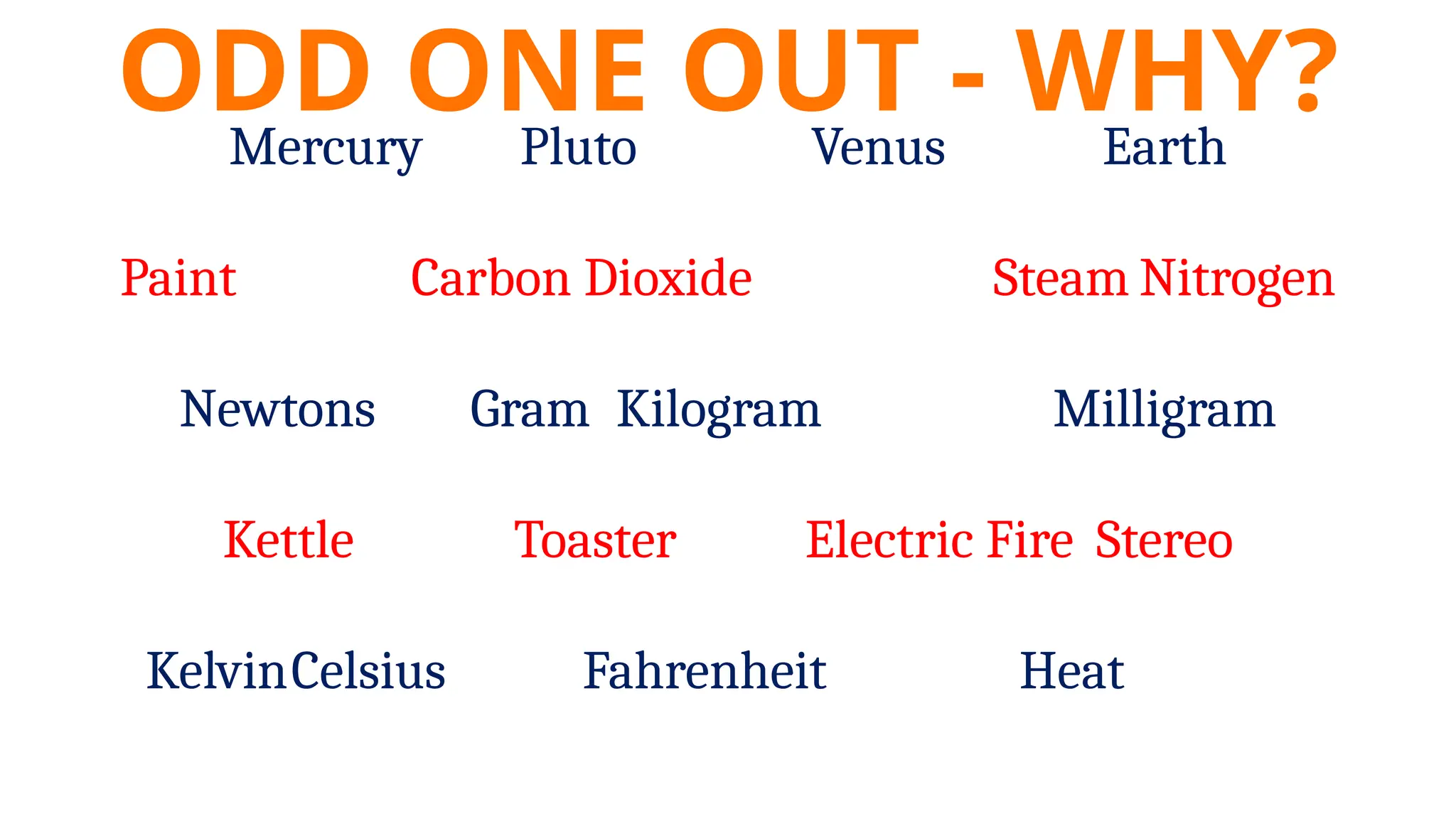
ODD ONE OUT - WHY?
Mercury Pluto Venus Earth
Paint Carbon Dioxide Steam Nitrogen
Newtons Gram Kilogram Milligram
Kettle Toaster Electric Fire Stereo
KelvinCelsius Fahrenheit Heat
PICTURES FROM
MEMORY
Number each person in your group
In number order, each member of your group
will have 30 seconds to come to the front to
look at a diagram…
Returning to the group, you will have 30
seconds to draw as much as you can
remember on the paper provided.
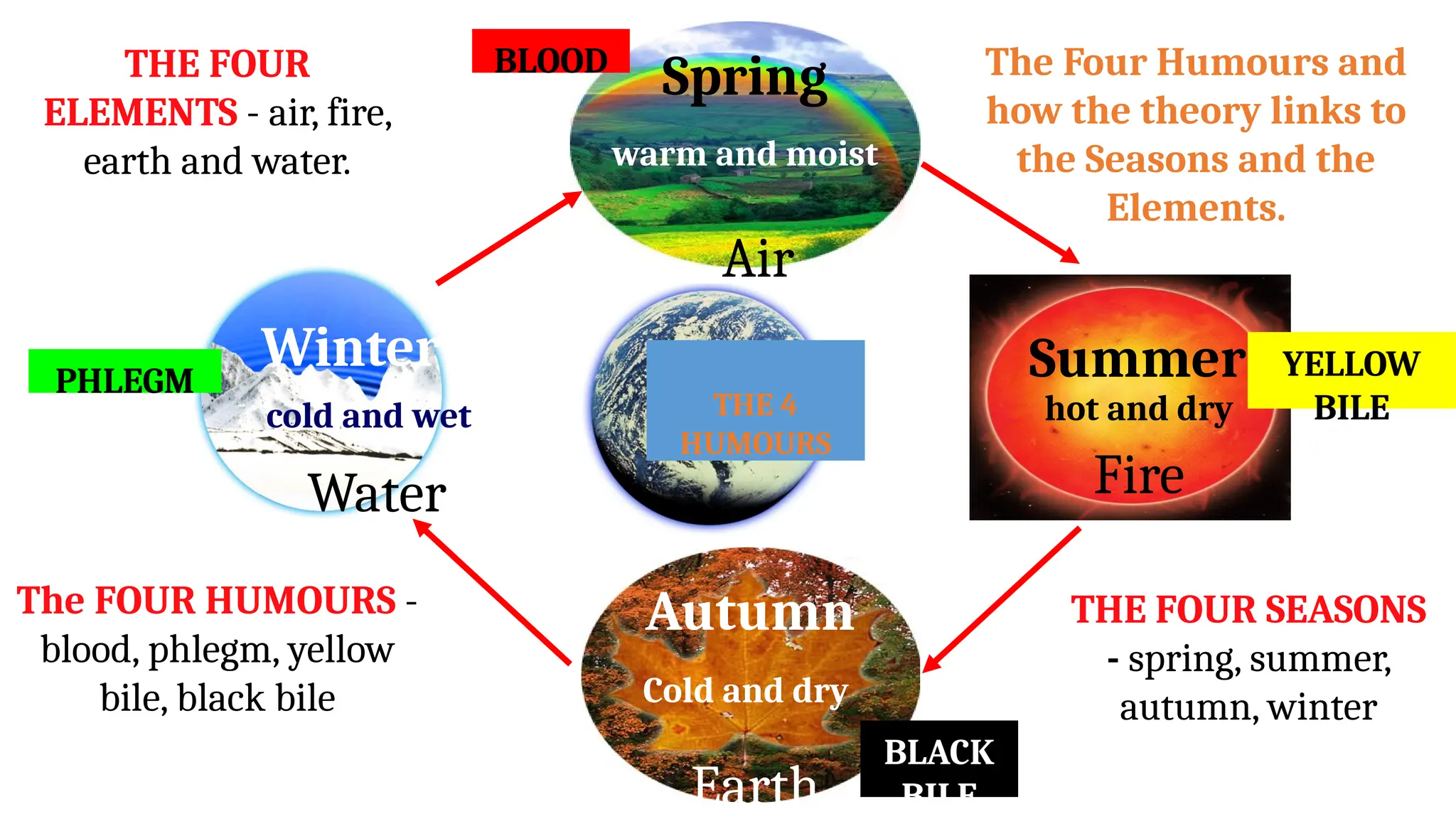
Q: WHAT CAN THE IMAGE TELL
US ABOUT GREEK IDEAS
ON THE CAUSES OF
ILLNESS?
Cold and dry
Autumn
Earth
hot and dry
Summer
Fire
THE FOUR
ELEMENTS - air, fire,
earth and water.
THE FOUR SEASONS
- spring, summer,
autumn, winter
The FOUR HUMOURS -
blood, phlegm, yellow
bile, black bile
warm and moist
Spring
Air
cold and wet
Winter
Water
THE 4
HUMOURS
YELLOW
BILE
PHLEGM
BLOOD
BLACK
BILE
The Four Humours and
how the theory links to
the Seasons and the
Elements.
USING THE
5Ws…
Ask some questions about
this picture using the
5Ws….
What do you want to know
about this?
Discuss with your partner
and be prepared to
share…
Describe what you can see?
What can you infer (guess) from the picture?
What does this not tell us?
What do you want to know about this?
Inference Square/Onion Layers
Use the 5Ws to write
down some questions
you would like
answering about this
picture…
Compare your ideas
with your partner…
Activity 1
What can I see? What does this tell me?
What can I NOT see? What does this NOT tell me?
What do I want to know? What QUESTIONS do I want to ask?
An alternative – an inference square...
Marion, Indiana, USA, 1930
Three young black men were held on charges of
killing a white man and raping his girlfriend.
Before they could be tried, the three were dragged
from jail and beaten. Two were hanged. This
event is notable as the last confirmed lynching of
Blacks in the northern US
Why has this happened?
Think/Pair/Share
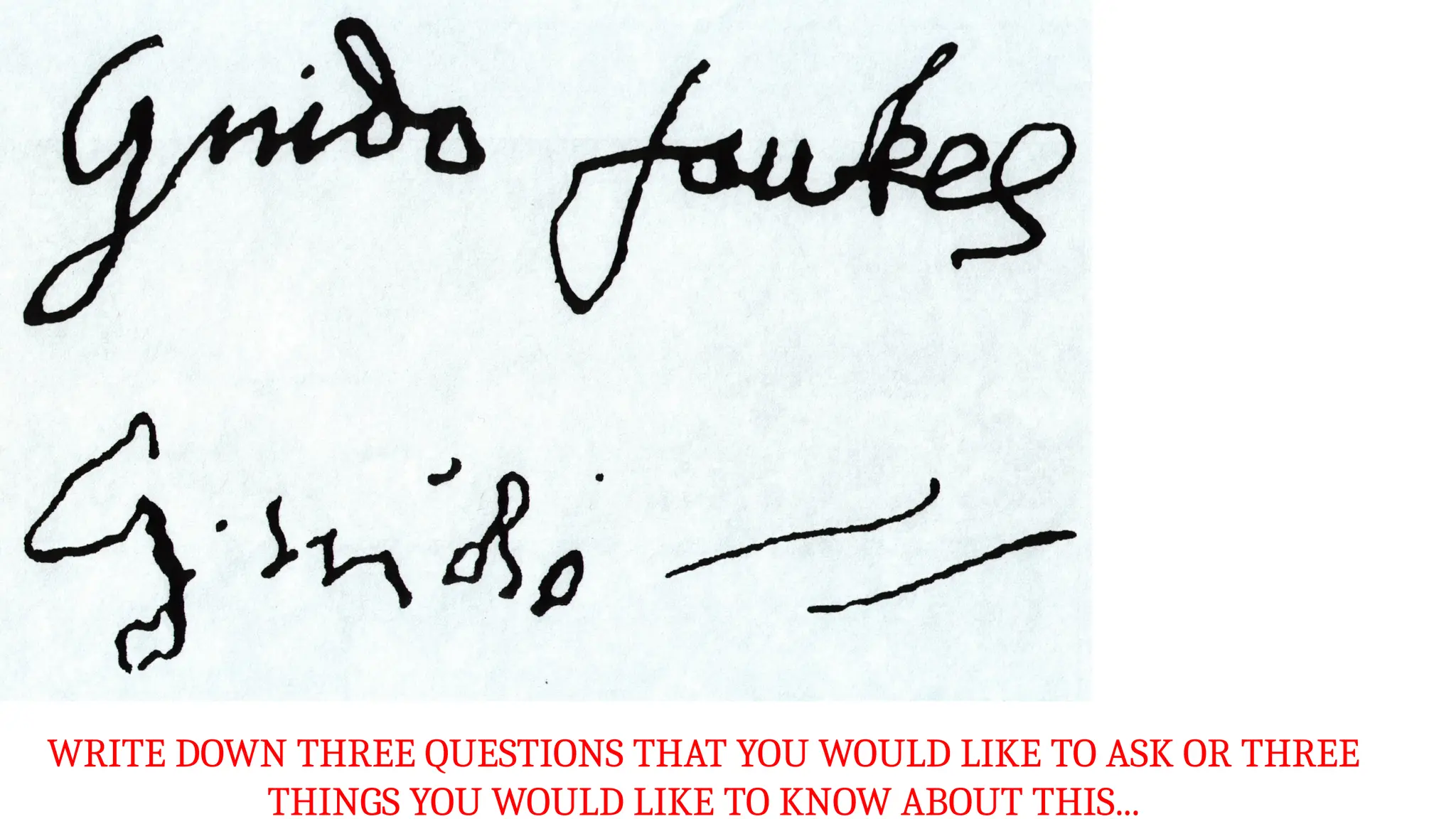
WRITE DOWN THREE QUESTIONS THAT YOU WOULD LIKE TO ASK OR THREE
THINGS YOU WOULD LIKE TO KNOW ABOUT THIS...
This starter will help you understand the themes in today’s lesson…
1. When a country is at war,
people who refuse to fight
are all cowards!
2. A person who refuses to
fight in a war can NEVER
show real bravery!
3. People who refuse to use
violence to sort out problems
are known as pacifists!
4. Until 1916 the British Army
relied on volunteers!
5. In 1916 all unmarried
single men between 18 and 41
were forced to join the army
Discuss these statements with a partner and then decide whether you think
each is true (T) or false (F). Explain your thinking and share with the
pair opposite you.
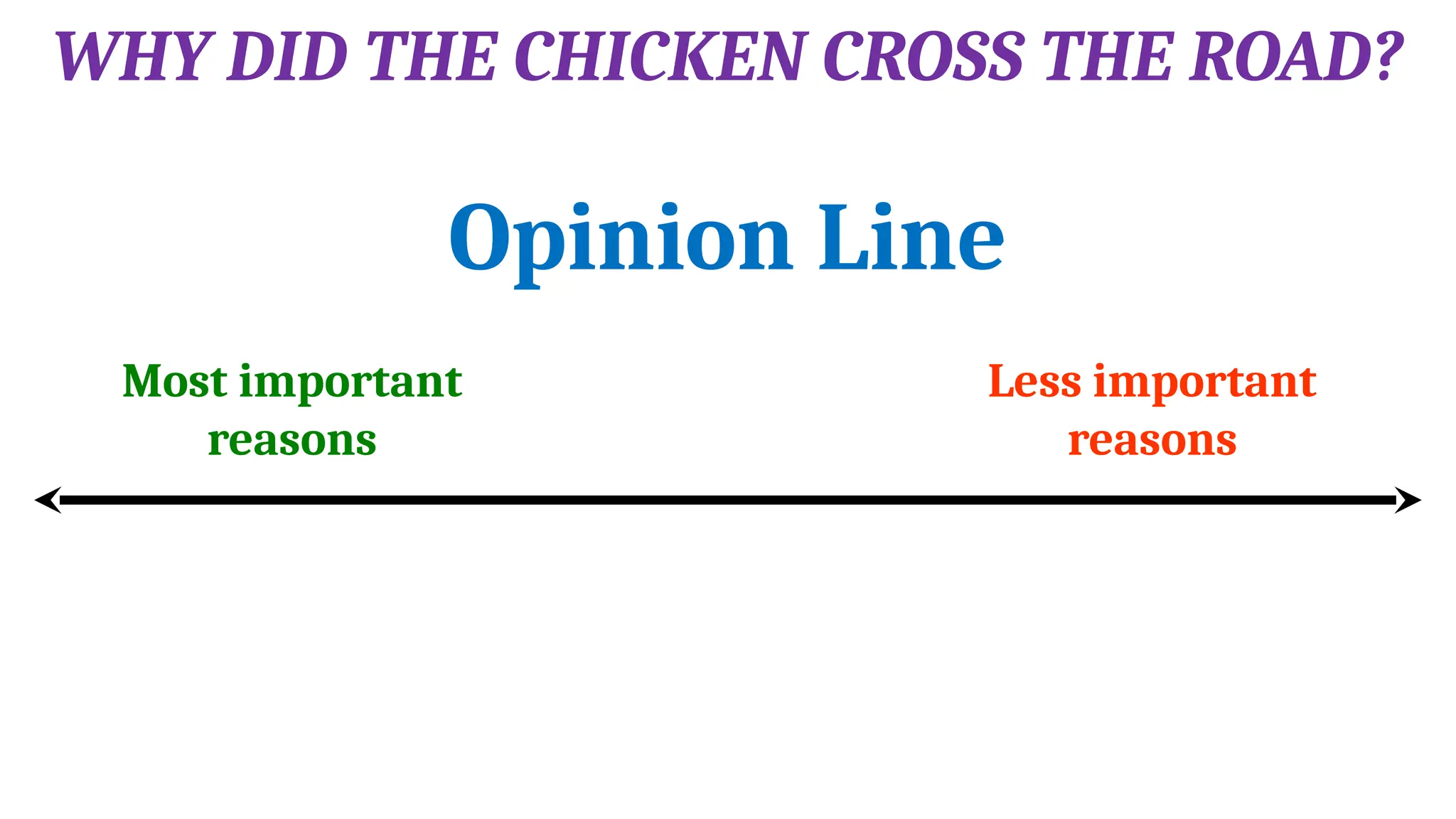
WHY DID THE CHICKEN CROSS THE ROAD?
Opinion Line
Less important
reasons
Most important
reasons
WOMEN IN TUDOR ENGLAND
WOMEN
LIVED HAPPY
AND
SATISFYING
LIVES
WOMEN
LIVED POOR
AND
MISERABLE
LIVES
Life for Black people in the
Americas IMPROVED after the
abolition of slavery…
DISAGREE
AGREE
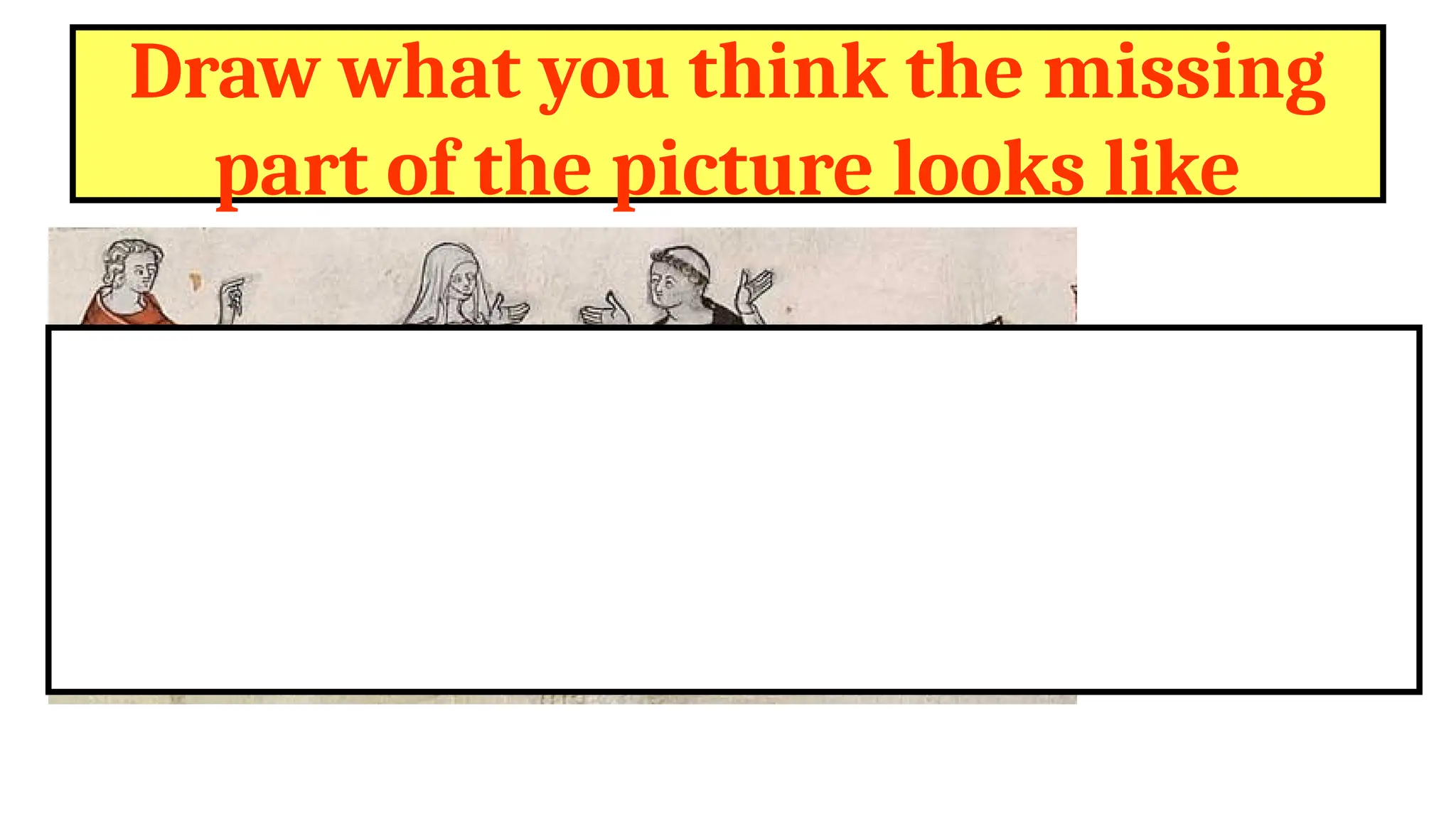
Draw what you think the missing
part of the picture looks like
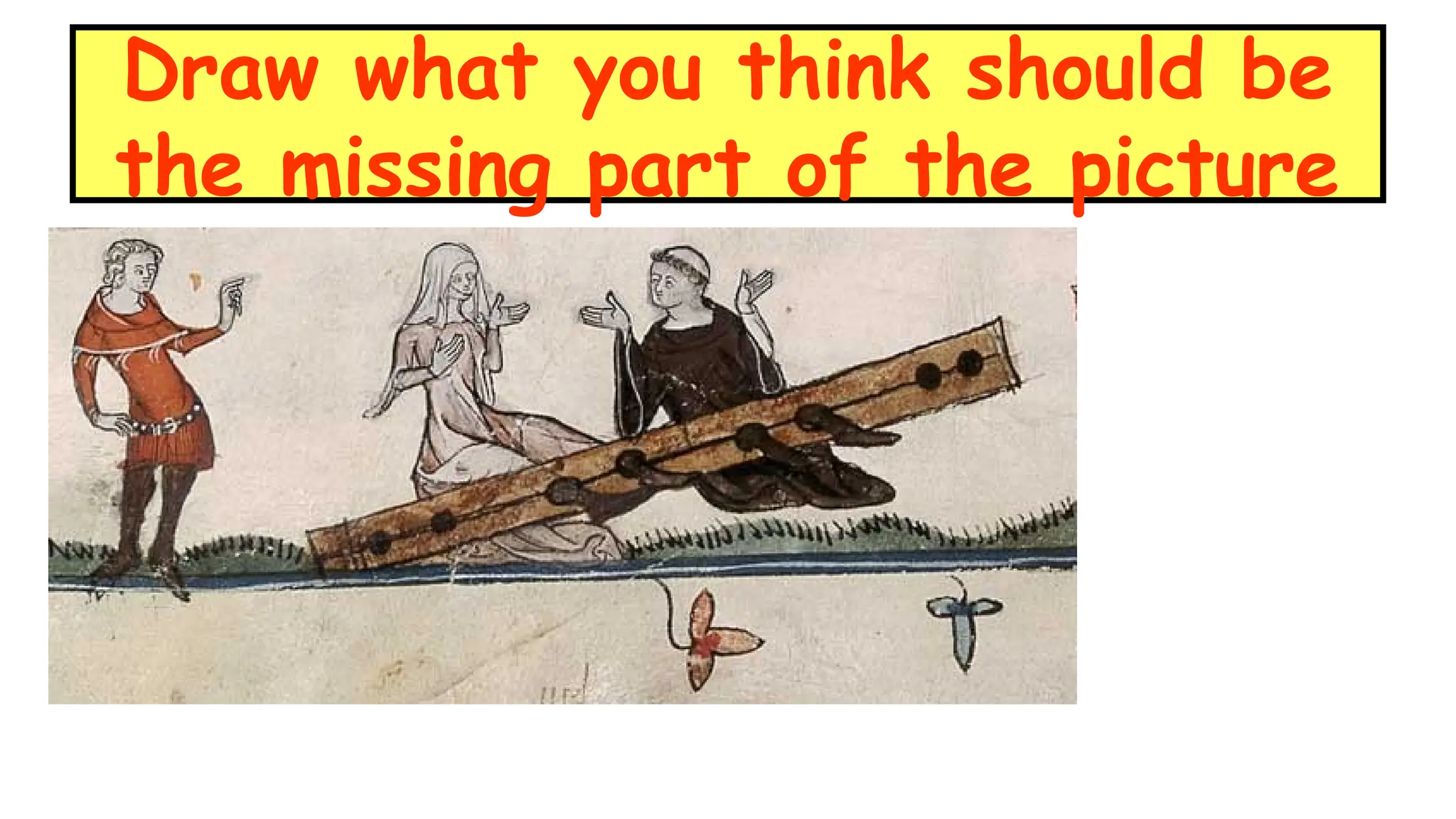
Draw what you think should be
the missing part of the picture
Ten Questions!
Your teacher will select one student and put a post-it
note with a keyword on their forehead.
They have ten questions to ask the class to which they
can only reply YES or NO!
6 DIFFERENT WAYS TO LOOK AT AN
ACTIVITY/TOPIC/ISSUE/PROBLEM…
www.edwarddebono.com
Find the fib
• Write two correct statements about
the lesson and one fib.
• Ask students to tell you which one is
the fib and explain their thinking.
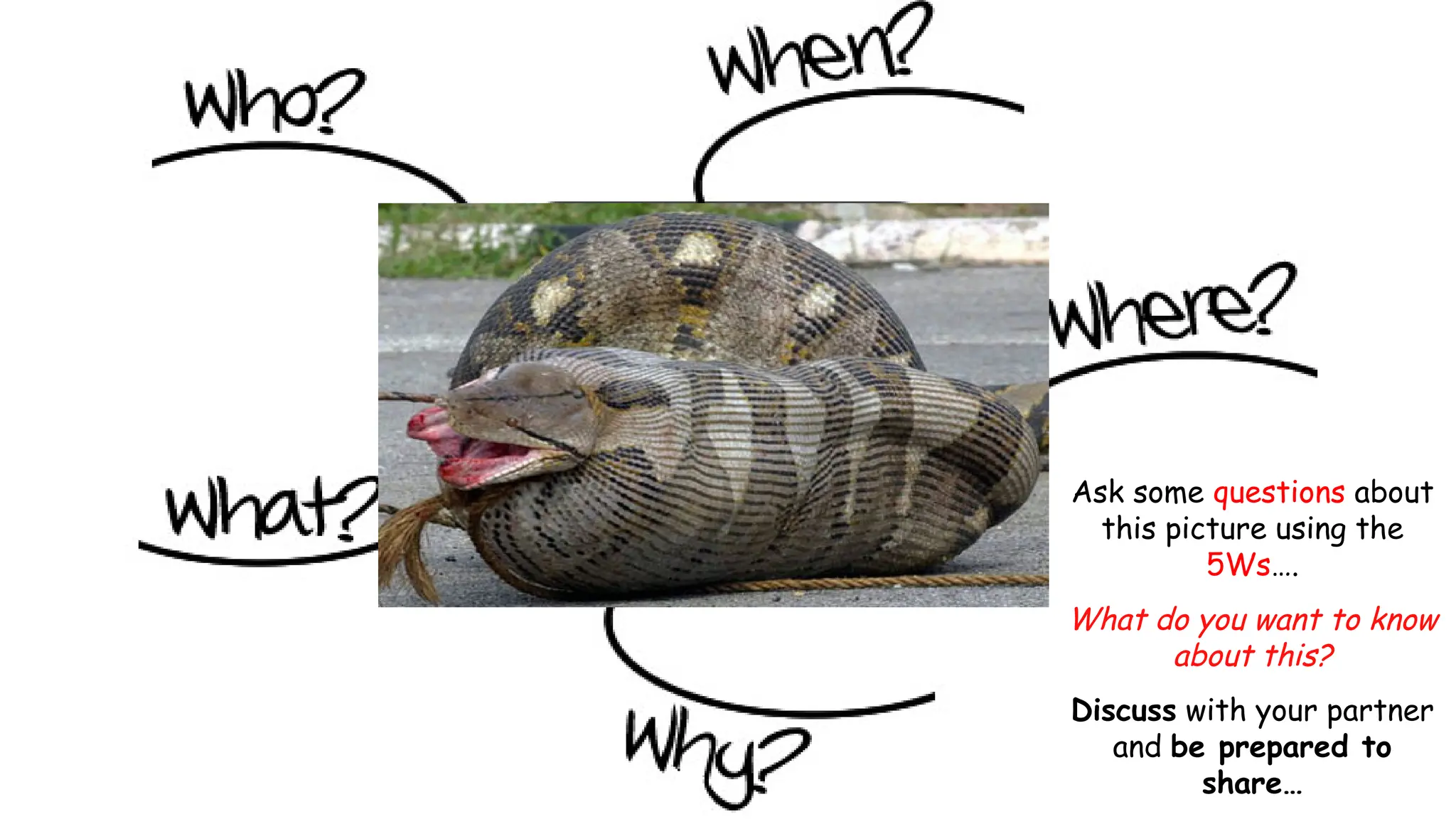
HEAD: something that
has made you think
BIN: something you
did not find interesting
BAG: something you
will remember and take
away
HEART: something that
you have felt
Bin
You will now see some answers to questions…
But what are their questions?
A HANDS-UP ONLY RULE APPLIES!
Here is an example…
• Who ruled England as a result of the Battle of Hastings?
• Which king introduced the Domesday Book, the Feudal System and
Motte and Bailey Castles to England?
• Which medieval king was known as ‘The Bastard’?
GIVE STUDENTS A LIST OF RANDOM WORDS:
E.G. BOX; COW; SUNSHINE; BEYOND; FENCE
And ask them to:
• Show how any or all of the words connect to one another.
• Explain how they may influence one another.
• Suggest how they might link to the learning.
• Create a story encompassing all the words.
• Mind-map the connotations of each word and then analyse
the links between them.
RANDOM WORDS
http://creativitygames.net/random-word-generator/randomwords/4
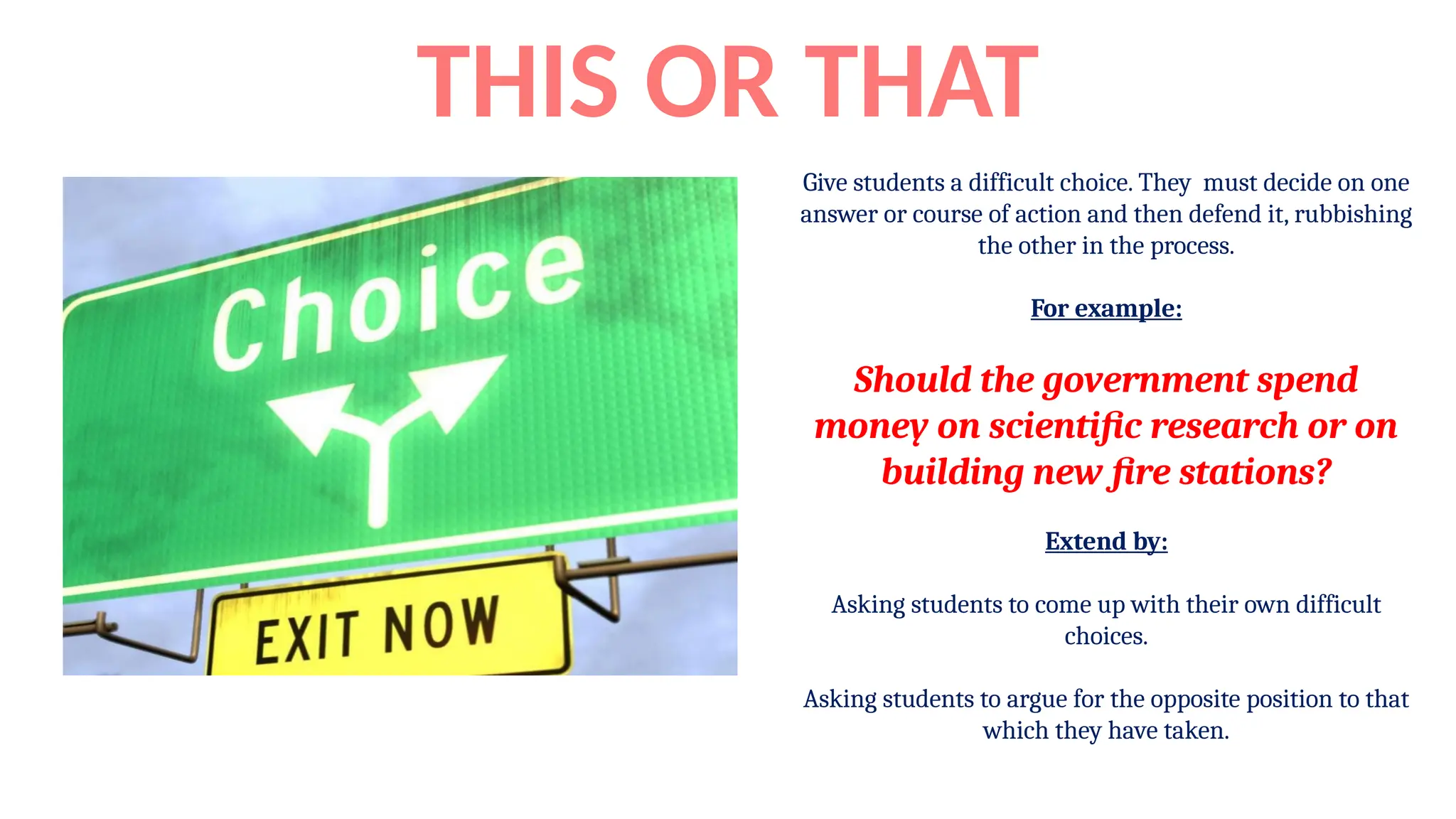
Give students a difficult choice. They must decide on one
answer or course of action and then defend it, rubbishing
the other in the process.
For example:
Should the government spend
money on scientific research or on
building new fire stations?
Extend by:
Asking students to come up with their own difficult
choices.
Asking students to argue for the opposite position to that
which they have taken.
THIS OR THAT
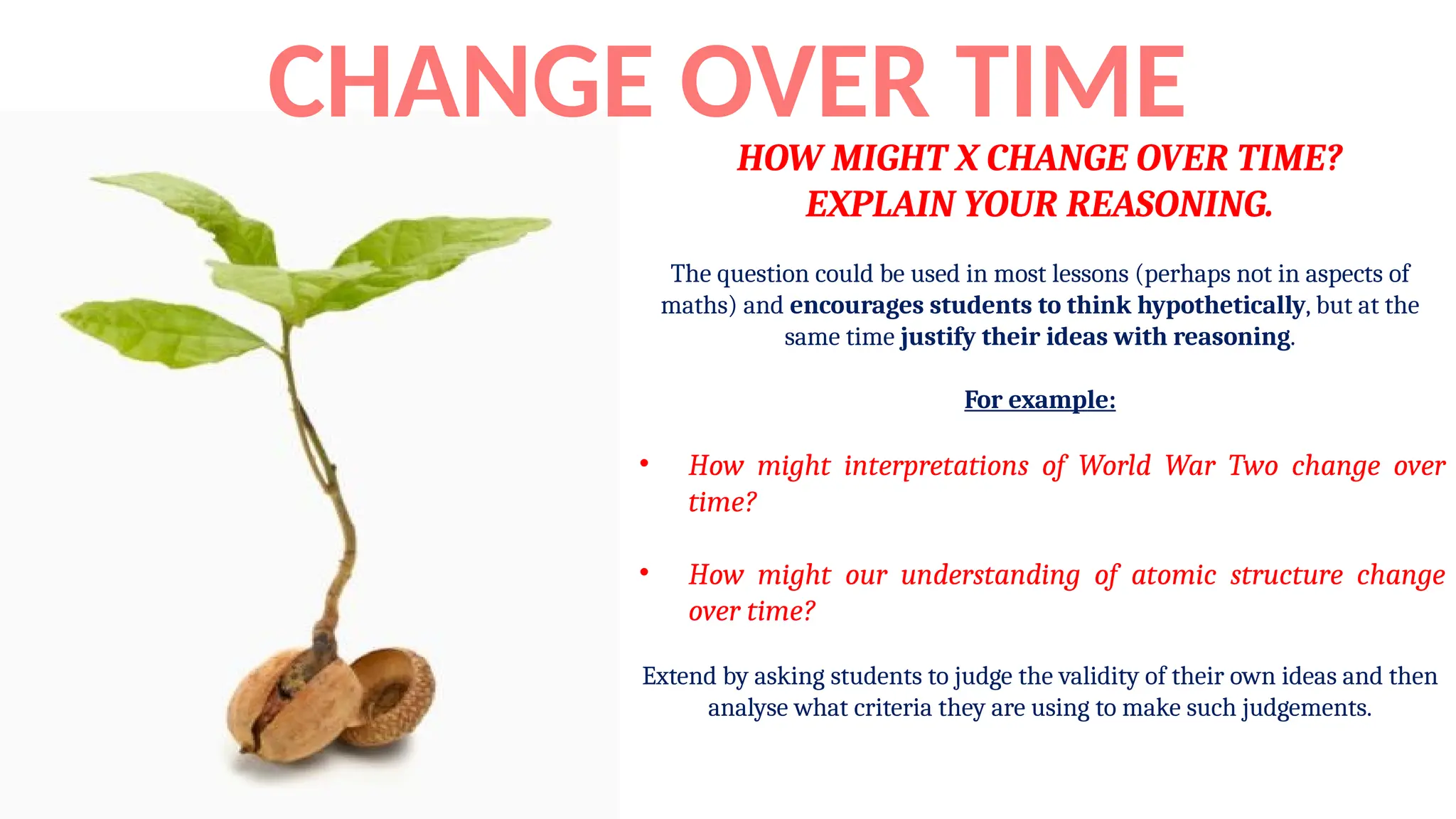
HOW MIGHT X CHANGE OVER TIME?
EXPLAIN YOUR REASONING.
The question could be used in most lessons (perhaps not in aspects of
maths) and encourages students to think hypothetically, but at the
same time justify their ideas with reasoning.
For example:
• How might interpretations of World War Two change over
time?
• How might our understanding of atomic structure change
over time?
Extend by asking students to judge the validity of their own ideas and then
analyse what criteria they are using to make such judgements.
CHANGE OVER TIME
Ask students to recommend
changes to something and explain
why they have made such
recommendations.
For example:
• How might you change the
interpretation of the causes of
World War One?
• How might you change the
structure of the textbook to make
it more user-friendly?
CHANGES
Making good decisions often requires careful
thought and consideration, weighing up of options
and an understanding of the motives of ourselves
and others.
Set students decisions which they have to make
and ask them to explain and/or justify the
reasoning behind what they have chosen.
For example:
• How should taxes be spent?
• What should we learn next lesson?
• Is it better to conduct field or laboratory
experiments in this topic?
DECISIONS
TASK: CREATING A THINKING CLASSROOM
WHAT DOES A THINKING CLASSROOM LOOK LIKE?
• Collect words to describe what a thinking classroom might
look like. These might include some reference to the teacher’s
behaviour, children’s behaviour, classroom environment or
kinds of activity that help children to think and learn well.
• Sort your ideas into small groups and give each group a
heading that you think appropriate.
• Lower-order/Closed questions:
• may simply call for a memorised fact, and
may often be answered by “Yes” or “No”
• Higher-order/Open questions:
• will invite the student to explore an idea
and give a more expansive answer, often
without “rightness” or “wrongness” being an
issue…
Lower/Higher – Closed/Open
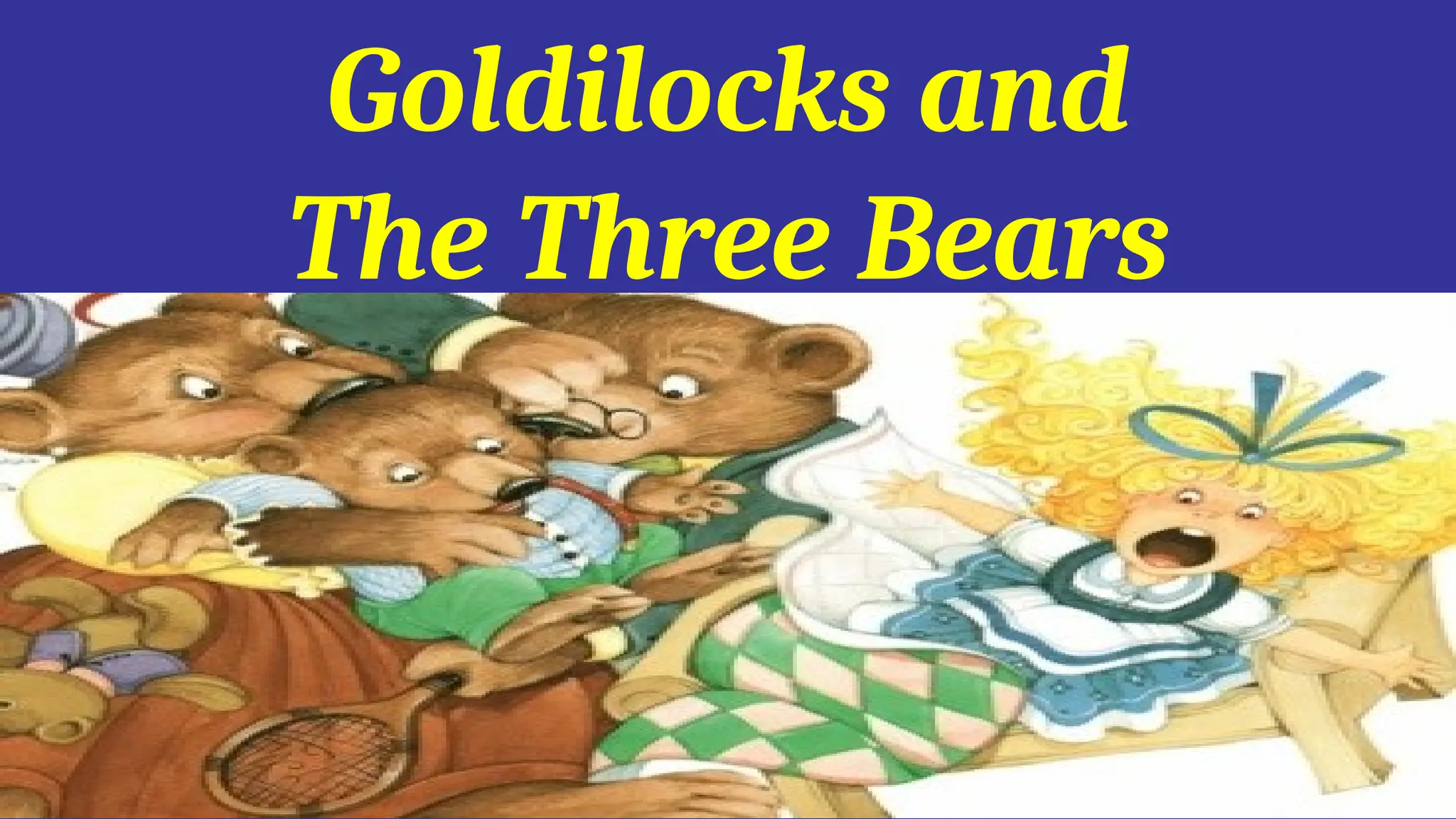
Goldilocks and
The Three Bears
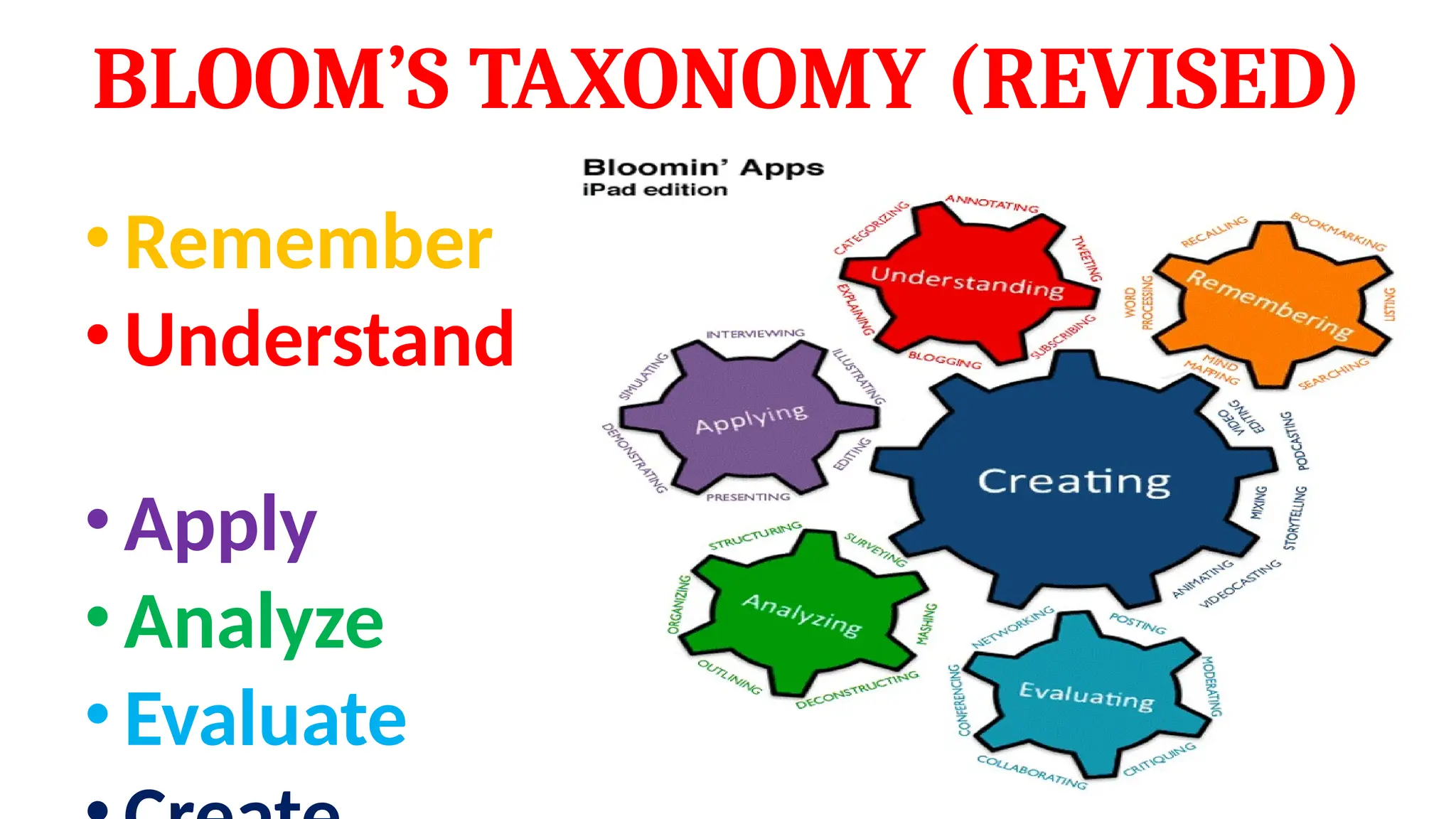
BLOOM’S TAXONOMY (REVISED)
• Remember
• Understand
• Apply
• Analyze
• Evaluate
Levels of Questions: Bloom’s Taxonomy
REMEMBER Recall of factual information
UNDERSTAND Showing understanding of the information
recalled
APPLY Consideration of practical relevance of
information
ANALYSE Ability to investigate elements of the information
EVALUATE Ability to make judgements about the nature of
information
CREATE Using information to move forward in a
creative way
• LOOK AT THE QUESTIONS BELOW AND DECIDE WHAT
CATEGORY OF BLOOM’S TAXONOMY THEY FIT INTO.
1. Why did Goldilocks like the little bear’s chair best?
2. What parts of the story need not have actually happened?
3. What are some of the things Goldilocks did in the bears’ house?
4. Do you think Goldilocks is good or bad? Why do you think so?
5. If Goldilocks had come into your house, what are some of the things she
might have used?
6. What might have happened if Goldilocks had just gone straight to bed?
TASK: QUESTIONS FOR THINKING
• Choose a story, poem, text or topic that you
would like to use with students as a stimulus
for their thinking.
• Using Bloom’s Taxonomy create a series of
questions to think about and discuss after you
have shared the stimulus with them.
TASK: IDENTIFYING THINKING SKILLS
• Identify in a lesson plan, or observation of a classroom
lesson, the thinking skills that are being developed as
general learning objectives.
• Look for evidence that the children are engaged in
information processing, reasoning, enquiry, creative
thinking and evaluation.
• A proforma could be used for recording the evidence, such
as the one provided…
IDENTIFYING THINKING SKILLS
What thinking skills are being used or developed in this lesson? Identify examples of:
• Information processing
– Finding relevant information
– Organising information
– Representing or communicating information
• Reasoning
– Giving reasons
– Making inferences or deductions
– Arguing or explaining a point of view
• Enquiry
– Asking questions
– Planning research or study
– Engaging in enquiry or process of finding out
• Creative thinking
– Generating ideas
– Imagining or hypothesising
– Designing innovative solutions
• Evaluation
– Developing evaluation criteria
– Applying evaluation criteria
– Judging the value of information and ideas

Thinking Skills INSET CPD Training Session for Staff

  • 1.
    ‘Any man whoreads too much and uses his own brain too little falls into lazy habits of thinking’ Albert Einstein We need to think better if we are to become better people. Paul, aged 10
  • 2.
    THE NEW GERMANCOASTGUARD
  • 3.
    Using your miniwhiteboards, work with a partner to reproduce the diagram below. Can you connect all nine of the dots using only four straight lines with your pen never leaving the board?
  • 5.
    PROMOTING THINKING SKILLS OUTCOMES: •DISCUSS opportunities for students to take greater responsibility for, and demonstrate growing independence in, their own THINKING. • GENERATE ideas for good practice. • CONSIDER the application of Thinking Skills in your own lessons.
  • 6.
    WHAT ARE THINKINGSKILLS? Thinking Skills are the mental processes we use to do things like: • solve problems • make decisions • ask questions • make plans • pass judgements • organise information • create new ideas. Often we're not aware of our thinking - it happens automatically - but if we take time to ponder what's going on then we can become more efficient and more creative with our minds. Thinking about thinking is called Metacognition
  • 7.
    GET THINKING! Working with apartner, record your answers on your mini-whiteboards!
  • 8.
    USE OF ANAGRAMS TOGENERATE THINKING & DEVELOP SUBJECT
  • 9.
    BGS ANAGRAMS Nor JeansDryers (2) Helper Joeys Tips (2) Ill Howl Arching (2) Anatomy Ends (2) Fools Cheer (2) The Internet Anagram Server: http://www.wordsmith.org/anagram/index.html Jerry Sanderson Joseph Priestley Carlinghow Hill Andy Smeaton Free School
  • 10.
    BLOOM’S TAXONOMY (REVISED) •Remember • Understand • Apply • Analyze • Evaluate
  • 12.
  • 14.
    Questions for aThinking Classroom!
  • 17.
  • 18.
    • Can youguess the next letter in this sequence?
  • 19.
    WORD SCRAMBLE Rearrange thesewords to make one word only: NOW LO YONDER
  • 20.
  • 21.
  • 22.
    Is war agood thing? HISTORY RS PSHCE
  • 23.
  • 24.
    Is there morefuture or more past?
  • 25.
    What colour woulda zebra be if it lost all it’s stripes?
  • 26.
    How many bricksis a wall?
  • 27.
  • 28.
  • 29.
    ODD ONE OUT- WHY? Mercury Pluto Venus Earth Paint Carbon Dioxide Steam Nitrogen Newtons Gram Kilogram Milligram Kettle Toaster Electric Fire Stereo KelvinCelsius Fahrenheit Heat
  • 30.
    PICTURES FROM MEMORY Number eachperson in your group In number order, each member of your group will have 30 seconds to come to the front to look at a diagram… Returning to the group, you will have 30 seconds to draw as much as you can remember on the paper provided. Q: WHAT CAN THE IMAGE TELL US ABOUT GREEK IDEAS ON THE CAUSES OF ILLNESS?
  • 31.
    Cold and dry Autumn Earth hotand dry Summer Fire THE FOUR ELEMENTS - air, fire, earth and water. THE FOUR SEASONS - spring, summer, autumn, winter The FOUR HUMOURS - blood, phlegm, yellow bile, black bile warm and moist Spring Air cold and wet Winter Water THE 4 HUMOURS YELLOW BILE PHLEGM BLOOD BLACK BILE The Four Humours and how the theory links to the Seasons and the Elements.
  • 34.
  • 35.
    Ask some questionsabout this picture using the 5Ws…. What do you want to know about this? Discuss with your partner and be prepared to share…
  • 36.
    Describe what youcan see? What can you infer (guess) from the picture? What does this not tell us? What do you want to know about this? Inference Square/Onion Layers
  • 38.
    Use the 5Wsto write down some questions you would like answering about this picture… Compare your ideas with your partner… Activity 1
  • 39.
    What can Isee? What does this tell me? What can I NOT see? What does this NOT tell me? What do I want to know? What QUESTIONS do I want to ask? An alternative – an inference square...
  • 40.
    Marion, Indiana, USA,1930 Three young black men were held on charges of killing a white man and raping his girlfriend. Before they could be tried, the three were dragged from jail and beaten. Two were hanged. This event is notable as the last confirmed lynching of Blacks in the northern US Why has this happened? Think/Pair/Share
  • 41.
    WRITE DOWN THREEQUESTIONS THAT YOU WOULD LIKE TO ASK OR THREE THINGS YOU WOULD LIKE TO KNOW ABOUT THIS...
  • 42.
    This starter willhelp you understand the themes in today’s lesson… 1. When a country is at war, people who refuse to fight are all cowards! 2. A person who refuses to fight in a war can NEVER show real bravery! 3. People who refuse to use violence to sort out problems are known as pacifists! 4. Until 1916 the British Army relied on volunteers! 5. In 1916 all unmarried single men between 18 and 41 were forced to join the army Discuss these statements with a partner and then decide whether you think each is true (T) or false (F). Explain your thinking and share with the pair opposite you.
  • 43.
    WHY DID THECHICKEN CROSS THE ROAD? Opinion Line Less important reasons Most important reasons
  • 44.
    WOMEN IN TUDORENGLAND WOMEN LIVED HAPPY AND SATISFYING LIVES WOMEN LIVED POOR AND MISERABLE LIVES
  • 45.
    Life for Blackpeople in the Americas IMPROVED after the abolition of slavery… DISAGREE AGREE
  • 46.
    Draw what youthink the missing part of the picture looks like
  • 47.
    Draw what youthink should be the missing part of the picture
  • 48.
    Ten Questions! Your teacherwill select one student and put a post-it note with a keyword on their forehead. They have ten questions to ask the class to which they can only reply YES or NO!
  • 49.
    6 DIFFERENT WAYSTO LOOK AT AN ACTIVITY/TOPIC/ISSUE/PROBLEM… www.edwarddebono.com
  • 51.
    Find the fib •Write two correct statements about the lesson and one fib. • Ask students to tell you which one is the fib and explain their thinking.
  • 52.
    HEAD: something that hasmade you think BIN: something you did not find interesting BAG: something you will remember and take away HEART: something that you have felt Bin
  • 53.
    You will nowsee some answers to questions… But what are their questions? A HANDS-UP ONLY RULE APPLIES! Here is an example… • Who ruled England as a result of the Battle of Hastings? • Which king introduced the Domesday Book, the Feudal System and Motte and Bailey Castles to England? • Which medieval king was known as ‘The Bastard’?
  • 64.
    GIVE STUDENTS ALIST OF RANDOM WORDS: E.G. BOX; COW; SUNSHINE; BEYOND; FENCE And ask them to: • Show how any or all of the words connect to one another. • Explain how they may influence one another. • Suggest how they might link to the learning. • Create a story encompassing all the words. • Mind-map the connotations of each word and then analyse the links between them. RANDOM WORDS http://creativitygames.net/random-word-generator/randomwords/4
  • 65.
    Give students adifficult choice. They must decide on one answer or course of action and then defend it, rubbishing the other in the process. For example: Should the government spend money on scientific research or on building new fire stations? Extend by: Asking students to come up with their own difficult choices. Asking students to argue for the opposite position to that which they have taken. THIS OR THAT
  • 66.
    HOW MIGHT XCHANGE OVER TIME? EXPLAIN YOUR REASONING. The question could be used in most lessons (perhaps not in aspects of maths) and encourages students to think hypothetically, but at the same time justify their ideas with reasoning. For example: • How might interpretations of World War Two change over time? • How might our understanding of atomic structure change over time? Extend by asking students to judge the validity of their own ideas and then analyse what criteria they are using to make such judgements. CHANGE OVER TIME
  • 67.
    Ask students torecommend changes to something and explain why they have made such recommendations. For example: • How might you change the interpretation of the causes of World War One? • How might you change the structure of the textbook to make it more user-friendly? CHANGES
  • 68.
    Making good decisionsoften requires careful thought and consideration, weighing up of options and an understanding of the motives of ourselves and others. Set students decisions which they have to make and ask them to explain and/or justify the reasoning behind what they have chosen. For example: • How should taxes be spent? • What should we learn next lesson? • Is it better to conduct field or laboratory experiments in this topic? DECISIONS
  • 71.
    TASK: CREATING ATHINKING CLASSROOM WHAT DOES A THINKING CLASSROOM LOOK LIKE? • Collect words to describe what a thinking classroom might look like. These might include some reference to the teacher’s behaviour, children’s behaviour, classroom environment or kinds of activity that help children to think and learn well. • Sort your ideas into small groups and give each group a heading that you think appropriate.
  • 72.
    • Lower-order/Closed questions: •may simply call for a memorised fact, and may often be answered by “Yes” or “No” • Higher-order/Open questions: • will invite the student to explore an idea and give a more expansive answer, often without “rightness” or “wrongness” being an issue… Lower/Higher – Closed/Open
  • 73.
  • 74.
    BLOOM’S TAXONOMY (REVISED) •Remember • Understand • Apply • Analyze • Evaluate
  • 75.
    Levels of Questions:Bloom’s Taxonomy REMEMBER Recall of factual information UNDERSTAND Showing understanding of the information recalled APPLY Consideration of practical relevance of information ANALYSE Ability to investigate elements of the information EVALUATE Ability to make judgements about the nature of information CREATE Using information to move forward in a creative way
  • 76.
    • LOOK ATTHE QUESTIONS BELOW AND DECIDE WHAT CATEGORY OF BLOOM’S TAXONOMY THEY FIT INTO. 1. Why did Goldilocks like the little bear’s chair best? 2. What parts of the story need not have actually happened? 3. What are some of the things Goldilocks did in the bears’ house? 4. Do you think Goldilocks is good or bad? Why do you think so? 5. If Goldilocks had come into your house, what are some of the things she might have used? 6. What might have happened if Goldilocks had just gone straight to bed?
  • 77.
    TASK: QUESTIONS FORTHINKING • Choose a story, poem, text or topic that you would like to use with students as a stimulus for their thinking. • Using Bloom’s Taxonomy create a series of questions to think about and discuss after you have shared the stimulus with them.
  • 78.
    TASK: IDENTIFYING THINKINGSKILLS • Identify in a lesson plan, or observation of a classroom lesson, the thinking skills that are being developed as general learning objectives. • Look for evidence that the children are engaged in information processing, reasoning, enquiry, creative thinking and evaluation. • A proforma could be used for recording the evidence, such as the one provided…
  • 79.
    IDENTIFYING THINKING SKILLS Whatthinking skills are being used or developed in this lesson? Identify examples of: • Information processing – Finding relevant information – Organising information – Representing or communicating information • Reasoning – Giving reasons – Making inferences or deductions – Arguing or explaining a point of view • Enquiry – Asking questions – Planning research or study – Engaging in enquiry or process of finding out • Creative thinking – Generating ideas – Imagining or hypothesising – Designing innovative solutions • Evaluation – Developing evaluation criteria – Applying evaluation criteria – Judging the value of information and ideas

Editor's Notes

  • #8 Answer: Robin Hood – Rob ‘in’ Hood If you can’t read, you won’t be able to read this notice either. There are no letter ‘E’s. Neither hit the ground - the plane was over the sea! The woman was doing a bungee jump. They all have a mouth. The man was a lighthouse keeper. By turning off all the lights, he had turned off the beacon light at the top of the lighthouse. Unable to see the rocky shore, a ship had run aground and six sailors had to swim to safety. Silence The man left his house just before the clocks were set back for daylight saving in Autumn. His wife set the clock to show the correct time. The letter ‘Y’ Mrs Simpson – three bags filled with shopping and heavier than four empty bags.
  • #12 Answer: Robin Hood – Rob ‘in’ Hood If you can’t read, you won’t be able to read this notice either. There are no letter ‘E’s. Neither hit the ground - the plane was over the sea! The woman was doing a bungee jump. They all have a mouth. The man was a lighthouse keeper. By turning off all the lights, he had turned off the beacon light at the top of the lighthouse. Unable to see the rocky shore, a ship had run aground and six sailors had to swim to safety. Silence The man left his house just before the clocks were set back for daylight saving in Autumn. His wife set the clock to show the correct time. The letter ‘Y’ Mrs Simpson – three bags filled with shopping and heavier than four empty bags.
  • #17 Answer: Robin Hood – Rob ‘in’ Hood If you can’t read, you won’t be able to read this notice either. There are no letter ‘E’s. Neither hit the ground - the plane was over the sea! The woman was doing a bungee jump. They all have a mouth. The man was a lighthouse keeper. By turning off all the lights, he had turned off the beacon light at the top of the lighthouse. Unable to see the rocky shore, a ship had run aground and six sailors had to swim to safety. Silence The man left his house just before the clocks were set back for daylight saving in Autumn. His wife set the clock to show the correct time. The letter ‘Y’ Mrs Simpson – three bags filled with shopping and heavier than four empty bags.
  • #18 Answer: S – the letters are the first letter of each word in the question.
  • #19 Answer: The letters can be arranged to spell ‘ONE WORD ONLY’. 0 – Anything multiplied by 0 = 0! They are X-rays. No coin would be marked ‘George I’. At the time this king was alive, it would not be known that there would be a George II, therefore, the coin would simply be marked ‘George’. Charlie is Mr Hopkins’ dog. Neither hit the ground - the plane was over the sea! The woman was doing a bungee jump. They all have a mouth. The man was a lighthouse keeper. By turning off all the lights, he had turned off the beacon light at the top of the lighthouse. Unable to see the rocky shore, a ship had run aground and six sailors had to swim to safety. Silence The man left his house just before the clocks were set back for daylight saving in Autumn. His wife set the clock to show the correct time. The letter ‘Y’ Mrs Simpson – three bags filled with shopping and heavier than four empty bags.
  • #20 Answer: Robin Hood – Rob ‘in’ Hood If you can’t read, you won’t be able to read this notice either. There are no letter ‘E’s. Neither hit the ground - the plane was over the sea! The woman was doing a bungee jump. They all have a mouth. The man was a lighthouse keeper. By turning off all the lights, he had turned off the beacon light at the top of the lighthouse. Unable to see the rocky shore, a ship had run aground and six sailors had to swim to safety. Silence The man left his house just before the clocks were set back for daylight saving in Autumn. His wife set the clock to show the correct time. The letter ‘Y’ Mrs Simpson – three bags filled with shopping and heavier than four empty bags.
  • #21 Answer: Robin Hood – Rob ‘in’ Hood If you can’t read, you won’t be able to read this notice either. There are no letter ‘E’s. Neither hit the ground - the plane was over the sea! The woman was doing a bungee jump. They all have a mouth. The man was a lighthouse keeper. By turning off all the lights, he had turned off the beacon light at the top of the lighthouse. Unable to see the rocky shore, a ship had run aground and six sailors had to swim to safety. Silence The man left his house just before the clocks were set back for daylight saving in Autumn. His wife set the clock to show the correct time. The letter ‘Y’ Mrs Simpson – three bags filled with shopping and heavier than four empty bags.
  • #28 Answer: Robin Hood – Rob ‘in’ Hood If you can’t read, you won’t be able to read this notice either. There are no letter ‘E’s. Neither hit the ground - the plane was over the sea! The woman was doing a bungee jump. They all have a mouth. The man was a lighthouse keeper. By turning off all the lights, he had turned off the beacon light at the top of the lighthouse. Unable to see the rocky shore, a ship had run aground and six sailors had to swim to safety. Silence The man left his house just before the clocks were set back for daylight saving in Autumn. His wife set the clock to show the correct time. The letter ‘Y’ Mrs Simpson – three bags filled with shopping and heavier than four empty bags.