By,
Akhil Raj P
BIMS
CHANGANACHERY
 Working Capital is that part of the capital which is
needed for meeting day to day requirement of the
business concern. For example, payment to creditors,
salary paid to workers, purchase of raw materials etc
 It can be easily converted into cash. Hence, it is also
known as short-term capital.
 According to the definition of Shubin, “Working Capital is
the amount of funds necessary to cover the cost of operating
the enterprises”.
 According to the definition of Genestenberg, “Circulating
capital means current assets of a company that are changed in
the ordinary course of business from one form to another, for
example, from cash to inventories, inventories to receivables,
receivables to cash”.
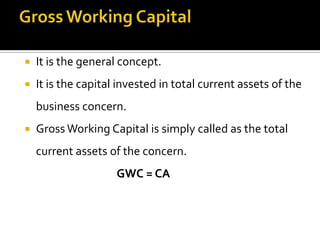
 GrossWorking Capital
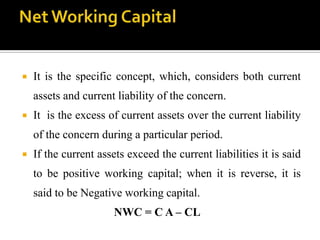
 NetWorking Capital
 It is the general concept.
 It is the capital invested in total current assets of the
business concern.
 Gross Working Capital is simply called as the total
current assets of the concern.
GWC = CA
 It is the specific concept, which, considers both current
assets and current liability of the concern.
 It is the excess of current assets over the current liability
of the concern during a particular period.
 If the current assets exceed the current liabilities it is said
to be positive working capital; when it is reverse, it is
said to be Negative working capital.
NWC = C A – CL
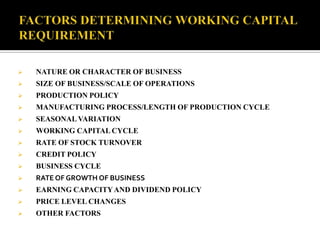
 NATURE OR CHARACTER OF BUSINESS
 SIZE OF BUSINESS/SCALE OF OPERATIONS
 PRODUCTION POLICY
 MANUFACTURING PROCESS/LENGTH OF PRODUCTION CYCLE
 SEASONAL VARIATION
 WORKING CAPITAL CYCLE
 RATE OF STOCK TURNOVER
 CREDIT POLICY
 BUSINESS CYCLE
 RATE OF GROWTH OF BUSINESS
 EARNING CAPACITYAND DIVIDEND POLICY
 PRICE LEVEL CHANGES
 OTHER FACTORS
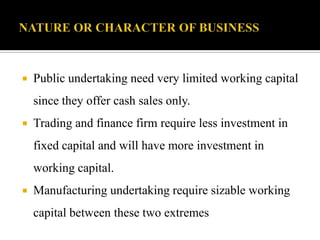
 Public undertaking need very limited working capital
since they offer cash sales only.
 Trading and finance firm require less investment in
fixed capital and will have more investment in
working capital.
 Manufacturing undertaking require sizable working
capital between these two extremes
 Working capital requirement is directly influenced by
size of business.
 Greater the size larger will be the requirement of working
capital.
 In some cases even small concern may need more
working capital due to high overhead charges, inefficient
use of available resources and other economic
disadvantage of small size.
 The production could be kept either steady by
accumulating inventories during slack periods with a
view to meet high demand during the peak season.
 The production could be curtailed during the slack season
and increase during the peak season.
 If the policy is to keep production steady by
accumulating inventories it will require higher working
capital.
 In manufacturing business the requirements of
working capital increase in direct proportion to
length of manufacturing process.
 The raw materials and other supplies have to be
carried for a longer period.
 In certain industries raw material is not available
throughout the year.
 The raw materials is bought in bulk.
 Huge amount is blocked in the form of material
inventories during such seasons demanding more
working capital requirement.
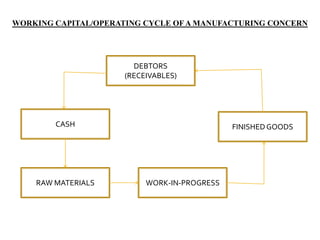
 In manufacturing firm working capital cycle starts with the
purchase of raw material and ends with the realisation of
cash from the sale of finished products.
 The speed with which the working capital complete one
cycle determines the requirement of working capital.
 Longer the period of the cycle larger the requirement of
working capital.
WORK-IN-PROGRESS
DEBTORS
(RECEIVABLES)
FINISHEDGOODSCASH
RAW MATERIALS
WORKING CAPITAL/OPERATING CYCLE OF A MANUFACTURING CONCERN
 There is a high degree of inverse co-relationship
between the quantum of working capital and the
velocity with which the sale is effected.
 Firm with high stock turnover will need lower
working capital compared to a firm having low rate
of turnover.
 Credit policy of a concern means how firm deal with
their debtors and creditors.
 Concern purchase on credit and sells its products/service
on cash require less working capital.
 If the concern buy its requirements for cash and allow
credit to its customers will require more working capital
since huge fund will be tied up in debtors or receivables.
 Business cycle refers to alternate expansion and
contraction in general business activity.
 during boom there is need for more working capital due
to increase in sale, rise in prices, optimistic expansion of
business etc.
 During depression the business contracts, sales decline,
difficulties are faced in collection from debtors and will
have large amount of working capital lying idle.
 Working capital requirement increases with the
growth and expansion of business activities.
 It may conclude that for normal expansion in the
volume of business, we may have retained profit to
meet working capital needs but in fast growing
concerns require large amount of working capital.
 A firm that maintain a steady high rate of cash
dividend irrespective of its generation of profits need
more working capital.
 If the firm that retains larger part of its profit and
does not pay so high rate of cash dividend the
working capital requirement will be less.
 The effect of rising prices may be different for
different firms.
 Some firms may be affected much while some other
may not be effected at all.
 Rise in price level will require the firm to maintain
larger amount of working capital as more amount is
required to maintain the same current assets.
 Operating efficiency
 Import policy
 Asset structure
 Banking facilities
 There are many factors which influence the
amount of investment is to be made on working
capital.
 The factors are to be considered while fixing the
minimum working capital requirement which is
un avoidable for the conduct of routine
operations of a business.
Factors affecting working capital

Factors affecting working capital

  • 1.
  • 2.
     Working Capitalis that part of the capital which is needed for meeting day to day requirement of the business concern. For example, payment to creditors, salary paid to workers, purchase of raw materials etc  It can be easily converted into cash. Hence, it is also known as short-term capital.
  • 3.
     According tothe definition of Shubin, “Working Capital is the amount of funds necessary to cover the cost of operating the enterprises”.  According to the definition of Genestenberg, “Circulating capital means current assets of a company that are changed in the ordinary course of business from one form to another, for example, from cash to inventories, inventories to receivables, receivables to cash”.
  • 4.
     GrossWorking Capital NetWorking Capital
  • 5.
     It isthe general concept.  It is the capital invested in total current assets of the business concern.  Gross Working Capital is simply called as the total current assets of the concern. GWC = CA
  • 6.
     It isthe specific concept, which, considers both current assets and current liability of the concern.  It is the excess of current assets over the current liability of the concern during a particular period.  If the current assets exceed the current liabilities it is said to be positive working capital; when it is reverse, it is said to be Negative working capital. NWC = C A – CL
  • 7.
     NATURE ORCHARACTER OF BUSINESS  SIZE OF BUSINESS/SCALE OF OPERATIONS  PRODUCTION POLICY  MANUFACTURING PROCESS/LENGTH OF PRODUCTION CYCLE  SEASONAL VARIATION  WORKING CAPITAL CYCLE  RATE OF STOCK TURNOVER  CREDIT POLICY  BUSINESS CYCLE  RATE OF GROWTH OF BUSINESS  EARNING CAPACITYAND DIVIDEND POLICY  PRICE LEVEL CHANGES  OTHER FACTORS
  • 8.
     Public undertakingneed very limited working capital since they offer cash sales only.  Trading and finance firm require less investment in fixed capital and will have more investment in working capital.  Manufacturing undertaking require sizable working capital between these two extremes
  • 9.
     Working capitalrequirement is directly influenced by size of business.  Greater the size larger will be the requirement of working capital.  In some cases even small concern may need more working capital due to high overhead charges, inefficient use of available resources and other economic disadvantage of small size.
  • 10.
     The productioncould be kept either steady by accumulating inventories during slack periods with a view to meet high demand during the peak season.  The production could be curtailed during the slack season and increase during the peak season.  If the policy is to keep production steady by accumulating inventories it will require higher working capital.
  • 11.
     In manufacturingbusiness the requirements of working capital increase in direct proportion to length of manufacturing process.  The raw materials and other supplies have to be carried for a longer period.
  • 12.
     In certainindustries raw material is not available throughout the year.  The raw materials is bought in bulk.  Huge amount is blocked in the form of material inventories during such seasons demanding more working capital requirement.
  • 13.
     In manufacturingfirm working capital cycle starts with the purchase of raw material and ends with the realisation of cash from the sale of finished products.  The speed with which the working capital complete one cycle determines the requirement of working capital.  Longer the period of the cycle larger the requirement of working capital.
  • 14.
  • 15.
     There isa high degree of inverse co-relationship between the quantum of working capital and the velocity with which the sale is effected.  Firm with high stock turnover will need lower working capital compared to a firm having low rate of turnover.
  • 16.
     Credit policyof a concern means how firm deal with their debtors and creditors.  Concern purchase on credit and sells its products/service on cash require less working capital.  If the concern buy its requirements for cash and allow credit to its customers will require more working capital since huge fund will be tied up in debtors or receivables.
  • 17.
     Business cyclerefers to alternate expansion and contraction in general business activity.  during boom there is need for more working capital due to increase in sale, rise in prices, optimistic expansion of business etc.  During depression the business contracts, sales decline, difficulties are faced in collection from debtors and will have large amount of working capital lying idle.
  • 18.
     Working capitalrequirement increases with the growth and expansion of business activities.  It may conclude that for normal expansion in the volume of business, we may have retained profit to meet working capital needs but in fast growing concerns require large amount of working capital.
  • 19.
     A firmthat maintain a steady high rate of cash dividend irrespective of its generation of profits need more working capital.  If the firm that retains larger part of its profit and does not pay so high rate of cash dividend the working capital requirement will be less.
  • 20.
     The effectof rising prices may be different for different firms.  Some firms may be affected much while some other may not be effected at all.  Rise in price level will require the firm to maintain larger amount of working capital as more amount is required to maintain the same current assets.
  • 21.
     Operating efficiency Import policy  Asset structure  Banking facilities
  • 22.
     There aremany factors which influence the amount of investment is to be made on working capital.  The factors are to be considered while fixing the minimum working capital requirement which is un avoidable for the conduct of routine operations of a business.