Master's student
Mohammed Abdul Rahman
Basra University
College of Science
Department of Computer Science
Under the supervision
d. Zainab Ibrahim
2015-2016
Out Line
• The aim of research
• Introduction
• History (Introduction & Previous Works)
• Importance of research and its Applications
• Physically analysis
• Challenges
• Related works
• Basic Structure of Facial Expression analysis
• The proposed system
• Conclusion
• References
The aim of research
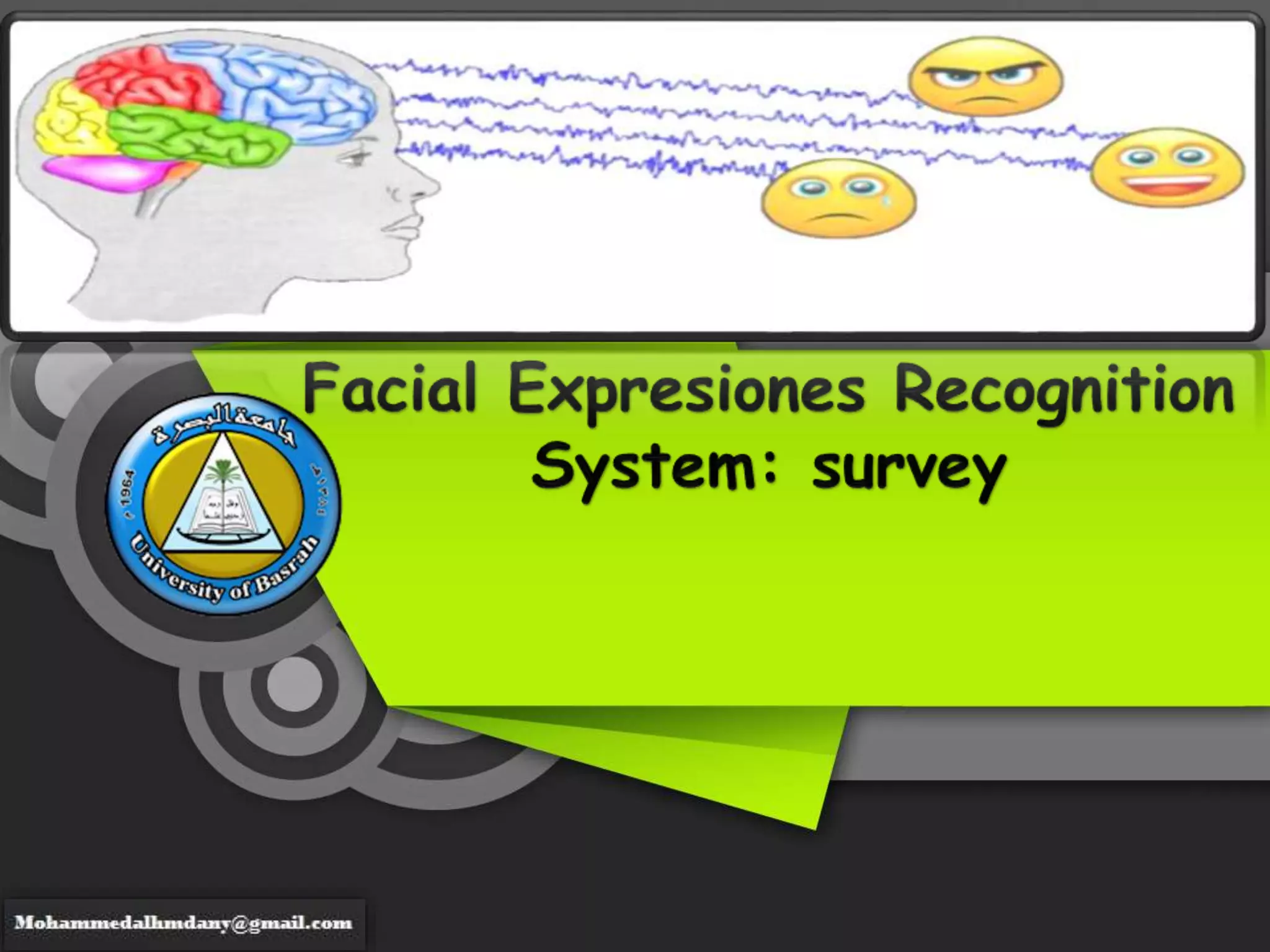
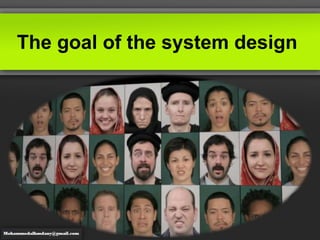
• The research aims to design automatic system
to distinguish and read facial expressions
( i.e., happy, surprise, anger, sadness, fear,
and disgust ).
• By use of smart computer programming for
design and implementation of the proposed
system.
The goal of the system design
Introduction
• To make Human Computer Interaction (HCI)
more natural and friendly, it would be beneficial
to give computers the ability to recognize
situations the same way a human does.
• Over the last years, face recognition and
automatic analysis of facial expressions has
one of the most challenging research areas in
the field of Computer vision and has received
a special importance.
Introduction& Previous
Works
• In recent years, a lot of work has been done
on the affective recognition of expressions
which holds the major key in the human-
machine interaction.
• In 1872. The first suggestion of expression of
emotions as universal was given by Charles
Darwin in his contriving work build from his
theory of evolution.
Introduction& Previous
Works
• In 1971. The psychologist Ekman and Friesen
showed in their cross culture studies that the
six emotions .
• Several techniques have emerged in order to
improve the efficiency of the recognition by
addressing problems in face detection and
extraction features in recognizing expressions.
Importance of research
and its Applications
• Facial Expression recognition is an important
technique and has drawn the attention of many
researchers due to its varying applications
such as security systems, medical systems,
entertainment.
Importance of research
and its Applications
• Such as Human Computer Interaction (HCI),
Emotion analysis, Psychological area, virtual
reality , video-conferencing, indexing and
retrieval of image and video database, image
understanding and synthetic face animation.
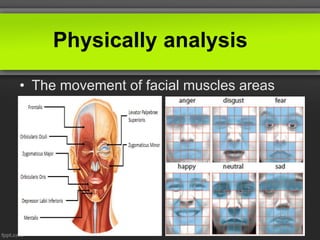
Physically analysis
• The movement of facial muscles areas
Challenges
• A human can detect face and recognition on
facial expressions without effort , but for a
machine and in Computer Vision it is very
difficult . Why… ?
Challenges
• The main challenges in automatic affect
recognition :
• Head-pose variations.
• illumination variations.
• Registration errors.
• Occlusions.
Related works
• 2011 , P.D.Khandait , Dr. R.C.Thool “Automatic Facial Feature
Extraction and Expression Recognition based on Neural
Network” (IJACSA) International Journal of Advanced
Computer Science and Applications, Vol. 2, No.1.
• In 2012, Dilbag Singh “Human Emotion Recognition System”
Guru Nanak Dev University Amritsar (Punjab) India , I.J. Image,
Graphics and Signal Processing, 8, 50-56.
Related works
• 2013 , Jeemoni Kalita , Karen Das “Recognition of Facial
Expression Using Eigenvector Based Distributed Features
and Euclidean Distance Based Decision Making Technique”
(IJACSA).
• March 2015 , Shail Kumari Shah , Vineet Khanna “ Facial
Expression Recognition for Color Images using Gabor, Log
Gabor Filters and PCA” International Journal of Computer
Applications (0975 – 8887) Volume 113 – No. 4.
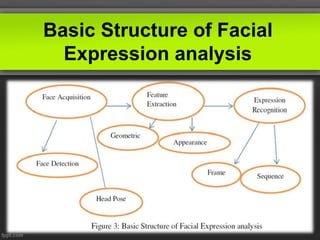
Basic Structure of Facial
Expression analysis
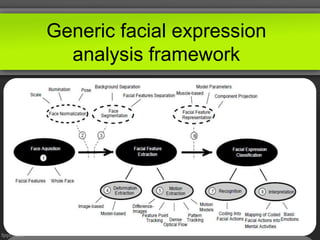
Generic facial expression
analysis framework
The proposed system
• We are trying to design a system able to
identify for basic 6 facial Expression efficient
and accurate depending on the improvement in
the extraction of features which represents
the core of the system .
• programming language “MatLab R2013a” Or
newer
Conclusion
• The objective of this PPT is to show a clean
survey on the structure of analyzing the facial
expression . The steps involved in expression
analysis like face acquisition, feature
extraction and expression classification had
been discussed.
• In addition to some of the challenges facing
research in general.
References
• P. Ekman, E. R. Sorenson, and W. V. Friesen, “Pan cultural elements in
Facial displays of emotion” Science, New Series, vol. 164, no. 3875, pp.
86-88, April 4,1969.
• G. R. S. Murthy and R. S. Jadon, “Effectiveness of Eigenspaces for Facial
Expressions Recognition” International Journal of Computer Theory and
Engineering, vol. 1, no. 5, pp. 638-642, December 2009.
• B. Fasela , Juergen Luettinb , “Automatic facial expression analysis: a
survey” – Pattern Recognition 36 (2003) 259 – 275 .
• C.P. Sumathi, T. Santhanam and M.Mahadevi ,International Journal of
Computer Science & Engineering Survey (IJCSES) Vol.3, No.6, December
2012 (AUTOMATIC FACIAL EXPRESSION ANALYSIS :A SURVEY )
Facial expression recognition system : survey

Facial expression recognition system : survey

  • 2.
    Master's student Mohammed AbdulRahman Basra University College of Science Department of Computer Science Under the supervision d. Zainab Ibrahim 2015-2016
  • 3.
    Out Line • Theaim of research • Introduction • History (Introduction & Previous Works) • Importance of research and its Applications • Physically analysis • Challenges • Related works • Basic Structure of Facial Expression analysis • The proposed system • Conclusion • References
  • 4.
    The aim ofresearch • The research aims to design automatic system to distinguish and read facial expressions ( i.e., happy, surprise, anger, sadness, fear, and disgust ). • By use of smart computer programming for design and implementation of the proposed system.
  • 5.
    The goal ofthe system design
  • 6.
    Introduction • To makeHuman Computer Interaction (HCI) more natural and friendly, it would be beneficial to give computers the ability to recognize situations the same way a human does. • Over the last years, face recognition and automatic analysis of facial expressions has one of the most challenging research areas in the field of Computer vision and has received a special importance.
  • 7.
    Introduction& Previous Works • Inrecent years, a lot of work has been done on the affective recognition of expressions which holds the major key in the human- machine interaction. • In 1872. The first suggestion of expression of emotions as universal was given by Charles Darwin in his contriving work build from his theory of evolution.
  • 8.
    Introduction& Previous Works • In1971. The psychologist Ekman and Friesen showed in their cross culture studies that the six emotions . • Several techniques have emerged in order to improve the efficiency of the recognition by addressing problems in face detection and extraction features in recognizing expressions.
  • 9.
    Importance of research andits Applications • Facial Expression recognition is an important technique and has drawn the attention of many researchers due to its varying applications such as security systems, medical systems, entertainment.
  • 10.
    Importance of research andits Applications • Such as Human Computer Interaction (HCI), Emotion analysis, Psychological area, virtual reality , video-conferencing, indexing and retrieval of image and video database, image understanding and synthetic face animation.
  • 11.
    Physically analysis • Themovement of facial muscles areas
  • 12.
    Challenges • A humancan detect face and recognition on facial expressions without effort , but for a machine and in Computer Vision it is very difficult . Why… ?
  • 13.
    Challenges • The mainchallenges in automatic affect recognition : • Head-pose variations. • illumination variations. • Registration errors. • Occlusions.
  • 14.
    Related works • 2011, P.D.Khandait , Dr. R.C.Thool “Automatic Facial Feature Extraction and Expression Recognition based on Neural Network” (IJACSA) International Journal of Advanced Computer Science and Applications, Vol. 2, No.1. • In 2012, Dilbag Singh “Human Emotion Recognition System” Guru Nanak Dev University Amritsar (Punjab) India , I.J. Image, Graphics and Signal Processing, 8, 50-56.
  • 15.
    Related works • 2013, Jeemoni Kalita , Karen Das “Recognition of Facial Expression Using Eigenvector Based Distributed Features and Euclidean Distance Based Decision Making Technique” (IJACSA). • March 2015 , Shail Kumari Shah , Vineet Khanna “ Facial Expression Recognition for Color Images using Gabor, Log Gabor Filters and PCA” International Journal of Computer Applications (0975 – 8887) Volume 113 – No. 4.
  • 16.
    Basic Structure ofFacial Expression analysis
  • 17.
  • 18.
    The proposed system •We are trying to design a system able to identify for basic 6 facial Expression efficient and accurate depending on the improvement in the extraction of features which represents the core of the system . • programming language “MatLab R2013a” Or newer
  • 19.
    Conclusion • The objectiveof this PPT is to show a clean survey on the structure of analyzing the facial expression . The steps involved in expression analysis like face acquisition, feature extraction and expression classification had been discussed. • In addition to some of the challenges facing research in general.
  • 20.
    References • P. Ekman,E. R. Sorenson, and W. V. Friesen, “Pan cultural elements in Facial displays of emotion” Science, New Series, vol. 164, no. 3875, pp. 86-88, April 4,1969. • G. R. S. Murthy and R. S. Jadon, “Effectiveness of Eigenspaces for Facial Expressions Recognition” International Journal of Computer Theory and Engineering, vol. 1, no. 5, pp. 638-642, December 2009. • B. Fasela , Juergen Luettinb , “Automatic facial expression analysis: a survey” – Pattern Recognition 36 (2003) 259 – 275 . • C.P. Sumathi, T. Santhanam and M.Mahadevi ,International Journal of Computer Science & Engineering Survey (IJCSES) Vol.3, No.6, December 2012 (AUTOMATIC FACIAL EXPRESSION ANALYSIS :A SURVEY )