
CONTENTS
   Facial expressions
   What is facial recognition system?
   Why to use?
   Two Dimensional
   Three Dimensional
   Approaches
   FA007
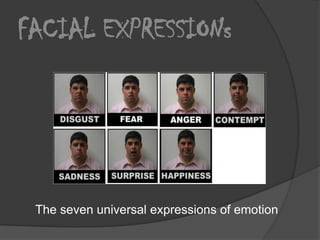
FACIAL EXPRESSIONs


 The seven universal expressions of emotion
WHAT is it?
 A facial recognition system is a computer
 application for automatically identifying or
 verifying a person from a digital image or a
 video frame from a video source. One of the
 ways to do this is by comparing selected facial
 features from the image and a facial database.
 Research on this technology started in the mid
 1960s.
WHY TO USE?
  It is typically used in security systems
  and can be compared to other
  biometrics such as fingerprint or eye
  iris recognition systems.
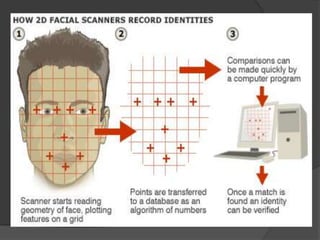
Two-Dimensional
    Before the advent of faster computers and
    complicated     imaging    software, two-
    dimensional facial recognition systems
    were used. The problem that arose from
    this type of facial recognition system was
    the fact that the person to be identified
    must be facing the camera at no more than
    35 degrees for accurate identification to be
    possible. Light differences and facial
    expressions also contributed to low
    accuracy in recognition of such systems.
Three Dimensional
   The new facial recognition systems make use
    of three-dimensional images and are thus
    more accurate than their predecessors. Just
    like    two-dimensional     facial   recognition
    systems, these systems make use of distinct
    features in a human face and use them as
    nodes to create a face print of a person. Unlike
    two-dimensional face recognition systems,
    however, they have the ability to recognize a
    face even when it is turned 90 degrees away
    from the camera. Moreover, they are not
    affected by the differences in lighting and
    facial expressions of the subject.
APPROACHES
 Image Acquisition: Images used for facial expression
  recognition are static images or image sequences. An
  image sequence contains potentially more information
  than a still image
 Pre-Processing: Expression representation can be
  sensitive to translation, scaling, and rotation of the
  head in an imaged.
   Feature Extraction: Feature extraction converts
    pixel data into a higher-level representation- of
    shape, motion, color, texture of the face or its
    components. The extracted representation is used
    for subsequent expression categorization.
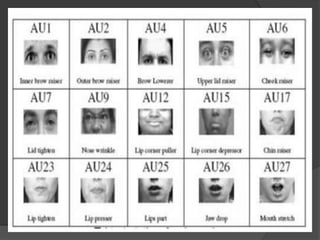
   Classification: Expression categorization is performed
    by a classifier. The two main types of classes used in
    facial expression recognition are action units (AUs) and
    the prototypic facial expressions defined by Ekman. The
    6 prototypic expressions relate to the emotional states
    of happiness, sadness, surprise, anger, fear, and
    disgust.
   Post-Processing: Post-processing aims to improve
    recognition accuracy, by exploiting domain knowledge to
    correct classification errors.
FA007
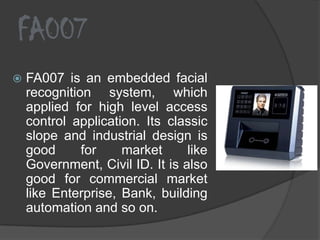
   FA007 is an embedded facial
    recognition system, which
    applied for high level access
    control application. Its classic
    slope and industrial design is
    good      for    market      like
    Government, Civil ID. It is also
    good for commercial market
    like Enterprise, Bank, building
    automation and so on.
THANKS

Facel expression recognition

  • 2.
    CONTENTS Facial expressions  What is facial recognition system?  Why to use?  Two Dimensional  Three Dimensional  Approaches  FA007
  • 3.
    FACIAL EXPRESSIONs Theseven universal expressions of emotion
  • 4.
    WHAT is it? A facial recognition system is a computer application for automatically identifying or verifying a person from a digital image or a video frame from a video source. One of the ways to do this is by comparing selected facial features from the image and a facial database. Research on this technology started in the mid 1960s.
  • 5.
    WHY TO USE? It is typically used in security systems and can be compared to other biometrics such as fingerprint or eye iris recognition systems.
  • 6.
    Two-Dimensional  Before the advent of faster computers and complicated imaging software, two- dimensional facial recognition systems were used. The problem that arose from this type of facial recognition system was the fact that the person to be identified must be facing the camera at no more than 35 degrees for accurate identification to be possible. Light differences and facial expressions also contributed to low accuracy in recognition of such systems.
  • 8.
    Three Dimensional  The new facial recognition systems make use of three-dimensional images and are thus more accurate than their predecessors. Just like two-dimensional facial recognition systems, these systems make use of distinct features in a human face and use them as nodes to create a face print of a person. Unlike two-dimensional face recognition systems, however, they have the ability to recognize a face even when it is turned 90 degrees away from the camera. Moreover, they are not affected by the differences in lighting and facial expressions of the subject.
  • 9.
    APPROACHES  Image Acquisition:Images used for facial expression recognition are static images or image sequences. An image sequence contains potentially more information than a still image  Pre-Processing: Expression representation can be sensitive to translation, scaling, and rotation of the head in an imaged.  Feature Extraction: Feature extraction converts pixel data into a higher-level representation- of shape, motion, color, texture of the face or its components. The extracted representation is used for subsequent expression categorization.
  • 10.
    Classification: Expression categorization is performed by a classifier. The two main types of classes used in facial expression recognition are action units (AUs) and the prototypic facial expressions defined by Ekman. The 6 prototypic expressions relate to the emotional states of happiness, sadness, surprise, anger, fear, and disgust.  Post-Processing: Post-processing aims to improve recognition accuracy, by exploiting domain knowledge to correct classification errors.
  • 12.
    FA007  FA007 is an embedded facial recognition system, which applied for high level access control application. Its classic slope and industrial design is good for market like Government, Civil ID. It is also good for commercial market like Enterprise, Bank, building automation and so on.
  • 13.