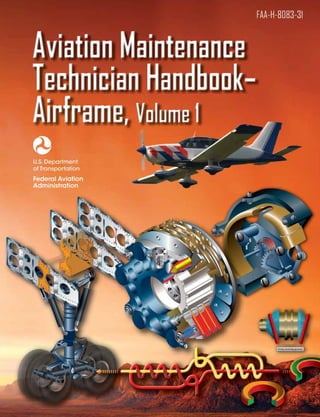
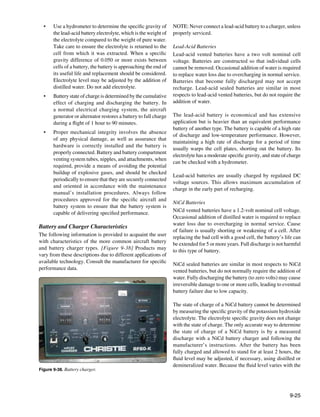
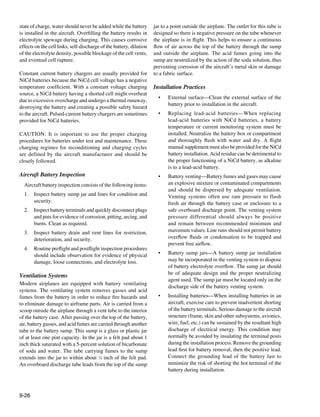
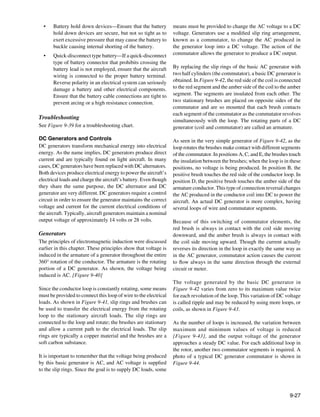
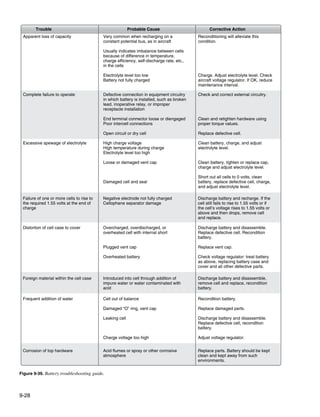
Aviation Maintenance Technician
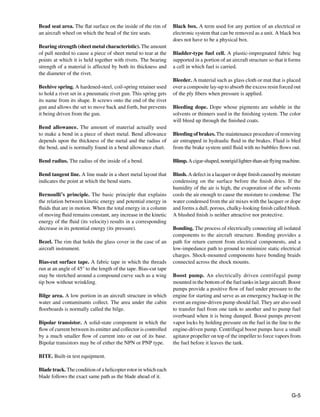
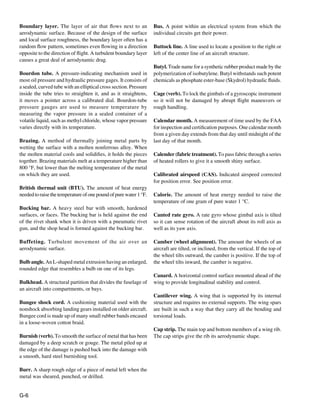
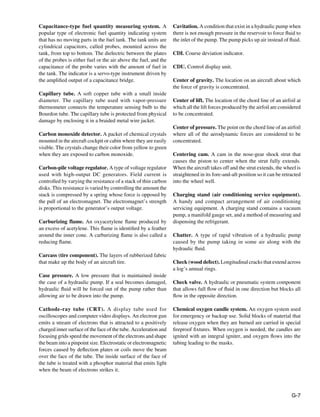
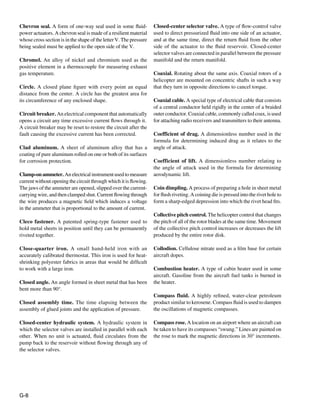
      Handbook—Airframe
               Volume 1


                   2012


           U.S. Department of Transportation
        FEDERAL AVIATION ADMINISTRATION
                 Flight Standards Service
ii
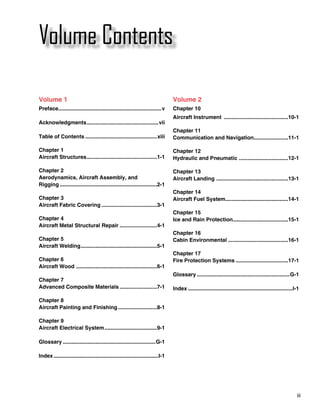
Volume Contents

Volume 1                                                                          Volume 2
Preface.....................................................................v     Chapter 10
                                                                                  Aircraft Instrument ............................................10-1
Acknowledgments. ...............................................vii
               .
                                                                                  Chapter 11
Table of Contents.................................................xiii            Communication and Navigation.......................11-1
                                                                                                              .

Chapter 1                                                                         Chapter 12
Aircraft Structures. ..............................................1-1
                   .                                                              Hydraulic and Pneumatic .................................12-1

Chapter 2                                                                         Chapter 13
Aerodynamics, Aircraft Assembly, and                                              Aircraft Landing . ...............................................13-1
Rigging..................................................................2-1
                                                                                  Chapter 14
Chapter 3                                                                         Aircraft Fuel System..........................................14-1
Aircraft Fabric Covering......................................3-1
                                                                                  Chapter 15
Chapter 4                                                                         Ice and Rain Protection.....................................15-1
Aircraft Metal Structural Repair..........................4-1
                                                                                  Chapter 16
Chapter 5                                                                         Cabin Environmental ........................................16-1
Aircraft Welding. ..................................................5-1
                .
                                                                                  Chapter 17
Chapter 6                                                                         Fire Protection Systems....................................17-1
Aircraft Wood . .....................................................6-1
                                                                                  Glossary...............................................................G-1
Chapter 7
Advanced Composite Materials..........................7-1                         Index.......................................................................I-1

Chapter 8
Aircraft Painting and Finishing...........................8-1

Chapter 9
Aircraft Electrical System....................................9-1

Glossary...............................................................G-1

Index.......................................................................I-1


                                                                                                                                                               iii
iv
Preface
The Aviation Maintenance Technician Handbook—Airframe (FAA-H-8083-31) is one of a series of three handbooks for
persons preparing for certification as an airframe or powerplant mechanic. It is intended that this handbook provide the
basic information on principles, fundamentals, and technical procedures in the subject matter areas relating to the airframe
rating. It is designed to aid students enrolled in a formal course of instruction, as well as the individual who is studying on
his or her own. Since the knowledge requirements for the airframe and powerplant ratings closely parallel each other in
some subject areas, the chapters which discuss fire protection systems and electrical systems contain some material which
is also duplicated in the Aviation Maintenance Technician Handbook—Powerplant (FAA-H-8083-32).

This volume contains information on airframe construction features, assembly and rigging, fabric covering, structural repairs,
and aircraft welding. The handbook also contains an explanation of the units that make up the various airframe systems.
Because there are so many different types of aircraft in use today, it is reasonable to expect that differences exist in airframe
components and systems. To avoid undue repetition, the practice of using representative systems and units is carried out
throughout the handbook. Subject matter treatment is from a generalized point of view and should be supplemented by
reference to manufacturer's manuals or other textbooks if more detail is desired. This handbook is not intended to replace,
substitute for, or supersede official regulations or the manufacturer’s instructions. Occasionally the word “must” or similar
language is used where the desired action is deemed critical. The use of such language is not intended to add to, interpret,
or relieve a duty imposed by Title 14 of the Code of Federal Regulations (14 CFR).

This handbook is available for download, in PDF format, from www.faa.gov.

The subject of Human Factors is contained in the Aviation Maintenance Technician Handbook—General (FAA-H-8083-30).

This handbook is published by the United States Department of Transportation, Federal Aviation Administration, Airman
Testing Standards Branch, AFS-630, P.O. Box 25082, Oklahoma City, OK 73125.

Comments regarding this publication should be sent, in email form, to the following address:

AFS630comments@faa.gov


                                                                                                                               v
vi
Acknowledgments

The Aviation Maintenance Technician Handbook—Airframe (FAA-H-8083-31) was produced by the Federal Aviation
Administration (FAA) with the assistance of Safety Research Corporation of America (SRCA). The FAA wishes to
acknowledge the following contributors:


	   Mr. Chris Brady (www.b737.org.uk) for images used throughout this handbook
	   Captain Karl Eiríksson for image used in Chapter 1
	   Cessna Aircraft Company for image used in Chapter 1
	   Mr. Andy Dawson (www.mossie.org) for images used throughout Chapter 1
	   Mr. Bill Shemley for image used in Chapter 1
	   Mr. Bruce R. Swanson for image used in Chapter 1
	   Mr. Burkhard Domke (www.b-domke.de) for images used throughout Chapter 1 and 2
	   Mr. Chris Wonnacott (www.fromtheflightdeck.com) for image used in Chapter 1
	   Mr. Christian Tremblay (www.zodiac640.com) for image used in Chapter 1
	   Mr. John Bailey (www.knots2u.com) for image used in Chapter 1
	   Mr. Rich Guerra (www.rguerra.com) for image used in Chapter 1
	   Mr. Ronald Lane for image used in Chapter 1
	   Mr. Tom Allensworth (www.avsim.com) for image used in Chapter 1
	   Navion Pilots Association’s Tech Note 001 (www.navionpilots.org) for image used in Chapter 1
	   U.S. Coast Guard for image used in Chapter 1
	   Mr. Tony Bingelis and the Experimental Aircraft Association (EAA) for images used throughout Chapter 2
	   Mr. Benoit Viellefon (www.johnjohn.co.uk/compare-tigermothflights/html/tigermoth_bio_aozh.html) for image used
    in Chapter 3
	   Mr. Paul Harding of Safari Seaplanes–Bahamas (www.safariseaplanes.com) for image used in Chapter 3
	   Polyfiber/Consolidated Aircraft Coatings for images used throughout Chapter 3
	   Stewart Systems for images used throughout Chapter 3
	   Superflite for images used throughout Chapter 3
	   Cherry Aerospace (www.cherryaerospace.com) for images used in Chapters 4 and 7
	   Raytheon Aircraft (Structural Inspection and Repair Manual) for information used in Chapter 4
	   Mr. Scott Allen of Kalamazoo Industries, Inc. (www.kalamazooind.com) for image used in Chapter 4
	   Miller Electric Mfg. Co. (www.millerwelds.com) for images used in Chapter 5
	   Mr. Aaron Novak, contributing engineer, for charts used in Chapter 5
	   Mr. Bob Hall (www.pro-fusiononline.com) for image used in Chapter 5


                                                                                                               vii
Mr. Kent White of TM Technologies, Inc. for image used in Chapter 5
       	   Safety Supplies Canada (www.safetysuppliescanada.com) for image used in Chapter 5
       	   Smith Equipment (www.smithequipment.com) for images used in Chapter 5
       	   Alcoa (www.alcoa.com) for images used in Chapter 7
       	   Mr. Chuck Scott (www.itwif.com) for images used throughout Chapter 8
       	   Mr. John Lagerlof of Paasche Airbrush Co. (paascheairbrush.com) for image used in Chapter 8
       	   Mr. Philip Love of Turbine Products, LLC (www.turbineproducts.com) for image used in Chapter 8
       	   Consolidated Aircraft Coatings for image used in Chapter 8
       	   Tianjin Yonglida Material Testing Machine Co., Ltd for image used in Chapter 8
       	   Mr. Jim Irwin of Aircraft Spruce & Specialty Co. (www.aircraftspruce.com) for images used in Chapters 9, 10, 11, 13,
           14, 15
       	   Mr. Kevan Hashemi for image used in Chapter 9
       	   Mr. Michael Leasure, Aviation Multimedia Library (www2.tech.purdue.edu/at/courses/aeml) for images used in Chapters
           9, 13, 14
       	   Cobra Systems Inc. (www.cobrasys.com) for image used in Chapter 10
       	   www.free-online-private-pilot-ground-school.com for image used in Chapters 10, 16
       	   DAC International (www.dacint.com) for image used in Chapter 10
       	   Dawson Aircraft Inc. (www.aircraftpartsandsalvage.com) for images used throughout Chapter 10
       	   Mr. Kent Clingaman for image used in Chapter 10
       	   TGH Aviation-FAA Instrument Repair Station (www.tghaviation.com) for image used in Chapter 10
       	   The Vintage Aviator Ltd. (www.thevintageaviator.co.nz) for image used in Chapter 10
       	   ACK Technologies Inc. (www.ackavionics.com) for image used in Chapter 11
       	   ADS-B Technologies, LLC (www.ads-b.com) for images used in Chapter 11
       	   Aviation Glossary (www.aviationglossary.com) for image used in Chapter 11
       	   AT&T Archives and History Center for image used in Chapter 11
       	   Electronics International Inc. (www.buy-ei.com) for image used in Chapter 11
       	   Excelitas Technologies (www.excelitas.com) for image used in Chapter 11
       	   Freestate Electronics, Inc. (www.fse-inc.com) for image used in Chapter 11
       	   AirTrafficAtlanta.com for image used in Chapter 11
       	   Western Historic Radio Museum, Virginia City, Nevada (www.radioblvd.com) for image used in Chapter 11
       	   Avidyne Corporation (www.avidyne.com) for image used in Chapter 11
       	   Kintronic Laboratories (www.kintronic.com) for image used in Chapter 11
       	   Mr. Dan Wolfe (www.flyboysalvage.com) for image used in Chapter 11
       	   Mr. Ken Shuck (www.cessna150.net) for image used in Chapter 11
       	   Mr. Paul Tocknell (www.askacfi.com) for image used in Chapter 11
       	   Mr. Stephen McGreevy (www.auroralchorus.com) for image used in Chapter 11
       	   Mr. Todd Bennett (www.bennettavionics.com) for image used in Chapter 11
       	   National Oceanic and Atmospheric Administration, U.S. Department of Commerce for image used in Chapter 11
       	   RAMI (www.rami.com) for image used in Chapter 11
       	   Rockwell Collins (www.rockwellcollins.com) for image used in Chapter 11


viii
Sarasota Avionics International (www.sarasotaavionics.com) for images used in Chapter 11
	   Southeast Aerospace, Inc. (www.seaerospace.com) for image used in Chapter 11
	   Sporty’s Pilot Shop (www.sportys.com) for image used in Chapter 11
	   Watts Antenna Company (www.wattsantenna.com) for image used in Chapter 11
	   Wings and Wheels (www.wingsandwheels.com) for image used in Chapter 11
	   Aeropin, Inc. (www.aeropin.com) for image used in Chapter 13
	   Airplane Mart Publishing (www.airplanemart.com) for image used in Chapter 13
	   Alberth Aviation (www.alberthaviation.com) for image used in Chapter 13
	   AVweb (www.avweb.com) for image used in Chapter 13
	   Belle Aire Aviation, Inc. (www.belleaireaviation.com) for image used in Chapter 13
	   Cold War Air Museum (www.coldwarairmuseum.org) for image used in Chapter 13
	   Comanche Gear (www.comanchegear.com) for image used in Chapter 13
	   CSOBeech (www.csobeech.com) for image used in Chapter 13
	   Desser Tire & Rubber Co., Inc. (www.desser.com) for image used in Chapter 13
	   DG Flugzeugbau GmbH (www.dg-flugzeugbau.de) for image used in Chapter 13
	   Expedition Exchange Inc. (www.expeditionexchange.com) for image used in Chapter 13
	   Fiddlers Green (www.fiddlersgreen.net) for image used in Chapter 13
	   Hitchcock Aviation (hitchcockaviation.com) for image used in Chapter 13
	   KUNZ GmbH aircraft equipment (www.kunz-aircraft.com) for images used in Chapter 13
	   Little Flyers (www.littleflyers.com) for images used in Chapter 13
	   Maple Leaf Aviation Ltd. (www.aircraftspeedmods.ca) for image used in Chapter 13
	   Mr. Budd Davisson (Airbum.com) for image used in Chapter 13
	   Mr. C. Jeff Dyrek (www.yellowairplane.com) for images used in Chapter 13
	   Mr. Jason Schappert (www.m0a.com) for image used in Chapter 13
	   Mr. John Baker (www.hangar9aeroworks.com) for image used in Chapter 13
	   Mr. Mike Schantz (www.trailer411.com) for image used in Chapter 13
	   Mr. Robert Hughes (www.escapadebuild.co.uk) for image used in Chapter 13
	   Mr. Ron Blachut for image used in Chapter 13
	   Owls Head Transportation Museum (www.owlshead.org) for image used in Chapter 13
	   PPI Aerospace (www.ppiaerospace.com) for image used in Chapter 13
	   Protective Packaging Corp. (www.protectivepackaging.net, 1-800-945-2247) for image used in Chapter 13
	   Ravenware Industries, LLC (www.ravenware.com) for image used in Chapter 13
	   Renold (www.renold.com) for image used in Chapter 13
	   Rotor F/X, LLC (www.rotorfx.com) for image used in Chapter 13
	   SkyGeek (www.skygeek.com) for image used in Chapter 13
	   Taigh Ramey (www.twinbeech.com) for image used in Chapter 13
	   Texas Air Salvage (www.texasairsalvage.com) for image used in Chapter 13
	   The Bogert Group (www.bogert-av.com) for image used in Chapter 13
	   W. B. Graham, Welded Tube Pros LLC (www.thefabricator.com) for image used in Chapter 13


                                                                                                            ix
Zinko Hydraulic Jack (www.zinkojack.com) for image used in Chapter 13
    	   Aviation Institute of Maintenance (www.aimschool.com) for image used in Chapter 14
    	   Aviation Laboratories (www.avlab.com) for image used in Chapter 14
    	   AVSIM (www.avsim.com) for image used in Chapter 14
    	   Eggenfellner (www.eggenfellneraircraft.com) for image used in Chapter 14
    	   FlightSim.Com, Inc. (www.flightsim.com) for image used in Chapter 14
    	   Fluid Components International LLC (www.fluidcomponents.com) for image used in Chapter 14
    	   Fuel Quality Services, Inc. (www.fqsinc.com) for image used in Chapter 14
    	   Hammonds Fuel Additives, Inc. (www.biobor.com) for image used in Chapter 14
    	   Jeppesen (www.jeppesen.com) for image used in Chapter 14
    	   MGL Avionics (www.mglavionics.com) for image used in Chapter 14
    	   Mid-Atlantic Air Museum (www.maam.org) for image used in Chapter 14
    	   MISCO Refractometer (www.misco.com) for image used in Chapter 14
    	   Mr. Gary Brossett via the Aircraft Engine Historical Society (www.enginehistory.org) for image used in Chapter 14
    	   Mr. Jeff McCombs (www.heyeng.com) for image used in Chapter 14
    	   NASA for image used in Chapter 14
    	   On-Track Aviation Limited (www.ontrackaviation.com) for image used in Chapter 14
    	   Stewart Systems for image used in Chapter 14
    	   Prist Aerospace Products (www.pristaerospace.com) for image used in Chapter 14
    	   The Sundowners, Inc. (www.sdpleecounty.org) for image used in Chapter 14
    	   Velcon Filters, LLC (www.velcon.com) for image used in Chapter 14
    	   Aerox Aviation Oxygen Systems, Inc. (www.aerox.com) for image used in Chapter 16
    	   Biggles Software (www.biggles-software.com) for image used in Chapter 16
    	   C&D Associates, Inc. (www.aircraftheater.com) for image used in Chapter 16
    	   Cobham (Carleton Technologies Inc.) (www.cobham.com) for image used in Chapter 16
    	   Cool Africa (www.coolafrica.co.za) for image used in Chapter 16
    	   Cumulus Soaring, Inc. (www.cumulus-soaring.com) for image used in Chapter 16
    	   Essex Cryogenics of Missouri, Inc. (www.essexind.com) for image used in Chapter 16
    	   Flightline AC, Inc. (www.flightlineac.com) for image used in Chapter 16
    	   IDQ Holdings (www.idqusa.com) for image used in Chapter 16
    	   Manchester Tank & Equipment (www.mantank.com) for image used in Chapter 16
    	   Mountain High E&S Co. (www.MHoxygen.com) for images used throughout Chapter 16
    	   Mr. Bill Sherwood (www.billzilla.org) for image used in Chapter 16
    	   Mr. Boris Comazzi (www.flightgear.ch) for image used in Chapter 16
    	   Mr. Chris Rudge (www.warbirdsite.com) for image used in Chapter 16
    	   Mr. Richard Pfiffner (www.craggyaero.com) for image used in Chapter 16
    	   Mr. Stephen Sweet (www.stephensweet.com) for image used in Chapter 16
    	   Precise Flight, Inc. (www.preciseflight.com) for image used in Chapter 16
    	   SPX Service Solutions (www.spx.com) for image used in Chapter 16


x
SuperFlash Compressed Gas Equipment (www.oxyfuelsafety.com)
	   Mr. Tim Mara (www.wingsandwheels.com) for images used in Chapter 16
	   Mr. Bill Abbott for image used in Chapter 17

Additional appreciation is extended to Dr. Ronald Sterkenburg, Purdue University; Mr. Bryan Rahm, Dr. Thomas K. Eismain,
Purdue University; Mr. George McNeill, Mr. Thomas Forenz, Mr. Peng Wang, and the National Oceanic and Atmospheric
Administration (NOAA) for their technical support and input.


                                                                                                                      xi
xii
Table of Contents

Volume Contents....................................................iii                    Tail Wheel Gear Configuration.................................1-37
                                                                                          Tricycle Gear.............................................................1-38
Preface.....................................................................v            Maintaining the Aircraft...............................................1-38
                                                                                          Location Numbering Systems...................................1-39
Acknowledgments. ...............................................vii
               .                                                                          Access and Inspection Panels. ..................................1-40
                                                                                                                                    .
                                                                                         Helicopter Structures....................................................1-40
Table of Contents.................................................xiii                    Airframe....................................................................1-40
                                                                                          Fuselage. ...................................................................1-42
                                                                                                    .
Chapter 1                                                                                 Landing Gear or Skids..............................................1-42
                                                                                                                          .
Aircraft Structures. ..............................................1-1
                               .                                                          Powerplant and Transmission...................................1-42
A Brief History of Aircraft Structures............................1-1                        Turbine Engines.....................................................1-42
General............................................................................1-5       Transmission..........................................................1-43
Major Structural Stresses................................................1-6              Main Rotor System...................................................1-43
                                                                                                                    .
Fixed-Wing Aircraft.......................................................1-8
                            .                                                                Rigid Rotor System...............................................1-44
                                                                                                                        .
  Fuselage. .....................................................................1-8
             .                                                                               Semirigid Rotor System. .......................................1-44
                                                                                                                               .
    Truss Type...............................................................1-8          Fully Articulated Rotor System................................1-44
                                                                                                                                       .
    Monocoque Type.....................................................1-9                Antitorque System.....................................................1-45
    Semimonocoque Type.............................................1-9                    Controls.....................................................................1-46
  Pressurization ...........................................................1-10
Wings............................................................................1-10    Chapter 2
  Wing Configurations.................................................1-10               Aerodynamics, Aircraft Assembly, and
  Wing Structure..........................................................1-11           Rigging..................................................................2-1
  Wing Spars................................................................1-13         Introduction.....................................................................2-1
  Wing Ribs. ................................................................1-15
                .                                                                        Basic Aerodynamics ......................................................2-2
  Wing Skin. ................................................................1-17
                .                                                                        The Atmosphere..............................................................2-2
  Nacelles.....................................................................1-19        Pressure.......................................................................2-2
Empennage ..................................................................1-22           Density........................................................................2-3
Flight Control Surfaces.................................................1-24               Humidity.....................................................................2-3
                                                                                                        .
  Primary Flight Control Surfaces...............................1-24                     Aerodynamics and the Laws of Physics.........................2-3
    Ailerons.................................................................1-26
                .                                                                          Velocity and Acceleration...........................................2-3
    Elevator..................................................................1-27         Newton’s Laws of Motion..........................................2-4
                                                                                                                                   .
    Rudder ..................................................................1-27          Bernoulli’s Principle and Subsonic Flow....................2-4
  Dual Purpose Flight Control Surfaces. .....................1-27
                                                           .                             Airfoil.............................................................................2-5
                                                                                                .
  Secondary or Auxiliary Control Surfaces ................1-28                             Shape of the Airfoil.....................................................2-5
    Flaps. .....................................................................1-28
           .                                                                               Angle of Incidence......................................................2-6
    Slats ......................................................................1-30       Angle of Attack (AOA)...............................................2-6
    Spoilers and Speed Brakes....................................1-30
                                             .                                             Boundary Layer...........................................................2-7
                                                                                         Thrust and Drag..............................................................2-7
    Tabs ......................................................................1-31
                                                                                         Center of Gravity (CG)...................................................2-9
  Other Wing Features.................................................1-34
                                                                                         The Axes of an Aircraft .................................................2-9
Landing Gear................................................................1-35


                                                                                                                                                                            xiii
Stability and Control ......................................................2-9        Offset Flapping Hinge...............................................2-32
  Static Stability.............................................................2-9     Stability Augmentation Systems (SAS)....................2-32
  Dynamic Stability. ....................................................2-11
                         .                                                             Helicopter Vibration. ................................................2-32
                                                                                                                    .
  Longitudinal Stability. ..............................................2-11
                               .                                                         Extreme Low Frequency Vibration.......................2-32
  Directional Stability..................................................2-11            Low Frequency Vibration......................................2-32
  Lateral Stability.........................................................2-11         Medium Frequency Vibration...............................2-32
                                                                                                                                      .
  Dutch Roll.................................................................2-11        High Frequency Vibration.....................................2-32
Primary Flight Controls................................................2-12            Rotor Blade Tracking................................................2-32
Trim Controls................................................................2-12        Flag and Pole.........................................................2-32
Auxiliary Lift Devices..................................................2-13             Electronic Blade Tracker.......................................2-33
  Winglets....................................................................2-14
                                                                                       Tail Rotor Tracking...................................................2-34
  Canard Wings............................................................2-14
                                                                                         Marking Method....................................................2-34
  Wing Fences .............................................................2-14
                                                                                         Electronic Method.................................................2-34
Control Systems for Large Aircraft..............................2-14
                                                                                       Rotor Blade Preservation and Storage......................2-35
  Mechanical Control...................................................2-14
                                                                                     Helicopter Power Systems............................................2-35
  Hydromechanical Control.........................................2-15
                                                                                       Powerplant. ...............................................................2-35
                                                                                                     .
  Fly-By-Wire Control ................................................2-15
                                                                                       Reciprocating Engine................................................2-35
High-Speed Aerodynamics...........................................2-15
                                                                                       Turbine Engine..........................................................2-36
Rotary-Wing Aircraft Assembly and Rigging..............2-16
                                                                                     Transmission System....................................................2-36
Configurations of Rotary-Wing Aircraft. .....................2-18
                                                        .
                                                                                       Main Rotor Transmission..........................................2-36
  Autogyro...................................................................2-18
            .
                                                                                       Clutch........................................................................2-37
  Single Rotor Helicopter. ...........................................2-18
                                  .
                                                                                         Centrifugal Clutch.................................................2-37
  Dual Rotor Helicopter...............................................2-18
Types of Rotor Systems................................................2-18               Belt Drive Clutch...................................................2-37
  Fully Articulated Rotor.............................................2-18             Freewheeling Unit.....................................................2-38
  Semirigid Rotor.........................................................2-19         Airplane Assembly and Rigging...............................2-38
  Rigid Rotor................................................................2-19      Rebalancing of Control Surfaces..............................2-38
                                                                                                                                        .
Forces Acting on the Helicopter...................................2-19                   Static Balance........................................................2-38
  Torque Compensation...............................................2-19                 Dynamic Balance...................................................2-38
  Gyroscopic Forces.....................................................2-20           Rebalancing Procedures ...........................................2-39
Helicopter Flight Conditions .......................................2-22               Rebalancing Methods................................................2-40
  Hovering Flight.........................................................2-22       Aircraft Rigging............................................................2-41
    Translating Tendency or Drift...............................2-22                   Rigging Specifications..............................................2-41
                                                                                                                       .
    Ground Effect........................................................2-23            Type Certificate Data Sheet...................................2-41
    Coriolis Effect (Law of Conservation of                                              Maintenance Manual.............................................2-41
    Angular Momentum) ............................................2-23                   Structural Repair Manual (SRM)..........................2-41
                                                                                                                                           .
  Vertical Flight...........................................................2-24         Manufacturer’s Service Information.....................2-41
                                                                                                                                                .
  Forward Flight...........................................................2-24        Airplane Assembly ...................................................2-41
    Translational Lift...................................................2-24            Aileron Installation ...............................................2-41
    Effective Translational Lift (ETL)........................2-25
                                                      .                                  Flap Installation.....................................................2-41
    Dissymmetry of Lift..............................................2-26                Empennage Installation.........................................2-41
  Autorotation..............................................................2-28       Control Operating Systems.......................................2-41
Rotorcraft Controls.......................................................2-29           Cable Systems. ......................................................2-41
                                                                                                              .
  Swash Plate Assembly..............................................2-29                 Cable Inspection....................................................2-44
  Collective Pitch Control............................................2-29               Cable System Installation......................................2-44
  Throttle Control.........................................................2-30          Push Rods (Control Rods).....................................2-47
  Governor/Correlator .................................................2-30              Torque Tubes.........................................................2-48
  Cyclic Pitch Control..................................................2-30             Cable Drums..........................................................2-48
  Antitorque Pedals......................................................2-31          Rigging Checks.........................................................2-48
Stabilizer Systems.........................................................2-31          Structural Alignment.............................................2-48
  Bell Stabilizer Bar System........................................2-31

xiv
Cable Tension........................................................2-52                Fabric Cement. ........................................................3-7
                                                                                                                  .
    Control Surface Travel..........................................2-53                     Fabric Sealer............................................................3-8
    Checking and Safetying the System......................2-55                              Fillers.......................................................................3-8
  Biplane Assembly and Rigging.................................2-58                          Topcoats. .................................................................3-8
                                                                                                         .
Aircraft Inspection........................................................2-60          Available Covering Processes........................................3-8
                                                                                                                                   .
  Purpose of Inspection Programs . .............................2-60                     Determining Fabric Condition—Repair or Recover?.....3-9
  Perform an Airframe Conformity and                                                     Fabric Strength................................................................3-9
  Airworthiness Inspection..........................................2-61
                                     .                                                     How Fabric Breaking Strength is Determined..........3-10
  Required Inspections.................................................2-61                Fabric Testing Devices..............................................3-11
    Preflight.................................................................2-61
              .                                                                          General Fabric Covering Process.................................3-11
                                                                                                                                        .
    Periodic Maintenance Inspections:........................2-61                          Blanket Method vs. Envelope Method .....................3-12
    Altimeter and Static System Inspections...............2-63                             Preparation for Fabric Covering Work.....................3-12
                                                                                                                                                    .
    Air Traffic Control (ATC) Transponder                                                  Removal of Old Fabric Coverings............................3-13
    Inspections.............................................................2-63           Preparation of the Airframe Before Covering...........3-14
    Emergency Locator Transmitter (ELT)                                                    Attaching Polyester Fabric to the Airframe..............3-15
                                                                                             Seams.....................................................................3-16
    Operational and Maintenance Practices
                                                                                             Fabric Cement. ......................................................3-16
                                                                                                                  .
    in Accordance With Advisory Circular (AC)
                                                                                             Fabric Heat Shrinking............................................3-17
    91-44 .....................................................................2-64
                                                                                             Attaching Fabric to the Wing Ribs........................3-18
  Annual and 100-Hour Inspections............................2-64
                                                   .
    Preparation.............................................................2-64             Rib Lacing.............................................................3-18
  Other Aircraft Inspection and Maintenance                                                  Rings, Grommets, and Gussets . ...........................3-21
  Programs...................................................................2-66
            .                                                                                Finishing Tapes. ....................................................3-21
                                                                                                                    .
    Continuous Airworthiness Maintenance                                                     Coating the Fabric.................................................3-22
                                                                                                                        .
    Program (CAMP)..................................................2-68
                             .                                                           Polyester Fabric Repairs ..............................................3-23
    Title 14 CFR part 125, section 125.247,                                                Applicable Instructions.............................................3-23
    Inspection Programs and Maintenance..................2-68                              Repair Considerations...............................................3-23
                                                                                         Cotton-Covered Aircraft...............................................3-23
    Helicopter Inspections, Piston-Engine and
                                                                                         Fiberglass Coverings....................................................3-24
                                                                                                                      .
    Turbine-Powered...................................................2-69
    Light-Sport Aircraft, Powered Parachute, and                                         Chapter 4
    Weight-Shift Control Aircraft ..............................2-69                     Aircraft Metal Structural Repair..........................4-1
                                                                                         Aircraft Metal Structural Repair.....................................4-1
Chapter 3                                                                                  Stresses in Structural Members...................................4-2
Aircraft Fabric Covering......................................3-1                            Tension....................................................................4-2
General History...............................................................3-1            Compression............................................................4-3
Fabric Terms...................................................................3-3
                                                                                             Shear........................................................................4-3
Legal Aspects of Fabric Covering..................................3-3
                                                                                             Bearing. ...................................................................4-3
                                                                                                       .
Approved Materials .......................................................3-4
                                                                                             Torsion . ..................................................................4-3
  Fabric . ........................................................................3-4
  Other Fabric Covering Materials................................3-5
                                                   .                                         Bending . .................................................................4-4
    Anti-Chafe Tape......................................................3-5             Tools for Sheet Metal Construction and Repair.............4-4
    Reinforcing Tape.....................................................3-5               Layout Tools...............................................................4-4
                                                                                             Scales.......................................................................4-4
    Rib Bracing..............................................................3-5
                                                                                             Combination Square................................................4-4
    Surface Tape............................................................3-5
                                                                                             Dividers...................................................................4-4
                                                                                                         .
    Rib Lacing Cord......................................................3-5
                                                                                             Rivet Spacers...........................................................4-4
    Sewing Thread.........................................................3-6
                                                                                           Marking Tools.............................................................4-4
    Special Fabric Fasteners..........................................3-6
                                                                                             Pens..........................................................................4-4
    Grommets................................................................3-6
                                                                                             Scribes.....................................................................4-5
                                                                                                      .
    Inspection Rings......................................................3-6
                                                                                           Punches.......................................................................4-5
                                                                                                    .
    Primer......................................................................3-7
                                                                                             Prick Punch..............................................................4-6

                                                                                                                                                                           xv
Center Punch. ..........................................................4-6
                        .                                                                Reamers.....................................................................4-19
    Automatic Center Punch..........................................4-6                  Drill Stops.................................................................4-19
    Transfer Punch.........................................................4-6           Drill Bushings and Guides........................................4-19
    Drive Punch.............................................................4-6          Drill Bushing Holder Types......................................4-19
    Pin Punch.................................................................4-7        Hole Drilling Techniques..........................................4-20
                                                                                           Drilling Large Holes..............................................4-20
    Chassis Punch..........................................................4-7
                                                                                         Chip Chasers.............................................................4-20
    Awl..........................................................................4-7
                                                                                       Forming Tools..............................................................4-21
                                                                                                        .
 Hole Duplicator...........................................................4-8
                                                                                         Bar Folding Machine. ...............................................4-21
                                                                                                                       .
 Cutting Tools...............................................................4-8
                                                                                         Cornice Brake. ..........................................................4-22
                                                                                                           .
    Circular-Cutting Saws.............................................4-8
                                                                                         Box and Pan Brake (Finger Brake)...........................4-22
    Kett Saw .................................................................4-8
                                                                                         Press Brake................................................................4-22
    Pneumatic Circular Cutting Saw.............................4-8                       Slip Roll Former........................................................4-23
    Reciprocating Saw...................................................4-9              Rotary Machine.........................................................4-24
    Cut-off Wheel..........................................................4-9           Stretch Forming.........................................................4-24
    Nibblers...................................................................4-9
               .                                                                         Drop Hammer. ..........................................................4-24
                                                                                                           .
 Shop Tools..................................................................4-9
                 .                                                                       Hydropress Forming. ................................................4-24
                                                                                                                     .
    Squaring Shear.........................................................4-9           Spin Forming.............................................................4-25
    Throatless Shear ...................................................4-10             Forming With an English Wheel. .............................4-26
                                                                                                                                        .
    Scroll Shears..........................................................4-10          Piccolo Former..........................................................4-26
    Rotary Punch Press................................................4-10               Shrinking and Stretching Tools.................................4-26
    Band Saw...............................................................4-11            Shrinking Tools.....................................................4-26
    Disk Sander. ..........................................................4-11
                      .                                                                    Stretching Tools.....................................................4-27
    Belt Sander............................................................4-11
                    .                                                                      Manual Foot-Operated Sheet Metal Shrinker........4-27
    Notcher..................................................................4-12          Hand-Operated Shrinker and Stretcher. ................4-27.
    Grinding Wheels....................................................4-13                Hardwood Form Blocks. .......................................4-27
                                                                                                                              .
 Hand Cutting Tools...................................................4-13                 V-Blocks................................................................4-27
    Straight Snips.........................................................4-13            Shrinking Blocks...................................................4-28
    Aviation Snips.......................................................4-13              Sandbags................................................................4-28
    Files.......................................................................4-13
         .                                                                                 Sheet Metal Hammers and Mallets........................4-28
    Die Grinder............................................................4-14        Sheet Metal Holding Devices.......................................4-28
    Burring Tool..........................................................4-14           Clamps and Vises .....................................................4-28
Hole Drilling.................................................................4-14         C-Clamps...............................................................4-28
 Portable Power Drills................................................4-15                 Vises......................................................................4-29
    Pneumatic Drill Motors.........................................4-15                  Reusable Sheet Metal Fasteners................................4-29
    Right Angle and 45° Drill Motors.........................4-15                          Cleco Fasteners......................................................4-29
    Two Hole ..............................................................4-15            Hex Nut and Wing Nut Temporary Sheet
 Drill Press..................................................................4-15         Fasteners................................................................4-30
 Drill Extensions and Adapters .................................4-16                   Aluminum Alloys.........................................................4-30
    Extension Drill Bits...............................................4-16            Structural Fasteners . ....................................................4-31
    Straight Extension. ................................................4-16
                               .                                                         Solid Shank Rivet . ...................................................4-31
    Angle Adapters .....................................................4-16               Description. ...........................................................4-31
                                                                                                          .
    Snake Attachment..................................................4-16                 Installation of Rivets..............................................4-32
 Types of Drill Bits . ..................................................4-17              Rivet Installation Tools.........................................4-36
                                                                                                                             .
    Step Drill Bits........................................................4-17            Riveting Procedure ...............................................4-40
    Cobalt Alloy Drill Bits..........................................4-17
                                      .                                                    Countersunk Rivets. ..............................................4-41
                                                                                                                         .
    Twist Drill Bits......................................................4-17             Evaluating the Rivet..............................................4-44
 Drill Bit Sizes............................................................4-18           Removal of Rivets.................................................4-45
 Drill Lubrication. ......................................................4-18
                          .                                                                Replacing Rivets....................................................4-46


xvi
National Advisory Committee for Aeronautics                                          Description of Titanium. .......................................4-85
                                                                                                                             .
    (NACA) Method of Double Flush Riveting..........4-46                             Basic Principles of Sheet Metal Repair........................4-86
  Special Purpose Fasteners.........................................4-47               Maintaining Original Strength..................................4-87
    Blind Rivets...........................................................4-47        Shear Strength and Bearing Strength........................4-88
    Pin Fastening Systems (High-Shear Fasteners) . ..4-50                              Maintaining Original Contour...................................4-89
    Lockbolt Fastening Systems .................................4-52                   Keeping Weight to a Minimum. ...............................4-89
                                                                                                                                    .
    Blind Bolts.............................................................4-54       Flutter and Vibration Precautions.............................4-89
    Rivet Nut. ..............................................................4-56
                .                                                                      Inspection of Damage ..............................................4-90
    Blind Fasteners (Nonstructural). ...........................4-57
                                                  .                                    Types of Damage and Defects..................................4-90
Forming Process...........................................................4-57         Classification of Damage..........................................4-91
Forming Operations and Terms....................................4-58                     Negligible Damage................................................4-91
  Stretching..................................................................4-58       Damage Repairable by Patching. ..........................4-91
                                                                                                                                         .
  Shrinking...................................................................4-58       Damage Repairable by Insertion...........................4-92
  Bumping....................................................................4-59        Damage Necessitating Replacement of Parts........4-92
  Crimping...................................................................4-59
            .                                                                        Repairability of Sheet Metal Structure.........................4-92
  Folding Sheet Metal..................................................4-59            Structural Support During Repair.............................4-92
Layout and Forming.....................................................4-59
                          .                                                            Assessment of Damage.............................................4-92
  Terminology .............................................................4-59        Inspection of Riveted Joints......................................4-92
  Layout or Flat Pattern Development.........................4-60                      Inspection for Corrosion...........................................4-93
                                                                                                                           .
  Making Straight Line Bends.....................................4-61                  Damage Removal......................................................4-93
    Bending a U-Channel............................................4-62                  Repair Material Selection......................................4-93
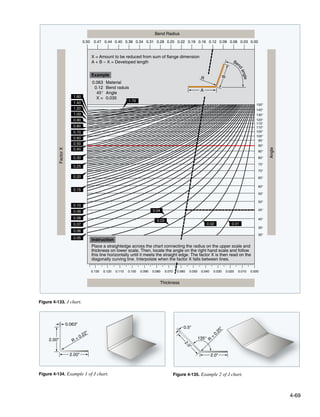
    Using a J-Chart To Calculate Total Developed                                         Repair Parts Layout ..............................................4-93
    Width.....................................................................4-67       Rivet Selection . ....................................................4-94
    How To Find the Total Developed Width Using                                          Rivet Spacing and Edge Distance..........................4-94
    a J-Chart.................................................................4-67       Corrosion Treatment . ...........................................4-94
  Using a Sheet Metal Brake to Fold Metal.................4-68                         Approval of Repair....................................................4-94
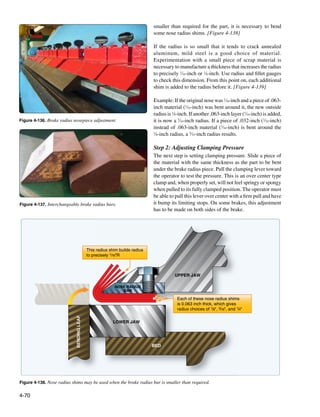
    Step 1: Adjustment of Bend Radius......................4-68
                                                        .                              Repair of Stressed Skin Structure ............................4-95
    Step 2: Adjusting Clamping Pressure....................4-70                          Patches ..................................................................4-95
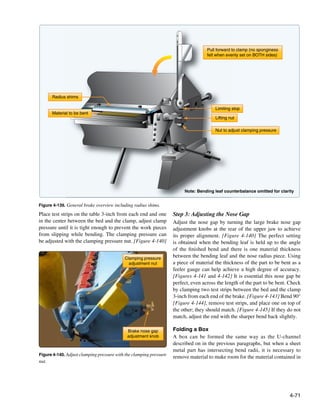
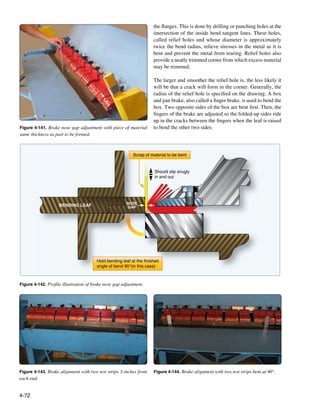
    Step 3: Adjusting the Nose Gap............................4-71
                                                  .                                    Typical Repairs for Aircraft Structures ....................4-97
  Folding a Box............................................................4-71          Floats.....................................................................4-97
                                                                                                .
    Relief Hole Location.............................................4-73
                                 .                                                       Corrugated Skin Repair.........................................4-97
    Layout Method......................................................4-73
                        .                                                                Replacement of a Panel.........................................4-97
  Open and Closed Bends............................................4-74                  Outside the Member .............................................4-97
    Open End Bend (Less Than 90°)...........................4-74                         Inside the Member.................................................4-97
    Closed End Bend (More Than 90°).......................4-74                           Edges of the Panel ................................................4-97
  Hand Forming...........................................................4-74            Repair of Lightening Holes.................................4-100
    Straight Line Bends...............................................4-75               Repairs to a Pressurized Area..............................4-100
    Formed or Extruded Angles..................................4-75
                                            .                                            Stringer Repair.....................................................4-100
    Flanged Angles......................................................4-76             Former or Bulkhead Repair.................................4-102
    Shrinking...............................................................4-76
                .                                                                        Longeron Repair..................................................4-103
    Stretching...............................................................4-77        Spar Repair..........................................................4-103
    Curved Flanged Parts. ...........................................4-77
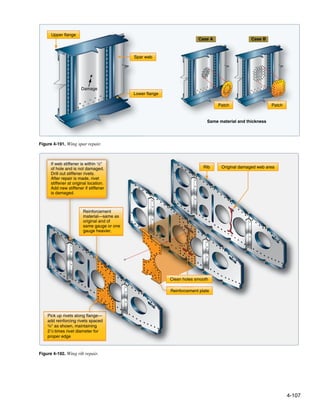
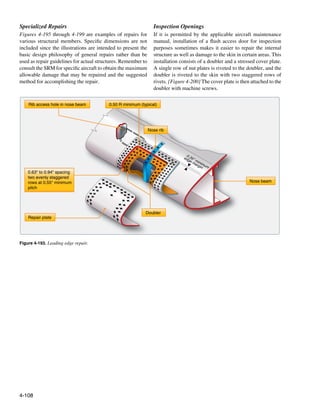
                                  .                                                      Rib and Web Repair............................................4-104
                                                                                                                       .
    Forming by Bumping. ...........................................4-80
                                   .                                                     Leading Edge Repair...........................................4-105
    Joggling.................................................................4-81
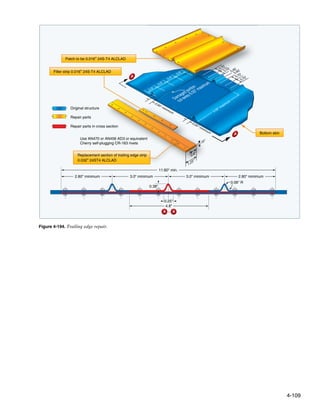
              .                                                                          Trailing Edge Repair...........................................4-105
                                                                                                                         .
    Lightening Holes...................................................4-82              Specialized Repairs. ............................................4-108
                                                                                                                     .
  Working Stainless Steel............................................4-83                Inspection Openings............................................4-108
  Working Inconel® Alloys 625 and 718.....................4-83
  Working Magnesium.................................................4-84
  Working Titanium.....................................................4-85


                                                                                                                                                                   xvii
Chapter 5                                                                                Correct Forming of a Weld.......................................5-16
Aircraft Welding. ..................................................5-1
                          .                                                              Characteristics of a Good Weld................................5-16
Introduction.....................................................................5-1   Oxy-Acetylene Welding of Ferrous Metals . ...............5-16
Types of Welding...........................................................5-2
                      .                                                                  Steel (Including SAE 4130)......................................5-16
  Gas Welding................................................................5-2         Chrome Molybdenum...............................................5-17
  Electric Arc Welding. .................................................5-2
                               .                                                         Stainless Steel. ..........................................................5-17
                                                                                                                 .
     Shielded Metal Arc Welding (SMAW)...................5-2                           Oxy-Acetylene Welding of Nonferrous Metals............5-18
     Gas Metal Arc Welding (GMAW)..........................5-3                           Aluminum Welding...................................................5-18
     Gas Tungsten Arc Welding (GTAW)......................5-3                            Magnesium Welding ................................................5-19
  Electric Resistance Welding ......................................5-5                Brazing and Soldering..................................................5-20
                                                                                                                          .
     Spot Welding...........................................................5-6          Torch Brazing of Steel..............................................5-20
     Seam Welding. ........................................................5-6
                          .                                                              Torch Brazing of Aluminum.....................................5-21
                                                                                         Soldering...................................................................5-21
  Plasma Arc Welding (PAW).......................................5-6
                                                                                             Aluminum Soldering.............................................5-21
  Plasma Arc Cutting ....................................................5-7
                                                                                             Silver Soldering.....................................................5-22
Gas Welding and Cutting Equipment.............................5-7
  Welding Gases ...........................................................5-7         Gas Metal Arc Welding (TIG Welding).......................5-22
     Acetylene.................................................................5-7       TIG Welding 4130 Steel Tubing...................................... 	
                                                                                         ...................................................................................5-23
     Argon.......................................................................5-7
                                                                                         TIG Welding Stainless Steel.....................................5-23
     Helium.....................................................................5-7
                                                                                         TIG Welding Aluminum...........................................5-24
     Hydrogen.................................................................5-7
                                                                                         TIG Welding Magnesium.........................................5-24
                                                                                                                                   .
     Oxygen. ...................................................................5-7
              .                                                                          TIG Welding Titanium..............................................5-24
  Pressure Regulators.....................................................5-7          Arc Welding Procedures, Techniques, and Welding
  Welding Hose..............................................................5-8        Safety Equipment..........................................................5-25
  Check Valves and Flashback Arrestors. .....................5-8
                                                           .                             Multiple Pass Welding..............................................5-27
  Torches........................................................................5-9     Techniques of Position Welding...............................5-28
     Equal Pressure Torch...............................................5-9              Flat Position Welding................................................5-28
     Injector Torch..........................................................5-9             Bead Weld.............................................................5-28
     Cutting Torch...........................................................5-9             Groove Weld. ........................................................5-28
                                                                                                                   .
  Torch Tips...................................................................5-9           Fillet Weld.............................................................5-28
  Welding Eyewear........................................................5-9                 Lap Joint Weld. .....................................................5-29
                                                                                                                      .
     Filler Rod...............................................................5-10       Vertical Position Welding ........................................5-29
  Equipment Setup.......................................................5-10             Overhead Position Welding......................................5-29
     Gas Cylinders........................................................5-10
                        .                                                              Expansion and Contraction of Metals...........................5-30
     Regulators..............................................................5-11      Welded Joints Using Oxy-Acetylene Torch.................5-31
     Hoses.....................................................................5-11
            .                                                                            Butt Joints. ................................................................5-31
                                                                                                           .
     Connecting Torch..................................................5-11              Tee Joints..................................................................5-31
                                                                                                          .
     Select the Tip Size.................................................5-11            Edge Joints................................................................5-31
     Adjusting the Regulator Working Pressure...........5-13                             Corner Joints.............................................................5-32
  Lighting and Adjusting the Torch ............................5-13                      Lap Joints..................................................................5-32
  Different Flames. ......................................................5-13
                          .                                                            Repair of Steel Tubing Aircraft Structure by
     Neutral Flame........................................................5-13         Welding.........................................................................5-32
     Carburizing Flame.................................................5-13              Dents at a Cluster Weld. ...........................................5-32
                                                                                                                                 .
     Oxidizing Flame....................................................5-13             Dents Between Clusters............................................5-32
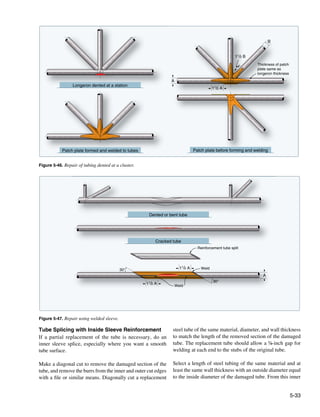
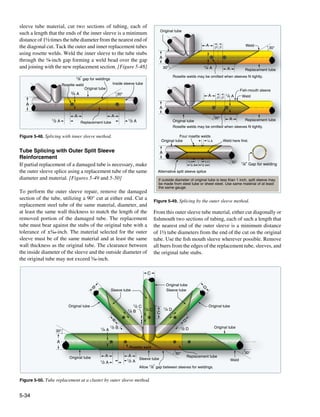
                                                                                         Tube Splicing with Inside Sleeve Reinforcement.....5-33
     Soft or Harsh Flames.............................................5-13
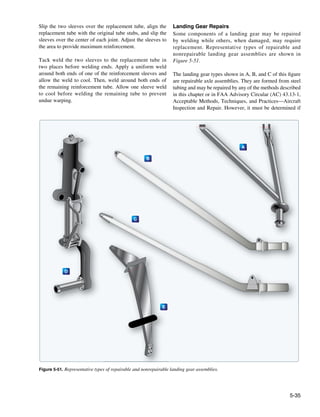
                                                                                         Tube Splicing with Outer Split Sleeve
     Handling of the Torch. ..........................................5-14
                                    .
                                                                                         Reinforcement...........................................................5-34
Oxy-acetylene Cutting..................................................5-14
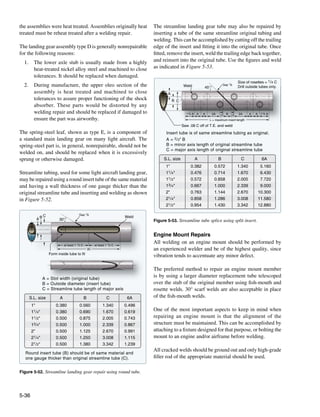
                                                                                         Landing Gear Repairs...............................................5-35
                                                                                                                             .
  Shutting Down the Gas Welding Equipment............5-15
                                                                                         Engine Mount Repairs. .............................................5-36
                                                                                                                               .
Gas Welding Procedures and Techniques....................5-15
                                                           .
                                                                                         Rosette Welding........................................................5-37


xviii
Chapter 6                                                                                  Fiberglass.................................................................7-4
Aircraft Wood and Structural Repair..................6-1                                   Kevlar®....................................................................7-4
Aircraft Wood and Structural Repair..............................6-1                       Carbon/Graphite......................................................7-6
Wood Aircraft Construction and Repairs.......................6-2                           Boron.......................................................................7-6
  Inspection of Wood Structures....................................6-3                     Ceramic Fibers.........................................................7-6
    External and Internal Inspection..............................6-3                      Lightning Protection Fibers.....................................7-6
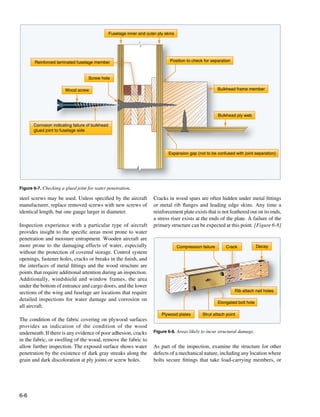
    Glued Joint Inspection.............................................6-4              Matrix Materials..........................................................7-7
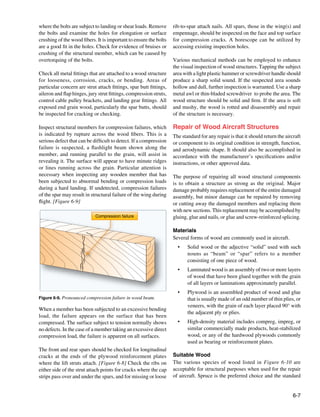
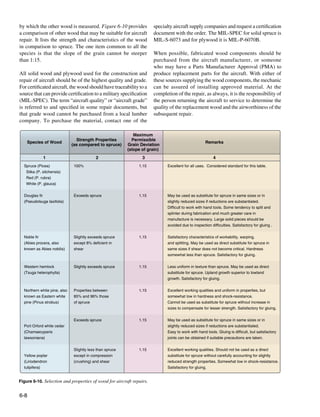
    Wood Condition .....................................................6-5                Thermosetting Resins..............................................7-7
Repair of Wood Aircraft Structures................................6-7                   Curing Stages of Resins..............................................7-8
  Materials......................................................................6-7    Pre-Impregnated Products (Prepregs).........................7-8
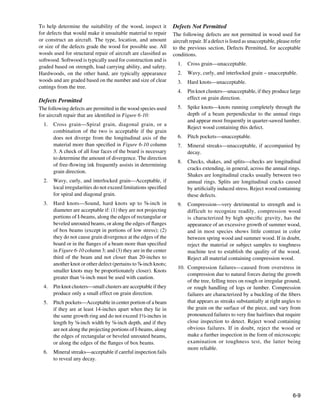
  Suitable Wood.............................................................6-7         Dry Fiber Material. .....................................................7-9
                                                                                                                 .
    Defects Permitted....................................................6-9
                             .                                                          Thixotropic Agents. ....................................................7-9
                                                                                                                   .
    Defects Not Permitted.............................................6-9
                                    .                                                   Adhesives....................................................................7-9
    Glues (Adhesives). ................................................6-10
                               .                                                           Film Adhesives........................................................7-9
    Definition of Terms Used in the Glue Process......6-10                                 Paste Adhesives.......................................................7-9
  Preparation of Wood for Gluing...............................6-11
                                                .                                          Foaming Adhesives...............................................7-10
    Preparing Glues for Use........................................6-12
                                       .                                               Description of Sandwich Structures.............................7-10
                                                                                                                                        .
    Applying the Glue/Adhesive ................................6-12                     Properties. .................................................................7-11
                                                                                                   .
    Pressure on the Joint..............................................6-12             Facing Materials........................................................7-11
    Testing Glued Joints .............................................6-13              Core Materials...........................................................7-11
  Repair of Wood Aircraft Components......................6-13                             Honeycomb............................................................7-11
    Wing Rib Repairs .................................................6-13                 Foam......................................................................7-12
    Wing Spar Repairs . ..............................................6-15                 Balsa Wood. ..........................................................7-13
                                                                                                           .
    Bolt and Bushing Holes.........................................6-20                Manufacturing and In-Service Damage........................7-13
  Plywood Skin Repairs...............................................6-20               Manufacturing Defects..............................................7-13
    Fabric patch .........................................................6-20             Fiber Breakage.......................................................7-13
    Splayed Patch........................................................6-20
                       .                                                                   Matrix Imperfections ............................................7-13
    Surface Patch.........................................................6-20             Delamination and Debonds...................................7-14
                                                                                                                                   .
    Plug Patch..............................................................6-21           Combinations of Damages. ...................................7-14
                                                                                                                                 .
    Scarf Patch.............................................................6-24           Flawed Fastener Holes. .........................................7-14
                                                                                                                           .
    The Back of the Skin is Accessible for Repair .....6-25                             In-Service Defects.....................................................7-14
    The Back of the Skin Is Not Accessible                                              Corrosion...................................................................7-15
    for Repair...............................................................6-25      Nondestructive Inspection (NDI) of Composites.........7-15
                                                                                        Visual Inspection.......................................................7-15
Chapter 7                                                                               Audible Sonic Testing (Coin Tapping) ....................7-16
Advanced Composite Materials..........................7-1                                  Automated Tap Test..............................................7-16
Description of Composite Structures..............................7-1                    Ultrasonic Inspection................................................7-17
                                                                                                                     .
 Introduction.................................................................7-1          Through Transmission Ultrasonic Inspection. ......7-17             .
 Laminated Structures..................................................7-2
                             .                                                             Pulse Echo Ultrasonic Inspection..........................7-18
    Major Components of a Laminate...........................7-2                           Ultrasonic Bondtester Inspection. .........................7-18
                                                                                                                                           .
    Strength Characteristics...........................................7-2                 Phased Array Inspection........................................7-18
    Fiber Orientation. ....................................................7-2
                          .                                                             Radiography..............................................................7-19
    Warp Clock..............................................................7-3         Thermography...........................................................7-19
 Fiber Forms.................................................................7-3        Neutron Radiography................................................7-19
    Roving.....................................................................7-3
           .                                                                            Moisture Detector . ...................................................7-19
    Unidirectional (Tape) .............................................7-3             Composite Repairs........................................................7-19
    Bidirectional (Fabric)..............................................7-3
                                 .                                                      Layup Materials........................................................7-19
                                                                                                             .
                                                                                           Hand Tools............................................................7-19
                                                                                                         .
    Nonwoven (Knitted or Stitched). ............................7-4
                                                  .
                                                                                           Air Tools................................................................7-20
 Types of Fiber.............................................................7-4


                                                                                                                                                                      xix
Caul Plate . ............................................................7-20         Damage Requiring Core Replacement and
   Support Tooling and Molds...................................7-20                      Repair to One or Both Faceplates..........................7-34
 Vacuum Bag Materials . ...........................................7-21                Solid Laminates.........................................................7-37
   Release Agents......................................................7-21
                        .                                                                Bonded Flush Patch Repairs..................................7-37
   Bleeder Ply............................................................7-21
                  .                                                                      Trailing Edge and Transition Area Patch
   Peel Ply..................................................................7-21        Repairs...................................................................7-40
   Layup Tapes..........................................................7-21
                     .                                                                   Resin Injection Repairs..........................................7-40
   Perforated Release Film. .......................................7-21
                                      .                                                  Composite Patch Bonded to Aluminum
   Solid Release Film.................................................7-21               Structure. ...............................................................7-40
                                                                                                    .
   Breather Material...................................................7-21              Fiberglass Molded Mat Repairs.............................7-41
   Vacuum Bag .........................................................7-21              Radome Repairs.....................................................7-41
 Vacuum Equipment...................................................7-22                 External Bonded Patch Repairs.............................7-41
   Vacuum Compaction Table...................................7-22                        Bolted Repairs.......................................................7-44
 Heat Sources . ...........................................................7-22        Fasteners Used with Composite Laminates..............7-46
   Oven. .....................................................................7-22
         .                                                                               Corrosion Precautions. ..........................................7-46
                                                                                                                         .
   Autoclave...............................................................7-23          Fastener Materials . ...............................................7-46
   Heat Bonder and Heat Lamps................................7-23                        Fastener System for Sandwich Honeycomb
   Thermocouples......................................................7-25               Structures (SPS Technologies Comp Tite)............7-46
 Types of Layups........................................................7-26             Hi-Lok® and Huck-Spin® Lockbolt Fasteners.....7-46
   Wet Layups . .........................................................7-26            Eddie-Bolt® Fasteners..........................................7-46
                                                                                                                           .
   Prepreg...................................................................7-27        Cherry’s E-Z Buck          ® (CSR90433) Hollow Rivet. .7-47              .
   Co-curing...............................................................7-28          Blind Fasteners......................................................7-47
   Secondary Bonding. ..............................................7-28
                               .                                                         Blind Bolts ............................................................7-48
   Co-bonding............................................................7-28            Fiberlite..................................................................7-48
 Layup Process (Typical Laminated Wet Layup)......7-28                  .                Screws and Nutplates in Composite Structures.....7-48
   Layup Techniques. ................................................7-28
                             .                                                         Machining Processes and Equipment. ......................7-49
                                                                                                                                             .
   Bleedout Technique...............................................7-29                 Drilling. .................................................................7-49
                                                                                                  .
   No Bleedout...........................................................7-29            Countersinking. .....................................................7-52
                                                                                                               .
   Ply Orientation Warp Clock..................................7-29                      Cutting Processes and Precautions........................7-52
 Mixing Resins ..........................................................7-30            Cutting Equipment.................................................7-52
 Saturation Techniques...............................................7-30              Repair Safety.............................................................7-53
   Fabric Impregnation With a Brush or                                                   Eye Protection. ......................................................7-53
                                                                                                             .
   Squeegee................................................................7-30          Respiratory Protection...........................................7-53
   Fabric Impregnation Using a Vacuum Bag...........7-30                                 Skin Protection......................................................7-53
                                                                                                               .
 Vacuum Bagging Techniques...................................7-31                        Fire Protection.......................................................7-53
   Single Side Vacuum Bagging................................7-31                    Transparent Plastics......................................................7-54
   Envelope Bagging. ................................................7-31
                             .                                                         Optical Considerations..............................................7-54
 Alternate Pressure Application.................................7-32
                                             .                                         Identification.............................................................7-54
                                                                                                       .
   Shrink Tape. ..........................................................7-32
                    .                                                                    Storage and Handling............................................7-54
   C-Clamps...............................................................7-32         Forming Procedures and Techniques........................7-54
   Shotbags and Weights...........................................7-32
                                   .                                                     Heating. .................................................................7-54
                                                                                                  .
 Curing of Composite Materials.................................7-32                      Forms.....................................................................7-55
   Room Temperature Curing....................................7-32                       Forming Methods..................................................7-55
                                                                                                                  .
   Elevated Temperature Curing................................7-32                     Sawing and Drilling..................................................7-55
Composite Honeycomb Sandwich Repairs. .................7-33 .                            Sawing...................................................................7-55
 Damage Classification...............................................7-34                Drilling. .................................................................7-55
                                                                                                  .
 Sandwich Structures..................................................7-34             Cementing.................................................................7-56
   Minor Core Damage (Filler and Potting                                                 Application of Cement. .........................................7-56
                                                                                                                          .
   Repairs)..................................................................7-34

xx
Repairs. .....................................................................7-56
            .                                                                                Mixing Equipment...................................................8-9
   Cleaning....................................................................7-57      Preparation ...................................................................8-10
   Polishing....................................................................7-57       Surfaces.....................................................................8-10
   Windshield Installation.............................................7-57                Primer and Paint........................................................8-10
   Installation Procedures..............................................7-57             Spray Gun Operation....................................................8-11
                                                                                           Adjusting the Spray Pattern......................................8-11
                                                                                                                                    .
Chapter 8                                                                                  Applying the Finish...................................................8-11
Aircraft Painting and Finishing...........................8-1                              Common Spray Gun Problems. ................................8-12
                                                                                                                                         .
Introduction . ..................................................................8-1     Sequence for Painting a Single-Engine or Light
Finishing Materials ........................................................8-2          Twin Airplane...............................................................8-13
  Acetone.......................................................................8-2
            .                                                                            Common Paint Troubles...............................................8-13
  Alcohol........................................................................8-2       Poor Adhesion...........................................................8-13
  Benzene.......................................................................8-2        Blushing....................................................................8-13
  Methyl Ethyl Ketone (MEK)......................................8-2
                                             .                                             Pinholes.....................................................................8-14
  Methylene Chloride.....................................................8-2               Sags and Runs...........................................................8-14
  Toluene........................................................................8-2       Orange Peel...............................................................8-14
  Turpentine...................................................................8-3         Fisheyes.....................................................................8-15
  Mineral Spirits.............................................................8-3          Sanding Scratches.....................................................8-15
  Naphtha.......................................................................8-3        Wrinkling..................................................................8-15
  Linseed Oil..................................................................8-3         Spray Dust.................................................................8-16
  Thinners. .....................................................................8-3
              .                                                                          Painting Trim and Identification Marks........................8-16
  Varnish........................................................................8-3       Masking and Applying the Trim...............................8-16
Primers............................................................................8-3       Masking Materials.................................................8-16
  Wash Primers..............................................................8-3              Masking for the Trim.............................................8-16
  Red Iron Oxide............................................................8-3            Display of Nationality and Registration Marks .......8-17
  Gray Enamel Undercoat..............................................8-4                     Display of Marks...................................................8-17
  Urethane .....................................................................8-4          Location and Placement of Marks.........................8-17
  Epoxy..........................................................................8-4
                                                                                             Size Requirements for Different Aircraft..............8-18
  Zinc Chromate.............................................................8-4
                                                                                         Decals...........................................................................8-18
                                                                                                .
Identification of Paints....................................................8-4
                                                                                           Paper Decals..............................................................8-18
  Dope............................................................................8-4
                                                                                           Metal Decals with Cellophane Backing....................8-18
  Synthetic Enamel........................................................8-4
                           .
                                                                                           Metal Decals With Paper Backing............................8-18
  Lacquers......................................................................8-4
                                                                                           Metal Decals with No Adhesive...............................8-18
                                                                                                                                           .
  Polyurethane................................................................8-5
                                                                                           Vinyl Film Decals.....................................................8-18
  Urethane Coating........................................................8-5
                           .
                                                                                           Removal of Decals ...................................................8-19
  Acrylic Urethanes. ......................................................8-5
                             .
                                                                                         Paint System Compatibility..........................................8-19
Methods of Applying Finish...........................................8-5
                                                                                           Paint Touchup...........................................................8-19
  Dipping........................................................................8-5
                                                                                             Identification of Paint Finishes..............................8-19
  Brushing......................................................................8-5
                                                                                             Surface Preparation for Touchup...........................8-20
  Spraying......................................................................8-5
Finishing Equipment.......................................................8-6              Stripping the Finish...................................................8-20
  Paint Booth..................................................................8-6           Chemical Stripping................................................8-21
  Air Supply...................................................................8-6           Plastic Media Blasting (PMB)...............................8-21
  Spray Equipment.........................................................8-6                New Stripping Methods.........................................8-21
     Air Compressors......................................................8-6            Safety in the Paint Shop................................................8-21
     Large Coating Containers........................................8-7                   Storage of Finishing Materials..................................8-21
     System Air Filters....................................................8-7           Protective Equipment for Personnel.............................8-22
  Miscellaneous Painting Tools and Equipment............8-7
     Spray Guns..............................................................8-7
                     .
     Fresh Air Breathing Systems...................................8-8
     Viscosity Measuring Cup........................................8-9


                                                                                                                                                                          xxi
Chapter 9                                                                                   Generator Controls for High Output
Aircraft Electrical System....................................9-1                           Generators..............................................................9-35
Introduction.....................................................................9-1        Generator Controls for Low-Output
  Ohm’s Law..................................................................9-2            Generators..............................................................9-36
  Current. .......................................................................9-2
           .                                                                              DC Alternators and Controls.....................................9-38
     Conventional Current Theory and Electron                                               DC Alternators . ....................................................9-39
     Theory . ...................................................................9-3        Alternator Voltage Regulators . ............................9-40
  Electromotive Force (Voltage)....................................9-4                      Solid-State Regulators...........................................9-40
  Resistance....................................................................9-4       Power Systems..........................................................9-41
     Factors Affecting Resistance...................................9-4                   AC Alternators .........................................................9-41
  Electromagnetic Generation of Power........................9-5                          Alternator Drive .......................................................9-42
  Alternating Current (AC) Introduction ......................9-9                         AC Alternators Control Systems . ............................9-45
     Definitions...............................................................9-9
                   .                                                                    Aircraft Electrical Systems...........................................9-47
  Opposition to Current Flow of AC. ..........................9-12
                                                     .                                    Small Single-Engine Aircraft....................................9-47
     Resistance..............................................................9-12           Battery Circuit.......................................................9-47
     Inductive Reactance...............................................9-12                 Generator Circuit...................................................9-48
     Capacitive Reactance.............................................9-14                  Alternator Circuit...................................................9-48
     Impedance . ...........................................................9-15            External Power Circuit..........................................9-50
     Parallel AC Circuits...............................................9-18                Starter Circuit........................................................9-50
                                                                                                               .
     Power in AC Circuits.............................................9-20                  Avionics Power Circuit.........................................9-51
                                                                                                                              .
     True Power............................................................9-20
                     .                                                                      Landing Gear Circuit.............................................9-52
     Apparent Power ....................................................9-20                AC Supply.............................................................9-55
  Power Factor ............................................................9-20           Light Multiengine Aircraft........................................9-57
Aircraft Batteries. .........................................................9-21
                       .                                                                    Paralleling Alternators or Generators....................9-57
  Type of Batteries.......................................................9-21              Power Distribution on Multiengine Aircraft ........9-58
     Lead-Acid Batteries...............................................9-21               Large Multiengine Aircraft.......................................9-60
     NiCd Batteries.......................................................9-22              AC Power Systems................................................9-60
     Capacity.................................................................9-22      Wiring Installation........................................................9-65
     Aircraft Battery Ratings by Specification..............9-23                          Wiring Diagrams ......................................................9-65
     Storing and Servicing Facilities.............................9-23                      Block Diagrams.....................................................9-65
     Battery Freezing....................................................9-23
                            .                                                               Pictorial Diagrams.................................................9-65
     Temperature Correction.........................................9-23                    Schematic Diagrams..............................................9-65
     Battery Charging . .................................................9-24             Wire Types................................................................9-65
     Battery Maintenance..............................................9-24                  Conductor..............................................................9-67
     Battery and Charger Characteristics......................9-25                          Plating....................................................................9-68
     Aircraft Battery Inspection....................................9-26                    Insulation...............................................................9-68
     Ventilation Systems...............................................9-26                 Wire Shielding.......................................................9-68
     Installation Practices..............................................9-26               Wire Substitutions.................................................9-69
     Troubleshooting.....................................................9-27               Areas Designated as Severe Wind and
  DC Generators and Controls.....................................9-27                       Moisture Problem (SWAMP) ...............................9-69
     Generators..............................................................9-27         Wire Size Selection...................................................9-69
     Construction Features of DC Generators. .............9-29    .                         Current Carrying Capacity. ...................................9-71
                                                                                                                                   .
     Types of DC Generators........................................9-32                     Allowable Voltage Drop........................................9-75
     Generator Ratings..................................................9-33              Wire Identification....................................................9-77
                                                                                                                   .
     DC Generator Maintenance...................................9-33                        Placement of Identification Markings. ..................9-77
                                                                                                                                                    .
  Generator Controls....................................................9-34                Types of Wire Markings . .....................................9-77
     Theory of Generator Control.................................9-34                     Wire Installation and Routing...................................9-78
     Functions of Generator Control Systems. .............9-35    .                         Open Wiring..........................................................9-78


xxii
Wire Groups and Bundles and Routing.................9-78
    Conduit..................................................................9-83
    Wire Shielding.......................................................9-85
  Lacing and Tying Wire Bundles...............................9-88
    Tying......................................................................9-89
  Wire Termination......................................................9-90
    Stripping Wire ......................................................9-90
    Terminal Strips......................................................9-91
    Terminal Lugs. ......................................................9-91
                         .
    Emergency Splicing Repairs.................................9-92
                                              .
    Junction Boxes . ....................................................9-92
    AN/MS Connectors...............................................9-93
    Coaxial Cable........................................................9-96
                       .
  Wire Inspection.........................................................9-96
Electrical System Components.....................................9-96
  Switches....................................................................9-96
    Type of Switches...................................................9-98
    Toggle and Rocker Switches.................................9-98
    Rotary Switches.....................................................9-99
    Precision (Micro) Switches...................................9-99
                                            .
  Relays and Solenoids (Electromagnetic
  Switches)...................................................................9-99
    Solenoids...............................................................9-99
                .
    Relays....................................................................9-99
  Current Limiting Devices........................................9-100
    Fuses....................................................................9-100
    Circuit Breakers...................................................9-100
Aircraft Lighting Systems...........................................9-101
  Exterior Lights........................................................9-101
                     .
    Position Lights.....................................................9-101
    Anticollision Lights.............................................9-102
    Landing and Taxi Lights. ....................................9-103
                                        .
    Wing Inspection Lights.......................................9-104
                                      .
  Interior Lights. ........................................................9-104
                    .
  Maintenance and Inspection of Lighting
  Systems...................................................................9-105
           .

Glossary...............................................................G-1

Index.......................................................................I-1


                                                                                      xxiii
xxiv
Chapter 1

Aircraft Structures
   A Brief History of Aircraft Structures
   The history of aircraft structures underlies the history of
   aviation in general. Advances in materials and processes
   used to construct aircraft have led to their evolution from
   simple wood truss structures to the sleek aerodynamic flying
   machines of today. Combined with continuous powerplant
   development, the structures of “flying machines” have
   changed significantly.

   The key discovery that “lift” could be created by passing
   air over the top of a curved surface set the development of
   fixed and rotary-wing aircraft in motion. George Cayley
   developed an efficient cambered airfoil in the early 1800s,
   as well as successful manned gliders later in that century. He
   established the principles of flight, including the existence of
   lift, weight, thrust, and drag. It was Cayley who first stacked
   wings and created a tri-wing glider that flew a man in 1853.


                                                                      1-1
Earlier, Cayley studied the center of gravity of flying
machines, as well as the effects of wing dihedral. Furthermore,
he pioneered directional control of aircraft by including the
earliest form of a rudder on his gliders. [Figure 1-1]

In the late 1800s, Otto Lilienthal built upon Cayley’s
discoveries. He manufactured and flew his own gliders
on over 2,000 flights. His willow and cloth aircraft had
wings designed from extensive study of the wings of birds.
Lilienthal also made standard use of vertical and horizontal
fins behind the wings and pilot station. Above all, Lilienthal
proved that man could fly. [Figure 1-2]

Octave Chanute, a retired railroad and bridge engineer,
was active in aviation during the 1890s. [Figure 1-3] His
interest was so great that, among other things, he published
a definitive work called “Progress in Flying Machines.” This
was the culmination of his effort to gather and study all the


                                                                   Figure 1-2. Master of gliding and wing study, Otto Lilienthal (top)
                                                                   and one of his more than 2,000 glider flights (bottom).

                                                                   information available on aviation. With the assistance of
                                                                   others, he built gliders similar to Lilienthal’s and then his
                                                                   own. In addition to his publication, Chanute advanced aircraft
                                                                   structure development by building a glider with stacked wings
                                                                   incorporating the use of wires as wing supports.

                                                                   The work of all of these men was known to the Wright
                                                                   Brothers when they built their successful, powered airplane
                                                                   in 1903. The first of its kind to carry a man aloft, the Wright
                                                                   Flyer had thin, cloth-covered wings attached to what was
                                                                   primarily truss structures made of wood. The wings contained
                                                                   forward and rear spars and were supported with both struts
Figure 1-1. George Cayley, the father of aeronautics (top) and a   and wires. Stacked wings (two sets) were also part of the
flying replica of his 1853 glider (bottom).                        Wright Flyer. [Figure 1-4]


1-2
still supported by wires, but a mast extending above the
                                                                    fuselage enabled the wings to be supported from above, as
                                                                    well as underneath. This made possible the extended wing
                                                                    length needed to lift an aircraft with a single set of wings.
                                                                    Bleriot used a Pratt truss-type fuselage frame. [Figure 1-5]


                                                                    Figure 1-5. The world’s first mono-wing by Louis Bleriot.
Figure 1-3. Octave Chanute gathered and published all of the        More powerful engines were developed and airframe
aeronautical knowledge known to date in the late 1890s. Many        structures changed to take advantage of the benefits. As
early aviators benefited from this knowledge.                       early as 1910, German Hugo Junkers was able to build an
                                                                    aircraft with metal truss construction and metal skin due to
Powered heavier-than-air aviation grew from the Wright
                                                                    the availability of stronger powerplants to thrust the plane
design. Inventors and fledgling aviators began building their
                                                                    forward and into the sky. The use of metal instead of wood
own aircraft. Early on, many were similar to that constructed
                                                                    for the primary structure eliminated the need for external
by the Wrights using wood and fabric with wires and struts
                                                                    wing braces and wires. His J-1 also had a single set of wings
to support the wing structure. In 1909, Frenchman Louis
                                                                    (a monoplane) instead of a stacked set. [Figure 1-6]
Bleriot produced an aircraft with notable design differences.
He built a successful mono-wing aircraft. The wings were


Figure 1-4. The Wright Flyer was the first successful powered aircraft. It was made primarily of wood and fabric.


                                                                                                                                1-3
Figure 1-6. The Junker J-1 all metal construction in 1910.

Leading up to World War I (WWI), stronger engines also
allowed designers to develop thicker wings with stronger
spars. Wire wing bracing was no longer needed. Flatter, lower
wing surfaces on high-camber wings created more lift. WWI
expanded the need for large quantities of reliable aircraft.
Used mostly for reconnaissance, stacked-wing tail draggers
with wood and metal truss frames with mostly fabric skin
dominated the wartime sky. [Figure 1-7] The Red Baron’s
Fokker DR-1 was typical.


Figure 1-7. World War I aircraft were typically stacked-wing fabric-
covered aircraft like this Breguet 14 (circa 1917).
                                                                       Figure 1-8. The flying boat hull was an early semimonocoque design
In the 1920s, the use of metal in aircraft construction                like this Curtiss HS-2L.
increased. Fuselages able to carry cargo and passengers
were developed. The early flying boats with their hull-type            construction of the fuselage. [Figure 1-9] The fiberglass
construction from the shipbuilding industry provided the               radome was also developed during this period.
blueprints for semimonocoque construction of fuselages.
[Figure 1-8] Truss-type designs faded. A tendency toward               After WWII, the development of turbine engines led to
cleaner monowing designs prevailed.                                    higher altitude flight. The need for pressurized aircraft
                                                                       pervaded aviation. Semimonocoque construction needed
Into the 1930s, all-metal aircraft accompanied new lighter and         to be made even stronger as a result. Refinements to the
more powerful engines. Larger semimonocoque fuselages                  all-metal semimonocoque fuselage structure were made to
were complimented with stress-skin wing designs. Fewer                 increase strength and combat metal fatigue caused by the
truss and fabric aircraft were built. World War II (WWII)              pressurization-depressurization cycle. Rounded windows
brought about a myriad of aircraft designs using all metal             and door openings were developed to avoid weak areas
technology. Deep fuel-carrying wings were the norm, but the            where cracks could form. Integrally machined copper
desire for higher flight speeds prompted the development of            alloy aluminum skin resisted cracking and allowed thicker
thin-winged aircraft in which fuel was carried in the fuselage.        skin and controlled tapering. Chemical milling of wing
The first composite structure aircraft, the De Havilland               skin structures provided great strength and smooth high
Mosquito, used a balsa wood sandwich material in the                   performance surfaces. Variable contour wings became easier


1-4
Figure 1-9. The DeHavilland Mosquito, the first aircraft with foam
core honeycomb in the fuselage.                                      Figure 1-10. The nearly all composite Cessna Citation Mustang
to construct. Increases in flight speed accompanying jet travel      very light jet (VLJ).
brought about the need for thinner wings. Wing loading also
                                                                     General
increased greatly. Multispar and box beam wing designs were
developed in response.                                               An aircraft is a device that is used for, or is intended to be used
                                                                     for, flight in the air. Major categories of aircraft are airplane,
In the 1960s, ever larger aircraft were developed to carry           rotorcraft, glider, and lighter-than-air vehicles. [Figure 1-11]
passengers. As engine technology improved, the jumbo jet             Each of these may be divided further by major distinguishing
was engineered and built. Still primarily aluminum with a            features of the aircraft, such as airships and balloons. Both
semimonocoque fuselage, the sheer size of the airliners of           are lighter-than-air aircraft but have differentiating features
the day initiated a search for lighter and stronger materials        and are operated differently.
from which to build them. The use of honeycomb constructed
panels in Boeing’s airline series saved weight while not             The concentration of this handbook is on the airframe of
compromising strength. Initially, aluminum core with                 aircraft; specifically, the fuselage, booms, nacelles, cowlings,
aluminum or fiberglass skin sandwich panels were used on             fairings, airfoil surfaces, and landing gear. Also included are
wing panels, flight control surfaces, cabin floor boards, and        the various accessories and controls that accompany these
other applications.                                                  structures. Note that the rotors of a helicopter are considered
                                                                     part of the airframe since they are actually rotating wings.
A steady increase in the use of honeycomb and foam core              By contrast, propellers and rotating airfoils of an engine on
sandwich components and a wide variety of composite                  an airplane are not considered part of the airframe.
materials characterizes the state of aviation structures from
the 1970s to the present. Advanced techniques and material           The most common aircraft is the fixed-wing aircraft. As
combinations have resulted in a gradual shift from aluminum          the name implies, the wings on this type of flying machine
to carbon fiber and other strong, lightweight materials. These       are attached to the fuselage and are not intended to move
new materials are engineered to meet specific performance            independently in a fashion that results in the creation of lift.
requirements for various components on the aircraft. Many            One, two, or three sets of wings have all been successfully
airframe structures are made of more than 50 percent                 utilized. [Figure 1-12] Rotary-wing aircraft such as
advanced composites, with some airframes approaching                 helicopters are also widespread. This handbook discusses
100 percent. The term “very light jet” (VLJ) has come to             features and maintenance aspects common to both fixed-
describe a new generation of jet aircraft made almost entirely       wing and rotary-wing categories of aircraft. Also, in certain
of advanced composite materials. [Figure 1-10] It is possible        cases, explanations focus on information specific to only
that noncomposite aluminum aircraft structures will become           one or the other. Glider airframes are very similar to fixed-
obsolete as did the methods and materials of construction            wing aircraft. Unless otherwise noted, maintenance practices
used by Cayley, Lilienthal, and the Wright Brothers.                 described for fixed-wing aircraft also apply to gliders. The
                                                                     same is true for lighter-than-air aircraft, although thorough


                                                                                                                                   1-5
Figure 1-11. Examples of different categories of aircraft, clockwise from top left: lighter-than-air, glider, rotorcraft, and airplane.

                                                                       coverage of the unique airframe structures and maintenance
                                                                       practices for lighter-than-air flying machines is not included
                                                                       in this handbook.

                                                                       The airframe of a fixed-wing aircraft consists of five principal
                                                                       units: the fuselage, wings, stabilizers, flight control surfaces,
                                                                       and landing gear. [Figure 1-13] Helicopter airframes consist
                                                                       of the fuselage, main rotor and related gearbox, tail rotor (on
                                                                       helicopters with a single main rotor), and the landing gear.

                                                                       Airframe structural components are constructed from a wide
                                                                       variety of materials. The earliest aircraft were constructed
                                                                       primarily of wood. Steel tubing and the most common
                                                                       material, aluminum, followed. Many newly certified aircraft
                                                                       are built from molded composite materials, such as carbon
                                                                       fiber. Structural members of an aircraft’s fuselage include
                                                                       stringers, longerons, ribs, bulkheads, and more. The main
                                                                       structural member in a wing is called the wing spar.

                                                                       The skin of aircraft can also be made from a variety of
                                                                       materials, ranging from impregnated fabric to plywood,
                                                                       aluminum, or composites. Under the skin and attached to
                                                                       the structural fuselage are the many components that support
                                                                       airframe function. The entire airframe and its components are
                                                                       joined by rivets, bolts, screws, and other fasteners. Welding,
                                                                       adhesives, and special bonding techniques are also used.

                                                                       Major Structural Stresses
                                                                       Aircraft structural members are designed to carry a load or
                                                                       to resist stress. In designing an aircraft, every square inch of
                                                                       wing and fuselage, every rib, spar, and even each metal fitting
                                                                       must be considered in relation to the physical characteristics
Figure 1-12. A monoplane (top), biplane (middle), and tri-wing
                                                                       of the material of which it is made. Every part of the aircraft
aircraft (bottom).                                                     must be planned to carry the load to be imposed upon it.


1-6
Wings
                                                                                                                           Flight
                                                                                                                           controls


       Powerplant
                                                                                                             Stabilizers
                                                                                   Fuselage

                                                                                         Flight controls


                                 Landing gear


Figure 1-13. Principal airframe units.

The determi­ ation of such loads is called stress analysis. Al­
             n                                                     tension, which stretches the aircraft. The tensile strength of
though planning the design is not the function of the aircraft     a material is measured in pounds per square inch (psi) and is
technician, it is, nevertheless, important that the technician     calculated by dividing the load (in pounds) re­ uired to pull the
                                                                                                                 q
understand and appreciate the stresses in­ olved in order to
                                           v                       material apart by its cross-sec­ional area (in square inches).
                                                                                                   t
avoid changes in the original design through improper repairs.
                                                                   Compression is the stress that res­ sts a crushing force.
                                                                                                       i
The term “stress” is often used interchangeably with the           [Figure 1-14B] The compressive strength of a material is
word “strain.” While related, they are not the same thing.         also measured in psi. Compression is the stress that tends to
External loads or forces cause stress. Stress is a material’s      shorten or squeeze aircraft parts.
internal resistance, or counterforce, that opposes deformation.
The degree of deformation of a material is strain. When            Torsion is the stress that produces twisting. [Figure 1-14C]
a material is subjected to a load or force, that material is       While moving the aircraft forward, the en­ ine also tends to
                                                                                                                g
deformed, regardless of how strong the material is or how          twist it to one side, but other aircraft components hold it on
light the load is.                                                 course. Thus, torsion is created. The torsion strength of a
                                                                   material is its resistance to twisting or torque.
There are five major stresses [Figure 1-14] to which all
aircraft are subjected:                                            Shear is the stress that resists the force tending to cause
  •	     Tension                                                   one layer of a material to slide over an adjacent layer.
                                                                   [Figure 1-14D] Two riveted plates in tension subject the
  •	     Compression                                               rivets to a shearing force. Usually, the shearing strength
  •	     Torsion                                                   of a material is either equal to or less than its tensile or
                                                                   compressive strength. Aircraft parts, especially screws, bolts,
  •	     Shear
                                                                   and rivets, are often subject to a shearing force.
  •	     Bending
                                                                   Bending stress is a combination of compression and tension.
Tension is the stress that resists a force that tends to pull      The rod in Figure 1-14E has been short­ ned (compressed) on
                                                                                                            e
something apart. [Figure 1-14A] The engine pulls the aircraft      the inside of the bend and stretched on the outside of the bend.
forward, but air resistance tries to hold it back. The result is


                                                                                                                                  1-7
A. Tension


                                                                                           B. Compression


                             C. Torsional                                                     D. Shear


                                                      Tension outside of bend

                     Bent structural member                                                 Shear along imaginary line (dotted)


                                                    Compression inside of bend


                                                E. Bending (the combination stress)


Figure 1-14. The five stresses that may act on an aircraft and its parts.

A single member of the structure may be subjected to                   Fixed-Wing Aircraft
a combination of stresses. In most cases, the struc­ ural
                                                   t
                                                                       Fuselage
members are designed to carry end loads rather than side
                                                                       The fuselage is the main structure or body of the fixed-wing
loads. They are designed to be subjected to tension or
                                                                       aircraft. It provides space for cargo, controls, acces­ ories,
                                                                                                                              s
compression rather than bending.
                                                                       passengers, and other equipment. In single-engine aircraft,
                                                                       the fuselage houses the powerplant. In multiengine aircraft,
Strength or resistance to the external loads imposed during
                                                                       the engines may be either in the fuselage, attached to the
operation may be the principal requirement in cer­ ain     t
                                                                       fuselage, or suspended from the wing structure. There are two
structures. However, there are numerous other characteristics
                                                                       general types of fuselage construc­ion: truss and monocoque.
                                                                                                         t
in addition to designing to control the five major stresses that
engineers must consider. For example, cowling, fairings, and
                                                                       Truss Type
simi­ar parts may not be subject to significant loads requiring
     l
a high degree of strength. However, these parts must have              A truss is a rigid framework made up of members, such as
streamlined shapes to meet aerodynamic requirements, such              beams, struts, and bars to resist deforma­ion by applied loads.
                                                                                                                t
as reducing drag or directing airflow.                                 The truss-framed fuselage is generally covered with fabric.


1-8
The truss-type fuselage frame is usually constructed of steel
tubing welded together in such a manner that all members                        Skin              Former
of the truss can carry both tension and compression loads.
[Figure 1-15] In some aircraft, principally the light, single-
engine models, truss fuselage frames may be constructed of
aluminum alloy and may be riveted or bolted into one piece,
with cross-bracing achieved by using solid rods or tubes.

                                 Longeron

     Diagonal web members


                                                                                                             Bulkhead


                                                                 Figure 1-16. An airframe using monocoque construction.

                                                                 design but, additionally, the skin is reinforced by longitudinal
                               Vertical web members              members called longerons. Longerons usually extend across
                                                                 several frame members and help the skin support primary
                                                                 bending loads. They are typically made of aluminum alloy
Figure 1-15. A truss-type fuselage. A Warren truss uses mostly
                Figure 1-2. The Warren truss.                    either of a single piece or a built-up construction.
diagonal bracing.

Monocoque Type                                                   Stringers are also used in the semimonocoque fuselage. These
                                                                 longitudinal members are typically more numerous and lighter
The monocoque (single shell) fuselage relies largely on the
                                                                 in weight than the longerons. They come in a variety of shapes
strength of the skin or covering to carry the primary loads.
                                                                 and are usually made from single piece aluminum alloy
The design may be di­ ided into two classes:
                      v
                                                                 extrusions or formed aluminum. Stringers have some rigidity
  1.	 Monocoque                                                  but are chiefly used for giving shape and for attachment of
  2. 	 Semi­ onocoque
           m                                                     the skin. Stringers and longerons together prevent tension
                                                                 and compression from bending the fuselage. [Figure 1-17]
Different por­ions of the same fuselage may belong to either
             t
of the two classes, but most modern aircraft are considered
to be of semimonocoque type construction.                                   Longeron                       Skin

The true monocoque construction uses formers, frame
assemblies, and bulkheads to give shape to the fuselage.
[Figure 1-16] The heaviest of these structural members are
located at intervals to carry concentrated loads and at points
where fittings are used to attach other units such as wings,
powerplants, and stabilizers. Since no other bracing members
are present, the skin must carry the primary stresses and
keep the fuselage rigid. Thus, the biggest problem involved
in mono­ oque construction is maintaining enough strength
         c
while keeping the weight within allowable limits.
                                                                                                                  Stringer
Semimonocoque Type
To overcome the strength/weight problem of monocoque                       Bulkhead
construction, a modification called semi­ onocoque
                                                m
construction was devel­ ped. It also consists of frame
                         o                                       Figure 1-17. The most common airframe construction is
assemblies, bulkheads, and formers as used in the monocoque      semimonocoque.


                                                                                                                             1-9
Other bracing between the longerons and stringers can also          construction, may with­ tand considerable damage and still
                                                                                          s
be used. Often referred to as web members, these additional         be strong enough to hold together.
support pieces may be installed vertically or diagonally. It
must be noted that manufacturers use different nomenclature         Fuselages are generally constructed in two or more sections.
to describe structural members. For example, there is often         On small aircraft, they are generally made in two or three
little difference between some rings, frames, and formers.          sections, while larger aircraft may be made up of as many as
One manufacturer may call the same type of brace a ring or          six sections or more before being assembled.
a frame. Manufacturer instructions and specifications for a
specific aircraft are the best guides.                              Pressurization
                                                                    Many aircraft are pressurized. This means that air is pumped
The semimonocoque fuselage is constructed primarily of              into the cabin after takeoff and a difference in pressure
alloys of aluminum and magnesium, although steel and                between the air inside the cabin and the air outside the cabin is
titanium are sometimes found in areas of high temperatures.         established. This differential is regulated and maintained. In
Individually, no one of the aforementioned components is            this manner, enough oxygen is made available for passengers
strong enough to carry the loads imposed during flight and          to breathe normally and move around the cabin without
landing. But, when combined, those components form a                special equipment at high altitudes.
strong, rigid framework. This is accomplished with gussets,
rivets, nuts and bolts, screws, and even friction stir welding.     Pressurization causes significant stress on the fuselage
A gusset is a type of connection bracket that adds strength.        structure and adds to the complexity of design. In addition
[Figure 1-18]                                                       to withstanding the difference in pressure between the air
                                                                    inside and outside the cabin, cycling from unpressurized to
                                                                    pressurized and back again each flight causes metal fatigue.
                                                                    To deal with these impacts and the other stresses of flight,
                                                                    nearly all pressurized aircraft are semimonocoque in design.
                                                                    Pressurized fuselage structures undergo extensive periodic
                                                                    inspections to ensure that any damage is discovered and
                                                                    repaired. Repeated weakness or failure in an area of structure
                                                                    may require that section of the fuselage be modified or
                                                                    redesigned.

                                                                    Wings
                                                                    Wing Configurations
                                                                    Wings are airfoils that, when moved rapidly through the
                                                                    air, create lift. They are built in many shapes and sizes.
                                                                    Wing design can vary to provide certain desirable flight
Figure 1-18. Gussets are used to increase strength.                 characteristics. Control at various operating speeds, the
                                                                    amount of lift generated, balance, and stability all change as
                                                                    the shape of the wing is altered. Both the leading edge and
To summarize, in semimonocoque fuselages, the strong,               the trailing edge of the wing may be straight or curved, or
heavy longerons hold the bulkheads and formers, and these,          one edge may be straight and the other curved. One or both
in turn, hold the stringers, braces, web members, etc. All are      edges may be tapered so that the wing is narrower at the tip
designed to be attached together and to the skin to achieve         than at the root where it joins the fuselage. The wing tip may
the full strength benefits of semimonocoque design. It is           be square, rounded, or even pointed. Figure 1-19 shows a
important to recognize that the metal skin or covering carries      number of typical wing leading and trailing edge shapes.
part of the load. The fuselage skin thickness can vary with the
load carried and the stresses sustained at a particular location.   The wings of an aircraft can be attached to the fuselage at
                                                                    the top, mid-fuselage, or at the bottom. They may extend
The advantages of the semimonocoque fuselage are many.              perpendicular to the horizontal plain of the fuselage or can
The bulkheads, frames, stringers, and longerons facilitate the      angle up or down slightly. This angle is known as the wing
de­ ign and construction of a streamlined fuselage that is both
   s                                                                dihedral. The dihedral angle affects the lateral stability of
rigid and strong. Spreading loads among these structures and        the aircraft. Figure 1-20 shows some common wing attach
the skin means no single piece is failure critical. This means      points and dihedral angle.
that a semimonocoque fuselage, because of its stressed-skin


1-10
Tapered leading edge,                     Tapered leading and
                                                                                                      Delta wing
                 straight trailing edge                      trailing edges


                                                          Straight leading and                  Straight leading edge,
                   Sweptback wings
                                                              trailing edges                     tapered trailing edge


Figure 1-19. Various wing design shapes yield different performance.

                                                                    Wing Structure
                                                                    The wings of an aircraft are designed to lift it into the air.
                                                                    Their particular design for any given aircraft depends on a
                                                                    number of factors, such as size, weight, use of the aircraft,
           Low wing                         Dihedral                desired speed in flight and at landing, and desired rate of
                                                                    climb. The wings of aircraft are designated left and right,
                                                                    corresponding to the left and right sides of the operator when
                                                                    seated in the cockpit. [Figure 1-21]
           High wing                       Mid wing
                                                                    Often wings are of full cantilever design. This means they
                                                                    are built so that no external bracing is needed. They are
                                                                    supported internally by structural members assisted by the
                                                                    skin of the aircraft. Other aircraft wings use external struts
            Gull wing                     Inverted gull             or wires to assist in supporting the wing and carrying the
                                                                    aerodynamic and landing loads. Wing support cables and
Figure 1-20. Wing attach points and wing dihedrals.                 struts are generally made from steel. Many struts and their


                                                                                                                            1-11
Left wing
                                                                                                                       Right wing


Figure 1-21. “Left” and “right” on an aircraft are oriented to the perspective of a pilot sitting in the cockpit.

attach fittings have fairings to reduce drag. Short, nearly            bulkheads running chordwise (leading edge to trailing edge).
vertical supports called jury struts are found on struts that          The spars are the principle structural members of a wing.
attach to the wings a great distance from the fuselage. This           They support all distributed loads, as well as concentrated
serves to subdue strut movement and oscillation caused by              weights such as the fuselage, landing gear, and engines. The
the air flowing around the strut in flight. Figure 1-22 shows          skin, which is attached to the wing structure, carries part of
samples of wings using external bracing, also known as                 the loads imposed during flight. It also transfers the stresses
semicantilever wings. Cantilever wings built with no external          to the wing ribs. The ribs, in turn, transfer the loads to the
bracing are also shown.                                                wing spars. [Figure 1-23]

Aluminum is the most common material from which                        In general, wing construction is based on one of three
to construct wings, but they can be wood covered with                  fundamental designs:
fabric, and occasionally a magnesium alloy has been used.                 1.	 Monospar
Moreover, modern aircraft are tending toward lighter and
stronger materials throughout the airframe and in wing                    2.	 Multispar
construction. Wings made entirely of carbon fiber or other                3.	 Box beam
composite materials exist, as well as wings made of a
combination of materials for maximum strength to weight                Modification of these basic designs may be adopted by
performance.                                                           various manufacturers.

The internal structures of most wings are made up of spars             The monospar wing incorporates only one main spanwise or
and stringers running spanwise and ribs and formers or                 longitudinal member in its construction. Ribs or bulkheads


                                                                                                        Wire braced biplane
                Full cantilever                               Semicantilever
                                                                                                Long struts braced with jury struts


Figure 1-22. Externally braced wings, also called semicantilever wings, have wires or struts to support the wing. Full cantilever wings
have no external bracing and are supported internally.


1-12
Ribs                            Rear spar
                                                                                Stringer


        Nose rib
                                                                                                                    Ribs

                      Front spar

                                                                                            Skin


Figure 1-23. Wing structure nomenclature.

supply the necessary contour or shape to the airfoil. Although   the upper surface of the wing and stiffeners on the lower
the strict monospar wing is not common, this type of design      surface is sometimes used. Air transport category aircraft
modified by the addition of false spars or light shear webs      often utilize box beam wing construction.
along the trailing edge for support of control surfaces is
sometimes used.                                                  Wing Spars
                                                                 Spars are the principal structural members of the wing. They
The multispar wing incorporates more than one main               correspond to the longerons of the fuse­age. They run parallel
                                                                                                         l
longitudinal member in its construction. To give the wing        to the lateral axis of the aircraft, from the fuselage toward
contour, ribs or bulkheads are often included.                   the tip of the wing, and are usually attached to the fuselage
                                                                 by wing fittings, plain beams, or a truss.
The box beam type of wing construction uses two main
longitudinal members with connecting bulkheads to                Spars may be made of metal, wood, or composite materials
furnish additional strength and to give contour to the wing.     depending on the design criteria of a specific aircraft.
[Figure 1-24] A corrugated sheet may be placed between           Wooden spars are usually made from spruce. They can be
the bulkheads and the smooth outer skin so that the wing         generally classified into four different types by their cross-
can better carry tension and compression loads. In some          sectional configu­ ation. As shown in Figure 1-25, they may
                                                                                   r
cases, heavy longitudinal stiffeners are substituted for the     be (A) solid, (B) box shaped, (C) partly hollow, or (D) in
corrugated sheets. A combination of corrugated sheets on         the form of an I-beam. Lamination of solid wood spars is


Figure 1-24. Box beam construction.


                                                                                                                           1-13
A                 B                          C                       D                      E


Figure 1-25. Typical wooden wing spar cross-sections.

often used to increase strength. Laminated wood can also be     foundation for attaching the skin. Although the spar shapes
found in box shaped spars. The spar in Figure 1-25E has had     in Figure 1-26 are typi­ al, actual wing spar configura­ions
                                                                                          c                               t
material removed to reduce weight but retains the strength      assume many forms. For example, the web of a spar may be
of a rectangular spar. As can be seen, most wing spars are      a plate or a truss as shown in Figure 1-27. It could be built up
basically rectangular in shape with the long dimension of the   from light weight materials with vertical stiffeners employed
cross-section oriented up and down in the wing.                 for strength. [Figure 1-28]

Currently, most manufactured aircraft have wing spars
made of solid extruded aluminum or aluminum extrusions                          Upper cap member
riveted together to form the spar. The increased use of                                                     Diagonal tube
composites and the combining of materials should make
airmen vigilant for wings spars made from a variety of             Vertical tube
materials. Figure 1-26 shows examples of metal wing spar
cross-sections.

In an I–beam spar, the top and bottom of the I–beam are
called the caps and the vertical section is called the web.
The entire spar can be extruded from one piece of metal
but often it is built up from multiple extrusions or formed                     Lower cap member
angles. The web forms the principal depth portion of the
spar and the cap strips (extrusions, formed angles, or milled
sections) are attached to it. Together, these members carry     Figure 1-27. A truss wing spar.
the loads caused by wing bending, with the caps providing a


Figure 1-26. Examples of metal wing spar shapes.


1-14
Upper spar cap                                                           Upper spar cap
    Stiffener
                                                                                                                            Rivets
                                                                       Splice
                                                                                          Up
                                                                                               pe
                                                                                                 rs
                                                                                                     pa
                                                                                                         rw
                                                                                          Lo               eb
                                                                                            we
                                                                                                rs
                                              Rib attach angle                                      pa
                                                                                                      rw
                                                                                                          eb
                                              Lower spar cap

                                                                        Lower spar cap


Figure 1-28. A plate web wing spar with vertical stiffeners.       Figure 1-30. A fail-safe spar with a riveted spar web.

It could also have no stiffeners but might contain flanged         False spars are commonly used in wing design. They are
holes for reducing weight but maintaining strength. Some           longitudinal members like spars but do not extend the entire
metal and composite wing spars retain the I-beam concept           spanwise length of the wing. Often, they are used as hinge
but use a sine wave web. [Figure 1-29]                             attach points for control surfaces, such as an aileron spar.

                                                                   Wing Ribs
                      Sine wave web
                                                                   Ribs are the structural crosspieces that combine with spars
                                                                   and stringers to make up the framework of the wing. They
      Caps                                                         usually extend from the wing leading edge to the rear spar
                                                                   or to the trailing edge of the wing. The ribs give the wing
                                                                   its cambered shape and transmit the load from the skin and
                                                                   stringers to the spars. Similar ribs are also used in ailerons,
                                                                   elevators, rudders, and stabilizers.

                                                                   Wing ribs are usually manufactured from either wood or
                                                                   metal. Aircraft with wood wing spars may have wood or
Figure 1-29. A sine wave wing spar can be made from aluminum       metal ribs while most aircraft with metal spars have metal
or composite materials.                                            ribs. Wood ribs are usually manufactured from spruce. The
                                                                   three most common types of wooden ribs are the plywood
Additionally, fail-safe spar web design exists. Fail-safe          web, the lightened plywood web, and the truss types. Of these
means that should one member of a complex structure fail,          three, the truss type is the most efficient because it is strong
some other part of the structure assumes the load of the failed    and lightweight, but it is also the most complex to construct.
member and permits continued operation. A spar with fail-
safe construction is shown in Figure 1-30. This spar is made       Figure 1-31 shows wood truss web ribs and a lightened
in two sections. The top section consists of a cap riveted to      plywood web rib. Wood ribs have a rib cap or cap strip
the upper web plate. The lower section is a single extrusion       fastened around the entire perimeter of the rib. It is usually
consisting of the lower cap and web plate. These two sections      made of the same material as the rib itself. The rib cap stiffens
are spliced together to form the spar. If either section of this   and strengthens the rib and provides an attaching surface
type of spar breaks, the other section can still carry the load.   for the wing covering. In Figure 1-31A, the cross-section
This is the fail-safe feature.                                     of a wing rib with a truss-type web is illustrated. The dark
                                                                   rectangular sections are the front and rear wing spars. Note that
As a rule, a wing has two spars. One spar is usually located       to reinforce the truss, gussets are used. In Figure 1-31B, a truss
near the front of the wing, and the other about two-thirds of      web rib is shown with a continuous gusset. It provides greater
the distance toward the wing’s trailing edge. Regardless of        support throughout the entire rib with very little additional
type, the spar is the most important part of the wing. When        weight. A continuous gusset stiffens the cap strip in the plane
other structural members of the wing are placed under load,        of the rib. This aids in preventing buckling and helps to obtain
most of the resulting stress is passed on to the wing spar.        better rib/skin joints where nail-gluing is used. Such a rib can
                                                                   resist the driving force of nails better than the other types.


                                                                                                                                1-15
the trailing edge of the wing. Wing butt ribs may be found
                                                                          at the inboard edge of the wing where the wing attaches
    A
                                                                          to the fuselage. Depending on its location and method of
                                                                          attachment, a butt rib may also be called a bulkhead rib or
                                                                          a compression rib if it is designed to receive compression
                                                                          loads that tend to force the wing spars together.
    B
                                                                          Since the ribs are laterally weak, they are strengthened in some
                                                                          wings by tapes that are woven above and below rib sections
                                                                          to prevent sidewise bending of the ribs. Drag and anti-drag
    C
                                                                          wires may also be found in a wing. In Figure 1-32, they are
                                                                          shown criss­ rossed between the spars to form a truss to resist
                                                                                       c
                                                                          forces acting on the wing in the direction of the wing chord.
                                                                          These tension wires are also referred to as tie rods. The wire
Figure 1-31. Examples of wing ribs constructed of wood.
                                                                          designed to resist the back­ ard forces is called a drag wire;
                                                                                                        w
Continuous gussets are also more easily handled than the many             the anti-drag wire resists the forward forces in the chord
small separate gussets otherwise required. Figure 1-31C shows             direction. Figure 1-32 illustrates the structural components
a rib with a lighten plywood web. It also contains gussets to             of a basic wood wing.
support the web/cap strip interface. The cap strip is usually
laminated to the web, especially at the leading edge.                     At the inboard end of the wing spars is some form of wing
                                                                          attach fitting as illustrated in Figure 1-32. These provide
A wing rib may also be referred to as a plain rib or a main rib.          a strong and secure method for attaching the wing to the
Wing ribs with specialized locations or functions are given               fuselage. The interface between the wing and fuselage is
names that reflect their uniqueness. For example, ribs that               often covered with a fairing to achieve smooth airflow in this
are located entirely forward of the front spar that are used to           area. The fairing(s) can be removed for access to the wing
shape and strengthen the wing leading edge are called nose                attach fittings. [Figure 1-33]
ribs or false ribs. False ribs are ribs that do not span the entire
wing chord, which is the distance from the leading edge to


         Leading edge strip           Nose rib or false rib

         Wing tip             Front spar              Anti-drag wire or tire rod      Drag wire or tire rod   Wing attach fittings


        False spar or aileron spar                            Rear spar         Wing rib or plain rib


                                 Aileron      Aileron hinge           Wing butt rib (or compression rib or bulkhead rib)


Figure 1-32. Basic wood wing structure and components.


1-16
to the tip with countersunk screws and is secured to the
                                                                    interspar structure at four points with ¼-inch diameter bolts.
                                                                    To prevent ice from forming on the leading edge of the wings
                                                                    of large aircraft, hot air from an engine is often channeled
                                                                    through the leading edge from wing root to wing tip. A louver
                                                                    on the top surface of the wingtip allows this warm air to be
                                                                    exhausted overboard. Wing position lights are located at the
                                                                    center of the tip and are not directly visible from the cockpit.
                                                                    As an indication that the wing tip light is operating, some
                                                                    wing tips are equipped with a Lucite rod to transmit the light
                                                                    to the leading edge.

                                                                    Wing Skin
                                                                    Often, the skin on a wing is designed to carry part of the
Figure 1-33. Wing root fairings smooth airflow and hide wing        flight and ground loads in combination with the spars and
attach fittings.                                                    ribs. This is known as a stressed-skin design. The all-metal,
                                                                    full cantilever wing section illustrated in Figure 1-35 shows
The wing tip is often a removable unit, bolted to the outboard
                                                                    the structure of one such design. The lack of extra internal
end of the wing panel. One reason for this is the vulnerability
                                                                    or external bracing requires that the skin share some of the
of the wing tips to damage, especially during ground handling
                                                                    load. Notice the skin is stiffened to aid with this function.
and taxiing. Figure 1-34 shows a removable wing tip for a
large aircraft wing. Others are different. The wing tip assembly
is of aluminum alloy construction. The wing tip cap is secured


                                                               Access panel         Upper skin


    Points of attachment to front and rear
       spar fittings (2 upper, 2 lower)


                        Louver


                                                                                                       Wing tip navigation light


    Leading edge outer skin


                        Corrugated inner skin


                                        Reflector rod   Heat duct       Wing cap


Figure 1-34. A removable metal wing tip.


                                                                                                                               1-17
Fuel is often carried inside the wings of a stressed-skin             On aircraft with stressed-skin wing design, honeycomb
aircraft. The joints in the wing can be sealed with a special         structured wing panels are often used as skin. A honeycomb
fuel resistant sealant enabling fuel to be stored directly inside     structure is built up from a core material resembling a bee
the structure. This is known as wet wing design. Alternately,         hive’s honeycomb which is laminated or sandwiched between
a fuel-carrying bladder or tank can be fitted inside a wing.          thin outer skin sheets. Figure 1-37 illustrates honeycomb
Figure 1-36 shows a wing section with a box beam structural           panes and their components. Panels formed like this are
design such as one that might be found in a transport category        lightweight and very strong. They have a variety of uses
aircraft. This structure increases strength while reducing            on the aircraft, such as floor panels, bulkheads, and control
weight. Proper sealing of the structure allows fuel to be stored      surfaces, as well as wing skin panels. Figure 1-38 shows the
in the box sections of the wing.                                      locations of honeycomb construction wing panels on a jet
                                                                      transport aircraft.
The wing skin on an aircraft may be made from a wide variety
of materials such as fabric, wood, or aluminum. But a single          A honeycomb panel can be made from a wide variety of
thin sheet of material is not always employed. Chemically             materials. Aluminum core honeycomb with an outer skin of
milled aluminum skin can provide skin of varied thicknesses.          aluminum is common. But honeycomb in which the core is


Figure 1-35. The skin is an integral load carrying part of a stressed skin design.


       Sealed structure fuel tank—wet wing


Figure 1-36. Fuel is often carried in the wings.


1-18
an Arimid® fiber and the outer sheets are coated Phenolic®            nacelles are built into the wings or attached to the fuselage
is common as well. In fact, a myriad of other material                at the empennage (tail section). Occasionally, a multiengine
combinations such as those using fiberglass, plastic, Nomex®,         aircraft is designed with a nacelle in line with the fuselage aft
Kevlar ®, and carbon fiber all exist. Each honeycomb                  of the passenger compartment. Regardless of its location, a
structure possesses unique characteristics depending upon             nacelle contains the engine and accessories, engine mounts,
the materials, dimensions, and manufacturing techniques               structural members, a firewall, and skin and cowling on the
employed. Figure 1-39 shows an entire wing leading edge               exterior to fare the nacelle to the wind.
formed from honeycomb structure.
                                                                      Some aircraft have nacelles that are designed to house the
Nacelles                                                              landing gear when retracted. Retracting the gear to reduce
Nacelles (sometimes called “pods”) are streamlined                    wind resistance is standard procedure on high-performance/
enclosures used primarily to house the engine and its                 high-speed aircraft. The wheel well is the area where the
components. They usually present a round or elliptical                landing gear is attached and stowed when retracted. Wheel
profile to the wind thus reducing aerodynamic drag. On                wells can be located in the wings and/or fuselage when not
most single-engine aircraft, the engine and nacelle are at the        part of the nacelle. Figure 1-40 shows an engine nacelle
forward end of the fuselage. On multiengine aircraft, engine          incorporating the landing gear with the wheel well extending
                                                                      into the wing root.


                                         Core                                                     Skin


       A


                                                                                                  Skin
                                        Constant thickness


                                         Core

                                                                                  Skin


       B


                                                                                  Skin
                                           Tapered core


Figure 1-37. The honeycomb panel is a staple in aircraft construction. Cores can be either constant thickness (A) or tapered (B). Tapered
core honeycomb panels are frequently used as flight control surfaces and wing trailing edges.


                                                                                                                                   1-19
Trailing edge sandwich panels
                                                                          constant-thickness core


                                                                 Wing leading edge


                                       Spoiler sandwich panel
                                       tapered core, solid wedge


    Trailing edge sandwich panels
        constant-thickness core


                                                                                                                    Inboard flap


                                                                                                      Spoiler sandwich panel
                                                                Outboard flap                         tapered core, solid wedge


                                                       Aileron tab sandwich panel           Aileron tab sandwich panel
                                                        tapered core, Phenolic wedge           constant-thickness core
            Trailing edge wedge sandwich panel
                tapered core, cord wedge


Figure 1-38. Honeycomb wing construction on a large jet transport aircraft.

The framework of a nacelle usually consists of structural            components inside. Both are usually made of sheet aluminum
members similar to those of the fuselage. Lengthwise                 or magnesium alloy with stainless steel or titanium alloys
members, such as longerons and stringers, combine with               being used in high-temperature areas, such as around the
horizontal/vertical members, such as rings, formers, and             exhaust exit. Regardless of the material used, the skin is
bulkheads, to give the nacelle its shape and structural              typically attached to the framework with rivets.
integrity. A firewall is incorporated to isolate the engine
compartment from the rest of the aircraft. This is basically a       Cowling refers to the detachable panels covering those areas
stainless steel or titanium bulkhead that contains a fire in the     into which access must be gained regularly, such as the engine
confines of the nacelle rather than letting it spread throughout     and its accessories. It is designed to provide a smooth airflow
the airframe. [Figure 1-41]                                          over the nacelle and to protect the engine from damage. Cowl
                                                                     panels are generally made of aluminum alloy construction.
Engine mounts are also found in the nacelle. These are               However, stainless steel is often used as the inner skin aft
the structural assemblies to which the engine is fastened.           of the power section and for cowl flaps and near cowl flap
They are usually constructed from chrome/molybdenum                  openings. It is also used for oil cooler ducts. Cowl flaps are
steel tubing in light aircraft and forged chrome/nickel/             moveable parts of the nacelle cowling that open and close
molybdenum assemblies in larger aircraft. [Figure 1-42]              to regulate engine temperature.

The exterior of a nacelle is covered with a skin or fitted with      There are many engine cowl designs. Figure 1-43 shows an
a cowling which can be opened to access the engine and               exploded view of the pieces of cowling for a horizontally


1-20
Metal wing spar


                                                                                             Metal member bonded to sandwich


                                                 Honeycomb sandwich core             Wooden members spanwise and chordwise


                                                           Glass reinforced plastics sandwich the core


Figure 1-39. A wing leading edge formed from honeycomb material bonded to the aluminum spar structure.


Figure 1-40. Wheel wells in a wing engine nacelle with gear coming down (inset).


                                                                                                                           1-21
Figure 1-41.   An engine nacelle firewall.
opposed engine on a light aircraft. It is attached to the nacelle   Figure 1-42. Various aircraft engine mounts.
by means of screws and/or quick release fasteners. Some
large reciprocating engines are enclosed by “orange peel”
cowlings which provide excellent access to components
inside the nacelle. [Figure 1-44] These cowl panels are
attached to the forward firewall by mounts which also serve
as hinges for opening the cowl. The lower cowl mounts are
secured to the hinge brackets by quick release pins. The side
and top panels are held open by rods and the lower panel is
retained in the open position by a spring and a cable. All of
the cowling panels are locked in the closed position by over-
center steel latches which are secured in the closed position
by spring-loaded safety catches.

An example of a turbojet engine nacelle can be seen in
Figure 1-45. The cowl panels are a combination of fixed and
easily removable panels which can be opened and closed
during maintenance. A nose cowl is also a feature on a jet          Figure 1-43. Typical cowling for a horizontally opposed
engine nacelle. It guides air into the engine.                      reciprocating engine.

                                                                    The tail cone serves to close and streamline the aft end of
Empennage                                                           most fuselages. The cone is made up of structural members
The empennage of an aircraft is also known as the tail              like those of the fuselage; however, cones are usually of
section. Most empennage designs consist of a tail cone,             lighter con­ truction since they receive less stress than the
                                                                               s
fixed aerodynamic surfaces or stabilizers, and movable              fuselage. [Figure 1-46]
aerodynamic surfaces.


1-22
Figure 1-44. Orange peel cowling for large radial reciprocating engine.


Figure 1-45. Cowling on a transport category turbine engine nacelle.

                                                                          1-23
Frame        Longeron

                                  Skin


                                                                          Stringer


                                                                                              Rib
                                   Stringer      Bulkhead
                                                                                                Spars                Skin

Figure 1-46. The fuselage terminates at the tail cone with similar
but more lightweight construction.                                   Figure 1-48. Vertical stabilizer.

The other components of the typical empennage are of                 any overloads to the fuselage. A horizontal stabilizer is built
heavier construction than the tail cone. These members               the same way.
include fixed surfaces that help stabilize the aircraft and
movable surfaces that help to direct an aircraft during flight.      The rudder and elevator are flight control surfaces that are
The fixed surfaces are the horizon­al stabilizer and vertical
                                        t                            also part of the empennage discussed in the next section of
stabilizer. The movable surfaces are usually a rudder located        this chapter.
at the aft edge of the vertical stabilizer and an elevator located
at the aft edge the horizontal stabilizer. [Figure 1-47]             Flight Control Surfaces
                                                                     The directional control of a fixed-wing aircraft takes place
                                   Vertical stabilizer               around the lateral, longitudinal, and vertical axes by means
                                                                     of flight control surfaces designed to create movement about
                                                                     these axes. These control devices are hinged or movable
          Horizontal stabilizer                            Rudder    surfaces through which the attitude of an aircraft is controlled
                                                                     during takeoff, flight, and landing. They are usually divided
                                                                     into two major groups: 1) pri­ ary or main flight control
                                                                                                      m
                                                         Trim tabs   surfaces and 2) secondary or auxiliary control surfaces.

                                                                     Primary Flight Control Surfaces
                                                                     The primary flight control surfaces on a fixed-wing aircraft
                                                                     include: ailerons, elevators, and the rudder. The ailerons are
                                                                     attached to the trailing edge of both wings and when moved,
                                                Elevator
                                                                     rotate the aircraft around the longitudinal axis. The elevator
                                                                     is attached to the trailing edge of the horizontal stabilizer.
Figure 1-47. Components of a typical empennage.                      When it is moved, it alters aircraft pitch, which is the attitude
                                                                     about the horizontal or lateral axis. The rudder is hinged to
The structure of the stabilizers is very similar to that which       the trailing edge of the vertical stabilizer. When the rudder
is used in wing construction. Figure 1-48 shows a typical            changes position, the aircraft rotates about the vertical axis
vertical stabilizer. Notice the use of spars, ribs, stringers,       (yaw). Figure 1-49 shows the primary flight controls of a
and skin like those found in a wing. They perform the                light aircraft and the movement they create relative to the
same functions shaping and supporting the stabilizer and             three axes of flight.
transferring stresses. Bending, torsion, and shear created
by air loads in flight pass from one structural member to            Primary control surfaces are usually similar in construc­ion
                                                                                                                             t
another. Each member absorbs some of the stress and passes           to one another and vary only in size, shape, and methods of
the remainder on to the others. Ultimately, the spar transmits

1-24
Primary control surfaces constructed from composite
  El                    Rudder—Yaw
    ev                                                                     materials are also commonly used. These are found on many
       at
   La or—                Vertical axis                                     heavy and high-performance aircraft, as well as gliders,
      te
   (lo ra Pit            (directional
   stangi l ax ch        stability)                                        home-built, and light-sport aircraft. The weight and strength
      bil tud is                                                   Roll
         ity ina                                              on—          advantages over traditional construction can be significant.
            ) l                                         Ailer         al
                                                               itudin      A wide variety of materials and construction techniques are
                                                         Long(lateral
                                                         axis ity)         employed. Figure 1-51 shows examples of aircraft that use
                                                         stabil
                                                                           composite technology on primary flight control surfaces.
                                                                           Note that the control surfaces of fabric-covered aircraft
                                                                           often have fabric-covered surfaces just as aluminum-skinned
                                                                           (light) aircraft typically have all-aluminum control surfaces.
                                                                           There is a critical need for primary control surfaces to
                                                                           be balanced so they do not vibrate or flutter in the wind.


       Primary
       Control      Airplane              Axes of           Type of
       Surface      Movement              Rotation          Stability

       Aileron            Roll           Longitudinal        Lateral
    Elevator/             Pitch              Lateral      Longitudinal
    Stabilator
       Rudder             Yaw                Vertical      Directional


Figure 1-49. Flight control surfaces move the aircraft around the
three axes of flight.
attachment. On aluminum light aircraft, their structure is
often similar to an all-metal wing. This is appropriate because
the primary control surfaces are simply smaller aerodynamic
devices. They are typically made from an aluminum alloy
structure built around a sin­ le spar member or torque tube to
                             g
which ribs are fitted and a skin is attached. The lightweight
ribs are, in many cases, stamped out from flat aluminum sheet
stock. Holes in the ribs lighten the assembly. An aluminum
skin is attached with rivets. Figure 1-50 illustrates this type of
structure, which can be found on the primary control surfaces
of light aircraft as well as on medium and heavy aircraft.


                        Aileron hinge-pin fitting

                                  Actuating horn


             Spar           Lightning hole

                                                                           Figure 1-51. Composite control surfaces and some of the many
Figure 1-50. Typical structure of an aluminum flight control surface.      aircraft that utilize them.


                                                                                                                                   1-25
Performed to manufacturer’s instructions, balancing usually
consists of assuring that the center of gravity of a particular
                                                                                                                            Up aileron
device is at or forward of the hinge point. Failure to properly
balance a control surface could lead to catastrophic failure.
Figure 1-52 illustrates several aileron configurations with                 Down aileron
their hinge points well aft of the leading edge. This is a
common design feature used to prevent flutter.


                                                                        Figure 1-54. Differential aileron control movement. When one
                                                                        aileron is moved down, the aileron on the opposite wing is deflected
                                                                        upward.

Figure 1-52. Aileron hinge locations are very close to but aft of the   The pilot’s request for aileron movement and roll are
center of gravity to prevent flutter.                                   transmitted from the cockpit to the actual control surface in a
                                                                        variety of ways depending on the aircraft. A system of control
Ailerons                                                                cables and pulleys, push-pull tubes, hydraulics, electric, or a
Ailerons are the primary flight control surfaces that move the          combination of these can be employed. [Figure 1-55]
aircraft about the longitudinal axis. In other words, movement
of the ailerons in flight causes the aircraft to roll. Ailerons                      Stop
are usually located on the outboard trailing edge of each of
the wings. They are built into the wing and are calculated as
                                                                                                   Elevator cables
part of the wing’s surface area. Figure 1-53 shows aileron
locations on various wing tip designs.


                                                                                                                         Tether stop

                                                                                                               Stop


                                                                                              To ailerons

                                                                                    Note pivots not on center of shaft


                                                                        Figure 1-55. Transferring control surface inputs from the cockpit.

Figure 1-53. Aileron location on various wings.
                                                                        Simple, light aircraft usually do not have hydraulic or electric
                                                                        fly-by-wire aileron control. These are found on heavy and
Ailerons are controlled by a side-to-side motion of the control         high-performance aircraft. Large aircraft and some high-
stick in the cockpit or a rotation of the control yoke. When            performance aircraft may also have a second set of ailerons
the aileron on one wing deflects down, the aileron on the               located inboard on the trailing edge of the wings. These are
opposite wing deflects upward. This amplifies the movement              part of a complex system of primary and secondary control
of the aircraft around the longitudinal axis. On the wing on            surfaces used to provide lateral control and stability in flight.
which the aileron trailing edge moves downward, camber is               At low speeds, the ailerons may be augmented by the use
increased and lift is increased. Conversely, on the other wing,         of flaps and spoilers. At high speeds, only inboard aileron
the raised aileron decreases lift. [Figure 1-54] The result is          deflection is required to roll the aircraft while the other control
a sensitive response to the control input to roll the aircraft.         surfaces are locked out or remain stationary. Figure 1-56


1-26
illustrates the location of the typical flight control surfaces       to the right. The left pedal is rigged to simultaneously move
found on a transport category aircraft.                               aft. When the left pedal is pushed forward, the nose of the
                                                                      aircraft moves to the left.
Elevator
The elevator is the primary flight control surface that moves         As with the other primary flight controls, the transfer of the
the aircraft around the horizontal or lateral axis. This causes       movement of the cockpit controls to the rudder varies with
the nose of the aircraft to pitch up or down. The elevator is         the complexity of the aircraft. Many aircraft incorporate the
hinged to the trailing edge of the horizontal stabilizer and          directional movement of the nose or tail wheel into the rudder
typically spans most or all of its width. It is controlled in the     control system for ground operation. This allows the operator
cockpit by pushing or pulling the control yoke forward or aft.        to steer the aircraft with the rudder pedals during taxi when
                                                                      the airspeed is not high enough for the control surfaces to be
Light aircraft use a system of control cables and pulleys or          effective. Some large aircraft have a split rudder arrangement.
push pull tubes to transfer cockpit inputs to the movement            This is actually two rudders, one above the other. At low
of the elevator. High performance and large aircraft                  speeds, both rudders deflect in the same direction when the
typically employ more complex systems. Hydraulic power                pedals are pushed. At higher speeds, one of the rudders
is commonly used to move the elevator on these aircraft. On           becomes inoperative as the deflection of a single rudder is
aircraft equipped with fly-by-wire controls, a combination            aerodynamically sufficient to maneuver the aircraft.
of electrical and hydraulic power is used.
                                                                      Dual Purpose Flight Control Surfaces
Rudder                                                                The ailerons, elevators, and rudder are considered
The rudder is the primary control surface that causes an              conventional primary control surfaces. However, some
aircraft to yaw or move about the vertical axis. This provides        aircraft are designed with a control surface that may serve a
directional control and thus points the nose of the aircraft          dual purpose. For example, elevons perform the combined
in the direction desired. Most aircraft have a single rudder          functions of the ailerons and the elevator. [Figure 1-57]
hinged to the trailing edge of the vertical stabilizer. It is
controlled by a pair of foot-operated rudder pedals in the            A movable horizontal tail section, called a stabilator, is a
cockpit. When the right pedal is pushed forward, it deflects          control surface that combines the action of both the horizontal
the rudder to the right which moves the nose of the aircraft          stabilizer and the elevator. [Figure 1-58] Basically, a


                                                                                 Flight spoilers


                                                                                                               Outboard aileron


                                        Inboard aileron


Figure 1-56. Typical flight control surfaces on a transport category aircraft.


                                                                                                                                  1-27
edge. Movement of the ruddervators can alter the movement
                                                    Elevons
                                                                    of the aircraft around the horizontal and/or vertical axis.
                                                                    Additionally, some aircraft are equipped with flaperons.
                                                                    [Figure 1-60] Flaperons are ailerons which can also act as
                                                                    flaps. Flaps are secondary control surfaces on most wings,
                                                                    discussed in the next section of this chapter.


                                                                                              Flaperons


Figure 1-57. Elevons.


                                                                    Figure 1-60. Flaperons.

                                                                    Secondary or Auxiliary Control Surfaces
                                                                    There are several secondary or auxiliary flight control
                                                                    surfaces. Their names, locations, and functions of those for
                                                                    most large aircraft are listed in Figure 1-61.

                                                                    Flaps
Figure 1-58. A stabilizer and index marks on a transport category
aircraft.                                                           Flaps are found on most aircraft. They are usually inboard on
                                                                    the wings’ trailing edges adjacent to the fuselage. Leading
stabilator is a horizontal stabilizer that can also be rotated      edge flaps are also common. They extend forward and down
about the horizontal axis to affect the pitch of the aircraft.      from the inboard wing leading edge. The flaps are lowered
A ruddervator combines the action of the rudder and elevator.       to increase the camber of the wings and provide greater lift
[Figure 1-59] This is possible on aircraft with V–tail              and control at slow speeds. They enable landing at slower
empennages where the traditional horizontal and vertical            speeds and shorten the amount of runway required for takeoff
stabilizers do not exist. Instead, two stabilizers angle upward     and landing. The amount that the flaps extend and the angle
and outward from the aft fuselage in a “V” configuration.           they form with the wing can be selected from the cockpit.
Each contains a movable ruddervator built into the trailing         Typically, flaps can extend up to 45–50°. Figure 1-62 shows
                                                                    various aircraft with flaps in the extended position.

                                                                    Flaps are usually constructed of materials and with techniques
                                                                    used on the other airfoils and control surfaces of a particular
                                                                    aircraft. Aluminum skin and structure flaps are the norm on
     Ruddervator                                                    light aircraft. Heavy and high-performance aircraft flaps
                                                                    may also be aluminum, but the use of composite structures
                                                                    is also common.

                                                                    There are various kinds of flaps. Plain flaps form the trailing
                                                                    edge of the wing when the flap is in the retracted position.
                                                                    [Figure 1-63A] The airflow over the wing continues over the
                                                                    upper and lower surfaces of the flap, making the trailing edge
                                                                    of the flap essentially the trailing edge of the wing. The plain
Figure 1-59. Ruddervator.


1-28
Secondary/Auxiliary Flight Control Surfaces

         Name                              Location                                                    Function
                                                                         Extends the camber of the wing for greater lift and slower flight.
         Flaps                Inboard trailing edge of wings            Allows control at low speeds for short field takeoffs and landings.
                                    Trailing edge of primary
       Trim tabs                     flight control surfaces                 Reduces the force needed to move a primary control surface.

                                    Trailing edge of primary
     Balance tabs                                                            Reduces the force needed to move a primary control surface.
                                     flight control surfaces
                                    Trailing edge of primary
   Anti-balance tabs                                                          Increases feel and effectiveness of primary control surface.
                                     flight control surfaces

                                    Trailing edge of primary
      Servo tabs                                                         Assists or provides the force for moving a primary flight control.
                                     flight control surfaces

        Spoilers           Upper and/or trailing edge of wing                    Decreases (spoils) lift. Can augment aileron function.

                                                                        Extends the camber of the wing for greater lift and slower flight.
         Slats            Mid to outboard leading edge of wing          Allows control at low speeds for short field takeoffs and landings.

                               Outer leading edge of wing              Directs air over upper surface of wing during high angle of attack.
         Slots
                                   forward of ailerons                     Lowers stall speed and provides control during slow flight.
                                                                        Extends the camber of the wing for greater lift and slower flight.
   Leading edge flap          Inboard leading edge of wing              Allows control at low speeds for short field takeoffs and landings.

                       NOTE: An aircraft may possess none, one, or a combination of the above control surfaces.

Figure 1-61. Secondary or auxiliary control surfaces and respective locations for larger aircraft.


Figure 1-62. Various aircraft with flaps in the extended position.


        A                                                                           B


                       Plain flap                                                                         Split flap
                                                                                                           p


                                          C


                                                               Fowler flap


Figure 1-63. Various types of flaps.


                                                                                                                                             1-29
flap is hinged so that the trailing edge can be lowered. This
increases wing camber and provides greater lift.

A split flap is normally housed under the trailing edge of the             Hinge point
wing. [Figure 1-63B] It is usually just a braced flat metal
plate hinged at several places along its leading edge. The                                                       Actuator
upper surface of the wing extends to the trailing edge of the
flap. When deployed, the split flap trailing edge lowers away
from the trailing edge of the wing. Airflow over the top of the
wing remains the same. Airflow under the wing now follows
the camber created by the lowered split flap, increasing lift.
                                                                                     Flap extended
Fowler flaps not only lower the trailing edge of the wing when                                                 Flap retracted
deployed but also slide aft, effectively increasing the area of the
wing. [Figure 1-63C] This creates more lift via the increased                               Retractable nose

surface area, as well as the wing camber. When stowed, the
fowler flap typically retracts up under the wing trailing edge        Figure 1-65. Leading edge flaps.
similar to a split flap. The sliding motion of a fowler flap can
be accomplished with a worm drive and flap tracks.                    The differing designs of leading edge flaps essentially
                                                                      provide the same effect. Activation of the trailing edge
An enhanced version of the fowler flap is a set of flaps              flaps automatically deploys the leading edge flaps, which
that actually contains more than one aerodynamic surface.             are driven out of the leading edge and downward, extending
Figure 1-64 shows a triple-slotted flap. In this configuration,       the camber of the wing. Figure 1-66 shows a Krueger flap,
the flap consists of a fore flap, a mid flap, and an aft flap.        recognizable by its flat mid-section.
When deployed, each flap section slides aft on tracks as it
lowers. The flap sections also separate leaving an open slot          Slats
between the wing and the fore flap, as well as between each           Another leading-edge device which extends wing camber is
of the flap sections. Air from the underside of the wing flows        a slat. Slats can be operated independently of the flaps with
through these slots. The result is that the laminar flow on the       their own switch in the cockpit. Slats not only extend out
upper surfaces is enhanced. The greater camber and effective          of the leading edge of the wing increasing camber and lift,
wing area increase overall lift.                                      but most often, when fully deployed leave a slot between
                                                                      their trailing edges and the leading edge of the wing.
                                                                      [Figure 1-67] This increases the angle of attack at which
                                                     Retracted        the wing will maintain its laminar airflow, resulting in the
                                                                      ability to fly the aircraft slower and still maintain control.

                                                                      Spoilers and Speed Brakes
                                                                      A spoiler is a device found on the upper surface of many
                      Fore flap
                                                                      heavy and high-performance aircraft. It is stowed flush to
                        Mid flap                                      the wing’s upper surface. When deployed, it raises up into
                                                                      the airstream and disrupts the laminar airflow of the wing,
                        Aft flap                                      thus reducing lift.

Figure 1-64. Triple slotted flap.
                                                                      Spoilers are made with similar construction materials and
                                                                      techniques as the other flight control surfaces on the aircraft.
                                                                      Often, they are honeycomb-core flat panels. At low speeds,
Heavy aircraft often have leading edge flaps that are used            spoilers are rigged to operate when the ailerons operate to
in conjunction with the trailing edge flaps. [Figure 1-65]            assist with the lateral movement and stability of the aircraft.
They can be made of machined magnesium or can have an                 On the wing where the aileron is moved up, the spoilers
aluminum or composite structure. While they are not installed         also raise thus amplifying the reduction of lift on that wing.
or operate independently, their use with trailing edge flaps          [Figure 1-68] On the wing with downward aileron deflection,
can greatly increase wing camber and lift. When stowed,               the spoilers remain stowed. As the speed of the aircraft
leading edge flaps retract into the leading edge of the wing.


1-30
Figure 1-66. Side view (left) and front view (right) of a Krueger flap on a Boeing 737.


                                                                        Figure 1-68. Spoilers deployed upon landing on a transport category
Figure 1-67. Air passing through the slot aft of the slat promotes      aircraft.
boundary layer airflow on the upper surface at high angles of attack.
                                                                        The speed brake control in the cockpit can deploy all spoiler
increases, the ailerons become more effective and the spoiler           and speed brake surfaces fully when operated. Often, these
interconnect disengages.                                                surfaces are also rigged to deploy on the ground automatically
                                                                        when engine thrust reversers are activated.
Spoilers are unique in that they may also be fully deployed
on both wings to act as speed brakes. The reduced lift and              Tabs
increased drag can quickly reduce the speed of the aircraft in          The force of the air against a control surface during the high
flight. Dedicated speed brake panels similar to flight spoilers         speed of flight can make it difficult to move and hold that
in construction can also be found on the upper surface of               control surface in the deflected position. A control surface
the wings of heavy and high-performance aircraft. They are              might also be too sensitive for similar reasons. Several
designed specifically to increase drag and reduce the speed             different tabs are used to aid with these types of problems.
of the aircraft when deployed. These speed brake panels                 The table in Figure 1-69 summarizes the various tabs and
do not operate differentially with the ailerons at low speed.           their uses.

                                                                                                                                     1-31
Flight Control Tabs

                       Direction of Motion
       Type                                                      Activation                                      Effect
                  (in relation to control surface)

                                                                                                     Statically balances the aircraft
       Trim                 Opposite                         Set by pilot from cockpit.
                                                                                                       in flight. Allows “hands off”
                                                            Uses independent linkage.                maintenance of flight condition.

                                                     Moves when pilot moves control surface.       Aids pilot in overcoming the force
    Balance                 Opposite
                                                       Coupled to control surface linkage.        needed to move the control surface.

                                                          Directly linked to flight control         Aerodynamically positions control
       Servo                Opposite                      input device. Can be primary               surfaces that require too much
                                                          or back-up means of control.                   force to move manually.

                                                                                                     Increases force needed by pilot
  Anti-balance                Same                            Directly linked to flight
                                                                                                    to change flight control position.
  or Anti-servo                                                control input device.                   De-sensitizes flight controls.

                                                     Located in line of direct linkage to servo      Enables moving control surface
     Spring                 Opposite                 tab. Spring assists when control forces             when forces are high.
                                                      become too high in high-speed flight.            Inactive during slow flight.


Figure 1-69. Various tabs and their uses.

While in flight, it is desirable for the pilot to be able to take his
or her hands and feet off of the controls and have the aircraft
maintain its flight condition. Trims tabs are designed to allow
this. Most trim tabs are small movable surfaces located on
the trailing edge of a primary flight control surface. A small
movement of the tab in the direction opposite of the direction
the flight control surface is deflected, causing air to strike the
tab, in turn producing a force that aids in maintaining the flight
control surface in the desired position. Through linkage set
from the cockpit, the tab can be positioned so that it is actually
holding the control surface in position rather than the pilot.
Therefore, elevator tabs are used to maintain the speed of the
aircraft since they assist in maintaining the selected pitch.
Rudder tabs can be set to hold yaw in check and maintain
heading. Aileron tabs can help keep the wings level.
                                                                                                      Ground adjustable rudder trim
Occasionally, a simple light aircraft may have a stationary
metal plate attached to the trailing edge of a primary flight
control, usually the rudder. This is also a trim tab as shown in         Figure 1-70. Example of a trim tab.
Figure 1-70. It can be bent slightly on the ground to trim the
                                                                         direction of the desired control surface movement causes
aircraft in flight to a hands-off condition when flying straight
                                                                         a force to position the surface in the proper direction with
and level. The correct amount of bend can be determined only
                                                                         reduced force to do so. Balance tabs are usually linked directly
by flying the aircraft after an adjustment. Note that a small
                                                                         to the control surface linkage so that they move automatically
amount of bending is usually sufficient.
                                                                         when there is an input for control surface movement. They
                                                                         also can double as trim tabs, if adjustable in the flight deck.
The aerodynamic phenomenon of moving a trim tab in one
direction to cause the control surface to experience a force
                                                                         A servo tab is similar to a balance tab in location and effect,
moving in the opposite direction is exactly what occurs with
                                                                         but it is designed to operate the primary flight control surface,
the use of balance tabs. [Figure 1-71] Often, it is difficult to
                                                                         not just reduce the force needed to do so. It is usually used as
move a primary control surface due to its surface area and
                                                                         a means to back up the primary control of the flight control
the speed of the air rushing over it. Deflecting a balance tab
                                                                         surfaces. [Figure 1-72]
hinged at the trailing edge of the control surface in the opposite

1-32
surfaces are signaled by electric input. In the case of hydraulic
                  Tab geared to deflect proportionally to the             system failure(s), manual linkage to a servo tab can be used
        Lift      control deflection, but in the opposite direction       to deflect it. This, in turn, provides an aerodynamic force that
                                                                          moves the primary control surface.

                                                                          A control surface may require excessive force to move only
                                                                          in the final stages of travel. When this is the case, a spring
         Fixed surface         Con
                                   trol
                                                                          tab can be used. This is essentially a servo tab that does not
                                                                          activate until an effort is made to move the control surface
                                                                          beyond a certain point. When reached, a spring in line of the
                                             tab
                                                                          control linkage aids in moving the control surface through
                                                                          the remainder of its travel. [Figure 1-73]


Figure 1-71. Balance tabs assist with forces needed to position
control surfaces.                                                                      Control stick

                                                                                                          Spring
                                                                                                                         Free link

               Control stick


                                               Free link


                                                                          Figure 1-73. Many tab linkages have a spring tab that kicks in as
                                                                          the forces needed to deflect a control increase with speed and the
                                                                          angle of desired deflection.
        Control surface hinge line
                                                                          Figure 1-74 shows another way of assisting the movement of
                                                                          an aileron on a large aircraft. It is called an aileron balance
Figure 1-72. Servo tabs can be used to position flight control            panel. Not visible when approaching the aircraft, it is
surfaces in case of hydraulic failure.                                    positioned in the linkage that hinges the aileron to the wing.
On heavy aircraft, large control surfaces require too much
force to be moved manually and are usually deflected out                  Balance panels have been constructed typically of aluminum
of the neutral position by hydraulic actuators. These power               skin-covered frame assemblies or aluminum honeycomb
control units are signaled via a system of hydraulic valves               structures. The trailing edge of the wing just forward of the
connected to the yoke and rudder pedals. On fly-by-wire                   leading edge of the aileron is sealed to allow controlled airflow
aircraft, the hydraulic actuators that move the flight control            in and out of the hinge area where the balance panel is located.


                                 Hinge
                                                                      Balance panel            Vent gap        Control tab


                                                                                      AILERON
                                          WING


                                                                                              Lower pressure
                                                               Vent gap


Figure 1-74. An aileron balance panel and linkage uses varying air pressure to assist in control surface positioning.


                                                                                                                                      1-33
[Figure 1-75] When the aileron is moved from the neutral
position, differential pressure builds up on one side of the
balance panel. This differential pressure acts on the balance
panel in a direction that assists the aileron movement. For
slight movements, deflecting the control tab at the trailing
edge of the aileron is easy enough to not require significant
                                                                             Antiservo tab
assistance from the balance tab. (Moving the control tab moves
the ailerons as desired.) But, as greater deflection is requested,
the force resisting control tab and aileron movement becomes                                                   Stabilator pivot point
greater and augmentation from the balance tab is needed. The
seals and mounting geometry allow the differential pressure
of airflow on the balance panel to increase as deflection of
the ailerons is increased. This makes the resistance felt when
moving the aileron controls relatively constant.

                                                                         Figure 1-76. An antiservo tab moves in the same direction as the
                                                                         control tab. Shown here on a stabilator, it desensitizes the pitch
                                                                         control.


                                     Balance panel


Figure 1-75. The trailing edge of the wing just forward of the leading
edge of the aileron is sealed to allow controlled airflow in and out
of the hinge area where the balance panel is located.

Antiservo tabs, as the name suggests, are like servo tabs but
move in the same direction as the primary control surface.
On some aircraft, especially those with a movable horizontal
stabilizer, the input to the control surface can be too sensitive.
An antiservo tab tied through the control linkage creates an
                                                                         Figure 1-77. A winglet reduces aerodynamic drag caused by air
aerodynamic force that increases the effort needed to move
                                                                         spilling off of the wing tip.
the control surface. This makes flying the aircraft more
stable for the pilot. Figure 1-76 shows an antiservo tab in              Vortex generators are small airfoil sections usually attached
the near neutral position. Deflected in the same direction as            to the upper surface of a wing. [Figure 1-78] They are
the desired stabilator movement, it increases the required               designed to promote positive laminar airflow over the
control surface input.                                                   wing and control surfaces. Usually made of aluminum and
                                                                         installed in a spanwise line or lines, the vortices created by
Other Wing Features                                                      these devices swirl downward assisting maintenance of the
There may be other structures visible on the wings of an                 boundary layer of air flowing over the wing. They can also
aircraft that contribute to performance. Winglets, vortex                be found on the fuselage and empennage. Figure 1-79 shows
generators, stall fences, and gap seals are all common wing              the unique vortex generators on a Symphony SA-160 wing.
features. Introductory descriptions of each are given in the
following paragraphs.                                                    A chordwise barrier on the upper surface of the wing, called
                                                                         a stall fence, is used to halt the spanwise flow of air. During
A winglet is an obvious vertical upturn of the wing’s tip                low speed flight, this can maintain proper chordwise airflow
resembling a vertical stabilizer. It is an aerodynamic device            reducing the tendency for the wing to stall. Usually made
designed to reduce the drag created by wing tip vortices in              of aluminum, the fence is a fixed structure most common
flight. Usually made from aluminum or composite materials,               on swept wings, which have a natural spanwise tending
winglets can be designed to optimize performance at a desired            boundary air flow. [Figure 1-80]
speed. [Figure 1-77]


1-34
Stall fence


Figure 1-78. Vortex generators.


                                                                     Figure 1-80. A stall fence aids in maintaining chordwise airflow
                                                                     over the wing.

                                                                     and disrupt the upper wing surface airflow, which in turn
                                                                     reduces lift and control surface responsiveness. The use of
                                                                     gap seals is common to promote smooth airflow in these gap
                                                                     areas. Gap seals can be made of a wide variety of materials
                                                                     ranging from aluminum and impregnated fabric to foam
                                                                     and plastic. Figure 1-81 shows some gap seals installed on
                                                                     various aircraft.

                                                                     Landing Gear
                                                                     The landing gear supports the aircraft during landing and
Figure 1-79. The Symphony SA-160 has two unique vortex
                                                                     while it is on the ground. Simple aircraft that fly at low speeds
generators on its wing to ensure aileron effectiveness through the
                                                                     generally have fixed gear. This means the gear is stationary
stall.
                                                                     and does not retract for flight. Faster, more complex aircraft
Often, a gap can exist between the stationary trailing edge          have retractable landing gear. After takeoff, the landing
of a wing or stabilizer and the movable control surface(s).          gear is retracted into the fuselage or wings and out of the
At high angles of attack, high pressure air from the lower           airstream. This is important because extended gear create
wing surface can be disrupted at this gap. The result can            significant parasite drag which reduces performance. Parasite
be turbulent airflow, which increases drag. There is also a          drag is caused by the friction of the air flowing over the gear.
tendency for some lower wing boundary air to enter the gap           It increases with speed. On very light, slow aircraft, the


                        Aileron gap seal


                                                                                             Tab gap seal


Figure 1-81. Gap seals promote the smooth flow of air over gaps between fixed and movable surfaces.


                                                                                                                                1-35
extra weight that accompanies a retractable landing gear is
more of a detriment than the drag caused by the fixed gear.
Lightweight fairings and wheel pants can be used to keep
drag to a minimum. Figure 1-82 shows examples of fixed
and retractable gear.

Landing gear must be strong enough to withstand the forces
of landing when the aircraft is fully loaded. In addition to
strength, a major design goal is to have the gear assembly be
as light as possible. To accomplish this, landing gear are made
from a wide range of materials including steel, aluminum,
and magnesium. Wheels and tires are designed specifically
for aviation use and have unique operating characteristics.
Main wheel assemblies usually have a braking system. To
aid with the potentially high impact of landing, most landing
gear have a means of either absorbing shock or accepting
shock and distributing it so that the structure is not damaged.

Not all aircraft landing gear are configured with wheels.
Helicopters, for example, have such high maneuverability
and low landing speeds that a set of fixed skids is common
and quite functional with lower maintenance. The same is true
for free balloons which fly slowly and land on wood skids
affixed to the floor of the gondola. Other aircraft landing gear
are equipped with pontoons or floats for operation on water.
A large amount of drag accompanies this type of gear, but an
aircraft that can land and take off on water can be very useful    Figure 1-82. Landing gear can be fixed (top) or retractable (bottom).
in certain environments. Even skis can be found under some
aircraft for operation on snow and ice. Figure 1-83 shows          Amphibious aircraft are aircraft than can land either on land
some of these alternative landing gear, the majority of which      or on water. On some aircraft designed for such dual usage,
are the fixed gear type.                                           the bottom half of the fuselage acts as a hull. Usually, it is
                                                                   accompanied by outriggers on the underside of the wings
                                                                   near the tips to aid in water landing and taxi. Main gear that
                                                                   retract into the fuselage are only extended when landing on


Figure 1-83. Aircraft landing gear without wheels.


1-36
the ground or a runway. This type of amphibious aircraft is         by rigging cables attached to the rudder pedals. Other
sometimes called a flying boat. [Figure 1-84]                       conventional gear have no tail wheel at all using just a steel
                                                                    skid plate under the aft fuselage instead. The small tail wheel
                                                                    or skid plate allows the fuselage to incline, thus giving
                                                                    clearance for the long propellers that prevailed in aviation
                                                                    through WWII. It also gives greater clearance between the
                                                                    propeller and loose debris when operating on an unpaved
                                                                    runway. But the inclined fuselage blocks the straight ahead
                                                                    vision of the pilot during ground operations. Until up to speed
                                                                    where the elevator becomes effective to lift the tail wheel off
                                                                    the ground, the pilot must lean his head out the side of the
                                                                    cockpit to see directly ahead of the aircraft.


Figure 1-84. An amphibious aircraft is sometimes called a flying
boat because the fuselage doubles as a hull.

Many aircraft originally designed for land use can be fitted
with floats with retractable wheels for amphibious use.
[Figure 1-85] Typically, the gear retracts into the float
when not needed. Sometimes a dorsal fin is added to the aft
underside of the fuselage for longitudinal stability during
water operations. It is even possible on some aircraft to direct
this type of fin by tying its control into the aircraft’s rudder
pedals. Skis can also be fitted with wheels that retract to allow   Figure 1-86. An aircraft with tail wheel gear.
landing on solid ground or on snow and ice.
                                                                    The use of tail wheel gear can pose another difficulty. When
                                                                    landing, tail wheel aircraft can easily ground loop. A ground
                                                                    loop is when the tail of the aircraft swings around and comes
                                                                    forward of the nose of the aircraft. The reason this happens
                                                                    is due to the two main wheels being forward of the aircraft’s
                                                                    center of gravity. The tail wheel is aft of the center of gravity.
                                                                    If the aircraft swerves upon landing, the tail wheel can swing
                                                                    out to the side of the intended path of travel. If far enough
                                                                    to the side, the tail can pull the center of gravity out from its
                                                                    desired location slightly aft of but between the main gear.
                                                                    Once the center of gravity is no longer trailing the mains,
                                                                    the tail of the aircraft freely pivots around the main wheels
                                                                    causing the ground loop.

Figure 1-85. Retractable wheels make this aircraft amphibious.      Conventional gear is useful and is still found on certain models
                                                                    of aircraft manufactured today, particularly aerobatic aircraft,
Tail Wheel Gear Configuration                                       crop dusters, and aircraft designed for unpaved runway use.
There are two basic configurations of airplane landing gear:        It is typically lighter than tricycle gear which requires a stout,
conventional gear or tail wheel gear and the tricycle gear.         fully shock absorbing nose wheel assembly. The tail wheel
Tail wheel gear dominated early aviation and therefore              configuration excels when operating out of unpaved runways.
has become known as conventional gear. In addition to its           With the two strong main gear forward providing stability
two main wheels which are positioned under most of the              and directional control during takeoff roll, the lightweight tail
weight of the aircraft, the conventional gear aircraft also         wheel does little more than keep the aft end of the fuselage
has a smaller wheel located at the aft end of the fuselage.         from striking the ground. As mentioned, at a certain speed,
[Figure 1-86] Often this tail wheel is able to be steered           the air flowing over the elevator is sufficient for it to raise the


                                                                                                                                 1-37
tail off the ground. As speed increases further, the two main       used information required to maintain the aircraft properly.
wheels under the center of gravity are very stable.                 The Type Certificate Data Sheet (TCDS) for an aircraft also
                                                                    contains critical information. Complex and large aircraft
Tricycle Gear                                                       require several manuals to convey correct maintenance
Tricycle gear is the most prevalent landing gear configuration      procedures adequately. In addition to the maintenance
in aviation. In addition to the main wheels, a shock absorbing      manual, manufacturers may produce such volumes as
nose wheel is at the forward end of the fuselage. Thus, the         structural repair manuals, overhaul manuals, wiring diagram
center of gravity is then forward of the main wheels. The tail      manuals, component manuals, and more.
of the aircraft is suspended off the ground and clear view
straight ahead from the cockpit is given. Ground looping            Note that the use of the word “manual” is meant to include
is nearly eliminated since the center of gravity follows the        electronic as well as printed information. Also, proper
directional nose wheel and remains between the mains.               maintenance extends to the use of designated tools and
                                                                    fixtures called out in the manufacturer’s maintenance
Light aircraft use tricycle gear, as well as heavy aircraft. Twin   documents. In the past, not using the proper tooling has
nose wheels on the single forward strut and massive multistrut/     caused damage to critical components, which subsequently
multiwheel main gear may be found supporting the world’s            failed and led to aircraft crashes and the loss of human
largest aircraft, but the basic configuration is still tricycle.    life. The technician is responsible for sourcing the correct
The nose wheel may be steered with the rudder pedals on             information, procedures, and tools needed to perform
small aircraft. Larger aircraft often have a nose wheel steering    airworthy maintenance or repairs.
wheel located off to the side of the cockpit. Figure 1-87 shows
aircraft with tricycle gear. Chapter 13, Aircraft Landing Gear      Standard aircraft maintenance procedures do exist and can
Systems, discusses landing gear in detail.                          be used by the technician when performing maintenance or a
                                                                    repair. These are found in the Federal Aviation Administration
Maintaining the Aircraft                                            (FAA) approved advisory circulars (AC) 43.13-2 and AC
Maintenance of an aircraft is of the utmost importance for safe     43.13-1. If not addressed by the manufacturer’s literature,
flight. Licensed technicians are committed to perform timely        the technician may use the procedures outlined in these
maintenance functions in accordance with the manufacturer’s         manuals to complete the work in an acceptable manner.
instructions and under the 14 CFR. At no time is an act             These procedures are not specific to any aircraft or component
of aircraft maintenance taken lightly or improvised. The            and typically cover methods used during maintenance of all
consequences of such action could be fatal and the technician       aircraft. Note that the manufacturer’s instructions supersede
could lose his or her license and face criminal charges.            the general procedures found in AC 43.13-2 and AC 43.13-1.

Airframe, engine, and aircraft component manufacturers are          All maintenance related actions on an aircraft or component
responsible for documenting the maintenance procedures that         are required to be documented by the performing technician
guide managers and technicians on when and how to perform           in the aircraft or component logbook. Light aircraft may have
maintenance on their products. A small aircraft may only            only one logbook for all work performed. Some aircraft may
require a few manuals, including the aircraft maintenance           have a separate engine logbook for any work performed on
manual. This volume usually contains the most frequently            the engine(s). Other aircraft have separate propeller logbooks.


Figure 1-87. Tricycle landing gear is the most predominant landing gear configuration in aviation.


1-38
Large aircraft require volumes of maintenance documentation                    the aircraft from which all fore and aft dis­ances are
                                                                                                                           t
comprised of thousands of procedures performed by hundreds                     measured. The distance to a given point is measured
of technicians. Electronic dispatch and recordkeeping of                       in inches paral­el to a center line extending through
                                                                                               l
maintenance performed on large aircraft such as airliners                      the aircraft from the nose through the center of the
is common. The importance of correct maintenance                               tail cone. Some manufacturers may call the fuselage
recordkeeping should not be overlooked.                                        station a body sta­ion, abbreviated BS.
                                                                                                 t
                                                                         •	    Buttock line or butt line (BL) is a vertical reference
Location Numbering Systems
                                                                               plane down the center of the aircraft from which
Even on small, light aircraft, a method of precisely locating                  measurements left or right can be made. [Figure 1-89]
each structural component is required. Various numbering
systems are used to facilitate the location of specific wing             •	    Water line (WL) is the measurement of height in
frames, fuselage bulkheads, or any other structural members                    inches perpendicular from a horizontal plane usually
on an aircraft. Most manufacturers use some system of                          located at the ground, cabin floor, or some other easily
station marking. For example, the nose of the air­ raft may be
                                                   c                           referenced location. [Figure 1-90]
designated “zero station,” and all other stations are located at          •	 Aileron station (AS) is measured out­ oard from,
                                                                                                                     b
measured distances in inches behind the zero station. Thus,                  and parallel to, the inboard edge of the aileron,
when a blueprint reads “fuselage frame station 137,” that                    perpendicular to the rear beam of the wing.
particular frame station can be located 137 inches behind
                                                                         •	    Flap station (KS) is measured perpendicular to the rear
the nose of the aircraft.
                                                                               beam of the wing and parallel to, and outboard from,
                                                                               the in­ oard edge of the flap.
                                                                                     b
To locate structures to the right or left of the center line of an
aircraft, a similar method is employed. Many manufacturers               •	    Nacelle station (NC or Nac. Sta.) is measured either
con­ ider the center line of the aircraft to be a zero station
    s                                                                          forward of or behind the front spar of the wing and
from which measurements can be taken to the right or left                      perpendic­ lar to a designated water line.
                                                                                         u
to locate an airframe member. This is often used on the
horizontal stabilizer and wings.                                      In addition to the location stations listed above, other
                                                                      measurements are used, especially on large aircraft. Thus,
The applicable manufacturer’s numbering system and                    there may be horizontal stabilizer stations (HSS), vertical
abbreviated designations or symbols should al­ ays be
                                                  w                   stabilizer stations (VSS) or powerplant stations (PPS).
reviewed before attempting to locate a structural member.             [Figure 1-91] In every case, the manufacturer’s terminology
They are not always the same. The following list includes             and station lo­ ation system should be consulted before
                                                                                     c
loca­ ion designations typical of those used by many
     t                                                                locating a point on a particular aircraft.
manufacturers.
                                                                      Another method is used to facilitate the location of aircraft
  •	   Fuselage stations (Fus. Sta. or FS) are numbered in
                                                                      components on air transport aircraft. This involves dividing
       inches from a reference or zero point known as the
                                                                      the aircraft into zones. These large areas or major zones
       reference datum. [Figure 1-88] The reference datum
                                                                      are further divided into sequentially numbered zones and
       is an imaginary ver­ical plane at or near the nose of
                          t
                                                                      subzones. The digits of the zone number are reserved and


                                                                                                                              WL 0.00


              FS −97.0
                FS −85.20                                                                                               FS 273.52
                 FS −80.00                                                                                  FS 234.00
                       FS −59.06                                                                          FS 224.00
                          FS −48.50                                                                    FS 214.00
                               FS −31.00                                                          FS 200.70
                                  FS −16.25                                                     FS 189.10
                                          FS 0.00                                           FS 177.50
                                             FS 20.20                                 FS 154.75
                                                  FS 37.50                      FS 132.00
                                                       FS 58.75            FS 109.375
                                                         FS 69.203   FS 89.25


Figure 1-88. The various body stations relative to a single point of origin illustrated in inches or some other measurement (if of foreign
development).


                                                                                                                                        1-39
better laminar airflow, which causes lift. On large aircraft,
                                 BL 21.50                   BL 21.50                                    walkways are sometimes designated on the wing upper
                      BL 47.50                                         BL 47.50
                                                                                                        surface to permit safe navigation by mechanics and inspectors
                  BL 96.50                                              BL 96.50                        to critical structures and components located along the
                                                                                                        wing’s leading and trailing edges. Wheel wells and special
                                                                                                        component bays are places where numerous components and
                                                                                                        accessories are grouped together for easy maintenance access.

                                                                                                        Panels and doors on aircraft are numbered for positive
                                                                                                        identification. On large aircraft, panels are usually numbered
                                                                                                        sequentially containing zone and subzone information in the
     BL 96.62
                BL 86.56


                                                                              BL 86.56
                                                                                         BL 96.62
                                                                                                        panel number. Designation for a left or right side location on
  BL 76.50                                                                     BL 76.50                 the aircraft is often indicated in the panel number. This could
      BL 61.50                                                           BL 61.50
           BL 47.27                                                  BL 47.27                           be with an “L” or “R,” or panels on one side of the aircraft
                 BL 34.5                                         BL 34.5
                                                             BL 23.25
                                                                                                        could be odd numbered and the other side even numbered.
                                                          BL 16.00                                      The manufacturer’s maintenance manual explains the panel
                                                                                                        numbering system and often has numerous diagrams and
Figure 1-89. Butt line diagram of a horizontal stabilizer.                                              tables showing the location of various components and under
indexed to indicate the location and type of system of which                                            which panel they may be found. Each manufacturer is entitled
the component is a part. Figure 1-92 illustrates these zones                                            to develop its own panel numbering system.
and subzones on a transport category aircraft.
                                                                                                        Helicopter Structures
Access and Inspection Panels                                                                            The structures of the helicopter are designed to give the
Knowing where a particular structure or component is located                                            helicopter its unique flight characteristics. A simplified
on an aircraft needs to be combined with gaining access to                                              explanation of how a helicopter flies is that the rotors are
that area to perform the required inspections or maintenance.                                           rotating airfoils that provide lift similar to the way wings
To facilitate this, access and inspection panels are located on                                         provide lift on a fixed-wing aircraft. Air flows faster over the
most surfaces of the aircraft. Small panels that are hinged or                                          curved upper surface of the rotors, causing a negative pressure
removable allow inspection and servicing. Large panels and                                              and thus, lifting the aircraft. Changing the angle of attack of
doors allow components to be removed and installed, as well                                             the rotating blades increases or decreases lift, respectively
as human entry for maintenance purposes.                                                                raising or lowering the helicopter. Tilting the rotor plane of
                                                                                                        rotation causes the aircraft to move horizontally. Figure 1-93
The underside of a wing, for example, sometimes contains                                                shows the major components of a typical helicopter.
dozens of small panels through which control cable
components can be monitored and fittings greased. Various                                               Airframe
drains and jack points may also be on the underside of                                                  The airframe, or fundamental structure, of a helicopter can be
the wing. The upper surface of the wings typically have                                                 made of either metal or wood composite materials, or some
fewer access panels because a smooth surface promotes                                                   combination of the two. Typically, a composite component


                                                                                           WL 123.483

                                            WL 97.5
                                WL 79.5                             WL 73.5


                           WL 7.55                    Ground line                        WL 9.55


Figure 1-90. Water line diagram.


1-40
652.264
                                                                                  511.21


                                                                                                       568.5


                                                                                                                                                                                           843.8
                                               379


                                                      411

                                                              437


                                                                                            536


                                                                                                       585


                                                                                                                                                                                                      863
                                                                                                                                                                                                                886
                                                                                                                                                                                                                      903


                                                                                                                                                                                                                             943
                            C FUS-WING STA 0
                            L
                                                                                                                                                                                                                               16.5
                                                                                                                                                                               15.2                                            25.7
                                                                                                                                                                                                                                41.3
                                                                                                                                                                                                                                 56.9
                                                65.7                                                                                                  NAC C
                                                                                                                                                          L
                                                 76.5                                                                                                                                                                             72.5
                                                  85.5                                                                                                         BL 86.179                                                           88.1
                                                                                                                                                         2°
                                                      106.4                                                                                                                                                                                    104.1
                                                                                                                                                                                                                                         111
                                                                                                                                                                                                                                                122
                                                         127.2


                                                                                                                                                                              FS 652.264


                                                                                                                                                                                                   FS 674.737
                                                                                                                           177.0


                                                                                                                                                                FS 625.30
                                                              148
                                   15°                         163
                                                                 178
                                                                     199
                                                                                                                                                                                                                  FUS C
                                                                                                                                                                                                                      L
                                                                          220
                                           WGLTS 49.89
                                                                            242
                                                                             258
                                                                              264                                                                                                                                                    NAC C
                                                                                                                                                                                                                                         L
                                                                               274
                                           WGLTS 0.00                           282                                                                                                                                                BL 86.179
                                                                                294.5                                                                                                                                         2°
                                                                                           315.5
                              353
                              371


                                                                                            329.5


                                                                                                                                                    100.72


                                                                                                                                                               135.845
                                                                                                                                                                151.14
                                                                                                                                                               155.315
                                                                                                                                                                              177
                                                                                                                                                                              185

                                                                                                                                                                                                       200
                                                                                                                                                                                                    218.17
                                                                                                                                                                                                   230.131
                                                                                             343.5
                                                                                              353
                                                                                                 371
                                                                                                              4°


Figure 1-91. Wing stations are often referenced off the butt line, which bisects the center of the fuselage longitudinally. Horizontal
stabilizer stations referenced to the butt line and engine nacelle stations are also shown.

                                ZONE 300—Empennage
                                   E                                 326                   324                                              ZONE 300—Empennage

                                                                                                                                                                                   344
                                                                                                                                                              343
                                                                                                                                                   342                                             345
                                                                                                                                            341
                                                                                                                                                                                                                335
                                                                                                                                                                                                                       334
                                                                                                        325
                                                                                            323
                                                                                322
                                                                    321                                                                                                                                                333
                                                      351                                                             312                                                                                       332
                                                                                                                                                                                              331

                                                                                                 311


                    Zone 600—Right wing


              Zone 400—Engine nacelles                                                                                                                        ZONE 800 Doors
                                                                                                                                                                   800—Doors
                                                                                                                                                                                                                               825
                                                                                                                                                                                                                       824
           Zone 200—Upper half of fuselage                                                                                                                     822


                                                                                                                                                                                                                                   823


                                                                                                                                                                                            82
                                                                                                                                                                                            821
                                                                                                                                                                    811


    Zone 700—Landing gear and landing gear doors

              ZONE 100—Lower half of fuselage                                                                        146
                                                                                                         144
                                                                                             142
                                                                           143                                                                                              Zone 500—Left wing
                                                        132
                    123                         133
                                                                                                                                      145

                                                                                                               141
                                         122
                                                                                131
                                                                                                                                                  Z
                                                                                                                                                  Zones

                                                                          135                                                                 Su
                                                                                                                                              Subzones
                                                         134
              111     112
                                 121


Figure 1-92. Large aircraft are divided into zones and subzones for identifying the location of various components.


                                                                                                                                                                                                                                               1-41
consists of many layers of fiber-impregnated resins, bonded            Landing Gear or Skids
to form a smooth panel. Tubular and sheet metal substructures          As mentioned, a helicopter’s landing gear can be simply a
are usually made of aluminum, though stainless steel or                set of tubular metal skids. Many helicopters do have landing
titanium are sometimes used in areas subject to higher                 gear with wheels, some retractable.
stress or heat. Airframe design encompasses engineering,
aerodynamics, materials technology, and manufacturing                  Powerplant and Transmission
methods to achieve favorable balances of performance,                  The two most common types of engine used in helicopters are
reliability, and cost.                                                 the reciprocating engine and the turbine engine. Reciprocating
                                                                       engines, also called piston engines, are generally used
Fuselage                                                               in smaller helicopters. Most training helicopters use
As with fixed-wing aircraft, helicopter fuselages and tail             reciprocating engines because they are relatively simple
booms are often truss-type or semimonocoque structures                 and inexpensive to operate. Refer to the Pilot’s Handbook
of stress-skin design. Steel and aluminum tubing, formed               of Aeronautical Knowledge for a detailed explanation and
aluminum, and aluminum skin are commonly used. Modern                  illustrations of the piston engine.
helicopter fuselage design includes an increasing utilization
of advanced composites as well. Firewalls and engine                   Turbine Engines
decks are usually stainless steel. Helicopter fuselages vary           Turbine engines are more powerful and are used in a wide
widely from those with a truss frame, two seats, no doors,             variety of helicopters. They produce a tremendous amount
and a monocoque shell flight compartment to those with                 of power for their size but are generally more expensive
fully enclosed airplane-style cabins as found on larger                to operate. The turbine engine used in helicopters operates
twin-engine helicopters. The multidirectional nature of                differently than those used in airplane applications. In most
helicopter flight makes wide-range visibility from the                 applications, the exhaust outlets simply release expended
cockpit essential. Large, formed polycarbonate, glass, or              gases and do not contribute to the forward motion of the
plexiglass windscreens are common.                                     helicopter. Because the airflow is not a straight line pass
                                                                       through as in jet engines and is not used for propulsion, the


                                                                                                                         Tail rotor


                                                                                                    Tail boom

                      Main rotor hub assembly

                                                                            Stabilizer
       Main rotor blades                                       Pylon
                                                                                                                         Tail skid


                                                                                                                 Powerplant

                                                                                         Airframe

                 Fuselage


                                                                                                          Transmission


                      Landing gear or skid


Figure 1-93. The major components of a helicopter are the airframe, fuselage, landing gear, powerplant/transmission, main rotor system,
and antitorque system.


1-42
cooling effect of the air is limited. Approximately 75 percent     Transmission
of the incoming airflow is used to cool the engine.                The transmission system transfers power from the engine to
                                                                   the main rotor, tail rotor, and other accessories during normal
The gas turbine engine mounted on most helicopters is              flight conditions. The main components of the transmission
made up of a compressor, combustion chamber, turbine,              system are the main rotor transmission, tail rotor drive
and accessory gearbox assembly. The compressor draws               system, clutch, and freewheeling unit. The freewheeling unit,
filtered air into the plenum chamber and compresses it.            or autorotative clutch, allows the main rotor transmission to
Common type filters are centrifugal swirl tubes where debris       drive the tail rotor drive shaft during autorotation. Helicopter
is ejected outward and blown overboard prior to entering           transmissions are normally lubricated and cooled with their
the compressor, or engine barrier filters (EBF), similar to        own oil supply. A sight gauge is provided to check the oil
the K&N filter element used in automotive applications.            level. Some transmissions have chip detectors located in the
This design significantly reduces the ingestion of foreign         sump. These detectors are wired to warning lights located
object debris (FOD). The compressed air is directed to the         on the pilot’s instrument panel that illuminate in the event
combustion section through discharge tubes where atomized          of an internal problem. Some chip detectors on modern
fuel is injected into it. The fuel/air mixture is ignited and      helicopters have a “burn off” capability and attempt to correct
allowed to expand. This combustion gas is then forced              the situation without pilot action. If the problem cannot be
through a series of turbine wheels causing them to turn.           corrected on its own, the pilot must refer to the emergency
These turbine wheels provide power to both the engine              procedures for that particular helicopter.
compressor and the accessory gearbox. Depending on model
and manufacturer, the rpm range can vary from a range low          Main Rotor System
of 20,000 to a range high of 51,600.                               The rotor system is the rotating part of a helicopter which
                                                                   generates lift. The rotor consists of a mast, hub, and rotor
Power is provided to the main rotor and tail rotor systems         blades. The mast is a cylindrical metal shaft that extends
through the freewheeling unit which is attached to the             upwards from and is driven, and sometimes supported, by
accessory gearbox power output gear shaft. The combustion          the transmission. At the top of the mast is the attachment
gas is finally expelled through an exhaust outlet. The             point for the rotor blades called the hub. The rotor blades are
temperature of gas is measured at different locations and is       then attached to the hub by any number of different methods.
referenced differently by each manufacturer. Some common           Main rotor systems are classified according to how the main
terms are: inter-turbine temperature (ITT), exhaust gas            rotor blades are attached and move relative to the main rotor
temperature (EGT), or turbine outlet temperature (TOT).            hub. There are three basic classifications: rigid, semirigid,
TOT is used throughout this discussion for simplicity              or fully articulated.
purposes. [Figure 1-94]

                                              Gearbox
      Compression Section                                    Turbine Section                      Combustion Section
                                              Section

                                   Exhaust air outlet          N2 Rotor     Stator    N1 Rotor

             Compressor rotor


                                                                                                                    Igniter plug


             Air inlet


                                                                                                                    Fuel nozzle
                                            Gear
        Inlet air
        Compressor discharge air             Output Shaft
                                                                                                 Combustion liner
        Combustion gases
        Exhaust gases


Figure 1-94. Many helicopters use a turboshaft engine to drive the main transmission and rotor systems. The main difference between
a turboshaft and a turbojet engine is that most of the energy produced by the expanding gases is used to drive a turbine rather than
producing thrust through the expulsion of exhaust gases.


                                                                                                                                   1-43
Rigid Rotor System                                                        the blades to flap up and down. With this hinge, when one
The simplest is the rigid rotor system. In this system, the               blade flaps up, the other flaps down.
rotor blades are rigidly attached to the main rotor hub and are
not free to slide back and forth (drag) or move up and down               Flapping is caused by a phenomenon known as dissymmetry
(flap). The forces tending to make the rotor blades do so are             of lift. As the plane of rotation of the rotor blades is tilted and
absorbed by the flexible properties of the blade. The pitch               the helicopter begins to move forward, an advancing blade
of the blades, however, can be adjusted by rotation about                 and a retreating blade become established (on two-bladed
the spanwise axis via the feathering hinges. [Figure 1-95]                systems). The relative windspeed is greater on an advancing
                                                                          blade than it is on a retreating blade. This causes greater lift
                                                                          to be developed on the advancing blade, causing it to rise
                                                    Static stops
                                                                          up or flap. When blade rotation reaches the point where the
                                                                          blade becomes the retreating blade, the extra lift is lost and
                                                                          the blade flaps downward. [Figure 1-97]
       Teetering hinge
                                                                                                                 Direction of Flight


                                                                                            Retreating Side                                             Advancing Side
                                                                                                                           a   tion
                                                                                                                        rot
                                                                                                                     de


                                                                                                                 a
                                                                                                              Bl
                                                                                            Blade tip                                                      Blade tip
                                                                            Relative wind


                                                                                                                                                                         Relative wind
                                                                                            speed                                                          speed
         Pitch horn                                                                         minus                                                          plus
                                                                                            helicopter                                                     helicopter
                                                                                            speed                                                          speed
        Feathering hinge
         Feathering hinge
                                                                                            (200 knots)                                                    (400 knots)
                                                                                                                                                   io


                                                                                                                                                  n
                                                                                                                                                 at
                                                                                                                                              rot
Figure 1-95. The teetering hinge allows the main rotor hub to tilt, and                                                               Blade

the feathering hinge enables the pitch angle of the blades to change.
                                                                                                          Forward Flight 100 knots

Semirigid Rotor System
                                                                          Figure 1-97. The blade tip speed of this helicopter is approximately
The semirigid rotor system in Figure 1-96 makes use of a
                                                                          300 knots. If the helicopter is moving forward at 100 knots, the
teetering hinge at the blade attach point. While held in check
                                                                          relative windspeed on the advancing side is 400 knots. On the
from sliding back and forth, the teetering hinge does allow
                                                                          retreating side, it is only 200 knots. This difference in speed causes
                                                                          a dissymetry of lift.
   Coning hinge           Teetering hinge
                                                                          Fully Articulated Rotor System
  Blade grip                                    Blade grip
                                                                          Fully articulated rotor blade systems provide hinges that
                                                                          allow the rotors to move fore and aft, as well as up and
                                                                          down. This lead-lag, drag, or hunting movement as it is
                                                                          called is in response to the Coriolis effect during rotational
  Blade pitch
  change horn                                                             speed changes. When first starting to spin, the blades lag
                                                                          until centrifugal force is fully developed. Once rotating, a
   Pitch link
                                                     Coning hinge         reduction in speed causes the blades to lead the main rotor
                                                                          hub until forces come into balance. Constant fluctuations in
                                                                          rotor blade speeds cause the blades to “hunt.” They are free
                                                     Swash plate          to do so in a fully articulating system due to being mounted
                                                                          on the vertical drag hinge.

                                                                          One or more horizontal hinges provide for flapping on a
                                                                          fully articulated rotor system. Also, the feathering hinge
                                                                          allows blade pitch changes by permitting rotation about the
                                                                          spanwise axis. Various dampers and stops can be found on
Figure 1-96. The semirigid rotor system of the Robinson R22.              different designs to reduce shock and limit travel in certain


1-44
directions. Figure 1-98 shows a fully articulated main rotor
system with the features discussed.


     Pitch change axis (feathering)


                                                 Pitch horn


       Flap hinge                                Drag hinge


                                                                  Figure 1-99. Five-blade articulated main rotor with elastomeric bearings.
             Damper
                                                                  by changing the pitch of the tail rotor blades. This, in turn,
                                                                  changes the amount of countertorque, and the aircraft can be
                                                                  rotated about its vertical axis, allowing the pilot to control
                                                                  the direction the helicopter is facing.
Figure 1-98. Fully articulated rotor system.
                                                                                                    ation   Tor
                                                                                          d   e rot               qu
Numerous designs and variations on the three types of main                             Bla                           e

rotor systems exist. Engineers continually search for ways to
reduce vibration and noise caused by the rotating parts of the
helicopter. Toward that end, the use of elastomeric bearings
in main rotor systems is increasing. These polymer bearings
have the ability to deform and return to their original shape.
As such, they can absorb vibration that would normally be
transferred by steel bearings. They also do not require regular
                                                                                            e
lubrication, which reduces maintenance.                                               Tor
                                                                                          qu
                                                                                                             tion
                                                                                                   Blade rota
                                                                        Resultant
Some modern helicopter main rotors have been designed with            torque from
                                                                                                                         Tail rotor thrust
flextures. These are hubs and hub components that are made              main rotor
                                                                           blades
out of advanced composite materials. They are designed to
take up the forces of blade hunting and dissymmetry of lift by
                                                                  Figure 1-100. A tail rotor is designed to produce thrust in a direction
flexing. As such, many hinges and bearings can be eliminated
from the tradition main rotor system. The result is a simpler     opposite to that of the torque produced by the rotation of the main
rotor mast with lower maintenance due to fewer moving             rotor blades. It is sometimes called an antitorque rotor.
parts. Often designs using flextures incorporate elastomeric
bearings. [Figure 1-99]                                           Similar to a vertical stabilizer on the empennage of an
                                                                  airplane, a fin or pylon is also a common feature on rotorcraft.
Antitorque System                                                 Normally, it supports the tail rotor assembly, although
Ordinarily, helicopters have between two and seven main           some tail rotors are mounted on the tail cone of the boom.
rotor blades. These rotors are usually made of a composite        Additionally, a horizontal member called a stabilizer is often
structure. The large rotating mass of the main rotor blades       constructed at the tail cone or on the pylon.
of a helicopter produce torque. This torque increases with
engine power and tries to spin the fuselage in the opposite       A Fenestron® is a unique tail rotor design which is actually a
direction. The tail boom and tail rotor, or antitorque rotor,     multiblade ducted fan mounted in the vertical pylon. It works
counteract this torque effect. [Figure 1-100] Controlled          the same way as an ordinary tail rotor, providing sideways
with foot pedals, the countertorque of the tail rotor must be     thrust to counter the torque produced by the main rotors.
modulated as engine power levels are changed. This is done        [Figure 1-101]


                                                                                                                                        1-45
Controls
                                                                        The controls of a helicopter differ slightly from those found
                                                                        in an aircraft. The collective, operated by the pilot with the
                                                                        left hand, is pulled up or pushed down to increase or decrease
                                                                        the angle of attack on all of the rotor blades simultaneously.
                                                                        This increases or decreases lift and moves the aircraft up
                                                                        or down. The engine throttle control is located on the hand
                                                                        grip at the end of the collective. The cyclic is the control
                                                                        “stick” located between the pilot’s legs. It can be moved in
                                                                        any direction to tilt the plane of rotation of the rotor blades.
                                                                        This causes the helicopter to move in the direction that the
                                                                        cyclic is moved. As stated, the foot pedals control the pitch
                                                                        of the tail rotor blades thereby balancing main rotor torque.
                                                                        Figures 1-103 and 1-104 illustrate the controls found in a
Figure 1-101. A Fenestron or “fan-in-tail” antitorque system.           typical helicopter.
This design provides an improved margin of safety during ground
operations.

A NOTAR® antitorque system has no visible rotor mounted
on the tail boom. Instead, an engine-driven adjustable fan
is located inside the tail boom. NOTAR® is an acronym
that stands for “no tail rotor.” As the speed of the main
rotor changes, the speed of the NOTAR® fan changes. Air                     Throttle control
is vented out of two long slots on the right side of the tail
boom, entraining main rotor wash to hug the right side of the
tail boom, in turn causing laminar flow and a low pressure
(Coanda Effect). This low pressure causes a force counter
to the torque produced by the main rotor. Additionally, the
remainder of the air from the fan is sent through the tail
boom to a vent on the aft left side of the boom where it is
expelled. This action to the left causes an opposite reaction             Collective
to the right, which is the direction needed to counter the main
rotor torque. [Figures 1-102]                                           Figure 1-103. The collective changes the pitch of all of the rotor
                                                                        blades simultaneously and by the same amount, thereby increasing
                                                                        or decreasing lift.
                                                  Downwash

                                        Air jet
                Main rotor wake                               Lift


                Air intake
                                            Rotating nozzle


Figure 1-102. While in a hover, Coanda Effect supplies
approximately two-thirds of the lift necessary to maintain
directional control. The rest is created by directing the thrust from
the controllable rotating nozzle.


1-46
Swash plate


                  Sideware flight                       Forward flight


 Cyclic control stick moved sideways   Cyclic control stick moved forward


Figure 1-104. The cyclic changes the angle of the swash plate which
changes the plane of rotation of the rotor blades. This moves the
aircraft horizontally in any direction depending on the positioning
of the cyclic.


                                                                            1-47
1-48
Chapter 2

Aerodynamics, Aircraft
Assembly, and Rigging
Introduction
Three topics that are directly related to the manufacture,
operation, and repair of aircraft are: aerodynamics, aircraft
assembly, and rigging. Each of these subject areas, though
studied separately, eventually connect to provide a scientific
and physical understanding of how an aircraft is prepared for
flight. A logical place to start with these three topics is the study
of basic aerodynamics. By studying aerodynamics, a person
becomes familiar with the fundamentals of aircraft flight.


                                                                        2-1
Basic Aerodynamics                                                 the definition of a substance that has the ability to flow or
                                                                   assume the shape of the container in which it is enclosed.
Aerodynamics is the study of the dynamics of gases, the
                                                                   If the container is heated, pressure increases; if cooled, the
interaction between a moving object and the atmosphere
                                                                   pressure decreases. The weight of air is heaviest at sea level
being of primary interest for this handbook. The movement of
                                                                   where it has been compressed by all of the air above. This
an object and its reaction to the air flow around it can be seen
                                                                   compression of air is called atmospheric pressure.
when watching water passing the bow of a ship. The major
difference between water and air is that air is compressible
                                                                   Pressure
and water is incompressible. The action of the airflow over
                                                                   Atmospheric pressure is usually defined as the force exerted
a body is a large part of the study of aerodynamics. Some
                                                                   against the earth’s surface by the weight of the air above
common aircraft terms, such as rudder, hull, water line, and
                                                                   that surface. Weight is force applied to an area that results
keel beam, were borrowed from nautical terms.
                                                                   in pressure. Force (F) equals area (A) times pressure (P), or
                                                                   F = AP. Therefore, to find the amount of pressure, divide
Many textbooks have been written about the aerodynamics
                                                                   area into force (P = F/A). A column of air (one square inch)
of aircraft flight. It is not necessary for an airframe and
                                                                   extending from sea level to the top of the atmosphere weighs
powerplant (A&P) mechanic to be as knowledgeable as an
                                                                   approximately 14.7 pounds; therefore, atmospheric pressure
aeronautical engineer about aerodynamics. The mechanic
                                                                   is stated in pounds per square inch (psi). Thus, atmospheric
must be able to understand the relationships between
                                                                   pressure at sea level is 14.7 psi.
how an aircraft performs in flight and its reaction to the
forces acting on its structural parts. Understanding why
                                                                   Atmospheric pressure is measured with an instrument
aircraft are designed with particular types of primary and
                                                                   called a barometer, composed of mercury in a tube that
secondary control systems and why the surfaces must be
                                                                   records atmospheric pressure in inches of mercury ("Hg).
aerodynamically smooth becomes essential when maintaining
                                                                   [Figure 2-1] The standard measurement in aviation altimeters
today’s complex aircraft.
                                                                   and U.S. weather reports has been "Hg. However, world-wide
                                                                   weather maps and some non-U.S. manufactured aircraft
The theory of flight should be described in terms of the laws
                                                                   instruments indicate pressure in millibars (mb), a metric unit.
of flight because what happens to an aircraft when it flies
is not based upon assumptions, but upon a series of facts.
Aerodynamics is a study of laws which have been proven
to be the physical reasons why an airplane flies. The term                                       Vacuum
                                                                                     Inches of
aerodynamics is derived from the combination of two Greek              Standard       Mercury
                                                                                                          Millibars        Standard
                                                                       Sea Level                                           Sea Level
words: “aero,” meaning air, and “dyne,” meaning force of               Pressure       30                     1016          Pressure
power. Thus, when “aero” joins “dynamics” the result is                29.92"Hg       25                       847         1013 mb
“aerodynamics”—the study of objects in motion through                                 20                       677
the air and the forces that produce or change such motion.                            15                       508
                                                                                      10                       339
Aerodynamically, an aircraft can be defined as an object
                                                                                      5             170
traveling through space that is affected by the changes                            Atmospheric Pressure
                                                                                      0               0
in atmospheric conditions. To state it another way,
aerodynamics covers the relationships between the aircraft,
relative wind, and atmosphere.
                                                                                                                               1"

The Atmosphere                                                                                                                         1"
Before examining the fundamental laws of flight, several
basic facts must be considered, namely that an aircraft
                                                                                                                                 1"


operates in the air. Therefore, those properties of air that                                                          0.491 lb Mercury
affect the control and performance of an aircraft must be
understood.                                                        Figure 2-1. Barometer used to measure atmospheric pressure.

The air in the earth’s atmosphere is composed mostly of
nitrogen and oxygen. Air is considered a fluid because it fits


2-2
At sea level, when the average atmospheric pressure is             Assuming that the temperature and pressure remain the same,
14.7 psi, the barometric pressure is 29.92 "Hg, and the metric     the density of the air varies inversely with the humidity. On
measurement is 1013.25 mb.                                         damp days, the air density is less than on dry days. For this
                                                                   reason, an aircraft requires a longer runway for takeoff on
An important consideration is that atmospheric pressure            damp days than it does on dry days.
varies with altitude. As an aircraft ascends, atmospheric
pressure drops, oxygen content of the air decreases, and           By itself, water vapor weighs approximately five-eighths
temperature drops. The changes in altitude affect an aircraft’s    as much as an equal amount of perfectly dry air. Therefore,
performance in such areas as lift and engine horsepower. The       when air contains water vapor, it is not as heavy as dry air
effects of temperature, altitude, and density of air on aircraft   containing no moisture.
performance are covered in the following paragraphs.
                                                                   Aerodynamics and the Laws of Physics
Density                                                            The law of conservation of energy states that energy may
Density is weight per unit of volume. Since air is a mixture       neither be created nor destroyed.
of gases, it can be compressed. If the air in one container is
under half as much pressure as an equal amount of air in an        Motion is the act or process of changing place or position.
identical container, the air under the greater pressure weighs     An object may be in motion with respect to one object and
twice as much as that in the container under lower pressure.       motionless with respect to another. For example, a person
The air under greater pressure is twice as dense as that in        sitting quietly in an aircraft flying at 200 knots is at rest or
the other container. For the equal weight of air, that which       motionless with respect to the aircraft; however, the person
is under the greater pressure occupies only half the volume        and the aircraft are in motion with respect to the air and to
of that under half the pressure.                                   the earth.

The density of gases is governed by the following rules:           Air has no force or power, except pressure, unless it is in
  1.	 Density varies in direct proportion with the                 motion. When it is moving, however, its force becomes
      pressure.                                                    apparent. A moving object in motionless air has a force
                                                                   exerted on it as a result of its own motion. It makes no
   2.	 Density varies inversely with the temperature.
                                                                   difference in the effect then, whether an object is moving
                                                                   with respect to the air or the air is moving with respect to
Thus, air at high altitudes is less dense than air at low          the object. The flow of air around an object caused by the
altitudes, and a mass of hot air is less dense than a mass of      movement of either the air or the object, or both, is called
cool air.                                                          the relative wind.

Changes in density affect the aerodynamic performance of           Velocity and Acceleration
aircraft with the same horsepower. An aircraft can fly faster at   The terms “speed” and “velocity” are often used
a high altitude where the density is low than at a low altitude    interchangeably, but they do not have the same meaning.
where the density is greater. This is because air offers less      Speed is the rate of motion in relation to time, and velocity is
resistance to the aircraft when it contains a smaller number       the rate of motion in a particular direction in relation to time.
of air particles per unit of volume.
                                                                   An aircraft starts from New York City and flies 10 hours at
Humidity                                                           an average speed of 260 miles per hour (mph). At the end of
Humidity is the amount of water vapor in the air. The              this time, the aircraft may be over the Atlantic Ocean, Pacific
maximum amount of water vapor that air can hold varies             Ocean, Gulf of Mexico, or, if its flight were in a circular path,
with the temperature. The higher the temperature of the air,       it may even be back over New York City. If this same aircraft
the more water vapor it can absorb.                                flew at a velocity of 260 mph in a southwestward direction,
  1.	 Absolute humidity is the weight of water vapor in a          it would arrive in Los Angeles in about 10 hours. Only the
      unit volume of air.                                          rate of motion is indicated in the first example and denotes
                                                                   the speed of the aircraft. In the last example, the particular
  2.	 Relative humidity is the ratio, in percent, of the
                                                                   direction is included with the rate of motion, thus, denoting
      moisture actually in the air to the moisture it would
                                                                   the velocity of the aircraft.
      hold if it were saturated at the same temperature and
      pressure.


                                                                                                                                2-3
Acceleration is defined as the rate of change of velocity.         If an aircraft is flying against a headwind, it is slowed down.
An aircraft increasing in velocity is an example of positive       If the wind is coming from either side of the aircraft’s
acceleration, while another aircraft reducing its velocity is an   heading, the aircraft is pushed off course unless the pilot
example of negative acceleration, or deceleration.                 takes corrective action against the wind direction.

Newton’s Laws of Motion                                            Newton’s third law is the law of action and reaction. This
The fundamental laws governing the action of air about a           law states that for every action (force) there is an equal
wing are known as Newton’s laws of motion.                         and opposite reaction (force). This law can be illustrated
                                                                   by the example of firing a gun. The action is the forward
Newton’s first law is normally referred to as the law of           movement of the bullet while the reaction is the backward
inertia. It simply means that a body at rest does not move         recoil of the gun.
unless force is applied to it. If a body is moving at uniform
speed in a straight line, force must be applied to increase or     The three laws of motion that have been discussed apply to
decrease the speed.                                                the theory of flight. In many cases, all three laws may be
                                                                   operating on an aircraft at the same time.
According to Newton’s law, since air has mass, it is a body.
When an aircraft is on the ground with its engines off, inertia    Bernoulli’s Principle and Subsonic Flow
keeps the aircraft at rest. An aircraft is moved from its state    Bernoulli’s principle states that when a fluid (air) flowing
of rest by the thrust force created by a propeller, or by the      through a tube reaches a constriction, or narrowing, of the
expanding exhaust, or both. When an aircraft is flying at          tube, the speed of the fluid flowing through that constriction
uniform speed in a straight line, inertia tends to keep the        is increased and its pressure is decreased. The cambered
aircraft moving. Some external force is required to change         (curved) surface of an airfoil (wing) affects the airflow
the aircraft from its path of flight.                              exactly as a constriction in a tube affects airflow. [Figure 2-2]
                                                                   Diagram A of Figure 2-2 illustrates the effect of air passing
Newton’s second law states that if a body moving with              through a constriction in a tube. In B, air is flowing past a
uniform speed is acted upon by an external force, the change       cambered surface, such as an airfoil, and the effect is similar
of motion is proportional to the amount of the force, and          to that of air passing through a restriction.
motion takes place in the direction in which the force acts.
This law may be stated mathematically as follows:

	         Force = mass × acceleration (F = ma)


    A      Mass of air
                                                      Same
                                                           mass of air


                                                     Velocity increased
                          Normal pressure           Pressure decreased             Normal pressure
                                                   (Compared to original)


    B


            Normal flow                                  Increased flow                                    Normal flow


Figure 2-2. Bernoulli’s Principle.


2-4
As the air flows over the upper surface of an airfoil, its              Shape of the Airfoil
velocity increases and its pressure decreases; an area of low           Individual airfoil section properties differ from those
pressure is formed. There is an area of greater pressure on             properties of the wing or aircraft as a whole because of the
the lower surface of the airfoil, and this greater pressure             effect of the wing planform. A wing may have various airfoil
tends to move the wing upward. The difference in pressure               sections from root to tip, with taper, twist, and sweepback.
between the upper and lower surfaces of the wing is called              The resulting aerodynamic properties of the wing are
lift. Three-fourths of the total lift of an airfoil is the result of    determined by the action of each section along the span.
the decrease in pressure over the upper surface. The impact
of air on the under surface of an airfoil produces the other            The shape of the airfoil determines the amount of turbulence
one-fourth of the total lift.                                           or skin friction that it produces, consequently affecting the
                                                                        efficiency of the wing. Turbulence and skin friction are
Airfoil                                                                 controlled mainly by the fineness ratio, which is defined as
An airfoil is a surface designed to obtain lift from the air            the ratio of the chord of the airfoil to the maximum thickness.
through which it moves. Thus, it can be stated that any part            If the wing has a high fineness ratio, it is a very thin wing.
of the aircraft that converts air resistance into lift is an airfoil.   A thick wing has a low fineness ratio. A wing with a high
The profile of a conventional wing is an excellent example              fineness ratio produces a large amount of skin friction. A
of an airfoil. [Figure 2-3] Notice that the top surface of the          wing with a low fineness ratio produces a large amount of
wing profile has greater curvature than the lower surface.              turbulence. The best wing is a compromise between these
                                                                        two extremes to hold both turbulence and skin friction to a
                                                                        minimum.
                                      115 mph      14.54 lb/in2

                                                                        The efficiency of a wing is measured in terms of the lift to
                                                                        drag ratio (L/D). This ratio varies with the AOA but reaches a
                                                                        definite maximum value for a particular AOA. At this angle,
                                                                        the wing has reached its maximum efficiency. The shape of
                                                                        the airfoil is the factor that determines the AOA at which
    100 mph      14.7 lb/in2       105 mph      14.67 lb/in2            the wing is most efficient; it also determines the degree of
                                                                        efficiency. Research has shown that the most efficient airfoils
Figure 2-3. Airflow over a wing section.                                for general use have the maximum thickness occurring about
                                                                        one-third of the way back from the leading edge of the wing.
The difference in curvature of the upper and lower surfaces
of the wing builds up the lift force. Air flowing over the top          High-lift wings and high-lift devices for wings have been
surface of the wing must reach the trailing edge of the wing            developed by shaping the airfoils to produce the desired
in the same amount of time as the air flowing under the wing.           effect. The amount of lift produced by an airfoil increases
To do this, the air passing over the top surface moves at a             with an increase in wing camber. Camber refers to the
greater velocity than the air passing below the wing because            curvature of an airfoil above and below the chord line surface.
of the greater distance it must travel along the top surface.           Upper camber refers to the upper surface, lower camber to
This increased velocity, according to Bernoulli’s Principle,            the lower surface, and mean camber to the mean line of the
means a corresponding decrease in pressure on the surface.              section. Camber is positive when departure from the chord
Thus, a pressure differential is created between the upper              line is outward and negative when it is inward. Thus, high-lift
and lower surfaces of the wing, forcing the wing upward in              wings have a large positive camber on the upper surface and
the direction of the lower pressure.                                    a slightly negative camber on the lower surface. Wing flaps
                                                                        cause an ordinary wing to approximate this same condition
Within limits, lift can be increased by increasing the angle            by increasing the upper camber and by creating a negative
of attack (AOA), wing area, velocity, density of the air, or            lower camber.
by changing the shape of the airfoil. When the force of lift
on an aircraft’s wing equals the force of gravity, the aircraft
maintains level flight.


                                                                                                                                   2-5
It is also known that the larger the wingspan, as compared
to the chord, the greater the lift obtained. This comparison                  Angle of attack

is called aspect ratio. The higher the aspect ratio, the greater                               Resultant lift
                                                                                   Cho
the lift. In spite of the benefits from an increase in aspect                          rd li
                                                                                            ne                  Lift
ratio, it was found that definite limitations were defined by
structural and drag considerations.                                            Relative airstream                           Drag


On the other hand, an airfoil that is perfectly streamlined                    Center of pressure
and offers little wind resistance sometimes does not have
enough lifting power to take the aircraft off the ground. Thus,       Figure 2-5. Airflow over a wing section.
modern aircraft have airfoils which strike a medium between
extremes, the shape depending on the purposes of the aircraft         On each part of an airfoil or wing surface, a small force is
for which it is designed.                                             present. This force is of a different magnitude and direction
                                                                      from any forces acting on other areas forward or rearward
Angle of Incidence                                                    from this point. It is possible to add all of these small forces
The acute angle the wing chord makes with the longitudinal            mathematically. That sum is called the “resultant force”
axis of the aircraft is called the angle of incidence, or the angle   (lift). This resultant force has magnitude, direction, and
of wing setting. [Figure 2-4] The angle of incidence in most          location, and can be represented as a vector, as shown in
cases is a fixed, built-in angle. When the leading edge of the        Figure 2-5. The point of intersection of the resultant force
wing is higher than the trailing edge, the angle of incidence is      line with the chord line of the airfoil is called the center of
said to be positive. The angle of incidence is negative when          pressure (CP). The CP moves along the airfoil chord as the
the leading edge is lower than the trailing edge of the wing.         AOA changes. Throughout most of the flight range, the CP
                                                                      moves forward with increasing AOA and rearward as the
                                                                      AOA decreases. The effect of increasing AOA on the CP is
         Angle of incidence                                           shown in Figure 2-6.

                                            Longitudinal axis         The AOA changes as the aircraft’s attitude changes. Since the
                                                                      AOA has a great deal to do with determining lift, it is given
                                          Chord line                  primary consideration when designing airfoils. In a properly
                                                       of wing
                                                                      designed airfoil, the lift increases as the AOA is increased.

                                                                      When the AOA is increased gradually toward a positive
Figure 2-4. Angle of incidence.                                       AOA, the lift component increases rapidly up to a certain
                                                                      point and then suddenly begins to drop off. During this action
                                                                      the drag component increases slowly at first, then rapidly as
Angle of Attack (AOA)                                                 lift begins to drop off.
Before beginning the discussion on AOA and its effect on
airfoils, first consider the terms chord and center of pressure       When the AOA increases to the angle of maximum lift, the
(CP) as illustrated in Figure 2-5.                                    burble point is reached. This is known as the critical angle.
                                                                      When the critical angle is reached, the air ceases to flow
The chord of an airfoil or wing section is an imaginary               smoothly over the top surface of the airfoil and begins to
straight line that passes through the section from the leading        burble or eddy. This means that air breaks away from the
edge to the trailing edge, as shown in Figure 2-5. The chord          upper camber line of the wing. What was formerly the area
line provides one side of an angle that ultimately forms              of decreased pressure is now filled by this burbling air.
the AOA. The other side of the angle is formed by a line              When this occurs, the amount of lift drops and drag becomes
indicating the direction of the relative airstream. Thus, AOA         excessive. The force of gravity exerts itself, and the nose of
is defined as the angle between the chord line of the wing and        the aircraft drops. This is a stall. Thus, the burble point is
the direction of the relative wind. This is not to be confused        the stalling angle.
with the angle of incidence, illustrated in Figure 2-4, which
is the angle between the chord line of the wing and the
longitudinal axis of the aircraft.


2-6
A Angle of attack = 0°
                                                                         Thrust and Drag
                             Resultant                                   An aircraft in flight is the center of a continuous battle of
                                             Negative pressure pattern   forces. Actually, this conflict is not as violent as it sounds,
  Relative airstream
                                                                         but it is the key to all maneuvers performed in the air. There
                                                                         is nothing mysterious about these forces; they are definite and
                                                                         known. The directions in which they act can be calculated,
                                                                         and the aircraft itself is designed to take advantage of each
  Positive pressure                      Center of pressure              of them. In all types of flying, flight calculations are based
                                                                         on the magnitude and direction of four forces: weight, lift,
  B Angle of attack = 6°                                                 drag, and thrust. [Figure 2-7]
                 Resultant          Negative pressure pattern
                                    moves forward


                                                                                                  Lift
  Relative airstream


    Positive pressure                                                                                                          Drag

                                                                             Thrust
  C Angle of attack = 12°
                       Resultant

                                         Center of pressure
                                         moves forward


                                                                                                  Weight
  Relative airstream


        Positive pressure
                      u                                                  Figure 2-7. Forces in action during flight.

  D Angle of attack = 18°
                                                                         An aircraft in flight is acted upon by four forces:
                                              Wing completely stalled      1.	 Gravity or weight—the force that pulls the aircraft
                                                                               toward the earth. Weight is the force of gravity acting
                                                                               downward upon everything that goes into the aircraft,
                                                                               such as the aircraft itself, crew, fuel, and cargo.
   Positive pressure
                                                                           2.	 Lift—the force that pushes the aircraft upward. Lift
                                                                               acts vertically and counteracts the effects of weight.
Figure 2-6. Effect on increasing angle of attack.                          3.	 Thrust—the force that moves the aircraft forward.
                                                                               Thrust is the forward force produced by the powerplant
As previously seen, the distribution of the pressure forces                    that overcomes the force of drag.
over the airfoil varies with the AOA. The application of the
resultant force, or CP, varies correspondingly. As this angle              3.	 Drag—the force that exerts a braking action to hold
increases, the CP moves forward; as the angle decreases, the                   the aircraft back. Drag is a backward deterrent force
CP moves back. The unstable travel of the CP is characteristic                 and is caused by the disruption of the airflow by the
of almost all airfoils.                                                        wings, fuselage, and protruding objects.

Boundary Layer                                                           These four forces are in perfect balance only when the aircraft
In the study of physics and fluid mechanics, a boundary layer            is in straight-and-level unaccelerated flight.
is that layer of fluid in the immediate vicinity of a bounding
surface. In relation to an aircraft, the boundary layer is the           The forces of lift and drag are the direct result of the
part of the airflow closest to the surface of the aircraft. In           relationship between the relative wind and the aircraft. The
designing high-performance aircraft, considerable attention              force of lift always acts perpendicular to the relative wind,
is paid to controlling the behavior of the boundary layer to             and the force of drag always acts parallel to and in the same
minimize pressure drag and skin friction drag.                           direction as the relative wind. These forces are actually the
                                                                         components that produce a resultant lift force on the wing.
                                                                         [Figure 2-8]

                                                                                                                                      2-7
drag are equal. In order to maintain a steady speed, thrust and
                                  Resultant                           drag must remain equal, just as lift and weight must be equal
                                                                      for steady, horizontal flight. Increasing the lift means that the


                           Lift
                                                                      aircraft moves upward, whereas decreasing the lift so that it
                                                                      is less than the weight causes the aircraft to lose altitude. A
                                                                      similar rule applies to the two forces of thrust and drag. If
                                                                      the revolutions per minute (rpm) of the engine is reduced, the
                                      Drag                            thrust is lessened, and the aircraft slows down. As long as the
                                                                      thrust is less than the drag, the aircraft travels more and more
                                                                      slowly until its speed is insufficient to support it in the air.

Figure 2-8. Resultant of lift and drag.                               Likewise, if the rpm of the engine is increased, thrust becomes
Weight has a definite relationship with lift, and thrust with         greater than drag, and the speed of the aircraft increases. As
drag. These relationships are quite simple, but very important        long as the thrust continues to be greater than the drag, the
in understanding the aerodynamics of flying. As stated                aircraft continues to accelerate. When drag equals thrust, the
previously, lift is the upward force on the wing perpendicular        aircraft flies at a steady speed.
to the relative wind. Lift is required to counteract the aircraft’s
weight, caused by the force of gravity acting on the mass of          The relative motion of the air over an object that produces
the aircraft. This weight force acts downward through a point         lift also produces drag. Drag is the resistance of the air to
called the center of gravity (CG). The CG is the point at which       objects moving through it. If an aircraft is flying on a level
all the weight of the aircraft is considered to be concentrated.      course, the lift force acts vertically to support it while the
When the lift force is in equilibrium with the weight force,          drag force acts horizontally to hold it back. The total amount
the aircraft neither gains nor loses altitude. If lift becomes        of drag on an aircraft is made up of many drag forces, but
less than weight, the aircraft loses altitude. When the lift is       this handbook considers three: parasite drag, profile drag,
greater than the weight, the aircraft gains altitude.                 and induced drag.

Wing area is measured in square feet and includes the                 Parasite drag is made up of a combination of many different
part blanked out by the fuselage. Wing area is adequately             drag forces. Any exposed object on an aircraft offers some
described as the area of the shadow cast by the wing at high          resistance to the air, and the more objects in the airstream,
noon. Tests show that lift and drag forces acting on a wing           the more parasite drag. While parasite drag can be reduced
are roughly proportional to the wing area. This means that            by reducing the number of exposed parts to as few as
if the wing area is doubled, all other variables remaining the        practical and streamlining their shape, skin friction is the
same, the lift and drag created by the wing is doubled. If the        type of parasite drag most difficult to reduce. No surface is
area is tripled, lift and drag are tripled.                           perfectly smooth. Even machined surfaces have a ragged
                                                                      uneven appearance when inspected under magnification.
Drag must be overcome for the aircraft to move, and                   These ragged surfaces deflect the air near the surface causing
movement is essential to obtain lift. To overcome drag and            resistance to smooth airflow. Skin friction can be reduced by
move the aircraft forward, another force is essential. This           using glossy smooth finishes and eliminating protruding rivet
force is thrust. Thrust is derived from jet propulsion or from        heads, roughness, and other irregularities.
a propeller and engine combination. Jet propulsion theory
is based on Newton’s third law of motion (page 2-4). The              Profile drag may be considered the parasite drag of the airfoil.
turbine engine causes a mass of air to be moved backward              The various components of parasite drag are all of the same
at high velocity causing a reaction that moves the aircraft           nature as profile drag.
forward.
                                                                      The action of the airfoil that creates lift also causes induced
In a propeller/engine combination, the propeller is actually          drag. Remember, the pressure above the wing is less than
two or more revolving airfoils mounted on a horizontal shaft.         atmospheric pressure, and the pressure below the wing is
The motion of the blades through the air produces lift similar        equal to or greater than atmospheric pressure. Since fluids
to the lift on the wing, but acts in a horizontal direction,          always move from high pressure toward low pressure, there
pulling the aircraft forward.                                         is a spanwise movement of air from the bottom of the wing
                                                                      outward from the fuselage and upward around the wing tip.
Before the aircraft begins to move, thrust must be exerted.           This flow of air results in spillage over the wing tip, thereby
The aircraft continues to move and gain speed until thrust and        setting up a whirlpool of air called a “vortex.” [Figure 2-9]


2-8
The axes of an aircraft can be considered as imaginary axles
                                                                   around which the aircraft turns like a wheel. At the center,
                                                                   where all three axes intersect, each is perpendicular to the
                                                                   other two. The axis that extends lengthwise through the
                                                                   fuselage from the nose to the tail is called the longitudinal
                                                                   axis. The axis that extends crosswise from wing tip to wing
                                                                   tip is the lateral, or pitch, axis. The axis that passes through
                                                                   the center, from top to bottom, is called the vertical, or yaw,
                                                                   axis. Roll, pitch, and yaw are controlled by three control
                                      tex
                                  Vor
                                                                   surfaces. Roll is produced by the ailerons, which are located
                                                                   at the trailing edges of the wings. Pitch is affected by the
                                                                   elevators, the rear portion of the horizontal tail assembly.
                                                                   Yaw is controlled by the rudder, the rear portion of the
                                                                   vertical tail assembly.

                                                                   Stability and Control
                                                                   An aircraft must have sufficient stability to maintain a
Figure 2-9. Wingtip vortices.                                      uniform flightpath and recover from the various upsetting
                                                                   forces. Also, to achieve the best performance, the aircraft
The air on the upper surface has a tendency to move in toward      must have the proper response to the movement of the
the fuselage and off the trailing edge. This air current forms a   controls. Control is the pilot action of moving the flight
similar vortex at the inner portion of the trailing edge of the    controls, providing the aerodynamic force that induces the
wing. These vortices increase drag because of the turbulence       aircraft to follow a desired flightpath. When an aircraft is
produced, and constitute induced drag.                             said to be controllable, it means that the aircraft responds
                                                                   easily and promptly to movement of the controls. Different
Just as lift increases with an increase in AOA, induced drag       control surfaces are used to control the aircraft about each
also increases as the AOA becomes greater. This occurs             of the three axes. Moving the control surfaces on an aircraft
because, as the AOA is increased, the pressure difference          changes the airflow over the aircraft’s surface. This, in turn,
between the top and bottom of the wing becomes greater.            creates changes in the balance of forces acting to keep the
This causes more violent vortices to be set up, resulting in       aircraft flying straight and level.
more turbulence and more induced drag.
                                                                   Three terms that appear in any discussion of stability and
Center of Gravity (CG)                                             control are: stability, maneuverability, and controllability.
Gravity is the pulling force that tends to draw all bodies         Stability is the characteristic of an aircraft that tends to
within the earth’s gravitational field to the center of the        cause it to fly (hands off) in a straight-and-level flightpath.
earth. The CG may be considered the point at which all the         Maneuverability is the characteristic of an aircraft to be
weight of the aircraft is concentrated. If the aircraft were       directed along a desired flightpath and to withstand the stresses
supported at its exact CG, it would balance in any position.       imposed. Controllability is the quality of the response of
CG is of major importance in an aircraft, for its position has     an aircraft to the pilot’s commands while maneuvering the
a great bearing upon stability.                                    aircraft.

The CG is determined by the general design of the aircraft.        Static Stability
The designers estimate how far the CP travels. They then fix       An aircraft is in a state of equilibrium when the sum of all the
the CG in front of the CP for the corresponding flight speed       forces acting on the aircraft and all the moments is equal to
in order to provide an adequate restoring moment for flight        zero. An aircraft in equilibrium experiences no accelerations,
equilibrium.                                                       and the aircraft continues in a steady condition of flight.
                                                                   A gust of wind or a deflection of the controls disturbs the
The Axes of an Aircraft                                            equilibrium, and the aircraft experiences acceleration due to
Whenever an aircraft changes its attitude in flight, it must       the unbalance of moment or force.
turn about one or more of three axis. Figure 2-10 shows the
three axes, which are imaginary lines passing through the
center of the aircraft.


                                                                                                                                2-9
Elevator
                                          Aileron
           Lateral axis
                                                                                                   Rudder


                                                                                         Aileron


       Longitudinal axis


                                                      Vertical axis


     A Banking (roll) control affected by aileron movement
                                        y


         Normal altitude


                                  Longitudinal axis


     B Climb and dive (pitch) control affected by elevator             C Directional (yaw) control affected by rudder movement
       movement
                                                                                              Normal altitude


                   Lateral axis


                                                                              Vertical axis

       Normal altitude


Figure 2-10. Motion of an aircraft about its axes.

The three types of static stability are defined by the character      to return to equilibrium. Negative static stability, or static
of movement following some disturbance from equilibrium.              instability, exists when the disturbed object tends to continue
Positive static stability exists when the disturbed object tends      in the direction of disturbance. Neutral static stability exists


2-10
when the disturbed object has neither tendency, but remains          to motion in pitch. The horizontal stabilizer is the primary
in equilibrium in the direction of disturbance. These three          surface which controls longitudinal stability. The action of
types of stability are illustrated in Figure 2-11.                   the stabilizer depends upon the speed and AOA of the aircraft.

Dynamic Stability                                                    Directional Stability
While static stability deals with the tendency of a displaced        Stability about the vertical axis is referred to as directional
body to return to equilibrium, dynamic stability deals with          stability. The aircraft should be designed so that when it is
the resulting motion with time. If an object is disturbed from       in straight-and-level flight it remains on its course heading
equilibrium, the time history of the resulting motion defines        even though the pilot takes his or her hands and feet off the
the dynamic stability of the object. In general, an object           controls. If an aircraft recovers automatically from a skid, it
demonstrates positive dynamic stability if the amplitude             has been well designed for directional balance. The vertical
of motion decreases with time. If the amplitude of motion            stabilizer is the primary surface that controls directional
increases with time, the object is said to possess dynamic           stability. Directional stability can be designed into an aircraft,
instability.                                                         where appropriate, by using a large dorsal fin, a long fuselage,
                                                                     and sweptback wings.
Any aircraft must demonstrate the required degrees of static
and dynamic stability. If an aircraft were designed with static      Lateral Stability
instability and a rapid rate of dynamic instability, the aircraft    Motion about the aircraft’s longitudinal (fore and aft) axis
would be very difficult, if not impossible, to fly. Usually,         is a lateral, or rolling, motion. The tendency to return to the
positive dynamic stability is required in an aircraft design to      original attitude from such motion is called lateral stability.
prevent objectionable continued oscillations of the aircraft.
                                                                     Dutch Roll
Longitudinal Stability                                               A Dutch Roll is an aircraft motion consisting of an out-of-
When an aircraft has a tendency to keep a constant AOA               phase combination of yaw and roll. Dutch roll stability can
with reference to the relative wind (i.e., it does not tend to       be artificially increased by the installation of a yaw damper.
put its nose down and dive or lift its nose and stall); it is said
to have longitudinal stability. Longitudinal stability refers

           Positive static stability                    Neutral static stability                   Negative static stability


            Applied                           Applied                                  Applied
             force                             force                                    force
                                                                                                        CG
                                                            CG
                              CG


                                                                        CG


Figure 2-11. Three types of stability.


                                                                                                                                 2-11
Primary Flight Controls                                             Balance tabs are designed to move in the opposite direction
                                                                    of the primary flight control. Thus, aerodynamic forces acting
The primary controls are the ailerons, elevator, and the
                                                                    on the tab assist in moving the primary control surface.
rudder, which provide the aerodynamic force to make the
aircraft follow a desired flightpath. [Figure 2-10] The flight
                                                                    Spring tabs are similar in appearance to trim tabs, but serve an
control surfaces are hinged or movable airfoils designed to
                                                                    entirely different purpose. Spring tabs are used for the same
change the attitude of the aircraft by changing the airflow
                                                                    purpose as hydraulic actuators—to aid the pilot in moving
over the aircraft’s surface during flight. These surfaces are
                                                                    the primary control surface.
used for moving the aircraft about its three axes.
                                                                    Figure 2-13 indicates how each trim tab is hinged to its parent
Typically, the ailerons and elevators are operated from the
                                                                    primary control surface, but is operated by an independent
flight deck by means of a control stick, a wheel, and yoke
                                                                    control.
assembly and on some of the newer design aircraft, a joy-
stick. The rudder is normally operated by foot pedals on most
aircraft. Lateral control is the banking movement or roll of an                                                           Control horn
aircraft that is controlled by the ailerons. Longitudinal control
is the climb and dive movement or pitch of an aircraft that                                                                       Tab
                                                                                         Fixed surface
is controlled by the elevator. Directional control is the left
and right movement or yaw of an aircraft that is controlled
by the rudder.                                                                                                 Control surface

                                                                                               Trim tab
Trim Controls
                                                                                                       Horn free to pivot on hinge axis
Included in the trim controls are the trim tabs, servo tabs,
balance tabs, and spring tabs. Trim tabs are small airfoils
recessed into the trailing edges of the primary control
surfaces. [Figure 2-12] Trim tabs can be used to correct any
tendency of the aircraft to move toward an undesirable flight
attitude. Their purpose is to enable the pilot to trim out any
                                                                                               Servo tab
unbalanced condition which may exist during flight, without
exerting any pressure on the primary controls.                                                                           Control horn


                                     Trim tabs


                                                                                               Balance tab

                                                                                                                         Control horn


                                                                                            Spring cartridge

                                                                                               Spring tab


                                                                    Figure 2-13. Types of trim tabs.


Figure 2-12. Trim tabs.


Servo tabs, sometimes referred to as flight tabs, are used
primarily on the large main control surfaces. They aid in
moving the main control surface and holding it in the desired
position. Only the servo tab moves in response to movement
by the pilot of the primary flight controls.

2-12
Auxiliary Lift Devices
Included in the auxiliary lift devices group of flight control
surfaces are the wing flaps, spoilers, speed brakes, slats,
leading edge flaps, and slots.

The auxiliary groups may be divided into two subgroups:                                         Basic section
those whose primary purpose is lift augmenting and those
whose primary purpose is lift decreasing. In the first group are
the flaps, both trailing edge and leading edge (slats), and slots.
The lift decreasing devices are speed brakes and spoilers.

The trailing edge airfoils (flaps) increase the wing area,
                                                                                                  Plain flap
thereby increasing lift on takeoff, and decrease the speed
during landing. These airfoils are retractable and fair into
the wing contour. Others are simply a portion of the lower
skin which extends into the airstream, thereby slowing the
aircraft. Leading edge flaps are airfoils extended from and
retracted into the leading edge of the wing. Some installations
create a slot (an opening between the extended airfoil and the                                    Split flap
leading edge). The flap (termed slat by some manufacturers)
and slot create additional lift at the lower speeds of takeoff
and landing. [Figure 2-14]

Other installations have permanent slots built in the leading
edge of the wing. At cruising speeds, the trailing edge
                                                                                                Slotted flap
and leading edge flaps (slats) are retracted into the wing
proper. Slats are movable control surfaces attached to the
leading edges of the wings. When the slat is closed, it forms
the leading edge of the wing. When in the open position
(extended forward), a slot is created between the slat and the
wing leading edge. At low airspeeds, this increases lift and
improves handling characteristics, allowing the aircraft to                                      Fowler flap
be controlled at airspeeds below the normal landing speed.
[Figure 2-15]

Lift decreasing devices are the speed brakes (spoilers). In
some installations, there are two types of spoilers. The ground
spoiler is extended only after the aircraft is on the ground,
                                                                                           Slotted Fowler flap
thereby assisting in the braking action. The flight spoiler
assists in lateral control by being extended whenever the
aileron on that wing is rotated up. When actuated as speed           Figure 2-14. Types of wing flaps.
brakes, the spoiler panels on both wings raise up. In-flight
spoilers may also be located along the sides, underneath the
fuselage, or back at the tail. [Figure 2-16] In some aircraft
designs, the wing panel on the up aileron side rises more than
the wing panel on the down aileron side. This provides speed
                                                                                                  Fixed slot
brake operation and lateral control simultaneously.
                                                                         Slat


                                                                                                 Automatic slot


                                                                     Figure 2-15. Wing slots.


                                                                                                                  2-13
Figure 2-19. The Beechcraft 2000 Starship has canard wings.

Figure 2-16. Speed brake.                                         Wing Fences
                                                                  Wing fences are flat metal vertical plates fixed to the upper
Winglets
                                                                  surface of the wing. They obstruct spanwise airflow along
Winglets are the near-vertical extension of the wingtip
                                                                  the wing, and prevent the entire wing from stalling at once.
that reduces the aerodynamic drag associated with vortices
                                                                  They are often attached on swept-wing aircraft to prevent
that develop at the wingtips as the airplane moves through
                                                                  the spanwise movement of air at high angles of attack. Their
the air. By reducing the induced drag at the tips of the
                                                                  purpose is to provide better slow speed handling and stall
wings, fuel consumption goes down and range is extended.
                                                                  characteristics. [Figure 2-20]			
Figure 2-17 Shows an example of a Boeing 737 with winglets.


Figure 2-17. Winglets on a Bombardier Learjet 60.

Canard Wings
A canard wing aircraft is an airframe configuration of a fixed-   Figure 2-20. Aircraft stall fence.
wing aircraft in which a small wing or horizontal airfoil is
ahead of the main lifting surfaces, rather than behind them as    Control Systems for Large Aircraft
in a conventional aircraft. The canard may be fixed, movable,
                                                                  Mechanical Control
or designed with elevators. Good examples of aircraft with
                                                                  This is the basic type of system that was used to control
canard wings are the Rutan VariEze and Beechcraft 2000
                                                                  early aircraft and is currently used in smaller aircraft where
Starship. [Figures 2-18 and 2-19]
                                                                  aerodynamic forces are not excessive. The controls are
                                                                  mechanical and manually operated.

                                                                  The mechanical system of controlling an aircraft can include
                                                                  cables, push-pull tubes, and torque tubes. The cable system
                                                                  is the most widely used because deflections of the structure
                                                                  to which it is attached do not affect its operation. Some
                                                                  aircraft incorporate control systems that are a combination
                                                                  of all three. These systems incorporate cable assemblies,

Figure 2-18. Canard wings on a Rutan VariEze.


2-14
cable guides, linkage, adjustable stops, and control surface       Many of the new military high-performance aircraft are not
snubber or mechanical locking devices. These surface locking       aerodynamically stable. This characteristic is designed into
devices, usually referred to as a gust lock, limits the external   the aircraft for increased maneuverability and responsive
wind forces from damaging the aircraft while it is parked or       performance. Without the computers reacting to the
tied down.                                                         instability, the pilot would lose control of the aircraft.

Hydromechanical Control                                            The Airbus A-320 was the first commercial airliner to use
As the size, complexity, and speed of aircraft increased,          FBW controls. Boeing used them in their 777 and newer
actuation of controls in flight became more difficult. It soon     design commercial aircraft. The Dassault Falcon 7X was the
became apparent that the pilot needed assistance to overcome       first business jet to use a FBW control system.
the aerodynamic forces to control aircraft movement. Spring
tabs, which were operated by the conventional control              High-Speed Aerodynamics
system, were moved so that the airflow over them actually          High-speed aerodynamics, often called compressible
moved the primary control surface. This was sufficient             aerodynamics, is a special branch of study of aeronautics.
for the aircraft operating in the lowest of the high speed         It is utilized by aircraft designers when designing aircraft
ranges (250–300 mph). For higher speeds, a power-assisted          capable of speeds approaching Mach 1 and above. Because
(hydraulic) control system was designed.                           it is beyond the scope and intent of this handbook, only a
                                                                   brief overview of the subject is provided.
Conventional cable or push-pull tube systems link the flight
deck controls with the hydraulic system. With the system           In the study of high-speed aeronautics, the compressibility
activated, the pilot’s movement of a control causes the            effects on air must be addressed. This flight regime is
mechanical link to open servo valves, thereby directing            characterized by the Mach number, a special parameter
hydraulic fluid to actuators, which convert hydraulic pressure     named in honor of Ernst Mach, the late 19th century physicist
into control surface movements.                                    who studied gas dynamics. Mach number is the ratio of
                                                                   the speed of the aircraft to the local speed of sound and
Because of the efficiency of the hydromechanical flight            determines the magnitude of many of the compressibility
control system, the aerodynamic forces on the control              effects.
surfaces cannot be felt by the pilot, and there is a risk of
overstressing the structure of the aircraft. To overcome           As an aircraft moves through the air, the air molecules near
this problem, aircraft designers incorporated artificial feel      the aircraft are disturbed and move around the aircraft. The
systems into the design that provided increased resistance         air molecules are pushed aside much like a boat creates a bow
to the controls at higher speeds. Additionally, some aircraft      wave as it moves through the water. If the aircraft passes at a
with hydraulically powered control systems are fitted with         low speed, typically less than 250 mph, the density of the air
a device called a stick shaker, which provides an artificial       remains constant. But at higher speeds, some of the energy of
stall warning to the pilot.                                        the aircraft goes into compressing the air and locally changing
                                                                   the density of the air. The bigger and heavier the aircraft, the
Fly-By-Wire Control                                                more air it displaces and the greater effect compression has
The fly-by-wire (FBW) control system employs electrical            on the aircraft.
signals that transmit the pilot’s actions from the flight deck
through a computer to the various flight control actuators.        This effect becomes more important as speed increases. Near
The FBW system evolved as a way to reduce the system               and beyond the speed of sound, about 760 mph (at sea level),
weight of the hydromechanical system, reduce maintenance           sharp disturbances generate a shockwave that affects both the
costs, and improve reliability. Electronic FBW control             lift and drag of an aircraft and flow conditions downstream of
systems can respond to changing aerodynamic conditions             the shockwave. The shockwave forms a cone of pressurized
by adjusting flight control movements so that the aircraft         air molecules which move outward and rearward in all
response is consistent for all flight conditions. Additionally,    directions and extend to the ground. The sharp release of the
the computers can be programmed to prevent undesirable             pressure, after the buildup by the shockwave, is heard as the
and dangerous characteristics, such as stalling and spinning.      sonic boom. [Figure 2-21]


                                                                                                                             2-15
Additional technical information pertaining to high-speed
                                                                 aerodynamics can be found at bookstores, libraries, and
                                                                 numerous sources on the Internet. As the design of aircraft
                                                                 evolves and the speeds of aircraft continue to increase into
                                                                 the hypersonic range, new materials and propulsion systems
                                                                 will need to be developed. This is the challenge for engineers,
                                                                 physicists, and designers of aircraft in the future.

                                                                 Rotary-Wing Aircraft Assembly and
                                                                 Rigging
                                                                 The flight control units located in the flight deck of all
                                                                 helicopters are very nearly the same. All helicopters have
                                                                 either one or two of each of the following: collective pitch
Figure 2-21. Breaking the sound barrier.                         control, throttle grip, cyclic pitch control, and directional
                                                                 control pedals. [Figure 2-22] Basically, these units do the
Listed below are a range of conditions that are encountered      same things, regardless of the type of helicopter on which
by aircraft as their designed speed increases.                   they are installed; however, the operation of the control
  •	   Subsonic conditions occur for Mach numbers less           system varies greatly by helicopter model.
       than one (100–350 mph). For the lowest subsonic
       conditions, compressibility can be ignored.               Rigging the helicopter coordinates the movements of the
  •	   As the speed of the object approaches the speed           flight controls and establishes the relationship between the
       of sound, the flight Mach number is nearly equal          main rotor and its controls, and between the tail rotor and its
       to one, M = 1 (350–760 mph), and the flow is said         controls. Rigging is not a difficult job, but it requires great
       to be transonic. At some locations on the object,         precision and attention to detail. Strict adherence to rigging
       the local speed of air exceeds the speed of sound.        procedures described in the manufacturer’s maintenance
       Compressibility effects are most important in             manuals and service instructions is a must. Adjustments,
       transonic flows and lead to the early belief in a sound   clearances, and tolerances must be exact.
       barrier. Flight faster than sound was thought to be
       impossible. In fact, the sound barrier was only an        Rigging of the various flight control systems can be broken
       increase in the drag near sonic conditions because        down into the following three major steps:
       of compressibility effects. Because of the high drag        1.	 Placing the control system in a specific position—
       associated with compressibility effects, aircraft are           holding it in position with pins, clamps, or jigs, then
       not operated in cruise conditions near Mach 1.                  adjusting the various linkages to fit the immobilized
  •	   Supersonic conditions occur for numbers greater                 control component.
       than Mach 1, but less then Mach 3 (760–2,280                2.	 Placing the control surfaces in a specific reference
       mph). Compressibility effects of gas are important              position—using a rigging jig, a precision bubble
       in the design of supersonic aircraft because of the             protractor, or a spirit level to check the angular
       shockwaves that are generated by the surface of the             difference between the control surface and some fixed
       object. For high supersonic speeds, between Mach 3              surface on the aircraft. [Figure 2-23]
       and Mach 5 (2,280–3,600 mph), aerodynamic heating           3.	 Setting the maximum range of travel of the various
       becomes a very important factor in aircraft design.             components—this adjustment limits the physical
  •	   For speeds greater than Mach 5, the flow is said to             movement of the control system.
       be hypersonic. At these speeds, some of the energy
       of the object now goes into exciting the chemical         After completion of the static rigging, a functional check of
       bonds which hold together the nitrogen and oxygen         the flight control system must be accomplished. The nature
       molecules of the air. At hypersonic speeds, the           of the functional check varies with the type of helicopter and
       chemistry of the air must be considered when              system concerned, but usually includes determining that:
       determining forces on the object. When the Space            1.	 The direction of movement of the main and tail rotor
       Shuttle re-enters the atmosphere at high hypersonic             blades is correct in relation to movement of the pilot’s
       speeds, close to Mach 25, the heated air becomes an             controls.
       ionized plasma of gas, and the spacecraft must be
       insulated from the extremely high temperatures.


2-16
Cyclic control stick

       Controls attitude and direction of flight


                                                                                                         Throttle
                                                                                                            Controls rpm


                                                                                                                    Collective pitch stick

                                                                                                                      Controls altitude
                                                           Pedals

                                                            Maintain heading


Figure 2-22. Controls of a helicopter and the principal function of each.

                                                                                 2.	 The operation of interconnected control systems
                                                                                     (engine throttle and collective pitch) is properly
                                  Main rotor rigging protractor                      coordinated.
                                                                                 3.	 The range of movement and neutral position of the
                                                                                     pilot’s controls are correct.
                                           CAUTION
                                                                                 4.	 The maximum and minimum pitch angles of the main
                                      Make sure blade
                                           dampers are
                                     positioned against
                                                                                     rotor blades are within specified limits. This includes
                                           auto-rotation
                                          inboard stops                              checking the fore-and-aft and lateral cyclic pitch and
                                                                                     collective pitch blade angles.
                                              25°
                                              20°
                                                                                 5.	 The tracking of the main rotor blades is correct.
                                              15°
                                             10°                                 6.	 In the case of multirotor aircraft, the rigging and
                                              5°
                                              0°
                                                                                     movement of the rotor blades are synchronized.
                                             5°
                                            10°                                  7.	 When tabs are provided on main rotor blades, they are
                                           15°
                                                                                     correctly set.
                                                                                 8.	 The neutral, maximum, and minimum pitch angles
                                                                                     and coning angles of the tail rotor blades are correct.
                                                                                 9.	 When dual controls are provided, they function
Figure 2-23. A typical rigging protractor.                                           correctly and in synchronization.

                                                                               Upon completion of rigging, a thorough check should be made
                                                                               of all attaching, securing, and pivot points. All bolts, nuts, and
                                                                               rod ends should be properly secured and safetied as specified
                                                                               in the manufacturers’ maintenance and service instructions.


                                                                                                                                             2-17
Configurations of Rotary-Wing Aircraft
Autogyro
An autogyro is an aircraft with a free-spinning horizontal
rotor that turns due to passage of air upward through the
rotor. This air motion is created from forward motion of the
aircraft resulting from either a tractor or pusher configured
engine/propeller design. [Figure 2-24]


                                                                  Figure 2-26. Dual rotor helicopter.

                                                                  Types of Rotor Systems
                                                                  Fully Articulated Rotor
                                                                  A fully articulated rotor is found on aircraft with more than
                                                                  two blades and allows movement of each individual blade in
                                                                  three directions. In this design, each blade can rotate about
Figure 2-24. An autogyro.                                         the pitch axis to change lift; each blade can move back and
                                                                  forth in plane, lead and lag; and flap up and down through a
Single Rotor Helicopter                                           hinge independent of the other blades. [Figure 2-27]
An aircraft with a single horizontal main rotor that provides
both lift and direction of travel is a single rotor helicopter.
A secondary rotor mounted vertically on the tail counteracts               Pitch change axis
the rotational force (torque) of the main rotor to correct yaw
of the fuselage. [Figure 2-25]


                                                                       Flipping hinge                          Drag hinge


Figure 2-25. Single rotor helicopter.

                                                                  Figure 2-27. Articulated rotor head.
Dual Rotor Helicopter
An aircraft with two horizontal rotors that provide both the
lift and directional control is a dual rotor helicopter. The
rotors are counterrotating to balance the aerodynamic torque
and eliminate the need for a separate antitorque system.
[Figure 2-26]


2-18
Semirigid Rotor                                                       In sideward flight, the tip-path plane is tilted sideward in the
The semirigid rotor design is found on aircraft with two rotor        direction that flight is desired, thus tilting the total lift-thrust
blades. The blades are connected in a manner such that as             vector sideward. In this case, the vertical or lift component
one blade flaps up, the opposite blade flaps down.                    is still straight up, weight straight down, but the horizontal
                                                                      or thrust component now acts sideward with drag acting to
Rigid Rotor                                                           the opposite side.
The rigid rotor system is a rare design but potentially offers
the best properties of both the fully articulated and semirigid       For rearward flight, the tip-path plane is tilted rearward and
rotors. In this design, the blade roots are rigidly attached to the   tilts the lift-thrust vector rearward. The thrust is then rearward
rotor hub. The blades do not have hinges to allow lead-lag or         and the drag component is forward, opposite that for forward
flapping. Instead, the blades accommodate these motions by            flight. The lift component in rearward flight is straight up;
using elastomeric bearings. Elastomeric bearings are molded,          weight, straight down.
rubber-like materials that are bonded to the appropriate parts.
Instead of rotating like conventional bearings, they twist and        Torque Compensation
flex to allow proper movement of the blades.                          Newton’s third law of motion states “To every action there
                                                                      is an equal and opposite reaction.” As the main rotor of a
Forces Acting on the Helicopter                                       helicopter turns in one direction, the fuselage tends to rotate
One of the differences between a helicopter and a fixed-wing          in the opposite direction. This tendency for the fuselage to
aircraft is the main source of lift. The fixed-wing aircraft          rotate is called torque. Since torque effect on the fuselage is
derives its lift from a fixed airfoil surface while the helicopter    a direct result of engine power supplied to the main rotor,
derives lift from a rotating airfoil called the rotor.                any change in engine power brings about a corresponding
                                                                      change in torque effect. The greater the engine power, the
During hovering flight in a no-wind condition, the tip-path           greater the torque effect. Since there is no engine power
plane is horizontal, that is, parallel to the ground. Lift and        being supplied to the main rotor during autorotation, there
thrust act straight up; weight and drag act straight down. The        is no torque reaction during autorotation.
sum of the lift and thrust forces must equal the sum of the
weight and drag forces in order for the helicopter to hover.          The force that compensates for torque and provides for
                                                                      directional control can be produced by various means. The
During vertical flight in a no-wind condition, the lift and           defining factor is dictated by the design of the helicopter,
thrust forces both act vertically upward. Weight and drag both        some of which do not have a torque issue. Single main
act vertically downward. When lift and thrust equal weight            rotor designs typically have an auxiliary rotor located on
and drag, the helicopter hovers; if lift and thrust are less than     the end of the tail boom. This auxiliary rotor, generally
weight and drag, the helicopter descends vertically; if lift          referred to as a tail rotor, produces thrust in the direction
and thrust are greater than weight and drag, the helicopter           opposite the torque reaction developed by the main rotor.
rises vertically.                                                     [Figure 2-25] Foot pedals in the flight deck permit the pilot to
                                                                      increase or decrease tail rotor thrust, as needed, to neutralize
For forward flight, the tip-path plane is tilted forward, thus        torque effect.
tilting the total lift-thrust force forward from the vertical. This
resultant lift-thrust force can be resolved into two components:      Other methods of compensating for torque and providing
lift acting vertically upward and thrust acting horizontally in       directional control include the Fenestron® tail rotor system,
the direction of flight. In addition to lift and thrust, there is     an SUD Aviation design that employs a ducted fan enclosed
weight, the downward acting force, and drag, the rearward             by a shroud. Another design, called NOTAR®, a McDonald
acting or retarding force of inertia and wind resistance.             Douglas design with no tail rotor, employs air directed
                                                                      through a series of slots in the tail boom, with the balance
In straight-and-level, unaccelerated forward flight, lift equals      exiting through a 90° duct located at the rear of the tail boom.
weight and thrust equals drag. (Straight-and-level flight is          [Figure 2-28]
flight with a constant heading and at a constant altitude.)
If lift exceeds weight, the helicopter climbs; if lift is less
than weight, the helicopter descends. If thrust exceeds drag,
the helicopter increases speed; if thrust is less than drag, it
decreases speed.


                                                                                                                                    2-19
Figure 2-28. Aerospatiale Fenestron tail rotor system (left) and the McDonnell Douglas NOTAR® System (right).

Gyroscopic Forces
The spinning main rotor of a helicopter acts like a gyroscope.    Examine a two-bladed rotor system to see how gyroscopic
As such, it has the properties of gyroscopic action, one of       precession affects the movement of the tip-path plane.
which is precession. Gyroscopic precession is the resultant       Moving the cyclic pitch control increases the angle of attack
action or deflection of a spinning object when a force is         (AOA) of one rotor blade with the result that a greater lifting
applied to this object. This action occurs approximately 90°      force is applied at that point in the plane of rotation. This
in the direction of rotation from the point where the force       same control movement simultaneously decreases the AOA
is applied. [Figure 2-29] Through the use of this principle,      of the other blade the same amount, thus decreasing the lifting
the tip-path plane of the main rotor may be tilted from the       force applied at that point in the plane of rotation. The blade
horizontal.                                                       with the increased AOA tends to flap up; the blade with the


                 Axis                                                    New axis                               Old axis


                                      90


        Upward force applied here          Reaction occurs here    Gyro tips down here                     Gyro tips up here


Figure 2-29. Gyroscopic precession principle.


2-20
decreased AOA tends to flap down. Because the rotor disk           in the plane of rotation. The blade with the increased AOA
acts like a gyro, the blades reach maximum deflection at a         tends to rise; the blade with the decreased AOA tends to
point approximately 90° later in the plane of rotation. As         lower. However, gyroscopic precession prevents the blades
shown in Figure 2-30, the retreating blade AOA is increased        from rising or lowering to maximum deflection until a point
and the advancing blade AOA is decreased resulting in              approximately 90° later in the plane of rotation.
a tipping forward of the tip-path plane, since maximum
deflection takes place 90° later when the blades are at the rear   In a three-bladed rotor, the movement of the cyclic pitch
and front, respectively. In a rotor system using three or more     control changes the AOA of each blade an appropriate
blades, the movement of the cyclic pitch control changes the       amount so that the end result is the same, a tipping forward
AOA of each blade an appropriate amount so that the end            of the tip-path plane when the maximum change in AOA
result is the same.                                                is made as each blade passes the same points at which the
                                                                   maximum increase and decrease are made for the two-
The movement of the cyclic pitch control in a two-bladed           bladed rotor as shown in Figure 2-30. As each blade passes
rotor system increases the AOA of one rotor blade with             the 90° position on the left, the maximum increase in AOA
the result that a greater lifting force is applied at this point   occurs. As each blade passes the 90° position to the right,
in the plane of rotation. This same control movement               the maximum decrease in AOA occurs. Maximum deflection
simultaneously decreases the AOA of the other blade a like         takes place 90° later, maximum upward deflection at the rear
amount, thus decreasing the lifting force applied at this point    and maximum downward deflection at the front; the tip-path
                                                                   plane tips forward.


                              Low pitch applied
                                                                                                 High flap result
     Blade rotation


    Low flap result                                                                                               Blade rotation


                                                                                             High pitch applied


Figure 2-30. Gyroscopic precession.


                                                                                                                               2-21
Helicopter Flight Conditions                                           the engine turns the main rotor system in a counterclockwise
                                                                       direction, the helicopter fuselage tends to turn clockwise. The
Hovering Flight
                                                                       amount of torque is directly related to the amount of engine
During hovering flight, a helicopter maintains a constant
                                                                       power being used to turn the main rotor system. Remember,
position over a selected point, usually a few feet above the
                                                                       as power changes, torque changes.
ground. For a helicopter to hover, the lift and thrust produced
by the rotor system act straight up and must equal the weight
                                                                       To counteract this torque-induced turning tendency, an
and drag, which act straight down. [Figure 2-31] While
                                                                       antitorque rotor or tail rotor is incorporated into most
hovering, the amount of main rotor thrust can be changed
                                                                       helicopter designs. A pilot can vary the amount of thrust
to maintain the desired hovering altitude. This is done by
                                                                       produced by the tail rotor in relation to the amount of torque
changing the angle of incidence (by moving the collective)
                                                                       produced by the engine. As the engine supplies more power
of the rotor blades and hence the AOA of the main rotor
                                                                       to the main rotor, the tail rotor must produce more thrust to
blades. Changing the AOA changes the drag on the rotor
                                                                       overcome the increased torque effect. This is done through
blades, and the power delivered by the engine must change
                                                                       the use of antitorque pedals.
as well to keep the rotor speed constant.
                                                                       Translating Tendency or Drift
                                                                       During hovering flight, a single main rotor helicopter tends to
                                                                       drift or move in the direction of tail rotor thrust. This drifting
                               Thrust
                                                                       tendency is called translating tendency. [Figure 2-32]
                                Lift


                                                                                                       otation   Tor
                                                                                                  de r                 qu
                                                                                            Bla                           e


                                                                                                                              Drift
                              Weight
                               Drag

                                                                                             e
                                                                                           qu
                                                                                                 Tor                 tion
                                                                                                        Blade rota

Figure 2-31. To maintain a hover at a constant altitude, enough lift       Tail rotor
                                                                          downwash                                               Tail rotor thrust
and thrust must be generated to equal the weight of the helicopter
and the drag produced by the rotor blades.
                                                                       Figure 2-32. A tail rotor is designed to produce thrust in a direction
The weight that must be supported is the total weight of the           opposite torque. The thrust produced by the tail rotor is sufficient
helicopter and its occupants. If the amount of lift is greater         to move the helicopter laterally.
than the actual weight, the helicopter accelerates upwards
until the lift force equals the weight gain altitude; if thrust is
less than weight, the helicopter accelerates downward. When            To counteract this drift, one or more of the following features
operating near the ground, the effect of the closeness to the          may be used. All examples are for a counterclockwise rotating
ground changes this response.                                          main rotor system.
                                                                         •	   The main transmission is mounted at a slight angle to
The drag of a hovering helicopter is mainly induced drag                      the left (when viewed from behind) so that the rotor
incurred while the blades are producing lift. There is,                       mast has a built-in tilt to oppose the tail rotor thrust.
however, some profile drag on the blades as they rotate
                                                                         •	   Flight controls can be rigged so that the rotor disk is
through the air. Throughout the rest of this discussion, the
                                                                              tilted to the right slightly when the cyclic is centered.
term drag includes both induced and profile drag.
                                                                              Whichever method is used, the tip-path plane is tilted
                                                                              slightly to the left in the hover.
An important consequence of producing thrust is torque. As
discussed earlier, Newton’s Third Law states that for every              •	   If the transmission is mounted so the rotor shaft is
action there is an equal and opposite reaction. Therefore, as                 vertical with respect to the fuselage, the helicopter


2-22
“hangs” left skid low in the hover. The opposite is          Coriolis Effect (Law of Conservation of Angular
       true for rotor systems turning clockwise when viewed         Momentum)
       from above.                                                  The Coriolis effect is also referred to as the law of
  •	   In forward flight, the tail rotor continues to push to       conservation of angular momentum. It states that the value
       the right, and the helicopter makes a small angle with       of angular momentum of a rotating body does not change
       the wind when the rotors are level and the slip ball is      unless an external force is applied. In other words, a rotating
       in the middle. This is called inherent sideslip.             body continues to rotate with the same rotational velocity
                                                                    until some external force is applied to change the speed of
Ground Effect                                                       rotation. Angular momentum is moment of inertia (mass
When hovering near the ground, a phenomenon known                   times distance from the center of rotation squared) multiplied
as ground effect takes place. This effect usually occurs at         by speed of rotation. Changes in angular velocity, known as
heights between the surface and approximately one rotor             angular acceleration and deceleration, take place as the mass
diameter above the surface. The friction of the ground              of a rotating body is moved closer to or further away from
causes the downwash from the rotor to move outwards from            the axis of rotation. The speed of the rotating mass increases
the helicopter. This changes the relative direction of the          or decreases in proportion to the square of the radius. An
downwash from a purely vertical motion to a combination             excellent example of this principle is a spinning ice skater.
of vertical and horizontal motion. As the induced airflow           The skater begins rotation on one foot, with the other leg
through the rotor disk is reduced by the surface friction, the      and both arms extended. The rotation of the skater’s body is
lift vector increases. This allows a lower rotor blade angle for    relatively slow. When a skater draws both arms and one leg
the same amount of lift, which reduces induced drag. Ground         inward, the moment of inertia (mass times radius squared)
effect also restricts the generation of blade tip vortices due to   becomes much smaller and the body is rotating almost faster
the downward and outward airflow making a larger portion            than the eye can follow. Because the angular momentum
of the blade produce lift. When the helicopter gains altitude       must remain constant (no external force applied), the angular
vertically, with no forward airspeed, induced airflow is no         velocity must increase. The rotor blade rotating about the
longer restricted, and the blade tip vortices increase with         rotor hub possesses angular momentum. As the rotor begins
the decrease in outward airflow. As a result, drag increases        to cone due to G-loading maneuvers, the diameter or the
which means a higher pitch angle, and more power is needed          disk shrinks. Due to conservation of angular momentum,
to move the air down through the rotor.                             the blades continue to travel the same speed even though the
                                                                    blade tips have a shorter distance to travel due to reduced disk
Ground effect is at its maximum in a no-wind condition over         diameter. The action results in an increase in rotor rpm. Most
a firm, smooth surface. Tall grass, rough terrain, and water        pilots arrest this increase with an increase in collective pitch.
surfaces alter the airflow pattern, causing an increase in rotor    Conversely, as G-loading subsides and the rotor disk flattens
tip vortices. [Figure 2-33]                                         out from the loss of G-load induced coning, the blade tips

                Out of Ground Effect (OGE)                                            In Ground Effect (IGE)
                                                                                               No
                                               Large blade tip vortex                         wind
                                                                                              hover              Blade tip vortex


                                                                                         Downwash pattern
                                                                                          equidistant 360°

Figure 2-33. Air circulation patterns change when hovering out of ground effect (OGE) and when hovering in ground effect (IGE).


                                                                                                                               2-23
now have a longer distance to travel at the same tip speed.
                                                                                        Resultant
This action results in a reduction of rotor rpm. However, if
this drop in the rotor rpm continues to the point at which it


                                                                                                                  Lift
attempts to decrease below normal operating rpm, the engine
control system adds more fuel/power to maintain the specified
engine rpm. If the pilot does not reduce collective pitch as
the disk unloads, the combination of engine compensation
                                                                                           Thrust
for the rpm slow down and the additional pitch as G-loading
increases may result in exceeding the torque limitations or
power the engines can produce.
                                                                                                                         Drag
                                                                              Helicopter movement
Vertical Flight
Hovering is actually an element of vertical flight. Increasing
the AOA of the rotor blades (pitch) while keeping their


                                                                                                         Weight
rotation speed constant generates additional lift and the
helicopter ascends. Decreasing the pitch causes the helicopter
                                                                                                                         Resultant
to descend. In a no wind condition, when lift and thrust are
less than weight and drag, the helicopter descends vertically.
If lift and thrust are greater than weight and drag, the               Figure 2-35. The power required to maintain a straight-and-level
helicopter ascends vertically. [Figure 2-34]                           flight and a stabilized airspeed.

                                                                       In straight-and-level (constant heading and at a constant
                                                                       altitude), unaccelerated forward flight, lift equals weight
                                                                       and thrust equals drag. If lift exceeds weight, the helicopter
                               Thrust                                  accelerates vertically until the forces are in balance; if thrust
         Vertical ascent
                                Lift                                   is less than drag, the helicopter slows until the forces are in
                                                                       balance. As the helicopter moves forward, it begins to lose
                                                                       altitude because lift is lost as thrust is diverted forward.
                                                                       However, as the helicopter begins to accelerate, the rotor
                                                                       system becomes more efficient due to the increased airflow.
                                                                       The result is excess power over that which is required to
                                                                       hover. Continued acceleration causes an even larger increase
                                                                       in airflow through the rotor disk and more excess power. In
                              Weight                                   order to maintain unaccelerated flight, the pilot must not
                               Drag                                    make any changes in power or in cyclic movement. Any
                                                                       such changes would cause the helicopter to climb or descend.
                                                                       Once straight-and-level flight is obtained, the pilot should
                                                                       make note of the power (torque setting) required and not
                                                                       make major adjustments to the flight controls. [Figure 2-36]
Figure 2-34. To ascend vertically, more lift and thrust must be
generated to overcome the forces of weight and drag.                   Translational Lift
                                                                       Improved rotor efficiency resulting from directional flight is
Forward Flight
                                                                       called translational lift. The efficiency of the hovering rotor
In steady forward flight with no change in airspeed or vertical
                                                                       system is greatly improved with each knot of incoming wind
speed, the four forces of lift, thrust, drag, and weight must
                                                                       gained by horizontal movement of the aircraft or surface
be in balance. Once the tip-path plane is tilted forward, the
                                                                       wind. As incoming wind produced by aircraft movement or
total lift-thrust force is also tilted forward. This resultant
                                                                       surface wind enters the rotor system, turbulence and vortices
lift-thrust force can be resolved into two components—lift
                                                                       are left behind and the flow of air becomes more horizontal.
acting vertically upward and thrust acting horizontally in the
                                                                       In addition, the tail rotor becomes more aerodynamically
direction of flight. In addition to lift and thrust, there is weight
                                                                       efficient during the transition from hover to forward flight.
(the downward acting force) and drag (the force opposing the
                                                                       Translational thrust occurs when the tail rotor becomes more
motion of an airfoil through the air). [Figure 2-35]
                                                                       aerodynamically efficient during the transition from hover


2-24
found on most helicopters which tends to bring the nose
                                  800
                                                                                                                          of the helicopter to a more level attitude. Figure 2-37 and
                                            Maximum continuous power available
                                                                                                                          Figure 2-38 show airflow patterns at different speeds and
                                                                                                                          how airflow affects the efficiency of the tail rotor.


                                                                                        GE
                                                   Increasing power for


                                                                                      rO
                                                   decreasing airspeed


                                                                                       ove
                                  600
                                                                                                                          Effective Translational Lift (ETL)


                                                                                     oh
    Power required (horsepower)


                                                                                   dt
                                                                                                                          While transitioning to forward flight at about 16–24 knots,


                                                                                ire
                                             C                      A                        B
                                                                                                                          the helicopter experiences effective translational lift (ETL).


                                                                             qu
                                                                           re
                                                                                                                          As mentioned earlier in the discussion on translational lift,


                                                                         er
                                                                           w
                                  400                                   Po
                                                                                   Increasing power for                   the rotor blades become more efficient as forward airspeed
                                                                                   decreasing airspeed
                                                                                                                          increases. Between 16–24 knots, the rotor system completely
                                                                                                                          outruns the recirculation of old vortices and begins to work
                                                                                    Maximum                               in relatively undisturbed air. The flow of air through the
                                  200
                                                                                  continuous                              rotor system is more horizontal, therefore induced flow
                                                                                        level
                                                                                  (horizontal)                            and induced drag are reduced. The AOA is subsequently
                                               Minimum power                            flight                            increased, which makes the rotor system operate more
                                             for level flight(VY)              airspeed (VH)
                                                                                                                          efficiently. This increased efficiency continues with increased
                                   0
                                        0         40          60                80               100         120          airspeed until the best climb airspeed is reached, and total
                                                                                                                          drag is at its lowest point.
                                                       Indicated airspeed (KIAS)

                                                                                                                          As speed increases, translational lift becomes more effective,
Figure 2-36. Changing force vectors results in aircraft                                                                   the nose rises or pitches up, and the aircraft rolls to the right.
movement.                                                                                                                 The combined effects of dissymmetry of lift, gyroscopic
                                                                                                                          precession, and transverse flow effect cause this tendency.
to forward flight. As the tail rotor works in progressively
                                                                                                                          It is important to understand these effects and anticipate
less turbulent air, this improved efficiency produces more
                                                                                                                          correcting for them. Once the helicopter is transitioning
antitorque thrust, causing the nose of the aircraft to yaw left
                                                                                                                          through ETL, the pilot needs to apply forward and left
(with a main rotor turning counterclockwise) and forces the
                                                                                                                          lateral cyclic input to maintain a constant rotor-disk attitude.
pilot to apply right pedal (decreasing the AOA in the tail
                                                                                                                          [Figure 2-39]
rotor blades) in response. In addition, during this period, the
airflow affects the horizontal components of the stabilizer


                                                                                                 b   y aft se
                                                                                                              cti
                                                                                             sed                    on of ro
                                                                                      su                                     to   r
                                                                            e   c ul e
                                                                        m ol
 1–5 knots


                                                                 r
                                                    y       of ai
                                               locit
                                          rd ve
                                  Do wnwa


Figure 2-37. The airflow pattern for 1–5 knots of forward airspeed. Note how the downwind vortex is beginning to dissipate and induced
flow down through the rear of the rotor system is more horizontal.


                                                                                                                                                                                      2-25
Airflow pattern just prior to effective translational lift


    10–15 knots


Figure 2-38. An airflow pattern at a speed of 10–15 knots. At this increased airspeed, the airflow continues to become more horizontal.
The leading edge of the downwash pattern is being overrun and is well back under the nose of the helicopter.


                                                                                                                     Direction of Flight
     More horizontal                              No recirculation
          flow of air                                  of air

                                                                                                Retreating Side                                             Advancing Side
                                                                                                                               a   tion
                                                                                                                            rot
                                                                                                                         de


                                                                                                                     a
                                                                                                                  Bl
     16–24 knots                                                                                Blade tip                                                        Blade tip
                                                                                Relative wind


                                                                                                                                                                             Relative wind
                                                                                                speed                                                               speed
                                                                                                minus                                                                 plus
                                                                                                helicopter                                                      helicopter
                                                                                                speed                                                               speed
      Reduced induced flow                Tail rotor operates in                                (200 knots)                                                   (400 knots)
    increases angle of attack              relatively clean air                                                                                        io


                                                                                                                                                      n
                                                                                                                                                     at
                                                                                                                                                  rot
                                                                                                                                          Blade
Figure 2-39. Effective translational lift is easily recognized in actual
flight by a transient induced aerodynamic vibration and increased                                             Forward flight at 100 knots
performance of the helicopter.
                                                                            Figure 2-40. The blade tip speed of this helicopter is approximately
Dissymmetry of Lift                                                         300 knots. If the helicopter is moving forward at 100 knots, the
Dissymmetry of lift is the differential (unequal) lift between              relative windspeed on the advancing side is 400 knots. On the
advancing and retreating halves of the rotor disk caused by the             retreating side, it is only 200 knots. This difference in speed causes
different wind flow velocity across each half. This difference              a dissymmetry of lift.
in lift would cause the helicopter to be uncontrollable in any
situation other than hovering in a calm wind. There must                    If this condition was allowed to exist, a helicopter with a
be a means of compensating, correcting, or eliminating this                 counterclockwise main rotor blade rotation would roll to the
unequal lift to attain symmetry of lift.                                    left because of the difference in lift. In reality, the main rotor
                                                                            blades flap and feather automatically to equalize lift across
When the helicopter moves through the air, the relative airflow             the rotor disk. Articulated rotor systems, usually with three or
through the main rotor disk is different on the advancing side              more blades, incorporate a horizontal hinge (flapping hinge)
than on the retreating side. The relative wind encountered                  to allow the individual rotor blades to move, or flap up and
by the advancing blade is increased by the forward speed                    down as they rotate. A semirigid rotor system (two blades)
of the helicopter; while the relative windspeed acting on                   utilizes a teetering hinge, which allows the blades to flap as
the retreating blade is reduced by the helicopter’s forward                 a unit. When one blade flaps up, the other blade flaps down.
airspeed. Therefore, as a result of the relative windspeed, the
advancing blade side of the rotor disk produces more lift than
the retreating blade side. [Figure 2-40]


2-26
As the rotor blade reaches the advancing side of the rotor                         During aerodynamic flapping of the rotor blades as they
disk, it reaches its maximum upward flapping velocity.                             compensate for dissymmetry of lift, the advancing blade
[Figure 2-41A] When the blade flaps upward, the angle                              achieves maximum upward flapping displacement over the
between the chord line and the resultant relative wind                             nose and maximum downward flapping displacement over
decreases. This decreases the AOA, which reduces the                               the tail. This causes the tip-path plane to tilt to the rear and
amount of lift produced by the blade. At position C, the rotor                     is referred to as blowback. Figure 2-42 shows how the rotor
blade is at its maximum downward flapping velocity. Due                            disk is originally oriented with the front down following
to downward flapping, the angle between the chord line and                         the initial cyclic input. As airspeed is gained and flapping
the resultant relative wind increases. This increases the AOA                      eliminates dissymmetry of lift, the front of the disk comes
and thus the amount of lift produced by the blade.

The combination of blade flapping and slow relative wind
acting on the retreating blade normally limits the maximum
forward speed of a helicopter. At a high forward speed, the
retreating blade stalls due to high AOA and slow relative
wind speed. This situation is called “retreating blade
stall” and is evidenced by a nose-up pitch, vibration, and
a rolling tendency—usually to the left in helicopters with
counterclockwise blade rotation.

Pilots can avoid retreating blade stall by not exceeding the
never-exceed speed. This speed is designated VNE and is
indicated on a placard and marked on the airspeed indicator                        Figure 2-42. To compensate for blowback, move the cyclic forward.
by a red line.                                                                     Blowback is more pronounced with higher airspeeds.


                                                      B Angle of attack over nose
                                                            Chord
                                                                       line


                                                              Resultant relative wind


                                                                              n
                                                                          atio B
                                                                       rot
                                                                  de
                                                              a
                                                           Bl


   C Angle of attack at 9 o’clock position                                                           A Angle of attack at 3 o’clock position
         Chord                                                                                             Chord
                 line                                                                                              line
                                                            C                                 A
                                                                                                            Resultant relati
                                                                                                                            ve wind
                                               wind
                            Resultant relative                                                            Upflap velocity
        Downflap velocity


                                                                              D


                                                      D Angle of attack over tail
                                                            Chord
                                                                       line

            Relative wind
            Angle of attack                                   Resultant relative wind


Figure 2-41. The combined upward flapping (reduced lift) of the advancing blade and downward flapping (increased lift) of the retreating
blade equalizes lift across the main rotor disk counteracting dissymmetry of lift.


                                                                                                                                               2-27
up, and the back of the disk goes down. This reorientation           tilt. At higher forward speeds, the pilot must continue to
of the rotor disk changes the direction in which total rotor         move the cyclic forward. This further reduces pitch angle
thrust acts; the helicopter’s forward speed slows, but can be        on the advancing blade and further increases pitch angle on
corrected with cyclic input. The pilot uses cyclic feathering        the retreating blade. As a result, there is even more tilt to the
to compensate for dissymmetry of lift allowing him or her            rotor than at lower speeds.
to control the attitude of the rotor disk.
                                                                     This horizontal lift component (thrust) generates higher
Cyclic feathering compensates for dissymmetry of lift                helicopter airspeed. The higher airspeed induces blade
(changes the AOA) in the following way. At a hover, equal            flapping to maintain symmetry of lift. The combination of
lift is produced around the rotor system with equal pitch and        flapping and cyclic feathering maintains symmetry of lift and
AOA on all the blades and at all points in the rotor system          desired attitude on the rotor system and helicopter.
(disregarding compensation for translating tendency). The
rotor disk is parallel to the horizon. To develop a thrust force,    Autorotation
the rotor system must be tilted in the desired direction of          Autorotation is the state of flight in which the main rotor
movement. Cyclic feathering changes the angle of incidence           system of a helicopter is being turned by the action of air
differentially around the rotor system. Forward cyclic               moving up through the rotor rather than engine power driving
movements decrease the angle of incidence at one part on             the rotor. In normal, powered flight, air is drawn into the
the rotor system while increasing the angle at another part.         main rotor system from above and exhausted downward, but
Maximum downward flapping of the blade over the nose and             during autorotation, air moves up into the rotor system from
maximum upward flapping over the tail tilt both rotor disk and       below as the helicopter descends. Autorotation is permitted
thrust vector forward. To prevent blowback from occurring,           mechanically by a freewheeling unit, which is a special
the pilot must continually move the cyclic forward as the            clutch mechanism that allows the main rotor to continue
velocity of the helicopter increases. Figure 2-42 illustrates        turning even if the engine is not running. If the engine fails,
the changes in pitch angle as the cyclic is moved forward at         the freewheeling unit automatically disengages the engine
increased airspeeds. At a hover, the cyclic is centered and          from the main rotor allowing the main rotor to rotate freely.
the pitch angle on the advancing and retreating blades is the        It is the means by which a helicopter can be landed safely in
same. At low forward speeds, moving the cyclic forward               the event of an engine failure; consequently, all helicopters
reduces pitch angle on the advancing blade and increases             must demonstrate this capability in order to be certificated.
pitch angle on the retreating blade. This causes a slight rotor      [Figure 2-43]

                     Normal Powered Flight                                                        Autorotation
                                                                                            ht
                                                                                           flig


            Direction of flight
                                                                                       of
                                                                                      on
                                                                                    cti
                                                                                  re
                                                                                 Di


Figure 2-43. During an autorotation, the upward flow of relative wind permits the main rotor blades to rotate at their normal speed. In
effect, the blades are “gliding” in their rotational plane.


2-28
Rotorcraft Controls                                                  stationary swash plate by a uniball sleeve. It is connected to
                                                                     the mast by drive links and is allowed to rotate with the main
Swash Plate Assembly
                                                                     rotor mast. Both swash plates tilt and slide up and down as
The purpose of the swash plate is to transmit control inputs
                                                                     one unit. The rotating swash plate is connected to the pitch
from the collective and cyclic controls to the main rotor
                                                                     horns by the pitch links.
blades. It consists of two main parts: the stationary swash
plate and the rotating swash plate. [Figure 2-44]
                                                                     There are three major controls in a helicopter that the pilot
                                                                     must use during flight. They are the collective pitch control,
                                                    Pitch link       cyclic pitch control, and antitorque pedals or tail rotor control.
                                                                     In addition to these major controls, the pilot must also use the
  Stationary swash plate
                                                                     throttle control, which is mounted directly to the collective
                                                                     pitch control in order to fly the helicopter.

                                                                     Collective Pitch Control
                                                                     The collective pitch control is located on the left side of the
                                                                     pilot’s seat and is operated with the left hand. The collective
                                         Rotating swash plate
                                                                     is used to make changes to the pitch angle of all the main
          Control rod                                                rotor blades simultaneously, or collectively, as the name
                                                                     implies. As the collective pitch control is raised, there is a
                                                                     simultaneous and equal increase in pitch angle of all main
Figure 2-44. Stationary and rotating swash plate.
                                                                     rotor blades; as it is lowered, there is a simultaneous and
                                                                     equal decrease in pitch angle. This is done through a series
The stationary swash plate is mounted around the main rotor
                                                                     of mechanical linkages, and the amount of movement in the
mast and connected to the cyclic and collective controls
                                                                     collective lever determines the amount of blade pitch change.
by a series of pushrods. It is restrained from rotating by an
                                                                     [Figure 2-45] An adjustable friction control helps prevent
antidrive link but is able to tilt in all directions and move
                                                                     inadvertent collective pitch movement.
vertically. The rotating swash plate is mounted to the


Figure 2-45. Raising the collective pitch control increases the pitch angle by the same amount on all blades.


                                                                                                                                 2-29
Throttle Control                                                     In piston helicopters, the collective pitch is the primary
The function of the throttle is to regulate engine rpm. If the       control for manifold pressure, and the throttle is the primary
correlator or governor system does not maintain the desired          control for rpm. However, the collective pitch control also
rpm when the collective is raised or lowered, or if those            influences rpm, and the throttle also influences manifold
systems are not installed, the throttle must be moved manually       pressure; therefore, each is considered to be a secondary
with the twist grip to maintain rpm. The throttle control is         control of the other’s function. Both the tachometer (rpm
much like a motorcycle throttle, and works almost the same           indicator) and the manifold pressure gauge must be analyzed
way; twisting the throttle to the left increases rpm, twisting       to determine which control to use. Figure 2-47 illustrates
the throttle to the right decreases rpm. [Figure 2-46]               this relationship.

                                                                       If manifold
                                                                                       and rpm is               Solution
                                                                       pressure is

                                                                                                     Increasing the throttle increases
                                                                          LOW              LOW       manifold pressure and rpm
                             Twist grip throttle
                                                                                                     Lowering the collective pitch
                                                                          HIGH             LOW       decreases manifold pressure
                                                                                                     and increases rpm

                                                                                                     Raising the collective pitch
                                                                          LOW              HIGH      increases manifold pressure and
                                                                                                     decreases rpm

                                                                                                     Reducing the throttle decreases
                                                                          HIGH             HIGH      manifold pressure and rpm


                                                                     Figure 2-47. Relationship between manifold pressure, rpm,
Figure 2-46. A twist grip throttle is usually mounted on the end     collective, and throttle.
of the collective lever. The throttles on some turbine helicopters
are mounted on the overhead panel or on the floor in the cockpit.    Cyclic Pitch Control
                                                                     The cyclic pitch control is mounted vertically from the
Governor/Correlator                                                  cockpit floor, between the pilot’s legs or, in some models,
A governor is a sensing device that senses rotor and engine          between the two pilot seats. [Figure 2-48] This primary flight
rpm and makes the necessary adjustments in order to keep             control allows the pilot to fly the helicopter in any horizontal
rotor rpm constant. Once the rotor rpm is set in normal              direction; fore, aft, and sideways. The total lift force is always
operations, the governor keeps the rpm constant, and there           perpendicular to the tip-path place of the main rotor. The
is no need to make any throttle adjustments. Governors are           purpose of the cyclic pitch control is to tilt the tip-path plane
common on all turbine helicopters (as it is a function of the        in the direction of the desired horizontal direction. The cyclic
fuel control system of the turbine engine), and used on some         control changes the direction of this force and controls the
piston-powered helicopters.                                          attitude and airspeed of the helicopter.

A correlator is a mechanical connection between the                  The rotor disk tilts in the same direction the cyclic pitch
collective lever and the engine throttle. When the collective        control is moved. If the cyclic is moved forward, the rotor
lever is raised, power is automatically increased and when           disk tilts forward; if the cyclic is moved aft, the disk tilts
lowered, power is decreased. This system maintains rpm               aft, and so on. Because the rotor disk acts like a gyro, the
close to the desired value, but still requires adjustment of         mechanical linkages for the cyclic control rods are rigged
the throttle for fine tuning.                                        in such a way that they decrease the pitch angle of the rotor
                                                                     blade approximately 90° before it reaches the direction of
Some helicopters do not have correlators or governors and            cyclic displacement, and increase the pitch angle of the
require coordination of all collective and throttle movements.       rotor blade approximately 90° after it passes the direction
When the collective is raised, the throttle must be increased;       of displacement. An increase in pitch angle increases AOA;
when the collective is lowered, the throttle must be decreased.      a decrease in pitch angle decreases AOA. For example, if
As with any aircraft control, large adjustments of either            the cyclic is moved forward, the AOA decreases as the rotor
collective pitch or throttle should be avoided. All corrections      blade passes the right side of the helicopter and increases on
should be made with smooth pressure.                                 the left side. This results in maximum downward deflection


2-30
Cyclic pitch control


    Cyclic pitch control


                                                                       Figure 2-49. Antitorque pedals compensate for changes in torque
                                                                       and control heading in a hover.

                                                                       Helicopters that are designed with tandem rotors do not have
                                                                       an antitorque rotor. These helicopters are designed with both
                                                                       rotor systems rotating in opposite directions to counteract the
                                                                       torque, rather than using a tail rotor. Directional antitorque
                                                                       pedals are used for directional control of the aircraft while in
                                                                       flight, as well as while taxiing with the forward gear off the
Figure 2-48. The cyclic pitch control may be mounted vertically        ground. With the right pedal displaced forward, the forward
between the pilot’s knees or on a teetering bar from a single cyclic   rotor disk tilts to the right, while the aft rotor disk tilts to
located in the center of the helicopter. The cyclic can pivot in all   the left. The opposite occurs when the left pedal is pushed
directions.                                                            forward; the forward rotor disk inclines to the left, and the aft
                                                                       rotor disk tilts to the right. Differing combinations of pedal
of the rotor blade in front of the helicopter and maximum              and cyclic application can allow the tandem rotor helicopter
upward deflection behind it, causing the rotor disk to tilt            to pivot about the aft or forward vertical axis, as well as
forward.                                                               pivoting about the center of mass.

Antitorque Pedals                                                      Stabilizer Systems
The antitorque pedals are located on the cabin floor by
                                                                       Bell Stabilizer Bar System
the pilot’s feet. They control the pitch and, therefore, the
thrust of the tail rotor blades. [Figure 2-49] Newton’s                Arthur M. Young discovered that stability could be increased
Third Law applies to the helicopter fuselage and how it                significantly with the addition of a stabilizer bar perpendicular
rotates in the opposite direction of the main rotor blades             to the two blades. The stabilizer bar has weighted ends, which
unless counteracted and controlled. To make flight possible            cause it to stay relatively stable in the plane of rotation. The
and to compensate for this torque, most helicopter designs             stabilizer bar is linked with the swash plate in a manner that
incorporate an antitorque rotor or tail rotor. The antitorque          reduces the pitch rate. The two blades can flap as a unit and,
pedals allow the pilot to control the pitch angle of the tail          therefore, do not require lag-lead hinges (the whole rotor
rotor blades which in forward flight puts the helicopter in            slows down and accelerates per turn). Two-bladed systems
longitudinal trim and while at a hover, enables the pilot to           require a single teetering hinge and two coning hinges to
turn the helicopter 360°. The antitorque pedals are connected          permit modest coning of the rotor disk as thrust is increased.
to the pitch change mechanism on the tail rotor gearbox and            The configuration is known under multiple names, including
allow the pitch angle on the tail rotor blades to be increased         Hiller panels, Hiller system, Bell-Hiller system, and flybar
or decreased.                                                          system.


                                                                                                                                  2-31
Offset Flapping Hinge
                                                                                    Helicopter Vibration Types
The offset flapping hinge is offset from the center of the rotor
hub and can produce powerful moments useful for controlling             Frequency Level                   Vibration
the helicopter. The distance of the hinge from the hub (the          Extreme low frequency    Less than 1/rev PYLON ROCK
offset) multiplied by the force produced at the hinge produces           Low frequency        1/rev or 2/rev type vibration
a moment at the hub. Obviously, the larger the offset, the             Medium frequency       Generally 4, 5, or 6/rev
greater the moment for the same force produced by the blade.             High frequency       Tail rotor speed or faster

                                                                   Figure 2-50. Various helicopter vibration types.
The flapping motion is the result of the constantly changing
balance between lift, centrifugal, and inertial forces. This       Low Frequency Vibration
rising and falling of the blades is characteristic of most         Low frequency vibrations (1/rev and 2/rev) are caused by the
helicopters and has often been compared to the beating of          rotor itself. 1/rev vibrations are of two basic types: vertical
a bird’s wing. The flapping hinge, together with the natural       or lateral. A 1/rev is caused simply by one blade developing
flexibility found in most blades, permits the blade to droop       more lift at a given point than the other blade develops at
considerably when the helicopter is at rest and the rotor is       the same point.
not turning over. During flight, the necessary rigidity is
provided by the powerful centrifugal force that results from       Medium Frequency Vibration
the rotation of the blades. This force pulls outward from the
                                                                   Medium frequency vibration (4/rev and 6/rev) is another
tip, stiffening the blade, and is the only factor that keeps it
                                                                   vibration inherent in most rotors. An increase in the level of
from folding up.
                                                                   these vibrations is caused by a change in the capability of the
                                                                   fuselage to absorb vibration, or a loose airframe component,
Stability Augmentation Systems (SAS)
                                                                   such as the skids, vibrating at that frequency.
Some helicopters incorporate stability augmentation systems
(SAS) to help stabilize the helicopter in flight and in a hover.
                                                                   High Frequency Vibration
The simplest of these systems is a force trim system, which
uses a magnetic clutch and springs to hold the cyclic control      High frequency vibrations can be caused by anything in the
in the position at which it was released. More advanced            helicopter that rotates or vibrates at extremely high speeds.
systems use electric actuators that make inputs to the             The most common and obvious causes: loose elevator linkage
hydraulic servos. These servos receive control commands            at swashplate horn, loose elevator, or tail rotor balance and
from a computer that senses helicopter attitude. Other inputs,     track.
such as heading, speed, altitude, and navigation information
may be supplied to the computer to form a complete autopilot       Rotor Blade Tracking
system. The SAS may be overridden or disconnected by the           Blade tracking is the process of determining the positions
pilot at any time.                                                 of the tips of the rotor blade relative to each other while the
                                                                   rotor head is turning, and of determining the corrections
SAS reduces pilot workload by improving basic aircraft             necessary to hold these positions within certain tolerances.
control harmony and decreasing disturbances. These systems         The blades should all track one another as closely as possible.
are very useful when the pilot is required to perform other        The purpose of blade tracking is to bring the tips of all
duties, such as sling loading and search and rescue operations.    blades into the same tip path throughout their entire cycle of
                                                                   rotation. Various methods of blade tracking are explained in
Helicopter Vibration                                               the following paragraphs.
The following paragraphs describe the various types of
vibrations. Figure 2-50 shows the general levels into which        Flag and Pole
frequencies are divided.                                           The flag and pole method, as shown in Figure 2-51, shows
                                                                   the relative positions of the rotor blades. The blade tips are
Extreme Low Frequency Vibration                                    marked with chalk or a grease pencil. Each blade tip should
Extreme low frequency vibration is pretty well limited to          be marked with a different color so that it is easy to determine
pylon rock. Pylon rocking (two to three cycles per second)         the relationship of the other tips of the rotor blades to each
is inherent with the rotor, mast, and transmission system.         other. This method can be used on all types of helicopters
To keep the vibration from reaching noticeable levels,             that do not have jet propulsion at the blade tips. Refer to
transmission mount dampening is incorporated to absorb             the applicable maintenance manual for specific procedures.
the rocking.


2-32
Curtain
                                                                                                                                                                           80°
                                                                                                                                                                        to
             Curtain                                                                                                                                               0°
                                                                           Leading edge


                                                                                                                                                               7
             Blade                                                       BLADE

                                                                                                                                                              Pole


                                                             Position of chalk mark (approximately 2 inches long)
               Pole

               Handle                                                           Line parallel to longitudinal axis of helicopter


                                                                                                                Curtain


                                                                        1/2" max spread (typical)


                                                             Approximate position of chalk marks


                                                                                                                       Pole


Figure 2-51. Flag and pole blade tracking.

Electronic Blade Tracker
The most common electronic blade tracker consists of
a Balancer/Phazor, Strobex Tracker, and Vibrex Tester.                                                                                                             Meter
[Figures 2-52 through 2-54] The Strobex blade tracker
                                                                                                         A Channel B
permits blade tracking from inside or outside the helicopter                                         A     B
                                                                                          TRACK

while on the ground or inside the helicopter in flight. The                           COMMON


system uses a highly concentrated light beam flashing in                   MAGNETIC
                                                                           PICKUP
                                                                                                               FUNCTION


                                                                                                                                                                         Band-pass filter
                                                                                                  BALANCER
sequence with the rotation of the main rotor blades so that a                                  MODEL 177M-6A
                                                                                                                                           RPM TONE

fixed target at the blade tips appears to be stopped. Each blade                         X10
                                                                                                  X100
                                                                               X1                                 PUSH FOR

is identified by an elongated retroreflective number taped or                                                     SCALE 2


attached to the underside of the blade in a uniform location.                         RPM RANGE                                                                          Phase meter
When viewed at an angle from inside the helicopter, the taped              DOUBLE                  TEST
                                                                                                                                  10
                                                                                                                                       11
                                                                                                                                             12
                                                                                                                                                  1
                                                                                                                                                      2


numbers will appear normal. Tracking can be accomplished                                                          PHAZOR      9

                                                                                                                                  8                   4
                                                                                                                                                          3


with tracking tip cap reflectors and a strobe light. The tip
                                                                                                                                       7          5
                                                                                                                                             6


caps are temporarily attached to the tip of each blade. The
high-intensity strobe light flashes in time with the rotating
blades. The strobe light operates from the aircraft electrical
power supply. By observing the reflected tip cap image, it is      Figure 2-52. Balancer/Phazor.
possible to view the track of the rotating blades. Tracking is
accomplished in a sequence of four separate steps: ground
tracking, hover verification, forward flight tracking, and auto
rotation rpm adjustment.


                                                                                                                                                                                       2-33
Strobe flash tube                                RPM dial


                                      RPM

                                    STROBEX
                                    MODEL 135M-11


Figure 2-53. Strobex tracker.


                                                    Interrupter plate


                                                          Motor
                                                                        Figure 2-55. Tail rotor tracking.

             TES
                                                                          •	   The strobe-type tracking device may be used if
                TER
                                                                               available. Instructions for use are provided with the
                                                                               device. Attach a piece of soft rubber hose six inches
                                                                               long on the end of a ½ × ½ inch pine stick or other
                                                                               flexible device. Cover the rubber hose with Prussian
                                                                               blue or similar type of coloring thinned with oil.

                                                                        NOTE: Ground run-up shall be performed by authorized
                                                                        personnel only. Start engine in accordance with applicable
                                                                        maintenance manual. Run engine with pedals in neutral
                                                                        position. Reset marking device on underside of tail boom
Figure 2-54. Vibrex tracker.
                                                                        assembly. Slowly move marking device into disk of tail rotor
Tail Rotor Tracking                                                     approximately one inch from tip. When near blade is marked,
The marking and electronic methods of tail rotor tracking               stop engine and allow rotor to stop. Repeat this procedure
are explained in the following paragraphs.                              until tracking mark crosses over to the other blade, then
                                                                        extend pitch control link of unmarked blade one half turn.
Marking Method
                                                                        Electronic Method
Procedures for tail rotor tracking using the marking method,
as shown in Figure 2-55, are as follows:                                The electronic Vibrex balancing and tracking kit is housed in
                                                                        a carrying case and consists of a Model 177M-6A Balancer,
  •	      After replacement or installation of tail rotor hub,          a Model 135M-11 Strobex, track and balance charts, an
          blades, or pitch change system, check tail rotor rigging      accelerometer, cables, and attaching brackets.
          and track tail rotor blades. Tail rotor tip clearance shall
          be set before tracking and checked again after tracking.


2-34
The Vibrex balancing kit is used to measure and indicate the      Reciprocating Engine
level of vibration induced by the main rotor and tail rotor of    The reciprocating engine consists of a series of pistons
a helicopter. The Vibrex analyzes the vibration induced by        connected to a rotating crankshaft. As the pistons move up
out-of-track or out-of-balance rotors, and then by plotting       and down, the crankshaft rotates. The reciprocating engine
vibration amplitude and clock angle on a chart the amount         gets its name from the back-and-forth movement of its
and location of rotor track or weight change is determined. In    internal parts. The four-stroke engine is the most common
addition, the Vibrex is used in troubleshooting by measuring      type, and refers to the four different cycles the engine
the vibration levels and frequencies or rpm of unknown            undergoes to produce power. [Figure 2-56]
disturbances.
                                                                     Intake valve     Exhaust valve
Rotor Blade Preservation and Storage
Accomplish the following requirements for rotor blade
preservation and storage:
   •	 Condemn, demilitarize, and dispose of locally any
      blade which has incurred nonrepairable damage.
                                                                                             Spark plug
  •	   Tape all holes in the blade, such as tree damage, or          Piston
       foreign object damage (FOD) to protect the interior
       of the blade from moisture and corrosion.
  •	   Thoroughly remove foreign matter from the entire
       exterior surface of blade with mild soap and water.
  •	   Protect blade outboard eroded surfaces with a light
       coating of corrosion preventive or primer coating.            Crankshaft            Connecting rod
  •	   Protect blade main bolt hole bushing, drag brace
                                                                               1. Intake                  2. Compression
       retention bolt hole bushing, and any exposed bare
       metal (i.e., grip and drag pads) with a light coating of
       corrosion preventive.
  •	   Secure blade to shock-mounted support and secure
       container lid.
  •	   Place copy of manufacturer’s blade records, containing
       information required by Title 14 of the Code of Federal
       Regulations (14 CFR) section 91.417(a)(2)(ii), and
       any other blade records in a waterproof bag and insert
       into container record tube.
  •	   Obliterate old markings from the container that
       pertained to the original shipment or to the original
                                                                               3. Power                     4. Exhaust
       item it contained. Stencil the blade National Stock
       Number (NSN), model, and serial number, as
       applicable, on the outside of the container.               Figure 2-56. The arrows indicate the direction of motion of the
                                                                  crankshaft and piston during the four-stroke cycle.
Helicopter Power Systems
Powerplant                                                        When the piston moves away from the cylinder head on
The two most common types of engines used in helicopters are      the intake stroke, the intake valve opens and a mixture of
the reciprocating engine and the turbine engine. Reciprocating    fuel and air is drawn into the combustion chamber. As the
engines, also called piston engines, are generally used           cylinder moves back toward the cylinder head, the intake
in smaller helicopters. Most training helicopters use             valve closes, and the fuel/air mixture is compressed. When
reciprocating engines because they are relatively simple and      compression is nearly complete, the spark plugs fire and the
inexpensive to operate. Turbine engines are more powerful         compressed mixture is ignited to begin the power stroke.
and are used in a wide variety of helicopters. They produce a     The rapidly expanding gases from the controlled burning of
tremendous amount of power for their size but are generally       the fuel/air mixture drive the piston away from the cylinder
more expensive to operate.                                        head, thus providing power to rotate the crankshaft. The


                                                                                                                           2-35
piston then moves back toward the cylinder head on the             flight conditions. The main components of the transmission
exhaust stroke where the burned gases are expelled through         system are the main rotor transmission, tail rotor drive
the opened exhaust valve. Even when the engine is operated         system, clutch, and freewheeling unit. The freewheeling unit,
at a fairly low speed, the four-stroke cycle takes place several   or autorotative clutch, allows the main rotor transmission to
hundred times each minute. In a four-cylinder engine, each         drive the tail rotor drive shaft during autorotation. Helicopter
cylinder operates on a different stroke. Continuous rotation       transmissions are normally lubricated and cooled with their
of a crankshaft is maintained by the precise timing of the         own oil supply. A sight gauge is provided to check the
power strokes in each cylinder.                                    oil level. Some transmissions have chip detectors located
                                                                   in the sump. These detectors are wired to warning lights
Turbine Engine                                                     located on the pilot’s instrument panel that illuminate in the
The gas turbine engine mounted on most helicopters is              event of an internal problem. The chip detectors on modern
made up of a compressor, combustion chamber, turbine,              helicopters have a “burn off” capability and attempt to correct
and accessory gearbox assembly. The compressor draws               the situation without pilot action. If the problem cannot be
filtered air into the plenum chamber and compresses it. The        corrected on its own, the pilot must refer to the emergency
compressed air is directed to the combustion section through       procedures for that particular helicopter.	
discharge tubes where atomized fuel is injected into it. The
fuel/air mixture is ignited and allowed to expand. This            Main Rotor Transmission
combustion gas is then forced through a series of turbine          The primary purpose of the main rotor transmission is
wheels causing them to turn. These turbine wheels provide          to reduce engine output rpm to optimum rotor rpm. This
power to both the engine compressor and the accessory              reduction is different for the various helicopters. As an
gearbox. Power is provided to the main rotor and tail rotor        example, suppose the engine rpm of a specific helicopter
systems through the freewheeling unit which is attached            is 2,700. A rotor speed of 450 rpm would require a 6:1
to the accessory gearbox power output gear shaft. The              reduction. A 9:1 reduction would mean the rotor would turn
combustion gas is finally expelled through an exhaust outlet.      at 300 rpm. Most helicopters use a dual-needle tachometer
[Figure 2-57]                                                      or a vertical scale instrument to show both engine and rotor
                                                                   rpm or a percentage of engine and rotor rpm. The rotor rpm
Transmission System                                                indicator normally is used only during clutch engagement to
The transmission system transfers power from the engine to         monitor rotor acceleration, and in autorotation to maintain
the main rotor, tail rotor, and other accessories during normal    rpm within prescribed limits. [Figure 2-58]


                                              Gearbox
       Compression Section                                   Turbine Section                      Combustion Section
                                              Section

                                   Exhaust air outlet          N2 Rotor     Stator    N1 Rotor

             Compressor rotor


                                                                                                                    Igniter plug


             Air inlet


                                                                                                                    Fuel nozzle
                                            Gear
        Inlet air
        Compressor discharge air             Output Shaft
                                                                                                 Combustion liner
        Combustion gases
        Exhaust gases


Figure 2-57. Many helicopters use a turboshaft engine to drive the main transmission and rotor systems. The main difference between
a turboshaft and a turbojet engine is that most of the energy produced by the expanding gases is used to drive a turbine rather than
producing thrust through the expulsion of exhaust gases.


2-36
Clutch
                                                                                               In a conventional airplane, the engine and propeller are
                          20                                            E     R                permanently connected. However, in a helicopter there is
               15                   25
                              3

          10
                    2               4
                                            30                     110
                                                                    100
                                                                                110
                                                                               100
                                                                                               a different relationship between the engine and the rotor.
                                                                                               Because of the greater weight of a rotor in relation to the
                                                                       90     90
               1                        5                              80     80
                         R
                         RPM                                          70       70
          5                                 35
                         R

                                                                                               power of the engine, as compared to the weight of a propeller
                         X
                         X100                                        60         60
                                                                   50             50
                         ROTOR

               0                    40
                         ENGINE                                         % RPM                  and the power in an airplane, the rotor must be disconnected
                                                                                               from the engine when the starter is engaged. A clutch allows
                                                                    % RPM                      the engine to be started and then gradually pick up the load
                                                                     120
                                                                     110                       of the rotor.
                                                                        105
                   50
                         60       70                                                           On free turbine engines, no clutch is required, as the gas
                          ROTOR 80                                      100
          40              EE
                           E
                         PEEVER
                         TURBINEA 90
                           R
                                                                                               producer turbine is essentially disconnected from the power
                                                                        95
         30
                             R              100
                                                                                               turbine. When the engine is started, there is little resistance
          20
                        PERCENT
                           C
                          RPM
                           P
                                        110
                                                                        90
                                                                        80
                                                                                               from the power turbine. This enables the gas producer turbine
                   10
                                                                                               to accelerate to normal idle speed without the load of the
                          T
                          0       120                                   70
                                                                        60
                                                                        40
                                                                         0
                                                                                               transmission and rotor system dragging it down. As the gas
                                                                  NR           NP
                                                                                               pressure increases through the power turbine, the rotor blades
                                                                                               begin to turn, slowly at first and then gradually accelerate to
                                                                                               normal operating rpm.
Figure 2-58. There are various types of dual-needle tachometers;
however, when the needles are superimposed, or married, the ratio                              On reciprocating helicopters, the two main types of clutches
of the engine rpm is the same as the gear reduction ratio.                                     are the centrifugal clutch and the belt drive clutch.

In helicopters with horizontally mounted engines, another                                      Centrifugal Clutch
purpose of the main rotor transmission is to change the axis of                                The centrifugal clutch is made up of an inner assembly and
rotation from the horizontal axis of the engine to the vertical                                an outer drum. The inner assembly, which is connected to
axis of the rotor shaft. [Figure 2-59]                                                         the engine driveshaft, consists of shoes lined with material
                                                                                               similar to automotive brake linings. At low engine speeds,
                                                                                               springs hold the shoes in, so there is no contact with the outer
                                                                                               drum, which is attached to the transmission input shaft. As
                                                   Main rotor                                  engine speed increases, centrifugal force causes the clutch
                                                                                               shoes to move outward and begin sliding against the outer
                                                                                               drum. The transmission input shaft begins to rotate, causing
                                                                            Antitorque rotor
                                                                                               the rotor to turn, slowly at first, but increasing as the friction
                                                                                               increases between the clutch shoes and transmission drum.
                                                                                               As rotor speed increases, the rotor tachometer needle shows
                                                                                               an increase by moving toward the engine tachometer needle.
                                                                                               When the two needles are superimposed, the engine and the
                                                                                               rotor are synchronized, indicating the clutch is fully engaged
                                                                                               and there is no further slippage of the clutch shoes.
                                                     Main transmission

                                                                                               Belt Drive Clutch
                                                            to engine
                                                                                               Some helicopters utilize a belt drive to transmit power from
                                                  Gearbox                                      the engine to the transmission. A belt drive consists of a
                                                                                               lower pulley attached to the engine, an upper pulley attached
Figure 2-59. The main rotor transmission and gearbox reduce engine                             to the transmission input shaft, a belt or a series of V-belts,
output rpm to optimum rotor rpm and change the axis of rotation                                and some means of applying tension to the belts. The belts
of the engine output shaft to the vertical axis for the rotor shaft.


                                                                                                                                                           2-37
fit loosely over the upper and lower pulley when there is         given in the manufacturer’s service and overhaul manuals for
no tension on the belts. This allows the engine to be started     the specific aircraft and must be followed closely.
without any load from the transmission. Once the engine is
running, tension on the belts is gradually increased. When the    Any time repairs on a control surface add weight fore or aft of
rotor and engine tachometer needles are superimposed, the         the hinge center line, the control surface must be rebalanced.
rotor and the engine are synchronized, and the clutch is then     When an aircraft is repainted, the balance of the control
fully engaged. Advantages of this system include vibration        surfaces must be checked. Any control surface that is out
isolation, simple maintenance, and the ability to start and       of balance is unstable and does not remain in a streamlined
warm up the engine without engaging the rotor.                    position during normal flight. For example, an aileron that
                                                                  is trailing-edge heavy moves down when the wing deflects
Freewheeling Unit                                                 upward, and up when the wing deflects downward. Such a
Since lift in a helicopter is provided by rotating airfoils,      condition can cause unexpected and violent maneuvers of
these airfoils must be free to rotate if the engine fails. The    the aircraft. In extreme cases, fluttering and buffeting may
freewheeling unit automatically disengages the engine from        develop to a degree that could cause the complete loss of
the main rotor when engine rpm is less than main rotor rpm.       the aircraft.
This allows the main rotor and tail rotor to continue turning
at normal in-flight speeds. The most common freewheeling          Rebalancing a control surface concerns both static and
unit assembly consists of a one-way sprag clutch located          dynamic balance. A control surface that is statically balanced
between the engine and main rotor transmission. This is           is also dynamically balanced.
usually in the upper pulley in a piston helicopter or mounted
on the accessory gearbox in a turbine helicopter. When the        Static Balance
engine is driving the rotor, inclined surfaces in the sprag       Static balance is the tendency of an object to remain stationary
clutch force rollers against an outer drum. This prevents the     when supported from its own CG. There are two ways in
engine from exceeding transmission rpm. If the engine fails,      which a control surface may be out of static balance. They
the rollers move inward, allowing the outer drum to exceed        are called underbalance and overbalance.
the speed of the inner portion. The transmission can then
exceed the speed of the engine. In this condition, engine         When a control surface is mounted on a balance stand, a
speed is less than that of the drive system, and the helicopter   downward travel of the trailing edge below the horizontal
is in an autorotative state.                                      position indicates underbalance. Some manufacturers
                                                                  indicate this condition with a plus (+) sign. An upward
Airplane Assembly and Rigging                                     movement of the trailing edge, above the horizontal position
The primary assembly of a type certificated aircraft is           indicates overbalance. This is designated by a minus (–) sign.
normally performed by the manufacturer at the factory. The        These signs show the need for more or less weight in the
assembly includes putting together the major components,          correct area to achieve a balanced control surface, as shown
such as the fuselage, empennage, wing sections, nacelles,         in Figure 2-60.
landing gear, and installing the powerplant. Attached to the
wing and empennage are primary flight control surfaces            A tail-heavy condition (static underbalance) causes
including ailerons, elevators, and rudder. Additionally,          undesirable flight performance and is not usually allowed.
installation of auxiliary flight control surfaces may include     Better flight operations are gained by nose-heavy static
wing flaps, spoilers, speed brakes, slats, and leading edge       overbalance. Most manufacturers advocate the existence of
flaps.                                                            nose-heavy control surfaces.

The assembly of other aircraft outside of a manufacturer’s        Dynamic Balance
facility is usually limited to smaller size and experimental      Dynamic balance is that condition in a rotating body wherein
amateur-built aircraft. Typically, after a major overhaul,        all rotating forces are balanced within themselves so that no
repair, or alteration, the reassembly of an aircraft may          vibration is produced while the body is in motion. Dynamic
include reattaching wings to the fuselage, balancing of and       balance as related to control surfaces is an effort to maintain
installation of flight control surfaces, installation of the      balance when the control surface is submitted to movement
landing gear, and installation of the powerplant(s).              on the aircraft in flight. It involves the placing of weights
                                                                  in the correct location along the span of the surfaces. The
Rebalancing of Control Surfaces                                   location of the weights are, in most cases, forward of the
This section is presented for familiarization purposes only.      hinge center line.
Explicit instructions for the balancing of control surfaces are


2-38
Trim tabs on the surface should be secured in the neutral
                                                                    position when the control surface is mounted on the stand.
                                               Chord line
                                                                    The stand must be level and be located in an area free of air
                                                                    currents. The control surface must be permitted to rotate
                                                                    freely about the hinge points without binding. Balance
                Tail-down underbalance
                                                                    condition is determined by the behavior of the trailing edge
                        Plus ( + ) condition
                                                                    when the surface is suspended from its hinge points. Any
                                                                    excessive friction would result in a false reaction as to the
                                                                    overbalance or underbalance of the surface.
                                               Chord line
                                                                    When installing the control surface in the stand or jig, a
                                                                    neutral position should be established with the chord line of
                Nose-down overbalance                               the surface in a horizontal position. Use a bubble protractor
                      Minus ( − ) condition                         to determine the neutral position before continuing balancing
                                                                    procedures. [Figure 2-62]

                                               Chord line
                                                                               Hinge center line         Bubble protractor


                Level-horizontal position
                        Balance condition

                                                                                      Support stand
Figure 2-60. Control surface static balance.                                                                           Chord line

Rebalancing Procedures
                                                                    Figure 2-62. Establishing a neutral position of the control
Repairs to a control surface or its tabs generally increase the
                                                                    surface.
weight aft of the hinge center line, requiring static rebalancing
of the control surface system, as well as the tabs. Control
surfaces to be rebalanced should be removed from the aircraft
and supported, from their own points, on a suitable stand,
jig, or fixture. [Figure 2-61]


                                                                                                      Inboard hinge fitting


             Outboard hinge fitting


Figure 2-61. Locally fabricated balancing fixture.


                                                                                                                                2-39
Sometimes a visual check is all that is needed to determine
whether the surface is balanced or unbalanced. Any trim tabs                           Bubble protractor         Mounting bracket
or other assemblies that are to remain on the surface during
                                                                        Trim tab      Rudder               Hinge center line
balancing procedures should be in place. If any assemblies
or parts must be removed before balancing, they should be
removed.

Rebalancing Methods
Several methods of balancing (rebalancing) control surfaces
are in use by the various manufacturers of aircraft. The most
common are the calculation method, scale method, and the
balance beam method.                                                                        Adjustable support

The calculation method of balancing a control surface has one                               Support stand
advantage over the other methods in that it can be performed
                                                                                            Weight scale
without removing the surface from the aircraft. In using the
calculation method, the weight of the material from the repair
area and the weight of the materials used to accomplish the
repair must be known. Subtract the weight removed from
the weight added to get the resulting net gain in the amount
added to the surface. The distance from the hinge center line
to the center of the repair area is then measured in inches. This
distance must be determined to the nearest one-hundredth of
an inch. [Figure 2-63]
                                                                    Figure 2-64. Balancing setup.

                                        Center of repair area       The balance beam method is used by the Cessna and Piper
              Measurement in inches                                 Aircraft companies. This method requires that a specialized
                                                                    tool be locally fabricated. The manufacturer’s maintenance
                                                                    manual provides specific instructions and dimensions to
                                                                    fabricate the tool.

         Hinge center line                         Chord line       Once the control surface is placed on level supports, the
                                                                    weight required to balance the surface is established by
                                                                    moving the sliding weight on the beam. The maintenance
Figure 2-63. Calculation method measurement.
                                                                    manual indicates where the balance point should be. If the
                                                                    surface is found to be out of tolerance, the manual explains
The next step is to multiply the distance times the net weight
                                                                    where to place weight to bring it into tolerance.
of the repair. This results in an inch-pounds (in-lb) answer.
If the in-lb result of the calculations is within specified
                                                                    Aircraft manufacturers use different materials to balance
tolerances, the control surface is considered balanced. If
                                                                    control surfaces, the most common being lead or steel.
it is not within specified limits, consult the manufacturer’s
                                                                    Larger aircraft manufacturers may use depleted uranium
service manuals for the needed weights, material to use for
                                                                    because it has a heavier mass than lead. This allows the
weights, design for manufacture, and installation locations
                                                                    counterweights to be made smaller and still retain the same
for addition of the weights.
                                                                    weight. Specific safety precautions must be observed when
                                                                    handling counterweights of depleted uranium because it is
The scale method of balancing a control surface requires the
                                                                    radioactive. The manufacturer’s maintenance manual and
use of a scale that is graduated in hundredths of a pound.
                                                                    service instructions must be followed and all precautions
A support stand and balancing jigs for the surface are also
                                                                    observed when handling the weights.
required. Figure 2-64 illustrates a control surface mounted
for rebalancing purposes. Use of the scale method requires
the removal of the control surface from the aircraft.


2-40
Aircraft Rigging                                                    Service letters may provide more descriptive procedures or
                                                                    revise sections of the maintenance manuals. They may also
Aircraft rigging involves the adjustment and travel of movable
                                                                    include instructions for the installation and repair of optional
flight controls which are attached to aircraft major surfaces,
                                                                    equipment, not listed in the TCDS.
such as wings and vertical and horizontal stabilizers. Ailerons
are attached to the wings, elevators are attached to the
                                                                    Airplane Assembly
horizontal stabilizer, and the rudder is attached to the vertical
stabilizer. Rigging involves setting cable tension, adjusting       Aileron Installation
travel limits of flight controls, and setting travel stops.         The manufacturer’s maintenance and illustrated parts
                                                                    book must be followed to ensure the correct procedures
In addition to the flight controls, rigging is also performed       and hardware are being used for installation of the control
on various components to include engine controls, flight            surfaces. All of the control surfaces require specific hardware,
deck controls, and retractable landing gear component parts.        spacers, and bearings be installed to ensure the surface does
Rigging also includes the safetying of the attaching hardware       not jam or become damaged during movement. After the
using various types of cotter pins, locknuts, or safety wire.       aileron is connected to the flight deck controls, the control
                                                                    system must be inspected to ensure the cables/push-pull rods
Rigging Specifications                                              are routed properly. When a balance cable is installed, check
Type Certificate Data Sheet                                         for correct attachment and operation to determine the ailerons
                                                                    are moving in the proper direction and opposite each other.
The Type Certificate Data Sheet (TCDS) is a formal
description of an aircraft, engine, or propeller. It is issued by
the Federal Aviation Administration (FAA) when the FAA
                                                                    Flap Installation
determines that the product meets the applicable requirements       The design, installation, and systems that operate flaps are as
for certification under 14 CFR. It lists the limitations and        varied as the models of airplanes on which they are installed.
information required for type certification, including airspeed     As with any system on a specific aircraft, the manufacturer’s
limits, weight limits, control surface movements, engine            maintenance manual and the illustrated parts book must
make and model, minimum crew, fuel type, thrust limits,             be followed to ensure the correct procedures and parts are
rpm limits, etc., and the various components eligible for           used. Simple flap systems are usually operated manually by
installation on the product.                                        cables and/or torque tubes. Typically, many of the smaller
                                                                    manufactured airplane designs have flaps that are actuated
Maintenance Manual                                                  by torque tubes and chains through a gear box driven by an
                                                                    electric motor.
A maintenance manual is developed by the manufacturer of
the applicable product and provides the recommended and
acceptable procedures to be followed when maintaining or
                                                                    Empennage Installation
repairing that product. Maintenance personnel are required          The empennage, consisting of the horizontal and vertical
by regulation to follow the applicable instructions set forth       stabilizer, is not normally removed and installed, unless the
by the manufacturer. The Limitations section of the manual          aircraft was damaged. Elevators, rudders, and stabilators
lists “life limits” of the product or its components that must      are rigged the same as any other control surface, using the
be complied with during inspections and maintenance.                instructions provided in the manufacturer’s maintenance
                                                                    manuals.
Structural Repair Manual (SRM)
                                                                    Control Operating Systems
The structural repair manual is developed by the
manufacturer’s engineering department to be used as a               Cable Systems
guideline to assist in the repair of common damage to               There are various types of cable:
a specific aircraft structure. It provides information for            •	   Material—aircraft control cables are fabricated from
acceptable repairs of specific sections of the aircraft.                   carbon steel or stainless (corrosion resistant) steel.
                                                                           Additionally, some manufacturers use a nylon coated
Manufacturer’s Service Information                                         cable that is produced by extruding a flexible nylon
Information from the manufacturer may be in the form of                    coating over corrosion-resistant steel (CRES) cable.
information bulletins, service instructions, service bulletins,            By adding the nylon coating to the corrosion resistant
service letters, etc., that the manufacturer publishes to provide          steel cable, it increases the service life by protecting
instructions for product improvement. Service instructions                 the cable strands from friction wear, keeping dirt and
may include a recommended modification or repair that                      grit out, and dampening vibration which can work-
precedes the issuance of an Airworthiness Directive (AD).                  harden the wires in long runs of cable.


                                                                                                                              2-41
•	     Cable construction—the basic component of a cable
            is a wire. The diameter of the wire determines the
            total diameter of the cable. A number of wires are
            preformed into a helical or spiral shape and then
            formed into a strand. These preformed strands are laid
            around a straight center strand to form a cable.
•	          Cable designations—based on the number of strands
            and wires in each strand. The 7 × 19 cable is made up                                 3    1   2
            of seven strands of 19 wires each. Six of these strands
            are laid around the center strand. This cable is very
            flexible and is used in primary control systems and
            in other locations where operation over pulleys is
            frequent. The 7 × 7 cable consists of seven strands of
            seven wires each. Six of these strands are laid around
                                                                           Figure 2-66. Typical Nicopress® thimble-eye splice.
            the center strand. This cable is of medium flexibility
            and is used for trim tab controls, engine controls, and
            indicator controls. [Figure 2-65]


                1/8 — 3/8 diameter 7 x 19                                               AN663 Double shank ball end terminal
          7 strands, 19 wires to each strand   Diameter


               1/16 — 3/32 diameter 7 x 7                                                AN664 Single shake ball end terminal
          7 strands, 7 wires to each strand     Diameter


Figure 2-65. Cable construction and cross-section.

                                                                                               AN665 Rod end terminal
Types of control cable termination include:
     •	     Woven splice—a hand-woven 5-tuck splice used on
            aircraft cable. The process is very time consuming and
            produces only about 75 percent of the original cable                            AN666 Threaded cable terminal
            strength. The splice is rarely used except on some
            antique aircraft where the effort is made to keep all
            parts in their original configuration.
     •	     Nicopress® process—a patented process using copper
            sleeves and may be used up to the full rated strength of
                                                                                            AN667 Fork end cable terminal
            the cable when the cable is looped around a thimble.
            [Figure 2-66] This process may also be used in place
            of the 5-tuck splice on cables up to and including 3⁄8-
            inch diameter. Whenever this process is used for cable
            splicing, it is imperative that the tools, instructions,
            and data supplied by Nicopress® be followed exactly                             AN667 Eye end cable terminal
            to ensure the desired cable function and strength
            is attained. The use of sleeves that are fabricated            Figure 2-67. Swage-type terminal fittings.
            of material other than copper requires engineering
            approval for the specific application by the FAA.              When swaging tools are used, it is imperative that all the
     •	     Swage-type terminals—manufactured in accordance                manufacturer’s instructions, including ‘go’ and ‘no-go’
            with Army-Navy (AN) and Military Standards (MS),               dimensions, be followed exactly to avoid defective and
            are suitable for use in civil aircraft up to, and including,   inferior swaging. Compliance with all of the instructions
            maximum cable loads. [Figure 2-67]                             should result in the terminal developing the full-rated strength


2-42
of the cable. The following basic procedures are used when
swaging terminals onto cable ends:                                             1

  •	      Cut the cable to length, allowing for growth during
          swaging. Apply a preservative compound to the cable
          end before insertion into the terminal barrel. Measure
          the internal length of the terminal end/barrel of the
          fitting to determine the proper length of the cable to                           Bend cable, then push into swaging position
          be inserted. Transfer that measurement to the end of
          the cable and mark it with a piece of masking tape                   2
          wrapped around the cable. This provides a positive
          mark to ensure the cable did not slip during the
          swaging process.
  	       NOTE: Never solder the cable ends to prevent fraying
          since the solder greatly increases the tendency of the
          cable to pull out of the terminal.                             Figure 2-68. Insertion of cable into terminal.

  •	      Insert the cable into the terminal approximately one
          inch and bend it toward the terminal. Then, push the
          cable end all the way into the terminal. The bending
          action puts a slight kink in the cable end and provides
          enough friction to hold the terminal in place until the
          swaging operation is performed. [Figure 2-68]	
  •	      Accomplish the swaging operation in accordance with
          the instructions furnished by the manufacturer of the
          swaging equipment.
  •	      Inspect the terminal after swaging to determine that it
          is free of die marks and splits and is not out of round.
          Check the cable for slippage at the masking tape and           Figure 2-69. Gauging terminal shank dimension after swaging.
          for cut and broken wire strands.
                                                                                fittings for proper strength before installation. This
  •	      Using a go/no-go gauge supplied by the swaging                        is conducted by slowly applying a test load equal to
          tool manufacturer or a micrometer and swaging                         60 percent of the rated breaking strength of the cable
          chart, check the terminal shank diameter for proper                   listed in Figure 2-71.
          dimension. [Figures 2-69 and 2-70]
  •	      Test the cable by proof-loading locally fabricated
          splices and newly installed swage terminal cable

                                                      Before Swaging                                        After Swaging

   Cable size          Wire        Outside           Bore        Bore          Swaging       Minimum breaking
                                                                                                                      Shank diameter *
    (inches)          strands      diameter        diameter     length          length       strength (pounds)

        1/16           7x7           0.160          0.078       1.042              0.969              480                   0.138
        3/32           7x7           0.218          0.109       1.261              1.188              920                   0.190
         1/8          7 x 19         0.250          0.141       1.511              1.438            2,000                   0.219
        5/32          7 x 19         0.297          0.172       1.761              1.688            2,800                   0.250
        3/16          7 x 19         0.359          0.203       2.011              1.938            4,200                   0.313
        7/32          7 x 19         0.427          0.234       2.261              2.188            5,600                   0.375
         1/4          7 x 19         0.494          0.265       2.511              2.438            7,000                   0.438
        9/32          7 x 19         0.563          0.297       2.761              2.688            8,000                   0.500
        5/16          7 x 19         0.635          0.328       3.011              2.938            9,800                   0.563
         3/8          7 x 19         0.703          0.390       3.510              3.438           14,400                   0.625
      *Use gauges in kit for checking diameters.

Figure 2-70. Straight shank terminal dimensions.


                                                                                                                                    2-43
Minimum Breaking Strength (Pounds)

                                                            Allowable
                                              Tolerance
   Nominal diameter                                        increase of
                           Construction     on diameter                    MIL-W-83420        MIL-W-83420         MIL-C-18375
   of wire rope cable                                       diameter
                                             (plus only)                     COMP A          COMP B (CRES)          (CRES)
                                                            at cut end
        INCHES                                INCHES        INCHES            POUNDS             POUNDS             POUNDS
           1/32            3x7                  0.006        0.006               110                 110
           3/64            7x7                  0.008        0.008               270                 270
           1/16            7x7                  0.010        0.009               480                 480               360
           1/16            7 x 19               0.010        0.009               480                 480
           3/32            7x7                  0.012        0.010               920                 920               700
           3/32            7 x 19               0.012        0.010             1,000                 920
           1/8             7 x 19               0.014        0.011             2,000               1,760              1,300
           5/32            7 x 19               0.016        0.017             2,800               2,400              2,000
           3/16            7 x 19               0.018        0.019             4,200               3,700              2,900
           7/32            7 x 19               0.018        0.020             5,000               5,000              3,800
           1/4             7 x 19               0.018        0.021             6,400               6,400              4,900
           9/32            7 x 19               0.020        0.023             7,800               7,800              6,100
           5/16            7 x 19               0.022        0.024             9,800               9,000              7,600
           11/32           7 x 19               0.024        0.025            12,500
           3/8             7 x 19               0.026        0.027            14,400             12,000             11,000
           7/16            6 x 19 IWRC          0.030        0.030            17,600             16,300             14,900
           1/2             6 x 19 IWRC          0.033        0.033            22,800             22,800             19,300
           9/16            6 x 19 IWRC          0.036        0.036            28,500             28,500             24,300
           5/8             6 x 19 IWRC          0.039        0.039            35,000             35,000             30,100
           3/4             6 x 19 IWRC          0.045        0.045            49,600             49,600             42,900
           7/8             6 x 19 IWRC          0.048        0.048            66,500             66,500             58,000
        1                  6 x 19 IWRC          0.050        0.050            85,400             85,400             75,200
        1 - 1/8            6 x 19 IWRC          0.054        0.054           106,400            106,400
        1 - 1/4            6 x 19 IWRC          0.057        0.057           129,400            129,400
        1 - 3/8            6 x 19 IWRC          0.060        0.060           153,600            153,600
        1 - 1/2            6 x 19 IWRC          0.062        0.062           180,500            180,500

Figure 2-71. Flexible cable construction.

This load should be held for at least 3 minutes. Any testing         or within 1 foot of a swaged-on fitting. Close inspection in
of this type can be dangerous. Suitable guards should be             these critical fatigue areas can be performed by rubbing a rag
placed over the cable during the test to prevent injury to           along the cable. If there are any broken strands, the rag snags
personnel in the event of cable failure. If a proper test fixture    on the cable. A more detailed inspection can be performed
is not available, the load test should be contracted out and         in areas that may be corroded or indicate a fatigue failure by
performed by a properly equipped facility.                           loosing or removing the cable and bending it. This technique
                                                                     reveals internal broken strands not readily apparent from the
Cable Inspection                                                     outside. [Figure 2-72]
Aircraft cable systems are subject to a variety of environmental
conditions and deterioration. Wire or strand breakage is easy        Cable System Installation
to recognize visually. Other kinds of deterioration, such as         Cable Guides
wear, corrosion, and distortion, are not easily seen. Special        Pulleys are used to guide cables and also to change the
attention should be given to areas where cables pass through         direction of cable movement. Pulley bearings are sealed
battery compartments, lavatories, and wheel wells. These are         and need no lubrication other than the lubrication done at
prime areas for corrosion. Special attention should be given to      the factory. Brackets fastened to the structure of the aircraft
critical fatigue areas. Those areas are defined as anywhere the      support the pulleys. Cables passing over pulleys are kept
cable runs over, under, or around a pulley, sleeve, or through       in place by guards. The guards are close fitting to prevent
a fairlead; or any section where the cable is flexed, rubbed,


2-44
in place. If a retaining ring comes off, it may slide along the
                                                                    cable and cause jamming of a pulley. [Figure 2-74]

                                                                    Travel Adjustment
                                                                    Control surfaces should move a certain distance in either
                                                                    direction from the neutral position. These movements must
                                                                    be synchronized with the movement of the flight deck
                                                                    controls. The flight control system must be adjusted (rigged)
                                                                    to obtain these requirements. The tools for measuring surface
                                                                    travel primarily include protractors, rigging fixtures, contour
                                                                    templates, and rulers. These tools are used when rigging
                                                                    flight control systems to assure that the desired travel has
                                                                    been obtained. Generally speaking, the rigging consists of
                                                                    the following:
                                                                      1.	 Positioning the flight control system in neutral and
Figure 2-72. Cable inspection technique.
                                                                          temporarily locking it there with rig pins or blocks;
jamming or to prevent the cables from slipping off when               2.	 Adjusting system cable tension and maintaining
they slacken due to temperature variations. Pulleys should                rudder, elevator, and ailerons in the neutral position;
be examined to ensure proper lubrication; smooth rotation                 and
and freedom from abnormal cable wear patterns which can
provide an indication of other problems in the cable system.          3.	 Adjusting the control stops to the aircraft manufacturer’s
[Figure 2-73]                                                             specifications.

                                                                    Cable Tension
                                                                    For the aircraft to operate as it was designed, the cable tension
                                                                    for the flight controls must be correct. To determine the
      Excessive cable tension        Pully wear from misalignment   amount of tension on a cable, a tensiometer is used. When
                                                                    properly maintained, a tensiometer is 98 percent accurate.
                                                                    Cable tension is determined by measuring the amount of force
                                                                    needed to make an offset in the cable between two hardened
                                                                    steel blocks called anvils. A riser or plunger is pressed against
      Pully too large for cable          Cable misalignment         the cable to form the offset. Several manufacturers make
                                                                    a variety of tensiometers, each type designed for different
                                                                    kinds of cable, cable sizes, and cable tensions. [Figure 2-75]

                                                                    Rigging Fixtures
          Frozen bearing                   Normal condition
                                                                    Rigging fixtures and templates are special tools (gauges)
                                                                    designed by the manufacturer to measure control surface
Figure 2-73. Pulley wear patterns.
                                                                    travel. Markings on the fixture or template indicate desired
                                                                    control surface travel.
Fairleads may be made from a nonmetallic material, such as
phenolic, or a metallic material, such as soft aluminum. The        Tension Regulators
fairlead completely encircles the cable where it passes through     Cable tension regulators are used in some flight control
holes in bulkheads or other metal parts. Fairleads are used to      systems because there is considerable difference in
guide cables in a straight line through or between structural       temperature expansion of the aluminum aircraft structure
members of the aircraft. Fairleads should never deflect the         and the steel control cables. Some large aircraft incorporate
alignment of a cable more than 3° from a straight line.             tension regulators in the control cable systems to maintain
                                                                    a given cable tension automatically. The unit consists of a
Pressure seals are installed where cables (or rods) move            compression spring and a locking mechanism that allows the
through pressure bulkheads. The seal grips tightly enough           spring to make correction in the system only when the cable
to prevent excess air pressure loss but not enough to hinder        system is in neutral.
movement of the cable. Pressure seals should be inspected
at regular intervals to determine that the retaining rings are

                                                                                                                               2-45
Fairlead
                                                                                      Rubstrip


                                                              Split fairlead
                                                                                                                             Solid fairlead

                 Retaining rings

                                                    Control cable


                                                                                Guard pin

                                                     Bulkhead groove

                                                                    d
                                                               rize
                                                         ressu
                                                     Unp
                                                                                                                          Bracket
                                        zed
                                   suri
                            Pres
           Air seal                                      Bulkhead
                                                                                                             Pulley


Figure 2-74. Cable guides.

                                                                               When installing a turnbuckle in a control system, it is
       Pointer Lock                 Riser                 Anvil                necessary to screw both of the terminals an equal number of
                                                                               turns into the barrel. It is also essential that all turnbuckle
       Anvil                                                                   terminals be screwed into the barrel until not more than three
                                                                               threads are exposed on either side of the turnbuckle barrel.
                                                                               After a turnbuckle is properly adjusted, it must be safetied.
                                                                               There are a number of methods to safety a turnbuckle and/
                                                                               or other types of swaged cable ends that are satisfactory. A
                                              120                              double-wrap safety wire method is preferred.
                                   0
                                              100
                                   20                                          Some turnbuckles are manufactured and designed to
                                              80
                                     40 60                                     accommodate special locking devices. A typical unit is shown
                                                                               in Figure 2-77.
       Trigger
                                                                               Cable Connectors
                                                                               In addition to turnbuckles, cable connectors are used in some
Figure 2-75. Tensiometer.                                                      systems. These connectors enable a cable length to be quickly
                                                                               connected or disconnected from a system. Figure 2-78
Turnbuckles
                                                                               illustrates one type of cable connector in use.
A turnbuckle assembly is a mechanical screw device
consisting of two threaded terminals and a threaded barrel.                    Spring-Back
[Figure 2-76] Turnbuckles are fitted in the cable assembly
                                                                               With a control cable properly rigged, the flight control should
for the purpose of making minor adjustments in cable length
                                                                               hit its stops at both extremes prior to the flight deck control.
and for adjusting cable tension. One of the terminals has
                                                                               The spring-back is the small extra push that is needed for the
right-hand threads, and the other has left-hand threads. The
                                                                               flight deck control to hit its mechanical stop.
barrel has matching right- and left-hand internal threads. The
end of the barrel with the left-hand threads can usually be
identified by a groove or knurl around that end of the barrel.

2-46
Length (threads flush with ends of barrel)


      Swaged terminal                                                            Barrel                                Pin eye


Figure 2-76. Typical turnbuckle assembly.

Push Rods (Control Rods)
Push rods are used as links in the flight control system to
give push-pull motion. They may be adjusted at one or both
ends. Figure 2-79 shows the parts of a push rod. Notice that
it consists of a tube with threaded rod ends. An adjustable
                                                                                                             Spring connector
antifriction rod end, or rod end clevis, attaches at each end
of the tube. The rod end, or clevis, permits attachment of
the tube to flight control system parts. The checknut, when
tightened, prevents the rod end or clevis from loosening.
They may have adjustments at one or both ends.
                                                                      Figure 2-78. Spring-type connector.
The rods should be perfectly straight, unless designed to be
otherwise. When installed as part of a control system, the            ball races in the rod end. This can be avoided by installing
assembly should be checked for correct alignment and free             the control rods so that the flange of the rod end is interposed
movement.                                                             between the ball race and the anchored end of the attaching
                                                                      pin or bolt as shown in Figure 2-80.
It is possible for control rods fitted with bearings to become
disconnected because of failure of the peening that retains the


                                       Turnbuckle body                           Locking-clip


Figure 2-77. Clip-type locking device and assembling in turnbuckle.


                                                                                                                                 2-47
Checknut        Threaded rod end          Tube


       Adjustable antifriction rod end                           Rivets                           Adjustable rod end clevis


Figure 2-79. Push rod.


                                                                                                          Quadrant
                                                Anchored end


   Flange


                                                Peening
   Flange ends

                                                                            Torque tube

Figure 2-80. Attached rod end.

Another alternative is to place a washer, having a larger
diameter than the hole in the flange, under the retaining nut
on the end of the attaching pin or bolt. This retains the rod                                             Horn
on the bolt in the event of a bearing failure.
                                                                                                 Push-pull rod
	
Torque Tubes
Where an angular or twisting motion is needed in a control
system, a torque tube is installed. Figure 2-81 shows how a
torque tube is used to transmit motion in opposite directions.     Figure 2-81. Torque tube.
[Figure 2-81]
                                                                   also provide information regarding control surface movement
Cable Drums                                                        and weight and balance limits.
Cable drums are used primarily in trim tab systems.
                                                                   The purpose of this section is to explain the methods of
As the trim tab control wheel is moved clockwise or
                                                                   checking the relative alignment and adjustment of an
counterclockwise, the cable drum winds or unwinds to actuate
                                                                   aircraft’s main structural components. It is not intended
the trim tab cables. [Figure 2-82]
                                                                   to imply that the procedures are exactly as they may be
                                                                   in a particular aircraft. When rigging an aircraft, always
Rigging Checks
                                                                   follow the procedures and methods specified by the aircraft
All aircraft assembly and rigging must be performed in
                                                                   manufacturer.
accordance with the requirements prescribed by the specific
aircraft and/or aircraft component manufacturer. Correctly
                                                                   Structural Alignment
following the procedures provides for proper operation
of the components in regard to their mechanical and                The position or angle of the main structural components is
aerodynamic function and ensures the structural integrity          related to a longitudinal datum line parallel to the aircraft
of the aircraft. Rigging procedures are detailed in the            center line and a lateral datum line parallel to a line joining
applicable manufacturer’s maintenance or service manuals           the wing tips. Before checking the position or angle of the
and applicable structural repair manuals. Additionally,            main components, the aircraft must be jacked and leveled.
aircraft specification or type certificate data sheets (TCDS)

2-48
Bearing      Shaft               Drum


                                                                                                           Control wheel


Figure 2-82. Trim tab cable drum.

Small aircraft usually have fixed pegs or blocks attached to       With a few exceptions, the dihedral and incidence angles
the fuselage parallel to or coincident with the datum lines.       of conventional modern aircraft cannot be adjusted. Some
A spirit level and a straight edge are rested across the pegs      manufacturers permit adjusting the wing angle of incidence
or blocks to check the level of the aircraft. This method of       to correct for a wing-heavy condition. The dihedral and
checking aircraft level also applies to many of the larger types   incidence angles should be checked after hard landings or
of aircraft. However, the grid method is sometimes used on         after experiencing abnormal flight loads to ensure that the
large aircraft. The grid plate is a permanent fixture installed    components are not distorted and that the angles are within
on the aircraft floor or supporting structure. [Figure 2-83]       the specified limits.

When the aircraft is to be leveled, a plumb bob is suspended       There are several methods for checking structural alignment
from a predetermined position in the ceiling of the aircraft       and rigging angles. Special rigging boards that incorporate,
over the grid plate. The adjustments to the jacks necessary to     or on which can be placed, a special instrument (spirit level
level the aircraft are indicated on the grid scale. The aircraft   or inclinometer) for determining the angle are used on some
is level when the plumb bob is suspended over the center           aircraft. On a number of aircraft, the alignment is checked
point of the grid.                                                 using a transit and plumb bobs or a theodolite and sighting
                                                                   rods. The particular equipment to use is usually specified in
Certain precautions must be observed in all instances when         the manufacturer’s maintenance manual.
jacking an aircraft. Normally, rigging and alignment checks
should be performed in an enclosed hangar. If this cannot          When checking alignment, a suitable sequence should be
be accomplished, the aircraft should be positioned with the        developed and followed to be certain that the checks are
nose into the wind.                                                made at all the positions specified. The alignment checks
                                                                   specified usually include:
The weight and loading of the aircraft should be exactly as          •	   Wing dihedral angle
described in the manufacturer’s manual. In all cases, the
aircraft should not be jacked until it is determined that the        •	   Wing incidence angle
maximum jacking weight (if applicable) specified by the              •	   Verticality of the fin
manufacturer is not exceeded.


                                                                                                                           2-49
Plumb bob attachment


                                             Right main wheel wall AFT bulkhead                          AFT


                                                                                    AF
                                                                                          T
                                                                                                             INBD


                                                                      Nose up      3                                                           3

                                                                                           2                                      2
   Plumb bob stowage clip
                                                                                                         1                1

                                                                     Pitch(deg)                                0

                                                                                                         1                1

                                       Plumb bob                                           2                                      2

                                                                    Nose down      3                                                           3
                                                                                       Right wing down


                                                                                                                              Left wing down
                                                                                                             Roll (deg)


                         Grid plate


Figure 2-83. Grid plate installed.

  •	   Engine alignment                                              or horizontal stabilizer may sometimes be horizontal or, on
  •	   A symmetry check                                              rare occasions, anhedral angles may be present.

  •	   Horizontal stabilizer incidence                               Checking Incidence
  •	   Horizontal stabilizer dihedral                                Incidence is usually checked in at least two specified positions
                                                                     on the surface of the wing to ensure that the wing is free
Checking Dihedral                                                    from twist. A variety of incidence boards are used to check
The dihedral angle should be checked in the specified                the incidence angle. Some have stops at the forward edge,
positions using the special boards provided by the aircraft          which must be placed in contact with the leading edge of the
manufacturer. If no such boards are available, a straight edge       wing. Others are equipped with location pegs which fit into
and a inclinometer can be used. The methods for checking             some specified part of the structure. The purpose in either
dihedral are shown in Figure 2-84.                                   case is to ensure that the board is fitted in exactly the position
                                                                     intended. In most instances, the boards are kept clear of the
It is important that the dihedral be checked at the positions        wing contour by short extensions attached to the board. A
specified by the manufacturer. Certain portions of the wings         typical incidence board is shown in Figure 2-85.


2-50
Special dihedral board with                                                     Straight edge and
                  spirit level incorporated                                                       adjustable level


Figure 2-84. Checking dihedral.


                                                             Bubble level


                                                                                  Straight edge and adjustable level


                                         Stop                                                Incidence board


                                  Chord line


Figure 2-85. A typical incidence board.

When used, the board is placed at the specified locations on      Checking Fin Verticality
the surface being checked. If the incidence angle is correct,     After the rigging of the horizontal stabilizer has been checked,
a inclinometer on top of the board reads zero, or within a        the verticality of the vertical stabilizer relative to the lateral
specified tolerance of zero. Modifications to the areas where     datum can be checked. The measurements are taken from a
incidence boards are located can affect the reading. For          given point on either side of the top of the fin to a given point
example, if leading edge deicer boots have been installed,        on the left and right horizontal stabilizers. [Figure 2-86] The
the position of a board having a leading edge stop is affected.   measurements should be similar within prescribed limits.
                                                                  When it is necessary to check the alignment of the rudder


                                                                            String or tape measure
                                                                            lateral datum


Figure 2-86. Checking fin verticality.


                                                                                                                              2-51
hinges, remove the rudder and pass a plumb bob line through          suspending a plumb bob from the checkpoints and marking
the rudder hinge attachment holes. The line should pass              the floor immediately under the point of each plumb bob.
centrally through all the holes. It should be noted that some        The measurements are then taken between the centers of
aircraft have the leading edge of the vertical fin offset to the     each marking.
longitudinal center line to counteract engine torque.
                                                                     Cable Tension
Checking Engine Alignment                                            When it has been determined that the aircraft is symmetrical
Engines are usually mounted with the thrust line parallel to         and structural alignment is within specifications, the cable
the horizontal longitudinal plane of symmetry. However, this         tension and control surface travel can be checked.
is not always true when the engines are mounted on the wings.
Checking to ensure that the position of the engines, including       To determine the amount of tension on a cable, a tensiometer
any degree of offset is correct, depends largely on the type of      is used. When properly maintained, a tensiometer is 98
mounting. Generally, the check entails a measurement from            percent accurate. Cable tension is determined by measuring
the center line of the mounting to the longitudinal center           the amount of force needed to make an offset in the cable
line of the fuselage at the point specified in the applicable        between two hardened steel blocks called anvils. A riser or
manual. [Figure 2-87]                                                plunger is pressed against the cable to form the offset. Several
                                                                     manufacturers make a variety of tensiometers, each type
Symmetry Check                                                       designed for different kinds of cable, cable sizes, and cable
The principle of a typical symmetry check is illustrated in          tensions. One type of tensiometer is illustrated in Figure 2-88.
Figure 2-87. The precise figures, tolerances, and checkpoints
for a particular aircraft are found in the applicable service or     Following the manufacturer’s instructions, lower the trigger.
maintenance manual.                                                  Then, place the cable to be tested under the two anvils and
                                                                     close the trigger (move it up). Movement of the trigger pushes
On small aircraft, the measurements between points are usually       up the riser, which pushes the cable at right angles to the two
taken using a steel tape. When measuring long distances, it is       clamping points under the anvils. The force that is required
suggested that a spring scale be used with the tape to obtain        to do this is indicated by the dial pointer. As the sample chart
equal tension. A five-pound pull is usually sufficient.              beneath the illustration shows, different numbered risers are
                                                                     used with different size cables. Each riser has an identifying
On large aircraft, the positions at which the dimensions are         number and is easily inserted into the tensiometer.
to be taken are usually chalked on the floor. This is done by


Figure 2-87. Typical measurements used to check aircraft symmetry.


2-52
in flight control, landing gear, and other cable-operated
         Pointer lock             Riser                Anvil         systems. [Figure 2-89]

         Anvil
                                                                     To use the chart, determine the size of the cable that is to
                                                                     be adjusted and the ambient air temperature. For example,
                                                                     assume that the cable size is 1/8" diameter, which is a 7-19
                                                                     cable and the ambient air temperature is 85 °F. Follow the
                                                                     85 °F line upward to where it intersects the curve for 1/8"
                                           120                       cable. Extend a horizontal line from the point of intersection
                                0
                                                                     to the right edge of the chart. The value at this point indicates
                                             100
                               20                                    the tension (rigging load in pounds) to establish on the cable.
                                             80                      The tension for this example is 70 pounds.
                                  40 60


         Trigger                                                     Control Surface Travel
                                                       Example
                                                                     In order for a control system to function properly, it must
           No. 1        Riser             No. 2          No. 3       be correctly adjusted. Correctly rigged control surfaces
                                                                     move through a prescribed arc (surface-throw) and are
      Diameter          Tension
                                      5/32    3/16     7/32    1/4   synchronized with the movement of the flight deck controls.
   1/16 3/32 1/8          (lb)
                                                                     Rigging any control system requires that the aircraft
    12       16    21     30          12          20
                                                                     manufacturer’s instructions be followed as outlined in their
    19       23    29     40          17          26
                                                                     maintenance manual.
    25       30    36     50          22          32
    31       36    43     60          26          37
                                                                     Therefore, the explanations in this chapter are limited to the
    36       42    50     70          30          42
    41       48    57     80          34          47
                                                                     three general steps listed below:
    46       54    63     90          38          52                   1.	 Lock the flight deck control, bellcranks, and the
    51       60    69    100          42          56                       control surfaces in the neutral position.
                         110          46          60
                                                                       2.	 Adjust the cable tension, maintaining the rudder,
                         120          50          64
                                                                           elevators, or ailerons in the neutral position.

Figure 2-88. Cable tensiometer and sample conversion chart.            3.	 Adjust the control stops to limit the control surface
                                                                           travel to the dimensions given for the aircraft being
Included with each tensiometer is a conversion chart, which is             rigged.
used to convert the dial reading to pounds. The dial reading is
converted to pounds of tension as follows. Using a No. 2 riser       The range of movement of the controls and control
to measure the tension of a 5/32" diameter cable, a reading of       surfaces should be checked in both directions from neutral.
30 is obtained. The actual tension (see chart) of the cable is       There are various tools used for measuring surface travel,
70 lbs. Referring to the chart, also notice that a No. 1 riser is    including protractors, rigging fixtures, contour templates,
used with 1/16", 3/32", and 1/8" cable. Since the tensiometer        and rulers. These tools are used when rigging flight control
is not designed for use in measuring 7/32" or 1/4" cable, no         systems to ensure that the aircraft is properly rigged and
values are shown in the No. 3 riser column of the chart.             the manufacturer’s specifications have been complied with.

When actually taking a reading of cable tension in an aircraft,      Rigging fixtures and contour templates are special tools
it may be difficult to see the dial. Therefore, a pointer lock       (gauges) designed by the manufacturer to measure control
is built in on the tensiometer. Push it in to lock the pointer,      surface travel. Markings on the fixture or template indicate
then remove the tensiometer from the cable and observe the           desired control surface travel. In many instances, the aircraft
reading. After observing the reading, pull the lock out and          manufacturer gives the travel of a particular control surface
the pointer returns to zero.                                         in degrees and inches. If the travel in inches is provided, a
                                                                     ruler can be used to measure surface travel in inches.
Another variable that must be taken into account when
adjusting cable tension is the ambient temperature of cable          Protractors are tools for measuring angles in degrees. Various
and the aircraft. To compensate for temperature variations,          types of protractors are used to determine the travel of flight
cable rigging charts are used when establishing cable tensions       control surfaces. One protractor that can be used to measure


                                                                                                                                2-53
340

                                                                                        Design limit rig load          320

                                                                                                                       300

                                                                                                                       280

                                                                                                                       260

                                                                                                                       240

                                                                                                                       220
                                                                     e
                                                                 siz                                                   200


                                                                                                                             Rigging load (lb)
                                                            b le     19
                                                          Ca 7 x                                                       180
                                                               4
                                                            1/
                                                                                                                       160

                                                                                     9                                 140
                                                                               7   x1
                                                                          3/16                                         120
                                                                                                   x   19
                                                                                            5/32 7                     100
                                                                                                                x 19
                                                                                                        1/8 7
                                                                                                                       80

                                                                                                                       60

                                                                 3/3 27x7                                              40
                                                                                                       1/16 7 x 7
                                                                                                                       20

                                                                                                  0
        −70 −60 −50 −40 −30 −20 −10 0       10 20 30 40 50 60 70 80 90 100 110 120 130 140 150 160

                                                     Temperature (°F)


Figure 2-89. Typical cable rigging chart.

aileron, elevator, or wing flap travel is the universal propeller      the tab and tab control are in the neutral position, adjust the
protractor shown in Figure 2-90.                                       control cable tension.

This protractor is made up of a frame, disk, ring, and two             Pins, usually called rig pins, are sometimes used to simplify
spirit levels. The disk and ring turn independently of each            the setting of pulleys, levers, bellcranks, etc., in their neutral
other and of the frame. (The center spirit level is used to            positions. A rig pin is a small metallic pin or clip. When rig
position the frame vertically when measuring propeller                 pins are not provided, the neutral positions can be established
blade angle.) The center spirit level is used to position the          by means of alignment marks, by special templates, or by
disk when measuring control surface travel. A disk-to-ring             taking linear measurements.
lock is provided to secure the disk and ring together when
the zero on the ring vernier scale and the zero on the disk            If the final alignment and adjustment of a system are correct,
degree scale align. The ring-to-frame lock prevents the ring           it should be possible to withdraw the rigging pins easily. Any
from moving when the disk is moved. Note that they start at            undue tightness of the pins in the rigging holes indicates
the same point and advance in opposite directions. A double            incorrect tensioning or misalignment of the system.
10-part vernier is marked on the ring.
                                                                       After a system has been adjusted, the full and synchronized
The rigging of the trim tab systems is performed in a similar          movement of the controls should be checked. When checking
manner. The trim tab control is set to the neutral (no trim)           the range of movement of the control surface, the controls
position, and the surface tab is usually adjusted to streamline        must be operated from the flight deck and not by moving
with the control surface. However, on some aircraft, the               the control surfaces. During the checking of control surface
specifications may require that the trim tabs be offset a degree       travel, ensure that chains, cables, etc., have not reached
or two from streamline when in the neutral position. After


2-54
that they are not extended beyond the specified limits when
                 Ring vernier scale                      Center spirit level   the tab is in its extreme positions.

     Disk adjuster         Ring                          Disk degree scale
                                                                               After determining that the control system functions properly
          Disk                                                 Ring adjuster   and is correctly rigged, it should be thoroughly inspected to
                                                                               determine that the system is correctly assembled and operates
                                   0
                              10        10
                                                                               freely over the specified range of movement.
                                   30 2 0 1
                                            0
                                                0
                                                    10                         Checking and Safetying the System


                                                         20
                                                                               Whenever rigging is performed on any aircraft, it is good


                                                          0
                                                          30
                                                           0
                                                                               practice to have a second set of eyes inspect the control
                                                                               system to make certain that all turnbuckles, rod ends, and
                                                                               attaching nuts and bolts are correctly safetied.

                                                                               As a general rule, all fasteners on an aircraft are safetied in
                                                                               some manner. Safetying is defined as securing by various
                                                                               means any nut, bolt, turnbuckle, etc., on the aircraft so that
                                                                               vibration does not cause it to loosen during operation.

     Corner spirit level            Ring-to-frame lock                         Most aircraft manufacturers have a Standard Practices section
     on frame folded in
                                                                               in their maintenance manuals. These are the methods that
                        Disk-to-ring lock on ring engages only                 should be used when working on a particular system of a
                        when zeros on scales are aligned.                      specific aircraft. However, most standard aircraft hardware
                                                                               has a standard method of being safetied. The following
                                                                               information provides some of the most common methods
Figure 2-90. Universal propeller protractor.
                                                                               used in aircraft safetying.
the limit of their travel when the controls are against their
respective stops.                                                              The most commonly used safety wire method is the double-
                                                                               twist, utilizing stainless steel or Monel wire in the .032 to
Adjustable and nonadjustable stops (whichever the case                         .040-inch diameter range. This method is used on studs, cable
requires) are used to limit the throw-range or travel movement                 turnbuckles, flight controls, and engine accessory attaching
of the ailerons, elevator, and rudder. Usually there are two                   bolts. A single-wire method is used on smaller screws, bolts,
sets of stops for each of the three main control surfaces. One                 and/or nuts when they are located in a closely spaced or
set is located at the control surface, either in the snubber                   closed geometrical pattern. The single-wire method is also
cylinders or as structural stops; the other, at the flight deck                used on electrical components and in places that are difficult
control. Either of these may serve as the actual limit stop.                   to reach. [Figure 2-91]
However, those situated at the control surface usually perform
this function. The other stops do not normally contact each                    Safety-of-flight emergency equipment, such as portable fire
other, but are adjusted to a definite clearance when the                       extinguishers, oxygen regulators, emergency valves, firewall
control surface is at the full extent of its travel. These work                shut-offs, and seals on first-aid kits, are safetied using a single
as override stops to prevent stretching of cables and damage                   copper wire (.020-inch diameter) or aluminum wire (.031-
to the control system during violent maneuvers. When rigging                   inch diameter). The wire on this emergency equipment is
control systems, refer to the applicable maintenance manual                    installed only to indicate the component is sealed or has not
for the sequence of steps for adjusting these stops to limit the               been actuated. It must be possible to break the wire seal by
control surface travel.                                                        hand, without the use of any tools.

Where dual controls are installed, they must be synchronized                   The use of safety wire pliers, or wire twisters, makes the
and function satisfactorily when operated from both positions.                 job of safetying much easier on the mechanic’s hands and
                                                                               produces a better finished product. [Figure 2-92]
Trim tabs and other tabs should be checked in a manner
similar to the main control surfaces. The tab position                         The wire should have six to eight twists per inch of wire
indicator must be checked to see that it functions correctly.                  and be pulled taut while being installed. Where practicable,
If jackscrews are used to actuate the trim tab, check to see                   install the safety wire around the head of the fastener and


                                                                                                                                            2-55
Outer sleeve


                                                                                                    To
                                                                                                       loc
                                                                                                           kj
                                                                                                             aw
                                                                                                                   s

             Small screw in closely spaced closed
            geometrical pattern • Single-twist method

                                                                                                           Pu
                                                                                                                ll k
                                                                                                                       no
                                                                                                                            bt
                                                                                                                                 ot
                                                                                                                                      wis
                                                                                                                                            tw
                                                                                                                                                 ire
                                                                         Plier handles will spin
                                                                          when knob is pulled


       Single-fastener application • Double-twist method

                                                                    Figure 2-92. Use of safety-wire pliers or wire twisters.

                                                                    Cotter pins are used to secure such items as bolts, screws,
                                                                    pins, and shafts. They are used at any location where a turning
              Screwheads • Double-twist method                      or actuating movement takes place. The diameter of the cotter
                                                                    pin selected for any application should be the largest size that
                                                                    will fit consistent with the diameter of the cotter pin hole and/
                                                                    or the slots in the castellated nut. Cotter pins, like safety wire,
                                                                    should never be re-used on aircraft. [Figure 2-94]

                                                                    Self-locking nuts are used in applications where they are
                                                                    not removed often. There are two types of self-locking nuts
            External snapring • Single-wire method                  currently in use. One is all metal and the other has an insert,
                                                                    usually of fiber or nylon.

                                                                    It is extremely important that the manufacturer’s Illustrated
                                                                    Parts Book (IPB) be consulted for the correct type and
                                                                    grade of lock nut for various locations on the aircraft.
                           Castle nuts
                                                                    The finish or plating color of the nut identifies the type of
                                                                    application and environment in which it can be used. For
                                                                    example, a cadmium-plated nut is gold in color and provides
                                                                    exceptionally good protection against corrosion, but should
                                                                    not be used in applications where the temperature may
                           Bolt heads                               exceed 450 °F.

Figure 2-91. Double-wrap and single safety wire methods for nuts,   Repeated removal and installation causes the self-locking nut
bolts, and snap rings.                                              to lose its locking feature. They should be replaced when they
                                                                    are no longer capable of maintaining the minimum prevailing
twist it in such a manner that the loop of the wire is pulled       torque. [Figure 2-95]
close to the contour of the unit being safety wired, and in
the direction that would have the tendency to tighten the
fastener. [Figure 2-93]


2-56
Example 1                     Example 2                   Example 3                    Example 4                     Example 5


 Examples apply to all types of bolts, fillister-head
     amples              ty                                Example shows methods for wiring various standard items.
    rews square head p            d
 screws, square-head plugs, and other similar parts
 which are wired so that the loosening tendency of         NOTE: Wire may be wrapped over the unit rather than around it when wiring
 either part is counteracted by tightening of the other    castellated nuts or on other items when there is clearance problem.
 part. The direction of twist from the second to the
 third unit is counterclockwise in examples to keep the
 loop in position against the head of the bolt. The wire
 entering the hole in the third unit is the lower
 wire, and by making a counterclockwise twist after it
 leaves the hole, the loop is secured in place
 around the head of that bolt.


       Example 6                     Example 7                   Example 8                    Example 9                    Example 10


 Correct application of        Fittings incorporating wire lugs shall be wired as shown in 7 and 8. Where no lock-wire lug is
                                                      wire lug
                                                             gs                   shown in                   lock-wire l
  i l    i t l       l
 single wire to closely        provided                   appl d
                                                              l
                                                              li       h     i     d     ith ca tion     e erted ens
                               provided, wire should be applied as shown in 9 and 10 with caution being exerted to ensure thath
 spaced multiple group.        wire is wrapped tightly around the fitting.


                                    Example 6                                                              Example 10


 Coupling nuts attached to straight connectors shall be wired as shown when hex
              t tt h d t t                               i d      h     h               Coupling nuts on a tee shall be wired, as shown
 is an integral part of the connector.                                                  above, so that tension is always in the tightening
                                                                                        direction.


Figure 2-93. Examples of various fasteners and methods of safetying.


                                                                                                                                             2-57
spring steel and are to be used only once and replaced with
                                                                 new ones when removed.

                                                                 Biplane Assembly and Rigging
                                                                 Biplanes were some of the very first aircraft designs. The
                                                                 first powered heavier-than-air aircraft, the Wright brothers’
                                                                 Wright Flyer, successfully flown on December 17, 1903,
                                                                 was a biplane.

                                                                 The first biplanes were designed with very thin wing
                                                                 sections and, consequently, the wing structure needed to
                                                                 be strengthened by external bracing wires. The biplane
                                                                 configuration allowed the two wings to be braced against
                                                                 one another, increasing the structural strength. When the
                                                                 assembly and rigging of a biplane is accomplished in
Figure 2-94. Securing hardware with cotter pins.                 accordance with the approved instructions, a stable airworthy
                                                                 aircraft is the result.
                     Fine Thread Series

    Thread Size             Minimum Prevailing Torque            Whether assembling an early model vintage aircraft that
                                                                 may have been disassembled for repair and restoration, or
       7/16 - 20                    8 inch-pounds
                                                                 constructing and assembling a new aircraft, the following are
         1/2 - 20                  10 inch-pounds
                                                                 some basic alignment procedures to follow.
        9/16 - 18                  13 inch-pounds
         5/8 - 18                  18 inch-pounds
                                                                 To start, the fuselage must be level, fore and aft and laterally.
         3/4 - 16                  27 inch-pounds
                                                                 The aircraft usually has specific leveling points designated
         7/8 - 14                  40 inch-pounds
                                                                 by the manufacturer or indicated on the plans. The fuselage
           1 - 14                  55 inch-pounds
                                                                 should be blocked up off the landing gear so it is stable. A
       1-1/8 - 12                  73 inch-pounds
                                                                 center line should be drawn on the floor the length of the
       1-1/4 - 12                  94 inch-pounds
                                                                 fuselage and another line perpendicular to it at the firewall,
                     Coarse Thread Series                        for use as an additional alignment reference.

    Thread Size             Minimum Prevailing Torque            With the horizontal and vertical tail surfaces installed, the
       7/16 - 14                    8 inch-pounds                incident angle for the horizontal stabilizer should be set.
         1/2 - 13                  10 inch-pounds                The tail brace wires should be connected and tightened until
        9/16 - 12                  14 inch-pounds                the slack is removed. Alignment measurements should be
         5/8 - 11                  20 inch-pounds                checked as shown in Figure 2-96.
         3/4 - 10                  27 inch-pounds
         7/8 - 9                   40 inch-pounds                Install the elevator and rudder and clamp them in a neutral
           1-8                     51 inch-pounds                position. Verify the neutral position of the control stick and
       1-1/8 - 8                   68 inch-pounds                rudder pedals in the flight deck and secure them in order to
       1-1/4 - 8                   68 inch-pounds                simplify the connecting and final tensioning of the control
                                                                 cables.
Figure 2-95. Minimum prevailing torque values for reused self-
locking unts.                                                    If the biplane has a center section for the upper wing, it
Lock washers may be used with bolts and machine screws           must be aligned as accurately as possible, because even the
whenever a self-locking nut or castellated nut is not            smallest error is compounded at the wing tip. Applicable
applicable. They may be of the split washer spring type, or      cables and turnbuckles should be connected and the tension
a multi-serrated internal or external star washer.               set as specified. [Figure 2-97] The stagger measurement can
                                                                 be checked as shown in Figure 2-98.
Pal nuts may be a second nut tightened against the first and
used to force the primary nut thread against the bolt or screw   The lower wing sections should be individually attached to
thread. They may also be of the type that are made of stamped    the fuselage and blocked up for support while the landing


2-58
Note                     Distance “Y”                                   Fuselage centerline
                                                                            same both sides
                                     • Make cross-
                                                                                                         90°                     Straight edge -
                                       measurements with a 50'
                                                                                                                                 clamp to firewall
                                       steel tape.
       Select easy-to-identify       • Ideally, distances on
       points from which to            both sides should match.
       cross-measure.                  (A1-A2 / B1-B2, etc.)

                                                                                                         90°
                        90°
                                               Firewall centerline
                                                                                                      CENTER SECTION


                                                                                                                Top view

             C1   B1    D1                D2     B2     C2                 Both tie rods “Z”                                   Level
                                                                           same length                   90°


                                                      Reference point
                                                                                                            Z              Z


                                                                           Distance
                               Top view                                    “X” same                  X                           X          Ruler
                                                                           both sides
                                     Vertical tail post (reference)
                                                                                        9 8 7 6 5 4 3 2 1                      1 2 3 4 5 6 7 8 9


                                                                                                                                               Plumb bob

                          A1             A2
                                   90°
                                    0
                                   90°


                          Rear view                                                                         Front view


Figure 2-96. Checking aircraft symmetry.                                Figure 2-97. Center section alignment.

wires are connected and adjusted to obtain the dihedral called          opposite wire. Flying and landing wires are typically set at
for in the specifications or plans. [Figure 2-99]                       about 600 pounds and tail brace wires at about 300 pounds
                                                                        of tension.
Next, connect the outer “N” struts to the left and right sections
of the lower wing. Now, the upper wing can be attached and              When convinced the aircraft is properly rigged, move away
the flying wires installed. The slave struts can be installed           from it and take a good look at the finished product. Are the
and the ailerons connected using the same alignment and                 wings symmetrical? Does the dihedral look even? Is the tail
adjustment procedures used for the elevator and rudder. The             section square with the fuselage? Are the wing attaching
incidence angle can be checked, as shown in Figure 2-100.               hardware, flying wires, and control cables safetied? And
                                                                        the final task, before the first flight, is to complete the
Once this point is reached, it is a matter of measuring,                maintenance record entries.
checking angles, and adjusting the various components to
obtain the overall aircraft symmetry and desired alignment,             As with any aircraft maintenance or repair, the instructions
as shown in Figure 2-96.                                                and specifications from the manufacturer, or the procedures
                                                                        and recommendations found in the construction plans, should
Also, remember that care should be used when tightening the             be the primary method to perform the assembly and rigging
wing wires because extra stress can be inadvertently induced            of the aircraft.
into the wings. Always loosen one wire before tightening the


                                                                                                                                                       2-59
1                                   Chord line
                                                     Spar
                                                                                    Make bottom
                                                                                     parallel with                                   Plywood
                                                                                       chord line
                                                                                                   Make rib template to measure
                                                                                                 incidence of acrobatic type wings

                                                                                          Aircraft must be level when checking incidence

             Plumb bob
                                                                                2                            Wing
                    Stagger                   Lower wing hinge fittings        Incidence angle

                                                                                          Bevel protractor
    Plumb line


                                                                                                                        Use straight edge for flat
                                                                                                                        bottom airfoils (clark Y
    Ruler                                                                                                               series, etc.)
                                                                                Measurement for
                                         Level aircraft                         angle of incidence
    Plumb bob

                                Stagger measured in inches
                                                                               Spirit
                                                                               level                                                        Level
                                                                                                             Straight edge                  aircraft
Figure 2-98. Measuring stagger.                                                  Chock wheels


                         Measure upper wing dihedal
  Plumb bobs                                                                  Figure 2-100. Checking incidence.
  or weights
                                                                              Aircraft Inspection
                   X1                                     X2                  Purpose of Inspection Programs
                                                                              The purpose of an aircraft inspection program is to ensure that
                                                                              the aircraft is airworthy. The term airworthy is not defined
                                                    Dihedal Spirit
               To increase                           board level              in the 14 CFR. However, case law relating to the term and
             dihedral shorten                                 Lower wing      regulations for the issuance of a standard airworthiness
              landing wires                               dihedal in inches   certificate reveal two conditions that must be met for the
                        Measuring dihedral (in inches)                        aircraft to be considered airworthy:
    Wood blocks                                                Plumb bobs       1.	 The aircraft must conform to its type certificate (TC).
    (2" x 4")                                                   or weights
                         Upper wing with 0° dihedal -                               Conformity to type design is considered attained when
                           string must touch blocks
                                                                                    the aircraft configuration and the components installed
                                                                                    are consistent with the drawings, specifications, and
                    X1        Landing                     X2
                               wires                                                other data that are part of the TC, which includes any
        4°                                                         4°               supplemental type certificate (STC) and field approved
                                                                                    alterations incorporated into the aircraft.
                                                      can also use
        Use straight edge                             dihedal board             2.	 The aircraft must be in a condition for safe operation.
       and bevel protractor                            with a level                 This refers to the condition of the aircraft relative to
                        Measuring dihedral (angles)                                 wear and deterioration (e.g., skin corrosion, window
                                        gle 4°
                                                                                    delamination/crazing, fluid leaks, and tire wear beyond
                          Depicted an                             4°                specified limits).
                                   57"
                                                                              When flight hours and calendar time are accumulated into
   Note:                                                                      the life of an aircraft, some components wear out and others
   A 1" rise in 57" equals one degree of dihedral
                                                                              deteriorate. Inspections are developed to find these items, and
                                                                              repair or replace them before they affect the airworthiness
                                                                              of the aircraft.
Figure 2-99. Measuring dihedral.


2-60
Perform an Airframe Conformity and                                  certificate, or production certificate. Check the registration
Airworthiness Inspection                                            and airworthiness certificate to verify they are correct and
To establish conformity of an aircraft product, start with          reflect the “N” number on the aircraft.
a Type Certificate Data Sheet (TCDS). This document
is a formal description of the aircraft, the engine, or the         Inspect aircraft records. Check current inspection status of
propeller. It is issued by the Federal Aviation Administration      aircraft, by verifying:
(FAA) when they find that the product meets the applicable            •	   The date of the last inspection and aircraft total time
requirements for certification under 14 CFR.                               in service.

The TCDS lists the limitations and information required               •	   The type of inspection and if it includes manufacturer’s
for type certification of aircraft. It includes the certification          bulletins.
basis and eligible serial numbers for the product. It lists           •	   The signature, certificate number, and the type of
airspeed limits, weight limits, control surface movements,                 certificate of the person who returned the aircraft to
engine make and models, minimum crew, fuel type, etc.; the                 service.
horsepower and rpm limits, thrust limitations, size and weight
for engines; and blade diameter, pitch, etc., for propellers.       Identify if any major alterations or major repairs have been
Additionally, it provides all the various components by make        performed and recorded on an FAA Form 337, Major Repair
and model, eligible for installation on the applicable product.     and Alteration. If any STC have been added, check for
                                                                    flight manual supplements (FMS) in the Pilot’s Operating
A manufacturer’s maintenance information may be in the              Handbook (POH).
form of service instructions, service bulletins, or service
letters that the manufacturer publishes to provide instructions     Check for a current weight and balance report, and the current
for product improvement or to revise and update maintenance         equipment list, current status of airworthiness directives for
manuals. Service bulletins are not regulatory unless:               airframe, engine, propeller, and appliances. Also, check the
  1.	 All or a portion of a service bulletin is incorporated        limitations section of the manufacturer’s manual to verify
      as part of an airworthiness directive.                        the status of any life-limited components.

  2.	 The service bulletins are part of the FAA-approved            Obtain the latest revision of the airframe TCDS and use it
      airworthiness limitations section of the manufacturer’s       as a verification document to inspect and ensure the correct
      manual or part of the type certificate.                       engines, propellers, and components are installed on the
  3.	 The service bulletins are incorporated directly or by         airframe.
      reference into an FAA-approved inspection program,
      such as an approved aircraft inspection program               Required Inspections
      (AAIP) or continuous aircraft maintenance program             Preflight
      (CAMP).
                                                                    Preflight for the aircraft is described in the POH for that
  4.	 The service bulletins are listed as an additional             specific aircraft and should be followed with the same
      maintenance requirement in a certificate holder’s             attention given to the checklists for takeoff, inflight, and
      operations specifications (Op Specs).                         landing checklists.
  	
Airworthiness directives (ADs) are published by the FAA             Periodic Maintenance Inspections:
as amendments to 14 CFR part 39, section 39.13. They                Annual Inspection
apply to the following products: aircraft, aircraft engines,        With few exceptions, no person may operate an aircraft
propellers, and appliances. The FAA issues airworthiness            unless, within the preceding 12 calendar months, it has had
directives when an unsafe condition exists in a product, and        an annual inspection in accordance with 14 CFR part 43 and
the condition is likely to exist or develop in other products       was approved for return to service by a person authorized
of the same type design.                                            under section 43.7. (A certificated mechanic with an Airframe
                                                                    and Powerplant (A&P) rating must hold an inspection
To perform the airframe conformity and verify the                   authorization (IA) to perform an annual inspection.) A
airworthiness of the aircraft, records must be checked and          checklist must be used and include as a minimum, the scope
the aircraft inspected. The data plate on the airframe is           and detail of items (as applicable to the particular aircraft) in
inspected to verify its make, model, serial number, type            14 CFR part 43, Appendix D.


                                                                                                                               2-61
100-hour Inspection                                               operation in which the aircraft is engaged. The progressive
This inspection is required when an aircraft is operated under    inspection schedule must ensure that the aircraft will be
14 CFR part 91 and used for hire, such as flight training. It     airworthy at all times. A certificated A&P mechanic may
is required to be performed every 100 hours of service in         perform a progressive inspection, as long as he or she is
addition to the annual inspection. (The inspection may be         being supervised by a mechanic holding an Inspection
performed by a certificated mechanic with an A & P rating.)       Authorization.
A checklist must be used and as a minimum, the inspection
must include the scope and detail of items (as applicable to      If the progressive inspection is discontinued, the owner or
the particular aircraft) in 14 CFR part 43, Appendix D.           operator must immediately notify the local FAA FSDO in
		                                                                writing. After discontinuance, the first annual inspection
Progressive Inspection                                            will be due within 12 calendar months of the last complete
This inspection program can be performed under 14 CFR             inspection of the aircraft under the progressive inspection.
part 91, section 91.409(d), as an alternative to an annual
inspection. However, the program requires that a written          Large Airplanes (over 12,500 lb)
request be submitted by the registered owner or operator          Inspection requirements of 14 CFR part 91, section 91.409,
of an aircraft desiring to use a progressive inspection to the    to include paragraphs (e) and (f).
local FAA Flight Standards District Office (FSDO). It shall
provide:                                                          Paragraph (e) applies to large airplanes (to which 14 CFR
                                                                  part 125 is not applicable), turbojet multiengine airplanes,
  1.	 The name of a certificated mechanic holding an
                                                                  turbo propeller powered multiengine airplanes, and turbine-
      inspection authorization, a certificated airframe repair
                                                                  powered rotorcraft. Paragraph (f) lists the inspection
      station, or the manufacturer of the aircraft to supervise
                                                                  programs that can be selected under paragraph (e).
      or conduct the inspection.
  2.	 A current inspection procedures manual available and        The additional inspection requirements for these aircraft are
      readily understandable to the pilot and maintenance         placed on the operator because the larger aircraft typically
      personnel containing in detail:                             are more complex and require a more detailed inspection
       •	   An explanation of the progressive inspection,         program than is provided for in 14 CFR part 43, Appendix D.
            including the continuity of inspection
            responsibility, the making of reports, and the        An inspection program must be selected from one of the
            keeping of records and technical reference            following four options by the owner or operator of the
            material.                                             aircraft:

       •	   An inspection schedule, specifying the intervals        1.	 A continuous airworthiness inspection program that
            in hours or days when routine and detailed                  is part of a continuous airworthiness maintenance
            inspections will be performed, and including                program currently in use by a person holding an air
            instructions for exceeding an inspection interval           carrier operating certificate or an operating certificate
            by not more than 10 hours while en route, and               issued under 14 CFR part 121 or 135.
            for changing an inspection interval because of          2.	 An approved aircraft inspection program approved
            service experience.                                         under 14 CFR part 135, section 135.419, and currently
       •	   Sample routine and detailed inspection forms and            in use by a person holding an operating certificate
            instructions for their use.                                 issued under 14 CFR part 135.

       •	   Sample reports and records and instructions for         3.	 A current inspection program recommended by the
            their use.                                                  manufacturer.

  3.	 Enough housing and equipment for necessary                    4.	 Any other inspection program established by the
      disassembly and proper inspection of the aircraft.                registered owner or operator of the airplane or turbine-
                                                                        powered rotorcraft and approved by the FAA. This
  4.	 Appropriate current technical information for the                 program must be submitted to the local FAA FSDO
      aircraft.                                                         having jurisdiction of the area in which the aircraft is
                                                                        based. The program must be in writing and include at
The frequency and detail of the progressive inspection                  least the following information:
program shall provide for the complete inspection of the
aircraft within each 12 calendar months and be consistent               (a)	 Instructions and procedures for the conduct of
with the manufacturer’s recommendations and kind of                          inspections for the particular make and model


2-62
airplane or turbine-powered rotorcraft, including        •	   Diagrams of structural access plates and information
           the necessary tests and checks. The instructions              needed to gain access for inspections when access
           and procedures must set forth in detail the parts             plates are not provided.
           and areas of the airframe, engines, propellers,          •	   Details for the application of special inspection
           rotors, and appliances, including survival and                techniques, including radiographic and ultrasonic
           emergency equipment, required to be inspected.                testing where such processes are specified.
       (b)	 A schedule for performing the inspections that          •	   A list of special tools needed.
            must be performed under the program expressed
            in terms of the time in service, calendar time,         •	   An Airworthiness Limitations section that is
            number of system operations (cycles), or any                 segregated and clearly distinguishable from the rest
            combination of these.                                        of the document. This section must set forth—

       	   This FAA approved owner/operator program can                  1.	 Each mandatory replacement time, structural
           be revised at a future date by the FAA, if they                   inspection interval, and related structural inspection
           find that revisions are necessary for the continued               procedures required for type certification or
           adequacy of the program. The owner/operator can                   approved under 14 CFR part 25, section 25.571.
           petition the FAA within 30 days of notification               2.	 Each mandatory replacement time, inspection
           to reconsider the notice to make changes.                         interval, related inspection procedure, and all
                                                                             critical design configuration control limitations
Manufacturer’s Inspection Program                                            approved under 14 CFR part 25, section 25.981,
                                                                             for the fuel tank system.
This is a program developed by the manufacturer for their
product. It is contained in the “Instructions for Continued
                                                                  The Airworthiness Limitations section must contain a
Airworthiness” required under 14 CFR part 23, section 23.1529
                                                                  legible statement in a prominent location that reads: “The
and part 25, section 25.1529. It is in the form of a manual, or
                                                                  Airworthiness Limitations section is FAA approved and
manuals as appropriate, for the quantity of data to be provided
                                                                  specifies maintenance required under 14 CFR part 43,
and including, but not limited to, the following content:
                                                                  sections 43.16 and part 91, section 91.403, unless an
  •	   A description of the airplane and its systems and          alternative program has been FAA-approved.”
       installations, including its engines, propellers, and
       appliances.                                                Any operator who wishes to adopt a manufacturers’
  •	   Basic information describing how the airplane              inspection program should first contact their local FAA Flight
       components and systems are controlled and operated,        Standards District Office, for further guidance.
       including any special procedures and limitations that
       apply.                                                     Altimeter and Static System Inspections
  •	   Servicing information that covers servicing points,        Any person operating an airplane or helicopter in controlled
       capacities of tanks, reservoirs, types of fluids to be     airspace under instrument flight rules (IFR) must have had,
       used, pressures applicable to the various systems,         within the preceding 24 calendar months, each static pressure
       lubrication points, lubricants to be used, equipment       system, each altimeter instrument, and each automatic
       required for servicing, tow instructions, mooring,         pressure altitude reporting system tested and inspected and
       jacking, and leveling information.                         found to comply with 14 CFR part 43, Appendix E. Those
                                                                  test and inspections must be conducted by appropriately rated
  •	   Maintenance instructions with scheduling information
                                                                  persons under 14 CFR.
       for the airplane and each component that provides
       the recommended periods at which they should be
       cleaned, inspected, adjusted, tested, and lubricated,
                                                                  Air Traffic Control (ATC) Transponder Inspections
       and the degree of inspection and work recommended          Any person using an air traffic control (ATC) transponder
       at these periods.                                          must have had, within the preceding 24 calendar months, that
                                                                  transponder tested and inspected and found to comply with
  •	   The recommended overhaul periods and necessary             14 CFR part 43, Appendix F. Additionally, following any
       cross references to the airworthiness limitations          installation or maintenance on an ATC transponder where
       section of the manual.                                     data correspondence error could be introduced, the integrated
  •	   The inspection program that details the frequency and      system must be tested and inspected and found to comply
       extent of the inspections necessary to provide for the     with 14 CFR part 43, Appendix E, by an appropriately person
       continued airworthiness of the airplane.                   under 14 CFR.


                                                                                                                             2-63
Emergency Locator Transmitter (ELT) Operational                      •	   Search and rescue responsibility.
and Maintenance Practices in Accordance With                         •	   Alert and search procedures including various flight
Advisory Circular (AC) 91-44                                              procedures for locating an ELT.
This AC combined and updated several ACs on the subject              •	   The FAA Frequency Management Offices, for
of ELTs and receivers for airborne service.                               contacting by manufacturers when they are
                                                                          demonstrating and testing ELTs.
Under the operating rules of 14 CFR part 91, most small U.S.
registered civil airplanes equipped to carry more than one         *The reason; as of January 31, 2009, the 121.5/243 MHz
person must have an ELT attached to the airplane. 14 CFR
                                                                   frequency will no longer be monitored by the COSPAS-
part 91, section 91.207 defines the requirements of what type
                                                                   SARSAT (Search and Rescue Satellite-Aided Tracking)
aircraft and when the ELT must be installed. It also states that
                                                                   search and rescue satellites.
an ELT that meets the requirements of Technical Standard
Order (TSO)-C91 may not be used for new installations.*
                                                                   NOTE: All new installations must be a 406 MHz digital ELT.
(This is the ELT that smaller general aviation aircraft have
                                                                   It must meet the standards of TSO C126. When installed, the
installed and they transmit on 121.5 MHz.)
                                                                   new 406 MHz ELT should be registered so that if the aircraft
                                                                   were to go down, search and rescue could take full advantage
The pilot in command of an aircraft equipped with an ELT is
                                                                   of the benefits the system offers. The digital circuitry of the
responsible for its operation and, prior to engine shutdown at
                                                                   406 ELT can be coded with information about the aircraft
the end of each flight, should tune the VHF receiver to 121.5
                                                                   type, base location, ownership, etc. This coding allows the
MHz and listen for ELT activations. Maintenance personnel
                                                                   search and rescue (SAR) coordinating centers to contact
are responsible for accidental activation during the actual
                                                                   the registered owner or operator if a signal is detected to
period of their work.
                                                                   determine if the aircraft is flying or parked. This type of
                                                                   identification permits a rapid SAR response in the event of
Maintenance of ELTs is subject to 14 CFR part 43 and
                                                                   an accident, and will save valuable resources from a false
should be included in the required inspections. It is essential
                                                                   alarm search.
that the impact switch operation and the transmitter output
be checked using the manufacturer’s instructions. Testing
                                                                   Annual and 100-Hour Inspections
of an ELT prior to installation or for maintenance reasons,
should be conducted in a metal enclosure in order to avoid         Preparation	
outside radiation by the transmitter. If this is not possible,     An owner/operator bringing an aircraft into a maintenance
the test should be conducted only within the first 5 minutes       facility for an annual or 100-hour inspection may not know
after any hour.                                                    what is involved in the process. This is the point at which
                                                                   the person who performs the inspection sits down with the
Manufacturers of ELTs are required to mark the expiration          customer to review the records and discuss any maintenance
date of the battery, based on 50 percent of the useful life, on    issues, repairs needed, or additional work the customer may
the outside of the transmitter. The batteries are required to be   want done. Moreover, the time spent on these items before
replaced on that date or when the transmitter has been in use      starting the inspection usually saves time and money before
for more than 1 cumulative hour. Water activated batteries,        the work is completed.
have virtually unlimited shelf life. They are not usually
marked with an expiration date. They must be replaced after        The work order describes the work that will be performed
activation regardless of how long they were in service.            and the fee that the owner pays for the service. It is a contract
                                                                   that includes the parts, materials, and labor to complete the
The battery replacement can be accomplished by a pilot on          inspection. It may also include additional maintenance and
a portable type ELT that is readily accessible and can be          repairs requested by the owner or found during the inspection.
removed and reinstalled in the aircraft by a simple operation.
That would be considered preventive maintenance under              Additional materials such as ADs, manufacturer’s service
14  CFR part 43, section 43.3(g). Replacement batteries            bulletins and letters, and vendor service information must be
should be approved for the specific model of ELT and the           researched to include the avionics and emergency equipment
installation performed in accordance with section 43.13.           on the aircraft. The TCDS provides all the components
                                                                   eligible for installation on the aircraft.
AC 91-44 also contains additional information on:
                                                                   The review of the aircraft records is one of the most important
  •	   Airborne homing and alerting equipment for use with
                                                                   parts of any inspection. Those records provide the history
       ELTs.

2-64
of the aircraft. The records to be kept and how they are to       Initial run-up provides an assessment to the condition of the
be maintained are listed in 14 CFR part 91, section 91.417.       engine prior to performing the inspection. The run-up should
Among those records that must be tracked are records of           include full power and idle rpm, magneto operation, including
maintenance, preventive maintenance, and alteration, records      positive switch grounding, fuel mixture check, oil and fuel
of the last 100-hour, annual, or other required or approved       pressure, and cylinder head and oil temperatures. After the
inspections for the airframe, engine propeller, rotor, and        engine run, check it for fuel, oil, and hydraulic leaks.
appliances of an aircraft. The records must include:
  •	   A description (or reference to data acceptable to the      Following the checklist, the entire aircraft shall be opened
       FAA) of the work performed.                                by removing all necessary inspection plates, access doors,
                                                                  fairings, and cowling. The entire aircraft must then be cleaned
  •	   The date of completion of the work performed and           to uncover hidden cracks or defects that may have been
       the signature and certificate number of the person         missed because of the dirt.
       approving the aircraft for return to service.
  •	   The total time in service and the current status of        Following in order and using the checklist visually inspect
       life-limited parts of the airframe, each engine, each      each item, or perform the checks or tests necessary to
       propeller, and each rotor.                                 verify the condition of the component or system. Record
                                                                  discrepancies when they are found. The entire aircraft should
  •	   The time since last overhaul of all items installed on
                                                                  be inspected and a list of discrepancies be presented to the
       the aircraft which are required to be overhauled on a
                                                                  owner.
       specified time basis.
  •	   The current inspection status of the aircraft, including   A typical inspection following a checklist, on a small single-
       the time since last inspection required by the program     engine airplane may include in part, as applicable:
       under which the aircraft and its appliances are
                                                                    •	   The fuselage for damage, corrosion, and attachment
       maintained.
                                                                         of fittings, antennas, and lights; for “smoking rivets”
  •	   The current status of applicable ADs including for                especially in the landing gear area indicating the
       each, the method of compliance, the AD number, and                possibility of structural movement or hidden failure.
       revision date. If the AD involves recurring action, the
                                                                    •	   The flight deck and cabin area for loose equipment
       time and date when the next action is required.
                                                                         that could foul the controls; seats and seat belts for
  •	   Copies of the forms prescribed by 14 CFR part 43,                 defects; windows and windshields for deterioration;
       section 43.9, for each major alteration to the airframe           instruments for condition, markings, and operation;
       and currently installed components.                               flight and engine controls for proper operation.
                                                                    •	   The engine and attached components for visual
The owner/operator is required to retain the records of
                                                                         evidence of leaks; studs and nuts for improper torque
inspection until the work is repeated, or for 1 year after the
                                                                         and obvious defects; engine mount and vibration
work is performed. Most of the other records that include
                                                                         dampeners for cracks, deterioration, and looseness;
total times and current status of life-limited parts, overhaul
                                                                         engine controls for defects, operation, and safetying;
times, and AD status must be retained and transferred with
                                                                         the internal engine for cylinder compression; spark
the aircraft when it is sold.
                                                                         plugs for operation; oil screens and filters for metal
                                                                         particles or foreign matter; exhaust stacks and mufflers
14 CFR part 43, part 43.15, requires that each person
                                                                         for leaks, cracks, and missing hardware; cooling
performing a 100-hour or annual inspection shall use a
                                                                         baffles for deterioration, damage, and missing seals;
checklist while performing the inspection. The checklist
                                                                         and engine cowling for cracks and defects.
may be one developed by the person, one provided by the
manufacturer of the equipment being inspected, or one               •	   The landing gear group for condition and attachment;
obtained from another source. The checklist must include the             shock absorbing devices for leaks and fluid levels;
scope and detail of the items contained in part 43, Appendix D.          retracting and locking mechanism for defects, damage,
                                                                         and operation; hydraulic lines for leakage; electrical
The inspection checklist provided by the manufacturer is the             system for chafing and switches for operation; wheels
preferred one to use. The manufacturer separates the areas to            and bearings for condition; tires for wear and cuts; and
inspect such as engine, cabin, wing, empennage and landing               brakes for condition and adjustment.
gear. They typically list Service Bulletins and Service Letters     •	   The wing and center section assembly for condition,
for specific areas of the aircraft and the appliances that are           skin deterioration, distortion, structural failure, and
installed.                                                               attachment.
		
                                                                                                                           2-65
•	   The empennage assembly for condition, distortion,             The record entry in accordance with 14 CFR part 43, section
       skin deterioration, evidence of failure (smoking              43.11, must include the following information:
       rivets), secure attachment, and component operation             •	   The type inspection and a brief description of the
       and installation.                                                    extent of the inspection.
  •	   The propeller group and system components for torque            •	   The date of the inspection and aircraft total time in
       and proper safetying; the propeller for nicks, cracks,               service.
       and oil leaks; the anti-icing devices for defects and
       operation; and the control mechanism for operation,             •	   The signature, the certificate number, and kind
       mounting, and restricted movement.                                   of certificate held by the person approving or
                                                                            disapproving for return to service the aircraft, airframe,
  •	   The radios and electronic equipment for improper                     aircraft engine, propeller, appliance, component part,
       installation and mounting; wiring and conduits for                   or portions thereof.
       improper routing, insecure mounting, and obvious
       defects; bonding and shielding for installation and             •	   For the annual and 100-hour inspection, if the aircraft
       condition; and all antennas for condition, mounting,                 is found to be airworthy and approved for return to
       and operation. Additionally, if not already inspected                service, enter the following statement: “I certify that
       and serviced, the main battery inspected for condition,              this aircraft has been inspected in accordance with a
       mounting, corrosion, and electrical charge.                          (insert type) inspection and was determined to be in
                                                                            airworthy condition.”
  •	   Any and all installed miscellaneous items and
       components that are not otherwise covered by this               •	    If the aircraft is not approved for return to service
       listing for condition and operation.                                  because of necessary maintenance, noncompliance
                                                                             with applicable specifications, airworthiness directives,
With the aircraft inspection checklist completed, the list                   or other approved data, enter the following statement:
of discrepancies should be transferred to the work order.                    “I certify that this aircraft has been inspected in
As part of the annual and 100-hour inspections, the engine                   accordance with a (insert type) inspection and a list
oil is drained and replaced because new filters and/or clean                 of discrepancies and unairworthy items has been
screens have been installed in the engine. The repairs are                   provided to the aircraft owner or operator.”
then completed and all fluid systems serviced.                       			
                                                                     If the owner or operator did not want the discrepancies and/
Before approving the aircraft for return to service after            or unairworthy items repaired at the location where the
the annual or 100-hour inspection, 14 CFR states that the            inspection was accomplished, they may have the option of
engine must be run to determine satisfactory performance in          flying the aircraft to another location with a Special Flight
accordance with the manufacturers recommendations. The               Permit (Ferry Permit). An application for a Special Flight
run must include:                                                    Permit can be made at the local FAA FSDO.

       •	   Power output (static and idle rpm)                       Other Aircraft Inspection and Maintenance
       •	   Magnetos (for drop and switch ground)                    Programs
       •	   Fuel and oil pressure                                    Aircraft operating under 14 CFR part 135, Commuter and On
                                                                     Demand, have additional rules for maintenance that must be
       •	   Cylinder and oil temperature                             followed beyond those in 14 CFR parts 43 and 91.

After the run, the engine is inspected for fluid leaks and the oil   14 CFR part 135, section 135.411(a)(1) applies to aircraft
level is checked a final time before close up of the cowling.        that are type certificated for a passenger seating configuration,
                                                                     excluding any pilot seat, of nine seats or less. The additional
With the aircraft inspection completed, all inspections plates,      rules include:
access doors, fairing and cowling that were removed, must
be reinstalled. It is a good practice to visually check inside         •	   Section 135.415—requires each certificate holder to
the inspection areas for tools, shop rags, etc., prior to close             submit a Service Difficulty Report, whenever they
up. Using the checklist and discrepancy list to review areas                have an occurrence, failure, malfunction, or defect in
that were repaired will help ensure the aircraft is properly                an aircraft concerning the list detailed in this section
returned to service.                                                        of the regulation.
                                                                       •	   Section 135.417—requires each certificate holder
Upon completion of the inspection, the records for each                     to mail or deliver a Mechanical Interruption Report,
airframe, engine, propeller, and appliance must be signed off.              for occurrences in multi-engine aircraft, concerning

2-66
unscheduled flight interruptions, and the number               •   Instructions for accomplishing each task. These
       of propeller featherings in flight, as detailed in this             tasks must satisfy 14 CFR part 43, section 43.13(a),
       section of the regulation.                                         regarding methods, techniques, practices, tools, and
  •    Section 135.421—requires each certificate holder                    equipment. The instructions should include adequate
       to comply with the manufacturer’s recommended                      information in a form suitable for use by the person
       maintenance programs, or a program approved by                     performing the work.
       the FAA for each aircraft, engine, propeller, rotor,           •   Provisions for operator-developed revisions to
       and each item of emergency required by 14 CFR part                 referenced instructions should be incorporated in the
       135. This section also details requirements for single-            operator’s manual.
       engine IFR passenger-carrying operations.                      •   A system for recording discrepancies and their
  •    Section 135.422—this section applies to multi-engine               correction.
       airplanes and details requirements for Aging Airplane          •   A means for accounting for work forms upon
       Inspections and Records review. It excludes airplanes              completion of the inspection. These forms are used
       in schedule operations between any point within the                to satisfy the requirements of 14 CFR part 91, section
       State of Alaska.                                                   91.417, so they must be complete, legible, and
  •    Sections 135.423 through 135.443—the listed                        identifiable as to the aircraft and specific inspection
       regulations are numerous and complex, and compliance               to which they relate.
       is required; however, they are not summarized in this          •   Accommodation for variations in equipment and
       handbook.                                                          configurations between aircraft in the fleet.

Any certificated operator using aircraft with ten or more              •   Provisions for transferring an aircraft from another
passenger seats must have the required organization                       program to the AAIP.
and maintenance programs, along with competent and
knowledgeable people to ensure a safe operation. It is their        The development of the AAIP may come from one of the
responsibility to know and comply with these and all other          following sources:
applicable Federal Aviation Regulations, and should contact           •   An adoption of an aircraft manufacturer’s inspection
their local FAA FSDO for further guidance.                                in its entirety. However, many aircraft manufacturers’
                                                                          programs do not encompass avionics, emergency
The AAIP is an FAA-approved inspection program for                        equipment, appliances, and related installations that
aircraft of nine or less passenger seats operated under 14                must be incorporated into the AAIP. The inspection of
CFR part 135. The AAIP is an operator developed program                   these items and systems will require additions to the
tailored to their particular needs to satisfy aircraft inspection         program to ensure they comply with the air carrier’s
requirements. This program allows operators to develop                    operation specifications and as applicable to 14 CFR.
procedures and time intervals for the accomplishment of               •   A modified manufacturer’s program. The operator may
inspection tasks in accordance with the needs of the aircraft,            modify a manufacturer’s inspection program to suit
rather than repeat all the tasks at each 100-hour interval.               its needs. Modifications should be clearly identified
                                                                          and provide an equivalent level of safety to those in
The operator is responsible for the AAIP. The program                     the manufacturer’s approved program.
must encompass the total aircraft; including all avionics
                                                                      •   An operator-developed program. This type of program
equipment, emergency equipment, cargo provisions, etc.
                                                                          is developed in its entirety by the operator. It should
FAA Advisory Circular 135-10A provides detailed guidance
                                                                          include methods, techniques, practices, and standards
to develop an approved aircraft inspection program. The
                                                                          necessary for proper accomplishment of the program.
following is a summary, in part, of elements that the program
should include:                                                       •   An existing progressive inspection program (14 CFR
                                                                          part 91.409(d)) may be used as a basis for the
  •    A schedule of individual tasks (inspections) or groups
                                                                          development of an AAIP.
       of tasks, as well as the frequency for performing those
       tasks.
                                                                    As part of this inspection program, the FAA strongly
  •    Work forms designating those tasks with a signoff            recommends that a Corrosion Protection Control Program
       provision for each. The forms may be developed by            and a supplemental structural inspection type program be
       the operator or obtained from another source.                included.


                                                                                                                           2-67
A program revision procedure should be included so that an          be approved for use under this 14 CFR part include, but are
evaluation of any revision can be made by the operator prior        not limited to:
to submitting them to the FAA for approval.                           1.	 A continuous inspection program which is part of a
			                                                                       current continuous airworthiness program approved
Procedures for administering the program should be                        for use by a certificate holder under 14 CFR part 121
established. These should include: defining the duties and                or part 135;
responsibilities for all personnel involved in the program,
scheduling inspections, recording their accomplishment, and           2.	 Inspection programs currently recommended by
maintaining a file of completed work forms.                               the manufacturer of the airplane, airplane engines,
                                                                          propellers, appliances, or survival and emergency
The operator’s manual should include a section that clearly               equipment; or
describes the complete program, including procedures                  3.	 An inspection program developed by a certificate
for program scheduling, recording, and accountability                     holder under 14 CFR part 125.
for continuing accomplishment of the program. This
                                                                      	   The airplane subject to this part may not be operated
section serves to facilitate administration of the program
                                                                          unless:
by the certificate holder and to direct its accomplishment
by mechanics or repair stations. The operator’s manual                    •	   The replacement times for life-limited parts
should include instructions to accomplish the maintenance/                     specified in the aircraft type certificate data sheets,
inspections tasks. It should also contain a list of the necessary              or other documents approved by the FAA are
tools and equipment needed to perform the maintenance and                      complied with;
inspections.                                                              •	   Defects disclosed between inspections, or as
                                                                               a result of inspection, have been corrected in
The FAA FSDO will provide each operator with computer-                         accordance with 14 CFR part 43; and
generated Operations Specifications when they approve the
                                                                          •	   The airplane, including airframe, aircraft
program.
                                                                               engines, propellers, appliances, and survival and
			
                                                                               emergency equipment, and their component parts,
Continuous Airworthiness Maintenance Program
                                                                               is inspected in accordance with an inspection
(CAMP)                                                                         program approved by the FAA. These inspections
The definition of maintenance in 14 CFR part 1 includes                        must include at least the following:
inspection. The inspection program required for 14 CFR
                                                                                ○	   Instructions, procedures and standards for
part 121 and part 135 air carriers is part of the Continuous
Airworthiness Maintenance Program (CAMP). It is a complex                            the particular make and model of airplane,
program that requires an organization of experienced and                             including tests and checks. The instructions
knowledgeable aviation personnel to implement it.                                    and procedures must set forth in detail the
                                                                                     parts and areas of the airframe, aircraft
The FAA has developed an Advisory Circular, AC 120-16D                               engines, propellers, appliances, and survival
Air Carrier Aircraft Maintenance Programs, which explains                            and emergency equipment required to be
the background as well as the FAA regulatory requirements                            inspected.
for these programs. The AC applies to air carriers subject to                   ○	   A schedule for the performance of the
14 CFR parts 119, 121, and 135. For part 135, it applies only                        inspections that must be performed under
to aircraft type certificated with ten or more passenger seats.                      the program, expressed in terms of the time
                                                                                     in service, calendar time, number of system
Any person wanting to place their aircraft on this type of                           operations, or any combination of these.
program should contact their local FAA FSDO for guidance.                       ○	   The person used to perform the inspections
                                                                                     required by 14 CFR part 125, must be
Title 14 CFR part 125, section 125.247, Inspection                                   authorized to perform maintenance under
Programs and Maintenance                                                             14 CFR part 43. The airplane subject to
This regulation applies to airplanes having a seating capacity                       part 125 may not be operated unless the
of 20 or more passengers or a maximum payload capacity                               installed engines have been maintained
of 6,000 pounds or more. Inspection programs which may                               in accordance with the overhaul periods


2-68
recommended by the manufacturer or a            Light-Sport Aircraft, Powered Parachute, and
                 program approved by the FAA; the engine         Weight-Shift Control Aircraft
                 overhaul periods are specified in the           When operating under an Experimental certificate issued for
                 inspection programs required by 14 CFR          the purpose of Operating Light Sport Aircraft, these aircraft
                 part 125, section 125.247.                      must have a condition inspection performed once every 12
                                                                 months.
Helicopter Inspections, Piston-Engine and Turbine-
Powered	                                                         The inspection must be performed by a certificated
A piston-engine helicopter can be inspected in accordance        repairman (light-sport aircraft) with a maintenance rating,
with the scope and detail of 14 CFR part 43, Appendix D          an appropriately rated mechanic, or an appropriately rated
for an Annual Inspection. However, there are additional          repair station in accordance with the inspection procedures
performance rules for inspections under 14 CFR part 43,          developed by the aircraft manufacturer or a person
section 43.15, requiring that each person performing an          acceptable to the FAA. Additionally, if the aircraft is used for
inspection under 14 CFR part 91 on a rotorcraft shall            compensation or hire to tow a glider or unpowered ultralight
inspect these additional components in accordance with           vehicle, or is used by a person to conduct flight training for
the maintenance manual or Instructions for Continued             compensation or hire, it must have been inspected within the
Airworthiness of the manufacturer concerned:                     preceding 100 hours and returned to service in accordance
                                                                 with 14 CFR part 43, by one of the persons listed above.
  1.	 The drive shaft or similar systems
  2.	 The main rotor transmission gear box for obvious           	
      defects
  3.	 The main rotor and center section (or the equivalent
      area)
  4.	 The auxiliary rotor

The operator of a turbine-powered helicopter can elect to have
it inspected under 14 CFR part 91, section 91.409:
  1.	 Annual inspection
  2.	 100-hour inspection
  3.	 Applies to turbine-powered rotorcraft when operator
      elects to inspect in accordance with paragraph section
      91.409(e), at which time (a) and (b) do not apply.
  4.	 A progressive inspection

When performing any of the above inspections, the additional
performance rules under 14 CFR part 43, section 43.15, for
rotorcraft must be complied with.


                                                                                                                           2-69
2-70
Chapter 3

Aircraft Fabric
Covering
General History
Fabric-covered aircraft play an important role in the history of
aviation. The famous Wright Flyer utilized a fabric-covered
wood frame in its design, and fabric covering continued
to be used by many aircraft designers and builders during
the early decades of production aircraft. The use of fabric
covering on an aircraft offers one primary advantage: light
weight. In contrast, fabric coverings have two disadvantages:
flammability and lack of durability.


                                                                   3-1
Finely woven organic fabrics, such as Irish linen and cotton,
were the original fabrics used for covering airframes, but
their tendency to sag left the aircraft structure exposed to the
elements. To counter this problem, builders began coating the
fabrics with oils and varnishes. In 1916, a mixture of cellulose
dissolved in nitric acid, called nitrate dope, came into use as
an aircraft fabric coating. Nitrate dope protected the fabric,
adhered to it well, and tautened it over the airframe. It also
gave the fabric a smooth, durable finish when dried. The
major drawback to nitrate dope was its extreme flammability.

To address the flammability issue, aircraft designers tried
a preparation of cellulose dissolved in butyric acid called
butyrate dope. This mixture protected the fabric from dirt
and moisture, but it did not adhere as well to the fabric as
nitrate dope. Eventually, a system combining the two dope
coatings was developed. First, the fabric was coated with
nitrate dope for its adhesion and protective qualities. Then,
subsequent coats of butyrate dope were added. Since the
butyrate dope coatings reduced the overall flammability of
the fabric covering, this system became the standard fabric
treatment system.

                                                                   Figure 3-1. Examples of aircraft produced using fabric skin.
The second problem, lack of durability, stems from the
eventual deterioration of fabric from exposure to the elements     produced with fabric coverings. [Figure 3-1] The nitrate/
that results in a limited service life. Although the mixture of    butyrate dope process works well, but does not mitigate
nitrate dope and butyrate dope kept out dirt and water, solving    the short lifespan of organic fabrics. It was not until the
some of the degradation issue, it did not address deterioration    introduction of polyester fabric as an aircraft covering in
caused by ultraviolet (UV) radiation from the sun. Ultraviolet     the 1950s that the problem of the limited lifespan of fabric
radiation passed through the dope and degraded not only the        covering was solved. The transition to polyester fabric had
fabric, but also the aircraft structure underneath. Attempts to    some problems because the nitrate and butyrate dope coating
paint the coated fabric proved unsuccessful, because paint         process is not as suitable for polyester as it is for organic
does not adhere well to nitrate dope. Eventually, aluminum         fabrics. Upon initial application of the dopes to polyester,
solids were added to the butyrate coatings. This mixture           good adhesion and protection occurred; as the dopes dried,
reflected the sun’s rays, prevented harmful UV rays from           they would eventually separate from the fabric. In other
penetrating the dope, and protected the fabric, as well as the     words, the fabric outlasted the coating.
aircraft structure.
                                                                   Eventually, dope additives were developed that minimized
Regardless of treatments, organic fabrics have a limited           the separation problem. For example, plasticizers keep the
lifespan; cotton or linen covering on an actively flown aircraft   dried dope flexible and nontautening dope formulas eliminate
lasts only about 5–10 years. Furthermore, aircraft cotton has      separation of the coatings from the fabric. Properly protected
not been available for over 25 years. As the aviation industry     and coated, polyester lasts indefinitely and is stronger
developed more powerful engines and more aerodynamic               than cotton or linen. Today, polyester fabric coverings are
aircraft structures, aluminum became the material of               the standard and use of cotton and linen on United States
choice. Its use in engines, aircraft frames, and coverings         certificated aircraft has ceased. In fact, the long staple cotton
revolutionized aviation. As a covering, aluminum protected         from which grade-A cotton aircraft fabric is made is no longer
the aircraft structure from the elements, was durable, and         produced in this country.
was not flammable.
                                                                   Re-covering existing fabric aircraft is an accepted maintenance
Although aluminum and composite aircraft dominate modern           procedure. Not all aircraft covering systems include the use
aviation, advances in fabric coverings continue to be made         of dope coating processes. Modern aircraft covering systems
because gliders, home-built, and light sport aircraft, as well     that include the use of nondope fabric treatments show no
as some standard and utility certificated aircraft, are still      signs of deterioration even after decades of service. In this


3-2
chapter, various fabrics and treatment systems are discussed,                  •	   Count—the number of threads per inch in warp or
as well as basic covering techniques.                                               filling.
                                                                               •	   Ply—the number of yarns making up a thread.
Fabric Terms
                                                                               •	   Bias—a cut, fold, or seam made diagonally to the warp
To facilitate the discussion of fabric coverings for aircraft,
                                                                                    or fill threads.
the following definitions are presented. Figure 3-2 illustrates
some of these items.                                                           •	   Pinked edge—an edge which has been cut by machine
                                                                                    or special pinking shears in a continuous series of Vs
                                                                                    to prevent raveling.
                              Pinked edge
                                                                               •	   Selvage edge—the edge of cloth, tape, or webbing
                                                                                    woven to prevent raveling.
                                                                               •	   Greige—condition of polyester fabric upon completion
                                                                                    of the production process before being heat shrunk.
                                   Warp
                                                                               •	   Cross coat—brushing or spraying where the second
                                                                                    coat is applied 90° to the direction the first coat was
                                                                                    applied. The two coats together make a single cross
                                          Fill
                                                                                    coat. [Figure 3-3]

                                                                             Legal Aspects of Fabric Covering
                                                              Selvage edge
                                                                             When a fabric-covered aircraft is certificated, the aircraft
                                   as                                        manufacturer uses materials and techniques to cover the
                                Bi
                                                                             aircraft that are approved under the type certificate issued
                                                                             for that aircraft. The same materials and techniques must be
       Selvage edge


                                                                             used by maintenance personnel when replacing the aircraft
                                                                             fabric. Descriptions of these materials and techniques are
                                                                             in the manufacturer’s service manual. For example, aircraft
                                                                             originally manufactured with cotton fabric can only be
                                                                             re-covered with cotton fabric unless the Federal Aviation
                                                                             Administration (FAA) approves an exception. Approved
                                                                             exceptions for alternate fabric-covering materials and
                                                                             procedures are common. Since polyester fabric coverings
Figure 3-2. Aircraft fabric nomenclature.
                                                                             deliver performance advantages, such as lighter weight,
                                                                             longer life, additional strength, and lower cost, many older
  •	      Warp—the direction along the length of fabric.                     aircraft originally manufactured with cotton fabric have
                                                                             received approved alteration authority and have been re-
  •	      Fill or weave—the direction across the width of the
                                                                             covered with polyester fabric.
          fabric.


                                                                                Second application
                                                                                (applied when first
                                                  First application                coat is tacky)


Figure 3-3. A single cross coat is made up of two coats of paint applied 90° to each other.


                                                                                                                                       3-3
There are three ways to gain FAA approval to re-cover an           FAA Form 337, which satisfies the documentation requirements
aircraft with materials and processes other than those with        for major fabric repairs and alterations, requires participation of
which it was originally certificated. One is to do the work in     an FAA-certificated Airframe and Powerplant (A&P) mechanic
accordance with an approved supplemental type certificate          with an Inspection Authorization (IA) in the re-covering
(STC). The STC must specify that it is for the particular          process. Often the work involved in re-covering a fabric aircraft
aircraft model in question. It states in detail exactly what       is performed by someone else, but under the supervision of the
alternate materials must be used and what procedure(s) must        IA (IA certification requires A&P certification). This typically
be followed. Deviation from the STC data in any way renders        means the IA inspects the aircraft structure and the re-cover job
the aircraft unairworthy. The holder of the STC typically sells    at various stages to be sure STC or field approval specifications
the materials and the use of the STC to the person wishing         are being followed. The signatures of the IA and the FSDO
to re-cover the aircraft.                                          inspector are required on the approved FAA Form 337. The
                                                                   aircraft logbook also must be signed by the FAA-certificated
The second way to gain approval to re-cover an aircraft with       A&P mechanic. It is important to contact the local FSDO before
different materials and processes is with a field approval. A      making any major repair or alteration.
field approval is a one-time approval issued by the FAA Flight
Standards District Office (FSDO) permitting the materials          Approved Materials
and procedures requested to replace those of the original          There are a variety of approved materials used in aircraft
manufacturer. A field approval request is made on FAA Form         fabric covering and repair processes. In order for the items
337. A thorough description of the materials and processes         to legally be used, the FAA must approve the fabric, tapes,
must be submitted with proof that, when the alteration is          threads, cords, glues, dopes, sealants, coatings, thinners,
completed, the aircraft meets or exceeds the performance           additives, fungicides, rejuvenators, and paints for the
parameters set forth by the original type certificate.             manufacturer, the holder of an STC, or a field approval.

The third way is for a manufacturer to secure approval             Fabric
through the Type Certificate Data Sheet (TCDS) for a new           A Technical Standard Order (TSO) is a minimum performance
process. For example, Piper Aircraft Co. originally covered        standard issued by the FAA for specified materials, parts,
their PA-18s in cotton. Later, they secured approval to            processes, and appliances used on civil aircraft. For example,
recover their aircraft with Dacon fabric. Recovering an older      TSO-15d, Aircraft Fabric, Grade A, prescribes the minimum
PA-18 with Dacron in accordance with the TCDS would be             performance standards that approved aircraft fabric must
a major repair, but not an alteration as the TCDS holder has       meet. Fabric that meets or exceeds the TSO can be used as a
current approval for the fabric.                                   covering. Fabric approved to replace Grade-A cotton, such as
                                                                   polyester, must meet the same criteria. TSO-15d also refers to
Advisory Circular (AC) 43.13.1, Acceptable Methods,                another document, Society of Automotive Engineers (SAE)
Techniques, and Practices—Aircraft Inspection and Repair,          Aerospace Material Specification (AMS) 3806D, which details
contains acceptable practices for covering aircraft with fabric.   properties a fabric must contain to be an approved fabric for
It is a valuable source of general and specific information on     airplane cloth. Lighter weight fabrics typically adhere to the
fabric and fabric repair that can be used on Form 337 to justify   specifications in TSO-C14b, which refers to SAE AMS 3804C.
procedures requested for a field approval. Submitting an FAA
Form 337 does not guarantee a requested field approval. The        When a company is approved to manufacture or sell an
FSDO inspector considers all aspects of the procedures and         approved aviation fabric, it applies for and receives a Parts
their effect(s) on the aircraft for which the request is being     Manufacturing Approval (PMA). Currently, only a few
filed. Additional data may be required for approval.               approved fabrics are used for aircraft coverings, such as
                                                                   the polyester fabrics Ceconite™, Stits/Polyfiber™, and
Title 14 of the Code of Federal Regulations (14 CFR) part 43,      Superflite™. These fabrics and some of their characteristics
Appendix A, states which maintenance actions are considered        are shown in Figure 3-4. The holders of the PMA for these
major repairs and which actions are considered major               fabrics have also developed and gained approval for the
alterations. Fabric re-covering is considered a major repair and   various tapes, chords, threads, and liquids that are used
FAA Form 337 is executed whenever an aircraft is re-covered        in the covering process. These approved materials, along
with fabric. Appendix A also states that changing parts of an      with the procedures for using them, constitute the STCs for
aircraft wing, tail surface, or fuselage when not listed in the    each particular fabric covering process. Only the approved
aircraft specifications issued by the FAA is a major alteration.   materials can be used. Substitution of other materials is
This means that replacing cotton fabric with polyester fabric      forbidden and results in the aircraft being unairworthy.
is a major alteration. A properly executed FAA Form 337 also
needs to be approved in order for this alteration to be legal.

3-4
Approved Aircraft Fabrics

            Fabric                   Weight             Count         New Breaking            Minimum Deteriorated             TSO
         Name or Type              (oz/sq yd)         (warp x fill)    Strength (lb)            Breaking Strength
                                                                        (warp, fill)

         Ceconite™ 101                 3.5              69 x 63          125,116           70% of original specified fabric    C-15d

         Ceconite™ 102                3.16              60 x 60          106,113           70% of original specified fabric    C-15d


    Polyfiber™ Heavy Duty-3            3.5              69 x 63          125,116           70% of original specified fabric    C-15d

      Polyfiber™ Medium-3             3.16              60 x 60          106,113           70% of original specified fabric    C-15d

   Polyfiber™ Uncertified Light       1.87              90 x 76           66,72                      uncertified


      Superflight™ SF 101              3.7              70 x 51           80,130           70% of original specified fabric    C-15d

      Superflight™ SF 102              2.7              72 x 64           90,90            70% of original specified fabric    C-15d

      Superflight™ SF 104              1.8              94 x 91           75,55                      uncertified

         Grade A Cotton                4.5              80 x 84           80,80                56 lb/in (70% of New)           C-15d


Figure 3-4. Approved fabrics for covering aircraft.

Other Fabric Covering Materials
The following is an introduction to the supplemental materials
used to complete a fabric covering job per manufacturer’s
instruction or a STC.

Anti-Chafe Tape
Anti-chafe tape is used on sharp protrusions, rib caps, metal
seams, and other areas to provide a smoother surface to keep
the fabric from being torn. It is usually self-adhesive cloth
tape and is applied after the aircraft is cleaned, inspected,
and primed, but before the fabric is installed.

Reinforcing Tape                                                      Figure 3-5. Inter-rib bracing holds the ribs in place during the

Reinforcing tape is most commonly used on rib caps after              covering process.
the fabric covering is installed to protect and strengthen the
                                                                      It is used over seams, ribs, patches, and edges. Surface tape
area for attaching the fabric to the ribs.
                                                                      can have straight or pinked edges and comes in various
                                                                      widths. For curved surfaces, bias cut tape is available, which
Rib Bracing                                                           allows the tape to be shaped around a radius.
Rib bracing tape is used on wing ribs before the fabric is
installed. It is applied spanwise and alternately wrapped             Rib Lacing Cord
around a top rib cap and then a bottom rib cap progressing
                                                                      Rib lacing cord is used to lace the fabric to the wing ribs.
from rib to rib until all are braced. [Figure 3-5] Lacing
                                                                      It must be strong and applied as directed to safely transfer
the ribs in this manner holds them in the proper place and
                                                                      in-flight loads from the fabric to the ribs. Rib lacing cord is
alignment during the covering process.
                                                                      available in a round or flat cross-section. The round cord is
                                                                      easier to use than the flat lacing, but if installed properly, the
Surface Tape                                                          flat lacing results in a smoother finish over the ribs.
Surface tape, made of polyester material and often pre-
shrunk, is obtained from the STC holder. This tape, also
known as finishing tape, is applied after the fabric is installed.


                                                                                                                                   3-5
Sewing Thread
Sewing of polyester fabric is rare and mostly limited to the                                   Clips
creation of prefitted envelopes used in the envelope method
                                                                                               Martin clip
covering process. When a fabric seam must be made with no
structure underneath it, a sewn seam could be used. Polyester
                                                                                                              Trailing edge
threads of various specifications are used on polyester fabric.
                                                                                   Rib cap
Different thread is specified for hand sewing versus machine
sewing. For hand sewing, the thread is typically a three-ply,                              Section of rib
uncoated polyester thread with a 15-pound tensile strength.
Machine thread is typically four-ply polyester with a 10-
pound tensile strength.
                                                                                              Screws
Special Fabric Fasteners
Each fabric covering job involves a method of attaching                PK screw
the fabric to wing and empennage ribs. The original
manufacturer’s method of fastening should be used. In                  Washer
addition to lacing the fabric to the ribs with approved rib            Reinforcing tape
lacing cord, special clips, screws, and rivets are employed
on some aircraft. [Figure 3-6] The first step in using any             Fabric
of these fasteners is to inspect the holes into which they fit.        Rib
Worn holes may have to be enlarged or re-drilled according
to the manufacturer’s instructions. Use of approved fasteners
is mandatory. Use of unapproved fasteners can render the
                                                                                              Rivets
covering job unairworthy if substituted. Screws and rivets
often incorporate the use of a plastic or aluminum washer.
All fasteners and rib lacing are covered with finishing tape
once installed to provide a smooth finish and airflow.

Grommets
Grommets are used to create reinforced drain holes in the
aircraft fabric. Usually made of aluminum or plastic, they
are glued or doped into place on the fabric surface. Once
secured, a hole is created in the fabric through the center of
the grommet. Often, this is done with a hot soldering pencil
that also heat seals the fabric edge to prevent raveling.
Seaplane grommets have a shield over the drain hole to
prevent splashed water from entering the interior of the                                       Lace
covered structure and to assist in siphoning out any water
from within. [Figure 3-7] Drain holes using these grommets
must be made before the grommets are put in place. Note that
some drain holes do not require grommets if they are made
through two layers of fabric.

Inspection Rings
The structure underneath an aircraft covering must be
inspected periodically. To facilitate this in fabric-covered
aircraft, inspection rings are glued or doped to the fabric.
They provide a stable rim around an area of fabric that can be
cut to allow viewing of the structure underneath. The fabric
remains uncut until an inspection is desired. The rings are       Figure 3-6. Clips, screws, rivets, or lace are used to attach the
typically plastic or aluminum with an approximately three-        fabric to wing and empennage ribs.
inch inside diameter. Spring clip metal panel covers can be


3-6
Figure 3-8. Inspection rings and an inspection cover.
Figure 3-7. Plastic, aluminum, and seaplane grommets are used to
                                                                    priming the structure with a treatment that works with the
reinforce drain holes in the fabric covering.
                                                                    adhesive and first coats of fabric sealant that are to be utilized.
fitted to close the area once the fabric inside the inspection      Each STC specifies which primers, or if a wood structure,
ring has been cut for access. [Figure 3-8] The location             which varnishes are suitable. Most often, two-part epoxy
of the inspection rings are specified by the manufacturer.          primers are used on metal structure and two-part epoxy
Additional rings are sometimes added to permit access to            varnishes are used on wood structure. Utilize the primer
important areas that may not have been fitted originally with       specified by the manufacturer’s or STC’s instructions.
inspection access.
                                                                    Fabric Cement
Primer                                                              Modern fabric covering systems utilize special fabric cement
The airframe structure of a fabric covered aircraft must be         to attach the fabric to the airframe. There are various types of
cleaned, inspected, and prepared before the fabric covering         cement. [Figure 3-9] In addition to good adhesion qualities,
process begins. The final preparation procedure involves            flexibility, and long life, fabric cements must be compatible


                                                     Aircraft Covering Systems
                                                APPROVED PROPRIETARY PRODUCT NAME

  Covering System        STC #       Allowable Fabrics      Base        Cement            Filler       UV Block         Topcoats

 Air-Tech             SA7965SW       Ceconite™           Urethane      UA-55          PFU 1020       PFU 1020        CHSM Color
                                     Poly-Fiber™                                      PFU 1030       PFU 1030        Coat
                                     Superflite™
                                                         Water                        PFUW 1050      PFUW 1050

 Ceconite™/           SA4503NM       Ceconite™           Dope          New Super      Nitrate Dope   Rand-O-Fill     Colored
 Randolph System                                                       Seam                                          Butyrate Dope
                                                                                                                     Ranthane
                                                                                                                     Polyurethane

 Stits/Poly-Fiber™    SA1008WE       Poly-Fiber™         Vinyl         Poly-tak       Poly-brush     Poly-spray      Vinyl Poly-tone,
                                                                                                                     Aero-Thane, or
                                                                                                                     Ranthane
                                                                                                                     Polyurethane

 Stewart System       SA01734SE      Ceconite™           Water-borne   EkoBond        EkoFill        EkoFIll         EkoPoly
                                     Poly-Fiber™


 Superflite™          SA00478CH
  • System1           and others     Superflite™         Dope          U-500          Dacproofer     SrayFil         Tinted Butyrate
  • System VI                        101,102                                                                         Dope
                                     Superflite™         Urethane      U-500          SF6500         SF6500          Superflite™
                                     101,102                                                                         CAB

Figure 3-9. Current FAA-approved fabric covering processes.


                                                                                                                                   3-7
with the primer and the fabric sealer that are applied before           •	   A retarder is added to a product to slow drying time.
and after the cement.                                                        Used mostly in dope processes and topcoats, a retarder
                                                                             allow more time for a sprayed coating to flow and
Fabric Sealer                                                                level, resulting in a deeper, glossier finish. It is used
Fabric sealer surrounds the fibers in the fabric with a                      when the working temperature is elevated slightly
protective coating to provide adhesion and keep out dirt and                 above the ideal temperature for a product. It also can
moisture. The sealer is the first coat applied to the polyester              be used to prevent blushing of a dope finish when high
fabric after it is attached to the airframe and heat shrunk to               humidity conditions exist.
fit snugly. Dope-based fabric coating systems utilize non-              •	   An accelerators contains solvents that speed up the
tautening nitrate dope as the primary fabric sealant. The                    drying time of the product with which it is mixed.
application of tautening dope may cause the fabric to become                 It is typically used when the application working
too taut resulting in excess stress on the airframe that could               temperature is below that of the ideal working
damage it. Nondope coating systems use proprietary sealers                   temperature. It can also be used for faster drying when
that are also nontautening. [Figure 3-9]                                     airborne contaminants threaten a coating finish.
                                                                        •	   Rejuvenator, used on dope finishes only, contains
Fillers
                                                                             solvents that soften coatings and allow them to flow
After the fabric sealer is applied, a filler is used. It is sprayed          slightly. Rejuvenator also contains fresh plasticizers
on in a number of cross coats as required by the manufacturer                that mix into the original coatings. This increases the
or the fabric covering process STC. The filler contains                      overall flexibility and life of the coatings.
solids or chemicals that are included to block UV light from
reaching the fabric. Proper fill coating is critical because            •	   Fungicide and mildewicide additives are important
UV light is the single most destructive element that causes                  for organic fabric covered aircraft because fabrics,
polyester fabric to deteriorate. Dope-based processes use                    such as cotton and linen, are hosts for fungus and
butyrate dope fillers while other processes have their own                   mildew. Since fungus and mildew are not concerns
proprietary formulas. When fillers and sealers are combined,                 when using polyester fabric, these additives are not
they are known as fabric primers. Aluminum pastes and                        required. Modern coating formulas contain premixed
powders, formerly added to butyrate dope to provide the                      anti-fungal agents, providing sufficient insurance
UV protection, have been replaced by premixed formulas.                      against the problem of fungus or mildew.

Topcoats                                                              Available Covering Processes
Once the aircraft fabric has been installed, sealed, and fill-coat    The covering processes that utilize polyester fabric are the
protected, finishing or topcoats are applied to give the aircraft     primary focus of this chapter. The FAA-approved aircraft
its final appearance. Colored butyrate dope is common in              covering processes are listed in Figure 3-9. The processes
dope-based processes, but various polyurethane topcoats are           can be distinguished by the chemical nature of the glue and
also available. It is important to use the topcoat products and       coatings that are used. A dope-based covering process has
procedures specified in the applicable STC to complete an             been refined out of the cotton fabric era, with excellent results
airworthy fabric re-covering job.                                     on polyester fabric. In particular, plasticizers added to the
                                                                      nitrate dope and butyrate dopes minimize the shrinking and
The use of various additives is common at different stages            tautening effects of the dope, establish flexibility, and allow
when utilizing the above products. The following is a short           esthetically pleasing tinted butyrate dope finishes that last
list of additional products that facilitate the proper application    indefinitely. Durable polyurethane-based processes integrate
of the fabric coatings. Note again that only products approved        well with durable polyurethane topcoat finishes. Vinyl is the
under a particular STC can be used. Substitution of similar           key ingredient in the popular Poly-Fiber covering system. Air
products, even though they perform the same basic function,           Tech uses an acetone thinned polyurethane compatible system.
is not allowed.
                                                                      The most recent entry into the covering systems market is the
  •	   A catalysts accelerates a chemical reaction. Catalysts
                                                                      Stewart Finishing System that uses waterborne technology
       are specifically designed for each product with which
                                                                      to apply polyurethane coatings to the fabric. The glue used
       they are mixed. They are commonly used with epoxies
                                                                      in the system is water-based and nonvolatile. The Stewart
       and polyurethanes.
                                                                      Finishing System is Environmental Protection Agency (EPA)
  •	   A thinner is a solvent or mixture of solvents added            compliant and STC approved. Both the Stewart and Air Tech
       to a product to give it the proper consistency for             systems operate with any of the approved polyester fabrics
       application, such as when spraying or brushing.                as stated in their covering system STCs.


3-8
All the modern fabric covering systems listed in Figure 3-9          rather than repaired because excess tension on fabric can
result in a polyester fabric covered aircraft with an indefinite     cause airframe structural damage. Loose fabric flaps in the
service life. Individual preferences exist for working with the      wind during flight, affecting weight distribution and unduly
different approved processes. A description of basic covering        stressing the airframe. It may also need to be replaced because
procedures and techniques common to most of these systems            of damage to the airframe.
follows later in this chapter.
                                                                     Another reason to re-cover rather than repair occurs when
Ceconite™, Polyfiber™, and Superflight™ are STC approved             dope coatings on fabric develop cracks. These cracks could
fabrics with processes used to install polyester fabric              expose the fabric beneath to the elements that can weaken
coverings. Two companies that do not manufacturer their own          it. Close observation and field testing must be used to
fabric have gained STC approval for covering accessories             determine if the fabrics are airworthy. If not, the aircraft
and procedures to be used with these approved fabrics. The           must be re-covered. If the fabric is airworthy and no other
STCs specify the fabrics and the proprietary materials that are      problems exist, a rejuvenator can be used per manufacturer’s
required to legally complete the re-covering job.                    instructions. This product is usually sprayed on and softens
                                                                     the coatings with very powerful solvents. Plasticizers in the
The aircraft fabric covering process is a three-step process.        rejuvenator become part of the film that fills in the cracks.
First, select an approved fabric. Second, follow the applicable      After the rejuvenator dries, additional coats of aluminum-
STC steps to attach the fabric to the airframe and to protect it     pigmented dope must be added and then final topcoats applied
from the elements. Third, apply the approved topcoat to give         to finish the job. While laborious, rejuvenating a dope finish
the aircraft its color scheme and final appearance.                  over strong fabric can save a great deal of time and money.
                                                                     Polyurethane-based finishes cannot be rejuvenated.
Although Grade-A cotton can be used on all aircraft originally
certificated to be covered with this material, approved              Fabric Strength
aircraft cotton fabric is no longer available. Additionally,         Deterioration of the strength of the present fabric covering is
due to the shortcomings of cotton fabric coverings, most of          the most common reason to re-cover an aircraft. The strength
these aircraft have been re-covered with polyester fabric. In        of fabric coverings must be determined at every 100-hour
the rare instance the technician encounters a cotton fabric          and annual inspection. Minimum fabric breaking strength is
covered aircraft that is still airworthy, inspection and repair      used to determine if an aircraft requires re-covering.
procedures specified in AC 43.13-1, Chapter 2, Fabric
Covering, should be followed.                                        Fabric strength is a major factor in the airworthiness of
                                                                     an aircraft. Fabric is considered to be airworthy until it
Determining Fabric Condition—Repair or                               deteriorates to a breaking strength less than 70 percent of
Recover?                                                             the strength of the new fabric required for the aircraft. For
Re-covering an aircraft with fabric is a major repair                example, if an aircraft was certificated with Grade-A cotton
and should only be undertaken when necessary. Often a                fabric that has a new breaking strength of 80 pounds, it
repair to the present fabric is sufficient to keep the aircraft      becomes unairworthy when the fabric strength falls to 56
airworthy. The original manufacturer’s recommendations               pounds, which is 70 percent of 80 pounds. If polyester fabric,
or the covering process STC should be consulted for the              which has a higher new breaking strength, is used to re-cover
type of repair required for the damage incurred by the fabric        this same aircraft, it would also need to exceed 56 pounds
covering. AC 43.13-1 also gives guidelines and acceptable            breaking strength to remain airworthy.
practices for repairing cotton fabric, specifically when
stitching is concerned.                                              In general, an aircraft is certified with a certain fabric based
                                                                     on its wing loading and its never exceed speed (VNE). The
Often a large area that needs repair is judged in reference to       higher the wing loading and VNE, the stronger the fabric must
the overall remaining lifespan of the fabric on the aircraft. For    be. On aircraft with wing loading of 9 pounds per square foot
example, if the fabric has reached the limit of its durability, it   and over, or a VNE of 160 miles per hour (mph) or higher,
is better to re-cover the entire aircraft than to replace a large    fabric equaling or exceeding the strength of Grade A cotton is
damaged area when the remainder of the aircraft would soon           required. This means the new fabric breaking strength must be
need to be re-covered.                                               at least 80 pounds and the minimum fabric breaking strength
                                                                     at which the aircraft becomes unairworthy is 56 pounds.
On aircraft with dope-based covering systems, continued
shrinkage of the dope can cause the fabric to become too tight.      On aircraft with wing loading of 9 pounds per square foot or
Overly tight fabric may require the aircraft to be re-covered        less, or a VNE of 160 mph or less, fabric equaling or exceeding


                                                                                                                                 3-9
the strength of intermediate grade cotton is required. This          to a qualified testing laboratory and breaking strength tests
means the new fabric breaking strength must be at least 65           made in accordance with ASTM publication D5035.
pounds and the minimum fabric breaking strength at which
the aircraft becomes unairworthy is 46 pounds.                       Note that the fabric test strip must have all coatings removed
                                                                     from it for the test. Soaking and cleaning the test strip in
Lighter weight fabric may be found to have been certified on         methyl ethyl ketone (MEK) usually removes all the coatings.
gliders or sailplanes and may be used on many uncertificated
aircraft or aircraft in the Light Sport Aircraft (LSA) category.     Properly installed and maintained polyester fabric should
For aircraft with wing loading less than 8 pounds per square         give years of service before appreciable fabric strength
foot or less, or VNE of 135 mph or less, the fabric is considered    degradation occurs. Aircraft owners often prefer not to
unairworthy when the breaking strength has deteriorated to           have test strips cut out of the fabric, especially when the
below 35 pounds (new minimum strength of 50 pounds).                 aircraft or the fabric covering is relatively new, because
Figure 3-10 summarizes these parameters.                             removal of a test strip damages the integrity of an airworthy
                                                                     component if the fabric passes. The test strip area then must
How Fabric Breaking Strength is Determined                           be repaired, costing time and money. To avoid cutting a
Manufacturer’s instructions should always be consulted               strip out of airworthy fabric, the IA makes a decision based
first for fabric strength inspection methodology. These              on knowledge, experience, and available nondestructive
instructions are approved data and may not require removal           techniques as to whether removal of a test strip is warranted
of a test strip to determine airworthiness of the fabric. In some    to ensure that the aircraft can be returned to service.
cases, the manufacturer’s information does not include any
fabric inspection methods. It may refer the IA to AC 43.13-          An aircraft made airworthy under an STC is subject to the
1, Chapter 2, Fabric Covering, which contains the approved           instructions for continued airworthiness in that STC. Most
FAA test strip method for breaking strength.                         STCs refer to AC 43.13-1 for inspection methodology. Poly-
                                                                     Fiber™ and Ceconite™ re-covering process STCs contain
The test strip method for the breaking strength of aircraft          their own instructions and techniques for determining fabric
covering fabrics uses standards published by the American            strength and airworthiness. Therefore, an aircraft covered
Society for Testing and Materials (ASTM) for the testing             under those STCs may be inspected in accordance with this
of various materials. Breaking strength is determined by             information. In most cases, the aircraft can be approved
cutting a 1¼ inch by 4–6 inch strip of fabric from the aircraft      for return to service without cutting a strip from the fabric
covering. This sample should be taken from an area that is           covering.
exposed to the elements—usually an upper surface. It is also
wise to take the sample from an area that has a dark colored         The procedures in the Poly-Fiber™ and Ceconite™ STCs
finish since this has absorbed more of the sun’s UV rays             outlined in the following paragraphs are useful when inspecting
and degraded faster. All coatings are then removed and the           any fabric covered aircraft as they add to the information
edges raveled to leave a 1-inch width. One end of the strip is       gathered by the IA to determine the condition of the fabric.
clamped into a secured clamp and the other end is clamped            However, following these procedures alone on aircraft not re-
such that a suitable container may be suspended from it.             covered under these STCs does not make the aircraft airworthy.
Weight is added to the container until the fabric breaks. The        The IA must add his or her own knowledge, experience, and
breaking strength of the fabric is equal to the weight of the        judgment to make a final determination of the strength of the
lower clamp, the container, and the weight added to it. If the       fabric and whether it is airworthy.
breaking strength is still in question, a sample should be sent

                                                    Fabric Performance Criteria

        IF YOUR PERFORMANCE IS. . .                                        FABRIC STRENGTH MUST BE. . .

                                VNE Speed                                         New Breaking            Minimum Breaking
        Loading                                               Type
                                                                                    Strength                   Strength

       > 9 lb/sq ft             > 160 mph               ≥ Grade A                   > 80 lb                      > 56

       < 9 lb/sq ft             < 160 mph               ≥ Intermediate              > 65 lb                      > 46

       < 8 lb/sq ft             < 135 mph               ≥Lightweight                > 50 lb                      > 35


Figure 3-10. Aircraft performance affects fabric selection.


3-10
Exposure to UV radiation appreciably reduces the strength of          of maximum allowable degradation. If the tester does
polyester fabric and forms the basis of the Poly-Fiber™ and           not puncture the fabric, it may be considered airworthy.
Ceconite™ fabric evaluation process. All approved covering            Punctures near the breaking strength should be followed
systems utilize fill coats applied to the fabric to protect it from   with further testing, specifically the strip breaking strength
UV. If installed according to the STC, these coatings should          test described above. Usually, a puncture indicates the fabric
be sufficient to protect the fabric from the sun and should last      is in need of replacement.
indefinitely. Therefore, most of the evaluation of the strength
of the fabric is actually an evaluation of the condition of its       A second type of punch tester, the Seyboth, is not as popular
protective coating(s).                                                as the Maule because it punctures a small hole in the fabric
                                                                      when the mechanic pushes the shoulder of the testing unit
Upon a close visual inspection, the fabric coating(s) should          against the fabric. A pin with a color-coded calibrated scale
be consistent, contain no cracks, and be flexible, not brittle.       protrudes from the top of the tester and the mechanic reads
Pushing hard against the fabric with a knuckle should not             this scale to determine fabric strength. Since this device
damage the coating(s). It is recommended the inspector                requires a repair regardless of the strength of the fabric
check in several areas, especially those most exposed to the          indicated, it is not widely used.
sun. Coatings that pass this test can move to a simple test
that determines whether or not UV light is passing through            Seyboth and Maule fabric strength testers designed for
the coatings.                                                         cotton- and linen-covered aircraft, not to be used on modern
                                                                      Dacron fabrics. Mechanical devices, combined with other
This test is based on the assumption that if visible light            information and experience, help the FAA-certificated
passes through the fabric coatings, then UV light can also. To        mechanic judge the strength of the fabric. [Figure 3-11]
verify whether or not visible light passes through the fabric
coating, remove an inspection panel from the wing, fuselage,
or empennage. Have someone hold an illuminated 60-watt                                                  Red
lamp one foot away from the exterior of the fabric. No light                                            Yellow
should be visible through the fabric. If no light is visible, the                                       Green


                                                                                                                             Maule tester
fabric has not been weakened by UV rays and can be assumed
to be airworthy. There is no need to perform the fabric strip
                                                                              Seyboth or punch tester


strength test. If light is visible through the coatings, further
investigation is required.
                                                                                                                                            25
                                                                                                                                                 30


Fabric Testing Devices
                                                                                                                                            35
                                                                                                                                                 40
                                                                                                                                            45
                                                                                                                                                 50


Mechanical devices used to test fabric by pressing against                                               Calibrated scale
                                                                                                                                            55
                                                                                                                                                 60
                                                                                                                                            65


or piercing the finished fabric are not FAA approved and
                                                                                                                                                 70
                                                                                                                                            75
                                                                                                                                                 80


are used at the discretion of the FAA-certificated mechanic                                                                                 E
                                                                                                                                            L
                                                                                                                                            U


to form an opinion on the general fabric condition. Punch
                                                                                                                                            A
                                                                                                                                            M


test accuracy depends on the individual device calibration,                                             Fabric      Fabric
total coating thickness, brittleness, and types of coatings
and fabric. If the fabric tests in the lower breaking strength
range with the mechanical punch tester or if the overall
                                                                      Figure 3-11. Seyboth and Maule fabric strength testers.
fabric cover conditions are poor, then more accurate field
tests may be made.
                                                                      General Fabric Covering Process
The test should be performed on exposed fabric where there            It is required to have an IA involved in the process of re-
is a crack or chip in the coatings. If there is no crack or chip,     covering a fabric aircraft because re-covering is a major repair
coatings should be removed to expose the fabric wherever              or major alteration. Signatures are required on FAA Form
the test is to be done.                                               337 and in the aircraft logbook. To ensure work progresses
                                                                      as required, the IA should be involved from the beginning,
The Maule punch tester, a spring-loaded device with its               as well as at various stages throughout the process.
scale calibrated in breaking strength, tests fabric strength
by pressing against it while the fabric is still on the aircraft.     This section describes steps common to various STC and
It roughly equates strength in pounds per square inch (psi)           manufacturer covering processes, as well as the differences
of resistance to breaking strength. The tester is pushed              of some processes. To aid in proper performance of fabric
squarely against the fabric until the scale reads the amount

                                                                                                                                                      3-11
covering and repair procedures, STC holders produce                  cover the aircraft. The envelopes must be sewn with approved
illustrated, step-by-step instructional manuals and videos that      machine sewing thread, edge distance, fabric fold, etc., such
demonstrate the correct covering procedures. These training          as those specified in AC 43.13-1 or an STC. Patterns are
aids are invaluable to the inexperienced technician.                 made and fabric is cut and stitched so that each major surface,
                                                                     including the fuselage and wings, can be covered with a single,
Since modern fabric coverings last indefinitely, a rare              close-fitting envelope. Since envelopes are cut to fit, they are
opportunity to inspect the aircraft exists during the re-            slid into position, oriented with the seams in the proper place,
covering process. Inspectors and owner-operators should              and attached with adhesive to the airframe. Envelope seams
use this opportunity to perform a thorough inspection of the         are usually located over airframe structure in inconspicuous
aircraft before new fabric is installed.                             places, such as the trailing edge structures and the very top and
                                                                     bottom of the fuselage, depending on airframe construction.
The method of fabric attachment should be identical, as far as       Follow the manufacturer’s or STC’s instructions for proper
strength and reliability are concerned, to the method used by        location of the sewn seams of the envelope when using this
the manufacturer of the aircraft being recovered or repaired.        method. [Figure 3-13]
Carefully remove the old fabric from the airframe, noting the
location of inspection covers, drain grommets, and method
of attachment. Either the envelope method or blanket method
of fabric covering is acceptable, but a choice must be made
prior to beginning the re-covering process.

Blanket Method vs. Envelope Method
In the blanket method of re-covering, multiple flat sections
of fabric are trimmed and attached to the airframe. Certified
greige polyester fabric for covering an aircraft can be up to
70 inches in width and used as it comes off the bolt. Each
aircraft must be considered individually to determine the
size and layout of blankets needed to cover it. A single
blanket cut for each small surface (i.e., stabilizers and control    Figure 3-13. A custom-fit presewn fabric envelope is slid into
surfaces) is common. Wings may require two blankets that             position over a fuselage for the envelope method of fabric covering.
overlap. Fuselages are covered with multiple blankets that           Other than fitting, most steps in the covering process are the same
span between major structural members, often with a single           as with the blanket covering method.
blanket for the bottom. Very large wings may require more
than two blankets of fabric to cover the entire top and bottom       Preparation for Fabric Covering Work
surfaces. In all cases, the fabric is adhered to the airframe        Proper preparation for re-covering a fabric aircraft is
using the approved adhesives, following specific rules for the       essential. First, assemble the materials and tools required to
covering process being employed. [Figure 3-12]                       complete the job. The holder of the STC usually supplies a
                                                                     materials and tools list either separately or in the STC manual.
                                                                     Control of temperature, humidity, and ventilation is needed
                                                                     in the work environment. If ideal environmental conditions
                                                                     cannot be met, additives are available that compensate for
                                                                     this for most re-covering products.

                                                                     Rotating work stands for the fuselage and wings provide
                                                                     easy, alternating access to the upper and lower surfaces
                                                                     while the job is in progress. [Figure 3-14] They can be
                                                                     used with sawhorses or sawhorses can be used alone to
                                                                     support the aircraft structure while working. A workbench
                                                                     or table, as well as a rolling cart and storage cabinet, are also
Figure 3-12. Laying out fabric during a blanket method re-covering   recommended. Figure 3-15 shows a well conceived fabric
job.                                                                 covering workshop. A paint spray booth for sprayed-on
                                                                     coatings and space to store components awaiting work is
An alternative method of re-covering, the envelope method,           also recommended.
saves time by using precut and pre-sewn envelopes of fabric to


3-12
Rotatable wood stand and sawhorse                                Rotating stand and sawhorse


Figure 3-14. Rotating stands and sawhorses facilitate easy access to top and bottom surfaces during the fabric covering process.


                                                                         Hazardous
                                                                        material storage                          Shelving
                                       Work bench


                                                                               Tool
                                                                               cart
                                       Work area with rotating stands
        Exhaust fan


                                                                                                          Storage area

                                                                                                                         Fabric rack


                      Thermometer
                                               Wash basin/water                       Fire extinguisher
                             +
                              FNCN


                            VOL BATT
                             PWR
                             −
                              SEL
                                              emergency supplies


Figure 3-15. Some components of a work area for covering an aircraft with fabric.

Many of the substances used in most re-covering processes                    Removal of Old Fabric Coverings
are highly toxic. Proper protection must be used to avoid                    Removal of the old covering is the first step in replacing
serious short and long term adverse health effects. Eye                      an aircraft fabric covering. Cut away the old fabric from
protection, a proper respirator, and skin protection are                     the airframe with razor blades or utility knife. Care should
vital. As mentioned in the beginning of this chapter, nitrate                be taken to ensure that no damage is done to the airframe.
dope is very flammable. Proper ventilation and a rated fire                  [Figure 3-16] To use the old covering for templates in
extinguisher should be on hand when working with this and                    transferring the location of inspection panels, cable guides,
other covering process materials. Grounding of work to                       and other features to the new covering, the old covering
prevent static electricity build-up may be required. All fabric              should be removed in large sections. Note: any rib stitching
re-covering processes also involve multiple coats of various                 fasteners, if used to attach the fabric to the structure, should
products that are sprayed onto the fabric surface. Use of a                  be removed before the fabric is pulled free of the airframe. If
high-volume, low-pressure (HVLP) sprayer is recommended.                     fasteners are left in place, damage to the structure may occur
Good ventilation is needed for all of the processes.                         during fabric removal.


                                                                                                                                       3-13
Carefully cut away the fabric.


                                                          Gently roll the fabric back as the cut is made.


Figure 3-16. Old fabric coverings are cut off in large pieces to preserve them as templates for locating various airframe features. Sharp
blades and care must be used to avoid damaging the structure.

Preparation of the Airframe Before Covering                           To obtain a smooth finish on fabric-covered leading edges
Once the old fabric has been removed, the exposed airframe            of aluminum wings, a sheet of felt or polyester padding may
structure must be thoroughly cleaned and inspected. The               be applied before the fabric is installed. This should only
IA collaborating on the job should be involved in this step           be done with the material specified in the STC under which
of the process. Details of the inspection should follow the           the technician is working. The approved padding ensures
manufacturer’s guidelines, the STC, or AC 43.13-1. All                compatibility with the adhesives and first coatings of the
of the old adhesive must be completely removed from the               covering process. When a leading edge pad is used, check the
airframe with solvent, such as MEK. A thorough inspection             STC process instructions for permission to make a cemented
must be done and various components may be selected to be             fabric seam over the padding. [Figure 3-17]
removed for cleaning, inspection, and testing. Any repairs
that are required, including the removal and treatment of all         When completely cleaned, inspected, and repaired, an
corrosion, must be done at this time. If the airframe is steel        approved primer, or varnish if it is a wood structure, should
tubing, many technicians take the opportunity to grit blast           be applied to the airframe. This step is sometimes referred
the entire airframe at this stage.                                    to as dope proofing. Exposed aluminum must first be acid
                                                                      etched. Use the product(s) specified by the manufacturer
The leading edge of a wing is a critical area where airflow           or in the STC to prepare the metal before priming. Two
diverges and begins its laminar flow over the wing’s surfaces,        part epoxy primers and varnishes, which are not affected
which results in the generation of lift. It is beneficial to have     by the fabric adhesive and subsequent coatings, are usually
a smooth, regular surface in this area. Plywood leading edges         specified. One part primers, such as zinc chromate and spar
must be sanded until smooth, bare wood is exposed. If oil             varnish, are typically not acceptable. The chemicals in the
or grease spots exist, they must be cleaned with naphtha or           adhesives dissolve the primers, and adhesion of the fabric
other specified cleaners. If there are any chips, indentations,       to the airframe is lost.
or irregularities, approved filler may be spread into these
areas and sanded smooth. The entire leading edge should be            Sharp edges, metal seams, the heads of rivets, and any
cleaned before beginning the fabric covering process.                 other feature on the aircraft structure that might cut or wear
                                                                      through the fabric should be covered with anti-chafe tape. As


3-14
Figure 3-17. The use of specified felt or padding over the wing
leading edges before the fabric is installed results in a smooth   Figure 3-18. Anti-chafe tape is applied to all features that might
regular surface.                                                   cut or wear through the fabric.

described above, this cloth sticky-back tape is approved and
should not be substituted with masking or any other kind of
tape. Sometimes, rib cap strips need to have anti-chafe tape
applied when the edges are not rounded over. [Figure 3-18]

Inter-rib bracing must also be accomplished before the fabric
is installed. It normally does not have an adhesive attached to
it and is wrapped only once around each rib. The single wrap
around each rib is enough to hold the ribs in place during
the covering process but allows small movements during the
fabric shrinking process. [Figure 3-19]

Attaching Polyester Fabric to the Airframe
Inexperienced technicians are encouraged to construct a
test panel upon which they can practice with the fabric and
various substances and techniques to be used on the aircraft.
It is often suggested to cover smaller surfaces first, such as
the empennage and control surfaces. Mistakes on these can
be corrected and are less costly if they occur. The techniques
employed for all surfaces, including the wings and fuselage,
are basically the same. Once dexterity has been established,
the order in which one proceeds is often a personal choice.

When the airframe is primed and ready for fabric installation,
                                                                   Figure 3-19. Inter-rib bracing holds the ribs in place during the
it must receive a final inspection by an A&P with IA.
                                                                   re-covering process.


                                                                                                                               3-15
When approved, attachment of the fabric may begin. The                  final appearance of the covering job should be considered.
manufacturer’s or STC’s instructions must be followed                   For example, fabric seams made on the wing’s top surface
without deviation for the job to be airworthy. The following            of a high wing aircraft are not visible when approaching the
are the general steps taken. Each approved process has its              aircraft. Seams on low wing aircraft and many horizontal
own nuances.                                                            stabilizers are usually made on the bottom of the wing for
                                                                        the same reason. [Figure 3-20]
Seams
During installation, the fabric is overlapped and seamed                Fabric Cement
together. Primary concerns for fabric seams are strength,               A polyester fabric covering is cemented or glued to the
elasticity, durability, and good appearance. Whether using the          airframe structure at all points where it makes contact. Special
blanket method or envelope method, position all fabric seams            formula adhesives have replaced nitrate dope for adhesion
over airframe structure to which the fabric is to be adhered            in most covering processes. The adhesive (as well as all
during the covering process, whenever possible. Unlike the              subsequent coating materials) should be mixed for optimum
blanket method, fabric seam overlap is predetermined in the             characteristics at the temperature at which the work is being
envelope method. Seams sewn to the specifications in AC                 performed. Follow the manufacturer’s or STC’s guidance
43.13-1, the STC under which the work is being performed,               when mixing.
or the manufacturer’s instructions should perform adequately.
                                                                        To attach the fabric to the airframe, first pre-apply two coats
Most covering procedures for polyester fabric rely on doped             of adhesive to the structure at all points the fabric is to contact
or glued seams as opposed to sewn seams. They are simple                it. (It is important to follow the manufacturer’s or STC’s
and easy to make and provide excellent strength, elasticity,            guidance as all systems are different.) Allow these to dry.
durability, and appearance. When using the blanket method,              The fabric is then spread over the surface and clamped into
seam overlap is specified in the covering instructions and              position. It should not be pulled tighter than the relaxed but
the FAA-certificated A&P mechanic must adhere to these                  not wrinkled condition it assumes when lying on the structure.
specifications. Typically, a minimum of two to four inches              Clamps or clothespins are used to attach the fabric completely
of fabric overlap seam is required where ends of fabric are             around the perimeter. The Stewart System STC does not
joined in areas of critical airflow, such as the leading edge of        need clamps because the glue assumes a tacky condition
a wing. One to two inches of overlap is often the minimum               when precoated and dried. There is sufficient adhesion in
in other areas.                                                         the precoat to position the fabric.

When using the blanket method, options exist for deciding               The fabric should be positioned in all areas before undertaking
where to overlap the fabric for coverage. Function and the              final adhesion. Final adhesion often involves lifting the fabric,

                                             Fabric overlap covering a low wing aircraft
                                                            Top fabric
                2" typical overlap on the leading edge


                                                          Bottom fabric
                                                                                  1" typical overlap on the trailing edge
                                            Fabric overlap covering a high wing aircraft
                 2" typical overlap on the leading edge
                                                           Top fabric


                                                          Bottom fabric
                                                                                    1" typical overlap on the trailing edge


Figure 3-20. For appearance, fabric can be overlapped differently on high wing and low wing aircraft.


3-16
applying a wet bed of cement, and pressing the fabric into the
bed. An additional coat of cement over the top of the fabric
is common. Depending on the process, wrinkles and excess
cement are smoothed out with a squeegee or are ironed out.
The Stewart System calls for heat activation of the cement
precoats through the fabric with an iron while the fabric is
in place. Follow the approved instructions for the covering
method being used.

Fabric Heat Shrinking
Once the fabric has been glued to the structure, it can be
made taut by heat shrinking. This process is done with an
ordinary household iron that the technician calibrates before
use. A smaller iron is also used to iron in small or tight places.
[Figure 3-21] The iron is run over the entire surface of the
fabric. Follow the instructions for the work being performed.
Some processes avoid ironing seams while other processes
begin ironing over structure and move to spanned fabric or
visa-versa. It is important to shrink the fabric evenly. Starting
on one end of a structure and progressing sequentially to the
other end is not recommended. Skipping from one end to the
other, and then to the middle, is more likely to evenly draw
                                                                         Figure 3-21. Irons used during the fabric covering process.
the fabric tight. [Figure 3-22]
                                                                         process has its own temperature regime for the stages of
The amount polyester fabric shrinks is directly related to               tautening. Typically ranging from 225 °F to 350 °F, it is
the temperature applied. Polyester fabric can shrink nearly              imperative to follow the process instructions. Not all fabric
5 percent at 250 °F and 10 percent at 350 °F. It is customary            covering processes use the same temperature range and
to shrink the fabric in stages, using a lower temperature first,         maximum temperature. Ensure irons are calibrated to prevent
before finishing with the final temperature setting. The first           damage at high temperature settings.
shrinking is used to remove wrinkles and excess fabric. The
final shrinking gives the finished tautness desired. Each


                                                                                   side
                                                                 from    side to
                                                      3   Switch                                     2   Move to the opposite side


                                                                     4    End in the middle


           1   Begin on one end


Figure 3-22. An example of a wing fabric ironing procedure designed to evenly taughten the fabric.


                                                                                                                                       3-17
Attaching Fabric to the Wing Ribs                                   Holes are laid out and pre-punched through the skin as
Once the fabric has been tautened, covering processes vary.         close to the rib caps as possible to accept the lacing cord.
Some require a sealing coat be applied to the fabric at this        [Figure 3-24] This minimizes leverage the fabric could
point. It is usually put on by brush to ensure the fibers are       develop while trying to pull away from the structure and
saturated. Other processes seal the fabric later. Whatever          prevents tearing. The location of the holes is not arbitrary.
the process, the fabric on wings must be secured to the wing        The spacing between lacing holes and knots must adhere
ribs with more than just cement. The forces caused by the           to manufacturer’s instructions, if available. STC lacing
airflow over the wings are too great for cement alone to hold       guidance refers to manufacturer’s instructions or to that
the fabric in place. As described in the materials section,         shown on the chart in Figure 3-25 which is taken from AC
screws, rivets, clips and lacing hold the fabric in place on        43.13-1. Notice that because of greater turbulence in the area
manufactured aircraft. Use the same attach method as used           of the propeller wash, closer spacing between the lacing is
by the original aircraft manufacturer. Deviation requires a         required there. This slipstream is considered to be the width
field approval. Note that fuselage and empennage attachments        of the propeller plus one additional rib. Ribs are normally
may be used on some aircraft. Follow the methodology for            laced from the leading edge to the trailing edge of the wing.
wing rib lacing described below and the manufacturer’s              Rib lacing is done with a long curved needle to guide the
instructions for attach point locations and any possible            cord in and out of holes and through the depth of the rib.
variations to what is presented here.                               The knots are designed not to slip under the forces applied
                                                                    and can be made in a series out of a single strand of lacing.
Care must always be taken to identify and eliminate any sharp       Stitching can begin at the leading edge or trailing edge. A
edges that might wear through the fabric. Reinforcing tape of       square knot with a half hitch on each side is typically used
the exact same width as the rib cap is installed before any of      for the first knot when lacing a rib. [Figure 3-26] This is
the fasteners. This approved sticky-back tape helps prevent         followed by a series of modified seine knots until the final
the fabric from tearing. [Figure 3-23] Then, screws, rivets,        knot is made and secured with a half hitch. [Figure 3-27]
and clips simply attach into the predrilled holes in the rib caps   Hidden modified seine knots are also used. These knots are
to hold the fabric to the caps. Rib lacing is a more involved       placed below the fabric surface so only a single strand of
process whereby the fabric is attached to the ribs with cord.       lacing is visible across the rib cap. [Figure 3-28]


Figure 3-23. Reinforcing tape the same width as the wing ribs is    Figure 3-24. A premarked location for a lacing hole, which is
applied over all wing ribs.                                         punched through the fabric with a pencil.

Rib Lacing                                                          Structure and accessories within the wing may prevent a
There are two kinds of rib lacing cord. One has a round             continuous lacing. Ending the lacing and beginning again
cross-section and the other flat. Which to use is a matter          can avoid these obstacles. Lacing that is not long enough to
of preference based on ease of use and final appearance.            complete the rib may be ended and a new starting knot can
Only approved rib lacing cord can be used. Unless a rib is          be initiated at the next set of holes. The lacing can also be
unusually deep from top to bottom, rib lacing uses a single         extended by joining it with another piece of lacing using the
length of cord that passes completely through the wing from         splice knot shown in Figure 3-29.
the upper surface to the lower surface thereby attaching the
top and bottom skin to the rib simultaneously.


3-18
4


                                                       Spacing other than in slipstream (non-prop wash area)


                                                                                                                                Maximum Spacing of Rib Lacing (Inches)
                                                                                                                         3


                                                                                                                         2


                      Spacing in slipstream (prop wash area)


                                                                                                                         1


                    100                 150                200                250                 300

                              Aircraft Velocity Never Exceed Speed (VNE)/(Miles Per Hour)


Figure 3-25. A rib lacing spacing chart. Unless manufacturer data specifies otherwise, use the spacing indicated.

Occasionally, lacing to just the rib cap is employed without
lacing entirely through the wing and incorporating the cap on
the opposite side. This is done where ribs are exceptionally                                                                  Tape
deep or where through lacing is not possible, such as in an
                                                                                                                             Fabric
area where a fuel tank is installed. Changing to a needle with
a tighter radius facilitates threading the lacing cord in these
                                                                                     Half hitch
areas. Knotting procedures remain unchanged.

Technicians inexperienced at rib lacing should seek assistance                    Square
to ensure the correct knots are being tied. STC holder videos                       knot
are invaluable in this area. They present repeated close-up
visual instruction and guidance to ensure airworthy lacing.
                                                                                                           Rib cap
AC 43.13-1, Chapter 2, Fabric Covering, also has in-depth
instructions and diagrams as do some manufacturer’s manuals
and STC’s instructions.
                                                                     Figure 3-26. A starter knot for rib lacing can be a square knot with
                                                                     a half hitch on each side.

                                                                                                                                                                         3-19
Modifield seine knot
                                                                Single loop lacing


                                      T
                                   AF
    Reinforcing tape
    (should be same
    width as the rib)
                        Capstrip                                                                Reinforcing tape (should be same width as the rib)
                                                                                                  Capstrip
                                              S


                                                                                                                   Starting stitch

                                                                      S


                                                                                     S/


                                                                                                                            g
                                                                                                                   fairin
                                                                                     2


                                                                                                      ing   edge
    S = Normal stitch spacing                                                                    lead
                                                                                          Wing


Figure 3-27. In this example of rib lacing, modified seine knots are used and shown above the fabric surface. Hidden modified seine
knots are common. They are made so that the knots are pushed or pulled below the fabric surface.


         1                 2              3                       4
                                                                                      Pull to                                           Pull to
                                                                                      tighten                                           tighten


                                                   Pull tight
                                                                                                    Knot formed but not tightened

                                                  Push knot under fabric                  Load                                       Load


                                                                                                               Knot completed


                                                                              Figure 3-29. The splice knot can be used to join two pieces of rib
                                                                              lacing cord.


Figure 3-28. Hiding rib lacing knots below the fabric surface results
in a smooth surface.


3-20
Rings, Grommets, and Gussets
When the ribs are laced and the fabric covering completely
attached, the various inspection rings, drain grommets,
reinforcing patches, and finishing tapes are applied. Inspection
rings aid access to critical areas of the structure (pulleys, bell
cranks, drag/anti-drag wires, etc.) once the fabric skin is in
place. They are plastic or aluminum and normally cemented
to the fabric using the approved cement and procedures. The
area inside the ring is left intact. It is removed only when
inspection or maintenance requires access through that ring.
Once removed, preformed inspection panels are used to close
the opening. The rings should be positioned as specified by
the manufacturer. Lacking that information, they should be              Figure 3-31. Drain grommets cemented into place on the bottom
positioned as they were on the previous covering fabric.                side of a control surface.
Additional rings should be installed by the technician if it is
determined a certain area would benefit from access in the              aircraft. Check the Airworthiness Directives (ADs) and
future. [Figure 3-30]                                                   Service Bulletins for the aircraft being re-covered to ensure
                                                                        required rings and grommets have been installed.

                                                                        Cable guide openings, strut-attach fitting areas, and similar
                                                                        features, as well as any protrusions in the fabric covering, are
                                                                        reinforced with fabric gussets. These are installed as patches
                                                                        in the desired location. They should be cut to fit exactly
                                                                        around the feature they reinforce to support the original
                                                                        opening made in the covering fabric. [Figure 3-32] Gussets
                                                                        made to keep protrusions from coming through the fabric
                                                                        should overlap the area they protect. Most processes call for
                                                                        the gusset material to be preshrunk and cemented into place
                                                                        using the approved covering process cementing procedures.

                                                                        Finishing Tapes
Figure 3-30. This inspection ring was cemented into place on the        Finishing tapes are applied to all seams, edges, and over the
fabric covering. The approved technique specifies the use of a fabric   ribs once all of the procedures above have been completed.
overlay that is cemented over the ring and to the fabric.               They are used to protect these areas by providing smooth
                                                                        aerodynamic resistance to abrasion. The tapes are made from
Water from rain and condensation can collect under the fabric           the same polyester material as the covering fabric. Use of
covering and needs a way to escape. Drain grommets serve                lighter weight tapes is approved in some STCs. Preshrunk
this purpose. There are a few different types as described in           tapes are preferred because they react to exposure to the
the materials section above. All are cemented into position             environment in the same way the as the fabric covering.
in accordance with the approved process under which the                 This minimizes stress on the adhesive joint between the two.
work is being performed. Locations for the drain grommets               Straight edged and pinked tapes are available. The pinking
should be ascertained from manufacturer’s data. If not                  provides greater surface area for adhesion of the edges and
specified, AC 43.13-1 has acceptable location information.              a smoother transition into the fabric covering. Only tapes
Each fabric covering STC may also give recommendations.                 approved in the STC under which work is being accomplished
Typically, drain grommets are located at the lowest part                may be used to be considered airworthy.
of each area of the structure (e.g., bottom of the fuselage,
wings, empennage). [Figure 3-31] Each rib bay of the wings              Finishing tapes from one to six inches in width are used.
is usually drained with one or two grommets on the bottom               Typically, two inch tapes cover the rib lacing and fuselage
of the trailing edge. Note that drain holes without grommets            seams. Wing leading edges usually receive the widest tape
are sometimes approved in reinforced fabric.                            with four inches being common. [Figure 3-33] Bias cut tapes
                                                                        are often used to wrap around the curved surfaces of the
It is possible that additional inspection rings and drain               airframe, such as the wing tips and empennage surface edges.
grommets have been specified after the manufacture of the               They lay flat around the curves and do not require notching.


                                                                                                                                  3-21
fibers in the polyester fabric, forming a barrier that keeps
                                                                       water and contaminants from reaching the fabric during
                                                                       its life. It is also used to provide adhesion of subsequent
                                                                       coatings. Usually brushed on in a cross coat application for
                                                                       thorough penetration, two coats of sealer are commonly used
                                                                       but processes vary on how many coats and whether spray
                                                                       coating is permitted.

                                                                       With the sealer coats installed and dried, the next step
                                                                       provides protection from UV light, the only significant cause
                                                                       of deterioration of polyester fabric. Designed to prevent UV
                                                                       light from reaching the fabric and extend the life of the fabric
                                                                       indefinitely, these coating products, or fill coats, contain
                                                                       aluminum solids premixed into them that block the UV rays.
                                                                       They are sprayed on in the number of cross coats as specified
                                                                       in the manufacturer’s STC or AC 43.13-1 instructions under
                                                                       which work is done. Two to four cross coats is common.
                                                                       Note that some processes may require coats of clear butyrate
                                                                       before the blocking formula is applied.

                                                                       Fabric primer is a coating used in some approved covering
                                                                       processes that combines the sealer and fill coatings into one.
                                                                       Applied to fabric after the finishing tapes are installed, these
Figure 3-32. A strut fitting and cable guide with reinforcing fabric
                                                                       fabric primers surround and seal the fabric fibers, provide
gussets cemented in place.
                                                                       good adhesion for all of the following coatings, and contain
                                                                       UV blocking agents. One modern primer contains carbon
                                                                       solids and others use chemicals that work similarly to sun
                                                                       block for human skin. Typically, two to four coats of fabric
                                                                       primer are sufficient before the top coatings of the final finish
                                                                       are applied. [Figure 3-34]


Figure 3-33. Cement is brushed through a four-inch tape during
installation over the fabric seam on a wing leading edge. Two-inch
tapes cover the wing ribs and rib lacing.

Finishing tapes are attached with the process adhesive or
the nitrate dope sealer when using a dope-based process.
Generally, all chordwise tapes are applied first followed by
the span-wise tapes at the leading and trailing edges. Follow
the manufacturer’s STC or AC 43.13-1 instructions.

                                                                       Figure 3-34. Applying a primer with UV blocking by spraying
Coating the Fabric
                                                                       cross coats.
The sealer coat in most fabric covering processes is applied
after all finishing tapes have been installed unless it was            The FAA-certificated mechanic must strictly adhere to all
applied prior to rib lacing as in a dope-based finishing               instructions for thinning, drying times, sanding, and cleaning.
process. This coat saturates and completely surrounds the              Small differences in the various processes exist and what


3-22
works in one process may not be acceptable and could ruin         is possible to apply the sewing repair techniques outlined
the finish of another process. STCs are issued on the basis       in AC 43.13-1 to polyester fabric, but they were developed
of the holder having successfully proven the effectiveness of     primarily for cotton and linen fabrics. STC instructions for
both the materials and the techniques involved.                   repairs to polyester fabric are for cemented repairs which
                                                                  most technicians prefer as they are generally considered
When the fill coats have been applied, the final appearance       easier than sewn repairs. There is no compromise to the
of the fabric covering job is crafted with the application        strength of the fabric with either method.
of various topcoats. Due to the chemical nature of the fill
coating upon which topcoats are sprayed, only specified           Patching or replacing a section of the covering requires
materials can be used for top coating to ensure compatibility.    prepping the fabric area around the damage where new
Colored butyrate dope and polyurethane paint finishes are         fabric is to be attached. Procedures vary widely. Dope-based
most common. They are sprayed on according to instructions.       covering systems tend toward stripping off all coatings to
                                                                  cement raw fabric to raw fabric when patching or seaming
Once the topcoats are dry, the trim (N numbers, stripes,          in a new panel. From this point, the coatings are reapplied
etc.) can be added. Strict observation of drying times and        and finished as in the original covering process. Some
instructions for buffing and waxing are critical to the quality   polyurethane-based coating processes require only a scuffing
of the final finish. Also, note that STC instructions may         of the topcoat with sandpaper before adhering small patches
include insight on finishing the nonfabric portions of the        that are then refinished. [Figure 3-35] Still, other processes
airframe to best match the fabric covering finish.                may remove the topcoats and cement a patch into the sealer
                                                                  or UV blocking coating. In some repair processes, preshrunk
Polyester Fabric Repairs                                          fabric is used and in others, the fabric is shrunk after it is in
Applicable Instructions                                           place. Varying techniques and temperatures for shrinking
Repairs to aircraft fabric coverings are inevitable. Always       and gluing the fabric into a repair also exist.
inspect a damaged area to ensure the damage is confined
to the fabric and does not involve the structure below. A         These deviations in procedures underscore the critical nature
technician who needs to make a fabric repair must first           of identifying and strictly adhering to the correct instructions
identify which approved data was used to install the covering     from the approved data for the fabric covering in need of
that needs to be repaired. Consult the logbook where an           repair. A patch or panel replacement technique for one
entry and reference to manufacturer data, an STC, or a field      covering system could easily create an unairworthy repair
approval possibly utilizing practices from AC 43.13-1 should      if used on fabric installed with a different covering process.
be recorded. The source of approved data for the covering
job is the same source of approved data used for a repair.        Large section panel repairs use the same proprietary adhesives
                                                                  and techniques and are only found in the instructions for
This section discusses general information concerning repairs     the process used to install the fabric covering. A common
to polyester fabric. Thorough instructions for repairs made to    technique for replacing any large damaged area is to replace
cotton covered aircraft can be found in AC 43.13-1. It is the     all of the fabric between two adjacent structural members
responsibility of the holder of an STC to provide maintenance     (e.g., two ribs, two longerons, between the forward and rear
instructions for the STC alteration in addition to materials      spars). Note that this is a major repair and carries with it the
specifications required to do the job.                            requirement to file an FAA Form 337.

Repair Considerations                                             Cotton-Covered Aircraft
The type of repair performed depends on the extent of the         You may encounter a cotton fabric-covered aircraft. In
damage and the process under which the fabric was installed.      addition to other airworthiness criterion, the condition of the
The size of the damaged area is often a reference for whether     fabric under the finished surface is paramount as the cotton
a patch is sufficient to do the repair or whether a new panel     can deteriorate even while the aircraft is stored in a hanger.
should be installed. Repair size may also dictate the amount of   Inspection, in accordance with the manufacturer maintenance
fabric-to-fabric overlap required when patching and whether       manual or AC 43.13-1, should be diligent. If the cotton
finishing tapes are required over the patch. Many STC repair      covering is found to be airworthy, repairs to the fabric can
procedures do not require finishing tapes. Some repairs in        be made under those specifications. This includes sewn-in
AC 43.13-1 require the use of tape up to six inches wide.         and doped-in patches, as well as sewn-in and doped-in panel
                                                                  repairs. Due to the very limited number of airworthy aircraft
While many cotton fabric repairs involve sewing, nearly           that may still be covered with cotton, this handbook does
all repairs of polyester fabric are made without sewing. It       not cover specific information on re-covering with cotton or


                                                                                                                             3-23
Figure 3-35. A patch over this small hole on a polyurethane top coat is repaired in accordance with the repair instructions in the STC
under which the aircraft was re-covered. It requires only a two-inch fabric overlap and scuffing into the top coat before cementing and
refinishing. Other STC repair instructions may not allow this repair.

cotton fabric maintenance and repair procedures. Refer to
AC 43.13-1, Chapter 2, Fabric Covering, which thoroughly
addresses these issues.

Fiberglass Coverings
References to fiberglass surfaces in aircraft covering STCs,
AC 43.13-1, and other maintenance literature address
techniques for finishing and maintaining this kind of surface.
However, this is typically limited to fiberglass ray domes
and fiberglass reinforced plywood surfaces and parts that
are still in service. Use of dope-based processes on fiberglass
is well established. Repair and apply coatings and finishes
on fiberglass in accordance with manufacturer data, STC
instructions, or AC 43.13-1 acceptable practices.


3-24
Chapter 4

Aircraft Metal Structural Repair
                Aircraft Metal Structural Repair
                The satisfactory performance of an aircraft requires
                continuous maintenance of aircraft structural integrity. It is
                important that metal structural repairs be made according
                to the best available techniques because improper repair
                techniques can pose an immediate or potential danger. The
                reliability of an aircraft depends on the quality of the design,
                as well as the workmanship used in making the repairs. The
                design of an aircraft metal structural repair is complicated
                by the requirement that an aircraft be as light as possible. If
                weight were not a critical factor, repairs could be made with
                a large margin of safety. In actual practice, repairs must be
                strong enough to carry all of the loads with the required factor
                of safety, but they must not have too much extra strength. For
                example, a joint that is too weak cannot be tolerated, but a
                joint that is too strong can create stress risers that may cause
                cracks in other locations.

                As discussed in Chapter 3, Aircraft Fabric Covering, sheet
                metal aircraft construction dominates modern aviation.
                Generally, sheet metal made of aluminum alloys is used in
                airframe sections that serve as both the structure and outer
                aircraft covering, with the metal parts joined with rivets or
                other types of fasteners. Sheet metal is used extensively in
                many types of aircraft from airliners to single engine airplanes,
                but it may also appear as part of a composite airplane, such
                as in an instrument panel. Sheet metal is obtained by rolling
                metal into flat sheets of various thicknesses ranging from thin
                (leaf) to plate (pieces thicker than 6 mm or 0.25 inch). The
                thickness of sheet metal, called gauge, ranges from 8 to 30
                with the higher gauge denoting thinner metal. Sheet metal
                can be cut and bent into a variety of shapes.


                                                                             4-1
Damage to metal aircraft structures is often caused by             accept the stresses, carry them across the repair, and then
corrosion, erosion, normal stress, and accidents and mishaps.      transfer them back into the original structure. These stresses
Sometimes aircraft structure modifications require extensive       are considered as flowing through the structure, so there
structural rework. For example, the installation of winglets       must be a continuous path for them, with no abrupt changes
on aircraft not only replaces a wing tip with a winglet, but       in cross-sectional areas along the way. Abrupt changes in
also requires extensive reinforcing of the wing structure to       cross-sectional areas of aircraft structure that are subject to
carry additional stresses.                                         cycle loading or stresses result in a stress concentration that
                                                                   may induce fatigue cracking and eventual failure. A scratch or
Numerous and varied methods of repairing metal structural          gouge in the surface of a highly stressed piece of metal causes
portions of an aircraft exist, but no set of specific repair       a stress concentration at the point of damage and could lead
patterns applies in all cases. The problem of repairing a          to failure of the part. Forces acting on an aircraft, whether it
damaged section is usually solved by duplicating the original      is on the ground or in flight, introduce pulling, pushing, or
part in strength, kind of material, and dimensions. To make a      twisting forces within the various members of the aircraft
structural repair, the aircraft technician needs a good working    structure. While the aircraft is on the ground, the weight of
knowledge of sheet metal forming methods and techniques. In        the wings, fuselage, engines, and empennage causes forces
general, forming means changing the shape by bending and           to act downward on the wing and stabilizer tips, along the
forming solid metal. In the case of aluminum, this is usually      spars and stringers, and on the bulkheads and formers. These
done at room temperature. All repair parts are shaped to fit in    forces are passed from member to member causing bending,
place before they are attached to the aircraft or component.       twisting, pulling, compression, and shearing forces.

Forming may be a very simple operation, such as making             As the aircraft takes off, most of the forces in the fuselage
a single bend or a single curve, or it may be a complex            continue to act in the same direction; because of the motion
operation, requiring a compound curvature. Before forming          of the aircraft, they increase in intensity. The forces on the
a part, the aircraft technician must give some thought to          wingtips and the wing surfaces, however, reverse direction;
the complexity of the bends, the material type, the material       instead of being downward forces of weight, they become
thickness, the material temper, and the size of the part being     upward forces of lift. The forces of lift are exerted first
fabricated. In most cases, these factors determine which           against the skin and stringers, then are passed on to the ribs,
forming method to use. Types of forming discussed in this          and finally are transmitted through the spars to be distributed
chapter include bending, brake forming, stretch forming, roll      through the fuselage. The wings bend upward at their ends
forming, and spinning. The aircraft technician also needs          and may flutter slightly during flight. This wing bending
a working knowledge of the proper use of the tools and             cannot be ignored by the manufacturer in the original design
equipment used in forming metal.                                   and construction and cannot be ignored during maintenance.
                                                                   It is surprising how an aircraft structure composed of
In addition to forming techniques, this chapter introduces         structural members and skin rigidly riveted or bolted together,
the airframe technician to the tools used in sheet metal           such as a wing, can bend or act so much like a leaf spring.
construction and repair, structural fasteners and their
installation, how to inspect, classify, and assess metal           The six types of stress in an aircraft are described as tension,
structural damage, common repair practices, and types of           compression, shear, bearing, bending, and torsion (or
repairs.                                                           twisting). The first four are commonly called basic stresses;
                                                                   the last two, combination stresses. Stresses usually act in
The repairs discussed in this chapter are typical of those used    combinations rather than singly. [Figure 4-1]
in aircraft maintenance and are included to introduce some of
the operations involved. For exact information about specific      Tension
repairs, consult the manufacturer’s maintenance or structural      Tension is the stress that resists a force that tends to pull apart.
repair manuals (SRM). General repair instructions are also         The engine pulls the aircraft forward, but air resistance tries
discussed in Advisory Circular (AC) 43.13.1, Acceptable            to hold it back. The result is tension, which tends to stretch
Methods, Techniques, and Practices—Aircraft Inspection             the aircraft. The tensile strength of a material is measured in
and Repair.                                                        pounds per square inch (psi) and is calculated by dividing
                                                                   the load (in pounds) required to pull the material apart by its
Stresses in Structural Members                                     cross-sectional area (in square inches).
An aircraft structure must be designed so that it accepts all of
the stresses imposed upon it by the flight and ground loads        The strength of a member in tension is determined on
without any permanent deformation. Any repair made must            the basis of its gross area (or total area), but calculations


4-2
Compression
                                                                    Compression, the stress that resists a crushing force, tends to
                                                                    shorten or squeeze aircraft parts. The compressive strength of
                                                                    a material is also measured in psi. Under a compressive load,
                                                                    an undrilled member is stronger than an identical member
                                                                    with holes drilled through it. However, if a plug of equivalent
                                                                    or stronger material is fitted tightly in a drilled member, it
                                                                    transfers compressive loads across the hole, and the member
                            A. Tension                              carries approximately as large a load as if the hole were not
                                                                    there. Thus, for compressive loads, the gross or total area may
                                                                    be used in determining the stress in a member if all holes are
                                                                    tightly plugged with equivalent or stronger material.

                                                                    Shear
                                                                    Shear is the stress that resists the force tending to cause one
                                                                    layer of a material to slide over an adjacent layer. Two riveted
                                                                    plates in tension subject the rivets to a shearing force. Usually,
                         B. Compression                             the shear strength of a material is either equal to or less than
                                                                    its tensile or compressive strength. Shear stress concerns the
                                                                    aviation technician chiefly from the standpoint of the rivet
                                                                    and bolt applications, particularly when attaching sheet metal,
                                                                    because if a rivet used in a shear application gives way, the
                                                                    riveted or bolted parts are pushed sideways.

                                                                    Bearing
                                                                    Bearing stress resists the force that the rivet or bolt places
                            C. Torsion                              on the hole. As a rule, the strength of the fastener should be
                                                                    such that its total shear strength is approximately equal to
                                                                    the total bearing strength of the sheet material. [Figure 4-2]


                                                                             Top sheet is bearing against

                                                                                                              Bearing stress
                                                                             the bottom sheet. Fasteners                       The force that
                                                                             are pressing top sheet against                    tries to pull the
                                                                             bottom bearing                                    two sheets apart
                             D. Shear

                            Tension


                                                                                              Rivets

                         Compression
                                                                    Figure 4-2. Bearing stress.
                            E. Bending
                                                                    Torsion
Figure 4-1. Stresses in aircraft structures.
                                                                    Torsion is the stress that produces twisting. While moving
involving tension must take into consideration the net area of      the aircraft forward, the engine also tends to twist it to one
the member. Net area is defined as the gross area minus that        side, but other aircraft components hold it on course. Thus,
removed by drilling holes or by making other changes in the         torsion is created. The torsional strength of a material is its
section. Placing rivets or bolts in holes makes no appreciable      resistance to twisting or torque (twisting stress). The stresses
difference in added strength, as the rivets or bolts will not       arising from this action are shear stresses caused by the
transfer tensional loads across holes in which they are inserted.   rotation of adjacent planes past each other around a common


                                                                                                                                              4-3
reference axis at right angles to these planes. This action may
be illustrated by a rod fixed solidly at one end and twisted           8 THS
by a weight placed on a lever arm at the other, producing the         16 THS                  1                           2              3               4                        5

equivalent of two equal and opposite forces acting on the rod
at some distance from each other. A shearing action is set up
all along the rod, with the center line of the rod representing
the neutral axis.
                                                                                                    28             4      8 12 16 20 24 28           4
                                                                       4 8 12 16 20 24 28                                                                    4 8 12 16 20 24 28       4 8 12 16 20 24 28

Bending                                                                32 MOS
                                                                       64 THS
                                                                       8 16 24 32 40 48 56
                                                                                              1          2                                      3        4 8 16 24 32 40 48 56 5 8 16 24 32 40 48 56
Bending (or beam stress) is a combination of compression                                            56             8 16 24 32 40 48 56               8

and tension. The rod in Figure 4-1E has been shortened
(compressed) on the inside of the bend and stretched on
the outside of the bend. Note that the bending stress causes
a tensile stress to act on the upper half of the beam and a
compressive stress on the lower half. These stresses act in
opposition on the two sides of the center line of the member,
                                                                                                                              9       1 2 3 4 5 6 7 8 9                 1
which is called the neutral axis. Since these forces acting in        1 2 3 4 5 6 7 8 9           1 2 3 4 5 6 7 8 9                                                                   1 2 3 4 5 6 7 8 9


opposite directions are next to each other at the neutral axis,
                                                                      10 THS
                                                                      100 THS
                                                                      1 2 3 4
                                                                                5
                                                                                    6 7 8 9
                                                                                              1
                                                                                                  1 2 3 4
                                                                                                            5
                                                                                                                6 7 8 9
                                                                                                                          2       3             5
                                                                                                                                                                  4               5
                                                                                                                                                                                      1 2 3 4
                                                                                                                                                                                                5
                                                                                                                                                                                                    6 7 8 9

                                                                                                                              9       1 2 3 4       6 7 8 9             1
the greatest shear stress occurs along this line, and none exists
at the extreme upper or lower surfaces of the beam.

Tools for Sheet Metal Construction and
Repair
                                                                    Figure 4-3. Scales.
Without modern metalworking tools and machines, the
job of the airframe technician would be more difficult and          measure any angle between the head and the blade, and a
tiresome, and the time required to finish a task would be           center head that uses one side of the blade as the bisector of
much greater. These specialized tools and machines help the         a 90° angle. The center of a shaft can be found by using the
airframe technician construct or repair sheet metal in a faster,    center head. Place the end of the shaft in the V of the head
simpler, and better manner than possible in the past. Powered       and scribe a line along the edge of the scale. Rotate the head
by human muscle, electricity, or compressed air, these tools        about 90° and scribe another line along the edge of the scale.
are used to lay out, mark, cut, sand, or drill sheet metal.         The two lines will cross at the center of the shaft. [Figure 4-4]

Layout Tools                                                        Dividers
Before fitting repair parts into an aircraft structure, the new     Dividers are used to transfer a measurement from a device
sections must be measured and marked, or laid out to the            to a scale to determine its value. Place the sharp points at
dimensions needed to make the repair part. Tools utilized           the locations from which the measurement is to be taken.
for this process are discussed in this section.                     Then, place the points on a steel machinist’s scale, but put
                                                                    one of the points on the 1-inch mark and measure from there.
Scales                                                              [Figure 4-5]
Scales are available in various lengths, with the 6-inch and
12-inch scales being the most common and affordable. A              Rivet Spacers
scale with fractions on one side and decimals on the other side     A rivet spacer is used to make a quick and accurate rivet
is very useful. To obtain an accurate measurement, measure          pattern layout on a sheet. On the rivet spacer, there are
with the scale held on edge from the 1-inch mark instead of         alignment marks for 1⁄2-inch, 3⁄4-inch, 1-inch and 2-inch rivet
the end. Use the graduation marks on the side to set a divider      spacing. [Figure 4-6]
or compass. [Figure 4-3]
                                                                    Marking Tools
Combination Square                                                  Pens
A combination square consists of a steel scale with three           Fiber-tipped pens are the preferred method of marking
heads that can be moved to any position on the scale and            lines and hole locations directly on aluminum, because the
locked in place. The three heads are a stock head that              graphite in a No. 2 pencil can cause corrosion when used on
measures 90° and 45° angles, a protractor head that can


4-4
Scriber


                                  Level


                                                             90


                                                     180


                                                                       0
                         2        3       4      5                          8           9   10       11


                Stock head                           Protractor head                          Center head


Figure 4-4. Combination square.

                                                                  Scribes
                                                                  A scribe is a pointed instrument used to mark or score metal
                                                                  to show where it is to be cut. A scribe should only be used
                                                                  when marks will be removed by drilling or cutting because
                                                                  it makes scratches that weaken the material and could cause
                                                                  corrosion. [Figure 4-7]


Figure 4-5. Divider.


                                                                  Figure 4-7. Scribe.


                                                                  Punches
                                                                  Punches are usually made of carbon steel that has been
                                                                  hardened and tempered. Generally classified as solid or
                                                                  hollow, punches are designed according to their intended
                                                                  use. A solid punch is a steel rod with various shapes at the
                                                                  end for different uses. For example, it is used to drive bolts
Figure 4-6. Rivet spacer.
                                                                  out of holes, loosen frozen or tight pins and keys, knock out
aluminum. Make the layout on the protective membrane if it        rivets, pierce holes in a material, etc. The hollow punch is
is still on the material, or mark directly on the material with   sharp edged and used most often for cutting out blanks. Solid
a fiber-tipped pen, such as a fine-point Sharpie®, or cover       punches vary in both size and point design, while hollow
the material with masking tape and then mark on the tape.         punches vary in size.

                                                                                                                            4-5
Prick Punch                                                        Automatic Center Punch
A prick punch is primarily used during layout to place             The automatic center punch performs the same function as an
reference marks on metal because it produces a small               ordinary center punch, but uses a spring tension mechanism
indentation. [Figure 4-8] After layout is finished, the            to create a force hard enough to make an indentation without
indentation is enlarged with a center punch to allow for           the need for a hammer. The mechanism automatically strikes
drilling. The prick punch can also be used to transfer             a blow of the required force when placed where needed and
dimensions from a paper pattern directly onto the metal.           pressed. This punch has an adjustable cap for regulating
Take the following precautions when using a prick punch:           the stroke; the point can be removed for replacement or
  •	   Never strike a prick punch a heavy blow with a              sharpening. Never strike an automatic center punch with a
       hammer because it could bend the punch or cause             hammer. [Figure 4-10]
       excessive damage to the item being worked.
  •	   Do not use a prick punch to remove objects from holes
       because the point of the punch spreads the object and
       causes it to bind even more.


                                                                   Figure 4-10. Automatic center punch.


                                                                   Transfer Punch
                                                                   A transfer punch uses a template or existing holes in the
Figure 4-8. Prick punch.
                                                                   structure to mark the locations of new holes. The punch is
                                                                   centered in the old hole over the new sheet and lightly tapped
Center Punch
                                                                   with a mallet. The result should be a mark that serves to locate
A center punch is used to make indentations in metal as an         the hole in the new sheet. [Figure 4-11]
aid in drilling. [Figure 4-9] These indentations help the drill,
which has a tendency to wander on a flat surface, stay on
the mark as it goes through the metal. The traditional center
punch is used with a hammer, has a heavier body than the
                                                                             Transfer punch
prick punch, and has a point ground to an angle of about 60°.
Take the following precautions when using a center punch:
  •	   Never strike the center punch with enough force to
       dimple the item around the indentation or cause the               Use old skin as template
       metal to protrude through the other side of the sheet.
  •	   Do not use a center punch to remove objects from holes
       because the point of the punch spreads the object and
       causes it to bind even more.
                                                                                                    New skin


                                                                   Figure 4-11. Transfer punch.


                                                                   Drive Punch
                                                                   The drive punch is made with a flat face instead of a point
                                                                   because it is used to drive out damaged rivets, pins, and
                                                                   bolts that sometimes bind in holes. The size of the punch
Figure 4-9. Center punch.
                                                                   is determined by the width of the face, usually 1⁄8-inch to
                                                                   1
                                                                     ⁄4-inch. [Figure 4-12]


4-6
Awl
                                                                  A pointed tool for marking surfaces or for punching small
                                                                  holes, an awl is used in aircraft maintenance to place scribe
                                                                  marks on metal and plastic surfaces and to align holes, such
                                                                  as in the installation of a deicer boot. [Figure 4-15]


Figure 4-12. Drive punch.

Pin Punch
The pin punch typically has a straight shank characterized
by a hexagonal body. Pin punch points are sized in 1⁄32-inch
increments of an inch and range from 1⁄16-inch to 3⁄8-inch in
diameter. The usual method for driving out a pin or bolt is
to start working it out with a drive punch until the shank of     Figure 4-15. Awl.
the punch is touching the sides of the hole. Then use a pin
punch to drive the pin or bolt the rest of the way out of the     Procedures for one use of an awl:
hole. [Figure 4-13]                                                 1.	 Place the metal to be scribed on a flat surface. Place
                                                                        a ruler or straightedge on the guide marks already
                                                                        measured and placed on the metal.
                                                                    2.	 Remove the protective cover from the awl.
                                                                    3.	 Hold the straightedge firmly. Hold the awl, as shown
                                                                        in Figure 4-16, and scribe a line along the straightedge.
                                                                    4.	 Replace the protective cover on the awl.


Figure 4-13. Pin punch.
                                                                      1


                                                                          2


Chassis Punch
                                                                              3


A chassis punch is used to make holes in sheet metal parts for
                                                                                  4


the installation of instruments and other avionics appliance,
                                                                                      5


                                                                                          6


as well as lightening holes in ribs and spars. Sized in 1⁄16 of
                                                                                              7


an inch, they are available in sizes from 1⁄2 inch to 3 inches.
                                                                                                  8


[Figure 4-14]
                                                                                                      9


                                                                                                          10


                                                                                                               11


                                                                                                                    12


                                                                  Figure 4-16. Awl usage.


Figure 4-14. Chassis punch.


                                                                                                                             4-7
Hole Duplicator                                                 Kett Saw
Available in a variety of sizes and styles, hole duplicators,   The Kett saw is an electrically operated, portable circular
or hole finders, utilize the old covering as a template to      cutting saw that uses blades of various diameters. [Figure 4-18]
locate and match existing holes in the structure. Holes in      Since the head of this saw can be turned to any desired angle,
a replacement sheet or in a patch must be drilled to match      it is useful for removing damaged sections on a stringer. The
existing holes in the structure and the hole duplicator         advantages of a Kett saw include:
simplifies this process. Figure 4-17 illustrates one type of
                                                                  1.	 Can cut metal up to 3⁄16-inch in thickness.
hole duplicator. The peg on the bottom leg of the duplicator
fits into the existing rivet hole. To make the hole in the        2.	 No starting hole is required.
replacement sheet or patch, drill through the bushing on the      3.	 A cut can be started anywhere on a sheet of metal.
top leg. If the duplicator is properly made, holes drilled in
                                                                  4.	 Can cut an inside or outside radius.
this manner are in perfect alignment. A separate duplicator
must be used for each diameter of rivet.


                   Angle
      New skin
                                           Old skin


                                                                Figure 4-18. Kett saw.


                                                                Pneumatic Circular Cutting Saw
                                                                The pneumatic circular cutting saw, useful for cutting out
Figure 4-17. Hole duplicator.
                                                                damage, is similar to the Kett saw. [Figure 4-19]
Cutting Tools
Powered and nonpowered metal cutting tools available to the
aviation technician include various types of saws, nibblers,
shears, sanders, notchers, and grinders.

Circular-Cutting Saws
The circular cutting saw cuts with a toothed, steel disk that
rotates at high speed. Handheld or table mounted and powered
by compressed air, this power saw cuts metal or wood. To
prevent the saw from grabbing the metal, keep a firm grip
on the saw handle at all times. Check the blade carefully for
cracks prior to installation because a cracked blade can fly
apart during use, possibly causing serious injury.
                                                                Figure 4-19. Pneumatic circular saw.


4-8
Reciprocating Saw                                                  Nibblers
The versatile reciprocating saw achieves cutting action            Usually powered by compressed air, the nibbler is another
through a push and pull (reciprocating) motion of the blade.       tool for cutting sheet metal. Portable nibblers utilize a high
This saw can be used right sideup or upside down, a feature        speed blanking action (the lower die moves up and down and
that makes it handier than the circular saw for working in tight   meets the upper stationary die) to cut the metal. [Figure 4-22]
or awkward spots. A variety of blade types are available for       The shape of the lower die cuts out small pieces of metal
reciprocating saws; blades with finer teeth are used for cutting   approximately 1⁄16 inch wide.
through metal. The portable, air-powered reciprocating saw
uses a standard hacksaw blade and can cut a 360° circle or
a square or rectangular hole. Unsuited for fine precision
work, this saw is more difficult to control than the pneumatic
circular cutting saw. A reciprocating saw should be used in
such a way that at least two teeth of the saw blade are cutting
at all times. Avoid applying too much downward pressure on
the saw handle because the blade may break. [Figure 4-20]


                                                                   Figure 4-22. Nibbler.


                                                                   The cutting speed of the nibbler is controlled by the thickness
                                                                   of the metal being cut. Nibblers satisfactorily cut through
                                                                   sheets of metal with a maximum thickness of 1⁄16 inch. Too
                                                                   much force applied to the metal during the cutting operation
                                                                   clogs the dies (shaped metal), causing them to fail or the motor
                                                                   to overheat. Both electric and hand nibblers are available.

                                                                   Shop Tools
Figure 4-20. Reciprocating saw.                                    Due to size, weight, and/or power source, shop tools are
                                                                   usually in a fixed location, and the airframe part to be
                                                                   constructed or repaired is brought to the tool.
Cut-off Wheel
A cut-off wheel is a thin abrasive disc driven by a high-speed     Squaring Shear
pneumatic die-grinder and used to cut out damage on aircraft
                                                                   The squaring shear provides the airframe technician with
skin and stringers. The wheels come in different thicknesses
                                                                   a convenient means of cutting and squaring sheet metal.
and sizes. [Figure 4-21]
                                                                   Available as a manual, hydraulic, or pneumatic model,
                                                                   this shear consists of a stationary lower blade attached to
                                                                   a bed and a movable upper blade attached to a crosshead.
                                                                   [Figure 4-23]


Figure 4-21. Die grinder and cut-off wheel.


                                                                   Figure 4-23. Power squaring shear.


                                                                                                                               4-9
Two squaring fences, consisting of thick strips of metal used
for squaring metal sheets, are placed on the bed. One squaring
fence is placed on the right side and one on the left to form a
90° angle with the blades. A scale graduated in fractions of
an inch is scribed on the bed for ease in placement.

To make a cut with a foot shear, move the upper blade down
by placing the foot on the treadle and pushing downward.
Once the metal is cut and foot pressure removed, a spring
raises the blade and treadle. Hydraulic or pneumatic models
utilize remote foot pedals to ensure operator safety.

The squaring shear performs three distinctly different              Figure 4-24. Foot-operated squaring shear.
operations:
  1.	 Cutting to a line
  2.	 Squaring
  3.	 Multiple cutting to a specific size

When cutting to a line, place the sheet on the bed of the shears
in front of the cutting blade with the cutting line even with
the cutting edge of the bed. To cut the sheet with a foot shear,
step on the treadle while holding the sheet securely in place.

Squaring requires several steps. First, one end of the sheet
is squared with an edge (the squaring fence is usually used
on the edge). Then, the remaining edges are squared by
holding one squared end of the sheet against the squaring
fence and making the cut, one edge at a time, until all edges       Figure 4-25. Throatless shears.
have been squared.
                                                                    A hand lever operates the cutting blade which is the top blade.
When several pieces must be cut to the same dimensions, use         Throatless shears made by the Beverly Shear Manufacturing
the backstop, located on the back of the cutting edge on most       Corporation, called BeverlyTM shears, are often used.
squaring shears. The supporting rods are graduated in fractions
of an inch and the gauge bar may be set at any point on the rods.   Scroll Shears
Set the gauge bar the desired distance from the cutting blade       Scroll shears are used for cutting irregular lines on the
of the shears and push each piece to be cut against the gauge       inside of a sheet without cutting through to the edge.
bar. All the pieces can then be cut to the same dimensions          [Figure 4-26] The upper cutting blade is stationary while
without measuring and marking each one separately.                  the lower blade is movable. A handle connected to the lower
                                                                    blade operates the machine.
Foot-operated shears have a maximum metal cutting capacity
of 0.063 inch of aluminum alloy. Use powered squaring               Rotary Punch Press
shears for cutting thicker metals. [Figure 4-24]                    Used in the airframe repair shop to punch holes in metal
                                                                    parts, the rotary punch can cut radii in corners, make washers,
Throatless Shear                                                    and perform many other jobs where holes are required.
Airframe technicians use the throatless shear to cut aluminum       [Figure 4-27] The machine is composed of two cylindrical
sheets up to 0.063 inches. This shear takes its name from the       turrets, one mounted over the other and supported by the
fact that metal can be freely moved around the cutting blade        frame, with both turrets synchronized to rotate together.
during cutting because the shear lacks a “throat” down which        Index pins, which ensure correct alignment at all times, may
metal must be fed. [Figure 4-25] This feature allows great          be released from their locking position by rotating a lever
flexibility in what shapes can be cut because the metal can         on the right side of the machine. This action withdraws the
be turned to any angle for straight, curved, and irregular cuts.    index pins from the tapered holes and allows an operator to
Also, a sheet of any length can be cut.                             turn the turrets to any size punch desired.


4-10
Band Saw
                                                                 A band saw consists of a toothed metal band coupled to,
                                                                 and continuously driven around, the circumferences of two
                                                                 wheels. It is used to cut aluminum, steel, and composite parts.
                                                                 [Figure 4-28] The speed of the band saw and the type and
                                                                 style of the blade depends on the material to be cut. Band
                                                                 saws are often designated to cut one type of material, and
                                                                 if a different material is to be cut, the blade is changed. The
                                                                 speed is controllable and the cutting platform can be tilted
                                                                 to cut angled pieces.


Figure 4-26. Scroll shears.


                                                                 Figure 4-28. Band saw.


                                                                 Disk Sander
                                                                 Disk sanders have a powered abrasive-covered disk or belt
                                                                 and are used for smoothing or polishing surfaces. The sander
                                                                 unit uses abrasive paper of different grits to trim metal parts.
                                                                 It is much quicker to use a disk sander than to file a part to
                                                                 the correct dimension. The combination disk and belt sander
                                                                 has a vertical belt sander coupled with a disk sander and is
Figure 4-27. Rotary punch press.                                 often used in a metal shop. [Figure 4-29]

When rotating the turret to change punches, release the
index lever when the desired die is within 1 inch of the ram,
and continue to rotate the turret slowly until the top of the
punch holder slides into the grooved end of the ram. The
tapered index locking pins will then seat themselves in the
holes provided and, at the same time, release the mechanical
locking device, which prevents punching until the turrets
are aligned.

To operate the machine, place the metal to be worked between
the die and punch. Pull the lever on the top of the machine
toward the operator, actuating the pinion shaft, gear segment,
toggle link, and the ram, forcing the punch through the metal.
When the lever is returned to its original position, the metal   Figure 4-29. Combination disk and belt sander.

is removed from the punch.
                                                                 Belt Sander
The diameter of the punch is stamped on the front of each        The belt sander uses an endless abrasive belt driven by an
die holder. Each punch has a point in its center that is         electric motor to sand down metal parts much like the disk
placed in the center punch mark to punch the hole in the         sander unit. The abrasive paper used on the belt comes in
correct location.                                                different degrees of grit or coarseness. The belt sander is

                                                                                                                           4-11
available as a vertical or horizontal unit. The tension and
tracking of the abrasive belt can be adjusted so the belt runs
in the middle. [Figure 4-30]


                                                                 Figure 4-32. Power notcher.

                                                                 shops. Grinders can be bench or pedestal mounted. A dry
                                                                 grinder usually has a grinding wheel on each end of a shaft
                                                                 that runs through an electric motor or a pulley operated by a
                                                                 belt. The wet grinder has a pump to supply a flow of water
                                                                 on a single grinding wheel. The water acts as a lubricant for
                                                                 faster grinding while it continuously cools the edge of the
Figure 4-30. Belt sander.                                        metal, reducing the heat produced by material being ground
                                                                 against the wheel. It also washes away any bits of metal or
Notcher                                                          abrasive removed during the grinding operation. The water
The notcher is used to cut out metal parts, with some            returns to a tank and can be re-used.
machines capable of shearing, squaring, and trimming
metal. [Figure 4-31] The notcher consists of a top and           Grinders are used to sharpen knives, tools, and blades as
bottom die and most often cuts at a 90° angle, although some     well as grinding steel, metal objects, drill bits, and tools.
machines can cut metal into angles up to 180°. Notchers          Figure 4-33 illustrates a common type bench grinder
are available in manual and pneumatic models able to cut         found in most airframe repair shops. It can be used to
various thicknesses of mild steel and aluminum. This is an       dress mushroomed heads on chisels and points on chisels,
excellent tool for quickly removing corners from sheet metal     screwdrivers, and drills, as well as for removing excess metal
parts. [Figure 4-32]                                             from work and smoothing metal surfaces.


                                                                    Tool rest

Figure 4-31. Notcher.


Wet or Dry Grinder                                               Figure 4-33. Grinder.
Grinding machines come in a variety of types and sizes,
depending upon the class of work for which they are to be
used. Dry and/or wet grinders are found in airframe repair

4-12
The bench grinder is generally equipped with one medium-            [Figure 4-34] Available in sizes ranging from 6 to 14 inches,
grit and one fine-grit abrasive wheel. The medium-grit wheel        they cut aluminum up to 1⁄16 of an inch. Straight snips can be
is usually used for rough grinding where a considerable             used for straight cutting and large curves, but aviation snips
quantity of material is to be removed or where a smooth finish      are better for cutting circles or arcs.
is unimportant. The fine-grit wheel is used for sharpening
tools and grinding to close limits. It removes metal more
slowly, gives the work a smooth finish, and does not generate
enough heat to anneal the edges of cutting tools.

Before using any type of grinder, ensure that the abrasive
wheels are firmly held on the spindles by the flange nuts.
An abrasive wheel that comes off or becomes loose could
seriously injure the operator in addition to ruining the grinder.
A loose tool rest could cause the tool or piece of work to be
“grabbed” by the abrasive wheel and cause the operator’s
hand to come in contact with the wheel, possibly resulting
in severe wounds.
                                                                    Figure 4-34. Straight snips.
Always wear goggles when using a grinder, even if eyeshields
are attached to the grinder. Goggles should fit firmly against
the face and nose. This is the only way to protect the eyes         Aviation Snips
from the fine pieces of steel. Goggles that do not fit properly     Aviation snips are used to cut holes, curved parts, round
should be exchanged for ones that do fit. Be sure to check          patches, and doublers (a piece of metal placed under a part
the abrasive wheel for cracks before using the grinder. A           to make it stiffer) in sheet metal. Aviation snips have colored
cracked abrasive wheel is likely to fly apart when turning at       handles to identify the direction of the cuts: yellow aviation
high speeds. Never use a grinder unless it is equipped with         snips cut straight, green aviation snips curve right, and red
wheel guards that are firmly in place.                              aviation snips curve left. [Figure 4-35]

Grinding Wheels
A grinding wheel is made of a bonded abrasive and provides
an efficient way to cut, shape, and finish metals. Available in
a wide variety of sizes and numerous shapes, grinding wheels
are also used to sharpen knives, drill bits, and many other
tools, or to clean and prepare surfaces for painting or plating.

Grinding wheels are removable and a polishing or buffing
wheel can be substituted for the abrasive wheel. Silicon
carbide and aluminum oxide are the kinds of abrasives used
in most grinding wheels. Silicon carbide is the cutting agent
for grinding hard, brittle material, such as cast iron. It is
also used in grinding aluminum, brass, bronze, and copper.
Aluminum oxide is the cutting agent for grinding steel and          Figure 4-35. Aviation snips.
other metals of high tensile strength.
                                                                    Files
Hand Cutting Tools
                                                                    The file is an important but often overlooked tool used to
Many types of hand cutting tools are available to cut light         shape metal by cutting and abrasion. Files have five distinct
gauge sheet metal. Four cutting tools commonly found in the         properties: length, contour, the form in cross section, the
air frame repair shop are straight hand snips, aviation snips,      kind of teeth, and the fineness of the teeth. Many different
files, and burring tools.                                           types of files are available and the sizes range from 3 to 18
                                                                    inches. [Figure 4-36]
Straight Snips
Straight snips, or sheet metal shears, have straight
blades with cutting edges sharpened to an 85° angle.

                                                                                                                             4-13
Die Grinder
                                                                      A die grinder is a handheld tool that turns a mounted
                                                                      cutoff wheel, rotary file, or sanding disk at high speed.
                                                                      [Figure 4-37] Usually powered by compressed air, electric
                                                                      die grinders are also used. Pneumatic die grinders run at
                                                                      12,000 to 20,000 revolutions per minute (rpm) with the
                                                                      rotational speed controlled by the operator who uses a hand-
                                                                      or foot-operated throttle to vary the volume of compressed
                                                                      air. Available in straight, 45°, and 90° models, the die
                                                                      grinder is excellent for weld breaking, smoothing sharp
Figure 4-36. Files.                                                   edges, deburring, porting, and general high-speed polishing,
                                                                      grinding, and cutting.
The portion of the file on which the teeth are cut is called the
face. The tapered end that fits into the handle is called the tang.
The part of the file where the tang begins is the heel. The length
of a file is the distance from the point or tip to the heel and
does not include the tang. The teeth of the file do the cutting.
These teeth are set at an angle across the face of the file. A
file with a single row of parallel teeth is called a single-cut
file. The teeth are cut at an angle of 65°–85° to the centerline,
depending on the intended use of the file. Files that have one
row of teeth crossing another row in a crisscross pattern are
called double-cut files. The angle of the first set usually is
40°–50° and that of the crossing teeth 70°–80°. Crisscrossing
produces a surface that has a very large number of little teeth
that slant toward the tip of the file. Each little tooth looks like   Figure 4-37. Die grinder.
an end of a diamond point cold chisel.

Files are graded according to the tooth spacing; a coarse file        Burring Tool
has a small number of large teeth, and a smooth file has a large      This type of tool is used to remove a burr from an edge of a
number of fine teeth. The coarser the teeth, the more metal is        sheet or to deburr a hole. [Figure 4-38]
removed on each stroke of the file. The terms used to indicate
the coarseness or fineness of a file are rough, coarse, bastard,
second cut, smooth, and dead smooth, and the file may be
either single cut or double cut. Files are further classified
according to their shape. Some of the more common types
are: flat, triangle, square, half round, and round.

There are several filing techniques. The most common is to
remove rough edges and slivers from the finished part before
it is installed. Crossfiling is a method used for filing the
edges of metal parts that must fit tightly together. Crossfiling      Figure 4-38. Burring tools.
involves clamping the metal between two strips of wood
and filing the edge of the metal down to a preset line. Draw
                                                                      Hole Drilling
filing is used when larger surfaces need to be smoothed and
squared. It is done by drawing the file over the entire surface       Drilling holes is a common operation in the airframe repair
of the work.                                                          shop. Once the fundamentals of drills and their uses are
                                                                      learned, drilling holes for rivets and bolts on light metal is
To protect the teeth of a file, files should be stored separately     not difficult. While a small portable power drill is usually
in a plastic wrap or hung by their handles. Files kept in a           the most practical tool for this common operation in airframe
toolbox should be wrapped in waxed paper to prevent rust              metalwork, sometimes a drill press may prove to be the better
from forming on the teeth. File teeth can be cleaned with a           piece of equipment for the job.
file card.


4-14
Portable Power Drills                                               Right Angle and 45° Drill Motors
Portable power drills operate by electricity or compressed air.     Right angle and 45° drill motors are used for positions that are
Pneumatic drill motors are recommended for use on repairs           not accessible with a pistol grip drill motor. Most right angle
around flammable materials where potential sparks from an           drill motors use threaded drill bits that are available in several
electric drill motor might become a fire hazard.                    lengths. Heavy-duty right angle drills are equipped with a
                                                                    chuck similar to the pistol grip drill motor. [Figure 4-40]
When using the portable power drill, hold it firmly with both
hands. Before drilling, be sure to place a backup block of
wood under the hole to be drilled to add support to the metal
structure. The drill bit should be inserted in the chuck and
tested for trueness or vibration. This may be visibly checked
by running the motor freely. A drill bit that wobbles or is
slightly bent should not be used since such a condition causes
enlarged holes. The drill should always be held at right angles
to the work regardless of the position or curvatures. Tilting
the drill at any time when drilling into or withdrawing from
the material may cause elongation (egg shape) of the hole.
When drilling through sheet metal, small burrs are formed
around the edge of the hole. Burrs must be removed to allow
rivets or bolts to fit snugly and to prevent scratching. Burrs
                                                                    Figure 4-40. Angle drill motors.
may be removed with a bearing scraper, a countersink, or
a drill bit larger than the hole. If a drill bit or countersink
is used, it should be rotated by hand. Always wear safety           Two Hole
goggles while drilling.                                             Special drill motors that drill two holes at the same time are
                                                                    used for the installation of nutplates. By drilling two holes
Pneumatic Drill Motors                                              at the same time, the distance between the holes is fixed and
Pneumatic drill motors are the most common type of drill            the holes line up perfectly with the holes in the nutplate.
motor for aircraft repair work. [Figure 4-39] They are light        [Figure 4-41]
weight and have sufficient power and good speed control.
Drill motors are available in many different sizes and models.
Most drill motors used for aircraft sheet metal work are rated
at 3,000 rpm, but if drilling deep holes or drilling in hard
materials, such as corrosion resistant steel or titanium, a drill
motor with more torque and lower rpm should be selected to
prevent damage to tools and materials.


                                                                    Figure 4-41. Nutplate drill.


                                                                    Drill Press
                                                                    The drill press is a precision machine used for drilling holes
                                                                    that require a high degree of accuracy. It serves as an accurate
                                                                    means of locating and maintaining the direction of a hole that
                                                                    is to be drilled and provides the operator with a feed lever
Figure 4-39. Drill motors.                                          that makes the task of feeding the drill into the work easier.
                                                                    The upright drill press is the most common of the variety of
                                                                    drill presses available. [Figure 4-42]


                                                                                                                                4-15
CS × 4 = rpm
                                                                                                D
                                                                       CS = The recommended cutting speed in sfm
                                                                       D = The diameter of the drill bit in inches

                                                                     Example: At what rpm should a 1⁄8-inch drill turn to drill
                                                                     aluminum at 300 sfm?

                                                                     Drill Extensions and Adapters
                                                                     When access to a place where drilling is difficult or
                                                                     impossible with a straight drill motor, various types of drill
                                                                     extensions and adapters are used.

Figure 4-42. Drill press.                                            Extension Drill Bits
When using a drill press, the height of the drill press table is     Extension drill bits are widely used for drilling holes in
adjusted to accommodate the height of the part to be drilled.        locations that require reaching through small openings or
When the height of the part is greater than the distance             past projections. These drill bits, which come in 6- to 12-
between the drill and the table, the table is lowered. When          inch lengths, are high speed with spring-tempered shanks.
the height of the part is less than the distance between the         Extension drill bits are ground to a special notched point,
drill and the table, the table is raised.                            which reduces end thrust to a minimum. When using
                                                                     extension drill bits always:
After the table is properly adjusted, the part is placed on the        1.	 Select the shortest drill bit that will do the job. It is
table and the drill is brought down to aid in positioning the              easier to control.
metal so that the hole to be drilled is directly beneath the point
                                                                       2.	 Check the drill bit for straightness. A bent drill bit
of the drill. The part is then clamped to the drill press table to
                                                                           makes an oversized hole and may whip, making it
prevent it from slipping during the drilling operation. Parts
                                                                           difficult to control.
not properly clamped may bind on the drill and start spinning,
causing serious cuts on the operator’s arms or body, or loss           3.	 Keep the drill bit under control. Extension drills
of fingers or hands. Always make sure the part to be drilled               smaller than 1⁄4-inch must be supported by a drill
is properly clamped to the drill press table before starting               guard made from a piece of tubing or spring to prevent
the drilling operation.                                                    whipping.

The degree of accuracy that it is possible to attain when using      Straight Extension
the drill press depends to a certain extent on the condition of      A straight extension for a drill can be made from an ordinary
the spindle hole, sleeves, and drill shank. Therefore, special       piece of drill rod. The drill bit is attached to the drill rod by
care must be exercised to keep these parts clean and free from       shrink fitting, brazing, or silver soldering.
nicks, dents, and warpage. Always be sure that the sleeve is
securely pressed into the spindle hole. Never insert a broken        Angle Adapters
drill in a sleeve or spindle hole. Be careful never to use the       Angle adapters can be attached to an electric or pneumatic
sleeve-clamping vise to remove a drill since this may cause          drill when the location of the hole is inaccessible to a straight
the sleeve to warp.                                                  drill. Angle adapters have an extended shank fastened to
                                                                     the chuck of the drill. The drill is held in one hand and the
The drill speed on a drill press is adjustable. Always select the    adapter in the other to prevent the adapter from spinning
optimum drill speed for the material to be drilled. Technically,     around the drill chuck.
the speed of a drill bit means its speed at the circumference,
in surface feet per minute (sfm). The recommended speed for          Snake Attachment
drilling aluminum alloy is from 200 to 300 sfm, and for mild         The snake attachment is a flexible extension used for drilling
steel is 30 to 50 sfm. In practice, this must be converted into      in places inaccessible to ordinary drills. Available for electric
rpm for each size drill. Machinist and mechanic handbooks            and pneumatic drill motors, its flexibility permits drilling
include drill rpm charts or drill rpm may be computed by             around obstructions with minimum effort. [Figure 4-43]
use of the formula:


4-16
Step Drill Bits
                                                                     Typically, the procedure for drilling holes larger than 3⁄16
                                                                     inch in sheet metal is to drill a pilot hole with a No. 40 or
                                                                     No. 30 drill bit and then to oversize with a larger drill bit to
                                                                     the correct size. The step drill combines these two functions
                                                                     into one step. The step drill bit consists of a smaller pilot
                                                                     drill point that drills the initial small hole. When the drill bit
                                                                     is advanced further into the material, the second step of the
                                                                     drill bit enlarges the hole to the desired size.

                                                                     Step drill bits are designed to drill round holes in most metals,
                                                                     plastic, and wood. Commonly used in general construction
Figure 4-43. Snake attachment.
                                                                     and plumbing, they work best on softer materials, such as
                                                                     plywood, but can be used on very thin sheet metal. Step drill
Types of Drill Bits                                                  bits can also be used to deburr holes left by other bits.
A wide variety of drill bits including specialty bits for specific
jobs are available. Figure 4-44 illustrates the parts of the         Cobalt Alloy Drill Bits
drill bit and Figure 4-45 shows some commonly used drill             Cobalt alloy drill bits are designed for hard, tough metals like
bits. High speed steel (HSS) drill bits come in short shank or       corrosion-resistant steel and titanium. It is important for the
standard length, sometimes called jobbers length. HSS drill          aircraft technician to note the difference between HSS and
bits can withstand temperatures nearing the critical range of        cobalt, because HSS drill bits wear out quickly when drilling
1,400 °F (dark cherry red) without losing their hardness. The        titanium or stainless. Cobalt drill bits are excellent for drilling
industry standard for drilling metal (aluminum, steel, etc.),        titanium or stainless steel, but do not produce a quality hole
these drill bits stay sharper longer.                                in aluminum alloys. Cobalt drill bits can be recognized by
                                                                     thicker webs and a taper at the end of the drill shank.
                          Land        Flute       Cutting lips
                                                                     Twist Drill Bits
                                                                     Easily the most popular drill bit type, the twist drill bit has
                                                                     spiral grooves or flutes running along its working length.
         Shank                      Body                             [Figure 4-46] This drill bit comes in a single-fluted, two-
                                                                     fluted, three-fluted, and four-fluted styles. Single-fluted and
                                                                     two-fluted drill bits (most commonly available) are used for
                                      Notched point chisel edge
                                                                     originating holes. Three-fluted and four-fluted drill bits are
                                                                     used interchangeably to enlarge existing holes. Twist drill
Figure 4-44. Parts of a drill.                                       bits are available in a wide choice of tooling materials and
                                                                     lengths with the variations targeting specific projects.

                   HSS

                  High speed steel, short shank


           HSS


        High speed steel, standard length (jobbers length)


            /v

             Cobalt vanadium alloy, standard length


                                                                     Figure 4-46. Twist drill bits.

                             Step drill


Figure 4-45. Types of drill bits.


                                                                                                                                  4-17
The standard twist drill bits used for drilling aluminum are      Lubricants serve to assist in chip removal, which prolongs
made from HSS and have a 135° split point. Drill bits for         drill life and ensures a good finish and dimensional accuracy
titanium are made from cobalt vanadium for increased wear         of the hole. It does not prevent overheating. The use of a
resistance.                                                       lubricant is always a good practice when drilling castings,
                                                                  forgings, or heavy gauge stock. A good lubricant should be
Drill Bit Sizes                                                   thin enough to help in chip removal but thick enough to stick
Drill diameters are grouped by three size standards: number,      to the drill. For aluminum, titanium, and corrosion-resistant
letter, and fractional. The decimal equivalents of standard       steel, a cetyl alcohol based lubricant is the most satisfactory.
drill are shown in Figure 4-47.                                   Cetyl alcohol is a nontoxic fatty alcohol chemical produced in
                                                                  liquid, paste, and solid forms. The solid stick and block forms
Drill Lubrication                                                 quickly liquefy at drilling temperatures. For steel, sulfurized
Normal drilling of sheet material does not require lubrication,   mineral cutting oil is superior. Sulfur has an affinity for steel,
but lubrication should be provided for all deeper drilling.       which aids in holding the cutting oil in place. In the case of


    Drill       Decimal        Drill       Decimal      Drill     Decimal         Drill      Decimal         Drill      Decimal
    Size        (Inches)       Size        (Inches)     Size      (Inches)        Size       (Inches)        Size       (Inches)
       80        .0135          50          .0700        22         .1570          G          .2610         31/64        .4844
       79        .0145          49          .0730        21         .1590        17/64        .2656          1/2         .5000
     1/54        .0156          48          .0760        20         .1610          H          .2660         33/64        .5156
       78        .0160         5/64         .0781        19         .1660           I         .2720         17/32        .5312
       77        .0180          47          .0785        18         .1695          J          .2770         35/64        .5469
       76        .0200          46          .0810      11/64        .1718          K          .2810          9/16        .5625
       75        .0210          45          .0820        17         .1730         9/32        .2812         37/64        .5781
       74        .0225          44          .0860        16         .1770          L          .2900         19/32        .5937
       73        .0240          43          .0890        15         .1800          M          .2950         39/84        .6094
       72        .0250          42          .0935        14         .1820        19/64        .2968          5/8         .6250
       71        .0260         3/32         .0937        13         .1850          N          .3020         41/64        .6406
       70        .0280          41          .0960       3/16        .1875         5/16        .3125         21/32        .6562
       69        .0293          40          .0980        12         .1890          O          .3160         43/64        .6719
       68        .0310          39          .0995        11         .1910          P          .3230         11/16        .6875
     1/32        .0312          38          .1015        10         .1935        21/64        .3281         45/64        .7031
       67        .0320          37          .1040        9          .1960          Q          .3320         23/32        .7187
       66        .0330          36          .1065        8          .1990          R          .3390         47/64        .7344
       65        .0350         7/64         .1093        7          .2010        11/32        .3437          3/4         .7500
       64        .0360          35          .1100      13/64        .2031          S          .3480         49/64        .7656
       63        .0370          34          .1110        6          .2040          T          .3580         25/32        .7812
       62        .0380          33          .1130        5          .2055        23/64        .3593         51/64        .7969
       61        .0390          32          .1160        4          .2090          U          .3680         13/16        .8125
       60        .0400          31          .1200        3          .2130         3/8         .3750         53/64        .8281
       59        .0410          1/8         .1250       7/32        .2187          V          .3770         27/32        .8437
       58        .0420          30          .1285        2          .2210          W          .3860         55/64        .8594
       57        .0430          29          .1360        1          .2280        25/64        .3906          7/8         .8750
       56        .0465          28          .1405        A          .2340          X          .3970         57/64        .8906
     3/64        .0468         9/64         .1406      15/64        .2343          Y          .4040         29/32        .9062
       55        .0520          27          .1440        B          .2380        13/32        .4062         59/64        .9219
       54        .0550          26          .1470        C          .2420          Z          .4130         15/16        .9375
       53        .0595          25          .1495        D          .2460        27/64        .4219         61/64        .9531
     1/16        .0625          24          .1520       1/4         .2500         7/16        .4375         31/32        .9687
       52        .0635          23          .1540        E          .2500        29/64        .4531         63/64        .9844
       51        .0670         5/32         .1562        F          .2570        15/32        .4687           1         1.0000

Figure 4-47. Drill sizes and decimal equivalents.


4-18
deep drilling, the drill should be withdrawn at intervals to
relieve chip packing and to ensure the lubricant reaches the
point. As a general rule, if the drill is large or the material
                                                                         HSS
                                                                          SS
hard, use a lubricant.

Reamers
Reamers, used for enlarging holes and finishing them smooth          Figure 4-49. Drill stop.
to a required size, are made in many styles. They can be
straight or tapered, solid or expansive, and come with straight
or helical flutes. Figure 4-48 illustrates three types of reamers:
  1.	 Three or four fluted production bullet reamers are
      customarily used where a finer finish and/or size is
      needed than can be achieved with a standard drill bit.
  2.	 Standard or straight reamer.
  3.	 Piloted reamer, with the end reduced to provide
      accurate alignment.

                                                                             Bushing holder           Arm-type bushing holder
      1
                                                                     Figure 4-50. Drill bushings.

                                                                     Drill bushing types:
      2
                                                                       1.	 Tube—hand-held in an existing hole
                                                                       2.	 Commercial—twist lock
      3
                                                                       3.	 Commercial—threaded

                                                                     Drill Bushing Holder Types
Figure 4-48. Reamers.                                                There are four types of drill bushing holder:
The cylindrical parts of most straight reamers are not cutting         1.	 Standard—fine for drilling flat stock or tubing/rod;
edges, but merely grooves cut for the full length of the reamer            uses insert-type bushings.
body. These grooves provide a way for chips to escape and              2.	 Egg cup—improvement on standard tripod base;
a channel for lubricant to reach the cutting edge. Actual                  allows drilling on both flat and curved material;
cutting is done on the end of the reamer. The cutting edges                interchangeable bushings allows flexibility.
are normally ground to a bevel of 45° ± 5°.                                [Figure 4-51]

Reamer flutes are not designed to remove chips like a drill.           3.	 Plate—used primarily for interchangeable production
Do not attempt to withdraw a reamer by turning it in the                   components; uses commercial bushings and self-
reverse direction because chips can be forced into the surface,            feeding drills.
scarring the hole.

Drill Stops
A spring drill stop is a wise investment. [Figure 4-49]
Properly adjusted, it can prevent excessive drill penetration
that might damage underlying structure or injure personnel
and prevent the drill chuck from marring the surface. Drill
stops can be made from tubing, fiber rod, or hard rubber.

Drill Bushings and Guides
There are several types of tools available that aid in holding
the drill perpendicular to the part. They consist of a hardened
bushing anchored in a holder. [Figure 4-50]                          Figure 4-51. Bushing holder.


                                                                                                                            4-19
4.	 Arm—used when drilling critical structure;                          a pilot drill bit that is too large because it would
      can be locked in position; uses interchangeable                     cause the corners and cutting lips of the final drill bit
      commercial bushings.                                                to be dulled, burned, or chipped. It also contributes
                                                                          to chattering and drill motor stalling. Pilot drill at
Hole Drilling Techniques                                                  each mark.
Precise location of drilled holes is sometimes required.             6.	 Place the drill point at the center of the crossed lines,
When locating holes to close tolerances, accurately located              perpendicular to the surface, and, with light pressure,
punch marks need to be made. If a punch mark is too small,               start drilling slowly. Stop drilling after a few turns and
the chisel edge of the drill bit may bridge it and “walk off”            check to see if the drill bit is starting on the mark. It
the exact location before starting. If the punch mark is too             should be; if not, it is necessary to walk the hole a little
heavy, it may deform the metal and/or result in a local strain           by pointing the drill in the direction it should go, and
hardening where the drill bit is to start cutting. The best size         rotating it carefully and intermittently until properly
for a punch mark is about the width of the chisel edge of the            lined up.
drill bit to be used. This holds the drill point in place while
starting. The procedure that ensures accurate holes follows:         7.	 Enlarge each pilot drilled hole to final size.
[Figure 4-52]
                                                                   Drilling Large Holes
                                                                   The following technique can be used to drill larger holes.
                                                                   Special tooling has been developed to drill large holes to
                                                                   precise tolerances. [Figure 4-53]


Figure 4-52. Drilled sheet metal.

                                                                   Figure 4-53. Drilling large holes.
  1.	 Measure and lay out the drill locations carefully and
      mark with crossed lines.
                                                                     1.	 Pilot drill using a drill bushing. Bushings are sized for
  	    NOTE: The chisel edge is the least efficient operating            1
                                                                           ⁄8, 3⁄16, or 1⁄4 drill bits.
       surface element of the twist drill bit because it does
       not cut, but actually squeezes or extrudes the work           2.	 Step drill bits are used to step the hole to approximately
       material.                                                         1
                                                                           ⁄64-inch smaller than the final hole size. The aligning
                                                                         step diameter matches the pilot drill bit size.
  2.	 Use a sharp prick punch or spring-loaded center punch
      and magnifying glass to further mark the holes.                3.	 Finish ream to size using a step reamer. The aligning
                                                                         step diameter matches the core drill bit size. Reamers
  3.	 Seat a properly ground center punch (120°–135°) in
                                                                         should be available for both clearance and interference
      the prick punch mark and, holding the center punch
                                                                         fit hole sizes.
      perpendicular to the surface, strike a firm square blow
      with a hammer.                                                 	    NOTE: Holes can also be enlarged by using a series
                                                                          of step reamers.
  4.	 Mark each hole with a small drill bit ( 1⁄16-inch
      recommended) to check and adjust the location prior
                                                                   Chip Chasers
      to pilot drilling.
                                                                   The chip chaser is designed to remove chips and burrs lodged
  5.	 For holes 3⁄ 16-inch and larger, pilot drilling is           between sheets of metal after drilling holes for riveting.
      recommended. Select a drill bit equal to the width of        [Figure 4-54] Chip chasers have a plastic molded handle
      the chisel edge of the final drill bit size. Avoid using     and a flexible steel blade with a hook in the end.


4-20
slightly when the deforming force is removed. If the material
                                                                   shows signs of cracking during cold forming over small radii,
                                                                   the material should be formed in the annealed condition.

                                                                   Annealing, the process of toughening steel by gradually
                                                                   heating and cooling it, removes the temper from metal,
                                                                   making it softer and easier to form. Parts containing small
                                                                   radii or compound curvatures must be formed in the annealed
                                                                   condition. After forming, the part is heat treated to a tempered
                                                                   condition before use on the aircraft.

                                                                   Construction of interchangeable structural and nonstructural
                                                                   parts is achieved by forming flat sheet stock to make channel,
                                                                   angle, zee, and hat section members. Before a sheet metal part
Figure 4-54. Chip chaser.                                          is formed, a flat pattern is made to show how much material
                                                                   is required in the bend areas, at what point the sheet must be
Forming Tools
                                                                   inserted into the forming tool, or where bend lines are located.
Sheet metal forming dates back to the days of the blacksmith       Determination of bend lines and bend allowances is discussed
who used a hammer and hot oven to mold metal into the              in greater detail in the section on layout and forming.
desired form. Today’s aircraft technician relies on a wide
variety of powered and hand-operated tools to precisely bend       Bar Folding Machine
and fold sheet metal to achieve the perfect shape. Forming         The bar folder is designed for use in making bends or folds
tools include straight line machines, such as the bar folder and   along edges of sheets. [Figure 4-56] This machine is best
press brake, as well as rotary machines, such as the slip roll     suited for folding small hems, flanges, seams, and edges to
former. Forming sheet metal requires a variety of tools and        be wired. Most bar folders have a capacity for metal up to 22
equipment (both powered and manual), such as the piccolo           gauge in thickness and 42 inches in length. Before using the
former, shrinking and stretching tools, form blocks, and           bar folder, several adjustments must be made for thickness of
specialized hammers and mallets. [Figure 4-55]                     material, width of fold, sharpness of fold, and angle of fold.
                                                                   The adjustment for thickness of material is made by adjusting
                                                                   the screws at each end of the folder. As this adjustment is
                                                                   made, place a piece of metal of the desired thickness in the
                                                                   folder and raise the operating handle until the small roller
                                                                   rests on the cam. Hold the folding blade in this position and
                                                                   adjust the setscrews until the metal is clamped securely and
                                                                   evenly the full length of the folding blade. After the folder
                                                                   has been adjusted, test each end of the machine separately
                                                                   with a small piece of metal by actually folding it.


Figure 4-55. Hammer and mallet forming.


Tempered sheet stock is used in forming operations whenever
possible in typical repairs. Forming that is performed in the
tempered condition, usually at room temperature, is known
as cold-forming. Cold forming eliminates heat treatment and
the straightening and checking operations required to remove
the warp and twist caused by the heat treating process. Cold-
formed sheet metal experiences a phenomenon known as               Figure 4-56. Bar folder.
spring-back, which causes the worked piece to spring back


                                                                                                                             4-21
There are two positive stops on the folder, one for 45° folds      The bending capacity of a cornice brake is determined by the
or bends and the other for 90° folds or bends. A collar is         manufacturer. Standard capacities of this machine are from
provided that can be adjusted to any degree of bend within         12- to 22-gauge sheet metal, and bending lengths are from 3
the capacity of the machine.                                       to 12 feet. The bending capacity of the brake is determined by
                                                                   the bending edge thickness of the various bending leaf bars.
For forming angles of 45° or 90°, the appropriate stop is
moved into place. This allows the handle to be moved               Most metals have a tendency to return to their normal
forward to the correct angle. For forming other angles, the        shape—a characteristic known as spring-back. If the cornice
adjustable collar is used. This is accomplished by loosening       brake is set for a 90° bend, the metal bent probably forms
the setscrew and setting the stop at the desired angle. After      an angle of about 87° to 88°. Therefore, if a bend of 90° is
setting the stop, tighten the setscrew and complete the bend.      desired, set the cornice brake to bend an angle of about 93°
To make the fold, adjust the machine correctly and then insert     to allow for spring-back.
the metal. The metal goes between the folding blade and the
jaw. Hold the metal firmly against the gauge and pull the          Box and Pan Brake (Finger Brake)
operating handle toward the body. As the handle is brought         The box and pan brake, often called the finger brake because
forward, the jaw automatically raises and holds the metal until    it is equipped with a series of steel fingers of varying widths,
the desired fold is made. When the handle is returned to its       lacks the solid upper jaw of the cornice brake. [Figure 4-58]
original position, the jaw and blade return to their original      The box and pan brake can be used to do everything that the
positions and release the metal.                                   cornice brake can do, as well as several things the cornice
                                                                   brake cannot do.
Cornice Brake
A brake is similar to a bar folder because it is also used for
turning or bending the edges of sheet metal. The cornice brake
is more useful than the bar folder because its design allows
the sheet metal to be folded or formed to pass through the
jaws from front to rear without obstruction. [Figure 4-57] In
contrast, the bar folder can form a bend or edge only as wide
as the depth of its jaws. Thus, any bend formed on a bar folder
can also be made on the cornice brake.

                                                                                               Clamping fingers


                                                                   Figure 4-58. Box and pan brake.


                                                                   The box and pan brake is used to form boxes, pans, and
                                                                   other similar shaped objects. If these shapes were formed
                                                                   on a cornice brake, part of the bend on one side of the box
                                                                   would have to be straightened in order to make the last bend.
                                                                   With a finger brake, simply remove the fingers that are in the
                                                                   way and use only the fingers required to make the bend. The
                                                                   fingers are secured to the upper leaf by thumbscrews. All the
                                                                   fingers not removed for an operation must be securely seated
Figure 4-57. Cornice brake.                                        and firmly tightened before the brake is used. The radius of
                                                                   the nose on the clamping fingers is usually rather small and
In making ordinary bends with the cornice brake, the sheet         frequently requires nose radius shims to be custom made for
is placed on the bed with the sight line (mark indicating line     the total length of the bend.
of bend) directly under the edge of the clamping bar. The
clamping bar is then brought down to hold the sheet firmly         Press Brake
in place. The stop at the right side of the brake is set for the   Since most cornice brakes and box and pan brakes are limited
proper angle or amount of bend and the bending leaf is raised      to a maximum forming capacity of approximately 0.090
until it strikes the stop. If other bends are to be made, the      inch annealed aluminum, 0.063-inch 7075T6, or 0.063-inch
clamping bar is lifted and the sheet is moved to the correct       stainless steel, operations that require the forming of thicker
position for bending.

4-22
and more complex parts use a press brake. [Figure 4-59]        Slip Roll Former
The press brake is the most common machine tool used to        With the exception of the brake, the slip roll is probably
bend sheet metal and applies force via mechanical and/or       used more than any other machine in the shop. [Figure 4-60]
hydraulic components to shape the sheet metal between the      This machine is used to form sheets into cylinders or other
punch and die. Narrow U-channels (especially with long legs)   straight curved surfaces. It consists of right and left end
and hat channel stringers can be formed on the press brake     frames with three solid rolls mounted in between. Gears,
by using special gooseneck or offset dies. Special urethane    which are operated by either a hand crank or a power drive,
lower dies are useful for forming channels and stringers.      connect the two gripping rolls. These rolls can be adjusted to
Power press brakes can be set up with back stops (some are     the thickness of the metal by using the two adjusting screws
computer controlled) for high volume production. Press brake   located on the bottom of each frame. The two most common
operations are usually done manually and require skill and     of these forming machines are the slip roll former and the
knowledge of safe use.                                         rotary former. Available in various sizes and capabilities,
                                                               these machines come in manual or powered versions.

                                                               The slip roll former in Figure 4-60 is manually operated and
                                                               consists of three rolls, two housings, a base, and a handle.
                                                               The handle turns the two front rolls through a system of gears
                                                               enclosed in the housing. The front rolls serve as feeding, or
                                                               gripping, rolls. The rear roll gives the proper curvature to
                                                               the work. When the metal is started into the machine, the
                                                               rolls grip the metal and carry it to the rear roll, which curves
                                                               it. The desired radius of a bend is obtained by the rear roll.
                                                               The bend radius of the part can be checked as the forming
                                                               operation progresses by using a circle board or radius gauge.
                                                               The gauges can be made by cutting a piece of material to
Figure 4-59. Press brake.


                                                                                           Operating handle


                                   Grooves
                                                               Grooves
     Housing


               Upper front roll
                                               Base
               Lower front roll


Figure 4-60. Slip roll former.


                                                                                                                         4-23
the required finished radius and comparing it to the radius        [Figure 4-62] Various shaped rolls can be installed on the
being formed by the rolling operation. On some material,           rotary machine to perform these operations. The rotary
the forming operation must be performed by passing the             machine works best with thinner annealed materials.
material through the rolls several times with progressive
settings on the forming roll. On most machines, the top roll       Stretch Forming
can be released on one end, permitting the formed sheet to         In the process of stretch forming, a sheet of metal is shaped
be removed from the machine without distortion.                    by stretching it over a formed block to just beyond the elastic
                                                                   limit where permanent set takes place with a minimum
The front and rear rolls are grooved to permit forming of          amount of spring-back. To stretch the metal, the sheet is
objects that have wired edges. The upper roll is equipped with     rigidly clamped at two opposite edges in fixed vises. Then, the
a release that permits easy removal of the metal after it has      metal is stretched by moving a ram that carries the form block
been formed. When using the slip roll former, the lower front      against the sheet with the pressure from the ram causing the
roll must be raised or lowered before inserting the sheet of       material to stretch and wrap to the contour of the form block.
metal. If the object has a folded edge, there must be enough
clearance between the rolls to prevent flattening the fold. If     Stretch forming is normally restricted to relatively large
a metal requiring special care (such as aluminum) is being         parts with large radii of curvature and shallow depth, such as
formed, the rolls must be clean and free of imperfections.         contoured skin. Uniform contoured parts produced at a faster
                                                                   speed give stretch forming an advantage over hand formed
The rear roll must be adjusted to give the proper curvature        parts. Also, the condition of the material is more uniform
to the part being formed. There are no gauges that indicate        than that obtained by hand forming.
settings for a specific diameter; therefore, trial and error
settings must be used to obtain the desired curvature. The         Drop Hammer
metal should be inserted between the rolls from the front of       The drop hammer forming process produces shapes by the
the machine. Start the metal between the rolls by rotating the     progressive deformation of sheet metal in matched dies under
operating handle in a clockwise direction. A starting edge is      the repetitive blows of a gravity-drop hammer or a power-
formed by holding the operating handle firmly with the right       drop hammer. The configurations most commonly formed
hand and raising the metal with the left hand. The bend of         by the process include shallow, smoothly contoured double-
the starting edge is determined by the diameter of the part        curvature parts, shallow-beaded parts, and parts with irregular
being formed. If the edge of the part is to be flat or nearly      and comparatively deep recesses. Small quantities of cup-
flat, a starting edge should not be formed.                        shaped and box-shaped parts, curved sections, and contoured
                                                                   flanged parts are also formed. Drop hammer forming is not a
Ensure that fingers and loose clothing are clear of the rolls      precision forming method and cannot provide tolerances as
before the actual forming operation is started. Rotate the         close as 0.03-inch to 0.06-inch. Nevertheless, the process is
operating handle until the metal is partially through the rolls    often used for sheet metal parts, such as aircraft components,
and change the left hand from the front edge of the sheet to the   that undergo frequent design changes, or for which there is
upper edge of the sheet. Then, roll the remainder of the sheet     a short run expectancy.
through the machine. If the desired curvature is not obtained,
return the metal to its starting position by rotating the handle   Hydropress Forming
counterclockwise. Raise or lower the rear roll and roll the        The rubber pad hydropress can be utilized to form many
metal through the rolls again. Repeat this procedure until         varieties of parts from aluminum and its alloys with relative
the desired curvature is obtained, then release the upper roll     ease. Phenolic, masonite, kirksite, and some types of hard
and remove the metal. If the part to be formed has a tapered       setting moulding plastic have been used successfully as form
shape, the rear roll should be set so that the rolls are closer    blocks to press sheet metal parts, such as ribs, spars, fans,
together on one end than on the opposite end. The amount           etc. To perform a press forming operation:
of adjustment must be determined by experimentation. If the
                                                                     1.	 Cut a sheet metal blank to size and deburr edges.
job being formed has a wired edge, the distance between the
upper and lower rolls and the distance between the lower front       2.	 Set the form block (normally male) on the lower
roll and the rear roll should be slightly greater at the wired           press platen.
end than at the opposite end. [Figure 4-61]                          3.	 Place the prepared sheet metal blank (with locating
                                                                         pins to prevent shifting of the blank when the pressure
Rotary Machine                                                           is applied).
The rotary machine is used on cylindrical and flat sheet
                                                                     4.	 Lower or close the rubber pad-filled press head over
metal to shape the edge or to form a bead along the edge.
                                                                         the form block and the rubber envelope.

4-24
Figure 4-61. Slip roll operation.

                                      5.	 The form block forces the blank to conform to its
                                          contour.

                                    Hydropress forming is usually limited to relatively flat parts
                                    with flanges, beads, and lightening holes. However, some
                                    types of large radii contoured parts can be formed by a
                                    combination of hand forming and pressing operations.

                                    Spin Forming
                                    In spin forming, a flat circle of metal is rotated at a very high
                                    speed to shape a seamless, hollow part using the combined
                                    forces of rotation and pressure. For example, a flat circular
                                    blank such as an aluminum disk, is mounted in a lathe in
                                    conjunction with a form block (usually made of hardwood).
                                    As the aircraft technician revolves the disc and form block
                                    together at high speeds, the disk is molded to the form
                                    block by applying pressure with a spinning stick or tool. It
                                    provides an economical alternative to stamping, casting, and
                                    many other metal forming processes. Propeller spinners are
                                    sometimes fabricated with this technique.

                                    Aluminum soap, tallow, or ordinary soap can be used as a
                                    lubricant. The best adapted materials for spinning are the
                                    softer aluminum alloys, but other alloys can be used if the
                                    shape to be spun is not excessively deep or if the spinning
Figure 4-62. Rotary machine.


                                                                                               4-25
is done in stages utilizing intermediate annealing to remove    To use the English wheel, place a piece of sheet metal
the effect of strain hardening that results from the spinning   between the wheels (one above and one below the metal).
operation. Hot forming is used in some instances when           Then, roll the wheels against one another under a pre-adjusted
spinning thicker and harder alloys. [Figure 4-63]               pressure setting. Steel or aluminum can be shaped by pushing
                                                                the metal back and forth between the wheels. Very little
                                                                pressure is needed to shape the panel, which is stretched or
                                                                raised to the desired shape. It is important to work slowly and
                                                                gradually curve the metal into the desired shape. Monitor the
                                                                curvature with frequent references to the template.

                                                                The English wheel is used for shaping low crowns on large
                                                                panels and polishing or planishing (to smooth the surface of a
                                                                metal by rolling or hammering it) parts that have been formed
                                                                with power hammers or hammer and shot bag.

                                                                Piccolo Former
                                                                The piccolo former is used for cold forming and rolling
                                                                sheet metal and other profile sections (extrusions).
Figure 4-63. Spin forming.                                      [Figure 4-65] The position of the ram is adjustable in
                                                                height by means of either a handwheel or a foot pedal that
Forming With an English Wheel                                   permits control of the working pressure. Be sure to utilize
The English wheel, a popular type of metal forming tool         the adjusting ring situated in the machine head to control the
used to create double curves in metal, has two steel wheels     maximum working pressure. The forming tools are located in
between which metal is formed. [Figure 4-64] Keep in mind       the moving ram and the lower tool holder. Depending on the
that the English wheel is primarily a stretching machine, so    variety of forming tools included, the operator can perform
it stretches and thins the metal before forming it into the     such procedures as forming edges, bending profiles, removing
desired shape. Thus, the operator must be careful not to        wrinkles, spot shrinking to remove buckles and dents, or
over-stretch the metal.                                         expanding dome sheet metal. Available in either fiberglass
                                                                (to prevent marring the surface) or steel (for working harder
                                                                materials) faces, the tools are the quick-change type.


                                                                Figure 4-65. Piccolo former.

                                                                Shrinking and Stretching Tools
                                                                Shrinking Tools
                                                                Shrinking dies repeatedly clamp down on the metal, then shift
                                                                inward. [Figure 4-66] This compresses the material between
                                                                the dies, which actually slightly increases the thickness of
                                                                the metal. Strain hardening takes place during this process,
                                                                so it is best to set the working pressure high enough to
                                                                complete the shape rather quickly (eight passes could be
Figure 4-64. English wheel.                                     considered excessive).

4-26
Hand-Operated Shrinker and Stretcher
                                                                    The hand-operated shrinker and structure is similar to the
                                                                    manual foot-operated unit, except a handle is used to apply
                                                                    force to shrinking and stretching blocks. The dies are all
                                                                    metal and leave marks on aluminum that need to be blended
                                                                    out after the shrinking or stretching operation. [Figure 4-67]


Figure 4-66. Shrinking and stretching tools.

CAUTION: Avoid striking a die on the radius itself when
forming a curved flange. This damages the metal in the radius
and decreases the angle of bend.

Stretching Tools
Stretching dies repeatedly clamp down on the surface and
then shift outward. This stretches the metal between the dies,      Figure 4-67. Hand-operated shrinker and stretcher unit.
which decreases the thickness in the stretched area. Striking
the same point too many times weakens and eventually cracks         Dollies and Stakes
the part. It is advantageous to deburr or even polish the edges     Sheet metal is often formed or finished (planished) over
of a flange that must undergo even moderate stretching to           anvils, available in a variety of shapes and sizes, called
avoid crack formation. Forming flanges with existing holes          dollies and stakes. These are used for forming small, odd-
causes the holes to distort and possibly crack or substantially     shaped parts, or for putting on finishing touches for which
weaken the flange.                                                  a large machine may not be suited. Dollies are meant to be
                                                                    held in the hand, whereas stakes are designed to be supported
Manual Foot-Operated Sheet Metal Shrinker                           by a flat cast iron bench plate fastened to the workbench.
                                                                    [Figure 4-68]
The manual foot-operated sheet metal shrinker operates very
similarly to the Piccolo former though it only has two primary
                                                                    Most stakes have machined, polished surfaces that have been
functions: shrinking and stretching. The only dies available
                                                                    hardened. Use of stakes to back up material when chiseling,
are steel faced and therefore tend to mar the surface of the
                                                                    or when using any similar cutting tool, defaces the surface
metal. When used on aluminum, it is necessary to gently
                                                                    of the stake and makes it useless for finish work.
blend out the surface irregularities (primarily in the cladding),
then treat and paint the part.
                                                                    Hardwood Form Blocks
Since this is a manual machine, it relies on leg power, as the      Hardwood form blocks can be constructed to duplicate
operator repeatedly steps on the foot pedal. The more force         practically any aircraft structural or nonstructural part. The
is applied, the more stresses are concentrated at that single       wooden block or form is shaped to the exact dimensions and
point. It yields a better part with a series of smaller stretches   contour of the part to be formed.
(or shrinks) than with a few intense ones. Squeezing the dies
over the radius damages the metal and flattens out some of          V-Blocks
the bend. It may be useful to tape a thick piece of plastic or      V-blocks made of hardwood are widely used in airframe
micarta to the opposite leg to shim the radius of the angle         metalwork for shrinking and stretching metal, particularly
away from the clamping area of the dies.                            angles and flanges. The size of the block depends on the work
                                                                    being done and on personal preference. Although any type
NOTE: Watch the part change shape while slowly applying             of hardwood is suitable, maple and ash are recommended for
pressure. A number of small stretches works more effectively        best results when working with aluminum alloys.
than one large one. If applying too much pressure, the metal
has the tendency to buckle.


                                                                                                                              4-27
through the pores of the canvas. Bags can also be filled with
                                                                shot as an alternative to sand.

                                                                Sheet Metal Hammers and Mallets
                                                                The sheet metal hammer and the mallet are metal fabrication
                                                                hand tools used for bending and forming sheet metal without
                                                                marring or indenting the metal. The hammer head is usually
                                                                made of high carbon, heat-treated steel, while the head of the
                                                                mallet, which is usually larger than that of the hammer, is
                                                                made of rubber, plastic, wood, or leather. In combination with
                                                                a sandbag, V-blocks, and dies, sheet metal body hammers
                                                                and mallets are used to form annealed metal. [Figure 4-69]


Figure 4-68. Dollies and stakes.

Shrinking Blocks
                                                                Figure 4-69. Sheet metal mallet and hammers.
A shrinking block consists of two metal blocks and some
device for clamping them together. One block forms the
base and the other is cut away to provide space where the       Sheet Metal Holding Devices
crimped material can be hammered. The legs of the upper         In order to work with sheet metal during the fabrication
jaw clamp the material to the base block on each side of        process, the aviation technician uses a variety of holding
the crimp to prevent the material from creeping away, but       devices, such as clamps, vises, and fasteners to hold the
remains stationary while the crimp is hammered flat (being      work together. The type of operation being performed and
shrunk). This type of crimping block is designed to be held     the type of metal being used determine what type of the
in a bench vise.                                                holding device is needed.

Shrinking blocks can be made to fit any specific need. The      Clamps and Vises
basic form and principle remain the same, even though the       Clamps and vises hold materials in place when it is not
blocks may vary considerably in size and shape.                 possible to handle a tool and the workpiece at the same
                                                                time. A clamp is a fastening device with movable jaws that
Sandbags                                                        has opposing, often adjustable, sides or parts. An essential
A sandbag is generally used as a support during the bumping     fastening device, it holds objects tightly together to prevent
process. A serviceable bag can be made by sewing heavy          movement or separation. Clamps can be either temporary
canvas or soft leather to form a bag of the desired size, and   or permanent. Temporary clamps, such as the carriage
filling it with sand which has been sifted through a fine       clamp (commonly called the C-clamp), are used to position
mesh screen.                                                    components while fixing them together.

Before filling canvas bags with sand, use a brush to coat the   C-Clamps
inside of the bag with softened paraffin or beeswax, which      The C-clamp is shaped like a large C and has three main
forms a sealing layer and prevents the sand from working        parts: threaded screw, jaw, and swivel head. [Figure 4-70]


4-28
Figure 4-70. C-clamps.                                            Figure 4-71. A utility vise with swivel base and anvil.

The swivel plate or flat end of the screw prevents the end from
turning directly against the material being clamped. C-clamp
size is measured by the dimension of the largest object the
frame can accommodate with the screw fully extended.
The distance from the center line of the screw to the inside
edge of the frame or the depth of throat is also an important
consideration when using this clamp. C-clamps vary in size
from two inches upward. Since C-clamps can leave marks
on aluminum, protect the aircraft covering with masking tape
at the places where the C-clamp is used.

Vises
Vises are another clamping device that hold the workpiece
in place and allow work to be done on it with tools such as
saws and drills. The vise consists of two fixed or adjustable
jaws that are opened or closed by a screw or a lever. The size
of a vise is measured by both the jaw width and the capacity
of the vise when the jaws are fully open. Vises also depend
on a screw to apply pressure, but their textured jaws enhance
gripping ability beyond that of a clamp.

Two of the most commonly used vises are the machinist’s
vise and the utility vise. [Figure 4-71] The machinist’s
vise has flat jaws and usually a swivel base, whereas the         Figure 4-72. Cleco and Cleco plier.
utility bench vise has scored, removable jaws and an anvil-
faced back jaw. This vise holds heavier material than the         Cleco Fasteners
machinist’s vise and also grips pipe or rod firmly. The back      The Cleco fastener consists of a steel cylinder body with a
jaw can be used as an anvil if the work being done is light.      plunger on the top, a spring, a pair of step-cut locks, and a
To avoid marring metal in the vise jaws, add some type of         spreader bar. These fasteners come in six different sizes: 3⁄32,
padding, such as a ready-made rubber jaw pad.                     1
                                                                   ⁄8, 5⁄32, 3⁄16, 1⁄4, and 3⁄8-inch in diameter with the size stamped on
                                                                  the fastener. Color coding allows for easy size recognition. A
Reusable Sheet Metal Fasteners                                    special type of plier fits the six different sizes. When installed
Reusable sheet metal fasteners temporarily hold drilled sheet     correctly, the reusable Cleco fastener keeps the holes in the
metal parts accurately in position for riveting or drilling. If   separate sheets aligned.
sheet metal parts are not held tightly together, they separate
while being riveted or drilled. The Cleco (also spelled Cleko)
fastener is the most commonly used sheet metal holder.
[Figure 4-72]
                                                                                                                                  4-29
Hex Nut and Wing Nut Temporary Sheet Fasteners                    rows approximately five inches apart. Tubes, bars, rods,
Hex nut and wing nut fasteners are used to temporarily fasten     and extruded shapes are marked with specification numbers
sheets of metal when higher clamp up pressure is required.        or code markings at intervals of three to five feet along the
[Figure 4-73] Hex nut fasteners provide up to 300 pounds          length of each piece.
of clamping force with the advantage of quick installation
and removal with a hex nut runner. Wing nut sheet metal           The commercial code marking consists of a number
fasteners, characterized by wing shaped protrusions, not only     that identifies the particular composition of the alloy.
provide a consistent clamping force from 0 to 300 pounds, but     Additionally, letter suffixes designate the basic temper
the aircraft technician can turn and tighten these fasteners by   designations and subdivisions of aluminum alloys.
hand. Cleco hex nut fasteners are identical to Cleco wing nut
fasteners, but the Cleco hex nut can be used with pneumatic       The aluminum and various aluminum alloys used in aircraft
Cleco installers.                                                 repair and construction are as follows:
                                                                    •	   Aluminum designated by the symbol 1100 is used
                                                                         where strength is not an important factor, but where
                                                                         weight economy and corrosion resistance are desired.
                                                                         This aluminum is used for fuel tanks, cowlings, and oil
                                                                         tanks. It is also used for repairing wingtips and tanks.
                                                                         This material is weldable.
                                                                    •	   Alloy 3003 is similar to 1100 and is generally used
                                                                         for the same purposes. It contains a small percentage
                                                                         of magnesium and is stronger and harder than
                                                                         1100 aluminum.
                                                                    •	   Alloy 2014 is used for heavy-duty forgings, plates,
                                                                         extrusions for aircraft fittings, wheels, and major
Figure 4-73. Hex nut fastener.                                           structural components. This alloy is often used for
                                                                         applications requiring high strength and hardness, as
Aluminum Alloys
                                                                         well as for service at elevated temperatures.
Aluminum alloys are the most frequently encountered type
                                                                    •	   Alloy 2017 is used for rivets. This material is now in
of sheet metal in aircraft repair. AC 43.13.1 Chapter 4, Metal
                                                                         limited use.
Structure, Welding, and Brazing: Identification of Metals
(as revised) provides an in-depth discussion of all metal           •	   Alloy 2024, with or without Alclad™ coating, is
types. This section describes the aluminum alloys used in the            used for aircraft structures, rivets, hardware, machine
forming processes discussed in the remainder of the chapter.             screw products, and other miscellaneous structural
                                                                         applications. In addition, this alloy is commonly
In its pure state, aluminum is lightweight, lustrous, and                used for heat-treated parts, airfoil and fuselage skins,
corrosion resistant. The thermal conductivity of aluminum                extrusions, and fittings.
is very high. It is ductile, malleable, and nonmagnetic. When       •	   Alloy 2025 is used extensively for propeller blades.
combined with various percentages of other metals (generally
copper, manganese, and magnesium), aluminum alloys that             •	   Alloy 2219 is used for fuel tanks, aircraft skin, and
are used in aircraft construction are formed. Aluminum                   structural components. This material has high fracture
alloys are lightweight and strong. They do not possess the               toughness and is readily weldable. Alloy 2219 is also
corrosion resistance of pure aluminum and are usually treated            highly resistant to stress corrosion cracking.
to prevent deterioration. Alclad™ aluminum is an aluminum           •	   Alloy 5052 is used where good workability, very
alloy with a protective cladding of aluminum to improve its              good corrosion resistance, high fatigue strength,
corrosion resistance.                                                    weldability, and moderate static strength are desired.
                                                                         This alloy is used for fuel, hydraulic, and oil lines.
To provide a visual means for identifying the various               •	   Alloy 5056 is used for making rivets and cable
grades of aluminum and aluminum alloys, aluminum stock                   sheeting and in applications where aluminum comes
is usually marked with symbols such as a Government                      into contact with magnesium alloys. Alloy 5056
Specification Number, the temper or condition furnished,                 is generally resistant to the most common forms
or the commercial code marking. Plate and sheet are usually              of corrosion.
marked with specification numbers or code markings in


4-30
•	   Cast aluminum alloys are used for cylinder                   Description
       heads, crankcases, fuel injectors, carburetors, and          Before installation, the rivet consists of a smooth cylindrical
       landing wheels.                                              shaft with a factory head on one end. The opposite end is
  •	   Various alloys, including 3003, 5052, and 1100               called the bucktail. To secure two or more pieces of sheet
       aluminum, are hardened by cold working rather than           metal together, the rivet is placed into a hole cut just a bit
       by heat treatment. Other alloys, including 2017 and          larger in diameter than the rivet itself. Once placed in this
       2024, are hardened by heat treatment, cold working,          predrilled hole, the bucktail is upset or deformed by any of
       or a combination of the two. Various casting alloys          several methods from hand-held hammers to pneumatically
       are hardened by heat treatment.                              driven squeezing tools. This action causes the rivet to expand
                                                                    about 11⁄2 times the original shaft diameter, forming a second
  •	   Alloy 6061 is generally weldable by all commercial
                                                                    head that firmly holds the material in place.
       procedures and methods. It also maintains acceptable
       toughness in many cryogenic applications. Alloy 6061
                                                                    Rivet Head Shape
       is easily extruded and is commonly used for hydraulic
       and pneumatic tubing.                                        Solid rivets are available in several head shapes, but the
                                                                    universal and the 100° countersunk head are the most
  •	   Although higher in strength than 2024, alloy 7075            commonly used in aircraft structures. Universal head rivets
       has a lower fracture toughness and is generally used         were developed specifically for the aircraft industry and
       in tension applications where fatigue is not critical.       designed as a replacement for both the round and brazier head
       The T6 temper of 7075 should be avoided in corrosive         rivets. These rivets replaced all protruding head rivets and are
       environments. However, the T7351 temper of 7075              used primarily where the protruding head has no aerodynamic
       has excellent stress corrosion resistance and better         significant. They have a flat area on the head, a head diameter
       fracture toughness than the T6 temper. The T76 temper        twice the shank diameter, and a head height approximately
       is often used to improve the resistance of 7075 to           42.5 percent of the shank diameter. [Figure 4-74]
       exfoliate corrosion.

Structural Fasteners
Structural fasteners, used to join sheet metal structures
securely, come in thousands of shapes and sizes with many
of them specialized and specific to certain aircraft. Since
some structural fasteners are common to all aircraft, this
section focuses on the more frequently used fasteners. For
the purposes of this discussion, fasteners are divided into two            Countersunk head                  Universal head
main groups: solid shank rivets and special purpose fasteners
that include blind rivets.
                                                                    Figure 4-74. Solid shank rivet styles.
Solid Shank Rivet
The solid shank rivet is the most common type of rivet used
in aircraft construction. Used to join aircraft structures, solid   The countersunk head angle can vary from 60° to 120°, but
shank rivets are one of the oldest and most reliable types of       the 100° has been adopted as standard because this head style
fastener. Widely used in the aircraft manufacturing industry,       provides the best possible compromise between tension/
solid shank rivets are relatively low-cost, permanently             shear strength and flushness requirements. This rivet is used
installed fasteners. They are faster to install than bolts          where flushness is required because the rivet is flat-topped
and nuts since they adapt well to automatic, high-speed             and undercut to allow the head to fit into a countersunk or
installation tools. Rivets should not be used in thick materials    dimpled hole. The countersunk rivet is primarily intended
or in tensile applications, as their tensile strengths are quite    for use when aerodynamics smoothness is critical, such as
low relative to their shear strength. The longer the total grip     on the external surface of a high-speed aircraft.
length (the total thickness of sheets being joined), the more
difficult it becomes to lock the rivet.                             Typically, rivets are fabricated from aluminum alloys, such
                                                                    as 2017-T4, 2024-T4, 2117-T4, 7050, and 5056. Titanium,
Riveted joints are neither airtight nor watertight unless special   nickel-based alloys, such as Monel® (corrosion-resistant
seals or coatings are used. Since rivets are permanently            steel), mild steel or iron, and copper rivets are also used for
installed, they must be removed by drilling them out, a             rivets in certain cases.
laborious task.


                                                                                                                              4-31
Rivets are available in a wide variety of alloys, head shapes,        of head needed for a particular job is determined by where
and sizes and have a wide variety of uses in aircraft structure.      it is to be installed. Countersunk head rivets should be used
Rivets that are satisfactory for one part of the aircraft are often   where a smooth aerodynamic surface is required. Universal
unsatisfactory for another part. Therefore, it is important           head rivets may be used in most other areas.
that an aircraft technician know the strength and driving
properties of the various types of rivets and how to identify         The size (or diameter) of the selected rivet shank should
them, as well as how to drive or install them.                        correspond in general to the thickness of the material being
                                                                      riveted. If an excessively large rivet is used in a thin material,
Solid rivets are classified by their head shape, by the material      the force necessary to drive the rivet properly causes an
from which they are manufactured, and by their size.                  undesirable bulging around the rivet head. On the other hand,
Identification codes used are derived from a combination              if an excessively small rivet diameter is selected for thick
of the Military Standard (MS) and National Aerospace                  material, the shear strength of the rivet is not great enough
Standard (NAS) systems, as well as an older classification            to carry the load of the joint. As a general rule, the rivet
system known as AN for Army/Navy. For example, the prefix             diameter should be at least two and a half to three times the
MS identifies hardware that conforms to written military              thickness of the thicker sheet. Rivets most commonly chosen
standards. A letter or letters following the head-shaped code         in the assembly and repair of aircraft range from 3⁄32-inch
identify the material or alloy from which the rivet was made.         to 3⁄8-inch in diameter. Ordinarily, rivets smaller than 3⁄32-
The alloy code is followed by two numbers separated by a              inch in diameter are never used on any structural parts that
dash. The first number is the numerator of a fraction, which          carry stresses.
specifies the shank diameter in thirty-seconds of an inch. The
second number is the numerator of a fraction in sixteenths of         The proper sized rivets to use for any repair can also
an inch and identifies the length of the rivet. Rivet head shapes     be determined by referring to the rivets (used by the
and their identifying code numbers are shown in Figure 4-75.          manufacturer) in the next parallel row inboard on the wing
                                                                      or forward on the fuselage. Another method of determining
                                                                      the size of rivets to be used is to multiply the skin’s thickness
  MS 20      426    AD     5 - 8
                                                                      by 3 and use the next larger size rivet corresponding to that
                                    Length in sixteenths of           figure. For example, if the skin is 0.040 inch thick, multiply
                                    an inch                           0.040 inch by 3 to get 0.120 inch and use the next larger size
                                    Diameter in thirty-seconds        of rivet, 1⁄8-inch (0.125 inch).
                                    of an inch
                                                                      When rivets are to pass completely through tubular members,
                                    Material or alloy (2117-T4)
                                                                      select a rivet diameter equivalent to at least 1⁄8 the outside
                                    Head shape (countersunk)          diameter of the tube. If one tube sleeves or fits over another,
                                                                      take the outside diameter of the outside tube and use one-
                                    Specification
                                                                      eighth of that distance as the minimum rivet diameter. A good
                                    (Military standard)
                                                                      practice is to calculate the minimum rivet diameter and then
                                                                      use the next larger size rivet.
Figure 4-75. Rivet head shapes and their identifying code numbers.
                                                                      Whenever possible, select rivets of the same alloy number
The most frequently used repair rivet is the AD rivet because         as the material being riveted. For example, use 1100 and
it can be installed in the received condition. Some rivet alloys,     3003 rivets on parts fabricated from 1100 and 3003 alloys,
such as DD rivets (alloy 2024-T4), are too hard to drive in the       and 2117-1 and 2017-T rivets on parts fabricated from 2017
received condition and must be annealed before they can be            and 2024 alloys.
installed. Typically, these rivets are annealed and stored in
a freezer to retard hardening, which has led to the nickname          The size of the formed head is the visual standard of a proper
“ice box rivets.” They are removed from the freezer just prior        rivet installation. The minimum and maximum sizes, as well
to use. Most DD rivets have been replaced by E-type rivets            as the ideal size, are shown in Figure 4-76.
which can be installed in the received condition.
                                                                      Installation of Rivets
The head type, size, and strength required in a rivet are             Repair Layout
governed by such factors as the kind of forces present at the         Repair layout involves determining the number of rivets
point riveted, the kind and thickness of the material to be           required, the proper size and style of rivets to be used, their
riveted, and the location of the part on the aircraft. The type       material, temper condition and strength, the size of the holes,


4-32
Driven Rivet Standards                                                      Standard Rivet Alloy Code Markings
                         A, AD, B, DD Rivets                                         Alloy code—A                       Alloy code—B
                                                                                     Alloy—1100 or 3003 aluminum        Alloy—5056 aluminum
                                                  Predrive                           Head marking—None                  Head marking—raised cross
                                                  protrusion
                1.33 d                  1.5 d


    Formed
    head                             .66 d                .5 d             .33 d

    dimension               1.25 d               1.5 d           1.66 d


                           Minimum              Preferred        Maximum

                                                                                     Shear strength—10 KSI              Shear strength—28 KSI
                                                                                     N
                                                                                     Nonstructural uses only
                                                                                         t t l            l
                         D, E, (KE), M Rivets

                                                  Predrive                           Alloy code—AD                      Alloy code—D
                                                  protrusion                         Alloy—2117 aluminum                Alloy—2017 aluminum
                1.25 d                 1.33 d
                                                                                     Head marking—Dimple                Head marking—Raised dot


    Formed
    head                              .66 d               .6 d              .5 d
    dimension                1.25 d               1.4 d            1.5 d


                           Minimum              Preferred        Maximum


Figure 4-76. Rivet formed head dimensions.
                                                                                     Shear strength—30 KSI              Shear strength—38 KSI
                                                                                                                        38 KSI When driven as received
the distances between the holes, and the distance between the                                                           34 KSI When re-heat treated
holes and the edges of the patch. Distances are measured in
terms of rivet diameter.                                                             Alloy code—DD                      Alloy code—E, [KE*] *Boeing code
                                                                                     Alloy—2024 aluminum                Alloy—2017 aluminum
                                                                                                           (raised
                                                                                     Head marking—Two bars (raised)     Head marking—Raised ring
Rivet Length
To determine the total length of a rivet to be installed, the
combined thickness of the materials to be joined must first
be known. This measurement is known as the grip length.
The total length of the rivet equals the grip length plus the
amount of rivet shank needed to form a proper shop head.
The latter equals one and a half times the diameter of the rivet
shank. Where A is total rivet length, B is grip length, and                          Shear strength—41 KSI              Shear strength—43 KSI
C is the length of the material needed to form a shop head,                          Must be driven in “W” condition    Replacement for DD rivet
                                                                                     (Ice-Box)                          to be driven in “T” condition
this formula can be represented as A = B + C. [Figure 4-76]
                                                                                     Alloy code—E
                                                                                     Alloy—7050 aluminum
Rivet Strength
                                                                                                         circl
                                                                                                            cle
                                                                                     Head marking—raised circle
For structural applications, the strength of the replacement
rivets is of primary importance. [Figure 4-77] Rivets made
of material that is lower in strength should not be used as
replacements unless the shortfall is made up by using a larger
rivet. For example, a rivet of 2024-T4 aluminum alloy should
not be replaced with one of 2117-T4 or 2017-T4 aluminum
alloy unless the next larger size is used.
                                                                                     Shear strength—54 KSI
The 2117-T rivet is used for general repair work, since it
requires no heat treatment, is fairly soft and strong, and is
highly corrosion resistant when used with most types of
                                                                                   Figure 4-77. Rivet allow strength.
alloys. Always consult the maintenance manual for correct


                                                                                                                                                         4-33
rivet type and material. The type of rivet head to select for               between rivets or pitch should be at least 3 times the
a particular repair job can be determined by referring to the               diameter; and the distance between rivet rows should
type used within the surrounding area by the manufacturer.                  never be less than 21⁄2 times the diameter.
A general rule to follow on a flush-riveted aircraft is to apply
flush rivets on the upper surface of the wing and stabilizers, on   Figure 4-78 illustrates acceptable ways of laying out a rivet
the lower leading edge back to the spar, and on the fuselage        pattern for a repair.
back to the high point of the wing. Use universal head rivets
in all other surface areas. Whenever possible, select rivets of
the same alloy number as the material being riveted.

Stresses Applied to Rivets
Shear is one of the two stresses applied to rivets. The shear
strength is the amount of force required to cut a rivet that
holds two or more sheets of material together. If the rivet
                                                                          Rivet Spacing       Rivet Spacing       Rivet Spacing
holds two parts, it is under single shear; if it holds three           6D Distance Between 6D Distance Between 4D Distance Between
sheets or parts, it is under double shear. To determine the                  Rows 6D             Rows 3D             Rows 4D
shear strength, the diameter of the rivet to be used must be
found by multiplying the thickness of the skin material by 3.       Figure 4-78. Acceptable rivet patterns.
For example, a material thickness of 0.040 inch multiplied by
3 equals 0.120 inch. In this case, the rivet diameter selected      Edge Distance
would be 1⁄8 (0.125) inch.                                          Edge distance, also called edge margin by some manufacturers,
                                                                    is the distance from the center of the first rivet to the edge
Tension is the other stress applied to rivets. The resistance to    of the sheet. It should not be less than 2 or more than 4 rivet
tension is called bearing strength and is the amount of tension     diameters and the recommended edge distance is about 21⁄2
required to pull a rivet through the edge of two sheets riveted     rivet diameters. The minimum edge distance for universal
together or to elongate the hole.                                   rivets is 2 times the diameter of the rivet; the minimum edge
                                                                    distance for countersunk rivets is 21⁄2 times the diameter of the
Rivet Spacing                                                       rivet. If rivets are placed too close to the edge of the sheet,
Rivet spacing is measured between the centerlines of rivets         the sheet may crack or pull away from the rivets. If they are
in the same row. The minimum spacing between protruding             spaced too far from the edge, the sheet is likely to turn up at
head rivets shall not be less than 31⁄2 times the rivet diameter.   the edges. [Figure 4-79]
The minimum spacing between flush head rivets shall not be
less than 4 times the diameter of the rivet. These dimensions                   E                                         E
                                                                                               Section A-A
                                                                                                       AA
may be used as the minimum spacing except when specified
differently in a specific repair procedure or when replacing
existing rivets.                                                        D                                                          D


On most repairs, the general practice is to use the same rivet
                                                                       Incorrect - too close to edge          Correct E = 2D
spacing and edge distance (distance from the center of the
                                                                       E = 1½D
hole to the edge of the material) that the manufacturer used in
the area surrounding the damage. The SRM for the particular
                                                                            A                                                      A
aircraft may also be consulted. Aside from this fundamental
rule, there is no specific set of rules that governs spacing
of rivets in all cases. However, there are certain minimum
requirements that must be observed.                                    Resultant crack                             Safe

  •	   When possible, rivet edge distance, rivet spacing, and
       distance between rows should be the same as that of            Edge Distance/Edge         Minimum Edge       Preferred Edge
                                                                            Margin                  Distance           Distance
       the original installation.
                                                                      Protruding head rivets           2D            2 D + 1/16˝
  •	   When new sections are to be added, the edge distance
                                                                      Countersunk rivets               2½ D          2½ D + 1/16˝
       measured from the center of the rivet should never be
       less than 2 times the diameter of the shank; the distance
                                                                    Figure 4-79. Minimum edge distance.


4-34
It is good practice to lay out the rivets a little further from the     find the edge distance at each end of the row and then lay
edge so that the rivet holes can be oversized without violating         off the rivet pitch (distance between rivets), as shown in
the edge distance minimums. Add 1⁄16-inch to the minimum                Figure 4-81. In a two-row layout, lay off the first row, place
edge distance or determine the edge distance using the next             the second row a distance equal to the transverse pitch from
size of rivet diameter.                                                 the first row, and then lay off rivet spots in the second row
                                                                        so that they fall midway between those in the first row. In
Two methods for obtaining edge distance:                                the three-row layout, first lay off the first and third rows, then
  •	   The rivet diameter of a protruding head rivet is 3⁄32-           use a straightedge to determine the second row rivet spots.
       inch. Multiply 2 times 3⁄32-inch to obtain the minimum
       edge distance, 3⁄16-inch, add 1⁄16-inch to yield the             When splicing a damaged tube, and the rivets pass completely
       preferred edge distance of 1⁄4-inch.                             through the tube, space the rivets four to seven rivet diameters
                                                                        apart if adjacent rivets are at right angles to each other, and
  •	   The rivet diameter of a protruding head rivet is 3⁄32-inch.      space them five to seven rivet diameters apart if the rivets
       Select the next size of rivet, which is 1⁄8-inch. Calculate      are parallel to each other. The first rivet on each side of the
       the edge distance by multiplying 2 times 1⁄8-inch to get         joint should be no less than 21⁄2 rivet diameters from the end
       1
         ⁄4-inch.                                                       of the sleeve.

Rivet Pitch
                                                                                     Rivet pitch                   Edge distance
Rivet pitch is the distance between the centers of neighboring                       (6 to 8 diameters)            (2 to 21/2 diameters)
rivets in the same row. The smallest allowable rivet pitch is 3
rivet diameters. The average rivet pitch usually ranges from
4 to 6 rivet diameters, although in some instances rivet pitch
could be as large as 10 rivet diameters. Rivet spacing on parts
that are subjected to bending moments is often closer to the
minimum spacing to prevent buckling of the skin between
the rivets. The minimum pitch also depends on the number of                                    Single-row layout
rows of rivets. One-and three-row layouts have a minimum
pitch of 3 rivet diameters, a two-row layout has a minimum                                   Transverse pitch (75 percent of rivet pitch)
pitch of 4 rivet diameters. The pitch for countersunk rivets
is larger than for universal head rivets. If the rivet spacing
is made at least 1⁄16-inch larger than the minimum, the rivet
hole can be oversized without violating the minimum rivet
spacing requirement. [Figure 4-80]
                                                                                                Two-row layout
Transverse Pitch
Transverse pitch is the perpendicular distance between rivet
rows. It is usually 75 percent of the rivet pitch. The smallest
allowable transverse pitch is 21⁄2 rivet diameters. The smallest
allowable transverse pitch is 21⁄2 rivet diameters. Rivet pitch
and transverse pitch often have the same dimension and are
simply called rivet spacing.
                                                                                               Three-row layout
Rivet Layout Example
The general rules for rivet spacing, as it is applied to a
straight-row layout, are quite simple. In a one-row layout,             Figure 4-81. Rivet layout.

                     Rivet Spacing                                    Minimum Spacing                      Preferred Spacing

       1 and 3 rows protruding head rivet layout                           3D                                 3D + 1/16"
       2 row protruding head rivet layout                                  4D                                 4D + 1/16"
       1 and 3 rows countersunk head rivet layout                          3/1/2D                             3/1/2D + 1/16"
       2 row countersunk head rivet layout                                 4/1/2D                             4/1/2D + 1/16"


Figure 4-80. Rivet spacing.


                                                                                                                                      4-35
Rivet Installation Tools                                               Bucking faces must be hard enough to resist indentation and
The various tools needed in the normal course of driving               remain smooth, but not hard enough to shatter. Sometimes,
and upsetting rivets include drills, reamers, rivet cutters or         the more complicated bars must be forged or built up by
nippers, bucking bars, riveting hammers, draw sets, dimpling           welding. The bar usually has a concave face to conform to the
dies or other types of countersinking equipment, rivet guns,           shape of the shop head to be made. When selecting a bucking
and squeeze riveters. C-clamps, vises, and other fasteners             bar, the first consideration is shape. [Figure 4-83] If the bar
used to hold sheets together when riveting were discussed              does not have the correct shape, it deforms the rivet head;
earlier in the chapter. Other tools and equipment needed in the        if the bar is too light, it does not give the necessary bucking
installation of rivets are discussed in the following paragraphs.      weight, and the material may become bulged toward the shop
                                                                       head. If the bar is too heavy, its weight and the bucking force
Hand Tools                                                             may cause the material to bulge away from the shop head.
A variety of hand tools are used in the normal course of
driving and upsetting rivets. They include rivet cutters,
bucking bars, hand riveters, countersinks, and dimpling tools.

Rivet Cutter
The rivet cutter is used to trim rivets when rivets of the
required length are unavailable. [Figure 4-82] To use the
rotary rivet cutter, insert the rivet in the correct hole, place the
required number of shims under the rivet head, and squeeze
the cutter as if it were a pair of pliers. Rotation of the disks
cuts the rivet to give the right length, which is determined
by the number of shims inserted under the head. When using
a large rivet cutter, place it in a vise, insert the rivet in the
proper hole, and cut by pulling the handle, which shears off           Figure 4-83. Bucking bars.
the rivet. If regular rivet cutters are not available, diagonal
cutting pliers can be used as a substitute cutter.                     This tool is used by holding it against the shank end of a rivet
                                                                       while the shop head is being formed. Always hold the face
                                                                       of the bucking bar at right angles to the rivet shank. Failure
                                                                       to do so causes the rivet shank to bend with the first blows
                                                                       of the rivet gun and causes the material to become marred
                                                                       with the final blows. The bucker must hold the bucking bar
                                                                       in place until the rivet is completely driven. If the bucking
                                                                       bar is removed while the gun is in operation, the rivet set
                                                                       may be driven through the material. Allow the weight of the
                                                                       bucking bar to do most of the work and do not bear down
                                                                       too heavily on the shank of the rivet. The operator’s hands
                                                                       merely guide the bar and supply the necessary tension and
                                                                       rebound action. Coordinated bucking allows the bucking bar
                                                                       to vibrate in unison with the gun set. With experience, a high
Figure 4-82. Rivet cutters.
                                                                       degree of skill can be developed.

Bucking Bar                                                            Defective rivet heads can be caused by lack of proper
The bucking bar, sometimes called a dolly, bucking                     vibrating action, the use of a bucking bar that is too light or
iron, or bucking block, is a heavy chunk of steel whose                too heavy, and failure to hold the bucking bar at right angles
countervibration during installation contributes to proper             to the rivet. The bars must be kept clean, smooth, and well
rivet installation. They come in a variety of shapes and sizes,        polished. Their edges should be slightly rounded to prevent
and their weights ranges from a few ounces to 8 or 10 pounds,          marring the material surrounding the riveting operation.
depending upon the nature of the work. Bucking bars are
most often made from low-carbon steel that has been case               Hand Rivet Set
hardened or alloy bar stock. Those made of better grades of            A hand rivet set is a tool equipped with a die for driving a
steel last longer and require less reconditioning.                     particular type rivet. Rivet sets are available to fit every size


4-36
and shape of rivet head. The ordinary set is made of 1⁄2-inch
carbon tool steel about 6 inches in length and is knurled                           Micro-sleeve    Skirt                 Pilot
to prevent slipping in the hand. Only the face of the set is
hardened and polished.

Sets for universal rivets are recessed (or cupped) to fit the
rivet head. In selecting the correct set, be sure it provides the
proper clearance between the set and the sides of the rivet                         Locking ring                     Cutter
head and between the surfaces of the metal and the set. Flush
or flat sets are used for countersunk and flathead rivets. To
seat flush rivets properly, be sure that the flush sets are at      Figure 4-85. Microstop countersink.
least 1 inch in diameter.                                           Power Tools
                                                                    The most common power tools used in riveting are the
Special draw sets are used to draw up the sheets to eliminate
                                                                    pneumatic rivet gun, rivet squeezers, and the microshaver.
any opening between them before the rivet is bucked. Each
draw set has a hole 1⁄32-inch larger than the diameter of the
                                                                    Pneumatic Rivet Gun
rivet shank for which it is made. Occasionally, the draw set
and rivet header are incorporated into one tool. The header         The pneumatic rivet gun is the most common rivet
part consists of a hole shallow enough for the set to expand        upsetting tool used in airframe repair work. It is available
the rivet and head when struck with a hammer.                       in many sizes and types. [Figure 4-86] The manufacturer’s
                                                                    recommended capacity for each gun is usually stamped on
Countersinking Tool                                                 the barrel. Pneumatic guns operate on air pressure of 90
                                                                    to 100 pounds per square inch and are used in conjunction
The countersink is a tool that cuts a cone-shaped depression
                                                                    with interchangeable rivet sets. Each set is designed to fit
around the rivet hole to allow the rivet to set flush with
                                                                    the specific type of rivet and the location of the work. The
the surface of the skin. Countersinks are made with angles
                                                                    shank of the set is designed to fit into the rivet gun. An air-
to correspond with the various angles of countersunk
                                                                    driven hammer inside the barrel of the gun supplies force to
rivet heads. The standard countersink has a 100º angle,
                                                                    buck the rivet.
as shown in Figure 4-84. Special microstop countersinks
(commonly called stop countersinks) are available that can
be adjusted to any desired depth and have cutters to allow
interchangeable holes with various countersunk angles to
be made. [Figure 4-85] Some stop countersinks also have
a micrometer set mechanism, in 0.001-inch increments, for
adjusting their cutting depths.


                                                   100°


                                                    82°

                                                                    Figure 4-86. Rivet guns.


Figure 4-84. Countersinks.                                          Slow hitting rivet guns that strike from 900 to 2,500 blows
                                                                    per minute are the most common type. [Figure 4-87] These
                                                                    blows are slow enough to be easily controlled and heavy
Dimpling Dies
                                                                    enough to do the job. These guns are sized by the largest rivet
Dimpling is done with a male and female die (punch and die          size continuously driven with size often based on the Chicago
set). The male die has a guide the size of the rivet hole and       Pneumatic Company’s old “X” series. A 4X gun (dash 8 or 1⁄4
with the same degree of countersink as the rivet. The female        rivet) is used for normal work. The less powerful 3X gun is
die has a hole with a corresponding degree of countersink           used for smaller rivets in thinner structure. 7X guns are used
into which the male guide fits.                                     for large rivets in thicker structures. A rivet gun should upset

                                                                                                                              4-37
Sliding valve                   Piston            Set sleeve          Blank rivet set


                                                     Exhaust deflector             Cylinder         Beehive spring set retainer

                                                     Throttle, trigger

                                                     Throttle lever

                                                     Throttle valve

                                                     Throttle tube


                                          Bushing


                                          Regulator adjustment screw
                                                                                               Movement of air during forward stroke
                                          Air path                                             Movement of air during rearward stroke


Figure 4-87. Components of a rivet gun.

a rivet in 1 to 3 seconds. With practice, an aircraft technician         The riveting action should start slowly and be one continued
learns the length of time needed to hold down the trigger.               burst. If the riveting starts too fast, the rivet header might
                                                                         slip off the rivet and damage the rivet (smiley) or damage
A rivet gun with the correct header (rivet set) must be held             the skin (eyebrow). Try to drive the rivets within 3 seconds,
snugly against the rivet head and perpendicular to the surface           because the rivet will work harden if the driving process
while a bucking bar of the proper weight is held against the             takes too long. The dynamic of the driving process has the
opposite end. The force of the gun must be absorbed by the               gun hitting, or vibrating, the rivet and material, which causes
bucking bar and not the structure being riveted. When the                the bar to bounce, or countervibrate. These opposing blows
gun is triggered, the rivet is driven.                                   (low frequency vibrations) squeeze the rivet, causing it to
                                                                         swell and then form the upset head.
Always make sure the correct rivet header and the retaining
spring are installed. Test the rivet gun on a piece of wood              Some precautions to be observed when using a rivet gun are:
and adjust the air valve to a setting that is comfortable for                 1.	 Never point a rivet gun at anyone at any time. A rivet
the operator. The driving force of the rivet gun is adjusted by                   gun should be used for one purpose only: to drive or
a needle valve on the handle. Adjustments should never be                         install rivets.
tested against anything harder than a wooden block to avoid
header damage. If the adjustment fails to provide the best                    2.	 Never depress the trigger mechanism unless the set is
driving force, a different sized gun is needed. A gun that is                     held tightly against a block of wood or a rivet.
too powerful is hard to control and may damage the work.                      3.	 Always disconnect the air hose from the rivet gun
On the other hand, if the gun is too light, it may work harden                    when it is not in use for any appreciable length of time.
the rivet before the head can be fully formed.


4-38
While traditional tooling has changed little in the past 60        Compression Riveting
years, significant changes have been made in rivet gun             Compression riveting (squeezing) is of limited value because
ergonomics. Reduced vibration rivet guns and bucking bars          this method of riveting can be used only over the edges of
have been developed to reduce the incidence of carpal tunnel       sheets or assemblies where conditions permit, and where the
syndrome and enhance operator comfort.                             reach of the rivet squeezer is deep enough. The three types
                                                                   of rivet squeezers—hand, pneumatic, and pneudraulic—
Rivet Sets/Headers                                                 operate on the same principles. In the hand rivet squeezer,
Pneumatic guns are used in conjunction with interchangeable        compression is supplied by hand pressure; in the pneumatic
rivet sets or headers. Each is designed to fit the type of rivet   rivet squeezer, by air pressure; and in the pneudraulic,
and location of the work. The shank of the rivet header is         by a combination of air and hydraulic pressure. One jaw
designed to fit into the rivet gun. An appropriate header must     is stationary and serves as a bucking bar, the other jaw is
be a correct match for the rivet being driven. The working         movable and does the upsetting. Riveting with a squeezer is
face of a header should be properly designed and smoothly          a quick method and requires only one operator.
polished. They are made of forged steel, heat treated to be
tough but not too brittle. Flush headers come in various sizes.    These riveters are equipped with either a C-yoke or an
Smaller ones concentrate the driving force in a small area for     alligator yoke in various sizes to accommodate any size of
maximum efficiency. Larger ones spread the driving force           rivet. The working capacity of a yoke is measured by its gap
over a larger area and are used for the riveting of thin skins.    and its reach. The gap is the distance between the movable
                                                                   jaw and the stationary jaw; the reach is the inside length
Nonflush headers should fit to contact about the center two-       of the throat measured from the center of the end sets. End
thirds of the rivet head. They must be shallow enough to allow     sets for rivet squeezers serve the same purpose as rivet sets
slight upsetting of the head in driving and some misalignment      for pneumatic rivet guns and are available with the same
without eyebrowing the riveted surface. Care must be taken to      type heads, which are interchangeable to suit any type of
match the size of the rivet. A header that is too small marks      rivet head. One part of each set is inserted in the stationary
the rivet; while one too large marks the material.                 jaw, while the other part is placed in the movable jaws.
                                                                   The manufactured head end set is placed on the stationary
Rivet headers are made in a variety of styles. [Figure 4-88] The   jaw whenever possible. During some operations, it may be
short, straight header is best when the gun can be brought         necessary to reverse the end sets, placing the manufactured
close to the work. Offset headers may be used to reach rivets      head end set on the movable jaw.
in obstructed places. Long headers are sometimes necessary
when the gun cannot be brought close to the work due to            Microshavers
structural interference. Rivet headers should be kept clean.       A microshaver is used if the smoothness of the material (such
                                                                   as skin) requires that all countersunk rivets be driven within
                                                                   a specific tolerance. [Figure 4-89] This tool has a cutter, a
                                                                   stop, and two legs or stabilizers. The cutting portion of the
                                                                   microshaver is inside the stop. The depth of the cut can be
                                                                   adjusted by pulling outward on the stop and turning it in
                                                                   either direction (clockwise for deeper cuts). The marks on


Figure 4-88. Rivet headers.


                                                                   Figure 4-89. Microshaver.


                                                                                                                           4-39
the stop permit adjustments of 0.001 inch. If the microshaver
                                                                                                               Drill Size
is adjusted and held correctly, it can cut the head of a              Rivet Diameter (in)
                                                                                                    Pilot                   Final
countersunk rivet to within 0.002 inch without damaging
the surrounding material.                                                     3/32               3/32 (0.0937)         #40 (0.098)
                                                                              1/8                1/8 (0.125)           #30 (0.1285)
Adjustments should always be made first on scrap material.                    5/32               5/32 (0.1562)         #21 (0.159)
When correctly adjusted, the microshaver leaves a small                       3/16               3/16 (0.1875)         #11 (0.191)
round dot about the size of a pinhead on the microshaved                      1/4                1/4 (0.250)           F (0.257)
rivet. It may occasionally be necessary to shave rivets,
normally restricted to MS20426 head rivets, after driving          Figure 4-90. Drill sizes for standard rivets.
to obtain the required flushness. Shear head rivets should
                                                                   surrounding the center punch mark. Place a bucking bar
never be shaved.
                                                                   behind the metal during punching to help prevent denting.
                                                                   To make a rivet hole the correct size, first drill a slightly
Riveting Procedure
                                                                   undersized hole (pilot hole). Ream the pilot hole with a twist
The riveting procedure consists of transferring and preparing      drill of the appropriate size to obtain the required dimension.
the hole, drilling, and driving the rivets.
                                                                   To drill, proceed as follows:
Hole Transfer
                                                                     1.	 Ensure the drill bit is the correct size and shape.
Accomplish transfer of holes from a drilled part to another
part by placing the second part over first and using established     2.	 Place the drill in the center-punched mark. When using
holes as a guide. Using an alternate method, scribe hole                 a power drill, rotate the bit a few turns before starting
location through from drilled part onto part to be drilled,              the motor.
spot with a center punch, and drill.                                 3.	 While drilling, always hold the drill at a 90º angle to
                                                                         the work or the curvature of the material.
Hole Preparation
                                                                     4.	 Avoid excessive pressure, let the drill bit do the
It is very important that the rivet hole be of the correct size
                                                                         cutting, and never push the drill bit through stock.
and shape and free from burrs. If the hole is too small, the
protective coating is scratched from the rivet when the rivet        5.	 Remove all burrs with a metal countersink or a file.
is driven through the hole. If the hole is too large, the rivet      6.	 Clean away all drill chips.
does not fill the hole completely. When it is bucked, the joint
does not develop its full strength, and structural failure may     When holes are drilled through sheet metal, small burrs are
occur at that spot.                                                formed around the edge of the hole. This is especially true
                                                                   when using a hand drill because the drill speed is slow and
If countersinking is required, consider the thickness of the       there is a tendency to apply more pressure per drill revolution.
metal and adopt the countersinking method recommended for          Remove all burrs with a burr remover or larger size drill bit
that thickness. If dimpling is required, keep hammer blows         before riveting.
or dimpling pressures to a minimum so that no undue work
hardening occurs in the surrounding area.                          Driving the Rivet
                                                                   Although riveting equipment can be either stationary or
Drilling                                                           portable, portable riveting equipment is the most common
Rivet holes in repair may be drilled with either a light           type of riveting equipment used to drive solid shank rivets
power drill or a hand drill. The standard shank twist drill is     in airframe repair work.
most commonly used. Drill bit sizes for rivet holes should
be the smallest size that permits easy insertion of the rivet,     Before driving any rivets into the sheet metal parts, be sure
approximately 0.003-inch greater than the largest tolerance        all holes line up perfectly, all shavings and burrs have been
of the shank diameter. The recommended clearance drill bits        removed, and the parts to be riveted are securely fastened
for the common rivet diameters are shown in Figure 4-90.           with temporary fasteners. Depending on the job, the riveting
Hole sizes for other fasteners are normally found on work          process may require one or two people. In solo riveting, the
documents, prints, or in manuals.                                  riveter holds a bucking bar with one hand and operates a
                                                                   riveting gun with the other.
Before drilling, center punch all rivet locations. The center
punch mark should be large enough to prevent the drill from        If the job requires two aircraft technicians, a shooter, or
slipping out of position, yet it must not dent the surface         gunner, and a bucker work together as a team to install rivets.

4-40
An important component of team riveting is an efficient            The general rule for countersinking and flush fastener
signaling system that communicates the status of the riveting      installation procedures has been reevaluated in recent years
process. This signaling system usually consists of tapping         because countersunk holes have been responsible for fatigue
the bucking bar against the work and is often called the tap       cracks in aircraft pressurized skin. In the past, the general rule
code. One tap may mean not fully seated, hit it again, while       for countersinking held that the fastener head must be contained
two taps may mean good rivet, and three taps may mean bad          within the outer sheet. A combination of countersinks too deep
rivet, remove and drive another. Radio sets are also available     (creating a knife edge), number of pressurization cycles,
for communication between the technicians.                         fatigue, deterioration of bonding materials, and working
                                                                   fasteners caused a high stress concentration that resulted in
Once the rivet is installed, there should be no evidence of        skin cracks and fastener failures. In primary structure and
rotation of rivets or looseness of riveted parts. After the        pressurized skin repairs, some manufacturers are currently
trimming operation, examine for tightness. Apply a force           recommending the countersink depth be no more than 2⁄3 the
of 10 pounds to the trimmed stem. A tight stem is one              outer sheet thickness or down to 0.020-inch minimum fastener
indication of an acceptable rivet installation. Any degree of      shank depth, whichever is greater. Dimple the skin if it is too
looseness indicates an oversize hole and requires replacement      thin for machine countersinking. [Figure 4-91]
of the rivet with an oversize shank diameter rivet. A rivet
installation is assumed satisfactory when the rivet head is
seated snugly against the item to be retained (0.005-inch
                                                                            Preferred
feeler gauge should not go under rivet head for more than                 countersinking
                                                                                       g
one-half the circumference) and the stem is proved tight.

Countersunk Rivets
An improperly made countersink reduces the strength of a
flush-riveted joint and may even cause failure of the sheet or
the rivet head. The two methods of countersinking commonly
used for flush riveting in aircraft construction and repair are:                                                Permissible
  •	   Machine or drill countersinking.                                                                        countersinking

  •	   Dimpling or press countersinking.

The proper method for any particular application depends on
the thickness of the parts to be riveted, the height and angle
of the countersunk head, the tools available, and accessibility.

Countersinking                                                           Unacceptable
                                                                         countersinking
When using countersunk rivets, it is necessary to make a
conical recess in the skin for the head. The type of countersink
required depends upon the relation of the thickness of the
sheets to the depth of the rivet head. Use the proper degree
and diameter countersink and cut only deep enough for the          Figure 4-91. Countersinking dimensions.
rivet head and metal to form a flush surface.
                                                                   Keep the rivet high before driving to ensure the force of
Countersinking is an important factor in the design of fastener    riveting is applied to the rivet and not to the skin. If the rivet
patterns, as the removal of material in the countersinking         is driven while it is flush or too deep, the surrounding skin
process necessitates an increase in the number of fasteners to     is work hardened.
assure the required load-transfer strength. If countersinking
is done on metal below a certain thickness, a knife edge with      Countersinking Tools
less than the minimum bearing surface or actual enlarging of       While there are many types of countersink tools, the most
the hole may result. The edge distance required when using         commonly used has an included angle of 100°. Sometimes
countersunk fasteners is greater than when universal head          types of 82° or 120° are used to form countersunk wells.
fasteners are used.                                                [Figure 4-84] A six-fluted countersink works best in
                                                                   aluminum. There are also four- and three-fluted countersinks,


                                                                                                                                4-41
but those are harder to control from a chatter standpoint. A       Dimpling
single-flute type, such as those manufactured by the Weldon        Dimpling is the process of making an indentation or a
Tool Company®, works best for corrosion-resistant steel.           dimple around a rivet hole to make the top of the head
[Figure 4-92]                                                      of a countersunk rivet flush with the surface of the metal.
                                                                   Dimpling is done with a male and female die, or forms, often
                                                                   called punch and die set. The male die has a guide the size of
                                                                   the rivet hole and is beveled to correspond to the degree of
                                                                   countersink of the rivet head. The female die has a hole into
                                                                   which the male guide fits and is beveled to a corresponding
                                                                   degree of countersink.

                                                                   When dimpling, rest the female die on a solid surface. Then,
                                                                   place the material to be dimpled on the female die. Insert the
                                                                   male die in the hole to be dimpled and, with a hammer, strike
                                                                   the male die until the dimple is formed. Two or three solid
Figure 4-92. Single-flute countersink.
                                                                   hammer blows should be sufficient. A separate set of dies is
                                                                   necessary for each size of rivet and shape of rivet head. An
The microstop countersink is the preferred countersinking          alternate method is to use a countersunk head rivet instead
tool. [Figure 4-85] It has an adjustable-sleeve cage that          of the regular male punch die, and a draw set instead of the
functions as a limit stop and holds the revolving countersink      female die, and hammer the rivet until the dimple is formed.
in a vertical position. Its threaded and replaceable cutters may
have either a removable or an integral pilot that keeps the        Dimpling dies for light work can be used in portable
cutter centered in the hole. The pilot should be approximately     pneumatic or hand squeezers. [Figure 4-93] If the dies are
0.002-inch smaller than the hole size. It is recommended
to test adjustments on a piece of scrap material before
countersinking repair or replacement parts.

Freehand countersinking is needed where a microstop
countersink cannot fit. This method should be practiced on
scrap material to develop the required skill. Holding the
drill motor steady and perpendicular is as critical during this
operation as when drilling.

Chattering is the most common problem encountered when
countersinking. Some precautions that may eliminate or
minimize chatter include:
  •	   Use sharp tooling.
  •	   Use a slow speed and steady firm pressure.
  •	   Use a piloted countersink with a pilot approximately
       0.002-inch smaller than the hole.
  •	   Use back-up material to hold the pilot steady when
       countersinking thin sheet material.
  •	   Use a cutter with a different number of flutes.
  •	   Pilot drill an undersized hole, countersink, and then
       enlarge the hole to final size.


                                                                   Figure 4-93. Hand squeezers.


4-42
used with a squeezer, they must be adjusted accurately to the       equipment. The temper of the material, rivet size, and
thickness of the sheet being dimpled. A table riveter is also       available equipment are all factors to be considered in
used for dimpling thin skin material and installing rivets.         dimpling. [Figure 4-95]
[Figure 4-94]

                                                                                           Male die


                                                                      Hole
                                                                                          Dimpled hole


                                                                                           Female die


                                                                        1                     2                 3


                                                                            Bucking bar


Figure 4-94. Table riveter.


Coin Dimpling
The coin dimpling, or coin pressing, method uses a
countersink rivet as the male dimpling die. Place the female            Gun draw tool                               Flat gun die
die in the usual position and back it with a bucking bar. Place
the rivet of the required type into the hole and strike the rivet
with a pneumatic riveting hammer. Coin dimpling should              Figure 4-95. Dimpling techniques.
be used only when the regular male die is broken or not
available. Coin pressing has the distinct disadvantage of the       Hot Dimpling
rivet hole needing to be drilled to correct rivet size before the   Hot dimpling is the process that uses heated dimpling dies to
dimpling operation is accomplished. Since the metal stretches       ensure the metal flows better during the dimpling process. Hot
during the dimpling operation, the hole becomes enlarged and        dimpling is often performed with large stationary equipment
the rivet must be swelled slightly before driving to produce        available in a sheet metal shop. The metal being used is
a close fit. Because the rivet head causes slight distortions in    an important factor because each metal presents different
the recess, and these are characteristic only to that particular    dimpling problems. For example, 2024-T3 aluminum alloy
rivet head, it is wise to drive the same rivet that was used as     can be satisfactorily dimpled either hot or cold, but may crack
the male die during the dimpling process. Do not substitute         in the vicinity of the dimple after cold dimpling because of
another rivet, either of the same size or a size larger.            hard spots in the metal. Hot dimpling prevents such cracking.

Radius Dimpling                                                     7075-T6 aluminum alloys are always hot dimpled.
Radius dimpling uses special die sets that have a radius            Magnesium alloys also must be hot dimpled because, like
and are often used with stationary or portable squeezers.           7075-T6, they have low formability qualities. Titanium is
Dimpling removes no metal and, due to the nestling effect,          another metal that must be hot dimpled because it is tough
gives a stronger joint than the non-flush type. A dimpled joint     and resists forming. The same temperature and dwell time
reduces the shear loading on the rivet and places more load         used to hot dimple 7075-T6 is used for titanium.
on the riveted sheets.
                                                                    100° Combination Predimple and Countersink Method
NOTE: Dimpling is also done for flush bolts and other               Metals of different thicknesses are sometimes joined
flush fasteners.                                                    by a combination of dimpling and countersinking.
                                                                    [Figure 4-96] A countersink well made to receive a dimple
Dimpling is required for sheets that are thinner than the           is called a subcountersink. These are most often seen where
minimum specified thickness for countersinking. However,            a thin web is attached to heavy structure. It is also used on
dimpling is not limited to thin materials. Heavier parts may        thin gap seals, wear strips, and repairs for worn countersinks.
be dimpled without cracking by specialized hot dimpling


                                                                                                                                   4-43
common in 2024-T3. A rough hole or a dimple that
               This top sheet is dimpled                                                      is too deep causes such cracks. A small tolerance is
                                                                                              usually allowed for radial cracks.
                                                                                        •	    Circumferential cracks—downward bending into the
                                                                                              draw die causes tension stresses in the upper portion
                                                                                              of the metal. Under some conditions, a crack may
                                                                                              be created that runs around the edge of the dimple.
                                                                                              Such cracks do not always show since they may be
                                    Thick bottom material is countersunk                      underneath the cladding. When found, they are cause
                                                                                              for rejection. These cracks are most common in hot-
                                                                                              dimpled 7075 T6 aluminum alloy material. The usual
Figure 4-96. Predimple and countersink method.                                                cause is insufficient dimpling heat.
Dimpling Inspection
To determine the quality of a dimple, it is necessary to make                         Evaluating the Rivet
a close visual inspection. Several features must be checked.                          To obtain high structural efficiency in the manufacture and
The rivet head should fit flush and there should be a sharp                           repair of aircraft, an inspection must be made of all rivets
break from the surface into the dimple. The sharpness of the                          before the part is put in service. This inspection consists of
break is affected by dimpling pressure and metal thickness.                           examining both the shop and manufactured heads and the
Selected dimples should be checked by inserting a fastener to                         surrounding skin and structural parts for deformities. A scale
make sure that the flushness requirements are met. Cracked                            or rivet gauge can be used to check the condition of the upset
dimples are caused by poor dies, rough holes, or improper                             rivet head to see that it conforms to the proper requirements.
heating. Two types of cracks may form during dimpling:                                Deformities in the manufactured head can be detected by the
                                                                                      trained eye alone. [Figure 4-97]
      •	          Radial cracks—start at the edge and spread outward as
                  the metal within the dimple stretches. They are most

          A. Driven correctly      B. Unsteady tool   C. Driven excessively   D. Separation of sheets     E. Unsteady rivet set   F. Excessive shank length
 Top view


                                                      Damaged
                                                      head
 Side view
         w


                                                                                                 Swelled shank
 Si


                                                                        Cracks                       Sloping head          Buckled shank
        view
 Bottom view


                Imperfection                Cause                                            Remedy                                        Action
    A           None                        None                                             None                                          None
    B           Cut head                    Improperly held tools                            Hold riveting tools firmly against work       Replace rivet
    C           Excessively flat head,      Excessive driving, too much pressure on          Improve riveting technique                    Replace rivet
                resultant head cracks       bucking bar
    D           Sheet separation            Work not held firmly together and rivet          Fasten work firmly together to prevent        Replace rivet
                                            shank swelled                                    slipping
    E           Sloping head                a. Bucking bar not held firmly                   Hold bucking bar firmly without too           Replace rivet
                                            b. Bucking bar permitted to slide and            much pressure
                                               bounce over the rivet
    F           Buckled shank               Improper rivet length, and E above               E above and rivet of proper length            Replace rivet

Figure 4-97. Rivet defects.

4-44
Some common causes of unsatisfactory riveting are improper           When removing a rivet, work on the manufactured head. It
bucking, rivet set slipping off or being held at the wrong           is more symmetrical about the shank than the shop head, and
angle, and rivet holes or rivets of the wrong size. Additional       there is less chance of damaging the rivet hole or the material
causes for unsatisfactory riveting are countersunk rivets            around it. To remove rivets, use hand tools, a power drill, or
not flush with the well, work not properly fastened together         a combination of both.
during riveting, the presence of burrs, rivets too hard, too
much or too little driving, and rivets out of line.                  The procedure for universal or protruding head rivet removal
                                                                     is as follows:
Occasionally, during an aircraft structural repair, it is wise         1.	 File a flat area on the head of the rivet and center punch
to examine adjacent parts to determine the true condition                  the flat surface for drilling.
of neighboring rivets. In doing so, it may be necessary to
remove the paint. The presence of chipped or cracked paint             	    NOTE: On thin metal, back up the rivet on the upset
around the heads may indicate shifted or loose rivets. Look                 head when center punching to avoid depressing
for tipped or loose rivet heads. If the heads are tipped or if              the metal.
rivets are loose, they show up in groups of several consecutive        2.	 Use a drill bit one size smaller than the rivet shank to
rivets and probably tipped in the same direction. If heads that            drill out the rivet head.
appear to be tipped are not in groups and are not tipped in
                                                                       	    NOTE: When using a power drill, set the drill on the
the same direction, tipping may have occurred during some
                                                                            rivet and rotate the chuck several revolutions by hand
previous installation.
                                                                            before turning on the power. This procedure helps the
                                                                            drill cut a good starting spot and eliminates the chance
Inspect rivets known to have been critically loaded, but
                                                                            of the drill slipping off and tracking across the metal.
that show no visible distortion, by drilling off the head and
carefully punching out the shank. If, upon examination, the            3.	 Drill the rivet to the depth of its head, while holding
shank appears joggled and the holes in the sheet misaligned,               the drill at a 90° angle. Do not drill too deeply, as the
the rivet has failed in shear. In that case, try to determine              rivet shank will then turn with the drill and tear the
what is causing the shearing stress and take the necessary                 surrounding metal.
corrective action. Flush rivets that show head slippage within         	    NOTE: The rivet head often breaks away and climbs
the countersink or dimple, indicating either sheet bearing                  the drill, which is a signal to withdraw the drill.
failure or rivet shear failure, must be removed for inspection
                                                                       4.	 If the rivet head does not come loose of its own accord,
and replacement.
                                                                           insert a drift punch into the hole and twist slightly to
                                                                           either side until the head comes off.
Joggles in removed rivet shanks indicate partial shear failure.
Replace these rivets with the next larger size. Also, if the rivet     5.	 Drive the remaining rivet shank out with a drift punch
holes show elongation, replace the rivets with the next larger             slightly smaller than the shank diameter.
size. Sheet failures such as tear-outs, cracks between rivets,
and the like usually indicate damaged rivets. The complete           On thin metal or unsupported structures, support the sheet
repair of the joint may require replacement of the rivets with       with a bucking bar while driving out the shank. If the shank is
the next larger size.                                                unusually tight after the rivet head is removed, drill the rivet
                                                                     about two-thirds through the thickness of the material and then
The general practice of replacing a rivet with the next larger       drive the rest of it out with a drift punch. Figure 4-98 shows
size (1⁄32-inch greater diameter) is necessary to obtain the         the preferred procedure for removing universal rivets.
proper joint strength of rivet and sheet when the original rivet
hole is enlarged. If the rivet in an elongated hole is replaced      The procedure for the removal of countersunk rivets is the
by a rivet of the same size, its ability to carry its share of the   same as described above except no filing is necessary. Be
shear load is impaired and joint weakness results.                   careful to avoid elongation of the dimpled or the countersunk
                                                                     holes. The rivet head should be drilled to approximately one-
Removal of Rivets                                                    half the thickness of the top sheet. The dimple in 2117–T
When a rivet has to be replaced, remove it carefully to retain       rivets usually eliminates the necessity of filing and center
the rivet hole’s original size and shape. If removed correctly,      punching the rivet head.
the rivet does not need to be replaced with one of the next
larger size. Also, if the rivet is not removed properly, the         To remove a countersunk or flush head rivet, you must:
strength of the joint may be weakened and the replacement              1.	 Select a drill about 0.003-inch smaller than the rivet
of rivets made more difficult.                                             shank diameter.


                                                                                                                               4-45
Rivet Removal

       Remove rivets by drilling off the head and punching out the shank as illustrated.
       1. File a flat area on the manufactured head of non-flush rivets.
       2. Place a block of wood or a bucking bar under both flush and nonflush rivets when center punching the manufactured head.
       3. Use a drill that is 1/32 (0.0312) inch smaller than the rivet shank to drill through the head of the rivet. Ensure the drilling
          operation does not damage the skin or cut the sides of the rivet hole.
       4. Insert a drift punch into the hole drilled in the rivet and tilt the punch to break off the rivet head.
       5. Using a drift punch and hammer, drive out the rivet shank. Support the opposite side of the structure to prevent
          structural damage.


          1. File a flat area on manufactured head           2. Center punch flat


                                                                                                5. Punch out rivet with machine punch

          3. Drill through head using drill one       4. Remove weakened head with
             size smaller than rivet shank               machine punch


Figure 4-98. Rivet removal.

  2.	 Drill into the exact center of the rivet head to the               the next larger size rivet. Do not replace a rivet with a type
      approximate depth of the head.                                     having lower strength properties, unless the lower strength
  3.	 Remove the head by breaking it off. Use a punch as                 is adequately compensated by an increase in size or a greater
      a lever.                                                           number of rivets. It is acceptable to replace 2017 rivets of
                                                                         3
                                                                          ⁄16-inch diameter or less, and 2024 rivets of 5⁄32-inch diameter
  4.	 Punch out the shank. Use a suitable backup, preferably             or less with 2117 rivets for general repairs, provided the
      wood (or equivalent), or a dedicated backup block. If              replacement rivets are 1⁄32-inch greater in diameter than the
      the shank does not come out easily, use a small drill              rivets they replace.
      and drill through the shank. Be careful not to elongate
      the hole.                                                          National Advisory Committee for Aeronautics
                                                                         (NACA) Method of Double Flush Riveting
Replacing Rivets
                                                                         A rivet installation technique known as the National Advisory
Replace rivets with those of the same size and strength
                                                                         Committee for Aeronautics (NACA) method has primary
whenever possible. If the rivet hole becomes enlarged,
                                                                         applications in fuel tank areas. [Figure 4-99] To make
deformed, or otherwise damaged, drill or ream the hole for

4-46
Shop head formed in countersink


                       Rivet factory head


Figure 4-99. NACA riveting method.

a NACA rivet installation, the shank is upset into a 82°
countersink. In driving, the gun may be used on either the          Figure 4-101. Assorted fasteners.
head or shank side. The upsetting is started with light blows,
                                                                    Special purpose fasteners are sometimes lighter than solid
then the force increased and the gun or bar moved on the
                                                                    shank rivets, yet strong enough for their intended use. These
shank end so as to form a head inside the countersink well. If
                                                                    fasteners are manufactured by several corporations and
desired, the upset head may be shaved flush after driving. The
                                                                    have unique characteristics that require special installation
optimal strength is achieved by cutting the countersink well
                                                                    tools, special installation procedures, and special removal
to the dimensions given in Figure 4-100. Material thickness
                                                                    procedures. Because these fasteners are often inserted in
minimums must be carefully adhered to.
                                                                    locations where one head, usually the shop head, cannot be
                                                                    seen, they are called blind rivets or blind fasteners.
  Rivet Size   Minimum Thickness         Countersink Diameter
                                                ± .005
     3/32              .032                      .141
                                                                    Typically, the locking characteristics of a blind rivet are not
                                                                    as good as a driven rivet. Therefore, blind rivets are usually
     1/8               .040                      .189
                                                                    not used when driven rivets can be installed. Blind rivets
     5/32              .050                      .236
                                                                    shall not be used:
     3/16              .063                      .288
                                                                      1.	 In fluid-tight areas.
     1/4               .090                      .400
                                                                      2.	 On aircraft in air intake areas where rivet parts may
Figure 4-100. Material thickness minimums, in inches, for NACA            be ingested by the engine.
riveting method using 82° countersink.                                3.	 On aircraft control surfaces, hinges, hinge brackets,
                                                                          flight control actuating systems, wing attachment
Special Purpose Fasteners                                                 fittings, landing gear fittings, on floats or amphibian
Special purpose fasteners are designed for applications in                hulls below the water level, or other heavily stressed
which fastener strength, ease of installation, or temperature             locations on the aircraft.
properties of the fastener require consideration. Solid shank
rivets have been the preferred construction method for metal        NOTE: For metal repairs to the airframe, the use of blind
aircraft for many years because they fill up the hole, which        rivets must be specifically authorized by the airframe
results in good load transfer, but they are not always ideal.       manufacturer or approved by a representative of the Federal
For example, the attachment of many nonstructural parts             Aviation Administration (FAA).
(aircraft interior furnishings, flooring, deicing boots, etc.) do
not need the full strength of solid shank rivets.                   Blind Rivets
                                                                    The first blind fasteners were introduced in 1940 by the
To install solid shank rivets, the aircraft technician must         Cherry Rivet Company (now Cherry® Aerospace), and the
have access to both sides of a riveted structure or structural      aviation industry quickly adopted them. The past decades
part. There are many places on an aircraft where this access        have seen a proliferation of blind fastening systems based on
is impossible or where limited space does not permit the use        the original concept, which consists of a tubular rivet with
of a bucking bar. In these instances, it is not possible to use     a fixed head and a hollow sleeve. Inserted within the rivet’s
solid shank rivets, and special fasteners have been designed        core is a stem that is enlarged or serrated on its exposed end
that can be bucked from the front. [Figure 4-101] There are         when activated by a pulling-type rivet gun. The lower end
also areas of high loads, high fatigue, and bending on aircraft.    of the stem extends beyond the inner sheet of metal. This
Although the shear loads of riveted joints are very good, the
tension, or clamp-up, loads are less than ideal.

                                                                                                                             4-47
portion contains a tapered joining portion and a blind head
that has a larger diameter than the stem or the sleeve of the
tubular rivet.

When the pulling force of the rivet gun forces the blind head
upward into the sleeve, its stem upsets or expands the lower
end of the sleeve into a tail. This presses the inner sheet
upward and closes any space that might have existed between
it and the outer sheet. Since the exposed head of the rivet is
held tightly against the outer sheet by the rivet gun, the sheets
of metal are clamped, or clinched, together.

NOTE: Fastener manufacturers use different terminology to
describe the parts of the blind rivet. The terms “mandrel,”
“spindle,” and “stem” are often used interchangeably. For
clarity, the word “stem” is used in this handbook and refers
to the piece that is inserted into the hollow sleeve.

Friction-Locked Blind Rivets
Standard self-plugging blind rivets consist of a hollow sleeve
and a stem with increased diameter in the plug section.             Figure 4-102. Friction-lock blind rivet.
The blind head is formed as the stem is pulled into the             that locks the center stem into place when installed. Bulbed,
sleeve. Friction-locked blind rivets have a multiple-piece          self-plugging, mechanically-locked blind rivets form a large,
construction and rely on friction to lock the stem to the           blind head that provides higher strength in thin sheets when
sleeve. As the stem is drawn up into the rivet shank, the           installed. They may be used in applications where the blind
stem portion upsets the shank on the blind side, forming a          head is formed against a dimpled sheet.
plug in the hollow center of the rivet. The excess portion of
the stem breaks off at a groove due to the continued pulling        Manufacturers such as Cherry® Aerospace (CherryMAX®,
action of the rivet gun. Metals used for these rivets are 2117-     CherryLOCK®, Cherry SST®) and Alcoa Fastening Systems
T4 and 5056-F aluminum alloy. Monel® is used for special            (Huck-Clinch ® , HuckMax ® , Unimatic ® ) make many
applications.                                                       variations of this of blind rivet. While similar in design, the
                                                                    tooling for these rivets is often not interchangeable.
Many friction-locked blind rivet center stems fall out due to
vibration, which greatly reduces its shear strength. To combat      The CherryMAX® Bulbed blind rivet is one of the earlier
that problem, most friction-lock blind rivets are replaced by       types of mechanical-lock blind rivets developed. Their main
the mechanical-lock, or stem-lock, type of blind fasteners.         advantage is the ability to replace a solid shank rivet size
However, some types, such as the Cherry SPR® 3⁄32-inch              for size. The CherryMAX® Bulbed blind rivet consists of
Self-Plugging Rivet, are ideal for securing nutplates located       four parts:
in inaccessible and hard-to-reach areas where bucking or
squeezing of solid rivets is unacceptable. [Figure 4-102]             1.	 A fully serrated stem with break notch, shear ring, and
                                                                          integral grip adjustment cone.
Friction-lock blind rivets are less expensive than mechanical-        2.	 A driving anvil to ensure a visible mechanical lock
lock blind rivets and are sometimes used for nonstructural                with each fastener installation.
applications. Inspection of friction-lock blind rivets is             3.	 A separate, visible, and inspectable locking collar that
visual. A more detailed discussion on how to inspect riveted              mechanically locks the stem to the rivet sleeve.
joints can be found in the section, General Repair Practices.
Removal of friction-lock blind rivets consists of punching out        4.	 A rivet sleeve with recess in the head to receive the
the friction-lock stem and then treating it like any other rivet.         locking collar.

Mechanical-Lock Blind Rivets                                        It is called a bulbed fastener due to its large blind side
                                                                    bearing surface, developed during the installation process.
The self-plugging, mechanical-lock blind rivet was developed
                                                                    These rivets are used in thin sheet applications and for use
to prevent the problem of losing the center stem due to
                                                                    in materials that may be damaged by other types of blind
vibration. This rivet has a device on the puller or rivet head


4-48
rivets. This rivet features a safe-lock locking collar for more        The stem and rivet sleeve work as an assembly to provide
reliable joint integrity. The rough end of the retained stem           radial expansion and a large bearing footprint on the blind
in the center on the manufactured head must never be filed             side of the fastened surface. The lock collar ensures that the
smooth because it weakens the strength of the lockring, and            stem and sleeve remain assembled during joint loading and
the center stem could fall out.                                        unloading. Rivet sleeves are made from 5056 aluminum,
                                                                       Monel® and INCO 600. The stems are made from alloy
CherryMAX® bulbed rivets are available in three head styles:           steel, CRES, and INCO® X-750. CherryMAX® rivets have
universal, 100° countersunk, and 100° reduced shear head               an ultimate shear strength ranging from 50 KSI to 75 KSI.
styles. Their lengths are measured in increments of 1⁄16 inch.
It is important to select a rivet with a length related to the         Removal of Mechanically Locked Blind Rivets
grip length of the metal being joined. This blind rivet can            Mechanically locked blind rivets are a challenge to remove
be installed using either the Cherry® G750A or the newly               because they are made from strong, hard metals. Lack of
released Cherry® G800 hand riveters, or either the pneumatic-          access poses yet another problem for the aviation technician.
hydraulic G704B or G747 CherryMAX® power tools. For                    Designed for and used in difficult to reach locations means
installation, please refer to Figure 4-103.                            there is often no access to the blind side of the rivet or any way
                                                                       to provide support for the sheet metal surrounding the rivet’s
The CherryMAX® mechanical-lock blind rivet is popular                  location when the aviation technician attempts removal.
with general aviation repair shops because it features the
one tool concept to install three standard rivet diameters and         The stem is mechanically locked by a small lock ring that
their oversize counterparts. [Figure 4-104] CherryMAX®                 needs to be removed first. Use a small center drill to provide
rivets are available in four nominal diameters: 1⁄8, 5⁄32, 3⁄16, and   a guide for a larger drill on top of the rivet stem and drill
1
  ⁄4-inch and three oversized diameters and four head styles:          away the upper portion of the stem to destroy the lock. Try
universal, 100° flush head, 120° flush head, and NAS1097               to remove the lock ring or use a prick punch or center punch
flush head. This rivet consists of a blind header, hollow rivet        to drive the stem down a little and remove the lock ring.
shell, locking (foil) collar, driving anvil, and pulling stem          After the lock ring is removed, the stem can be driven out
complete with wrapped locking collar. The rivet sleeve and             with a drive punch. After the stem is removed, the rivet can
the driving washer blind bulbed header takes up the extended           be drilled out in the same way as a solid rivet. If possible,
shank and forms the bucktail.                                          support the back side of the rivet with a backup block to
                                                                       prevent damage to the aircraft skin.
    1                                 2                                  3                                  4


                                                                       The continued pulling action of
                                                                       the installation tool causes the
                                                                       stem shear ring to shear from
                                                                       the main body of the stem as
  The CherryMAX® rivet is           The pulling head holds the         the stem continues to move         The safe-lock locking collar
  inserted into the prepared        rivet sleeve in place as it        through the rivet sleeve. This     fills the rivet sleeve head
  hole. The pulling head            begins to pull the rivet stem      action allows the fastener to      recess, locking the stem and
  (installation tool) is slipped    into the rivet sleeve. This        accommodate a minimum of           rivet sleeve securely together.
  over the rivet’s stem.            pulling action causes the          1/16" variation in structure       Continued pulling by the
  Applying a firm, steady           stem shear ring to upset the       thickness. The locking collar      installation tool causes the
  pressure, which seats the         rivet sleeve and form the          then contacts the driving anvil.   stem to fracture at the break
  rivet head, the installation      bulbed blind head.                 As the stem continues to be        notch, providing a flush,
  tool is then actuated.                                               pulled by the action of the        burr-free, inspectable
                                                                       installation tool, the Safe-Lock   installation.
                                                                       locking collar deforms into the
                                                                       rivet sleeve head recess.


Figure 4-103. CherryMax® installation procedure.


                                                                                                                                     4-49
Driving anvil
                                                                                                          Pulling stem
                                                        Safe-lock locking collar


                                               Rivet sleeve


                                                                           Bulbed blind head


Figure 4-104. CherryMAX® rivet.

Pin Fastening Systems (High-Shear Fasteners)                          6.	 Continue the driving action until the collar is properly
A pin fastening system, or high-shear pin rivet, is a two-piece           formed and excess collar material is trimmed off.
fastener that consists of a threaded pin and a collar. The metal
collar is swaged onto the grooved end, effecting a firm tight       Procedures for driving a pin rivet from the head end are:
fit. They are essentially threadless bolts.                           1.	 Insert the rivet in the hole.
                                                                      2.	 Slip the collar over the protruding end of rivet.
High-shear rivets are installed with standard bucking bars
and pneumatic riveting hammers. They require the use                  3.	 Insert the correct size gun rivet set in a bucking bar
of a special gun set that incorporates collar swaging and                 and place the set against the collar of the rivet.
trimming and a discharge port through which excess collar             4.	 Apply pressure against the rivet head with a flush rivet
material is discharged. A separate size set is required for each          set and pneumatic riveting hammer.
shank diameter.
                                                                      5.	 Continue applying pressure until the collar is formed
                                                                          in the groove and excess collar material is trimmed
Installation of High-Shear Fasteners
                                                                          off.
Prepare holes for pin rivets with the same care as for other
close tolerance rivets or bolts. At times, it may be necessary
                                                                    Inspection
to spot-face the area under the head of the pin to ensure the
head of the rivet fits tightly against the material. The spot-      Pin rivets should be inspected on both sides of the material.
faced area should be 1⁄16-inch larger in diameter than the          The head of the rivet should not be marred and should fit
head diameter. Pin rivets may be driven from either end.            tightly against the material.
Procedures for driving a pin rivet from the collar end are:
                                                                    Removal of Pin Rivets
  1.	 Insert the rivet in the hole.
                                                                    The conventional method of removing rivets by drilling off
  2.	 Place a bucking bar against the rivet head.                   the head may be utilized on either end of the pin rivet. Center
  3.	 Slip the collar over the protruding rivet end.                punching is recommended prior to applying drilling pressure.
                                                                    In some cases, alternate methods may be needed:
  4.	 Place previously selected rivet set and gun over the
      collar. Align the gun until it is perpendicular to the          •	     Grind a chisel edge on a small pin punch to a blade
      material.                                                              width of 1⁄8-inch. Place this tool at right angles to the
                                                                             collar and drive with a hammer to split the collar down
  5.	 Depress the trigger on the gun, applying pressure to
                                                                             one side. Repeat the operation on the opposite side.
      the rivet collar. This action causes the rivet collar to
                                                                             Then, with the chisel blade, pry the collar from the
      swage into the groove on the rivet end.
                                                                             rivet. Tap the rivet out of the hole.

4-50
•	   Use a special hollow punch having one or more blades         The advantages of Hi-Lok® two-piece fastener include its
       placed to split the collar. Pry the collar from the groove   light weight, high fatigue resistance, high strength, and its
       and tap out the rivet.                                       inability to be overtorqued. The pins, made from alloy steel,
  •	   Sharpen the cutting blades of a pair of nippers. Cut         corrosion resistant steel, or titanium alloy, come in many
       the collar in two pieces or use nippers at right angles      standard and oversized shank diameters. The collars are made
       to the rivet and cut through the small neck.                 of aluminum alloy, corrosion resistant steel, or alloy steel.
                                                                    The collars have wrenching flats, fracture point, threads, and
  •	   A hollow-mill collar cutter can be used in a power hand      a recess. The wrenching flats are used to install the collar.
       drill to cut away enough collar material to permit the       The fracture point has been designed to allow the wrenching
       rivet to be tapped out of the work.                          flats to shear when the proper torque has been reached. The
                                                                    threads match the threads of the pins and have been formed
The high-shear pin rivet family includes fasteners, such as         into an ellipse that is distorted to provide the locking action.
the Hi-Lok®, Hi-Tigue®, and Hi-Lite® made by Hi-Shear               The recess serves as a built-in washer. This area contains a
Corporation and the CherryBUCK® 95 KSI One-Piece Shear              portion of the shank and the transition area of the fastener.
Pin and Cherry E-Z Buck® Shear Pin made by Cherry®
Aerospace.                                                          The hole shall be prepared so that the maximum interference
                                                                    fit does not exceed 0.002-inch. This avoids build up of
Hi-Lok® Fastening System                                            excessive internal stresses in the work adjacent to the hole.
The threaded end of the Hi-Lok® two-piece fastener contains         The Hi-Lok® pin has a slight radius under its head to increase
a hexagonal shaped recess. [Figure 4-105] The hex tip of an         fatigue life. After drilling, deburr the edge of the hole to allow
Allen wrench engages the recess to prevent rotation of the          the head to seat fully in the hole. The Hi-Lok® is installed in
pin while the collar is being installed. The pin is designed        interference fit holes for aluminum structure and a clearance
in two basic head styles. For shear applications, the pin is        fit for steel, titanium, and composite materials.
made in countersunk style and in a compact protruding head
style. For tension applications, the MS24694 countersunk and        Hi-Tigue® Fastening System
regular protruding head styles are available.                       The Hi-Tigue® fastener offers all of the benefits of the Hi-
                                                                    Lok® fastening system along with a unique bead design that
                                                                    enhances the fatigue performance of the structure making
                                                                    it ideal for situations that require a controlled interference
                                                                    fit. The Hi-Tigue® fastener assembly consists of a pin and
                                                                    collar. These pin rivets have a radius at the transition area.
                                                                    During installation in an interference fit hole, the radius area
                                                                    will “cold work” the hole. These fastening systems can be
                                                                    easily confused, and visual reference should not be used for
                                                                    identification. Use part numbers to identify these fasteners.

                                                                    Hi-Lite® Fastening System
                                                                    The Hi-Lite® fastener is similar in design and principle to
                                                                    the Hi-Lok® fastener, but the Hi-Lite® fastener has a shorter
                                                                    transition area between the shank and the first load-bearing
Figure 4-105. Hi-Lok®.
                                                                    thread. Hi-Lite® has approximately one less thread. All Hi-
                                                                    Lite® fasteners are made of titanium.
The self-locking, threaded Hi-Lok® collar has an internal
counterbore at the base to accommodate variations in
                                                                    These differences reduce the weight of the Hi-Lite® fastener
material thickness. At the opposite end of the collar is a
                                                                    without lessening the shear strength, but the Hi-Lite®
wrenching device that is torqued by the driving tool until it
                                                                    clamping forces are less than that of a Hi-Lok® fastener.
shears off during installation, leaving the lower portion of
                                                                    The Hi-Lite® collars are also different and thus are not
the collar seated with the proper torque without additional
                                                                    interchangeable with Hi-Lok® collars. Hi-Lite® fasteners can
torque inspection. This shear-off point occurs when a
                                                                    be replaced with Hi-Lok® fasteners for most applications, but
predetermined preload or clamp-up is attained in the fastener
                                                                    Hi-Loks® cannot be replaced with Hi-Lites®.
during installation.


                                                                                                                                4-51
CherryBUCK® 95 KSI One-Piece Shear Pin                              used for similar applications. Lockbolts are made in various
The CherryBUCK® is a bimetallic, one-piece fastener that            head styles, alloys, and finishes.
combines a 95 KSI shear strength shank with a ductile,
titanium-columbium tail. Theses fasteners are functionally          The lockbolt requires a pneumatic hammer or pull gun
interchangeable with comparable 6AI-4V titanium alloy               for installation. Lockbolts have their own grip gauge
two-piece shear fasteners, but with a number of advantages.         and an installation tool is required for their installation.
Their one piece design means no foreign object damage               [Figure 4-107] When installed, the lockbolt is rigidly and
(FOD), it has a 600 °F allowable temperature, and a very            permanently locked in place. Three types of lockbolts are
low backside profile.                                               commonly used: pull-type, stump-type, and blind-type.

Lockbolt Fastening Systems


                                                                                         10
                                                                         2

                                                                             4

                                                                                 6


                                                                                              12

                                                                                                   14
                                                                                     8


                                                                                                        16

                                                                                                             18

                                                                                                                  20

                                                                                                                       22

                                                                                                                            24

                                                                                                                                 26

                                                                                                                                      28

                                                                                                                                           30

                                                                                                                                                32

                                                                                                                                                     34

                                                                                                                                                          36

                                                                                                                                                               38

                                                                                                                                                                    40

                                                                                                                                                                         42

                                                                                                                                                                              44

                                                                                                                                                                                   46

                                                                                                                                                                                        48
                                                                                                                                                                                             48
                                                                                                                                                                                                  46
                                                                                                                                                                                                       44
                                                                                                                                                                                                            42
                                                                                                                                                                                                                 40
                                                                                                                                                                                                                      38
                                                                                                                                                                                                                           36
                                                                                                                                                                                                                                34
                                                                                                                                                                                                                                     32
                                                                                                                                                                                                                                          30
                                                                                                                                                                                                                                               28
                                                                                                                                                                                                                                                    26
                                                                                                                                                                                                                                                         24
                                                                                                                                                                                                                                                              22
                                                                                                                                                                                                                                                                   20
                                                                                                                                                                                                                                                                        18
                                                                                                                                                                                                                                                                             16
                                                                                                                                                                                                                                                                                  14
                                                                                                                                                                                                                                                                                       12
                                                                                                                                                                                                                                                                                            10
                                                                                                                                                                                                                                                                                                 8
                                                                                                                                                                                                                                                                                                     6
                                                                                                                                                                                                                                                                                                         4
                                                                                                                                                                                                                                                                                                             2
Also pioneered in the 1940s, the lockbolt is a two-piece                                                                                                                                      GRIP SCALE
                                                                                                                                                                                                                                                    INCH SCALE


                                                                                                                                                                                             46
                                                                                                                                                                                                  44
                                                                                                                                                                                                       42
                                                                                                                                                                                                            40
                                                                                                                                                                                                                 38
                                                                                                                                                                                                                      36
                                                                                                                                                                                                                           34
                                                                                                                                                                                                                                32
                                                                                                                                                                                                                                     30
                                                                                                                                                                                                                                          28
                                                                                                                                                                                                                                               26
                                                                                                                                                                                                                                                    24
                                                                                                                                                                                                                                                         22
                                                                                                                                                                                                                                                              20
                                                                                                                                                                                                                                                                   18
                                                                                                                                                                                                                                                                        16
                                                                                                                                                                                                                                                                             14
                                                                                                                                                                                                                                                                                  12
                                                                                                                                                                                                                                                                                       10
fastener that combines the features of a high strength bolt and


                                                                                                                                                                                                                                                                                            8
                                                                                                                                                                                                                                                                                                 6
                                                                                                                                                                                                                                                                                                     4
                                                                                                                                                                                                                                                                                                         2
a rivet with advantages over each. [Figure 4-106] In general,
a lockbolt is a nonexpanding fastener that has either a collar
                                                                    Figure 4-107. Lockbolt grip gauge.
swaged into annular locking groves on the pin shank or a type
of threaded collar to lock it in place. Available with either
countersunk or protruding heads, lockbolts are permanent            The pull-type lockbolt is mainly used in aircraft and primary
type fasteners assemblies and consist of a pin and a collar.        and secondary structure. It is installed very rapidly and has
                                                                    approximately one-half the weight of equivalent AN steel
                                                                    bolts and nuts. A special pneumatic pull gun is required for
                                                                    installation of this type lockbolt, which can be performed by
                                                                    one operator since buckling is not required.

                                                                    The stump-type lockbolt, although not having the extended
                                                                    stem with pull grooves, is a companion fastener to the pull-
                                                                    type lockbolt. It is used primarily where clearance does not
                                                                    permit effective installation of the pull-type lockbolt. It is
        Shear and tension              Shear and tension
                                                                    driven with a standard pneumatic riveting hammer, with
          pull-type pins                stump-type pins             a hammer set attached for swaging the collar into the pin
                                                                    locking grooves, and a bucking bar.
Figure 4-106. Lockbolts.
                                                                    The blind-type lockbolt comes as a complete unit or
A lockbolt is similar to an ordinary rivet in that the locking      assembly and has exceptional strength and sheet pull-together
collar, or nut, is weak in tension and it is difficult to remove    characteristics. Blind-type lockbolts are used where only
once installed. Some of the lockbolts are similar to blind          one side of the work is accessible and generally where it is
rivets and can be completely installed from one side. Others        difficult to drive a conventional rivet. This type lockbolt is
are fed into the workpiece with the manufactured head on the        installed in a manner similar to the pull-type lockbolt.
far side. The installation is completed on the near side with
a gun similar to blind rivet gun. The lockbolt is easier and        The pins of pull- and stump-type lockbolts are made of
more quickly installed than the conventional rivet or bolt and      heat-treated alloy steel or high-strength aluminum alloy.
eliminates the use of lockwashers, cotter pins, and special         Companion collars are made of aluminum alloy or mild steel.
nuts. The lockbolt is generally used in wing splice fittings,       The blind-type lockbolt consists of a heat-treated alloy steel
landing gear fittings, fuel cell fittings, longerons, beams, skin   pin, blind sleeve, filler sleeve, mild steel collar, and carbon
splice plates, and other major structural attachment.               steel washer.

Often called huckbolts, lockbolts are manufactured by               These fasteners are used in shear and tension applications.
companies such as Cherry® Aerospace (Cherry® Lockbolt),             The pull type is more common and can be installed by one
Alcoa Fastening Systems (Hucktite® Lockbolt System),                person. The stump type requires a two person installation.
and SPS Technologies. Used primarily for heavily stressed           An assembly tool is used to swage the collar onto the serrated
structures that require higher shear and clamp-up values than       grooves in the pin and break the stem flush to the top of the
can be obtained with rivets, the lockbolt and Hi-lok® are often     collar.


4-52
The easiest way to differentiate between tension and shear
                                                                                                       R
pins is the number of locking groves. Tension pins normally
                                                                                                       Z
have four locking grooves and shear pins have two locking
grooves. The installation tooling preloads the pin while
swaging the collar. The surplus end of the pin, called the
                                                                                       Y
pintail, is then fractured.                                                                                              T

Installation Procedure
Installation of lockbolts involves proper drilling. The hole
preparation for a lockbolt is similar to hole preparation for a
Hi-Lok®. An interference fit is typically used for aluminum                           Lockbolt/Collar Acceptan Criteria
                                                                                         kbolt/Collar Acceptance
and a clearance fit is used for steel, titanium, and composite              Nominal           Y              Z          R           T
                                                                       Fastener Diameter                   (Ref.)      Max.        Min.
materials. [Figure 4-108]
                                                                             5/32          .324/.161       .136        .253        .037

Lockbolt Inspection                                                          3/16          .280/.208       .164        .303        .039

After installation, a lockbolt needs to be inspected to                      1/4           .374/.295       .224        .400        .037
determine if installation is satisfactory. [Figure 4-109]                    5/16          .492/.404       .268        .473        .110
Inspect the lockbolt as follows:                                             3/8           .604/.507       .039        .576        .120
  1.	 The head must be firmly seated.
                                                                     Figure 4-109. Lockbolt inspection.
  2.	 The collar must be tight against the material and have
      the proper shape and size.                                     The Eddie-Bolt® 2 Pin Fastening System
  3.	 Pin protrusion must be within limits.                          The Eddie-Bolt® 2 looks similar to the Hi-Lok®, but has five
                                                                     flutes, equally spaced along a portion of the pin thread area.
                                                                     A companion threaded collar deforms into the flutes at a
Lockbolt Removal
                                                                     predetermined torque and locks the collar in place. The collar
The best way to remove a lockbolt is to remove the collar and
                                                                     can be unscrewed using special tooling. This fastening system
drive out the pin. The collar can be removed with a special
                                                                     can be used in either clearance or interference-fit holes.
collar cutter attached to a drill motor that mills off the collar
without damaging the skin. If this is not possible, a collar
splitter or small chisel can be used. Use a backup block on
the opposite side to prevent elongation of the hole.
   1                                 2                                 3                                    4


 Placed the pin in the hole
 from the back side of the
 work and slip the collar on.      The initial pull draws the work   Further pull swages the collar
 The hold-off head must be         up tight and pulls that portion   into the locking grooves to
 toward the gun. This allows       of the shank under the head       form a permanent lock.                Continued force breaks the
 the gun to preload the pin        into the hole.                                                          pin and ejects the tail. Anvil
 before swaging. Then apply                                                                                returns and disengages from
 the gun; the chuck jaws                                                                                   the swaged collar.
 engage the pull grooves of
 the projecting pintail. Hold
 the gun loosely and pull the
 trigger.


Figure 4-108. Lockbolt installation procedure.


                                                                                                                                      4-53
Blind Bolts                                                       Blind Bolt and the Unimatic® Advanced Bolt (UAB) blind
Bolts are threaded fasteners that support loads through pre-      bolt systems.
drilled holes. Hex, close-tolerance, and internal wrenching
bolts are used in aircraft structural applications. Blind bolts   Cherry Maxibolt® Blind Bolt System
have a higher strength than blind rivets and are used for         The Cherry Maxibolt® blind bolt, available in alloy steel
joints that require high strength. Sometimes, these bolts can     and A-286 CRES materials, comes in four different nominal
be direct replacements for the Hi-Lok® and lockbolt. Many         and oversized head styles. [Figure 4-110] One tool and
of the new generation blind bolts are made from titanium          pulling head installs all three diameters. The blind bolts
and rated at 90 KSI shear strength, which is twice as much        create a larger blind side footprint and they provide excellent
as most blind rivets.                                             performance in thin sheet and nonmetallic applications. The
                                                                  flush breaking stem eliminates shaving while the extended
Determining the correct length of the fastener is critical to     grip range accommodates different application thicknesses.
correct installation. The grip length of a bolt is the distance   Cherry Maxibolts® are primarily used in structures where
from the underhead bearing surface to the first thread. The       higher loads are required. The steel version is 112 KSI shear.
grip is the total thickness of material joined by the bolt.       The A286 version is 95 KSI shear. The Cherry® G83, G84,
Ideally, the grip length should be a few thousands of an inch     or G704 installation tools are required for installation.
less than the actual grip to avoid bottoming the nut. Special
grip gauges are inserted in the hole to determine the length      Huck Blind Bolt System
of the blind bolt to be used. Every blind bolt system has its     The Huck Blind Bolt is a high strength vibration-resistant
own grip gauge and is not interchangeable with other blind        fastener. [Figure 4-111] These bolts have been used
bolt or rivet systems.                                            successfully in many critical areas, such as engine inlets and
                                                                  leading edge applications. All fasteners are installed with a
Blind bolts are difficult to remove due to the hardness of        combination of available hand, pneumatic, pneudraulic, or
the core bolt. A special removal kit is available from the        hydraulic pull-type tools (no threads) for ease of installation.
manufacturer for removing each type of blind bolt. These kits
make it easier to remove the blind bolt without damaging the      Huck Blind Bolts can be installed on blind side angle
hole and parent structure. Blind bolts are available in a pull    surfaces up to 5° without loss of performance. The stem is
type and a drive type.                                            mechanically locked to provide vibration-resistant FOD-free
                                                                  installations. The locking collar is forced into a conical pocket
Pull-Type Blind Bolt                                              between stem and sleeve, creating high tensile capability. The
Several companies manufacture the pull-type of blind bolt         lock collar fills the sleeve lock pocket to prevent leakage or
fastening systems. They may differ in some design aspects,        corrosion pockets (crevice corrosion).
but in general they have a similar function. The pull-type uses
the drive nut concept and is composed of a nut, sleeve, and       Flush head blind bolts are designed to install with a flush
a draw bolt. Frequently used blind bolt systems include but       stem break that often requires no trimming for aerodynamic
are not limited to the Cherry Maxibolt® Blind Bolt system         surfaces. The Huck Blind Bolt is available in high-strength
and the HuckBolt® fasteners which includes the Ti-Matic®          A286 CRES at 95KSI shear strength in 5⁄32-inch through 3⁄8-

                                                                        During the Maxibolt® installation sequence, the Cherry®
                                                                        shift washer collapses into itself, leaving a solid washer
                                                                        that is easily retrieved.


Figure 4-110. Maxibolt® Blind Bolt System installation.


4-54
inch diameters in 100° flush tension and protruding head.               Drive Nut-Type of Blind Bolt
Also available are shear flush heads in 3⁄16-inch diameter.             Jo-bolts, Visu-lok®, Composi-Lok®, OSI Bolt®, and Radial-
A286 CRES Huck Blind Bolts are also available in 1⁄64-inch              Lok® fasteners use the drive nut concept and are composed of
oversize diameters for repair applications.                             a nut, sleeve, and a draw bolt. [Figure 4-112] These types of
                                                                        blind bolts are used for high strength applications in metals
                                                                        and composites when there is no access to the blind side.
       Drive anvil washer              Break neck         Expander
                                                                        Available in steel and titanium alloys, they are installed with
     Gold color = Nominal diameter
     Silver color = Offset diameter                                     special tooling. Both powered and hand tooling is available.
                                                                        During installation, the nut is held stationary while the core
     Pull grooves
                                                                        bolt is rotated by the installation tooling. The rotation of the
                                                                        core bolt draws the sleeve into the installed position and
                                                                        continues to retain the sleeve for the life of the fastener. The
                                                                        bolt has left hand threads and driving flats on the threaded
           Retention splines                                            end. A break-off relief allows the driving portion of the
                                                                        bolt to break off when the sleeve is properly seated. These
                                Lockring (visible after installation)   types of bolts are available in many different head styles,
       1                                                                including protruding head, 100° flush head, 130° flush head,
     Rivet inserted into clearance hole—tool is engaged.
                                                engaged                 and hex head.


       2

     Expander enters sleeve—upset starts to form.
         nder


       3                                                                Figure 4-112. Drive nut blind bolt.
     Upset continues to form—lock starts to form.

                                                                        Use the grip gauge available for the type of fastener and
                                                                        select the bolt grip after careful determination of the
                                                                        material thickness. The grip of the bolt is critical for correct
                                                                        installation. [Figure 4-113]
       4

     Upset complete—lock completely formed.


       5

     Pin breaks flush, lock visible—installation complete.
                         ck                      com


                                                                        Figure 4-113. Drive nut blind bolt installation tool.

Figure 4-111. Huck blind bolt system.


                                                                                                                                  4-55
Installation procedure:                                              Rivet Nut
  1.	 Install the fastener into the hole, and place the              The rivet nut is a blind installed, internally threaded rivet
      installation tooling over the screw (stem) and nut.            invented in 1936 by the Goodrich Rubber Company for the
                                                                     purpose of attaching a rubber aircraft wing deicer extrusion
  2.	 Apply torque to the screw with the installation tool
                                                                     to the leading edge of the wing. The original rivet nut is the
      while keeping the drive nut stationary. The screw
                                                                     Rivnut® currently manufactured by Bollhoff Rivnut Inc. The
      continues to advance through the nut body causing
                                                                     Rivnut® became widely used in the military and aerospace
      the sleeve to be drawn up over the tapered nose of
                                                                     markets because of its many design and assembly advantages.
      the nut. When the sleeve forms tightly against the
      blind side of the structure, the screw fractures in the
                                                                     Rivet nuts are used for the installation of fairings, trim, and
      break groove. The stem of Jo-bolts, Visu-lok®, and
                                                                     lightly loaded fittings that must be installed after an assembly
      Composi-Lok® II fasteners does not break off flush
                                                                     is completed. [Figure 4-114] Often used for parts that are
      with the head. A screw break-off shaver tool must be
                                                                     removed frequently, the rivet nut is available in two types:
      used if a flush installation is required. The stem of the
                                                                     countersunk or flat head. Installed by crimping from one side,
      newer Composi-Lok3® and OSI Bolt® break off flush.
                                                                     the rivet nut provides a threaded hole into which machine
                                                                     screws can be installed. Where a flush fit is required, the
Tapered Shank Bolt
                                                                     countersink style can be used. Rivet nuts made of alloy steel
Tapered shank bolts, such as the Taper-Lok®, are lightweight,        are used when increased tensile and shear strength is required.
high strength shear or tension bolts. This bolt has a tapered
shank designed to provide an interference fit upon installation.
Tapered shank bolts can be identified by a round head (rather
than a screwdriver slot or wrench flats) and a threaded shank.
The Taper-Lok® is comprised of a tapered, conical-shank
fastener, installed into a precision tapered hole. The use of
tapered shank bolts is limited to special applications such as
high stress areas of fuel tanks. It is important that a tapered
bolt not be substituted for any other type of fastener in repairs.
It is equally as important not to substitute any other type of
fastener for a tapered bolt.

Tapered shank bolts look similar to Hi-Lok® bolts after
installation, but the tapered shank bolts do not have the hex
                                                                     Figure 4-114. Rivet nut installation.
recess at the threaded end of the bolt. Tapered shank bolts
are installed in precision-reamed holes, with a controlled           Hole Preparation
interference fit. The interference fit compresses the material
                                                                     Flat head rivet nuts require only the proper size of hole while
around the hole that results in excellent load transfer, fatigue
                                                                     flush installation can be made into either countersunk or
resistance, and sealing. The collar used with the tapered shank
                                                                     dimpled skin. Metal thinner than the rivet nut head requires
bolts has a captive washer, and no extra washers are required.
                                                                     a dimple. The rivet nut size is selected according to the
New tapered shank bolt installation or rework of tapered shank
                                                                     thickness of the parent material and the size of screw to be
bolt holes needs to be accomplished by trained personnel.
                                                                     used. The part number identifies the type of rivet nut and the
Properly installed, these bolts become tightly wedged and do
                                                                     maximum grip length. Recommended hole sizes are shown
not turn while torque is applied to the nut.
                                                                     in Figure 4-115.
Sleeve Bolts                                                             Rivnut® Size          Drill Size       Hole Tolerance
Sleeve bolts are used for similar purposes as tapered shank                 No. 4                 5/32             .155–.157
bolts, but are easier to install. Sleeve bolts, such as the two
                                                                            No. 6                 #12              .189–.193
piece SLEEVbolt®, consist of a tapered shank bolt in an
                                                                            No. 8                 #2               .221–.226
expandable sleeve. The sleeve is internally tapered and
externally straight. The sleeve bolt is installed in a standard
                                                                     Figure 4-115. Recommended hole sizes for rivets and nuts.
tolerance straight hole. During installation, the bolt is forced
into the sleeve. This action expands the sleeve which fills
the hole. It is easier to drill a straight tolerance hole than it
is to drill the tapered hole required for a tapered shank bolt.


4-56
Correct installation requires good hole preparation, removal          material, the amount of shrinking and stretching almost
of burrs, and holding the sheets in contact while heading.            entirely depends on the type of material used. Fully annealed
Like any sheet metal fastener, a rivet nut should fit snugly          (heated and cooled) material can withstand considerably more
into its hole.                                                        stretching and shrinking and can be formed at a much smaller
                                                                      bend radius than when it is in any of the tempered conditions.
Blind Fasteners (Nonstructural)
Pop Rivets                                                            When aircraft parts are formed at the factory, they are
Common pull-type pop rivets, produced for non-aircraft-               made on large presses or by drop hammers equipped with
related applications, are not approved for use on certificated        dies of the correct shape. Factory engineers,
Faa h-8083-31-amt-airframe-vol-1

Faa h-8083-31-amt-airframe-vol-1

  • 3.
    Aviation Maintenance Technician Handbook—Airframe Volume 1 2012 U.S. Department of Transportation FEDERAL AVIATION ADMINISTRATION Flight Standards Service
  • 4.
  • 5.
    Volume Contents Volume 1 Volume 2 Preface.....................................................................v Chapter 10 Aircraft Instrument ............................................10-1 Acknowledgments. ...............................................vii . Chapter 11 Table of Contents.................................................xiii Communication and Navigation.......................11-1 . Chapter 1 Chapter 12 Aircraft Structures. ..............................................1-1 . Hydraulic and Pneumatic .................................12-1 Chapter 2 Chapter 13 Aerodynamics, Aircraft Assembly, and Aircraft Landing . ...............................................13-1 Rigging..................................................................2-1 Chapter 14 Chapter 3 Aircraft Fuel System..........................................14-1 Aircraft Fabric Covering......................................3-1 Chapter 15 Chapter 4 Ice and Rain Protection.....................................15-1 Aircraft Metal Structural Repair..........................4-1 Chapter 16 Chapter 5 Cabin Environmental ........................................16-1 Aircraft Welding. ..................................................5-1 . Chapter 17 Chapter 6 Fire Protection Systems....................................17-1 Aircraft Wood . .....................................................6-1 Glossary...............................................................G-1 Chapter 7 Advanced Composite Materials..........................7-1 Index.......................................................................I-1 Chapter 8 Aircraft Painting and Finishing...........................8-1 Chapter 9 Aircraft Electrical System....................................9-1 Glossary...............................................................G-1 Index.......................................................................I-1 iii
  • 6.
  • 7.
    Preface The Aviation MaintenanceTechnician Handbook—Airframe (FAA-H-8083-31) is one of a series of three handbooks for persons preparing for certification as an airframe or powerplant mechanic. It is intended that this handbook provide the basic information on principles, fundamentals, and technical procedures in the subject matter areas relating to the airframe rating. It is designed to aid students enrolled in a formal course of instruction, as well as the individual who is studying on his or her own. Since the knowledge requirements for the airframe and powerplant ratings closely parallel each other in some subject areas, the chapters which discuss fire protection systems and electrical systems contain some material which is also duplicated in the Aviation Maintenance Technician Handbook—Powerplant (FAA-H-8083-32). This volume contains information on airframe construction features, assembly and rigging, fabric covering, structural repairs, and aircraft welding. The handbook also contains an explanation of the units that make up the various airframe systems. Because there are so many different types of aircraft in use today, it is reasonable to expect that differences exist in airframe components and systems. To avoid undue repetition, the practice of using representative systems and units is carried out throughout the handbook. Subject matter treatment is from a generalized point of view and should be supplemented by reference to manufacturer's manuals or other textbooks if more detail is desired. This handbook is not intended to replace, substitute for, or supersede official regulations or the manufacturer’s instructions. Occasionally the word “must” or similar language is used where the desired action is deemed critical. The use of such language is not intended to add to, interpret, or relieve a duty imposed by Title 14 of the Code of Federal Regulations (14 CFR). This handbook is available for download, in PDF format, from www.faa.gov. The subject of Human Factors is contained in the Aviation Maintenance Technician Handbook—General (FAA-H-8083-30). This handbook is published by the United States Department of Transportation, Federal Aviation Administration, Airman Testing Standards Branch, AFS-630, P.O. Box 25082, Oklahoma City, OK 73125. Comments regarding this publication should be sent, in email form, to the following address: AFS630comments@faa.gov v
  • 8.
  • 9.
    Acknowledgments The Aviation MaintenanceTechnician Handbook—Airframe (FAA-H-8083-31) was produced by the Federal Aviation Administration (FAA) with the assistance of Safety Research Corporation of America (SRCA). The FAA wishes to acknowledge the following contributors: Mr. Chris Brady (www.b737.org.uk) for images used throughout this handbook Captain Karl Eiríksson for image used in Chapter 1 Cessna Aircraft Company for image used in Chapter 1 Mr. Andy Dawson (www.mossie.org) for images used throughout Chapter 1 Mr. Bill Shemley for image used in Chapter 1 Mr. Bruce R. Swanson for image used in Chapter 1 Mr. Burkhard Domke (www.b-domke.de) for images used throughout Chapter 1 and 2 Mr. Chris Wonnacott (www.fromtheflightdeck.com) for image used in Chapter 1 Mr. Christian Tremblay (www.zodiac640.com) for image used in Chapter 1 Mr. John Bailey (www.knots2u.com) for image used in Chapter 1 Mr. Rich Guerra (www.rguerra.com) for image used in Chapter 1 Mr. Ronald Lane for image used in Chapter 1 Mr. Tom Allensworth (www.avsim.com) for image used in Chapter 1 Navion Pilots Association’s Tech Note 001 (www.navionpilots.org) for image used in Chapter 1 U.S. Coast Guard for image used in Chapter 1 Mr. Tony Bingelis and the Experimental Aircraft Association (EAA) for images used throughout Chapter 2 Mr. Benoit Viellefon (www.johnjohn.co.uk/compare-tigermothflights/html/tigermoth_bio_aozh.html) for image used in Chapter 3 Mr. Paul Harding of Safari Seaplanes–Bahamas (www.safariseaplanes.com) for image used in Chapter 3 Polyfiber/Consolidated Aircraft Coatings for images used throughout Chapter 3 Stewart Systems for images used throughout Chapter 3 Superflite for images used throughout Chapter 3 Cherry Aerospace (www.cherryaerospace.com) for images used in Chapters 4 and 7 Raytheon Aircraft (Structural Inspection and Repair Manual) for information used in Chapter 4 Mr. Scott Allen of Kalamazoo Industries, Inc. (www.kalamazooind.com) for image used in Chapter 4 Miller Electric Mfg. Co. (www.millerwelds.com) for images used in Chapter 5 Mr. Aaron Novak, contributing engineer, for charts used in Chapter 5 Mr. Bob Hall (www.pro-fusiononline.com) for image used in Chapter 5 vii
  • 10.
    Mr. Kent Whiteof TM Technologies, Inc. for image used in Chapter 5 Safety Supplies Canada (www.safetysuppliescanada.com) for image used in Chapter 5 Smith Equipment (www.smithequipment.com) for images used in Chapter 5 Alcoa (www.alcoa.com) for images used in Chapter 7 Mr. Chuck Scott (www.itwif.com) for images used throughout Chapter 8 Mr. John Lagerlof of Paasche Airbrush Co. (paascheairbrush.com) for image used in Chapter 8 Mr. Philip Love of Turbine Products, LLC (www.turbineproducts.com) for image used in Chapter 8 Consolidated Aircraft Coatings for image used in Chapter 8 Tianjin Yonglida Material Testing Machine Co., Ltd for image used in Chapter 8 Mr. Jim Irwin of Aircraft Spruce & Specialty Co. (www.aircraftspruce.com) for images used in Chapters 9, 10, 11, 13, 14, 15 Mr. Kevan Hashemi for image used in Chapter 9 Mr. Michael Leasure, Aviation Multimedia Library (www2.tech.purdue.edu/at/courses/aeml) for images used in Chapters 9, 13, 14 Cobra Systems Inc. (www.cobrasys.com) for image used in Chapter 10 www.free-online-private-pilot-ground-school.com for image used in Chapters 10, 16 DAC International (www.dacint.com) for image used in Chapter 10 Dawson Aircraft Inc. (www.aircraftpartsandsalvage.com) for images used throughout Chapter 10 Mr. Kent Clingaman for image used in Chapter 10 TGH Aviation-FAA Instrument Repair Station (www.tghaviation.com) for image used in Chapter 10 The Vintage Aviator Ltd. (www.thevintageaviator.co.nz) for image used in Chapter 10 ACK Technologies Inc. (www.ackavionics.com) for image used in Chapter 11 ADS-B Technologies, LLC (www.ads-b.com) for images used in Chapter 11 Aviation Glossary (www.aviationglossary.com) for image used in Chapter 11 AT&T Archives and History Center for image used in Chapter 11 Electronics International Inc. (www.buy-ei.com) for image used in Chapter 11 Excelitas Technologies (www.excelitas.com) for image used in Chapter 11 Freestate Electronics, Inc. (www.fse-inc.com) for image used in Chapter 11 AirTrafficAtlanta.com for image used in Chapter 11 Western Historic Radio Museum, Virginia City, Nevada (www.radioblvd.com) for image used in Chapter 11 Avidyne Corporation (www.avidyne.com) for image used in Chapter 11 Kintronic Laboratories (www.kintronic.com) for image used in Chapter 11 Mr. Dan Wolfe (www.flyboysalvage.com) for image used in Chapter 11 Mr. Ken Shuck (www.cessna150.net) for image used in Chapter 11 Mr. Paul Tocknell (www.askacfi.com) for image used in Chapter 11 Mr. Stephen McGreevy (www.auroralchorus.com) for image used in Chapter 11 Mr. Todd Bennett (www.bennettavionics.com) for image used in Chapter 11 National Oceanic and Atmospheric Administration, U.S. Department of Commerce for image used in Chapter 11 RAMI (www.rami.com) for image used in Chapter 11 Rockwell Collins (www.rockwellcollins.com) for image used in Chapter 11 viii
  • 11.
    Sarasota Avionics International(www.sarasotaavionics.com) for images used in Chapter 11 Southeast Aerospace, Inc. (www.seaerospace.com) for image used in Chapter 11 Sporty’s Pilot Shop (www.sportys.com) for image used in Chapter 11 Watts Antenna Company (www.wattsantenna.com) for image used in Chapter 11 Wings and Wheels (www.wingsandwheels.com) for image used in Chapter 11 Aeropin, Inc. (www.aeropin.com) for image used in Chapter 13 Airplane Mart Publishing (www.airplanemart.com) for image used in Chapter 13 Alberth Aviation (www.alberthaviation.com) for image used in Chapter 13 AVweb (www.avweb.com) for image used in Chapter 13 Belle Aire Aviation, Inc. (www.belleaireaviation.com) for image used in Chapter 13 Cold War Air Museum (www.coldwarairmuseum.org) for image used in Chapter 13 Comanche Gear (www.comanchegear.com) for image used in Chapter 13 CSOBeech (www.csobeech.com) for image used in Chapter 13 Desser Tire & Rubber Co., Inc. (www.desser.com) for image used in Chapter 13 DG Flugzeugbau GmbH (www.dg-flugzeugbau.de) for image used in Chapter 13 Expedition Exchange Inc. (www.expeditionexchange.com) for image used in Chapter 13 Fiddlers Green (www.fiddlersgreen.net) for image used in Chapter 13 Hitchcock Aviation (hitchcockaviation.com) for image used in Chapter 13 KUNZ GmbH aircraft equipment (www.kunz-aircraft.com) for images used in Chapter 13 Little Flyers (www.littleflyers.com) for images used in Chapter 13 Maple Leaf Aviation Ltd. (www.aircraftspeedmods.ca) for image used in Chapter 13 Mr. Budd Davisson (Airbum.com) for image used in Chapter 13 Mr. C. Jeff Dyrek (www.yellowairplane.com) for images used in Chapter 13 Mr. Jason Schappert (www.m0a.com) for image used in Chapter 13 Mr. John Baker (www.hangar9aeroworks.com) for image used in Chapter 13 Mr. Mike Schantz (www.trailer411.com) for image used in Chapter 13 Mr. Robert Hughes (www.escapadebuild.co.uk) for image used in Chapter 13 Mr. Ron Blachut for image used in Chapter 13 Owls Head Transportation Museum (www.owlshead.org) for image used in Chapter 13 PPI Aerospace (www.ppiaerospace.com) for image used in Chapter 13 Protective Packaging Corp. (www.protectivepackaging.net, 1-800-945-2247) for image used in Chapter 13 Ravenware Industries, LLC (www.ravenware.com) for image used in Chapter 13 Renold (www.renold.com) for image used in Chapter 13 Rotor F/X, LLC (www.rotorfx.com) for image used in Chapter 13 SkyGeek (www.skygeek.com) for image used in Chapter 13 Taigh Ramey (www.twinbeech.com) for image used in Chapter 13 Texas Air Salvage (www.texasairsalvage.com) for image used in Chapter 13 The Bogert Group (www.bogert-av.com) for image used in Chapter 13 W. B. Graham, Welded Tube Pros LLC (www.thefabricator.com) for image used in Chapter 13 ix
  • 12.
    Zinko Hydraulic Jack(www.zinkojack.com) for image used in Chapter 13 Aviation Institute of Maintenance (www.aimschool.com) for image used in Chapter 14 Aviation Laboratories (www.avlab.com) for image used in Chapter 14 AVSIM (www.avsim.com) for image used in Chapter 14 Eggenfellner (www.eggenfellneraircraft.com) for image used in Chapter 14 FlightSim.Com, Inc. (www.flightsim.com) for image used in Chapter 14 Fluid Components International LLC (www.fluidcomponents.com) for image used in Chapter 14 Fuel Quality Services, Inc. (www.fqsinc.com) for image used in Chapter 14 Hammonds Fuel Additives, Inc. (www.biobor.com) for image used in Chapter 14 Jeppesen (www.jeppesen.com) for image used in Chapter 14 MGL Avionics (www.mglavionics.com) for image used in Chapter 14 Mid-Atlantic Air Museum (www.maam.org) for image used in Chapter 14 MISCO Refractometer (www.misco.com) for image used in Chapter 14 Mr. Gary Brossett via the Aircraft Engine Historical Society (www.enginehistory.org) for image used in Chapter 14 Mr. Jeff McCombs (www.heyeng.com) for image used in Chapter 14 NASA for image used in Chapter 14 On-Track Aviation Limited (www.ontrackaviation.com) for image used in Chapter 14 Stewart Systems for image used in Chapter 14 Prist Aerospace Products (www.pristaerospace.com) for image used in Chapter 14 The Sundowners, Inc. (www.sdpleecounty.org) for image used in Chapter 14 Velcon Filters, LLC (www.velcon.com) for image used in Chapter 14 Aerox Aviation Oxygen Systems, Inc. (www.aerox.com) for image used in Chapter 16 Biggles Software (www.biggles-software.com) for image used in Chapter 16 C&D Associates, Inc. (www.aircraftheater.com) for image used in Chapter 16 Cobham (Carleton Technologies Inc.) (www.cobham.com) for image used in Chapter 16 Cool Africa (www.coolafrica.co.za) for image used in Chapter 16 Cumulus Soaring, Inc. (www.cumulus-soaring.com) for image used in Chapter 16 Essex Cryogenics of Missouri, Inc. (www.essexind.com) for image used in Chapter 16 Flightline AC, Inc. (www.flightlineac.com) for image used in Chapter 16 IDQ Holdings (www.idqusa.com) for image used in Chapter 16 Manchester Tank & Equipment (www.mantank.com) for image used in Chapter 16 Mountain High E&S Co. (www.MHoxygen.com) for images used throughout Chapter 16 Mr. Bill Sherwood (www.billzilla.org) for image used in Chapter 16 Mr. Boris Comazzi (www.flightgear.ch) for image used in Chapter 16 Mr. Chris Rudge (www.warbirdsite.com) for image used in Chapter 16 Mr. Richard Pfiffner (www.craggyaero.com) for image used in Chapter 16 Mr. Stephen Sweet (www.stephensweet.com) for image used in Chapter 16 Precise Flight, Inc. (www.preciseflight.com) for image used in Chapter 16 SPX Service Solutions (www.spx.com) for image used in Chapter 16 x
  • 13.
    SuperFlash Compressed GasEquipment (www.oxyfuelsafety.com) Mr. Tim Mara (www.wingsandwheels.com) for images used in Chapter 16 Mr. Bill Abbott for image used in Chapter 17 Additional appreciation is extended to Dr. Ronald Sterkenburg, Purdue University; Mr. Bryan Rahm, Dr. Thomas K. Eismain, Purdue University; Mr. George McNeill, Mr. Thomas Forenz, Mr. Peng Wang, and the National Oceanic and Atmospheric Administration (NOAA) for their technical support and input. xi
  • 14.
  • 15.
    Table of Contents VolumeContents....................................................iii Tail Wheel Gear Configuration.................................1-37 Tricycle Gear.............................................................1-38 Preface.....................................................................v Maintaining the Aircraft...............................................1-38 Location Numbering Systems...................................1-39 Acknowledgments. ...............................................vii . Access and Inspection Panels. ..................................1-40 . Helicopter Structures....................................................1-40 Table of Contents.................................................xiii Airframe....................................................................1-40 Fuselage. ...................................................................1-42 . Chapter 1 Landing Gear or Skids..............................................1-42 . Aircraft Structures. ..............................................1-1 . Powerplant and Transmission...................................1-42 A Brief History of Aircraft Structures............................1-1 Turbine Engines.....................................................1-42 General............................................................................1-5 Transmission..........................................................1-43 Major Structural Stresses................................................1-6 Main Rotor System...................................................1-43 . Fixed-Wing Aircraft.......................................................1-8 . Rigid Rotor System...............................................1-44 . Fuselage. .....................................................................1-8 . Semirigid Rotor System. .......................................1-44 . Truss Type...............................................................1-8 Fully Articulated Rotor System................................1-44 . Monocoque Type.....................................................1-9 Antitorque System.....................................................1-45 Semimonocoque Type.............................................1-9 Controls.....................................................................1-46 Pressurization ...........................................................1-10 Wings............................................................................1-10 Chapter 2 Wing Configurations.................................................1-10 Aerodynamics, Aircraft Assembly, and Wing Structure..........................................................1-11 Rigging..................................................................2-1 Wing Spars................................................................1-13 Introduction.....................................................................2-1 Wing Ribs. ................................................................1-15 . Basic Aerodynamics ......................................................2-2 Wing Skin. ................................................................1-17 . The Atmosphere..............................................................2-2 Nacelles.....................................................................1-19 Pressure.......................................................................2-2 Empennage ..................................................................1-22 Density........................................................................2-3 Flight Control Surfaces.................................................1-24 Humidity.....................................................................2-3 . Primary Flight Control Surfaces...............................1-24 Aerodynamics and the Laws of Physics.........................2-3 Ailerons.................................................................1-26 . Velocity and Acceleration...........................................2-3 Elevator..................................................................1-27 Newton’s Laws of Motion..........................................2-4 . Rudder ..................................................................1-27 Bernoulli’s Principle and Subsonic Flow....................2-4 Dual Purpose Flight Control Surfaces. .....................1-27 . Airfoil.............................................................................2-5 . Secondary or Auxiliary Control Surfaces ................1-28 Shape of the Airfoil.....................................................2-5 Flaps. .....................................................................1-28 . Angle of Incidence......................................................2-6 Slats ......................................................................1-30 Angle of Attack (AOA)...............................................2-6 Spoilers and Speed Brakes....................................1-30 . Boundary Layer...........................................................2-7 Thrust and Drag..............................................................2-7 Tabs ......................................................................1-31 Center of Gravity (CG)...................................................2-9 Other Wing Features.................................................1-34 The Axes of an Aircraft .................................................2-9 Landing Gear................................................................1-35 xiii
  • 16.
    Stability and Control......................................................2-9 Offset Flapping Hinge...............................................2-32 Static Stability.............................................................2-9 Stability Augmentation Systems (SAS)....................2-32 Dynamic Stability. ....................................................2-11 . Helicopter Vibration. ................................................2-32 . Longitudinal Stability. ..............................................2-11 . Extreme Low Frequency Vibration.......................2-32 Directional Stability..................................................2-11 Low Frequency Vibration......................................2-32 Lateral Stability.........................................................2-11 Medium Frequency Vibration...............................2-32 . Dutch Roll.................................................................2-11 High Frequency Vibration.....................................2-32 Primary Flight Controls................................................2-12 Rotor Blade Tracking................................................2-32 Trim Controls................................................................2-12 Flag and Pole.........................................................2-32 Auxiliary Lift Devices..................................................2-13 Electronic Blade Tracker.......................................2-33 Winglets....................................................................2-14 Tail Rotor Tracking...................................................2-34 Canard Wings............................................................2-14 Marking Method....................................................2-34 Wing Fences .............................................................2-14 Electronic Method.................................................2-34 Control Systems for Large Aircraft..............................2-14 Rotor Blade Preservation and Storage......................2-35 Mechanical Control...................................................2-14 Helicopter Power Systems............................................2-35 Hydromechanical Control.........................................2-15 Powerplant. ...............................................................2-35 . Fly-By-Wire Control ................................................2-15 Reciprocating Engine................................................2-35 High-Speed Aerodynamics...........................................2-15 Turbine Engine..........................................................2-36 Rotary-Wing Aircraft Assembly and Rigging..............2-16 Transmission System....................................................2-36 Configurations of Rotary-Wing Aircraft. .....................2-18 . Main Rotor Transmission..........................................2-36 Autogyro...................................................................2-18 . Clutch........................................................................2-37 Single Rotor Helicopter. ...........................................2-18 . Centrifugal Clutch.................................................2-37 Dual Rotor Helicopter...............................................2-18 Types of Rotor Systems................................................2-18 Belt Drive Clutch...................................................2-37 Fully Articulated Rotor.............................................2-18 Freewheeling Unit.....................................................2-38 Semirigid Rotor.........................................................2-19 Airplane Assembly and Rigging...............................2-38 Rigid Rotor................................................................2-19 Rebalancing of Control Surfaces..............................2-38 . Forces Acting on the Helicopter...................................2-19 Static Balance........................................................2-38 Torque Compensation...............................................2-19 Dynamic Balance...................................................2-38 Gyroscopic Forces.....................................................2-20 Rebalancing Procedures ...........................................2-39 Helicopter Flight Conditions .......................................2-22 Rebalancing Methods................................................2-40 Hovering Flight.........................................................2-22 Aircraft Rigging............................................................2-41 Translating Tendency or Drift...............................2-22 Rigging Specifications..............................................2-41 . Ground Effect........................................................2-23 Type Certificate Data Sheet...................................2-41 Coriolis Effect (Law of Conservation of Maintenance Manual.............................................2-41 Angular Momentum) ............................................2-23 Structural Repair Manual (SRM)..........................2-41 . Vertical Flight...........................................................2-24 Manufacturer’s Service Information.....................2-41 . Forward Flight...........................................................2-24 Airplane Assembly ...................................................2-41 Translational Lift...................................................2-24 Aileron Installation ...............................................2-41 Effective Translational Lift (ETL)........................2-25 . Flap Installation.....................................................2-41 Dissymmetry of Lift..............................................2-26 Empennage Installation.........................................2-41 Autorotation..............................................................2-28 Control Operating Systems.......................................2-41 Rotorcraft Controls.......................................................2-29 Cable Systems. ......................................................2-41 . Swash Plate Assembly..............................................2-29 Cable Inspection....................................................2-44 Collective Pitch Control............................................2-29 Cable System Installation......................................2-44 Throttle Control.........................................................2-30 Push Rods (Control Rods).....................................2-47 Governor/Correlator .................................................2-30 Torque Tubes.........................................................2-48 Cyclic Pitch Control..................................................2-30 Cable Drums..........................................................2-48 Antitorque Pedals......................................................2-31 Rigging Checks.........................................................2-48 Stabilizer Systems.........................................................2-31 Structural Alignment.............................................2-48 Bell Stabilizer Bar System........................................2-31 xiv
  • 17.
    Cable Tension........................................................2-52 Fabric Cement. ........................................................3-7 . Control Surface Travel..........................................2-53 Fabric Sealer............................................................3-8 Checking and Safetying the System......................2-55 Fillers.......................................................................3-8 Biplane Assembly and Rigging.................................2-58 Topcoats. .................................................................3-8 . Aircraft Inspection........................................................2-60 Available Covering Processes........................................3-8 . Purpose of Inspection Programs . .............................2-60 Determining Fabric Condition—Repair or Recover?.....3-9 Perform an Airframe Conformity and Fabric Strength................................................................3-9 Airworthiness Inspection..........................................2-61 . How Fabric Breaking Strength is Determined..........3-10 Required Inspections.................................................2-61 Fabric Testing Devices..............................................3-11 Preflight.................................................................2-61 . General Fabric Covering Process.................................3-11 . Periodic Maintenance Inspections:........................2-61 Blanket Method vs. Envelope Method .....................3-12 Altimeter and Static System Inspections...............2-63 Preparation for Fabric Covering Work.....................3-12 . Air Traffic Control (ATC) Transponder Removal of Old Fabric Coverings............................3-13 Inspections.............................................................2-63 Preparation of the Airframe Before Covering...........3-14 Emergency Locator Transmitter (ELT) Attaching Polyester Fabric to the Airframe..............3-15 Seams.....................................................................3-16 Operational and Maintenance Practices Fabric Cement. ......................................................3-16 . in Accordance With Advisory Circular (AC) Fabric Heat Shrinking............................................3-17 91-44 .....................................................................2-64 Attaching Fabric to the Wing Ribs........................3-18 Annual and 100-Hour Inspections............................2-64 . Preparation.............................................................2-64 Rib Lacing.............................................................3-18 Other Aircraft Inspection and Maintenance Rings, Grommets, and Gussets . ...........................3-21 Programs...................................................................2-66 . Finishing Tapes. ....................................................3-21 . Continuous Airworthiness Maintenance Coating the Fabric.................................................3-22 . Program (CAMP)..................................................2-68 . Polyester Fabric Repairs ..............................................3-23 Title 14 CFR part 125, section 125.247, Applicable Instructions.............................................3-23 Inspection Programs and Maintenance..................2-68 Repair Considerations...............................................3-23 Cotton-Covered Aircraft...............................................3-23 Helicopter Inspections, Piston-Engine and Fiberglass Coverings....................................................3-24 . Turbine-Powered...................................................2-69 Light-Sport Aircraft, Powered Parachute, and Chapter 4 Weight-Shift Control Aircraft ..............................2-69 Aircraft Metal Structural Repair..........................4-1 Aircraft Metal Structural Repair.....................................4-1 Chapter 3 Stresses in Structural Members...................................4-2 Aircraft Fabric Covering......................................3-1 Tension....................................................................4-2 General History...............................................................3-1 Compression............................................................4-3 Fabric Terms...................................................................3-3 Shear........................................................................4-3 Legal Aspects of Fabric Covering..................................3-3 Bearing. ...................................................................4-3 . Approved Materials .......................................................3-4 Torsion . ..................................................................4-3 Fabric . ........................................................................3-4 Other Fabric Covering Materials................................3-5 . Bending . .................................................................4-4 Anti-Chafe Tape......................................................3-5 Tools for Sheet Metal Construction and Repair.............4-4 Reinforcing Tape.....................................................3-5 Layout Tools...............................................................4-4 Scales.......................................................................4-4 Rib Bracing..............................................................3-5 Combination Square................................................4-4 Surface Tape............................................................3-5 Dividers...................................................................4-4 . Rib Lacing Cord......................................................3-5 Rivet Spacers...........................................................4-4 Sewing Thread.........................................................3-6 Marking Tools.............................................................4-4 Special Fabric Fasteners..........................................3-6 Pens..........................................................................4-4 Grommets................................................................3-6 Scribes.....................................................................4-5 . Inspection Rings......................................................3-6 Punches.......................................................................4-5 . Primer......................................................................3-7 Prick Punch..............................................................4-6 xv
  • 18.
    Center Punch. ..........................................................4-6 . Reamers.....................................................................4-19 Automatic Center Punch..........................................4-6 Drill Stops.................................................................4-19 Transfer Punch.........................................................4-6 Drill Bushings and Guides........................................4-19 Drive Punch.............................................................4-6 Drill Bushing Holder Types......................................4-19 Pin Punch.................................................................4-7 Hole Drilling Techniques..........................................4-20 Drilling Large Holes..............................................4-20 Chassis Punch..........................................................4-7 Chip Chasers.............................................................4-20 Awl..........................................................................4-7 Forming Tools..............................................................4-21 . Hole Duplicator...........................................................4-8 Bar Folding Machine. ...............................................4-21 . Cutting Tools...............................................................4-8 Cornice Brake. ..........................................................4-22 . Circular-Cutting Saws.............................................4-8 Box and Pan Brake (Finger Brake)...........................4-22 Kett Saw .................................................................4-8 Press Brake................................................................4-22 Pneumatic Circular Cutting Saw.............................4-8 Slip Roll Former........................................................4-23 Reciprocating Saw...................................................4-9 Rotary Machine.........................................................4-24 Cut-off Wheel..........................................................4-9 Stretch Forming.........................................................4-24 Nibblers...................................................................4-9 . Drop Hammer. ..........................................................4-24 . Shop Tools..................................................................4-9 . Hydropress Forming. ................................................4-24 . Squaring Shear.........................................................4-9 Spin Forming.............................................................4-25 Throatless Shear ...................................................4-10 Forming With an English Wheel. .............................4-26 . Scroll Shears..........................................................4-10 Piccolo Former..........................................................4-26 Rotary Punch Press................................................4-10 Shrinking and Stretching Tools.................................4-26 Band Saw...............................................................4-11 Shrinking Tools.....................................................4-26 Disk Sander. ..........................................................4-11 . Stretching Tools.....................................................4-27 Belt Sander............................................................4-11 . Manual Foot-Operated Sheet Metal Shrinker........4-27 Notcher..................................................................4-12 Hand-Operated Shrinker and Stretcher. ................4-27. Grinding Wheels....................................................4-13 Hardwood Form Blocks. .......................................4-27 . Hand Cutting Tools...................................................4-13 V-Blocks................................................................4-27 Straight Snips.........................................................4-13 Shrinking Blocks...................................................4-28 Aviation Snips.......................................................4-13 Sandbags................................................................4-28 Files.......................................................................4-13 . Sheet Metal Hammers and Mallets........................4-28 Die Grinder............................................................4-14 Sheet Metal Holding Devices.......................................4-28 Burring Tool..........................................................4-14 Clamps and Vises .....................................................4-28 Hole Drilling.................................................................4-14 C-Clamps...............................................................4-28 Portable Power Drills................................................4-15 Vises......................................................................4-29 Pneumatic Drill Motors.........................................4-15 Reusable Sheet Metal Fasteners................................4-29 Right Angle and 45° Drill Motors.........................4-15 Cleco Fasteners......................................................4-29 Two Hole ..............................................................4-15 Hex Nut and Wing Nut Temporary Sheet Drill Press..................................................................4-15 Fasteners................................................................4-30 Drill Extensions and Adapters .................................4-16 Aluminum Alloys.........................................................4-30 Extension Drill Bits...............................................4-16 Structural Fasteners . ....................................................4-31 Straight Extension. ................................................4-16 . Solid Shank Rivet . ...................................................4-31 Angle Adapters .....................................................4-16 Description. ...........................................................4-31 . Snake Attachment..................................................4-16 Installation of Rivets..............................................4-32 Types of Drill Bits . ..................................................4-17 Rivet Installation Tools.........................................4-36 . Step Drill Bits........................................................4-17 Riveting Procedure ...............................................4-40 Cobalt Alloy Drill Bits..........................................4-17 . Countersunk Rivets. ..............................................4-41 . Twist Drill Bits......................................................4-17 Evaluating the Rivet..............................................4-44 Drill Bit Sizes............................................................4-18 Removal of Rivets.................................................4-45 Drill Lubrication. ......................................................4-18 . Replacing Rivets....................................................4-46 xvi
  • 19.
    National Advisory Committeefor Aeronautics Description of Titanium. .......................................4-85 . (NACA) Method of Double Flush Riveting..........4-46 Basic Principles of Sheet Metal Repair........................4-86 Special Purpose Fasteners.........................................4-47 Maintaining Original Strength..................................4-87 Blind Rivets...........................................................4-47 Shear Strength and Bearing Strength........................4-88 Pin Fastening Systems (High-Shear Fasteners) . ..4-50 Maintaining Original Contour...................................4-89 Lockbolt Fastening Systems .................................4-52 Keeping Weight to a Minimum. ...............................4-89 . Blind Bolts.............................................................4-54 Flutter and Vibration Precautions.............................4-89 Rivet Nut. ..............................................................4-56 . Inspection of Damage ..............................................4-90 Blind Fasteners (Nonstructural). ...........................4-57 . Types of Damage and Defects..................................4-90 Forming Process...........................................................4-57 Classification of Damage..........................................4-91 Forming Operations and Terms....................................4-58 Negligible Damage................................................4-91 Stretching..................................................................4-58 Damage Repairable by Patching. ..........................4-91 . Shrinking...................................................................4-58 Damage Repairable by Insertion...........................4-92 Bumping....................................................................4-59 Damage Necessitating Replacement of Parts........4-92 Crimping...................................................................4-59 . Repairability of Sheet Metal Structure.........................4-92 Folding Sheet Metal..................................................4-59 Structural Support During Repair.............................4-92 Layout and Forming.....................................................4-59 . Assessment of Damage.............................................4-92 Terminology .............................................................4-59 Inspection of Riveted Joints......................................4-92 Layout or Flat Pattern Development.........................4-60 Inspection for Corrosion...........................................4-93 . Making Straight Line Bends.....................................4-61 Damage Removal......................................................4-93 Bending a U-Channel............................................4-62 Repair Material Selection......................................4-93 Using a J-Chart To Calculate Total Developed Repair Parts Layout ..............................................4-93 Width.....................................................................4-67 Rivet Selection . ....................................................4-94 How To Find the Total Developed Width Using Rivet Spacing and Edge Distance..........................4-94 a J-Chart.................................................................4-67 Corrosion Treatment . ...........................................4-94 Using a Sheet Metal Brake to Fold Metal.................4-68 Approval of Repair....................................................4-94 Step 1: Adjustment of Bend Radius......................4-68 . Repair of Stressed Skin Structure ............................4-95 Step 2: Adjusting Clamping Pressure....................4-70 Patches ..................................................................4-95 Step 3: Adjusting the Nose Gap............................4-71 . Typical Repairs for Aircraft Structures ....................4-97 Folding a Box............................................................4-71 Floats.....................................................................4-97 . Relief Hole Location.............................................4-73 . Corrugated Skin Repair.........................................4-97 Layout Method......................................................4-73 . Replacement of a Panel.........................................4-97 Open and Closed Bends............................................4-74 Outside the Member .............................................4-97 Open End Bend (Less Than 90°)...........................4-74 Inside the Member.................................................4-97 Closed End Bend (More Than 90°).......................4-74 Edges of the Panel ................................................4-97 Hand Forming...........................................................4-74 Repair of Lightening Holes.................................4-100 Straight Line Bends...............................................4-75 Repairs to a Pressurized Area..............................4-100 Formed or Extruded Angles..................................4-75 . Stringer Repair.....................................................4-100 Flanged Angles......................................................4-76 Former or Bulkhead Repair.................................4-102 Shrinking...............................................................4-76 . Longeron Repair..................................................4-103 Stretching...............................................................4-77 Spar Repair..........................................................4-103 Curved Flanged Parts. ...........................................4-77 . Rib and Web Repair............................................4-104 . Forming by Bumping. ...........................................4-80 . Leading Edge Repair...........................................4-105 Joggling.................................................................4-81 . Trailing Edge Repair...........................................4-105 . Lightening Holes...................................................4-82 Specialized Repairs. ............................................4-108 . Working Stainless Steel............................................4-83 Inspection Openings............................................4-108 Working Inconel® Alloys 625 and 718.....................4-83 Working Magnesium.................................................4-84 Working Titanium.....................................................4-85 xvii
  • 20.
    Chapter 5 Correct Forming of a Weld.......................................5-16 Aircraft Welding. ..................................................5-1 . Characteristics of a Good Weld................................5-16 Introduction.....................................................................5-1 Oxy-Acetylene Welding of Ferrous Metals . ...............5-16 Types of Welding...........................................................5-2 . Steel (Including SAE 4130)......................................5-16 Gas Welding................................................................5-2 Chrome Molybdenum...............................................5-17 Electric Arc Welding. .................................................5-2 . Stainless Steel. ..........................................................5-17 . Shielded Metal Arc Welding (SMAW)...................5-2 Oxy-Acetylene Welding of Nonferrous Metals............5-18 Gas Metal Arc Welding (GMAW)..........................5-3 Aluminum Welding...................................................5-18 Gas Tungsten Arc Welding (GTAW)......................5-3 Magnesium Welding ................................................5-19 Electric Resistance Welding ......................................5-5 Brazing and Soldering..................................................5-20 . Spot Welding...........................................................5-6 Torch Brazing of Steel..............................................5-20 Seam Welding. ........................................................5-6 . Torch Brazing of Aluminum.....................................5-21 Soldering...................................................................5-21 Plasma Arc Welding (PAW).......................................5-6 Aluminum Soldering.............................................5-21 Plasma Arc Cutting ....................................................5-7 Silver Soldering.....................................................5-22 Gas Welding and Cutting Equipment.............................5-7 Welding Gases ...........................................................5-7 Gas Metal Arc Welding (TIG Welding).......................5-22 Acetylene.................................................................5-7 TIG Welding 4130 Steel Tubing...................................... ...................................................................................5-23 Argon.......................................................................5-7 TIG Welding Stainless Steel.....................................5-23 Helium.....................................................................5-7 TIG Welding Aluminum...........................................5-24 Hydrogen.................................................................5-7 TIG Welding Magnesium.........................................5-24 . Oxygen. ...................................................................5-7 . TIG Welding Titanium..............................................5-24 Pressure Regulators.....................................................5-7 Arc Welding Procedures, Techniques, and Welding Welding Hose..............................................................5-8 Safety Equipment..........................................................5-25 Check Valves and Flashback Arrestors. .....................5-8 . Multiple Pass Welding..............................................5-27 Torches........................................................................5-9 Techniques of Position Welding...............................5-28 Equal Pressure Torch...............................................5-9 Flat Position Welding................................................5-28 Injector Torch..........................................................5-9 Bead Weld.............................................................5-28 Cutting Torch...........................................................5-9 Groove Weld. ........................................................5-28 . Torch Tips...................................................................5-9 Fillet Weld.............................................................5-28 Welding Eyewear........................................................5-9 Lap Joint Weld. .....................................................5-29 . Filler Rod...............................................................5-10 Vertical Position Welding ........................................5-29 Equipment Setup.......................................................5-10 Overhead Position Welding......................................5-29 Gas Cylinders........................................................5-10 . Expansion and Contraction of Metals...........................5-30 Regulators..............................................................5-11 Welded Joints Using Oxy-Acetylene Torch.................5-31 Hoses.....................................................................5-11 . Butt Joints. ................................................................5-31 . Connecting Torch..................................................5-11 Tee Joints..................................................................5-31 . Select the Tip Size.................................................5-11 Edge Joints................................................................5-31 Adjusting the Regulator Working Pressure...........5-13 Corner Joints.............................................................5-32 Lighting and Adjusting the Torch ............................5-13 Lap Joints..................................................................5-32 Different Flames. ......................................................5-13 . Repair of Steel Tubing Aircraft Structure by Neutral Flame........................................................5-13 Welding.........................................................................5-32 Carburizing Flame.................................................5-13 Dents at a Cluster Weld. ...........................................5-32 . Oxidizing Flame....................................................5-13 Dents Between Clusters............................................5-32 Tube Splicing with Inside Sleeve Reinforcement.....5-33 Soft or Harsh Flames.............................................5-13 Tube Splicing with Outer Split Sleeve Handling of the Torch. ..........................................5-14 . Reinforcement...........................................................5-34 Oxy-acetylene Cutting..................................................5-14 Landing Gear Repairs...............................................5-35 . Shutting Down the Gas Welding Equipment............5-15 Engine Mount Repairs. .............................................5-36 . Gas Welding Procedures and Techniques....................5-15 . Rosette Welding........................................................5-37 xviii
  • 21.
    Chapter 6 Fiberglass.................................................................7-4 Aircraft Wood and Structural Repair..................6-1 Kevlar®....................................................................7-4 Aircraft Wood and Structural Repair..............................6-1 Carbon/Graphite......................................................7-6 Wood Aircraft Construction and Repairs.......................6-2 Boron.......................................................................7-6 Inspection of Wood Structures....................................6-3 Ceramic Fibers.........................................................7-6 External and Internal Inspection..............................6-3 Lightning Protection Fibers.....................................7-6 Glued Joint Inspection.............................................6-4 Matrix Materials..........................................................7-7 Wood Condition .....................................................6-5 Thermosetting Resins..............................................7-7 Repair of Wood Aircraft Structures................................6-7 Curing Stages of Resins..............................................7-8 Materials......................................................................6-7 Pre-Impregnated Products (Prepregs).........................7-8 Suitable Wood.............................................................6-7 Dry Fiber Material. .....................................................7-9 . Defects Permitted....................................................6-9 . Thixotropic Agents. ....................................................7-9 . Defects Not Permitted.............................................6-9 . Adhesives....................................................................7-9 Glues (Adhesives). ................................................6-10 . Film Adhesives........................................................7-9 Definition of Terms Used in the Glue Process......6-10 Paste Adhesives.......................................................7-9 Preparation of Wood for Gluing...............................6-11 . Foaming Adhesives...............................................7-10 Preparing Glues for Use........................................6-12 . Description of Sandwich Structures.............................7-10 . Applying the Glue/Adhesive ................................6-12 Properties. .................................................................7-11 . Pressure on the Joint..............................................6-12 Facing Materials........................................................7-11 Testing Glued Joints .............................................6-13 Core Materials...........................................................7-11 Repair of Wood Aircraft Components......................6-13 Honeycomb............................................................7-11 Wing Rib Repairs .................................................6-13 Foam......................................................................7-12 Wing Spar Repairs . ..............................................6-15 Balsa Wood. ..........................................................7-13 . Bolt and Bushing Holes.........................................6-20 Manufacturing and In-Service Damage........................7-13 Plywood Skin Repairs...............................................6-20 Manufacturing Defects..............................................7-13 Fabric patch .........................................................6-20 Fiber Breakage.......................................................7-13 Splayed Patch........................................................6-20 . Matrix Imperfections ............................................7-13 Surface Patch.........................................................6-20 Delamination and Debonds...................................7-14 . Plug Patch..............................................................6-21 Combinations of Damages. ...................................7-14 . Scarf Patch.............................................................6-24 Flawed Fastener Holes. .........................................7-14 . The Back of the Skin is Accessible for Repair .....6-25 In-Service Defects.....................................................7-14 The Back of the Skin Is Not Accessible Corrosion...................................................................7-15 for Repair...............................................................6-25 Nondestructive Inspection (NDI) of Composites.........7-15 Visual Inspection.......................................................7-15 Chapter 7 Audible Sonic Testing (Coin Tapping) ....................7-16 Advanced Composite Materials..........................7-1 Automated Tap Test..............................................7-16 Description of Composite Structures..............................7-1 Ultrasonic Inspection................................................7-17 . Introduction.................................................................7-1 Through Transmission Ultrasonic Inspection. ......7-17 . Laminated Structures..................................................7-2 . Pulse Echo Ultrasonic Inspection..........................7-18 Major Components of a Laminate...........................7-2 Ultrasonic Bondtester Inspection. .........................7-18 . Strength Characteristics...........................................7-2 Phased Array Inspection........................................7-18 Fiber Orientation. ....................................................7-2 . Radiography..............................................................7-19 Warp Clock..............................................................7-3 Thermography...........................................................7-19 Fiber Forms.................................................................7-3 Neutron Radiography................................................7-19 Roving.....................................................................7-3 . Moisture Detector . ...................................................7-19 Unidirectional (Tape) .............................................7-3 Composite Repairs........................................................7-19 Bidirectional (Fabric)..............................................7-3 . Layup Materials........................................................7-19 . Hand Tools............................................................7-19 . Nonwoven (Knitted or Stitched). ............................7-4 . Air Tools................................................................7-20 Types of Fiber.............................................................7-4 xix
  • 22.
    Caul Plate .............................................................7-20 Damage Requiring Core Replacement and Support Tooling and Molds...................................7-20 Repair to One or Both Faceplates..........................7-34 Vacuum Bag Materials . ...........................................7-21 Solid Laminates.........................................................7-37 Release Agents......................................................7-21 . Bonded Flush Patch Repairs..................................7-37 Bleeder Ply............................................................7-21 . Trailing Edge and Transition Area Patch Peel Ply..................................................................7-21 Repairs...................................................................7-40 Layup Tapes..........................................................7-21 . Resin Injection Repairs..........................................7-40 Perforated Release Film. .......................................7-21 . Composite Patch Bonded to Aluminum Solid Release Film.................................................7-21 Structure. ...............................................................7-40 . Breather Material...................................................7-21 Fiberglass Molded Mat Repairs.............................7-41 Vacuum Bag .........................................................7-21 Radome Repairs.....................................................7-41 Vacuum Equipment...................................................7-22 External Bonded Patch Repairs.............................7-41 Vacuum Compaction Table...................................7-22 Bolted Repairs.......................................................7-44 Heat Sources . ...........................................................7-22 Fasteners Used with Composite Laminates..............7-46 Oven. .....................................................................7-22 . Corrosion Precautions. ..........................................7-46 . Autoclave...............................................................7-23 Fastener Materials . ...............................................7-46 Heat Bonder and Heat Lamps................................7-23 Fastener System for Sandwich Honeycomb Thermocouples......................................................7-25 Structures (SPS Technologies Comp Tite)............7-46 Types of Layups........................................................7-26 Hi-Lok® and Huck-Spin® Lockbolt Fasteners.....7-46 Wet Layups . .........................................................7-26 Eddie-Bolt® Fasteners..........................................7-46 . Prepreg...................................................................7-27 Cherry’s E-Z Buck ® (CSR90433) Hollow Rivet. .7-47 . Co-curing...............................................................7-28 Blind Fasteners......................................................7-47 Secondary Bonding. ..............................................7-28 . Blind Bolts ............................................................7-48 Co-bonding............................................................7-28 Fiberlite..................................................................7-48 Layup Process (Typical Laminated Wet Layup)......7-28 . Screws and Nutplates in Composite Structures.....7-48 Layup Techniques. ................................................7-28 . Machining Processes and Equipment. ......................7-49 . Bleedout Technique...............................................7-29 Drilling. .................................................................7-49 . No Bleedout...........................................................7-29 Countersinking. .....................................................7-52 . Ply Orientation Warp Clock..................................7-29 Cutting Processes and Precautions........................7-52 Mixing Resins ..........................................................7-30 Cutting Equipment.................................................7-52 Saturation Techniques...............................................7-30 Repair Safety.............................................................7-53 Fabric Impregnation With a Brush or Eye Protection. ......................................................7-53 . Squeegee................................................................7-30 Respiratory Protection...........................................7-53 Fabric Impregnation Using a Vacuum Bag...........7-30 Skin Protection......................................................7-53 . Vacuum Bagging Techniques...................................7-31 Fire Protection.......................................................7-53 Single Side Vacuum Bagging................................7-31 Transparent Plastics......................................................7-54 Envelope Bagging. ................................................7-31 . Optical Considerations..............................................7-54 Alternate Pressure Application.................................7-32 . Identification.............................................................7-54 . Shrink Tape. ..........................................................7-32 . Storage and Handling............................................7-54 C-Clamps...............................................................7-32 Forming Procedures and Techniques........................7-54 Shotbags and Weights...........................................7-32 . Heating. .................................................................7-54 . Curing of Composite Materials.................................7-32 Forms.....................................................................7-55 Room Temperature Curing....................................7-32 Forming Methods..................................................7-55 . Elevated Temperature Curing................................7-32 Sawing and Drilling..................................................7-55 Composite Honeycomb Sandwich Repairs. .................7-33 . Sawing...................................................................7-55 Damage Classification...............................................7-34 Drilling. .................................................................7-55 . Sandwich Structures..................................................7-34 Cementing.................................................................7-56 Minor Core Damage (Filler and Potting Application of Cement. .........................................7-56 . Repairs)..................................................................7-34 xx
  • 23.
    Repairs. .....................................................................7-56 . Mixing Equipment...................................................8-9 Cleaning....................................................................7-57 Preparation ...................................................................8-10 Polishing....................................................................7-57 Surfaces.....................................................................8-10 Windshield Installation.............................................7-57 Primer and Paint........................................................8-10 Installation Procedures..............................................7-57 Spray Gun Operation....................................................8-11 Adjusting the Spray Pattern......................................8-11 . Chapter 8 Applying the Finish...................................................8-11 Aircraft Painting and Finishing...........................8-1 Common Spray Gun Problems. ................................8-12 . Introduction . ..................................................................8-1 Sequence for Painting a Single-Engine or Light Finishing Materials ........................................................8-2 Twin Airplane...............................................................8-13 Acetone.......................................................................8-2 . Common Paint Troubles...............................................8-13 Alcohol........................................................................8-2 Poor Adhesion...........................................................8-13 Benzene.......................................................................8-2 Blushing....................................................................8-13 Methyl Ethyl Ketone (MEK)......................................8-2 . Pinholes.....................................................................8-14 Methylene Chloride.....................................................8-2 Sags and Runs...........................................................8-14 Toluene........................................................................8-2 Orange Peel...............................................................8-14 Turpentine...................................................................8-3 Fisheyes.....................................................................8-15 Mineral Spirits.............................................................8-3 Sanding Scratches.....................................................8-15 Naphtha.......................................................................8-3 Wrinkling..................................................................8-15 Linseed Oil..................................................................8-3 Spray Dust.................................................................8-16 Thinners. .....................................................................8-3 . Painting Trim and Identification Marks........................8-16 Varnish........................................................................8-3 Masking and Applying the Trim...............................8-16 Primers............................................................................8-3 Masking Materials.................................................8-16 Wash Primers..............................................................8-3 Masking for the Trim.............................................8-16 Red Iron Oxide............................................................8-3 Display of Nationality and Registration Marks .......8-17 Gray Enamel Undercoat..............................................8-4 Display of Marks...................................................8-17 Urethane .....................................................................8-4 Location and Placement of Marks.........................8-17 Epoxy..........................................................................8-4 Size Requirements for Different Aircraft..............8-18 Zinc Chromate.............................................................8-4 Decals...........................................................................8-18 . Identification of Paints....................................................8-4 Paper Decals..............................................................8-18 Dope............................................................................8-4 Metal Decals with Cellophane Backing....................8-18 Synthetic Enamel........................................................8-4 . Metal Decals With Paper Backing............................8-18 Lacquers......................................................................8-4 Metal Decals with No Adhesive...............................8-18 . Polyurethane................................................................8-5 Vinyl Film Decals.....................................................8-18 Urethane Coating........................................................8-5 . Removal of Decals ...................................................8-19 Acrylic Urethanes. ......................................................8-5 . Paint System Compatibility..........................................8-19 Methods of Applying Finish...........................................8-5 Paint Touchup...........................................................8-19 Dipping........................................................................8-5 Identification of Paint Finishes..............................8-19 Brushing......................................................................8-5 Surface Preparation for Touchup...........................8-20 Spraying......................................................................8-5 Finishing Equipment.......................................................8-6 Stripping the Finish...................................................8-20 Paint Booth..................................................................8-6 Chemical Stripping................................................8-21 Air Supply...................................................................8-6 Plastic Media Blasting (PMB)...............................8-21 Spray Equipment.........................................................8-6 New Stripping Methods.........................................8-21 Air Compressors......................................................8-6 Safety in the Paint Shop................................................8-21 Large Coating Containers........................................8-7 Storage of Finishing Materials..................................8-21 System Air Filters....................................................8-7 Protective Equipment for Personnel.............................8-22 Miscellaneous Painting Tools and Equipment............8-7 Spray Guns..............................................................8-7 . Fresh Air Breathing Systems...................................8-8 Viscosity Measuring Cup........................................8-9 xxi
  • 24.
    Chapter 9 Generator Controls for High Output Aircraft Electrical System....................................9-1 Generators..............................................................9-35 Introduction.....................................................................9-1 Generator Controls for Low-Output Ohm’s Law..................................................................9-2 Generators..............................................................9-36 Current. .......................................................................9-2 . DC Alternators and Controls.....................................9-38 Conventional Current Theory and Electron DC Alternators . ....................................................9-39 Theory . ...................................................................9-3 Alternator Voltage Regulators . ............................9-40 Electromotive Force (Voltage)....................................9-4 Solid-State Regulators...........................................9-40 Resistance....................................................................9-4 Power Systems..........................................................9-41 Factors Affecting Resistance...................................9-4 AC Alternators .........................................................9-41 Electromagnetic Generation of Power........................9-5 Alternator Drive .......................................................9-42 Alternating Current (AC) Introduction ......................9-9 AC Alternators Control Systems . ............................9-45 Definitions...............................................................9-9 . Aircraft Electrical Systems...........................................9-47 Opposition to Current Flow of AC. ..........................9-12 . Small Single-Engine Aircraft....................................9-47 Resistance..............................................................9-12 Battery Circuit.......................................................9-47 Inductive Reactance...............................................9-12 Generator Circuit...................................................9-48 Capacitive Reactance.............................................9-14 Alternator Circuit...................................................9-48 Impedance . ...........................................................9-15 External Power Circuit..........................................9-50 Parallel AC Circuits...............................................9-18 Starter Circuit........................................................9-50 . Power in AC Circuits.............................................9-20 Avionics Power Circuit.........................................9-51 . True Power............................................................9-20 . Landing Gear Circuit.............................................9-52 Apparent Power ....................................................9-20 AC Supply.............................................................9-55 Power Factor ............................................................9-20 Light Multiengine Aircraft........................................9-57 Aircraft Batteries. .........................................................9-21 . Paralleling Alternators or Generators....................9-57 Type of Batteries.......................................................9-21 Power Distribution on Multiengine Aircraft ........9-58 Lead-Acid Batteries...............................................9-21 Large Multiengine Aircraft.......................................9-60 NiCd Batteries.......................................................9-22 AC Power Systems................................................9-60 Capacity.................................................................9-22 Wiring Installation........................................................9-65 Aircraft Battery Ratings by Specification..............9-23 Wiring Diagrams ......................................................9-65 Storing and Servicing Facilities.............................9-23 Block Diagrams.....................................................9-65 Battery Freezing....................................................9-23 . Pictorial Diagrams.................................................9-65 Temperature Correction.........................................9-23 Schematic Diagrams..............................................9-65 Battery Charging . .................................................9-24 Wire Types................................................................9-65 Battery Maintenance..............................................9-24 Conductor..............................................................9-67 Battery and Charger Characteristics......................9-25 Plating....................................................................9-68 Aircraft Battery Inspection....................................9-26 Insulation...............................................................9-68 Ventilation Systems...............................................9-26 Wire Shielding.......................................................9-68 Installation Practices..............................................9-26 Wire Substitutions.................................................9-69 Troubleshooting.....................................................9-27 Areas Designated as Severe Wind and DC Generators and Controls.....................................9-27 Moisture Problem (SWAMP) ...............................9-69 Generators..............................................................9-27 Wire Size Selection...................................................9-69 Construction Features of DC Generators. .............9-29 . Current Carrying Capacity. ...................................9-71 . Types of DC Generators........................................9-32 Allowable Voltage Drop........................................9-75 Generator Ratings..................................................9-33 Wire Identification....................................................9-77 . DC Generator Maintenance...................................9-33 Placement of Identification Markings. ..................9-77 . Generator Controls....................................................9-34 Types of Wire Markings . .....................................9-77 Theory of Generator Control.................................9-34 Wire Installation and Routing...................................9-78 Functions of Generator Control Systems. .............9-35 . Open Wiring..........................................................9-78 xxii
  • 25.
    Wire Groups andBundles and Routing.................9-78 Conduit..................................................................9-83 Wire Shielding.......................................................9-85 Lacing and Tying Wire Bundles...............................9-88 Tying......................................................................9-89 Wire Termination......................................................9-90 Stripping Wire ......................................................9-90 Terminal Strips......................................................9-91 Terminal Lugs. ......................................................9-91 . Emergency Splicing Repairs.................................9-92 . Junction Boxes . ....................................................9-92 AN/MS Connectors...............................................9-93 Coaxial Cable........................................................9-96 . Wire Inspection.........................................................9-96 Electrical System Components.....................................9-96 Switches....................................................................9-96 Type of Switches...................................................9-98 Toggle and Rocker Switches.................................9-98 Rotary Switches.....................................................9-99 Precision (Micro) Switches...................................9-99 . Relays and Solenoids (Electromagnetic Switches)...................................................................9-99 Solenoids...............................................................9-99 . Relays....................................................................9-99 Current Limiting Devices........................................9-100 Fuses....................................................................9-100 Circuit Breakers...................................................9-100 Aircraft Lighting Systems...........................................9-101 Exterior Lights........................................................9-101 . Position Lights.....................................................9-101 Anticollision Lights.............................................9-102 Landing and Taxi Lights. ....................................9-103 . Wing Inspection Lights.......................................9-104 . Interior Lights. ........................................................9-104 . Maintenance and Inspection of Lighting Systems...................................................................9-105 . Glossary...............................................................G-1 Index.......................................................................I-1 xxiii
  • 26.
  • 27.
    Chapter 1 Aircraft Structures A Brief History of Aircraft Structures The history of aircraft structures underlies the history of aviation in general. Advances in materials and processes used to construct aircraft have led to their evolution from simple wood truss structures to the sleek aerodynamic flying machines of today. Combined with continuous powerplant development, the structures of “flying machines” have changed significantly. The key discovery that “lift” could be created by passing air over the top of a curved surface set the development of fixed and rotary-wing aircraft in motion. George Cayley developed an efficient cambered airfoil in the early 1800s, as well as successful manned gliders later in that century. He established the principles of flight, including the existence of lift, weight, thrust, and drag. It was Cayley who first stacked wings and created a tri-wing glider that flew a man in 1853. 1-1
  • 28.
    Earlier, Cayley studiedthe center of gravity of flying machines, as well as the effects of wing dihedral. Furthermore, he pioneered directional control of aircraft by including the earliest form of a rudder on his gliders. [Figure 1-1] In the late 1800s, Otto Lilienthal built upon Cayley’s discoveries. He manufactured and flew his own gliders on over 2,000 flights. His willow and cloth aircraft had wings designed from extensive study of the wings of birds. Lilienthal also made standard use of vertical and horizontal fins behind the wings and pilot station. Above all, Lilienthal proved that man could fly. [Figure 1-2] Octave Chanute, a retired railroad and bridge engineer, was active in aviation during the 1890s. [Figure 1-3] His interest was so great that, among other things, he published a definitive work called “Progress in Flying Machines.” This was the culmination of his effort to gather and study all the Figure 1-2. Master of gliding and wing study, Otto Lilienthal (top) and one of his more than 2,000 glider flights (bottom). information available on aviation. With the assistance of others, he built gliders similar to Lilienthal’s and then his own. In addition to his publication, Chanute advanced aircraft structure development by building a glider with stacked wings incorporating the use of wires as wing supports. The work of all of these men was known to the Wright Brothers when they built their successful, powered airplane in 1903. The first of its kind to carry a man aloft, the Wright Flyer had thin, cloth-covered wings attached to what was primarily truss structures made of wood. The wings contained forward and rear spars and were supported with both struts Figure 1-1. George Cayley, the father of aeronautics (top) and a and wires. Stacked wings (two sets) were also part of the flying replica of his 1853 glider (bottom). Wright Flyer. [Figure 1-4] 1-2
  • 29.
    still supported bywires, but a mast extending above the fuselage enabled the wings to be supported from above, as well as underneath. This made possible the extended wing length needed to lift an aircraft with a single set of wings. Bleriot used a Pratt truss-type fuselage frame. [Figure 1-5] Figure 1-5. The world’s first mono-wing by Louis Bleriot. Figure 1-3. Octave Chanute gathered and published all of the More powerful engines were developed and airframe aeronautical knowledge known to date in the late 1890s. Many structures changed to take advantage of the benefits. As early aviators benefited from this knowledge. early as 1910, German Hugo Junkers was able to build an aircraft with metal truss construction and metal skin due to Powered heavier-than-air aviation grew from the Wright the availability of stronger powerplants to thrust the plane design. Inventors and fledgling aviators began building their forward and into the sky. The use of metal instead of wood own aircraft. Early on, many were similar to that constructed for the primary structure eliminated the need for external by the Wrights using wood and fabric with wires and struts wing braces and wires. His J-1 also had a single set of wings to support the wing structure. In 1909, Frenchman Louis (a monoplane) instead of a stacked set. [Figure 1-6] Bleriot produced an aircraft with notable design differences. He built a successful mono-wing aircraft. The wings were Figure 1-4. The Wright Flyer was the first successful powered aircraft. It was made primarily of wood and fabric. 1-3
  • 30.
    Figure 1-6. TheJunker J-1 all metal construction in 1910. Leading up to World War I (WWI), stronger engines also allowed designers to develop thicker wings with stronger spars. Wire wing bracing was no longer needed. Flatter, lower wing surfaces on high-camber wings created more lift. WWI expanded the need for large quantities of reliable aircraft. Used mostly for reconnaissance, stacked-wing tail draggers with wood and metal truss frames with mostly fabric skin dominated the wartime sky. [Figure 1-7] The Red Baron’s Fokker DR-1 was typical. Figure 1-7. World War I aircraft were typically stacked-wing fabric- covered aircraft like this Breguet 14 (circa 1917). Figure 1-8. The flying boat hull was an early semimonocoque design In the 1920s, the use of metal in aircraft construction like this Curtiss HS-2L. increased. Fuselages able to carry cargo and passengers were developed. The early flying boats with their hull-type construction of the fuselage. [Figure 1-9] The fiberglass construction from the shipbuilding industry provided the radome was also developed during this period. blueprints for semimonocoque construction of fuselages. [Figure 1-8] Truss-type designs faded. A tendency toward After WWII, the development of turbine engines led to cleaner monowing designs prevailed. higher altitude flight. The need for pressurized aircraft pervaded aviation. Semimonocoque construction needed Into the 1930s, all-metal aircraft accompanied new lighter and to be made even stronger as a result. Refinements to the more powerful engines. Larger semimonocoque fuselages all-metal semimonocoque fuselage structure were made to were complimented with stress-skin wing designs. Fewer increase strength and combat metal fatigue caused by the truss and fabric aircraft were built. World War II (WWII) pressurization-depressurization cycle. Rounded windows brought about a myriad of aircraft designs using all metal and door openings were developed to avoid weak areas technology. Deep fuel-carrying wings were the norm, but the where cracks could form. Integrally machined copper desire for higher flight speeds prompted the development of alloy aluminum skin resisted cracking and allowed thicker thin-winged aircraft in which fuel was carried in the fuselage. skin and controlled tapering. Chemical milling of wing The first composite structure aircraft, the De Havilland skin structures provided great strength and smooth high Mosquito, used a balsa wood sandwich material in the performance surfaces. Variable contour wings became easier 1-4
  • 31.
    Figure 1-9. TheDeHavilland Mosquito, the first aircraft with foam core honeycomb in the fuselage. Figure 1-10. The nearly all composite Cessna Citation Mustang to construct. Increases in flight speed accompanying jet travel very light jet (VLJ). brought about the need for thinner wings. Wing loading also General increased greatly. Multispar and box beam wing designs were developed in response. An aircraft is a device that is used for, or is intended to be used for, flight in the air. Major categories of aircraft are airplane, In the 1960s, ever larger aircraft were developed to carry rotorcraft, glider, and lighter-than-air vehicles. [Figure 1-11] passengers. As engine technology improved, the jumbo jet Each of these may be divided further by major distinguishing was engineered and built. Still primarily aluminum with a features of the aircraft, such as airships and balloons. Both semimonocoque fuselage, the sheer size of the airliners of are lighter-than-air aircraft but have differentiating features the day initiated a search for lighter and stronger materials and are operated differently. from which to build them. The use of honeycomb constructed panels in Boeing’s airline series saved weight while not The concentration of this handbook is on the airframe of compromising strength. Initially, aluminum core with aircraft; specifically, the fuselage, booms, nacelles, cowlings, aluminum or fiberglass skin sandwich panels were used on fairings, airfoil surfaces, and landing gear. Also included are wing panels, flight control surfaces, cabin floor boards, and the various accessories and controls that accompany these other applications. structures. Note that the rotors of a helicopter are considered part of the airframe since they are actually rotating wings. A steady increase in the use of honeycomb and foam core By contrast, propellers and rotating airfoils of an engine on sandwich components and a wide variety of composite an airplane are not considered part of the airframe. materials characterizes the state of aviation structures from the 1970s to the present. Advanced techniques and material The most common aircraft is the fixed-wing aircraft. As combinations have resulted in a gradual shift from aluminum the name implies, the wings on this type of flying machine to carbon fiber and other strong, lightweight materials. These are attached to the fuselage and are not intended to move new materials are engineered to meet specific performance independently in a fashion that results in the creation of lift. requirements for various components on the aircraft. Many One, two, or three sets of wings have all been successfully airframe structures are made of more than 50 percent utilized. [Figure 1-12] Rotary-wing aircraft such as advanced composites, with some airframes approaching helicopters are also widespread. This handbook discusses 100 percent. The term “very light jet” (VLJ) has come to features and maintenance aspects common to both fixed- describe a new generation of jet aircraft made almost entirely wing and rotary-wing categories of aircraft. Also, in certain of advanced composite materials. [Figure 1-10] It is possible cases, explanations focus on information specific to only that noncomposite aluminum aircraft structures will become one or the other. Glider airframes are very similar to fixed- obsolete as did the methods and materials of construction wing aircraft. Unless otherwise noted, maintenance practices used by Cayley, Lilienthal, and the Wright Brothers. described for fixed-wing aircraft also apply to gliders. The same is true for lighter-than-air aircraft, although thorough 1-5
  • 32.
    Figure 1-11. Examplesof different categories of aircraft, clockwise from top left: lighter-than-air, glider, rotorcraft, and airplane. coverage of the unique airframe structures and maintenance practices for lighter-than-air flying machines is not included in this handbook. The airframe of a fixed-wing aircraft consists of five principal units: the fuselage, wings, stabilizers, flight control surfaces, and landing gear. [Figure 1-13] Helicopter airframes consist of the fuselage, main rotor and related gearbox, tail rotor (on helicopters with a single main rotor), and the landing gear. Airframe structural components are constructed from a wide variety of materials. The earliest aircraft were constructed primarily of wood. Steel tubing and the most common material, aluminum, followed. Many newly certified aircraft are built from molded composite materials, such as carbon fiber. Structural members of an aircraft’s fuselage include stringers, longerons, ribs, bulkheads, and more. The main structural member in a wing is called the wing spar. The skin of aircraft can also be made from a variety of materials, ranging from impregnated fabric to plywood, aluminum, or composites. Under the skin and attached to the structural fuselage are the many components that support airframe function. The entire airframe and its components are joined by rivets, bolts, screws, and other fasteners. Welding, adhesives, and special bonding techniques are also used. Major Structural Stresses Aircraft structural members are designed to carry a load or to resist stress. In designing an aircraft, every square inch of wing and fuselage, every rib, spar, and even each metal fitting must be considered in relation to the physical characteristics Figure 1-12. A monoplane (top), biplane (middle), and tri-wing of the material of which it is made. Every part of the aircraft aircraft (bottom). must be planned to carry the load to be imposed upon it. 1-6
  • 33.
    Wings Flight controls Powerplant Stabilizers Fuselage Flight controls Landing gear Figure 1-13. Principal airframe units. The determi­ ation of such loads is called stress analysis. Al­ n tension, which stretches the aircraft. The tensile strength of though planning the design is not the function of the aircraft a material is measured in pounds per square inch (psi) and is technician, it is, nevertheless, important that the technician calculated by dividing the load (in pounds) re­ uired to pull the q understand and appreciate the stresses in­ olved in order to v material apart by its cross-sec­ional area (in square inches). t avoid changes in the original design through improper repairs. Compression is the stress that res­ sts a crushing force. i The term “stress” is often used interchangeably with the [Figure 1-14B] The compressive strength of a material is word “strain.” While related, they are not the same thing. also measured in psi. Compression is the stress that tends to External loads or forces cause stress. Stress is a material’s shorten or squeeze aircraft parts. internal resistance, or counterforce, that opposes deformation. The degree of deformation of a material is strain. When Torsion is the stress that produces twisting. [Figure 1-14C] a material is subjected to a load or force, that material is While moving the aircraft forward, the en­ ine also tends to g deformed, regardless of how strong the material is or how twist it to one side, but other aircraft components hold it on light the load is. course. Thus, torsion is created. The torsion strength of a material is its resistance to twisting or torque. There are five major stresses [Figure 1-14] to which all aircraft are subjected: Shear is the stress that resists the force tending to cause • Tension one layer of a material to slide over an adjacent layer. [Figure 1-14D] Two riveted plates in tension subject the • Compression rivets to a shearing force. Usually, the shearing strength • Torsion of a material is either equal to or less than its tensile or compressive strength. Aircraft parts, especially screws, bolts, • Shear and rivets, are often subject to a shearing force. • Bending Bending stress is a combination of compression and tension. Tension is the stress that resists a force that tends to pull The rod in Figure 1-14E has been short­ ned (compressed) on e something apart. [Figure 1-14A] The engine pulls the aircraft the inside of the bend and stretched on the outside of the bend. forward, but air resistance tries to hold it back. The result is 1-7
  • 34.
    A. Tension B. Compression C. Torsional D. Shear Tension outside of bend Bent structural member Shear along imaginary line (dotted) Compression inside of bend E. Bending (the combination stress) Figure 1-14. The five stresses that may act on an aircraft and its parts. A single member of the structure may be subjected to Fixed-Wing Aircraft a combination of stresses. In most cases, the struc­ ural t Fuselage members are designed to carry end loads rather than side The fuselage is the main structure or body of the fixed-wing loads. They are designed to be subjected to tension or aircraft. It provides space for cargo, controls, acces­ ories, s compression rather than bending. passengers, and other equipment. In single-engine aircraft, the fuselage houses the powerplant. In multiengine aircraft, Strength or resistance to the external loads imposed during the engines may be either in the fuselage, attached to the operation may be the principal requirement in cer­ ain t fuselage, or suspended from the wing structure. There are two structures. However, there are numerous other characteristics general types of fuselage construc­ion: truss and monocoque. t in addition to designing to control the five major stresses that engineers must consider. For example, cowling, fairings, and Truss Type simi­ar parts may not be subject to significant loads requiring l a high degree of strength. However, these parts must have A truss is a rigid framework made up of members, such as streamlined shapes to meet aerodynamic requirements, such beams, struts, and bars to resist deforma­ion by applied loads. t as reducing drag or directing airflow. The truss-framed fuselage is generally covered with fabric. 1-8
  • 35.
    The truss-type fuselageframe is usually constructed of steel tubing welded together in such a manner that all members Skin Former of the truss can carry both tension and compression loads. [Figure 1-15] In some aircraft, principally the light, single- engine models, truss fuselage frames may be constructed of aluminum alloy and may be riveted or bolted into one piece, with cross-bracing achieved by using solid rods or tubes. Longeron Diagonal web members Bulkhead Figure 1-16. An airframe using monocoque construction. design but, additionally, the skin is reinforced by longitudinal Vertical web members members called longerons. Longerons usually extend across several frame members and help the skin support primary bending loads. They are typically made of aluminum alloy Figure 1-15. A truss-type fuselage. A Warren truss uses mostly Figure 1-2. The Warren truss. either of a single piece or a built-up construction. diagonal bracing. Monocoque Type Stringers are also used in the semimonocoque fuselage. These longitudinal members are typically more numerous and lighter The monocoque (single shell) fuselage relies largely on the in weight than the longerons. They come in a variety of shapes strength of the skin or covering to carry the primary loads. and are usually made from single piece aluminum alloy The design may be di­ ided into two classes: v extrusions or formed aluminum. Stringers have some rigidity 1. Monocoque but are chiefly used for giving shape and for attachment of 2. Semi­ onocoque m the skin. Stringers and longerons together prevent tension and compression from bending the fuselage. [Figure 1-17] Different por­ions of the same fuselage may belong to either t of the two classes, but most modern aircraft are considered to be of semimonocoque type construction. Longeron Skin The true monocoque construction uses formers, frame assemblies, and bulkheads to give shape to the fuselage. [Figure 1-16] The heaviest of these structural members are located at intervals to carry concentrated loads and at points where fittings are used to attach other units such as wings, powerplants, and stabilizers. Since no other bracing members are present, the skin must carry the primary stresses and keep the fuselage rigid. Thus, the biggest problem involved in mono­ oque construction is maintaining enough strength c while keeping the weight within allowable limits. Stringer Semimonocoque Type To overcome the strength/weight problem of monocoque Bulkhead construction, a modification called semi­ onocoque m construction was devel­ ped. It also consists of frame o Figure 1-17. The most common airframe construction is assemblies, bulkheads, and formers as used in the monocoque semimonocoque. 1-9
  • 36.
    Other bracing betweenthe longerons and stringers can also construction, may with­ tand considerable damage and still s be used. Often referred to as web members, these additional be strong enough to hold together. support pieces may be installed vertically or diagonally. It must be noted that manufacturers use different nomenclature Fuselages are generally constructed in two or more sections. to describe structural members. For example, there is often On small aircraft, they are generally made in two or three little difference between some rings, frames, and formers. sections, while larger aircraft may be made up of as many as One manufacturer may call the same type of brace a ring or six sections or more before being assembled. a frame. Manufacturer instructions and specifications for a specific aircraft are the best guides. Pressurization Many aircraft are pressurized. This means that air is pumped The semimonocoque fuselage is constructed primarily of into the cabin after takeoff and a difference in pressure alloys of aluminum and magnesium, although steel and between the air inside the cabin and the air outside the cabin is titanium are sometimes found in areas of high temperatures. established. This differential is regulated and maintained. In Individually, no one of the aforementioned components is this manner, enough oxygen is made available for passengers strong enough to carry the loads imposed during flight and to breathe normally and move around the cabin without landing. But, when combined, those components form a special equipment at high altitudes. strong, rigid framework. This is accomplished with gussets, rivets, nuts and bolts, screws, and even friction stir welding. Pressurization causes significant stress on the fuselage A gusset is a type of connection bracket that adds strength. structure and adds to the complexity of design. In addition [Figure 1-18] to withstanding the difference in pressure between the air inside and outside the cabin, cycling from unpressurized to pressurized and back again each flight causes metal fatigue. To deal with these impacts and the other stresses of flight, nearly all pressurized aircraft are semimonocoque in design. Pressurized fuselage structures undergo extensive periodic inspections to ensure that any damage is discovered and repaired. Repeated weakness or failure in an area of structure may require that section of the fuselage be modified or redesigned. Wings Wing Configurations Wings are airfoils that, when moved rapidly through the air, create lift. They are built in many shapes and sizes. Wing design can vary to provide certain desirable flight Figure 1-18. Gussets are used to increase strength. characteristics. Control at various operating speeds, the amount of lift generated, balance, and stability all change as the shape of the wing is altered. Both the leading edge and To summarize, in semimonocoque fuselages, the strong, the trailing edge of the wing may be straight or curved, or heavy longerons hold the bulkheads and formers, and these, one edge may be straight and the other curved. One or both in turn, hold the stringers, braces, web members, etc. All are edges may be tapered so that the wing is narrower at the tip designed to be attached together and to the skin to achieve than at the root where it joins the fuselage. The wing tip may the full strength benefits of semimonocoque design. It is be square, rounded, or even pointed. Figure 1-19 shows a important to recognize that the metal skin or covering carries number of typical wing leading and trailing edge shapes. part of the load. The fuselage skin thickness can vary with the load carried and the stresses sustained at a particular location. The wings of an aircraft can be attached to the fuselage at the top, mid-fuselage, or at the bottom. They may extend The advantages of the semimonocoque fuselage are many. perpendicular to the horizontal plain of the fuselage or can The bulkheads, frames, stringers, and longerons facilitate the angle up or down slightly. This angle is known as the wing de­ ign and construction of a streamlined fuselage that is both s dihedral. The dihedral angle affects the lateral stability of rigid and strong. Spreading loads among these structures and the aircraft. Figure 1-20 shows some common wing attach the skin means no single piece is failure critical. This means points and dihedral angle. that a semimonocoque fuselage, because of its stressed-skin 1-10
  • 37.
    Tapered leading edge, Tapered leading and Delta wing straight trailing edge trailing edges Straight leading and Straight leading edge, Sweptback wings trailing edges tapered trailing edge Figure 1-19. Various wing design shapes yield different performance. Wing Structure The wings of an aircraft are designed to lift it into the air. Their particular design for any given aircraft depends on a number of factors, such as size, weight, use of the aircraft, Low wing Dihedral desired speed in flight and at landing, and desired rate of climb. The wings of aircraft are designated left and right, corresponding to the left and right sides of the operator when seated in the cockpit. [Figure 1-21] High wing Mid wing Often wings are of full cantilever design. This means they are built so that no external bracing is needed. They are supported internally by structural members assisted by the skin of the aircraft. Other aircraft wings use external struts Gull wing Inverted gull or wires to assist in supporting the wing and carrying the aerodynamic and landing loads. Wing support cables and Figure 1-20. Wing attach points and wing dihedrals. struts are generally made from steel. Many struts and their 1-11
  • 38.
    Left wing Right wing Figure 1-21. “Left” and “right” on an aircraft are oriented to the perspective of a pilot sitting in the cockpit. attach fittings have fairings to reduce drag. Short, nearly bulkheads running chordwise (leading edge to trailing edge). vertical supports called jury struts are found on struts that The spars are the principle structural members of a wing. attach to the wings a great distance from the fuselage. This They support all distributed loads, as well as concentrated serves to subdue strut movement and oscillation caused by weights such as the fuselage, landing gear, and engines. The the air flowing around the strut in flight. Figure 1-22 shows skin, which is attached to the wing structure, carries part of samples of wings using external bracing, also known as the loads imposed during flight. It also transfers the stresses semicantilever wings. Cantilever wings built with no external to the wing ribs. The ribs, in turn, transfer the loads to the bracing are also shown. wing spars. [Figure 1-23] Aluminum is the most common material from which In general, wing construction is based on one of three to construct wings, but they can be wood covered with fundamental designs: fabric, and occasionally a magnesium alloy has been used. 1. Monospar Moreover, modern aircraft are tending toward lighter and stronger materials throughout the airframe and in wing 2. Multispar construction. Wings made entirely of carbon fiber or other 3. Box beam composite materials exist, as well as wings made of a combination of materials for maximum strength to weight Modification of these basic designs may be adopted by performance. various manufacturers. The internal structures of most wings are made up of spars The monospar wing incorporates only one main spanwise or and stringers running spanwise and ribs and formers or longitudinal member in its construction. Ribs or bulkheads Wire braced biplane Full cantilever Semicantilever Long struts braced with jury struts Figure 1-22. Externally braced wings, also called semicantilever wings, have wires or struts to support the wing. Full cantilever wings have no external bracing and are supported internally. 1-12
  • 39.
    Ribs Rear spar Stringer Nose rib Ribs Front spar Skin Figure 1-23. Wing structure nomenclature. supply the necessary contour or shape to the airfoil. Although the upper surface of the wing and stiffeners on the lower the strict monospar wing is not common, this type of design surface is sometimes used. Air transport category aircraft modified by the addition of false spars or light shear webs often utilize box beam wing construction. along the trailing edge for support of control surfaces is sometimes used. Wing Spars Spars are the principal structural members of the wing. They The multispar wing incorporates more than one main correspond to the longerons of the fuse­age. They run parallel l longitudinal member in its construction. To give the wing to the lateral axis of the aircraft, from the fuselage toward contour, ribs or bulkheads are often included. the tip of the wing, and are usually attached to the fuselage by wing fittings, plain beams, or a truss. The box beam type of wing construction uses two main longitudinal members with connecting bulkheads to Spars may be made of metal, wood, or composite materials furnish additional strength and to give contour to the wing. depending on the design criteria of a specific aircraft. [Figure 1-24] A corrugated sheet may be placed between Wooden spars are usually made from spruce. They can be the bulkheads and the smooth outer skin so that the wing generally classified into four different types by their cross- can better carry tension and compression loads. In some sectional configu­ ation. As shown in Figure 1-25, they may r cases, heavy longitudinal stiffeners are substituted for the be (A) solid, (B) box shaped, (C) partly hollow, or (D) in corrugated sheets. A combination of corrugated sheets on the form of an I-beam. Lamination of solid wood spars is Figure 1-24. Box beam construction. 1-13
  • 40.
    A B C D E Figure 1-25. Typical wooden wing spar cross-sections. often used to increase strength. Laminated wood can also be foundation for attaching the skin. Although the spar shapes found in box shaped spars. The spar in Figure 1-25E has had in Figure 1-26 are typi­ al, actual wing spar configura­ions c t material removed to reduce weight but retains the strength assume many forms. For example, the web of a spar may be of a rectangular spar. As can be seen, most wing spars are a plate or a truss as shown in Figure 1-27. It could be built up basically rectangular in shape with the long dimension of the from light weight materials with vertical stiffeners employed cross-section oriented up and down in the wing. for strength. [Figure 1-28] Currently, most manufactured aircraft have wing spars made of solid extruded aluminum or aluminum extrusions Upper cap member riveted together to form the spar. The increased use of Diagonal tube composites and the combining of materials should make airmen vigilant for wings spars made from a variety of Vertical tube materials. Figure 1-26 shows examples of metal wing spar cross-sections. In an I–beam spar, the top and bottom of the I–beam are called the caps and the vertical section is called the web. The entire spar can be extruded from one piece of metal but often it is built up from multiple extrusions or formed Lower cap member angles. The web forms the principal depth portion of the spar and the cap strips (extrusions, formed angles, or milled sections) are attached to it. Together, these members carry Figure 1-27. A truss wing spar. the loads caused by wing bending, with the caps providing a Figure 1-26. Examples of metal wing spar shapes. 1-14
  • 41.
    Upper spar cap Upper spar cap Stiffener Rivets Splice Up pe rs pa rw Lo eb we rs Rib attach angle pa rw eb Lower spar cap Lower spar cap Figure 1-28. A plate web wing spar with vertical stiffeners. Figure 1-30. A fail-safe spar with a riveted spar web. It could also have no stiffeners but might contain flanged False spars are commonly used in wing design. They are holes for reducing weight but maintaining strength. Some longitudinal members like spars but do not extend the entire metal and composite wing spars retain the I-beam concept spanwise length of the wing. Often, they are used as hinge but use a sine wave web. [Figure 1-29] attach points for control surfaces, such as an aileron spar. Wing Ribs Sine wave web Ribs are the structural crosspieces that combine with spars and stringers to make up the framework of the wing. They Caps usually extend from the wing leading edge to the rear spar or to the trailing edge of the wing. The ribs give the wing its cambered shape and transmit the load from the skin and stringers to the spars. Similar ribs are also used in ailerons, elevators, rudders, and stabilizers. Wing ribs are usually manufactured from either wood or metal. Aircraft with wood wing spars may have wood or Figure 1-29. A sine wave wing spar can be made from aluminum metal ribs while most aircraft with metal spars have metal or composite materials. ribs. Wood ribs are usually manufactured from spruce. The three most common types of wooden ribs are the plywood Additionally, fail-safe spar web design exists. Fail-safe web, the lightened plywood web, and the truss types. Of these means that should one member of a complex structure fail, three, the truss type is the most efficient because it is strong some other part of the structure assumes the load of the failed and lightweight, but it is also the most complex to construct. member and permits continued operation. A spar with fail- safe construction is shown in Figure 1-30. This spar is made Figure 1-31 shows wood truss web ribs and a lightened in two sections. The top section consists of a cap riveted to plywood web rib. Wood ribs have a rib cap or cap strip the upper web plate. The lower section is a single extrusion fastened around the entire perimeter of the rib. It is usually consisting of the lower cap and web plate. These two sections made of the same material as the rib itself. The rib cap stiffens are spliced together to form the spar. If either section of this and strengthens the rib and provides an attaching surface type of spar breaks, the other section can still carry the load. for the wing covering. In Figure 1-31A, the cross-section This is the fail-safe feature. of a wing rib with a truss-type web is illustrated. The dark rectangular sections are the front and rear wing spars. Note that As a rule, a wing has two spars. One spar is usually located to reinforce the truss, gussets are used. In Figure 1-31B, a truss near the front of the wing, and the other about two-thirds of web rib is shown with a continuous gusset. It provides greater the distance toward the wing’s trailing edge. Regardless of support throughout the entire rib with very little additional type, the spar is the most important part of the wing. When weight. A continuous gusset stiffens the cap strip in the plane other structural members of the wing are placed under load, of the rib. This aids in preventing buckling and helps to obtain most of the resulting stress is passed on to the wing spar. better rib/skin joints where nail-gluing is used. Such a rib can resist the driving force of nails better than the other types. 1-15
  • 42.
    the trailing edgeof the wing. Wing butt ribs may be found at the inboard edge of the wing where the wing attaches A to the fuselage. Depending on its location and method of attachment, a butt rib may also be called a bulkhead rib or a compression rib if it is designed to receive compression loads that tend to force the wing spars together. B Since the ribs are laterally weak, they are strengthened in some wings by tapes that are woven above and below rib sections to prevent sidewise bending of the ribs. Drag and anti-drag C wires may also be found in a wing. In Figure 1-32, they are shown criss­ rossed between the spars to form a truss to resist c forces acting on the wing in the direction of the wing chord. These tension wires are also referred to as tie rods. The wire Figure 1-31. Examples of wing ribs constructed of wood. designed to resist the back­ ard forces is called a drag wire; w Continuous gussets are also more easily handled than the many the anti-drag wire resists the forward forces in the chord small separate gussets otherwise required. Figure 1-31C shows direction. Figure 1-32 illustrates the structural components a rib with a lighten plywood web. It also contains gussets to of a basic wood wing. support the web/cap strip interface. The cap strip is usually laminated to the web, especially at the leading edge. At the inboard end of the wing spars is some form of wing attach fitting as illustrated in Figure 1-32. These provide A wing rib may also be referred to as a plain rib or a main rib. a strong and secure method for attaching the wing to the Wing ribs with specialized locations or functions are given fuselage. The interface between the wing and fuselage is names that reflect their uniqueness. For example, ribs that often covered with a fairing to achieve smooth airflow in this are located entirely forward of the front spar that are used to area. The fairing(s) can be removed for access to the wing shape and strengthen the wing leading edge are called nose attach fittings. [Figure 1-33] ribs or false ribs. False ribs are ribs that do not span the entire wing chord, which is the distance from the leading edge to Leading edge strip Nose rib or false rib Wing tip Front spar Anti-drag wire or tire rod Drag wire or tire rod Wing attach fittings False spar or aileron spar Rear spar Wing rib or plain rib Aileron Aileron hinge Wing butt rib (or compression rib or bulkhead rib) Figure 1-32. Basic wood wing structure and components. 1-16
  • 43.
    to the tipwith countersunk screws and is secured to the interspar structure at four points with ¼-inch diameter bolts. To prevent ice from forming on the leading edge of the wings of large aircraft, hot air from an engine is often channeled through the leading edge from wing root to wing tip. A louver on the top surface of the wingtip allows this warm air to be exhausted overboard. Wing position lights are located at the center of the tip and are not directly visible from the cockpit. As an indication that the wing tip light is operating, some wing tips are equipped with a Lucite rod to transmit the light to the leading edge. Wing Skin Often, the skin on a wing is designed to carry part of the Figure 1-33. Wing root fairings smooth airflow and hide wing flight and ground loads in combination with the spars and attach fittings. ribs. This is known as a stressed-skin design. The all-metal, full cantilever wing section illustrated in Figure 1-35 shows The wing tip is often a removable unit, bolted to the outboard the structure of one such design. The lack of extra internal end of the wing panel. One reason for this is the vulnerability or external bracing requires that the skin share some of the of the wing tips to damage, especially during ground handling load. Notice the skin is stiffened to aid with this function. and taxiing. Figure 1-34 shows a removable wing tip for a large aircraft wing. Others are different. The wing tip assembly is of aluminum alloy construction. The wing tip cap is secured Access panel Upper skin Points of attachment to front and rear spar fittings (2 upper, 2 lower) Louver Wing tip navigation light Leading edge outer skin Corrugated inner skin Reflector rod Heat duct Wing cap Figure 1-34. A removable metal wing tip. 1-17
  • 44.
    Fuel is oftencarried inside the wings of a stressed-skin On aircraft with stressed-skin wing design, honeycomb aircraft. The joints in the wing can be sealed with a special structured wing panels are often used as skin. A honeycomb fuel resistant sealant enabling fuel to be stored directly inside structure is built up from a core material resembling a bee the structure. This is known as wet wing design. Alternately, hive’s honeycomb which is laminated or sandwiched between a fuel-carrying bladder or tank can be fitted inside a wing. thin outer skin sheets. Figure 1-37 illustrates honeycomb Figure 1-36 shows a wing section with a box beam structural panes and their components. Panels formed like this are design such as one that might be found in a transport category lightweight and very strong. They have a variety of uses aircraft. This structure increases strength while reducing on the aircraft, such as floor panels, bulkheads, and control weight. Proper sealing of the structure allows fuel to be stored surfaces, as well as wing skin panels. Figure 1-38 shows the in the box sections of the wing. locations of honeycomb construction wing panels on a jet transport aircraft. The wing skin on an aircraft may be made from a wide variety of materials such as fabric, wood, or aluminum. But a single A honeycomb panel can be made from a wide variety of thin sheet of material is not always employed. Chemically materials. Aluminum core honeycomb with an outer skin of milled aluminum skin can provide skin of varied thicknesses. aluminum is common. But honeycomb in which the core is Figure 1-35. The skin is an integral load carrying part of a stressed skin design. Sealed structure fuel tank—wet wing Figure 1-36. Fuel is often carried in the wings. 1-18
  • 45.
    an Arimid® fiberand the outer sheets are coated Phenolic® nacelles are built into the wings or attached to the fuselage is common as well. In fact, a myriad of other material at the empennage (tail section). Occasionally, a multiengine combinations such as those using fiberglass, plastic, Nomex®, aircraft is designed with a nacelle in line with the fuselage aft Kevlar ®, and carbon fiber all exist. Each honeycomb of the passenger compartment. Regardless of its location, a structure possesses unique characteristics depending upon nacelle contains the engine and accessories, engine mounts, the materials, dimensions, and manufacturing techniques structural members, a firewall, and skin and cowling on the employed. Figure 1-39 shows an entire wing leading edge exterior to fare the nacelle to the wind. formed from honeycomb structure. Some aircraft have nacelles that are designed to house the Nacelles landing gear when retracted. Retracting the gear to reduce Nacelles (sometimes called “pods”) are streamlined wind resistance is standard procedure on high-performance/ enclosures used primarily to house the engine and its high-speed aircraft. The wheel well is the area where the components. They usually present a round or elliptical landing gear is attached and stowed when retracted. Wheel profile to the wind thus reducing aerodynamic drag. On wells can be located in the wings and/or fuselage when not most single-engine aircraft, the engine and nacelle are at the part of the nacelle. Figure 1-40 shows an engine nacelle forward end of the fuselage. On multiengine aircraft, engine incorporating the landing gear with the wheel well extending into the wing root. Core Skin A Skin Constant thickness Core Skin B Skin Tapered core Figure 1-37. The honeycomb panel is a staple in aircraft construction. Cores can be either constant thickness (A) or tapered (B). Tapered core honeycomb panels are frequently used as flight control surfaces and wing trailing edges. 1-19
  • 46.
    Trailing edge sandwichpanels constant-thickness core Wing leading edge Spoiler sandwich panel tapered core, solid wedge Trailing edge sandwich panels constant-thickness core Inboard flap Spoiler sandwich panel Outboard flap tapered core, solid wedge Aileron tab sandwich panel Aileron tab sandwich panel tapered core, Phenolic wedge constant-thickness core Trailing edge wedge sandwich panel tapered core, cord wedge Figure 1-38. Honeycomb wing construction on a large jet transport aircraft. The framework of a nacelle usually consists of structural components inside. Both are usually made of sheet aluminum members similar to those of the fuselage. Lengthwise or magnesium alloy with stainless steel or titanium alloys members, such as longerons and stringers, combine with being used in high-temperature areas, such as around the horizontal/vertical members, such as rings, formers, and exhaust exit. Regardless of the material used, the skin is bulkheads, to give the nacelle its shape and structural typically attached to the framework with rivets. integrity. A firewall is incorporated to isolate the engine compartment from the rest of the aircraft. This is basically a Cowling refers to the detachable panels covering those areas stainless steel or titanium bulkhead that contains a fire in the into which access must be gained regularly, such as the engine confines of the nacelle rather than letting it spread throughout and its accessories. It is designed to provide a smooth airflow the airframe. [Figure 1-41] over the nacelle and to protect the engine from damage. Cowl panels are generally made of aluminum alloy construction. Engine mounts are also found in the nacelle. These are However, stainless steel is often used as the inner skin aft the structural assemblies to which the engine is fastened. of the power section and for cowl flaps and near cowl flap They are usually constructed from chrome/molybdenum openings. It is also used for oil cooler ducts. Cowl flaps are steel tubing in light aircraft and forged chrome/nickel/ moveable parts of the nacelle cowling that open and close molybdenum assemblies in larger aircraft. [Figure 1-42] to regulate engine temperature. The exterior of a nacelle is covered with a skin or fitted with There are many engine cowl designs. Figure 1-43 shows an a cowling which can be opened to access the engine and exploded view of the pieces of cowling for a horizontally 1-20
  • 47.
    Metal wing spar Metal member bonded to sandwich Honeycomb sandwich core Wooden members spanwise and chordwise Glass reinforced plastics sandwich the core Figure 1-39. A wing leading edge formed from honeycomb material bonded to the aluminum spar structure. Figure 1-40. Wheel wells in a wing engine nacelle with gear coming down (inset). 1-21
  • 48.
    Figure 1-41. An engine nacelle firewall. opposed engine on a light aircraft. It is attached to the nacelle Figure 1-42. Various aircraft engine mounts. by means of screws and/or quick release fasteners. Some large reciprocating engines are enclosed by “orange peel” cowlings which provide excellent access to components inside the nacelle. [Figure 1-44] These cowl panels are attached to the forward firewall by mounts which also serve as hinges for opening the cowl. The lower cowl mounts are secured to the hinge brackets by quick release pins. The side and top panels are held open by rods and the lower panel is retained in the open position by a spring and a cable. All of the cowling panels are locked in the closed position by over- center steel latches which are secured in the closed position by spring-loaded safety catches. An example of a turbojet engine nacelle can be seen in Figure 1-45. The cowl panels are a combination of fixed and easily removable panels which can be opened and closed during maintenance. A nose cowl is also a feature on a jet Figure 1-43. Typical cowling for a horizontally opposed engine nacelle. It guides air into the engine. reciprocating engine. The tail cone serves to close and streamline the aft end of Empennage most fuselages. The cone is made up of structural members The empennage of an aircraft is also known as the tail like those of the fuselage; however, cones are usually of section. Most empennage designs consist of a tail cone, lighter con­ truction since they receive less stress than the s fixed aerodynamic surfaces or stabilizers, and movable fuselage. [Figure 1-46] aerodynamic surfaces. 1-22
  • 49.
    Figure 1-44. Orangepeel cowling for large radial reciprocating engine. Figure 1-45. Cowling on a transport category turbine engine nacelle. 1-23
  • 50.
    Frame Longeron Skin Stringer Rib Stringer Bulkhead Spars Skin Figure 1-46. The fuselage terminates at the tail cone with similar but more lightweight construction. Figure 1-48. Vertical stabilizer. The other components of the typical empennage are of any overloads to the fuselage. A horizontal stabilizer is built heavier construction than the tail cone. These members the same way. include fixed surfaces that help stabilize the aircraft and movable surfaces that help to direct an aircraft during flight. The rudder and elevator are flight control surfaces that are The fixed surfaces are the horizon­al stabilizer and vertical t also part of the empennage discussed in the next section of stabilizer. The movable surfaces are usually a rudder located this chapter. at the aft edge of the vertical stabilizer and an elevator located at the aft edge the horizontal stabilizer. [Figure 1-47] Flight Control Surfaces The directional control of a fixed-wing aircraft takes place Vertical stabilizer around the lateral, longitudinal, and vertical axes by means of flight control surfaces designed to create movement about these axes. These control devices are hinged or movable Horizontal stabilizer Rudder surfaces through which the attitude of an aircraft is controlled during takeoff, flight, and landing. They are usually divided into two major groups: 1) pri­ ary or main flight control m Trim tabs surfaces and 2) secondary or auxiliary control surfaces. Primary Flight Control Surfaces The primary flight control surfaces on a fixed-wing aircraft include: ailerons, elevators, and the rudder. The ailerons are attached to the trailing edge of both wings and when moved, Elevator rotate the aircraft around the longitudinal axis. The elevator is attached to the trailing edge of the horizontal stabilizer. Figure 1-47. Components of a typical empennage. When it is moved, it alters aircraft pitch, which is the attitude about the horizontal or lateral axis. The rudder is hinged to The structure of the stabilizers is very similar to that which the trailing edge of the vertical stabilizer. When the rudder is used in wing construction. Figure 1-48 shows a typical changes position, the aircraft rotates about the vertical axis vertical stabilizer. Notice the use of spars, ribs, stringers, (yaw). Figure 1-49 shows the primary flight controls of a and skin like those found in a wing. They perform the light aircraft and the movement they create relative to the same functions shaping and supporting the stabilizer and three axes of flight. transferring stresses. Bending, torsion, and shear created by air loads in flight pass from one structural member to Primary control surfaces are usually similar in construc­ion t another. Each member absorbs some of the stress and passes to one another and vary only in size, shape, and methods of the remainder on to the others. Ultimately, the spar transmits 1-24
  • 51.
    Primary control surfacesconstructed from composite El Rudder—Yaw ev materials are also commonly used. These are found on many at La or— Vertical axis heavy and high-performance aircraft, as well as gliders, te (lo ra Pit (directional stangi l ax ch stability) home-built, and light-sport aircraft. The weight and strength bil tud is Roll ity ina on— advantages over traditional construction can be significant. ) l Ailer al itudin A wide variety of materials and construction techniques are Long(lateral axis ity) employed. Figure 1-51 shows examples of aircraft that use stabil composite technology on primary flight control surfaces. Note that the control surfaces of fabric-covered aircraft often have fabric-covered surfaces just as aluminum-skinned (light) aircraft typically have all-aluminum control surfaces. There is a critical need for primary control surfaces to be balanced so they do not vibrate or flutter in the wind. Primary Control Airplane Axes of Type of Surface Movement Rotation Stability Aileron Roll Longitudinal Lateral Elevator/ Pitch Lateral Longitudinal Stabilator Rudder Yaw Vertical Directional Figure 1-49. Flight control surfaces move the aircraft around the three axes of flight. attachment. On aluminum light aircraft, their structure is often similar to an all-metal wing. This is appropriate because the primary control surfaces are simply smaller aerodynamic devices. They are typically made from an aluminum alloy structure built around a sin­ le spar member or torque tube to g which ribs are fitted and a skin is attached. The lightweight ribs are, in many cases, stamped out from flat aluminum sheet stock. Holes in the ribs lighten the assembly. An aluminum skin is attached with rivets. Figure 1-50 illustrates this type of structure, which can be found on the primary control surfaces of light aircraft as well as on medium and heavy aircraft. Aileron hinge-pin fitting Actuating horn Spar Lightning hole Figure 1-51. Composite control surfaces and some of the many Figure 1-50. Typical structure of an aluminum flight control surface. aircraft that utilize them. 1-25
  • 52.
    Performed to manufacturer’sinstructions, balancing usually consists of assuring that the center of gravity of a particular Up aileron device is at or forward of the hinge point. Failure to properly balance a control surface could lead to catastrophic failure. Figure 1-52 illustrates several aileron configurations with Down aileron their hinge points well aft of the leading edge. This is a common design feature used to prevent flutter. Figure 1-54. Differential aileron control movement. When one aileron is moved down, the aileron on the opposite wing is deflected upward. Figure 1-52. Aileron hinge locations are very close to but aft of the The pilot’s request for aileron movement and roll are center of gravity to prevent flutter. transmitted from the cockpit to the actual control surface in a variety of ways depending on the aircraft. A system of control Ailerons cables and pulleys, push-pull tubes, hydraulics, electric, or a Ailerons are the primary flight control surfaces that move the combination of these can be employed. [Figure 1-55] aircraft about the longitudinal axis. In other words, movement of the ailerons in flight causes the aircraft to roll. Ailerons Stop are usually located on the outboard trailing edge of each of the wings. They are built into the wing and are calculated as Elevator cables part of the wing’s surface area. Figure 1-53 shows aileron locations on various wing tip designs. Tether stop Stop To ailerons Note pivots not on center of shaft Figure 1-55. Transferring control surface inputs from the cockpit. Figure 1-53. Aileron location on various wings. Simple, light aircraft usually do not have hydraulic or electric fly-by-wire aileron control. These are found on heavy and Ailerons are controlled by a side-to-side motion of the control high-performance aircraft. Large aircraft and some high- stick in the cockpit or a rotation of the control yoke. When performance aircraft may also have a second set of ailerons the aileron on one wing deflects down, the aileron on the located inboard on the trailing edge of the wings. These are opposite wing deflects upward. This amplifies the movement part of a complex system of primary and secondary control of the aircraft around the longitudinal axis. On the wing on surfaces used to provide lateral control and stability in flight. which the aileron trailing edge moves downward, camber is At low speeds, the ailerons may be augmented by the use increased and lift is increased. Conversely, on the other wing, of flaps and spoilers. At high speeds, only inboard aileron the raised aileron decreases lift. [Figure 1-54] The result is deflection is required to roll the aircraft while the other control a sensitive response to the control input to roll the aircraft. surfaces are locked out or remain stationary. Figure 1-56 1-26
  • 53.
    illustrates the locationof the typical flight control surfaces to the right. The left pedal is rigged to simultaneously move found on a transport category aircraft. aft. When the left pedal is pushed forward, the nose of the aircraft moves to the left. Elevator The elevator is the primary flight control surface that moves As with the other primary flight controls, the transfer of the the aircraft around the horizontal or lateral axis. This causes movement of the cockpit controls to the rudder varies with the nose of the aircraft to pitch up or down. The elevator is the complexity of the aircraft. Many aircraft incorporate the hinged to the trailing edge of the horizontal stabilizer and directional movement of the nose or tail wheel into the rudder typically spans most or all of its width. It is controlled in the control system for ground operation. This allows the operator cockpit by pushing or pulling the control yoke forward or aft. to steer the aircraft with the rudder pedals during taxi when the airspeed is not high enough for the control surfaces to be Light aircraft use a system of control cables and pulleys or effective. Some large aircraft have a split rudder arrangement. push pull tubes to transfer cockpit inputs to the movement This is actually two rudders, one above the other. At low of the elevator. High performance and large aircraft speeds, both rudders deflect in the same direction when the typically employ more complex systems. Hydraulic power pedals are pushed. At higher speeds, one of the rudders is commonly used to move the elevator on these aircraft. On becomes inoperative as the deflection of a single rudder is aircraft equipped with fly-by-wire controls, a combination aerodynamically sufficient to maneuver the aircraft. of electrical and hydraulic power is used. Dual Purpose Flight Control Surfaces Rudder The ailerons, elevators, and rudder are considered The rudder is the primary control surface that causes an conventional primary control surfaces. However, some aircraft to yaw or move about the vertical axis. This provides aircraft are designed with a control surface that may serve a directional control and thus points the nose of the aircraft dual purpose. For example, elevons perform the combined in the direction desired. Most aircraft have a single rudder functions of the ailerons and the elevator. [Figure 1-57] hinged to the trailing edge of the vertical stabilizer. It is controlled by a pair of foot-operated rudder pedals in the A movable horizontal tail section, called a stabilator, is a cockpit. When the right pedal is pushed forward, it deflects control surface that combines the action of both the horizontal the rudder to the right which moves the nose of the aircraft stabilizer and the elevator. [Figure 1-58] Basically, a Flight spoilers Outboard aileron Inboard aileron Figure 1-56. Typical flight control surfaces on a transport category aircraft. 1-27
  • 54.
    edge. Movement ofthe ruddervators can alter the movement Elevons of the aircraft around the horizontal and/or vertical axis. Additionally, some aircraft are equipped with flaperons. [Figure 1-60] Flaperons are ailerons which can also act as flaps. Flaps are secondary control surfaces on most wings, discussed in the next section of this chapter. Flaperons Figure 1-57. Elevons. Figure 1-60. Flaperons. Secondary or Auxiliary Control Surfaces There are several secondary or auxiliary flight control surfaces. Their names, locations, and functions of those for most large aircraft are listed in Figure 1-61. Flaps Figure 1-58. A stabilizer and index marks on a transport category aircraft. Flaps are found on most aircraft. They are usually inboard on the wings’ trailing edges adjacent to the fuselage. Leading stabilator is a horizontal stabilizer that can also be rotated edge flaps are also common. They extend forward and down about the horizontal axis to affect the pitch of the aircraft. from the inboard wing leading edge. The flaps are lowered A ruddervator combines the action of the rudder and elevator. to increase the camber of the wings and provide greater lift [Figure 1-59] This is possible on aircraft with V–tail and control at slow speeds. They enable landing at slower empennages where the traditional horizontal and vertical speeds and shorten the amount of runway required for takeoff stabilizers do not exist. Instead, two stabilizers angle upward and landing. The amount that the flaps extend and the angle and outward from the aft fuselage in a “V” configuration. they form with the wing can be selected from the cockpit. Each contains a movable ruddervator built into the trailing Typically, flaps can extend up to 45–50°. Figure 1-62 shows various aircraft with flaps in the extended position. Flaps are usually constructed of materials and with techniques used on the other airfoils and control surfaces of a particular aircraft. Aluminum skin and structure flaps are the norm on Ruddervator light aircraft. Heavy and high-performance aircraft flaps may also be aluminum, but the use of composite structures is also common. There are various kinds of flaps. Plain flaps form the trailing edge of the wing when the flap is in the retracted position. [Figure 1-63A] The airflow over the wing continues over the upper and lower surfaces of the flap, making the trailing edge of the flap essentially the trailing edge of the wing. The plain Figure 1-59. Ruddervator. 1-28
  • 55.
    Secondary/Auxiliary Flight ControlSurfaces Name Location Function Extends the camber of the wing for greater lift and slower flight. Flaps Inboard trailing edge of wings Allows control at low speeds for short field takeoffs and landings. Trailing edge of primary Trim tabs flight control surfaces Reduces the force needed to move a primary control surface. Trailing edge of primary Balance tabs Reduces the force needed to move a primary control surface. flight control surfaces Trailing edge of primary Anti-balance tabs Increases feel and effectiveness of primary control surface. flight control surfaces Trailing edge of primary Servo tabs Assists or provides the force for moving a primary flight control. flight control surfaces Spoilers Upper and/or trailing edge of wing Decreases (spoils) lift. Can augment aileron function. Extends the camber of the wing for greater lift and slower flight. Slats Mid to outboard leading edge of wing Allows control at low speeds for short field takeoffs and landings. Outer leading edge of wing Directs air over upper surface of wing during high angle of attack. Slots forward of ailerons Lowers stall speed and provides control during slow flight. Extends the camber of the wing for greater lift and slower flight. Leading edge flap Inboard leading edge of wing Allows control at low speeds for short field takeoffs and landings. NOTE: An aircraft may possess none, one, or a combination of the above control surfaces. Figure 1-61. Secondary or auxiliary control surfaces and respective locations for larger aircraft. Figure 1-62. Various aircraft with flaps in the extended position. A B Plain flap Split flap p C Fowler flap Figure 1-63. Various types of flaps. 1-29
  • 56.
    flap is hingedso that the trailing edge can be lowered. This increases wing camber and provides greater lift. A split flap is normally housed under the trailing edge of the Hinge point wing. [Figure 1-63B] It is usually just a braced flat metal plate hinged at several places along its leading edge. The Actuator upper surface of the wing extends to the trailing edge of the flap. When deployed, the split flap trailing edge lowers away from the trailing edge of the wing. Airflow over the top of the wing remains the same. Airflow under the wing now follows the camber created by the lowered split flap, increasing lift. Flap extended Fowler flaps not only lower the trailing edge of the wing when Flap retracted deployed but also slide aft, effectively increasing the area of the wing. [Figure 1-63C] This creates more lift via the increased Retractable nose surface area, as well as the wing camber. When stowed, the fowler flap typically retracts up under the wing trailing edge Figure 1-65. Leading edge flaps. similar to a split flap. The sliding motion of a fowler flap can be accomplished with a worm drive and flap tracks. The differing designs of leading edge flaps essentially provide the same effect. Activation of the trailing edge An enhanced version of the fowler flap is a set of flaps flaps automatically deploys the leading edge flaps, which that actually contains more than one aerodynamic surface. are driven out of the leading edge and downward, extending Figure 1-64 shows a triple-slotted flap. In this configuration, the camber of the wing. Figure 1-66 shows a Krueger flap, the flap consists of a fore flap, a mid flap, and an aft flap. recognizable by its flat mid-section. When deployed, each flap section slides aft on tracks as it lowers. The flap sections also separate leaving an open slot Slats between the wing and the fore flap, as well as between each Another leading-edge device which extends wing camber is of the flap sections. Air from the underside of the wing flows a slat. Slats can be operated independently of the flaps with through these slots. The result is that the laminar flow on the their own switch in the cockpit. Slats not only extend out upper surfaces is enhanced. The greater camber and effective of the leading edge of the wing increasing camber and lift, wing area increase overall lift. but most often, when fully deployed leave a slot between their trailing edges and the leading edge of the wing. [Figure 1-67] This increases the angle of attack at which Retracted the wing will maintain its laminar airflow, resulting in the ability to fly the aircraft slower and still maintain control. Spoilers and Speed Brakes A spoiler is a device found on the upper surface of many Fore flap heavy and high-performance aircraft. It is stowed flush to Mid flap the wing’s upper surface. When deployed, it raises up into the airstream and disrupts the laminar airflow of the wing, Aft flap thus reducing lift. Figure 1-64. Triple slotted flap. Spoilers are made with similar construction materials and techniques as the other flight control surfaces on the aircraft. Often, they are honeycomb-core flat panels. At low speeds, Heavy aircraft often have leading edge flaps that are used spoilers are rigged to operate when the ailerons operate to in conjunction with the trailing edge flaps. [Figure 1-65] assist with the lateral movement and stability of the aircraft. They can be made of machined magnesium or can have an On the wing where the aileron is moved up, the spoilers aluminum or composite structure. While they are not installed also raise thus amplifying the reduction of lift on that wing. or operate independently, their use with trailing edge flaps [Figure 1-68] On the wing with downward aileron deflection, can greatly increase wing camber and lift. When stowed, the spoilers remain stowed. As the speed of the aircraft leading edge flaps retract into the leading edge of the wing. 1-30
  • 57.
    Figure 1-66. Sideview (left) and front view (right) of a Krueger flap on a Boeing 737. Figure 1-68. Spoilers deployed upon landing on a transport category Figure 1-67. Air passing through the slot aft of the slat promotes aircraft. boundary layer airflow on the upper surface at high angles of attack. The speed brake control in the cockpit can deploy all spoiler increases, the ailerons become more effective and the spoiler and speed brake surfaces fully when operated. Often, these interconnect disengages. surfaces are also rigged to deploy on the ground automatically when engine thrust reversers are activated. Spoilers are unique in that they may also be fully deployed on both wings to act as speed brakes. The reduced lift and Tabs increased drag can quickly reduce the speed of the aircraft in The force of the air against a control surface during the high flight. Dedicated speed brake panels similar to flight spoilers speed of flight can make it difficult to move and hold that in construction can also be found on the upper surface of control surface in the deflected position. A control surface the wings of heavy and high-performance aircraft. They are might also be too sensitive for similar reasons. Several designed specifically to increase drag and reduce the speed different tabs are used to aid with these types of problems. of the aircraft when deployed. These speed brake panels The table in Figure 1-69 summarizes the various tabs and do not operate differentially with the ailerons at low speed. their uses. 1-31
  • 58.
    Flight Control Tabs Direction of Motion Type Activation Effect (in relation to control surface) Statically balances the aircraft Trim Opposite Set by pilot from cockpit. in flight. Allows “hands off” Uses independent linkage. maintenance of flight condition. Moves when pilot moves control surface. Aids pilot in overcoming the force Balance Opposite Coupled to control surface linkage. needed to move the control surface. Directly linked to flight control Aerodynamically positions control Servo Opposite input device. Can be primary surfaces that require too much or back-up means of control. force to move manually. Increases force needed by pilot Anti-balance Same Directly linked to flight to change flight control position. or Anti-servo control input device. De-sensitizes flight controls. Located in line of direct linkage to servo Enables moving control surface Spring Opposite tab. Spring assists when control forces when forces are high. become too high in high-speed flight. Inactive during slow flight. Figure 1-69. Various tabs and their uses. While in flight, it is desirable for the pilot to be able to take his or her hands and feet off of the controls and have the aircraft maintain its flight condition. Trims tabs are designed to allow this. Most trim tabs are small movable surfaces located on the trailing edge of a primary flight control surface. A small movement of the tab in the direction opposite of the direction the flight control surface is deflected, causing air to strike the tab, in turn producing a force that aids in maintaining the flight control surface in the desired position. Through linkage set from the cockpit, the tab can be positioned so that it is actually holding the control surface in position rather than the pilot. Therefore, elevator tabs are used to maintain the speed of the aircraft since they assist in maintaining the selected pitch. Rudder tabs can be set to hold yaw in check and maintain heading. Aileron tabs can help keep the wings level. Ground adjustable rudder trim Occasionally, a simple light aircraft may have a stationary metal plate attached to the trailing edge of a primary flight control, usually the rudder. This is also a trim tab as shown in Figure 1-70. Example of a trim tab. Figure 1-70. It can be bent slightly on the ground to trim the direction of the desired control surface movement causes aircraft in flight to a hands-off condition when flying straight a force to position the surface in the proper direction with and level. The correct amount of bend can be determined only reduced force to do so. Balance tabs are usually linked directly by flying the aircraft after an adjustment. Note that a small to the control surface linkage so that they move automatically amount of bending is usually sufficient. when there is an input for control surface movement. They also can double as trim tabs, if adjustable in the flight deck. The aerodynamic phenomenon of moving a trim tab in one direction to cause the control surface to experience a force A servo tab is similar to a balance tab in location and effect, moving in the opposite direction is exactly what occurs with but it is designed to operate the primary flight control surface, the use of balance tabs. [Figure 1-71] Often, it is difficult to not just reduce the force needed to do so. It is usually used as move a primary control surface due to its surface area and a means to back up the primary control of the flight control the speed of the air rushing over it. Deflecting a balance tab surfaces. [Figure 1-72] hinged at the trailing edge of the control surface in the opposite 1-32
  • 59.
    surfaces are signaledby electric input. In the case of hydraulic Tab geared to deflect proportionally to the system failure(s), manual linkage to a servo tab can be used Lift control deflection, but in the opposite direction to deflect it. This, in turn, provides an aerodynamic force that moves the primary control surface. A control surface may require excessive force to move only in the final stages of travel. When this is the case, a spring Fixed surface Con trol tab can be used. This is essentially a servo tab that does not activate until an effort is made to move the control surface beyond a certain point. When reached, a spring in line of the tab control linkage aids in moving the control surface through the remainder of its travel. [Figure 1-73] Figure 1-71. Balance tabs assist with forces needed to position control surfaces. Control stick Spring Free link Control stick Free link Figure 1-73. Many tab linkages have a spring tab that kicks in as the forces needed to deflect a control increase with speed and the angle of desired deflection. Control surface hinge line Figure 1-74 shows another way of assisting the movement of an aileron on a large aircraft. It is called an aileron balance Figure 1-72. Servo tabs can be used to position flight control panel. Not visible when approaching the aircraft, it is surfaces in case of hydraulic failure. positioned in the linkage that hinges the aileron to the wing. On heavy aircraft, large control surfaces require too much force to be moved manually and are usually deflected out Balance panels have been constructed typically of aluminum of the neutral position by hydraulic actuators. These power skin-covered frame assemblies or aluminum honeycomb control units are signaled via a system of hydraulic valves structures. The trailing edge of the wing just forward of the connected to the yoke and rudder pedals. On fly-by-wire leading edge of the aileron is sealed to allow controlled airflow aircraft, the hydraulic actuators that move the flight control in and out of the hinge area where the balance panel is located. Hinge Balance panel Vent gap Control tab AILERON WING Lower pressure Vent gap Figure 1-74. An aileron balance panel and linkage uses varying air pressure to assist in control surface positioning. 1-33
  • 60.
    [Figure 1-75] Whenthe aileron is moved from the neutral position, differential pressure builds up on one side of the balance panel. This differential pressure acts on the balance panel in a direction that assists the aileron movement. For slight movements, deflecting the control tab at the trailing edge of the aileron is easy enough to not require significant Antiservo tab assistance from the balance tab. (Moving the control tab moves the ailerons as desired.) But, as greater deflection is requested, the force resisting control tab and aileron movement becomes Stabilator pivot point greater and augmentation from the balance tab is needed. The seals and mounting geometry allow the differential pressure of airflow on the balance panel to increase as deflection of the ailerons is increased. This makes the resistance felt when moving the aileron controls relatively constant. Figure 1-76. An antiservo tab moves in the same direction as the control tab. Shown here on a stabilator, it desensitizes the pitch control. Balance panel Figure 1-75. The trailing edge of the wing just forward of the leading edge of the aileron is sealed to allow controlled airflow in and out of the hinge area where the balance panel is located. Antiservo tabs, as the name suggests, are like servo tabs but move in the same direction as the primary control surface. On some aircraft, especially those with a movable horizontal stabilizer, the input to the control surface can be too sensitive. An antiservo tab tied through the control linkage creates an Figure 1-77. A winglet reduces aerodynamic drag caused by air aerodynamic force that increases the effort needed to move spilling off of the wing tip. the control surface. This makes flying the aircraft more stable for the pilot. Figure 1-76 shows an antiservo tab in Vortex generators are small airfoil sections usually attached the near neutral position. Deflected in the same direction as to the upper surface of a wing. [Figure 1-78] They are the desired stabilator movement, it increases the required designed to promote positive laminar airflow over the control surface input. wing and control surfaces. Usually made of aluminum and installed in a spanwise line or lines, the vortices created by Other Wing Features these devices swirl downward assisting maintenance of the There may be other structures visible on the wings of an boundary layer of air flowing over the wing. They can also aircraft that contribute to performance. Winglets, vortex be found on the fuselage and empennage. Figure 1-79 shows generators, stall fences, and gap seals are all common wing the unique vortex generators on a Symphony SA-160 wing. features. Introductory descriptions of each are given in the following paragraphs. A chordwise barrier on the upper surface of the wing, called a stall fence, is used to halt the spanwise flow of air. During A winglet is an obvious vertical upturn of the wing’s tip low speed flight, this can maintain proper chordwise airflow resembling a vertical stabilizer. It is an aerodynamic device reducing the tendency for the wing to stall. Usually made designed to reduce the drag created by wing tip vortices in of aluminum, the fence is a fixed structure most common flight. Usually made from aluminum or composite materials, on swept wings, which have a natural spanwise tending winglets can be designed to optimize performance at a desired boundary air flow. [Figure 1-80] speed. [Figure 1-77] 1-34
  • 61.
    Stall fence Figure 1-78.Vortex generators. Figure 1-80. A stall fence aids in maintaining chordwise airflow over the wing. and disrupt the upper wing surface airflow, which in turn reduces lift and control surface responsiveness. The use of gap seals is common to promote smooth airflow in these gap areas. Gap seals can be made of a wide variety of materials ranging from aluminum and impregnated fabric to foam and plastic. Figure 1-81 shows some gap seals installed on various aircraft. Landing Gear The landing gear supports the aircraft during landing and Figure 1-79. The Symphony SA-160 has two unique vortex while it is on the ground. Simple aircraft that fly at low speeds generators on its wing to ensure aileron effectiveness through the generally have fixed gear. This means the gear is stationary stall. and does not retract for flight. Faster, more complex aircraft Often, a gap can exist between the stationary trailing edge have retractable landing gear. After takeoff, the landing of a wing or stabilizer and the movable control surface(s). gear is retracted into the fuselage or wings and out of the At high angles of attack, high pressure air from the lower airstream. This is important because extended gear create wing surface can be disrupted at this gap. The result can significant parasite drag which reduces performance. Parasite be turbulent airflow, which increases drag. There is also a drag is caused by the friction of the air flowing over the gear. tendency for some lower wing boundary air to enter the gap It increases with speed. On very light, slow aircraft, the Aileron gap seal Tab gap seal Figure 1-81. Gap seals promote the smooth flow of air over gaps between fixed and movable surfaces. 1-35
  • 62.
    extra weight thataccompanies a retractable landing gear is more of a detriment than the drag caused by the fixed gear. Lightweight fairings and wheel pants can be used to keep drag to a minimum. Figure 1-82 shows examples of fixed and retractable gear. Landing gear must be strong enough to withstand the forces of landing when the aircraft is fully loaded. In addition to strength, a major design goal is to have the gear assembly be as light as possible. To accomplish this, landing gear are made from a wide range of materials including steel, aluminum, and magnesium. Wheels and tires are designed specifically for aviation use and have unique operating characteristics. Main wheel assemblies usually have a braking system. To aid with the potentially high impact of landing, most landing gear have a means of either absorbing shock or accepting shock and distributing it so that the structure is not damaged. Not all aircraft landing gear are configured with wheels. Helicopters, for example, have such high maneuverability and low landing speeds that a set of fixed skids is common and quite functional with lower maintenance. The same is true for free balloons which fly slowly and land on wood skids affixed to the floor of the gondola. Other aircraft landing gear are equipped with pontoons or floats for operation on water. A large amount of drag accompanies this type of gear, but an aircraft that can land and take off on water can be very useful Figure 1-82. Landing gear can be fixed (top) or retractable (bottom). in certain environments. Even skis can be found under some aircraft for operation on snow and ice. Figure 1-83 shows Amphibious aircraft are aircraft than can land either on land some of these alternative landing gear, the majority of which or on water. On some aircraft designed for such dual usage, are the fixed gear type. the bottom half of the fuselage acts as a hull. Usually, it is accompanied by outriggers on the underside of the wings near the tips to aid in water landing and taxi. Main gear that retract into the fuselage are only extended when landing on Figure 1-83. Aircraft landing gear without wheels. 1-36
  • 63.
    the ground ora runway. This type of amphibious aircraft is by rigging cables attached to the rudder pedals. Other sometimes called a flying boat. [Figure 1-84] conventional gear have no tail wheel at all using just a steel skid plate under the aft fuselage instead. The small tail wheel or skid plate allows the fuselage to incline, thus giving clearance for the long propellers that prevailed in aviation through WWII. It also gives greater clearance between the propeller and loose debris when operating on an unpaved runway. But the inclined fuselage blocks the straight ahead vision of the pilot during ground operations. Until up to speed where the elevator becomes effective to lift the tail wheel off the ground, the pilot must lean his head out the side of the cockpit to see directly ahead of the aircraft. Figure 1-84. An amphibious aircraft is sometimes called a flying boat because the fuselage doubles as a hull. Many aircraft originally designed for land use can be fitted with floats with retractable wheels for amphibious use. [Figure 1-85] Typically, the gear retracts into the float when not needed. Sometimes a dorsal fin is added to the aft underside of the fuselage for longitudinal stability during water operations. It is even possible on some aircraft to direct this type of fin by tying its control into the aircraft’s rudder pedals. Skis can also be fitted with wheels that retract to allow Figure 1-86. An aircraft with tail wheel gear. landing on solid ground or on snow and ice. The use of tail wheel gear can pose another difficulty. When landing, tail wheel aircraft can easily ground loop. A ground loop is when the tail of the aircraft swings around and comes forward of the nose of the aircraft. The reason this happens is due to the two main wheels being forward of the aircraft’s center of gravity. The tail wheel is aft of the center of gravity. If the aircraft swerves upon landing, the tail wheel can swing out to the side of the intended path of travel. If far enough to the side, the tail can pull the center of gravity out from its desired location slightly aft of but between the main gear. Once the center of gravity is no longer trailing the mains, the tail of the aircraft freely pivots around the main wheels causing the ground loop. Figure 1-85. Retractable wheels make this aircraft amphibious. Conventional gear is useful and is still found on certain models of aircraft manufactured today, particularly aerobatic aircraft, Tail Wheel Gear Configuration crop dusters, and aircraft designed for unpaved runway use. There are two basic configurations of airplane landing gear: It is typically lighter than tricycle gear which requires a stout, conventional gear or tail wheel gear and the tricycle gear. fully shock absorbing nose wheel assembly. The tail wheel Tail wheel gear dominated early aviation and therefore configuration excels when operating out of unpaved runways. has become known as conventional gear. In addition to its With the two strong main gear forward providing stability two main wheels which are positioned under most of the and directional control during takeoff roll, the lightweight tail weight of the aircraft, the conventional gear aircraft also wheel does little more than keep the aft end of the fuselage has a smaller wheel located at the aft end of the fuselage. from striking the ground. As mentioned, at a certain speed, [Figure 1-86] Often this tail wheel is able to be steered the air flowing over the elevator is sufficient for it to raise the 1-37
  • 64.
    tail off theground. As speed increases further, the two main used information required to maintain the aircraft properly. wheels under the center of gravity are very stable. The Type Certificate Data Sheet (TCDS) for an aircraft also contains critical information. Complex and large aircraft Tricycle Gear require several manuals to convey correct maintenance Tricycle gear is the most prevalent landing gear configuration procedures adequately. In addition to the maintenance in aviation. In addition to the main wheels, a shock absorbing manual, manufacturers may produce such volumes as nose wheel is at the forward end of the fuselage. Thus, the structural repair manuals, overhaul manuals, wiring diagram center of gravity is then forward of the main wheels. The tail manuals, component manuals, and more. of the aircraft is suspended off the ground and clear view straight ahead from the cockpit is given. Ground looping Note that the use of the word “manual” is meant to include is nearly eliminated since the center of gravity follows the electronic as well as printed information. Also, proper directional nose wheel and remains between the mains. maintenance extends to the use of designated tools and fixtures called out in the manufacturer’s maintenance Light aircraft use tricycle gear, as well as heavy aircraft. Twin documents. In the past, not using the proper tooling has nose wheels on the single forward strut and massive multistrut/ caused damage to critical components, which subsequently multiwheel main gear may be found supporting the world’s failed and led to aircraft crashes and the loss of human largest aircraft, but the basic configuration is still tricycle. life. The technician is responsible for sourcing the correct The nose wheel may be steered with the rudder pedals on information, procedures, and tools needed to perform small aircraft. Larger aircraft often have a nose wheel steering airworthy maintenance or repairs. wheel located off to the side of the cockpit. Figure 1-87 shows aircraft with tricycle gear. Chapter 13, Aircraft Landing Gear Standard aircraft maintenance procedures do exist and can Systems, discusses landing gear in detail. be used by the technician when performing maintenance or a repair. These are found in the Federal Aviation Administration Maintaining the Aircraft (FAA) approved advisory circulars (AC) 43.13-2 and AC Maintenance of an aircraft is of the utmost importance for safe 43.13-1. If not addressed by the manufacturer’s literature, flight. Licensed technicians are committed to perform timely the technician may use the procedures outlined in these maintenance functions in accordance with the manufacturer’s manuals to complete the work in an acceptable manner. instructions and under the 14 CFR. At no time is an act These procedures are not specific to any aircraft or component of aircraft maintenance taken lightly or improvised. The and typically cover methods used during maintenance of all consequences of such action could be fatal and the technician aircraft. Note that the manufacturer’s instructions supersede could lose his or her license and face criminal charges. the general procedures found in AC 43.13-2 and AC 43.13-1. Airframe, engine, and aircraft component manufacturers are All maintenance related actions on an aircraft or component responsible for documenting the maintenance procedures that are required to be documented by the performing technician guide managers and technicians on when and how to perform in the aircraft or component logbook. Light aircraft may have maintenance on their products. A small aircraft may only only one logbook for all work performed. Some aircraft may require a few manuals, including the aircraft maintenance have a separate engine logbook for any work performed on manual. This volume usually contains the most frequently the engine(s). Other aircraft have separate propeller logbooks. Figure 1-87. Tricycle landing gear is the most predominant landing gear configuration in aviation. 1-38
  • 65.
    Large aircraft requirevolumes of maintenance documentation the aircraft from which all fore and aft dis­ances are t comprised of thousands of procedures performed by hundreds measured. The distance to a given point is measured of technicians. Electronic dispatch and recordkeeping of in inches paral­el to a center line extending through l maintenance performed on large aircraft such as airliners the aircraft from the nose through the center of the is common. The importance of correct maintenance tail cone. Some manufacturers may call the fuselage recordkeeping should not be overlooked. station a body sta­ion, abbreviated BS. t • Buttock line or butt line (BL) is a vertical reference Location Numbering Systems plane down the center of the aircraft from which Even on small, light aircraft, a method of precisely locating measurements left or right can be made. [Figure 1-89] each structural component is required. Various numbering systems are used to facilitate the location of specific wing • Water line (WL) is the measurement of height in frames, fuselage bulkheads, or any other structural members inches perpendicular from a horizontal plane usually on an aircraft. Most manufacturers use some system of located at the ground, cabin floor, or some other easily station marking. For example, the nose of the air­ raft may be c referenced location. [Figure 1-90] designated “zero station,” and all other stations are located at • Aileron station (AS) is measured out­ oard from, b measured distances in inches behind the zero station. Thus, and parallel to, the inboard edge of the aileron, when a blueprint reads “fuselage frame station 137,” that perpendicular to the rear beam of the wing. particular frame station can be located 137 inches behind • Flap station (KS) is measured perpendicular to the rear the nose of the aircraft. beam of the wing and parallel to, and outboard from, the in­ oard edge of the flap. b To locate structures to the right or left of the center line of an aircraft, a similar method is employed. Many manufacturers • Nacelle station (NC or Nac. Sta.) is measured either con­ ider the center line of the aircraft to be a zero station s forward of or behind the front spar of the wing and from which measurements can be taken to the right or left perpendic­ lar to a designated water line. u to locate an airframe member. This is often used on the horizontal stabilizer and wings. In addition to the location stations listed above, other measurements are used, especially on large aircraft. Thus, The applicable manufacturer’s numbering system and there may be horizontal stabilizer stations (HSS), vertical abbreviated designations or symbols should al­ ays be w stabilizer stations (VSS) or powerplant stations (PPS). reviewed before attempting to locate a structural member. [Figure 1-91] In every case, the manufacturer’s terminology They are not always the same. The following list includes and station lo­ ation system should be consulted before c loca­ ion designations typical of those used by many t locating a point on a particular aircraft. manufacturers. Another method is used to facilitate the location of aircraft • Fuselage stations (Fus. Sta. or FS) are numbered in components on air transport aircraft. This involves dividing inches from a reference or zero point known as the the aircraft into zones. These large areas or major zones reference datum. [Figure 1-88] The reference datum are further divided into sequentially numbered zones and is an imaginary ver­ical plane at or near the nose of t subzones. The digits of the zone number are reserved and WL 0.00 FS −97.0 FS −85.20 FS 273.52 FS −80.00 FS 234.00 FS −59.06 FS 224.00 FS −48.50 FS 214.00 FS −31.00 FS 200.70 FS −16.25 FS 189.10 FS 0.00 FS 177.50 FS 20.20 FS 154.75 FS 37.50 FS 132.00 FS 58.75 FS 109.375 FS 69.203 FS 89.25 Figure 1-88. The various body stations relative to a single point of origin illustrated in inches or some other measurement (if of foreign development). 1-39
  • 66.
    better laminar airflow,which causes lift. On large aircraft, BL 21.50 BL 21.50 walkways are sometimes designated on the wing upper BL 47.50 BL 47.50 surface to permit safe navigation by mechanics and inspectors BL 96.50 BL 96.50 to critical structures and components located along the wing’s leading and trailing edges. Wheel wells and special component bays are places where numerous components and accessories are grouped together for easy maintenance access. Panels and doors on aircraft are numbered for positive identification. On large aircraft, panels are usually numbered sequentially containing zone and subzone information in the BL 96.62 BL 86.56 BL 86.56 BL 96.62 panel number. Designation for a left or right side location on BL 76.50 BL 76.50 the aircraft is often indicated in the panel number. This could BL 61.50 BL 61.50 BL 47.27 BL 47.27 be with an “L” or “R,” or panels on one side of the aircraft BL 34.5 BL 34.5 BL 23.25 could be odd numbered and the other side even numbered. BL 16.00 The manufacturer’s maintenance manual explains the panel numbering system and often has numerous diagrams and Figure 1-89. Butt line diagram of a horizontal stabilizer. tables showing the location of various components and under indexed to indicate the location and type of system of which which panel they may be found. Each manufacturer is entitled the component is a part. Figure 1-92 illustrates these zones to develop its own panel numbering system. and subzones on a transport category aircraft. Helicopter Structures Access and Inspection Panels The structures of the helicopter are designed to give the Knowing where a particular structure or component is located helicopter its unique flight characteristics. A simplified on an aircraft needs to be combined with gaining access to explanation of how a helicopter flies is that the rotors are that area to perform the required inspections or maintenance. rotating airfoils that provide lift similar to the way wings To facilitate this, access and inspection panels are located on provide lift on a fixed-wing aircraft. Air flows faster over the most surfaces of the aircraft. Small panels that are hinged or curved upper surface of the rotors, causing a negative pressure removable allow inspection and servicing. Large panels and and thus, lifting the aircraft. Changing the angle of attack of doors allow components to be removed and installed, as well the rotating blades increases or decreases lift, respectively as human entry for maintenance purposes. raising or lowering the helicopter. Tilting the rotor plane of rotation causes the aircraft to move horizontally. Figure 1-93 The underside of a wing, for example, sometimes contains shows the major components of a typical helicopter. dozens of small panels through which control cable components can be monitored and fittings greased. Various Airframe drains and jack points may also be on the underside of The airframe, or fundamental structure, of a helicopter can be the wing. The upper surface of the wings typically have made of either metal or wood composite materials, or some fewer access panels because a smooth surface promotes combination of the two. Typically, a composite component WL 123.483 WL 97.5 WL 79.5 WL 73.5 WL 7.55 Ground line WL 9.55 Figure 1-90. Water line diagram. 1-40
  • 67.
    652.264 511.21 568.5 843.8 379 411 437 536 585 863 886 903 943 C FUS-WING STA 0 L 16.5 15.2 25.7 41.3 56.9 65.7 NAC C L 76.5 72.5 85.5 BL 86.179 88.1 2° 106.4 104.1 111 122 127.2 FS 652.264 FS 674.737 177.0 FS 625.30 148 15° 163 178 199 FUS C L 220 WGLTS 49.89 242 258 264 NAC C L 274 WGLTS 0.00 282 BL 86.179 294.5 2° 315.5 353 371 329.5 100.72 135.845 151.14 155.315 177 185 200 218.17 230.131 343.5 353 371 4° Figure 1-91. Wing stations are often referenced off the butt line, which bisects the center of the fuselage longitudinally. Horizontal stabilizer stations referenced to the butt line and engine nacelle stations are also shown. ZONE 300—Empennage E 326 324 ZONE 300—Empennage 344 343 342 345 341 335 334 325 323 322 321 333 351 312 332 331 311 Zone 600—Right wing Zone 400—Engine nacelles ZONE 800 Doors 800—Doors 825 824 Zone 200—Upper half of fuselage 822 823 82 821 811 Zone 700—Landing gear and landing gear doors ZONE 100—Lower half of fuselage 146 144 142 143 Zone 500—Left wing 132 123 133 145 141 122 131 Z Zones 135 Su Subzones 134 111 112 121 Figure 1-92. Large aircraft are divided into zones and subzones for identifying the location of various components. 1-41
  • 68.
    consists of manylayers of fiber-impregnated resins, bonded Landing Gear or Skids to form a smooth panel. Tubular and sheet metal substructures As mentioned, a helicopter’s landing gear can be simply a are usually made of aluminum, though stainless steel or set of tubular metal skids. Many helicopters do have landing titanium are sometimes used in areas subject to higher gear with wheels, some retractable. stress or heat. Airframe design encompasses engineering, aerodynamics, materials technology, and manufacturing Powerplant and Transmission methods to achieve favorable balances of performance, The two most common types of engine used in helicopters are reliability, and cost. the reciprocating engine and the turbine engine. Reciprocating engines, also called piston engines, are generally used Fuselage in smaller helicopters. Most training helicopters use As with fixed-wing aircraft, helicopter fuselages and tail reciprocating engines because they are relatively simple booms are often truss-type or semimonocoque structures and inexpensive to operate. Refer to the Pilot’s Handbook of stress-skin design. Steel and aluminum tubing, formed of Aeronautical Knowledge for a detailed explanation and aluminum, and aluminum skin are commonly used. Modern illustrations of the piston engine. helicopter fuselage design includes an increasing utilization of advanced composites as well. Firewalls and engine Turbine Engines decks are usually stainless steel. Helicopter fuselages vary Turbine engines are more powerful and are used in a wide widely from those with a truss frame, two seats, no doors, variety of helicopters. They produce a tremendous amount and a monocoque shell flight compartment to those with of power for their size but are generally more expensive fully enclosed airplane-style cabins as found on larger to operate. The turbine engine used in helicopters operates twin-engine helicopters. The multidirectional nature of differently than those used in airplane applications. In most helicopter flight makes wide-range visibility from the applications, the exhaust outlets simply release expended cockpit essential. Large, formed polycarbonate, glass, or gases and do not contribute to the forward motion of the plexiglass windscreens are common. helicopter. Because the airflow is not a straight line pass through as in jet engines and is not used for propulsion, the Tail rotor Tail boom Main rotor hub assembly Stabilizer Main rotor blades Pylon Tail skid Powerplant Airframe Fuselage Transmission Landing gear or skid Figure 1-93. The major components of a helicopter are the airframe, fuselage, landing gear, powerplant/transmission, main rotor system, and antitorque system. 1-42
  • 69.
    cooling effect ofthe air is limited. Approximately 75 percent Transmission of the incoming airflow is used to cool the engine. The transmission system transfers power from the engine to the main rotor, tail rotor, and other accessories during normal The gas turbine engine mounted on most helicopters is flight conditions. The main components of the transmission made up of a compressor, combustion chamber, turbine, system are the main rotor transmission, tail rotor drive and accessory gearbox assembly. The compressor draws system, clutch, and freewheeling unit. The freewheeling unit, filtered air into the plenum chamber and compresses it. or autorotative clutch, allows the main rotor transmission to Common type filters are centrifugal swirl tubes where debris drive the tail rotor drive shaft during autorotation. Helicopter is ejected outward and blown overboard prior to entering transmissions are normally lubricated and cooled with their the compressor, or engine barrier filters (EBF), similar to own oil supply. A sight gauge is provided to check the oil the K&N filter element used in automotive applications. level. Some transmissions have chip detectors located in the This design significantly reduces the ingestion of foreign sump. These detectors are wired to warning lights located object debris (FOD). The compressed air is directed to the on the pilot’s instrument panel that illuminate in the event combustion section through discharge tubes where atomized of an internal problem. Some chip detectors on modern fuel is injected into it. The fuel/air mixture is ignited and helicopters have a “burn off” capability and attempt to correct allowed to expand. This combustion gas is then forced the situation without pilot action. If the problem cannot be through a series of turbine wheels causing them to turn. corrected on its own, the pilot must refer to the emergency These turbine wheels provide power to both the engine procedures for that particular helicopter. compressor and the accessory gearbox. Depending on model and manufacturer, the rpm range can vary from a range low Main Rotor System of 20,000 to a range high of 51,600. The rotor system is the rotating part of a helicopter which generates lift. The rotor consists of a mast, hub, and rotor Power is provided to the main rotor and tail rotor systems blades. The mast is a cylindrical metal shaft that extends through the freewheeling unit which is attached to the upwards from and is driven, and sometimes supported, by accessory gearbox power output gear shaft. The combustion the transmission. At the top of the mast is the attachment gas is finally expelled through an exhaust outlet. The point for the rotor blades called the hub. The rotor blades are temperature of gas is measured at different locations and is then attached to the hub by any number of different methods. referenced differently by each manufacturer. Some common Main rotor systems are classified according to how the main terms are: inter-turbine temperature (ITT), exhaust gas rotor blades are attached and move relative to the main rotor temperature (EGT), or turbine outlet temperature (TOT). hub. There are three basic classifications: rigid, semirigid, TOT is used throughout this discussion for simplicity or fully articulated. purposes. [Figure 1-94] Gearbox Compression Section Turbine Section Combustion Section Section Exhaust air outlet N2 Rotor Stator N1 Rotor Compressor rotor Igniter plug Air inlet Fuel nozzle Gear Inlet air Compressor discharge air Output Shaft Combustion liner Combustion gases Exhaust gases Figure 1-94. Many helicopters use a turboshaft engine to drive the main transmission and rotor systems. The main difference between a turboshaft and a turbojet engine is that most of the energy produced by the expanding gases is used to drive a turbine rather than producing thrust through the expulsion of exhaust gases. 1-43
  • 70.
    Rigid Rotor System the blades to flap up and down. With this hinge, when one The simplest is the rigid rotor system. In this system, the blade flaps up, the other flaps down. rotor blades are rigidly attached to the main rotor hub and are not free to slide back and forth (drag) or move up and down Flapping is caused by a phenomenon known as dissymmetry (flap). The forces tending to make the rotor blades do so are of lift. As the plane of rotation of the rotor blades is tilted and absorbed by the flexible properties of the blade. The pitch the helicopter begins to move forward, an advancing blade of the blades, however, can be adjusted by rotation about and a retreating blade become established (on two-bladed the spanwise axis via the feathering hinges. [Figure 1-95] systems). The relative windspeed is greater on an advancing blade than it is on a retreating blade. This causes greater lift to be developed on the advancing blade, causing it to rise Static stops up or flap. When blade rotation reaches the point where the blade becomes the retreating blade, the extra lift is lost and the blade flaps downward. [Figure 1-97] Teetering hinge Direction of Flight Retreating Side Advancing Side a tion rot de a Bl Blade tip Blade tip Relative wind Relative wind speed speed Pitch horn minus plus helicopter helicopter speed speed Feathering hinge Feathering hinge (200 knots) (400 knots) io n at rot Figure 1-95. The teetering hinge allows the main rotor hub to tilt, and Blade the feathering hinge enables the pitch angle of the blades to change. Forward Flight 100 knots Semirigid Rotor System Figure 1-97. The blade tip speed of this helicopter is approximately The semirigid rotor system in Figure 1-96 makes use of a 300 knots. If the helicopter is moving forward at 100 knots, the teetering hinge at the blade attach point. While held in check relative windspeed on the advancing side is 400 knots. On the from sliding back and forth, the teetering hinge does allow retreating side, it is only 200 knots. This difference in speed causes a dissymetry of lift. Coning hinge Teetering hinge Fully Articulated Rotor System Blade grip Blade grip Fully articulated rotor blade systems provide hinges that allow the rotors to move fore and aft, as well as up and down. This lead-lag, drag, or hunting movement as it is called is in response to the Coriolis effect during rotational Blade pitch change horn speed changes. When first starting to spin, the blades lag until centrifugal force is fully developed. Once rotating, a Pitch link Coning hinge reduction in speed causes the blades to lead the main rotor hub until forces come into balance. Constant fluctuations in rotor blade speeds cause the blades to “hunt.” They are free Swash plate to do so in a fully articulating system due to being mounted on the vertical drag hinge. One or more horizontal hinges provide for flapping on a fully articulated rotor system. Also, the feathering hinge allows blade pitch changes by permitting rotation about the spanwise axis. Various dampers and stops can be found on Figure 1-96. The semirigid rotor system of the Robinson R22. different designs to reduce shock and limit travel in certain 1-44
  • 71.
    directions. Figure 1-98shows a fully articulated main rotor system with the features discussed. Pitch change axis (feathering) Pitch horn Flap hinge Drag hinge Figure 1-99. Five-blade articulated main rotor with elastomeric bearings. Damper by changing the pitch of the tail rotor blades. This, in turn, changes the amount of countertorque, and the aircraft can be rotated about its vertical axis, allowing the pilot to control the direction the helicopter is facing. Figure 1-98. Fully articulated rotor system. ation Tor d e rot qu Numerous designs and variations on the three types of main Bla e rotor systems exist. Engineers continually search for ways to reduce vibration and noise caused by the rotating parts of the helicopter. Toward that end, the use of elastomeric bearings in main rotor systems is increasing. These polymer bearings have the ability to deform and return to their original shape. As such, they can absorb vibration that would normally be transferred by steel bearings. They also do not require regular e lubrication, which reduces maintenance. Tor qu tion Blade rota Resultant Some modern helicopter main rotors have been designed with torque from Tail rotor thrust flextures. These are hubs and hub components that are made main rotor blades out of advanced composite materials. They are designed to take up the forces of blade hunting and dissymmetry of lift by Figure 1-100. A tail rotor is designed to produce thrust in a direction flexing. As such, many hinges and bearings can be eliminated from the tradition main rotor system. The result is a simpler opposite to that of the torque produced by the rotation of the main rotor mast with lower maintenance due to fewer moving rotor blades. It is sometimes called an antitorque rotor. parts. Often designs using flextures incorporate elastomeric bearings. [Figure 1-99] Similar to a vertical stabilizer on the empennage of an airplane, a fin or pylon is also a common feature on rotorcraft. Antitorque System Normally, it supports the tail rotor assembly, although Ordinarily, helicopters have between two and seven main some tail rotors are mounted on the tail cone of the boom. rotor blades. These rotors are usually made of a composite Additionally, a horizontal member called a stabilizer is often structure. The large rotating mass of the main rotor blades constructed at the tail cone or on the pylon. of a helicopter produce torque. This torque increases with engine power and tries to spin the fuselage in the opposite A Fenestron® is a unique tail rotor design which is actually a direction. The tail boom and tail rotor, or antitorque rotor, multiblade ducted fan mounted in the vertical pylon. It works counteract this torque effect. [Figure 1-100] Controlled the same way as an ordinary tail rotor, providing sideways with foot pedals, the countertorque of the tail rotor must be thrust to counter the torque produced by the main rotors. modulated as engine power levels are changed. This is done [Figure 1-101] 1-45
  • 72.
    Controls The controls of a helicopter differ slightly from those found in an aircraft. The collective, operated by the pilot with the left hand, is pulled up or pushed down to increase or decrease the angle of attack on all of the rotor blades simultaneously. This increases or decreases lift and moves the aircraft up or down. The engine throttle control is located on the hand grip at the end of the collective. The cyclic is the control “stick” located between the pilot’s legs. It can be moved in any direction to tilt the plane of rotation of the rotor blades. This causes the helicopter to move in the direction that the cyclic is moved. As stated, the foot pedals control the pitch of the tail rotor blades thereby balancing main rotor torque. Figures 1-103 and 1-104 illustrate the controls found in a Figure 1-101. A Fenestron or “fan-in-tail” antitorque system. typical helicopter. This design provides an improved margin of safety during ground operations. A NOTAR® antitorque system has no visible rotor mounted on the tail boom. Instead, an engine-driven adjustable fan is located inside the tail boom. NOTAR® is an acronym that stands for “no tail rotor.” As the speed of the main rotor changes, the speed of the NOTAR® fan changes. Air Throttle control is vented out of two long slots on the right side of the tail boom, entraining main rotor wash to hug the right side of the tail boom, in turn causing laminar flow and a low pressure (Coanda Effect). This low pressure causes a force counter to the torque produced by the main rotor. Additionally, the remainder of the air from the fan is sent through the tail boom to a vent on the aft left side of the boom where it is expelled. This action to the left causes an opposite reaction Collective to the right, which is the direction needed to counter the main rotor torque. [Figures 1-102] Figure 1-103. The collective changes the pitch of all of the rotor blades simultaneously and by the same amount, thereby increasing or decreasing lift. Downwash Air jet Main rotor wake Lift Air intake Rotating nozzle Figure 1-102. While in a hover, Coanda Effect supplies approximately two-thirds of the lift necessary to maintain directional control. The rest is created by directing the thrust from the controllable rotating nozzle. 1-46
  • 73.
    Swash plate Sideware flight Forward flight Cyclic control stick moved sideways Cyclic control stick moved forward Figure 1-104. The cyclic changes the angle of the swash plate which changes the plane of rotation of the rotor blades. This moves the aircraft horizontally in any direction depending on the positioning of the cyclic. 1-47
  • 74.
  • 75.
    Chapter 2 Aerodynamics, Aircraft Assembly,and Rigging Introduction Three topics that are directly related to the manufacture, operation, and repair of aircraft are: aerodynamics, aircraft assembly, and rigging. Each of these subject areas, though studied separately, eventually connect to provide a scientific and physical understanding of how an aircraft is prepared for flight. A logical place to start with these three topics is the study of basic aerodynamics. By studying aerodynamics, a person becomes familiar with the fundamentals of aircraft flight. 2-1
  • 76.
    Basic Aerodynamics the definition of a substance that has the ability to flow or assume the shape of the container in which it is enclosed. Aerodynamics is the study of the dynamics of gases, the If the container is heated, pressure increases; if cooled, the interaction between a moving object and the atmosphere pressure decreases. The weight of air is heaviest at sea level being of primary interest for this handbook. The movement of where it has been compressed by all of the air above. This an object and its reaction to the air flow around it can be seen compression of air is called atmospheric pressure. when watching water passing the bow of a ship. The major difference between water and air is that air is compressible Pressure and water is incompressible. The action of the airflow over Atmospheric pressure is usually defined as the force exerted a body is a large part of the study of aerodynamics. Some against the earth’s surface by the weight of the air above common aircraft terms, such as rudder, hull, water line, and that surface. Weight is force applied to an area that results keel beam, were borrowed from nautical terms. in pressure. Force (F) equals area (A) times pressure (P), or F = AP. Therefore, to find the amount of pressure, divide Many textbooks have been written about the aerodynamics area into force (P = F/A). A column of air (one square inch) of aircraft flight. It is not necessary for an airframe and extending from sea level to the top of the atmosphere weighs powerplant (A&P) mechanic to be as knowledgeable as an approximately 14.7 pounds; therefore, atmospheric pressure aeronautical engineer about aerodynamics. The mechanic is stated in pounds per square inch (psi). Thus, atmospheric must be able to understand the relationships between pressure at sea level is 14.7 psi. how an aircraft performs in flight and its reaction to the forces acting on its structural parts. Understanding why Atmospheric pressure is measured with an instrument aircraft are designed with particular types of primary and called a barometer, composed of mercury in a tube that secondary control systems and why the surfaces must be records atmospheric pressure in inches of mercury ("Hg). aerodynamically smooth becomes essential when maintaining [Figure 2-1] The standard measurement in aviation altimeters today’s complex aircraft. and U.S. weather reports has been "Hg. However, world-wide weather maps and some non-U.S. manufactured aircraft The theory of flight should be described in terms of the laws instruments indicate pressure in millibars (mb), a metric unit. of flight because what happens to an aircraft when it flies is not based upon assumptions, but upon a series of facts. Aerodynamics is a study of laws which have been proven to be the physical reasons why an airplane flies. The term Vacuum Inches of aerodynamics is derived from the combination of two Greek Standard Mercury Millibars Standard Sea Level Sea Level words: “aero,” meaning air, and “dyne,” meaning force of Pressure 30 1016 Pressure power. Thus, when “aero” joins “dynamics” the result is 29.92"Hg 25 847 1013 mb “aerodynamics”—the study of objects in motion through 20 677 the air and the forces that produce or change such motion. 15 508 10 339 Aerodynamically, an aircraft can be defined as an object 5 170 traveling through space that is affected by the changes Atmospheric Pressure 0 0 in atmospheric conditions. To state it another way, aerodynamics covers the relationships between the aircraft, relative wind, and atmosphere. 1" The Atmosphere 1" Before examining the fundamental laws of flight, several basic facts must be considered, namely that an aircraft 1" operates in the air. Therefore, those properties of air that 0.491 lb Mercury affect the control and performance of an aircraft must be understood. Figure 2-1. Barometer used to measure atmospheric pressure. The air in the earth’s atmosphere is composed mostly of nitrogen and oxygen. Air is considered a fluid because it fits 2-2
  • 77.
    At sea level,when the average atmospheric pressure is Assuming that the temperature and pressure remain the same, 14.7 psi, the barometric pressure is 29.92 "Hg, and the metric the density of the air varies inversely with the humidity. On measurement is 1013.25 mb. damp days, the air density is less than on dry days. For this reason, an aircraft requires a longer runway for takeoff on An important consideration is that atmospheric pressure damp days than it does on dry days. varies with altitude. As an aircraft ascends, atmospheric pressure drops, oxygen content of the air decreases, and By itself, water vapor weighs approximately five-eighths temperature drops. The changes in altitude affect an aircraft’s as much as an equal amount of perfectly dry air. Therefore, performance in such areas as lift and engine horsepower. The when air contains water vapor, it is not as heavy as dry air effects of temperature, altitude, and density of air on aircraft containing no moisture. performance are covered in the following paragraphs. Aerodynamics and the Laws of Physics Density The law of conservation of energy states that energy may Density is weight per unit of volume. Since air is a mixture neither be created nor destroyed. of gases, it can be compressed. If the air in one container is under half as much pressure as an equal amount of air in an Motion is the act or process of changing place or position. identical container, the air under the greater pressure weighs An object may be in motion with respect to one object and twice as much as that in the container under lower pressure. motionless with respect to another. For example, a person The air under greater pressure is twice as dense as that in sitting quietly in an aircraft flying at 200 knots is at rest or the other container. For the equal weight of air, that which motionless with respect to the aircraft; however, the person is under the greater pressure occupies only half the volume and the aircraft are in motion with respect to the air and to of that under half the pressure. the earth. The density of gases is governed by the following rules: Air has no force or power, except pressure, unless it is in 1. Density varies in direct proportion with the motion. When it is moving, however, its force becomes pressure. apparent. A moving object in motionless air has a force exerted on it as a result of its own motion. It makes no 2. Density varies inversely with the temperature. difference in the effect then, whether an object is moving with respect to the air or the air is moving with respect to Thus, air at high altitudes is less dense than air at low the object. The flow of air around an object caused by the altitudes, and a mass of hot air is less dense than a mass of movement of either the air or the object, or both, is called cool air. the relative wind. Changes in density affect the aerodynamic performance of Velocity and Acceleration aircraft with the same horsepower. An aircraft can fly faster at The terms “speed” and “velocity” are often used a high altitude where the density is low than at a low altitude interchangeably, but they do not have the same meaning. where the density is greater. This is because air offers less Speed is the rate of motion in relation to time, and velocity is resistance to the aircraft when it contains a smaller number the rate of motion in a particular direction in relation to time. of air particles per unit of volume. An aircraft starts from New York City and flies 10 hours at Humidity an average speed of 260 miles per hour (mph). At the end of Humidity is the amount of water vapor in the air. The this time, the aircraft may be over the Atlantic Ocean, Pacific maximum amount of water vapor that air can hold varies Ocean, Gulf of Mexico, or, if its flight were in a circular path, with the temperature. The higher the temperature of the air, it may even be back over New York City. If this same aircraft the more water vapor it can absorb. flew at a velocity of 260 mph in a southwestward direction, 1. Absolute humidity is the weight of water vapor in a it would arrive in Los Angeles in about 10 hours. Only the unit volume of air. rate of motion is indicated in the first example and denotes the speed of the aircraft. In the last example, the particular 2. Relative humidity is the ratio, in percent, of the direction is included with the rate of motion, thus, denoting moisture actually in the air to the moisture it would the velocity of the aircraft. hold if it were saturated at the same temperature and pressure. 2-3
  • 78.
    Acceleration is definedas the rate of change of velocity. If an aircraft is flying against a headwind, it is slowed down. An aircraft increasing in velocity is an example of positive If the wind is coming from either side of the aircraft’s acceleration, while another aircraft reducing its velocity is an heading, the aircraft is pushed off course unless the pilot example of negative acceleration, or deceleration. takes corrective action against the wind direction. Newton’s Laws of Motion Newton’s third law is the law of action and reaction. This The fundamental laws governing the action of air about a law states that for every action (force) there is an equal wing are known as Newton’s laws of motion. and opposite reaction (force). This law can be illustrated by the example of firing a gun. The action is the forward Newton’s first law is normally referred to as the law of movement of the bullet while the reaction is the backward inertia. It simply means that a body at rest does not move recoil of the gun. unless force is applied to it. If a body is moving at uniform speed in a straight line, force must be applied to increase or The three laws of motion that have been discussed apply to decrease the speed. the theory of flight. In many cases, all three laws may be operating on an aircraft at the same time. According to Newton’s law, since air has mass, it is a body. When an aircraft is on the ground with its engines off, inertia Bernoulli’s Principle and Subsonic Flow keeps the aircraft at rest. An aircraft is moved from its state Bernoulli’s principle states that when a fluid (air) flowing of rest by the thrust force created by a propeller, or by the through a tube reaches a constriction, or narrowing, of the expanding exhaust, or both. When an aircraft is flying at tube, the speed of the fluid flowing through that constriction uniform speed in a straight line, inertia tends to keep the is increased and its pressure is decreased. The cambered aircraft moving. Some external force is required to change (curved) surface of an airfoil (wing) affects the airflow the aircraft from its path of flight. exactly as a constriction in a tube affects airflow. [Figure 2-2] Diagram A of Figure 2-2 illustrates the effect of air passing Newton’s second law states that if a body moving with through a constriction in a tube. In B, air is flowing past a uniform speed is acted upon by an external force, the change cambered surface, such as an airfoil, and the effect is similar of motion is proportional to the amount of the force, and to that of air passing through a restriction. motion takes place in the direction in which the force acts. This law may be stated mathematically as follows: Force = mass × acceleration (F = ma) A Mass of air Same mass of air Velocity increased Normal pressure Pressure decreased Normal pressure (Compared to original) B Normal flow Increased flow Normal flow Figure 2-2. Bernoulli’s Principle. 2-4
  • 79.
    As the airflows over the upper surface of an airfoil, its Shape of the Airfoil velocity increases and its pressure decreases; an area of low Individual airfoil section properties differ from those pressure is formed. There is an area of greater pressure on properties of the wing or aircraft as a whole because of the the lower surface of the airfoil, and this greater pressure effect of the wing planform. A wing may have various airfoil tends to move the wing upward. The difference in pressure sections from root to tip, with taper, twist, and sweepback. between the upper and lower surfaces of the wing is called The resulting aerodynamic properties of the wing are lift. Three-fourths of the total lift of an airfoil is the result of determined by the action of each section along the span. the decrease in pressure over the upper surface. The impact of air on the under surface of an airfoil produces the other The shape of the airfoil determines the amount of turbulence one-fourth of the total lift. or skin friction that it produces, consequently affecting the efficiency of the wing. Turbulence and skin friction are Airfoil controlled mainly by the fineness ratio, which is defined as An airfoil is a surface designed to obtain lift from the air the ratio of the chord of the airfoil to the maximum thickness. through which it moves. Thus, it can be stated that any part If the wing has a high fineness ratio, it is a very thin wing. of the aircraft that converts air resistance into lift is an airfoil. A thick wing has a low fineness ratio. A wing with a high The profile of a conventional wing is an excellent example fineness ratio produces a large amount of skin friction. A of an airfoil. [Figure 2-3] Notice that the top surface of the wing with a low fineness ratio produces a large amount of wing profile has greater curvature than the lower surface. turbulence. The best wing is a compromise between these two extremes to hold both turbulence and skin friction to a minimum. 115 mph 14.54 lb/in2 The efficiency of a wing is measured in terms of the lift to drag ratio (L/D). This ratio varies with the AOA but reaches a definite maximum value for a particular AOA. At this angle, the wing has reached its maximum efficiency. The shape of the airfoil is the factor that determines the AOA at which 100 mph 14.7 lb/in2 105 mph 14.67 lb/in2 the wing is most efficient; it also determines the degree of efficiency. Research has shown that the most efficient airfoils Figure 2-3. Airflow over a wing section. for general use have the maximum thickness occurring about one-third of the way back from the leading edge of the wing. The difference in curvature of the upper and lower surfaces of the wing builds up the lift force. Air flowing over the top High-lift wings and high-lift devices for wings have been surface of the wing must reach the trailing edge of the wing developed by shaping the airfoils to produce the desired in the same amount of time as the air flowing under the wing. effect. The amount of lift produced by an airfoil increases To do this, the air passing over the top surface moves at a with an increase in wing camber. Camber refers to the greater velocity than the air passing below the wing because curvature of an airfoil above and below the chord line surface. of the greater distance it must travel along the top surface. Upper camber refers to the upper surface, lower camber to This increased velocity, according to Bernoulli’s Principle, the lower surface, and mean camber to the mean line of the means a corresponding decrease in pressure on the surface. section. Camber is positive when departure from the chord Thus, a pressure differential is created between the upper line is outward and negative when it is inward. Thus, high-lift and lower surfaces of the wing, forcing the wing upward in wings have a large positive camber on the upper surface and the direction of the lower pressure. a slightly negative camber on the lower surface. Wing flaps cause an ordinary wing to approximate this same condition Within limits, lift can be increased by increasing the angle by increasing the upper camber and by creating a negative of attack (AOA), wing area, velocity, density of the air, or lower camber. by changing the shape of the airfoil. When the force of lift on an aircraft’s wing equals the force of gravity, the aircraft maintains level flight. 2-5
  • 80.
    It is alsoknown that the larger the wingspan, as compared to the chord, the greater the lift obtained. This comparison Angle of attack is called aspect ratio. The higher the aspect ratio, the greater Resultant lift Cho the lift. In spite of the benefits from an increase in aspect rd li ne Lift ratio, it was found that definite limitations were defined by structural and drag considerations. Relative airstream Drag On the other hand, an airfoil that is perfectly streamlined Center of pressure and offers little wind resistance sometimes does not have enough lifting power to take the aircraft off the ground. Thus, Figure 2-5. Airflow over a wing section. modern aircraft have airfoils which strike a medium between extremes, the shape depending on the purposes of the aircraft On each part of an airfoil or wing surface, a small force is for which it is designed. present. This force is of a different magnitude and direction from any forces acting on other areas forward or rearward Angle of Incidence from this point. It is possible to add all of these small forces The acute angle the wing chord makes with the longitudinal mathematically. That sum is called the “resultant force” axis of the aircraft is called the angle of incidence, or the angle (lift). This resultant force has magnitude, direction, and of wing setting. [Figure 2-4] The angle of incidence in most location, and can be represented as a vector, as shown in cases is a fixed, built-in angle. When the leading edge of the Figure 2-5. The point of intersection of the resultant force wing is higher than the trailing edge, the angle of incidence is line with the chord line of the airfoil is called the center of said to be positive. The angle of incidence is negative when pressure (CP). The CP moves along the airfoil chord as the the leading edge is lower than the trailing edge of the wing. AOA changes. Throughout most of the flight range, the CP moves forward with increasing AOA and rearward as the AOA decreases. The effect of increasing AOA on the CP is Angle of incidence shown in Figure 2-6. Longitudinal axis The AOA changes as the aircraft’s attitude changes. Since the AOA has a great deal to do with determining lift, it is given Chord line primary consideration when designing airfoils. In a properly of wing designed airfoil, the lift increases as the AOA is increased. When the AOA is increased gradually toward a positive Figure 2-4. Angle of incidence. AOA, the lift component increases rapidly up to a certain point and then suddenly begins to drop off. During this action the drag component increases slowly at first, then rapidly as Angle of Attack (AOA) lift begins to drop off. Before beginning the discussion on AOA and its effect on airfoils, first consider the terms chord and center of pressure When the AOA increases to the angle of maximum lift, the (CP) as illustrated in Figure 2-5. burble point is reached. This is known as the critical angle. When the critical angle is reached, the air ceases to flow The chord of an airfoil or wing section is an imaginary smoothly over the top surface of the airfoil and begins to straight line that passes through the section from the leading burble or eddy. This means that air breaks away from the edge to the trailing edge, as shown in Figure 2-5. The chord upper camber line of the wing. What was formerly the area line provides one side of an angle that ultimately forms of decreased pressure is now filled by this burbling air. the AOA. The other side of the angle is formed by a line When this occurs, the amount of lift drops and drag becomes indicating the direction of the relative airstream. Thus, AOA excessive. The force of gravity exerts itself, and the nose of is defined as the angle between the chord line of the wing and the aircraft drops. This is a stall. Thus, the burble point is the direction of the relative wind. This is not to be confused the stalling angle. with the angle of incidence, illustrated in Figure 2-4, which is the angle between the chord line of the wing and the longitudinal axis of the aircraft. 2-6
  • 81.
    A Angle ofattack = 0° Thrust and Drag Resultant An aircraft in flight is the center of a continuous battle of Negative pressure pattern forces. Actually, this conflict is not as violent as it sounds, Relative airstream but it is the key to all maneuvers performed in the air. There is nothing mysterious about these forces; they are definite and known. The directions in which they act can be calculated, and the aircraft itself is designed to take advantage of each Positive pressure Center of pressure of them. In all types of flying, flight calculations are based on the magnitude and direction of four forces: weight, lift, B Angle of attack = 6° drag, and thrust. [Figure 2-7] Resultant Negative pressure pattern moves forward Lift Relative airstream Positive pressure Drag Thrust C Angle of attack = 12° Resultant Center of pressure moves forward Weight Relative airstream Positive pressure u Figure 2-7. Forces in action during flight. D Angle of attack = 18° An aircraft in flight is acted upon by four forces: Wing completely stalled 1. Gravity or weight—the force that pulls the aircraft toward the earth. Weight is the force of gravity acting downward upon everything that goes into the aircraft, such as the aircraft itself, crew, fuel, and cargo. Positive pressure 2. Lift—the force that pushes the aircraft upward. Lift acts vertically and counteracts the effects of weight. Figure 2-6. Effect on increasing angle of attack. 3. Thrust—the force that moves the aircraft forward. Thrust is the forward force produced by the powerplant As previously seen, the distribution of the pressure forces that overcomes the force of drag. over the airfoil varies with the AOA. The application of the resultant force, or CP, varies correspondingly. As this angle 3. Drag—the force that exerts a braking action to hold increases, the CP moves forward; as the angle decreases, the the aircraft back. Drag is a backward deterrent force CP moves back. The unstable travel of the CP is characteristic and is caused by the disruption of the airflow by the of almost all airfoils. wings, fuselage, and protruding objects. Boundary Layer These four forces are in perfect balance only when the aircraft In the study of physics and fluid mechanics, a boundary layer is in straight-and-level unaccelerated flight. is that layer of fluid in the immediate vicinity of a bounding surface. In relation to an aircraft, the boundary layer is the The forces of lift and drag are the direct result of the part of the airflow closest to the surface of the aircraft. In relationship between the relative wind and the aircraft. The designing high-performance aircraft, considerable attention force of lift always acts perpendicular to the relative wind, is paid to controlling the behavior of the boundary layer to and the force of drag always acts parallel to and in the same minimize pressure drag and skin friction drag. direction as the relative wind. These forces are actually the components that produce a resultant lift force on the wing. [Figure 2-8] 2-7
  • 82.
    drag are equal.In order to maintain a steady speed, thrust and Resultant drag must remain equal, just as lift and weight must be equal for steady, horizontal flight. Increasing the lift means that the Lift aircraft moves upward, whereas decreasing the lift so that it is less than the weight causes the aircraft to lose altitude. A similar rule applies to the two forces of thrust and drag. If the revolutions per minute (rpm) of the engine is reduced, the Drag thrust is lessened, and the aircraft slows down. As long as the thrust is less than the drag, the aircraft travels more and more slowly until its speed is insufficient to support it in the air. Figure 2-8. Resultant of lift and drag. Likewise, if the rpm of the engine is increased, thrust becomes Weight has a definite relationship with lift, and thrust with greater than drag, and the speed of the aircraft increases. As drag. These relationships are quite simple, but very important long as the thrust continues to be greater than the drag, the in understanding the aerodynamics of flying. As stated aircraft continues to accelerate. When drag equals thrust, the previously, lift is the upward force on the wing perpendicular aircraft flies at a steady speed. to the relative wind. Lift is required to counteract the aircraft’s weight, caused by the force of gravity acting on the mass of The relative motion of the air over an object that produces the aircraft. This weight force acts downward through a point lift also produces drag. Drag is the resistance of the air to called the center of gravity (CG). The CG is the point at which objects moving through it. If an aircraft is flying on a level all the weight of the aircraft is considered to be concentrated. course, the lift force acts vertically to support it while the When the lift force is in equilibrium with the weight force, drag force acts horizontally to hold it back. The total amount the aircraft neither gains nor loses altitude. If lift becomes of drag on an aircraft is made up of many drag forces, but less than weight, the aircraft loses altitude. When the lift is this handbook considers three: parasite drag, profile drag, greater than the weight, the aircraft gains altitude. and induced drag. Wing area is measured in square feet and includes the Parasite drag is made up of a combination of many different part blanked out by the fuselage. Wing area is adequately drag forces. Any exposed object on an aircraft offers some described as the area of the shadow cast by the wing at high resistance to the air, and the more objects in the airstream, noon. Tests show that lift and drag forces acting on a wing the more parasite drag. While parasite drag can be reduced are roughly proportional to the wing area. This means that by reducing the number of exposed parts to as few as if the wing area is doubled, all other variables remaining the practical and streamlining their shape, skin friction is the same, the lift and drag created by the wing is doubled. If the type of parasite drag most difficult to reduce. No surface is area is tripled, lift and drag are tripled. perfectly smooth. Even machined surfaces have a ragged uneven appearance when inspected under magnification. Drag must be overcome for the aircraft to move, and These ragged surfaces deflect the air near the surface causing movement is essential to obtain lift. To overcome drag and resistance to smooth airflow. Skin friction can be reduced by move the aircraft forward, another force is essential. This using glossy smooth finishes and eliminating protruding rivet force is thrust. Thrust is derived from jet propulsion or from heads, roughness, and other irregularities. a propeller and engine combination. Jet propulsion theory is based on Newton’s third law of motion (page 2-4). The Profile drag may be considered the parasite drag of the airfoil. turbine engine causes a mass of air to be moved backward The various components of parasite drag are all of the same at high velocity causing a reaction that moves the aircraft nature as profile drag. forward. The action of the airfoil that creates lift also causes induced In a propeller/engine combination, the propeller is actually drag. Remember, the pressure above the wing is less than two or more revolving airfoils mounted on a horizontal shaft. atmospheric pressure, and the pressure below the wing is The motion of the blades through the air produces lift similar equal to or greater than atmospheric pressure. Since fluids to the lift on the wing, but acts in a horizontal direction, always move from high pressure toward low pressure, there pulling the aircraft forward. is a spanwise movement of air from the bottom of the wing outward from the fuselage and upward around the wing tip. Before the aircraft begins to move, thrust must be exerted. This flow of air results in spillage over the wing tip, thereby The aircraft continues to move and gain speed until thrust and setting up a whirlpool of air called a “vortex.” [Figure 2-9] 2-8
  • 83.
    The axes ofan aircraft can be considered as imaginary axles around which the aircraft turns like a wheel. At the center, where all three axes intersect, each is perpendicular to the other two. The axis that extends lengthwise through the fuselage from the nose to the tail is called the longitudinal axis. The axis that extends crosswise from wing tip to wing tip is the lateral, or pitch, axis. The axis that passes through the center, from top to bottom, is called the vertical, or yaw, axis. Roll, pitch, and yaw are controlled by three control tex Vor surfaces. Roll is produced by the ailerons, which are located at the trailing edges of the wings. Pitch is affected by the elevators, the rear portion of the horizontal tail assembly. Yaw is controlled by the rudder, the rear portion of the vertical tail assembly. Stability and Control An aircraft must have sufficient stability to maintain a Figure 2-9. Wingtip vortices. uniform flightpath and recover from the various upsetting forces. Also, to achieve the best performance, the aircraft The air on the upper surface has a tendency to move in toward must have the proper response to the movement of the the fuselage and off the trailing edge. This air current forms a controls. Control is the pilot action of moving the flight similar vortex at the inner portion of the trailing edge of the controls, providing the aerodynamic force that induces the wing. These vortices increase drag because of the turbulence aircraft to follow a desired flightpath. When an aircraft is produced, and constitute induced drag. said to be controllable, it means that the aircraft responds easily and promptly to movement of the controls. Different Just as lift increases with an increase in AOA, induced drag control surfaces are used to control the aircraft about each also increases as the AOA becomes greater. This occurs of the three axes. Moving the control surfaces on an aircraft because, as the AOA is increased, the pressure difference changes the airflow over the aircraft’s surface. This, in turn, between the top and bottom of the wing becomes greater. creates changes in the balance of forces acting to keep the This causes more violent vortices to be set up, resulting in aircraft flying straight and level. more turbulence and more induced drag. Three terms that appear in any discussion of stability and Center of Gravity (CG) control are: stability, maneuverability, and controllability. Gravity is the pulling force that tends to draw all bodies Stability is the characteristic of an aircraft that tends to within the earth’s gravitational field to the center of the cause it to fly (hands off) in a straight-and-level flightpath. earth. The CG may be considered the point at which all the Maneuverability is the characteristic of an aircraft to be weight of the aircraft is concentrated. If the aircraft were directed along a desired flightpath and to withstand the stresses supported at its exact CG, it would balance in any position. imposed. Controllability is the quality of the response of CG is of major importance in an aircraft, for its position has an aircraft to the pilot’s commands while maneuvering the a great bearing upon stability. aircraft. The CG is determined by the general design of the aircraft. Static Stability The designers estimate how far the CP travels. They then fix An aircraft is in a state of equilibrium when the sum of all the the CG in front of the CP for the corresponding flight speed forces acting on the aircraft and all the moments is equal to in order to provide an adequate restoring moment for flight zero. An aircraft in equilibrium experiences no accelerations, equilibrium. and the aircraft continues in a steady condition of flight. A gust of wind or a deflection of the controls disturbs the The Axes of an Aircraft equilibrium, and the aircraft experiences acceleration due to Whenever an aircraft changes its attitude in flight, it must the unbalance of moment or force. turn about one or more of three axis. Figure 2-10 shows the three axes, which are imaginary lines passing through the center of the aircraft. 2-9
  • 84.
    Elevator Aileron Lateral axis Rudder Aileron Longitudinal axis Vertical axis A Banking (roll) control affected by aileron movement y Normal altitude Longitudinal axis B Climb and dive (pitch) control affected by elevator C Directional (yaw) control affected by rudder movement movement Normal altitude Lateral axis Vertical axis Normal altitude Figure 2-10. Motion of an aircraft about its axes. The three types of static stability are defined by the character to return to equilibrium. Negative static stability, or static of movement following some disturbance from equilibrium. instability, exists when the disturbed object tends to continue Positive static stability exists when the disturbed object tends in the direction of disturbance. Neutral static stability exists 2-10
  • 85.
    when the disturbedobject has neither tendency, but remains to motion in pitch. The horizontal stabilizer is the primary in equilibrium in the direction of disturbance. These three surface which controls longitudinal stability. The action of types of stability are illustrated in Figure 2-11. the stabilizer depends upon the speed and AOA of the aircraft. Dynamic Stability Directional Stability While static stability deals with the tendency of a displaced Stability about the vertical axis is referred to as directional body to return to equilibrium, dynamic stability deals with stability. The aircraft should be designed so that when it is the resulting motion with time. If an object is disturbed from in straight-and-level flight it remains on its course heading equilibrium, the time history of the resulting motion defines even though the pilot takes his or her hands and feet off the the dynamic stability of the object. In general, an object controls. If an aircraft recovers automatically from a skid, it demonstrates positive dynamic stability if the amplitude has been well designed for directional balance. The vertical of motion decreases with time. If the amplitude of motion stabilizer is the primary surface that controls directional increases with time, the object is said to possess dynamic stability. Directional stability can be designed into an aircraft, instability. where appropriate, by using a large dorsal fin, a long fuselage, and sweptback wings. Any aircraft must demonstrate the required degrees of static and dynamic stability. If an aircraft were designed with static Lateral Stability instability and a rapid rate of dynamic instability, the aircraft Motion about the aircraft’s longitudinal (fore and aft) axis would be very difficult, if not impossible, to fly. Usually, is a lateral, or rolling, motion. The tendency to return to the positive dynamic stability is required in an aircraft design to original attitude from such motion is called lateral stability. prevent objectionable continued oscillations of the aircraft. Dutch Roll Longitudinal Stability A Dutch Roll is an aircraft motion consisting of an out-of- When an aircraft has a tendency to keep a constant AOA phase combination of yaw and roll. Dutch roll stability can with reference to the relative wind (i.e., it does not tend to be artificially increased by the installation of a yaw damper. put its nose down and dive or lift its nose and stall); it is said to have longitudinal stability. Longitudinal stability refers Positive static stability Neutral static stability Negative static stability Applied Applied Applied force force force CG CG CG CG Figure 2-11. Three types of stability. 2-11
  • 86.
    Primary Flight Controls Balance tabs are designed to move in the opposite direction of the primary flight control. Thus, aerodynamic forces acting The primary controls are the ailerons, elevator, and the on the tab assist in moving the primary control surface. rudder, which provide the aerodynamic force to make the aircraft follow a desired flightpath. [Figure 2-10] The flight Spring tabs are similar in appearance to trim tabs, but serve an control surfaces are hinged or movable airfoils designed to entirely different purpose. Spring tabs are used for the same change the attitude of the aircraft by changing the airflow purpose as hydraulic actuators—to aid the pilot in moving over the aircraft’s surface during flight. These surfaces are the primary control surface. used for moving the aircraft about its three axes. Figure 2-13 indicates how each trim tab is hinged to its parent Typically, the ailerons and elevators are operated from the primary control surface, but is operated by an independent flight deck by means of a control stick, a wheel, and yoke control. assembly and on some of the newer design aircraft, a joy- stick. The rudder is normally operated by foot pedals on most aircraft. Lateral control is the banking movement or roll of an Control horn aircraft that is controlled by the ailerons. Longitudinal control is the climb and dive movement or pitch of an aircraft that Tab Fixed surface is controlled by the elevator. Directional control is the left and right movement or yaw of an aircraft that is controlled by the rudder. Control surface Trim tab Trim Controls Horn free to pivot on hinge axis Included in the trim controls are the trim tabs, servo tabs, balance tabs, and spring tabs. Trim tabs are small airfoils recessed into the trailing edges of the primary control surfaces. [Figure 2-12] Trim tabs can be used to correct any tendency of the aircraft to move toward an undesirable flight attitude. Their purpose is to enable the pilot to trim out any Servo tab unbalanced condition which may exist during flight, without exerting any pressure on the primary controls. Control horn Trim tabs Balance tab Control horn Spring cartridge Spring tab Figure 2-13. Types of trim tabs. Figure 2-12. Trim tabs. Servo tabs, sometimes referred to as flight tabs, are used primarily on the large main control surfaces. They aid in moving the main control surface and holding it in the desired position. Only the servo tab moves in response to movement by the pilot of the primary flight controls. 2-12
  • 87.
    Auxiliary Lift Devices Includedin the auxiliary lift devices group of flight control surfaces are the wing flaps, spoilers, speed brakes, slats, leading edge flaps, and slots. The auxiliary groups may be divided into two subgroups: Basic section those whose primary purpose is lift augmenting and those whose primary purpose is lift decreasing. In the first group are the flaps, both trailing edge and leading edge (slats), and slots. The lift decreasing devices are speed brakes and spoilers. The trailing edge airfoils (flaps) increase the wing area, Plain flap thereby increasing lift on takeoff, and decrease the speed during landing. These airfoils are retractable and fair into the wing contour. Others are simply a portion of the lower skin which extends into the airstream, thereby slowing the aircraft. Leading edge flaps are airfoils extended from and retracted into the leading edge of the wing. Some installations create a slot (an opening between the extended airfoil and the Split flap leading edge). The flap (termed slat by some manufacturers) and slot create additional lift at the lower speeds of takeoff and landing. [Figure 2-14] Other installations have permanent slots built in the leading edge of the wing. At cruising speeds, the trailing edge Slotted flap and leading edge flaps (slats) are retracted into the wing proper. Slats are movable control surfaces attached to the leading edges of the wings. When the slat is closed, it forms the leading edge of the wing. When in the open position (extended forward), a slot is created between the slat and the wing leading edge. At low airspeeds, this increases lift and improves handling characteristics, allowing the aircraft to Fowler flap be controlled at airspeeds below the normal landing speed. [Figure 2-15] Lift decreasing devices are the speed brakes (spoilers). In some installations, there are two types of spoilers. The ground spoiler is extended only after the aircraft is on the ground, Slotted Fowler flap thereby assisting in the braking action. The flight spoiler assists in lateral control by being extended whenever the aileron on that wing is rotated up. When actuated as speed Figure 2-14. Types of wing flaps. brakes, the spoiler panels on both wings raise up. In-flight spoilers may also be located along the sides, underneath the fuselage, or back at the tail. [Figure 2-16] In some aircraft designs, the wing panel on the up aileron side rises more than the wing panel on the down aileron side. This provides speed Fixed slot brake operation and lateral control simultaneously. Slat Automatic slot Figure 2-15. Wing slots. 2-13
  • 88.
    Figure 2-19. TheBeechcraft 2000 Starship has canard wings. Figure 2-16. Speed brake. Wing Fences Wing fences are flat metal vertical plates fixed to the upper Winglets surface of the wing. They obstruct spanwise airflow along Winglets are the near-vertical extension of the wingtip the wing, and prevent the entire wing from stalling at once. that reduces the aerodynamic drag associated with vortices They are often attached on swept-wing aircraft to prevent that develop at the wingtips as the airplane moves through the spanwise movement of air at high angles of attack. Their the air. By reducing the induced drag at the tips of the purpose is to provide better slow speed handling and stall wings, fuel consumption goes down and range is extended. characteristics. [Figure 2-20] Figure 2-17 Shows an example of a Boeing 737 with winglets. Figure 2-17. Winglets on a Bombardier Learjet 60. Canard Wings A canard wing aircraft is an airframe configuration of a fixed- Figure 2-20. Aircraft stall fence. wing aircraft in which a small wing or horizontal airfoil is ahead of the main lifting surfaces, rather than behind them as Control Systems for Large Aircraft in a conventional aircraft. The canard may be fixed, movable, Mechanical Control or designed with elevators. Good examples of aircraft with This is the basic type of system that was used to control canard wings are the Rutan VariEze and Beechcraft 2000 early aircraft and is currently used in smaller aircraft where Starship. [Figures 2-18 and 2-19] aerodynamic forces are not excessive. The controls are mechanical and manually operated. The mechanical system of controlling an aircraft can include cables, push-pull tubes, and torque tubes. The cable system is the most widely used because deflections of the structure to which it is attached do not affect its operation. Some aircraft incorporate control systems that are a combination of all three. These systems incorporate cable assemblies, Figure 2-18. Canard wings on a Rutan VariEze. 2-14
  • 89.
    cable guides, linkage,adjustable stops, and control surface Many of the new military high-performance aircraft are not snubber or mechanical locking devices. These surface locking aerodynamically stable. This characteristic is designed into devices, usually referred to as a gust lock, limits the external the aircraft for increased maneuverability and responsive wind forces from damaging the aircraft while it is parked or performance. Without the computers reacting to the tied down. instability, the pilot would lose control of the aircraft. Hydromechanical Control The Airbus A-320 was the first commercial airliner to use As the size, complexity, and speed of aircraft increased, FBW controls. Boeing used them in their 777 and newer actuation of controls in flight became more difficult. It soon design commercial aircraft. The Dassault Falcon 7X was the became apparent that the pilot needed assistance to overcome first business jet to use a FBW control system. the aerodynamic forces to control aircraft movement. Spring tabs, which were operated by the conventional control High-Speed Aerodynamics system, were moved so that the airflow over them actually High-speed aerodynamics, often called compressible moved the primary control surface. This was sufficient aerodynamics, is a special branch of study of aeronautics. for the aircraft operating in the lowest of the high speed It is utilized by aircraft designers when designing aircraft ranges (250–300 mph). For higher speeds, a power-assisted capable of speeds approaching Mach 1 and above. Because (hydraulic) control system was designed. it is beyond the scope and intent of this handbook, only a brief overview of the subject is provided. Conventional cable or push-pull tube systems link the flight deck controls with the hydraulic system. With the system In the study of high-speed aeronautics, the compressibility activated, the pilot’s movement of a control causes the effects on air must be addressed. This flight regime is mechanical link to open servo valves, thereby directing characterized by the Mach number, a special parameter hydraulic fluid to actuators, which convert hydraulic pressure named in honor of Ernst Mach, the late 19th century physicist into control surface movements. who studied gas dynamics. Mach number is the ratio of the speed of the aircraft to the local speed of sound and Because of the efficiency of the hydromechanical flight determines the magnitude of many of the compressibility control system, the aerodynamic forces on the control effects. surfaces cannot be felt by the pilot, and there is a risk of overstressing the structure of the aircraft. To overcome As an aircraft moves through the air, the air molecules near this problem, aircraft designers incorporated artificial feel the aircraft are disturbed and move around the aircraft. The systems into the design that provided increased resistance air molecules are pushed aside much like a boat creates a bow to the controls at higher speeds. Additionally, some aircraft wave as it moves through the water. If the aircraft passes at a with hydraulically powered control systems are fitted with low speed, typically less than 250 mph, the density of the air a device called a stick shaker, which provides an artificial remains constant. But at higher speeds, some of the energy of stall warning to the pilot. the aircraft goes into compressing the air and locally changing the density of the air. The bigger and heavier the aircraft, the Fly-By-Wire Control more air it displaces and the greater effect compression has The fly-by-wire (FBW) control system employs electrical on the aircraft. signals that transmit the pilot’s actions from the flight deck through a computer to the various flight control actuators. This effect becomes more important as speed increases. Near The FBW system evolved as a way to reduce the system and beyond the speed of sound, about 760 mph (at sea level), weight of the hydromechanical system, reduce maintenance sharp disturbances generate a shockwave that affects both the costs, and improve reliability. Electronic FBW control lift and drag of an aircraft and flow conditions downstream of systems can respond to changing aerodynamic conditions the shockwave. The shockwave forms a cone of pressurized by adjusting flight control movements so that the aircraft air molecules which move outward and rearward in all response is consistent for all flight conditions. Additionally, directions and extend to the ground. The sharp release of the the computers can be programmed to prevent undesirable pressure, after the buildup by the shockwave, is heard as the and dangerous characteristics, such as stalling and spinning. sonic boom. [Figure 2-21] 2-15
  • 90.
    Additional technical informationpertaining to high-speed aerodynamics can be found at bookstores, libraries, and numerous sources on the Internet. As the design of aircraft evolves and the speeds of aircraft continue to increase into the hypersonic range, new materials and propulsion systems will need to be developed. This is the challenge for engineers, physicists, and designers of aircraft in the future. Rotary-Wing Aircraft Assembly and Rigging The flight control units located in the flight deck of all helicopters are very nearly the same. All helicopters have either one or two of each of the following: collective pitch Figure 2-21. Breaking the sound barrier. control, throttle grip, cyclic pitch control, and directional control pedals. [Figure 2-22] Basically, these units do the Listed below are a range of conditions that are encountered same things, regardless of the type of helicopter on which by aircraft as their designed speed increases. they are installed; however, the operation of the control • Subsonic conditions occur for Mach numbers less system varies greatly by helicopter model. than one (100–350 mph). For the lowest subsonic conditions, compressibility can be ignored. Rigging the helicopter coordinates the movements of the • As the speed of the object approaches the speed flight controls and establishes the relationship between the of sound, the flight Mach number is nearly equal main rotor and its controls, and between the tail rotor and its to one, M = 1 (350–760 mph), and the flow is said controls. Rigging is not a difficult job, but it requires great to be transonic. At some locations on the object, precision and attention to detail. Strict adherence to rigging the local speed of air exceeds the speed of sound. procedures described in the manufacturer’s maintenance Compressibility effects are most important in manuals and service instructions is a must. Adjustments, transonic flows and lead to the early belief in a sound clearances, and tolerances must be exact. barrier. Flight faster than sound was thought to be impossible. In fact, the sound barrier was only an Rigging of the various flight control systems can be broken increase in the drag near sonic conditions because down into the following three major steps: of compressibility effects. Because of the high drag 1. Placing the control system in a specific position— associated with compressibility effects, aircraft are holding it in position with pins, clamps, or jigs, then not operated in cruise conditions near Mach 1. adjusting the various linkages to fit the immobilized • Supersonic conditions occur for numbers greater control component. than Mach 1, but less then Mach 3 (760–2,280 2. Placing the control surfaces in a specific reference mph). Compressibility effects of gas are important position—using a rigging jig, a precision bubble in the design of supersonic aircraft because of the protractor, or a spirit level to check the angular shockwaves that are generated by the surface of the difference between the control surface and some fixed object. For high supersonic speeds, between Mach 3 surface on the aircraft. [Figure 2-23] and Mach 5 (2,280–3,600 mph), aerodynamic heating 3. Setting the maximum range of travel of the various becomes a very important factor in aircraft design. components—this adjustment limits the physical • For speeds greater than Mach 5, the flow is said to movement of the control system. be hypersonic. At these speeds, some of the energy of the object now goes into exciting the chemical After completion of the static rigging, a functional check of bonds which hold together the nitrogen and oxygen the flight control system must be accomplished. The nature molecules of the air. At hypersonic speeds, the of the functional check varies with the type of helicopter and chemistry of the air must be considered when system concerned, but usually includes determining that: determining forces on the object. When the Space 1. The direction of movement of the main and tail rotor Shuttle re-enters the atmosphere at high hypersonic blades is correct in relation to movement of the pilot’s speeds, close to Mach 25, the heated air becomes an controls. ionized plasma of gas, and the spacecraft must be insulated from the extremely high temperatures. 2-16
  • 91.
    Cyclic control stick Controls attitude and direction of flight Throttle Controls rpm Collective pitch stick Controls altitude Pedals Maintain heading Figure 2-22. Controls of a helicopter and the principal function of each. 2. The operation of interconnected control systems (engine throttle and collective pitch) is properly Main rotor rigging protractor coordinated. 3. The range of movement and neutral position of the pilot’s controls are correct. CAUTION 4. The maximum and minimum pitch angles of the main Make sure blade dampers are positioned against rotor blades are within specified limits. This includes auto-rotation inboard stops checking the fore-and-aft and lateral cyclic pitch and collective pitch blade angles. 25° 20° 5. The tracking of the main rotor blades is correct. 15° 10° 6. In the case of multirotor aircraft, the rigging and 5° 0° movement of the rotor blades are synchronized. 5° 10° 7. When tabs are provided on main rotor blades, they are 15° correctly set. 8. The neutral, maximum, and minimum pitch angles and coning angles of the tail rotor blades are correct. 9. When dual controls are provided, they function Figure 2-23. A typical rigging protractor. correctly and in synchronization. Upon completion of rigging, a thorough check should be made of all attaching, securing, and pivot points. All bolts, nuts, and rod ends should be properly secured and safetied as specified in the manufacturers’ maintenance and service instructions. 2-17
  • 92.
    Configurations of Rotary-WingAircraft Autogyro An autogyro is an aircraft with a free-spinning horizontal rotor that turns due to passage of air upward through the rotor. This air motion is created from forward motion of the aircraft resulting from either a tractor or pusher configured engine/propeller design. [Figure 2-24] Figure 2-26. Dual rotor helicopter. Types of Rotor Systems Fully Articulated Rotor A fully articulated rotor is found on aircraft with more than two blades and allows movement of each individual blade in three directions. In this design, each blade can rotate about Figure 2-24. An autogyro. the pitch axis to change lift; each blade can move back and forth in plane, lead and lag; and flap up and down through a Single Rotor Helicopter hinge independent of the other blades. [Figure 2-27] An aircraft with a single horizontal main rotor that provides both lift and direction of travel is a single rotor helicopter. A secondary rotor mounted vertically on the tail counteracts Pitch change axis the rotational force (torque) of the main rotor to correct yaw of the fuselage. [Figure 2-25] Flipping hinge Drag hinge Figure 2-25. Single rotor helicopter. Figure 2-27. Articulated rotor head. Dual Rotor Helicopter An aircraft with two horizontal rotors that provide both the lift and directional control is a dual rotor helicopter. The rotors are counterrotating to balance the aerodynamic torque and eliminate the need for a separate antitorque system. [Figure 2-26] 2-18
  • 93.
    Semirigid Rotor In sideward flight, the tip-path plane is tilted sideward in the The semirigid rotor design is found on aircraft with two rotor direction that flight is desired, thus tilting the total lift-thrust blades. The blades are connected in a manner such that as vector sideward. In this case, the vertical or lift component one blade flaps up, the opposite blade flaps down. is still straight up, weight straight down, but the horizontal or thrust component now acts sideward with drag acting to Rigid Rotor the opposite side. The rigid rotor system is a rare design but potentially offers the best properties of both the fully articulated and semirigid For rearward flight, the tip-path plane is tilted rearward and rotors. In this design, the blade roots are rigidly attached to the tilts the lift-thrust vector rearward. The thrust is then rearward rotor hub. The blades do not have hinges to allow lead-lag or and the drag component is forward, opposite that for forward flapping. Instead, the blades accommodate these motions by flight. The lift component in rearward flight is straight up; using elastomeric bearings. Elastomeric bearings are molded, weight, straight down. rubber-like materials that are bonded to the appropriate parts. Instead of rotating like conventional bearings, they twist and Torque Compensation flex to allow proper movement of the blades. Newton’s third law of motion states “To every action there is an equal and opposite reaction.” As the main rotor of a Forces Acting on the Helicopter helicopter turns in one direction, the fuselage tends to rotate One of the differences between a helicopter and a fixed-wing in the opposite direction. This tendency for the fuselage to aircraft is the main source of lift. The fixed-wing aircraft rotate is called torque. Since torque effect on the fuselage is derives its lift from a fixed airfoil surface while the helicopter a direct result of engine power supplied to the main rotor, derives lift from a rotating airfoil called the rotor. any change in engine power brings about a corresponding change in torque effect. The greater the engine power, the During hovering flight in a no-wind condition, the tip-path greater the torque effect. Since there is no engine power plane is horizontal, that is, parallel to the ground. Lift and being supplied to the main rotor during autorotation, there thrust act straight up; weight and drag act straight down. The is no torque reaction during autorotation. sum of the lift and thrust forces must equal the sum of the weight and drag forces in order for the helicopter to hover. The force that compensates for torque and provides for directional control can be produced by various means. The During vertical flight in a no-wind condition, the lift and defining factor is dictated by the design of the helicopter, thrust forces both act vertically upward. Weight and drag both some of which do not have a torque issue. Single main act vertically downward. When lift and thrust equal weight rotor designs typically have an auxiliary rotor located on and drag, the helicopter hovers; if lift and thrust are less than the end of the tail boom. This auxiliary rotor, generally weight and drag, the helicopter descends vertically; if lift referred to as a tail rotor, produces thrust in the direction and thrust are greater than weight and drag, the helicopter opposite the torque reaction developed by the main rotor. rises vertically. [Figure 2-25] Foot pedals in the flight deck permit the pilot to increase or decrease tail rotor thrust, as needed, to neutralize For forward flight, the tip-path plane is tilted forward, thus torque effect. tilting the total lift-thrust force forward from the vertical. This resultant lift-thrust force can be resolved into two components: Other methods of compensating for torque and providing lift acting vertically upward and thrust acting horizontally in directional control include the Fenestron® tail rotor system, the direction of flight. In addition to lift and thrust, there is an SUD Aviation design that employs a ducted fan enclosed weight, the downward acting force, and drag, the rearward by a shroud. Another design, called NOTAR®, a McDonald acting or retarding force of inertia and wind resistance. Douglas design with no tail rotor, employs air directed through a series of slots in the tail boom, with the balance In straight-and-level, unaccelerated forward flight, lift equals exiting through a 90° duct located at the rear of the tail boom. weight and thrust equals drag. (Straight-and-level flight is [Figure 2-28] flight with a constant heading and at a constant altitude.) If lift exceeds weight, the helicopter climbs; if lift is less than weight, the helicopter descends. If thrust exceeds drag, the helicopter increases speed; if thrust is less than drag, it decreases speed. 2-19
  • 94.
    Figure 2-28. AerospatialeFenestron tail rotor system (left) and the McDonnell Douglas NOTAR® System (right). Gyroscopic Forces The spinning main rotor of a helicopter acts like a gyroscope. Examine a two-bladed rotor system to see how gyroscopic As such, it has the properties of gyroscopic action, one of precession affects the movement of the tip-path plane. which is precession. Gyroscopic precession is the resultant Moving the cyclic pitch control increases the angle of attack action or deflection of a spinning object when a force is (AOA) of one rotor blade with the result that a greater lifting applied to this object. This action occurs approximately 90° force is applied at that point in the plane of rotation. This in the direction of rotation from the point where the force same control movement simultaneously decreases the AOA is applied. [Figure 2-29] Through the use of this principle, of the other blade the same amount, thus decreasing the lifting the tip-path plane of the main rotor may be tilted from the force applied at that point in the plane of rotation. The blade horizontal. with the increased AOA tends to flap up; the blade with the Axis New axis Old axis 90 Upward force applied here Reaction occurs here Gyro tips down here Gyro tips up here Figure 2-29. Gyroscopic precession principle. 2-20
  • 95.
    decreased AOA tendsto flap down. Because the rotor disk in the plane of rotation. The blade with the increased AOA acts like a gyro, the blades reach maximum deflection at a tends to rise; the blade with the decreased AOA tends to point approximately 90° later in the plane of rotation. As lower. However, gyroscopic precession prevents the blades shown in Figure 2-30, the retreating blade AOA is increased from rising or lowering to maximum deflection until a point and the advancing blade AOA is decreased resulting in approximately 90° later in the plane of rotation. a tipping forward of the tip-path plane, since maximum deflection takes place 90° later when the blades are at the rear In a three-bladed rotor, the movement of the cyclic pitch and front, respectively. In a rotor system using three or more control changes the AOA of each blade an appropriate blades, the movement of the cyclic pitch control changes the amount so that the end result is the same, a tipping forward AOA of each blade an appropriate amount so that the end of the tip-path plane when the maximum change in AOA result is the same. is made as each blade passes the same points at which the maximum increase and decrease are made for the two- The movement of the cyclic pitch control in a two-bladed bladed rotor as shown in Figure 2-30. As each blade passes rotor system increases the AOA of one rotor blade with the 90° position on the left, the maximum increase in AOA the result that a greater lifting force is applied at this point occurs. As each blade passes the 90° position to the right, in the plane of rotation. This same control movement the maximum decrease in AOA occurs. Maximum deflection simultaneously decreases the AOA of the other blade a like takes place 90° later, maximum upward deflection at the rear amount, thus decreasing the lifting force applied at this point and maximum downward deflection at the front; the tip-path plane tips forward. Low pitch applied High flap result Blade rotation Low flap result Blade rotation High pitch applied Figure 2-30. Gyroscopic precession. 2-21
  • 96.
    Helicopter Flight Conditions the engine turns the main rotor system in a counterclockwise direction, the helicopter fuselage tends to turn clockwise. The Hovering Flight amount of torque is directly related to the amount of engine During hovering flight, a helicopter maintains a constant power being used to turn the main rotor system. Remember, position over a selected point, usually a few feet above the as power changes, torque changes. ground. For a helicopter to hover, the lift and thrust produced by the rotor system act straight up and must equal the weight To counteract this torque-induced turning tendency, an and drag, which act straight down. [Figure 2-31] While antitorque rotor or tail rotor is incorporated into most hovering, the amount of main rotor thrust can be changed helicopter designs. A pilot can vary the amount of thrust to maintain the desired hovering altitude. This is done by produced by the tail rotor in relation to the amount of torque changing the angle of incidence (by moving the collective) produced by the engine. As the engine supplies more power of the rotor blades and hence the AOA of the main rotor to the main rotor, the tail rotor must produce more thrust to blades. Changing the AOA changes the drag on the rotor overcome the increased torque effect. This is done through blades, and the power delivered by the engine must change the use of antitorque pedals. as well to keep the rotor speed constant. Translating Tendency or Drift During hovering flight, a single main rotor helicopter tends to drift or move in the direction of tail rotor thrust. This drifting Thrust tendency is called translating tendency. [Figure 2-32] Lift otation Tor de r qu Bla e Drift Weight Drag e qu Tor tion Blade rota Figure 2-31. To maintain a hover at a constant altitude, enough lift Tail rotor downwash Tail rotor thrust and thrust must be generated to equal the weight of the helicopter and the drag produced by the rotor blades. Figure 2-32. A tail rotor is designed to produce thrust in a direction The weight that must be supported is the total weight of the opposite torque. The thrust produced by the tail rotor is sufficient helicopter and its occupants. If the amount of lift is greater to move the helicopter laterally. than the actual weight, the helicopter accelerates upwards until the lift force equals the weight gain altitude; if thrust is less than weight, the helicopter accelerates downward. When To counteract this drift, one or more of the following features operating near the ground, the effect of the closeness to the may be used. All examples are for a counterclockwise rotating ground changes this response. main rotor system. • The main transmission is mounted at a slight angle to The drag of a hovering helicopter is mainly induced drag the left (when viewed from behind) so that the rotor incurred while the blades are producing lift. There is, mast has a built-in tilt to oppose the tail rotor thrust. however, some profile drag on the blades as they rotate • Flight controls can be rigged so that the rotor disk is through the air. Throughout the rest of this discussion, the tilted to the right slightly when the cyclic is centered. term drag includes both induced and profile drag. Whichever method is used, the tip-path plane is tilted slightly to the left in the hover. An important consequence of producing thrust is torque. As discussed earlier, Newton’s Third Law states that for every • If the transmission is mounted so the rotor shaft is action there is an equal and opposite reaction. Therefore, as vertical with respect to the fuselage, the helicopter 2-22
  • 97.
    “hangs” left skidlow in the hover. The opposite is Coriolis Effect (Law of Conservation of Angular true for rotor systems turning clockwise when viewed Momentum) from above. The Coriolis effect is also referred to as the law of • In forward flight, the tail rotor continues to push to conservation of angular momentum. It states that the value the right, and the helicopter makes a small angle with of angular momentum of a rotating body does not change the wind when the rotors are level and the slip ball is unless an external force is applied. In other words, a rotating in the middle. This is called inherent sideslip. body continues to rotate with the same rotational velocity until some external force is applied to change the speed of Ground Effect rotation. Angular momentum is moment of inertia (mass When hovering near the ground, a phenomenon known times distance from the center of rotation squared) multiplied as ground effect takes place. This effect usually occurs at by speed of rotation. Changes in angular velocity, known as heights between the surface and approximately one rotor angular acceleration and deceleration, take place as the mass diameter above the surface. The friction of the ground of a rotating body is moved closer to or further away from causes the downwash from the rotor to move outwards from the axis of rotation. The speed of the rotating mass increases the helicopter. This changes the relative direction of the or decreases in proportion to the square of the radius. An downwash from a purely vertical motion to a combination excellent example of this principle is a spinning ice skater. of vertical and horizontal motion. As the induced airflow The skater begins rotation on one foot, with the other leg through the rotor disk is reduced by the surface friction, the and both arms extended. The rotation of the skater’s body is lift vector increases. This allows a lower rotor blade angle for relatively slow. When a skater draws both arms and one leg the same amount of lift, which reduces induced drag. Ground inward, the moment of inertia (mass times radius squared) effect also restricts the generation of blade tip vortices due to becomes much smaller and the body is rotating almost faster the downward and outward airflow making a larger portion than the eye can follow. Because the angular momentum of the blade produce lift. When the helicopter gains altitude must remain constant (no external force applied), the angular vertically, with no forward airspeed, induced airflow is no velocity must increase. The rotor blade rotating about the longer restricted, and the blade tip vortices increase with rotor hub possesses angular momentum. As the rotor begins the decrease in outward airflow. As a result, drag increases to cone due to G-loading maneuvers, the diameter or the which means a higher pitch angle, and more power is needed disk shrinks. Due to conservation of angular momentum, to move the air down through the rotor. the blades continue to travel the same speed even though the blade tips have a shorter distance to travel due to reduced disk Ground effect is at its maximum in a no-wind condition over diameter. The action results in an increase in rotor rpm. Most a firm, smooth surface. Tall grass, rough terrain, and water pilots arrest this increase with an increase in collective pitch. surfaces alter the airflow pattern, causing an increase in rotor Conversely, as G-loading subsides and the rotor disk flattens tip vortices. [Figure 2-33] out from the loss of G-load induced coning, the blade tips Out of Ground Effect (OGE) In Ground Effect (IGE) No Large blade tip vortex wind hover Blade tip vortex Downwash pattern equidistant 360° Figure 2-33. Air circulation patterns change when hovering out of ground effect (OGE) and when hovering in ground effect (IGE). 2-23
  • 98.
    now have alonger distance to travel at the same tip speed. Resultant This action results in a reduction of rotor rpm. However, if this drop in the rotor rpm continues to the point at which it Lift attempts to decrease below normal operating rpm, the engine control system adds more fuel/power to maintain the specified engine rpm. If the pilot does not reduce collective pitch as the disk unloads, the combination of engine compensation Thrust for the rpm slow down and the additional pitch as G-loading increases may result in exceeding the torque limitations or power the engines can produce. Drag Helicopter movement Vertical Flight Hovering is actually an element of vertical flight. Increasing the AOA of the rotor blades (pitch) while keeping their Weight rotation speed constant generates additional lift and the helicopter ascends. Decreasing the pitch causes the helicopter Resultant to descend. In a no wind condition, when lift and thrust are less than weight and drag, the helicopter descends vertically. If lift and thrust are greater than weight and drag, the Figure 2-35. The power required to maintain a straight-and-level helicopter ascends vertically. [Figure 2-34] flight and a stabilized airspeed. In straight-and-level (constant heading and at a constant altitude), unaccelerated forward flight, lift equals weight and thrust equals drag. If lift exceeds weight, the helicopter Thrust accelerates vertically until the forces are in balance; if thrust Vertical ascent Lift is less than drag, the helicopter slows until the forces are in balance. As the helicopter moves forward, it begins to lose altitude because lift is lost as thrust is diverted forward. However, as the helicopter begins to accelerate, the rotor system becomes more efficient due to the increased airflow. The result is excess power over that which is required to hover. Continued acceleration causes an even larger increase in airflow through the rotor disk and more excess power. In Weight order to maintain unaccelerated flight, the pilot must not Drag make any changes in power or in cyclic movement. Any such changes would cause the helicopter to climb or descend. Once straight-and-level flight is obtained, the pilot should make note of the power (torque setting) required and not make major adjustments to the flight controls. [Figure 2-36] Figure 2-34. To ascend vertically, more lift and thrust must be generated to overcome the forces of weight and drag. Translational Lift Improved rotor efficiency resulting from directional flight is Forward Flight called translational lift. The efficiency of the hovering rotor In steady forward flight with no change in airspeed or vertical system is greatly improved with each knot of incoming wind speed, the four forces of lift, thrust, drag, and weight must gained by horizontal movement of the aircraft or surface be in balance. Once the tip-path plane is tilted forward, the wind. As incoming wind produced by aircraft movement or total lift-thrust force is also tilted forward. This resultant surface wind enters the rotor system, turbulence and vortices lift-thrust force can be resolved into two components—lift are left behind and the flow of air becomes more horizontal. acting vertically upward and thrust acting horizontally in the In addition, the tail rotor becomes more aerodynamically direction of flight. In addition to lift and thrust, there is weight efficient during the transition from hover to forward flight. (the downward acting force) and drag (the force opposing the Translational thrust occurs when the tail rotor becomes more motion of an airfoil through the air). [Figure 2-35] aerodynamically efficient during the transition from hover 2-24
  • 99.
    found on mosthelicopters which tends to bring the nose 800 of the helicopter to a more level attitude. Figure 2-37 and Maximum continuous power available Figure 2-38 show airflow patterns at different speeds and how airflow affects the efficiency of the tail rotor. GE Increasing power for rO decreasing airspeed ove 600 Effective Translational Lift (ETL) oh Power required (horsepower) dt While transitioning to forward flight at about 16–24 knots, ire C A B the helicopter experiences effective translational lift (ETL). qu re As mentioned earlier in the discussion on translational lift, er w 400 Po Increasing power for the rotor blades become more efficient as forward airspeed decreasing airspeed increases. Between 16–24 knots, the rotor system completely outruns the recirculation of old vortices and begins to work Maximum in relatively undisturbed air. The flow of air through the 200 continuous rotor system is more horizontal, therefore induced flow level (horizontal) and induced drag are reduced. The AOA is subsequently Minimum power flight increased, which makes the rotor system operate more for level flight(VY) airspeed (VH) efficiently. This increased efficiency continues with increased 0 0 40 60 80 100 120 airspeed until the best climb airspeed is reached, and total drag is at its lowest point. Indicated airspeed (KIAS) As speed increases, translational lift becomes more effective, Figure 2-36. Changing force vectors results in aircraft the nose rises or pitches up, and the aircraft rolls to the right. movement. The combined effects of dissymmetry of lift, gyroscopic precession, and transverse flow effect cause this tendency. to forward flight. As the tail rotor works in progressively It is important to understand these effects and anticipate less turbulent air, this improved efficiency produces more correcting for them. Once the helicopter is transitioning antitorque thrust, causing the nose of the aircraft to yaw left through ETL, the pilot needs to apply forward and left (with a main rotor turning counterclockwise) and forces the lateral cyclic input to maintain a constant rotor-disk attitude. pilot to apply right pedal (decreasing the AOA in the tail [Figure 2-39] rotor blades) in response. In addition, during this period, the airflow affects the horizontal components of the stabilizer b y aft se cti sed on of ro su to r e c ul e m ol 1–5 knots r y of ai locit rd ve Do wnwa Figure 2-37. The airflow pattern for 1–5 knots of forward airspeed. Note how the downwind vortex is beginning to dissipate and induced flow down through the rear of the rotor system is more horizontal. 2-25
  • 100.
    Airflow pattern justprior to effective translational lift 10–15 knots Figure 2-38. An airflow pattern at a speed of 10–15 knots. At this increased airspeed, the airflow continues to become more horizontal. The leading edge of the downwash pattern is being overrun and is well back under the nose of the helicopter. Direction of Flight More horizontal No recirculation flow of air of air Retreating Side Advancing Side a tion rot de a Bl 16–24 knots Blade tip Blade tip Relative wind Relative wind speed speed minus plus helicopter helicopter speed speed Reduced induced flow Tail rotor operates in (200 knots) (400 knots) increases angle of attack relatively clean air io n at rot Blade Figure 2-39. Effective translational lift is easily recognized in actual flight by a transient induced aerodynamic vibration and increased Forward flight at 100 knots performance of the helicopter. Figure 2-40. The blade tip speed of this helicopter is approximately Dissymmetry of Lift 300 knots. If the helicopter is moving forward at 100 knots, the Dissymmetry of lift is the differential (unequal) lift between relative windspeed on the advancing side is 400 knots. On the advancing and retreating halves of the rotor disk caused by the retreating side, it is only 200 knots. This difference in speed causes different wind flow velocity across each half. This difference a dissymmetry of lift. in lift would cause the helicopter to be uncontrollable in any situation other than hovering in a calm wind. There must If this condition was allowed to exist, a helicopter with a be a means of compensating, correcting, or eliminating this counterclockwise main rotor blade rotation would roll to the unequal lift to attain symmetry of lift. left because of the difference in lift. In reality, the main rotor blades flap and feather automatically to equalize lift across When the helicopter moves through the air, the relative airflow the rotor disk. Articulated rotor systems, usually with three or through the main rotor disk is different on the advancing side more blades, incorporate a horizontal hinge (flapping hinge) than on the retreating side. The relative wind encountered to allow the individual rotor blades to move, or flap up and by the advancing blade is increased by the forward speed down as they rotate. A semirigid rotor system (two blades) of the helicopter; while the relative windspeed acting on utilizes a teetering hinge, which allows the blades to flap as the retreating blade is reduced by the helicopter’s forward a unit. When one blade flaps up, the other blade flaps down. airspeed. Therefore, as a result of the relative windspeed, the advancing blade side of the rotor disk produces more lift than the retreating blade side. [Figure 2-40] 2-26
  • 101.
    As the rotorblade reaches the advancing side of the rotor During aerodynamic flapping of the rotor blades as they disk, it reaches its maximum upward flapping velocity. compensate for dissymmetry of lift, the advancing blade [Figure 2-41A] When the blade flaps upward, the angle achieves maximum upward flapping displacement over the between the chord line and the resultant relative wind nose and maximum downward flapping displacement over decreases. This decreases the AOA, which reduces the the tail. This causes the tip-path plane to tilt to the rear and amount of lift produced by the blade. At position C, the rotor is referred to as blowback. Figure 2-42 shows how the rotor blade is at its maximum downward flapping velocity. Due disk is originally oriented with the front down following to downward flapping, the angle between the chord line and the initial cyclic input. As airspeed is gained and flapping the resultant relative wind increases. This increases the AOA eliminates dissymmetry of lift, the front of the disk comes and thus the amount of lift produced by the blade. The combination of blade flapping and slow relative wind acting on the retreating blade normally limits the maximum forward speed of a helicopter. At a high forward speed, the retreating blade stalls due to high AOA and slow relative wind speed. This situation is called “retreating blade stall” and is evidenced by a nose-up pitch, vibration, and a rolling tendency—usually to the left in helicopters with counterclockwise blade rotation. Pilots can avoid retreating blade stall by not exceeding the never-exceed speed. This speed is designated VNE and is indicated on a placard and marked on the airspeed indicator Figure 2-42. To compensate for blowback, move the cyclic forward. by a red line. Blowback is more pronounced with higher airspeeds. B Angle of attack over nose Chord line Resultant relative wind n atio B rot de a Bl C Angle of attack at 9 o’clock position A Angle of attack at 3 o’clock position Chord Chord line line C A Resultant relati ve wind wind Resultant relative Upflap velocity Downflap velocity D D Angle of attack over tail Chord line Relative wind Angle of attack Resultant relative wind Figure 2-41. The combined upward flapping (reduced lift) of the advancing blade and downward flapping (increased lift) of the retreating blade equalizes lift across the main rotor disk counteracting dissymmetry of lift. 2-27
  • 102.
    up, and theback of the disk goes down. This reorientation tilt. At higher forward speeds, the pilot must continue to of the rotor disk changes the direction in which total rotor move the cyclic forward. This further reduces pitch angle thrust acts; the helicopter’s forward speed slows, but can be on the advancing blade and further increases pitch angle on corrected with cyclic input. The pilot uses cyclic feathering the retreating blade. As a result, there is even more tilt to the to compensate for dissymmetry of lift allowing him or her rotor than at lower speeds. to control the attitude of the rotor disk. This horizontal lift component (thrust) generates higher Cyclic feathering compensates for dissymmetry of lift helicopter airspeed. The higher airspeed induces blade (changes the AOA) in the following way. At a hover, equal flapping to maintain symmetry of lift. The combination of lift is produced around the rotor system with equal pitch and flapping and cyclic feathering maintains symmetry of lift and AOA on all the blades and at all points in the rotor system desired attitude on the rotor system and helicopter. (disregarding compensation for translating tendency). The rotor disk is parallel to the horizon. To develop a thrust force, Autorotation the rotor system must be tilted in the desired direction of Autorotation is the state of flight in which the main rotor movement. Cyclic feathering changes the angle of incidence system of a helicopter is being turned by the action of air differentially around the rotor system. Forward cyclic moving up through the rotor rather than engine power driving movements decrease the angle of incidence at one part on the rotor. In normal, powered flight, air is drawn into the the rotor system while increasing the angle at another part. main rotor system from above and exhausted downward, but Maximum downward flapping of the blade over the nose and during autorotation, air moves up into the rotor system from maximum upward flapping over the tail tilt both rotor disk and below as the helicopter descends. Autorotation is permitted thrust vector forward. To prevent blowback from occurring, mechanically by a freewheeling unit, which is a special the pilot must continually move the cyclic forward as the clutch mechanism that allows the main rotor to continue velocity of the helicopter increases. Figure 2-42 illustrates turning even if the engine is not running. If the engine fails, the changes in pitch angle as the cyclic is moved forward at the freewheeling unit automatically disengages the engine increased airspeeds. At a hover, the cyclic is centered and from the main rotor allowing the main rotor to rotate freely. the pitch angle on the advancing and retreating blades is the It is the means by which a helicopter can be landed safely in same. At low forward speeds, moving the cyclic forward the event of an engine failure; consequently, all helicopters reduces pitch angle on the advancing blade and increases must demonstrate this capability in order to be certificated. pitch angle on the retreating blade. This causes a slight rotor [Figure 2-43] Normal Powered Flight Autorotation ht flig Direction of flight of on cti re Di Figure 2-43. During an autorotation, the upward flow of relative wind permits the main rotor blades to rotate at their normal speed. In effect, the blades are “gliding” in their rotational plane. 2-28
  • 103.
    Rotorcraft Controls stationary swash plate by a uniball sleeve. It is connected to the mast by drive links and is allowed to rotate with the main Swash Plate Assembly rotor mast. Both swash plates tilt and slide up and down as The purpose of the swash plate is to transmit control inputs one unit. The rotating swash plate is connected to the pitch from the collective and cyclic controls to the main rotor horns by the pitch links. blades. It consists of two main parts: the stationary swash plate and the rotating swash plate. [Figure 2-44] There are three major controls in a helicopter that the pilot must use during flight. They are the collective pitch control, Pitch link cyclic pitch control, and antitorque pedals or tail rotor control. In addition to these major controls, the pilot must also use the Stationary swash plate throttle control, which is mounted directly to the collective pitch control in order to fly the helicopter. Collective Pitch Control The collective pitch control is located on the left side of the pilot’s seat and is operated with the left hand. The collective Rotating swash plate is used to make changes to the pitch angle of all the main Control rod rotor blades simultaneously, or collectively, as the name implies. As the collective pitch control is raised, there is a simultaneous and equal increase in pitch angle of all main Figure 2-44. Stationary and rotating swash plate. rotor blades; as it is lowered, there is a simultaneous and equal decrease in pitch angle. This is done through a series The stationary swash plate is mounted around the main rotor of mechanical linkages, and the amount of movement in the mast and connected to the cyclic and collective controls collective lever determines the amount of blade pitch change. by a series of pushrods. It is restrained from rotating by an [Figure 2-45] An adjustable friction control helps prevent antidrive link but is able to tilt in all directions and move inadvertent collective pitch movement. vertically. The rotating swash plate is mounted to the Figure 2-45. Raising the collective pitch control increases the pitch angle by the same amount on all blades. 2-29
  • 104.
    Throttle Control In piston helicopters, the collective pitch is the primary The function of the throttle is to regulate engine rpm. If the control for manifold pressure, and the throttle is the primary correlator or governor system does not maintain the desired control for rpm. However, the collective pitch control also rpm when the collective is raised or lowered, or if those influences rpm, and the throttle also influences manifold systems are not installed, the throttle must be moved manually pressure; therefore, each is considered to be a secondary with the twist grip to maintain rpm. The throttle control is control of the other’s function. Both the tachometer (rpm much like a motorcycle throttle, and works almost the same indicator) and the manifold pressure gauge must be analyzed way; twisting the throttle to the left increases rpm, twisting to determine which control to use. Figure 2-47 illustrates the throttle to the right decreases rpm. [Figure 2-46] this relationship. If manifold and rpm is Solution pressure is Increasing the throttle increases LOW LOW manifold pressure and rpm Twist grip throttle Lowering the collective pitch HIGH LOW decreases manifold pressure and increases rpm Raising the collective pitch LOW HIGH increases manifold pressure and decreases rpm Reducing the throttle decreases HIGH HIGH manifold pressure and rpm Figure 2-47. Relationship between manifold pressure, rpm, Figure 2-46. A twist grip throttle is usually mounted on the end collective, and throttle. of the collective lever. The throttles on some turbine helicopters are mounted on the overhead panel or on the floor in the cockpit. Cyclic Pitch Control The cyclic pitch control is mounted vertically from the Governor/Correlator cockpit floor, between the pilot’s legs or, in some models, A governor is a sensing device that senses rotor and engine between the two pilot seats. [Figure 2-48] This primary flight rpm and makes the necessary adjustments in order to keep control allows the pilot to fly the helicopter in any horizontal rotor rpm constant. Once the rotor rpm is set in normal direction; fore, aft, and sideways. The total lift force is always operations, the governor keeps the rpm constant, and there perpendicular to the tip-path place of the main rotor. The is no need to make any throttle adjustments. Governors are purpose of the cyclic pitch control is to tilt the tip-path plane common on all turbine helicopters (as it is a function of the in the direction of the desired horizontal direction. The cyclic fuel control system of the turbine engine), and used on some control changes the direction of this force and controls the piston-powered helicopters. attitude and airspeed of the helicopter. A correlator is a mechanical connection between the The rotor disk tilts in the same direction the cyclic pitch collective lever and the engine throttle. When the collective control is moved. If the cyclic is moved forward, the rotor lever is raised, power is automatically increased and when disk tilts forward; if the cyclic is moved aft, the disk tilts lowered, power is decreased. This system maintains rpm aft, and so on. Because the rotor disk acts like a gyro, the close to the desired value, but still requires adjustment of mechanical linkages for the cyclic control rods are rigged the throttle for fine tuning. in such a way that they decrease the pitch angle of the rotor blade approximately 90° before it reaches the direction of Some helicopters do not have correlators or governors and cyclic displacement, and increase the pitch angle of the require coordination of all collective and throttle movements. rotor blade approximately 90° after it passes the direction When the collective is raised, the throttle must be increased; of displacement. An increase in pitch angle increases AOA; when the collective is lowered, the throttle must be decreased. a decrease in pitch angle decreases AOA. For example, if As with any aircraft control, large adjustments of either the cyclic is moved forward, the AOA decreases as the rotor collective pitch or throttle should be avoided. All corrections blade passes the right side of the helicopter and increases on should be made with smooth pressure. the left side. This results in maximum downward deflection 2-30
  • 105.
    Cyclic pitch control Cyclic pitch control Figure 2-49. Antitorque pedals compensate for changes in torque and control heading in a hover. Helicopters that are designed with tandem rotors do not have an antitorque rotor. These helicopters are designed with both rotor systems rotating in opposite directions to counteract the torque, rather than using a tail rotor. Directional antitorque pedals are used for directional control of the aircraft while in flight, as well as while taxiing with the forward gear off the Figure 2-48. The cyclic pitch control may be mounted vertically ground. With the right pedal displaced forward, the forward between the pilot’s knees or on a teetering bar from a single cyclic rotor disk tilts to the right, while the aft rotor disk tilts to located in the center of the helicopter. The cyclic can pivot in all the left. The opposite occurs when the left pedal is pushed directions. forward; the forward rotor disk inclines to the left, and the aft rotor disk tilts to the right. Differing combinations of pedal of the rotor blade in front of the helicopter and maximum and cyclic application can allow the tandem rotor helicopter upward deflection behind it, causing the rotor disk to tilt to pivot about the aft or forward vertical axis, as well as forward. pivoting about the center of mass. Antitorque Pedals Stabilizer Systems The antitorque pedals are located on the cabin floor by Bell Stabilizer Bar System the pilot’s feet. They control the pitch and, therefore, the thrust of the tail rotor blades. [Figure 2-49] Newton’s Arthur M. Young discovered that stability could be increased Third Law applies to the helicopter fuselage and how it significantly with the addition of a stabilizer bar perpendicular rotates in the opposite direction of the main rotor blades to the two blades. The stabilizer bar has weighted ends, which unless counteracted and controlled. To make flight possible cause it to stay relatively stable in the plane of rotation. The and to compensate for this torque, most helicopter designs stabilizer bar is linked with the swash plate in a manner that incorporate an antitorque rotor or tail rotor. The antitorque reduces the pitch rate. The two blades can flap as a unit and, pedals allow the pilot to control the pitch angle of the tail therefore, do not require lag-lead hinges (the whole rotor rotor blades which in forward flight puts the helicopter in slows down and accelerates per turn). Two-bladed systems longitudinal trim and while at a hover, enables the pilot to require a single teetering hinge and two coning hinges to turn the helicopter 360°. The antitorque pedals are connected permit modest coning of the rotor disk as thrust is increased. to the pitch change mechanism on the tail rotor gearbox and The configuration is known under multiple names, including allow the pitch angle on the tail rotor blades to be increased Hiller panels, Hiller system, Bell-Hiller system, and flybar or decreased. system. 2-31
  • 106.
    Offset Flapping Hinge Helicopter Vibration Types The offset flapping hinge is offset from the center of the rotor hub and can produce powerful moments useful for controlling Frequency Level Vibration the helicopter. The distance of the hinge from the hub (the Extreme low frequency Less than 1/rev PYLON ROCK offset) multiplied by the force produced at the hinge produces Low frequency 1/rev or 2/rev type vibration a moment at the hub. Obviously, the larger the offset, the Medium frequency Generally 4, 5, or 6/rev greater the moment for the same force produced by the blade. High frequency Tail rotor speed or faster Figure 2-50. Various helicopter vibration types. The flapping motion is the result of the constantly changing balance between lift, centrifugal, and inertial forces. This Low Frequency Vibration rising and falling of the blades is characteristic of most Low frequency vibrations (1/rev and 2/rev) are caused by the helicopters and has often been compared to the beating of rotor itself. 1/rev vibrations are of two basic types: vertical a bird’s wing. The flapping hinge, together with the natural or lateral. A 1/rev is caused simply by one blade developing flexibility found in most blades, permits the blade to droop more lift at a given point than the other blade develops at considerably when the helicopter is at rest and the rotor is the same point. not turning over. During flight, the necessary rigidity is provided by the powerful centrifugal force that results from Medium Frequency Vibration the rotation of the blades. This force pulls outward from the Medium frequency vibration (4/rev and 6/rev) is another tip, stiffening the blade, and is the only factor that keeps it vibration inherent in most rotors. An increase in the level of from folding up. these vibrations is caused by a change in the capability of the fuselage to absorb vibration, or a loose airframe component, Stability Augmentation Systems (SAS) such as the skids, vibrating at that frequency. Some helicopters incorporate stability augmentation systems (SAS) to help stabilize the helicopter in flight and in a hover. High Frequency Vibration The simplest of these systems is a force trim system, which uses a magnetic clutch and springs to hold the cyclic control High frequency vibrations can be caused by anything in the in the position at which it was released. More advanced helicopter that rotates or vibrates at extremely high speeds. systems use electric actuators that make inputs to the The most common and obvious causes: loose elevator linkage hydraulic servos. These servos receive control commands at swashplate horn, loose elevator, or tail rotor balance and from a computer that senses helicopter attitude. Other inputs, track. such as heading, speed, altitude, and navigation information may be supplied to the computer to form a complete autopilot Rotor Blade Tracking system. The SAS may be overridden or disconnected by the Blade tracking is the process of determining the positions pilot at any time. of the tips of the rotor blade relative to each other while the rotor head is turning, and of determining the corrections SAS reduces pilot workload by improving basic aircraft necessary to hold these positions within certain tolerances. control harmony and decreasing disturbances. These systems The blades should all track one another as closely as possible. are very useful when the pilot is required to perform other The purpose of blade tracking is to bring the tips of all duties, such as sling loading and search and rescue operations. blades into the same tip path throughout their entire cycle of rotation. Various methods of blade tracking are explained in Helicopter Vibration the following paragraphs. The following paragraphs describe the various types of vibrations. Figure 2-50 shows the general levels into which Flag and Pole frequencies are divided. The flag and pole method, as shown in Figure 2-51, shows the relative positions of the rotor blades. The blade tips are Extreme Low Frequency Vibration marked with chalk or a grease pencil. Each blade tip should Extreme low frequency vibration is pretty well limited to be marked with a different color so that it is easy to determine pylon rock. Pylon rocking (two to three cycles per second) the relationship of the other tips of the rotor blades to each is inherent with the rotor, mast, and transmission system. other. This method can be used on all types of helicopters To keep the vibration from reaching noticeable levels, that do not have jet propulsion at the blade tips. Refer to transmission mount dampening is incorporated to absorb the applicable maintenance manual for specific procedures. the rocking. 2-32
  • 107.
    Curtain 80° to Curtain 0° Leading edge 7 Blade BLADE Pole Position of chalk mark (approximately 2 inches long) Pole Handle Line parallel to longitudinal axis of helicopter Curtain 1/2" max spread (typical) Approximate position of chalk marks Pole Figure 2-51. Flag and pole blade tracking. Electronic Blade Tracker The most common electronic blade tracker consists of a Balancer/Phazor, Strobex Tracker, and Vibrex Tester. Meter [Figures 2-52 through 2-54] The Strobex blade tracker A Channel B permits blade tracking from inside or outside the helicopter A B TRACK while on the ground or inside the helicopter in flight. The COMMON system uses a highly concentrated light beam flashing in MAGNETIC PICKUP FUNCTION Band-pass filter BALANCER sequence with the rotation of the main rotor blades so that a MODEL 177M-6A RPM TONE fixed target at the blade tips appears to be stopped. Each blade X10 X100 X1 PUSH FOR is identified by an elongated retroreflective number taped or SCALE 2 attached to the underside of the blade in a uniform location. RPM RANGE Phase meter When viewed at an angle from inside the helicopter, the taped DOUBLE TEST 10 11 12 1 2 numbers will appear normal. Tracking can be accomplished PHAZOR 9 8 4 3 with tracking tip cap reflectors and a strobe light. The tip 7 5 6 caps are temporarily attached to the tip of each blade. The high-intensity strobe light flashes in time with the rotating blades. The strobe light operates from the aircraft electrical power supply. By observing the reflected tip cap image, it is Figure 2-52. Balancer/Phazor. possible to view the track of the rotating blades. Tracking is accomplished in a sequence of four separate steps: ground tracking, hover verification, forward flight tracking, and auto rotation rpm adjustment. 2-33
  • 108.
    Strobe flash tube RPM dial RPM STROBEX MODEL 135M-11 Figure 2-53. Strobex tracker. Interrupter plate Motor Figure 2-55. Tail rotor tracking. TES • The strobe-type tracking device may be used if TER available. Instructions for use are provided with the device. Attach a piece of soft rubber hose six inches long on the end of a ½ × ½ inch pine stick or other flexible device. Cover the rubber hose with Prussian blue or similar type of coloring thinned with oil. NOTE: Ground run-up shall be performed by authorized personnel only. Start engine in accordance with applicable maintenance manual. Run engine with pedals in neutral position. Reset marking device on underside of tail boom Figure 2-54. Vibrex tracker. assembly. Slowly move marking device into disk of tail rotor Tail Rotor Tracking approximately one inch from tip. When near blade is marked, The marking and electronic methods of tail rotor tracking stop engine and allow rotor to stop. Repeat this procedure are explained in the following paragraphs. until tracking mark crosses over to the other blade, then extend pitch control link of unmarked blade one half turn. Marking Method Electronic Method Procedures for tail rotor tracking using the marking method, as shown in Figure 2-55, are as follows: The electronic Vibrex balancing and tracking kit is housed in a carrying case and consists of a Model 177M-6A Balancer, • After replacement or installation of tail rotor hub, a Model 135M-11 Strobex, track and balance charts, an blades, or pitch change system, check tail rotor rigging accelerometer, cables, and attaching brackets. and track tail rotor blades. Tail rotor tip clearance shall be set before tracking and checked again after tracking. 2-34
  • 109.
    The Vibrex balancingkit is used to measure and indicate the Reciprocating Engine level of vibration induced by the main rotor and tail rotor of The reciprocating engine consists of a series of pistons a helicopter. The Vibrex analyzes the vibration induced by connected to a rotating crankshaft. As the pistons move up out-of-track or out-of-balance rotors, and then by plotting and down, the crankshaft rotates. The reciprocating engine vibration amplitude and clock angle on a chart the amount gets its name from the back-and-forth movement of its and location of rotor track or weight change is determined. In internal parts. The four-stroke engine is the most common addition, the Vibrex is used in troubleshooting by measuring type, and refers to the four different cycles the engine the vibration levels and frequencies or rpm of unknown undergoes to produce power. [Figure 2-56] disturbances. Intake valve Exhaust valve Rotor Blade Preservation and Storage Accomplish the following requirements for rotor blade preservation and storage: • Condemn, demilitarize, and dispose of locally any blade which has incurred nonrepairable damage. Spark plug • Tape all holes in the blade, such as tree damage, or Piston foreign object damage (FOD) to protect the interior of the blade from moisture and corrosion. • Thoroughly remove foreign matter from the entire exterior surface of blade with mild soap and water. • Protect blade outboard eroded surfaces with a light coating of corrosion preventive or primer coating. Crankshaft Connecting rod • Protect blade main bolt hole bushing, drag brace 1. Intake 2. Compression retention bolt hole bushing, and any exposed bare metal (i.e., grip and drag pads) with a light coating of corrosion preventive. • Secure blade to shock-mounted support and secure container lid. • Place copy of manufacturer’s blade records, containing information required by Title 14 of the Code of Federal Regulations (14 CFR) section 91.417(a)(2)(ii), and any other blade records in a waterproof bag and insert into container record tube. • Obliterate old markings from the container that pertained to the original shipment or to the original 3. Power 4. Exhaust item it contained. Stencil the blade National Stock Number (NSN), model, and serial number, as applicable, on the outside of the container. Figure 2-56. The arrows indicate the direction of motion of the crankshaft and piston during the four-stroke cycle. Helicopter Power Systems Powerplant When the piston moves away from the cylinder head on The two most common types of engines used in helicopters are the intake stroke, the intake valve opens and a mixture of the reciprocating engine and the turbine engine. Reciprocating fuel and air is drawn into the combustion chamber. As the engines, also called piston engines, are generally used cylinder moves back toward the cylinder head, the intake in smaller helicopters. Most training helicopters use valve closes, and the fuel/air mixture is compressed. When reciprocating engines because they are relatively simple and compression is nearly complete, the spark plugs fire and the inexpensive to operate. Turbine engines are more powerful compressed mixture is ignited to begin the power stroke. and are used in a wide variety of helicopters. They produce a The rapidly expanding gases from the controlled burning of tremendous amount of power for their size but are generally the fuel/air mixture drive the piston away from the cylinder more expensive to operate. head, thus providing power to rotate the crankshaft. The 2-35
  • 110.
    piston then movesback toward the cylinder head on the flight conditions. The main components of the transmission exhaust stroke where the burned gases are expelled through system are the main rotor transmission, tail rotor drive the opened exhaust valve. Even when the engine is operated system, clutch, and freewheeling unit. The freewheeling unit, at a fairly low speed, the four-stroke cycle takes place several or autorotative clutch, allows the main rotor transmission to hundred times each minute. In a four-cylinder engine, each drive the tail rotor drive shaft during autorotation. Helicopter cylinder operates on a different stroke. Continuous rotation transmissions are normally lubricated and cooled with their of a crankshaft is maintained by the precise timing of the own oil supply. A sight gauge is provided to check the power strokes in each cylinder. oil level. Some transmissions have chip detectors located in the sump. These detectors are wired to warning lights Turbine Engine located on the pilot’s instrument panel that illuminate in the The gas turbine engine mounted on most helicopters is event of an internal problem. The chip detectors on modern made up of a compressor, combustion chamber, turbine, helicopters have a “burn off” capability and attempt to correct and accessory gearbox assembly. The compressor draws the situation without pilot action. If the problem cannot be filtered air into the plenum chamber and compresses it. The corrected on its own, the pilot must refer to the emergency compressed air is directed to the combustion section through procedures for that particular helicopter. discharge tubes where atomized fuel is injected into it. The fuel/air mixture is ignited and allowed to expand. This Main Rotor Transmission combustion gas is then forced through a series of turbine The primary purpose of the main rotor transmission is wheels causing them to turn. These turbine wheels provide to reduce engine output rpm to optimum rotor rpm. This power to both the engine compressor and the accessory reduction is different for the various helicopters. As an gearbox. Power is provided to the main rotor and tail rotor example, suppose the engine rpm of a specific helicopter systems through the freewheeling unit which is attached is 2,700. A rotor speed of 450 rpm would require a 6:1 to the accessory gearbox power output gear shaft. The reduction. A 9:1 reduction would mean the rotor would turn combustion gas is finally expelled through an exhaust outlet. at 300 rpm. Most helicopters use a dual-needle tachometer [Figure 2-57] or a vertical scale instrument to show both engine and rotor rpm or a percentage of engine and rotor rpm. The rotor rpm Transmission System indicator normally is used only during clutch engagement to The transmission system transfers power from the engine to monitor rotor acceleration, and in autorotation to maintain the main rotor, tail rotor, and other accessories during normal rpm within prescribed limits. [Figure 2-58] Gearbox Compression Section Turbine Section Combustion Section Section Exhaust air outlet N2 Rotor Stator N1 Rotor Compressor rotor Igniter plug Air inlet Fuel nozzle Gear Inlet air Compressor discharge air Output Shaft Combustion liner Combustion gases Exhaust gases Figure 2-57. Many helicopters use a turboshaft engine to drive the main transmission and rotor systems. The main difference between a turboshaft and a turbojet engine is that most of the energy produced by the expanding gases is used to drive a turbine rather than producing thrust through the expulsion of exhaust gases. 2-36
  • 111.
    Clutch In a conventional airplane, the engine and propeller are 20 E R permanently connected. However, in a helicopter there is 15 25 3 10 2 4 30 110 100 110 100 a different relationship between the engine and the rotor. Because of the greater weight of a rotor in relation to the 90 90 1 5 80 80 R RPM 70 70 5 35 R power of the engine, as compared to the weight of a propeller X X100 60 60 50 50 ROTOR 0 40 ENGINE % RPM and the power in an airplane, the rotor must be disconnected from the engine when the starter is engaged. A clutch allows % RPM the engine to be started and then gradually pick up the load 120 110 of the rotor. 105 50 60 70 On free turbine engines, no clutch is required, as the gas ROTOR 80 100 40 EE E PEEVER TURBINEA 90 R producer turbine is essentially disconnected from the power 95 30 R 100 turbine. When the engine is started, there is little resistance 20 PERCENT C RPM P 110 90 80 from the power turbine. This enables the gas producer turbine 10 to accelerate to normal idle speed without the load of the T 0 120 70 60 40 0 transmission and rotor system dragging it down. As the gas NR NP pressure increases through the power turbine, the rotor blades begin to turn, slowly at first and then gradually accelerate to normal operating rpm. Figure 2-58. There are various types of dual-needle tachometers; however, when the needles are superimposed, or married, the ratio On reciprocating helicopters, the two main types of clutches of the engine rpm is the same as the gear reduction ratio. are the centrifugal clutch and the belt drive clutch. In helicopters with horizontally mounted engines, another Centrifugal Clutch purpose of the main rotor transmission is to change the axis of The centrifugal clutch is made up of an inner assembly and rotation from the horizontal axis of the engine to the vertical an outer drum. The inner assembly, which is connected to axis of the rotor shaft. [Figure 2-59] the engine driveshaft, consists of shoes lined with material similar to automotive brake linings. At low engine speeds, springs hold the shoes in, so there is no contact with the outer drum, which is attached to the transmission input shaft. As Main rotor engine speed increases, centrifugal force causes the clutch shoes to move outward and begin sliding against the outer drum. The transmission input shaft begins to rotate, causing Antitorque rotor the rotor to turn, slowly at first, but increasing as the friction increases between the clutch shoes and transmission drum. As rotor speed increases, the rotor tachometer needle shows an increase by moving toward the engine tachometer needle. When the two needles are superimposed, the engine and the rotor are synchronized, indicating the clutch is fully engaged and there is no further slippage of the clutch shoes. Main transmission Belt Drive Clutch to engine Some helicopters utilize a belt drive to transmit power from Gearbox the engine to the transmission. A belt drive consists of a lower pulley attached to the engine, an upper pulley attached Figure 2-59. The main rotor transmission and gearbox reduce engine to the transmission input shaft, a belt or a series of V-belts, output rpm to optimum rotor rpm and change the axis of rotation and some means of applying tension to the belts. The belts of the engine output shaft to the vertical axis for the rotor shaft. 2-37
  • 112.
    fit loosely overthe upper and lower pulley when there is given in the manufacturer’s service and overhaul manuals for no tension on the belts. This allows the engine to be started the specific aircraft and must be followed closely. without any load from the transmission. Once the engine is running, tension on the belts is gradually increased. When the Any time repairs on a control surface add weight fore or aft of rotor and engine tachometer needles are superimposed, the the hinge center line, the control surface must be rebalanced. rotor and the engine are synchronized, and the clutch is then When an aircraft is repainted, the balance of the control fully engaged. Advantages of this system include vibration surfaces must be checked. Any control surface that is out isolation, simple maintenance, and the ability to start and of balance is unstable and does not remain in a streamlined warm up the engine without engaging the rotor. position during normal flight. For example, an aileron that is trailing-edge heavy moves down when the wing deflects Freewheeling Unit upward, and up when the wing deflects downward. Such a Since lift in a helicopter is provided by rotating airfoils, condition can cause unexpected and violent maneuvers of these airfoils must be free to rotate if the engine fails. The the aircraft. In extreme cases, fluttering and buffeting may freewheeling unit automatically disengages the engine from develop to a degree that could cause the complete loss of the main rotor when engine rpm is less than main rotor rpm. the aircraft. This allows the main rotor and tail rotor to continue turning at normal in-flight speeds. The most common freewheeling Rebalancing a control surface concerns both static and unit assembly consists of a one-way sprag clutch located dynamic balance. A control surface that is statically balanced between the engine and main rotor transmission. This is is also dynamically balanced. usually in the upper pulley in a piston helicopter or mounted on the accessory gearbox in a turbine helicopter. When the Static Balance engine is driving the rotor, inclined surfaces in the sprag Static balance is the tendency of an object to remain stationary clutch force rollers against an outer drum. This prevents the when supported from its own CG. There are two ways in engine from exceeding transmission rpm. If the engine fails, which a control surface may be out of static balance. They the rollers move inward, allowing the outer drum to exceed are called underbalance and overbalance. the speed of the inner portion. The transmission can then exceed the speed of the engine. In this condition, engine When a control surface is mounted on a balance stand, a speed is less than that of the drive system, and the helicopter downward travel of the trailing edge below the horizontal is in an autorotative state. position indicates underbalance. Some manufacturers indicate this condition with a plus (+) sign. An upward Airplane Assembly and Rigging movement of the trailing edge, above the horizontal position The primary assembly of a type certificated aircraft is indicates overbalance. This is designated by a minus (–) sign. normally performed by the manufacturer at the factory. The These signs show the need for more or less weight in the assembly includes putting together the major components, correct area to achieve a balanced control surface, as shown such as the fuselage, empennage, wing sections, nacelles, in Figure 2-60. landing gear, and installing the powerplant. Attached to the wing and empennage are primary flight control surfaces A tail-heavy condition (static underbalance) causes including ailerons, elevators, and rudder. Additionally, undesirable flight performance and is not usually allowed. installation of auxiliary flight control surfaces may include Better flight operations are gained by nose-heavy static wing flaps, spoilers, speed brakes, slats, and leading edge overbalance. Most manufacturers advocate the existence of flaps. nose-heavy control surfaces. The assembly of other aircraft outside of a manufacturer’s Dynamic Balance facility is usually limited to smaller size and experimental Dynamic balance is that condition in a rotating body wherein amateur-built aircraft. Typically, after a major overhaul, all rotating forces are balanced within themselves so that no repair, or alteration, the reassembly of an aircraft may vibration is produced while the body is in motion. Dynamic include reattaching wings to the fuselage, balancing of and balance as related to control surfaces is an effort to maintain installation of flight control surfaces, installation of the balance when the control surface is submitted to movement landing gear, and installation of the powerplant(s). on the aircraft in flight. It involves the placing of weights in the correct location along the span of the surfaces. The Rebalancing of Control Surfaces location of the weights are, in most cases, forward of the This section is presented for familiarization purposes only. hinge center line. Explicit instructions for the balancing of control surfaces are 2-38
  • 113.
    Trim tabs onthe surface should be secured in the neutral position when the control surface is mounted on the stand. Chord line The stand must be level and be located in an area free of air currents. The control surface must be permitted to rotate freely about the hinge points without binding. Balance Tail-down underbalance condition is determined by the behavior of the trailing edge Plus ( + ) condition when the surface is suspended from its hinge points. Any excessive friction would result in a false reaction as to the overbalance or underbalance of the surface. Chord line When installing the control surface in the stand or jig, a neutral position should be established with the chord line of Nose-down overbalance the surface in a horizontal position. Use a bubble protractor Minus ( − ) condition to determine the neutral position before continuing balancing procedures. [Figure 2-62] Chord line Hinge center line Bubble protractor Level-horizontal position Balance condition Support stand Figure 2-60. Control surface static balance. Chord line Rebalancing Procedures Figure 2-62. Establishing a neutral position of the control Repairs to a control surface or its tabs generally increase the surface. weight aft of the hinge center line, requiring static rebalancing of the control surface system, as well as the tabs. Control surfaces to be rebalanced should be removed from the aircraft and supported, from their own points, on a suitable stand, jig, or fixture. [Figure 2-61] Inboard hinge fitting Outboard hinge fitting Figure 2-61. Locally fabricated balancing fixture. 2-39
  • 114.
    Sometimes a visualcheck is all that is needed to determine whether the surface is balanced or unbalanced. Any trim tabs Bubble protractor Mounting bracket or other assemblies that are to remain on the surface during Trim tab Rudder Hinge center line balancing procedures should be in place. If any assemblies or parts must be removed before balancing, they should be removed. Rebalancing Methods Several methods of balancing (rebalancing) control surfaces are in use by the various manufacturers of aircraft. The most common are the calculation method, scale method, and the balance beam method. Adjustable support The calculation method of balancing a control surface has one Support stand advantage over the other methods in that it can be performed Weight scale without removing the surface from the aircraft. In using the calculation method, the weight of the material from the repair area and the weight of the materials used to accomplish the repair must be known. Subtract the weight removed from the weight added to get the resulting net gain in the amount added to the surface. The distance from the hinge center line to the center of the repair area is then measured in inches. This distance must be determined to the nearest one-hundredth of an inch. [Figure 2-63] Figure 2-64. Balancing setup. Center of repair area The balance beam method is used by the Cessna and Piper Measurement in inches Aircraft companies. This method requires that a specialized tool be locally fabricated. The manufacturer’s maintenance manual provides specific instructions and dimensions to fabricate the tool. Hinge center line Chord line Once the control surface is placed on level supports, the weight required to balance the surface is established by moving the sliding weight on the beam. The maintenance Figure 2-63. Calculation method measurement. manual indicates where the balance point should be. If the surface is found to be out of tolerance, the manual explains The next step is to multiply the distance times the net weight where to place weight to bring it into tolerance. of the repair. This results in an inch-pounds (in-lb) answer. If the in-lb result of the calculations is within specified Aircraft manufacturers use different materials to balance tolerances, the control surface is considered balanced. If control surfaces, the most common being lead or steel. it is not within specified limits, consult the manufacturer’s Larger aircraft manufacturers may use depleted uranium service manuals for the needed weights, material to use for because it has a heavier mass than lead. This allows the weights, design for manufacture, and installation locations counterweights to be made smaller and still retain the same for addition of the weights. weight. Specific safety precautions must be observed when handling counterweights of depleted uranium because it is The scale method of balancing a control surface requires the radioactive. The manufacturer’s maintenance manual and use of a scale that is graduated in hundredths of a pound. service instructions must be followed and all precautions A support stand and balancing jigs for the surface are also observed when handling the weights. required. Figure 2-64 illustrates a control surface mounted for rebalancing purposes. Use of the scale method requires the removal of the control surface from the aircraft. 2-40
  • 115.
    Aircraft Rigging Service letters may provide more descriptive procedures or revise sections of the maintenance manuals. They may also Aircraft rigging involves the adjustment and travel of movable include instructions for the installation and repair of optional flight controls which are attached to aircraft major surfaces, equipment, not listed in the TCDS. such as wings and vertical and horizontal stabilizers. Ailerons are attached to the wings, elevators are attached to the Airplane Assembly horizontal stabilizer, and the rudder is attached to the vertical stabilizer. Rigging involves setting cable tension, adjusting Aileron Installation travel limits of flight controls, and setting travel stops. The manufacturer’s maintenance and illustrated parts book must be followed to ensure the correct procedures In addition to the flight controls, rigging is also performed and hardware are being used for installation of the control on various components to include engine controls, flight surfaces. All of the control surfaces require specific hardware, deck controls, and retractable landing gear component parts. spacers, and bearings be installed to ensure the surface does Rigging also includes the safetying of the attaching hardware not jam or become damaged during movement. After the using various types of cotter pins, locknuts, or safety wire. aileron is connected to the flight deck controls, the control system must be inspected to ensure the cables/push-pull rods Rigging Specifications are routed properly. When a balance cable is installed, check Type Certificate Data Sheet for correct attachment and operation to determine the ailerons are moving in the proper direction and opposite each other. The Type Certificate Data Sheet (TCDS) is a formal description of an aircraft, engine, or propeller. It is issued by the Federal Aviation Administration (FAA) when the FAA Flap Installation determines that the product meets the applicable requirements The design, installation, and systems that operate flaps are as for certification under 14 CFR. It lists the limitations and varied as the models of airplanes on which they are installed. information required for type certification, including airspeed As with any system on a specific aircraft, the manufacturer’s limits, weight limits, control surface movements, engine maintenance manual and the illustrated parts book must make and model, minimum crew, fuel type, thrust limits, be followed to ensure the correct procedures and parts are rpm limits, etc., and the various components eligible for used. Simple flap systems are usually operated manually by installation on the product. cables and/or torque tubes. Typically, many of the smaller manufactured airplane designs have flaps that are actuated Maintenance Manual by torque tubes and chains through a gear box driven by an electric motor. A maintenance manual is developed by the manufacturer of the applicable product and provides the recommended and acceptable procedures to be followed when maintaining or Empennage Installation repairing that product. Maintenance personnel are required The empennage, consisting of the horizontal and vertical by regulation to follow the applicable instructions set forth stabilizer, is not normally removed and installed, unless the by the manufacturer. The Limitations section of the manual aircraft was damaged. Elevators, rudders, and stabilators lists “life limits” of the product or its components that must are rigged the same as any other control surface, using the be complied with during inspections and maintenance. instructions provided in the manufacturer’s maintenance manuals. Structural Repair Manual (SRM) Control Operating Systems The structural repair manual is developed by the manufacturer’s engineering department to be used as a Cable Systems guideline to assist in the repair of common damage to There are various types of cable: a specific aircraft structure. It provides information for • Material—aircraft control cables are fabricated from acceptable repairs of specific sections of the aircraft. carbon steel or stainless (corrosion resistant) steel. Additionally, some manufacturers use a nylon coated Manufacturer’s Service Information cable that is produced by extruding a flexible nylon Information from the manufacturer may be in the form of coating over corrosion-resistant steel (CRES) cable. information bulletins, service instructions, service bulletins, By adding the nylon coating to the corrosion resistant service letters, etc., that the manufacturer publishes to provide steel cable, it increases the service life by protecting instructions for product improvement. Service instructions the cable strands from friction wear, keeping dirt and may include a recommended modification or repair that grit out, and dampening vibration which can work- precedes the issuance of an Airworthiness Directive (AD). harden the wires in long runs of cable. 2-41
  • 116.
    Cable construction—the basic component of a cable is a wire. The diameter of the wire determines the total diameter of the cable. A number of wires are preformed into a helical or spiral shape and then formed into a strand. These preformed strands are laid around a straight center strand to form a cable. • Cable designations—based on the number of strands and wires in each strand. The 7 × 19 cable is made up 3 1 2 of seven strands of 19 wires each. Six of these strands are laid around the center strand. This cable is very flexible and is used in primary control systems and in other locations where operation over pulleys is frequent. The 7 × 7 cable consists of seven strands of seven wires each. Six of these strands are laid around Figure 2-66. Typical Nicopress® thimble-eye splice. the center strand. This cable is of medium flexibility and is used for trim tab controls, engine controls, and indicator controls. [Figure 2-65] 1/8 — 3/8 diameter 7 x 19 AN663 Double shank ball end terminal 7 strands, 19 wires to each strand Diameter 1/16 — 3/32 diameter 7 x 7 AN664 Single shake ball end terminal 7 strands, 7 wires to each strand Diameter Figure 2-65. Cable construction and cross-section. AN665 Rod end terminal Types of control cable termination include: • Woven splice—a hand-woven 5-tuck splice used on aircraft cable. The process is very time consuming and produces only about 75 percent of the original cable AN666 Threaded cable terminal strength. The splice is rarely used except on some antique aircraft where the effort is made to keep all parts in their original configuration. • Nicopress® process—a patented process using copper sleeves and may be used up to the full rated strength of AN667 Fork end cable terminal the cable when the cable is looped around a thimble. [Figure 2-66] This process may also be used in place of the 5-tuck splice on cables up to and including 3⁄8- inch diameter. Whenever this process is used for cable splicing, it is imperative that the tools, instructions, and data supplied by Nicopress® be followed exactly AN667 Eye end cable terminal to ensure the desired cable function and strength is attained. The use of sleeves that are fabricated Figure 2-67. Swage-type terminal fittings. of material other than copper requires engineering approval for the specific application by the FAA. When swaging tools are used, it is imperative that all the • Swage-type terminals—manufactured in accordance manufacturer’s instructions, including ‘go’ and ‘no-go’ with Army-Navy (AN) and Military Standards (MS), dimensions, be followed exactly to avoid defective and are suitable for use in civil aircraft up to, and including, inferior swaging. Compliance with all of the instructions maximum cable loads. [Figure 2-67] should result in the terminal developing the full-rated strength 2-42
  • 117.
    of the cable.The following basic procedures are used when swaging terminals onto cable ends: 1 • Cut the cable to length, allowing for growth during swaging. Apply a preservative compound to the cable end before insertion into the terminal barrel. Measure the internal length of the terminal end/barrel of the fitting to determine the proper length of the cable to Bend cable, then push into swaging position be inserted. Transfer that measurement to the end of the cable and mark it with a piece of masking tape 2 wrapped around the cable. This provides a positive mark to ensure the cable did not slip during the swaging process. NOTE: Never solder the cable ends to prevent fraying since the solder greatly increases the tendency of the cable to pull out of the terminal. Figure 2-68. Insertion of cable into terminal. • Insert the cable into the terminal approximately one inch and bend it toward the terminal. Then, push the cable end all the way into the terminal. The bending action puts a slight kink in the cable end and provides enough friction to hold the terminal in place until the swaging operation is performed. [Figure 2-68] • Accomplish the swaging operation in accordance with the instructions furnished by the manufacturer of the swaging equipment. • Inspect the terminal after swaging to determine that it is free of die marks and splits and is not out of round. Check the cable for slippage at the masking tape and Figure 2-69. Gauging terminal shank dimension after swaging. for cut and broken wire strands. fittings for proper strength before installation. This • Using a go/no-go gauge supplied by the swaging is conducted by slowly applying a test load equal to tool manufacturer or a micrometer and swaging 60 percent of the rated breaking strength of the cable chart, check the terminal shank diameter for proper listed in Figure 2-71. dimension. [Figures 2-69 and 2-70] • Test the cable by proof-loading locally fabricated splices and newly installed swage terminal cable Before Swaging After Swaging Cable size Wire Outside Bore Bore Swaging Minimum breaking Shank diameter * (inches) strands diameter diameter length length strength (pounds) 1/16 7x7 0.160 0.078 1.042 0.969 480 0.138 3/32 7x7 0.218 0.109 1.261 1.188 920 0.190 1/8 7 x 19 0.250 0.141 1.511 1.438 2,000 0.219 5/32 7 x 19 0.297 0.172 1.761 1.688 2,800 0.250 3/16 7 x 19 0.359 0.203 2.011 1.938 4,200 0.313 7/32 7 x 19 0.427 0.234 2.261 2.188 5,600 0.375 1/4 7 x 19 0.494 0.265 2.511 2.438 7,000 0.438 9/32 7 x 19 0.563 0.297 2.761 2.688 8,000 0.500 5/16 7 x 19 0.635 0.328 3.011 2.938 9,800 0.563 3/8 7 x 19 0.703 0.390 3.510 3.438 14,400 0.625 *Use gauges in kit for checking diameters. Figure 2-70. Straight shank terminal dimensions. 2-43
  • 118.
    Minimum Breaking Strength(Pounds) Allowable Tolerance Nominal diameter increase of Construction on diameter MIL-W-83420 MIL-W-83420 MIL-C-18375 of wire rope cable diameter (plus only) COMP A COMP B (CRES) (CRES) at cut end INCHES INCHES INCHES POUNDS POUNDS POUNDS 1/32 3x7 0.006 0.006 110 110 3/64 7x7 0.008 0.008 270 270 1/16 7x7 0.010 0.009 480 480 360 1/16 7 x 19 0.010 0.009 480 480 3/32 7x7 0.012 0.010 920 920 700 3/32 7 x 19 0.012 0.010 1,000 920 1/8 7 x 19 0.014 0.011 2,000 1,760 1,300 5/32 7 x 19 0.016 0.017 2,800 2,400 2,000 3/16 7 x 19 0.018 0.019 4,200 3,700 2,900 7/32 7 x 19 0.018 0.020 5,000 5,000 3,800 1/4 7 x 19 0.018 0.021 6,400 6,400 4,900 9/32 7 x 19 0.020 0.023 7,800 7,800 6,100 5/16 7 x 19 0.022 0.024 9,800 9,000 7,600 11/32 7 x 19 0.024 0.025 12,500 3/8 7 x 19 0.026 0.027 14,400 12,000 11,000 7/16 6 x 19 IWRC 0.030 0.030 17,600 16,300 14,900 1/2 6 x 19 IWRC 0.033 0.033 22,800 22,800 19,300 9/16 6 x 19 IWRC 0.036 0.036 28,500 28,500 24,300 5/8 6 x 19 IWRC 0.039 0.039 35,000 35,000 30,100 3/4 6 x 19 IWRC 0.045 0.045 49,600 49,600 42,900 7/8 6 x 19 IWRC 0.048 0.048 66,500 66,500 58,000 1 6 x 19 IWRC 0.050 0.050 85,400 85,400 75,200 1 - 1/8 6 x 19 IWRC 0.054 0.054 106,400 106,400 1 - 1/4 6 x 19 IWRC 0.057 0.057 129,400 129,400 1 - 3/8 6 x 19 IWRC 0.060 0.060 153,600 153,600 1 - 1/2 6 x 19 IWRC 0.062 0.062 180,500 180,500 Figure 2-71. Flexible cable construction. This load should be held for at least 3 minutes. Any testing or within 1 foot of a swaged-on fitting. Close inspection in of this type can be dangerous. Suitable guards should be these critical fatigue areas can be performed by rubbing a rag placed over the cable during the test to prevent injury to along the cable. If there are any broken strands, the rag snags personnel in the event of cable failure. If a proper test fixture on the cable. A more detailed inspection can be performed is not available, the load test should be contracted out and in areas that may be corroded or indicate a fatigue failure by performed by a properly equipped facility. loosing or removing the cable and bending it. This technique reveals internal broken strands not readily apparent from the Cable Inspection outside. [Figure 2-72] Aircraft cable systems are subject to a variety of environmental conditions and deterioration. Wire or strand breakage is easy Cable System Installation to recognize visually. Other kinds of deterioration, such as Cable Guides wear, corrosion, and distortion, are not easily seen. Special Pulleys are used to guide cables and also to change the attention should be given to areas where cables pass through direction of cable movement. Pulley bearings are sealed battery compartments, lavatories, and wheel wells. These are and need no lubrication other than the lubrication done at prime areas for corrosion. Special attention should be given to the factory. Brackets fastened to the structure of the aircraft critical fatigue areas. Those areas are defined as anywhere the support the pulleys. Cables passing over pulleys are kept cable runs over, under, or around a pulley, sleeve, or through in place by guards. The guards are close fitting to prevent a fairlead; or any section where the cable is flexed, rubbed, 2-44
  • 119.
    in place. Ifa retaining ring comes off, it may slide along the cable and cause jamming of a pulley. [Figure 2-74] Travel Adjustment Control surfaces should move a certain distance in either direction from the neutral position. These movements must be synchronized with the movement of the flight deck controls. The flight control system must be adjusted (rigged) to obtain these requirements. The tools for measuring surface travel primarily include protractors, rigging fixtures, contour templates, and rulers. These tools are used when rigging flight control systems to assure that the desired travel has been obtained. Generally speaking, the rigging consists of the following: 1. Positioning the flight control system in neutral and Figure 2-72. Cable inspection technique. temporarily locking it there with rig pins or blocks; jamming or to prevent the cables from slipping off when 2. Adjusting system cable tension and maintaining they slacken due to temperature variations. Pulleys should rudder, elevator, and ailerons in the neutral position; be examined to ensure proper lubrication; smooth rotation and and freedom from abnormal cable wear patterns which can provide an indication of other problems in the cable system. 3. Adjusting the control stops to the aircraft manufacturer’s [Figure 2-73] specifications. Cable Tension For the aircraft to operate as it was designed, the cable tension for the flight controls must be correct. To determine the Excessive cable tension Pully wear from misalignment amount of tension on a cable, a tensiometer is used. When properly maintained, a tensiometer is 98 percent accurate. Cable tension is determined by measuring the amount of force needed to make an offset in the cable between two hardened steel blocks called anvils. A riser or plunger is pressed against Pully too large for cable Cable misalignment the cable to form the offset. Several manufacturers make a variety of tensiometers, each type designed for different kinds of cable, cable sizes, and cable tensions. [Figure 2-75] Rigging Fixtures Frozen bearing Normal condition Rigging fixtures and templates are special tools (gauges) designed by the manufacturer to measure control surface Figure 2-73. Pulley wear patterns. travel. Markings on the fixture or template indicate desired control surface travel. Fairleads may be made from a nonmetallic material, such as phenolic, or a metallic material, such as soft aluminum. The Tension Regulators fairlead completely encircles the cable where it passes through Cable tension regulators are used in some flight control holes in bulkheads or other metal parts. Fairleads are used to systems because there is considerable difference in guide cables in a straight line through or between structural temperature expansion of the aluminum aircraft structure members of the aircraft. Fairleads should never deflect the and the steel control cables. Some large aircraft incorporate alignment of a cable more than 3° from a straight line. tension regulators in the control cable systems to maintain a given cable tension automatically. The unit consists of a Pressure seals are installed where cables (or rods) move compression spring and a locking mechanism that allows the through pressure bulkheads. The seal grips tightly enough spring to make correction in the system only when the cable to prevent excess air pressure loss but not enough to hinder system is in neutral. movement of the cable. Pressure seals should be inspected at regular intervals to determine that the retaining rings are 2-45
  • 120.
    Fairlead Rubstrip Split fairlead Solid fairlead Retaining rings Control cable Guard pin Bulkhead groove d rize ressu Unp Bracket zed suri Pres Air seal Bulkhead Pulley Figure 2-74. Cable guides. When installing a turnbuckle in a control system, it is Pointer Lock Riser Anvil necessary to screw both of the terminals an equal number of turns into the barrel. It is also essential that all turnbuckle Anvil terminals be screwed into the barrel until not more than three threads are exposed on either side of the turnbuckle barrel. After a turnbuckle is properly adjusted, it must be safetied. There are a number of methods to safety a turnbuckle and/ or other types of swaged cable ends that are satisfactory. A 120 double-wrap safety wire method is preferred. 0 100 20 Some turnbuckles are manufactured and designed to 80 40 60 accommodate special locking devices. A typical unit is shown in Figure 2-77. Trigger Cable Connectors In addition to turnbuckles, cable connectors are used in some Figure 2-75. Tensiometer. systems. These connectors enable a cable length to be quickly connected or disconnected from a system. Figure 2-78 Turnbuckles illustrates one type of cable connector in use. A turnbuckle assembly is a mechanical screw device consisting of two threaded terminals and a threaded barrel. Spring-Back [Figure 2-76] Turnbuckles are fitted in the cable assembly With a control cable properly rigged, the flight control should for the purpose of making minor adjustments in cable length hit its stops at both extremes prior to the flight deck control. and for adjusting cable tension. One of the terminals has The spring-back is the small extra push that is needed for the right-hand threads, and the other has left-hand threads. The flight deck control to hit its mechanical stop. barrel has matching right- and left-hand internal threads. The end of the barrel with the left-hand threads can usually be identified by a groove or knurl around that end of the barrel. 2-46
  • 121.
    Length (threads flushwith ends of barrel) Swaged terminal Barrel Pin eye Figure 2-76. Typical turnbuckle assembly. Push Rods (Control Rods) Push rods are used as links in the flight control system to give push-pull motion. They may be adjusted at one or both ends. Figure 2-79 shows the parts of a push rod. Notice that it consists of a tube with threaded rod ends. An adjustable Spring connector antifriction rod end, or rod end clevis, attaches at each end of the tube. The rod end, or clevis, permits attachment of the tube to flight control system parts. The checknut, when tightened, prevents the rod end or clevis from loosening. They may have adjustments at one or both ends. Figure 2-78. Spring-type connector. The rods should be perfectly straight, unless designed to be otherwise. When installed as part of a control system, the ball races in the rod end. This can be avoided by installing assembly should be checked for correct alignment and free the control rods so that the flange of the rod end is interposed movement. between the ball race and the anchored end of the attaching pin or bolt as shown in Figure 2-80. It is possible for control rods fitted with bearings to become disconnected because of failure of the peening that retains the Turnbuckle body Locking-clip Figure 2-77. Clip-type locking device and assembling in turnbuckle. 2-47
  • 122.
    Checknut Threaded rod end Tube Adjustable antifriction rod end Rivets Adjustable rod end clevis Figure 2-79. Push rod. Quadrant Anchored end Flange Peening Flange ends Torque tube Figure 2-80. Attached rod end. Another alternative is to place a washer, having a larger diameter than the hole in the flange, under the retaining nut on the end of the attaching pin or bolt. This retains the rod Horn on the bolt in the event of a bearing failure. Push-pull rod Torque Tubes Where an angular or twisting motion is needed in a control system, a torque tube is installed. Figure 2-81 shows how a torque tube is used to transmit motion in opposite directions. Figure 2-81. Torque tube. [Figure 2-81] also provide information regarding control surface movement Cable Drums and weight and balance limits. Cable drums are used primarily in trim tab systems. The purpose of this section is to explain the methods of As the trim tab control wheel is moved clockwise or checking the relative alignment and adjustment of an counterclockwise, the cable drum winds or unwinds to actuate aircraft’s main structural components. It is not intended the trim tab cables. [Figure 2-82] to imply that the procedures are exactly as they may be in a particular aircraft. When rigging an aircraft, always Rigging Checks follow the procedures and methods specified by the aircraft All aircraft assembly and rigging must be performed in manufacturer. accordance with the requirements prescribed by the specific aircraft and/or aircraft component manufacturer. Correctly Structural Alignment following the procedures provides for proper operation of the components in regard to their mechanical and The position or angle of the main structural components is aerodynamic function and ensures the structural integrity related to a longitudinal datum line parallel to the aircraft of the aircraft. Rigging procedures are detailed in the center line and a lateral datum line parallel to a line joining applicable manufacturer’s maintenance or service manuals the wing tips. Before checking the position or angle of the and applicable structural repair manuals. Additionally, main components, the aircraft must be jacked and leveled. aircraft specification or type certificate data sheets (TCDS) 2-48
  • 123.
    Bearing Shaft Drum Control wheel Figure 2-82. Trim tab cable drum. Small aircraft usually have fixed pegs or blocks attached to With a few exceptions, the dihedral and incidence angles the fuselage parallel to or coincident with the datum lines. of conventional modern aircraft cannot be adjusted. Some A spirit level and a straight edge are rested across the pegs manufacturers permit adjusting the wing angle of incidence or blocks to check the level of the aircraft. This method of to correct for a wing-heavy condition. The dihedral and checking aircraft level also applies to many of the larger types incidence angles should be checked after hard landings or of aircraft. However, the grid method is sometimes used on after experiencing abnormal flight loads to ensure that the large aircraft. The grid plate is a permanent fixture installed components are not distorted and that the angles are within on the aircraft floor or supporting structure. [Figure 2-83] the specified limits. When the aircraft is to be leveled, a plumb bob is suspended There are several methods for checking structural alignment from a predetermined position in the ceiling of the aircraft and rigging angles. Special rigging boards that incorporate, over the grid plate. The adjustments to the jacks necessary to or on which can be placed, a special instrument (spirit level level the aircraft are indicated on the grid scale. The aircraft or inclinometer) for determining the angle are used on some is level when the plumb bob is suspended over the center aircraft. On a number of aircraft, the alignment is checked point of the grid. using a transit and plumb bobs or a theodolite and sighting rods. The particular equipment to use is usually specified in Certain precautions must be observed in all instances when the manufacturer’s maintenance manual. jacking an aircraft. Normally, rigging and alignment checks should be performed in an enclosed hangar. If this cannot When checking alignment, a suitable sequence should be be accomplished, the aircraft should be positioned with the developed and followed to be certain that the checks are nose into the wind. made at all the positions specified. The alignment checks specified usually include: The weight and loading of the aircraft should be exactly as • Wing dihedral angle described in the manufacturer’s manual. In all cases, the aircraft should not be jacked until it is determined that the • Wing incidence angle maximum jacking weight (if applicable) specified by the • Verticality of the fin manufacturer is not exceeded. 2-49
  • 124.
    Plumb bob attachment Right main wheel wall AFT bulkhead AFT AF T INBD Nose up 3 3 2 2 Plumb bob stowage clip 1 1 Pitch(deg) 0 1 1 Plumb bob 2 2 Nose down 3 3 Right wing down Left wing down Roll (deg) Grid plate Figure 2-83. Grid plate installed. • Engine alignment or horizontal stabilizer may sometimes be horizontal or, on • A symmetry check rare occasions, anhedral angles may be present. • Horizontal stabilizer incidence Checking Incidence • Horizontal stabilizer dihedral Incidence is usually checked in at least two specified positions on the surface of the wing to ensure that the wing is free Checking Dihedral from twist. A variety of incidence boards are used to check The dihedral angle should be checked in the specified the incidence angle. Some have stops at the forward edge, positions using the special boards provided by the aircraft which must be placed in contact with the leading edge of the manufacturer. If no such boards are available, a straight edge wing. Others are equipped with location pegs which fit into and a inclinometer can be used. The methods for checking some specified part of the structure. The purpose in either dihedral are shown in Figure 2-84. case is to ensure that the board is fitted in exactly the position intended. In most instances, the boards are kept clear of the It is important that the dihedral be checked at the positions wing contour by short extensions attached to the board. A specified by the manufacturer. Certain portions of the wings typical incidence board is shown in Figure 2-85. 2-50
  • 125.
    Special dihedral boardwith Straight edge and spirit level incorporated adjustable level Figure 2-84. Checking dihedral. Bubble level Straight edge and adjustable level Stop Incidence board Chord line Figure 2-85. A typical incidence board. When used, the board is placed at the specified locations on Checking Fin Verticality the surface being checked. If the incidence angle is correct, After the rigging of the horizontal stabilizer has been checked, a inclinometer on top of the board reads zero, or within a the verticality of the vertical stabilizer relative to the lateral specified tolerance of zero. Modifications to the areas where datum can be checked. The measurements are taken from a incidence boards are located can affect the reading. For given point on either side of the top of the fin to a given point example, if leading edge deicer boots have been installed, on the left and right horizontal stabilizers. [Figure 2-86] The the position of a board having a leading edge stop is affected. measurements should be similar within prescribed limits. When it is necessary to check the alignment of the rudder String or tape measure lateral datum Figure 2-86. Checking fin verticality. 2-51
  • 126.
    hinges, remove therudder and pass a plumb bob line through suspending a plumb bob from the checkpoints and marking the rudder hinge attachment holes. The line should pass the floor immediately under the point of each plumb bob. centrally through all the holes. It should be noted that some The measurements are then taken between the centers of aircraft have the leading edge of the vertical fin offset to the each marking. longitudinal center line to counteract engine torque. Cable Tension Checking Engine Alignment When it has been determined that the aircraft is symmetrical Engines are usually mounted with the thrust line parallel to and structural alignment is within specifications, the cable the horizontal longitudinal plane of symmetry. However, this tension and control surface travel can be checked. is not always true when the engines are mounted on the wings. Checking to ensure that the position of the engines, including To determine the amount of tension on a cable, a tensiometer any degree of offset is correct, depends largely on the type of is used. When properly maintained, a tensiometer is 98 mounting. Generally, the check entails a measurement from percent accurate. Cable tension is determined by measuring the center line of the mounting to the longitudinal center the amount of force needed to make an offset in the cable line of the fuselage at the point specified in the applicable between two hardened steel blocks called anvils. A riser or manual. [Figure 2-87] plunger is pressed against the cable to form the offset. Several manufacturers make a variety of tensiometers, each type Symmetry Check designed for different kinds of cable, cable sizes, and cable The principle of a typical symmetry check is illustrated in tensions. One type of tensiometer is illustrated in Figure 2-88. Figure 2-87. The precise figures, tolerances, and checkpoints for a particular aircraft are found in the applicable service or Following the manufacturer’s instructions, lower the trigger. maintenance manual. Then, place the cable to be tested under the two anvils and close the trigger (move it up). Movement of the trigger pushes On small aircraft, the measurements between points are usually up the riser, which pushes the cable at right angles to the two taken using a steel tape. When measuring long distances, it is clamping points under the anvils. The force that is required suggested that a spring scale be used with the tape to obtain to do this is indicated by the dial pointer. As the sample chart equal tension. A five-pound pull is usually sufficient. beneath the illustration shows, different numbered risers are used with different size cables. Each riser has an identifying On large aircraft, the positions at which the dimensions are number and is easily inserted into the tensiometer. to be taken are usually chalked on the floor. This is done by Figure 2-87. Typical measurements used to check aircraft symmetry. 2-52
  • 127.
    in flight control,landing gear, and other cable-operated Pointer lock Riser Anvil systems. [Figure 2-89] Anvil To use the chart, determine the size of the cable that is to be adjusted and the ambient air temperature. For example, assume that the cable size is 1/8" diameter, which is a 7-19 cable and the ambient air temperature is 85 °F. Follow the 85 °F line upward to where it intersects the curve for 1/8" 120 cable. Extend a horizontal line from the point of intersection 0 to the right edge of the chart. The value at this point indicates 100 20 the tension (rigging load in pounds) to establish on the cable. 80 The tension for this example is 70 pounds. 40 60 Trigger Control Surface Travel Example In order for a control system to function properly, it must No. 1 Riser No. 2 No. 3 be correctly adjusted. Correctly rigged control surfaces move through a prescribed arc (surface-throw) and are Diameter Tension 5/32 3/16 7/32 1/4 synchronized with the movement of the flight deck controls. 1/16 3/32 1/8 (lb) Rigging any control system requires that the aircraft 12 16 21 30 12 20 manufacturer’s instructions be followed as outlined in their 19 23 29 40 17 26 maintenance manual. 25 30 36 50 22 32 31 36 43 60 26 37 Therefore, the explanations in this chapter are limited to the 36 42 50 70 30 42 41 48 57 80 34 47 three general steps listed below: 46 54 63 90 38 52 1. Lock the flight deck control, bellcranks, and the 51 60 69 100 42 56 control surfaces in the neutral position. 110 46 60 2. Adjust the cable tension, maintaining the rudder, 120 50 64 elevators, or ailerons in the neutral position. Figure 2-88. Cable tensiometer and sample conversion chart. 3. Adjust the control stops to limit the control surface travel to the dimensions given for the aircraft being Included with each tensiometer is a conversion chart, which is rigged. used to convert the dial reading to pounds. The dial reading is converted to pounds of tension as follows. Using a No. 2 riser The range of movement of the controls and control to measure the tension of a 5/32" diameter cable, a reading of surfaces should be checked in both directions from neutral. 30 is obtained. The actual tension (see chart) of the cable is There are various tools used for measuring surface travel, 70 lbs. Referring to the chart, also notice that a No. 1 riser is including protractors, rigging fixtures, contour templates, used with 1/16", 3/32", and 1/8" cable. Since the tensiometer and rulers. These tools are used when rigging flight control is not designed for use in measuring 7/32" or 1/4" cable, no systems to ensure that the aircraft is properly rigged and values are shown in the No. 3 riser column of the chart. the manufacturer’s specifications have been complied with. When actually taking a reading of cable tension in an aircraft, Rigging fixtures and contour templates are special tools it may be difficult to see the dial. Therefore, a pointer lock (gauges) designed by the manufacturer to measure control is built in on the tensiometer. Push it in to lock the pointer, surface travel. Markings on the fixture or template indicate then remove the tensiometer from the cable and observe the desired control surface travel. In many instances, the aircraft reading. After observing the reading, pull the lock out and manufacturer gives the travel of a particular control surface the pointer returns to zero. in degrees and inches. If the travel in inches is provided, a ruler can be used to measure surface travel in inches. Another variable that must be taken into account when adjusting cable tension is the ambient temperature of cable Protractors are tools for measuring angles in degrees. Various and the aircraft. To compensate for temperature variations, types of protractors are used to determine the travel of flight cable rigging charts are used when establishing cable tensions control surfaces. One protractor that can be used to measure 2-53
  • 128.
    340 Design limit rig load 320 300 280 260 240 220 e siz 200 Rigging load (lb) b le 19 Ca 7 x 180 4 1/ 160 9 140 7 x1 3/16 120 x 19 5/32 7 100 x 19 1/8 7 80 60 3/3 27x7 40 1/16 7 x 7 20 0 −70 −60 −50 −40 −30 −20 −10 0 10 20 30 40 50 60 70 80 90 100 110 120 130 140 150 160 Temperature (°F) Figure 2-89. Typical cable rigging chart. aileron, elevator, or wing flap travel is the universal propeller the tab and tab control are in the neutral position, adjust the protractor shown in Figure 2-90. control cable tension. This protractor is made up of a frame, disk, ring, and two Pins, usually called rig pins, are sometimes used to simplify spirit levels. The disk and ring turn independently of each the setting of pulleys, levers, bellcranks, etc., in their neutral other and of the frame. (The center spirit level is used to positions. A rig pin is a small metallic pin or clip. When rig position the frame vertically when measuring propeller pins are not provided, the neutral positions can be established blade angle.) The center spirit level is used to position the by means of alignment marks, by special templates, or by disk when measuring control surface travel. A disk-to-ring taking linear measurements. lock is provided to secure the disk and ring together when the zero on the ring vernier scale and the zero on the disk If the final alignment and adjustment of a system are correct, degree scale align. The ring-to-frame lock prevents the ring it should be possible to withdraw the rigging pins easily. Any from moving when the disk is moved. Note that they start at undue tightness of the pins in the rigging holes indicates the same point and advance in opposite directions. A double incorrect tensioning or misalignment of the system. 10-part vernier is marked on the ring. After a system has been adjusted, the full and synchronized The rigging of the trim tab systems is performed in a similar movement of the controls should be checked. When checking manner. The trim tab control is set to the neutral (no trim) the range of movement of the control surface, the controls position, and the surface tab is usually adjusted to streamline must be operated from the flight deck and not by moving with the control surface. However, on some aircraft, the the control surfaces. During the checking of control surface specifications may require that the trim tabs be offset a degree travel, ensure that chains, cables, etc., have not reached or two from streamline when in the neutral position. After 2-54
  • 129.
    that they arenot extended beyond the specified limits when Ring vernier scale Center spirit level the tab is in its extreme positions. Disk adjuster Ring Disk degree scale After determining that the control system functions properly Disk Ring adjuster and is correctly rigged, it should be thoroughly inspected to determine that the system is correctly assembled and operates 0 10 10 freely over the specified range of movement. 30 2 0 1 0 0 10 Checking and Safetying the System 20 Whenever rigging is performed on any aircraft, it is good 0 30 0 practice to have a second set of eyes inspect the control system to make certain that all turnbuckles, rod ends, and attaching nuts and bolts are correctly safetied. As a general rule, all fasteners on an aircraft are safetied in some manner. Safetying is defined as securing by various means any nut, bolt, turnbuckle, etc., on the aircraft so that vibration does not cause it to loosen during operation. Corner spirit level Ring-to-frame lock Most aircraft manufacturers have a Standard Practices section on frame folded in in their maintenance manuals. These are the methods that Disk-to-ring lock on ring engages only should be used when working on a particular system of a when zeros on scales are aligned. specific aircraft. However, most standard aircraft hardware has a standard method of being safetied. The following information provides some of the most common methods Figure 2-90. Universal propeller protractor. used in aircraft safetying. the limit of their travel when the controls are against their respective stops. The most commonly used safety wire method is the double- twist, utilizing stainless steel or Monel wire in the .032 to Adjustable and nonadjustable stops (whichever the case .040-inch diameter range. This method is used on studs, cable requires) are used to limit the throw-range or travel movement turnbuckles, flight controls, and engine accessory attaching of the ailerons, elevator, and rudder. Usually there are two bolts. A single-wire method is used on smaller screws, bolts, sets of stops for each of the three main control surfaces. One and/or nuts when they are located in a closely spaced or set is located at the control surface, either in the snubber closed geometrical pattern. The single-wire method is also cylinders or as structural stops; the other, at the flight deck used on electrical components and in places that are difficult control. Either of these may serve as the actual limit stop. to reach. [Figure 2-91] However, those situated at the control surface usually perform this function. The other stops do not normally contact each Safety-of-flight emergency equipment, such as portable fire other, but are adjusted to a definite clearance when the extinguishers, oxygen regulators, emergency valves, firewall control surface is at the full extent of its travel. These work shut-offs, and seals on first-aid kits, are safetied using a single as override stops to prevent stretching of cables and damage copper wire (.020-inch diameter) or aluminum wire (.031- to the control system during violent maneuvers. When rigging inch diameter). The wire on this emergency equipment is control systems, refer to the applicable maintenance manual installed only to indicate the component is sealed or has not for the sequence of steps for adjusting these stops to limit the been actuated. It must be possible to break the wire seal by control surface travel. hand, without the use of any tools. Where dual controls are installed, they must be synchronized The use of safety wire pliers, or wire twisters, makes the and function satisfactorily when operated from both positions. job of safetying much easier on the mechanic’s hands and produces a better finished product. [Figure 2-92] Trim tabs and other tabs should be checked in a manner similar to the main control surfaces. The tab position The wire should have six to eight twists per inch of wire indicator must be checked to see that it functions correctly. and be pulled taut while being installed. Where practicable, If jackscrews are used to actuate the trim tab, check to see install the safety wire around the head of the fastener and 2-55
  • 130.
    Outer sleeve To loc kj aw s Small screw in closely spaced closed geometrical pattern • Single-twist method Pu ll k no bt ot wis tw ire Plier handles will spin when knob is pulled Single-fastener application • Double-twist method Figure 2-92. Use of safety-wire pliers or wire twisters. Cotter pins are used to secure such items as bolts, screws, pins, and shafts. They are used at any location where a turning Screwheads • Double-twist method or actuating movement takes place. The diameter of the cotter pin selected for any application should be the largest size that will fit consistent with the diameter of the cotter pin hole and/ or the slots in the castellated nut. Cotter pins, like safety wire, should never be re-used on aircraft. [Figure 2-94] Self-locking nuts are used in applications where they are not removed often. There are two types of self-locking nuts External snapring • Single-wire method currently in use. One is all metal and the other has an insert, usually of fiber or nylon. It is extremely important that the manufacturer’s Illustrated Parts Book (IPB) be consulted for the correct type and grade of lock nut for various locations on the aircraft. Castle nuts The finish or plating color of the nut identifies the type of application and environment in which it can be used. For example, a cadmium-plated nut is gold in color and provides exceptionally good protection against corrosion, but should not be used in applications where the temperature may Bolt heads exceed 450 °F. Figure 2-91. Double-wrap and single safety wire methods for nuts, Repeated removal and installation causes the self-locking nut bolts, and snap rings. to lose its locking feature. They should be replaced when they are no longer capable of maintaining the minimum prevailing twist it in such a manner that the loop of the wire is pulled torque. [Figure 2-95] close to the contour of the unit being safety wired, and in the direction that would have the tendency to tighten the fastener. [Figure 2-93] 2-56
  • 131.
    Example 1 Example 2 Example 3 Example 4 Example 5 Examples apply to all types of bolts, fillister-head amples ty Example shows methods for wiring various standard items. rews square head p d screws, square-head plugs, and other similar parts which are wired so that the loosening tendency of NOTE: Wire may be wrapped over the unit rather than around it when wiring either part is counteracted by tightening of the other castellated nuts or on other items when there is clearance problem. part. The direction of twist from the second to the third unit is counterclockwise in examples to keep the loop in position against the head of the bolt. The wire entering the hole in the third unit is the lower wire, and by making a counterclockwise twist after it leaves the hole, the loop is secured in place around the head of that bolt. Example 6 Example 7 Example 8 Example 9 Example 10 Correct application of Fittings incorporating wire lugs shall be wired as shown in 7 and 8. Where no lock-wire lug is wire lug gs shown in lock-wire l i l i t l l single wire to closely provided appl d l li h i d ith ca tion e erted ens provided, wire should be applied as shown in 9 and 10 with caution being exerted to ensure thath spaced multiple group. wire is wrapped tightly around the fitting. Example 6 Example 10 Coupling nuts attached to straight connectors shall be wired as shown when hex t tt h d t t i d h h Coupling nuts on a tee shall be wired, as shown is an integral part of the connector. above, so that tension is always in the tightening direction. Figure 2-93. Examples of various fasteners and methods of safetying. 2-57
  • 132.
    spring steel andare to be used only once and replaced with new ones when removed. Biplane Assembly and Rigging Biplanes were some of the very first aircraft designs. The first powered heavier-than-air aircraft, the Wright brothers’ Wright Flyer, successfully flown on December 17, 1903, was a biplane. The first biplanes were designed with very thin wing sections and, consequently, the wing structure needed to be strengthened by external bracing wires. The biplane configuration allowed the two wings to be braced against one another, increasing the structural strength. When the assembly and rigging of a biplane is accomplished in Figure 2-94. Securing hardware with cotter pins. accordance with the approved instructions, a stable airworthy aircraft is the result. Fine Thread Series Thread Size Minimum Prevailing Torque Whether assembling an early model vintage aircraft that may have been disassembled for repair and restoration, or 7/16 - 20 8 inch-pounds constructing and assembling a new aircraft, the following are 1/2 - 20 10 inch-pounds some basic alignment procedures to follow. 9/16 - 18 13 inch-pounds 5/8 - 18 18 inch-pounds To start, the fuselage must be level, fore and aft and laterally. 3/4 - 16 27 inch-pounds The aircraft usually has specific leveling points designated 7/8 - 14 40 inch-pounds by the manufacturer or indicated on the plans. The fuselage 1 - 14 55 inch-pounds should be blocked up off the landing gear so it is stable. A 1-1/8 - 12 73 inch-pounds center line should be drawn on the floor the length of the 1-1/4 - 12 94 inch-pounds fuselage and another line perpendicular to it at the firewall, Coarse Thread Series for use as an additional alignment reference. Thread Size Minimum Prevailing Torque With the horizontal and vertical tail surfaces installed, the 7/16 - 14 8 inch-pounds incident angle for the horizontal stabilizer should be set. 1/2 - 13 10 inch-pounds The tail brace wires should be connected and tightened until 9/16 - 12 14 inch-pounds the slack is removed. Alignment measurements should be 5/8 - 11 20 inch-pounds checked as shown in Figure 2-96. 3/4 - 10 27 inch-pounds 7/8 - 9 40 inch-pounds Install the elevator and rudder and clamp them in a neutral 1-8 51 inch-pounds position. Verify the neutral position of the control stick and 1-1/8 - 8 68 inch-pounds rudder pedals in the flight deck and secure them in order to 1-1/4 - 8 68 inch-pounds simplify the connecting and final tensioning of the control cables. Figure 2-95. Minimum prevailing torque values for reused self- locking unts. If the biplane has a center section for the upper wing, it Lock washers may be used with bolts and machine screws must be aligned as accurately as possible, because even the whenever a self-locking nut or castellated nut is not smallest error is compounded at the wing tip. Applicable applicable. They may be of the split washer spring type, or cables and turnbuckles should be connected and the tension a multi-serrated internal or external star washer. set as specified. [Figure 2-97] The stagger measurement can be checked as shown in Figure 2-98. Pal nuts may be a second nut tightened against the first and used to force the primary nut thread against the bolt or screw The lower wing sections should be individually attached to thread. They may also be of the type that are made of stamped the fuselage and blocked up for support while the landing 2-58
  • 133.
    Note Distance “Y” Fuselage centerline same both sides • Make cross- 90° Straight edge - measurements with a 50' clamp to firewall steel tape. Select easy-to-identify • Ideally, distances on points from which to both sides should match. cross-measure. (A1-A2 / B1-B2, etc.) 90° 90° Firewall centerline CENTER SECTION Top view C1 B1 D1 D2 B2 C2 Both tie rods “Z” Level same length 90° Reference point Z Z Distance Top view “X” same X X Ruler both sides Vertical tail post (reference) 9 8 7 6 5 4 3 2 1 1 2 3 4 5 6 7 8 9 Plumb bob A1 A2 90° 0 90° Rear view Front view Figure 2-96. Checking aircraft symmetry. Figure 2-97. Center section alignment. wires are connected and adjusted to obtain the dihedral called opposite wire. Flying and landing wires are typically set at for in the specifications or plans. [Figure 2-99] about 600 pounds and tail brace wires at about 300 pounds of tension. Next, connect the outer “N” struts to the left and right sections of the lower wing. Now, the upper wing can be attached and When convinced the aircraft is properly rigged, move away the flying wires installed. The slave struts can be installed from it and take a good look at the finished product. Are the and the ailerons connected using the same alignment and wings symmetrical? Does the dihedral look even? Is the tail adjustment procedures used for the elevator and rudder. The section square with the fuselage? Are the wing attaching incidence angle can be checked, as shown in Figure 2-100. hardware, flying wires, and control cables safetied? And the final task, before the first flight, is to complete the Once this point is reached, it is a matter of measuring, maintenance record entries. checking angles, and adjusting the various components to obtain the overall aircraft symmetry and desired alignment, As with any aircraft maintenance or repair, the instructions as shown in Figure 2-96. and specifications from the manufacturer, or the procedures and recommendations found in the construction plans, should Also, remember that care should be used when tightening the be the primary method to perform the assembly and rigging wing wires because extra stress can be inadvertently induced of the aircraft. into the wings. Always loosen one wire before tightening the 2-59
  • 134.
    1 Chord line Spar Make bottom parallel with Plywood chord line Make rib template to measure incidence of acrobatic type wings Aircraft must be level when checking incidence Plumb bob 2 Wing Stagger Lower wing hinge fittings Incidence angle Bevel protractor Plumb line Use straight edge for flat bottom airfoils (clark Y Ruler series, etc.) Measurement for Level aircraft angle of incidence Plumb bob Stagger measured in inches Spirit level Level Straight edge aircraft Figure 2-98. Measuring stagger. Chock wheels Measure upper wing dihedal Plumb bobs Figure 2-100. Checking incidence. or weights Aircraft Inspection X1 X2 Purpose of Inspection Programs The purpose of an aircraft inspection program is to ensure that the aircraft is airworthy. The term airworthy is not defined Dihedal Spirit To increase board level in the 14 CFR. However, case law relating to the term and dihedral shorten Lower wing regulations for the issuance of a standard airworthiness landing wires dihedal in inches certificate reveal two conditions that must be met for the Measuring dihedral (in inches) aircraft to be considered airworthy: Wood blocks Plumb bobs 1. The aircraft must conform to its type certificate (TC). (2" x 4") or weights Upper wing with 0° dihedal - Conformity to type design is considered attained when string must touch blocks the aircraft configuration and the components installed are consistent with the drawings, specifications, and X1 Landing X2 wires other data that are part of the TC, which includes any 4° 4° supplemental type certificate (STC) and field approved alterations incorporated into the aircraft. can also use Use straight edge dihedal board 2. The aircraft must be in a condition for safe operation. and bevel protractor with a level This refers to the condition of the aircraft relative to Measuring dihedral (angles) wear and deterioration (e.g., skin corrosion, window gle 4° delamination/crazing, fluid leaks, and tire wear beyond Depicted an 4° specified limits). 57" When flight hours and calendar time are accumulated into Note: the life of an aircraft, some components wear out and others A 1" rise in 57" equals one degree of dihedral deteriorate. Inspections are developed to find these items, and repair or replace them before they affect the airworthiness of the aircraft. Figure 2-99. Measuring dihedral. 2-60
  • 135.
    Perform an AirframeConformity and certificate, or production certificate. Check the registration Airworthiness Inspection and airworthiness certificate to verify they are correct and To establish conformity of an aircraft product, start with reflect the “N” number on the aircraft. a Type Certificate Data Sheet (TCDS). This document is a formal description of the aircraft, the engine, or the Inspect aircraft records. Check current inspection status of propeller. It is issued by the Federal Aviation Administration aircraft, by verifying: (FAA) when they find that the product meets the applicable • The date of the last inspection and aircraft total time requirements for certification under 14 CFR. in service. The TCDS lists the limitations and information required • The type of inspection and if it includes manufacturer’s for type certification of aircraft. It includes the certification bulletins. basis and eligible serial numbers for the product. It lists • The signature, certificate number, and the type of airspeed limits, weight limits, control surface movements, certificate of the person who returned the aircraft to engine make and models, minimum crew, fuel type, etc.; the service. horsepower and rpm limits, thrust limitations, size and weight for engines; and blade diameter, pitch, etc., for propellers. Identify if any major alterations or major repairs have been Additionally, it provides all the various components by make performed and recorded on an FAA Form 337, Major Repair and model, eligible for installation on the applicable product. and Alteration. If any STC have been added, check for flight manual supplements (FMS) in the Pilot’s Operating A manufacturer’s maintenance information may be in the Handbook (POH). form of service instructions, service bulletins, or service letters that the manufacturer publishes to provide instructions Check for a current weight and balance report, and the current for product improvement or to revise and update maintenance equipment list, current status of airworthiness directives for manuals. Service bulletins are not regulatory unless: airframe, engine, propeller, and appliances. Also, check the 1. All or a portion of a service bulletin is incorporated limitations section of the manufacturer’s manual to verify as part of an airworthiness directive. the status of any life-limited components. 2. The service bulletins are part of the FAA-approved Obtain the latest revision of the airframe TCDS and use it airworthiness limitations section of the manufacturer’s as a verification document to inspect and ensure the correct manual or part of the type certificate. engines, propellers, and components are installed on the 3. The service bulletins are incorporated directly or by airframe. reference into an FAA-approved inspection program, such as an approved aircraft inspection program Required Inspections (AAIP) or continuous aircraft maintenance program Preflight (CAMP). Preflight for the aircraft is described in the POH for that 4. The service bulletins are listed as an additional specific aircraft and should be followed with the same maintenance requirement in a certificate holder’s attention given to the checklists for takeoff, inflight, and operations specifications (Op Specs). landing checklists. Airworthiness directives (ADs) are published by the FAA Periodic Maintenance Inspections: as amendments to 14 CFR part 39, section 39.13. They Annual Inspection apply to the following products: aircraft, aircraft engines, With few exceptions, no person may operate an aircraft propellers, and appliances. The FAA issues airworthiness unless, within the preceding 12 calendar months, it has had directives when an unsafe condition exists in a product, and an annual inspection in accordance with 14 CFR part 43 and the condition is likely to exist or develop in other products was approved for return to service by a person authorized of the same type design. under section 43.7. (A certificated mechanic with an Airframe and Powerplant (A&P) rating must hold an inspection To perform the airframe conformity and verify the authorization (IA) to perform an annual inspection.) A airworthiness of the aircraft, records must be checked and checklist must be used and include as a minimum, the scope the aircraft inspected. The data plate on the airframe is and detail of items (as applicable to the particular aircraft) in inspected to verify its make, model, serial number, type 14 CFR part 43, Appendix D. 2-61
  • 136.
    100-hour Inspection operation in which the aircraft is engaged. The progressive This inspection is required when an aircraft is operated under inspection schedule must ensure that the aircraft will be 14 CFR part 91 and used for hire, such as flight training. It airworthy at all times. A certificated A&P mechanic may is required to be performed every 100 hours of service in perform a progressive inspection, as long as he or she is addition to the annual inspection. (The inspection may be being supervised by a mechanic holding an Inspection performed by a certificated mechanic with an A & P rating.) Authorization. A checklist must be used and as a minimum, the inspection must include the scope and detail of items (as applicable to If the progressive inspection is discontinued, the owner or the particular aircraft) in 14 CFR part 43, Appendix D. operator must immediately notify the local FAA FSDO in writing. After discontinuance, the first annual inspection Progressive Inspection will be due within 12 calendar months of the last complete This inspection program can be performed under 14 CFR inspection of the aircraft under the progressive inspection. part 91, section 91.409(d), as an alternative to an annual inspection. However, the program requires that a written Large Airplanes (over 12,500 lb) request be submitted by the registered owner or operator Inspection requirements of 14 CFR part 91, section 91.409, of an aircraft desiring to use a progressive inspection to the to include paragraphs (e) and (f). local FAA Flight Standards District Office (FSDO). It shall provide: Paragraph (e) applies to large airplanes (to which 14 CFR part 125 is not applicable), turbojet multiengine airplanes, 1. The name of a certificated mechanic holding an turbo propeller powered multiengine airplanes, and turbine- inspection authorization, a certificated airframe repair powered rotorcraft. Paragraph (f) lists the inspection station, or the manufacturer of the aircraft to supervise programs that can be selected under paragraph (e). or conduct the inspection. 2. A current inspection procedures manual available and The additional inspection requirements for these aircraft are readily understandable to the pilot and maintenance placed on the operator because the larger aircraft typically personnel containing in detail: are more complex and require a more detailed inspection • An explanation of the progressive inspection, program than is provided for in 14 CFR part 43, Appendix D. including the continuity of inspection responsibility, the making of reports, and the An inspection program must be selected from one of the keeping of records and technical reference following four options by the owner or operator of the material. aircraft: • An inspection schedule, specifying the intervals 1. A continuous airworthiness inspection program that in hours or days when routine and detailed is part of a continuous airworthiness maintenance inspections will be performed, and including program currently in use by a person holding an air instructions for exceeding an inspection interval carrier operating certificate or an operating certificate by not more than 10 hours while en route, and issued under 14 CFR part 121 or 135. for changing an inspection interval because of 2. An approved aircraft inspection program approved service experience. under 14 CFR part 135, section 135.419, and currently • Sample routine and detailed inspection forms and in use by a person holding an operating certificate instructions for their use. issued under 14 CFR part 135. • Sample reports and records and instructions for 3. A current inspection program recommended by the their use. manufacturer. 3. Enough housing and equipment for necessary 4. Any other inspection program established by the disassembly and proper inspection of the aircraft. registered owner or operator of the airplane or turbine- powered rotorcraft and approved by the FAA. This 4. Appropriate current technical information for the program must be submitted to the local FAA FSDO aircraft. having jurisdiction of the area in which the aircraft is based. The program must be in writing and include at The frequency and detail of the progressive inspection least the following information: program shall provide for the complete inspection of the aircraft within each 12 calendar months and be consistent (a) Instructions and procedures for the conduct of with the manufacturer’s recommendations and kind of inspections for the particular make and model 2-62
  • 137.
    airplane or turbine-poweredrotorcraft, including • Diagrams of structural access plates and information the necessary tests and checks. The instructions needed to gain access for inspections when access and procedures must set forth in detail the parts plates are not provided. and areas of the airframe, engines, propellers, • Details for the application of special inspection rotors, and appliances, including survival and techniques, including radiographic and ultrasonic emergency equipment, required to be inspected. testing where such processes are specified. (b) A schedule for performing the inspections that • A list of special tools needed. must be performed under the program expressed in terms of the time in service, calendar time, • An Airworthiness Limitations section that is number of system operations (cycles), or any segregated and clearly distinguishable from the rest combination of these. of the document. This section must set forth— This FAA approved owner/operator program can 1. Each mandatory replacement time, structural be revised at a future date by the FAA, if they inspection interval, and related structural inspection find that revisions are necessary for the continued procedures required for type certification or adequacy of the program. The owner/operator can approved under 14 CFR part 25, section 25.571. petition the FAA within 30 days of notification 2. Each mandatory replacement time, inspection to reconsider the notice to make changes. interval, related inspection procedure, and all critical design configuration control limitations Manufacturer’s Inspection Program approved under 14 CFR part 25, section 25.981, for the fuel tank system. This is a program developed by the manufacturer for their product. It is contained in the “Instructions for Continued The Airworthiness Limitations section must contain a Airworthiness” required under 14 CFR part 23, section 23.1529 legible statement in a prominent location that reads: “The and part 25, section 25.1529. It is in the form of a manual, or Airworthiness Limitations section is FAA approved and manuals as appropriate, for the quantity of data to be provided specifies maintenance required under 14 CFR part 43, and including, but not limited to, the following content: sections 43.16 and part 91, section 91.403, unless an • A description of the airplane and its systems and alternative program has been FAA-approved.” installations, including its engines, propellers, and appliances. Any operator who wishes to adopt a manufacturers’ • Basic information describing how the airplane inspection program should first contact their local FAA Flight components and systems are controlled and operated, Standards District Office, for further guidance. including any special procedures and limitations that apply. Altimeter and Static System Inspections • Servicing information that covers servicing points, Any person operating an airplane or helicopter in controlled capacities of tanks, reservoirs, types of fluids to be airspace under instrument flight rules (IFR) must have had, used, pressures applicable to the various systems, within the preceding 24 calendar months, each static pressure lubrication points, lubricants to be used, equipment system, each altimeter instrument, and each automatic required for servicing, tow instructions, mooring, pressure altitude reporting system tested and inspected and jacking, and leveling information. found to comply with 14 CFR part 43, Appendix E. Those test and inspections must be conducted by appropriately rated • Maintenance instructions with scheduling information persons under 14 CFR. for the airplane and each component that provides the recommended periods at which they should be cleaned, inspected, adjusted, tested, and lubricated, Air Traffic Control (ATC) Transponder Inspections and the degree of inspection and work recommended Any person using an air traffic control (ATC) transponder at these periods. must have had, within the preceding 24 calendar months, that transponder tested and inspected and found to comply with • The recommended overhaul periods and necessary 14 CFR part 43, Appendix F. Additionally, following any cross references to the airworthiness limitations installation or maintenance on an ATC transponder where section of the manual. data correspondence error could be introduced, the integrated • The inspection program that details the frequency and system must be tested and inspected and found to comply extent of the inspections necessary to provide for the with 14 CFR part 43, Appendix E, by an appropriately person continued airworthiness of the airplane. under 14 CFR. 2-63
  • 138.
    Emergency Locator Transmitter(ELT) Operational • Search and rescue responsibility. and Maintenance Practices in Accordance With • Alert and search procedures including various flight Advisory Circular (AC) 91-44 procedures for locating an ELT. This AC combined and updated several ACs on the subject • The FAA Frequency Management Offices, for of ELTs and receivers for airborne service. contacting by manufacturers when they are demonstrating and testing ELTs. Under the operating rules of 14 CFR part 91, most small U.S. registered civil airplanes equipped to carry more than one *The reason; as of January 31, 2009, the 121.5/243 MHz person must have an ELT attached to the airplane. 14 CFR frequency will no longer be monitored by the COSPAS- part 91, section 91.207 defines the requirements of what type SARSAT (Search and Rescue Satellite-Aided Tracking) aircraft and when the ELT must be installed. It also states that search and rescue satellites. an ELT that meets the requirements of Technical Standard Order (TSO)-C91 may not be used for new installations.* NOTE: All new installations must be a 406 MHz digital ELT. (This is the ELT that smaller general aviation aircraft have It must meet the standards of TSO C126. When installed, the installed and they transmit on 121.5 MHz.) new 406 MHz ELT should be registered so that if the aircraft were to go down, search and rescue could take full advantage The pilot in command of an aircraft equipped with an ELT is of the benefits the system offers. The digital circuitry of the responsible for its operation and, prior to engine shutdown at 406 ELT can be coded with information about the aircraft the end of each flight, should tune the VHF receiver to 121.5 type, base location, ownership, etc. This coding allows the MHz and listen for ELT activations. Maintenance personnel search and rescue (SAR) coordinating centers to contact are responsible for accidental activation during the actual the registered owner or operator if a signal is detected to period of their work. determine if the aircraft is flying or parked. This type of identification permits a rapid SAR response in the event of Maintenance of ELTs is subject to 14 CFR part 43 and an accident, and will save valuable resources from a false should be included in the required inspections. It is essential alarm search. that the impact switch operation and the transmitter output be checked using the manufacturer’s instructions. Testing Annual and 100-Hour Inspections of an ELT prior to installation or for maintenance reasons, should be conducted in a metal enclosure in order to avoid Preparation outside radiation by the transmitter. If this is not possible, An owner/operator bringing an aircraft into a maintenance the test should be conducted only within the first 5 minutes facility for an annual or 100-hour inspection may not know after any hour. what is involved in the process. This is the point at which the person who performs the inspection sits down with the Manufacturers of ELTs are required to mark the expiration customer to review the records and discuss any maintenance date of the battery, based on 50 percent of the useful life, on issues, repairs needed, or additional work the customer may the outside of the transmitter. The batteries are required to be want done. Moreover, the time spent on these items before replaced on that date or when the transmitter has been in use starting the inspection usually saves time and money before for more than 1 cumulative hour. Water activated batteries, the work is completed. have virtually unlimited shelf life. They are not usually marked with an expiration date. They must be replaced after The work order describes the work that will be performed activation regardless of how long they were in service. and the fee that the owner pays for the service. It is a contract that includes the parts, materials, and labor to complete the The battery replacement can be accomplished by a pilot on inspection. It may also include additional maintenance and a portable type ELT that is readily accessible and can be repairs requested by the owner or found during the inspection. removed and reinstalled in the aircraft by a simple operation. That would be considered preventive maintenance under Additional materials such as ADs, manufacturer’s service 14  CFR part 43, section 43.3(g). Replacement batteries bulletins and letters, and vendor service information must be should be approved for the specific model of ELT and the researched to include the avionics and emergency equipment installation performed in accordance with section 43.13. on the aircraft. The TCDS provides all the components eligible for installation on the aircraft. AC 91-44 also contains additional information on: The review of the aircraft records is one of the most important • Airborne homing and alerting equipment for use with parts of any inspection. Those records provide the history ELTs. 2-64
  • 139.
    of the aircraft.The records to be kept and how they are to Initial run-up provides an assessment to the condition of the be maintained are listed in 14 CFR part 91, section 91.417. engine prior to performing the inspection. The run-up should Among those records that must be tracked are records of include full power and idle rpm, magneto operation, including maintenance, preventive maintenance, and alteration, records positive switch grounding, fuel mixture check, oil and fuel of the last 100-hour, annual, or other required or approved pressure, and cylinder head and oil temperatures. After the inspections for the airframe, engine propeller, rotor, and engine run, check it for fuel, oil, and hydraulic leaks. appliances of an aircraft. The records must include: • A description (or reference to data acceptable to the Following the checklist, the entire aircraft shall be opened FAA) of the work performed. by removing all necessary inspection plates, access doors, fairings, and cowling. The entire aircraft must then be cleaned • The date of completion of the work performed and to uncover hidden cracks or defects that may have been the signature and certificate number of the person missed because of the dirt. approving the aircraft for return to service. • The total time in service and the current status of Following in order and using the checklist visually inspect life-limited parts of the airframe, each engine, each each item, or perform the checks or tests necessary to propeller, and each rotor. verify the condition of the component or system. Record discrepancies when they are found. The entire aircraft should • The time since last overhaul of all items installed on be inspected and a list of discrepancies be presented to the the aircraft which are required to be overhauled on a owner. specified time basis. • The current inspection status of the aircraft, including A typical inspection following a checklist, on a small single- the time since last inspection required by the program engine airplane may include in part, as applicable: under which the aircraft and its appliances are • The fuselage for damage, corrosion, and attachment maintained. of fittings, antennas, and lights; for “smoking rivets” • The current status of applicable ADs including for especially in the landing gear area indicating the each, the method of compliance, the AD number, and possibility of structural movement or hidden failure. revision date. If the AD involves recurring action, the • The flight deck and cabin area for loose equipment time and date when the next action is required. that could foul the controls; seats and seat belts for • Copies of the forms prescribed by 14 CFR part 43, defects; windows and windshields for deterioration; section 43.9, for each major alteration to the airframe instruments for condition, markings, and operation; and currently installed components. flight and engine controls for proper operation. • The engine and attached components for visual The owner/operator is required to retain the records of evidence of leaks; studs and nuts for improper torque inspection until the work is repeated, or for 1 year after the and obvious defects; engine mount and vibration work is performed. Most of the other records that include dampeners for cracks, deterioration, and looseness; total times and current status of life-limited parts, overhaul engine controls for defects, operation, and safetying; times, and AD status must be retained and transferred with the internal engine for cylinder compression; spark the aircraft when it is sold. plugs for operation; oil screens and filters for metal particles or foreign matter; exhaust stacks and mufflers 14 CFR part 43, part 43.15, requires that each person for leaks, cracks, and missing hardware; cooling performing a 100-hour or annual inspection shall use a baffles for deterioration, damage, and missing seals; checklist while performing the inspection. The checklist and engine cowling for cracks and defects. may be one developed by the person, one provided by the manufacturer of the equipment being inspected, or one • The landing gear group for condition and attachment; obtained from another source. The checklist must include the shock absorbing devices for leaks and fluid levels; scope and detail of the items contained in part 43, Appendix D. retracting and locking mechanism for defects, damage, and operation; hydraulic lines for leakage; electrical The inspection checklist provided by the manufacturer is the system for chafing and switches for operation; wheels preferred one to use. The manufacturer separates the areas to and bearings for condition; tires for wear and cuts; and inspect such as engine, cabin, wing, empennage and landing brakes for condition and adjustment. gear. They typically list Service Bulletins and Service Letters • The wing and center section assembly for condition, for specific areas of the aircraft and the appliances that are skin deterioration, distortion, structural failure, and installed. attachment. 2-65
  • 140.
    The empennage assembly for condition, distortion, The record entry in accordance with 14 CFR part 43, section skin deterioration, evidence of failure (smoking 43.11, must include the following information: rivets), secure attachment, and component operation • The type inspection and a brief description of the and installation. extent of the inspection. • The propeller group and system components for torque • The date of the inspection and aircraft total time in and proper safetying; the propeller for nicks, cracks, service. and oil leaks; the anti-icing devices for defects and operation; and the control mechanism for operation, • The signature, the certificate number, and kind mounting, and restricted movement. of certificate held by the person approving or disapproving for return to service the aircraft, airframe, • The radios and electronic equipment for improper aircraft engine, propeller, appliance, component part, installation and mounting; wiring and conduits for or portions thereof. improper routing, insecure mounting, and obvious defects; bonding and shielding for installation and • For the annual and 100-hour inspection, if the aircraft condition; and all antennas for condition, mounting, is found to be airworthy and approved for return to and operation. Additionally, if not already inspected service, enter the following statement: “I certify that and serviced, the main battery inspected for condition, this aircraft has been inspected in accordance with a mounting, corrosion, and electrical charge. (insert type) inspection and was determined to be in airworthy condition.” • Any and all installed miscellaneous items and components that are not otherwise covered by this • If the aircraft is not approved for return to service listing for condition and operation. because of necessary maintenance, noncompliance with applicable specifications, airworthiness directives, With the aircraft inspection checklist completed, the list or other approved data, enter the following statement: of discrepancies should be transferred to the work order. “I certify that this aircraft has been inspected in As part of the annual and 100-hour inspections, the engine accordance with a (insert type) inspection and a list oil is drained and replaced because new filters and/or clean of discrepancies and unairworthy items has been screens have been installed in the engine. The repairs are provided to the aircraft owner or operator.” then completed and all fluid systems serviced. If the owner or operator did not want the discrepancies and/ Before approving the aircraft for return to service after or unairworthy items repaired at the location where the the annual or 100-hour inspection, 14 CFR states that the inspection was accomplished, they may have the option of engine must be run to determine satisfactory performance in flying the aircraft to another location with a Special Flight accordance with the manufacturers recommendations. The Permit (Ferry Permit). An application for a Special Flight run must include: Permit can be made at the local FAA FSDO. • Power output (static and idle rpm) Other Aircraft Inspection and Maintenance • Magnetos (for drop and switch ground) Programs • Fuel and oil pressure Aircraft operating under 14 CFR part 135, Commuter and On Demand, have additional rules for maintenance that must be • Cylinder and oil temperature followed beyond those in 14 CFR parts 43 and 91. After the run, the engine is inspected for fluid leaks and the oil 14 CFR part 135, section 135.411(a)(1) applies to aircraft level is checked a final time before close up of the cowling. that are type certificated for a passenger seating configuration, excluding any pilot seat, of nine seats or less. The additional With the aircraft inspection completed, all inspections plates, rules include: access doors, fairing and cowling that were removed, must be reinstalled. It is a good practice to visually check inside • Section 135.415—requires each certificate holder to the inspection areas for tools, shop rags, etc., prior to close submit a Service Difficulty Report, whenever they up. Using the checklist and discrepancy list to review areas have an occurrence, failure, malfunction, or defect in that were repaired will help ensure the aircraft is properly an aircraft concerning the list detailed in this section returned to service. of the regulation. • Section 135.417—requires each certificate holder Upon completion of the inspection, the records for each to mail or deliver a Mechanical Interruption Report, airframe, engine, propeller, and appliance must be signed off. for occurrences in multi-engine aircraft, concerning 2-66
  • 141.
    unscheduled flight interruptions,and the number • Instructions for accomplishing each task. These of propeller featherings in flight, as detailed in this tasks must satisfy 14 CFR part 43, section 43.13(a), section of the regulation. regarding methods, techniques, practices, tools, and • Section 135.421—requires each certificate holder equipment. The instructions should include adequate to comply with the manufacturer’s recommended information in a form suitable for use by the person maintenance programs, or a program approved by performing the work. the FAA for each aircraft, engine, propeller, rotor, • Provisions for operator-developed revisions to and each item of emergency required by 14 CFR part referenced instructions should be incorporated in the 135. This section also details requirements for single- operator’s manual. engine IFR passenger-carrying operations. • A system for recording discrepancies and their • Section 135.422—this section applies to multi-engine correction. airplanes and details requirements for Aging Airplane • A means for accounting for work forms upon Inspections and Records review. It excludes airplanes completion of the inspection. These forms are used in schedule operations between any point within the to satisfy the requirements of 14 CFR part 91, section State of Alaska. 91.417, so they must be complete, legible, and • Sections 135.423 through 135.443—the listed identifiable as to the aircraft and specific inspection regulations are numerous and complex, and compliance to which they relate. is required; however, they are not summarized in this • Accommodation for variations in equipment and handbook. configurations between aircraft in the fleet. Any certificated operator using aircraft with ten or more • Provisions for transferring an aircraft from another passenger seats must have the required organization program to the AAIP. and maintenance programs, along with competent and knowledgeable people to ensure a safe operation. It is their The development of the AAIP may come from one of the responsibility to know and comply with these and all other following sources: applicable Federal Aviation Regulations, and should contact • An adoption of an aircraft manufacturer’s inspection their local FAA FSDO for further guidance. in its entirety. However, many aircraft manufacturers’ programs do not encompass avionics, emergency The AAIP is an FAA-approved inspection program for equipment, appliances, and related installations that aircraft of nine or less passenger seats operated under 14 must be incorporated into the AAIP. The inspection of CFR part 135. The AAIP is an operator developed program these items and systems will require additions to the tailored to their particular needs to satisfy aircraft inspection program to ensure they comply with the air carrier’s requirements. This program allows operators to develop operation specifications and as applicable to 14 CFR. procedures and time intervals for the accomplishment of • A modified manufacturer’s program. The operator may inspection tasks in accordance with the needs of the aircraft, modify a manufacturer’s inspection program to suit rather than repeat all the tasks at each 100-hour interval. its needs. Modifications should be clearly identified and provide an equivalent level of safety to those in The operator is responsible for the AAIP. The program the manufacturer’s approved program. must encompass the total aircraft; including all avionics • An operator-developed program. This type of program equipment, emergency equipment, cargo provisions, etc. is developed in its entirety by the operator. It should FAA Advisory Circular 135-10A provides detailed guidance include methods, techniques, practices, and standards to develop an approved aircraft inspection program. The necessary for proper accomplishment of the program. following is a summary, in part, of elements that the program should include: • An existing progressive inspection program (14 CFR part 91.409(d)) may be used as a basis for the • A schedule of individual tasks (inspections) or groups development of an AAIP. of tasks, as well as the frequency for performing those tasks. As part of this inspection program, the FAA strongly • Work forms designating those tasks with a signoff recommends that a Corrosion Protection Control Program provision for each. The forms may be developed by and a supplemental structural inspection type program be the operator or obtained from another source. included. 2-67
  • 142.
    A program revisionprocedure should be included so that an be approved for use under this 14 CFR part include, but are evaluation of any revision can be made by the operator prior not limited to: to submitting them to the FAA for approval. 1. A continuous inspection program which is part of a current continuous airworthiness program approved Procedures for administering the program should be for use by a certificate holder under 14 CFR part 121 established. These should include: defining the duties and or part 135; responsibilities for all personnel involved in the program, scheduling inspections, recording their accomplishment, and 2. Inspection programs currently recommended by maintaining a file of completed work forms. the manufacturer of the airplane, airplane engines, propellers, appliances, or survival and emergency The operator’s manual should include a section that clearly equipment; or describes the complete program, including procedures 3. An inspection program developed by a certificate for program scheduling, recording, and accountability holder under 14 CFR part 125. for continuing accomplishment of the program. This The airplane subject to this part may not be operated section serves to facilitate administration of the program unless: by the certificate holder and to direct its accomplishment by mechanics or repair stations. The operator’s manual • The replacement times for life-limited parts should include instructions to accomplish the maintenance/ specified in the aircraft type certificate data sheets, inspections tasks. It should also contain a list of the necessary or other documents approved by the FAA are tools and equipment needed to perform the maintenance and complied with; inspections. • Defects disclosed between inspections, or as a result of inspection, have been corrected in The FAA FSDO will provide each operator with computer- accordance with 14 CFR part 43; and generated Operations Specifications when they approve the • The airplane, including airframe, aircraft program. engines, propellers, appliances, and survival and emergency equipment, and their component parts, Continuous Airworthiness Maintenance Program is inspected in accordance with an inspection (CAMP) program approved by the FAA. These inspections The definition of maintenance in 14 CFR part 1 includes must include at least the following: inspection. The inspection program required for 14 CFR ○ Instructions, procedures and standards for part 121 and part 135 air carriers is part of the Continuous Airworthiness Maintenance Program (CAMP). It is a complex the particular make and model of airplane, program that requires an organization of experienced and including tests and checks. The instructions knowledgeable aviation personnel to implement it. and procedures must set forth in detail the parts and areas of the airframe, aircraft The FAA has developed an Advisory Circular, AC 120-16D engines, propellers, appliances, and survival Air Carrier Aircraft Maintenance Programs, which explains and emergency equipment required to be the background as well as the FAA regulatory requirements inspected. for these programs. The AC applies to air carriers subject to ○ A schedule for the performance of the 14 CFR parts 119, 121, and 135. For part 135, it applies only inspections that must be performed under to aircraft type certificated with ten or more passenger seats. the program, expressed in terms of the time in service, calendar time, number of system Any person wanting to place their aircraft on this type of operations, or any combination of these. program should contact their local FAA FSDO for guidance. ○ The person used to perform the inspections required by 14 CFR part 125, must be Title 14 CFR part 125, section 125.247, Inspection authorized to perform maintenance under Programs and Maintenance 14 CFR part 43. The airplane subject to This regulation applies to airplanes having a seating capacity part 125 may not be operated unless the of 20 or more passengers or a maximum payload capacity installed engines have been maintained of 6,000 pounds or more. Inspection programs which may in accordance with the overhaul periods 2-68
  • 143.
    recommended by themanufacturer or a Light-Sport Aircraft, Powered Parachute, and program approved by the FAA; the engine Weight-Shift Control Aircraft overhaul periods are specified in the When operating under an Experimental certificate issued for inspection programs required by 14 CFR the purpose of Operating Light Sport Aircraft, these aircraft part 125, section 125.247. must have a condition inspection performed once every 12 months. Helicopter Inspections, Piston-Engine and Turbine- Powered The inspection must be performed by a certificated A piston-engine helicopter can be inspected in accordance repairman (light-sport aircraft) with a maintenance rating, with the scope and detail of 14 CFR part 43, Appendix D an appropriately rated mechanic, or an appropriately rated for an Annual Inspection. However, there are additional repair station in accordance with the inspection procedures performance rules for inspections under 14 CFR part 43, developed by the aircraft manufacturer or a person section 43.15, requiring that each person performing an acceptable to the FAA. Additionally, if the aircraft is used for inspection under 14 CFR part 91 on a rotorcraft shall compensation or hire to tow a glider or unpowered ultralight inspect these additional components in accordance with vehicle, or is used by a person to conduct flight training for the maintenance manual or Instructions for Continued compensation or hire, it must have been inspected within the Airworthiness of the manufacturer concerned: preceding 100 hours and returned to service in accordance with 14 CFR part 43, by one of the persons listed above. 1. The drive shaft or similar systems 2. The main rotor transmission gear box for obvious defects 3. The main rotor and center section (or the equivalent area) 4. The auxiliary rotor The operator of a turbine-powered helicopter can elect to have it inspected under 14 CFR part 91, section 91.409: 1. Annual inspection 2. 100-hour inspection 3. Applies to turbine-powered rotorcraft when operator elects to inspect in accordance with paragraph section 91.409(e), at which time (a) and (b) do not apply. 4. A progressive inspection When performing any of the above inspections, the additional performance rules under 14 CFR part 43, section 43.15, for rotorcraft must be complied with. 2-69
  • 144.
  • 145.
    Chapter 3 Aircraft Fabric Covering GeneralHistory Fabric-covered aircraft play an important role in the history of aviation. The famous Wright Flyer utilized a fabric-covered wood frame in its design, and fabric covering continued to be used by many aircraft designers and builders during the early decades of production aircraft. The use of fabric covering on an aircraft offers one primary advantage: light weight. In contrast, fabric coverings have two disadvantages: flammability and lack of durability. 3-1
  • 146.
    Finely woven organicfabrics, such as Irish linen and cotton, were the original fabrics used for covering airframes, but their tendency to sag left the aircraft structure exposed to the elements. To counter this problem, builders began coating the fabrics with oils and varnishes. In 1916, a mixture of cellulose dissolved in nitric acid, called nitrate dope, came into use as an aircraft fabric coating. Nitrate dope protected the fabric, adhered to it well, and tautened it over the airframe. It also gave the fabric a smooth, durable finish when dried. The major drawback to nitrate dope was its extreme flammability. To address the flammability issue, aircraft designers tried a preparation of cellulose dissolved in butyric acid called butyrate dope. This mixture protected the fabric from dirt and moisture, but it did not adhere as well to the fabric as nitrate dope. Eventually, a system combining the two dope coatings was developed. First, the fabric was coated with nitrate dope for its adhesion and protective qualities. Then, subsequent coats of butyrate dope were added. Since the butyrate dope coatings reduced the overall flammability of the fabric covering, this system became the standard fabric treatment system. Figure 3-1. Examples of aircraft produced using fabric skin. The second problem, lack of durability, stems from the eventual deterioration of fabric from exposure to the elements produced with fabric coverings. [Figure 3-1] The nitrate/ that results in a limited service life. Although the mixture of butyrate dope process works well, but does not mitigate nitrate dope and butyrate dope kept out dirt and water, solving the short lifespan of organic fabrics. It was not until the some of the degradation issue, it did not address deterioration introduction of polyester fabric as an aircraft covering in caused by ultraviolet (UV) radiation from the sun. Ultraviolet the 1950s that the problem of the limited lifespan of fabric radiation passed through the dope and degraded not only the covering was solved. The transition to polyester fabric had fabric, but also the aircraft structure underneath. Attempts to some problems because the nitrate and butyrate dope coating paint the coated fabric proved unsuccessful, because paint process is not as suitable for polyester as it is for organic does not adhere well to nitrate dope. Eventually, aluminum fabrics. Upon initial application of the dopes to polyester, solids were added to the butyrate coatings. This mixture good adhesion and protection occurred; as the dopes dried, reflected the sun’s rays, prevented harmful UV rays from they would eventually separate from the fabric. In other penetrating the dope, and protected the fabric, as well as the words, the fabric outlasted the coating. aircraft structure. Eventually, dope additives were developed that minimized Regardless of treatments, organic fabrics have a limited the separation problem. For example, plasticizers keep the lifespan; cotton or linen covering on an actively flown aircraft dried dope flexible and nontautening dope formulas eliminate lasts only about 5–10 years. Furthermore, aircraft cotton has separation of the coatings from the fabric. Properly protected not been available for over 25 years. As the aviation industry and coated, polyester lasts indefinitely and is stronger developed more powerful engines and more aerodynamic than cotton or linen. Today, polyester fabric coverings are aircraft structures, aluminum became the material of the standard and use of cotton and linen on United States choice. Its use in engines, aircraft frames, and coverings certificated aircraft has ceased. In fact, the long staple cotton revolutionized aviation. As a covering, aluminum protected from which grade-A cotton aircraft fabric is made is no longer the aircraft structure from the elements, was durable, and produced in this country. was not flammable. Re-covering existing fabric aircraft is an accepted maintenance Although aluminum and composite aircraft dominate modern procedure. Not all aircraft covering systems include the use aviation, advances in fabric coverings continue to be made of dope coating processes. Modern aircraft covering systems because gliders, home-built, and light sport aircraft, as well that include the use of nondope fabric treatments show no as some standard and utility certificated aircraft, are still signs of deterioration even after decades of service. In this 3-2
  • 147.
    chapter, various fabricsand treatment systems are discussed, • Count—the number of threads per inch in warp or as well as basic covering techniques. filling. • Ply—the number of yarns making up a thread. Fabric Terms • Bias—a cut, fold, or seam made diagonally to the warp To facilitate the discussion of fabric coverings for aircraft, or fill threads. the following definitions are presented. Figure 3-2 illustrates some of these items. • Pinked edge—an edge which has been cut by machine or special pinking shears in a continuous series of Vs to prevent raveling. Pinked edge • Selvage edge—the edge of cloth, tape, or webbing woven to prevent raveling. • Greige—condition of polyester fabric upon completion of the production process before being heat shrunk. Warp • Cross coat—brushing or spraying where the second coat is applied 90° to the direction the first coat was applied. The two coats together make a single cross Fill coat. [Figure 3-3] Legal Aspects of Fabric Covering Selvage edge When a fabric-covered aircraft is certificated, the aircraft as manufacturer uses materials and techniques to cover the Bi aircraft that are approved under the type certificate issued for that aircraft. The same materials and techniques must be Selvage edge used by maintenance personnel when replacing the aircraft fabric. Descriptions of these materials and techniques are in the manufacturer’s service manual. For example, aircraft originally manufactured with cotton fabric can only be re-covered with cotton fabric unless the Federal Aviation Administration (FAA) approves an exception. Approved exceptions for alternate fabric-covering materials and procedures are common. Since polyester fabric coverings Figure 3-2. Aircraft fabric nomenclature. deliver performance advantages, such as lighter weight, longer life, additional strength, and lower cost, many older • Warp—the direction along the length of fabric. aircraft originally manufactured with cotton fabric have received approved alteration authority and have been re- • Fill or weave—the direction across the width of the covered with polyester fabric. fabric. Second application (applied when first First application coat is tacky) Figure 3-3. A single cross coat is made up of two coats of paint applied 90° to each other. 3-3
  • 148.
    There are threeways to gain FAA approval to re-cover an FAA Form 337, which satisfies the documentation requirements aircraft with materials and processes other than those with for major fabric repairs and alterations, requires participation of which it was originally certificated. One is to do the work in an FAA-certificated Airframe and Powerplant (A&P) mechanic accordance with an approved supplemental type certificate with an Inspection Authorization (IA) in the re-covering (STC). The STC must specify that it is for the particular process. Often the work involved in re-covering a fabric aircraft aircraft model in question. It states in detail exactly what is performed by someone else, but under the supervision of the alternate materials must be used and what procedure(s) must IA (IA certification requires A&P certification). This typically be followed. Deviation from the STC data in any way renders means the IA inspects the aircraft structure and the re-cover job the aircraft unairworthy. The holder of the STC typically sells at various stages to be sure STC or field approval specifications the materials and the use of the STC to the person wishing are being followed. The signatures of the IA and the FSDO to re-cover the aircraft. inspector are required on the approved FAA Form 337. The aircraft logbook also must be signed by the FAA-certificated The second way to gain approval to re-cover an aircraft with A&P mechanic. It is important to contact the local FSDO before different materials and processes is with a field approval. A making any major repair or alteration. field approval is a one-time approval issued by the FAA Flight Standards District Office (FSDO) permitting the materials Approved Materials and procedures requested to replace those of the original There are a variety of approved materials used in aircraft manufacturer. A field approval request is made on FAA Form fabric covering and repair processes. In order for the items 337. A thorough description of the materials and processes to legally be used, the FAA must approve the fabric, tapes, must be submitted with proof that, when the alteration is threads, cords, glues, dopes, sealants, coatings, thinners, completed, the aircraft meets or exceeds the performance additives, fungicides, rejuvenators, and paints for the parameters set forth by the original type certificate. manufacturer, the holder of an STC, or a field approval. The third way is for a manufacturer to secure approval Fabric through the Type Certificate Data Sheet (TCDS) for a new A Technical Standard Order (TSO) is a minimum performance process. For example, Piper Aircraft Co. originally covered standard issued by the FAA for specified materials, parts, their PA-18s in cotton. Later, they secured approval to processes, and appliances used on civil aircraft. For example, recover their aircraft with Dacon fabric. Recovering an older TSO-15d, Aircraft Fabric, Grade A, prescribes the minimum PA-18 with Dacron in accordance with the TCDS would be performance standards that approved aircraft fabric must a major repair, but not an alteration as the TCDS holder has meet. Fabric that meets or exceeds the TSO can be used as a current approval for the fabric. covering. Fabric approved to replace Grade-A cotton, such as polyester, must meet the same criteria. TSO-15d also refers to Advisory Circular (AC) 43.13.1, Acceptable Methods, another document, Society of Automotive Engineers (SAE) Techniques, and Practices—Aircraft Inspection and Repair, Aerospace Material Specification (AMS) 3806D, which details contains acceptable practices for covering aircraft with fabric. properties a fabric must contain to be an approved fabric for It is a valuable source of general and specific information on airplane cloth. Lighter weight fabrics typically adhere to the fabric and fabric repair that can be used on Form 337 to justify specifications in TSO-C14b, which refers to SAE AMS 3804C. procedures requested for a field approval. Submitting an FAA Form 337 does not guarantee a requested field approval. The When a company is approved to manufacture or sell an FSDO inspector considers all aspects of the procedures and approved aviation fabric, it applies for and receives a Parts their effect(s) on the aircraft for which the request is being Manufacturing Approval (PMA). Currently, only a few filed. Additional data may be required for approval. approved fabrics are used for aircraft coverings, such as the polyester fabrics Ceconite™, Stits/Polyfiber™, and Title 14 of the Code of Federal Regulations (14 CFR) part 43, Superflite™. These fabrics and some of their characteristics Appendix A, states which maintenance actions are considered are shown in Figure 3-4. The holders of the PMA for these major repairs and which actions are considered major fabrics have also developed and gained approval for the alterations. Fabric re-covering is considered a major repair and various tapes, chords, threads, and liquids that are used FAA Form 337 is executed whenever an aircraft is re-covered in the covering process. These approved materials, along with fabric. Appendix A also states that changing parts of an with the procedures for using them, constitute the STCs for aircraft wing, tail surface, or fuselage when not listed in the each particular fabric covering process. Only the approved aircraft specifications issued by the FAA is a major alteration. materials can be used. Substitution of other materials is This means that replacing cotton fabric with polyester fabric forbidden and results in the aircraft being unairworthy. is a major alteration. A properly executed FAA Form 337 also needs to be approved in order for this alteration to be legal. 3-4
  • 149.
    Approved Aircraft Fabrics Fabric Weight Count New Breaking Minimum Deteriorated TSO Name or Type (oz/sq yd) (warp x fill) Strength (lb) Breaking Strength (warp, fill) Ceconite™ 101 3.5 69 x 63 125,116 70% of original specified fabric C-15d Ceconite™ 102 3.16 60 x 60 106,113 70% of original specified fabric C-15d Polyfiber™ Heavy Duty-3 3.5 69 x 63 125,116 70% of original specified fabric C-15d Polyfiber™ Medium-3 3.16 60 x 60 106,113 70% of original specified fabric C-15d Polyfiber™ Uncertified Light 1.87 90 x 76 66,72 uncertified Superflight™ SF 101 3.7 70 x 51 80,130 70% of original specified fabric C-15d Superflight™ SF 102 2.7 72 x 64 90,90 70% of original specified fabric C-15d Superflight™ SF 104 1.8 94 x 91 75,55 uncertified Grade A Cotton 4.5 80 x 84 80,80 56 lb/in (70% of New) C-15d Figure 3-4. Approved fabrics for covering aircraft. Other Fabric Covering Materials The following is an introduction to the supplemental materials used to complete a fabric covering job per manufacturer’s instruction or a STC. Anti-Chafe Tape Anti-chafe tape is used on sharp protrusions, rib caps, metal seams, and other areas to provide a smoother surface to keep the fabric from being torn. It is usually self-adhesive cloth tape and is applied after the aircraft is cleaned, inspected, and primed, but before the fabric is installed. Reinforcing Tape Figure 3-5. Inter-rib bracing holds the ribs in place during the Reinforcing tape is most commonly used on rib caps after covering process. the fabric covering is installed to protect and strengthen the It is used over seams, ribs, patches, and edges. Surface tape area for attaching the fabric to the ribs. can have straight or pinked edges and comes in various widths. For curved surfaces, bias cut tape is available, which Rib Bracing allows the tape to be shaped around a radius. Rib bracing tape is used on wing ribs before the fabric is installed. It is applied spanwise and alternately wrapped Rib Lacing Cord around a top rib cap and then a bottom rib cap progressing Rib lacing cord is used to lace the fabric to the wing ribs. from rib to rib until all are braced. [Figure 3-5] Lacing It must be strong and applied as directed to safely transfer the ribs in this manner holds them in the proper place and in-flight loads from the fabric to the ribs. Rib lacing cord is alignment during the covering process. available in a round or flat cross-section. The round cord is easier to use than the flat lacing, but if installed properly, the Surface Tape flat lacing results in a smoother finish over the ribs. Surface tape, made of polyester material and often pre- shrunk, is obtained from the STC holder. This tape, also known as finishing tape, is applied after the fabric is installed. 3-5
  • 150.
    Sewing Thread Sewing ofpolyester fabric is rare and mostly limited to the Clips creation of prefitted envelopes used in the envelope method Martin clip covering process. When a fabric seam must be made with no structure underneath it, a sewn seam could be used. Polyester Trailing edge threads of various specifications are used on polyester fabric. Rib cap Different thread is specified for hand sewing versus machine sewing. For hand sewing, the thread is typically a three-ply, Section of rib uncoated polyester thread with a 15-pound tensile strength. Machine thread is typically four-ply polyester with a 10- pound tensile strength. Screws Special Fabric Fasteners Each fabric covering job involves a method of attaching PK screw the fabric to wing and empennage ribs. The original manufacturer’s method of fastening should be used. In Washer addition to lacing the fabric to the ribs with approved rib Reinforcing tape lacing cord, special clips, screws, and rivets are employed on some aircraft. [Figure 3-6] The first step in using any Fabric of these fasteners is to inspect the holes into which they fit. Rib Worn holes may have to be enlarged or re-drilled according to the manufacturer’s instructions. Use of approved fasteners is mandatory. Use of unapproved fasteners can render the Rivets covering job unairworthy if substituted. Screws and rivets often incorporate the use of a plastic or aluminum washer. All fasteners and rib lacing are covered with finishing tape once installed to provide a smooth finish and airflow. Grommets Grommets are used to create reinforced drain holes in the aircraft fabric. Usually made of aluminum or plastic, they are glued or doped into place on the fabric surface. Once secured, a hole is created in the fabric through the center of the grommet. Often, this is done with a hot soldering pencil that also heat seals the fabric edge to prevent raveling. Seaplane grommets have a shield over the drain hole to prevent splashed water from entering the interior of the Lace covered structure and to assist in siphoning out any water from within. [Figure 3-7] Drain holes using these grommets must be made before the grommets are put in place. Note that some drain holes do not require grommets if they are made through two layers of fabric. Inspection Rings The structure underneath an aircraft covering must be inspected periodically. To facilitate this in fabric-covered aircraft, inspection rings are glued or doped to the fabric. They provide a stable rim around an area of fabric that can be cut to allow viewing of the structure underneath. The fabric remains uncut until an inspection is desired. The rings are Figure 3-6. Clips, screws, rivets, or lace are used to attach the typically plastic or aluminum with an approximately three- fabric to wing and empennage ribs. inch inside diameter. Spring clip metal panel covers can be 3-6
  • 151.
    Figure 3-8. Inspectionrings and an inspection cover. Figure 3-7. Plastic, aluminum, and seaplane grommets are used to priming the structure with a treatment that works with the reinforce drain holes in the fabric covering. adhesive and first coats of fabric sealant that are to be utilized. fitted to close the area once the fabric inside the inspection Each STC specifies which primers, or if a wood structure, ring has been cut for access. [Figure 3-8] The location which varnishes are suitable. Most often, two-part epoxy of the inspection rings are specified by the manufacturer. primers are used on metal structure and two-part epoxy Additional rings are sometimes added to permit access to varnishes are used on wood structure. Utilize the primer important areas that may not have been fitted originally with specified by the manufacturer’s or STC’s instructions. inspection access. Fabric Cement Primer Modern fabric covering systems utilize special fabric cement The airframe structure of a fabric covered aircraft must be to attach the fabric to the airframe. There are various types of cleaned, inspected, and prepared before the fabric covering cement. [Figure 3-9] In addition to good adhesion qualities, process begins. The final preparation procedure involves flexibility, and long life, fabric cements must be compatible Aircraft Covering Systems APPROVED PROPRIETARY PRODUCT NAME Covering System STC # Allowable Fabrics Base Cement Filler UV Block Topcoats Air-Tech SA7965SW Ceconite™ Urethane UA-55 PFU 1020 PFU 1020 CHSM Color Poly-Fiber™ PFU 1030 PFU 1030 Coat Superflite™ Water PFUW 1050 PFUW 1050 Ceconite™/ SA4503NM Ceconite™ Dope New Super Nitrate Dope Rand-O-Fill Colored Randolph System Seam Butyrate Dope Ranthane Polyurethane Stits/Poly-Fiber™ SA1008WE Poly-Fiber™ Vinyl Poly-tak Poly-brush Poly-spray Vinyl Poly-tone, Aero-Thane, or Ranthane Polyurethane Stewart System SA01734SE Ceconite™ Water-borne EkoBond EkoFill EkoFIll EkoPoly Poly-Fiber™ Superflite™ SA00478CH • System1 and others Superflite™ Dope U-500 Dacproofer SrayFil Tinted Butyrate • System VI 101,102 Dope Superflite™ Urethane U-500 SF6500 SF6500 Superflite™ 101,102 CAB Figure 3-9. Current FAA-approved fabric covering processes. 3-7
  • 152.
    with the primerand the fabric sealer that are applied before • A retarder is added to a product to slow drying time. and after the cement. Used mostly in dope processes and topcoats, a retarder allow more time for a sprayed coating to flow and Fabric Sealer level, resulting in a deeper, glossier finish. It is used Fabric sealer surrounds the fibers in the fabric with a when the working temperature is elevated slightly protective coating to provide adhesion and keep out dirt and above the ideal temperature for a product. It also can moisture. The sealer is the first coat applied to the polyester be used to prevent blushing of a dope finish when high fabric after it is attached to the airframe and heat shrunk to humidity conditions exist. fit snugly. Dope-based fabric coating systems utilize non- • An accelerators contains solvents that speed up the tautening nitrate dope as the primary fabric sealant. The drying time of the product with which it is mixed. application of tautening dope may cause the fabric to become It is typically used when the application working too taut resulting in excess stress on the airframe that could temperature is below that of the ideal working damage it. Nondope coating systems use proprietary sealers temperature. It can also be used for faster drying when that are also nontautening. [Figure 3-9] airborne contaminants threaten a coating finish. • Rejuvenator, used on dope finishes only, contains Fillers solvents that soften coatings and allow them to flow After the fabric sealer is applied, a filler is used. It is sprayed slightly. Rejuvenator also contains fresh plasticizers on in a number of cross coats as required by the manufacturer that mix into the original coatings. This increases the or the fabric covering process STC. The filler contains overall flexibility and life of the coatings. solids or chemicals that are included to block UV light from reaching the fabric. Proper fill coating is critical because • Fungicide and mildewicide additives are important UV light is the single most destructive element that causes for organic fabric covered aircraft because fabrics, polyester fabric to deteriorate. Dope-based processes use such as cotton and linen, are hosts for fungus and butyrate dope fillers while other processes have their own mildew. Since fungus and mildew are not concerns proprietary formulas. When fillers and sealers are combined, when using polyester fabric, these additives are not they are known as fabric primers. Aluminum pastes and required. Modern coating formulas contain premixed powders, formerly added to butyrate dope to provide the anti-fungal agents, providing sufficient insurance UV protection, have been replaced by premixed formulas. against the problem of fungus or mildew. Topcoats Available Covering Processes Once the aircraft fabric has been installed, sealed, and fill-coat The covering processes that utilize polyester fabric are the protected, finishing or topcoats are applied to give the aircraft primary focus of this chapter. The FAA-approved aircraft its final appearance. Colored butyrate dope is common in covering processes are listed in Figure 3-9. The processes dope-based processes, but various polyurethane topcoats are can be distinguished by the chemical nature of the glue and also available. It is important to use the topcoat products and coatings that are used. A dope-based covering process has procedures specified in the applicable STC to complete an been refined out of the cotton fabric era, with excellent results airworthy fabric re-covering job. on polyester fabric. In particular, plasticizers added to the nitrate dope and butyrate dopes minimize the shrinking and The use of various additives is common at different stages tautening effects of the dope, establish flexibility, and allow when utilizing the above products. The following is a short esthetically pleasing tinted butyrate dope finishes that last list of additional products that facilitate the proper application indefinitely. Durable polyurethane-based processes integrate of the fabric coatings. Note again that only products approved well with durable polyurethane topcoat finishes. Vinyl is the under a particular STC can be used. Substitution of similar key ingredient in the popular Poly-Fiber covering system. Air products, even though they perform the same basic function, Tech uses an acetone thinned polyurethane compatible system. is not allowed. The most recent entry into the covering systems market is the • A catalysts accelerates a chemical reaction. Catalysts Stewart Finishing System that uses waterborne technology are specifically designed for each product with which to apply polyurethane coatings to the fabric. The glue used they are mixed. They are commonly used with epoxies in the system is water-based and nonvolatile. The Stewart and polyurethanes. Finishing System is Environmental Protection Agency (EPA) • A thinner is a solvent or mixture of solvents added compliant and STC approved. Both the Stewart and Air Tech to a product to give it the proper consistency for systems operate with any of the approved polyester fabrics application, such as when spraying or brushing. as stated in their covering system STCs. 3-8
  • 153.
    All the modernfabric covering systems listed in Figure 3-9 rather than repaired because excess tension on fabric can result in a polyester fabric covered aircraft with an indefinite cause airframe structural damage. Loose fabric flaps in the service life. Individual preferences exist for working with the wind during flight, affecting weight distribution and unduly different approved processes. A description of basic covering stressing the airframe. It may also need to be replaced because procedures and techniques common to most of these systems of damage to the airframe. follows later in this chapter. Another reason to re-cover rather than repair occurs when Ceconite™, Polyfiber™, and Superflight™ are STC approved dope coatings on fabric develop cracks. These cracks could fabrics with processes used to install polyester fabric expose the fabric beneath to the elements that can weaken coverings. Two companies that do not manufacturer their own it. Close observation and field testing must be used to fabric have gained STC approval for covering accessories determine if the fabrics are airworthy. If not, the aircraft and procedures to be used with these approved fabrics. The must be re-covered. If the fabric is airworthy and no other STCs specify the fabrics and the proprietary materials that are problems exist, a rejuvenator can be used per manufacturer’s required to legally complete the re-covering job. instructions. This product is usually sprayed on and softens the coatings with very powerful solvents. Plasticizers in the The aircraft fabric covering process is a three-step process. rejuvenator become part of the film that fills in the cracks. First, select an approved fabric. Second, follow the applicable After the rejuvenator dries, additional coats of aluminum- STC steps to attach the fabric to the airframe and to protect it pigmented dope must be added and then final topcoats applied from the elements. Third, apply the approved topcoat to give to finish the job. While laborious, rejuvenating a dope finish the aircraft its color scheme and final appearance. over strong fabric can save a great deal of time and money. Polyurethane-based finishes cannot be rejuvenated. Although Grade-A cotton can be used on all aircraft originally certificated to be covered with this material, approved Fabric Strength aircraft cotton fabric is no longer available. Additionally, Deterioration of the strength of the present fabric covering is due to the shortcomings of cotton fabric coverings, most of the most common reason to re-cover an aircraft. The strength these aircraft have been re-covered with polyester fabric. In of fabric coverings must be determined at every 100-hour the rare instance the technician encounters a cotton fabric and annual inspection. Minimum fabric breaking strength is covered aircraft that is still airworthy, inspection and repair used to determine if an aircraft requires re-covering. procedures specified in AC 43.13-1, Chapter 2, Fabric Covering, should be followed. Fabric strength is a major factor in the airworthiness of an aircraft. Fabric is considered to be airworthy until it Determining Fabric Condition—Repair or deteriorates to a breaking strength less than 70 percent of Recover? the strength of the new fabric required for the aircraft. For Re-covering an aircraft with fabric is a major repair example, if an aircraft was certificated with Grade-A cotton and should only be undertaken when necessary. Often a fabric that has a new breaking strength of 80 pounds, it repair to the present fabric is sufficient to keep the aircraft becomes unairworthy when the fabric strength falls to 56 airworthy. The original manufacturer’s recommendations pounds, which is 70 percent of 80 pounds. If polyester fabric, or the covering process STC should be consulted for the which has a higher new breaking strength, is used to re-cover type of repair required for the damage incurred by the fabric this same aircraft, it would also need to exceed 56 pounds covering. AC 43.13-1 also gives guidelines and acceptable breaking strength to remain airworthy. practices for repairing cotton fabric, specifically when stitching is concerned. In general, an aircraft is certified with a certain fabric based on its wing loading and its never exceed speed (VNE). The Often a large area that needs repair is judged in reference to higher the wing loading and VNE, the stronger the fabric must the overall remaining lifespan of the fabric on the aircraft. For be. On aircraft with wing loading of 9 pounds per square foot example, if the fabric has reached the limit of its durability, it and over, or a VNE of 160 miles per hour (mph) or higher, is better to re-cover the entire aircraft than to replace a large fabric equaling or exceeding the strength of Grade A cotton is damaged area when the remainder of the aircraft would soon required. This means the new fabric breaking strength must be need to be re-covered. at least 80 pounds and the minimum fabric breaking strength at which the aircraft becomes unairworthy is 56 pounds. On aircraft with dope-based covering systems, continued shrinkage of the dope can cause the fabric to become too tight. On aircraft with wing loading of 9 pounds per square foot or Overly tight fabric may require the aircraft to be re-covered less, or a VNE of 160 mph or less, fabric equaling or exceeding 3-9
  • 154.
    the strength ofintermediate grade cotton is required. This to a qualified testing laboratory and breaking strength tests means the new fabric breaking strength must be at least 65 made in accordance with ASTM publication D5035. pounds and the minimum fabric breaking strength at which the aircraft becomes unairworthy is 46 pounds. Note that the fabric test strip must have all coatings removed from it for the test. Soaking and cleaning the test strip in Lighter weight fabric may be found to have been certified on methyl ethyl ketone (MEK) usually removes all the coatings. gliders or sailplanes and may be used on many uncertificated aircraft or aircraft in the Light Sport Aircraft (LSA) category. Properly installed and maintained polyester fabric should For aircraft with wing loading less than 8 pounds per square give years of service before appreciable fabric strength foot or less, or VNE of 135 mph or less, the fabric is considered degradation occurs. Aircraft owners often prefer not to unairworthy when the breaking strength has deteriorated to have test strips cut out of the fabric, especially when the below 35 pounds (new minimum strength of 50 pounds). aircraft or the fabric covering is relatively new, because Figure 3-10 summarizes these parameters. removal of a test strip damages the integrity of an airworthy component if the fabric passes. The test strip area then must How Fabric Breaking Strength is Determined be repaired, costing time and money. To avoid cutting a Manufacturer’s instructions should always be consulted strip out of airworthy fabric, the IA makes a decision based first for fabric strength inspection methodology. These on knowledge, experience, and available nondestructive instructions are approved data and may not require removal techniques as to whether removal of a test strip is warranted of a test strip to determine airworthiness of the fabric. In some to ensure that the aircraft can be returned to service. cases, the manufacturer’s information does not include any fabric inspection methods. It may refer the IA to AC 43.13- An aircraft made airworthy under an STC is subject to the 1, Chapter 2, Fabric Covering, which contains the approved instructions for continued airworthiness in that STC. Most FAA test strip method for breaking strength. STCs refer to AC 43.13-1 for inspection methodology. Poly- Fiber™ and Ceconite™ re-covering process STCs contain The test strip method for the breaking strength of aircraft their own instructions and techniques for determining fabric covering fabrics uses standards published by the American strength and airworthiness. Therefore, an aircraft covered Society for Testing and Materials (ASTM) for the testing under those STCs may be inspected in accordance with this of various materials. Breaking strength is determined by information. In most cases, the aircraft can be approved cutting a 1¼ inch by 4–6 inch strip of fabric from the aircraft for return to service without cutting a strip from the fabric covering. This sample should be taken from an area that is covering. exposed to the elements—usually an upper surface. It is also wise to take the sample from an area that has a dark colored The procedures in the Poly-Fiber™ and Ceconite™ STCs finish since this has absorbed more of the sun’s UV rays outlined in the following paragraphs are useful when inspecting and degraded faster. All coatings are then removed and the any fabric covered aircraft as they add to the information edges raveled to leave a 1-inch width. One end of the strip is gathered by the IA to determine the condition of the fabric. clamped into a secured clamp and the other end is clamped However, following these procedures alone on aircraft not re- such that a suitable container may be suspended from it. covered under these STCs does not make the aircraft airworthy. Weight is added to the container until the fabric breaks. The The IA must add his or her own knowledge, experience, and breaking strength of the fabric is equal to the weight of the judgment to make a final determination of the strength of the lower clamp, the container, and the weight added to it. If the fabric and whether it is airworthy. breaking strength is still in question, a sample should be sent Fabric Performance Criteria IF YOUR PERFORMANCE IS. . . FABRIC STRENGTH MUST BE. . . VNE Speed New Breaking Minimum Breaking Loading Type Strength Strength > 9 lb/sq ft > 160 mph ≥ Grade A > 80 lb > 56 < 9 lb/sq ft < 160 mph ≥ Intermediate > 65 lb > 46 < 8 lb/sq ft < 135 mph ≥Lightweight > 50 lb > 35 Figure 3-10. Aircraft performance affects fabric selection. 3-10
  • 155.
    Exposure to UVradiation appreciably reduces the strength of of maximum allowable degradation. If the tester does polyester fabric and forms the basis of the Poly-Fiber™ and not puncture the fabric, it may be considered airworthy. Ceconite™ fabric evaluation process. All approved covering Punctures near the breaking strength should be followed systems utilize fill coats applied to the fabric to protect it from with further testing, specifically the strip breaking strength UV. If installed according to the STC, these coatings should test described above. Usually, a puncture indicates the fabric be sufficient to protect the fabric from the sun and should last is in need of replacement. indefinitely. Therefore, most of the evaluation of the strength of the fabric is actually an evaluation of the condition of its A second type of punch tester, the Seyboth, is not as popular protective coating(s). as the Maule because it punctures a small hole in the fabric when the mechanic pushes the shoulder of the testing unit Upon a close visual inspection, the fabric coating(s) should against the fabric. A pin with a color-coded calibrated scale be consistent, contain no cracks, and be flexible, not brittle. protrudes from the top of the tester and the mechanic reads Pushing hard against the fabric with a knuckle should not this scale to determine fabric strength. Since this device damage the coating(s). It is recommended the inspector requires a repair regardless of the strength of the fabric check in several areas, especially those most exposed to the indicated, it is not widely used. sun. Coatings that pass this test can move to a simple test that determines whether or not UV light is passing through Seyboth and Maule fabric strength testers designed for the coatings. cotton- and linen-covered aircraft, not to be used on modern Dacron fabrics. Mechanical devices, combined with other This test is based on the assumption that if visible light information and experience, help the FAA-certificated passes through the fabric coatings, then UV light can also. To mechanic judge the strength of the fabric. [Figure 3-11] verify whether or not visible light passes through the fabric coating, remove an inspection panel from the wing, fuselage, or empennage. Have someone hold an illuminated 60-watt Red lamp one foot away from the exterior of the fabric. No light Yellow should be visible through the fabric. If no light is visible, the Green Maule tester fabric has not been weakened by UV rays and can be assumed to be airworthy. There is no need to perform the fabric strip Seyboth or punch tester strength test. If light is visible through the coatings, further investigation is required. 25 30 Fabric Testing Devices 35 40 45 50 Mechanical devices used to test fabric by pressing against Calibrated scale 55 60 65 or piercing the finished fabric are not FAA approved and 70 75 80 are used at the discretion of the FAA-certificated mechanic E L U to form an opinion on the general fabric condition. Punch A M test accuracy depends on the individual device calibration, Fabric Fabric total coating thickness, brittleness, and types of coatings and fabric. If the fabric tests in the lower breaking strength range with the mechanical punch tester or if the overall Figure 3-11. Seyboth and Maule fabric strength testers. fabric cover conditions are poor, then more accurate field tests may be made. General Fabric Covering Process The test should be performed on exposed fabric where there It is required to have an IA involved in the process of re- is a crack or chip in the coatings. If there is no crack or chip, covering a fabric aircraft because re-covering is a major repair coatings should be removed to expose the fabric wherever or major alteration. Signatures are required on FAA Form the test is to be done. 337 and in the aircraft logbook. To ensure work progresses as required, the IA should be involved from the beginning, The Maule punch tester, a spring-loaded device with its as well as at various stages throughout the process. scale calibrated in breaking strength, tests fabric strength by pressing against it while the fabric is still on the aircraft. This section describes steps common to various STC and It roughly equates strength in pounds per square inch (psi) manufacturer covering processes, as well as the differences of resistance to breaking strength. The tester is pushed of some processes. To aid in proper performance of fabric squarely against the fabric until the scale reads the amount 3-11
  • 156.
    covering and repairprocedures, STC holders produce cover the aircraft. The envelopes must be sewn with approved illustrated, step-by-step instructional manuals and videos that machine sewing thread, edge distance, fabric fold, etc., such demonstrate the correct covering procedures. These training as those specified in AC 43.13-1 or an STC. Patterns are aids are invaluable to the inexperienced technician. made and fabric is cut and stitched so that each major surface, including the fuselage and wings, can be covered with a single, Since modern fabric coverings last indefinitely, a rare close-fitting envelope. Since envelopes are cut to fit, they are opportunity to inspect the aircraft exists during the re- slid into position, oriented with the seams in the proper place, covering process. Inspectors and owner-operators should and attached with adhesive to the airframe. Envelope seams use this opportunity to perform a thorough inspection of the are usually located over airframe structure in inconspicuous aircraft before new fabric is installed. places, such as the trailing edge structures and the very top and bottom of the fuselage, depending on airframe construction. The method of fabric attachment should be identical, as far as Follow the manufacturer’s or STC’s instructions for proper strength and reliability are concerned, to the method used by location of the sewn seams of the envelope when using this the manufacturer of the aircraft being recovered or repaired. method. [Figure 3-13] Carefully remove the old fabric from the airframe, noting the location of inspection covers, drain grommets, and method of attachment. Either the envelope method or blanket method of fabric covering is acceptable, but a choice must be made prior to beginning the re-covering process. Blanket Method vs. Envelope Method In the blanket method of re-covering, multiple flat sections of fabric are trimmed and attached to the airframe. Certified greige polyester fabric for covering an aircraft can be up to 70 inches in width and used as it comes off the bolt. Each aircraft must be considered individually to determine the size and layout of blankets needed to cover it. A single blanket cut for each small surface (i.e., stabilizers and control Figure 3-13. A custom-fit presewn fabric envelope is slid into surfaces) is common. Wings may require two blankets that position over a fuselage for the envelope method of fabric covering. overlap. Fuselages are covered with multiple blankets that Other than fitting, most steps in the covering process are the same span between major structural members, often with a single as with the blanket covering method. blanket for the bottom. Very large wings may require more than two blankets of fabric to cover the entire top and bottom Preparation for Fabric Covering Work surfaces. In all cases, the fabric is adhered to the airframe Proper preparation for re-covering a fabric aircraft is using the approved adhesives, following specific rules for the essential. First, assemble the materials and tools required to covering process being employed. [Figure 3-12] complete the job. The holder of the STC usually supplies a materials and tools list either separately or in the STC manual. Control of temperature, humidity, and ventilation is needed in the work environment. If ideal environmental conditions cannot be met, additives are available that compensate for this for most re-covering products. Rotating work stands for the fuselage and wings provide easy, alternating access to the upper and lower surfaces while the job is in progress. [Figure 3-14] They can be used with sawhorses or sawhorses can be used alone to support the aircraft structure while working. A workbench or table, as well as a rolling cart and storage cabinet, are also Figure 3-12. Laying out fabric during a blanket method re-covering recommended. Figure 3-15 shows a well conceived fabric job. covering workshop. A paint spray booth for sprayed-on coatings and space to store components awaiting work is An alternative method of re-covering, the envelope method, also recommended. saves time by using precut and pre-sewn envelopes of fabric to 3-12
  • 157.
    Rotatable wood standand sawhorse Rotating stand and sawhorse Figure 3-14. Rotating stands and sawhorses facilitate easy access to top and bottom surfaces during the fabric covering process. Hazardous material storage Shelving Work bench Tool cart Work area with rotating stands Exhaust fan Storage area Fabric rack Thermometer Wash basin/water Fire extinguisher + FNCN VOL BATT PWR − SEL emergency supplies Figure 3-15. Some components of a work area for covering an aircraft with fabric. Many of the substances used in most re-covering processes Removal of Old Fabric Coverings are highly toxic. Proper protection must be used to avoid Removal of the old covering is the first step in replacing serious short and long term adverse health effects. Eye an aircraft fabric covering. Cut away the old fabric from protection, a proper respirator, and skin protection are the airframe with razor blades or utility knife. Care should vital. As mentioned in the beginning of this chapter, nitrate be taken to ensure that no damage is done to the airframe. dope is very flammable. Proper ventilation and a rated fire [Figure 3-16] To use the old covering for templates in extinguisher should be on hand when working with this and transferring the location of inspection panels, cable guides, other covering process materials. Grounding of work to and other features to the new covering, the old covering prevent static electricity build-up may be required. All fabric should be removed in large sections. Note: any rib stitching re-covering processes also involve multiple coats of various fasteners, if used to attach the fabric to the structure, should products that are sprayed onto the fabric surface. Use of a be removed before the fabric is pulled free of the airframe. If high-volume, low-pressure (HVLP) sprayer is recommended. fasteners are left in place, damage to the structure may occur Good ventilation is needed for all of the processes. during fabric removal. 3-13
  • 158.
    Carefully cut awaythe fabric. Gently roll the fabric back as the cut is made. Figure 3-16. Old fabric coverings are cut off in large pieces to preserve them as templates for locating various airframe features. Sharp blades and care must be used to avoid damaging the structure. Preparation of the Airframe Before Covering To obtain a smooth finish on fabric-covered leading edges Once the old fabric has been removed, the exposed airframe of aluminum wings, a sheet of felt or polyester padding may structure must be thoroughly cleaned and inspected. The be applied before the fabric is installed. This should only IA collaborating on the job should be involved in this step be done with the material specified in the STC under which of the process. Details of the inspection should follow the the technician is working. The approved padding ensures manufacturer’s guidelines, the STC, or AC 43.13-1. All compatibility with the adhesives and first coatings of the of the old adhesive must be completely removed from the covering process. When a leading edge pad is used, check the airframe with solvent, such as MEK. A thorough inspection STC process instructions for permission to make a cemented must be done and various components may be selected to be fabric seam over the padding. [Figure 3-17] removed for cleaning, inspection, and testing. Any repairs that are required, including the removal and treatment of all When completely cleaned, inspected, and repaired, an corrosion, must be done at this time. If the airframe is steel approved primer, or varnish if it is a wood structure, should tubing, many technicians take the opportunity to grit blast be applied to the airframe. This step is sometimes referred the entire airframe at this stage. to as dope proofing. Exposed aluminum must first be acid etched. Use the product(s) specified by the manufacturer The leading edge of a wing is a critical area where airflow or in the STC to prepare the metal before priming. Two diverges and begins its laminar flow over the wing’s surfaces, part epoxy primers and varnishes, which are not affected which results in the generation of lift. It is beneficial to have by the fabric adhesive and subsequent coatings, are usually a smooth, regular surface in this area. Plywood leading edges specified. One part primers, such as zinc chromate and spar must be sanded until smooth, bare wood is exposed. If oil varnish, are typically not acceptable. The chemicals in the or grease spots exist, they must be cleaned with naphtha or adhesives dissolve the primers, and adhesion of the fabric other specified cleaners. If there are any chips, indentations, to the airframe is lost. or irregularities, approved filler may be spread into these areas and sanded smooth. The entire leading edge should be Sharp edges, metal seams, the heads of rivets, and any cleaned before beginning the fabric covering process. other feature on the aircraft structure that might cut or wear through the fabric should be covered with anti-chafe tape. As 3-14
  • 159.
    Figure 3-17. Theuse of specified felt or padding over the wing leading edges before the fabric is installed results in a smooth Figure 3-18. Anti-chafe tape is applied to all features that might regular surface. cut or wear through the fabric. described above, this cloth sticky-back tape is approved and should not be substituted with masking or any other kind of tape. Sometimes, rib cap strips need to have anti-chafe tape applied when the edges are not rounded over. [Figure 3-18] Inter-rib bracing must also be accomplished before the fabric is installed. It normally does not have an adhesive attached to it and is wrapped only once around each rib. The single wrap around each rib is enough to hold the ribs in place during the covering process but allows small movements during the fabric shrinking process. [Figure 3-19] Attaching Polyester Fabric to the Airframe Inexperienced technicians are encouraged to construct a test panel upon which they can practice with the fabric and various substances and techniques to be used on the aircraft. It is often suggested to cover smaller surfaces first, such as the empennage and control surfaces. Mistakes on these can be corrected and are less costly if they occur. The techniques employed for all surfaces, including the wings and fuselage, are basically the same. Once dexterity has been established, the order in which one proceeds is often a personal choice. When the airframe is primed and ready for fabric installation, Figure 3-19. Inter-rib bracing holds the ribs in place during the it must receive a final inspection by an A&P with IA. re-covering process. 3-15
  • 160.
    When approved, attachmentof the fabric may begin. The final appearance of the covering job should be considered. manufacturer’s or STC’s instructions must be followed For example, fabric seams made on the wing’s top surface without deviation for the job to be airworthy. The following of a high wing aircraft are not visible when approaching the are the general steps taken. Each approved process has its aircraft. Seams on low wing aircraft and many horizontal own nuances. stabilizers are usually made on the bottom of the wing for the same reason. [Figure 3-20] Seams During installation, the fabric is overlapped and seamed Fabric Cement together. Primary concerns for fabric seams are strength, A polyester fabric covering is cemented or glued to the elasticity, durability, and good appearance. Whether using the airframe structure at all points where it makes contact. Special blanket method or envelope method, position all fabric seams formula adhesives have replaced nitrate dope for adhesion over airframe structure to which the fabric is to be adhered in most covering processes. The adhesive (as well as all during the covering process, whenever possible. Unlike the subsequent coating materials) should be mixed for optimum blanket method, fabric seam overlap is predetermined in the characteristics at the temperature at which the work is being envelope method. Seams sewn to the specifications in AC performed. Follow the manufacturer’s or STC’s guidance 43.13-1, the STC under which the work is being performed, when mixing. or the manufacturer’s instructions should perform adequately. To attach the fabric to the airframe, first pre-apply two coats Most covering procedures for polyester fabric rely on doped of adhesive to the structure at all points the fabric is to contact or glued seams as opposed to sewn seams. They are simple it. (It is important to follow the manufacturer’s or STC’s and easy to make and provide excellent strength, elasticity, guidance as all systems are different.) Allow these to dry. durability, and appearance. When using the blanket method, The fabric is then spread over the surface and clamped into seam overlap is specified in the covering instructions and position. It should not be pulled tighter than the relaxed but the FAA-certificated A&P mechanic must adhere to these not wrinkled condition it assumes when lying on the structure. specifications. Typically, a minimum of two to four inches Clamps or clothespins are used to attach the fabric completely of fabric overlap seam is required where ends of fabric are around the perimeter. The Stewart System STC does not joined in areas of critical airflow, such as the leading edge of need clamps because the glue assumes a tacky condition a wing. One to two inches of overlap is often the minimum when precoated and dried. There is sufficient adhesion in in other areas. the precoat to position the fabric. When using the blanket method, options exist for deciding The fabric should be positioned in all areas before undertaking where to overlap the fabric for coverage. Function and the final adhesion. Final adhesion often involves lifting the fabric, Fabric overlap covering a low wing aircraft Top fabric 2" typical overlap on the leading edge Bottom fabric 1" typical overlap on the trailing edge Fabric overlap covering a high wing aircraft 2" typical overlap on the leading edge Top fabric Bottom fabric 1" typical overlap on the trailing edge Figure 3-20. For appearance, fabric can be overlapped differently on high wing and low wing aircraft. 3-16
  • 161.
    applying a wetbed of cement, and pressing the fabric into the bed. An additional coat of cement over the top of the fabric is common. Depending on the process, wrinkles and excess cement are smoothed out with a squeegee or are ironed out. The Stewart System calls for heat activation of the cement precoats through the fabric with an iron while the fabric is in place. Follow the approved instructions for the covering method being used. Fabric Heat Shrinking Once the fabric has been glued to the structure, it can be made taut by heat shrinking. This process is done with an ordinary household iron that the technician calibrates before use. A smaller iron is also used to iron in small or tight places. [Figure 3-21] The iron is run over the entire surface of the fabric. Follow the instructions for the work being performed. Some processes avoid ironing seams while other processes begin ironing over structure and move to spanned fabric or visa-versa. It is important to shrink the fabric evenly. Starting on one end of a structure and progressing sequentially to the other end is not recommended. Skipping from one end to the other, and then to the middle, is more likely to evenly draw Figure 3-21. Irons used during the fabric covering process. the fabric tight. [Figure 3-22] process has its own temperature regime for the stages of The amount polyester fabric shrinks is directly related to tautening. Typically ranging from 225 °F to 350 °F, it is the temperature applied. Polyester fabric can shrink nearly imperative to follow the process instructions. Not all fabric 5 percent at 250 °F and 10 percent at 350 °F. It is customary covering processes use the same temperature range and to shrink the fabric in stages, using a lower temperature first, maximum temperature. Ensure irons are calibrated to prevent before finishing with the final temperature setting. The first damage at high temperature settings. shrinking is used to remove wrinkles and excess fabric. The final shrinking gives the finished tautness desired. Each side from side to 3 Switch 2 Move to the opposite side 4 End in the middle 1 Begin on one end Figure 3-22. An example of a wing fabric ironing procedure designed to evenly taughten the fabric. 3-17
  • 162.
    Attaching Fabric tothe Wing Ribs Holes are laid out and pre-punched through the skin as Once the fabric has been tautened, covering processes vary. close to the rib caps as possible to accept the lacing cord. Some require a sealing coat be applied to the fabric at this [Figure 3-24] This minimizes leverage the fabric could point. It is usually put on by brush to ensure the fibers are develop while trying to pull away from the structure and saturated. Other processes seal the fabric later. Whatever prevents tearing. The location of the holes is not arbitrary. the process, the fabric on wings must be secured to the wing The spacing between lacing holes and knots must adhere ribs with more than just cement. The forces caused by the to manufacturer’s instructions, if available. STC lacing airflow over the wings are too great for cement alone to hold guidance refers to manufacturer’s instructions or to that the fabric in place. As described in the materials section, shown on the chart in Figure 3-25 which is taken from AC screws, rivets, clips and lacing hold the fabric in place on 43.13-1. Notice that because of greater turbulence in the area manufactured aircraft. Use the same attach method as used of the propeller wash, closer spacing between the lacing is by the original aircraft manufacturer. Deviation requires a required there. This slipstream is considered to be the width field approval. Note that fuselage and empennage attachments of the propeller plus one additional rib. Ribs are normally may be used on some aircraft. Follow the methodology for laced from the leading edge to the trailing edge of the wing. wing rib lacing described below and the manufacturer’s Rib lacing is done with a long curved needle to guide the instructions for attach point locations and any possible cord in and out of holes and through the depth of the rib. variations to what is presented here. The knots are designed not to slip under the forces applied and can be made in a series out of a single strand of lacing. Care must always be taken to identify and eliminate any sharp Stitching can begin at the leading edge or trailing edge. A edges that might wear through the fabric. Reinforcing tape of square knot with a half hitch on each side is typically used the exact same width as the rib cap is installed before any of for the first knot when lacing a rib. [Figure 3-26] This is the fasteners. This approved sticky-back tape helps prevent followed by a series of modified seine knots until the final the fabric from tearing. [Figure 3-23] Then, screws, rivets, knot is made and secured with a half hitch. [Figure 3-27] and clips simply attach into the predrilled holes in the rib caps Hidden modified seine knots are also used. These knots are to hold the fabric to the caps. Rib lacing is a more involved placed below the fabric surface so only a single strand of process whereby the fabric is attached to the ribs with cord. lacing is visible across the rib cap. [Figure 3-28] Figure 3-23. Reinforcing tape the same width as the wing ribs is Figure 3-24. A premarked location for a lacing hole, which is applied over all wing ribs. punched through the fabric with a pencil. Rib Lacing Structure and accessories within the wing may prevent a There are two kinds of rib lacing cord. One has a round continuous lacing. Ending the lacing and beginning again cross-section and the other flat. Which to use is a matter can avoid these obstacles. Lacing that is not long enough to of preference based on ease of use and final appearance. complete the rib may be ended and a new starting knot can Only approved rib lacing cord can be used. Unless a rib is be initiated at the next set of holes. The lacing can also be unusually deep from top to bottom, rib lacing uses a single extended by joining it with another piece of lacing using the length of cord that passes completely through the wing from splice knot shown in Figure 3-29. the upper surface to the lower surface thereby attaching the top and bottom skin to the rib simultaneously. 3-18
  • 163.
    4 Spacing other than in slipstream (non-prop wash area) Maximum Spacing of Rib Lacing (Inches) 3 2 Spacing in slipstream (prop wash area) 1 100 150 200 250 300 Aircraft Velocity Never Exceed Speed (VNE)/(Miles Per Hour) Figure 3-25. A rib lacing spacing chart. Unless manufacturer data specifies otherwise, use the spacing indicated. Occasionally, lacing to just the rib cap is employed without lacing entirely through the wing and incorporating the cap on the opposite side. This is done where ribs are exceptionally Tape deep or where through lacing is not possible, such as in an Fabric area where a fuel tank is installed. Changing to a needle with a tighter radius facilitates threading the lacing cord in these Half hitch areas. Knotting procedures remain unchanged. Technicians inexperienced at rib lacing should seek assistance Square to ensure the correct knots are being tied. STC holder videos knot are invaluable in this area. They present repeated close-up visual instruction and guidance to ensure airworthy lacing. Rib cap AC 43.13-1, Chapter 2, Fabric Covering, also has in-depth instructions and diagrams as do some manufacturer’s manuals and STC’s instructions. Figure 3-26. A starter knot for rib lacing can be a square knot with a half hitch on each side. 3-19
  • 164.
    Modifield seine knot Single loop lacing T AF Reinforcing tape (should be same width as the rib) Capstrip Reinforcing tape (should be same width as the rib) Capstrip S Starting stitch S S/ g fairin 2 ing edge S = Normal stitch spacing lead Wing Figure 3-27. In this example of rib lacing, modified seine knots are used and shown above the fabric surface. Hidden modified seine knots are common. They are made so that the knots are pushed or pulled below the fabric surface. 1 2 3 4 Pull to Pull to tighten tighten Pull tight Knot formed but not tightened Push knot under fabric Load Load Knot completed Figure 3-29. The splice knot can be used to join two pieces of rib lacing cord. Figure 3-28. Hiding rib lacing knots below the fabric surface results in a smooth surface. 3-20
  • 165.
    Rings, Grommets, andGussets When the ribs are laced and the fabric covering completely attached, the various inspection rings, drain grommets, reinforcing patches, and finishing tapes are applied. Inspection rings aid access to critical areas of the structure (pulleys, bell cranks, drag/anti-drag wires, etc.) once the fabric skin is in place. They are plastic or aluminum and normally cemented to the fabric using the approved cement and procedures. The area inside the ring is left intact. It is removed only when inspection or maintenance requires access through that ring. Once removed, preformed inspection panels are used to close the opening. The rings should be positioned as specified by the manufacturer. Lacking that information, they should be Figure 3-31. Drain grommets cemented into place on the bottom positioned as they were on the previous covering fabric. side of a control surface. Additional rings should be installed by the technician if it is determined a certain area would benefit from access in the aircraft. Check the Airworthiness Directives (ADs) and future. [Figure 3-30] Service Bulletins for the aircraft being re-covered to ensure required rings and grommets have been installed. Cable guide openings, strut-attach fitting areas, and similar features, as well as any protrusions in the fabric covering, are reinforced with fabric gussets. These are installed as patches in the desired location. They should be cut to fit exactly around the feature they reinforce to support the original opening made in the covering fabric. [Figure 3-32] Gussets made to keep protrusions from coming through the fabric should overlap the area they protect. Most processes call for the gusset material to be preshrunk and cemented into place using the approved covering process cementing procedures. Finishing Tapes Figure 3-30. This inspection ring was cemented into place on the Finishing tapes are applied to all seams, edges, and over the fabric covering. The approved technique specifies the use of a fabric ribs once all of the procedures above have been completed. overlay that is cemented over the ring and to the fabric. They are used to protect these areas by providing smooth aerodynamic resistance to abrasion. The tapes are made from Water from rain and condensation can collect under the fabric the same polyester material as the covering fabric. Use of covering and needs a way to escape. Drain grommets serve lighter weight tapes is approved in some STCs. Preshrunk this purpose. There are a few different types as described in tapes are preferred because they react to exposure to the the materials section above. All are cemented into position environment in the same way the as the fabric covering. in accordance with the approved process under which the This minimizes stress on the adhesive joint between the two. work is being performed. Locations for the drain grommets Straight edged and pinked tapes are available. The pinking should be ascertained from manufacturer’s data. If not provides greater surface area for adhesion of the edges and specified, AC 43.13-1 has acceptable location information. a smoother transition into the fabric covering. Only tapes Each fabric covering STC may also give recommendations. approved in the STC under which work is being accomplished Typically, drain grommets are located at the lowest part may be used to be considered airworthy. of each area of the structure (e.g., bottom of the fuselage, wings, empennage). [Figure 3-31] Each rib bay of the wings Finishing tapes from one to six inches in width are used. is usually drained with one or two grommets on the bottom Typically, two inch tapes cover the rib lacing and fuselage of the trailing edge. Note that drain holes without grommets seams. Wing leading edges usually receive the widest tape are sometimes approved in reinforced fabric. with four inches being common. [Figure 3-33] Bias cut tapes are often used to wrap around the curved surfaces of the It is possible that additional inspection rings and drain airframe, such as the wing tips and empennage surface edges. grommets have been specified after the manufacture of the They lay flat around the curves and do not require notching. 3-21
  • 166.
    fibers in thepolyester fabric, forming a barrier that keeps water and contaminants from reaching the fabric during its life. It is also used to provide adhesion of subsequent coatings. Usually brushed on in a cross coat application for thorough penetration, two coats of sealer are commonly used but processes vary on how many coats and whether spray coating is permitted. With the sealer coats installed and dried, the next step provides protection from UV light, the only significant cause of deterioration of polyester fabric. Designed to prevent UV light from reaching the fabric and extend the life of the fabric indefinitely, these coating products, or fill coats, contain aluminum solids premixed into them that block the UV rays. They are sprayed on in the number of cross coats as specified in the manufacturer’s STC or AC 43.13-1 instructions under which work is done. Two to four cross coats is common. Note that some processes may require coats of clear butyrate before the blocking formula is applied. Fabric primer is a coating used in some approved covering processes that combines the sealer and fill coatings into one. Applied to fabric after the finishing tapes are installed, these Figure 3-32. A strut fitting and cable guide with reinforcing fabric fabric primers surround and seal the fabric fibers, provide gussets cemented in place. good adhesion for all of the following coatings, and contain UV blocking agents. One modern primer contains carbon solids and others use chemicals that work similarly to sun block for human skin. Typically, two to four coats of fabric primer are sufficient before the top coatings of the final finish are applied. [Figure 3-34] Figure 3-33. Cement is brushed through a four-inch tape during installation over the fabric seam on a wing leading edge. Two-inch tapes cover the wing ribs and rib lacing. Finishing tapes are attached with the process adhesive or the nitrate dope sealer when using a dope-based process. Generally, all chordwise tapes are applied first followed by the span-wise tapes at the leading and trailing edges. Follow the manufacturer’s STC or AC 43.13-1 instructions. Figure 3-34. Applying a primer with UV blocking by spraying Coating the Fabric cross coats. The sealer coat in most fabric covering processes is applied after all finishing tapes have been installed unless it was The FAA-certificated mechanic must strictly adhere to all applied prior to rib lacing as in a dope-based finishing instructions for thinning, drying times, sanding, and cleaning. process. This coat saturates and completely surrounds the Small differences in the various processes exist and what 3-22
  • 167.
    works in oneprocess may not be acceptable and could ruin is possible to apply the sewing repair techniques outlined the finish of another process. STCs are issued on the basis in AC 43.13-1 to polyester fabric, but they were developed of the holder having successfully proven the effectiveness of primarily for cotton and linen fabrics. STC instructions for both the materials and the techniques involved. repairs to polyester fabric are for cemented repairs which most technicians prefer as they are generally considered When the fill coats have been applied, the final appearance easier than sewn repairs. There is no compromise to the of the fabric covering job is crafted with the application strength of the fabric with either method. of various topcoats. Due to the chemical nature of the fill coating upon which topcoats are sprayed, only specified Patching or replacing a section of the covering requires materials can be used for top coating to ensure compatibility. prepping the fabric area around the damage where new Colored butyrate dope and polyurethane paint finishes are fabric is to be attached. Procedures vary widely. Dope-based most common. They are sprayed on according to instructions. covering systems tend toward stripping off all coatings to cement raw fabric to raw fabric when patching or seaming Once the topcoats are dry, the trim (N numbers, stripes, in a new panel. From this point, the coatings are reapplied etc.) can be added. Strict observation of drying times and and finished as in the original covering process. Some instructions for buffing and waxing are critical to the quality polyurethane-based coating processes require only a scuffing of the final finish. Also, note that STC instructions may of the topcoat with sandpaper before adhering small patches include insight on finishing the nonfabric portions of the that are then refinished. [Figure 3-35] Still, other processes airframe to best match the fabric covering finish. may remove the topcoats and cement a patch into the sealer or UV blocking coating. In some repair processes, preshrunk Polyester Fabric Repairs fabric is used and in others, the fabric is shrunk after it is in Applicable Instructions place. Varying techniques and temperatures for shrinking Repairs to aircraft fabric coverings are inevitable. Always and gluing the fabric into a repair also exist. inspect a damaged area to ensure the damage is confined to the fabric and does not involve the structure below. A These deviations in procedures underscore the critical nature technician who needs to make a fabric repair must first of identifying and strictly adhering to the correct instructions identify which approved data was used to install the covering from the approved data for the fabric covering in need of that needs to be repaired. Consult the logbook where an repair. A patch or panel replacement technique for one entry and reference to manufacturer data, an STC, or a field covering system could easily create an unairworthy repair approval possibly utilizing practices from AC 43.13-1 should if used on fabric installed with a different covering process. be recorded. The source of approved data for the covering job is the same source of approved data used for a repair. Large section panel repairs use the same proprietary adhesives and techniques and are only found in the instructions for This section discusses general information concerning repairs the process used to install the fabric covering. A common to polyester fabric. Thorough instructions for repairs made to technique for replacing any large damaged area is to replace cotton covered aircraft can be found in AC 43.13-1. It is the all of the fabric between two adjacent structural members responsibility of the holder of an STC to provide maintenance (e.g., two ribs, two longerons, between the forward and rear instructions for the STC alteration in addition to materials spars). Note that this is a major repair and carries with it the specifications required to do the job. requirement to file an FAA Form 337. Repair Considerations Cotton-Covered Aircraft The type of repair performed depends on the extent of the You may encounter a cotton fabric-covered aircraft. In damage and the process under which the fabric was installed. addition to other airworthiness criterion, the condition of the The size of the damaged area is often a reference for whether fabric under the finished surface is paramount as the cotton a patch is sufficient to do the repair or whether a new panel can deteriorate even while the aircraft is stored in a hanger. should be installed. Repair size may also dictate the amount of Inspection, in accordance with the manufacturer maintenance fabric-to-fabric overlap required when patching and whether manual or AC 43.13-1, should be diligent. If the cotton finishing tapes are required over the patch. Many STC repair covering is found to be airworthy, repairs to the fabric can procedures do not require finishing tapes. Some repairs in be made under those specifications. This includes sewn-in AC 43.13-1 require the use of tape up to six inches wide. and doped-in patches, as well as sewn-in and doped-in panel repairs. Due to the very limited number of airworthy aircraft While many cotton fabric repairs involve sewing, nearly that may still be covered with cotton, this handbook does all repairs of polyester fabric are made without sewing. It not cover specific information on re-covering with cotton or 3-23
  • 168.
    Figure 3-35. Apatch over this small hole on a polyurethane top coat is repaired in accordance with the repair instructions in the STC under which the aircraft was re-covered. It requires only a two-inch fabric overlap and scuffing into the top coat before cementing and refinishing. Other STC repair instructions may not allow this repair. cotton fabric maintenance and repair procedures. Refer to AC 43.13-1, Chapter 2, Fabric Covering, which thoroughly addresses these issues. Fiberglass Coverings References to fiberglass surfaces in aircraft covering STCs, AC 43.13-1, and other maintenance literature address techniques for finishing and maintaining this kind of surface. However, this is typically limited to fiberglass ray domes and fiberglass reinforced plywood surfaces and parts that are still in service. Use of dope-based processes on fiberglass is well established. Repair and apply coatings and finishes on fiberglass in accordance with manufacturer data, STC instructions, or AC 43.13-1 acceptable practices. 3-24
  • 169.
    Chapter 4 Aircraft MetalStructural Repair Aircraft Metal Structural Repair The satisfactory performance of an aircraft requires continuous maintenance of aircraft structural integrity. It is important that metal structural repairs be made according to the best available techniques because improper repair techniques can pose an immediate or potential danger. The reliability of an aircraft depends on the quality of the design, as well as the workmanship used in making the repairs. The design of an aircraft metal structural repair is complicated by the requirement that an aircraft be as light as possible. If weight were not a critical factor, repairs could be made with a large margin of safety. In actual practice, repairs must be strong enough to carry all of the loads with the required factor of safety, but they must not have too much extra strength. For example, a joint that is too weak cannot be tolerated, but a joint that is too strong can create stress risers that may cause cracks in other locations. As discussed in Chapter 3, Aircraft Fabric Covering, sheet metal aircraft construction dominates modern aviation. Generally, sheet metal made of aluminum alloys is used in airframe sections that serve as both the structure and outer aircraft covering, with the metal parts joined with rivets or other types of fasteners. Sheet metal is used extensively in many types of aircraft from airliners to single engine airplanes, but it may also appear as part of a composite airplane, such as in an instrument panel. Sheet metal is obtained by rolling metal into flat sheets of various thicknesses ranging from thin (leaf) to plate (pieces thicker than 6 mm or 0.25 inch). The thickness of sheet metal, called gauge, ranges from 8 to 30 with the higher gauge denoting thinner metal. Sheet metal can be cut and bent into a variety of shapes. 4-1
  • 170.
    Damage to metalaircraft structures is often caused by accept the stresses, carry them across the repair, and then corrosion, erosion, normal stress, and accidents and mishaps. transfer them back into the original structure. These stresses Sometimes aircraft structure modifications require extensive are considered as flowing through the structure, so there structural rework. For example, the installation of winglets must be a continuous path for them, with no abrupt changes on aircraft not only replaces a wing tip with a winglet, but in cross-sectional areas along the way. Abrupt changes in also requires extensive reinforcing of the wing structure to cross-sectional areas of aircraft structure that are subject to carry additional stresses. cycle loading or stresses result in a stress concentration that may induce fatigue cracking and eventual failure. A scratch or Numerous and varied methods of repairing metal structural gouge in the surface of a highly stressed piece of metal causes portions of an aircraft exist, but no set of specific repair a stress concentration at the point of damage and could lead patterns applies in all cases. The problem of repairing a to failure of the part. Forces acting on an aircraft, whether it damaged section is usually solved by duplicating the original is on the ground or in flight, introduce pulling, pushing, or part in strength, kind of material, and dimensions. To make a twisting forces within the various members of the aircraft structural repair, the aircraft technician needs a good working structure. While the aircraft is on the ground, the weight of knowledge of sheet metal forming methods and techniques. In the wings, fuselage, engines, and empennage causes forces general, forming means changing the shape by bending and to act downward on the wing and stabilizer tips, along the forming solid metal. In the case of aluminum, this is usually spars and stringers, and on the bulkheads and formers. These done at room temperature. All repair parts are shaped to fit in forces are passed from member to member causing bending, place before they are attached to the aircraft or component. twisting, pulling, compression, and shearing forces. Forming may be a very simple operation, such as making As the aircraft takes off, most of the forces in the fuselage a single bend or a single curve, or it may be a complex continue to act in the same direction; because of the motion operation, requiring a compound curvature. Before forming of the aircraft, they increase in intensity. The forces on the a part, the aircraft technician must give some thought to wingtips and the wing surfaces, however, reverse direction; the complexity of the bends, the material type, the material instead of being downward forces of weight, they become thickness, the material temper, and the size of the part being upward forces of lift. The forces of lift are exerted first fabricated. In most cases, these factors determine which against the skin and stringers, then are passed on to the ribs, forming method to use. Types of forming discussed in this and finally are transmitted through the spars to be distributed chapter include bending, brake forming, stretch forming, roll through the fuselage. The wings bend upward at their ends forming, and spinning. The aircraft technician also needs and may flutter slightly during flight. This wing bending a working knowledge of the proper use of the tools and cannot be ignored by the manufacturer in the original design equipment used in forming metal. and construction and cannot be ignored during maintenance. It is surprising how an aircraft structure composed of In addition to forming techniques, this chapter introduces structural members and skin rigidly riveted or bolted together, the airframe technician to the tools used in sheet metal such as a wing, can bend or act so much like a leaf spring. construction and repair, structural fasteners and their installation, how to inspect, classify, and assess metal The six types of stress in an aircraft are described as tension, structural damage, common repair practices, and types of compression, shear, bearing, bending, and torsion (or repairs. twisting). The first four are commonly called basic stresses; the last two, combination stresses. Stresses usually act in The repairs discussed in this chapter are typical of those used combinations rather than singly. [Figure 4-1] in aircraft maintenance and are included to introduce some of the operations involved. For exact information about specific Tension repairs, consult the manufacturer’s maintenance or structural Tension is the stress that resists a force that tends to pull apart. repair manuals (SRM). General repair instructions are also The engine pulls the aircraft forward, but air resistance tries discussed in Advisory Circular (AC) 43.13.1, Acceptable to hold it back. The result is tension, which tends to stretch Methods, Techniques, and Practices—Aircraft Inspection the aircraft. The tensile strength of a material is measured in and Repair. pounds per square inch (psi) and is calculated by dividing the load (in pounds) required to pull the material apart by its Stresses in Structural Members cross-sectional area (in square inches). An aircraft structure must be designed so that it accepts all of the stresses imposed upon it by the flight and ground loads The strength of a member in tension is determined on without any permanent deformation. Any repair made must the basis of its gross area (or total area), but calculations 4-2
  • 171.
    Compression Compression, the stress that resists a crushing force, tends to shorten or squeeze aircraft parts. The compressive strength of a material is also measured in psi. Under a compressive load, an undrilled member is stronger than an identical member with holes drilled through it. However, if a plug of equivalent or stronger material is fitted tightly in a drilled member, it transfers compressive loads across the hole, and the member A. Tension carries approximately as large a load as if the hole were not there. Thus, for compressive loads, the gross or total area may be used in determining the stress in a member if all holes are tightly plugged with equivalent or stronger material. Shear Shear is the stress that resists the force tending to cause one layer of a material to slide over an adjacent layer. Two riveted plates in tension subject the rivets to a shearing force. Usually, B. Compression the shear strength of a material is either equal to or less than its tensile or compressive strength. Shear stress concerns the aviation technician chiefly from the standpoint of the rivet and bolt applications, particularly when attaching sheet metal, because if a rivet used in a shear application gives way, the riveted or bolted parts are pushed sideways. Bearing Bearing stress resists the force that the rivet or bolt places C. Torsion on the hole. As a rule, the strength of the fastener should be such that its total shear strength is approximately equal to the total bearing strength of the sheet material. [Figure 4-2] Top sheet is bearing against Bearing stress the bottom sheet. Fasteners The force that are pressing top sheet against tries to pull the bottom bearing two sheets apart D. Shear Tension Rivets Compression Figure 4-2. Bearing stress. E. Bending Torsion Figure 4-1. Stresses in aircraft structures. Torsion is the stress that produces twisting. While moving involving tension must take into consideration the net area of the aircraft forward, the engine also tends to twist it to one the member. Net area is defined as the gross area minus that side, but other aircraft components hold it on course. Thus, removed by drilling holes or by making other changes in the torsion is created. The torsional strength of a material is its section. Placing rivets or bolts in holes makes no appreciable resistance to twisting or torque (twisting stress). The stresses difference in added strength, as the rivets or bolts will not arising from this action are shear stresses caused by the transfer tensional loads across holes in which they are inserted. rotation of adjacent planes past each other around a common 4-3
  • 172.
    reference axis atright angles to these planes. This action may be illustrated by a rod fixed solidly at one end and twisted 8 THS by a weight placed on a lever arm at the other, producing the 16 THS 1 2 3 4 5 equivalent of two equal and opposite forces acting on the rod at some distance from each other. A shearing action is set up all along the rod, with the center line of the rod representing the neutral axis. 28 4 8 12 16 20 24 28 4 4 8 12 16 20 24 28 4 8 12 16 20 24 28 4 8 12 16 20 24 28 Bending 32 MOS 64 THS 8 16 24 32 40 48 56 1 2 3 4 8 16 24 32 40 48 56 5 8 16 24 32 40 48 56 Bending (or beam stress) is a combination of compression 56 8 16 24 32 40 48 56 8 and tension. The rod in Figure 4-1E has been shortened (compressed) on the inside of the bend and stretched on the outside of the bend. Note that the bending stress causes a tensile stress to act on the upper half of the beam and a compressive stress on the lower half. These stresses act in opposition on the two sides of the center line of the member, 9 1 2 3 4 5 6 7 8 9 1 which is called the neutral axis. Since these forces acting in 1 2 3 4 5 6 7 8 9 1 2 3 4 5 6 7 8 9 1 2 3 4 5 6 7 8 9 opposite directions are next to each other at the neutral axis, 10 THS 100 THS 1 2 3 4 5 6 7 8 9 1 1 2 3 4 5 6 7 8 9 2 3 5 4 5 1 2 3 4 5 6 7 8 9 9 1 2 3 4 6 7 8 9 1 the greatest shear stress occurs along this line, and none exists at the extreme upper or lower surfaces of the beam. Tools for Sheet Metal Construction and Repair Figure 4-3. Scales. Without modern metalworking tools and machines, the job of the airframe technician would be more difficult and measure any angle between the head and the blade, and a tiresome, and the time required to finish a task would be center head that uses one side of the blade as the bisector of much greater. These specialized tools and machines help the a 90° angle. The center of a shaft can be found by using the airframe technician construct or repair sheet metal in a faster, center head. Place the end of the shaft in the V of the head simpler, and better manner than possible in the past. Powered and scribe a line along the edge of the scale. Rotate the head by human muscle, electricity, or compressed air, these tools about 90° and scribe another line along the edge of the scale. are used to lay out, mark, cut, sand, or drill sheet metal. The two lines will cross at the center of the shaft. [Figure 4-4] Layout Tools Dividers Before fitting repair parts into an aircraft structure, the new Dividers are used to transfer a measurement from a device sections must be measured and marked, or laid out to the to a scale to determine its value. Place the sharp points at dimensions needed to make the repair part. Tools utilized the locations from which the measurement is to be taken. for this process are discussed in this section. Then, place the points on a steel machinist’s scale, but put one of the points on the 1-inch mark and measure from there. Scales [Figure 4-5] Scales are available in various lengths, with the 6-inch and 12-inch scales being the most common and affordable. A Rivet Spacers scale with fractions on one side and decimals on the other side A rivet spacer is used to make a quick and accurate rivet is very useful. To obtain an accurate measurement, measure pattern layout on a sheet. On the rivet spacer, there are with the scale held on edge from the 1-inch mark instead of alignment marks for 1⁄2-inch, 3⁄4-inch, 1-inch and 2-inch rivet the end. Use the graduation marks on the side to set a divider spacing. [Figure 4-6] or compass. [Figure 4-3] Marking Tools Combination Square Pens A combination square consists of a steel scale with three Fiber-tipped pens are the preferred method of marking heads that can be moved to any position on the scale and lines and hole locations directly on aluminum, because the locked in place. The three heads are a stock head that graphite in a No. 2 pencil can cause corrosion when used on measures 90° and 45° angles, a protractor head that can 4-4
  • 173.
    Scriber Level 90 180 0 2 3 4 5 8 9 10 11 Stock head Protractor head Center head Figure 4-4. Combination square. Scribes A scribe is a pointed instrument used to mark or score metal to show where it is to be cut. A scribe should only be used when marks will be removed by drilling or cutting because it makes scratches that weaken the material and could cause corrosion. [Figure 4-7] Figure 4-5. Divider. Figure 4-7. Scribe. Punches Punches are usually made of carbon steel that has been hardened and tempered. Generally classified as solid or hollow, punches are designed according to their intended use. A solid punch is a steel rod with various shapes at the end for different uses. For example, it is used to drive bolts Figure 4-6. Rivet spacer. out of holes, loosen frozen or tight pins and keys, knock out aluminum. Make the layout on the protective membrane if it rivets, pierce holes in a material, etc. The hollow punch is is still on the material, or mark directly on the material with sharp edged and used most often for cutting out blanks. Solid a fiber-tipped pen, such as a fine-point Sharpie®, or cover punches vary in both size and point design, while hollow the material with masking tape and then mark on the tape. punches vary in size. 4-5
  • 174.
    Prick Punch Automatic Center Punch A prick punch is primarily used during layout to place The automatic center punch performs the same function as an reference marks on metal because it produces a small ordinary center punch, but uses a spring tension mechanism indentation. [Figure 4-8] After layout is finished, the to create a force hard enough to make an indentation without indentation is enlarged with a center punch to allow for the need for a hammer. The mechanism automatically strikes drilling. The prick punch can also be used to transfer a blow of the required force when placed where needed and dimensions from a paper pattern directly onto the metal. pressed. This punch has an adjustable cap for regulating Take the following precautions when using a prick punch: the stroke; the point can be removed for replacement or • Never strike a prick punch a heavy blow with a sharpening. Never strike an automatic center punch with a hammer because it could bend the punch or cause hammer. [Figure 4-10] excessive damage to the item being worked. • Do not use a prick punch to remove objects from holes because the point of the punch spreads the object and causes it to bind even more. Figure 4-10. Automatic center punch. Transfer Punch A transfer punch uses a template or existing holes in the Figure 4-8. Prick punch. structure to mark the locations of new holes. The punch is centered in the old hole over the new sheet and lightly tapped Center Punch with a mallet. The result should be a mark that serves to locate A center punch is used to make indentations in metal as an the hole in the new sheet. [Figure 4-11] aid in drilling. [Figure 4-9] These indentations help the drill, which has a tendency to wander on a flat surface, stay on the mark as it goes through the metal. The traditional center punch is used with a hammer, has a heavier body than the Transfer punch prick punch, and has a point ground to an angle of about 60°. Take the following precautions when using a center punch: • Never strike the center punch with enough force to dimple the item around the indentation or cause the Use old skin as template metal to protrude through the other side of the sheet. • Do not use a center punch to remove objects from holes because the point of the punch spreads the object and causes it to bind even more. New skin Figure 4-11. Transfer punch. Drive Punch The drive punch is made with a flat face instead of a point because it is used to drive out damaged rivets, pins, and bolts that sometimes bind in holes. The size of the punch Figure 4-9. Center punch. is determined by the width of the face, usually 1⁄8-inch to 1 ⁄4-inch. [Figure 4-12] 4-6
  • 175.
    Awl A pointed tool for marking surfaces or for punching small holes, an awl is used in aircraft maintenance to place scribe marks on metal and plastic surfaces and to align holes, such as in the installation of a deicer boot. [Figure 4-15] Figure 4-12. Drive punch. Pin Punch The pin punch typically has a straight shank characterized by a hexagonal body. Pin punch points are sized in 1⁄32-inch increments of an inch and range from 1⁄16-inch to 3⁄8-inch in diameter. The usual method for driving out a pin or bolt is to start working it out with a drive punch until the shank of Figure 4-15. Awl. the punch is touching the sides of the hole. Then use a pin punch to drive the pin or bolt the rest of the way out of the Procedures for one use of an awl: hole. [Figure 4-13] 1. Place the metal to be scribed on a flat surface. Place a ruler or straightedge on the guide marks already measured and placed on the metal. 2. Remove the protective cover from the awl. 3. Hold the straightedge firmly. Hold the awl, as shown in Figure 4-16, and scribe a line along the straightedge. 4. Replace the protective cover on the awl. Figure 4-13. Pin punch. 1 2 Chassis Punch 3 A chassis punch is used to make holes in sheet metal parts for 4 the installation of instruments and other avionics appliance, 5 6 as well as lightening holes in ribs and spars. Sized in 1⁄16 of 7 an inch, they are available in sizes from 1⁄2 inch to 3 inches. 8 [Figure 4-14] 9 10 11 12 Figure 4-16. Awl usage. Figure 4-14. Chassis punch. 4-7
  • 176.
    Hole Duplicator Kett Saw Available in a variety of sizes and styles, hole duplicators, The Kett saw is an electrically operated, portable circular or hole finders, utilize the old covering as a template to cutting saw that uses blades of various diameters. [Figure 4-18] locate and match existing holes in the structure. Holes in Since the head of this saw can be turned to any desired angle, a replacement sheet or in a patch must be drilled to match it is useful for removing damaged sections on a stringer. The existing holes in the structure and the hole duplicator advantages of a Kett saw include: simplifies this process. Figure 4-17 illustrates one type of 1. Can cut metal up to 3⁄16-inch in thickness. hole duplicator. The peg on the bottom leg of the duplicator fits into the existing rivet hole. To make the hole in the 2. No starting hole is required. replacement sheet or patch, drill through the bushing on the 3. A cut can be started anywhere on a sheet of metal. top leg. If the duplicator is properly made, holes drilled in 4. Can cut an inside or outside radius. this manner are in perfect alignment. A separate duplicator must be used for each diameter of rivet. Angle New skin Old skin Figure 4-18. Kett saw. Pneumatic Circular Cutting Saw The pneumatic circular cutting saw, useful for cutting out Figure 4-17. Hole duplicator. damage, is similar to the Kett saw. [Figure 4-19] Cutting Tools Powered and nonpowered metal cutting tools available to the aviation technician include various types of saws, nibblers, shears, sanders, notchers, and grinders. Circular-Cutting Saws The circular cutting saw cuts with a toothed, steel disk that rotates at high speed. Handheld or table mounted and powered by compressed air, this power saw cuts metal or wood. To prevent the saw from grabbing the metal, keep a firm grip on the saw handle at all times. Check the blade carefully for cracks prior to installation because a cracked blade can fly apart during use, possibly causing serious injury. Figure 4-19. Pneumatic circular saw. 4-8
  • 177.
    Reciprocating Saw Nibblers The versatile reciprocating saw achieves cutting action Usually powered by compressed air, the nibbler is another through a push and pull (reciprocating) motion of the blade. tool for cutting sheet metal. Portable nibblers utilize a high This saw can be used right sideup or upside down, a feature speed blanking action (the lower die moves up and down and that makes it handier than the circular saw for working in tight meets the upper stationary die) to cut the metal. [Figure 4-22] or awkward spots. A variety of blade types are available for The shape of the lower die cuts out small pieces of metal reciprocating saws; blades with finer teeth are used for cutting approximately 1⁄16 inch wide. through metal. The portable, air-powered reciprocating saw uses a standard hacksaw blade and can cut a 360° circle or a square or rectangular hole. Unsuited for fine precision work, this saw is more difficult to control than the pneumatic circular cutting saw. A reciprocating saw should be used in such a way that at least two teeth of the saw blade are cutting at all times. Avoid applying too much downward pressure on the saw handle because the blade may break. [Figure 4-20] Figure 4-22. Nibbler. The cutting speed of the nibbler is controlled by the thickness of the metal being cut. Nibblers satisfactorily cut through sheets of metal with a maximum thickness of 1⁄16 inch. Too much force applied to the metal during the cutting operation clogs the dies (shaped metal), causing them to fail or the motor to overheat. Both electric and hand nibblers are available. Shop Tools Figure 4-20. Reciprocating saw. Due to size, weight, and/or power source, shop tools are usually in a fixed location, and the airframe part to be constructed or repaired is brought to the tool. Cut-off Wheel A cut-off wheel is a thin abrasive disc driven by a high-speed Squaring Shear pneumatic die-grinder and used to cut out damage on aircraft The squaring shear provides the airframe technician with skin and stringers. The wheels come in different thicknesses a convenient means of cutting and squaring sheet metal. and sizes. [Figure 4-21] Available as a manual, hydraulic, or pneumatic model, this shear consists of a stationary lower blade attached to a bed and a movable upper blade attached to a crosshead. [Figure 4-23] Figure 4-21. Die grinder and cut-off wheel. Figure 4-23. Power squaring shear. 4-9
  • 178.
    Two squaring fences,consisting of thick strips of metal used for squaring metal sheets, are placed on the bed. One squaring fence is placed on the right side and one on the left to form a 90° angle with the blades. A scale graduated in fractions of an inch is scribed on the bed for ease in placement. To make a cut with a foot shear, move the upper blade down by placing the foot on the treadle and pushing downward. Once the metal is cut and foot pressure removed, a spring raises the blade and treadle. Hydraulic or pneumatic models utilize remote foot pedals to ensure operator safety. The squaring shear performs three distinctly different Figure 4-24. Foot-operated squaring shear. operations: 1. Cutting to a line 2. Squaring 3. Multiple cutting to a specific size When cutting to a line, place the sheet on the bed of the shears in front of the cutting blade with the cutting line even with the cutting edge of the bed. To cut the sheet with a foot shear, step on the treadle while holding the sheet securely in place. Squaring requires several steps. First, one end of the sheet is squared with an edge (the squaring fence is usually used on the edge). Then, the remaining edges are squared by holding one squared end of the sheet against the squaring fence and making the cut, one edge at a time, until all edges Figure 4-25. Throatless shears. have been squared. A hand lever operates the cutting blade which is the top blade. When several pieces must be cut to the same dimensions, use Throatless shears made by the Beverly Shear Manufacturing the backstop, located on the back of the cutting edge on most Corporation, called BeverlyTM shears, are often used. squaring shears. The supporting rods are graduated in fractions of an inch and the gauge bar may be set at any point on the rods. Scroll Shears Set the gauge bar the desired distance from the cutting blade Scroll shears are used for cutting irregular lines on the of the shears and push each piece to be cut against the gauge inside of a sheet without cutting through to the edge. bar. All the pieces can then be cut to the same dimensions [Figure 4-26] The upper cutting blade is stationary while without measuring and marking each one separately. the lower blade is movable. A handle connected to the lower blade operates the machine. Foot-operated shears have a maximum metal cutting capacity of 0.063 inch of aluminum alloy. Use powered squaring Rotary Punch Press shears for cutting thicker metals. [Figure 4-24] Used in the airframe repair shop to punch holes in metal parts, the rotary punch can cut radii in corners, make washers, Throatless Shear and perform many other jobs where holes are required. Airframe technicians use the throatless shear to cut aluminum [Figure 4-27] The machine is composed of two cylindrical sheets up to 0.063 inches. This shear takes its name from the turrets, one mounted over the other and supported by the fact that metal can be freely moved around the cutting blade frame, with both turrets synchronized to rotate together. during cutting because the shear lacks a “throat” down which Index pins, which ensure correct alignment at all times, may metal must be fed. [Figure 4-25] This feature allows great be released from their locking position by rotating a lever flexibility in what shapes can be cut because the metal can on the right side of the machine. This action withdraws the be turned to any angle for straight, curved, and irregular cuts. index pins from the tapered holes and allows an operator to Also, a sheet of any length can be cut. turn the turrets to any size punch desired. 4-10
  • 179.
    Band Saw A band saw consists of a toothed metal band coupled to, and continuously driven around, the circumferences of two wheels. It is used to cut aluminum, steel, and composite parts. [Figure 4-28] The speed of the band saw and the type and style of the blade depends on the material to be cut. Band saws are often designated to cut one type of material, and if a different material is to be cut, the blade is changed. The speed is controllable and the cutting platform can be tilted to cut angled pieces. Figure 4-26. Scroll shears. Figure 4-28. Band saw. Disk Sander Disk sanders have a powered abrasive-covered disk or belt and are used for smoothing or polishing surfaces. The sander unit uses abrasive paper of different grits to trim metal parts. It is much quicker to use a disk sander than to file a part to the correct dimension. The combination disk and belt sander has a vertical belt sander coupled with a disk sander and is Figure 4-27. Rotary punch press. often used in a metal shop. [Figure 4-29] When rotating the turret to change punches, release the index lever when the desired die is within 1 inch of the ram, and continue to rotate the turret slowly until the top of the punch holder slides into the grooved end of the ram. The tapered index locking pins will then seat themselves in the holes provided and, at the same time, release the mechanical locking device, which prevents punching until the turrets are aligned. To operate the machine, place the metal to be worked between the die and punch. Pull the lever on the top of the machine toward the operator, actuating the pinion shaft, gear segment, toggle link, and the ram, forcing the punch through the metal. When the lever is returned to its original position, the metal Figure 4-29. Combination disk and belt sander. is removed from the punch. Belt Sander The diameter of the punch is stamped on the front of each The belt sander uses an endless abrasive belt driven by an die holder. Each punch has a point in its center that is electric motor to sand down metal parts much like the disk placed in the center punch mark to punch the hole in the sander unit. The abrasive paper used on the belt comes in correct location. different degrees of grit or coarseness. The belt sander is 4-11
  • 180.
    available as avertical or horizontal unit. The tension and tracking of the abrasive belt can be adjusted so the belt runs in the middle. [Figure 4-30] Figure 4-32. Power notcher. shops. Grinders can be bench or pedestal mounted. A dry grinder usually has a grinding wheel on each end of a shaft that runs through an electric motor or a pulley operated by a belt. The wet grinder has a pump to supply a flow of water on a single grinding wheel. The water acts as a lubricant for faster grinding while it continuously cools the edge of the Figure 4-30. Belt sander. metal, reducing the heat produced by material being ground against the wheel. It also washes away any bits of metal or Notcher abrasive removed during the grinding operation. The water The notcher is used to cut out metal parts, with some returns to a tank and can be re-used. machines capable of shearing, squaring, and trimming metal. [Figure 4-31] The notcher consists of a top and Grinders are used to sharpen knives, tools, and blades as bottom die and most often cuts at a 90° angle, although some well as grinding steel, metal objects, drill bits, and tools. machines can cut metal into angles up to 180°. Notchers Figure 4-33 illustrates a common type bench grinder are available in manual and pneumatic models able to cut found in most airframe repair shops. It can be used to various thicknesses of mild steel and aluminum. This is an dress mushroomed heads on chisels and points on chisels, excellent tool for quickly removing corners from sheet metal screwdrivers, and drills, as well as for removing excess metal parts. [Figure 4-32] from work and smoothing metal surfaces. Tool rest Figure 4-31. Notcher. Wet or Dry Grinder Figure 4-33. Grinder. Grinding machines come in a variety of types and sizes, depending upon the class of work for which they are to be used. Dry and/or wet grinders are found in airframe repair 4-12
  • 181.
    The bench grinderis generally equipped with one medium- [Figure 4-34] Available in sizes ranging from 6 to 14 inches, grit and one fine-grit abrasive wheel. The medium-grit wheel they cut aluminum up to 1⁄16 of an inch. Straight snips can be is usually used for rough grinding where a considerable used for straight cutting and large curves, but aviation snips quantity of material is to be removed or where a smooth finish are better for cutting circles or arcs. is unimportant. The fine-grit wheel is used for sharpening tools and grinding to close limits. It removes metal more slowly, gives the work a smooth finish, and does not generate enough heat to anneal the edges of cutting tools. Before using any type of grinder, ensure that the abrasive wheels are firmly held on the spindles by the flange nuts. An abrasive wheel that comes off or becomes loose could seriously injure the operator in addition to ruining the grinder. A loose tool rest could cause the tool or piece of work to be “grabbed” by the abrasive wheel and cause the operator’s hand to come in contact with the wheel, possibly resulting in severe wounds. Figure 4-34. Straight snips. Always wear goggles when using a grinder, even if eyeshields are attached to the grinder. Goggles should fit firmly against the face and nose. This is the only way to protect the eyes Aviation Snips from the fine pieces of steel. Goggles that do not fit properly Aviation snips are used to cut holes, curved parts, round should be exchanged for ones that do fit. Be sure to check patches, and doublers (a piece of metal placed under a part the abrasive wheel for cracks before using the grinder. A to make it stiffer) in sheet metal. Aviation snips have colored cracked abrasive wheel is likely to fly apart when turning at handles to identify the direction of the cuts: yellow aviation high speeds. Never use a grinder unless it is equipped with snips cut straight, green aviation snips curve right, and red wheel guards that are firmly in place. aviation snips curve left. [Figure 4-35] Grinding Wheels A grinding wheel is made of a bonded abrasive and provides an efficient way to cut, shape, and finish metals. Available in a wide variety of sizes and numerous shapes, grinding wheels are also used to sharpen knives, drill bits, and many other tools, or to clean and prepare surfaces for painting or plating. Grinding wheels are removable and a polishing or buffing wheel can be substituted for the abrasive wheel. Silicon carbide and aluminum oxide are the kinds of abrasives used in most grinding wheels. Silicon carbide is the cutting agent for grinding hard, brittle material, such as cast iron. It is also used in grinding aluminum, brass, bronze, and copper. Aluminum oxide is the cutting agent for grinding steel and Figure 4-35. Aviation snips. other metals of high tensile strength. Files Hand Cutting Tools The file is an important but often overlooked tool used to Many types of hand cutting tools are available to cut light shape metal by cutting and abrasion. Files have five distinct gauge sheet metal. Four cutting tools commonly found in the properties: length, contour, the form in cross section, the air frame repair shop are straight hand snips, aviation snips, kind of teeth, and the fineness of the teeth. Many different files, and burring tools. types of files are available and the sizes range from 3 to 18 inches. [Figure 4-36] Straight Snips Straight snips, or sheet metal shears, have straight blades with cutting edges sharpened to an 85° angle. 4-13
  • 182.
    Die Grinder A die grinder is a handheld tool that turns a mounted cutoff wheel, rotary file, or sanding disk at high speed. [Figure 4-37] Usually powered by compressed air, electric die grinders are also used. Pneumatic die grinders run at 12,000 to 20,000 revolutions per minute (rpm) with the rotational speed controlled by the operator who uses a hand- or foot-operated throttle to vary the volume of compressed air. Available in straight, 45°, and 90° models, the die grinder is excellent for weld breaking, smoothing sharp Figure 4-36. Files. edges, deburring, porting, and general high-speed polishing, grinding, and cutting. The portion of the file on which the teeth are cut is called the face. The tapered end that fits into the handle is called the tang. The part of the file where the tang begins is the heel. The length of a file is the distance from the point or tip to the heel and does not include the tang. The teeth of the file do the cutting. These teeth are set at an angle across the face of the file. A file with a single row of parallel teeth is called a single-cut file. The teeth are cut at an angle of 65°–85° to the centerline, depending on the intended use of the file. Files that have one row of teeth crossing another row in a crisscross pattern are called double-cut files. The angle of the first set usually is 40°–50° and that of the crossing teeth 70°–80°. Crisscrossing produces a surface that has a very large number of little teeth that slant toward the tip of the file. Each little tooth looks like Figure 4-37. Die grinder. an end of a diamond point cold chisel. Files are graded according to the tooth spacing; a coarse file Burring Tool has a small number of large teeth, and a smooth file has a large This type of tool is used to remove a burr from an edge of a number of fine teeth. The coarser the teeth, the more metal is sheet or to deburr a hole. [Figure 4-38] removed on each stroke of the file. The terms used to indicate the coarseness or fineness of a file are rough, coarse, bastard, second cut, smooth, and dead smooth, and the file may be either single cut or double cut. Files are further classified according to their shape. Some of the more common types are: flat, triangle, square, half round, and round. There are several filing techniques. The most common is to remove rough edges and slivers from the finished part before it is installed. Crossfiling is a method used for filing the edges of metal parts that must fit tightly together. Crossfiling Figure 4-38. Burring tools. involves clamping the metal between two strips of wood and filing the edge of the metal down to a preset line. Draw Hole Drilling filing is used when larger surfaces need to be smoothed and squared. It is done by drawing the file over the entire surface Drilling holes is a common operation in the airframe repair of the work. shop. Once the fundamentals of drills and their uses are learned, drilling holes for rivets and bolts on light metal is To protect the teeth of a file, files should be stored separately not difficult. While a small portable power drill is usually in a plastic wrap or hung by their handles. Files kept in a the most practical tool for this common operation in airframe toolbox should be wrapped in waxed paper to prevent rust metalwork, sometimes a drill press may prove to be the better from forming on the teeth. File teeth can be cleaned with a piece of equipment for the job. file card. 4-14
  • 183.
    Portable Power Drills Right Angle and 45° Drill Motors Portable power drills operate by electricity or compressed air. Right angle and 45° drill motors are used for positions that are Pneumatic drill motors are recommended for use on repairs not accessible with a pistol grip drill motor. Most right angle around flammable materials where potential sparks from an drill motors use threaded drill bits that are available in several electric drill motor might become a fire hazard. lengths. Heavy-duty right angle drills are equipped with a chuck similar to the pistol grip drill motor. [Figure 4-40] When using the portable power drill, hold it firmly with both hands. Before drilling, be sure to place a backup block of wood under the hole to be drilled to add support to the metal structure. The drill bit should be inserted in the chuck and tested for trueness or vibration. This may be visibly checked by running the motor freely. A drill bit that wobbles or is slightly bent should not be used since such a condition causes enlarged holes. The drill should always be held at right angles to the work regardless of the position or curvatures. Tilting the drill at any time when drilling into or withdrawing from the material may cause elongation (egg shape) of the hole. When drilling through sheet metal, small burrs are formed around the edge of the hole. Burrs must be removed to allow rivets or bolts to fit snugly and to prevent scratching. Burrs Figure 4-40. Angle drill motors. may be removed with a bearing scraper, a countersink, or a drill bit larger than the hole. If a drill bit or countersink is used, it should be rotated by hand. Always wear safety Two Hole goggles while drilling. Special drill motors that drill two holes at the same time are used for the installation of nutplates. By drilling two holes Pneumatic Drill Motors at the same time, the distance between the holes is fixed and Pneumatic drill motors are the most common type of drill the holes line up perfectly with the holes in the nutplate. motor for aircraft repair work. [Figure 4-39] They are light [Figure 4-41] weight and have sufficient power and good speed control. Drill motors are available in many different sizes and models. Most drill motors used for aircraft sheet metal work are rated at 3,000 rpm, but if drilling deep holes or drilling in hard materials, such as corrosion resistant steel or titanium, a drill motor with more torque and lower rpm should be selected to prevent damage to tools and materials. Figure 4-41. Nutplate drill. Drill Press The drill press is a precision machine used for drilling holes that require a high degree of accuracy. It serves as an accurate means of locating and maintaining the direction of a hole that is to be drilled and provides the operator with a feed lever Figure 4-39. Drill motors. that makes the task of feeding the drill into the work easier. The upright drill press is the most common of the variety of drill presses available. [Figure 4-42] 4-15
  • 184.
    CS × 4= rpm D CS = The recommended cutting speed in sfm D = The diameter of the drill bit in inches Example: At what rpm should a 1⁄8-inch drill turn to drill aluminum at 300 sfm? Drill Extensions and Adapters When access to a place where drilling is difficult or impossible with a straight drill motor, various types of drill extensions and adapters are used. Figure 4-42. Drill press. Extension Drill Bits When using a drill press, the height of the drill press table is Extension drill bits are widely used for drilling holes in adjusted to accommodate the height of the part to be drilled. locations that require reaching through small openings or When the height of the part is greater than the distance past projections. These drill bits, which come in 6- to 12- between the drill and the table, the table is lowered. When inch lengths, are high speed with spring-tempered shanks. the height of the part is less than the distance between the Extension drill bits are ground to a special notched point, drill and the table, the table is raised. which reduces end thrust to a minimum. When using extension drill bits always: After the table is properly adjusted, the part is placed on the 1. Select the shortest drill bit that will do the job. It is table and the drill is brought down to aid in positioning the easier to control. metal so that the hole to be drilled is directly beneath the point 2. Check the drill bit for straightness. A bent drill bit of the drill. The part is then clamped to the drill press table to makes an oversized hole and may whip, making it prevent it from slipping during the drilling operation. Parts difficult to control. not properly clamped may bind on the drill and start spinning, causing serious cuts on the operator’s arms or body, or loss 3. Keep the drill bit under control. Extension drills of fingers or hands. Always make sure the part to be drilled smaller than 1⁄4-inch must be supported by a drill is properly clamped to the drill press table before starting guard made from a piece of tubing or spring to prevent the drilling operation. whipping. The degree of accuracy that it is possible to attain when using Straight Extension the drill press depends to a certain extent on the condition of A straight extension for a drill can be made from an ordinary the spindle hole, sleeves, and drill shank. Therefore, special piece of drill rod. The drill bit is attached to the drill rod by care must be exercised to keep these parts clean and free from shrink fitting, brazing, or silver soldering. nicks, dents, and warpage. Always be sure that the sleeve is securely pressed into the spindle hole. Never insert a broken Angle Adapters drill in a sleeve or spindle hole. Be careful never to use the Angle adapters can be attached to an electric or pneumatic sleeve-clamping vise to remove a drill since this may cause drill when the location of the hole is inaccessible to a straight the sleeve to warp. drill. Angle adapters have an extended shank fastened to the chuck of the drill. The drill is held in one hand and the The drill speed on a drill press is adjustable. Always select the adapter in the other to prevent the adapter from spinning optimum drill speed for the material to be drilled. Technically, around the drill chuck. the speed of a drill bit means its speed at the circumference, in surface feet per minute (sfm). The recommended speed for Snake Attachment drilling aluminum alloy is from 200 to 300 sfm, and for mild The snake attachment is a flexible extension used for drilling steel is 30 to 50 sfm. In practice, this must be converted into in places inaccessible to ordinary drills. Available for electric rpm for each size drill. Machinist and mechanic handbooks and pneumatic drill motors, its flexibility permits drilling include drill rpm charts or drill rpm may be computed by around obstructions with minimum effort. [Figure 4-43] use of the formula: 4-16
  • 185.
    Step Drill Bits Typically, the procedure for drilling holes larger than 3⁄16 inch in sheet metal is to drill a pilot hole with a No. 40 or No. 30 drill bit and then to oversize with a larger drill bit to the correct size. The step drill combines these two functions into one step. The step drill bit consists of a smaller pilot drill point that drills the initial small hole. When the drill bit is advanced further into the material, the second step of the drill bit enlarges the hole to the desired size. Step drill bits are designed to drill round holes in most metals, plastic, and wood. Commonly used in general construction Figure 4-43. Snake attachment. and plumbing, they work best on softer materials, such as plywood, but can be used on very thin sheet metal. Step drill Types of Drill Bits bits can also be used to deburr holes left by other bits. A wide variety of drill bits including specialty bits for specific jobs are available. Figure 4-44 illustrates the parts of the Cobalt Alloy Drill Bits drill bit and Figure 4-45 shows some commonly used drill Cobalt alloy drill bits are designed for hard, tough metals like bits. High speed steel (HSS) drill bits come in short shank or corrosion-resistant steel and titanium. It is important for the standard length, sometimes called jobbers length. HSS drill aircraft technician to note the difference between HSS and bits can withstand temperatures nearing the critical range of cobalt, because HSS drill bits wear out quickly when drilling 1,400 °F (dark cherry red) without losing their hardness. The titanium or stainless. Cobalt drill bits are excellent for drilling industry standard for drilling metal (aluminum, steel, etc.), titanium or stainless steel, but do not produce a quality hole these drill bits stay sharper longer. in aluminum alloys. Cobalt drill bits can be recognized by thicker webs and a taper at the end of the drill shank. Land Flute Cutting lips Twist Drill Bits Easily the most popular drill bit type, the twist drill bit has spiral grooves or flutes running along its working length. Shank Body [Figure 4-46] This drill bit comes in a single-fluted, two- fluted, three-fluted, and four-fluted styles. Single-fluted and two-fluted drill bits (most commonly available) are used for Notched point chisel edge originating holes. Three-fluted and four-fluted drill bits are used interchangeably to enlarge existing holes. Twist drill Figure 4-44. Parts of a drill. bits are available in a wide choice of tooling materials and lengths with the variations targeting specific projects. HSS High speed steel, short shank HSS High speed steel, standard length (jobbers length) /v Cobalt vanadium alloy, standard length Figure 4-46. Twist drill bits. Step drill Figure 4-45. Types of drill bits. 4-17
  • 186.
    The standard twistdrill bits used for drilling aluminum are Lubricants serve to assist in chip removal, which prolongs made from HSS and have a 135° split point. Drill bits for drill life and ensures a good finish and dimensional accuracy titanium are made from cobalt vanadium for increased wear of the hole. It does not prevent overheating. The use of a resistance. lubricant is always a good practice when drilling castings, forgings, or heavy gauge stock. A good lubricant should be Drill Bit Sizes thin enough to help in chip removal but thick enough to stick Drill diameters are grouped by three size standards: number, to the drill. For aluminum, titanium, and corrosion-resistant letter, and fractional. The decimal equivalents of standard steel, a cetyl alcohol based lubricant is the most satisfactory. drill are shown in Figure 4-47. Cetyl alcohol is a nontoxic fatty alcohol chemical produced in liquid, paste, and solid forms. The solid stick and block forms Drill Lubrication quickly liquefy at drilling temperatures. For steel, sulfurized Normal drilling of sheet material does not require lubrication, mineral cutting oil is superior. Sulfur has an affinity for steel, but lubrication should be provided for all deeper drilling. which aids in holding the cutting oil in place. In the case of Drill Decimal Drill Decimal Drill Decimal Drill Decimal Drill Decimal Size (Inches) Size (Inches) Size (Inches) Size (Inches) Size (Inches) 80 .0135 50 .0700 22 .1570 G .2610 31/64 .4844 79 .0145 49 .0730 21 .1590 17/64 .2656 1/2 .5000 1/54 .0156 48 .0760 20 .1610 H .2660 33/64 .5156 78 .0160 5/64 .0781 19 .1660 I .2720 17/32 .5312 77 .0180 47 .0785 18 .1695 J .2770 35/64 .5469 76 .0200 46 .0810 11/64 .1718 K .2810 9/16 .5625 75 .0210 45 .0820 17 .1730 9/32 .2812 37/64 .5781 74 .0225 44 .0860 16 .1770 L .2900 19/32 .5937 73 .0240 43 .0890 15 .1800 M .2950 39/84 .6094 72 .0250 42 .0935 14 .1820 19/64 .2968 5/8 .6250 71 .0260 3/32 .0937 13 .1850 N .3020 41/64 .6406 70 .0280 41 .0960 3/16 .1875 5/16 .3125 21/32 .6562 69 .0293 40 .0980 12 .1890 O .3160 43/64 .6719 68 .0310 39 .0995 11 .1910 P .3230 11/16 .6875 1/32 .0312 38 .1015 10 .1935 21/64 .3281 45/64 .7031 67 .0320 37 .1040 9 .1960 Q .3320 23/32 .7187 66 .0330 36 .1065 8 .1990 R .3390 47/64 .7344 65 .0350 7/64 .1093 7 .2010 11/32 .3437 3/4 .7500 64 .0360 35 .1100 13/64 .2031 S .3480 49/64 .7656 63 .0370 34 .1110 6 .2040 T .3580 25/32 .7812 62 .0380 33 .1130 5 .2055 23/64 .3593 51/64 .7969 61 .0390 32 .1160 4 .2090 U .3680 13/16 .8125 60 .0400 31 .1200 3 .2130 3/8 .3750 53/64 .8281 59 .0410 1/8 .1250 7/32 .2187 V .3770 27/32 .8437 58 .0420 30 .1285 2 .2210 W .3860 55/64 .8594 57 .0430 29 .1360 1 .2280 25/64 .3906 7/8 .8750 56 .0465 28 .1405 A .2340 X .3970 57/64 .8906 3/64 .0468 9/64 .1406 15/64 .2343 Y .4040 29/32 .9062 55 .0520 27 .1440 B .2380 13/32 .4062 59/64 .9219 54 .0550 26 .1470 C .2420 Z .4130 15/16 .9375 53 .0595 25 .1495 D .2460 27/64 .4219 61/64 .9531 1/16 .0625 24 .1520 1/4 .2500 7/16 .4375 31/32 .9687 52 .0635 23 .1540 E .2500 29/64 .4531 63/64 .9844 51 .0670 5/32 .1562 F .2570 15/32 .4687 1 1.0000 Figure 4-47. Drill sizes and decimal equivalents. 4-18
  • 187.
    deep drilling, thedrill should be withdrawn at intervals to relieve chip packing and to ensure the lubricant reaches the point. As a general rule, if the drill is large or the material HSS SS hard, use a lubricant. Reamers Reamers, used for enlarging holes and finishing them smooth Figure 4-49. Drill stop. to a required size, are made in many styles. They can be straight or tapered, solid or expansive, and come with straight or helical flutes. Figure 4-48 illustrates three types of reamers: 1. Three or four fluted production bullet reamers are customarily used where a finer finish and/or size is needed than can be achieved with a standard drill bit. 2. Standard or straight reamer. 3. Piloted reamer, with the end reduced to provide accurate alignment. Bushing holder Arm-type bushing holder 1 Figure 4-50. Drill bushings. Drill bushing types: 2 1. Tube—hand-held in an existing hole 2. Commercial—twist lock 3 3. Commercial—threaded Drill Bushing Holder Types Figure 4-48. Reamers. There are four types of drill bushing holder: The cylindrical parts of most straight reamers are not cutting 1. Standard—fine for drilling flat stock or tubing/rod; edges, but merely grooves cut for the full length of the reamer uses insert-type bushings. body. These grooves provide a way for chips to escape and 2. Egg cup—improvement on standard tripod base; a channel for lubricant to reach the cutting edge. Actual allows drilling on both flat and curved material; cutting is done on the end of the reamer. The cutting edges interchangeable bushings allows flexibility. are normally ground to a bevel of 45° ± 5°. [Figure 4-51] Reamer flutes are not designed to remove chips like a drill. 3. Plate—used primarily for interchangeable production Do not attempt to withdraw a reamer by turning it in the components; uses commercial bushings and self- reverse direction because chips can be forced into the surface, feeding drills. scarring the hole. Drill Stops A spring drill stop is a wise investment. [Figure 4-49] Properly adjusted, it can prevent excessive drill penetration that might damage underlying structure or injure personnel and prevent the drill chuck from marring the surface. Drill stops can be made from tubing, fiber rod, or hard rubber. Drill Bushings and Guides There are several types of tools available that aid in holding the drill perpendicular to the part. They consist of a hardened bushing anchored in a holder. [Figure 4-50] Figure 4-51. Bushing holder. 4-19
  • 188.
    4. Arm—used whendrilling critical structure; a pilot drill bit that is too large because it would can be locked in position; uses interchangeable cause the corners and cutting lips of the final drill bit commercial bushings. to be dulled, burned, or chipped. It also contributes to chattering and drill motor stalling. Pilot drill at Hole Drilling Techniques each mark. Precise location of drilled holes is sometimes required. 6. Place the drill point at the center of the crossed lines, When locating holes to close tolerances, accurately located perpendicular to the surface, and, with light pressure, punch marks need to be made. If a punch mark is too small, start drilling slowly. Stop drilling after a few turns and the chisel edge of the drill bit may bridge it and “walk off” check to see if the drill bit is starting on the mark. It the exact location before starting. If the punch mark is too should be; if not, it is necessary to walk the hole a little heavy, it may deform the metal and/or result in a local strain by pointing the drill in the direction it should go, and hardening where the drill bit is to start cutting. The best size rotating it carefully and intermittently until properly for a punch mark is about the width of the chisel edge of the lined up. drill bit to be used. This holds the drill point in place while starting. The procedure that ensures accurate holes follows: 7. Enlarge each pilot drilled hole to final size. [Figure 4-52] Drilling Large Holes The following technique can be used to drill larger holes. Special tooling has been developed to drill large holes to precise tolerances. [Figure 4-53] Figure 4-52. Drilled sheet metal. Figure 4-53. Drilling large holes. 1. Measure and lay out the drill locations carefully and mark with crossed lines. 1. Pilot drill using a drill bushing. Bushings are sized for NOTE: The chisel edge is the least efficient operating 1 ⁄8, 3⁄16, or 1⁄4 drill bits. surface element of the twist drill bit because it does not cut, but actually squeezes or extrudes the work 2. Step drill bits are used to step the hole to approximately material. 1 ⁄64-inch smaller than the final hole size. The aligning step diameter matches the pilot drill bit size. 2. Use a sharp prick punch or spring-loaded center punch and magnifying glass to further mark the holes. 3. Finish ream to size using a step reamer. The aligning step diameter matches the core drill bit size. Reamers 3. Seat a properly ground center punch (120°–135°) in should be available for both clearance and interference the prick punch mark and, holding the center punch fit hole sizes. perpendicular to the surface, strike a firm square blow with a hammer. NOTE: Holes can also be enlarged by using a series of step reamers. 4. Mark each hole with a small drill bit ( 1⁄16-inch recommended) to check and adjust the location prior Chip Chasers to pilot drilling. The chip chaser is designed to remove chips and burrs lodged 5. For holes 3⁄ 16-inch and larger, pilot drilling is between sheets of metal after drilling holes for riveting. recommended. Select a drill bit equal to the width of [Figure 4-54] Chip chasers have a plastic molded handle the chisel edge of the final drill bit size. Avoid using and a flexible steel blade with a hook in the end. 4-20
  • 189.
    slightly when thedeforming force is removed. If the material shows signs of cracking during cold forming over small radii, the material should be formed in the annealed condition. Annealing, the process of toughening steel by gradually heating and cooling it, removes the temper from metal, making it softer and easier to form. Parts containing small radii or compound curvatures must be formed in the annealed condition. After forming, the part is heat treated to a tempered condition before use on the aircraft. Construction of interchangeable structural and nonstructural parts is achieved by forming flat sheet stock to make channel, angle, zee, and hat section members. Before a sheet metal part Figure 4-54. Chip chaser. is formed, a flat pattern is made to show how much material is required in the bend areas, at what point the sheet must be Forming Tools inserted into the forming tool, or where bend lines are located. Sheet metal forming dates back to the days of the blacksmith Determination of bend lines and bend allowances is discussed who used a hammer and hot oven to mold metal into the in greater detail in the section on layout and forming. desired form. Today’s aircraft technician relies on a wide variety of powered and hand-operated tools to precisely bend Bar Folding Machine and fold sheet metal to achieve the perfect shape. Forming The bar folder is designed for use in making bends or folds tools include straight line machines, such as the bar folder and along edges of sheets. [Figure 4-56] This machine is best press brake, as well as rotary machines, such as the slip roll suited for folding small hems, flanges, seams, and edges to former. Forming sheet metal requires a variety of tools and be wired. Most bar folders have a capacity for metal up to 22 equipment (both powered and manual), such as the piccolo gauge in thickness and 42 inches in length. Before using the former, shrinking and stretching tools, form blocks, and bar folder, several adjustments must be made for thickness of specialized hammers and mallets. [Figure 4-55] material, width of fold, sharpness of fold, and angle of fold. The adjustment for thickness of material is made by adjusting the screws at each end of the folder. As this adjustment is made, place a piece of metal of the desired thickness in the folder and raise the operating handle until the small roller rests on the cam. Hold the folding blade in this position and adjust the setscrews until the metal is clamped securely and evenly the full length of the folding blade. After the folder has been adjusted, test each end of the machine separately with a small piece of metal by actually folding it. Figure 4-55. Hammer and mallet forming. Tempered sheet stock is used in forming operations whenever possible in typical repairs. Forming that is performed in the tempered condition, usually at room temperature, is known as cold-forming. Cold forming eliminates heat treatment and the straightening and checking operations required to remove the warp and twist caused by the heat treating process. Cold- formed sheet metal experiences a phenomenon known as Figure 4-56. Bar folder. spring-back, which causes the worked piece to spring back 4-21
  • 190.
    There are twopositive stops on the folder, one for 45° folds The bending capacity of a cornice brake is determined by the or bends and the other for 90° folds or bends. A collar is manufacturer. Standard capacities of this machine are from provided that can be adjusted to any degree of bend within 12- to 22-gauge sheet metal, and bending lengths are from 3 the capacity of the machine. to 12 feet. The bending capacity of the brake is determined by the bending edge thickness of the various bending leaf bars. For forming angles of 45° or 90°, the appropriate stop is moved into place. This allows the handle to be moved Most metals have a tendency to return to their normal forward to the correct angle. For forming other angles, the shape—a characteristic known as spring-back. If the cornice adjustable collar is used. This is accomplished by loosening brake is set for a 90° bend, the metal bent probably forms the setscrew and setting the stop at the desired angle. After an angle of about 87° to 88°. Therefore, if a bend of 90° is setting the stop, tighten the setscrew and complete the bend. desired, set the cornice brake to bend an angle of about 93° To make the fold, adjust the machine correctly and then insert to allow for spring-back. the metal. The metal goes between the folding blade and the jaw. Hold the metal firmly against the gauge and pull the Box and Pan Brake (Finger Brake) operating handle toward the body. As the handle is brought The box and pan brake, often called the finger brake because forward, the jaw automatically raises and holds the metal until it is equipped with a series of steel fingers of varying widths, the desired fold is made. When the handle is returned to its lacks the solid upper jaw of the cornice brake. [Figure 4-58] original position, the jaw and blade return to their original The box and pan brake can be used to do everything that the positions and release the metal. cornice brake can do, as well as several things the cornice brake cannot do. Cornice Brake A brake is similar to a bar folder because it is also used for turning or bending the edges of sheet metal. The cornice brake is more useful than the bar folder because its design allows the sheet metal to be folded or formed to pass through the jaws from front to rear without obstruction. [Figure 4-57] In contrast, the bar folder can form a bend or edge only as wide as the depth of its jaws. Thus, any bend formed on a bar folder can also be made on the cornice brake. Clamping fingers Figure 4-58. Box and pan brake. The box and pan brake is used to form boxes, pans, and other similar shaped objects. If these shapes were formed on a cornice brake, part of the bend on one side of the box would have to be straightened in order to make the last bend. With a finger brake, simply remove the fingers that are in the way and use only the fingers required to make the bend. The fingers are secured to the upper leaf by thumbscrews. All the fingers not removed for an operation must be securely seated Figure 4-57. Cornice brake. and firmly tightened before the brake is used. The radius of the nose on the clamping fingers is usually rather small and In making ordinary bends with the cornice brake, the sheet frequently requires nose radius shims to be custom made for is placed on the bed with the sight line (mark indicating line the total length of the bend. of bend) directly under the edge of the clamping bar. The clamping bar is then brought down to hold the sheet firmly Press Brake in place. The stop at the right side of the brake is set for the Since most cornice brakes and box and pan brakes are limited proper angle or amount of bend and the bending leaf is raised to a maximum forming capacity of approximately 0.090 until it strikes the stop. If other bends are to be made, the inch annealed aluminum, 0.063-inch 7075T6, or 0.063-inch clamping bar is lifted and the sheet is moved to the correct stainless steel, operations that require the forming of thicker position for bending. 4-22
  • 191.
    and more complexparts use a press brake. [Figure 4-59] Slip Roll Former The press brake is the most common machine tool used to With the exception of the brake, the slip roll is probably bend sheet metal and applies force via mechanical and/or used more than any other machine in the shop. [Figure 4-60] hydraulic components to shape the sheet metal between the This machine is used to form sheets into cylinders or other punch and die. Narrow U-channels (especially with long legs) straight curved surfaces. It consists of right and left end and hat channel stringers can be formed on the press brake frames with three solid rolls mounted in between. Gears, by using special gooseneck or offset dies. Special urethane which are operated by either a hand crank or a power drive, lower dies are useful for forming channels and stringers. connect the two gripping rolls. These rolls can be adjusted to Power press brakes can be set up with back stops (some are the thickness of the metal by using the two adjusting screws computer controlled) for high volume production. Press brake located on the bottom of each frame. The two most common operations are usually done manually and require skill and of these forming machines are the slip roll former and the knowledge of safe use. rotary former. Available in various sizes and capabilities, these machines come in manual or powered versions. The slip roll former in Figure 4-60 is manually operated and consists of three rolls, two housings, a base, and a handle. The handle turns the two front rolls through a system of gears enclosed in the housing. The front rolls serve as feeding, or gripping, rolls. The rear roll gives the proper curvature to the work. When the metal is started into the machine, the rolls grip the metal and carry it to the rear roll, which curves it. The desired radius of a bend is obtained by the rear roll. The bend radius of the part can be checked as the forming operation progresses by using a circle board or radius gauge. The gauges can be made by cutting a piece of material to Figure 4-59. Press brake. Operating handle Grooves Grooves Housing Upper front roll Base Lower front roll Figure 4-60. Slip roll former. 4-23
  • 192.
    the required finishedradius and comparing it to the radius [Figure 4-62] Various shaped rolls can be installed on the being formed by the rolling operation. On some material, rotary machine to perform these operations. The rotary the forming operation must be performed by passing the machine works best with thinner annealed materials. material through the rolls several times with progressive settings on the forming roll. On most machines, the top roll Stretch Forming can be released on one end, permitting the formed sheet to In the process of stretch forming, a sheet of metal is shaped be removed from the machine without distortion. by stretching it over a formed block to just beyond the elastic limit where permanent set takes place with a minimum The front and rear rolls are grooved to permit forming of amount of spring-back. To stretch the metal, the sheet is objects that have wired edges. The upper roll is equipped with rigidly clamped at two opposite edges in fixed vises. Then, the a release that permits easy removal of the metal after it has metal is stretched by moving a ram that carries the form block been formed. When using the slip roll former, the lower front against the sheet with the pressure from the ram causing the roll must be raised or lowered before inserting the sheet of material to stretch and wrap to the contour of the form block. metal. If the object has a folded edge, there must be enough clearance between the rolls to prevent flattening the fold. If Stretch forming is normally restricted to relatively large a metal requiring special care (such as aluminum) is being parts with large radii of curvature and shallow depth, such as formed, the rolls must be clean and free of imperfections. contoured skin. Uniform contoured parts produced at a faster speed give stretch forming an advantage over hand formed The rear roll must be adjusted to give the proper curvature parts. Also, the condition of the material is more uniform to the part being formed. There are no gauges that indicate than that obtained by hand forming. settings for a specific diameter; therefore, trial and error settings must be used to obtain the desired curvature. The Drop Hammer metal should be inserted between the rolls from the front of The drop hammer forming process produces shapes by the the machine. Start the metal between the rolls by rotating the progressive deformation of sheet metal in matched dies under operating handle in a clockwise direction. A starting edge is the repetitive blows of a gravity-drop hammer or a power- formed by holding the operating handle firmly with the right drop hammer. The configurations most commonly formed hand and raising the metal with the left hand. The bend of by the process include shallow, smoothly contoured double- the starting edge is determined by the diameter of the part curvature parts, shallow-beaded parts, and parts with irregular being formed. If the edge of the part is to be flat or nearly and comparatively deep recesses. Small quantities of cup- flat, a starting edge should not be formed. shaped and box-shaped parts, curved sections, and contoured flanged parts are also formed. Drop hammer forming is not a Ensure that fingers and loose clothing are clear of the rolls precision forming method and cannot provide tolerances as before the actual forming operation is started. Rotate the close as 0.03-inch to 0.06-inch. Nevertheless, the process is operating handle until the metal is partially through the rolls often used for sheet metal parts, such as aircraft components, and change the left hand from the front edge of the sheet to the that undergo frequent design changes, or for which there is upper edge of the sheet. Then, roll the remainder of the sheet a short run expectancy. through the machine. If the desired curvature is not obtained, return the metal to its starting position by rotating the handle Hydropress Forming counterclockwise. Raise or lower the rear roll and roll the The rubber pad hydropress can be utilized to form many metal through the rolls again. Repeat this procedure until varieties of parts from aluminum and its alloys with relative the desired curvature is obtained, then release the upper roll ease. Phenolic, masonite, kirksite, and some types of hard and remove the metal. If the part to be formed has a tapered setting moulding plastic have been used successfully as form shape, the rear roll should be set so that the rolls are closer blocks to press sheet metal parts, such as ribs, spars, fans, together on one end than on the opposite end. The amount etc. To perform a press forming operation: of adjustment must be determined by experimentation. If the 1. Cut a sheet metal blank to size and deburr edges. job being formed has a wired edge, the distance between the upper and lower rolls and the distance between the lower front 2. Set the form block (normally male) on the lower roll and the rear roll should be slightly greater at the wired press platen. end than at the opposite end. [Figure 4-61] 3. Place the prepared sheet metal blank (with locating pins to prevent shifting of the blank when the pressure Rotary Machine is applied). The rotary machine is used on cylindrical and flat sheet 4. Lower or close the rubber pad-filled press head over metal to shape the edge or to form a bead along the edge. the form block and the rubber envelope. 4-24
  • 193.
    Figure 4-61. Sliproll operation. 5. The form block forces the blank to conform to its contour. Hydropress forming is usually limited to relatively flat parts with flanges, beads, and lightening holes. However, some types of large radii contoured parts can be formed by a combination of hand forming and pressing operations. Spin Forming In spin forming, a flat circle of metal is rotated at a very high speed to shape a seamless, hollow part using the combined forces of rotation and pressure. For example, a flat circular blank such as an aluminum disk, is mounted in a lathe in conjunction with a form block (usually made of hardwood). As the aircraft technician revolves the disc and form block together at high speeds, the disk is molded to the form block by applying pressure with a spinning stick or tool. It provides an economical alternative to stamping, casting, and many other metal forming processes. Propeller spinners are sometimes fabricated with this technique. Aluminum soap, tallow, or ordinary soap can be used as a lubricant. The best adapted materials for spinning are the softer aluminum alloys, but other alloys can be used if the shape to be spun is not excessively deep or if the spinning Figure 4-62. Rotary machine. 4-25
  • 194.
    is done instages utilizing intermediate annealing to remove To use the English wheel, place a piece of sheet metal the effect of strain hardening that results from the spinning between the wheels (one above and one below the metal). operation. Hot forming is used in some instances when Then, roll the wheels against one another under a pre-adjusted spinning thicker and harder alloys. [Figure 4-63] pressure setting. Steel or aluminum can be shaped by pushing the metal back and forth between the wheels. Very little pressure is needed to shape the panel, which is stretched or raised to the desired shape. It is important to work slowly and gradually curve the metal into the desired shape. Monitor the curvature with frequent references to the template. The English wheel is used for shaping low crowns on large panels and polishing or planishing (to smooth the surface of a metal by rolling or hammering it) parts that have been formed with power hammers or hammer and shot bag. Piccolo Former The piccolo former is used for cold forming and rolling sheet metal and other profile sections (extrusions). Figure 4-63. Spin forming. [Figure 4-65] The position of the ram is adjustable in height by means of either a handwheel or a foot pedal that Forming With an English Wheel permits control of the working pressure. Be sure to utilize The English wheel, a popular type of metal forming tool the adjusting ring situated in the machine head to control the used to create double curves in metal, has two steel wheels maximum working pressure. The forming tools are located in between which metal is formed. [Figure 4-64] Keep in mind the moving ram and the lower tool holder. Depending on the that the English wheel is primarily a stretching machine, so variety of forming tools included, the operator can perform it stretches and thins the metal before forming it into the such procedures as forming edges, bending profiles, removing desired shape. Thus, the operator must be careful not to wrinkles, spot shrinking to remove buckles and dents, or over-stretch the metal. expanding dome sheet metal. Available in either fiberglass (to prevent marring the surface) or steel (for working harder materials) faces, the tools are the quick-change type. Figure 4-65. Piccolo former. Shrinking and Stretching Tools Shrinking Tools Shrinking dies repeatedly clamp down on the metal, then shift inward. [Figure 4-66] This compresses the material between the dies, which actually slightly increases the thickness of the metal. Strain hardening takes place during this process, so it is best to set the working pressure high enough to complete the shape rather quickly (eight passes could be Figure 4-64. English wheel. considered excessive). 4-26
  • 195.
    Hand-Operated Shrinker andStretcher The hand-operated shrinker and structure is similar to the manual foot-operated unit, except a handle is used to apply force to shrinking and stretching blocks. The dies are all metal and leave marks on aluminum that need to be blended out after the shrinking or stretching operation. [Figure 4-67] Figure 4-66. Shrinking and stretching tools. CAUTION: Avoid striking a die on the radius itself when forming a curved flange. This damages the metal in the radius and decreases the angle of bend. Stretching Tools Stretching dies repeatedly clamp down on the surface and then shift outward. This stretches the metal between the dies, Figure 4-67. Hand-operated shrinker and stretcher unit. which decreases the thickness in the stretched area. Striking the same point too many times weakens and eventually cracks Dollies and Stakes the part. It is advantageous to deburr or even polish the edges Sheet metal is often formed or finished (planished) over of a flange that must undergo even moderate stretching to anvils, available in a variety of shapes and sizes, called avoid crack formation. Forming flanges with existing holes dollies and stakes. These are used for forming small, odd- causes the holes to distort and possibly crack or substantially shaped parts, or for putting on finishing touches for which weaken the flange. a large machine may not be suited. Dollies are meant to be held in the hand, whereas stakes are designed to be supported Manual Foot-Operated Sheet Metal Shrinker by a flat cast iron bench plate fastened to the workbench. [Figure 4-68] The manual foot-operated sheet metal shrinker operates very similarly to the Piccolo former though it only has two primary Most stakes have machined, polished surfaces that have been functions: shrinking and stretching. The only dies available hardened. Use of stakes to back up material when chiseling, are steel faced and therefore tend to mar the surface of the or when using any similar cutting tool, defaces the surface metal. When used on aluminum, it is necessary to gently of the stake and makes it useless for finish work. blend out the surface irregularities (primarily in the cladding), then treat and paint the part. Hardwood Form Blocks Since this is a manual machine, it relies on leg power, as the Hardwood form blocks can be constructed to duplicate operator repeatedly steps on the foot pedal. The more force practically any aircraft structural or nonstructural part. The is applied, the more stresses are concentrated at that single wooden block or form is shaped to the exact dimensions and point. It yields a better part with a series of smaller stretches contour of the part to be formed. (or shrinks) than with a few intense ones. Squeezing the dies over the radius damages the metal and flattens out some of V-Blocks the bend. It may be useful to tape a thick piece of plastic or V-blocks made of hardwood are widely used in airframe micarta to the opposite leg to shim the radius of the angle metalwork for shrinking and stretching metal, particularly away from the clamping area of the dies. angles and flanges. The size of the block depends on the work being done and on personal preference. Although any type NOTE: Watch the part change shape while slowly applying of hardwood is suitable, maple and ash are recommended for pressure. A number of small stretches works more effectively best results when working with aluminum alloys. than one large one. If applying too much pressure, the metal has the tendency to buckle. 4-27
  • 196.
    through the poresof the canvas. Bags can also be filled with shot as an alternative to sand. Sheet Metal Hammers and Mallets The sheet metal hammer and the mallet are metal fabrication hand tools used for bending and forming sheet metal without marring or indenting the metal. The hammer head is usually made of high carbon, heat-treated steel, while the head of the mallet, which is usually larger than that of the hammer, is made of rubber, plastic, wood, or leather. In combination with a sandbag, V-blocks, and dies, sheet metal body hammers and mallets are used to form annealed metal. [Figure 4-69] Figure 4-68. Dollies and stakes. Shrinking Blocks Figure 4-69. Sheet metal mallet and hammers. A shrinking block consists of two metal blocks and some device for clamping them together. One block forms the base and the other is cut away to provide space where the Sheet Metal Holding Devices crimped material can be hammered. The legs of the upper In order to work with sheet metal during the fabrication jaw clamp the material to the base block on each side of process, the aviation technician uses a variety of holding the crimp to prevent the material from creeping away, but devices, such as clamps, vises, and fasteners to hold the remains stationary while the crimp is hammered flat (being work together. The type of operation being performed and shrunk). This type of crimping block is designed to be held the type of metal being used determine what type of the in a bench vise. holding device is needed. Shrinking blocks can be made to fit any specific need. The Clamps and Vises basic form and principle remain the same, even though the Clamps and vises hold materials in place when it is not blocks may vary considerably in size and shape. possible to handle a tool and the workpiece at the same time. A clamp is a fastening device with movable jaws that Sandbags has opposing, often adjustable, sides or parts. An essential A sandbag is generally used as a support during the bumping fastening device, it holds objects tightly together to prevent process. A serviceable bag can be made by sewing heavy movement or separation. Clamps can be either temporary canvas or soft leather to form a bag of the desired size, and or permanent. Temporary clamps, such as the carriage filling it with sand which has been sifted through a fine clamp (commonly called the C-clamp), are used to position mesh screen. components while fixing them together. Before filling canvas bags with sand, use a brush to coat the C-Clamps inside of the bag with softened paraffin or beeswax, which The C-clamp is shaped like a large C and has three main forms a sealing layer and prevents the sand from working parts: threaded screw, jaw, and swivel head. [Figure 4-70] 4-28
  • 197.
    Figure 4-70. C-clamps. Figure 4-71. A utility vise with swivel base and anvil. The swivel plate or flat end of the screw prevents the end from turning directly against the material being clamped. C-clamp size is measured by the dimension of the largest object the frame can accommodate with the screw fully extended. The distance from the center line of the screw to the inside edge of the frame or the depth of throat is also an important consideration when using this clamp. C-clamps vary in size from two inches upward. Since C-clamps can leave marks on aluminum, protect the aircraft covering with masking tape at the places where the C-clamp is used. Vises Vises are another clamping device that hold the workpiece in place and allow work to be done on it with tools such as saws and drills. The vise consists of two fixed or adjustable jaws that are opened or closed by a screw or a lever. The size of a vise is measured by both the jaw width and the capacity of the vise when the jaws are fully open. Vises also depend on a screw to apply pressure, but their textured jaws enhance gripping ability beyond that of a clamp. Two of the most commonly used vises are the machinist’s vise and the utility vise. [Figure 4-71] The machinist’s vise has flat jaws and usually a swivel base, whereas the Figure 4-72. Cleco and Cleco plier. utility bench vise has scored, removable jaws and an anvil- faced back jaw. This vise holds heavier material than the Cleco Fasteners machinist’s vise and also grips pipe or rod firmly. The back The Cleco fastener consists of a steel cylinder body with a jaw can be used as an anvil if the work being done is light. plunger on the top, a spring, a pair of step-cut locks, and a To avoid marring metal in the vise jaws, add some type of spreader bar. These fasteners come in six different sizes: 3⁄32, padding, such as a ready-made rubber jaw pad. 1 ⁄8, 5⁄32, 3⁄16, 1⁄4, and 3⁄8-inch in diameter with the size stamped on the fastener. Color coding allows for easy size recognition. A Reusable Sheet Metal Fasteners special type of plier fits the six different sizes. When installed Reusable sheet metal fasteners temporarily hold drilled sheet correctly, the reusable Cleco fastener keeps the holes in the metal parts accurately in position for riveting or drilling. If separate sheets aligned. sheet metal parts are not held tightly together, they separate while being riveted or drilled. The Cleco (also spelled Cleko) fastener is the most commonly used sheet metal holder. [Figure 4-72] 4-29
  • 198.
    Hex Nut andWing Nut Temporary Sheet Fasteners rows approximately five inches apart. Tubes, bars, rods, Hex nut and wing nut fasteners are used to temporarily fasten and extruded shapes are marked with specification numbers sheets of metal when higher clamp up pressure is required. or code markings at intervals of three to five feet along the [Figure 4-73] Hex nut fasteners provide up to 300 pounds length of each piece. of clamping force with the advantage of quick installation and removal with a hex nut runner. Wing nut sheet metal The commercial code marking consists of a number fasteners, characterized by wing shaped protrusions, not only that identifies the particular composition of the alloy. provide a consistent clamping force from 0 to 300 pounds, but Additionally, letter suffixes designate the basic temper the aircraft technician can turn and tighten these fasteners by designations and subdivisions of aluminum alloys. hand. Cleco hex nut fasteners are identical to Cleco wing nut fasteners, but the Cleco hex nut can be used with pneumatic The aluminum and various aluminum alloys used in aircraft Cleco installers. repair and construction are as follows: • Aluminum designated by the symbol 1100 is used where strength is not an important factor, but where weight economy and corrosion resistance are desired. This aluminum is used for fuel tanks, cowlings, and oil tanks. It is also used for repairing wingtips and tanks. This material is weldable. • Alloy 3003 is similar to 1100 and is generally used for the same purposes. It contains a small percentage of magnesium and is stronger and harder than 1100 aluminum. • Alloy 2014 is used for heavy-duty forgings, plates, extrusions for aircraft fittings, wheels, and major Figure 4-73. Hex nut fastener. structural components. This alloy is often used for applications requiring high strength and hardness, as Aluminum Alloys well as for service at elevated temperatures. Aluminum alloys are the most frequently encountered type • Alloy 2017 is used for rivets. This material is now in of sheet metal in aircraft repair. AC 43.13.1 Chapter 4, Metal limited use. Structure, Welding, and Brazing: Identification of Metals (as revised) provides an in-depth discussion of all metal • Alloy 2024, with or without Alclad™ coating, is types. This section describes the aluminum alloys used in the used for aircraft structures, rivets, hardware, machine forming processes discussed in the remainder of the chapter. screw products, and other miscellaneous structural applications. In addition, this alloy is commonly In its pure state, aluminum is lightweight, lustrous, and used for heat-treated parts, airfoil and fuselage skins, corrosion resistant. The thermal conductivity of aluminum extrusions, and fittings. is very high. It is ductile, malleable, and nonmagnetic. When • Alloy 2025 is used extensively for propeller blades. combined with various percentages of other metals (generally copper, manganese, and magnesium), aluminum alloys that • Alloy 2219 is used for fuel tanks, aircraft skin, and are used in aircraft construction are formed. Aluminum structural components. This material has high fracture alloys are lightweight and strong. They do not possess the toughness and is readily weldable. Alloy 2219 is also corrosion resistance of pure aluminum and are usually treated highly resistant to stress corrosion cracking. to prevent deterioration. Alclad™ aluminum is an aluminum • Alloy 5052 is used where good workability, very alloy with a protective cladding of aluminum to improve its good corrosion resistance, high fatigue strength, corrosion resistance. weldability, and moderate static strength are desired. This alloy is used for fuel, hydraulic, and oil lines. To provide a visual means for identifying the various • Alloy 5056 is used for making rivets and cable grades of aluminum and aluminum alloys, aluminum stock sheeting and in applications where aluminum comes is usually marked with symbols such as a Government into contact with magnesium alloys. Alloy 5056 Specification Number, the temper or condition furnished, is generally resistant to the most common forms or the commercial code marking. Plate and sheet are usually of corrosion. marked with specification numbers or code markings in 4-30
  • 199.
    Cast aluminum alloys are used for cylinder Description heads, crankcases, fuel injectors, carburetors, and Before installation, the rivet consists of a smooth cylindrical landing wheels. shaft with a factory head on one end. The opposite end is • Various alloys, including 3003, 5052, and 1100 called the bucktail. To secure two or more pieces of sheet aluminum, are hardened by cold working rather than metal together, the rivet is placed into a hole cut just a bit by heat treatment. Other alloys, including 2017 and larger in diameter than the rivet itself. Once placed in this 2024, are hardened by heat treatment, cold working, predrilled hole, the bucktail is upset or deformed by any of or a combination of the two. Various casting alloys several methods from hand-held hammers to pneumatically are hardened by heat treatment. driven squeezing tools. This action causes the rivet to expand about 11⁄2 times the original shaft diameter, forming a second • Alloy 6061 is generally weldable by all commercial head that firmly holds the material in place. procedures and methods. It also maintains acceptable toughness in many cryogenic applications. Alloy 6061 Rivet Head Shape is easily extruded and is commonly used for hydraulic and pneumatic tubing. Solid rivets are available in several head shapes, but the universal and the 100° countersunk head are the most • Although higher in strength than 2024, alloy 7075 commonly used in aircraft structures. Universal head rivets has a lower fracture toughness and is generally used were developed specifically for the aircraft industry and in tension applications where fatigue is not critical. designed as a replacement for both the round and brazier head The T6 temper of 7075 should be avoided in corrosive rivets. These rivets replaced all protruding head rivets and are environments. However, the T7351 temper of 7075 used primarily where the protruding head has no aerodynamic has excellent stress corrosion resistance and better significant. They have a flat area on the head, a head diameter fracture toughness than the T6 temper. The T76 temper twice the shank diameter, and a head height approximately is often used to improve the resistance of 7075 to 42.5 percent of the shank diameter. [Figure 4-74] exfoliate corrosion. Structural Fasteners Structural fasteners, used to join sheet metal structures securely, come in thousands of shapes and sizes with many of them specialized and specific to certain aircraft. Since some structural fasteners are common to all aircraft, this section focuses on the more frequently used fasteners. For the purposes of this discussion, fasteners are divided into two Countersunk head Universal head main groups: solid shank rivets and special purpose fasteners that include blind rivets. Figure 4-74. Solid shank rivet styles. Solid Shank Rivet The solid shank rivet is the most common type of rivet used in aircraft construction. Used to join aircraft structures, solid The countersunk head angle can vary from 60° to 120°, but shank rivets are one of the oldest and most reliable types of the 100° has been adopted as standard because this head style fastener. Widely used in the aircraft manufacturing industry, provides the best possible compromise between tension/ solid shank rivets are relatively low-cost, permanently shear strength and flushness requirements. This rivet is used installed fasteners. They are faster to install than bolts where flushness is required because the rivet is flat-topped and nuts since they adapt well to automatic, high-speed and undercut to allow the head to fit into a countersunk or installation tools. Rivets should not be used in thick materials dimpled hole. The countersunk rivet is primarily intended or in tensile applications, as their tensile strengths are quite for use when aerodynamics smoothness is critical, such as low relative to their shear strength. The longer the total grip on the external surface of a high-speed aircraft. length (the total thickness of sheets being joined), the more difficult it becomes to lock the rivet. Typically, rivets are fabricated from aluminum alloys, such as 2017-T4, 2024-T4, 2117-T4, 7050, and 5056. Titanium, Riveted joints are neither airtight nor watertight unless special nickel-based alloys, such as Monel® (corrosion-resistant seals or coatings are used. Since rivets are permanently steel), mild steel or iron, and copper rivets are also used for installed, they must be removed by drilling them out, a rivets in certain cases. laborious task. 4-31
  • 200.
    Rivets are availablein a wide variety of alloys, head shapes, of head needed for a particular job is determined by where and sizes and have a wide variety of uses in aircraft structure. it is to be installed. Countersunk head rivets should be used Rivets that are satisfactory for one part of the aircraft are often where a smooth aerodynamic surface is required. Universal unsatisfactory for another part. Therefore, it is important head rivets may be used in most other areas. that an aircraft technician know the strength and driving properties of the various types of rivets and how to identify The size (or diameter) of the selected rivet shank should them, as well as how to drive or install them. correspond in general to the thickness of the material being riveted. If an excessively large rivet is used in a thin material, Solid rivets are classified by their head shape, by the material the force necessary to drive the rivet properly causes an from which they are manufactured, and by their size. undesirable bulging around the rivet head. On the other hand, Identification codes used are derived from a combination if an excessively small rivet diameter is selected for thick of the Military Standard (MS) and National Aerospace material, the shear strength of the rivet is not great enough Standard (NAS) systems, as well as an older classification to carry the load of the joint. As a general rule, the rivet system known as AN for Army/Navy. For example, the prefix diameter should be at least two and a half to three times the MS identifies hardware that conforms to written military thickness of the thicker sheet. Rivets most commonly chosen standards. A letter or letters following the head-shaped code in the assembly and repair of aircraft range from 3⁄32-inch identify the material or alloy from which the rivet was made. to 3⁄8-inch in diameter. Ordinarily, rivets smaller than 3⁄32- The alloy code is followed by two numbers separated by a inch in diameter are never used on any structural parts that dash. The first number is the numerator of a fraction, which carry stresses. specifies the shank diameter in thirty-seconds of an inch. The second number is the numerator of a fraction in sixteenths of The proper sized rivets to use for any repair can also an inch and identifies the length of the rivet. Rivet head shapes be determined by referring to the rivets (used by the and their identifying code numbers are shown in Figure 4-75. manufacturer) in the next parallel row inboard on the wing or forward on the fuselage. Another method of determining the size of rivets to be used is to multiply the skin’s thickness MS 20 426 AD 5 - 8 by 3 and use the next larger size rivet corresponding to that Length in sixteenths of figure. For example, if the skin is 0.040 inch thick, multiply an inch 0.040 inch by 3 to get 0.120 inch and use the next larger size Diameter in thirty-seconds of rivet, 1⁄8-inch (0.125 inch). of an inch When rivets are to pass completely through tubular members, Material or alloy (2117-T4) select a rivet diameter equivalent to at least 1⁄8 the outside Head shape (countersunk) diameter of the tube. If one tube sleeves or fits over another, take the outside diameter of the outside tube and use one- Specification eighth of that distance as the minimum rivet diameter. A good (Military standard) practice is to calculate the minimum rivet diameter and then use the next larger size rivet. Figure 4-75. Rivet head shapes and their identifying code numbers. Whenever possible, select rivets of the same alloy number The most frequently used repair rivet is the AD rivet because as the material being riveted. For example, use 1100 and it can be installed in the received condition. Some rivet alloys, 3003 rivets on parts fabricated from 1100 and 3003 alloys, such as DD rivets (alloy 2024-T4), are too hard to drive in the and 2117-1 and 2017-T rivets on parts fabricated from 2017 received condition and must be annealed before they can be and 2024 alloys. installed. Typically, these rivets are annealed and stored in a freezer to retard hardening, which has led to the nickname The size of the formed head is the visual standard of a proper “ice box rivets.” They are removed from the freezer just prior rivet installation. The minimum and maximum sizes, as well to use. Most DD rivets have been replaced by E-type rivets as the ideal size, are shown in Figure 4-76. which can be installed in the received condition. Installation of Rivets The head type, size, and strength required in a rivet are Repair Layout governed by such factors as the kind of forces present at the Repair layout involves determining the number of rivets point riveted, the kind and thickness of the material to be required, the proper size and style of rivets to be used, their riveted, and the location of the part on the aircraft. The type material, temper condition and strength, the size of the holes, 4-32
  • 201.
    Driven Rivet Standards Standard Rivet Alloy Code Markings A, AD, B, DD Rivets Alloy code—A Alloy code—B Alloy—1100 or 3003 aluminum Alloy—5056 aluminum Predrive Head marking—None Head marking—raised cross protrusion 1.33 d 1.5 d Formed head .66 d .5 d .33 d dimension 1.25 d 1.5 d 1.66 d Minimum Preferred Maximum Shear strength—10 KSI Shear strength—28 KSI N Nonstructural uses only t t l l D, E, (KE), M Rivets Predrive Alloy code—AD Alloy code—D protrusion Alloy—2117 aluminum Alloy—2017 aluminum 1.25 d 1.33 d Head marking—Dimple Head marking—Raised dot Formed head .66 d .6 d .5 d dimension 1.25 d 1.4 d 1.5 d Minimum Preferred Maximum Figure 4-76. Rivet formed head dimensions. Shear strength—30 KSI Shear strength—38 KSI 38 KSI When driven as received the distances between the holes, and the distance between the 34 KSI When re-heat treated holes and the edges of the patch. Distances are measured in terms of rivet diameter. Alloy code—DD Alloy code—E, [KE*] *Boeing code Alloy—2024 aluminum Alloy—2017 aluminum (raised Head marking—Two bars (raised) Head marking—Raised ring Rivet Length To determine the total length of a rivet to be installed, the combined thickness of the materials to be joined must first be known. This measurement is known as the grip length. The total length of the rivet equals the grip length plus the amount of rivet shank needed to form a proper shop head. The latter equals one and a half times the diameter of the rivet shank. Where A is total rivet length, B is grip length, and Shear strength—41 KSI Shear strength—43 KSI C is the length of the material needed to form a shop head, Must be driven in “W” condition Replacement for DD rivet (Ice-Box) to be driven in “T” condition this formula can be represented as A = B + C. [Figure 4-76] Alloy code—E Alloy—7050 aluminum Rivet Strength circl cle Head marking—raised circle For structural applications, the strength of the replacement rivets is of primary importance. [Figure 4-77] Rivets made of material that is lower in strength should not be used as replacements unless the shortfall is made up by using a larger rivet. For example, a rivet of 2024-T4 aluminum alloy should not be replaced with one of 2117-T4 or 2017-T4 aluminum alloy unless the next larger size is used. Shear strength—54 KSI The 2117-T rivet is used for general repair work, since it requires no heat treatment, is fairly soft and strong, and is highly corrosion resistant when used with most types of Figure 4-77. Rivet allow strength. alloys. Always consult the maintenance manual for correct 4-33
  • 202.
    rivet type andmaterial. The type of rivet head to select for between rivets or pitch should be at least 3 times the a particular repair job can be determined by referring to the diameter; and the distance between rivet rows should type used within the surrounding area by the manufacturer. never be less than 21⁄2 times the diameter. A general rule to follow on a flush-riveted aircraft is to apply flush rivets on the upper surface of the wing and stabilizers, on Figure 4-78 illustrates acceptable ways of laying out a rivet the lower leading edge back to the spar, and on the fuselage pattern for a repair. back to the high point of the wing. Use universal head rivets in all other surface areas. Whenever possible, select rivets of the same alloy number as the material being riveted. Stresses Applied to Rivets Shear is one of the two stresses applied to rivets. The shear strength is the amount of force required to cut a rivet that holds two or more sheets of material together. If the rivet Rivet Spacing Rivet Spacing Rivet Spacing holds two parts, it is under single shear; if it holds three 6D Distance Between 6D Distance Between 4D Distance Between sheets or parts, it is under double shear. To determine the Rows 6D Rows 3D Rows 4D shear strength, the diameter of the rivet to be used must be found by multiplying the thickness of the skin material by 3. Figure 4-78. Acceptable rivet patterns. For example, a material thickness of 0.040 inch multiplied by 3 equals 0.120 inch. In this case, the rivet diameter selected Edge Distance would be 1⁄8 (0.125) inch. Edge distance, also called edge margin by some manufacturers, is the distance from the center of the first rivet to the edge Tension is the other stress applied to rivets. The resistance to of the sheet. It should not be less than 2 or more than 4 rivet tension is called bearing strength and is the amount of tension diameters and the recommended edge distance is about 21⁄2 required to pull a rivet through the edge of two sheets riveted rivet diameters. The minimum edge distance for universal together or to elongate the hole. rivets is 2 times the diameter of the rivet; the minimum edge distance for countersunk rivets is 21⁄2 times the diameter of the Rivet Spacing rivet. If rivets are placed too close to the edge of the sheet, Rivet spacing is measured between the centerlines of rivets the sheet may crack or pull away from the rivets. If they are in the same row. The minimum spacing between protruding spaced too far from the edge, the sheet is likely to turn up at head rivets shall not be less than 31⁄2 times the rivet diameter. the edges. [Figure 4-79] The minimum spacing between flush head rivets shall not be less than 4 times the diameter of the rivet. These dimensions E E Section A-A AA may be used as the minimum spacing except when specified differently in a specific repair procedure or when replacing existing rivets. D D On most repairs, the general practice is to use the same rivet Incorrect - too close to edge Correct E = 2D spacing and edge distance (distance from the center of the E = 1½D hole to the edge of the material) that the manufacturer used in the area surrounding the damage. The SRM for the particular A A aircraft may also be consulted. Aside from this fundamental rule, there is no specific set of rules that governs spacing of rivets in all cases. However, there are certain minimum requirements that must be observed. Resultant crack Safe • When possible, rivet edge distance, rivet spacing, and distance between rows should be the same as that of Edge Distance/Edge Minimum Edge Preferred Edge Margin Distance Distance the original installation. Protruding head rivets 2D 2 D + 1/16˝ • When new sections are to be added, the edge distance Countersunk rivets 2½ D 2½ D + 1/16˝ measured from the center of the rivet should never be less than 2 times the diameter of the shank; the distance Figure 4-79. Minimum edge distance. 4-34
  • 203.
    It is goodpractice to lay out the rivets a little further from the find the edge distance at each end of the row and then lay edge so that the rivet holes can be oversized without violating off the rivet pitch (distance between rivets), as shown in the edge distance minimums. Add 1⁄16-inch to the minimum Figure 4-81. In a two-row layout, lay off the first row, place edge distance or determine the edge distance using the next the second row a distance equal to the transverse pitch from size of rivet diameter. the first row, and then lay off rivet spots in the second row so that they fall midway between those in the first row. In Two methods for obtaining edge distance: the three-row layout, first lay off the first and third rows, then • The rivet diameter of a protruding head rivet is 3⁄32- use a straightedge to determine the second row rivet spots. inch. Multiply 2 times 3⁄32-inch to obtain the minimum edge distance, 3⁄16-inch, add 1⁄16-inch to yield the When splicing a damaged tube, and the rivets pass completely preferred edge distance of 1⁄4-inch. through the tube, space the rivets four to seven rivet diameters apart if adjacent rivets are at right angles to each other, and • The rivet diameter of a protruding head rivet is 3⁄32-inch. space them five to seven rivet diameters apart if the rivets Select the next size of rivet, which is 1⁄8-inch. Calculate are parallel to each other. The first rivet on each side of the the edge distance by multiplying 2 times 1⁄8-inch to get joint should be no less than 21⁄2 rivet diameters from the end 1 ⁄4-inch. of the sleeve. Rivet Pitch Rivet pitch Edge distance Rivet pitch is the distance between the centers of neighboring (6 to 8 diameters) (2 to 21/2 diameters) rivets in the same row. The smallest allowable rivet pitch is 3 rivet diameters. The average rivet pitch usually ranges from 4 to 6 rivet diameters, although in some instances rivet pitch could be as large as 10 rivet diameters. Rivet spacing on parts that are subjected to bending moments is often closer to the minimum spacing to prevent buckling of the skin between the rivets. The minimum pitch also depends on the number of Single-row layout rows of rivets. One-and three-row layouts have a minimum pitch of 3 rivet diameters, a two-row layout has a minimum Transverse pitch (75 percent of rivet pitch) pitch of 4 rivet diameters. The pitch for countersunk rivets is larger than for universal head rivets. If the rivet spacing is made at least 1⁄16-inch larger than the minimum, the rivet hole can be oversized without violating the minimum rivet spacing requirement. [Figure 4-80] Two-row layout Transverse Pitch Transverse pitch is the perpendicular distance between rivet rows. It is usually 75 percent of the rivet pitch. The smallest allowable transverse pitch is 21⁄2 rivet diameters. The smallest allowable transverse pitch is 21⁄2 rivet diameters. Rivet pitch and transverse pitch often have the same dimension and are simply called rivet spacing. Three-row layout Rivet Layout Example The general rules for rivet spacing, as it is applied to a straight-row layout, are quite simple. In a one-row layout, Figure 4-81. Rivet layout. Rivet Spacing Minimum Spacing Preferred Spacing 1 and 3 rows protruding head rivet layout 3D 3D + 1/16" 2 row protruding head rivet layout 4D 4D + 1/16" 1 and 3 rows countersunk head rivet layout 3/1/2D 3/1/2D + 1/16" 2 row countersunk head rivet layout 4/1/2D 4/1/2D + 1/16" Figure 4-80. Rivet spacing. 4-35
  • 204.
    Rivet Installation Tools Bucking faces must be hard enough to resist indentation and The various tools needed in the normal course of driving remain smooth, but not hard enough to shatter. Sometimes, and upsetting rivets include drills, reamers, rivet cutters or the more complicated bars must be forged or built up by nippers, bucking bars, riveting hammers, draw sets, dimpling welding. The bar usually has a concave face to conform to the dies or other types of countersinking equipment, rivet guns, shape of the shop head to be made. When selecting a bucking and squeeze riveters. C-clamps, vises, and other fasteners bar, the first consideration is shape. [Figure 4-83] If the bar used to hold sheets together when riveting were discussed does not have the correct shape, it deforms the rivet head; earlier in the chapter. Other tools and equipment needed in the if the bar is too light, it does not give the necessary bucking installation of rivets are discussed in the following paragraphs. weight, and the material may become bulged toward the shop head. If the bar is too heavy, its weight and the bucking force Hand Tools may cause the material to bulge away from the shop head. A variety of hand tools are used in the normal course of driving and upsetting rivets. They include rivet cutters, bucking bars, hand riveters, countersinks, and dimpling tools. Rivet Cutter The rivet cutter is used to trim rivets when rivets of the required length are unavailable. [Figure 4-82] To use the rotary rivet cutter, insert the rivet in the correct hole, place the required number of shims under the rivet head, and squeeze the cutter as if it were a pair of pliers. Rotation of the disks cuts the rivet to give the right length, which is determined by the number of shims inserted under the head. When using a large rivet cutter, place it in a vise, insert the rivet in the proper hole, and cut by pulling the handle, which shears off Figure 4-83. Bucking bars. the rivet. If regular rivet cutters are not available, diagonal cutting pliers can be used as a substitute cutter. This tool is used by holding it against the shank end of a rivet while the shop head is being formed. Always hold the face of the bucking bar at right angles to the rivet shank. Failure to do so causes the rivet shank to bend with the first blows of the rivet gun and causes the material to become marred with the final blows. The bucker must hold the bucking bar in place until the rivet is completely driven. If the bucking bar is removed while the gun is in operation, the rivet set may be driven through the material. Allow the weight of the bucking bar to do most of the work and do not bear down too heavily on the shank of the rivet. The operator’s hands merely guide the bar and supply the necessary tension and rebound action. Coordinated bucking allows the bucking bar to vibrate in unison with the gun set. With experience, a high Figure 4-82. Rivet cutters. degree of skill can be developed. Bucking Bar Defective rivet heads can be caused by lack of proper The bucking bar, sometimes called a dolly, bucking vibrating action, the use of a bucking bar that is too light or iron, or bucking block, is a heavy chunk of steel whose too heavy, and failure to hold the bucking bar at right angles countervibration during installation contributes to proper to the rivet. The bars must be kept clean, smooth, and well rivet installation. They come in a variety of shapes and sizes, polished. Their edges should be slightly rounded to prevent and their weights ranges from a few ounces to 8 or 10 pounds, marring the material surrounding the riveting operation. depending upon the nature of the work. Bucking bars are most often made from low-carbon steel that has been case Hand Rivet Set hardened or alloy bar stock. Those made of better grades of A hand rivet set is a tool equipped with a die for driving a steel last longer and require less reconditioning. particular type rivet. Rivet sets are available to fit every size 4-36
  • 205.
    and shape ofrivet head. The ordinary set is made of 1⁄2-inch carbon tool steel about 6 inches in length and is knurled Micro-sleeve Skirt Pilot to prevent slipping in the hand. Only the face of the set is hardened and polished. Sets for universal rivets are recessed (or cupped) to fit the rivet head. In selecting the correct set, be sure it provides the proper clearance between the set and the sides of the rivet Locking ring Cutter head and between the surfaces of the metal and the set. Flush or flat sets are used for countersunk and flathead rivets. To seat flush rivets properly, be sure that the flush sets are at Figure 4-85. Microstop countersink. least 1 inch in diameter. Power Tools The most common power tools used in riveting are the Special draw sets are used to draw up the sheets to eliminate pneumatic rivet gun, rivet squeezers, and the microshaver. any opening between them before the rivet is bucked. Each draw set has a hole 1⁄32-inch larger than the diameter of the Pneumatic Rivet Gun rivet shank for which it is made. Occasionally, the draw set and rivet header are incorporated into one tool. The header The pneumatic rivet gun is the most common rivet part consists of a hole shallow enough for the set to expand upsetting tool used in airframe repair work. It is available the rivet and head when struck with a hammer. in many sizes and types. [Figure 4-86] The manufacturer’s recommended capacity for each gun is usually stamped on Countersinking Tool the barrel. Pneumatic guns operate on air pressure of 90 to 100 pounds per square inch and are used in conjunction The countersink is a tool that cuts a cone-shaped depression with interchangeable rivet sets. Each set is designed to fit around the rivet hole to allow the rivet to set flush with the specific type of rivet and the location of the work. The the surface of the skin. Countersinks are made with angles shank of the set is designed to fit into the rivet gun. An air- to correspond with the various angles of countersunk driven hammer inside the barrel of the gun supplies force to rivet heads. The standard countersink has a 100º angle, buck the rivet. as shown in Figure 4-84. Special microstop countersinks (commonly called stop countersinks) are available that can be adjusted to any desired depth and have cutters to allow interchangeable holes with various countersunk angles to be made. [Figure 4-85] Some stop countersinks also have a micrometer set mechanism, in 0.001-inch increments, for adjusting their cutting depths. 100° 82° Figure 4-86. Rivet guns. Figure 4-84. Countersinks. Slow hitting rivet guns that strike from 900 to 2,500 blows per minute are the most common type. [Figure 4-87] These blows are slow enough to be easily controlled and heavy Dimpling Dies enough to do the job. These guns are sized by the largest rivet Dimpling is done with a male and female die (punch and die size continuously driven with size often based on the Chicago set). The male die has a guide the size of the rivet hole and Pneumatic Company’s old “X” series. A 4X gun (dash 8 or 1⁄4 with the same degree of countersink as the rivet. The female rivet) is used for normal work. The less powerful 3X gun is die has a hole with a corresponding degree of countersink used for smaller rivets in thinner structure. 7X guns are used into which the male guide fits. for large rivets in thicker structures. A rivet gun should upset 4-37
  • 206.
    Sliding valve Piston Set sleeve Blank rivet set Exhaust deflector Cylinder Beehive spring set retainer Throttle, trigger Throttle lever Throttle valve Throttle tube Bushing Regulator adjustment screw Movement of air during forward stroke Air path Movement of air during rearward stroke Figure 4-87. Components of a rivet gun. a rivet in 1 to 3 seconds. With practice, an aircraft technician The riveting action should start slowly and be one continued learns the length of time needed to hold down the trigger. burst. If the riveting starts too fast, the rivet header might slip off the rivet and damage the rivet (smiley) or damage A rivet gun with the correct header (rivet set) must be held the skin (eyebrow). Try to drive the rivets within 3 seconds, snugly against the rivet head and perpendicular to the surface because the rivet will work harden if the driving process while a bucking bar of the proper weight is held against the takes too long. The dynamic of the driving process has the opposite end. The force of the gun must be absorbed by the gun hitting, or vibrating, the rivet and material, which causes bucking bar and not the structure being riveted. When the the bar to bounce, or countervibrate. These opposing blows gun is triggered, the rivet is driven. (low frequency vibrations) squeeze the rivet, causing it to swell and then form the upset head. Always make sure the correct rivet header and the retaining spring are installed. Test the rivet gun on a piece of wood Some precautions to be observed when using a rivet gun are: and adjust the air valve to a setting that is comfortable for 1. Never point a rivet gun at anyone at any time. A rivet the operator. The driving force of the rivet gun is adjusted by gun should be used for one purpose only: to drive or a needle valve on the handle. Adjustments should never be install rivets. tested against anything harder than a wooden block to avoid header damage. If the adjustment fails to provide the best 2. Never depress the trigger mechanism unless the set is driving force, a different sized gun is needed. A gun that is held tightly against a block of wood or a rivet. too powerful is hard to control and may damage the work. 3. Always disconnect the air hose from the rivet gun On the other hand, if the gun is too light, it may work harden when it is not in use for any appreciable length of time. the rivet before the head can be fully formed. 4-38
  • 207.
    While traditional toolinghas changed little in the past 60 Compression Riveting years, significant changes have been made in rivet gun Compression riveting (squeezing) is of limited value because ergonomics. Reduced vibration rivet guns and bucking bars this method of riveting can be used only over the edges of have been developed to reduce the incidence of carpal tunnel sheets or assemblies where conditions permit, and where the syndrome and enhance operator comfort. reach of the rivet squeezer is deep enough. The three types of rivet squeezers—hand, pneumatic, and pneudraulic— Rivet Sets/Headers operate on the same principles. In the hand rivet squeezer, Pneumatic guns are used in conjunction with interchangeable compression is supplied by hand pressure; in the pneumatic rivet sets or headers. Each is designed to fit the type of rivet rivet squeezer, by air pressure; and in the pneudraulic, and location of the work. The shank of the rivet header is by a combination of air and hydraulic pressure. One jaw designed to fit into the rivet gun. An appropriate header must is stationary and serves as a bucking bar, the other jaw is be a correct match for the rivet being driven. The working movable and does the upsetting. Riveting with a squeezer is face of a header should be properly designed and smoothly a quick method and requires only one operator. polished. They are made of forged steel, heat treated to be tough but not too brittle. Flush headers come in various sizes. These riveters are equipped with either a C-yoke or an Smaller ones concentrate the driving force in a small area for alligator yoke in various sizes to accommodate any size of maximum efficiency. Larger ones spread the driving force rivet. The working capacity of a yoke is measured by its gap over a larger area and are used for the riveting of thin skins. and its reach. The gap is the distance between the movable jaw and the stationary jaw; the reach is the inside length Nonflush headers should fit to contact about the center two- of the throat measured from the center of the end sets. End thirds of the rivet head. They must be shallow enough to allow sets for rivet squeezers serve the same purpose as rivet sets slight upsetting of the head in driving and some misalignment for pneumatic rivet guns and are available with the same without eyebrowing the riveted surface. Care must be taken to type heads, which are interchangeable to suit any type of match the size of the rivet. A header that is too small marks rivet head. One part of each set is inserted in the stationary the rivet; while one too large marks the material. jaw, while the other part is placed in the movable jaws. The manufactured head end set is placed on the stationary Rivet headers are made in a variety of styles. [Figure 4-88] The jaw whenever possible. During some operations, it may be short, straight header is best when the gun can be brought necessary to reverse the end sets, placing the manufactured close to the work. Offset headers may be used to reach rivets head end set on the movable jaw. in obstructed places. Long headers are sometimes necessary when the gun cannot be brought close to the work due to Microshavers structural interference. Rivet headers should be kept clean. A microshaver is used if the smoothness of the material (such as skin) requires that all countersunk rivets be driven within a specific tolerance. [Figure 4-89] This tool has a cutter, a stop, and two legs or stabilizers. The cutting portion of the microshaver is inside the stop. The depth of the cut can be adjusted by pulling outward on the stop and turning it in either direction (clockwise for deeper cuts). The marks on Figure 4-88. Rivet headers. Figure 4-89. Microshaver. 4-39
  • 208.
    the stop permitadjustments of 0.001 inch. If the microshaver Drill Size is adjusted and held correctly, it can cut the head of a Rivet Diameter (in) Pilot Final countersunk rivet to within 0.002 inch without damaging the surrounding material. 3/32 3/32 (0.0937) #40 (0.098) 1/8 1/8 (0.125) #30 (0.1285) Adjustments should always be made first on scrap material. 5/32 5/32 (0.1562) #21 (0.159) When correctly adjusted, the microshaver leaves a small 3/16 3/16 (0.1875) #11 (0.191) round dot about the size of a pinhead on the microshaved 1/4 1/4 (0.250) F (0.257) rivet. It may occasionally be necessary to shave rivets, normally restricted to MS20426 head rivets, after driving Figure 4-90. Drill sizes for standard rivets. to obtain the required flushness. Shear head rivets should surrounding the center punch mark. Place a bucking bar never be shaved. behind the metal during punching to help prevent denting. To make a rivet hole the correct size, first drill a slightly Riveting Procedure undersized hole (pilot hole). Ream the pilot hole with a twist The riveting procedure consists of transferring and preparing drill of the appropriate size to obtain the required dimension. the hole, drilling, and driving the rivets. To drill, proceed as follows: Hole Transfer 1. Ensure the drill bit is the correct size and shape. Accomplish transfer of holes from a drilled part to another part by placing the second part over first and using established 2. Place the drill in the center-punched mark. When using holes as a guide. Using an alternate method, scribe hole a power drill, rotate the bit a few turns before starting location through from drilled part onto part to be drilled, the motor. spot with a center punch, and drill. 3. While drilling, always hold the drill at a 90º angle to the work or the curvature of the material. Hole Preparation 4. Avoid excessive pressure, let the drill bit do the It is very important that the rivet hole be of the correct size cutting, and never push the drill bit through stock. and shape and free from burrs. If the hole is too small, the protective coating is scratched from the rivet when the rivet 5. Remove all burrs with a metal countersink or a file. is driven through the hole. If the hole is too large, the rivet 6. Clean away all drill chips. does not fill the hole completely. When it is bucked, the joint does not develop its full strength, and structural failure may When holes are drilled through sheet metal, small burrs are occur at that spot. formed around the edge of the hole. This is especially true when using a hand drill because the drill speed is slow and If countersinking is required, consider the thickness of the there is a tendency to apply more pressure per drill revolution. metal and adopt the countersinking method recommended for Remove all burrs with a burr remover or larger size drill bit that thickness. If dimpling is required, keep hammer blows before riveting. or dimpling pressures to a minimum so that no undue work hardening occurs in the surrounding area. Driving the Rivet Although riveting equipment can be either stationary or Drilling portable, portable riveting equipment is the most common Rivet holes in repair may be drilled with either a light type of riveting equipment used to drive solid shank rivets power drill or a hand drill. The standard shank twist drill is in airframe repair work. most commonly used. Drill bit sizes for rivet holes should be the smallest size that permits easy insertion of the rivet, Before driving any rivets into the sheet metal parts, be sure approximately 0.003-inch greater than the largest tolerance all holes line up perfectly, all shavings and burrs have been of the shank diameter. The recommended clearance drill bits removed, and the parts to be riveted are securely fastened for the common rivet diameters are shown in Figure 4-90. with temporary fasteners. Depending on the job, the riveting Hole sizes for other fasteners are normally found on work process may require one or two people. In solo riveting, the documents, prints, or in manuals. riveter holds a bucking bar with one hand and operates a riveting gun with the other. Before drilling, center punch all rivet locations. The center punch mark should be large enough to prevent the drill from If the job requires two aircraft technicians, a shooter, or slipping out of position, yet it must not dent the surface gunner, and a bucker work together as a team to install rivets. 4-40
  • 209.
    An important componentof team riveting is an efficient The general rule for countersinking and flush fastener signaling system that communicates the status of the riveting installation procedures has been reevaluated in recent years process. This signaling system usually consists of tapping because countersunk holes have been responsible for fatigue the bucking bar against the work and is often called the tap cracks in aircraft pressurized skin. In the past, the general rule code. One tap may mean not fully seated, hit it again, while for countersinking held that the fastener head must be contained two taps may mean good rivet, and three taps may mean bad within the outer sheet. A combination of countersinks too deep rivet, remove and drive another. Radio sets are also available (creating a knife edge), number of pressurization cycles, for communication between the technicians. fatigue, deterioration of bonding materials, and working fasteners caused a high stress concentration that resulted in Once the rivet is installed, there should be no evidence of skin cracks and fastener failures. In primary structure and rotation of rivets or looseness of riveted parts. After the pressurized skin repairs, some manufacturers are currently trimming operation, examine for tightness. Apply a force recommending the countersink depth be no more than 2⁄3 the of 10 pounds to the trimmed stem. A tight stem is one outer sheet thickness or down to 0.020-inch minimum fastener indication of an acceptable rivet installation. Any degree of shank depth, whichever is greater. Dimple the skin if it is too looseness indicates an oversize hole and requires replacement thin for machine countersinking. [Figure 4-91] of the rivet with an oversize shank diameter rivet. A rivet installation is assumed satisfactory when the rivet head is seated snugly against the item to be retained (0.005-inch Preferred feeler gauge should not go under rivet head for more than countersinking g one-half the circumference) and the stem is proved tight. Countersunk Rivets An improperly made countersink reduces the strength of a flush-riveted joint and may even cause failure of the sheet or the rivet head. The two methods of countersinking commonly used for flush riveting in aircraft construction and repair are: Permissible • Machine or drill countersinking. countersinking • Dimpling or press countersinking. The proper method for any particular application depends on the thickness of the parts to be riveted, the height and angle of the countersunk head, the tools available, and accessibility. Countersinking Unacceptable countersinking When using countersunk rivets, it is necessary to make a conical recess in the skin for the head. The type of countersink required depends upon the relation of the thickness of the sheets to the depth of the rivet head. Use the proper degree and diameter countersink and cut only deep enough for the Figure 4-91. Countersinking dimensions. rivet head and metal to form a flush surface. Keep the rivet high before driving to ensure the force of Countersinking is an important factor in the design of fastener riveting is applied to the rivet and not to the skin. If the rivet patterns, as the removal of material in the countersinking is driven while it is flush or too deep, the surrounding skin process necessitates an increase in the number of fasteners to is work hardened. assure the required load-transfer strength. If countersinking is done on metal below a certain thickness, a knife edge with Countersinking Tools less than the minimum bearing surface or actual enlarging of While there are many types of countersink tools, the most the hole may result. The edge distance required when using commonly used has an included angle of 100°. Sometimes countersunk fasteners is greater than when universal head types of 82° or 120° are used to form countersunk wells. fasteners are used. [Figure 4-84] A six-fluted countersink works best in aluminum. There are also four- and three-fluted countersinks, 4-41
  • 210.
    but those areharder to control from a chatter standpoint. A Dimpling single-flute type, such as those manufactured by the Weldon Dimpling is the process of making an indentation or a Tool Company®, works best for corrosion-resistant steel. dimple around a rivet hole to make the top of the head [Figure 4-92] of a countersunk rivet flush with the surface of the metal. Dimpling is done with a male and female die, or forms, often called punch and die set. The male die has a guide the size of the rivet hole and is beveled to correspond to the degree of countersink of the rivet head. The female die has a hole into which the male guide fits and is beveled to a corresponding degree of countersink. When dimpling, rest the female die on a solid surface. Then, place the material to be dimpled on the female die. Insert the male die in the hole to be dimpled and, with a hammer, strike the male die until the dimple is formed. Two or three solid Figure 4-92. Single-flute countersink. hammer blows should be sufficient. A separate set of dies is necessary for each size of rivet and shape of rivet head. An The microstop countersink is the preferred countersinking alternate method is to use a countersunk head rivet instead tool. [Figure 4-85] It has an adjustable-sleeve cage that of the regular male punch die, and a draw set instead of the functions as a limit stop and holds the revolving countersink female die, and hammer the rivet until the dimple is formed. in a vertical position. Its threaded and replaceable cutters may have either a removable or an integral pilot that keeps the Dimpling dies for light work can be used in portable cutter centered in the hole. The pilot should be approximately pneumatic or hand squeezers. [Figure 4-93] If the dies are 0.002-inch smaller than the hole size. It is recommended to test adjustments on a piece of scrap material before countersinking repair or replacement parts. Freehand countersinking is needed where a microstop countersink cannot fit. This method should be practiced on scrap material to develop the required skill. Holding the drill motor steady and perpendicular is as critical during this operation as when drilling. Chattering is the most common problem encountered when countersinking. Some precautions that may eliminate or minimize chatter include: • Use sharp tooling. • Use a slow speed and steady firm pressure. • Use a piloted countersink with a pilot approximately 0.002-inch smaller than the hole. • Use back-up material to hold the pilot steady when countersinking thin sheet material. • Use a cutter with a different number of flutes. • Pilot drill an undersized hole, countersink, and then enlarge the hole to final size. Figure 4-93. Hand squeezers. 4-42
  • 211.
    used with asqueezer, they must be adjusted accurately to the equipment. The temper of the material, rivet size, and thickness of the sheet being dimpled. A table riveter is also available equipment are all factors to be considered in used for dimpling thin skin material and installing rivets. dimpling. [Figure 4-95] [Figure 4-94] Male die Hole Dimpled hole Female die 1 2 3 Bucking bar Figure 4-94. Table riveter. Coin Dimpling The coin dimpling, or coin pressing, method uses a countersink rivet as the male dimpling die. Place the female Gun draw tool Flat gun die die in the usual position and back it with a bucking bar. Place the rivet of the required type into the hole and strike the rivet with a pneumatic riveting hammer. Coin dimpling should Figure 4-95. Dimpling techniques. be used only when the regular male die is broken or not available. Coin pressing has the distinct disadvantage of the Hot Dimpling rivet hole needing to be drilled to correct rivet size before the Hot dimpling is the process that uses heated dimpling dies to dimpling operation is accomplished. Since the metal stretches ensure the metal flows better during the dimpling process. Hot during the dimpling operation, the hole becomes enlarged and dimpling is often performed with large stationary equipment the rivet must be swelled slightly before driving to produce available in a sheet metal shop. The metal being used is a close fit. Because the rivet head causes slight distortions in an important factor because each metal presents different the recess, and these are characteristic only to that particular dimpling problems. For example, 2024-T3 aluminum alloy rivet head, it is wise to drive the same rivet that was used as can be satisfactorily dimpled either hot or cold, but may crack the male die during the dimpling process. Do not substitute in the vicinity of the dimple after cold dimpling because of another rivet, either of the same size or a size larger. hard spots in the metal. Hot dimpling prevents such cracking. Radius Dimpling 7075-T6 aluminum alloys are always hot dimpled. Radius dimpling uses special die sets that have a radius Magnesium alloys also must be hot dimpled because, like and are often used with stationary or portable squeezers. 7075-T6, they have low formability qualities. Titanium is Dimpling removes no metal and, due to the nestling effect, another metal that must be hot dimpled because it is tough gives a stronger joint than the non-flush type. A dimpled joint and resists forming. The same temperature and dwell time reduces the shear loading on the rivet and places more load used to hot dimple 7075-T6 is used for titanium. on the riveted sheets. 100° Combination Predimple and Countersink Method NOTE: Dimpling is also done for flush bolts and other Metals of different thicknesses are sometimes joined flush fasteners. by a combination of dimpling and countersinking. [Figure 4-96] A countersink well made to receive a dimple Dimpling is required for sheets that are thinner than the is called a subcountersink. These are most often seen where minimum specified thickness for countersinking. However, a thin web is attached to heavy structure. It is also used on dimpling is not limited to thin materials. Heavier parts may thin gap seals, wear strips, and repairs for worn countersinks. be dimpled without cracking by specialized hot dimpling 4-43
  • 212.
    common in 2024-T3.A rough hole or a dimple that This top sheet is dimpled is too deep causes such cracks. A small tolerance is usually allowed for radial cracks. • Circumferential cracks—downward bending into the draw die causes tension stresses in the upper portion of the metal. Under some conditions, a crack may be created that runs around the edge of the dimple. Such cracks do not always show since they may be Thick bottom material is countersunk underneath the cladding. When found, they are cause for rejection. These cracks are most common in hot- dimpled 7075 T6 aluminum alloy material. The usual Figure 4-96. Predimple and countersink method. cause is insufficient dimpling heat. Dimpling Inspection To determine the quality of a dimple, it is necessary to make Evaluating the Rivet a close visual inspection. Several features must be checked. To obtain high structural efficiency in the manufacture and The rivet head should fit flush and there should be a sharp repair of aircraft, an inspection must be made of all rivets break from the surface into the dimple. The sharpness of the before the part is put in service. This inspection consists of break is affected by dimpling pressure and metal thickness. examining both the shop and manufactured heads and the Selected dimples should be checked by inserting a fastener to surrounding skin and structural parts for deformities. A scale make sure that the flushness requirements are met. Cracked or rivet gauge can be used to check the condition of the upset dimples are caused by poor dies, rough holes, or improper rivet head to see that it conforms to the proper requirements. heating. Two types of cracks may form during dimpling: Deformities in the manufactured head can be detected by the trained eye alone. [Figure 4-97] • Radial cracks—start at the edge and spread outward as the metal within the dimple stretches. They are most A. Driven correctly B. Unsteady tool C. Driven excessively D. Separation of sheets E. Unsteady rivet set F. Excessive shank length Top view Damaged head Side view w Swelled shank Si Cracks Sloping head Buckled shank view Bottom view Imperfection Cause Remedy Action A None None None None B Cut head Improperly held tools Hold riveting tools firmly against work Replace rivet C Excessively flat head, Excessive driving, too much pressure on Improve riveting technique Replace rivet resultant head cracks bucking bar D Sheet separation Work not held firmly together and rivet Fasten work firmly together to prevent Replace rivet shank swelled slipping E Sloping head a. Bucking bar not held firmly Hold bucking bar firmly without too Replace rivet b. Bucking bar permitted to slide and much pressure bounce over the rivet F Buckled shank Improper rivet length, and E above E above and rivet of proper length Replace rivet Figure 4-97. Rivet defects. 4-44
  • 213.
    Some common causesof unsatisfactory riveting are improper When removing a rivet, work on the manufactured head. It bucking, rivet set slipping off or being held at the wrong is more symmetrical about the shank than the shop head, and angle, and rivet holes or rivets of the wrong size. Additional there is less chance of damaging the rivet hole or the material causes for unsatisfactory riveting are countersunk rivets around it. To remove rivets, use hand tools, a power drill, or not flush with the well, work not properly fastened together a combination of both. during riveting, the presence of burrs, rivets too hard, too much or too little driving, and rivets out of line. The procedure for universal or protruding head rivet removal is as follows: Occasionally, during an aircraft structural repair, it is wise 1. File a flat area on the head of the rivet and center punch to examine adjacent parts to determine the true condition the flat surface for drilling. of neighboring rivets. In doing so, it may be necessary to remove the paint. The presence of chipped or cracked paint NOTE: On thin metal, back up the rivet on the upset around the heads may indicate shifted or loose rivets. Look head when center punching to avoid depressing for tipped or loose rivet heads. If the heads are tipped or if the metal. rivets are loose, they show up in groups of several consecutive 2. Use a drill bit one size smaller than the rivet shank to rivets and probably tipped in the same direction. If heads that drill out the rivet head. appear to be tipped are not in groups and are not tipped in NOTE: When using a power drill, set the drill on the the same direction, tipping may have occurred during some rivet and rotate the chuck several revolutions by hand previous installation. before turning on the power. This procedure helps the drill cut a good starting spot and eliminates the chance Inspect rivets known to have been critically loaded, but of the drill slipping off and tracking across the metal. that show no visible distortion, by drilling off the head and carefully punching out the shank. If, upon examination, the 3. Drill the rivet to the depth of its head, while holding shank appears joggled and the holes in the sheet misaligned, the drill at a 90° angle. Do not drill too deeply, as the the rivet has failed in shear. In that case, try to determine rivet shank will then turn with the drill and tear the what is causing the shearing stress and take the necessary surrounding metal. corrective action. Flush rivets that show head slippage within NOTE: The rivet head often breaks away and climbs the countersink or dimple, indicating either sheet bearing the drill, which is a signal to withdraw the drill. failure or rivet shear failure, must be removed for inspection 4. If the rivet head does not come loose of its own accord, and replacement. insert a drift punch into the hole and twist slightly to either side until the head comes off. Joggles in removed rivet shanks indicate partial shear failure. Replace these rivets with the next larger size. Also, if the rivet 5. Drive the remaining rivet shank out with a drift punch holes show elongation, replace the rivets with the next larger slightly smaller than the shank diameter. size. Sheet failures such as tear-outs, cracks between rivets, and the like usually indicate damaged rivets. The complete On thin metal or unsupported structures, support the sheet repair of the joint may require replacement of the rivets with with a bucking bar while driving out the shank. If the shank is the next larger size. unusually tight after the rivet head is removed, drill the rivet about two-thirds through the thickness of the material and then The general practice of replacing a rivet with the next larger drive the rest of it out with a drift punch. Figure 4-98 shows size (1⁄32-inch greater diameter) is necessary to obtain the the preferred procedure for removing universal rivets. proper joint strength of rivet and sheet when the original rivet hole is enlarged. If the rivet in an elongated hole is replaced The procedure for the removal of countersunk rivets is the by a rivet of the same size, its ability to carry its share of the same as described above except no filing is necessary. Be shear load is impaired and joint weakness results. careful to avoid elongation of the dimpled or the countersunk holes. The rivet head should be drilled to approximately one- Removal of Rivets half the thickness of the top sheet. The dimple in 2117–T When a rivet has to be replaced, remove it carefully to retain rivets usually eliminates the necessity of filing and center the rivet hole’s original size and shape. If removed correctly, punching the rivet head. the rivet does not need to be replaced with one of the next larger size. Also, if the rivet is not removed properly, the To remove a countersunk or flush head rivet, you must: strength of the joint may be weakened and the replacement 1. Select a drill about 0.003-inch smaller than the rivet of rivets made more difficult. shank diameter. 4-45
  • 214.
    Rivet Removal Remove rivets by drilling off the head and punching out the shank as illustrated. 1. File a flat area on the manufactured head of non-flush rivets. 2. Place a block of wood or a bucking bar under both flush and nonflush rivets when center punching the manufactured head. 3. Use a drill that is 1/32 (0.0312) inch smaller than the rivet shank to drill through the head of the rivet. Ensure the drilling operation does not damage the skin or cut the sides of the rivet hole. 4. Insert a drift punch into the hole drilled in the rivet and tilt the punch to break off the rivet head. 5. Using a drift punch and hammer, drive out the rivet shank. Support the opposite side of the structure to prevent structural damage. 1. File a flat area on manufactured head 2. Center punch flat 5. Punch out rivet with machine punch 3. Drill through head using drill one 4. Remove weakened head with size smaller than rivet shank machine punch Figure 4-98. Rivet removal. 2. Drill into the exact center of the rivet head to the the next larger size rivet. Do not replace a rivet with a type approximate depth of the head. having lower strength properties, unless the lower strength 3. Remove the head by breaking it off. Use a punch as is adequately compensated by an increase in size or a greater a lever. number of rivets. It is acceptable to replace 2017 rivets of 3 ⁄16-inch diameter or less, and 2024 rivets of 5⁄32-inch diameter 4. Punch out the shank. Use a suitable backup, preferably or less with 2117 rivets for general repairs, provided the wood (or equivalent), or a dedicated backup block. If replacement rivets are 1⁄32-inch greater in diameter than the the shank does not come out easily, use a small drill rivets they replace. and drill through the shank. Be careful not to elongate the hole. National Advisory Committee for Aeronautics (NACA) Method of Double Flush Riveting Replacing Rivets A rivet installation technique known as the National Advisory Replace rivets with those of the same size and strength Committee for Aeronautics (NACA) method has primary whenever possible. If the rivet hole becomes enlarged, applications in fuel tank areas. [Figure 4-99] To make deformed, or otherwise damaged, drill or ream the hole for 4-46
  • 215.
    Shop head formedin countersink Rivet factory head Figure 4-99. NACA riveting method. a NACA rivet installation, the shank is upset into a 82° countersink. In driving, the gun may be used on either the Figure 4-101. Assorted fasteners. head or shank side. The upsetting is started with light blows, Special purpose fasteners are sometimes lighter than solid then the force increased and the gun or bar moved on the shank rivets, yet strong enough for their intended use. These shank end so as to form a head inside the countersink well. If fasteners are manufactured by several corporations and desired, the upset head may be shaved flush after driving. The have unique characteristics that require special installation optimal strength is achieved by cutting the countersink well tools, special installation procedures, and special removal to the dimensions given in Figure 4-100. Material thickness procedures. Because these fasteners are often inserted in minimums must be carefully adhered to. locations where one head, usually the shop head, cannot be seen, they are called blind rivets or blind fasteners. Rivet Size Minimum Thickness Countersink Diameter ± .005 3/32 .032 .141 Typically, the locking characteristics of a blind rivet are not as good as a driven rivet. Therefore, blind rivets are usually 1/8 .040 .189 not used when driven rivets can be installed. Blind rivets 5/32 .050 .236 shall not be used: 3/16 .063 .288 1. In fluid-tight areas. 1/4 .090 .400 2. On aircraft in air intake areas where rivet parts may Figure 4-100. Material thickness minimums, in inches, for NACA be ingested by the engine. riveting method using 82° countersink. 3. On aircraft control surfaces, hinges, hinge brackets, flight control actuating systems, wing attachment Special Purpose Fasteners fittings, landing gear fittings, on floats or amphibian Special purpose fasteners are designed for applications in hulls below the water level, or other heavily stressed which fastener strength, ease of installation, or temperature locations on the aircraft. properties of the fastener require consideration. Solid shank rivets have been the preferred construction method for metal NOTE: For metal repairs to the airframe, the use of blind aircraft for many years because they fill up the hole, which rivets must be specifically authorized by the airframe results in good load transfer, but they are not always ideal. manufacturer or approved by a representative of the Federal For example, the attachment of many nonstructural parts Aviation Administration (FAA). (aircraft interior furnishings, flooring, deicing boots, etc.) do not need the full strength of solid shank rivets. Blind Rivets The first blind fasteners were introduced in 1940 by the To install solid shank rivets, the aircraft technician must Cherry Rivet Company (now Cherry® Aerospace), and the have access to both sides of a riveted structure or structural aviation industry quickly adopted them. The past decades part. There are many places on an aircraft where this access have seen a proliferation of blind fastening systems based on is impossible or where limited space does not permit the use the original concept, which consists of a tubular rivet with of a bucking bar. In these instances, it is not possible to use a fixed head and a hollow sleeve. Inserted within the rivet’s solid shank rivets, and special fasteners have been designed core is a stem that is enlarged or serrated on its exposed end that can be bucked from the front. [Figure 4-101] There are when activated by a pulling-type rivet gun. The lower end also areas of high loads, high fatigue, and bending on aircraft. of the stem extends beyond the inner sheet of metal. This Although the shear loads of riveted joints are very good, the tension, or clamp-up, loads are less than ideal. 4-47
  • 216.
    portion contains atapered joining portion and a blind head that has a larger diameter than the stem or the sleeve of the tubular rivet. When the pulling force of the rivet gun forces the blind head upward into the sleeve, its stem upsets or expands the lower end of the sleeve into a tail. This presses the inner sheet upward and closes any space that might have existed between it and the outer sheet. Since the exposed head of the rivet is held tightly against the outer sheet by the rivet gun, the sheets of metal are clamped, or clinched, together. NOTE: Fastener manufacturers use different terminology to describe the parts of the blind rivet. The terms “mandrel,” “spindle,” and “stem” are often used interchangeably. For clarity, the word “stem” is used in this handbook and refers to the piece that is inserted into the hollow sleeve. Friction-Locked Blind Rivets Standard self-plugging blind rivets consist of a hollow sleeve and a stem with increased diameter in the plug section. Figure 4-102. Friction-lock blind rivet. The blind head is formed as the stem is pulled into the that locks the center stem into place when installed. Bulbed, sleeve. Friction-locked blind rivets have a multiple-piece self-plugging, mechanically-locked blind rivets form a large, construction and rely on friction to lock the stem to the blind head that provides higher strength in thin sheets when sleeve. As the stem is drawn up into the rivet shank, the installed. They may be used in applications where the blind stem portion upsets the shank on the blind side, forming a head is formed against a dimpled sheet. plug in the hollow center of the rivet. The excess portion of the stem breaks off at a groove due to the continued pulling Manufacturers such as Cherry® Aerospace (CherryMAX®, action of the rivet gun. Metals used for these rivets are 2117- CherryLOCK®, Cherry SST®) and Alcoa Fastening Systems T4 and 5056-F aluminum alloy. Monel® is used for special (Huck-Clinch ® , HuckMax ® , Unimatic ® ) make many applications. variations of this of blind rivet. While similar in design, the tooling for these rivets is often not interchangeable. Many friction-locked blind rivet center stems fall out due to vibration, which greatly reduces its shear strength. To combat The CherryMAX® Bulbed blind rivet is one of the earlier that problem, most friction-lock blind rivets are replaced by types of mechanical-lock blind rivets developed. Their main the mechanical-lock, or stem-lock, type of blind fasteners. advantage is the ability to replace a solid shank rivet size However, some types, such as the Cherry SPR® 3⁄32-inch for size. The CherryMAX® Bulbed blind rivet consists of Self-Plugging Rivet, are ideal for securing nutplates located four parts: in inaccessible and hard-to-reach areas where bucking or squeezing of solid rivets is unacceptable. [Figure 4-102] 1. A fully serrated stem with break notch, shear ring, and integral grip adjustment cone. Friction-lock blind rivets are less expensive than mechanical- 2. A driving anvil to ensure a visible mechanical lock lock blind rivets and are sometimes used for nonstructural with each fastener installation. applications. Inspection of friction-lock blind rivets is 3. A separate, visible, and inspectable locking collar that visual. A more detailed discussion on how to inspect riveted mechanically locks the stem to the rivet sleeve. joints can be found in the section, General Repair Practices. Removal of friction-lock blind rivets consists of punching out 4. A rivet sleeve with recess in the head to receive the the friction-lock stem and then treating it like any other rivet. locking collar. Mechanical-Lock Blind Rivets It is called a bulbed fastener due to its large blind side bearing surface, developed during the installation process. The self-plugging, mechanical-lock blind rivet was developed These rivets are used in thin sheet applications and for use to prevent the problem of losing the center stem due to in materials that may be damaged by other types of blind vibration. This rivet has a device on the puller or rivet head 4-48
  • 217.
    rivets. This rivetfeatures a safe-lock locking collar for more The stem and rivet sleeve work as an assembly to provide reliable joint integrity. The rough end of the retained stem radial expansion and a large bearing footprint on the blind in the center on the manufactured head must never be filed side of the fastened surface. The lock collar ensures that the smooth because it weakens the strength of the lockring, and stem and sleeve remain assembled during joint loading and the center stem could fall out. unloading. Rivet sleeves are made from 5056 aluminum, Monel® and INCO 600. The stems are made from alloy CherryMAX® bulbed rivets are available in three head styles: steel, CRES, and INCO® X-750. CherryMAX® rivets have universal, 100° countersunk, and 100° reduced shear head an ultimate shear strength ranging from 50 KSI to 75 KSI. styles. Their lengths are measured in increments of 1⁄16 inch. It is important to select a rivet with a length related to the Removal of Mechanically Locked Blind Rivets grip length of the metal being joined. This blind rivet can Mechanically locked blind rivets are a challenge to remove be installed using either the Cherry® G750A or the newly because they are made from strong, hard metals. Lack of released Cherry® G800 hand riveters, or either the pneumatic- access poses yet another problem for the aviation technician. hydraulic G704B or G747 CherryMAX® power tools. For Designed for and used in difficult to reach locations means installation, please refer to Figure 4-103. there is often no access to the blind side of the rivet or any way to provide support for the sheet metal surrounding the rivet’s The CherryMAX® mechanical-lock blind rivet is popular location when the aviation technician attempts removal. with general aviation repair shops because it features the one tool concept to install three standard rivet diameters and The stem is mechanically locked by a small lock ring that their oversize counterparts. [Figure 4-104] CherryMAX® needs to be removed first. Use a small center drill to provide rivets are available in four nominal diameters: 1⁄8, 5⁄32, 3⁄16, and a guide for a larger drill on top of the rivet stem and drill 1 ⁄4-inch and three oversized diameters and four head styles: away the upper portion of the stem to destroy the lock. Try universal, 100° flush head, 120° flush head, and NAS1097 to remove the lock ring or use a prick punch or center punch flush head. This rivet consists of a blind header, hollow rivet to drive the stem down a little and remove the lock ring. shell, locking (foil) collar, driving anvil, and pulling stem After the lock ring is removed, the stem can be driven out complete with wrapped locking collar. The rivet sleeve and with a drive punch. After the stem is removed, the rivet can the driving washer blind bulbed header takes up the extended be drilled out in the same way as a solid rivet. If possible, shank and forms the bucktail. support the back side of the rivet with a backup block to prevent damage to the aircraft skin. 1 2 3 4 The continued pulling action of the installation tool causes the stem shear ring to shear from the main body of the stem as The CherryMAX® rivet is The pulling head holds the the stem continues to move The safe-lock locking collar inserted into the prepared rivet sleeve in place as it through the rivet sleeve. This fills the rivet sleeve head hole. The pulling head begins to pull the rivet stem action allows the fastener to recess, locking the stem and (installation tool) is slipped into the rivet sleeve. This accommodate a minimum of rivet sleeve securely together. over the rivet’s stem. pulling action causes the 1/16" variation in structure Continued pulling by the Applying a firm, steady stem shear ring to upset the thickness. The locking collar installation tool causes the pressure, which seats the rivet sleeve and form the then contacts the driving anvil. stem to fracture at the break rivet head, the installation bulbed blind head. As the stem continues to be notch, providing a flush, tool is then actuated. pulled by the action of the burr-free, inspectable installation tool, the Safe-Lock installation. locking collar deforms into the rivet sleeve head recess. Figure 4-103. CherryMax® installation procedure. 4-49
  • 218.
    Driving anvil Pulling stem Safe-lock locking collar Rivet sleeve Bulbed blind head Figure 4-104. CherryMAX® rivet. Pin Fastening Systems (High-Shear Fasteners) 6. Continue the driving action until the collar is properly A pin fastening system, or high-shear pin rivet, is a two-piece formed and excess collar material is trimmed off. fastener that consists of a threaded pin and a collar. The metal collar is swaged onto the grooved end, effecting a firm tight Procedures for driving a pin rivet from the head end are: fit. They are essentially threadless bolts. 1. Insert the rivet in the hole. 2. Slip the collar over the protruding end of rivet. High-shear rivets are installed with standard bucking bars and pneumatic riveting hammers. They require the use 3. Insert the correct size gun rivet set in a bucking bar of a special gun set that incorporates collar swaging and and place the set against the collar of the rivet. trimming and a discharge port through which excess collar 4. Apply pressure against the rivet head with a flush rivet material is discharged. A separate size set is required for each set and pneumatic riveting hammer. shank diameter. 5. Continue applying pressure until the collar is formed in the groove and excess collar material is trimmed Installation of High-Shear Fasteners off. Prepare holes for pin rivets with the same care as for other close tolerance rivets or bolts. At times, it may be necessary Inspection to spot-face the area under the head of the pin to ensure the head of the rivet fits tightly against the material. The spot- Pin rivets should be inspected on both sides of the material. faced area should be 1⁄16-inch larger in diameter than the The head of the rivet should not be marred and should fit head diameter. Pin rivets may be driven from either end. tightly against the material. Procedures for driving a pin rivet from the collar end are: Removal of Pin Rivets 1. Insert the rivet in the hole. The conventional method of removing rivets by drilling off 2. Place a bucking bar against the rivet head. the head may be utilized on either end of the pin rivet. Center 3. Slip the collar over the protruding rivet end. punching is recommended prior to applying drilling pressure. In some cases, alternate methods may be needed: 4. Place previously selected rivet set and gun over the collar. Align the gun until it is perpendicular to the • Grind a chisel edge on a small pin punch to a blade material. width of 1⁄8-inch. Place this tool at right angles to the collar and drive with a hammer to split the collar down 5. Depress the trigger on the gun, applying pressure to one side. Repeat the operation on the opposite side. the rivet collar. This action causes the rivet collar to Then, with the chisel blade, pry the collar from the swage into the groove on the rivet end. rivet. Tap the rivet out of the hole. 4-50
  • 219.
    Use a special hollow punch having one or more blades The advantages of Hi-Lok® two-piece fastener include its placed to split the collar. Pry the collar from the groove light weight, high fatigue resistance, high strength, and its and tap out the rivet. inability to be overtorqued. The pins, made from alloy steel, • Sharpen the cutting blades of a pair of nippers. Cut corrosion resistant steel, or titanium alloy, come in many the collar in two pieces or use nippers at right angles standard and oversized shank diameters. The collars are made to the rivet and cut through the small neck. of aluminum alloy, corrosion resistant steel, or alloy steel. The collars have wrenching flats, fracture point, threads, and • A hollow-mill collar cutter can be used in a power hand a recess. The wrenching flats are used to install the collar. drill to cut away enough collar material to permit the The fracture point has been designed to allow the wrenching rivet to be tapped out of the work. flats to shear when the proper torque has been reached. The threads match the threads of the pins and have been formed The high-shear pin rivet family includes fasteners, such as into an ellipse that is distorted to provide the locking action. the Hi-Lok®, Hi-Tigue®, and Hi-Lite® made by Hi-Shear The recess serves as a built-in washer. This area contains a Corporation and the CherryBUCK® 95 KSI One-Piece Shear portion of the shank and the transition area of the fastener. Pin and Cherry E-Z Buck® Shear Pin made by Cherry® Aerospace. The hole shall be prepared so that the maximum interference fit does not exceed 0.002-inch. This avoids build up of Hi-Lok® Fastening System excessive internal stresses in the work adjacent to the hole. The threaded end of the Hi-Lok® two-piece fastener contains The Hi-Lok® pin has a slight radius under its head to increase a hexagonal shaped recess. [Figure 4-105] The hex tip of an fatigue life. After drilling, deburr the edge of the hole to allow Allen wrench engages the recess to prevent rotation of the the head to seat fully in the hole. The Hi-Lok® is installed in pin while the collar is being installed. The pin is designed interference fit holes for aluminum structure and a clearance in two basic head styles. For shear applications, the pin is fit for steel, titanium, and composite materials. made in countersunk style and in a compact protruding head style. For tension applications, the MS24694 countersunk and Hi-Tigue® Fastening System regular protruding head styles are available. The Hi-Tigue® fastener offers all of the benefits of the Hi- Lok® fastening system along with a unique bead design that enhances the fatigue performance of the structure making it ideal for situations that require a controlled interference fit. The Hi-Tigue® fastener assembly consists of a pin and collar. These pin rivets have a radius at the transition area. During installation in an interference fit hole, the radius area will “cold work” the hole. These fastening systems can be easily confused, and visual reference should not be used for identification. Use part numbers to identify these fasteners. Hi-Lite® Fastening System The Hi-Lite® fastener is similar in design and principle to the Hi-Lok® fastener, but the Hi-Lite® fastener has a shorter transition area between the shank and the first load-bearing Figure 4-105. Hi-Lok®. thread. Hi-Lite® has approximately one less thread. All Hi- Lite® fasteners are made of titanium. The self-locking, threaded Hi-Lok® collar has an internal counterbore at the base to accommodate variations in These differences reduce the weight of the Hi-Lite® fastener material thickness. At the opposite end of the collar is a without lessening the shear strength, but the Hi-Lite® wrenching device that is torqued by the driving tool until it clamping forces are less than that of a Hi-Lok® fastener. shears off during installation, leaving the lower portion of The Hi-Lite® collars are also different and thus are not the collar seated with the proper torque without additional interchangeable with Hi-Lok® collars. Hi-Lite® fasteners can torque inspection. This shear-off point occurs when a be replaced with Hi-Lok® fasteners for most applications, but predetermined preload or clamp-up is attained in the fastener Hi-Loks® cannot be replaced with Hi-Lites®. during installation. 4-51
  • 220.
    CherryBUCK® 95 KSIOne-Piece Shear Pin used for similar applications. Lockbolts are made in various The CherryBUCK® is a bimetallic, one-piece fastener that head styles, alloys, and finishes. combines a 95 KSI shear strength shank with a ductile, titanium-columbium tail. Theses fasteners are functionally The lockbolt requires a pneumatic hammer or pull gun interchangeable with comparable 6AI-4V titanium alloy for installation. Lockbolts have their own grip gauge two-piece shear fasteners, but with a number of advantages. and an installation tool is required for their installation. Their one piece design means no foreign object damage [Figure 4-107] When installed, the lockbolt is rigidly and (FOD), it has a 600 °F allowable temperature, and a very permanently locked in place. Three types of lockbolts are low backside profile. commonly used: pull-type, stump-type, and blind-type. Lockbolt Fastening Systems 10 2 4 6 12 14 8 16 18 20 22 24 26 28 30 32 34 36 38 40 42 44 46 48 48 46 44 42 40 38 36 34 32 30 28 26 24 22 20 18 16 14 12 10 8 6 4 2 Also pioneered in the 1940s, the lockbolt is a two-piece GRIP SCALE INCH SCALE 46 44 42 40 38 36 34 32 30 28 26 24 22 20 18 16 14 12 10 fastener that combines the features of a high strength bolt and 8 6 4 2 a rivet with advantages over each. [Figure 4-106] In general, a lockbolt is a nonexpanding fastener that has either a collar Figure 4-107. Lockbolt grip gauge. swaged into annular locking groves on the pin shank or a type of threaded collar to lock it in place. Available with either countersunk or protruding heads, lockbolts are permanent The pull-type lockbolt is mainly used in aircraft and primary type fasteners assemblies and consist of a pin and a collar. and secondary structure. It is installed very rapidly and has approximately one-half the weight of equivalent AN steel bolts and nuts. A special pneumatic pull gun is required for installation of this type lockbolt, which can be performed by one operator since buckling is not required. The stump-type lockbolt, although not having the extended stem with pull grooves, is a companion fastener to the pull- type lockbolt. It is used primarily where clearance does not permit effective installation of the pull-type lockbolt. It is Shear and tension Shear and tension driven with a standard pneumatic riveting hammer, with pull-type pins stump-type pins a hammer set attached for swaging the collar into the pin locking grooves, and a bucking bar. Figure 4-106. Lockbolts. The blind-type lockbolt comes as a complete unit or A lockbolt is similar to an ordinary rivet in that the locking assembly and has exceptional strength and sheet pull-together collar, or nut, is weak in tension and it is difficult to remove characteristics. Blind-type lockbolts are used where only once installed. Some of the lockbolts are similar to blind one side of the work is accessible and generally where it is rivets and can be completely installed from one side. Others difficult to drive a conventional rivet. This type lockbolt is are fed into the workpiece with the manufactured head on the installed in a manner similar to the pull-type lockbolt. far side. The installation is completed on the near side with a gun similar to blind rivet gun. The lockbolt is easier and The pins of pull- and stump-type lockbolts are made of more quickly installed than the conventional rivet or bolt and heat-treated alloy steel or high-strength aluminum alloy. eliminates the use of lockwashers, cotter pins, and special Companion collars are made of aluminum alloy or mild steel. nuts. The lockbolt is generally used in wing splice fittings, The blind-type lockbolt consists of a heat-treated alloy steel landing gear fittings, fuel cell fittings, longerons, beams, skin pin, blind sleeve, filler sleeve, mild steel collar, and carbon splice plates, and other major structural attachment. steel washer. Often called huckbolts, lockbolts are manufactured by These fasteners are used in shear and tension applications. companies such as Cherry® Aerospace (Cherry® Lockbolt), The pull type is more common and can be installed by one Alcoa Fastening Systems (Hucktite® Lockbolt System), person. The stump type requires a two person installation. and SPS Technologies. Used primarily for heavily stressed An assembly tool is used to swage the collar onto the serrated structures that require higher shear and clamp-up values than grooves in the pin and break the stem flush to the top of the can be obtained with rivets, the lockbolt and Hi-lok® are often collar. 4-52
  • 221.
    The easiest wayto differentiate between tension and shear R pins is the number of locking groves. Tension pins normally Z have four locking grooves and shear pins have two locking grooves. The installation tooling preloads the pin while swaging the collar. The surplus end of the pin, called the Y pintail, is then fractured. T Installation Procedure Installation of lockbolts involves proper drilling. The hole preparation for a lockbolt is similar to hole preparation for a Hi-Lok®. An interference fit is typically used for aluminum Lockbolt/Collar Acceptan Criteria kbolt/Collar Acceptance and a clearance fit is used for steel, titanium, and composite Nominal Y Z R T Fastener Diameter (Ref.) Max. Min. materials. [Figure 4-108] 5/32 .324/.161 .136 .253 .037 Lockbolt Inspection 3/16 .280/.208 .164 .303 .039 After installation, a lockbolt needs to be inspected to 1/4 .374/.295 .224 .400 .037 determine if installation is satisfactory. [Figure 4-109] 5/16 .492/.404 .268 .473 .110 Inspect the lockbolt as follows: 3/8 .604/.507 .039 .576 .120 1. The head must be firmly seated. Figure 4-109. Lockbolt inspection. 2. The collar must be tight against the material and have the proper shape and size. The Eddie-Bolt® 2 Pin Fastening System 3. Pin protrusion must be within limits. The Eddie-Bolt® 2 looks similar to the Hi-Lok®, but has five flutes, equally spaced along a portion of the pin thread area. A companion threaded collar deforms into the flutes at a Lockbolt Removal predetermined torque and locks the collar in place. The collar The best way to remove a lockbolt is to remove the collar and can be unscrewed using special tooling. This fastening system drive out the pin. The collar can be removed with a special can be used in either clearance or interference-fit holes. collar cutter attached to a drill motor that mills off the collar without damaging the skin. If this is not possible, a collar splitter or small chisel can be used. Use a backup block on the opposite side to prevent elongation of the hole. 1 2 3 4 Placed the pin in the hole from the back side of the work and slip the collar on. The initial pull draws the work Further pull swages the collar The hold-off head must be up tight and pulls that portion into the locking grooves to toward the gun. This allows of the shank under the head form a permanent lock. Continued force breaks the the gun to preload the pin into the hole. pin and ejects the tail. Anvil before swaging. Then apply returns and disengages from the gun; the chuck jaws the swaged collar. engage the pull grooves of the projecting pintail. Hold the gun loosely and pull the trigger. Figure 4-108. Lockbolt installation procedure. 4-53
  • 222.
    Blind Bolts Blind Bolt and the Unimatic® Advanced Bolt (UAB) blind Bolts are threaded fasteners that support loads through pre- bolt systems. drilled holes. Hex, close-tolerance, and internal wrenching bolts are used in aircraft structural applications. Blind bolts Cherry Maxibolt® Blind Bolt System have a higher strength than blind rivets and are used for The Cherry Maxibolt® blind bolt, available in alloy steel joints that require high strength. Sometimes, these bolts can and A-286 CRES materials, comes in four different nominal be direct replacements for the Hi-Lok® and lockbolt. Many and oversized head styles. [Figure 4-110] One tool and of the new generation blind bolts are made from titanium pulling head installs all three diameters. The blind bolts and rated at 90 KSI shear strength, which is twice as much create a larger blind side footprint and they provide excellent as most blind rivets. performance in thin sheet and nonmetallic applications. The flush breaking stem eliminates shaving while the extended Determining the correct length of the fastener is critical to grip range accommodates different application thicknesses. correct installation. The grip length of a bolt is the distance Cherry Maxibolts® are primarily used in structures where from the underhead bearing surface to the first thread. The higher loads are required. The steel version is 112 KSI shear. grip is the total thickness of material joined by the bolt. The A286 version is 95 KSI shear. The Cherry® G83, G84, Ideally, the grip length should be a few thousands of an inch or G704 installation tools are required for installation. less than the actual grip to avoid bottoming the nut. Special grip gauges are inserted in the hole to determine the length Huck Blind Bolt System of the blind bolt to be used. Every blind bolt system has its The Huck Blind Bolt is a high strength vibration-resistant own grip gauge and is not interchangeable with other blind fastener. [Figure 4-111] These bolts have been used bolt or rivet systems. successfully in many critical areas, such as engine inlets and leading edge applications. All fasteners are installed with a Blind bolts are difficult to remove due to the hardness of combination of available hand, pneumatic, pneudraulic, or the core bolt. A special removal kit is available from the hydraulic pull-type tools (no threads) for ease of installation. manufacturer for removing each type of blind bolt. These kits make it easier to remove the blind bolt without damaging the Huck Blind Bolts can be installed on blind side angle hole and parent structure. Blind bolts are available in a pull surfaces up to 5° without loss of performance. The stem is type and a drive type. mechanically locked to provide vibration-resistant FOD-free installations. The locking collar is forced into a conical pocket Pull-Type Blind Bolt between stem and sleeve, creating high tensile capability. The Several companies manufacture the pull-type of blind bolt lock collar fills the sleeve lock pocket to prevent leakage or fastening systems. They may differ in some design aspects, corrosion pockets (crevice corrosion). but in general they have a similar function. The pull-type uses the drive nut concept and is composed of a nut, sleeve, and Flush head blind bolts are designed to install with a flush a draw bolt. Frequently used blind bolt systems include but stem break that often requires no trimming for aerodynamic are not limited to the Cherry Maxibolt® Blind Bolt system surfaces. The Huck Blind Bolt is available in high-strength and the HuckBolt® fasteners which includes the Ti-Matic® A286 CRES at 95KSI shear strength in 5⁄32-inch through 3⁄8- During the Maxibolt® installation sequence, the Cherry® shift washer collapses into itself, leaving a solid washer that is easily retrieved. Figure 4-110. Maxibolt® Blind Bolt System installation. 4-54
  • 223.
    inch diameters in100° flush tension and protruding head. Drive Nut-Type of Blind Bolt Also available are shear flush heads in 3⁄16-inch diameter. Jo-bolts, Visu-lok®, Composi-Lok®, OSI Bolt®, and Radial- A286 CRES Huck Blind Bolts are also available in 1⁄64-inch Lok® fasteners use the drive nut concept and are composed of oversize diameters for repair applications. a nut, sleeve, and a draw bolt. [Figure 4-112] These types of blind bolts are used for high strength applications in metals and composites when there is no access to the blind side. Drive anvil washer Break neck Expander Available in steel and titanium alloys, they are installed with Gold color = Nominal diameter Silver color = Offset diameter special tooling. Both powered and hand tooling is available. During installation, the nut is held stationary while the core Pull grooves bolt is rotated by the installation tooling. The rotation of the core bolt draws the sleeve into the installed position and continues to retain the sleeve for the life of the fastener. The bolt has left hand threads and driving flats on the threaded Retention splines end. A break-off relief allows the driving portion of the bolt to break off when the sleeve is properly seated. These Lockring (visible after installation) types of bolts are available in many different head styles, 1 including protruding head, 100° flush head, 130° flush head, Rivet inserted into clearance hole—tool is engaged. engaged and hex head. 2 Expander enters sleeve—upset starts to form. nder 3 Figure 4-112. Drive nut blind bolt. Upset continues to form—lock starts to form. Use the grip gauge available for the type of fastener and select the bolt grip after careful determination of the material thickness. The grip of the bolt is critical for correct installation. [Figure 4-113] 4 Upset complete—lock completely formed. 5 Pin breaks flush, lock visible—installation complete. ck com Figure 4-113. Drive nut blind bolt installation tool. Figure 4-111. Huck blind bolt system. 4-55
  • 224.
    Installation procedure: Rivet Nut 1. Install the fastener into the hole, and place the The rivet nut is a blind installed, internally threaded rivet installation tooling over the screw (stem) and nut. invented in 1936 by the Goodrich Rubber Company for the purpose of attaching a rubber aircraft wing deicer extrusion 2. Apply torque to the screw with the installation tool to the leading edge of the wing. The original rivet nut is the while keeping the drive nut stationary. The screw Rivnut® currently manufactured by Bollhoff Rivnut Inc. The continues to advance through the nut body causing Rivnut® became widely used in the military and aerospace the sleeve to be drawn up over the tapered nose of markets because of its many design and assembly advantages. the nut. When the sleeve forms tightly against the blind side of the structure, the screw fractures in the Rivet nuts are used for the installation of fairings, trim, and break groove. The stem of Jo-bolts, Visu-lok®, and lightly loaded fittings that must be installed after an assembly Composi-Lok® II fasteners does not break off flush is completed. [Figure 4-114] Often used for parts that are with the head. A screw break-off shaver tool must be removed frequently, the rivet nut is available in two types: used if a flush installation is required. The stem of the countersunk or flat head. Installed by crimping from one side, newer Composi-Lok3® and OSI Bolt® break off flush. the rivet nut provides a threaded hole into which machine screws can be installed. Where a flush fit is required, the Tapered Shank Bolt countersink style can be used. Rivet nuts made of alloy steel Tapered shank bolts, such as the Taper-Lok®, are lightweight, are used when increased tensile and shear strength is required. high strength shear or tension bolts. This bolt has a tapered shank designed to provide an interference fit upon installation. Tapered shank bolts can be identified by a round head (rather than a screwdriver slot or wrench flats) and a threaded shank. The Taper-Lok® is comprised of a tapered, conical-shank fastener, installed into a precision tapered hole. The use of tapered shank bolts is limited to special applications such as high stress areas of fuel tanks. It is important that a tapered bolt not be substituted for any other type of fastener in repairs. It is equally as important not to substitute any other type of fastener for a tapered bolt. Tapered shank bolts look similar to Hi-Lok® bolts after installation, but the tapered shank bolts do not have the hex Figure 4-114. Rivet nut installation. recess at the threaded end of the bolt. Tapered shank bolts are installed in precision-reamed holes, with a controlled Hole Preparation interference fit. The interference fit compresses the material Flat head rivet nuts require only the proper size of hole while around the hole that results in excellent load transfer, fatigue flush installation can be made into either countersunk or resistance, and sealing. The collar used with the tapered shank dimpled skin. Metal thinner than the rivet nut head requires bolts has a captive washer, and no extra washers are required. a dimple. The rivet nut size is selected according to the New tapered shank bolt installation or rework of tapered shank thickness of the parent material and the size of screw to be bolt holes needs to be accomplished by trained personnel. used. The part number identifies the type of rivet nut and the Properly installed, these bolts become tightly wedged and do maximum grip length. Recommended hole sizes are shown not turn while torque is applied to the nut. in Figure 4-115. Sleeve Bolts Rivnut® Size Drill Size Hole Tolerance Sleeve bolts are used for similar purposes as tapered shank No. 4 5/32 .155–.157 bolts, but are easier to install. Sleeve bolts, such as the two No. 6 #12 .189–.193 piece SLEEVbolt®, consist of a tapered shank bolt in an No. 8 #2 .221–.226 expandable sleeve. The sleeve is internally tapered and externally straight. The sleeve bolt is installed in a standard Figure 4-115. Recommended hole sizes for rivets and nuts. tolerance straight hole. During installation, the bolt is forced into the sleeve. This action expands the sleeve which fills the hole. It is easier to drill a straight tolerance hole than it is to drill the tapered hole required for a tapered shank bolt. 4-56
  • 225.
    Correct installation requiresgood hole preparation, removal material, the amount of shrinking and stretching almost of burrs, and holding the sheets in contact while heading. entirely depends on the type of material used. Fully annealed Like any sheet metal fastener, a rivet nut should fit snugly (heated and cooled) material can withstand considerably more into its hole. stretching and shrinking and can be formed at a much smaller bend radius than when it is in any of the tempered conditions. Blind Fasteners (Nonstructural) Pop Rivets When aircraft parts are formed at the factory, they are Common pull-type pop rivets, produced for non-aircraft- made on large presses or by drop hammers equipped with related applications, are not approved for use on certificated dies of the correct shape. Factory engineers,