

-eyewear and your safety 
Presenter: Vanessa Forsyth
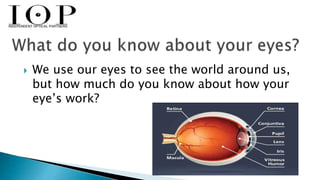
 We use our eyes to see the world around us, 
but how much do you know about how your 
eye’s work?
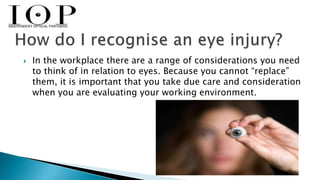
 In the workplace there are a range of considerations you need 
to think of in relation to eyes. Because you cannot “replace” 
them, it is important that you take due care and consideration 
when you are evaluating your working environment.
Consider these examples and let’s see if you 
can tell which are possible eye injuries: 
The person has obvious pain or trouble seeing. 
The person has a cut or torn eyelid. 
One eye does not move as well as the other. 
One eye sticks out compared to the other.
 • Every year, more than 4000 eye injuries occur at 
work in New Zealand 
 • Many result in pain, impaired vision, time off 
work and some are blinded 
 • Most of these eye injuries are PREVENTABLE
 Penetrating injuries are more likely to occur 
from missiles produced by striking metal-to- 
metal, for example, when hammering 
nails. 
Corneal abrasion (stained by fluorescein 
dye). These can be caused by projectiles (for 
example, from abrasive blasting or grinding) 
or fixed or moving objects (for example, 
accidental stabbing of the eye from exposed 
sharp objects or tools).
Blood in the anterior chamber of the eye 
(hyphaema) as a complication of blunt 
trauma. Eyes with hyphaema may show 
other signs of damage 
Severe alkali burn causing opacification of 
the cornea. 
Substances you may have at home or work 
that can cause this include fertilizers, 
cleaning products (ammonia), drain cleaners 
(lye), oven cleaners, and plaster or cement 
(lime).
 GET HELP! 
 For all eye injuries: 
 DO NOT touch, rub or apply pressure to the eye. 
 DO NOT try to remove the object stuck in the eye. 
 DO NOT apply ointment or medication to the eye. 
 See a doctor/optometrist as soon as possible – if you think it is 
very serious go straight to the Emergency Department at the 
hospital.
 There are four things you can do to help prevent an eye injury: 
 1. Know the eye safety dangers at work. 
 2. Eliminate hazards before starting work. 
◦ Use machine guarding, work screens or other engineering controls. 
 3. Use proper eye protection. 
◦ Make sure it is up to the standard and it is relevant to the location (i.e. sunglasses to 
protect the eye from UV damage outside) 
 4. Wear protective eyewear whenever there is a chance of eye injury. 
◦ Anyone working in or passing through areas that pose eye hazards should wear 
protective eyewear. This is particularly true of workers involved in welding, which poses a 
high risk of on-the-job eye injury.
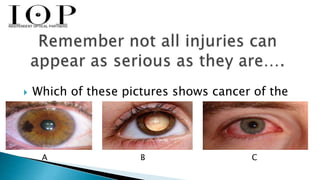
 Which of these pictures shows cancer of the 
eye? 
 
A B C
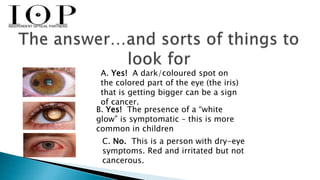
A. Yes! A dark/coloured spot on 
the colored part of the eye (the iris) 
that is getting bigger can be a sign 
of cancer. 
B. Yes! The presence of a “white 
glow” is symptomatic – this is more 
common in children 
C. No. This is a person with dry-eye 
symptoms. Red and irritated but not 
cancerous.
 New! 2014 Standard guidelines recommend: 
 2 yearly eye examinations & unit replacement 
 Yearly checks of all safety eyewear for damage 
 Provided an easy guide for identifying what 
eyewear is needed for each job description
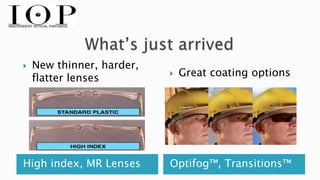
 New thinner, harder, 
flatter lenses 
 Great coating options 
High index, MR Lenses Optifog™, Transitions™
 More fashion styles  More progressive lens 
Women's frames, single unit 
frames (no parts to fall off!) 
options 
Increased range of visual 
lengths and styles
 If you have any questions specific to your 
eyes please talk to your local Optometrist. 
They are there to help!

Eyewear and your safety

  • 1.
    -eyewear and yoursafety Presenter: Vanessa Forsyth
  • 2.
     We useour eyes to see the world around us, but how much do you know about how your eye’s work?
  • 3.
     In theworkplace there are a range of considerations you need to think of in relation to eyes. Because you cannot “replace” them, it is important that you take due care and consideration when you are evaluating your working environment.
  • 4.
    Consider these examplesand let’s see if you can tell which are possible eye injuries: The person has obvious pain or trouble seeing. The person has a cut or torn eyelid. One eye does not move as well as the other. One eye sticks out compared to the other.
  • 5.
     • Everyyear, more than 4000 eye injuries occur at work in New Zealand  • Many result in pain, impaired vision, time off work and some are blinded  • Most of these eye injuries are PREVENTABLE
  • 6.
     Penetrating injuriesare more likely to occur from missiles produced by striking metal-to- metal, for example, when hammering nails. Corneal abrasion (stained by fluorescein dye). These can be caused by projectiles (for example, from abrasive blasting or grinding) or fixed or moving objects (for example, accidental stabbing of the eye from exposed sharp objects or tools).
  • 7.
    Blood in theanterior chamber of the eye (hyphaema) as a complication of blunt trauma. Eyes with hyphaema may show other signs of damage Severe alkali burn causing opacification of the cornea. Substances you may have at home or work that can cause this include fertilizers, cleaning products (ammonia), drain cleaners (lye), oven cleaners, and plaster or cement (lime).
  • 8.
     GET HELP!  For all eye injuries:  DO NOT touch, rub or apply pressure to the eye.  DO NOT try to remove the object stuck in the eye.  DO NOT apply ointment or medication to the eye.  See a doctor/optometrist as soon as possible – if you think it is very serious go straight to the Emergency Department at the hospital.
  • 9.
     There arefour things you can do to help prevent an eye injury:  1. Know the eye safety dangers at work.  2. Eliminate hazards before starting work. ◦ Use machine guarding, work screens or other engineering controls.  3. Use proper eye protection. ◦ Make sure it is up to the standard and it is relevant to the location (i.e. sunglasses to protect the eye from UV damage outside)  4. Wear protective eyewear whenever there is a chance of eye injury. ◦ Anyone working in or passing through areas that pose eye hazards should wear protective eyewear. This is particularly true of workers involved in welding, which poses a high risk of on-the-job eye injury.
  • 10.
     Which ofthese pictures shows cancer of the eye?  A B C
  • 11.
    A. Yes! Adark/coloured spot on the colored part of the eye (the iris) that is getting bigger can be a sign of cancer. B. Yes! The presence of a “white glow” is symptomatic – this is more common in children C. No. This is a person with dry-eye symptoms. Red and irritated but not cancerous.
  • 13.
     New! 2014Standard guidelines recommend:  2 yearly eye examinations & unit replacement  Yearly checks of all safety eyewear for damage  Provided an easy guide for identifying what eyewear is needed for each job description
  • 15.
     New thinner,harder, flatter lenses  Great coating options High index, MR Lenses Optifog™, Transitions™
  • 16.
     More fashionstyles  More progressive lens Women's frames, single unit frames (no parts to fall off!) options Increased range of visual lengths and styles
  • 17.
     If youhave any questions specific to your eyes please talk to your local Optometrist. They are there to help!