EXISTINGC NAMES 
Lois Evans
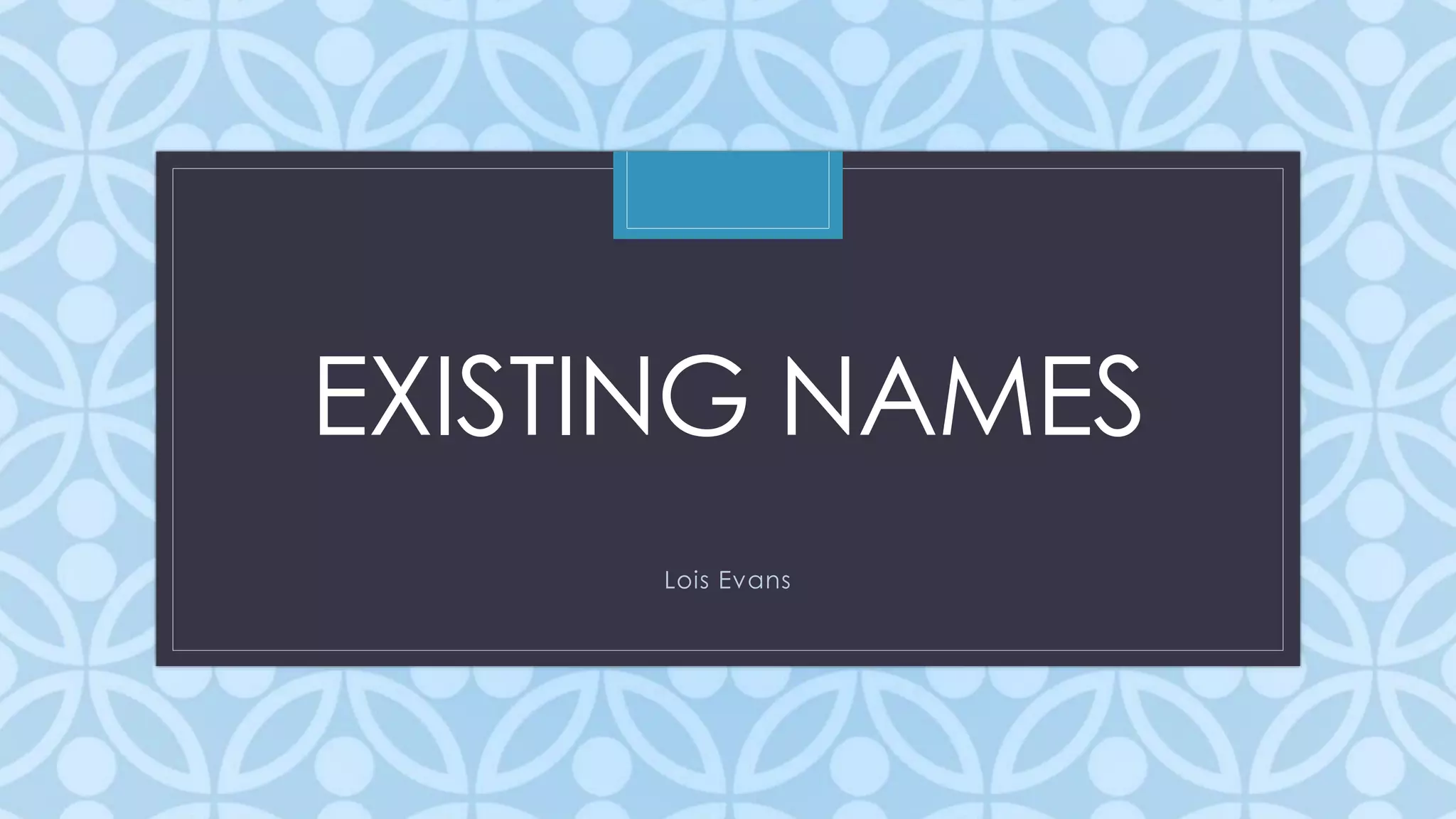
The colour of the masthead is In a bright primary red. This 
is the only real colour to NME, as the rest of the magazine 
is supported through shades, where as this bright yet 
basic colour not only catches the idea, but gives the 
magazine a basic form of simplicity, that will ease the 
reader. The simple colour red connotes Danger as well as 
love. This could suggest to the reader that the danger 
quality appeals to the stereotypical view of men (of 
which is the majority readership for this magazine), as 
well as the fact that NME loves and cares for there music, 
the reader recognising that the magazine shares the 
same love, compelling them to approve of the 
magazine, and possibly resulting in purchasing the issue. 
The font for the masthead is of a thick 
and stocky, this being exemplified even 
more by the basic three letters. The 
thickness, I think, appeals to the average 
perception of a male reader, for thin and 
slanted writing can often be associated 
through females. Yet the thick font is an 
oddity on the front cover, highlighting 
itself apart form the rest of the text, 
helping to illuminate itself to the browsing 
reader. 
An acronym, a technique used by many magazines, 
which is to encapsulate, the initials of the actual 
product. So NME music magazine, stands for 
‘National Music express’.
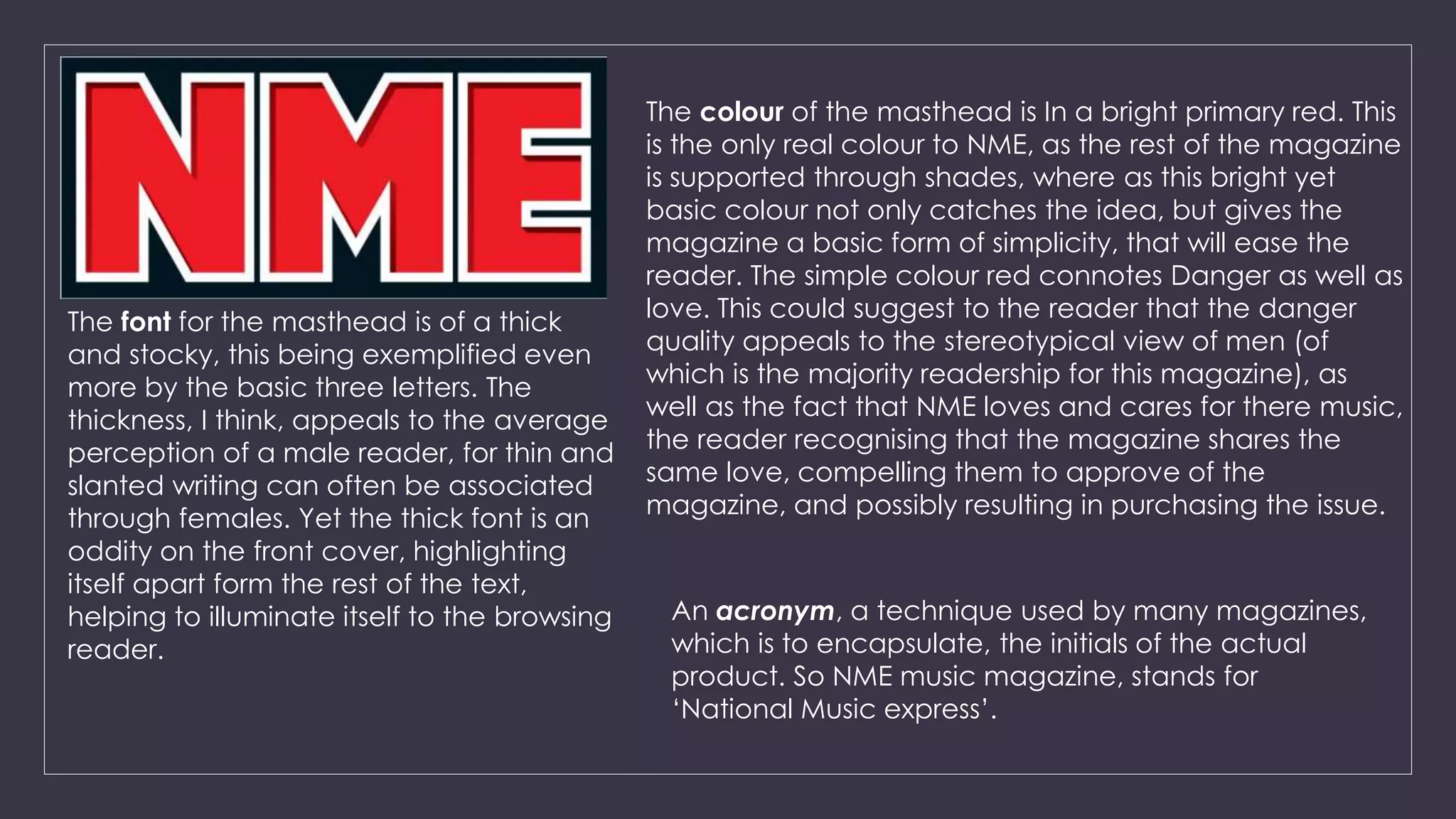
The masthead shares the bright primary colour of red, as well as the 
shade of a plain white, highlighting the Q (the logo as well as the 
masthead) so as to easily reveal to the reader of the name of the 
magazine as well as highlighting its importance through the use of the 
urgent primary colour that is red due to the extreme contrast in colours. 
The masthead is again an acronym, yet having just one letter for the 
masthead for a magazine is slightly odd, as well as the fact that no one 
knows what ‘Q’ actually stands for. Yet speculations can stem for just a 
single letter as words begging with ‘Q’ are mostly positive such as Q for 
quality. So as the single letter catches the attention of the reader, this is 
helped even further for the letter being uppercase, as well as standing 
alone, both these details hold a sense of power and importance, of 
which the average reader will recognises and immediately be 
attracted to magazine that is so unusual that it only has one upper-case 
letter for its masthead. I greatly appreciate the cleverness of Q 
magazine as not only have they created a masthead that is so simple 
and easy to remember, but they have also created there logo as the 
same thing
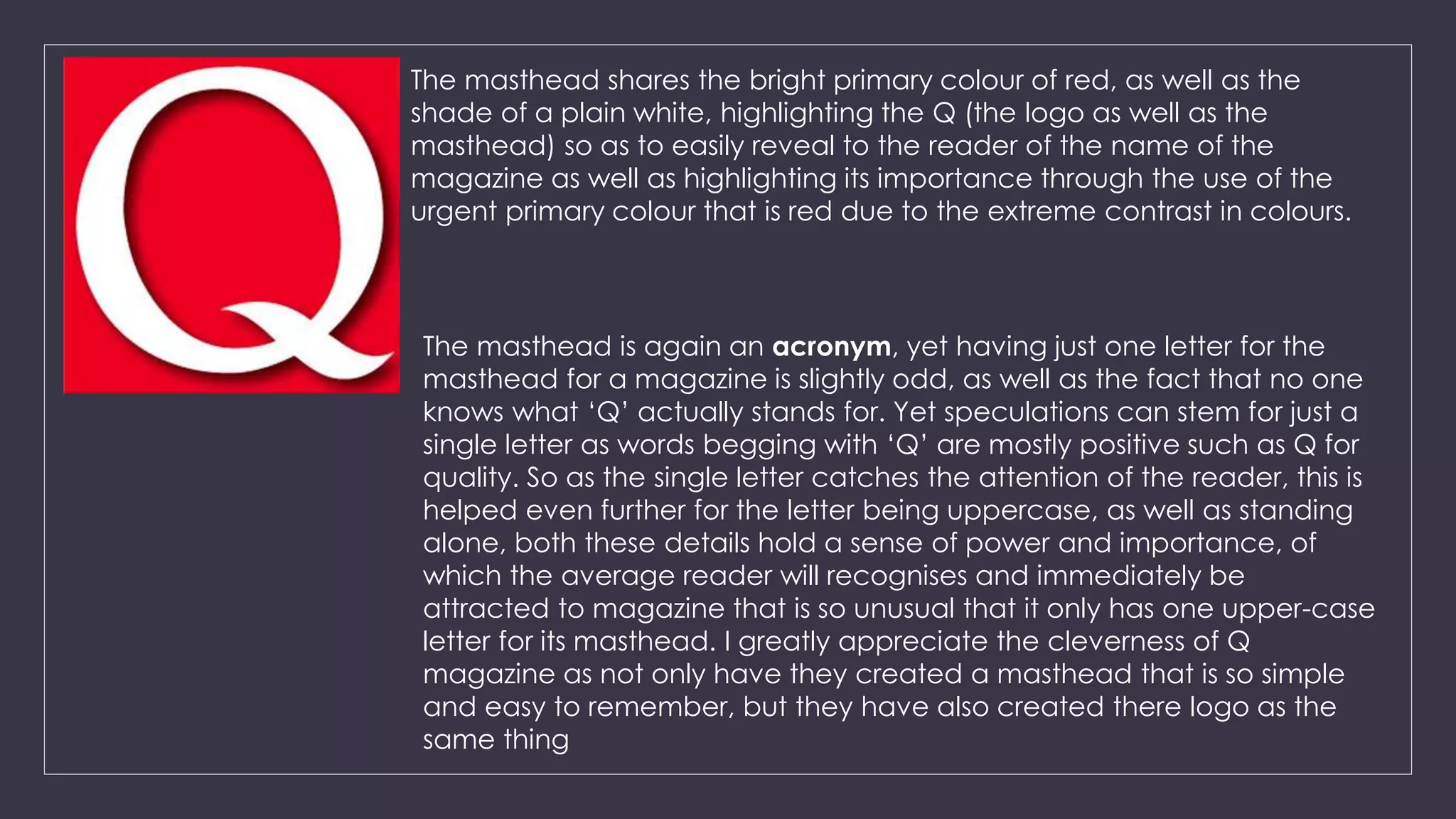
Kerrang has chosen to elect its masthead in the 
simple shade of white. Not only does this 
generate the positive approach of purity and 
simplicity, but generally Kerrang will have a 
black background, therefore having a white 
masthead will really brighten the masthead to 
The use of the punctuation that is the exclamation mark the reader 
is rarely seen in the masthead for the magazine, this 
being unusual it will catch the readers eye, them 
noticing the magazine, beyond any other issues that are 
in the shops. Yet also the exclamation mark indicates a 
sense of urgency as well as a non-caring rebellious 
attitude, of which are the themes for the ‘hard-core’. 
Magazine that caters to both genders when it comes 
down to readership. Because it has such a wide 
audience, and continues to attract new readers, the 
exclamation mark is of a great advantage to really 
highlight itself amongst the many other music 
magazines. 
The masthead is conative, meaning that the 
unusual name ‘Kerrang’ is seen as being the 
noise of someone playing a guitar. Yet with this 
imagery, we gain the idea that Kerrnag 
themselves have made a cleaver joke that 
only music fans would recognise. By only a 
certain group possibly figuring out the 
conundrum as to what exactly Kerrnag means, 
then realising that is in fact the sound of the 
picking of a guitar, the reader immediately 
feels accomplished at having successfully 
figuring out the task, and thus result sin them 
feeling good about themselves, even so good 
that they would wan to buy the magazine and 
see what else that the could learn from the 
issue.

Exsisting names of magazines

  • 1.
  • 2.
    The colour ofthe masthead is In a bright primary red. This is the only real colour to NME, as the rest of the magazine is supported through shades, where as this bright yet basic colour not only catches the idea, but gives the magazine a basic form of simplicity, that will ease the reader. The simple colour red connotes Danger as well as love. This could suggest to the reader that the danger quality appeals to the stereotypical view of men (of which is the majority readership for this magazine), as well as the fact that NME loves and cares for there music, the reader recognising that the magazine shares the same love, compelling them to approve of the magazine, and possibly resulting in purchasing the issue. The font for the masthead is of a thick and stocky, this being exemplified even more by the basic three letters. The thickness, I think, appeals to the average perception of a male reader, for thin and slanted writing can often be associated through females. Yet the thick font is an oddity on the front cover, highlighting itself apart form the rest of the text, helping to illuminate itself to the browsing reader. An acronym, a technique used by many magazines, which is to encapsulate, the initials of the actual product. So NME music magazine, stands for ‘National Music express’.
  • 3.
    The masthead sharesthe bright primary colour of red, as well as the shade of a plain white, highlighting the Q (the logo as well as the masthead) so as to easily reveal to the reader of the name of the magazine as well as highlighting its importance through the use of the urgent primary colour that is red due to the extreme contrast in colours. The masthead is again an acronym, yet having just one letter for the masthead for a magazine is slightly odd, as well as the fact that no one knows what ‘Q’ actually stands for. Yet speculations can stem for just a single letter as words begging with ‘Q’ are mostly positive such as Q for quality. So as the single letter catches the attention of the reader, this is helped even further for the letter being uppercase, as well as standing alone, both these details hold a sense of power and importance, of which the average reader will recognises and immediately be attracted to magazine that is so unusual that it only has one upper-case letter for its masthead. I greatly appreciate the cleverness of Q magazine as not only have they created a masthead that is so simple and easy to remember, but they have also created there logo as the same thing
  • 4.
    Kerrang has chosento elect its masthead in the simple shade of white. Not only does this generate the positive approach of purity and simplicity, but generally Kerrang will have a black background, therefore having a white masthead will really brighten the masthead to The use of the punctuation that is the exclamation mark the reader is rarely seen in the masthead for the magazine, this being unusual it will catch the readers eye, them noticing the magazine, beyond any other issues that are in the shops. Yet also the exclamation mark indicates a sense of urgency as well as a non-caring rebellious attitude, of which are the themes for the ‘hard-core’. Magazine that caters to both genders when it comes down to readership. Because it has such a wide audience, and continues to attract new readers, the exclamation mark is of a great advantage to really highlight itself amongst the many other music magazines. The masthead is conative, meaning that the unusual name ‘Kerrang’ is seen as being the noise of someone playing a guitar. Yet with this imagery, we gain the idea that Kerrnag themselves have made a cleaver joke that only music fans would recognise. By only a certain group possibly figuring out the conundrum as to what exactly Kerrnag means, then realising that is in fact the sound of the picking of a guitar, the reader immediately feels accomplished at having successfully figuring out the task, and thus result sin them feeling good about themselves, even so good that they would wan to buy the magazine and see what else that the could learn from the issue.