


Occupational Epidemiology
and Exposure Estimation
John Cherrie
Summary…
• asbestos and man-made mineral fibres
• a general definition of exposure and the
exposome
• from the source to dose
• the occupational history
• strategies for estimating exposure
• occupational exposure limits
• a case study - asbestos in the city
Scope of this session...
• Mostly occupational (and some environmental)
• Chronic exposure
• To hazardous substances
• By inhalation
• Occupational epidemiology
• Non-occupational epidemiology / risk assessment
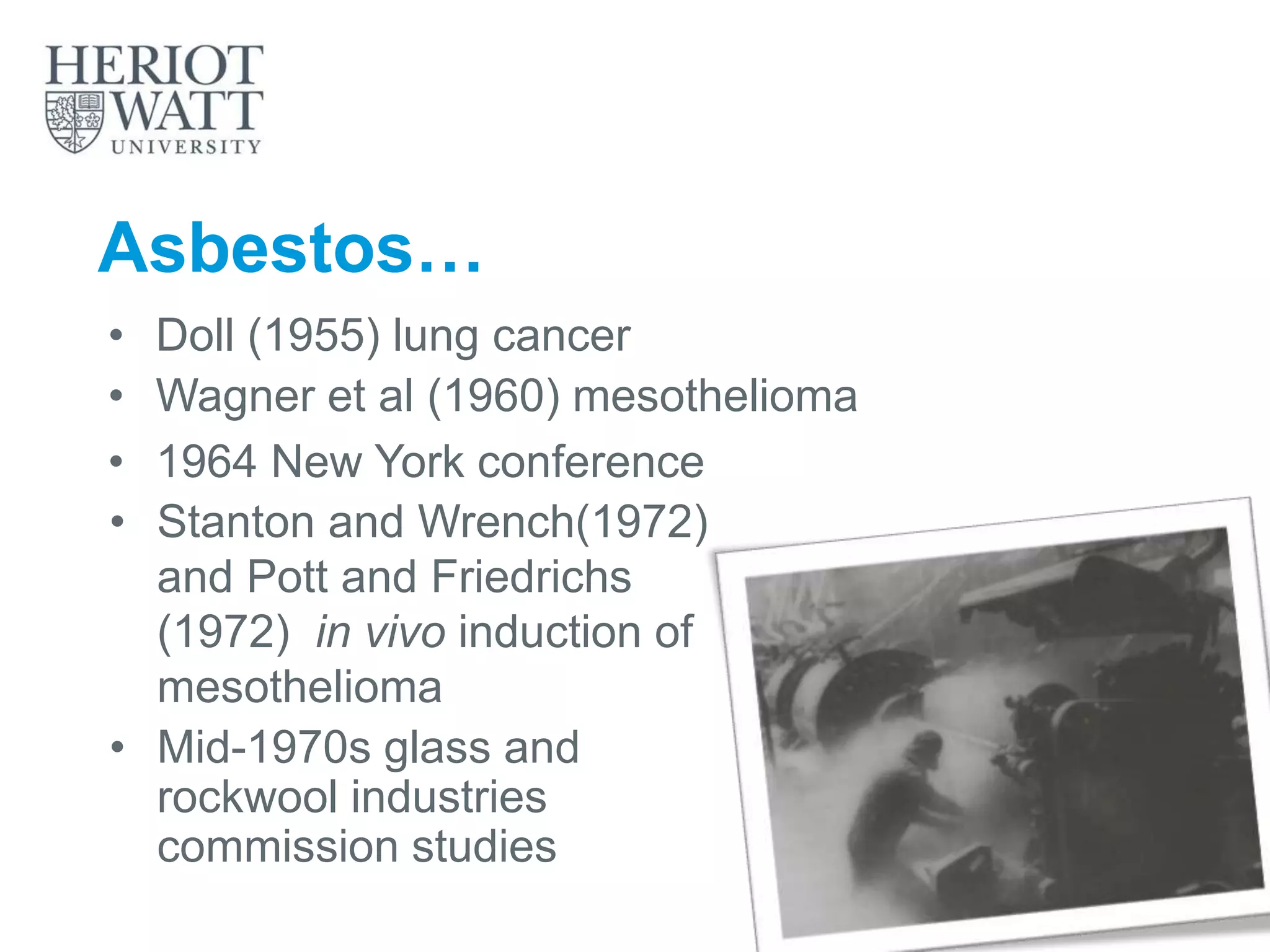
Asbestos…
• Stanton and Wrench(1972)
and Pott and Friedrichs
(1972) in vivo induction of
mesothelioma
• Mid-1970s glass and
rockwool industries
commission studies
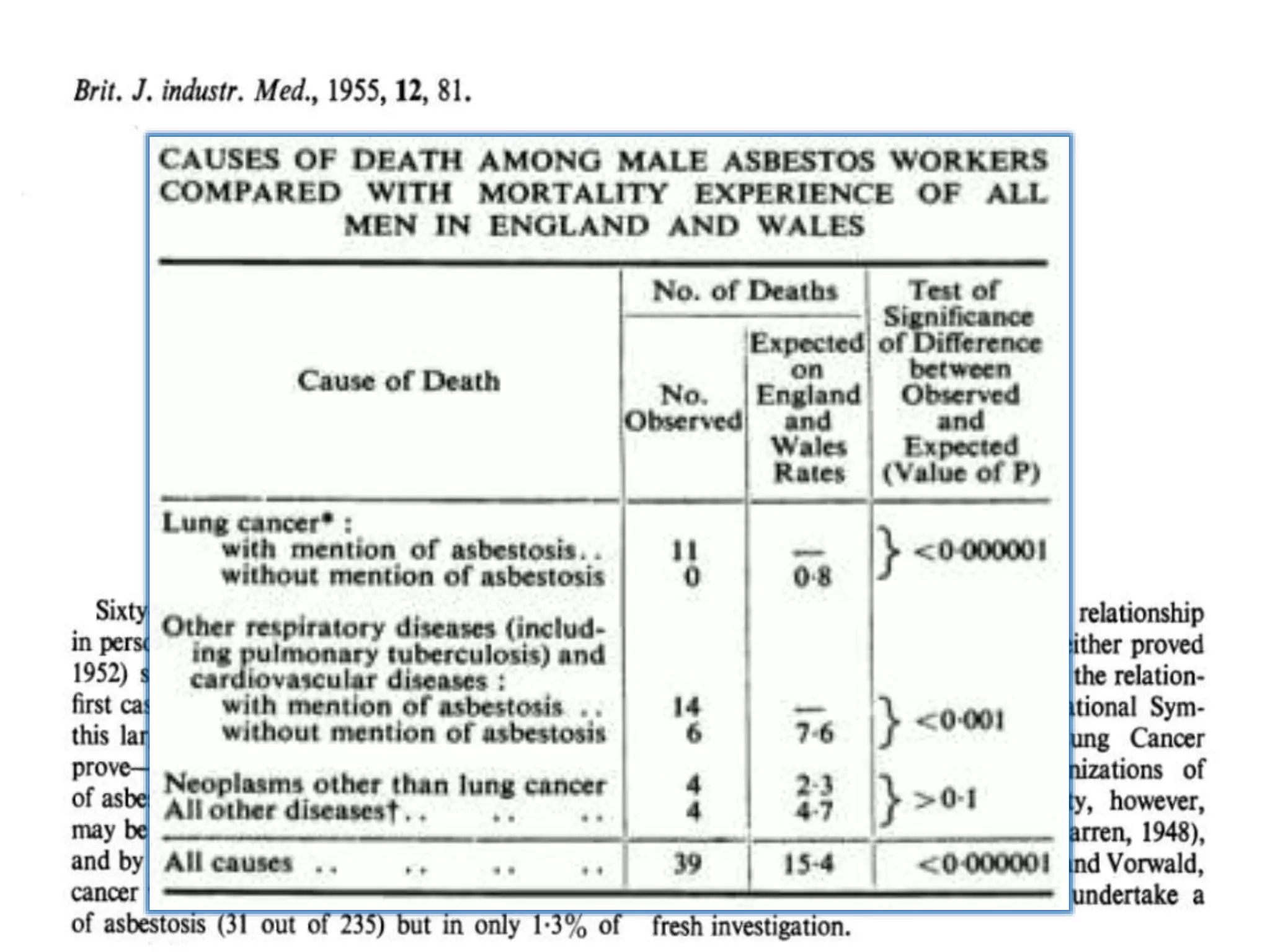
• Doll (1955) lung cancer
• Wagner et al (1960) mesothelioma
• 1964 New York conference
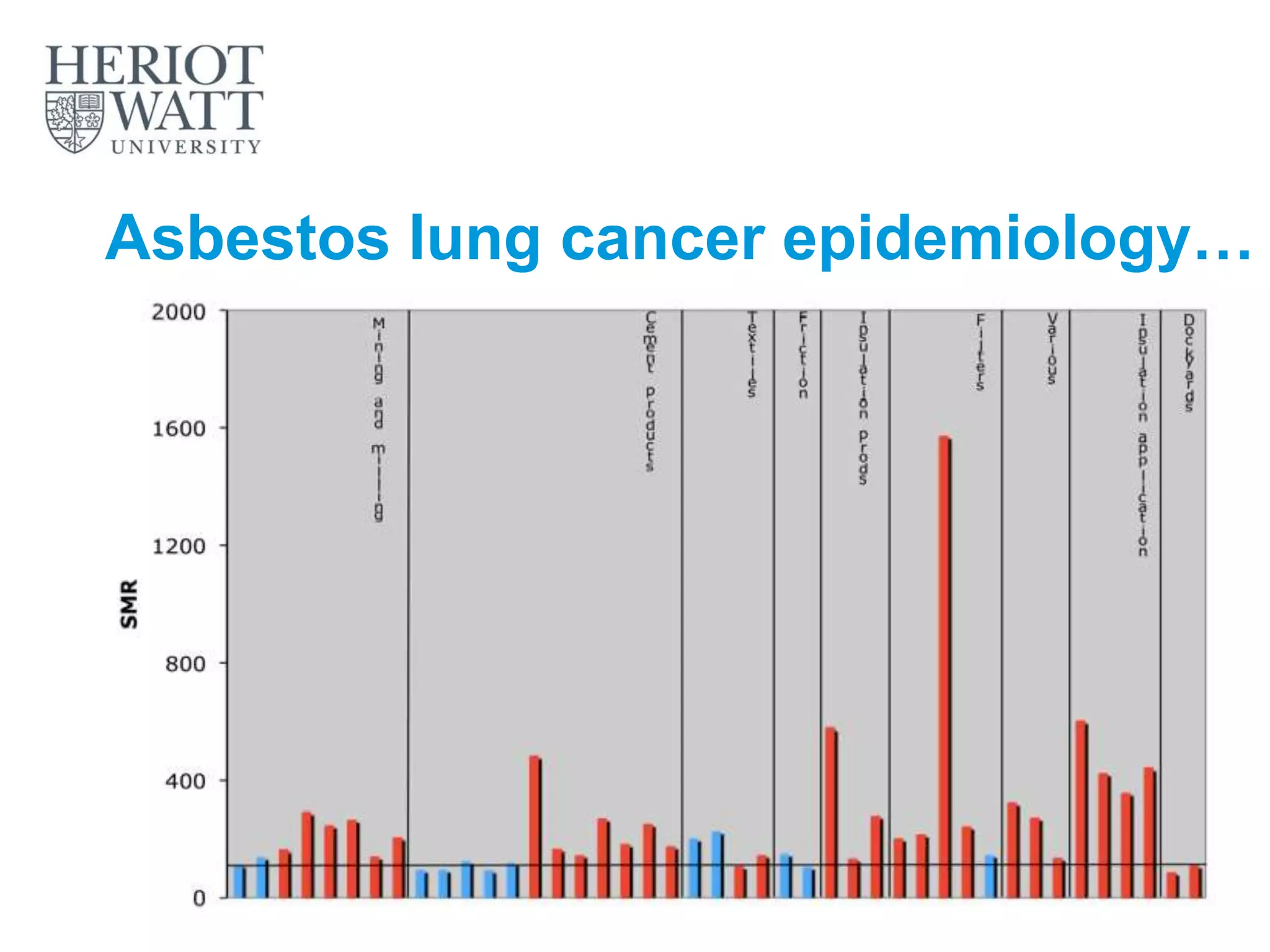
Asbestos lung cancer epidemiology…
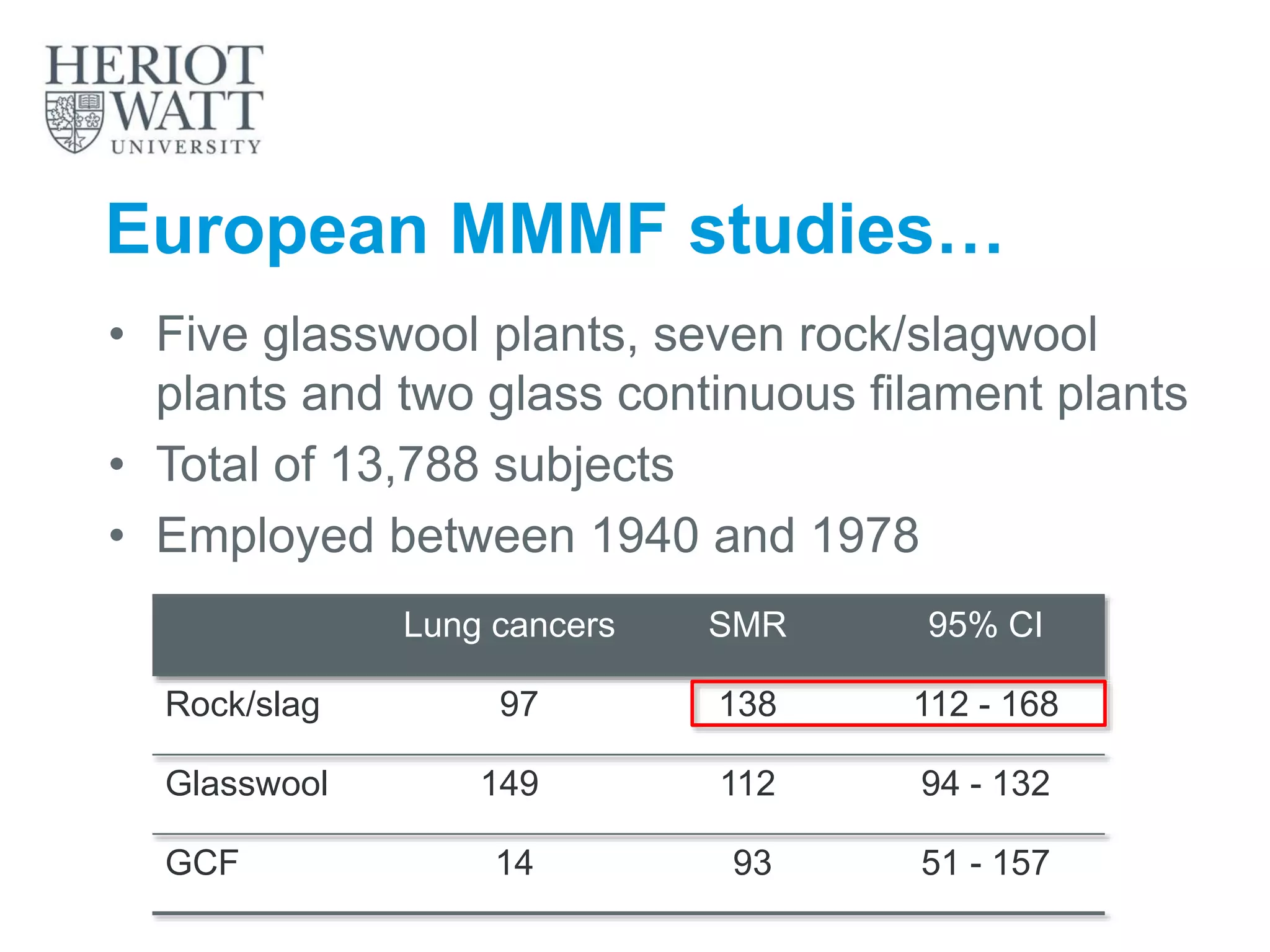
European MMMF studies…
• Five glasswool plants, seven rock/slagwool
plants and two glass continuous filament plants
• Total of 13,788 subjects
• Employed between 1940 and 1978
Lung cancers SMR 95% CI
Rock/slag 97 138 112 - 168
Glasswool 149 112 94 - 132
GCF 14 93 51 - 157
Changes…
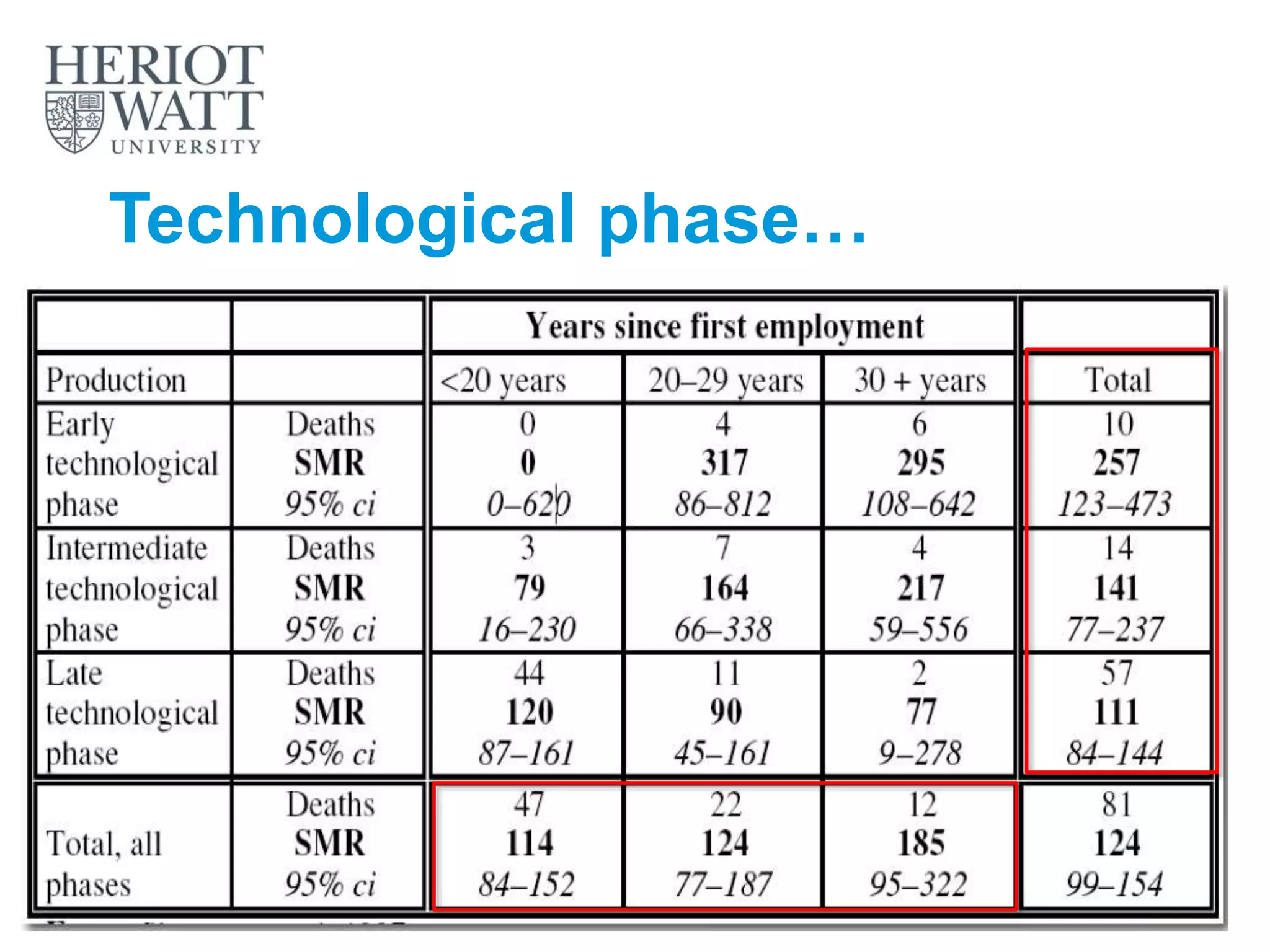
Technological phase…
Co-exposures…
• Asbestos
– Used in some form or other in all of the plants
– Four plants used cloth, yarn or cement products in
production processes
• Polycyclic Aromatic Hydrocarbons (PAH)
– Bitumen and tar used in some plants
• Polychlorinated Biphenyls (PCBs)
• Ionising radiation
• Formaldehyde
• Possible arsenic exposure
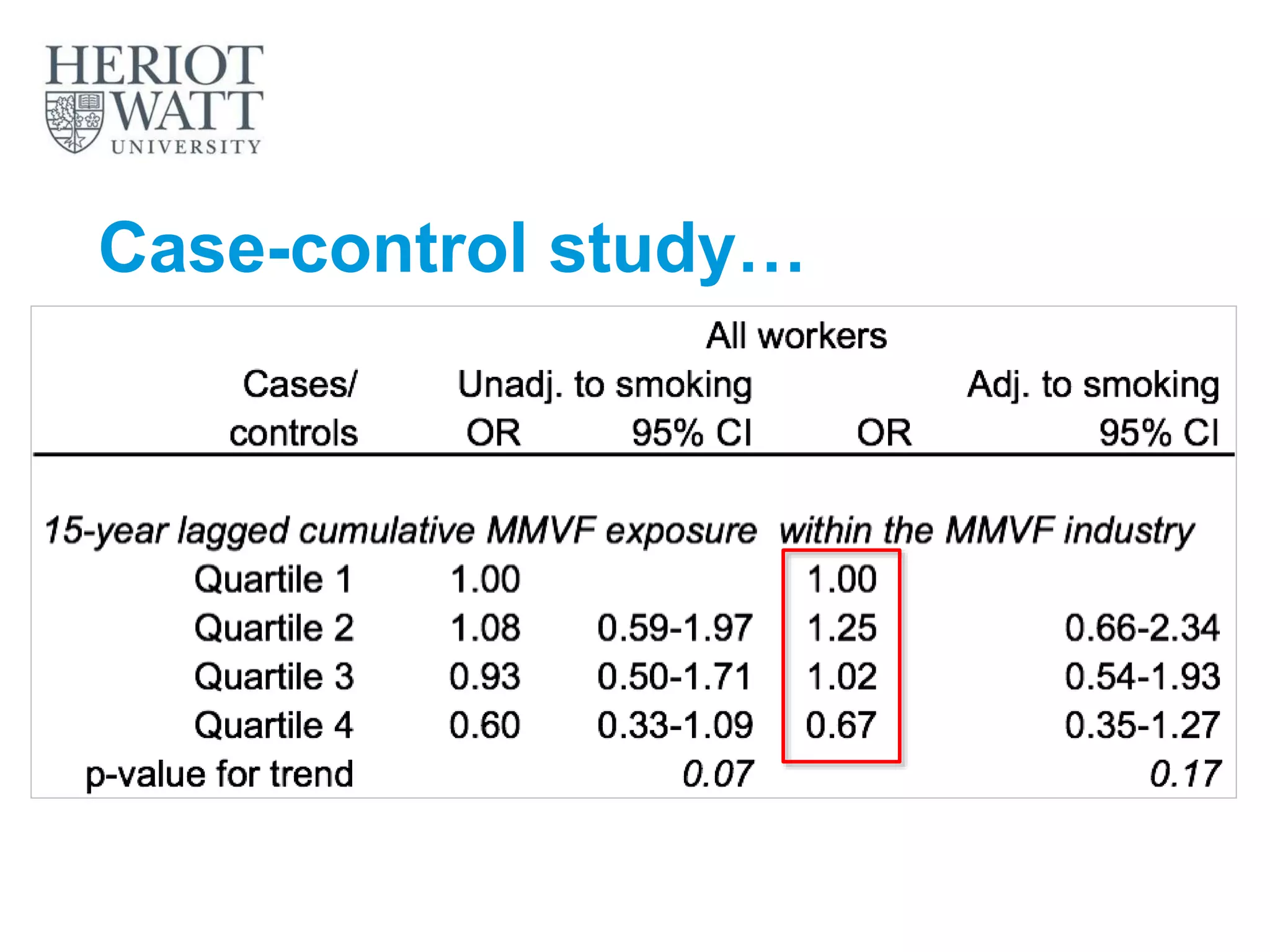
Case-control study…
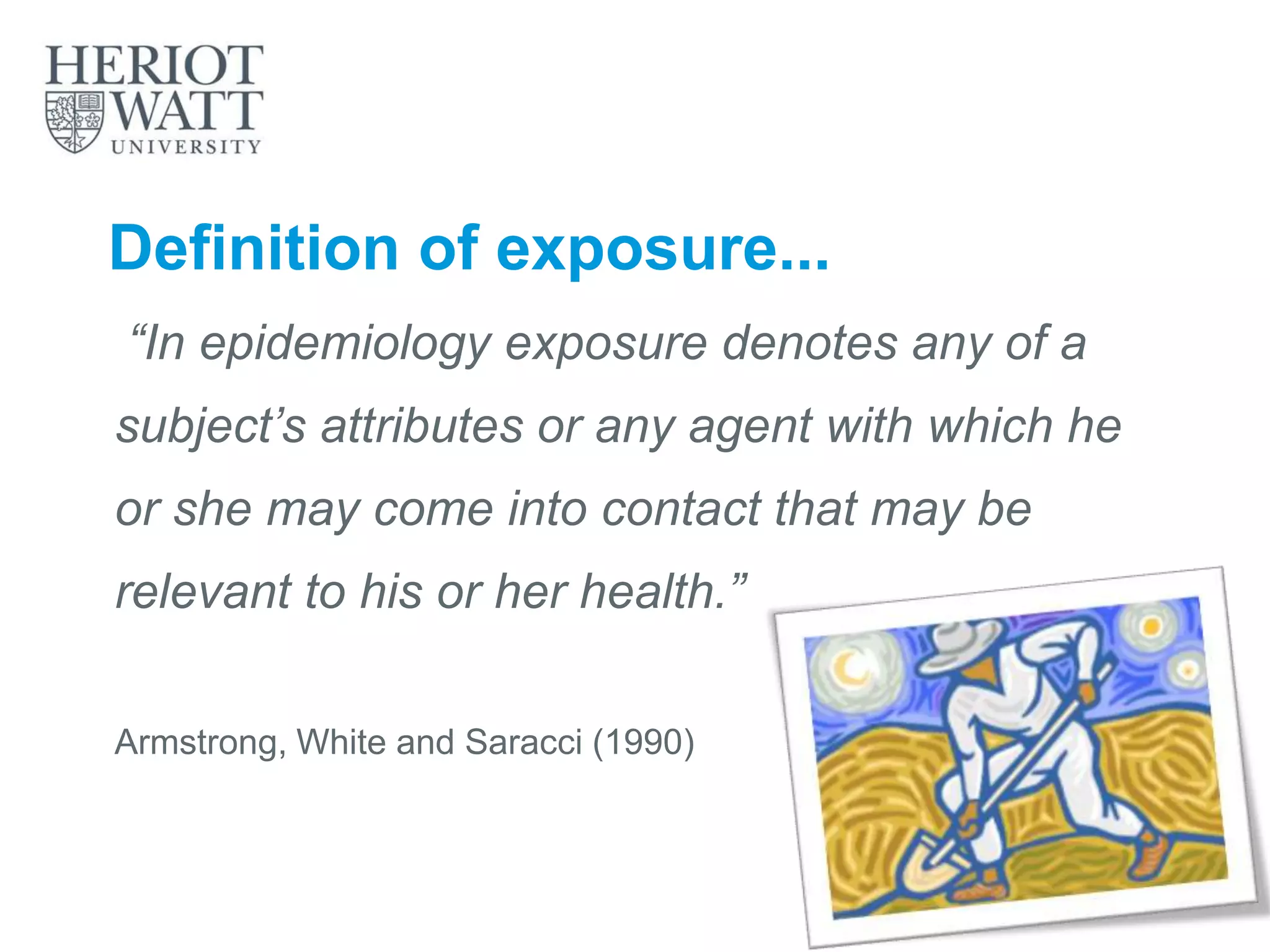
Definition of exposure...
“In epidemiology exposure denotes any of a
subject’s attributes or any agent with which he
or she may come into contact that may be
relevant to his or her health.”
Armstrong, White and Saracci (1990)
Two-thirds of the deaths in the world are caused
by noncommunicable diseases, especially cancer
and cardiovascular disease
Only about 10% of this mortality attributed to
genetic variation
The exposome is composed of every exposure to
which an individual is subjected from conception
to death.
Chris Wild
The Exposome…
• The exposome is composed of every exposure
to which an individual is subjected from
conception to death.
• It comprises:
– processes internal to the body such as metabolism,
gut microflora, inflammation…
– external exposures including infectious agents,
chemical contaminants, diet…
– social, economic and psychological influences.
Wild, C. P. (2012). The exposome: from concept to utility. International Journal of
Epidemiology, 41(1), 24–32.
Agnostic investigations…
• Steve Rapport recommends searching for
potential causes without any prior hypothesis
• Approach lends itself to “omics” technologies
• Although other approaches can also adopt this
approach
• Follow-up with more focused
epidemiological and mechanistic
studies
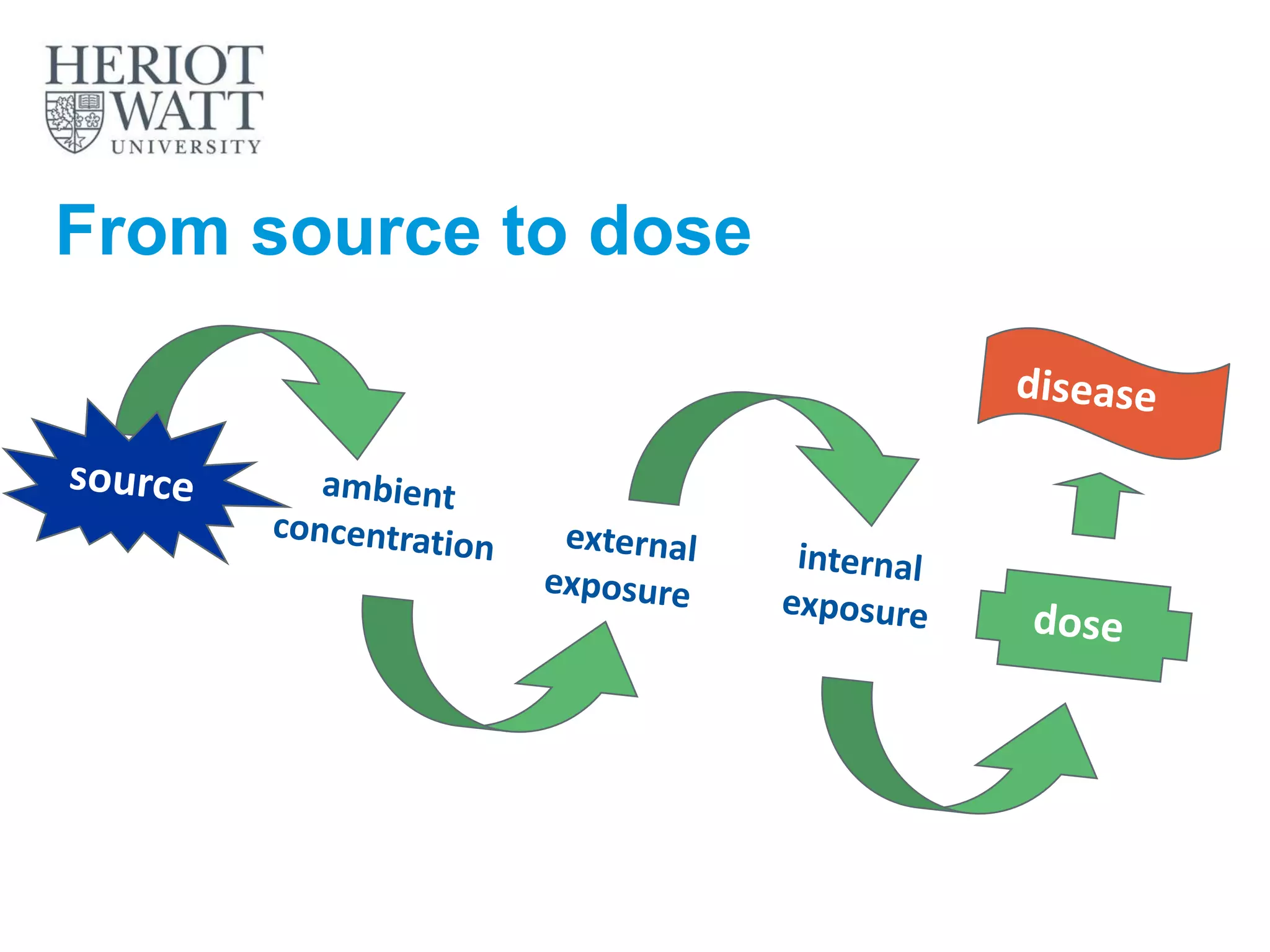
From source to dose
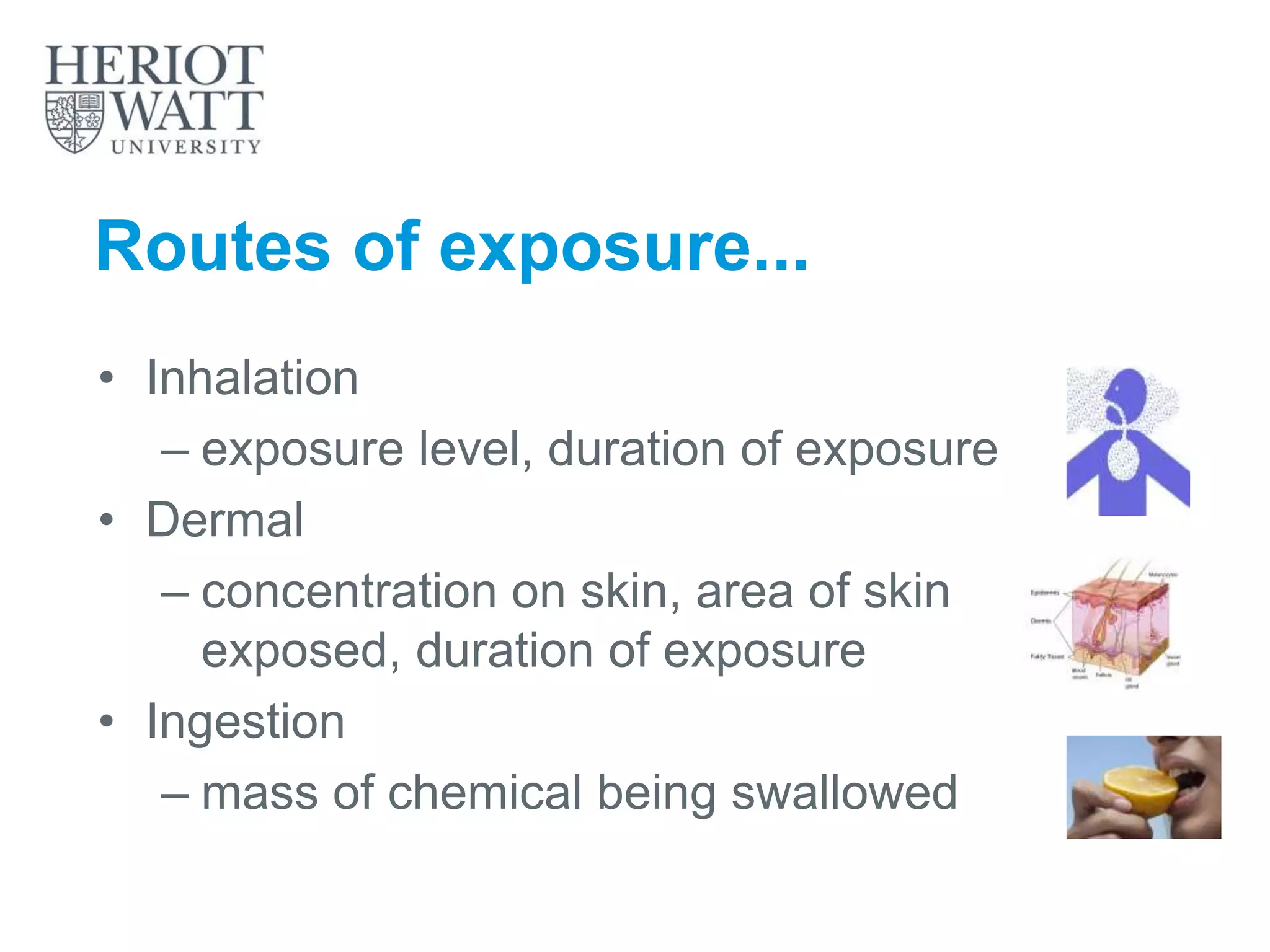
Routes of exposure...
• Inhalation
– exposure level, duration of exposure
• Dermal
– concentration on skin, area of skin
exposed, duration of exposure
• Ingestion
– mass of chemical being swallowed
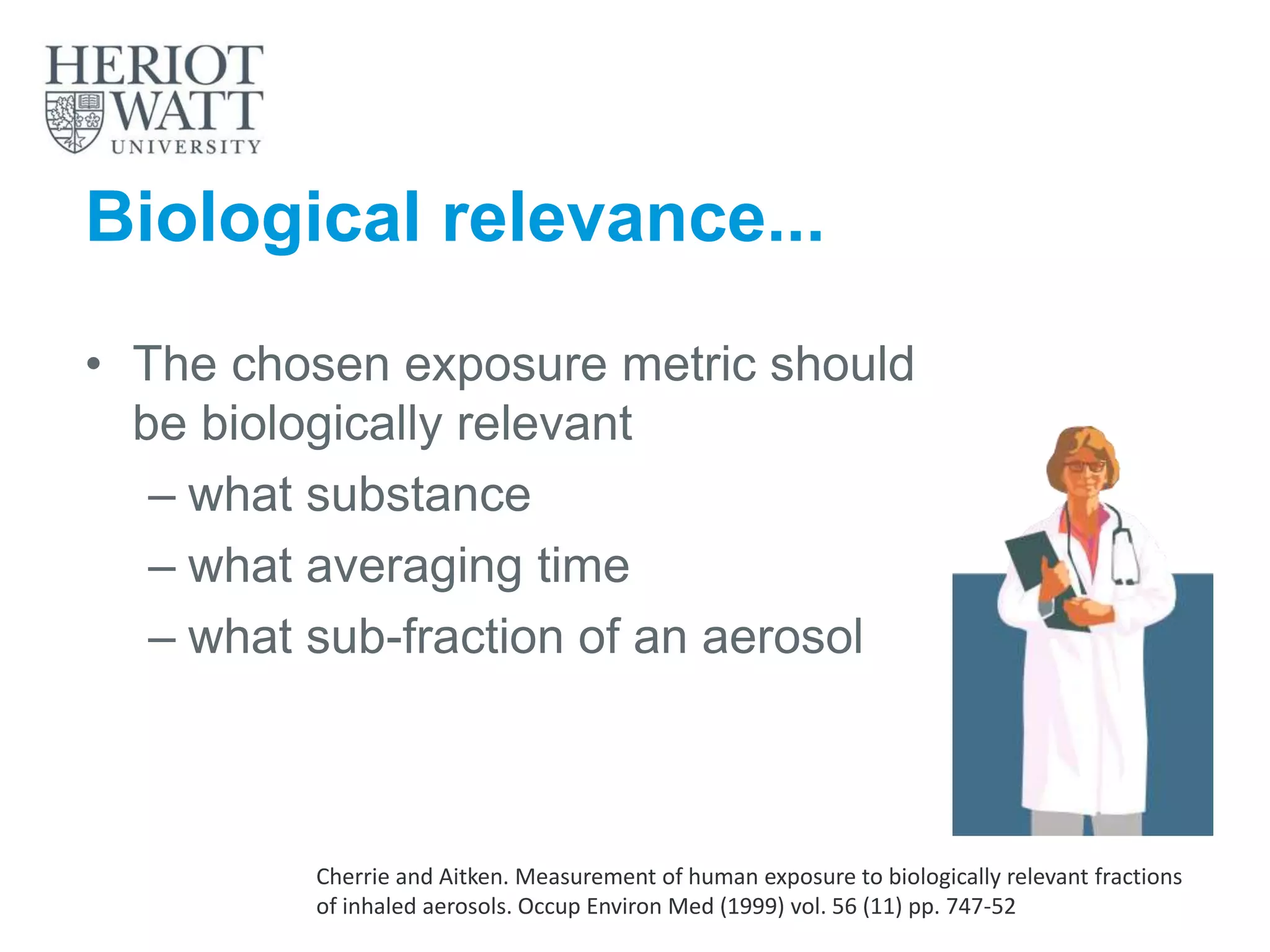
Biological relevance...
• The chosen exposure metric should
be biologically relevant
– what substance
– what averaging time
– what sub-fraction of an aerosol
Cherrie and Aitken. Measurement of human exposure to biologically relevant fractions
of inhaled aerosols. Occup Environ Med (1999) vol. 56 (11) pp. 747-52
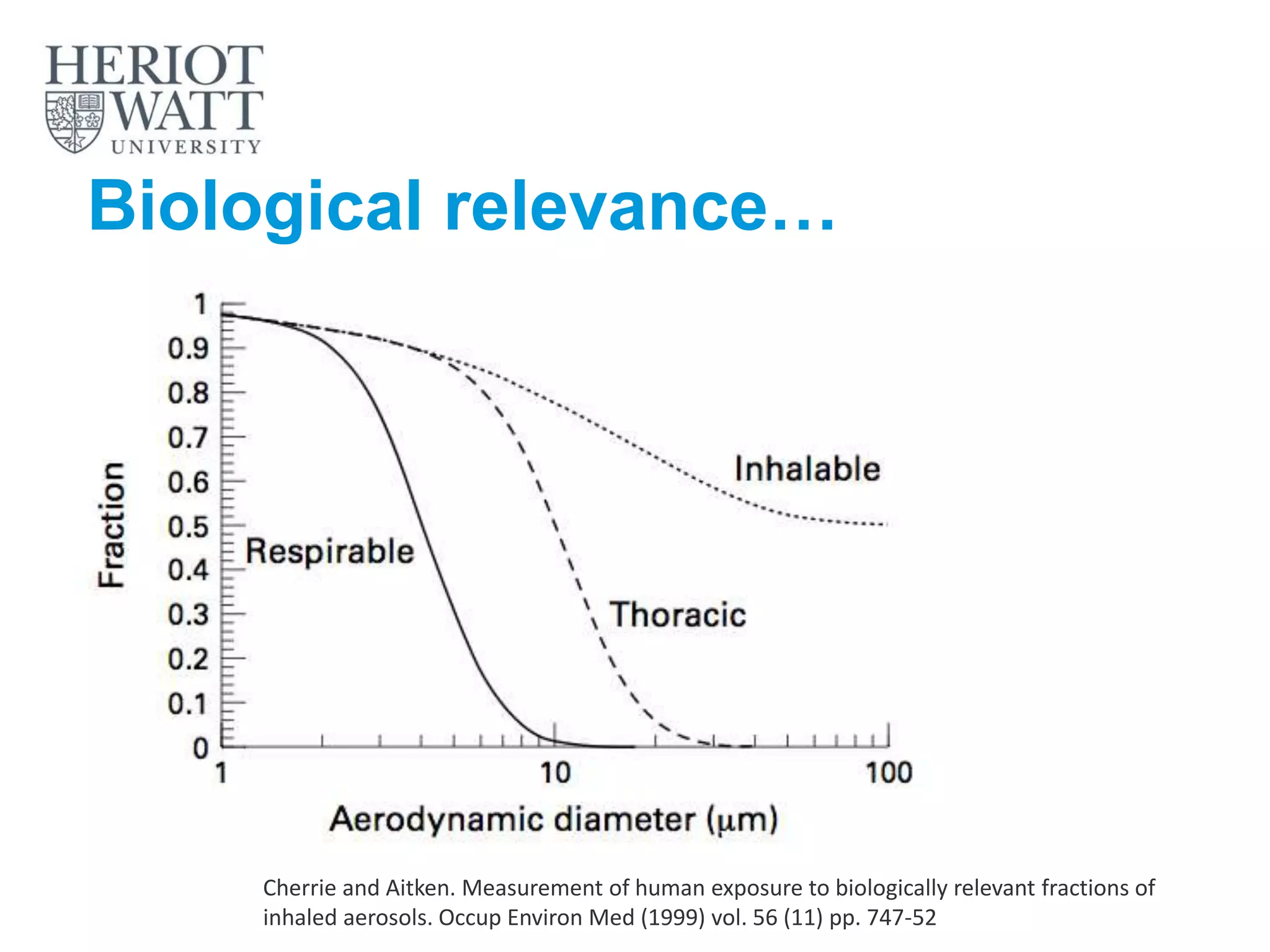
Biological relevance…
Cherrie and Aitken. Measurement of human exposure to biologically relevant fractions of
inhaled aerosols. Occup Environ Med (1999) vol. 56 (11) pp. 747-52
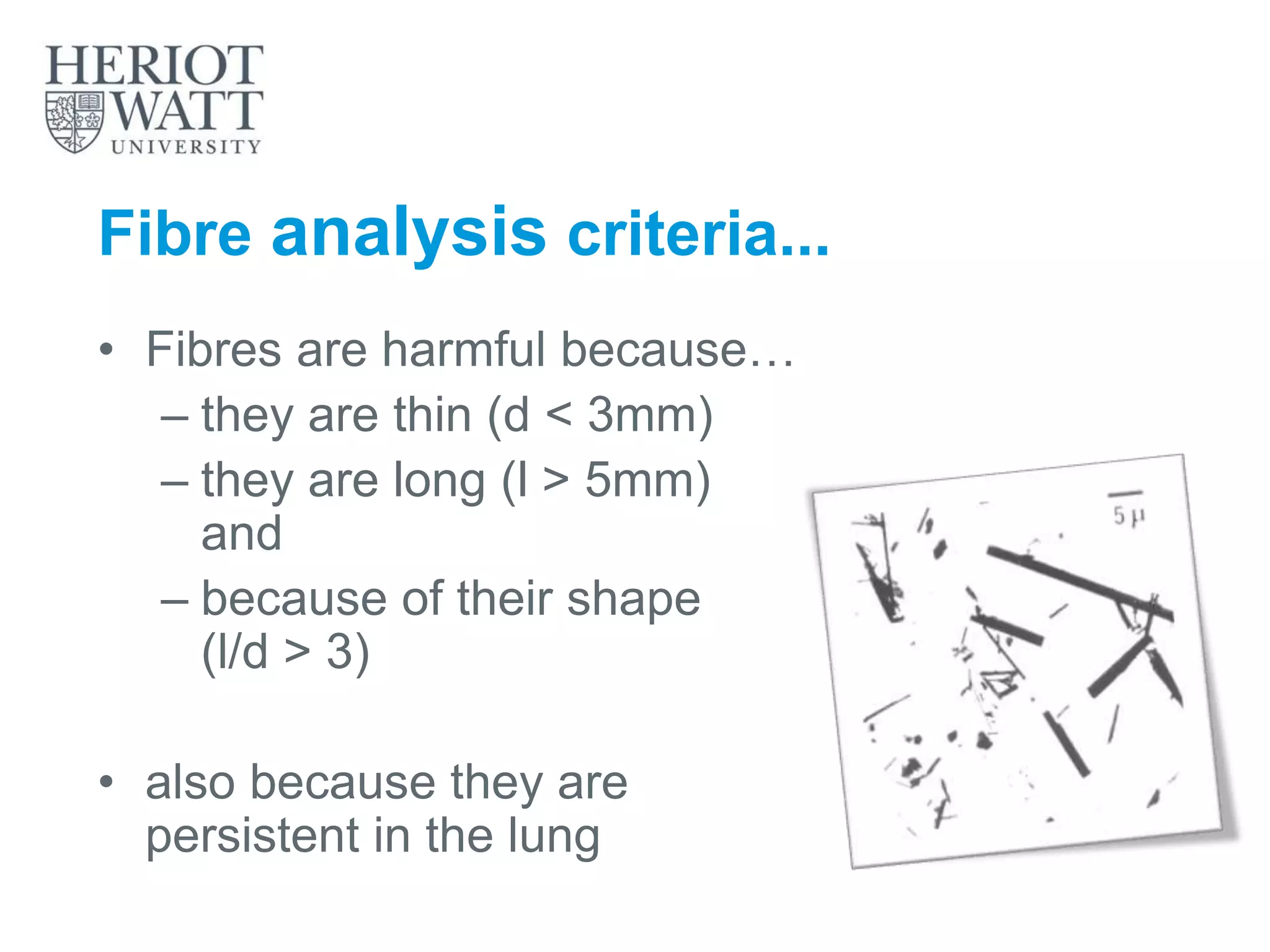
Fibre analysis criteria...
• Fibres are harmful because…
– they are thin (d < 3mm)
– they are long (l > 5mm)
and
– because of their shape
(l/d > 3)
• also because they are
persistent in the lung
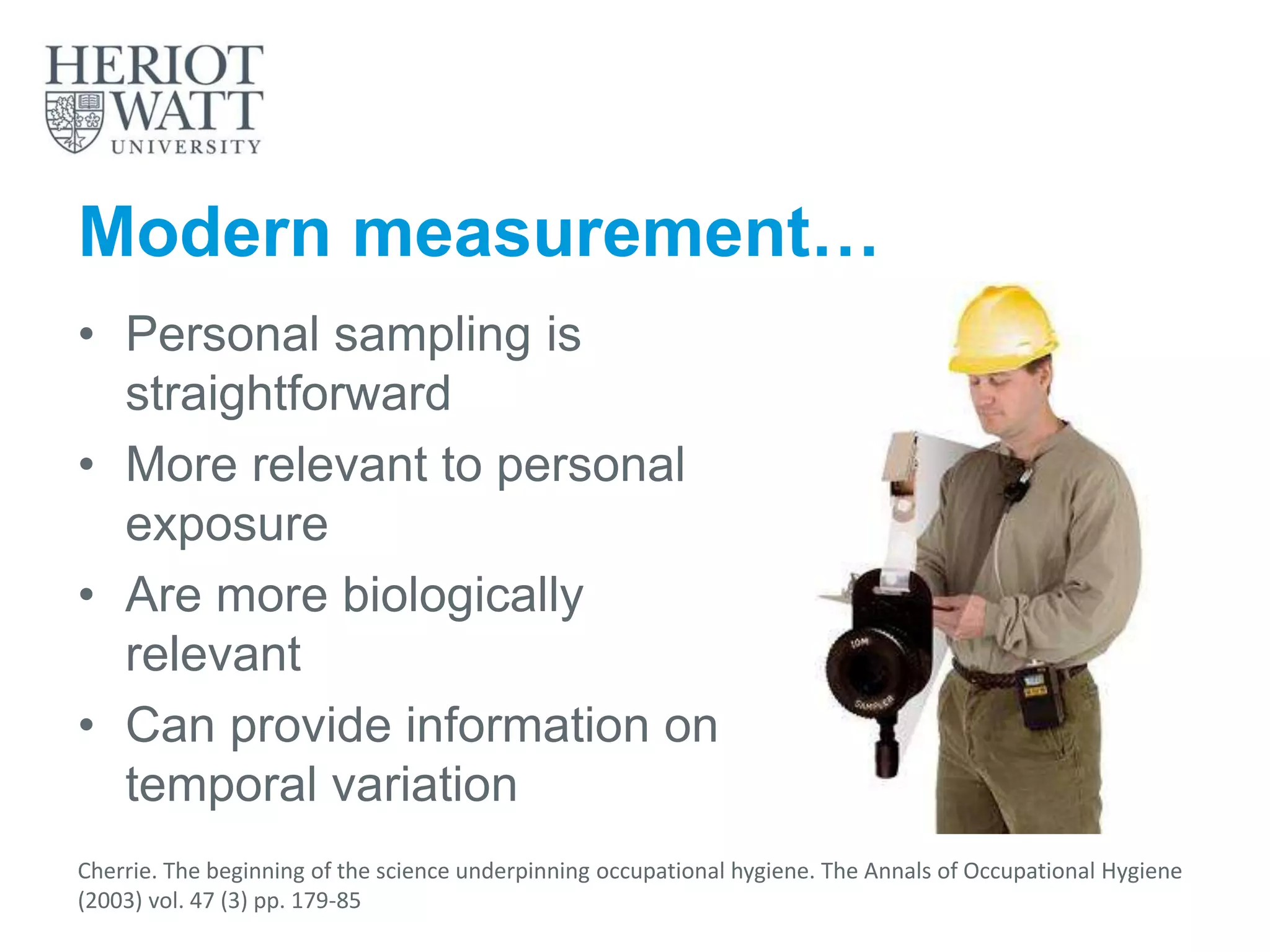
Modern measurement…
• Personal sampling is
straightforward
• More relevant to personal
exposure
• Are more biologically
relevant
• Can provide information on
temporal variation
Cherrie. The beginning of the science underpinning occupational hygiene. The Annals of Occupational Hygiene
(2003) vol. 47 (3) pp. 179-85
Information sources for
assessing exposure in epi...
• Personnel records
• Other company records
• Subject
• Relatives or friends
• Co-workers
• Community records
• Environmental monitoring records
Strategies for assessment...
• Industry
• Job title
• Job-Exposure matrices
• Individual “expert” evaluation
• Exposure measurements
• Biological monitoring
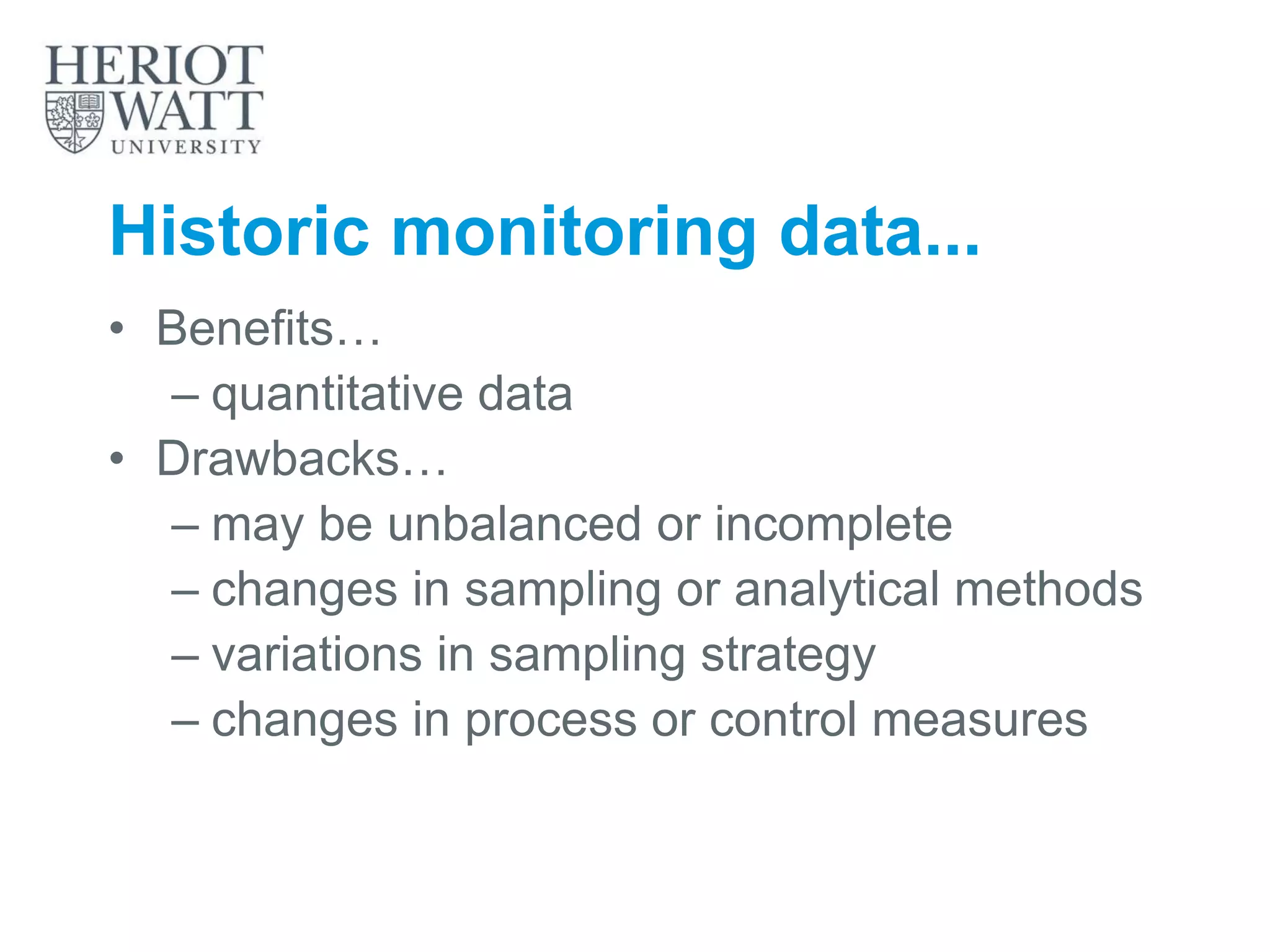
Historic monitoring data...
• Benefits…
– quantitative data
• Drawbacks…
– may be unbalanced or incomplete
– changes in sampling or analytical methods
– variations in sampling strategy
– changes in process or control measures
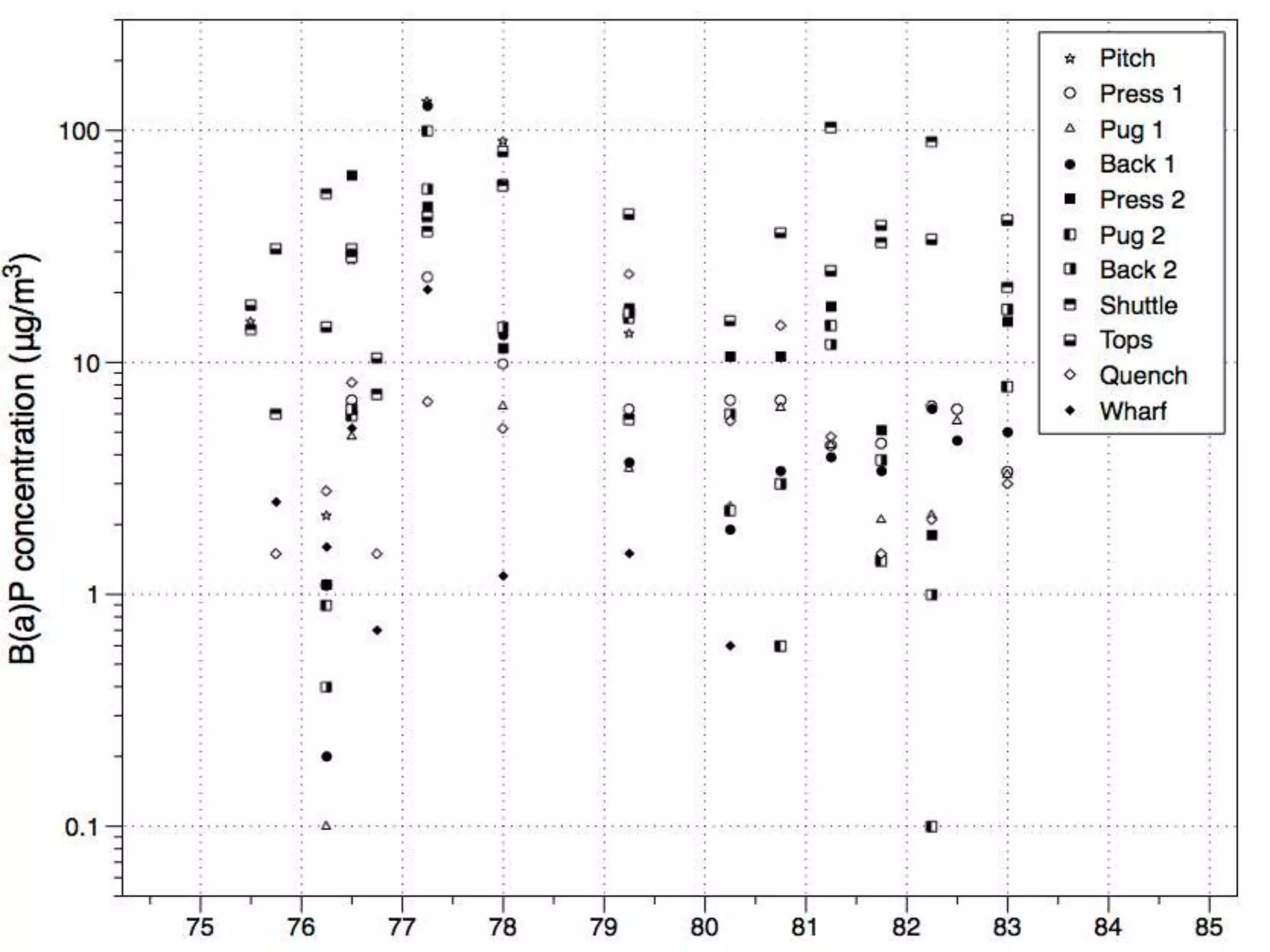
Coke works…
Work area determines exposure
level…
Structured assessment
based on theory…
Where...
ei = intrinsic emission
h = handling
hlv = local controls
etc.
C=f(ei , ℎ, hlv…)
Validity...
R² = 0.96
0.0
20.0
40.0
60.0
80.0
100.0
0.0 10.0 20.0 30.0 40.0 50.0 60.0
EstimatedB[a]P(mg/m3)
Measured B[a]P (mg/m3)
Estimates made using a
spreadsheet…
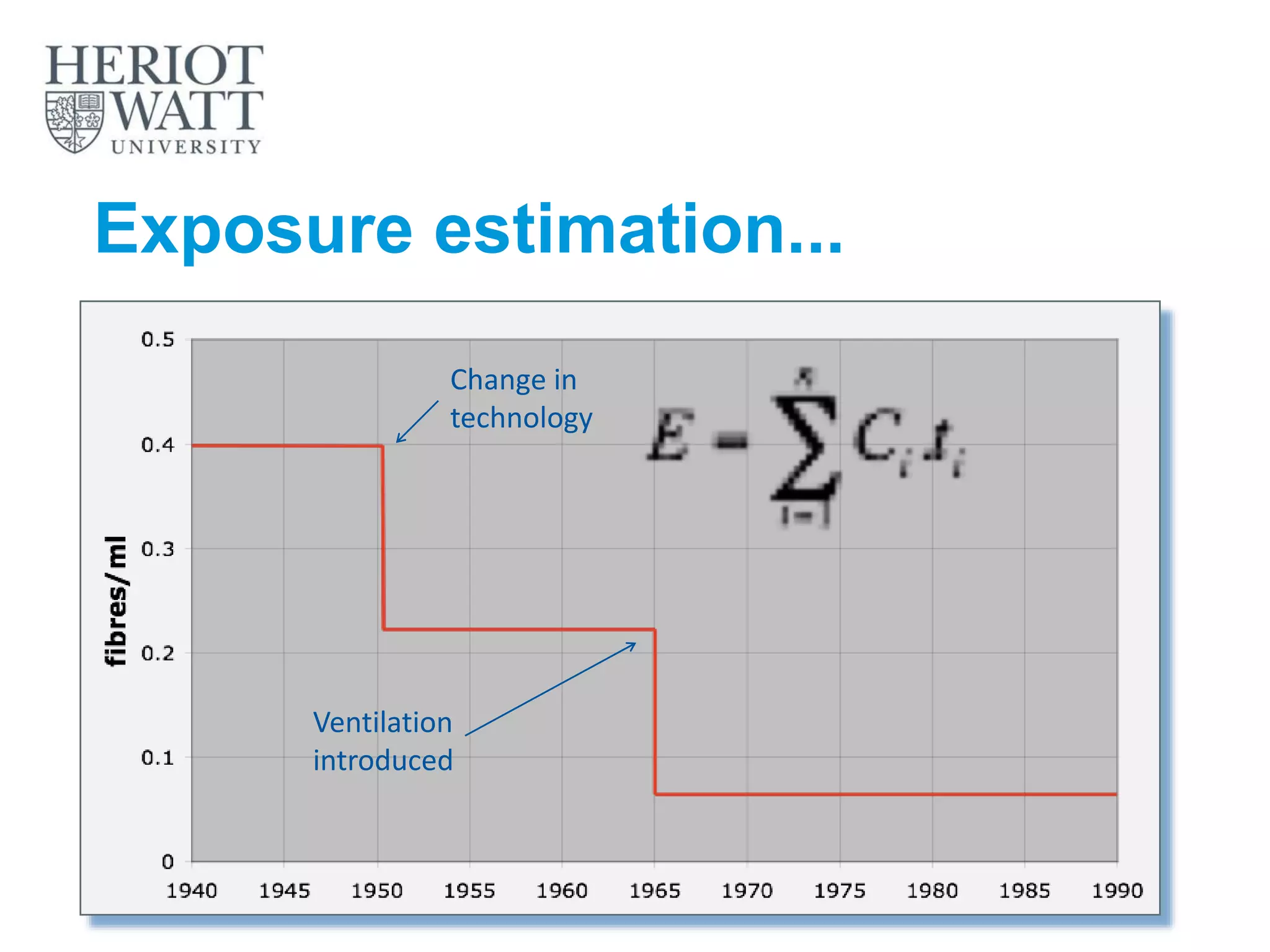
Exposure estimation...
Change in
technology
Ventilation
introduced
Estimates…
Job B[a]P Inhalable dust
Yard Foreman 3 2
Oven top - Airstream 3 2
Wharf Man 5 5
Quench Car Operator 7 6
Foreman - HMAG 7 4
Suprintendent - all areas 9 13
Superintendent - Briquetting 9 14
Foreman - Briquetting 11 14
Oven Foreman 12 5
Process Foreman 12 5
Sampler 15 18
Backend man 16 21
Press Operator 16 13
Pug man 17 22
Screen Man 20 15
Oven Top 30 15
Oven tops - Pre 1970 31 16
Cleaning Bussettes 32 9
Cleaning tar tanks 42 42
Assistant Fitter 44 15
Pump Man 45 3
Shuttle 46 33
Plater - Rigger - Briquetting 47 36
Plater - Rigger - liquid pitch 55 34
Shift Fitter 64 23
Plater - Rigger 77 33
Pitch Man 101 7
Rough Brush Painter 204 157
Job No Start End Job Duration
(yr)
Average %
of job
B[a]P
Exposure
(μg/m3)
Cumulative
(μg/m3.yr)
1a J-52 J-54Pug 2.00 33% 13 10
1b J-52 J-54Press 2.00 33% 13 9
1c J-52 J-54Backend 2.00 33% 10 8
2 J-54 J-56Fitter 2.00 100% 66 149
3 J-56 J-61Shift Foreman 5.00 100% 32 178
4 J-61 J-71Shift
Superintendant -
Whole plant
10.00 100% 18 203
5 J-71 J-80Shift
Superintendant -
Briquetting plant
8.59 100% 17 160
Total J-52 J-80 31.58 23 716
Occupational Exposure Limits
(OELs)…
• Concentrations (e.g. mg/m3) averaged over either
8-hr or 15-min
• Personal exposure
• Each country sets
its own limits,
– There can be up to
two orders of
magnitude
difference
Health-based
OEL
OEL based
on socioeconomic
factors
Setting limits on exposure…
• In Europe The Scientific Committee on Occupational
Exposure Limit Values (SCOEL) advises the EC on OELs
– assemble all relevant data on the hazards of the substance
– determine whether it is adequate for the setting of an OEL
– identify the most important adverse effects that may arise
– review the quality of key studies.
– establish whether there is a non-threshold mechanism
– establish a ‘no observed adverse effect levels’ (NO(A)ELs) or
‘lowest observed adverse effect levels’ (LO(A)Els)
– establish a value for an 8-hr OEL, plus Uncertainty Factor
– can the OEL be measured
Bolt, H.M. & Huici-Montagud, A., 2008. Strategy of the scientific committee on occupational exposure limits (SCOEL) in the
derivation of occupational exposure limits for carcinogens and mutagens. Archives of Toxicology, 82(1), pp.61–64.
Some problems with OELs…
• As an example, respirable crystalline silica
– Silica causes silicosis, COPD and lung cancer
– We currently have an OEL of 0.1 mg/m3
– Many workplaces don’t comply with this limit but
few are prosecuted
– The cancer risks associated with long-term
exposure at the OEL are high
– Surely we should reduce the limit…
... but we’re not
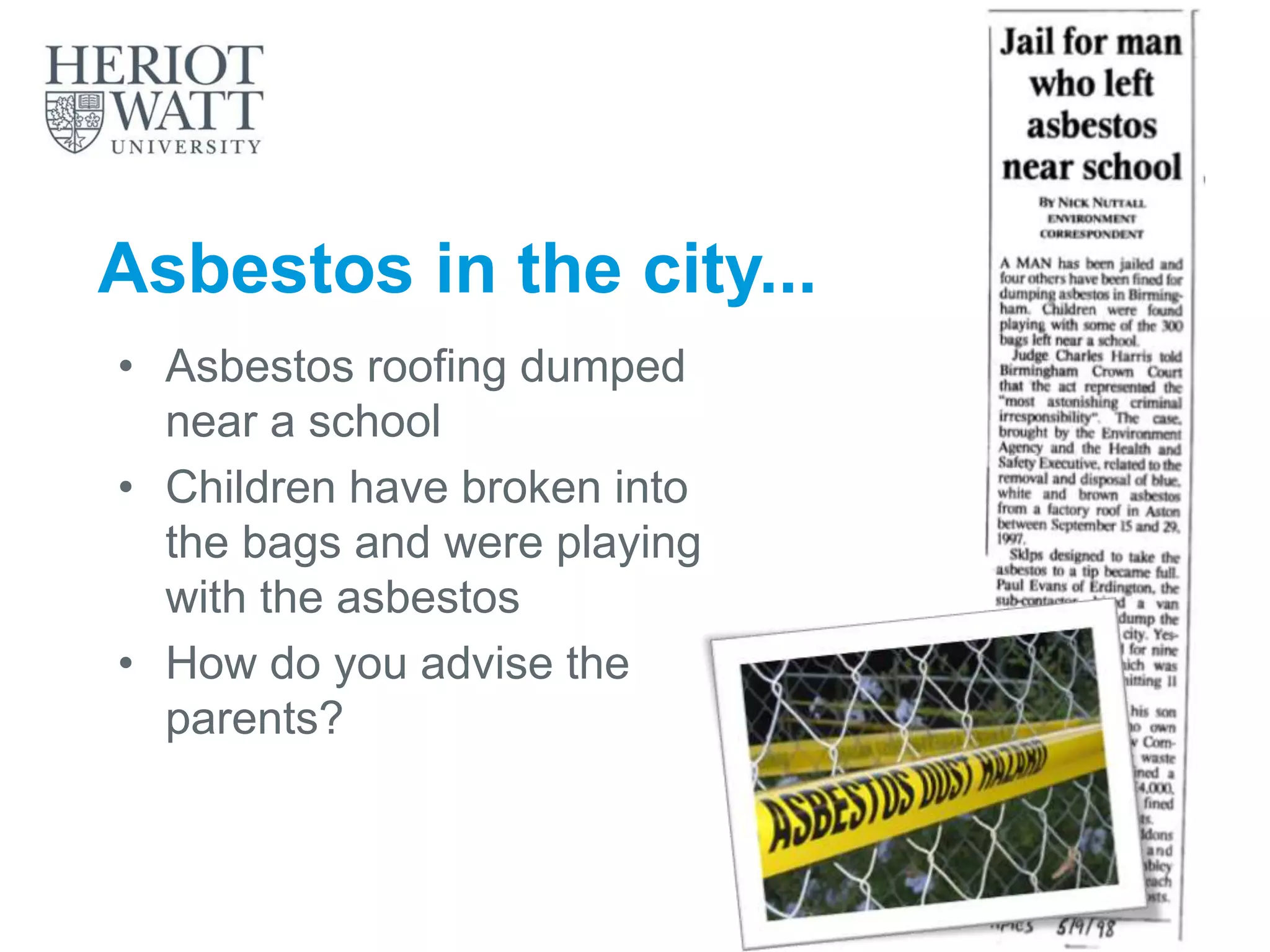
Asbestos in the city...
• Asbestos roofing dumped
near a school
• Children have broken into
the bags and were playing
with the asbestos
• How do you advise the
parents?
Asbestos…
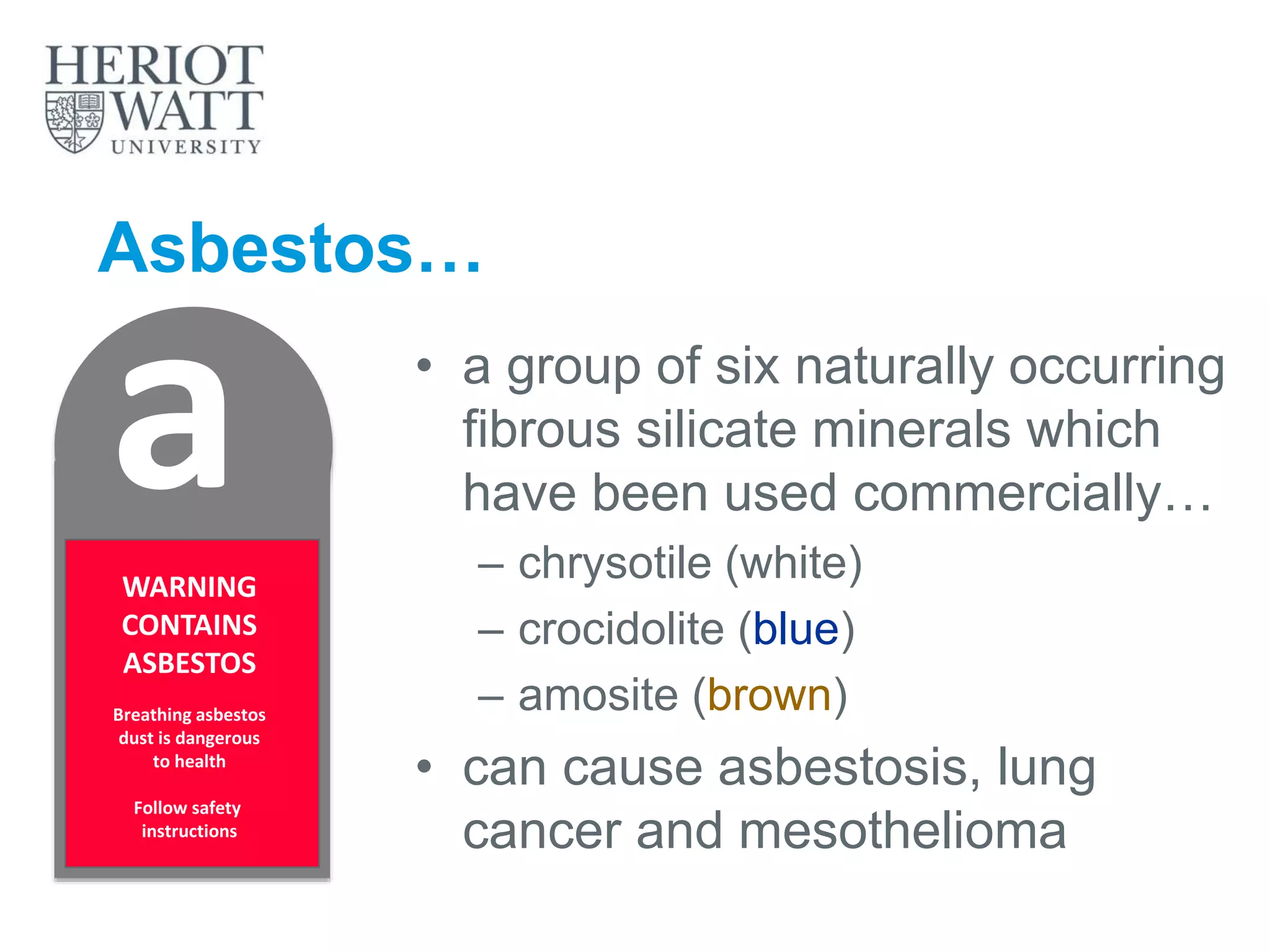
• a group of six naturally occurring
fibrous silicate minerals which
have been used commercially…
– chrysotile (white)
– crocidolite (blue)
– amosite (brown)
• can cause asbestosis, lung
cancer and mesothelioma
aWARNING
CONTAINS
ASBESTOS
Breathing asbestos
dust is dangerous
to health
Follow safety
instructions
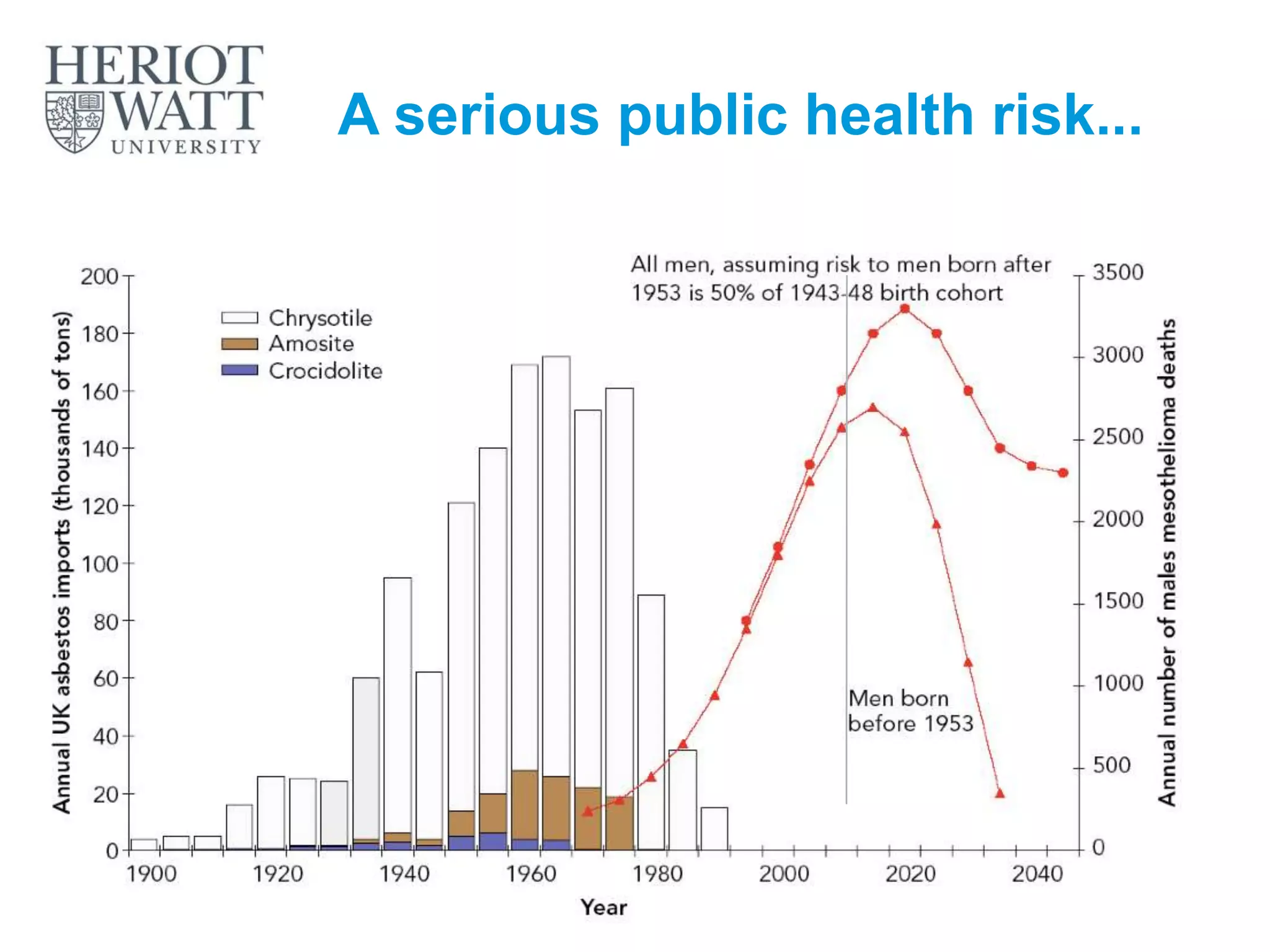
A serious public health risk...
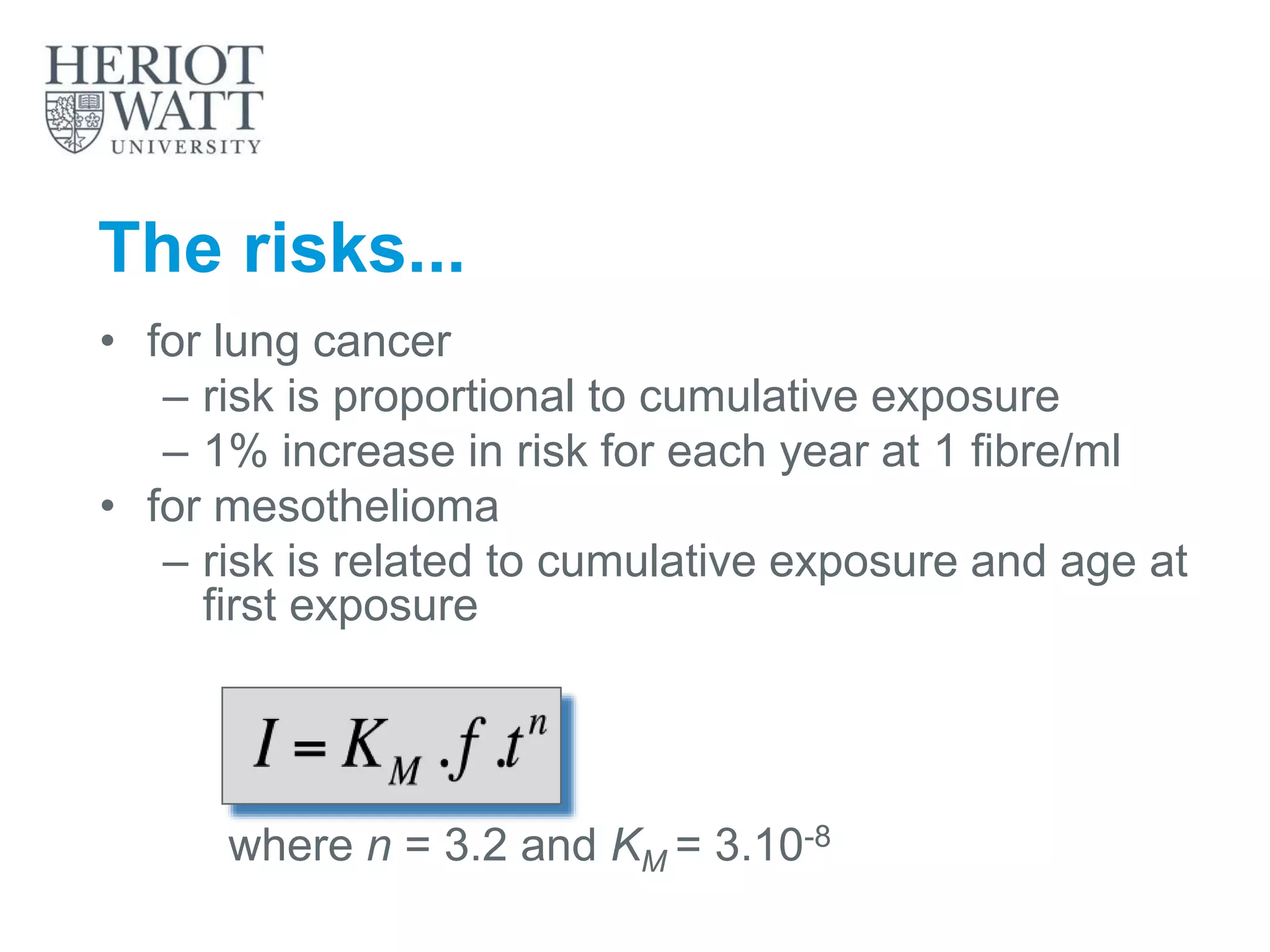
The risks...
• for lung cancer
– risk is proportional to cumulative exposure
– 1% increase in risk for each year at 1 fibre/ml
• for mesothelioma
– risk is related to cumulative exposure and age at
first exposure
where n = 3.2 and KM = 3.10-8
Mesothelioma risk for a child...
Age 10, exposed to 1fibre/ml for one day
So what should we do?
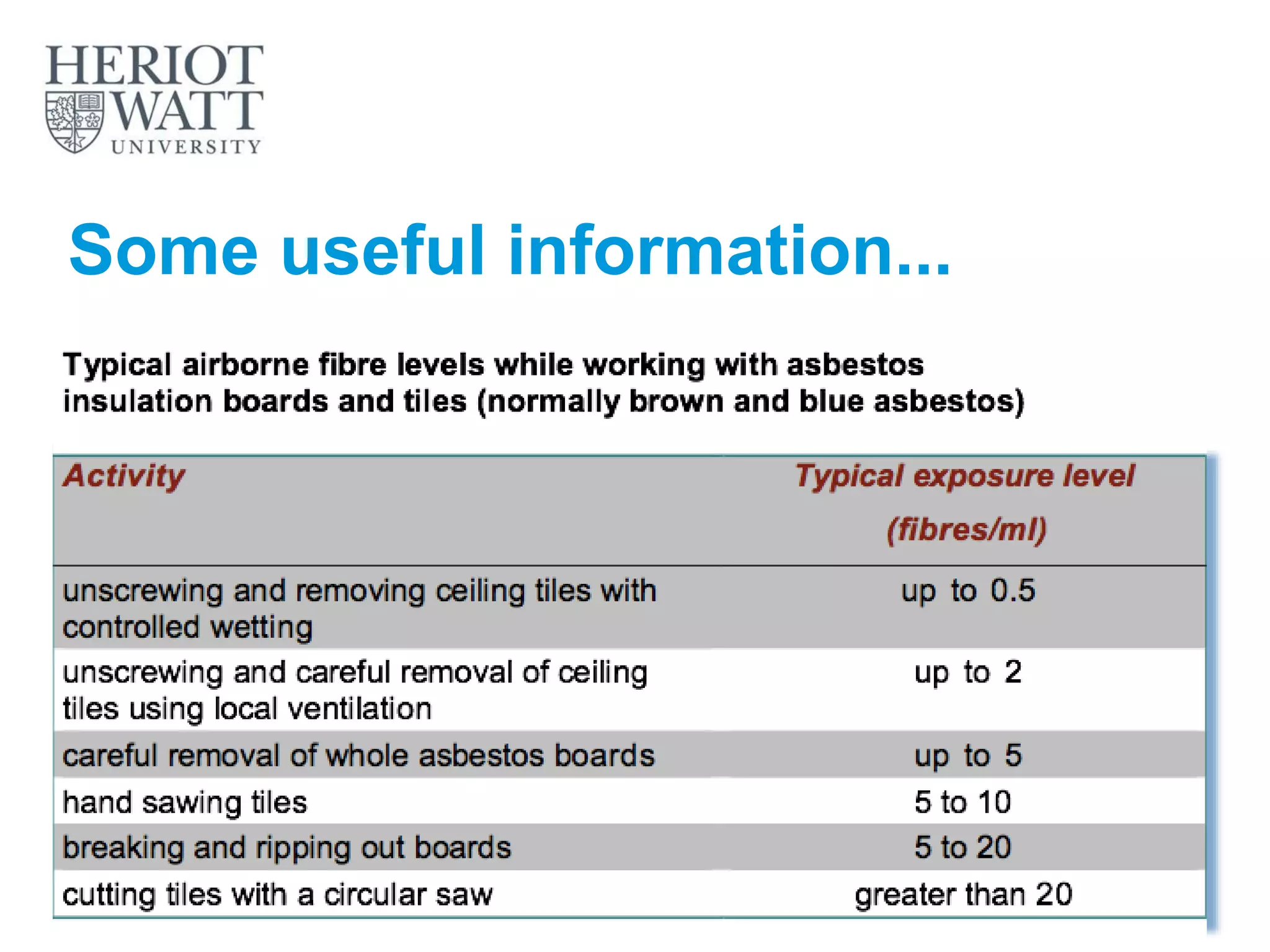
Some useful information...
What are your conclusions?
Summary...
• exposure estimation is central to
reliable risk assessment
• quantitative exposure assessment is
more useful than categorical
evaluations
• even short-term exposure to asbestos
may create important risks
Useful information…
Human Exposure Assessment (IPCS EHC214) available at
www.inchem.org/documents/ehc/ehc/ehc214.htm

Exposure assessment for epidemiology

  • 1.
  • 2.
    Summary… • asbestos andman-made mineral fibres • a general definition of exposure and the exposome • from the source to dose • the occupational history • strategies for estimating exposure • occupational exposure limits • a case study - asbestos in the city
  • 3.
    Scope of thissession... • Mostly occupational (and some environmental) • Chronic exposure • To hazardous substances • By inhalation • Occupational epidemiology • Non-occupational epidemiology / risk assessment
  • 4.
    Asbestos… • Stanton andWrench(1972) and Pott and Friedrichs (1972) in vivo induction of mesothelioma • Mid-1970s glass and rockwool industries commission studies • Doll (1955) lung cancer • Wagner et al (1960) mesothelioma • 1964 New York conference
  • 5.
    Asbestos lung cancerepidemiology…
  • 6.
    European MMMF studies… •Five glasswool plants, seven rock/slagwool plants and two glass continuous filament plants • Total of 13,788 subjects • Employed between 1940 and 1978 Lung cancers SMR 95% CI Rock/slag 97 138 112 - 168 Glasswool 149 112 94 - 132 GCF 14 93 51 - 157
  • 7.
  • 8.
  • 9.
    Co-exposures… • Asbestos – Usedin some form or other in all of the plants – Four plants used cloth, yarn or cement products in production processes • Polycyclic Aromatic Hydrocarbons (PAH) – Bitumen and tar used in some plants • Polychlorinated Biphenyls (PCBs) • Ionising radiation • Formaldehyde • Possible arsenic exposure
  • 10.
  • 11.
    Definition of exposure... “Inepidemiology exposure denotes any of a subject’s attributes or any agent with which he or she may come into contact that may be relevant to his or her health.” Armstrong, White and Saracci (1990)
  • 12.
    Two-thirds of thedeaths in the world are caused by noncommunicable diseases, especially cancer and cardiovascular disease Only about 10% of this mortality attributed to genetic variation
  • 13.
    The exposome iscomposed of every exposure to which an individual is subjected from conception to death. Chris Wild
  • 14.
    The Exposome… • Theexposome is composed of every exposure to which an individual is subjected from conception to death. • It comprises: – processes internal to the body such as metabolism, gut microflora, inflammation… – external exposures including infectious agents, chemical contaminants, diet… – social, economic and psychological influences. Wild, C. P. (2012). The exposome: from concept to utility. International Journal of Epidemiology, 41(1), 24–32.
  • 15.
    Agnostic investigations… • SteveRapport recommends searching for potential causes without any prior hypothesis • Approach lends itself to “omics” technologies • Although other approaches can also adopt this approach • Follow-up with more focused epidemiological and mechanistic studies
  • 16.
  • 17.
    Routes of exposure... •Inhalation – exposure level, duration of exposure • Dermal – concentration on skin, area of skin exposed, duration of exposure • Ingestion – mass of chemical being swallowed
  • 18.
    Biological relevance... • Thechosen exposure metric should be biologically relevant – what substance – what averaging time – what sub-fraction of an aerosol Cherrie and Aitken. Measurement of human exposure to biologically relevant fractions of inhaled aerosols. Occup Environ Med (1999) vol. 56 (11) pp. 747-52
  • 19.
    Biological relevance… Cherrie andAitken. Measurement of human exposure to biologically relevant fractions of inhaled aerosols. Occup Environ Med (1999) vol. 56 (11) pp. 747-52
  • 20.
    Fibre analysis criteria... •Fibres are harmful because… – they are thin (d < 3mm) – they are long (l > 5mm) and – because of their shape (l/d > 3) • also because they are persistent in the lung
  • 21.
    Modern measurement… • Personalsampling is straightforward • More relevant to personal exposure • Are more biologically relevant • Can provide information on temporal variation Cherrie. The beginning of the science underpinning occupational hygiene. The Annals of Occupational Hygiene (2003) vol. 47 (3) pp. 179-85
  • 22.
    Information sources for assessingexposure in epi... • Personnel records • Other company records • Subject • Relatives or friends • Co-workers • Community records • Environmental monitoring records
  • 23.
    Strategies for assessment... •Industry • Job title • Job-Exposure matrices • Individual “expert” evaluation • Exposure measurements • Biological monitoring
  • 27.
    Historic monitoring data... •Benefits… – quantitative data • Drawbacks… – may be unbalanced or incomplete – changes in sampling or analytical methods – variations in sampling strategy – changes in process or control measures
  • 28.
  • 30.
    Work area determinesexposure level…
  • 31.
    Structured assessment based ontheory… Where... ei = intrinsic emission h = handling hlv = local controls etc. C=f(ei , ℎ, hlv…)
  • 32.
    Validity... R² = 0.96 0.0 20.0 40.0 60.0 80.0 100.0 0.010.0 20.0 30.0 40.0 50.0 60.0 EstimatedB[a]P(mg/m3) Measured B[a]P (mg/m3)
  • 33.
    Estimates made usinga spreadsheet…
  • 34.
  • 35.
    Estimates… Job B[a]P Inhalabledust Yard Foreman 3 2 Oven top - Airstream 3 2 Wharf Man 5 5 Quench Car Operator 7 6 Foreman - HMAG 7 4 Suprintendent - all areas 9 13 Superintendent - Briquetting 9 14 Foreman - Briquetting 11 14 Oven Foreman 12 5 Process Foreman 12 5 Sampler 15 18 Backend man 16 21 Press Operator 16 13 Pug man 17 22 Screen Man 20 15 Oven Top 30 15 Oven tops - Pre 1970 31 16 Cleaning Bussettes 32 9 Cleaning tar tanks 42 42 Assistant Fitter 44 15 Pump Man 45 3 Shuttle 46 33 Plater - Rigger - Briquetting 47 36 Plater - Rigger - liquid pitch 55 34 Shift Fitter 64 23 Plater - Rigger 77 33 Pitch Man 101 7 Rough Brush Painter 204 157 Job No Start End Job Duration (yr) Average % of job B[a]P Exposure (μg/m3) Cumulative (μg/m3.yr) 1a J-52 J-54Pug 2.00 33% 13 10 1b J-52 J-54Press 2.00 33% 13 9 1c J-52 J-54Backend 2.00 33% 10 8 2 J-54 J-56Fitter 2.00 100% 66 149 3 J-56 J-61Shift Foreman 5.00 100% 32 178 4 J-61 J-71Shift Superintendant - Whole plant 10.00 100% 18 203 5 J-71 J-80Shift Superintendant - Briquetting plant 8.59 100% 17 160 Total J-52 J-80 31.58 23 716
  • 36.
    Occupational Exposure Limits (OELs)… •Concentrations (e.g. mg/m3) averaged over either 8-hr or 15-min • Personal exposure • Each country sets its own limits, – There can be up to two orders of magnitude difference Health-based OEL OEL based on socioeconomic factors
  • 37.
    Setting limits onexposure… • In Europe The Scientific Committee on Occupational Exposure Limit Values (SCOEL) advises the EC on OELs – assemble all relevant data on the hazards of the substance – determine whether it is adequate for the setting of an OEL – identify the most important adverse effects that may arise – review the quality of key studies. – establish whether there is a non-threshold mechanism – establish a ‘no observed adverse effect levels’ (NO(A)ELs) or ‘lowest observed adverse effect levels’ (LO(A)Els) – establish a value for an 8-hr OEL, plus Uncertainty Factor – can the OEL be measured Bolt, H.M. & Huici-Montagud, A., 2008. Strategy of the scientific committee on occupational exposure limits (SCOEL) in the derivation of occupational exposure limits for carcinogens and mutagens. Archives of Toxicology, 82(1), pp.61–64.
  • 38.
    Some problems withOELs… • As an example, respirable crystalline silica – Silica causes silicosis, COPD and lung cancer – We currently have an OEL of 0.1 mg/m3 – Many workplaces don’t comply with this limit but few are prosecuted – The cancer risks associated with long-term exposure at the OEL are high – Surely we should reduce the limit… ... but we’re not
  • 39.
    Asbestos in thecity... • Asbestos roofing dumped near a school • Children have broken into the bags and were playing with the asbestos • How do you advise the parents?
  • 40.
    Asbestos… • a groupof six naturally occurring fibrous silicate minerals which have been used commercially… – chrysotile (white) – crocidolite (blue) – amosite (brown) • can cause asbestosis, lung cancer and mesothelioma aWARNING CONTAINS ASBESTOS Breathing asbestos dust is dangerous to health Follow safety instructions
  • 41.
    A serious publichealth risk...
  • 42.
    The risks... • forlung cancer – risk is proportional to cumulative exposure – 1% increase in risk for each year at 1 fibre/ml • for mesothelioma – risk is related to cumulative exposure and age at first exposure where n = 3.2 and KM = 3.10-8
  • 43.
    Mesothelioma risk fora child... Age 10, exposed to 1fibre/ml for one day
  • 44.
  • 45.
  • 46.
    What are yourconclusions?
  • 47.
    Summary... • exposure estimationis central to reliable risk assessment • quantitative exposure assessment is more useful than categorical evaluations • even short-term exposure to asbestos may create important risks Useful information… Human Exposure Assessment (IPCS EHC214) available at www.inchem.org/documents/ehc/ehc/ehc214.htm

Editor's Notes

  • #3 2
  • #4 3
  • #5 4
  • #6 5
  • #7 6
  • #8 7
  • #9 8
  • #10 9
  • #11 10
  • #12 11
  • #15 HEALTH INEQUALITIES
  • #17 16
  • #18 17
  • #19 18
  • #20 Use PAH or Pb as an example here vs Quartz or coal dust – solubility, GI tract absorption
  • #21 20
  • #23 22
  • #24 23
  • #25 113 men who worked in an asbestos factory. Example of industry approach
  • #26 Nested case-control study. Cohort 31k men – data from pension fund. Job information and limited info about industry only. OR for engine crew for mesothelioma was 9.75, 20 year latency Lymphoma OR = 2.78 amongst Deck personnel on tankers and leukaemia OR = 2.26 to 6.86 depending on duration of employment Example of job-title approach
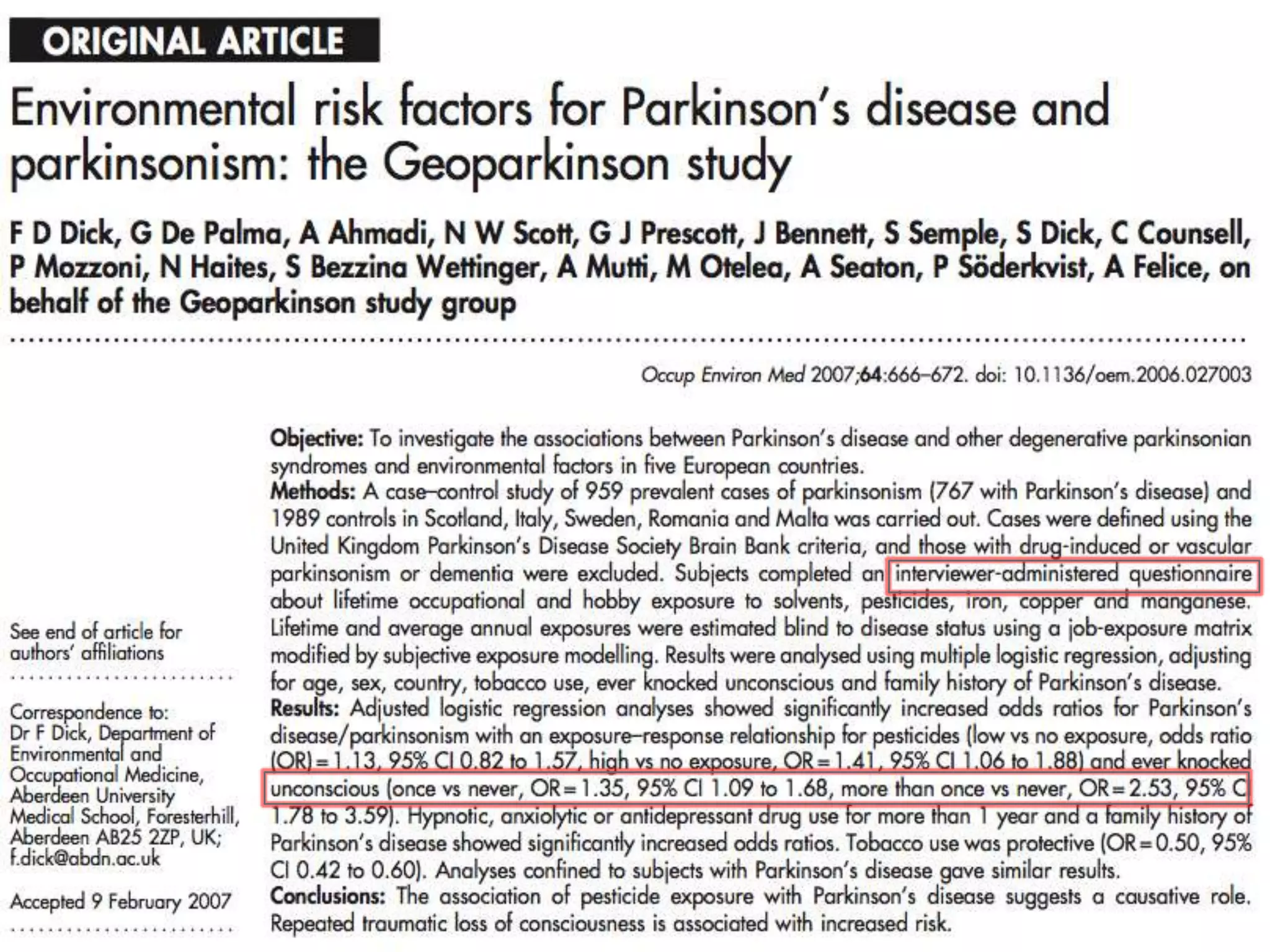
  • #27 OR = 1.13 for low vs no exposure = 1.41 for high vs no exposure
  • #28 27
  • #32 31
  • #33 32
  • #35 34
  • #36 Pink are jobs where there was measurement data
  • #39 Lifetime lung cancer risk associated with 45 years of exposure to crystalline silica: 0.1 mgm-3 13 to 60 per 1,000 0.05 mgm-3 6 to 26 per 1,000 0.025 mgm-3 3 to 23 per 1,000
  • #40 39
  • #41 40
  • #42 41
  • #43 42
  • #44 43
  • #45 44
  • #46 45
  • #47 46
  • #48 47