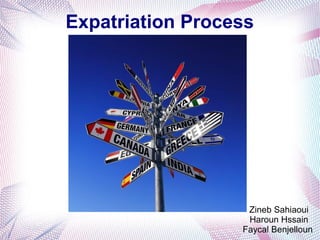
Expatriation Process
Zineb Sahiaoui
Haroun Hssain
Faycal Benjelloun
When & Why?

Expatriates are employees of organizations in one country
who are assigned to work in other countries on long- or
short-term business projects.

Help their companies:
− Establish operations in other countries
− Enter overseas markets or transfer skills and
knowledge to their companies’ business partners.
− Helps organizations develop their management
skills base and their ability to succeed in a global
marketplace.
How Do Expatriates Help the
Company?

Parent Control and Particular Expertise

Improve Local Market Knowledge

Instill Company Culture

Transfer knowledge to overseas partners

Increase Local Control

Develop Management Talent
Difficulties Faced by
Expatriates

Cultural Shock/Differences

Loneliness

Language Issues

Cost of Living

Healthcare

Relationship Problems

Paperwork
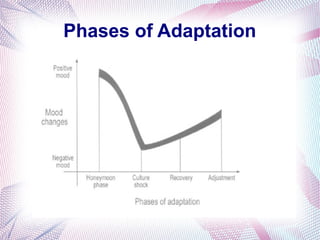
Phases of Adaptation
What Can Be Done By HRM?

Training Models for Intercultural Training
Programs focusing on
− Awareness
− Knowledge
− Skills

Help the expatriate understand the culture
of new destination and copine strategies

Coaching on business culture, etiquette,
interpersonal communication, conflic
resolution...

Family guidance – schooling, lifestyle...
Benefits of Cross Cultural
Training

Prepares the individual/family mentally

Removes the unknown factor that causes stress

Increases self awareness and cultural
understandning

Opportunity for questions

Motivates and Excites

Eases the process

Most importantly, reduces chances of relocation
failure
Repatriation Process

Also very important, because there can be
difficulties in returning to the home country

Returnees are experiencing a reverse
culture shock and this time it can be more
severe than when meeting the host country
and culture.

Repatriation Courses
− Financial planning (taxes, insurance)
− School children's education
− Spouse issues (job search...)
− Social changes

Expatriation process hr

  • 1.
  • 2.
    When & Why?  Expatriatesare employees of organizations in one country who are assigned to work in other countries on long- or short-term business projects.  Help their companies: − Establish operations in other countries − Enter overseas markets or transfer skills and knowledge to their companies’ business partners. − Helps organizations develop their management skills base and their ability to succeed in a global marketplace.
  • 3.
    How Do ExpatriatesHelp the Company?  Parent Control and Particular Expertise  Improve Local Market Knowledge  Instill Company Culture  Transfer knowledge to overseas partners  Increase Local Control  Develop Management Talent
  • 4.
    Difficulties Faced by Expatriates  CulturalShock/Differences  Loneliness  Language Issues  Cost of Living  Healthcare  Relationship Problems  Paperwork
  • 5.
  • 6.
    What Can BeDone By HRM?  Training Models for Intercultural Training Programs focusing on − Awareness − Knowledge − Skills  Help the expatriate understand the culture of new destination and copine strategies  Coaching on business culture, etiquette, interpersonal communication, conflic resolution...  Family guidance – schooling, lifestyle...
  • 7.
    Benefits of CrossCultural Training  Prepares the individual/family mentally  Removes the unknown factor that causes stress  Increases self awareness and cultural understandning  Opportunity for questions  Motivates and Excites  Eases the process  Most importantly, reduces chances of relocation failure
  • 8.
    Repatriation Process  Also veryimportant, because there can be difficulties in returning to the home country  Returnees are experiencing a reverse culture shock and this time it can be more severe than when meeting the host country and culture.  Repatriation Courses − Financial planning (taxes, insurance) − School children's education − Spouse issues (job search...) − Social changes