EXPATRIATE SUPPORT AND DEVELOPMENT
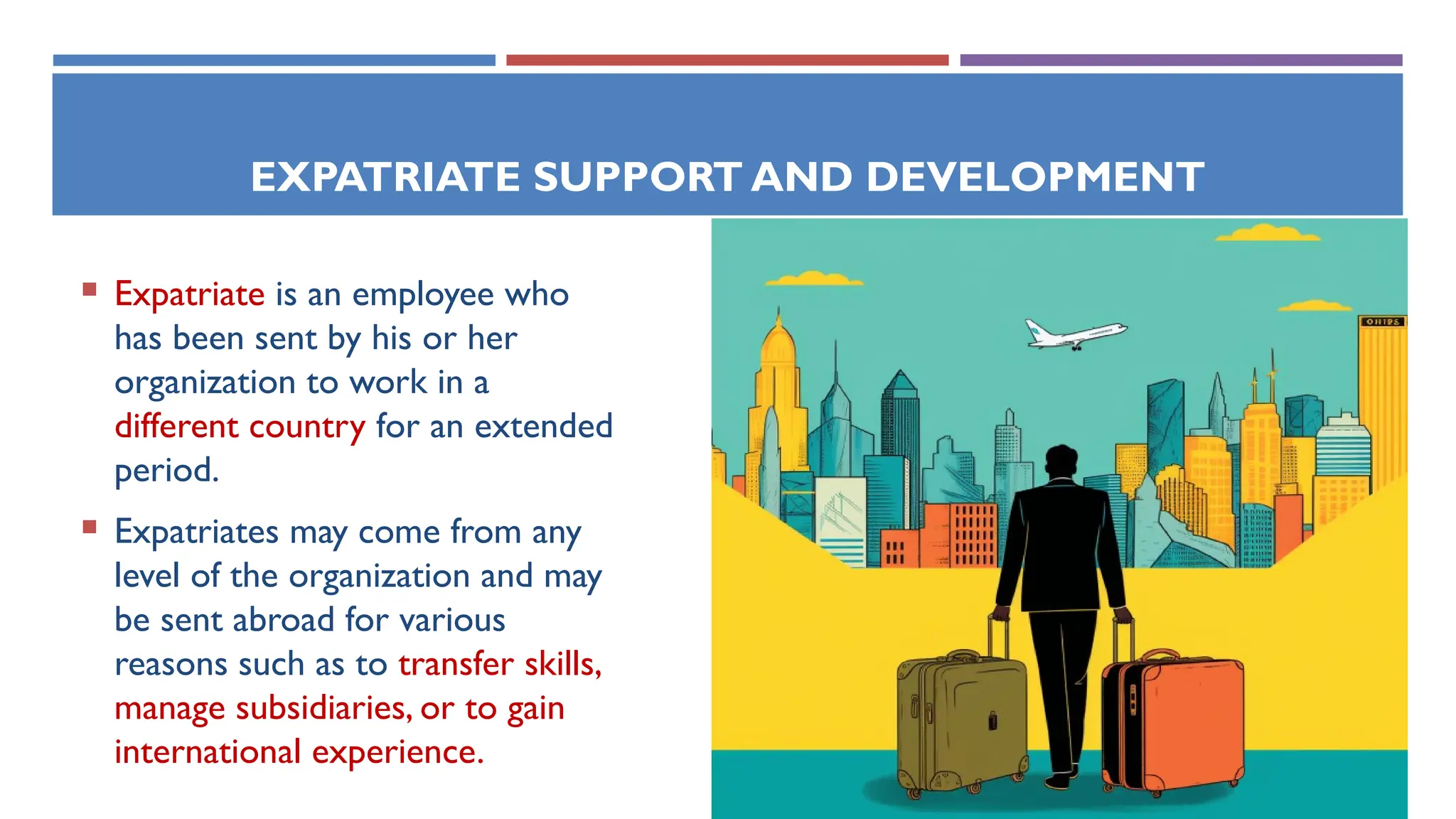
 Expatriate is an employee who
has been sent by his or her
organization to work in a
different country for an extended
period.
 Expatriates may come from any
level of the organization and may
be sent abroad for various
reasons such as to transfer skills,
manage subsidiaries, or to gain
international experience.
EXPATRIATE MANAGEMENT
 Selection and Recruitment: choosing the right candidate for the overseas
assignment with not just the right skill set but also cultural adaptability, emotional
intelligence, and the ability to handle stress.
 Pre-departureTraining: Once the selection is made, the individual may undergo
pre-departure training, which includes cultural awareness, language training, and other
skill-building activities.
 Compensation and Benefits:The expatriate's compensation package is often a
complex mix of base salary, allowances (housing, travel, etc.), and benefits (insurance,
retirement, etc.).
EXPATRIATE MANAGEMENT
 On-site Support: Once on assignment, expatriates often require ongoing
support, such as career development advice, mentorship, and feedback
mechanisms.
 Performance Management:The expatriate’s performance should be
monitored carefully to ensure that the goals of the assignment are being met.
 Repatriation:This refers to bringing the expatriate back to their home
country after the assignment is complete.
TYPES OF EXPATRIATETRAINING
 Cultural AwarenessTraining:This involves educating the expatriate about the
cultural norms, beliefs, and practices of the host country.
 LanguageTraining:Training in local languages can facilitate smoother
communication in day-to-day life.
 Preparation for Practical Matters:This involves training in the logistics of
relocating, from finding a place to live to understanding how local services like
healthcare and banking work.
 Legal and ComplianceTraining: Expatriates are educated on the legal obligations
and rights they have in the host country.
TYPES OF EXPATRIATETRAINING
 Role-specificTraining:This training focuses on the specific skills needed to perform
their job in the new environment, which can differ significantly from the home
country.
 VirtualTraining:This form of training is often used for teams spread across different
geographies and time zones. It is gaining importance due to technological advances
and the global pandemic.
 Psychological and Emotional Preparation: Preparing expatriates for the
psychological aspects of living in a new country can help in reducing culture shock and
stress
REPATRIATION
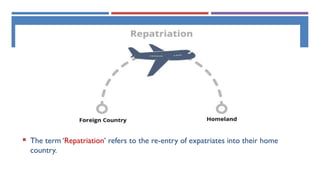
 The term ‘Repatriation’ refers to the re-entry of expatriates into their home
country.
REPATRIATION PROCESS
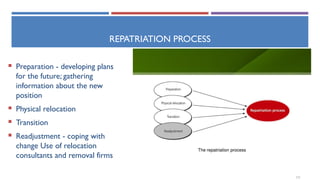
 Preparation - developing plans
for the future; gathering
information about the new
position
 Physical relocation
 Transition
 Readjustment - coping with
change Use of relocation
consultants and removal firms
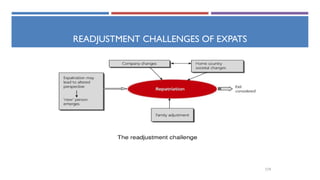
READJUSTMENT CHALLENGES OF EXPATS

Expatriate Support and Development in Organisations

  • 1.
    EXPATRIATE SUPPORT ANDDEVELOPMENT  Expatriate is an employee who has been sent by his or her organization to work in a different country for an extended period.  Expatriates may come from any level of the organization and may be sent abroad for various reasons such as to transfer skills, manage subsidiaries, or to gain international experience.
  • 2.
    EXPATRIATE MANAGEMENT  Selectionand Recruitment: choosing the right candidate for the overseas assignment with not just the right skill set but also cultural adaptability, emotional intelligence, and the ability to handle stress.  Pre-departureTraining: Once the selection is made, the individual may undergo pre-departure training, which includes cultural awareness, language training, and other skill-building activities.  Compensation and Benefits:The expatriate's compensation package is often a complex mix of base salary, allowances (housing, travel, etc.), and benefits (insurance, retirement, etc.).
  • 3.
    EXPATRIATE MANAGEMENT  On-siteSupport: Once on assignment, expatriates often require ongoing support, such as career development advice, mentorship, and feedback mechanisms.  Performance Management:The expatriate’s performance should be monitored carefully to ensure that the goals of the assignment are being met.  Repatriation:This refers to bringing the expatriate back to their home country after the assignment is complete.
  • 4.
    TYPES OF EXPATRIATETRAINING Cultural AwarenessTraining:This involves educating the expatriate about the cultural norms, beliefs, and practices of the host country.  LanguageTraining:Training in local languages can facilitate smoother communication in day-to-day life.  Preparation for Practical Matters:This involves training in the logistics of relocating, from finding a place to live to understanding how local services like healthcare and banking work.  Legal and ComplianceTraining: Expatriates are educated on the legal obligations and rights they have in the host country.
  • 5.
    TYPES OF EXPATRIATETRAINING Role-specificTraining:This training focuses on the specific skills needed to perform their job in the new environment, which can differ significantly from the home country.  VirtualTraining:This form of training is often used for teams spread across different geographies and time zones. It is gaining importance due to technological advances and the global pandemic.  Psychological and Emotional Preparation: Preparing expatriates for the psychological aspects of living in a new country can help in reducing culture shock and stress
  • 6.
    REPATRIATION  The term‘Repatriation’ refers to the re-entry of expatriates into their home country.
  • 7.
    REPATRIATION PROCESS  Preparation- developing plans for the future; gathering information about the new position  Physical relocation  Transition  Readjustment - coping with change Use of relocation consultants and removal firms
  • 8.