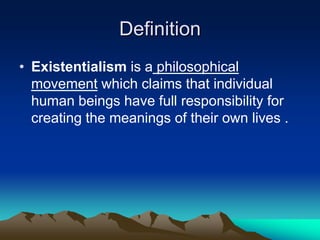
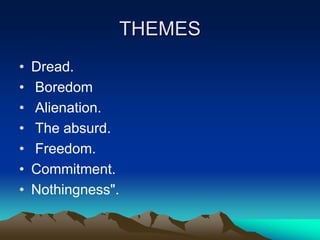
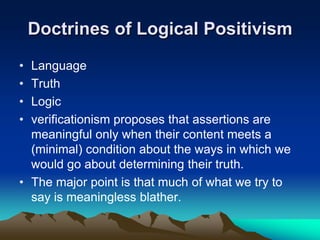
Existentialism holds that individuals are solely responsible for creating meaning and purpose in their own lives. It focuses on themes of dread, boredom, alienation, freedom, and the absurd. Existentialists believe existence precedes essence, meaning people define their own reality rather than having an essential human nature. Positivism takes a skeptical yet pragmatic approach, asserting that meaningful statements must be empirically verifiable or logically proven. Logical positivism further developed these ideas, proposing a verification criterion of meaning and analyzing moral language as expressions of feeling rather than claims of objective truth.










![CASE_PRESENTATION_ON_subdural_hematoma(SDH)[1 FINAL PPT]-1.pptx](https://cdn.slidesharecdn.com/ss_thumbnails/casepresentationonsubduralhematomasdh1finalppt-1-260129172522-d405d375-thumbnail.jpg?width=640&height=640&fit=bounds)


