 
NARAINA COLLEGE OF ENGINEERING & 
TECHNOLOGY 
 UPTU CODE-287 
 
 PRESENTED BY 
 Priyanka Srivastava 
 I.T.-4th year 
 7th Semester
 What is error 
 What is exception 
 Exception handling 
 Try,catch n finally block 
 Use of throws
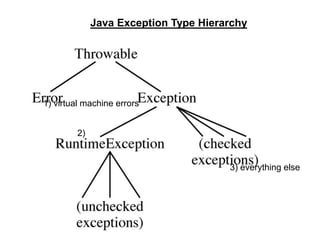
Java Exception Type Hierarchy 
1) virtual machine errors 
2) 
3) everything else
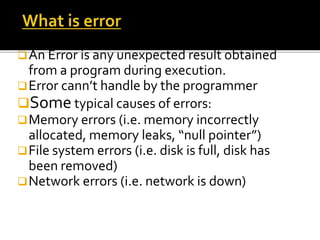
An Error is any unexpected result obtained 
from a program during execution. 
Error cann’t handle by the programmer 
Some typical causes of errors: 
Memory errors (i.e. memory incorrectly 
allocated, memory leaks, “null pointer”) 
File system errors (i.e. disk is full, disk has 
been removed) 
Network errors (i.e. network is down)
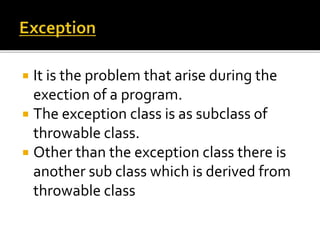
 It is the problem that arise during the 
exection of a program. 
 The exception class is as subclass of 
throwable class. 
 Other than the exception class there is 
another sub class which is derived from 
throwable class
 Exception handling in java is managed 
through five keywords – 
1. Try 
2. Catch 
3. Finally 
4. Throws 
5. Throw
 Unchecked Exceptions 
It is not required that these 
types of exceptions be caught or 
declared on a method. 
 Runtime exceptions can be 
generated by methods or by 
the JVM itself. 
 Errors are generated from 
deep within the JVM, and 
often indicate a truly fatal 
state. 
 Runtime exceptions are a 
source of major controversy! 
 Checked Exceptions 
Must either be caught by a 
method or declared in its 
signature. 
 Placing exceptions in the 
method signature harkens 
back to a major concern for 
Goodenough. 
 This requirement is viewed 
with derision in the hardcore 
C++ community. 
 A common technique for 
simplifying checked 
exceptions is subsumption. 
Copyright (c) 2001 DeLorme 7
 Example 
 try { 
… normal program code 
} 
catch(Exception e) { 
… exception handling code 
}
import java.io.*; 
public class demo 
{ 
public static void main(String[] args) 
{ 
try 
{ 
int a,b,c; 
a=5; 
b=0; 
c=a/b; 
System.out.println(c); 
} 
catch(ArithmeticException ae) 
{ 
System.out.println("hello"); 
System.out.println(ae); 
} 
}}
import java.io.*; 
public class ExcepTest{ 
public static void main(String args[]){ 
try{ 
int a[] = new int[2]; 
System.out.println("Access element 
three :" + a[3]); 
}catch(ArrayIndexOutOfBoundsException 
e){ 
System.out.println("Exception thrown 
:" + e); 
} 
System.out.println("Out of the block"); 
} 
} 
This would produce following result: 
Exception thrown 
:java.lang.ArrayIndexOutOfBoundsExceptio 
n: 3 
Out of the block
 A try block can be followed by multiple catch blocks. The syntax for 
multiple catch blocks looks like the following: 
 try 
 { 
 //Protected code 
 }catch(ExceptionType1 e1) 
 { 
 //Catch block 
 }catch(ExceptionType2 e2) 
 { 
 //Catch block 
 }catch(ExceptionType3 e3) 
 { 
 //Catch block 
 }
 When an error condition is detected, it is necessary to handle it immediately where 
detected or throw the exception to the calling method. 
 Exception handling is a mechanism for transferring control from where an error 
occurred to where it can be handled most appropriately. 
 After the exception is thrown, the throwing method terminates and execution 
control is immediately passed backward along the chain of callers from where the 
exception was thrown. 
 Any method along the calling chain can: 
a) handle the exception and continue with execution, 
b) handle the exception and again throw the exception to the calling method to 
handle 
c) or do nothing, terminate immediately and let the calling method deal with the 
exception. 
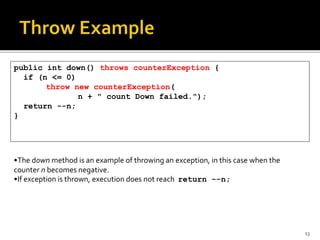
 The down method below is an example of throwing an exception, in this case when 
the counter n becomes 
12
13 
public int down() throws counterException { 
if (n <= 0) 
throw new counterException( 
n + " count Down failed."); 
return --n; 
} 
•The down method is an example of throwing an exception, in this case when the 
counter n becomes negative. 
•If exception is thrown, execution does not reach return --n;
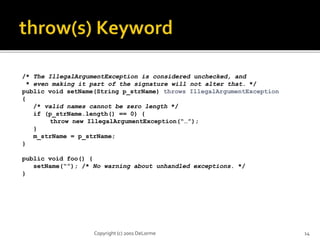
/* The IllegalArgumentException is considered unchecked, and 
* even making it part of the signature will not alter that. */ 
public void setName(String p_strName) throws IllegalArgumentException 
{ 
/* valid names cannot be zero length */ 
if (p_strName.length() == 0) { 
throw new IllegalArgumentException(“…”); 
} 
m_strName = p_strName; 
} 
public void foo() { 
setName(“”); /* No warning about unhandled exceptions. */ 
} 
Copyright (c) 2001 DeLorme 14
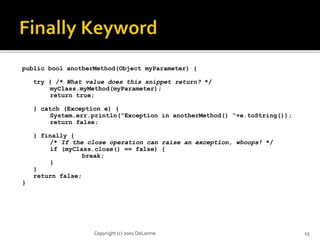
public bool anotherMethod(Object myParameter) { 
try { /* What value does this snippet return? */ 
myClass.myMethod(myParameter); 
return true; 
} catch (Exception e) { 
System.err.println(“Exception in anotherMethod() “+e.toString()); 
return false; 
} finally { 
/* If the close operation can raise an exception, whoops! */ 
if (myClass.close() == false) { 
break; 
} 
} 
return false; 
} 
Copyright (c) 2001 DeLorme 15
 Exceptions are a powerful error handling 
mechanism. 
 Exceptions in Java are built into the language. 
 Exceptions can be handled by the 
programmer (try-catch), or handled by the 
Java environment (throws).
Exception handling

Exception handling

  • 1.
     NARAINA COLLEGEOF ENGINEERING & TECHNOLOGY  UPTU CODE-287   PRESENTED BY  Priyanka Srivastava  I.T.-4th year  7th Semester
  • 2.
     What iserror  What is exception  Exception handling  Try,catch n finally block  Use of throws
  • 3.
    Java Exception TypeHierarchy 1) virtual machine errors 2) 3) everything else
  • 4.
    An Error isany unexpected result obtained from a program during execution. Error cann’t handle by the programmer Some typical causes of errors: Memory errors (i.e. memory incorrectly allocated, memory leaks, “null pointer”) File system errors (i.e. disk is full, disk has been removed) Network errors (i.e. network is down)
  • 5.
     It isthe problem that arise during the exection of a program.  The exception class is as subclass of throwable class.  Other than the exception class there is another sub class which is derived from throwable class
  • 6.
     Exception handlingin java is managed through five keywords – 1. Try 2. Catch 3. Finally 4. Throws 5. Throw
  • 7.
     Unchecked Exceptions It is not required that these types of exceptions be caught or declared on a method.  Runtime exceptions can be generated by methods or by the JVM itself.  Errors are generated from deep within the JVM, and often indicate a truly fatal state.  Runtime exceptions are a source of major controversy!  Checked Exceptions Must either be caught by a method or declared in its signature.  Placing exceptions in the method signature harkens back to a major concern for Goodenough.  This requirement is viewed with derision in the hardcore C++ community.  A common technique for simplifying checked exceptions is subsumption. Copyright (c) 2001 DeLorme 7
  • 8.
     Example try { … normal program code } catch(Exception e) { … exception handling code }
  • 9.
    import java.io.*; publicclass demo { public static void main(String[] args) { try { int a,b,c; a=5; b=0; c=a/b; System.out.println(c); } catch(ArithmeticException ae) { System.out.println("hello"); System.out.println(ae); } }}
  • 10.
    import java.io.*; publicclass ExcepTest{ public static void main(String args[]){ try{ int a[] = new int[2]; System.out.println("Access element three :" + a[3]); }catch(ArrayIndexOutOfBoundsException e){ System.out.println("Exception thrown :" + e); } System.out.println("Out of the block"); } } This would produce following result: Exception thrown :java.lang.ArrayIndexOutOfBoundsExceptio n: 3 Out of the block
  • 11.
     A tryblock can be followed by multiple catch blocks. The syntax for multiple catch blocks looks like the following:  try  {  //Protected code  }catch(ExceptionType1 e1)  {  //Catch block  }catch(ExceptionType2 e2)  {  //Catch block  }catch(ExceptionType3 e3)  {  //Catch block  }
  • 12.
     When anerror condition is detected, it is necessary to handle it immediately where detected or throw the exception to the calling method.  Exception handling is a mechanism for transferring control from where an error occurred to where it can be handled most appropriately.  After the exception is thrown, the throwing method terminates and execution control is immediately passed backward along the chain of callers from where the exception was thrown.  Any method along the calling chain can: a) handle the exception and continue with execution, b) handle the exception and again throw the exception to the calling method to handle c) or do nothing, terminate immediately and let the calling method deal with the exception.  The down method below is an example of throwing an exception, in this case when the counter n becomes 12
  • 13.
    13 public intdown() throws counterException { if (n <= 0) throw new counterException( n + " count Down failed."); return --n; } •The down method is an example of throwing an exception, in this case when the counter n becomes negative. •If exception is thrown, execution does not reach return --n;
  • 14.
    /* The IllegalArgumentExceptionis considered unchecked, and * even making it part of the signature will not alter that. */ public void setName(String p_strName) throws IllegalArgumentException { /* valid names cannot be zero length */ if (p_strName.length() == 0) { throw new IllegalArgumentException(“…”); } m_strName = p_strName; } public void foo() { setName(“”); /* No warning about unhandled exceptions. */ } Copyright (c) 2001 DeLorme 14
  • 15.
    public bool anotherMethod(ObjectmyParameter) { try { /* What value does this snippet return? */ myClass.myMethod(myParameter); return true; } catch (Exception e) { System.err.println(“Exception in anotherMethod() “+e.toString()); return false; } finally { /* If the close operation can raise an exception, whoops! */ if (myClass.close() == false) { break; } } return false; } Copyright (c) 2001 DeLorme 15
  • 16.
     Exceptions area powerful error handling mechanism.  Exceptions in Java are built into the language.  Exceptions can be handled by the programmer (try-catch), or handled by the Java environment (throws).