How to ConductAction
Research in School
Sharath P
Vice Principal
PMSHRI KV No.1, Palakkad
2.
Objectives of theSession
Understand Action Research
Demystify the core concepts.
Learn Step-by-Step Process
Practical guide for implementation.
See Real-Life Examples
Classroom-based scenarios.
Document & Present Findings
Share your insights effectively.
3.
What is ActionResearch?
Systematic Inquiry
Teachers investigate their own practices.
Problem-Solving
Aimed at addressing practical classroom issues.
Classroom Context
Done directly within the school environment.
Cyclical Process
Involves planning, acting, observing, reflecting.
4.
Key Features
Focused on
Issues
Addressesreal
classroom
challenges.
Reflective
& Iterative
Continuous
improvement
through
reflection.
Teacher-
Led
Empowers
teachers as
researchers.
Flexible &
Contextual
Adaptable to
specific school
needs.
5.
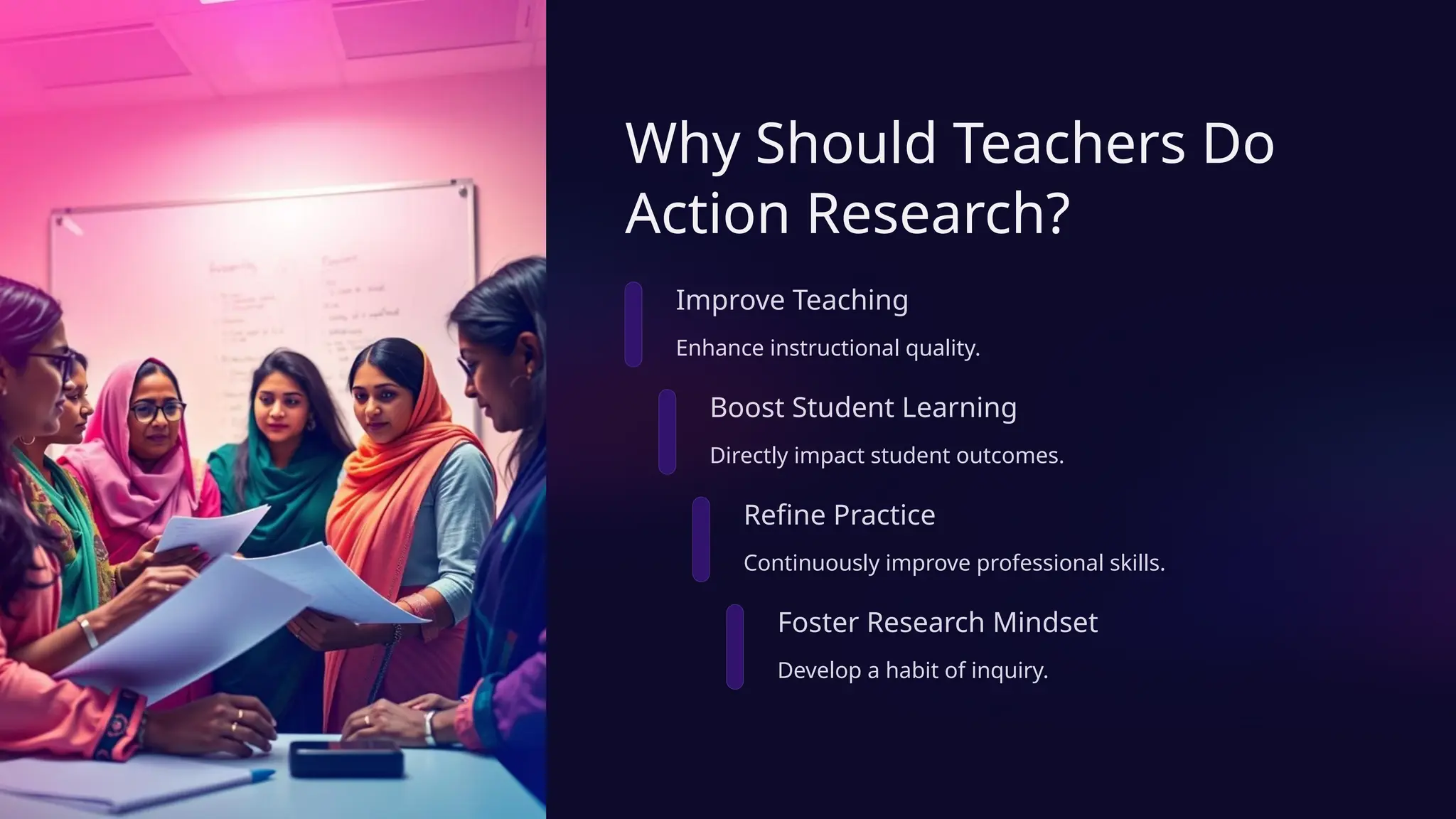
Why Should TeachersDo
Action Research?
Improve Teaching
Enhance instructional quality.
Boost Student Learning
Directly impact student outcomes.
Refine Practice
Continuously improve professional skills.
Foster Research Mindset
Develop a habit of inquiry.
6.
Types of Problemsfor Action Research
Learning Difficulties
Addressing specific
student challenges.
Low Student
Motivation
Strategies to boost
engagement.
Classroom Behavior
Issues
Managing disruptive
conduct effectively.
New Curriculum
Challenges
Implementing new syllabi
smoothly.
Assessment Effectiveness
Improving evaluation methods.
7.
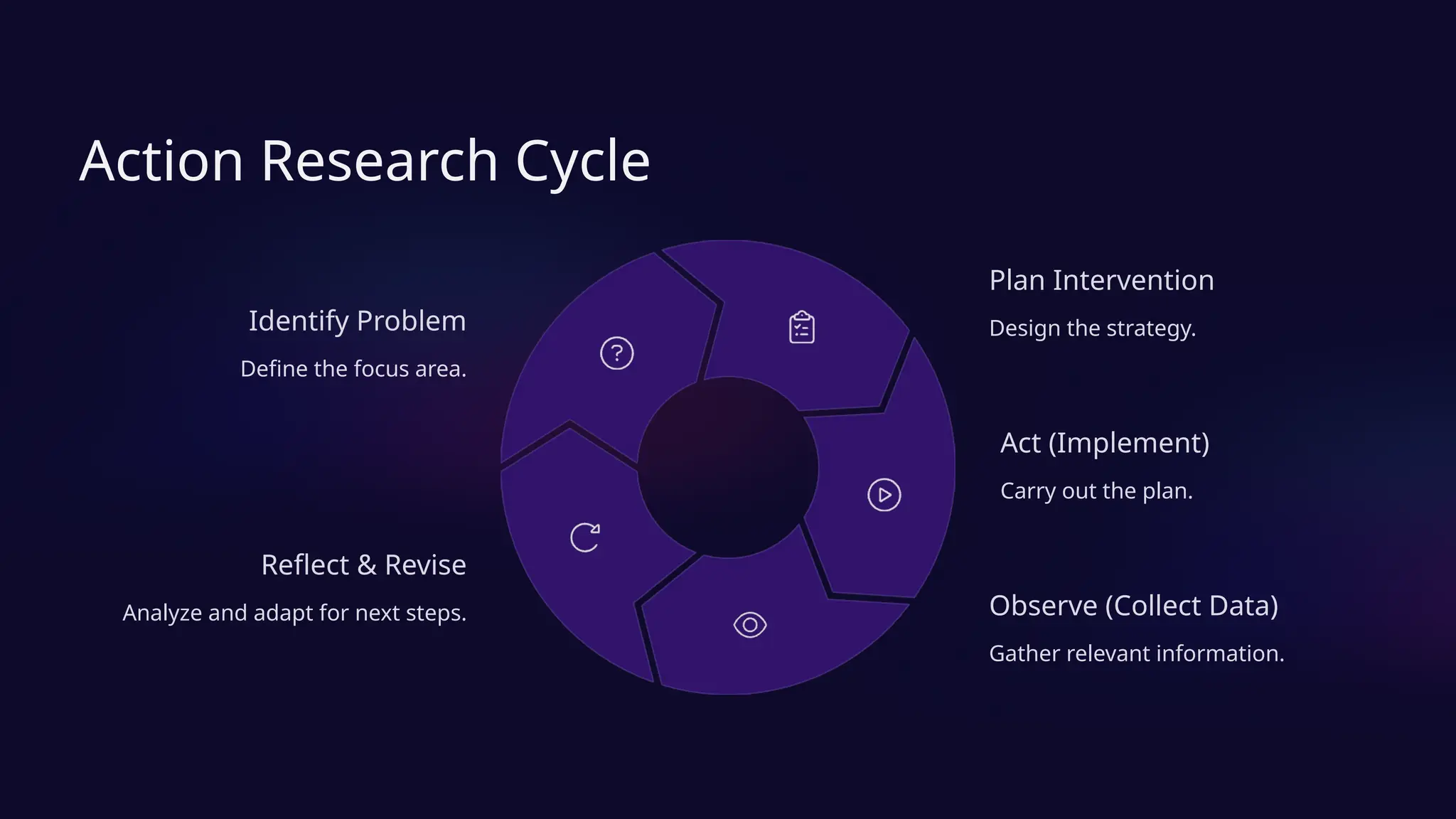
Action Research Cycle
IdentifyProblem
Define the focus area.
Plan Intervention
Design the strategy.
Act (Implement)
Carry out the plan.
Observe (Collect Data)
Gather relevant information.
Reflect & Revise
Analyze and adapt for next steps.
8.
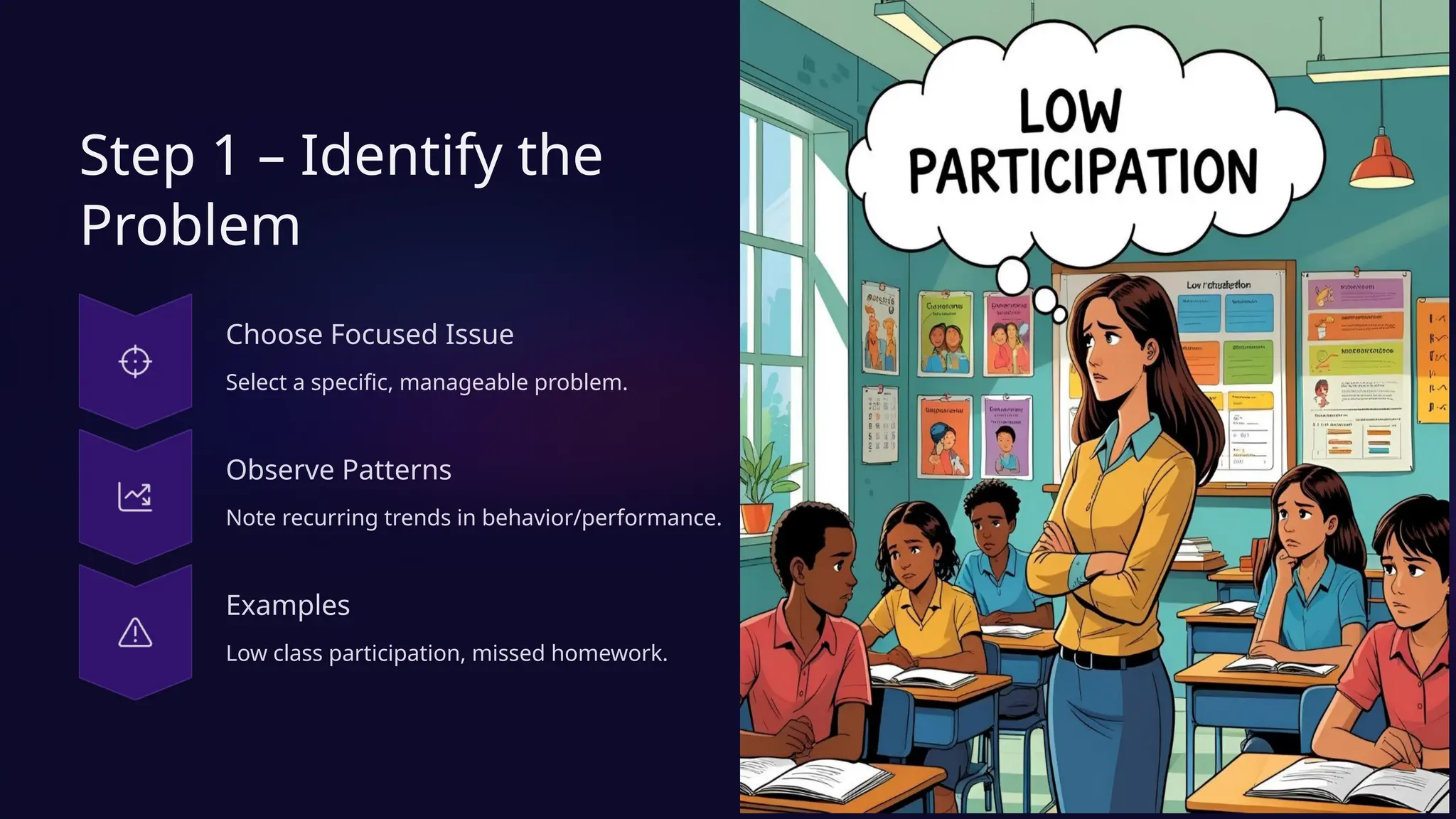
Step 1 –Identify the
Problem
Choose Focused Issue
Select a specific, manageable problem.
Observe Patterns
Note recurring trends in behavior/performance.
Examples
Low class participation, missed homework.
9.
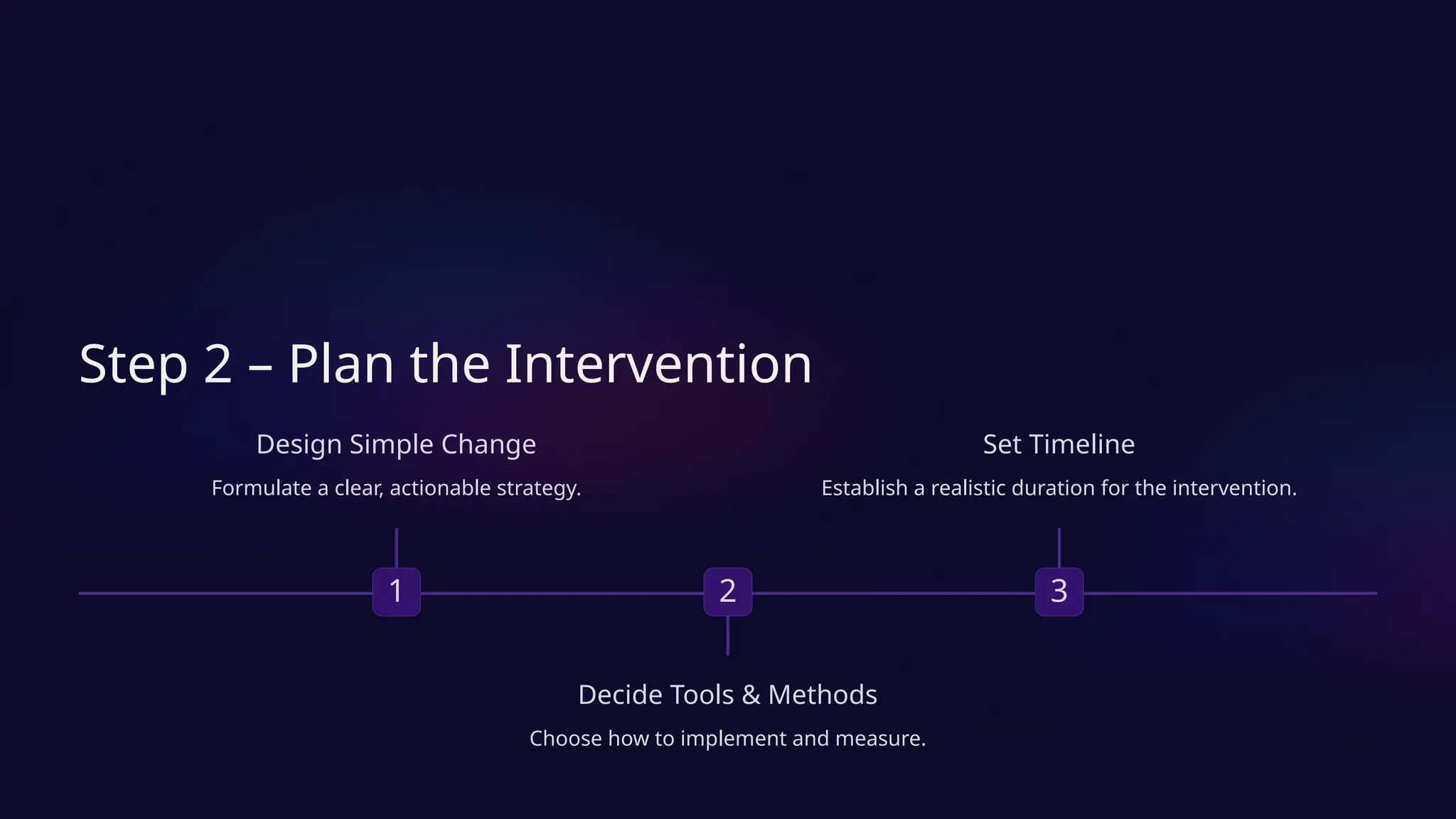
Step 2 –Plan the Intervention
1
Design Simple Change
Formulate a clear, actionable strategy.
2
Decide Tools & Methods
Choose how to implement and measure.
3
Set Timeline
Establish a realistic duration for the intervention.
10.
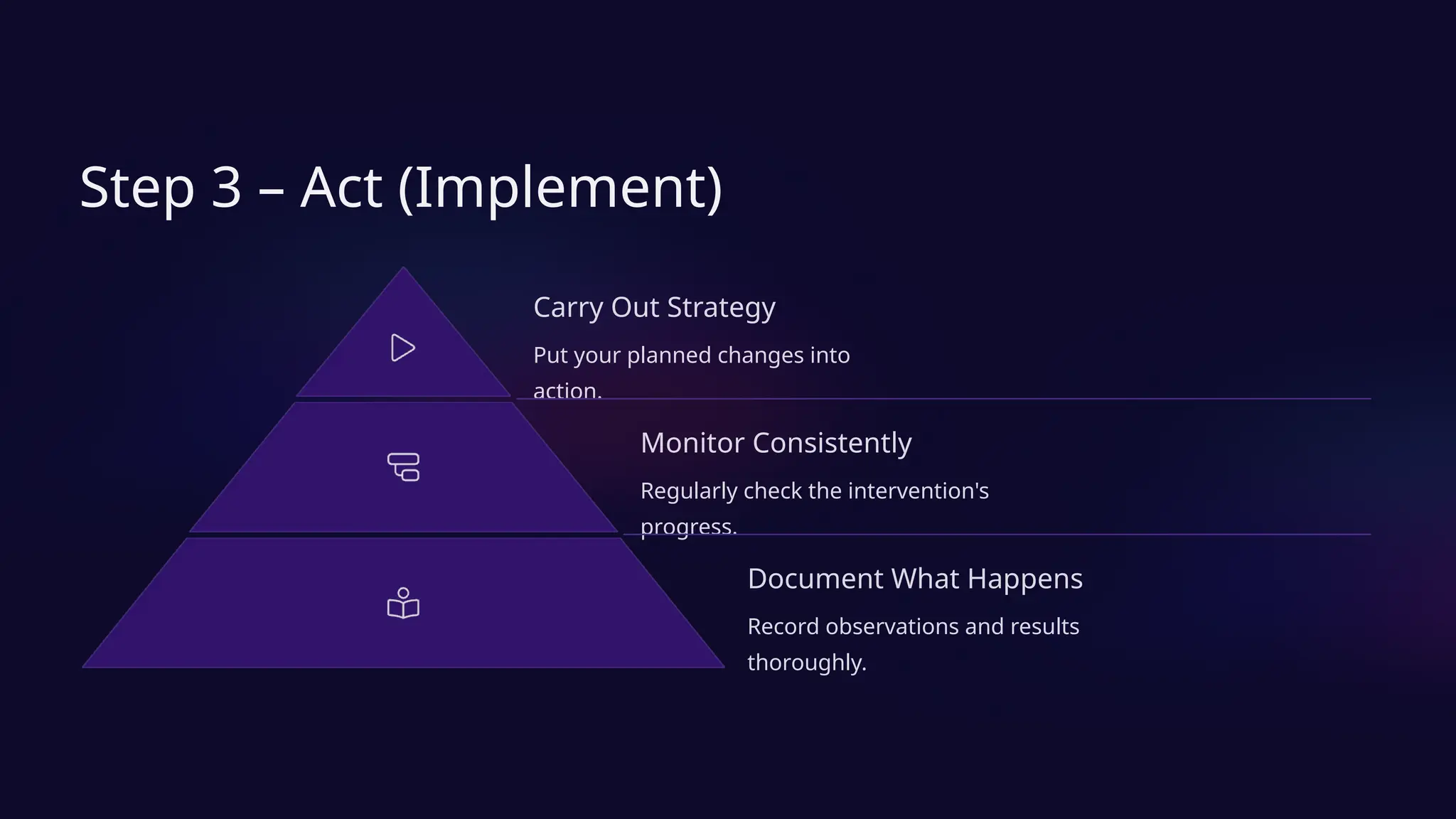
Step 3 –Act (Implement)
Carry Out Strategy
Put your planned changes into
action.
Monitor Consistently
Regularly check the intervention's
progress.
Document What Happens
Record observations and results
thoroughly.
11.
Step 4: Observeand Collect Data
Student Feedback
Gather insights directly
from students about their
learning experiences.
Classwork Samples
Review assignments for
understanding and
application of concepts.
Quiz/Test Scores
Analyze performance data
to identify areas of
improvement.
Anecdotal Notes
Record informal
observations of student
behavior and interactions.
Peer Observations
Collaborate with colleagues for fresh perspectives on classroom dynamics.
12.
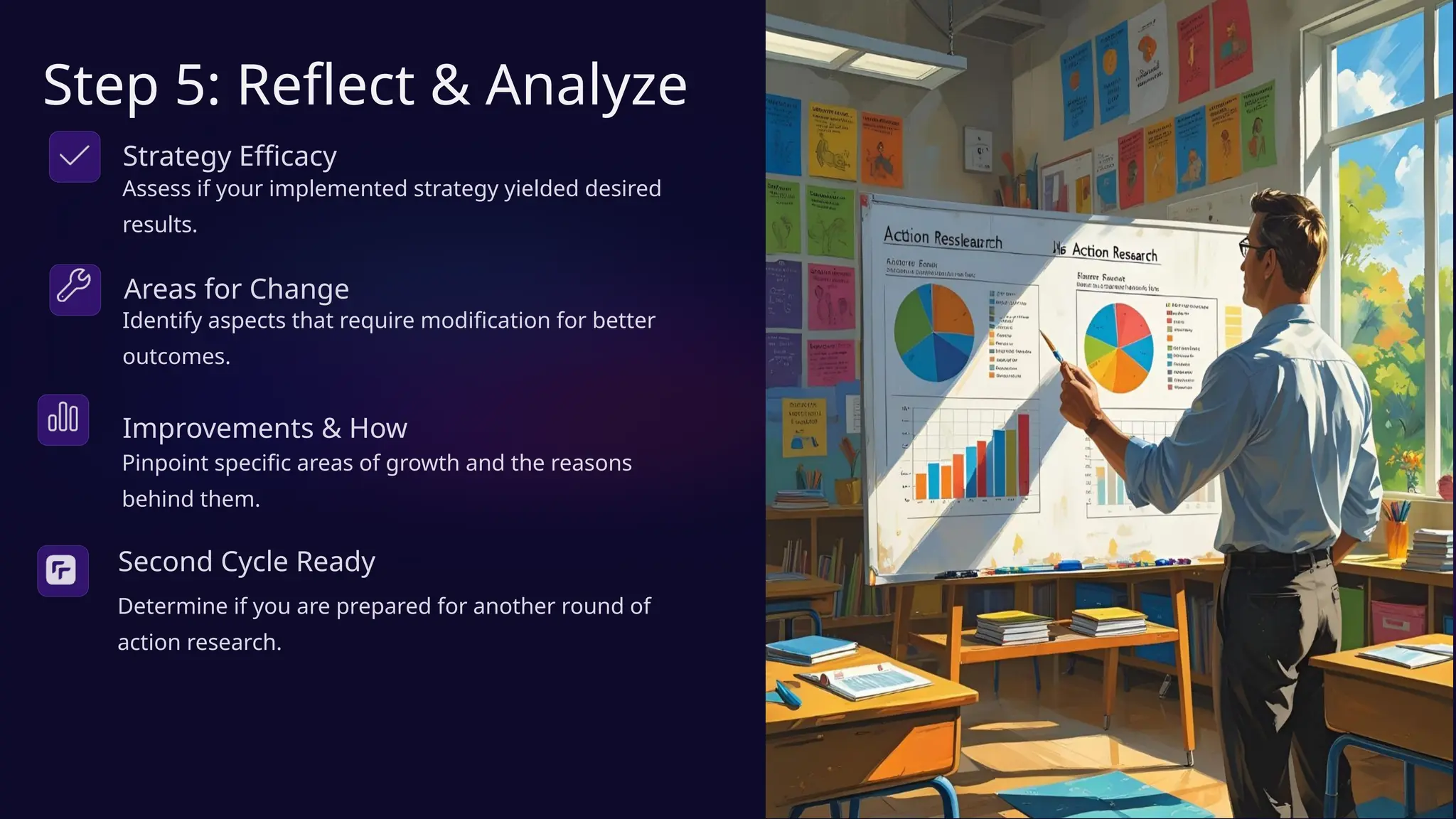
Step 5: Reflect& Analyze
Assess if your implemented strategy yielded desired
results.
Improvements & How
Pinpoint specific areas of growth and the reasons
behind them.
Areas for Change
Identify aspects that require modification for better
outcomes.
Second Cycle Ready
Determine if you are prepared for another round of
action research.
Strategy Efficacy
13.
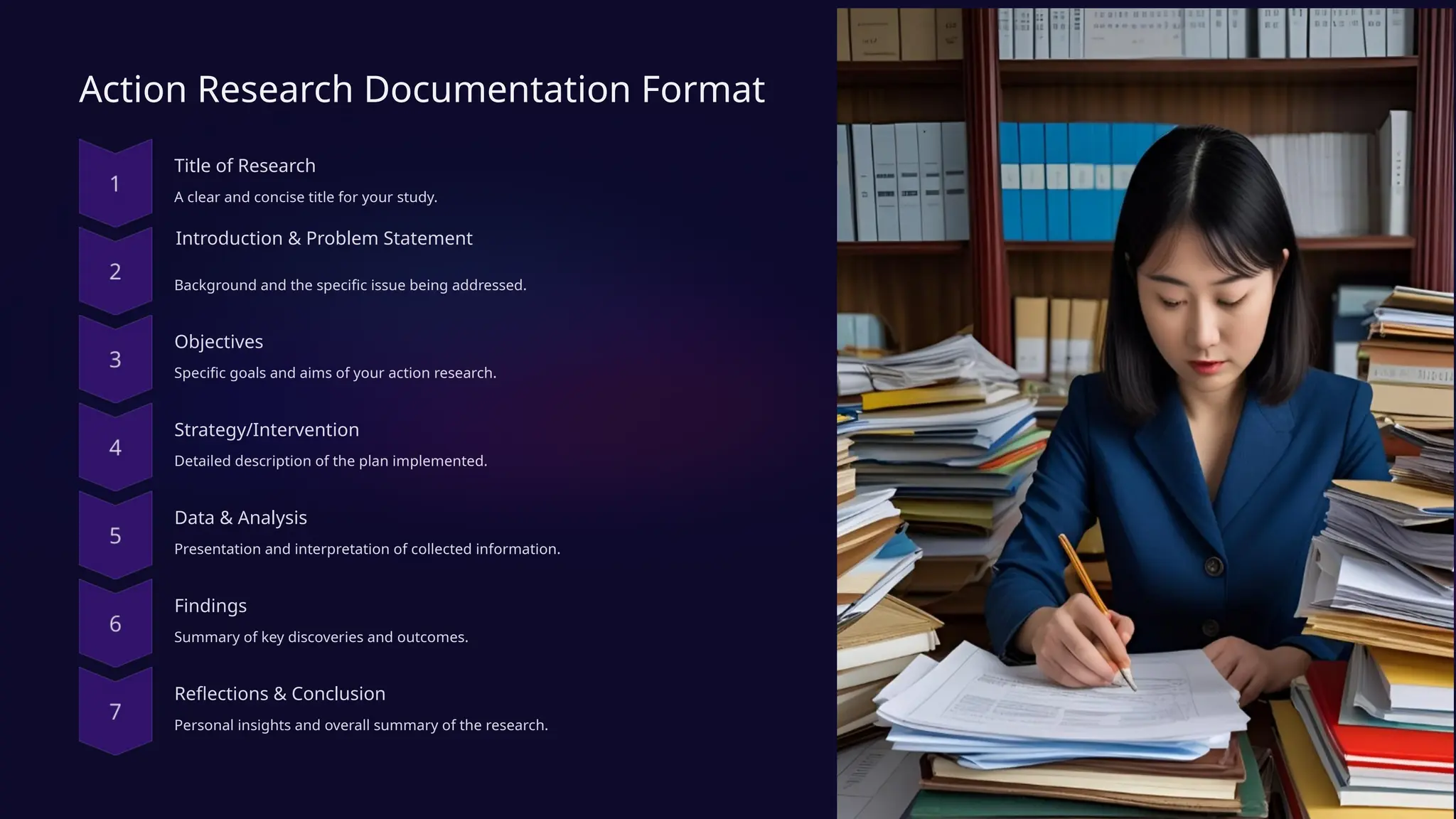
Action Research DocumentationFormat
Title of Research
A clear and concise title for your study.
Introduction & Problem Statement
Background and the specific issue being addressed.
Objectives
Specific goals and aims of your action research.
Strategy/Intervention
Detailed description of the plan implemented.
Data & Analysis
Presentation and interpretation of collected information.
Findings
Summary of key discoveries and outcomes.
Reflections & Conclusion
Personal insights and overall summary of the research.
14.
Subject-Specific & School-SpecificResearch
Topics
Subject-Specific Examples
• Math: Improving fractions understanding.
• English: Enhancing writing through journaling.
• Science: Using videos for experiments.
• Social Science: Role-plays and debates.
• Languages: Word walls and games.
School-Specific Examples
• Reducing late arrivals.
• Improving library usage.
• Morning assembly participation.
• Homework policy redesign.
15.
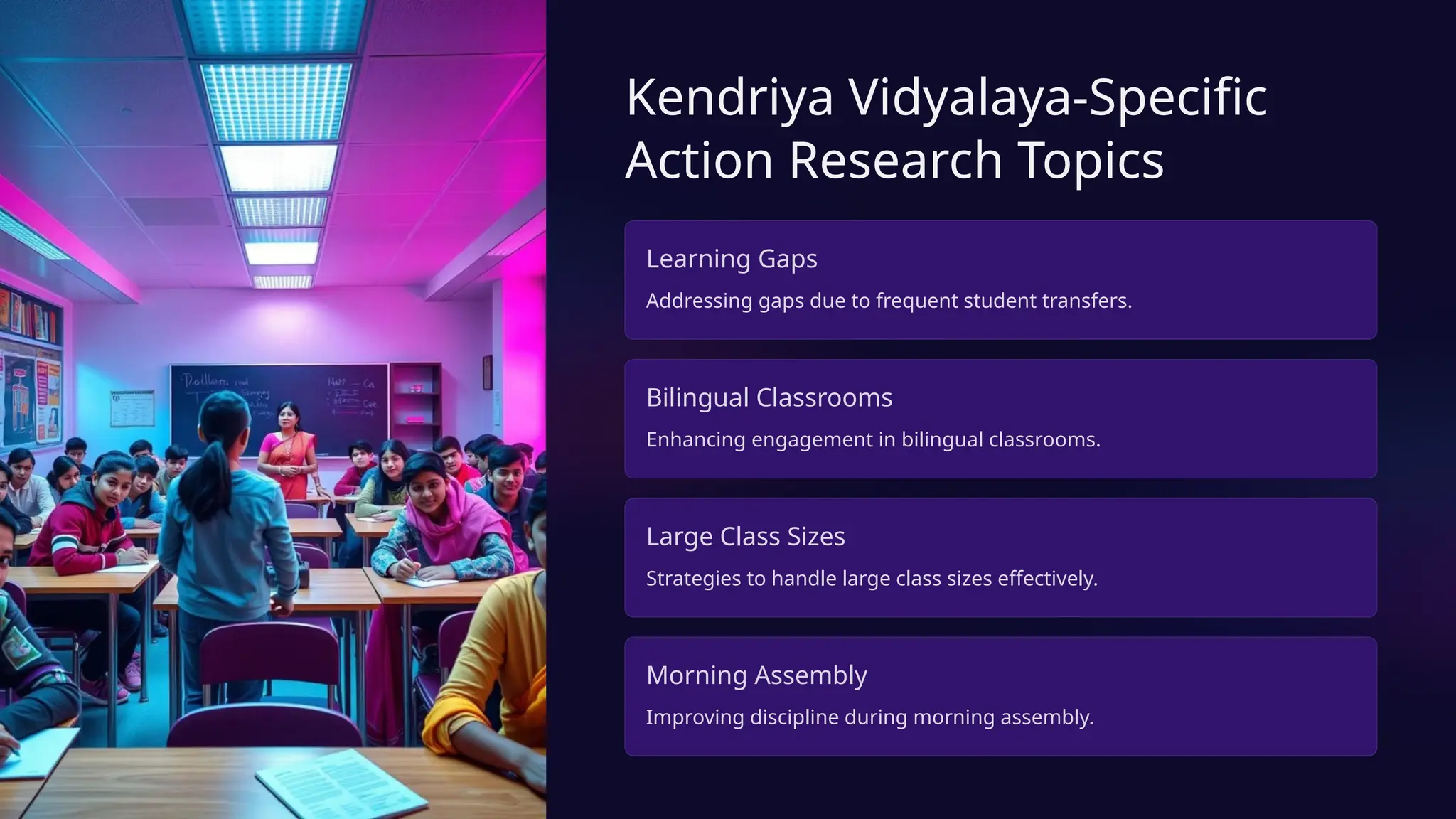
Kendriya Vidyalaya-Specific
Action ResearchTopics
Learning Gaps
Addressing gaps due to frequent student transfers.
Bilingual Classrooms
Enhancing engagement in bilingual classrooms.
Large Class Sizes
Strategies to handle large class sizes effectively.
Morning Assembly
Improving discipline during morning assembly.
16.
Student, Parent, andInclusivity Focused
Research
Student-Specific Topics
• Boosting confidence in group work.
• Peer mentoring for slow learners.
• Reducing exam anxiety effectively.
Parent-Related Topics
• Structured PTMs for involvement.
• WhatsApp groups for quick
updates.
• Parent workshops for home
learning support.
Inclusivity / Special Education
• ADHD support via seating
adjustments.
• Visual schedules for autistic
learners.
• Dyslexia-friendly worksheets.
• Peer sensitization programs.
17.
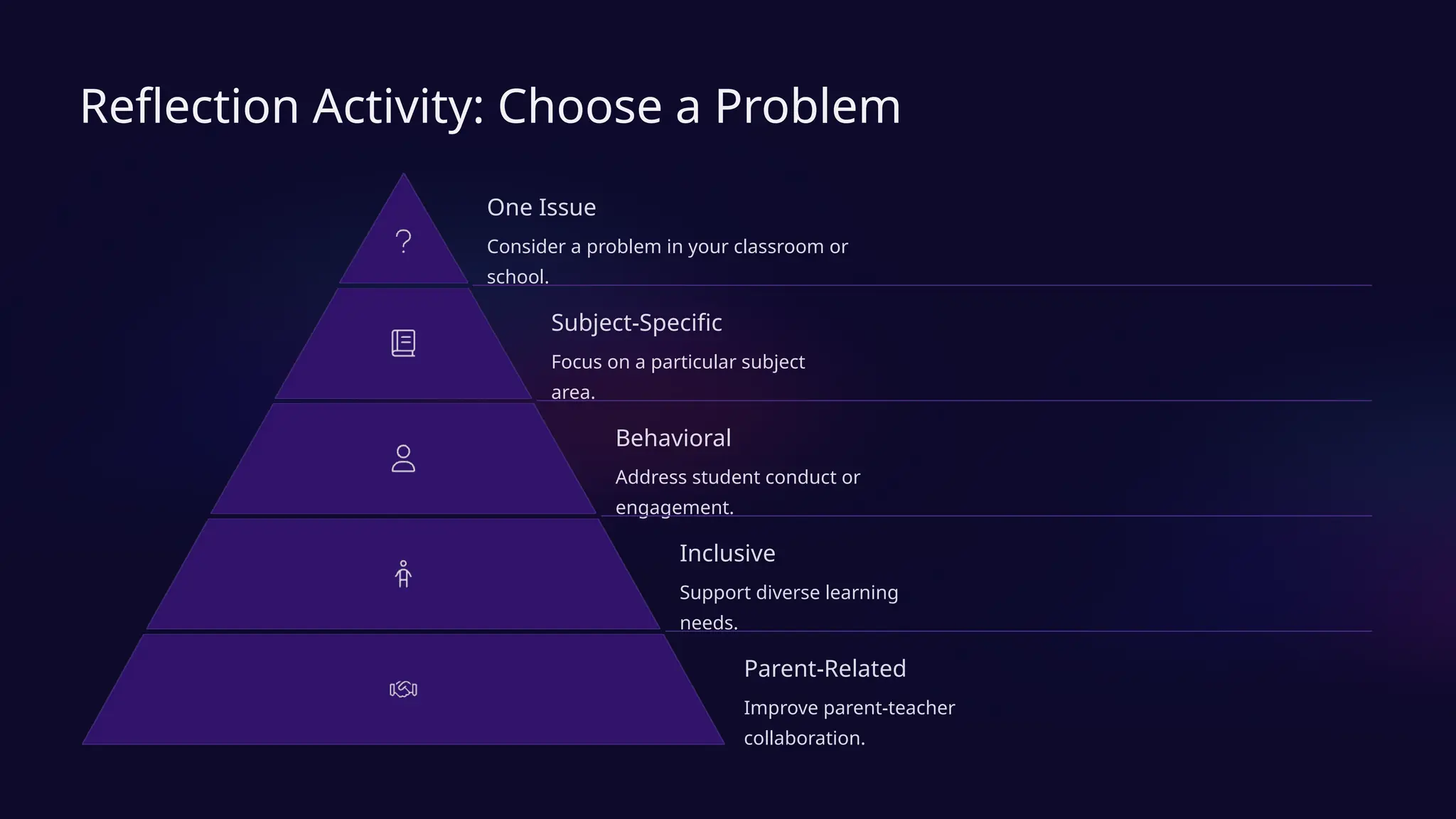
Reflection Activity: Choosea Problem
One Issue
Consider a problem in your classroom or
school.
Subject-Specific
Focus on a particular subject
area.
Behavioral
Address student conduct or
engagement.
Inclusive
Support diverse learning
needs.
Parent-Related
Improve parent-teacher
collaboration.
18.
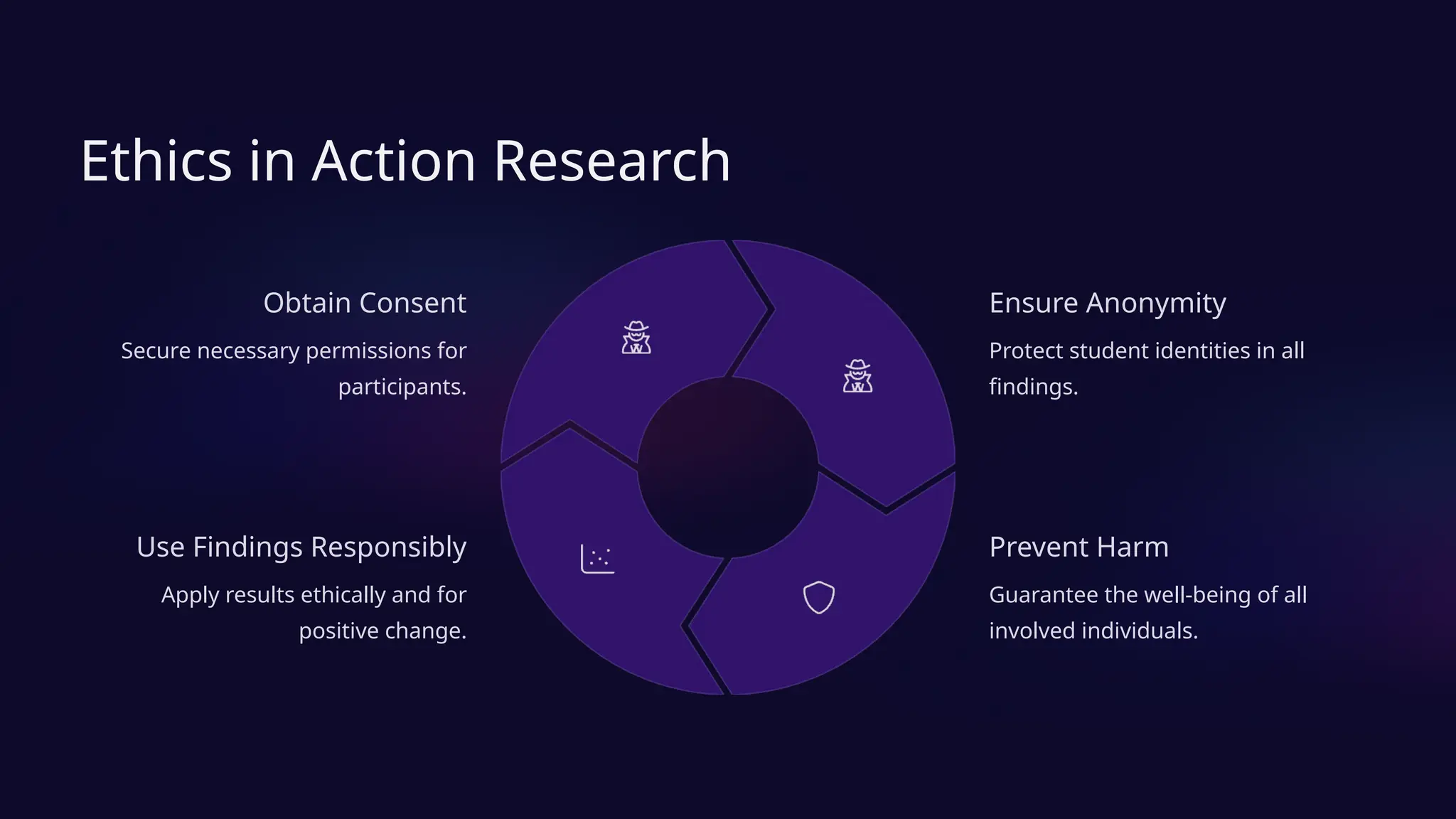
Ethics in ActionResearch
Obtain Consent
Secure necessary permissions for
participants.
Ensure Anonymity
Protect student identities in all
findings.
Prevent Harm
Guarantee the well-being of all
involved individuals.
Use Findings Responsibly
Apply results ethically and for
positive change.
19.
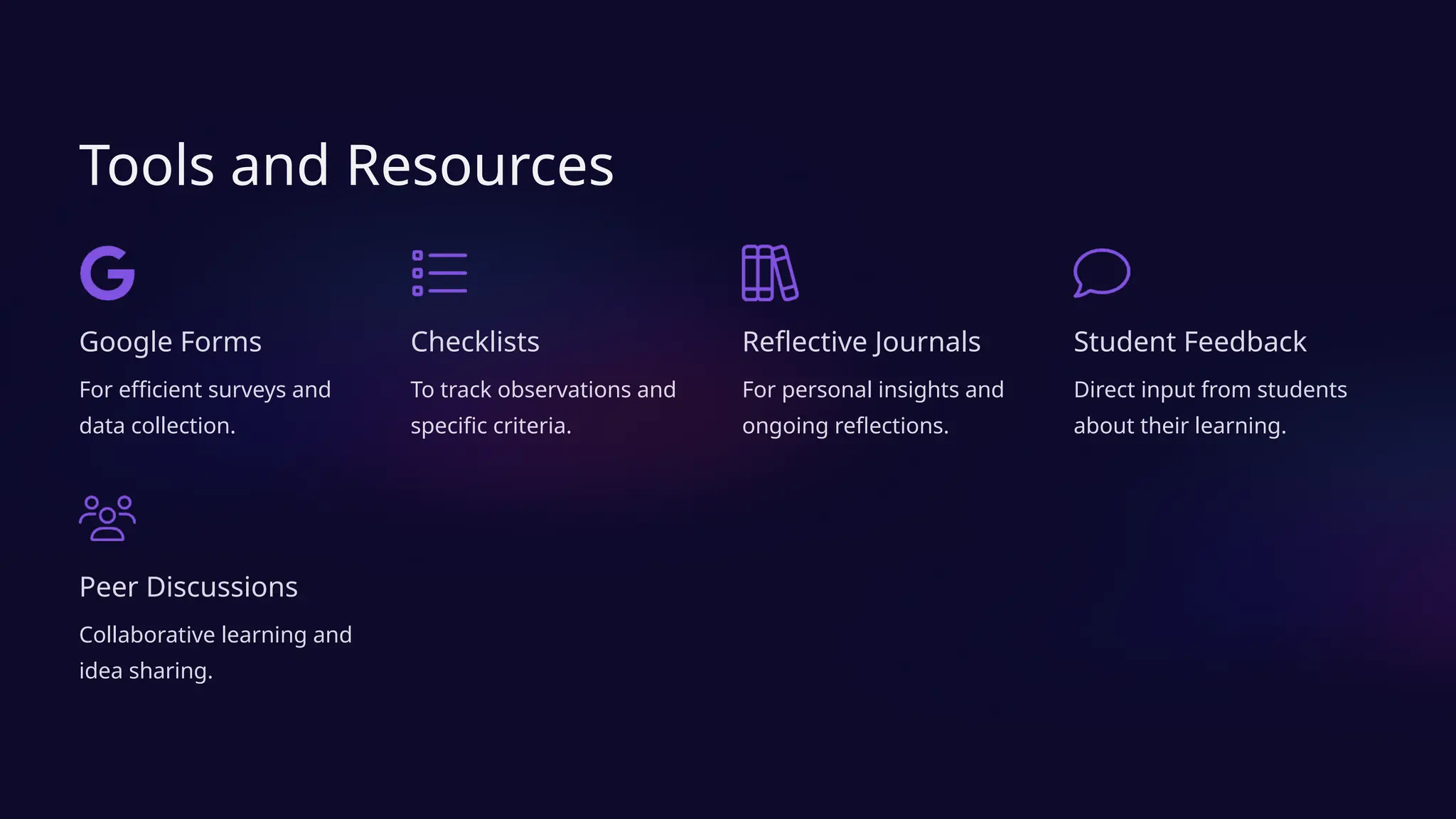
Tools and Resources
GoogleForms
For efficient surveys and
data collection.
Checklists
To track observations and
specific criteria.
Reflective Journals
For personal insights and
ongoing reflections.
Student Feedback
Direct input from students
about their learning.
Peer Discussions
Collaborative learning and
idea sharing.
20.
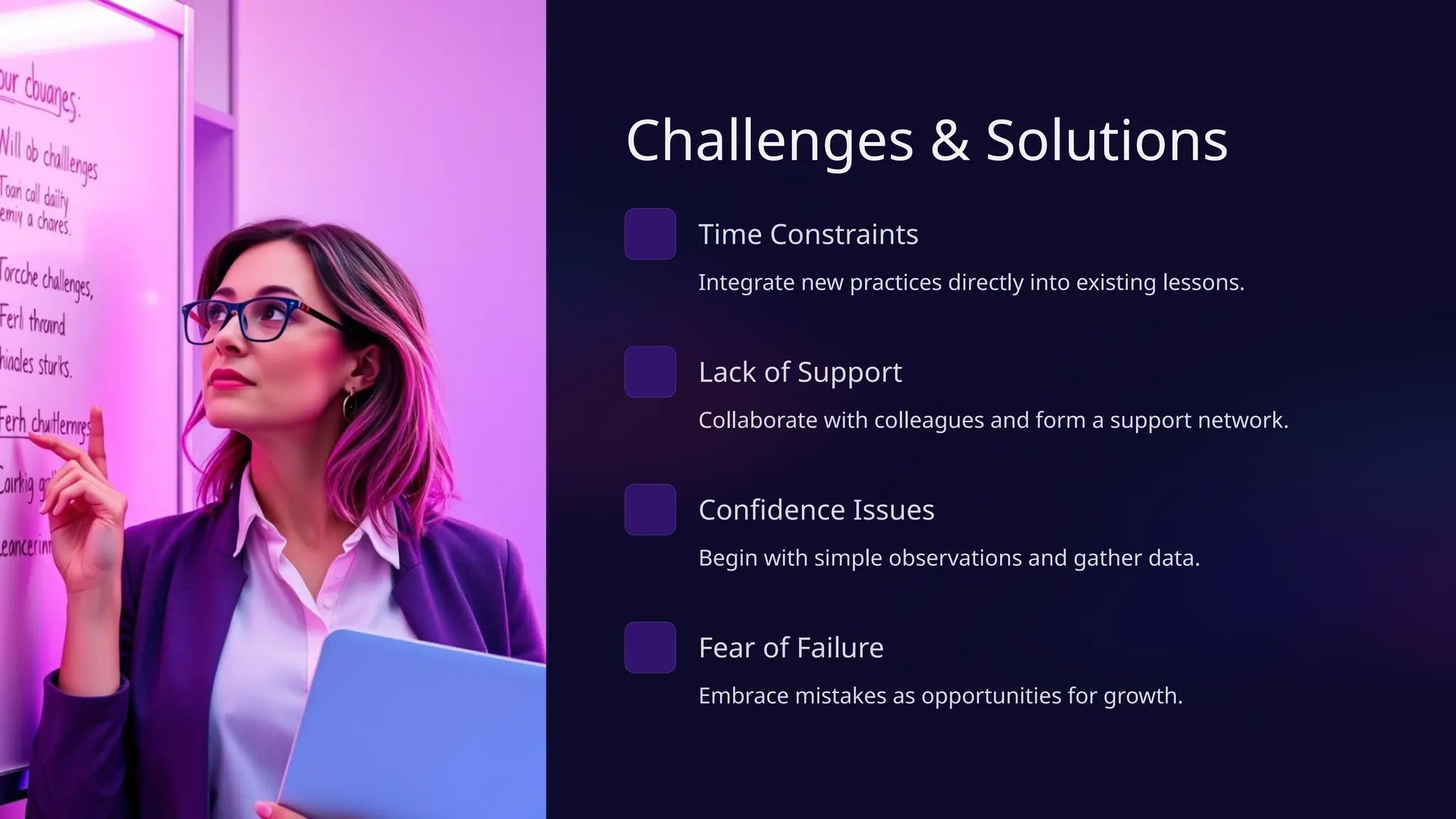
Challenges & Solutions
TimeConstraints
Integrate new practices directly into existing lessons.
Lack of Support
Collaborate with colleagues and form a support network.
Confidence Issues
Begin with simple observations and gather data.
Fear of Failure
Embrace mistakes as opportunities for growth.
21.
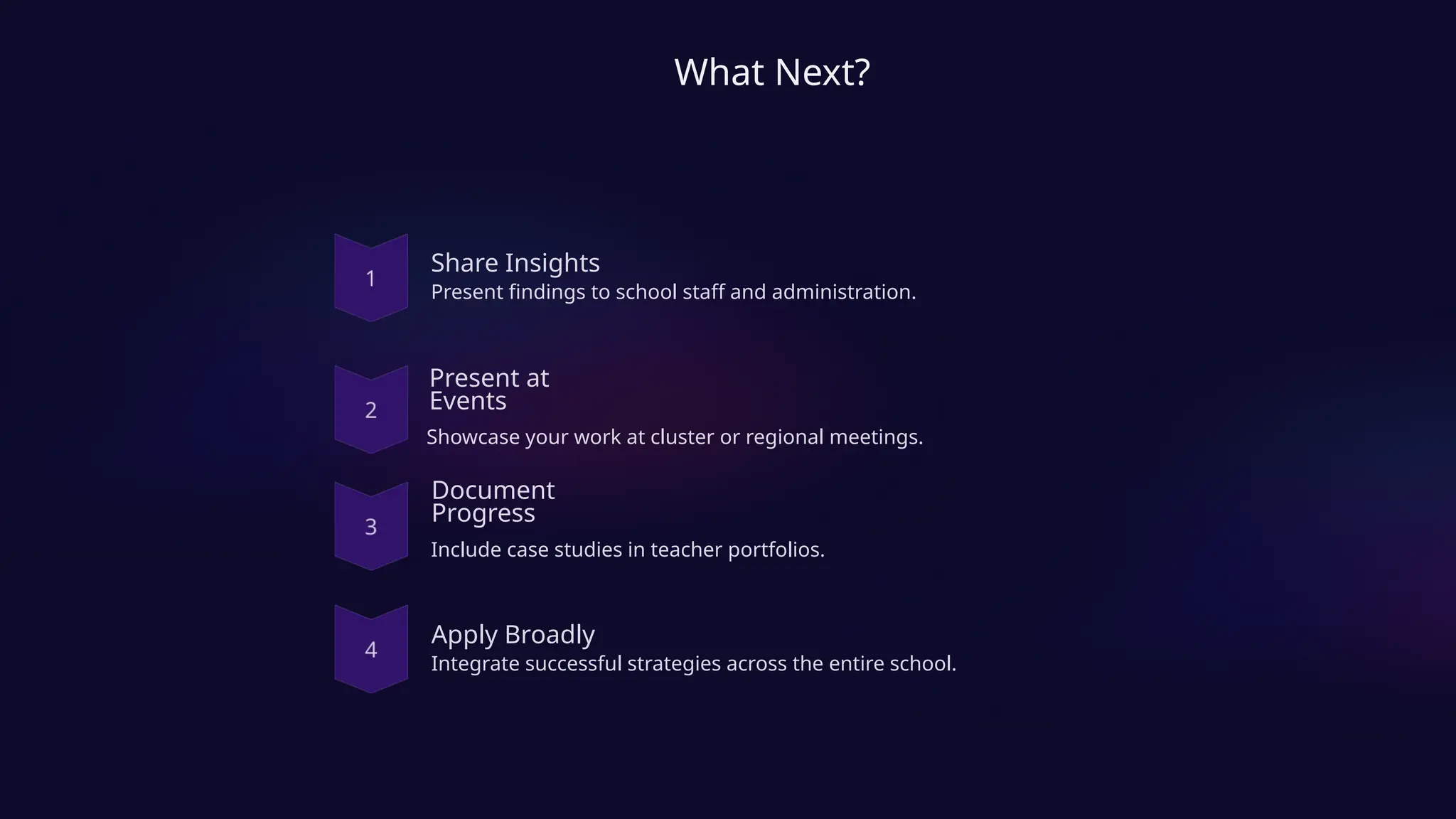
What Next?
Share Insights
Presentfindings to school staff and administration.
Present at
Events
Showcase your work at cluster or regional meetings.
Document
Progress
Include case studies in teacher portfolios.
Apply Broadly
Integrate successful strategies across the entire school.