Transtech Academy
Evolutionary Business - Week 2
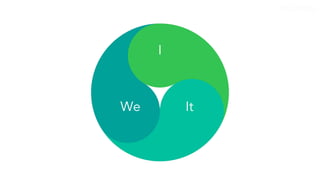
I
ItWe
Aligning with another:
The art of giving and
receiving feedback
Feedback Foundations
Johari Window
Unknown
Known
Known Unknown
Open Blind
Spot
Hidden Unknown
Others
To Me
Hidden Unknown
6
Johari Window
Unknown
Known
Known Unknown
Blind
Spot
Hidden
Others To Me
Unknown
Sharing Feedback
80%
Open
8
The Foundation of
good feedback:
self management
Victim Caretaker
Persecutor
Deserter
When we get
triggered, we take
our position on
the “Triangle”
Goal: Get off
the “Triangle”
Take one act of power Empower Others
Stay in the game
Give up the right to be right
Victim Caretaker
Persecutor
Deserter
WHAT HAPPENS WHEN
WE COMMUNICATE
The sender
Message sent
Context
Position
Style
Emotion
Words used
WHAT HAPPENS WHEN WE
COMMUNICATE
The receiver
Response
Choice
Meaning
Feelings
Meaning
Personal filters
Message received
Perspective
Humility
Giving and receiving
feedback
16
• Always - do a self check
• Use “I” statements
• Make it specific
• Make it as impersonal as possible
• Make it goal/action oriented
• Ensure understanding
• Make sure it is controllable
• Tailor it to fit context/situation/person
General feedback principles
Positive vs
negative
feedback
Receiving feedback
• Say “thank you” first
• Take time if you need
• “Own it” - find something to learn about and
for yourself
• Ok to ask clarifying questions - when you are
clear and grounded
▪ Live feedback - can be a dialog, questions, longer discussion., Most helpful
for more crucial conversations
▪ Email/Slack etc. - Caution! Feedback most always should be impersonal and
focused. Craft it carefully
▪ 1 x 1’s - both manager and direct report should offer feedback regularly
▪ Peer/team feedback - the holy grail! Try doing it as a team to socialize it in
first.
ULTIMATE GOAL: EVERYONE GIVES FEEDBACK TO EACH
OTHER, ALL OF THE TIME!
Understanding context
Feedback grab bag
1. Can it be a dialog instead?
2. What about feedback to my manager? To a
peer? To a senior executive?
3. What about email/slack/live/etc.?
4. Is it ok to give sandwich feedback?
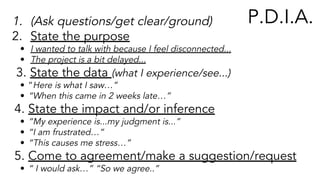
1. (Ask questions/get clear/ground)
2. State the purpose
• I wanted to talk with because I feel disconnected...
• The project is a bit delayed...
3. State the data (what I experience/see...)
• “Here is what I saw…”
• “When this came in 2 weeks late…”
4. State the impact and/or inference
• “My experience is...my judgment is...”
• “I am frustrated…”
• “This causes me stress…”
5. Come to agreement/make a suggestion/request
• “ I would ask…” “So we agree..”
P.D.I.A.
Vision, goals
and strategy
Management
Processes
Culture:
brand, values
and norms
Individual
Development
Structure
How to align a team
5 STEPS TO AN ALIGNED TEAM
1. Why does your team exist?
2. Where are you going? What is the future that is
different from today?
3. Who do you need, doing what work to get there?
4. What structure and process do you need to execute
the work?
5. How will you coach your team?
Where are you
going?
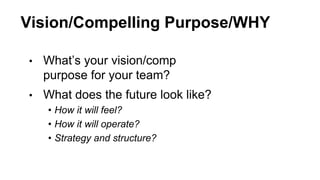
Vision/Compelling Purpose/WHY
• What’s your vision/comp
purpose for your team?
• What does the future look like?
• How it will feel?
• How it will operate?
• Strategy and structure?
Who is going with
you?
Building the right team
• Given your goals, who will you need doing what?
• New hires?
• Shift roles and responsibilities?
• What’s the right structure to support this?
What is the culture you expect?
Managing individuals has two dimensions
1. The business and technical aspects of their job
2. The behaviors and cultural attributes you expect
for their role, including Collective cultural
attributes
What is your answer for #2?
Team Agreements or Norms
•What behaviors will hold and sustain your team?
•What can you hold each other accountable to?
•What kind of culture would you like to create?
5 STEPS TO AN ALIGNED TEAM
1. Why does your team exist?
2. Where are you going? What is the future that is
different from today?
3. Who do you need, doing what work to get there?
4. What structure and process do you need to execute
the work?
5. How will you coach your team?

Evolution Week 2 - Alignment, Feedback, Culture

  • 1.
  • 2.
  • 3.
    Aligning with another: Theart of giving and receiving feedback
  • 5.
  • 6.
    Johari Window Unknown Known Known Unknown OpenBlind Spot Hidden Unknown Others To Me Hidden Unknown 6
  • 7.
  • 8.
    8 The Foundation of goodfeedback: self management
  • 9.
    Victim Caretaker Persecutor Deserter When weget triggered, we take our position on the “Triangle”
  • 10.
    Goal: Get off the“Triangle” Take one act of power Empower Others Stay in the game Give up the right to be right Victim Caretaker Persecutor Deserter
  • 11.
    WHAT HAPPENS WHEN WECOMMUNICATE The sender Message sent Context Position Style Emotion Words used
  • 12.
    WHAT HAPPENS WHENWE COMMUNICATE The receiver Response Choice Meaning Feelings Meaning Personal filters Message received
  • 14.
  • 15.
  • 16.
    16 • Always -do a self check • Use “I” statements • Make it specific • Make it as impersonal as possible • Make it goal/action oriented • Ensure understanding • Make sure it is controllable • Tailor it to fit context/situation/person General feedback principles
  • 17.
  • 18.
    Receiving feedback • Say“thank you” first • Take time if you need • “Own it” - find something to learn about and for yourself • Ok to ask clarifying questions - when you are clear and grounded
  • 19.
    ▪ Live feedback- can be a dialog, questions, longer discussion., Most helpful for more crucial conversations ▪ Email/Slack etc. - Caution! Feedback most always should be impersonal and focused. Craft it carefully ▪ 1 x 1’s - both manager and direct report should offer feedback regularly ▪ Peer/team feedback - the holy grail! Try doing it as a team to socialize it in first. ULTIMATE GOAL: EVERYONE GIVES FEEDBACK TO EACH OTHER, ALL OF THE TIME! Understanding context
  • 20.
    Feedback grab bag 1.Can it be a dialog instead? 2. What about feedback to my manager? To a peer? To a senior executive? 3. What about email/slack/live/etc.? 4. Is it ok to give sandwich feedback?
  • 21.
    1. (Ask questions/getclear/ground) 2. State the purpose • I wanted to talk with because I feel disconnected... • The project is a bit delayed... 3. State the data (what I experience/see...) • “Here is what I saw…” • “When this came in 2 weeks late…” 4. State the impact and/or inference • “My experience is...my judgment is...” • “I am frustrated…” • “This causes me stress…” 5. Come to agreement/make a suggestion/request • “ I would ask…” “So we agree..” P.D.I.A.
  • 22.
    Vision, goals and strategy Management Processes Culture: brand,values and norms Individual Development Structure How to align a team
  • 23.
    5 STEPS TOAN ALIGNED TEAM 1. Why does your team exist? 2. Where are you going? What is the future that is different from today? 3. Who do you need, doing what work to get there? 4. What structure and process do you need to execute the work? 5. How will you coach your team?
  • 25.
  • 26.
    Vision/Compelling Purpose/WHY • What’syour vision/comp purpose for your team? • What does the future look like? • How it will feel? • How it will operate? • Strategy and structure?
  • 27.
    Who is goingwith you?
  • 28.
    Building the rightteam • Given your goals, who will you need doing what? • New hires? • Shift roles and responsibilities? • What’s the right structure to support this? What is the culture you expect?
  • 29.
    Managing individuals hastwo dimensions 1. The business and technical aspects of their job 2. The behaviors and cultural attributes you expect for their role, including Collective cultural attributes What is your answer for #2?
  • 30.
    Team Agreements orNorms •What behaviors will hold and sustain your team? •What can you hold each other accountable to? •What kind of culture would you like to create?
  • 31.
    5 STEPS TOAN ALIGNED TEAM 1. Why does your team exist? 2. Where are you going? What is the future that is different from today? 3. Who do you need, doing what work to get there? 4. What structure and process do you need to execute the work? 5. How will you coach your team?