Arguments and Logical
Fallacies
Errors in reasoning
From TOKTopics.com
What are the parts of an
argument?
 Example: I am really healthy now because I lost a lot of
weight.
 What is the conclusion? What are the reasons provided?
 Conclusion (The what): I am really healthy now
 Reasons/evidence (The why): I lost lots of weight.
 Assumption: This is the missing, or the invisible part of the
argument that must be true for the argument to make sense.
It links the evidence and the conclusion.
 What is the assumption here?
 That losing weight is healthy.
Example #2
 Identify:
 Conclusion
 Reasons/Evidence
 Assumption
Example: Barry Bonds is the greatest player in
baseball history because he hit more homeruns in
his career than anyone else.
Logical Fallacies
 A fallacy is an incorrect argument based on a flaw in
reasoning. Often the mistake is in the assumption that links
the evidence and the conclusion.
 What are the flaws in our previous two arguments.
1. I am really healthy now because I lost a lot
of weight.
2. Barry Bonds is the greatest player in
baseball history because he hit more
homeruns in his career than anyone else.
What’s wrong with this?
 I used to eat a lot of spicy food and then I got the worst
stomach aches as a result. Turns out I had ulcers in my
stomach. If you keep eating all that spicy food then you’ll get
ulcers too.
 First identify the conclusion and reasons and then the
assumption. Once done, try to explain what is wrong with it.
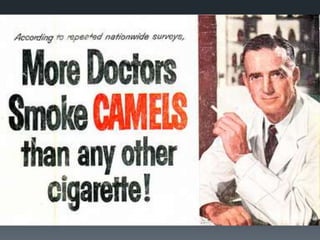
Appeal to authority
Appeal to majority
 Authority: Using an authority as evidence in your argument
when the authority is not really an authority on the facts
relevant to the argument.
 Majority: A claim is accepted to be true simply because most
people are favorably inclined towards the claim
Poisoning the well, ad hominem
attack
To prime the audience with adverse
information about the opponent from the
start, in an attempt to make your claim
more acceptable
True…
I think he is unattractive because he is ugly
Circular argument, begging the
question
 The premises include the claim that the conclusion is true or
assume the conclusion is true.
 The premise and conclusion are one in the same
DirecTV Commercial
Slippery Slope Argument
 A person asserts that some event must inevitably follow from
another without any argument for the inevitability of the event
in question. In most cases, there are a series of steps or
gradations between one event and the one in question and
no reason is given as to why the intervening steps or
gradations will simply be bypassed
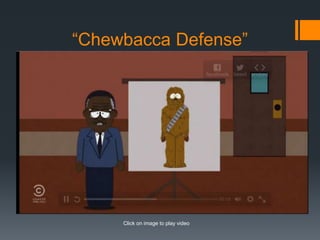
“Chewbacca Defense”
Click on image to play video
Non Sequitur Argument
An argument in which its conclusion does
not follow from its premises
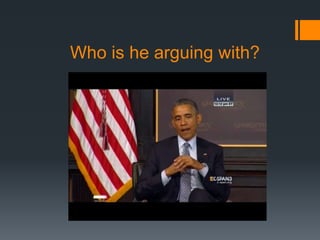
Who is he arguing with?
Strawman Argument
When a person simply ignores a person's
actual position and substitutes a distorted,
exaggerated or misrepresented version of
that position
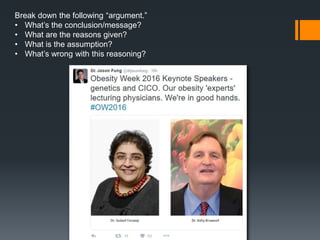
Break down the following “argument.”
• What’s the conclusion/message?
• What are the reasons given?
• What is the assumption?
• What’s wrong with this reasoning?
Analysis
 Conclusion: You should not trust what these experts have to
say on the topic of obesity.
 Reason: They are fat.
 Assumption: If you are guilty of something you cannot have a
valid opinion on the subject.
“With us or against us”
Black or White
 Two possibilities are presented as the only possibilities when
in fact more possibilities exist.
Lyndon Johnson’s “Daisy Ad” 1964
Appeal to emotion
 Trying to use emotional reactions to make your argument
rather than reason. Trying to make someone feel sad, fearful,
or guilty (or other emotion) to make them believe what you
want.
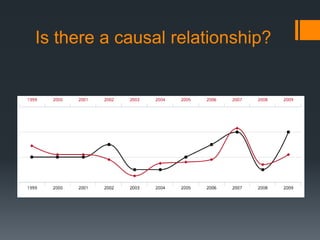
Is there a causal relationship?
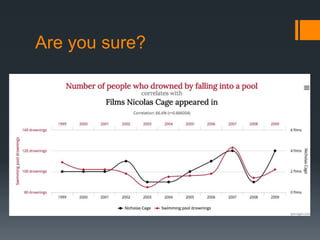
Are you sure?
What’s the relationship?
 Adolf Hitler, Saddam Hussein, and Joseph Stalin all had
mustaches and killed lots of people. If we want to make
people safer, mustaches should be illegal.
 Boys who act violently in school often play lots of violent
video games. Video games are the cause of violence.
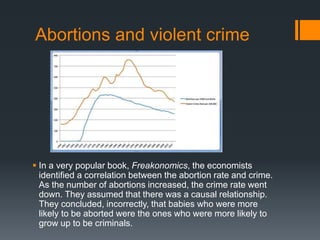
Abortions and violent crime
 In a very popular book, Freakonomics, the economists
identified a correlation between the abortion rate and crime.
As the number of abortions increased, the crime rate went
down. They assumed that there was a causal relationship.
They concluded, incorrectly, that babies who were more
likely to be aborted were the ones who were more likely to
grow up to be criminals.
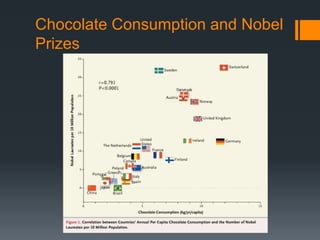
Chocolate Consumption and Nobel
Prizes
Correlation does not equal
causation, False Cause
Two things may be correlated or related but it
does not mean that one thing caused the
other. Sometimes the causality is reversed and
sometimes there is no relationship at all. It is
also possible that the two phenomenon are
caused by a different third cause and
sometimes it is impossible to know the nature
of the relationship.

Logical Fallacies Slide Show

  • 1.
    Arguments and Logical Fallacies Errorsin reasoning From TOKTopics.com
  • 2.
    What are theparts of an argument?  Example: I am really healthy now because I lost a lot of weight.  What is the conclusion? What are the reasons provided?  Conclusion (The what): I am really healthy now  Reasons/evidence (The why): I lost lots of weight.  Assumption: This is the missing, or the invisible part of the argument that must be true for the argument to make sense. It links the evidence and the conclusion.  What is the assumption here?  That losing weight is healthy.
  • 3.
    Example #2  Identify: Conclusion  Reasons/Evidence  Assumption Example: Barry Bonds is the greatest player in baseball history because he hit more homeruns in his career than anyone else.
  • 4.
    Logical Fallacies  Afallacy is an incorrect argument based on a flaw in reasoning. Often the mistake is in the assumption that links the evidence and the conclusion.  What are the flaws in our previous two arguments. 1. I am really healthy now because I lost a lot of weight. 2. Barry Bonds is the greatest player in baseball history because he hit more homeruns in his career than anyone else.
  • 5.
    What’s wrong withthis?  I used to eat a lot of spicy food and then I got the worst stomach aches as a result. Turns out I had ulcers in my stomach. If you keep eating all that spicy food then you’ll get ulcers too.  First identify the conclusion and reasons and then the assumption. Once done, try to explain what is wrong with it.
  • 7.
    Appeal to authority Appealto majority  Authority: Using an authority as evidence in your argument when the authority is not really an authority on the facts relevant to the argument.  Majority: A claim is accepted to be true simply because most people are favorably inclined towards the claim
  • 9.
    Poisoning the well,ad hominem attack To prime the audience with adverse information about the opponent from the start, in an attempt to make your claim more acceptable
  • 10.
    True… I think heis unattractive because he is ugly
  • 11.
    Circular argument, beggingthe question  The premises include the claim that the conclusion is true or assume the conclusion is true.  The premise and conclusion are one in the same
  • 12.
  • 13.
    Slippery Slope Argument A person asserts that some event must inevitably follow from another without any argument for the inevitability of the event in question. In most cases, there are a series of steps or gradations between one event and the one in question and no reason is given as to why the intervening steps or gradations will simply be bypassed
  • 14.
  • 15.
    Non Sequitur Argument Anargument in which its conclusion does not follow from its premises
  • 16.
    Who is hearguing with?
  • 17.
    Strawman Argument When aperson simply ignores a person's actual position and substitutes a distorted, exaggerated or misrepresented version of that position
  • 18.
    Break down thefollowing “argument.” • What’s the conclusion/message? • What are the reasons given? • What is the assumption? • What’s wrong with this reasoning?
  • 19.
    Analysis  Conclusion: Youshould not trust what these experts have to say on the topic of obesity.  Reason: They are fat.  Assumption: If you are guilty of something you cannot have a valid opinion on the subject.
  • 20.
    “With us oragainst us”
  • 21.
    Black or White Two possibilities are presented as the only possibilities when in fact more possibilities exist.
  • 22.
  • 23.
    Appeal to emotion Trying to use emotional reactions to make your argument rather than reason. Trying to make someone feel sad, fearful, or guilty (or other emotion) to make them believe what you want.
  • 24.
    Is there acausal relationship?
  • 25.
  • 26.
    What’s the relationship? Adolf Hitler, Saddam Hussein, and Joseph Stalin all had mustaches and killed lots of people. If we want to make people safer, mustaches should be illegal.  Boys who act violently in school often play lots of violent video games. Video games are the cause of violence.
  • 27.
    Abortions and violentcrime  In a very popular book, Freakonomics, the economists identified a correlation between the abortion rate and crime. As the number of abortions increased, the crime rate went down. They assumed that there was a causal relationship. They concluded, incorrectly, that babies who were more likely to be aborted were the ones who were more likely to grow up to be criminals.
  • 28.
  • 29.
    Correlation does notequal causation, False Cause Two things may be correlated or related but it does not mean that one thing caused the other. Sometimes the causality is reversed and sometimes there is no relationship at all. It is also possible that the two phenomenon are caused by a different third cause and sometimes it is impossible to know the nature of the relationship.