Chapter 4
Strategic event management
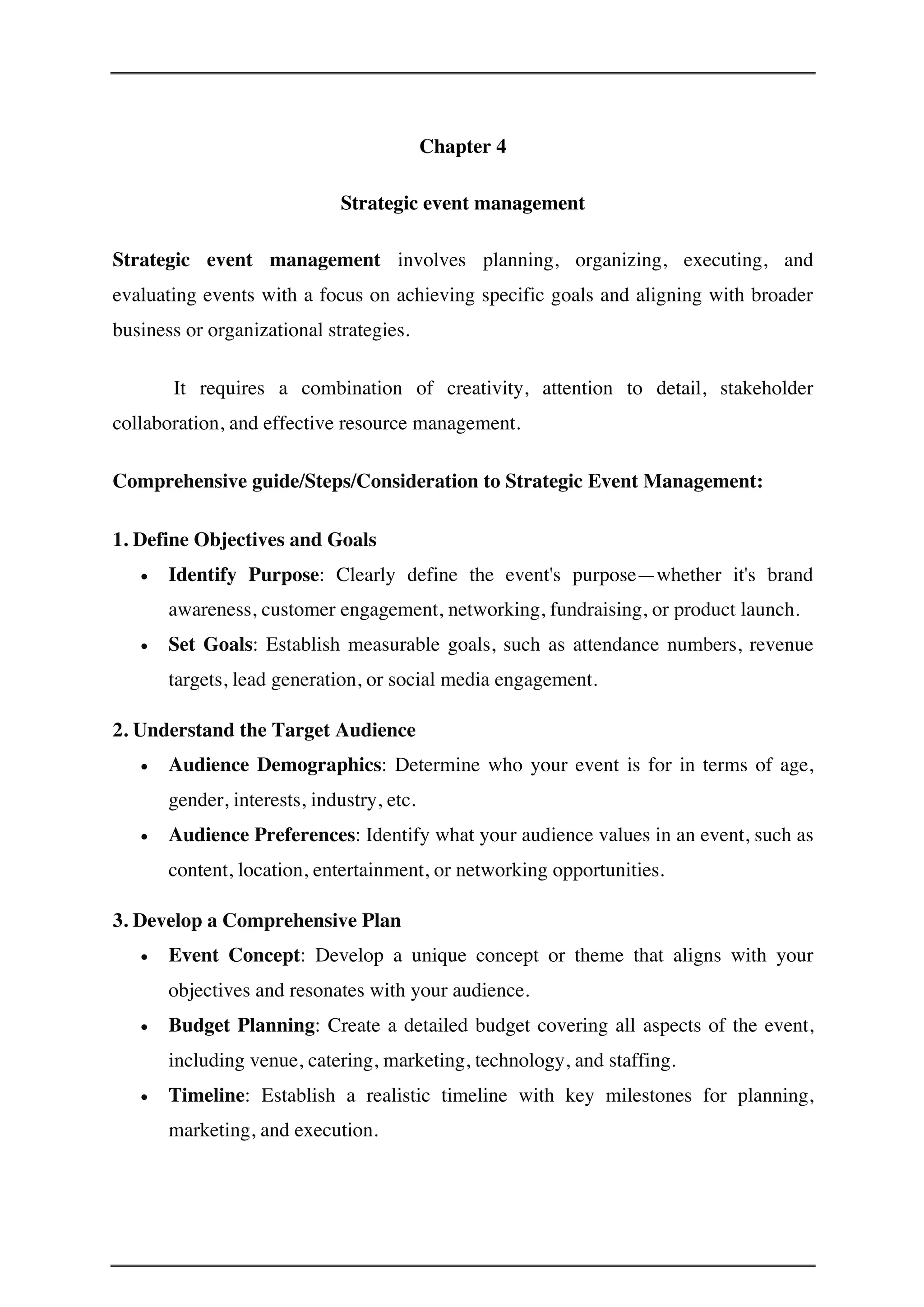
Strategic event management involves planning, organizing, executing, and
evaluating events with a focus on achieving specific goals and aligning with broader
business or organizational strategies.
It requires a combination of creativity, attention to detail, stakeholder
collaboration, and effective resource management.
Comprehensive guide/Steps/Consideration to Strategic Event Management:
1. Define Objectives and Goals
• Identify Purpose: Clearly define the event's purpose—whether it's brand
awareness, customer engagement, networking, fundraising, or product launch.
• Set Goals: Establish measurable goals, such as attendance numbers, revenue
targets, lead generation, or social media engagement.
2. Understand the Target Audience
• Audience Demographics: Determine who your event is for in terms of age,
gender, interests, industry, etc.
• Audience Preferences: Identify what your audience values in an event, such as
content, location, entertainment, or networking opportunities.
3. Develop a Comprehensive Plan
• Event Concept: Develop a unique concept or theme that aligns with your
objectives and resonates with your audience.
• Budget Planning: Create a detailed budget covering all aspects of the event,
including venue, catering, marketing, technology, and staffing.
• Timeline: Establish a realistic timeline with key milestones for planning,
marketing, and execution.
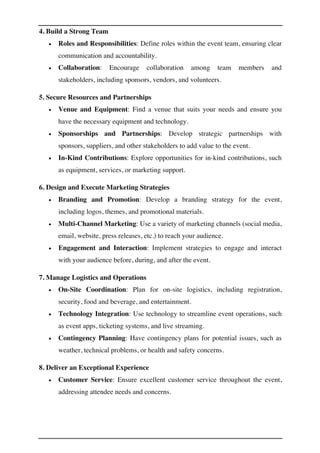
4. Build a Strong Team
• Roles and Responsibilities: Define roles within the event team, ensuring clear
communication and accountability.
• Collaboration: Encourage collaboration among team members and
stakeholders, including sponsors, vendors, and volunteers.
5. Secure Resources and Partnerships
• Venue and Equipment: Find a venue that suits your needs and ensure you
have the necessary equipment and technology.
• Sponsorships and Partnerships: Develop strategic partnerships with
sponsors, suppliers, and other stakeholders to add value to the event.
• In-Kind Contributions: Explore opportunities for in-kind contributions, such
as equipment, services, or marketing support.
6. Design and Execute Marketing Strategies
• Branding and Promotion: Develop a branding strategy for the event,
including logos, themes, and promotional materials.
• Multi-Channel Marketing: Use a variety of marketing channels (social media,
email, website, press releases, etc.) to reach your audience.
• Engagement and Interaction: Implement strategies to engage and interact
with your audience before, during, and after the event.
7. Manage Logistics and Operations
• On-Site Coordination: Plan for on-site logistics, including registration,
security, food and beverage, and entertainment.
• Technology Integration: Use technology to streamline event operations, such
as event apps, ticketing systems, and live streaming.
• Contingency Planning: Have contingency plans for potential issues, such as
weather, technical problems, or health and safety concerns.
8. Deliver an Exceptional Experience
• Customer Service: Ensure excellent customer service throughout the event,
addressing attendee needs and concerns.
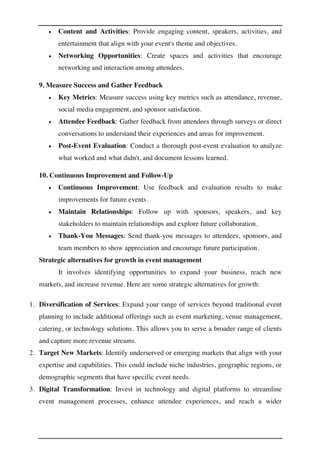
• Content and Activities: Provide engaging content, speakers, activities, and
entertainment that align with your event's theme and objectives.
• Networking Opportunities: Create spaces and activities that encourage
networking and interaction among attendees.
9. Measure Success and Gather Feedback
• Key Metrics: Measure success using key metrics such as attendance, revenue,
social media engagement, and sponsor satisfaction.
• Attendee Feedback: Gather feedback from attendees through surveys or direct
conversations to understand their experiences and areas for improvement.
• Post-Event Evaluation: Conduct a thorough post-event evaluation to analyze
what worked and what didn't, and document lessons learned.
10. Continuous Improvement and Follow-Up
• Continuous Improvement: Use feedback and evaluation results to make
improvements for future events.
• Maintain Relationships: Follow up with sponsors, speakers, and key
stakeholders to maintain relationships and explore future collaboration.
• Thank-You Messages: Send thank-you messages to attendees, sponsors, and
team members to show appreciation and encourage future participation.
Strategic alternatives for growth in event management
It involves identifying opportunities to expand your business, reach new
markets, and increase revenue. Here are some strategic alternatives for growth:
1. Diversification of Services: Expand your range of services beyond traditional event
planning to include additional offerings such as event marketing, venue management,
catering, or technology solutions. This allows you to serve a broader range of clients
and capture more revenue streams.
2. Target New Markets: Identify underserved or emerging markets that align with your
expertise and capabilities. This could include niche industries, geographic regions, or
demographic segments that have specific event needs.
3. Digital Transformation: Invest in technology and digital platforms to streamline
event management processes, enhance attendee experiences, and reach a wider
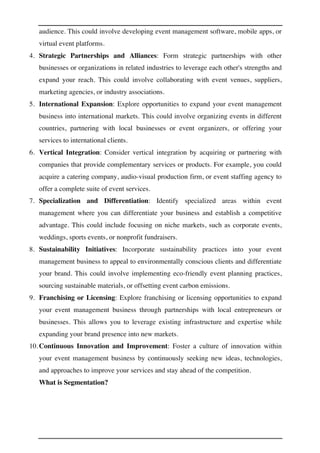
audience. This could involve developing event management software, mobile apps, or
virtual event platforms.
4. Strategic Partnerships and Alliances: Form strategic partnerships with other
businesses or organizations in related industries to leverage each other's strengths and
expand your reach. This could involve collaborating with event venues, suppliers,
marketing agencies, or industry associations.
5. International Expansion: Explore opportunities to expand your event management
business into international markets. This could involve organizing events in different
countries, partnering with local businesses or event organizers, or offering your
services to international clients.
6. Vertical Integration: Consider vertical integration by acquiring or partnering with
companies that provide complementary services or products. For example, you could
acquire a catering company, audio-visual production firm, or event staffing agency to
offer a complete suite of event services.
7. Specialization and Differentiation: Identify specialized areas within event
management where you can differentiate your business and establish a competitive
advantage. This could include focusing on niche markets, such as corporate events,
weddings, sports events, or nonprofit fundraisers.
8. Sustainability Initiatives: Incorporate sustainability practices into your event
management business to appeal to environmentally conscious clients and differentiate
your brand. This could involve implementing eco-friendly event planning practices,
sourcing sustainable materials, or offsetting event carbon emissions.
9. Franchising or Licensing: Explore franchising or licensing opportunities to expand
your event management business through partnerships with local entrepreneurs or
businesses. This allows you to leverage existing infrastructure and expertise while
expanding your brand presence into new markets.
10.Continuous Innovation and Improvement: Foster a culture of innovation within
your event management business by continuously seeking new ideas, technologies,
and approaches to improve your services and stay ahead of the competition.
What is Segmentation?
Definition: Segmentation means to divide the marketplace into parts, or
segments, which are definable, accessible, actionable, and profitable and have a
growth potential. In other words, a company would find it impossible to target the
entire market, because of time, cost and effort restrictions.
Segmentation in event management refers to the process of dividing an
event's potential audience into distinct groups based on shared characteristics, needs,
or behaviors. This allows event planners and organizers to create targeted experiences,
tailor marketing strategies, and improve overall event effectiveness.
Types of segmentation
1. Demographic Segmentation
• Attributes: Age, gender, income, education, occupation, marital status, etc.
• Application: Design events that appeal to specific demographic groups, like a
youth-focused concert or a business conference for professionals.
2. Geographic Segmentation
• Attributes: Country, region, city, or neighborhood.
• Application: Plan events based on local cultures, preferences, and
accessibility.
3. Psychographic Segmentation
• Attributes: Lifestyle, values, personality, interests, etc.
• Application: Organize events that align with attendees' lifestyles, like wellness
retreats or tech conferences for enthusiasts.
4. Behavioral Segmentation
• Attributes: Purchase history, brand loyalty, usage frequency, event attendance,
etc.
• Application: Identify attendees who are likely to return and offer them special
incentives or loyalty programs.
5. Firmographic Segmentation
• Attributes: Industry, company size, revenue, organizational structure.
• Application: For B2B events, target specific industries or company types for
more focused networking opportunities.
6. Event Experience Segmentation
• General Admission vs. VIP: Offer tiered ticket options with varying levels of
access, amenities, and perks to cater to different attendee preferences and
budgets.
• Networking Preferences: Provide structured networking sessions, one-on-one
meetings, or casual social events based on attendees' networking preferences.
7. Cultural and Diversity Segmentation
• Cultural Background: Customize event programming, food options, and
entertainment to celebrate and accommodate attendees from diverse cultural
backgrounds.
• Language Preferences: Provide multilingual event materials, sessions, or
interpreters to ensure inclusivity and accessibility for attendees with different
language preferences.
8. Post-Event Segmentation
• Feedback and Surveys: Segment attendees based on their post-event feedback
and survey responses to gain insights into their satisfaction levels, preferences,
and suggestions for improvement.
• Follow-Up Communications: Tailor post-event communications, such as
thank-you emails, surveys, or promotional offers, based on attendees'
segmentation characteristics and event experiences.
Applying Segmentation in Event Management
• Event Design and Content: Tailor the event's content, activities, and speakers to
suit different segments. For example, a conference might have multiple tracks,
each designed for a different audience segment.
• Marketing and Promotion: Use segmentation to create targeted marketing
campaigns. For example, send personalized email invites to different segments or
run social media ads targeting specific demographics or interests.
• Ticketing and Pricing: Implement variable ticket pricing or packages that appeal
to different segments. For example, offer student discounts or VIP experiences.
• Sponsorship and Partnerships: Use segmentation data to attract sponsors and
partners interested in reaching specific audience segments.
• On-Site Experiences: Customize the event experience for different segments.
This might include dedicated networking areas, special activities, or unique
merchandise.
• Post-Event Engagement: Use segmentation to create personalized follow-up
communications, encouraging repeat attendance or feedback from specific
audience groups.
Benefits of Segmentation in Event Management
• Enhanced Attendee Satisfaction: When events are tailored to specific
segments, attendees are more likely to have a positive experience.
• Increased Attendance and Engagement: Targeted marketing and
personalized experiences can lead to higher attendance and greater engagement
during the event.
• Better Resource Management: Segmentation helps optimize resource
allocation, reducing waste and improving efficiency.
• Stronger Relationships with Sponsors: Sponsors appreciate targeted events
that align with their marketing goals, leading to longer-lasting partnerships.
• Improved Return on Investment (ROI): A well-segmented event is more
likely to achieve its objectives, whether that's revenue generation, brand
awareness, or lead generation.
Job opportunities in Event Management
Event Coordinator
• Role: Coordinates various aspects of events, including logistics, vendor
management, and on-site operations.
• Responsibilities: Scheduling, budgeting, vendor relations, registration, and
assisting with event marketing.
• Skills: Organizational skills, attention to detail, communication, and problem-
solving.
2. Event Manager
• Role: Oversees the entire event planning and execution process.
• Responsibilities: Developing event concepts, managing teams, coordinating
logistics, budgeting, and client relations.
• Skills: Leadership, project management, communication, budgeting, and
negotiation.
3. Event Marketing Specialist
• Role: Focuses on promoting events through various marketing channels.
• Responsibilities: Developing marketing campaigns, managing social media,
coordinating advertising, and analyzing marketing data.
• Skills: Marketing strategy, digital marketing, content creation, and analytics.
4. Event Designer/Producer
• Role: Creates the visual and experiential elements of events.
• Responsibilities: Designing event layouts, selecting decor and themes,
working with technical teams, and ensuring a cohesive event experience.
• Skills: Creativity, design, technical knowledge, and collaboration.
5. Sponsorship Coordinator/Manager
• Role: Manages sponsorship relationships and secures sponsorships for events.
• Responsibilities: Identifying potential sponsors, creating sponsorship
proposals, negotiating contracts, and ensuring sponsor satisfaction.
• Skills: Sales, negotiation, relationship building, and presentation skills.
6. Event Technology Specialist
• Role: Manages the technical aspects of events, such as audiovisual equipment,
virtual event platforms, or event apps.
• Responsibilities: Setting up and operating technology, troubleshooting
technical issues, and coordinating with tech vendors.
• Skills: Technical knowledge, problem-solving, adaptability, and teamwork.
7. Event Logistics Coordinator
• Role: Focuses on the logistical aspects of events, including transportation,
accommodation, and vendor coordination.
• Responsibilities: Managing travel arrangements, coordinating with venues,
ensuring smooth logistics flow, and overseeing event setup and teardown.
• Skills: Logistics, organization, communication, and problem-solving.
8. Event Registration Specialist
• Role: Manages event registration and attendee services.
• Responsibilities: Setting up registration systems, managing attendee databases,
coordinating on-site registration, and providing customer service.
• Skills: Customer service, database management, attention to detail, and
communication.
9. Event Volunteer Coordinator
• Role: Recruits, trains, and manages event volunteers.
• Responsibilities: Creating volunteer schedules, providing training, overseeing
volunteer activities, and ensuring volunteer satisfaction.
• Skills: Leadership, organization, communication, and teamwork.
10. Event Analyst/Researcher
• Role: Conducts research and analysis to inform event planning and evaluate
event success.
• Responsibilities: Gathering event-related data, analyzing metrics, conducting
post-event surveys, and providing recommendations for improvement.
• Skills: Data analysis, research, attention to detail, and report writing.
Tourism in event management
Tourism is a social, cultural and economic phenomenon which entails the
movement of people to countries or places outside their usual environment for
personal or business/professional purposes.
Pillar or Product of tourism
• Transportation.
• Accommodation/ Lodging.
• Food and Beverage.
• Travel Sectors/ Travel Agents.
• Souvenirs and Handicrafts.
• Attractions.
• Entertainment.
• Allied Services.
• Tourism Planning & development
Tourism plays a significant role in event management, with events often acting as
catalysts for attracting visitors to a particular location. The intersection of tourism and
event management creates unique opportunities and challenges, allowing regions to
showcase their cultural, historical, or natural attractions while fostering economic
growth.
Types of Events that Drive Tourism
1. Conferences and Conventions
• Description: Large-scale gatherings that draw professionals from various
industries to discuss trends, share knowledge, and network.
• Impact on Tourism: These events attract attendees from across the country or
internationally, increasing hotel bookings and local spending.
2. Festivals and Cultural Events
• Description: Celebrations that focus on music, art, food, culture, or traditions.
• Impact on Tourism: Festivals attract tourists seeking unique experiences,
often showcasing local heritage and boosting community pride.
3. Sporting Events
• Description: Major sports competitions or tournaments, ranging from local to
international levels.
• Impact on Tourism: These events bring in athletes, fans, and media,
contributing to significant tourism revenue.
4. Expos and Trade Shows
• Description: Industry-specific events where companies exhibit products or
services.
• Impact on Tourism: Expos attract business travelers, often leading to
extended stays and tourism-related activities.
5. Concerts and Entertainment Events
• Description: Music festivals, concerts, theater performances, or other
entertainment-focused events.
• Impact on Tourism: Such events can draw large crowds, encouraging visitors
to explore other local attractions.
Benefits of Events in Tourism
• Economic Boost: Events drive tourism, leading to increased spending on
accommodation, food, transportation, and entertainment, which boosts the local
economy.
• Brand Building and Awareness: Events can raise the profile of a location,
creating positive associations that encourage future visits.
• Community Engagement and Pride: Local communities often take pride in
hosting events, leading to greater civic involvement and social cohesion.
• Infrastructure Development: Large events may prompt improvements in
local infrastructure, such as transportation, public spaces, or venues, benefiting
both tourists and residents.
• Cultural Exchange: Events bring together people from different backgrounds,
promoting cultural exchange and understanding.

Event Management unit 4 Strategic Event Management

  • 1.
    Chapter 4 Strategic eventmanagement Strategic event management involves planning, organizing, executing, and evaluating events with a focus on achieving specific goals and aligning with broader business or organizational strategies. It requires a combination of creativity, attention to detail, stakeholder collaboration, and effective resource management. Comprehensive guide/Steps/Consideration to Strategic Event Management: 1. Define Objectives and Goals • Identify Purpose: Clearly define the event's purpose—whether it's brand awareness, customer engagement, networking, fundraising, or product launch. • Set Goals: Establish measurable goals, such as attendance numbers, revenue targets, lead generation, or social media engagement. 2. Understand the Target Audience • Audience Demographics: Determine who your event is for in terms of age, gender, interests, industry, etc. • Audience Preferences: Identify what your audience values in an event, such as content, location, entertainment, or networking opportunities. 3. Develop a Comprehensive Plan • Event Concept: Develop a unique concept or theme that aligns with your objectives and resonates with your audience. • Budget Planning: Create a detailed budget covering all aspects of the event, including venue, catering, marketing, technology, and staffing. • Timeline: Establish a realistic timeline with key milestones for planning, marketing, and execution.
  • 2.
    4. Build aStrong Team • Roles and Responsibilities: Define roles within the event team, ensuring clear communication and accountability. • Collaboration: Encourage collaboration among team members and stakeholders, including sponsors, vendors, and volunteers. 5. Secure Resources and Partnerships • Venue and Equipment: Find a venue that suits your needs and ensure you have the necessary equipment and technology. • Sponsorships and Partnerships: Develop strategic partnerships with sponsors, suppliers, and other stakeholders to add value to the event. • In-Kind Contributions: Explore opportunities for in-kind contributions, such as equipment, services, or marketing support. 6. Design and Execute Marketing Strategies • Branding and Promotion: Develop a branding strategy for the event, including logos, themes, and promotional materials. • Multi-Channel Marketing: Use a variety of marketing channels (social media, email, website, press releases, etc.) to reach your audience. • Engagement and Interaction: Implement strategies to engage and interact with your audience before, during, and after the event. 7. Manage Logistics and Operations • On-Site Coordination: Plan for on-site logistics, including registration, security, food and beverage, and entertainment. • Technology Integration: Use technology to streamline event operations, such as event apps, ticketing systems, and live streaming. • Contingency Planning: Have contingency plans for potential issues, such as weather, technical problems, or health and safety concerns. 8. Deliver an Exceptional Experience • Customer Service: Ensure excellent customer service throughout the event, addressing attendee needs and concerns.
  • 3.
    • Content andActivities: Provide engaging content, speakers, activities, and entertainment that align with your event's theme and objectives. • Networking Opportunities: Create spaces and activities that encourage networking and interaction among attendees. 9. Measure Success and Gather Feedback • Key Metrics: Measure success using key metrics such as attendance, revenue, social media engagement, and sponsor satisfaction. • Attendee Feedback: Gather feedback from attendees through surveys or direct conversations to understand their experiences and areas for improvement. • Post-Event Evaluation: Conduct a thorough post-event evaluation to analyze what worked and what didn't, and document lessons learned. 10. Continuous Improvement and Follow-Up • Continuous Improvement: Use feedback and evaluation results to make improvements for future events. • Maintain Relationships: Follow up with sponsors, speakers, and key stakeholders to maintain relationships and explore future collaboration. • Thank-You Messages: Send thank-you messages to attendees, sponsors, and team members to show appreciation and encourage future participation. Strategic alternatives for growth in event management It involves identifying opportunities to expand your business, reach new markets, and increase revenue. Here are some strategic alternatives for growth: 1. Diversification of Services: Expand your range of services beyond traditional event planning to include additional offerings such as event marketing, venue management, catering, or technology solutions. This allows you to serve a broader range of clients and capture more revenue streams. 2. Target New Markets: Identify underserved or emerging markets that align with your expertise and capabilities. This could include niche industries, geographic regions, or demographic segments that have specific event needs. 3. Digital Transformation: Invest in technology and digital platforms to streamline event management processes, enhance attendee experiences, and reach a wider
  • 4.
    audience. This couldinvolve developing event management software, mobile apps, or virtual event platforms. 4. Strategic Partnerships and Alliances: Form strategic partnerships with other businesses or organizations in related industries to leverage each other's strengths and expand your reach. This could involve collaborating with event venues, suppliers, marketing agencies, or industry associations. 5. International Expansion: Explore opportunities to expand your event management business into international markets. This could involve organizing events in different countries, partnering with local businesses or event organizers, or offering your services to international clients. 6. Vertical Integration: Consider vertical integration by acquiring or partnering with companies that provide complementary services or products. For example, you could acquire a catering company, audio-visual production firm, or event staffing agency to offer a complete suite of event services. 7. Specialization and Differentiation: Identify specialized areas within event management where you can differentiate your business and establish a competitive advantage. This could include focusing on niche markets, such as corporate events, weddings, sports events, or nonprofit fundraisers. 8. Sustainability Initiatives: Incorporate sustainability practices into your event management business to appeal to environmentally conscious clients and differentiate your brand. This could involve implementing eco-friendly event planning practices, sourcing sustainable materials, or offsetting event carbon emissions. 9. Franchising or Licensing: Explore franchising or licensing opportunities to expand your event management business through partnerships with local entrepreneurs or businesses. This allows you to leverage existing infrastructure and expertise while expanding your brand presence into new markets. 10.Continuous Innovation and Improvement: Foster a culture of innovation within your event management business by continuously seeking new ideas, technologies, and approaches to improve your services and stay ahead of the competition. What is Segmentation?
  • 5.
    Definition: Segmentation meansto divide the marketplace into parts, or segments, which are definable, accessible, actionable, and profitable and have a growth potential. In other words, a company would find it impossible to target the entire market, because of time, cost and effort restrictions. Segmentation in event management refers to the process of dividing an event's potential audience into distinct groups based on shared characteristics, needs, or behaviors. This allows event planners and organizers to create targeted experiences, tailor marketing strategies, and improve overall event effectiveness. Types of segmentation 1. Demographic Segmentation • Attributes: Age, gender, income, education, occupation, marital status, etc. • Application: Design events that appeal to specific demographic groups, like a youth-focused concert or a business conference for professionals. 2. Geographic Segmentation • Attributes: Country, region, city, or neighborhood. • Application: Plan events based on local cultures, preferences, and accessibility. 3. Psychographic Segmentation • Attributes: Lifestyle, values, personality, interests, etc. • Application: Organize events that align with attendees' lifestyles, like wellness retreats or tech conferences for enthusiasts. 4. Behavioral Segmentation • Attributes: Purchase history, brand loyalty, usage frequency, event attendance, etc. • Application: Identify attendees who are likely to return and offer them special incentives or loyalty programs. 5. Firmographic Segmentation • Attributes: Industry, company size, revenue, organizational structure. • Application: For B2B events, target specific industries or company types for more focused networking opportunities.
  • 6.
    6. Event ExperienceSegmentation • General Admission vs. VIP: Offer tiered ticket options with varying levels of access, amenities, and perks to cater to different attendee preferences and budgets. • Networking Preferences: Provide structured networking sessions, one-on-one meetings, or casual social events based on attendees' networking preferences. 7. Cultural and Diversity Segmentation • Cultural Background: Customize event programming, food options, and entertainment to celebrate and accommodate attendees from diverse cultural backgrounds. • Language Preferences: Provide multilingual event materials, sessions, or interpreters to ensure inclusivity and accessibility for attendees with different language preferences. 8. Post-Event Segmentation • Feedback and Surveys: Segment attendees based on their post-event feedback and survey responses to gain insights into their satisfaction levels, preferences, and suggestions for improvement. • Follow-Up Communications: Tailor post-event communications, such as thank-you emails, surveys, or promotional offers, based on attendees' segmentation characteristics and event experiences. Applying Segmentation in Event Management • Event Design and Content: Tailor the event's content, activities, and speakers to suit different segments. For example, a conference might have multiple tracks, each designed for a different audience segment. • Marketing and Promotion: Use segmentation to create targeted marketing campaigns. For example, send personalized email invites to different segments or run social media ads targeting specific demographics or interests. • Ticketing and Pricing: Implement variable ticket pricing or packages that appeal to different segments. For example, offer student discounts or VIP experiences.
  • 7.
    • Sponsorship andPartnerships: Use segmentation data to attract sponsors and partners interested in reaching specific audience segments. • On-Site Experiences: Customize the event experience for different segments. This might include dedicated networking areas, special activities, or unique merchandise. • Post-Event Engagement: Use segmentation to create personalized follow-up communications, encouraging repeat attendance or feedback from specific audience groups. Benefits of Segmentation in Event Management • Enhanced Attendee Satisfaction: When events are tailored to specific segments, attendees are more likely to have a positive experience. • Increased Attendance and Engagement: Targeted marketing and personalized experiences can lead to higher attendance and greater engagement during the event. • Better Resource Management: Segmentation helps optimize resource allocation, reducing waste and improving efficiency. • Stronger Relationships with Sponsors: Sponsors appreciate targeted events that align with their marketing goals, leading to longer-lasting partnerships. • Improved Return on Investment (ROI): A well-segmented event is more likely to achieve its objectives, whether that's revenue generation, brand awareness, or lead generation. Job opportunities in Event Management Event Coordinator • Role: Coordinates various aspects of events, including logistics, vendor management, and on-site operations. • Responsibilities: Scheduling, budgeting, vendor relations, registration, and assisting with event marketing. • Skills: Organizational skills, attention to detail, communication, and problem- solving.
  • 8.
    2. Event Manager •Role: Oversees the entire event planning and execution process. • Responsibilities: Developing event concepts, managing teams, coordinating logistics, budgeting, and client relations. • Skills: Leadership, project management, communication, budgeting, and negotiation. 3. Event Marketing Specialist • Role: Focuses on promoting events through various marketing channels. • Responsibilities: Developing marketing campaigns, managing social media, coordinating advertising, and analyzing marketing data. • Skills: Marketing strategy, digital marketing, content creation, and analytics. 4. Event Designer/Producer • Role: Creates the visual and experiential elements of events. • Responsibilities: Designing event layouts, selecting decor and themes, working with technical teams, and ensuring a cohesive event experience. • Skills: Creativity, design, technical knowledge, and collaboration. 5. Sponsorship Coordinator/Manager • Role: Manages sponsorship relationships and secures sponsorships for events. • Responsibilities: Identifying potential sponsors, creating sponsorship proposals, negotiating contracts, and ensuring sponsor satisfaction. • Skills: Sales, negotiation, relationship building, and presentation skills. 6. Event Technology Specialist • Role: Manages the technical aspects of events, such as audiovisual equipment, virtual event platforms, or event apps. • Responsibilities: Setting up and operating technology, troubleshooting technical issues, and coordinating with tech vendors. • Skills: Technical knowledge, problem-solving, adaptability, and teamwork. 7. Event Logistics Coordinator • Role: Focuses on the logistical aspects of events, including transportation, accommodation, and vendor coordination.
  • 9.
    • Responsibilities: Managingtravel arrangements, coordinating with venues, ensuring smooth logistics flow, and overseeing event setup and teardown. • Skills: Logistics, organization, communication, and problem-solving. 8. Event Registration Specialist • Role: Manages event registration and attendee services. • Responsibilities: Setting up registration systems, managing attendee databases, coordinating on-site registration, and providing customer service. • Skills: Customer service, database management, attention to detail, and communication. 9. Event Volunteer Coordinator • Role: Recruits, trains, and manages event volunteers. • Responsibilities: Creating volunteer schedules, providing training, overseeing volunteer activities, and ensuring volunteer satisfaction. • Skills: Leadership, organization, communication, and teamwork. 10. Event Analyst/Researcher • Role: Conducts research and analysis to inform event planning and evaluate event success. • Responsibilities: Gathering event-related data, analyzing metrics, conducting post-event surveys, and providing recommendations for improvement. • Skills: Data analysis, research, attention to detail, and report writing. Tourism in event management Tourism is a social, cultural and economic phenomenon which entails the movement of people to countries or places outside their usual environment for personal or business/professional purposes. Pillar or Product of tourism • Transportation. • Accommodation/ Lodging. • Food and Beverage. • Travel Sectors/ Travel Agents.
  • 10.
    • Souvenirs andHandicrafts. • Attractions. • Entertainment. • Allied Services. • Tourism Planning & development Tourism plays a significant role in event management, with events often acting as catalysts for attracting visitors to a particular location. The intersection of tourism and event management creates unique opportunities and challenges, allowing regions to showcase their cultural, historical, or natural attractions while fostering economic growth. Types of Events that Drive Tourism 1. Conferences and Conventions • Description: Large-scale gatherings that draw professionals from various industries to discuss trends, share knowledge, and network. • Impact on Tourism: These events attract attendees from across the country or internationally, increasing hotel bookings and local spending. 2. Festivals and Cultural Events • Description: Celebrations that focus on music, art, food, culture, or traditions. • Impact on Tourism: Festivals attract tourists seeking unique experiences, often showcasing local heritage and boosting community pride. 3. Sporting Events • Description: Major sports competitions or tournaments, ranging from local to international levels. • Impact on Tourism: These events bring in athletes, fans, and media, contributing to significant tourism revenue. 4. Expos and Trade Shows • Description: Industry-specific events where companies exhibit products or services.
  • 11.
    • Impact onTourism: Expos attract business travelers, often leading to extended stays and tourism-related activities. 5. Concerts and Entertainment Events • Description: Music festivals, concerts, theater performances, or other entertainment-focused events. • Impact on Tourism: Such events can draw large crowds, encouraging visitors to explore other local attractions. Benefits of Events in Tourism • Economic Boost: Events drive tourism, leading to increased spending on accommodation, food, transportation, and entertainment, which boosts the local economy. • Brand Building and Awareness: Events can raise the profile of a location, creating positive associations that encourage future visits. • Community Engagement and Pride: Local communities often take pride in hosting events, leading to greater civic involvement and social cohesion. • Infrastructure Development: Large events may prompt improvements in local infrastructure, such as transportation, public spaces, or venues, benefiting both tourists and residents. • Cultural Exchange: Events bring together people from different backgrounds, promoting cultural exchange and understanding.