Corporate Event Planning: Key Strategies for Successful Execution
Master corporate event planning with key strategies like budgeting, venue selection, logistics coordination, and engaging experiences to ensure a seamless and successful execution.
Corporate Event Planning: Key Strategies for Successful Execution
1.
Corporate Event Planning:Key Strategies
for Successful Execution
Corporate event planning is essential for organizations aiming to create impactful experiences
that engage employees, clients, and stakeholders. A well-executed corporate event can
foster connections, enhance company culture, and boost brand visibility. Understanding
the key elements of successful planning is vital for achieving the desired outcomes.
From venue selection to coordinating logistics, event planners must navigate various aspects
to ensure everything runs smoothly. They need to balance creativity with budget
management, all while keeping the audience's preferences in mind. This intricate process
requires strong organizational skills and attention to detail.
By exploring effective strategies and best practices in corporate event planning, organizations
can elevate their events and achieve memorable results. Implementing these insights can
2.
transform an ordinarygathering into an extraordinary experience that resonates with
attendees.
Setting Objectives and Goals
Effective corporate event planning begins with clear objectives and goals. These serve as the
foundation for the entire event strategy.
Key Objectives to Consider:
• Brand Awareness: Increase visibility and recognition of the brand.
• Networking Opportunities: Foster connections among participants.
3.
• Lead Generation:Attract potential clients or partners.
• Education and Training: Provide valuable knowledge to attendees.
When setting goals, it is essential to make them SMART:
• Specific: Clearly define what is to be achieved.
• Measurable: Determine how success will be measured.
• Achievable: Ensure goals are realistic and attainable.
• Relevant: Align objectives with the company’s broader mission.
• Time-bound: Set a timeline for achieving these goals.
Consider the target audience's needs and preferences. Understanding their expectations helps
in shaping the event's objectives.
Regularly review and adjust goals as needed. This flexibility allows for responsiveness to
changing circumstances or feedback.
Documenting these objectives is crucial. It provides a reference point throughout the planning
process and can help in evaluating the event's success later.
Budgeting for the Event
Effective budgeting is crucial in corporate event planning. Proper financial management and
precise cost estimation lay the foundation for a successful event.
Cost Estimation
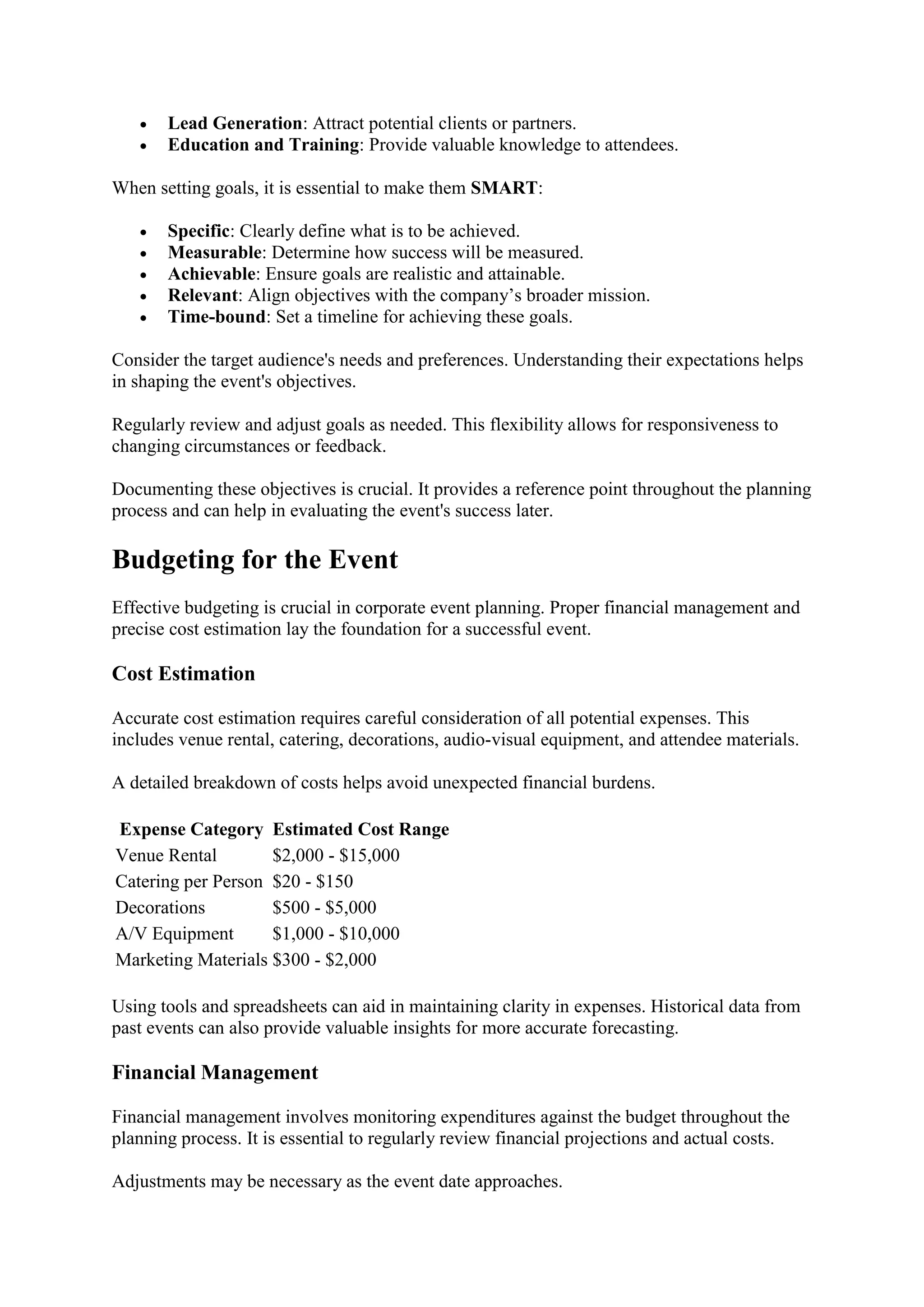
Accurate cost estimation requires careful consideration of all potential expenses. This
includes venue rental, catering, decorations, audio-visual equipment, and attendee materials.
A detailed breakdown of costs helps avoid unexpected financial burdens.
Expense Category Estimated Cost Range
Venue Rental $2,000 - $15,000
Catering per Person $20 - $150
Decorations $500 - $5,000
A/V Equipment $1,000 - $10,000
Marketing Materials $300 - $2,000
Using tools and spreadsheets can aid in maintaining clarity in expenses. Historical data from
past events can also provide valuable insights for more accurate forecasting.
Financial Management
Financial management involves monitoring expenditures against the budget throughout the
planning process. It is essential to regularly review financial projections and actual costs.
Adjustments may be necessary as the event date approaches.
4.
Setting up contingencyfunds is advisable to tackle unforeseen expenses. An ideal practice
includes:
• Tracking Payments: Keep records of all deposits and payments.
• Regular Updates: Weekly budget reviews ensure budget adherence.
• Communication: Maintain regular discussions with vendors, ensuring all parties are
aligned regarding payments and expenses.
By managing finances meticulously, planners can optimize the event while minimizing
potential shortfalls.
Choosing the Right Venue
Selecting the appropriate venue is crucial for a successful corporate event. The right space
can enhance networking, engagement, and brand perception.
Consider the following factors when choosing a venue:
• Location: Accessibility is key. Ensure the venue is convenient for attendees, with
available transportation options.
• Capacity: Verify that the venue can accommodate the number of guests expected.
Aim for a space that feels neither overcrowded nor empty.
• Amenities: Check for necessary facilities such as audiovisual equipment, internet
access, and catering services.
• Ambiance: The venue's atmosphere should align with the event's purpose and
corporate image. A formal setting suits galas, while a casual space may fit team-
building activities.
• Budget: Establish a clear budget. Weigh the costs against the venue’s offerings to
find a suitable balance.
• Availability: Confirm that the venue is available on the desired date and time. It's
wise to have backup options.
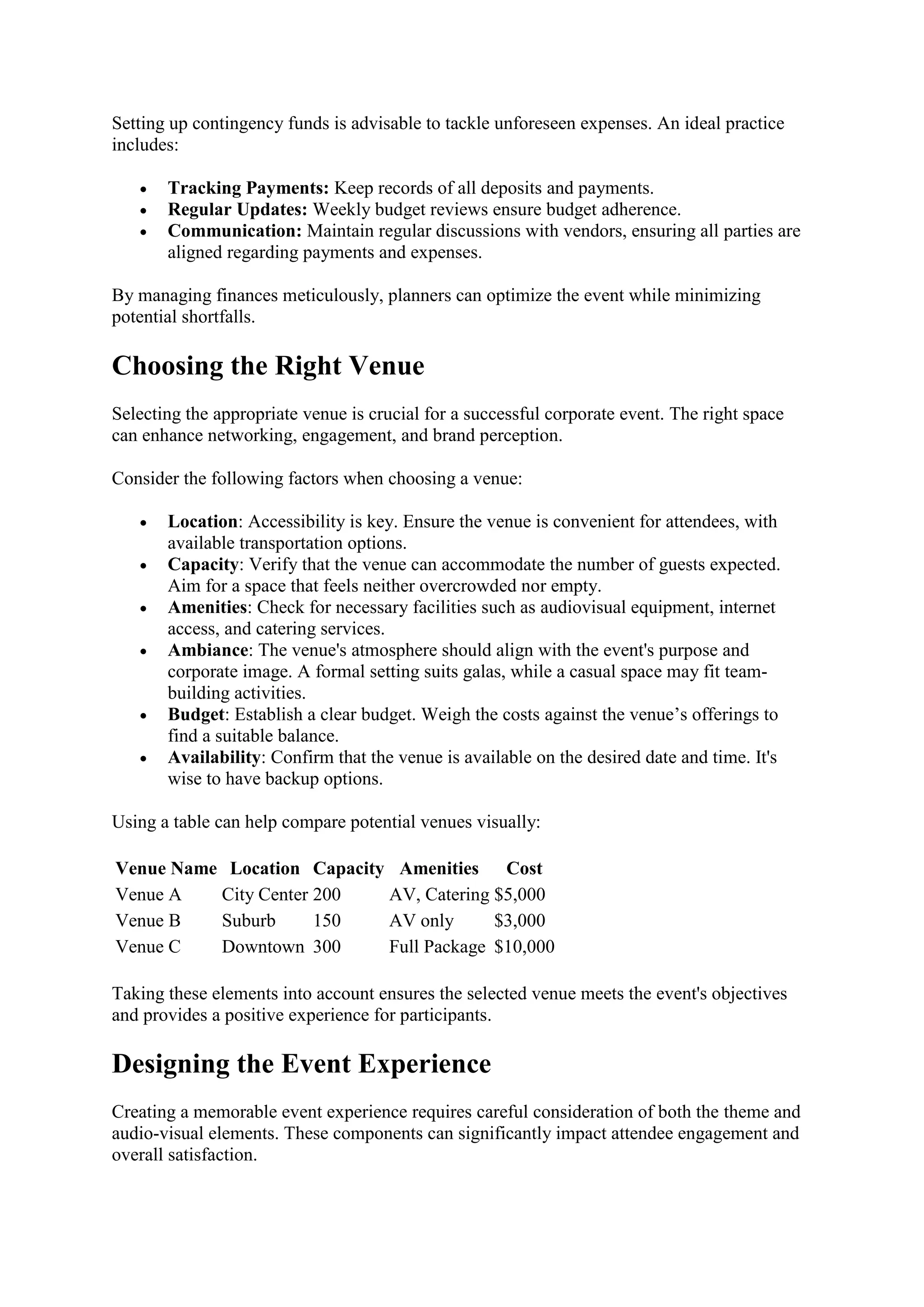
Using a table can help compare potential venues visually:
Venue Name Location Capacity Amenities Cost
Venue A City Center 200 AV, Catering $5,000
Venue B Suburb 150 AV only $3,000
Venue C Downtown 300 Full Package $10,000
Taking these elements into account ensures the selected venue meets the event's objectives
and provides a positive experience for participants.
Designing the Event Experience
Creating a memorable event experience requires careful consideration of both the theme and
audio-visual elements. These components can significantly impact attendee engagement and
overall satisfaction.
5.
Theme Development
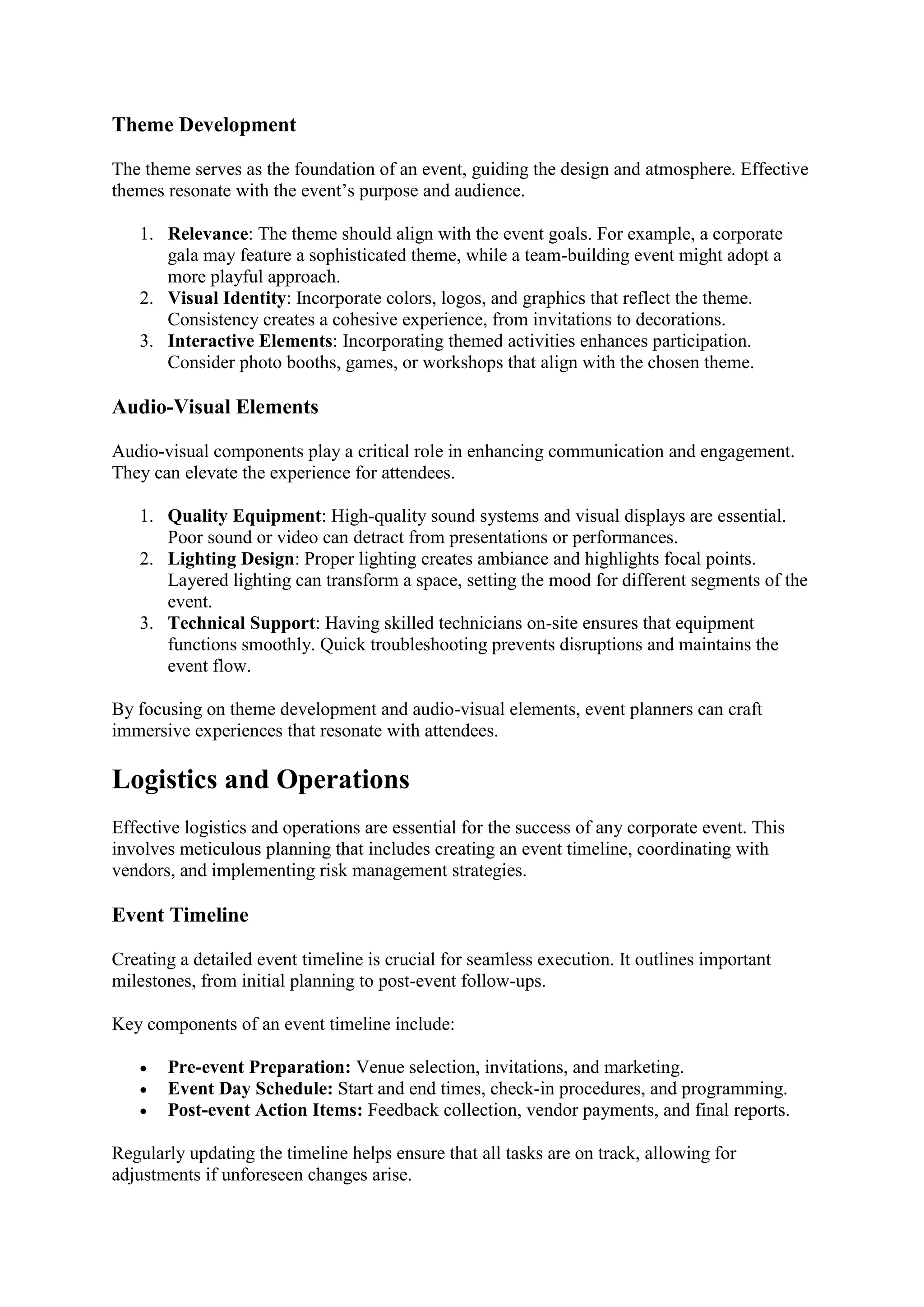
The themeserves as the foundation of an event, guiding the design and atmosphere. Effective
themes resonate with the event’s purpose and audience.
1. Relevance: The theme should align with the event goals. For example, a corporate
gala may feature a sophisticated theme, while a team-building event might adopt a
more playful approach.
2. Visual Identity: Incorporate colors, logos, and graphics that reflect the theme.
Consistency creates a cohesive experience, from invitations to decorations.
3. Interactive Elements: Incorporating themed activities enhances participation.
Consider photo booths, games, or workshops that align with the chosen theme.
Audio-Visual Elements
Audio-visual components play a critical role in enhancing communication and engagement.
They can elevate the experience for attendees.
1. Quality Equipment: High-quality sound systems and visual displays are essential.
Poor sound or video can detract from presentations or performances.
2. Lighting Design: Proper lighting creates ambiance and highlights focal points.
Layered lighting can transform a space, setting the mood for different segments of the
event.
3. Technical Support: Having skilled technicians on-site ensures that equipment
functions smoothly. Quick troubleshooting prevents disruptions and maintains the
event flow.
By focusing on theme development and audio-visual elements, event planners can craft
immersive experiences that resonate with attendees.
Logistics and Operations
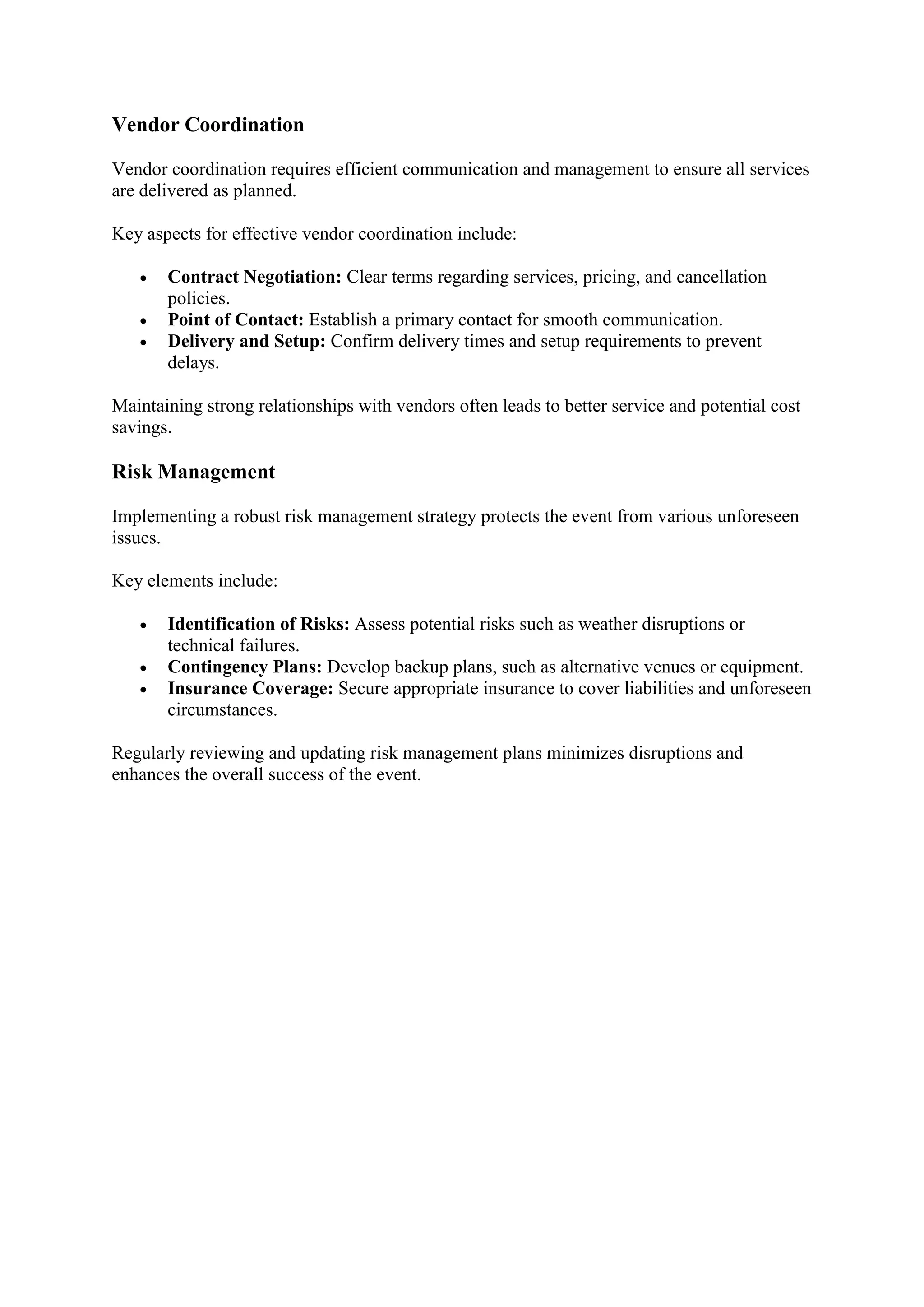
Effective logistics and operations are essential for the success of any corporate event. This
involves meticulous planning that includes creating an event timeline, coordinating with
vendors, and implementing risk management strategies.
Event Timeline
Creating a detailed event timeline is crucial for seamless execution. It outlines important
milestones, from initial planning to post-event follow-ups.
Key components of an event timeline include:
• Pre-event Preparation: Venue selection, invitations, and marketing.
• Event Day Schedule: Start and end times, check-in procedures, and programming.
• Post-event Action Items: Feedback collection, vendor payments, and final reports.
Regularly updating the timeline helps ensure that all tasks are on track, allowing for
adjustments if unforeseen changes arise.
6.
Vendor Coordination
Vendor coordinationrequires efficient communication and management to ensure all services
are delivered as planned.
Key aspects for effective vendor coordination include:
• Contract Negotiation: Clear terms regarding services, pricing, and cancellation
policies.
• Point of Contact: Establish a primary contact for smooth communication.
• Delivery and Setup: Confirm delivery times and setup requirements to prevent
delays.
Maintaining strong relationships with vendors often leads to better service and potential cost
savings.
Risk Management
Implementing a robust risk management strategy protects the event from various unforeseen
issues.
Key elements include:
• Identification of Risks: Assess potential risks such as weather disruptions or
technical failures.
• Contingency Plans: Develop backup plans, such as alternative venues or equipment.
• Insurance Coverage: Secure appropriate insurance to cover liabilities and unforeseen
circumstances.
Regularly reviewing and updating risk management plans minimizes disruptions and
enhances the overall success of the event.