MODERATOR – DR NEERU P AGGARWAL
PRESENTER – PREM MOHAN JHA
CYCLOPS / RAVE /
RITUXVAS / MEPEX
Among patients with newly-diagnosed ANCA-
associated vasculitis with renal involvement, is pulse
cyclophosphamide superior to daily oral
cyclophosphamide for the induction of remission?
 Among patients with newly-diagnosed ANCA-
associated vasculitis with renal involvement, there
was no difference in rates of, or time to remission
when comparing pulse cyclophosphamide to daily
oral cyclophosphamide.
 Those receiving pulse cyclophosphamide required
a lower cumulative dose and had a lower risk of
leukopenia.
 ANCA-associated vasculitis was almost uniformly fatal until
the introduction cyclophosphamide and glucocorticoid
therapy was first demonstrated by Fauci and colleagues in the
1970s.
 The optimal dosing of these medications was unclear.
 While several small studies suggested that pulse
cyclophosphamide was likely equivalent to daily oral
cyclophosphamide for the induction of remission in patients
with ANCA-associated vasculitis, no large trial had been
performed.
 Published in 2009, CYCLOPS randomized 149
patients with newly-diagnosed ANCA vasculitis to
pulse cyclophosphamide or daily oral
cyclophosphamide.
 Both groups received corticosteroids and
azathioprine.
 Despite its lower cumulative cyclophosphamide
dose, pulse cyclophosphamide resulted in similar
rates of remission as daily oral cyclophosphamide.
 Pulse cyclophosphamide was associated with a
significantly lower risk of leukopenia but a non-
significant trend towards higher risk of relapse.
 In 2012 the authors published follow-up results
(median 4.3 years), showing a higher relapse in the
pulse cyclophosphamide group than the daily oral
group (39.5% vs. 20.8%; P=0.029) with mean
follow-up of 4.3 years.
 KDIGO Glomerulonephritis (2012)
◦ Recommended treatments for ANCA vasculitis with
glomerulonephritis:
 Cyclophosphamide 0.75 g/m2 IV q3-4 weeks,
decrease dose to 0.5 g/m2 if age >60 or GFR <20
mL/min/1.73 m2, adjust following doses to achieve
2-week WBC nadir >3,000 cells/mm3
 Alternative dose of 15 mg/kg q2 weeks for 3 ulses
then 15 mg/kg every 3 weeks for 3 months
beyond remission, with dose reductions for age
and GFR as above.
 Plus pulse and oral steroids
◦ Cyclophosphamide 1.5-2 mg/kg/day PO, with
reduced dose if age >60 or GFR <20
mL/min/1.73 m2, adjust following doses to
achieve WBC nadir >3,000 cells/mm3
◦ Methylprednisolone 500 mg IV daily x3 days as a
pulse.
◦ Prednisone 1 mg/kg/day PO for 4 weeks to a maximum
dose of 60 mg/day, tapering down over 3-4 months
◦ Rituximab 375 mg/m2 IV weekly x4 weeks
 Plus pulse and oral steroids
◦ Plasmapheresis, 60 mL/kg volume replacement:
 Vasculitis without anti-GBM Ab:
 No pulmonary hemorrhage: 7 treatments over 14 days
 Diffuse pulmonary hemorrhage: Daily treatment until
the bleeding stops then q48 hours for a total of 7-10
treatments
 Vasculitis with anti-GBM Ab: Daily for 14 days or until
anti-GBM Abs are no longer detectable.
 Multicenter, open-label, parallel-group,
randomized, controlled trial
 N=149 (160 screened)
◦ Pulse cyclophosphamide (n=76)
◦ Daily oral cyclophosphamide (n=73)
 Setting: 42 centers in Europe and Mexico
 Median follow-up: 18 months
 Analysis: Intention-to-treat
 Primary outcome: Time to remission.
 Age 18-80 years
 Newly diagnosed ANCA-associated vasculitis,
including any of the following:
 Granulomatosis with polyangiitis (previously
referred to as "Wegener's granulomatosis")
 Microscopic polyangiitis
 Renal-limited vasculitis
 Renal involvement of the disease, defined by ≥1 of
the following:
 Creatinine >150 umol/L (1.69 mg/dL) but <500
umol/L (5.6 mg/dL)
 Biopsy showing necrotizing glomerulonephritis
 RBC casts
 Urine showing >30 RBC/high-powered field and
proteinuria (>1 gram/day)
 Confirmatory histology or ANCA positive serology.
 >2 weeks of prior cyclophosphamide or other
cytotoxic drug therapy in the prior year or
corticosteroids for >4 weeks
 Other multisystem autoimmune disease
 Hepatitis Be Ag+, HCV Ab+, or known HIV
 Creatinine >500 umol/L (5.6 mg/dL)
 Life-threatening organ dysfunction
 Prior malignancy
 Pregnancy or lack of appropriate contraception in
women
 Anti-GBM Ab+
 From the pulse cyclophosphamide group.
◦ Demographics: Age 57 years, male 54%
◦ Diagnosis:
 Granulomatosis with polyangiitis: 33%
 Microscopic polyangiitis: 50%
 Renal limited vasculitis: 17%
 Diagnostics:
◦ +biopsy, +ANCA: 79%
◦ +biopsy, -ANCA: 0%
◦ -biopsy, +ANCA: 21%
 BVAS score 20
 Labs: Creatinine - 2.52 mg/dL, PR3+ 39%, MPO+
50%, PR3+ and MPO+ 5%, PR3- and MPO- 5%, CRP
524 nmol/L
 Randomized to a group:
 Pulse cyclophosphamide: 15 mg/kg IV pulses
every 2 weeks for 6 weeks, then 15 mg/kg IV
pulses very 3 weeks until remission and then
for 3 months following remission, adjusted for
WBC level, age, and renal function
 Weeks 7-25 could be be administered orally
as 5 mg/kg/day for 3 days per week
◦ Daily oral cyclophosphamide: 2 mg/kg/day until
remission (generally about 3 months), then 1.5
mg/kg/day for 3 months following remission,
adjusted for WBC count, age, and renal function
 Additional immunosuppression (administered to
both groups):
◦ Prednisolone 1 mg/kg/day oral, tapered to 0.4
mg/kg/day by month 3 and 5 mg/kg/day by
month 15
◦ Azathioprine 2 mg/kg/day starting 3 months
after remission, continued until the end of the
study
 Primary Outcomes
 Median time to remission3 months (range 0.5-
8) vs. 3 months (range 1-7.5)Hazard ratio 1.098
(95% CI 0.78-1.55; P=0.59)
 Secondary Outcomes
 Proportion in remission at 9 months
 88.1% vs. 87.7%
 Relapses
 Of the 78.9% of patients who achieved remission by 9
months
 Any: 13 vs. 6 patients (HR 2.01; 95% CI 0.77-5.30)
 Major: 7 vs. 3 patients
 Minor: 6 vs. 3 patients
 Any adverse events
 77% vs. 77%
 Severe or life-threatening: 19 vs. 31 patientsAll-
cause mortality6.5% vs. 12.3% (P=0.79)
 Changes in renal function (improvement in
eGFR)
 5 ml/min/1.73 m2 vs. 8 ml/min/1.73
m2 (P=0.36)
 Leukopenia
 26% vs. 45% (P=0.016)
 Multiple bouts: 4 vs. 15 patients
 Time to first event: 219 vs. 68 days (HR
0.41; 95% CI 0.23-0.71)
 Infection
 20 vs. 21 patients
 Time to first event: 147 days vs. 68 days (HR
0.88; 95% CI 0.42 to 1.83)
 Life threatening: 7 vs. 10 eventsCumulative
dose of cyclophosphamide8.2 grams vs.
15.9 grams (P<0.001)Cumulative dose of
prednisolone7587 mg vs. 7586 mg
 BVAS score
◦ Similar at all points
 Unclear how patients would do with this protocol in
areas with endemic TB; pulse cyclophosphamide
may be lead to worse outcomes in patients with
latent TB
 Daily oral therapy may have been more effective
than pulse therapy for renal function recovery
 Contrary to the author's comments, pulse therapy
is not likely more convenient
 No report of proteinuria
 In patients with severe ANCA-associated vasculitis,
how does rituximab compare to cyclophosphamide
for induction of remission when combined with
glucocorticoids?
 Rituximab is non-inferior to cyclophosphamide in
inducing remission of severe ANCA-associated
vasculitis when combined with glucocorticoids.
 The ANCA-associated vasculitides (eg,
granulomatosis with polyangiitis or GPA, and
microscopic polyangiitis or MPA) affect small- and
medium-caliber vessels and are associated with
pulmonary and renal injury.
 The efficacy of cyclophosphamide in combination
with glucocorticoids was first demonstrated by
Fauci and colleagues in the late 1970s and early
1980s and has been the mainstay of therapy since.
 The role of the newer anti-CD20 monoclonal
antibody rituximab was unclear.
 The Rituximab in ANCA-Associated Vasculitis
(RAVE) trial randomized 197 patients with severe
ANCA-associated vasculitis to either
cyclophosphamide or rituximab in addition to
glucocorticoids tapered to symptoms.
 At 6 months, rituximab was non-inferior to
cyclophosphamide in induction of remission and
ability of patients to remain off of glucocorticoids.
 The FDA has subsequently approved rituximab with
glucocorticoids for treatment of GPA and MPA.
 No large organizations have released
recommendations regarding rituximab in GPA and
MPA, although an independent research group has
recommended its use in newly diagnosed patients
(grade 1b).
 Multicenter, randomized, double-blind, double-
dummy, noninferiority trial
 N=197 patients with severe ANCA-associated
vasculitis
◦ Rituximab (n=99)
◦ Cyclophosphamide (n=98)
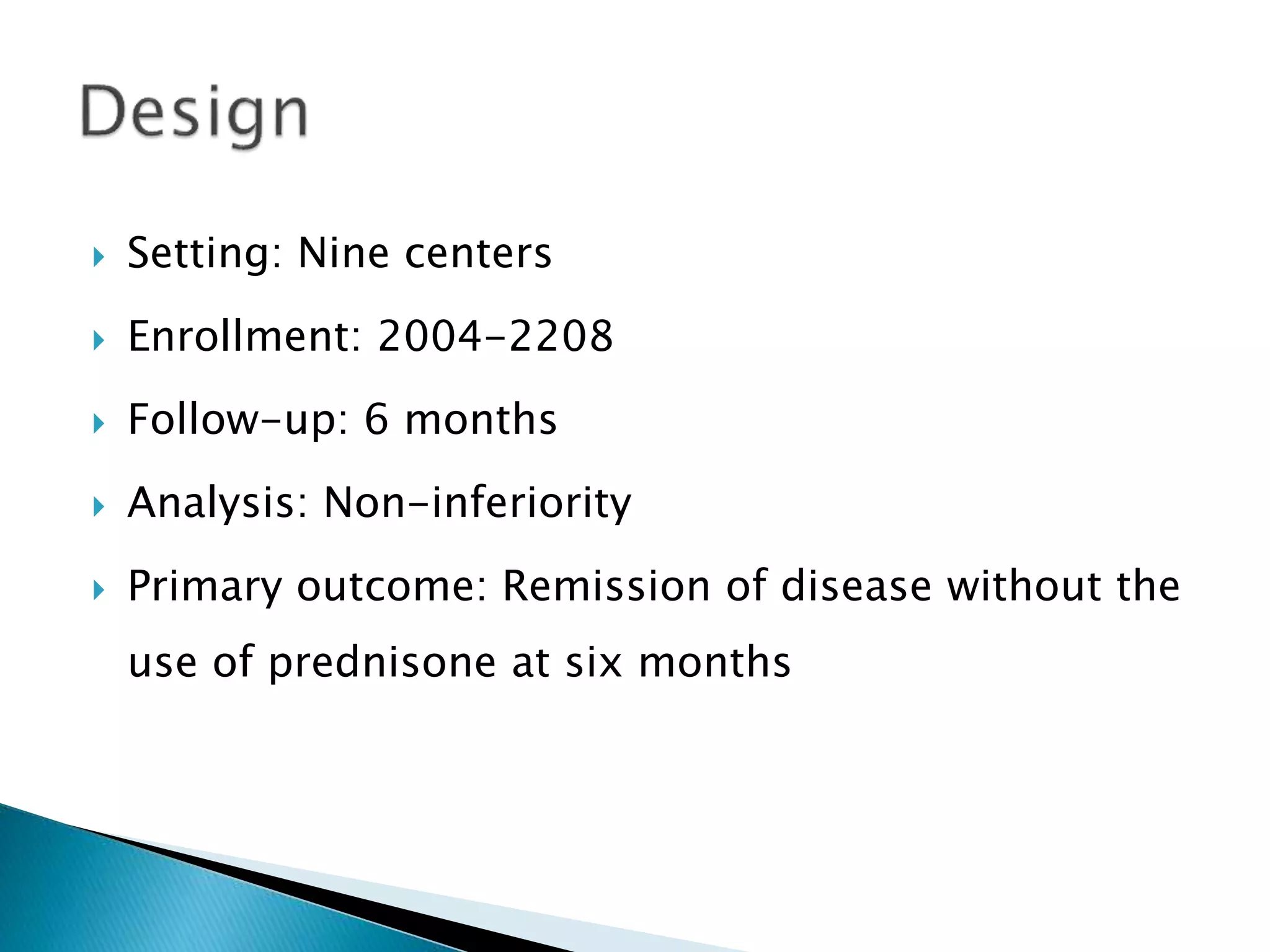
 Setting: Nine centers
 Enrollment: 2004-2208
 Follow-up: 6 months
 Analysis: Non-inferiority
 Primary outcome: Remission of disease without the
use of prednisone at six months
 GPA or MPA
 Positive serum assay for PR3-ANCA or MPO-ANCA
 New diagnosis at time of screening or presenting
with a severe disease flare
 Birmingham Vasculitis Activity Score for WG
(BVAS/WG) of ≥3
 Severe disease requiring treatment with
cyclophosphamide
 Patient to be otherwise considered for treatment
with cyclophosphamide and glucocorticoids
 Churg-Strauss syndrome or anti-GBM disease
 Limited disease which would not otherwise be
treated by cyclophosphamide
 Alveolar hemorrhage requiring intubation
 Creatinine ≥4.0 mg/dL from current episode's
renal disease activity
 WBC <4,000/mm3 or platelets <120,000/mm3
 Liver function tests >2.5x ULN
 Allergy to monoclonal antibodies or murine
proteins
 Infection
◦ Previous deep space infections
 HBV, HCV, or HIV infection
 Liver disease
 Malignancy in <5 year other than SCC, BCC, or CIS
after curative treatment
 Live vaccine in prior 4 weeks
 Cyclophosphamide in previous 4 months
 Glucocorticoids for >14 days previously
 Previous adverse effects from standard therapy
 Previous treatment with rituximab or alemtuzumab
 Treatment with plasma exchange in prior 3 months
 From the rituximab group.
 Demographics:
 Age: 54 years
 Female: 46%
 Race/ethnicity:
◦ White: 92%
◦ Back: 3%
◦ Asian: 1%
◦ Other: 4%
◦ Hispanic or Latino: 6%
 Disease-specific:
 Vasculitis type:
◦ GPA: 75%
◦ MPA: 24%
◦ Indeterminate: 1%
 New diagnosis: 48%
 Disease duration with relapse: 6.5 years
 Previous cyclophosphamide in relapsed
disease: 82%
 Patients were randomized in 1:1 fashion to
either
◦ Rituximab 375 mg/m2 IV weekly for four weeks
plus placebo
◦ Cyclophosphamide 2 mg/kg with adjustments for
renal function plus placebo with the option to
switch to azathioprine if remission attained
between 3-6 months
 Both groups received methylprednisolone 1g
once, followed by prednisone 1 mg/kg/day
with a taper according to symptoms
 Comparisons are rituximab vs. cyclophosphamide.
 Primary Outcome
 Remission of disease and off prednisone at 6 months64% vs.
53% (P<0.001 for non-inferiority; NS for superiority)GPA: 63%
vs. 50% (P=NS)MPA: 67% vs. 62% (P=NS)
 Secondary Outcomes
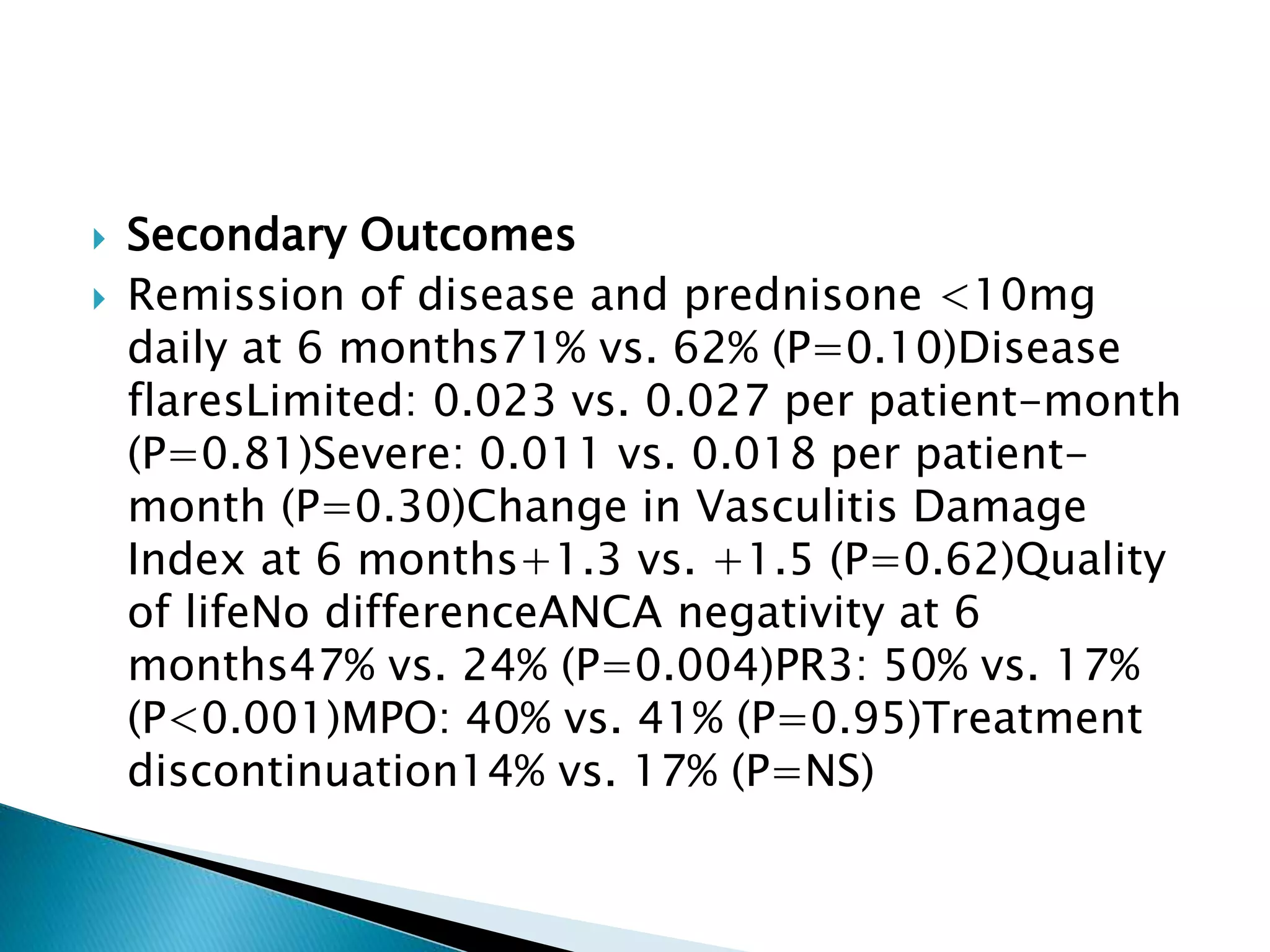
 Remission of disease and prednisone <10mg
daily at 6 months71% vs. 62% (P=0.10)Disease
flaresLimited: 0.023 vs. 0.027 per patient-month
(P=0.81)Severe: 0.011 vs. 0.018 per patient-
month (P=0.30)Change in Vasculitis Damage
Index at 6 months+1.3 vs. +1.5 (P=0.62)Quality
of lifeNo differenceANCA negativity at 6
months47% vs. 24% (P=0.004)PR3: 50% vs. 17%
(P<0.001)MPO: 40% vs. 41% (P=0.95)Treatment
discontinuation14% vs. 17% (P=NS)
 Subgroup Analysis
 The primary outcome was not affected for ANCA
type, new diagnosis of disease, renal function,
alveolar hemorrhage, major renal disease, loss of
ANCA at 6 months, BVAS/WG, and age.
 Relapsing disease at baseline62% vs. 42% (OR
1.40; 95% CI 1.03-1.91; P=0.01)Adverse Events
 Any adverse eventTotal number: 31 vs.
33Patients with >1: 22% vs. 33%Death1% vs. 2%
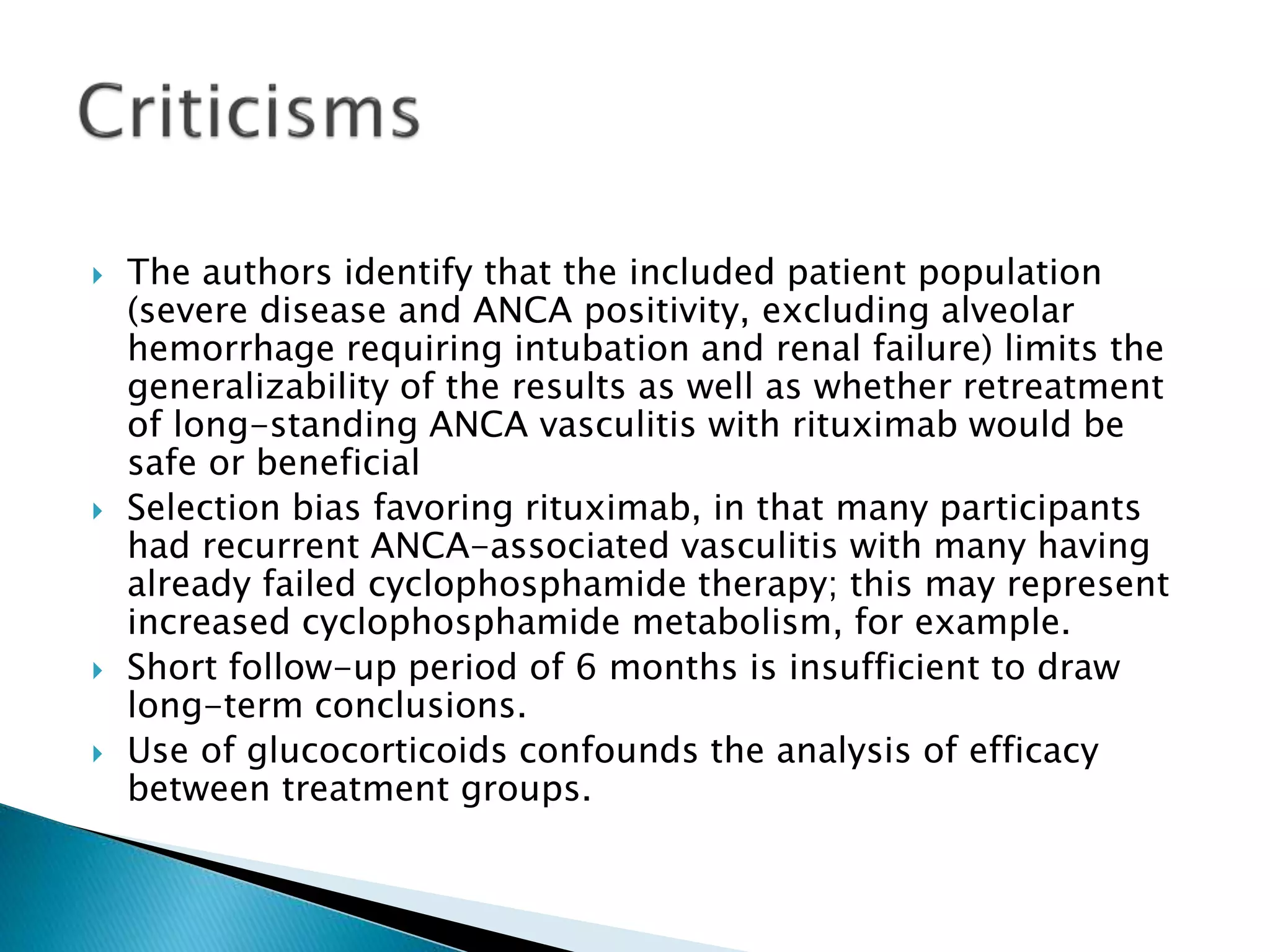
 The authors identify that the included patient population
(severe disease and ANCA positivity, excluding alveolar
hemorrhage requiring intubation and renal failure) limits the
generalizability of the results as well as whether retreatment
of long-standing ANCA vasculitis with rituximab would be
safe or beneficial
 Selection bias favoring rituximab, in that many participants
had recurrent ANCA-associated vasculitis with many having
already failed cyclophosphamide therapy; this may represent
increased cyclophosphamide metabolism, for example.
 Short follow-up period of 6 months is insufficient to draw
long-term conclusions.
 Use of glucocorticoids confounds the analysis of efficacy
between treatment groups.
THANK YOU
Randomized Trial of Plasma
Exchange or High-Dosage
Methylprednisolone as
Adjunctive Therapy for
Severe Renal Vasculitis
Euvas trials
Euvas trials
Euvas trials
Euvas trials
Euvas trials
Euvas trials
Euvas trials
Euvas trials
Euvas trials
Euvas trials
Euvas trials
Euvas trials
Euvas trials
Euvas trials
Euvas trials
Euvas trials
Euvas trials
Euvas trials
Euvas trials
Euvas trials
Euvas trials
Euvas trials
Euvas trials
Euvas trials
Euvas trials
Euvas trials
Euvas trials
Euvas trials
Euvas trials
Euvas trials
Euvas trials
Euvas trials
Euvas trials
Euvas trials
Euvas trials
Euvas trials
Euvas trials
Euvas trials
Euvas trials
Euvas trials
Euvas trials
Euvas trials
Euvas trials
Euvas trials
Euvas trials
Euvas trials
Euvas trials
Euvas trials
Euvas trials
Euvas trials

Euvas trials

  • 1.
    MODERATOR – DRNEERU P AGGARWAL PRESENTER – PREM MOHAN JHA CYCLOPS / RAVE / RITUXVAS / MEPEX
  • 4.
    Among patients withnewly-diagnosed ANCA- associated vasculitis with renal involvement, is pulse cyclophosphamide superior to daily oral cyclophosphamide for the induction of remission?
  • 5.
     Among patientswith newly-diagnosed ANCA- associated vasculitis with renal involvement, there was no difference in rates of, or time to remission when comparing pulse cyclophosphamide to daily oral cyclophosphamide.  Those receiving pulse cyclophosphamide required a lower cumulative dose and had a lower risk of leukopenia.
  • 6.
     ANCA-associated vasculitiswas almost uniformly fatal until the introduction cyclophosphamide and glucocorticoid therapy was first demonstrated by Fauci and colleagues in the 1970s.  The optimal dosing of these medications was unclear.  While several small studies suggested that pulse cyclophosphamide was likely equivalent to daily oral cyclophosphamide for the induction of remission in patients with ANCA-associated vasculitis, no large trial had been performed.
  • 7.
     Published in2009, CYCLOPS randomized 149 patients with newly-diagnosed ANCA vasculitis to pulse cyclophosphamide or daily oral cyclophosphamide.  Both groups received corticosteroids and azathioprine.  Despite its lower cumulative cyclophosphamide dose, pulse cyclophosphamide resulted in similar rates of remission as daily oral cyclophosphamide.
  • 8.
     Pulse cyclophosphamidewas associated with a significantly lower risk of leukopenia but a non- significant trend towards higher risk of relapse.  In 2012 the authors published follow-up results (median 4.3 years), showing a higher relapse in the pulse cyclophosphamide group than the daily oral group (39.5% vs. 20.8%; P=0.029) with mean follow-up of 4.3 years.
  • 9.
     KDIGO Glomerulonephritis(2012) ◦ Recommended treatments for ANCA vasculitis with glomerulonephritis:  Cyclophosphamide 0.75 g/m2 IV q3-4 weeks, decrease dose to 0.5 g/m2 if age >60 or GFR <20 mL/min/1.73 m2, adjust following doses to achieve 2-week WBC nadir >3,000 cells/mm3  Alternative dose of 15 mg/kg q2 weeks for 3 ulses then 15 mg/kg every 3 weeks for 3 months beyond remission, with dose reductions for age and GFR as above.
  • 10.
     Plus pulseand oral steroids ◦ Cyclophosphamide 1.5-2 mg/kg/day PO, with reduced dose if age >60 or GFR <20 mL/min/1.73 m2, adjust following doses to achieve WBC nadir >3,000 cells/mm3 ◦ Methylprednisolone 500 mg IV daily x3 days as a pulse.
  • 11.
    ◦ Prednisone 1mg/kg/day PO for 4 weeks to a maximum dose of 60 mg/day, tapering down over 3-4 months ◦ Rituximab 375 mg/m2 IV weekly x4 weeks  Plus pulse and oral steroids ◦ Plasmapheresis, 60 mL/kg volume replacement:  Vasculitis without anti-GBM Ab:  No pulmonary hemorrhage: 7 treatments over 14 days  Diffuse pulmonary hemorrhage: Daily treatment until the bleeding stops then q48 hours for a total of 7-10 treatments  Vasculitis with anti-GBM Ab: Daily for 14 days or until anti-GBM Abs are no longer detectable.
  • 12.
     Multicenter, open-label,parallel-group, randomized, controlled trial  N=149 (160 screened) ◦ Pulse cyclophosphamide (n=76) ◦ Daily oral cyclophosphamide (n=73)  Setting: 42 centers in Europe and Mexico  Median follow-up: 18 months  Analysis: Intention-to-treat  Primary outcome: Time to remission.
  • 13.
     Age 18-80years  Newly diagnosed ANCA-associated vasculitis, including any of the following:  Granulomatosis with polyangiitis (previously referred to as "Wegener's granulomatosis")  Microscopic polyangiitis  Renal-limited vasculitis
  • 14.
     Renal involvementof the disease, defined by ≥1 of the following:  Creatinine >150 umol/L (1.69 mg/dL) but <500 umol/L (5.6 mg/dL)  Biopsy showing necrotizing glomerulonephritis  RBC casts  Urine showing >30 RBC/high-powered field and proteinuria (>1 gram/day)  Confirmatory histology or ANCA positive serology.
  • 15.
     >2 weeksof prior cyclophosphamide or other cytotoxic drug therapy in the prior year or corticosteroids for >4 weeks  Other multisystem autoimmune disease  Hepatitis Be Ag+, HCV Ab+, or known HIV  Creatinine >500 umol/L (5.6 mg/dL)  Life-threatening organ dysfunction  Prior malignancy  Pregnancy or lack of appropriate contraception in women  Anti-GBM Ab+
  • 16.
     From thepulse cyclophosphamide group. ◦ Demographics: Age 57 years, male 54% ◦ Diagnosis:  Granulomatosis with polyangiitis: 33%  Microscopic polyangiitis: 50%  Renal limited vasculitis: 17%
  • 17.
     Diagnostics: ◦ +biopsy,+ANCA: 79% ◦ +biopsy, -ANCA: 0% ◦ -biopsy, +ANCA: 21%  BVAS score 20  Labs: Creatinine - 2.52 mg/dL, PR3+ 39%, MPO+ 50%, PR3+ and MPO+ 5%, PR3- and MPO- 5%, CRP 524 nmol/L
  • 18.
     Randomized toa group:  Pulse cyclophosphamide: 15 mg/kg IV pulses every 2 weeks for 6 weeks, then 15 mg/kg IV pulses very 3 weeks until remission and then for 3 months following remission, adjusted for WBC level, age, and renal function  Weeks 7-25 could be be administered orally as 5 mg/kg/day for 3 days per week
  • 19.
    ◦ Daily oralcyclophosphamide: 2 mg/kg/day until remission (generally about 3 months), then 1.5 mg/kg/day for 3 months following remission, adjusted for WBC count, age, and renal function
  • 20.
     Additional immunosuppression(administered to both groups): ◦ Prednisolone 1 mg/kg/day oral, tapered to 0.4 mg/kg/day by month 3 and 5 mg/kg/day by month 15 ◦ Azathioprine 2 mg/kg/day starting 3 months after remission, continued until the end of the study
  • 21.
     Primary Outcomes Median time to remission3 months (range 0.5- 8) vs. 3 months (range 1-7.5)Hazard ratio 1.098 (95% CI 0.78-1.55; P=0.59)
  • 22.
     Secondary Outcomes Proportion in remission at 9 months  88.1% vs. 87.7%  Relapses  Of the 78.9% of patients who achieved remission by 9 months  Any: 13 vs. 6 patients (HR 2.01; 95% CI 0.77-5.30)  Major: 7 vs. 3 patients  Minor: 6 vs. 3 patients  Any adverse events  77% vs. 77%  Severe or life-threatening: 19 vs. 31 patientsAll- cause mortality6.5% vs. 12.3% (P=0.79)
  • 23.
     Changes inrenal function (improvement in eGFR)  5 ml/min/1.73 m2 vs. 8 ml/min/1.73 m2 (P=0.36)  Leukopenia  26% vs. 45% (P=0.016)  Multiple bouts: 4 vs. 15 patients  Time to first event: 219 vs. 68 days (HR 0.41; 95% CI 0.23-0.71)
  • 24.
     Infection  20vs. 21 patients  Time to first event: 147 days vs. 68 days (HR 0.88; 95% CI 0.42 to 1.83)  Life threatening: 7 vs. 10 eventsCumulative dose of cyclophosphamide8.2 grams vs. 15.9 grams (P<0.001)Cumulative dose of prednisolone7587 mg vs. 7586 mg
  • 25.
     BVAS score ◦Similar at all points
  • 26.
     Unclear howpatients would do with this protocol in areas with endemic TB; pulse cyclophosphamide may be lead to worse outcomes in patients with latent TB  Daily oral therapy may have been more effective than pulse therapy for renal function recovery  Contrary to the author's comments, pulse therapy is not likely more convenient  No report of proteinuria
  • 29.
     In patientswith severe ANCA-associated vasculitis, how does rituximab compare to cyclophosphamide for induction of remission when combined with glucocorticoids?
  • 30.
     Rituximab isnon-inferior to cyclophosphamide in inducing remission of severe ANCA-associated vasculitis when combined with glucocorticoids.
  • 31.
     The ANCA-associatedvasculitides (eg, granulomatosis with polyangiitis or GPA, and microscopic polyangiitis or MPA) affect small- and medium-caliber vessels and are associated with pulmonary and renal injury.
  • 32.
     The efficacyof cyclophosphamide in combination with glucocorticoids was first demonstrated by Fauci and colleagues in the late 1970s and early 1980s and has been the mainstay of therapy since.  The role of the newer anti-CD20 monoclonal antibody rituximab was unclear.
  • 33.
     The Rituximabin ANCA-Associated Vasculitis (RAVE) trial randomized 197 patients with severe ANCA-associated vasculitis to either cyclophosphamide or rituximab in addition to glucocorticoids tapered to symptoms.  At 6 months, rituximab was non-inferior to cyclophosphamide in induction of remission and ability of patients to remain off of glucocorticoids.
  • 34.
     The FDAhas subsequently approved rituximab with glucocorticoids for treatment of GPA and MPA.  No large organizations have released recommendations regarding rituximab in GPA and MPA, although an independent research group has recommended its use in newly diagnosed patients (grade 1b).
  • 35.
     Multicenter, randomized,double-blind, double- dummy, noninferiority trial  N=197 patients with severe ANCA-associated vasculitis ◦ Rituximab (n=99) ◦ Cyclophosphamide (n=98)
  • 36.
     Setting: Ninecenters  Enrollment: 2004-2208  Follow-up: 6 months  Analysis: Non-inferiority  Primary outcome: Remission of disease without the use of prednisone at six months
  • 37.
     GPA orMPA  Positive serum assay for PR3-ANCA or MPO-ANCA  New diagnosis at time of screening or presenting with a severe disease flare
  • 38.
     Birmingham VasculitisActivity Score for WG (BVAS/WG) of ≥3  Severe disease requiring treatment with cyclophosphamide  Patient to be otherwise considered for treatment with cyclophosphamide and glucocorticoids
  • 39.
     Churg-Strauss syndromeor anti-GBM disease  Limited disease which would not otherwise be treated by cyclophosphamide  Alveolar hemorrhage requiring intubation  Creatinine ≥4.0 mg/dL from current episode's renal disease activity
  • 40.
     WBC <4,000/mm3or platelets <120,000/mm3  Liver function tests >2.5x ULN  Allergy to monoclonal antibodies or murine proteins  Infection ◦ Previous deep space infections
  • 41.
     HBV, HCV,or HIV infection  Liver disease  Malignancy in <5 year other than SCC, BCC, or CIS after curative treatment  Live vaccine in prior 4 weeks  Cyclophosphamide in previous 4 months  Glucocorticoids for >14 days previously  Previous adverse effects from standard therapy  Previous treatment with rituximab or alemtuzumab  Treatment with plasma exchange in prior 3 months
  • 42.
     From therituximab group.  Demographics:  Age: 54 years  Female: 46%  Race/ethnicity: ◦ White: 92% ◦ Back: 3% ◦ Asian: 1% ◦ Other: 4% ◦ Hispanic or Latino: 6%
  • 43.
     Disease-specific:  Vasculitistype: ◦ GPA: 75% ◦ MPA: 24% ◦ Indeterminate: 1%  New diagnosis: 48%  Disease duration with relapse: 6.5 years  Previous cyclophosphamide in relapsed disease: 82%
  • 44.
     Patients wererandomized in 1:1 fashion to either ◦ Rituximab 375 mg/m2 IV weekly for four weeks plus placebo ◦ Cyclophosphamide 2 mg/kg with adjustments for renal function plus placebo with the option to switch to azathioprine if remission attained between 3-6 months  Both groups received methylprednisolone 1g once, followed by prednisone 1 mg/kg/day with a taper according to symptoms
  • 45.
     Comparisons arerituximab vs. cyclophosphamide.  Primary Outcome  Remission of disease and off prednisone at 6 months64% vs. 53% (P<0.001 for non-inferiority; NS for superiority)GPA: 63% vs. 50% (P=NS)MPA: 67% vs. 62% (P=NS)
  • 46.
     Secondary Outcomes Remission of disease and prednisone <10mg daily at 6 months71% vs. 62% (P=0.10)Disease flaresLimited: 0.023 vs. 0.027 per patient-month (P=0.81)Severe: 0.011 vs. 0.018 per patient- month (P=0.30)Change in Vasculitis Damage Index at 6 months+1.3 vs. +1.5 (P=0.62)Quality of lifeNo differenceANCA negativity at 6 months47% vs. 24% (P=0.004)PR3: 50% vs. 17% (P<0.001)MPO: 40% vs. 41% (P=0.95)Treatment discontinuation14% vs. 17% (P=NS)
  • 47.
     Subgroup Analysis The primary outcome was not affected for ANCA type, new diagnosis of disease, renal function, alveolar hemorrhage, major renal disease, loss of ANCA at 6 months, BVAS/WG, and age.  Relapsing disease at baseline62% vs. 42% (OR 1.40; 95% CI 1.03-1.91; P=0.01)Adverse Events  Any adverse eventTotal number: 31 vs. 33Patients with >1: 22% vs. 33%Death1% vs. 2%
  • 48.
     The authorsidentify that the included patient population (severe disease and ANCA positivity, excluding alveolar hemorrhage requiring intubation and renal failure) limits the generalizability of the results as well as whether retreatment of long-standing ANCA vasculitis with rituximab would be safe or beneficial  Selection bias favoring rituximab, in that many participants had recurrent ANCA-associated vasculitis with many having already failed cyclophosphamide therapy; this may represent increased cyclophosphamide metabolism, for example.  Short follow-up period of 6 months is insufficient to draw long-term conclusions.  Use of glucocorticoids confounds the analysis of efficacy between treatment groups.
  • 49.
  • 50.
    Randomized Trial ofPlasma Exchange or High-Dosage Methylprednisolone as Adjunctive Therapy for Severe Renal Vasculitis