Downloaded 112 times


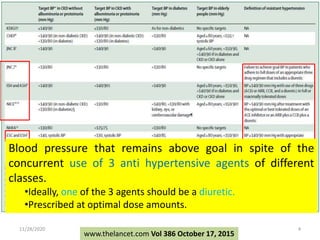

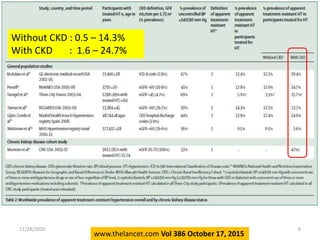
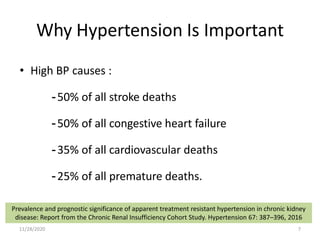
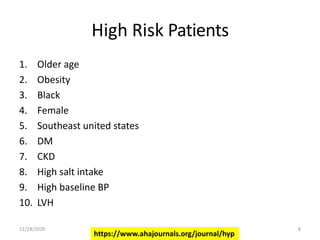
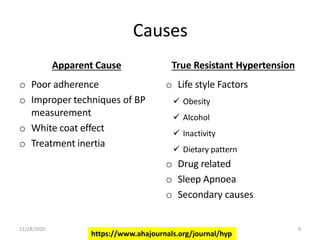
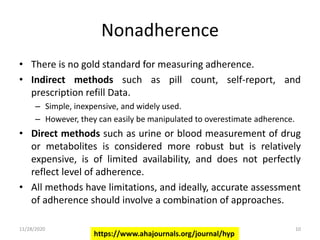
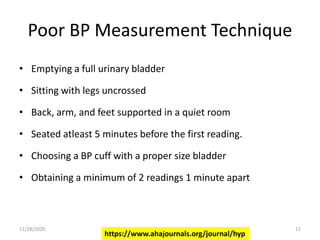



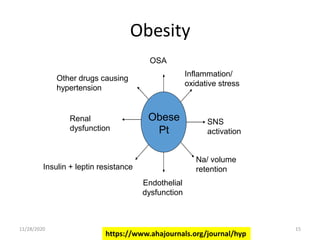

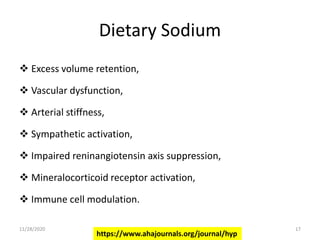
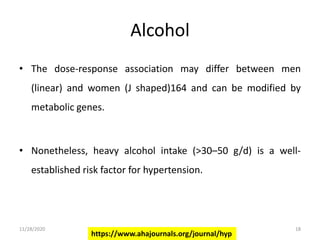
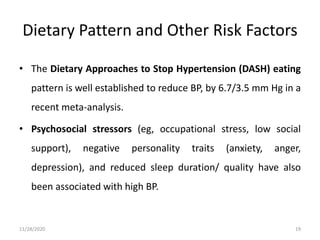
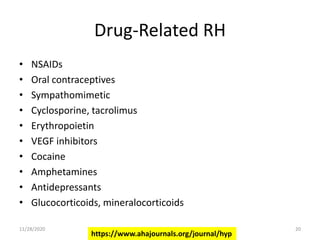
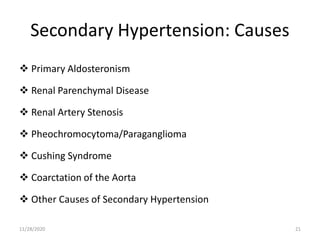
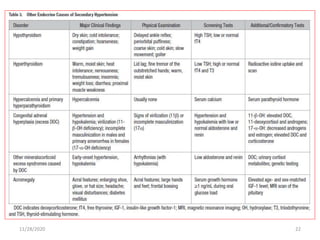
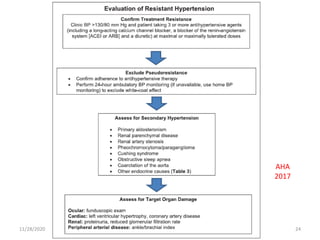
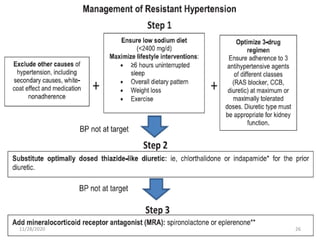
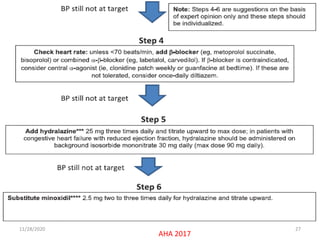
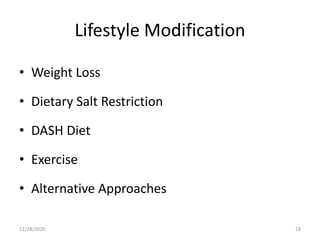
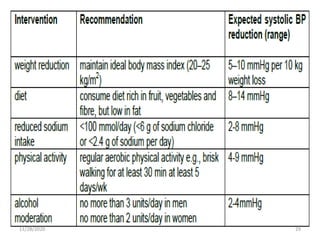

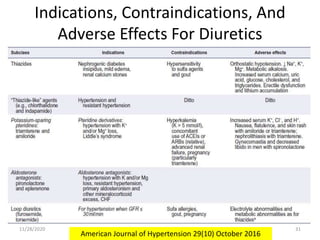
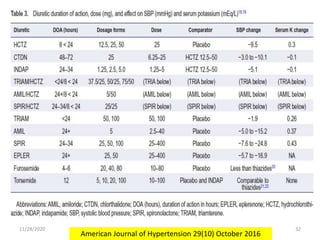
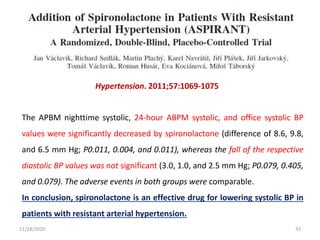
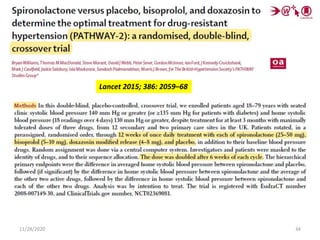
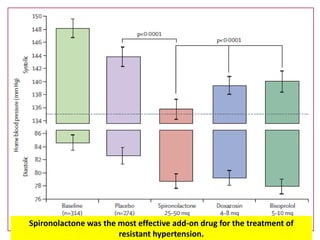
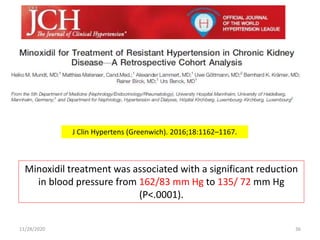
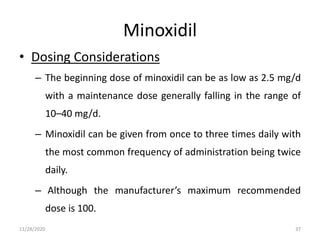
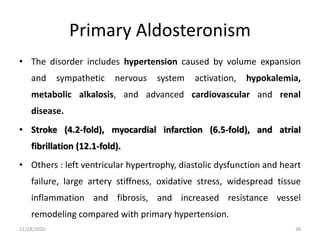
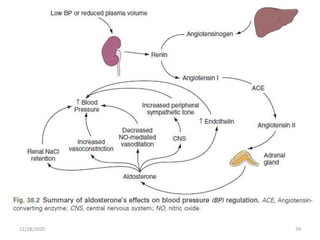
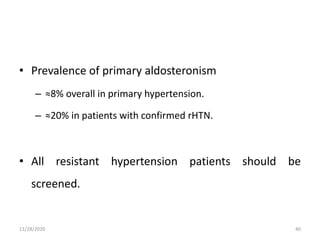
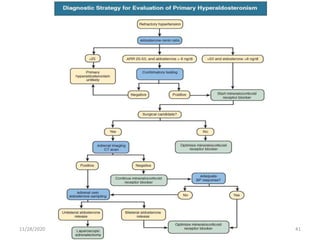
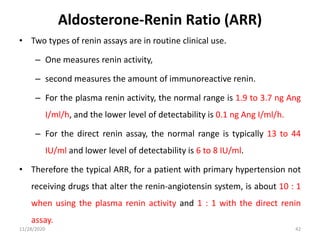
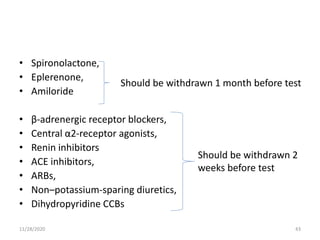
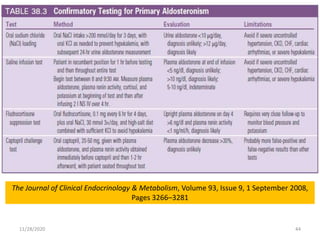
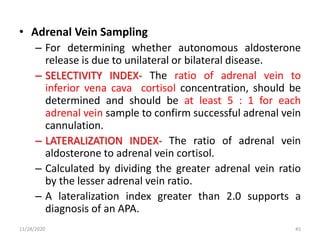

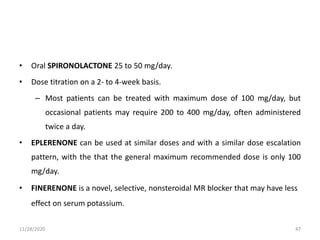
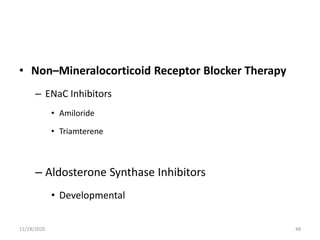
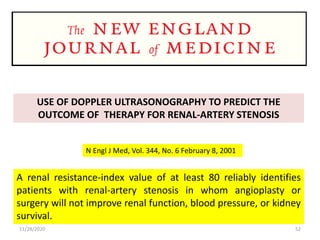
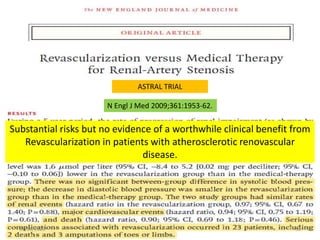
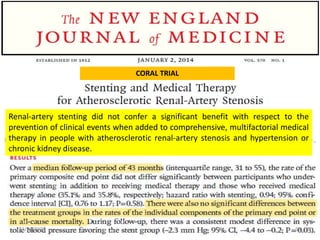
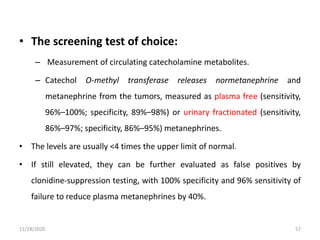
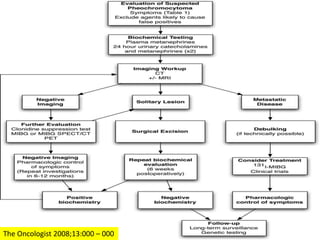
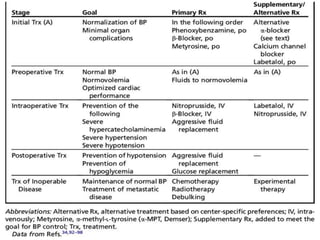
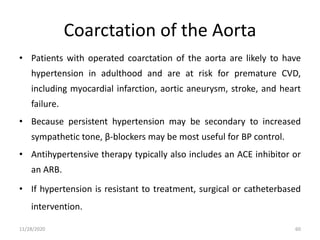


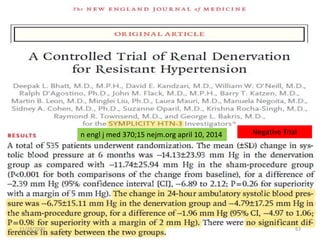
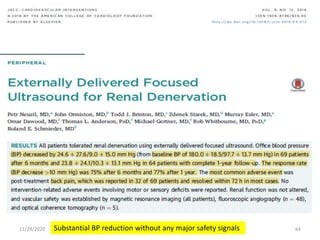
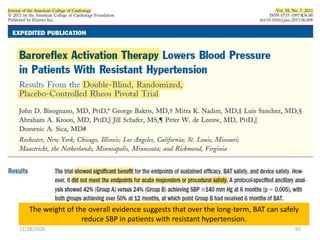


Resistant hypertension is defined as blood pressure that remains above goal despite concurrent use of three antihypertensive agents of different classes, one of which should be a diuretic. It has a prevalence of 0.5-24.7% depending on the population. Causes include nonadherence, lifestyle factors like obesity and sleep apnea, secondary causes like primary aldosteronism and renal artery stenosis, and drug interactions. Evaluation involves assessing medication adherence, lifestyle behaviors, screening for secondary causes with tests like the aldosterone-renin ratio, and imaging of the kidneys and arteries. Management consists of optimizing lifestyle modifications, adjusting medications like adding mineralocorticoid receptor antagonists, and treating any identified


