Download to read offline
![António Gaspar-Cunha and Armando Vieira.
1 INTRODUCTION
A Multi-Objective Evolutionary Algorithm (MOEA) using an approximate fitness
evaluation obtained with an artificial neural network is proposed. The objective is to reduce
the number of fitness evaluations in MOEAs on computational expensive problems while
maintaining their good search capabilities. We show that this approach may save considerable
computational time.
One of the major difficulties in applying MOEAs to real problems is the large number of
evaluations of the objective functions, of the order of thousands, necessary to obtain an
acceptable solution. Often these are time-consuming evaluations obtained solving numerical
codes with expensive methods like finite-differences or finite-elements. Reducing the number
of evaluations necessary to reach an acceptable solution is thus of major importance [1,2].
This difficulty may be alleviated using distributed computations where each fitness evaluation
in performed on a separate processor. However, this requires a large number of networked
computers and an adequate parallelisation of the numerical code.
Here we investigate an alternative solution to this problem by approximating the functions
to be evaluated during optimization. There are several methods that can be used to
approximate the fitness evaluation. The surface response method and the Kriging statistical
model are often applied in engineering and experiments design respectively.
2 NEURAL NETWORKS AS FUNCTION APPROXIMATIONS
In this work Artificial Neural Networks (ANN) will be used to approximate the fitness
function. It is well known that, given sufficient training data, a neural network can
approximate any function with arbitrary accuracy. ANNs are particularly well suited for non-
linear regression analysis on high-dimensional data [3]. In this case the neural networks is
trained using the previous function evaluations that are being performed by the evolutionary
algorithm. With enough data points the training error becomes sufficiently small and the ANN
is considered to be a good estimator of the fitness function.
As with any other approximation method, the performance of the neural network is closely
related to the quality of the training data. If the training data does not cover all the domain
range huge errors may occur due to extrapolation. Errors may also occur when the set of
training points is not sufficiently dense and uniform. These problems are particularly acute for
approximations to functions used in MOEA optimization. First, these fitness functions may
have strong oscillations, and second, the domain where we perform the approximation varies
at each iteration.
A different hybrid approach is proposed, where Neural Networks are used to estimate the
functions used by a Multi-Objective Genetic Algorithm, namely the Reduced Pareto Set
Genetic Algorithm (RPSGAe) [4, 5].
3 ALGORITHM PROPOSED
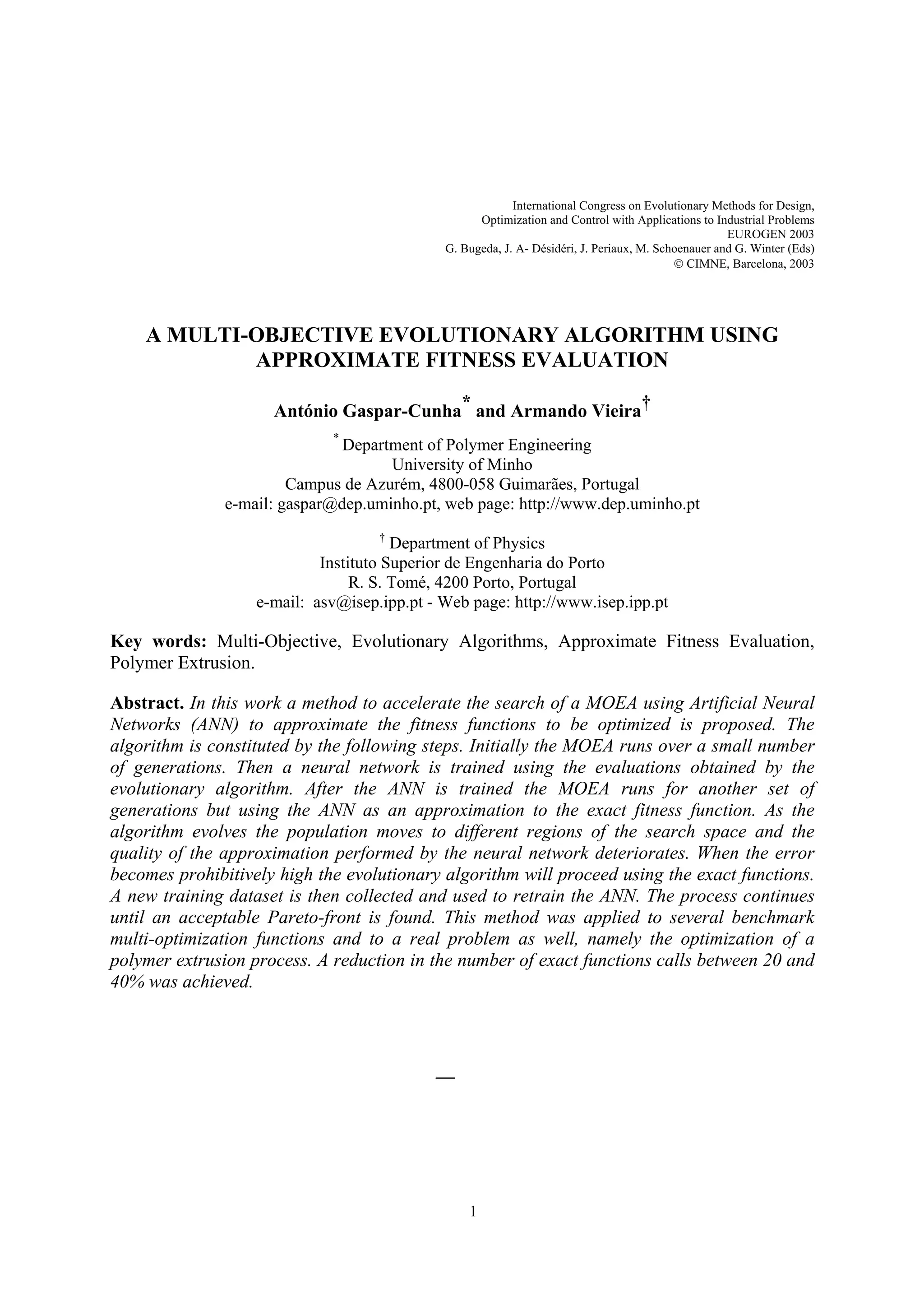
Figure 1 illustrates the method proposed. First the Genetic Algorithm runs during p
generations to obtain the first set of evaluations necessary for the first train of the neural
network. At this point two methods may be considered. First method, that will call A, is to
2](https://image.slidesharecdn.com/eurogenv-130405054612-phpapp01/85/Eurogen-v-2-320.jpg)
![António Gaspar-Cunha and Armando Vieira.
4 RESULTS AND DISCUSSION
The proposed method was tested using the ZDT1, ZDT2, ZDT3, ZDT4 and ZDT6 bi-
objective functions [6], with 30 variables each (except for ZDT4 where 10 variables were
used). The aim is to cover various types of Pareto-optimal fronts, such as convex, non-
convex, discrete, multimodal and non-uniform [6].
In order to achieve a clear comparison of the performance of our method the following
criterion is used:
S NN − S (3)
S* =
S NN
where, S NN and S are the averages of the S-metric obtained with and without ANN,
respectively.
Initially, the relevance of some parameters on the algorithm performance was studied,
namely: number of generations evaluated by the exact function, p (5, 10 and 15 generations),
number of generations evaluated by the approximate model, m (5, 10 and 15 generations),
number of hidden neurons of the neural network, Nh (10, 20 and 30 neurons), learning rate of
the neural network, η (0.1, 0.2, 0.3 and 0.4) and fraction individuals evaluated by the real
function in each q generations, ξ (10, 30 and 50%).
During the first p generations the RPSGAe uses the exact function evaluation and a
population size of 100, 300 generations, a roulette wheel selection strategy, a crossover
probability of 0.8, a mutation probability of 0.05, a random seed of 0.5, a number of ranks of
30 and the limits of indifference of the clustering technique of 0.2 [4]. These data were used
for the first train of the neural network obtaining a mean square error of less than 1%. This
error increases as the search proceeds but never exceeding 7%.
The results obtained with this approach are compared with the ones obtained using
RPSGAe alone. The comparison was quantified using the S metric proposed by Zitzler [7],
which is adequate for problems with few objective dimensions [8]. Each run was performed 5
times in order to take into account the variation of the random initial population. Since the
computation time required to train and test the neural network is negligible, we decided to use
the number of real objective function evaluations as the significant running parameter. For
each generation we calculate the average of the 5 runs of the metric as a function of the
number of evaluations effectuated so far.
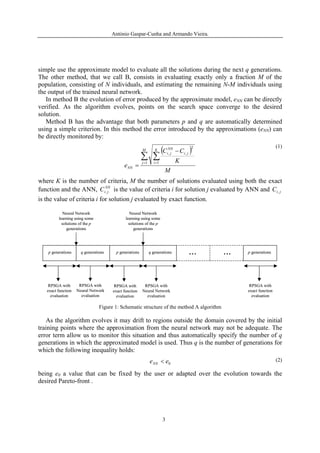
Figure 2 compares the results obtained with traditional RPSGAe and the results obtained
with the present two methods A and B for the ZDT1 function. From this figure is possible to
see that, the number of exact evaluations to reach the same S-metric is reduced to about 36%,
for method A and 28% for method B. However, method B has the advantage that no
parameter optimization is needed and therefore results are obtained in a single run. Similar
results were achieved with different levels of allowed errors, resulting in a decrease of the
number of exact evaluations necessary as the error increases.
4](https://image.slidesharecdn.com/eurogenv-130405054612-phpapp01/85/Eurogen-v-4-320.jpg)
![António Gaspar-Cunha and Armando Vieira.
S*(%) METHOD A Eval*(%) S*(%) METHOD B Eval*(%)
0 0
25 25
-10 -10
15 15
-20 -20
5 5
-5 -30 -5 -30
-15 -40 -15 -40
0 100 200 300 0 100 200 300
Generations Generations
S* Eval*
Figure 3: Evolution of the S metric and number of evaluations differences for ZDT1 test problem, using methods
A and B. The following parameters were used: p = 15, q =10, Nh = 10 and η = 0.2
5 APPLICATION TO POLYMER EXTRUSION
The metodology proposed (method B) was applied to the screw geometry optimization of a
single-screw polymer extruder. The extruder is characterized by an Archimedes-type screw
that rotates inside a heated barrel. The extruder receives the solid pellets at the inlet and melts,
mix and homogenise the material. Then, the melted polymer is pumped through the die in
order to produce an extrudate with a prescribed cross-section. For modelling purposes, the
process is considered as a succession of functional zones characterized by stress, mass, heat or
force balances, coupled by adequate boundary conditions in the interface between the zones.
The resolution of these differential equations is performed through the method of finite
differences. A detailed description of these models and the required optimization can be found
elsewhere [12, 18]. Recently the process was proposed as a real test problem for EMO
algorithms and was made available through the internet to the EMO community [19, 20].
Method B was applied to reduce the number of exact evaluations of a MOEA applied to
the problem of determining the geometry of a conventional screw extruded that
simultaneously maximize the mass output and the mixing degree. Ten runs are carried out,
five using the RPSGA without neural networks and five using method B with an allowed
error of 3%. The ANN parameters are settled to Nh =10, η = 0.2 and α = 0.25. Figure 3 shows
the evolution of S* and the difference of exact evaluations as a function of the number of
generations. The improvement obtained in the number of exact function evaluations necessary
is approximately 40%. This implies a reduction from 8.5 to 6.0 hours on the computation time
when a PC with an AMD processor at 1666 MHz is used.
6 CONCLUSIONS
The efficiency of this approach is strongly dependent not only on the difficulty of the
functions to be optimized but also on the degree of approximation chosen. Using a
conservative approximation produces no relevant gain in computation time while a more
aggressive approach may lead to large errors in objective functions and consequently a poor
5](https://image.slidesharecdn.com/eurogenv-130405054612-phpapp01/85/Eurogen-v-5-320.jpg)
![António Gaspar-Cunha and Armando Vieira.
Pareto-front. Two methods to select an adequate approximation by the ANN have been
proposed. Method A characterized by the manual adjust of the parameters that control the
training of the ANN and the generalization error, and method B where these parameters were
selected automatically from specifying an accuracy criterion. Method B is clearly superior
since it does not require apriori selection of the parameters that control the degree of
approximation used.
Both methods were applied to several benchmark problems and to a real world problem.
This approach may save considerable computational time, ranging from 13% to about 40%.
This is particularly relevant when the evaluation of the solutions involves the use of numerical
methods having large computational costs, such the real optimization problem on polymer
extrusion tested here.
0 0
-20 -10
-20
Eval* (%)
-40
S* (%)
-30
-60 S*
-40
-80 -50 Eval*
-100 -60
0 10 20 30 40 50
Generations
Figure 3: Evolution of the S metric and number of evaluations differences for polymer extrusion problem
REFERENCES
[1] Nain, P.K.S., Deb, K., A Computationally Effective Multi-Objective Search and
Optimization Technique Using Coarse-to-Fine Grain Modeling. Kangal Report No.
2002005 (2002).
[2] Jin, Y., Olhofer, M., Sendhof, B., A Framework for Evolutionary Optimization with
Approximate Fitness Functions, IEEE Trans. On Evolt. Comp., 6, pp. 481-494 (2002)
[3] Bishop, C.M., Neural Networks for Pattern Recognition, Oxford University Press, Oxford
(1995).
[4] Gaspar-Cunha, A., Covas, J.A. - RPSGAe - A Multiobjective Genetic Algorithm with
Elitism: Application to Polymer Extrusion, Submitted for publication in a Lecture Notes
in Economics and Mathematical Systems volume, Springer (2002).
[5] Gaspar-Cunha, A.: Reduced Pareto Set Genetic Algorithm (RPSGAe): A Comparative
Study, The Second Workshop on Multiobjective Problem Solving from Nature (MPSN-
II), Granada, Spain (2002).
[6] Zitzler, E., Deb, K., Thiele, L.: Comparison of Multiobjective Evolutionary Algorithms:
Empirical Results, Evolutionary Computation, 8, pp. 173—195 (2000).
6](https://image.slidesharecdn.com/eurogenv-130405054612-phpapp01/85/Eurogen-v-6-320.jpg)
![António Gaspar-Cunha and Armando Vieira.
[7] Zitzler, E.: Evolutionary Algorithms for Multiobjective Optimization: Methods and
Applications, PhD Thesis, Swiss Federal Institute of Technology (ETH), Zurich,
Switzerland (1999).
[8] Knowles, J.D., Corne, D.W., On Metrics for Comparing Non-Dominated Sets. In
Proceedings of the 2002 Congress on Evolutionary Computation Conference (CEC02),
pp. 711-716, IEEE Press (2002).
7](https://image.slidesharecdn.com/eurogenv-130405054612-phpapp01/85/Eurogen-v-7-320.jpg)

This document describes a multi-objective evolutionary algorithm that uses artificial neural networks to approximate fitness functions in order to reduce the number of exact function evaluations. The algorithm runs the evolutionary algorithm for an initial number of generations to collect a training dataset. It then trains a neural network on this dataset. The evolutionary algorithm continues running for additional generations, using the neural network to approximate some or all of the fitness function evaluations. The neural network approximation error is monitored, and the evolutionary algorithm switches back to using exact function evaluations when the error becomes too high. This process repeats until an acceptable Pareto front is found. The method was tested on benchmark multi-objective test functions and showed a 20-40% reduction in the number of exact function evaluations needed


