In the name of God, the most beneficent,
the eternally merciful
ETHICS IN ACCOUNTING
ACCOUNTING ETHICS: SOME RESEARCH NOTE BY CARMEN
BONACI
Content Layout
What is “accounting” and what are the “works of accountants”?
What are “Ethics” in accounting?
 Fraud in Accounting Statements .
Threats to Ethical Environment.
 Harms of Unethical Environment.
 How to make ethical Environment?
 Conclusion
Accounting
Practice and body of knowledge concerned primarily with
 Methods for recording transactions,
 Keeping financial records,
 Performing internal audits,
 Reporting and analyzing financial information to the management, and
 Advising on taxation matters.
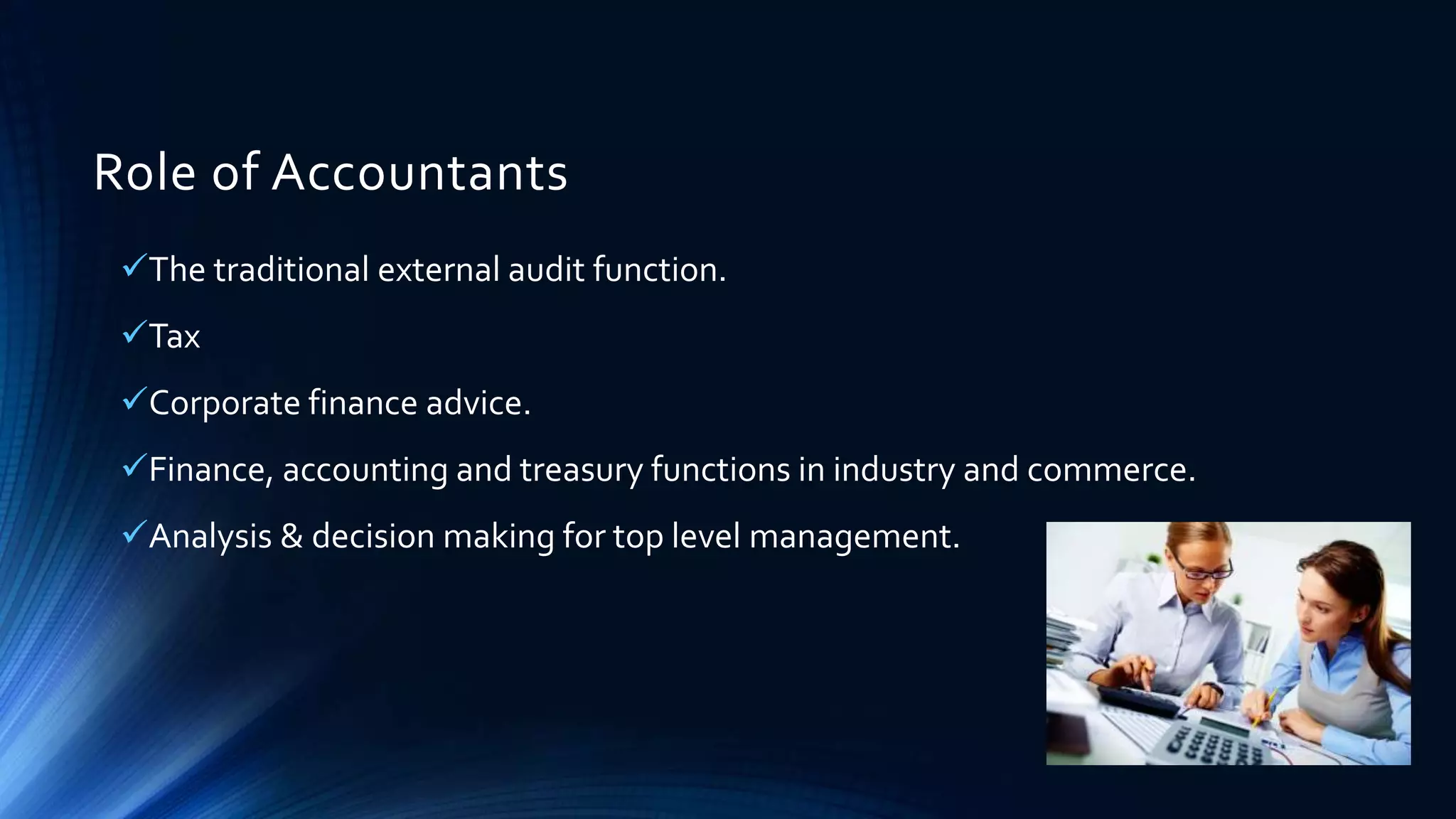
Role of Accountants
The traditional external audit function.
Tax
Corporate finance advice.
Finance, accounting and treasury functions in industry and commerce.
Analysis & decision making for top level management.
Ethics
• Moral principles that govern a person's behavior or the conducting of
an activities.
• An area of study that deals with ideas about what is good and bad
behavior .
• A branch of philosophy dealing with what is morally right or wrong.
Ethics in Accounting
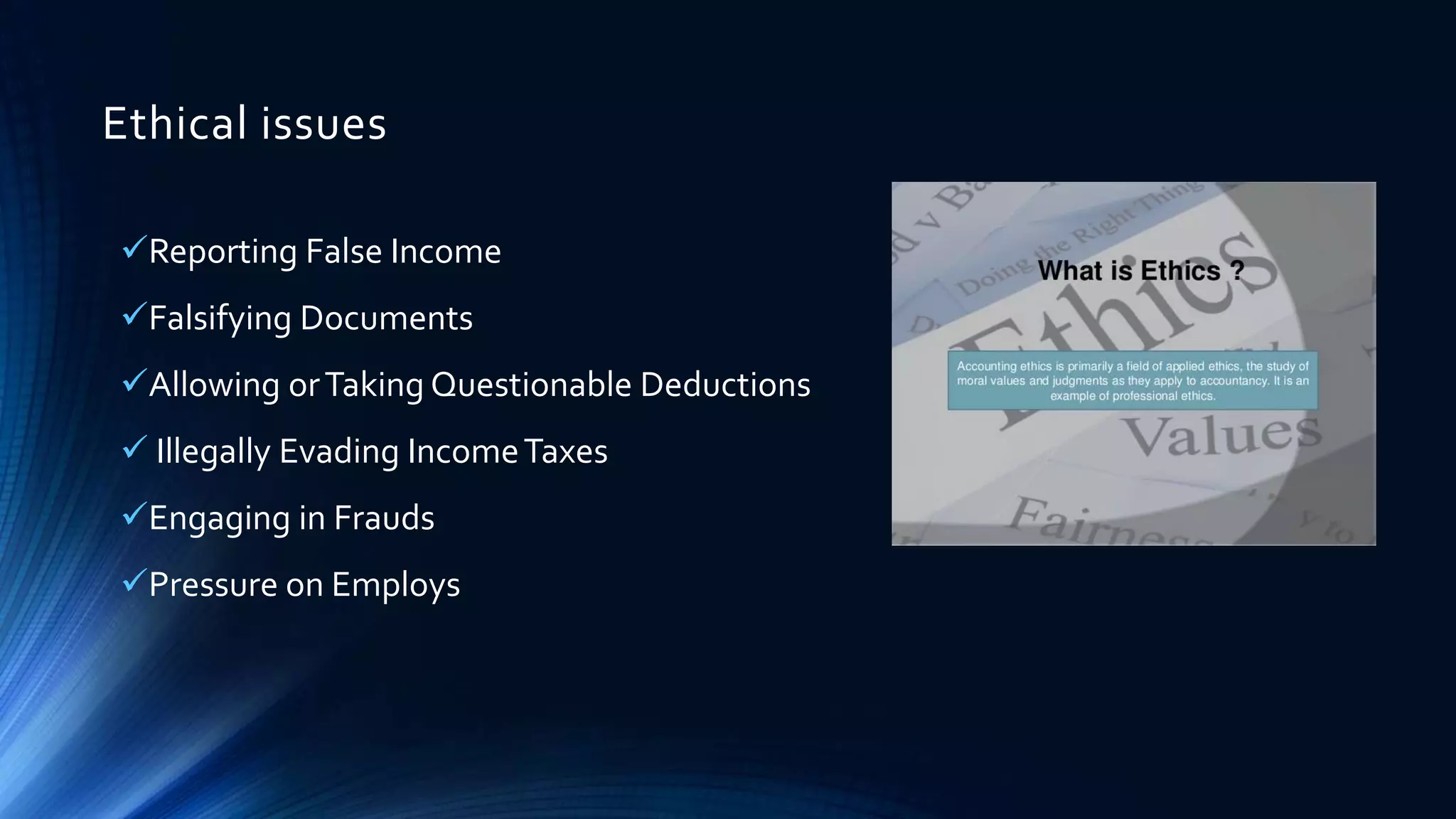
Accounting ethics is primarily a field of applied ethics and is part of
business ethics and human ethics, the study of moral values and
judgments as they apply to accountancy. It is an example of
professional ethics.
Provides fair and accurate reporting of the financial position of a
business.
Ethical issues
Reporting False Income
Falsifying Documents
Allowing orTaking Questionable Deductions
 Illegally Evading IncomeTaxes
Engaging in Frauds
Pressure on Employs
Fraud in financial statement can be
committed in 5 ways
Fictitious revenue-revenues not actually earned
FraudulentTiming differences
Concealed liabilities and expenses
Fraudulent disclosures or Omissions
Fraudulent asset valuation-false statement of the inventory available
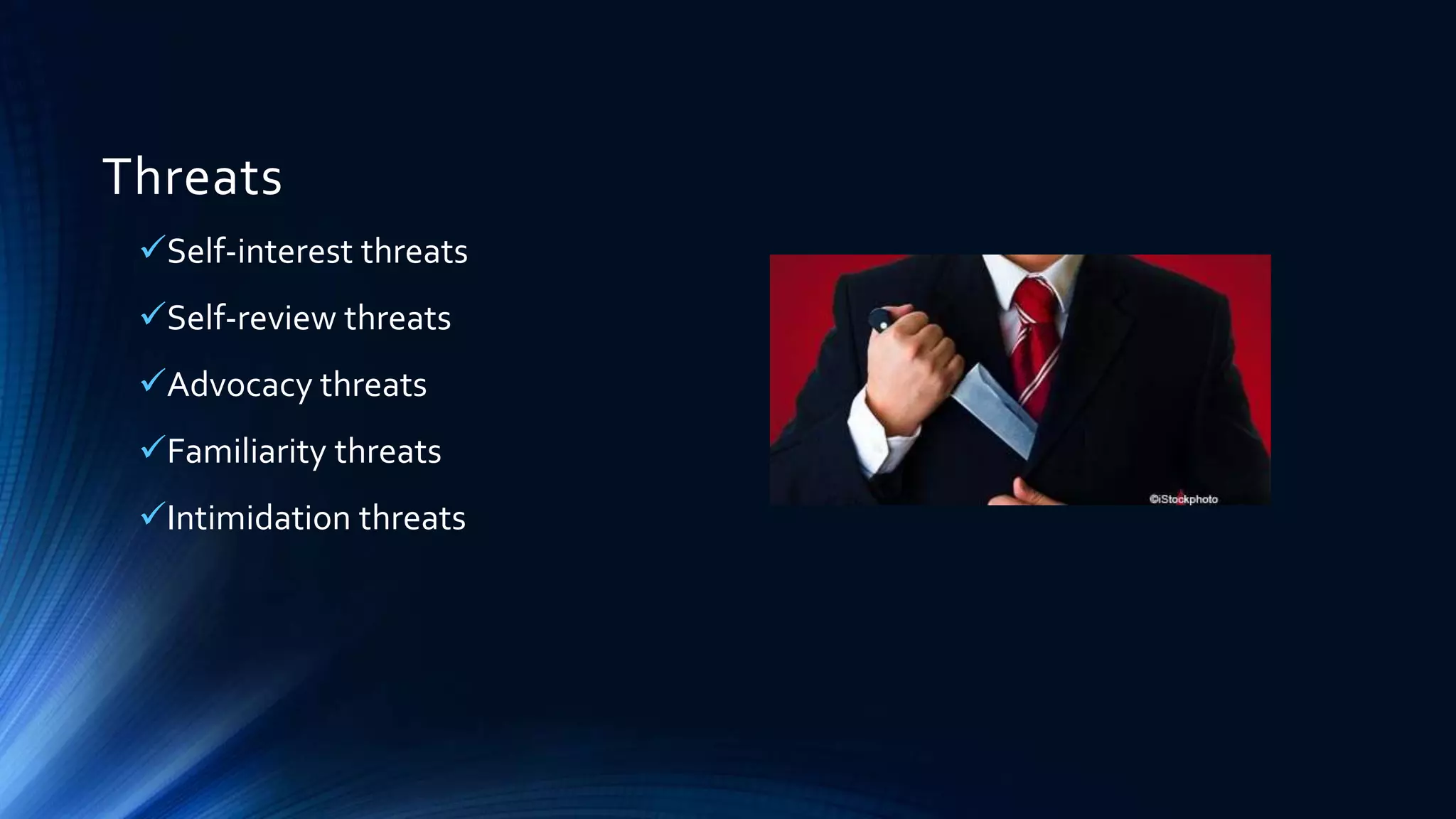
Threats
Self-interest threats
Self-review threats
Advocacy threats
Familiarity threats
Intimidation threats
Self-interest threat
• The threat that a financial or other interest will
inappropriately influence the professional
accountant’s judgment or behavior
Self-Review Threats
• The threat that a professional accountant will not appropriately
evaluate the results of a previous judgment made or service
performed by the professional accountant, or by another individual
within the professional accountant’s firm or employing organization,
on which the accountant will rely when forming a judgment as part of
providing a current service
Advocacy Threat
• The threat that a professional accountant will promote a client’s or
employer’s position to the point that the professional accountant’s
objectivity is compromised
Familiarity Threat
• FamiliarityThreat occurs when, by virtue of a close relationship with a
client, its directors, officers or employees, an auditor becomes too
sympathetic to the client’s interests.
Intimidation Threat
• The threat that a professional accountant will be deterred from acting
objectively because of actual or perceived pressures, including
attempts to exercise undue influence over the professional
accountant
Harms of Unethical Environment
• Loss of Repute
• Loss of Company in monetary terms.
• Loss of Country
• Restrictions in International Markets
• Pressure on Organizational Stakeholders
Example
On July 21, 2015,Toshiba (OTCBB:TOSBF) CEO HisaoTanaka
announced his resignation in the face of an accounting scandal tied to
about $1.2 billion in overstated operating profits.
How to make ethical Environment?
• Safeguards created by the profession, legislation or regulation
• Educational, training and experience requirements for entry into the
profession
• Continuing professional development requirements
• Corporate governance regulations
• Professional or regulatory monitoring and disciplinary procedures
• External review by a third party of the reports, returns,
communications or information produced by a professional
accountant
How to make ethical Environment?
• Leadership that stresses the importance of independence and the
expectation that members of the teams will act in the public interest
• Policies and procedures to implement and monitor quality control of
the engagements
• A regular monitoring of the accounting firms
• Reasonable trade-off between the degrees of responsibility and the
audit cost to society
How to make ethical Environment?
• Making sure that the funds are allocated to different activities on the
basis of their importance
• Frame rules that have a positive effect on business activities
• To identify the training necessary for the employees
• Establishing ethical conduct of business to attract valuable
investments
• Establish code of conduct
• Helps the shareholders to evaluate the performance of the directors
and vice vers
Conclusion
• It is in the profession's self-interest to maintain public trust in the
competent performance of the accounting profession
• Ethics, in general, is made up of smaller parts that all work together
to build the moral fabric of society.
Any
Question ?
By Muhammad Arif Hassan
(Fa15-BBA-054)

Ethics in accounting

  • 1.
    In the nameof God, the most beneficent, the eternally merciful
  • 2.
    ETHICS IN ACCOUNTING ACCOUNTINGETHICS: SOME RESEARCH NOTE BY CARMEN BONACI
  • 3.
    Content Layout What is“accounting” and what are the “works of accountants”? What are “Ethics” in accounting?  Fraud in Accounting Statements . Threats to Ethical Environment.  Harms of Unethical Environment.  How to make ethical Environment?  Conclusion
  • 4.
    Accounting Practice and bodyof knowledge concerned primarily with  Methods for recording transactions,  Keeping financial records,  Performing internal audits,  Reporting and analyzing financial information to the management, and  Advising on taxation matters.
  • 5.
    Role of Accountants Thetraditional external audit function. Tax Corporate finance advice. Finance, accounting and treasury functions in industry and commerce. Analysis & decision making for top level management.
  • 6.
    Ethics • Moral principlesthat govern a person's behavior or the conducting of an activities. • An area of study that deals with ideas about what is good and bad behavior . • A branch of philosophy dealing with what is morally right or wrong.
  • 7.
    Ethics in Accounting Accountingethics is primarily a field of applied ethics and is part of business ethics and human ethics, the study of moral values and judgments as they apply to accountancy. It is an example of professional ethics. Provides fair and accurate reporting of the financial position of a business.
  • 8.
    Ethical issues Reporting FalseIncome Falsifying Documents Allowing orTaking Questionable Deductions  Illegally Evading IncomeTaxes Engaging in Frauds Pressure on Employs
  • 9.
    Fraud in financialstatement can be committed in 5 ways Fictitious revenue-revenues not actually earned FraudulentTiming differences Concealed liabilities and expenses Fraudulent disclosures or Omissions Fraudulent asset valuation-false statement of the inventory available
  • 10.
    Threats Self-interest threats Self-review threats Advocacythreats Familiarity threats Intimidation threats
  • 11.
    Self-interest threat • Thethreat that a financial or other interest will inappropriately influence the professional accountant’s judgment or behavior
  • 12.
    Self-Review Threats • Thethreat that a professional accountant will not appropriately evaluate the results of a previous judgment made or service performed by the professional accountant, or by another individual within the professional accountant’s firm or employing organization, on which the accountant will rely when forming a judgment as part of providing a current service
  • 13.
    Advocacy Threat • Thethreat that a professional accountant will promote a client’s or employer’s position to the point that the professional accountant’s objectivity is compromised
  • 14.
    Familiarity Threat • FamiliarityThreatoccurs when, by virtue of a close relationship with a client, its directors, officers or employees, an auditor becomes too sympathetic to the client’s interests.
  • 15.
    Intimidation Threat • Thethreat that a professional accountant will be deterred from acting objectively because of actual or perceived pressures, including attempts to exercise undue influence over the professional accountant
  • 16.
    Harms of UnethicalEnvironment • Loss of Repute • Loss of Company in monetary terms. • Loss of Country • Restrictions in International Markets • Pressure on Organizational Stakeholders
  • 17.
    Example On July 21,2015,Toshiba (OTCBB:TOSBF) CEO HisaoTanaka announced his resignation in the face of an accounting scandal tied to about $1.2 billion in overstated operating profits.
  • 18.
    How to makeethical Environment? • Safeguards created by the profession, legislation or regulation • Educational, training and experience requirements for entry into the profession • Continuing professional development requirements • Corporate governance regulations • Professional or regulatory monitoring and disciplinary procedures • External review by a third party of the reports, returns, communications or information produced by a professional accountant
  • 19.
    How to makeethical Environment? • Leadership that stresses the importance of independence and the expectation that members of the teams will act in the public interest • Policies and procedures to implement and monitor quality control of the engagements • A regular monitoring of the accounting firms • Reasonable trade-off between the degrees of responsibility and the audit cost to society
  • 20.
    How to makeethical Environment? • Making sure that the funds are allocated to different activities on the basis of their importance • Frame rules that have a positive effect on business activities • To identify the training necessary for the employees • Establishing ethical conduct of business to attract valuable investments • Establish code of conduct • Helps the shareholders to evaluate the performance of the directors and vice vers
  • 21.
    Conclusion • It isin the profession's self-interest to maintain public trust in the competent performance of the accounting profession • Ethics, in general, is made up of smaller parts that all work together to build the moral fabric of society.
  • 22.
    Any Question ? By MuhammadArif Hassan (Fa15-BBA-054)