Chapter 6 Making Ethical DecisionsJerry, Gamiesa, Chandra
Distinguishing right and wrong from ethical dilemmasIt is important to be able to distinguish between right and wrong situations, and ethical dilemmas
 black and white issues Moral temptations Violation of lawthere is a differentiation between laws that are fair and laws that are unfair Departure from truth-lying
 moral dilemmasThese are “right” versus “right” situationsTwo moral values come into conflict, this is distinguished from a clear black and white issue.
 Types of dilemmasTruth versus loyaltyIndividual versus communityShort-term versus long-termJustice versus MercyResponsibilityRole conflicts
 Types of dilemmasConflict of interestDefining “best interest”Dilemmas of policymakingPersonal moralityDemocracy and obligation
  Some pressures that create dilemmasCompetitive pressures relative to student achievement or test scoresDesire for approval of superiors and/or advancementFree-speech traditions (or lack thereof)Conflicting values in the workplace-personal values versus business values
Education’s Objective is Unique“Educators must not lose sight of their long-term purposes of preparing students for life in the adult world of work and family and society.”  (Page 94)Because of this the ethical environment within education is different than it would be in the business.
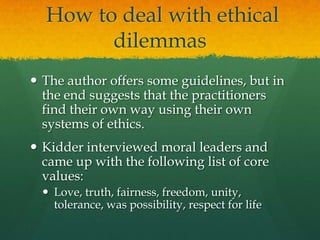
 How to deal with ethical dilemmasThe author offers some guidelines, but in the end suggests that the practitioners  find their own way using their own systems of ethics.Kidder interviewed moral leaders and came up with the following list of core values:Love, truth, fairness, freedom, unity, tolerance, was possibility, respect for life
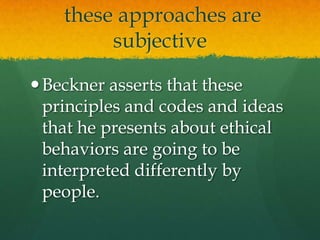
 these approaches are subjectiveBeckner asserts that these principles and codes and ideas that he presents about ethical behaviors are going to be interpreted differently by people.
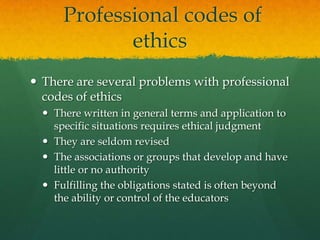
Professional codes of ethicsThere are several problems with professional codes of ethicsThere written in general terms and application to specific situations requires ethical judgmentThey are seldom revisedThe associations or groups that develop and have little or no authorityFulfilling the obligations stated is often beyond the ability or control of the educators
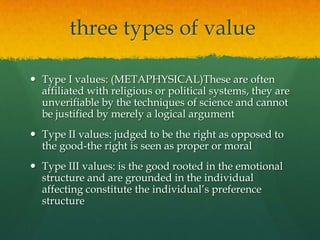
three types of valueType I values: (METAPHYSICAL)These are often affiliated with religious or political systems, they are unverifiable by the techniques of science and cannot be justified by merely a logical argumentType II values: judged to be the right as opposed to the good-the right is seen as proper or moralType III values: is the good rooted in the emotional structure and are grounded in the individual affecting constitute the individual’s preference structure
Summing upThe basic moral theories that we have discussed all fall under three basic headingsEnds-based thinkingRules-based thinkingAnd care-based thinkingThe bottom line appears to be that you have to figure it out for yourself

Ethics for Educational L

  • 1.
    Chapter 6 MakingEthical DecisionsJerry, Gamiesa, Chandra
  • 2.
    Distinguishing right andwrong from ethical dilemmasIt is important to be able to distinguish between right and wrong situations, and ethical dilemmas
  • 3.
    black andwhite issues Moral temptations Violation of lawthere is a differentiation between laws that are fair and laws that are unfair Departure from truth-lying
  • 4.
    moral dilemmasTheseare “right” versus “right” situationsTwo moral values come into conflict, this is distinguished from a clear black and white issue.
  • 5.
    Types ofdilemmasTruth versus loyaltyIndividual versus communityShort-term versus long-termJustice versus MercyResponsibilityRole conflicts
  • 6.
    Types ofdilemmasConflict of interestDefining “best interest”Dilemmas of policymakingPersonal moralityDemocracy and obligation
  • 7.
    Somepressures that create dilemmasCompetitive pressures relative to student achievement or test scoresDesire for approval of superiors and/or advancementFree-speech traditions (or lack thereof)Conflicting values in the workplace-personal values versus business values
  • 8.
    Education’s Objective isUnique“Educators must not lose sight of their long-term purposes of preparing students for life in the adult world of work and family and society.” (Page 94)Because of this the ethical environment within education is different than it would be in the business.
  • 9.
    How todeal with ethical dilemmasThe author offers some guidelines, but in the end suggests that the practitioners find their own way using their own systems of ethics.Kidder interviewed moral leaders and came up with the following list of core values:Love, truth, fairness, freedom, unity, tolerance, was possibility, respect for life
  • 10.
    these approachesare subjectiveBeckner asserts that these principles and codes and ideas that he presents about ethical behaviors are going to be interpreted differently by people.
  • 11.
    Professional codes ofethicsThere are several problems with professional codes of ethicsThere written in general terms and application to specific situations requires ethical judgmentThey are seldom revisedThe associations or groups that develop and have little or no authorityFulfilling the obligations stated is often beyond the ability or control of the educators
  • 12.
    three types ofvalueType I values: (METAPHYSICAL)These are often affiliated with religious or political systems, they are unverifiable by the techniques of science and cannot be justified by merely a logical argumentType II values: judged to be the right as opposed to the good-the right is seen as proper or moralType III values: is the good rooted in the emotional structure and are grounded in the individual affecting constitute the individual’s preference structure
  • 13.
    Summing upThe basicmoral theories that we have discussed all fall under three basic headingsEnds-based thinkingRules-based thinkingAnd care-based thinkingThe bottom line appears to be that you have to figure it out for yourself