 Morality is the differentiation of
intentions,decisions and actions between
those that are distinguised as proper and
those that are improper.In other words,it is the
disjunction between right and wrong.
 Morality can be a body of standards or
principles derived from a code of conduct from
a particular philosphy ,religion or culture ,or it
can derive from a standard of that a person
belives should be universal. Morality can also
be called to be synonymous with “rightness” or
“goodness”.
Moral Standards
 Moral standards deal with general rules
about what kind of behavior is
considered right or wrong,good or
bad.They point to human qualities
relating to how people live together in
harmony and outline values that will
provide benefit or harm to the larger
groups rather than an individual.
Non Moral Standards
 Non moral standards govern individual
life,aspirations and desires and may
decide a persons’s place in his
group.Some non moral standards of any
society could be table manners,general
etiquette, grammer and language
expectations,socially accepted
measures of aesthetics,rules of
games,clothing,etc.
Distinguishing Moral and
Non-Moral Standards
 It deals with things which can seriously
harm or benefit others.
 It is not changed or modified by state or
social authorities
 It is preferred to other values and is
valued over self –interest
 Is it impartial?
 It leads to internal notions of guilt
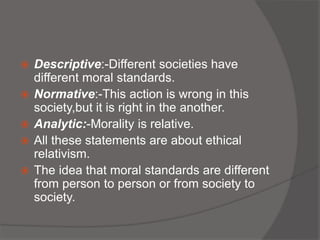
 Descriptive:-Different societies have
different moral standards.
 Normative:-This action is wrong in this
society,but it is right in the another.
 Analytic:-Morality is relative.
 All these statements are about ethical
relativism.
 The idea that moral standards are different
from person to person or from society to
society.
 In descriptive ethics,it is simply observed
that different societies have different
standards-this is true and factual statement
which offers no judgements or conclusions.
 In normative ethics,a conclusion is drawn
from the above ,namely that the very
nature of morality is that is relative.This
position argues that there are no moral
standards independent of our social
groups.and hence whatever social group
decides is right is right and whatever
decides is wrong is wrong.

Morality

  • 2.
     Morality isthe differentiation of intentions,decisions and actions between those that are distinguised as proper and those that are improper.In other words,it is the disjunction between right and wrong.  Morality can be a body of standards or principles derived from a code of conduct from a particular philosphy ,religion or culture ,or it can derive from a standard of that a person belives should be universal. Morality can also be called to be synonymous with “rightness” or “goodness”.
  • 3.
    Moral Standards  Moralstandards deal with general rules about what kind of behavior is considered right or wrong,good or bad.They point to human qualities relating to how people live together in harmony and outline values that will provide benefit or harm to the larger groups rather than an individual.
  • 4.
    Non Moral Standards Non moral standards govern individual life,aspirations and desires and may decide a persons’s place in his group.Some non moral standards of any society could be table manners,general etiquette, grammer and language expectations,socially accepted measures of aesthetics,rules of games,clothing,etc.
  • 5.
    Distinguishing Moral and Non-MoralStandards  It deals with things which can seriously harm or benefit others.  It is not changed or modified by state or social authorities  It is preferred to other values and is valued over self –interest  Is it impartial?  It leads to internal notions of guilt
  • 6.
     Descriptive:-Different societieshave different moral standards.  Normative:-This action is wrong in this society,but it is right in the another.  Analytic:-Morality is relative.  All these statements are about ethical relativism.  The idea that moral standards are different from person to person or from society to society.
  • 7.
     In descriptiveethics,it is simply observed that different societies have different standards-this is true and factual statement which offers no judgements or conclusions.  In normative ethics,a conclusion is drawn from the above ,namely that the very nature of morality is that is relative.This position argues that there are no moral standards independent of our social groups.and hence whatever social group decides is right is right and whatever decides is wrong is wrong.