ESSAY
WRITING
HOW TO PLAN AND WRITE YOUR
ESSAY
Types of essay –
discursive and persuasive
   Discursive - systematically presents arguments in favour
    of both sides through specific examples, reasons, and
    justifications. After finishing this type of discursive
    essay, the informed reader should be able to reach a
    concrete conclusion given available information.
   Persuasive - to persuade readers and often deals with a
    contentious topic or one over which there are conflicting
    opinions.
   Current affairs issues are a rich source of persuasive
    essay topics - whether the monarchy is an outdated
    institution and same-sex marriage etc.
Essays are important
because…
 It deepens your learning of the
  subject you are studying
 You learn to use ideas to argue a
  case
 It enables you to enter into a dialogue
  with your tutors
 You can extend and refine your

  thinking and your writing skills
PLAN YOUR ESSAY
 Introduction – what the topic is and what
  it involves. Signpost what you will be
  looking at in the essay.
 3 paragraphs which deal with points in
  favour of the issue.
 3 paragraphs which deal with points
  against the issue.
 A conclusion in which you reflect upon
  the issue and detail your own point of
  view.
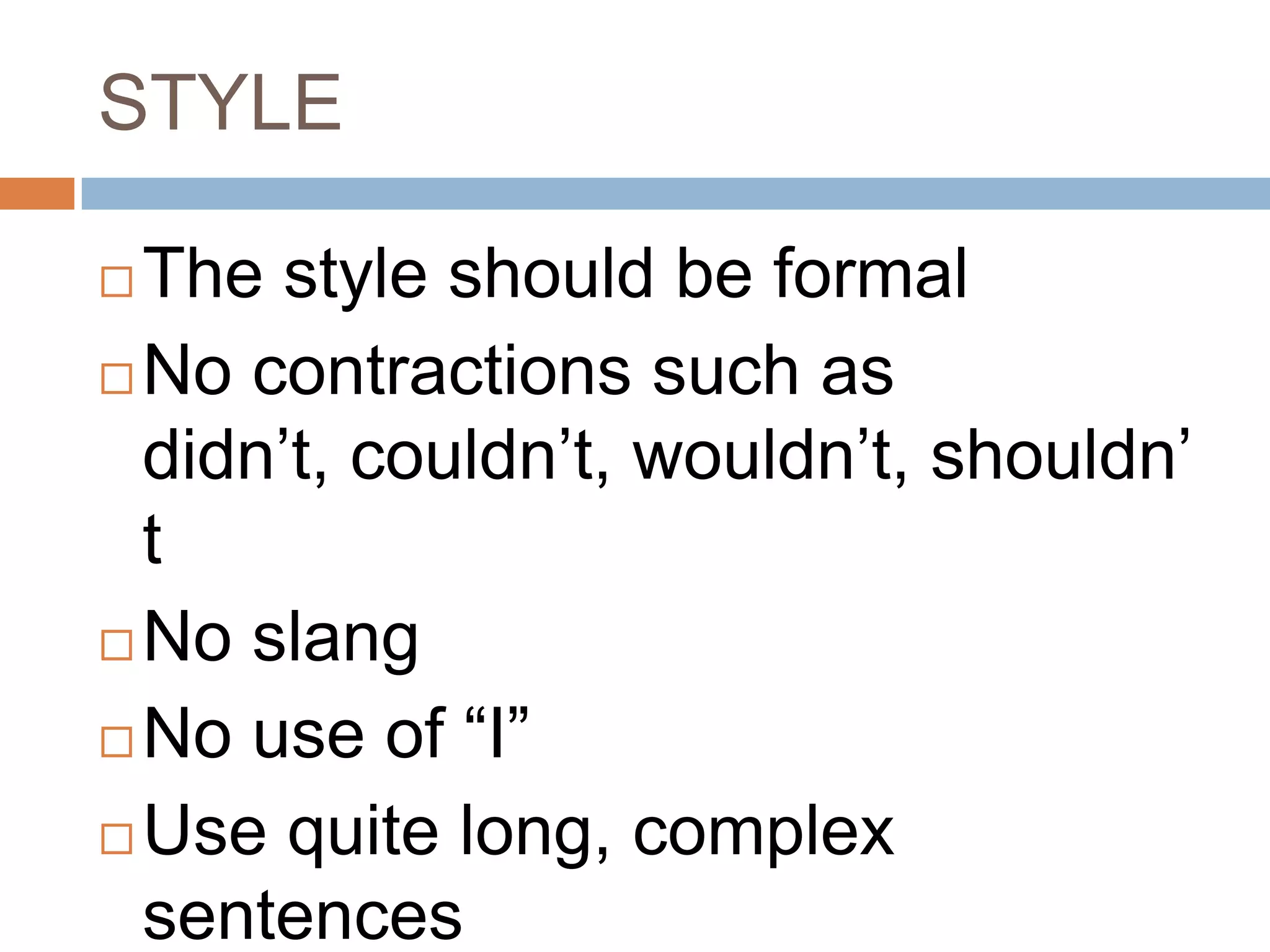
STYLE

 The style should be formal
 No contractions such as
  didn‟t, couldn‟t, wouldn‟t, shouldn‟
  t
 No slang

 No use of “I”

 Use quite long, complex
  sentences
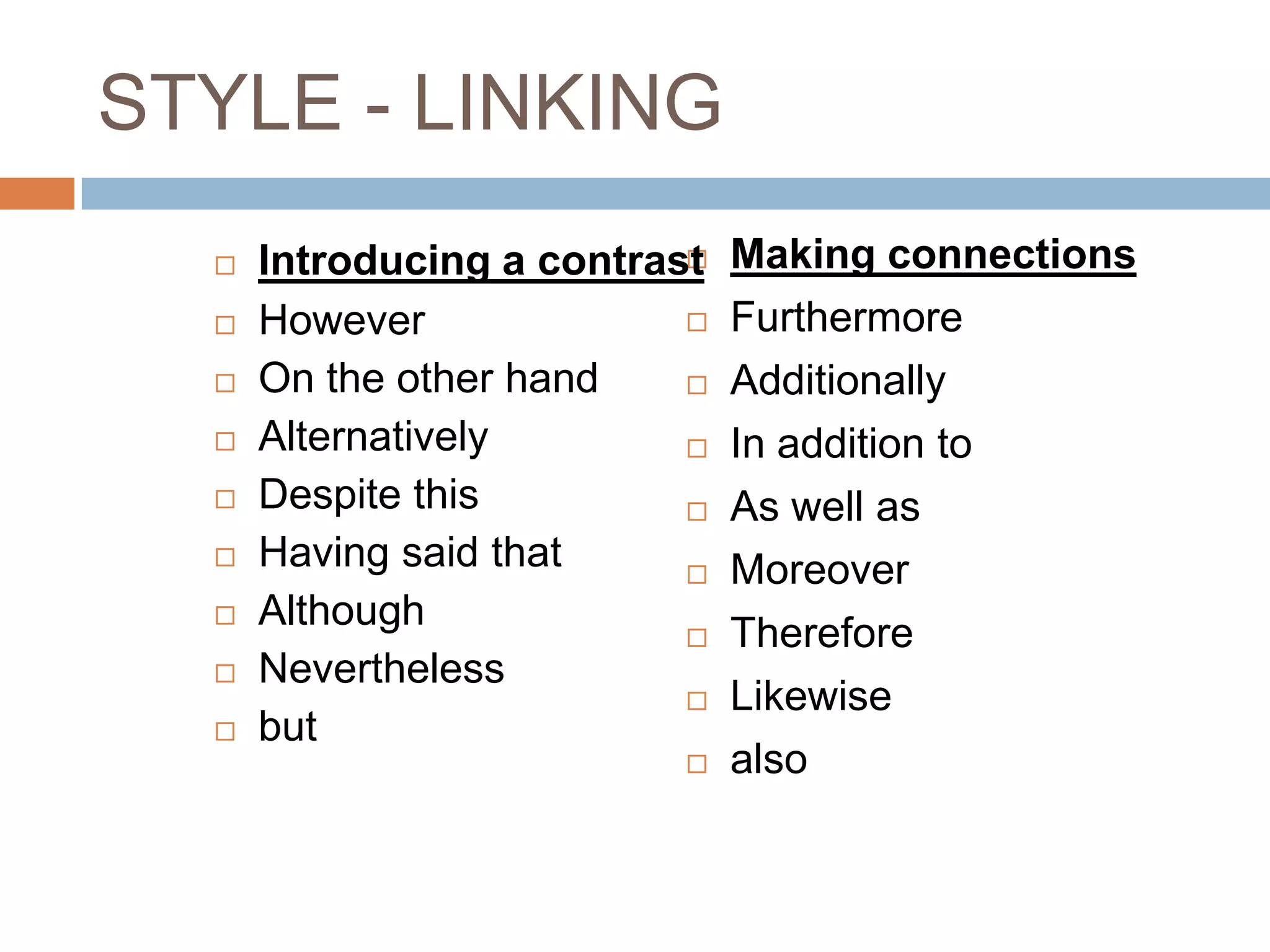
STYLE - LINKING
     Introducing a contrast
                              Making connections
     However                 Furthermore
     On the other hand       Additionally
     Alternatively           In addition to
     Despite this            As well as
     Having said that        Moreover
     Although
                              Therefore
     Nevertheless
                              Likewise
     but
                              also
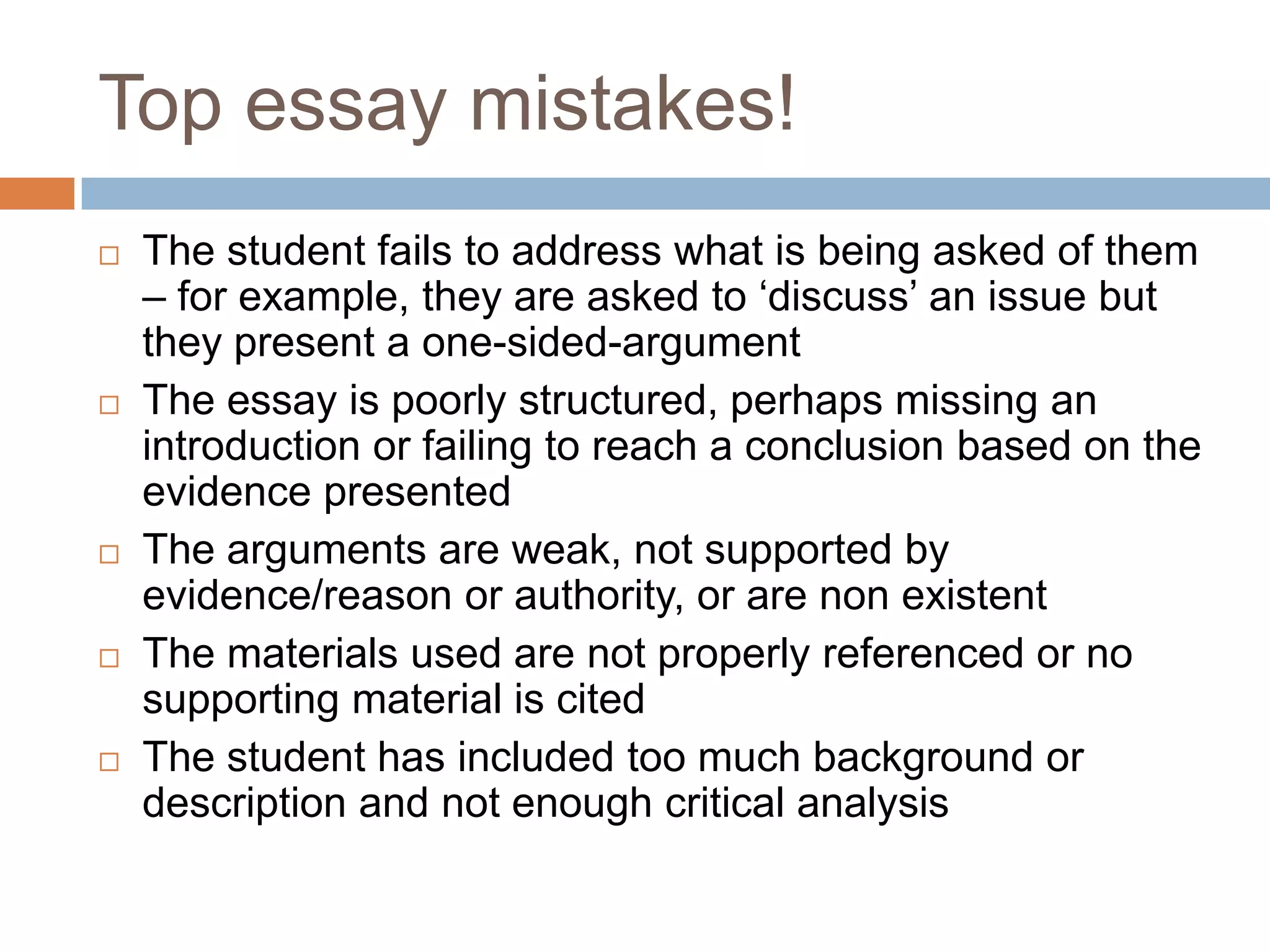
Top essay mistakes!
   The student fails to address what is being asked of them
    – for example, they are asked to „discuss‟ an issue but
    they present a one-sided-argument
   The essay is poorly structured, perhaps missing an
    introduction or failing to reach a conclusion based on the
    evidence presented
   The arguments are weak, not supported by
    evidence/reason or authority, or are non existent
   The materials used are not properly referenced or no
    supporting material is cited
   The student has included too much background or
    description and not enough critical analysis
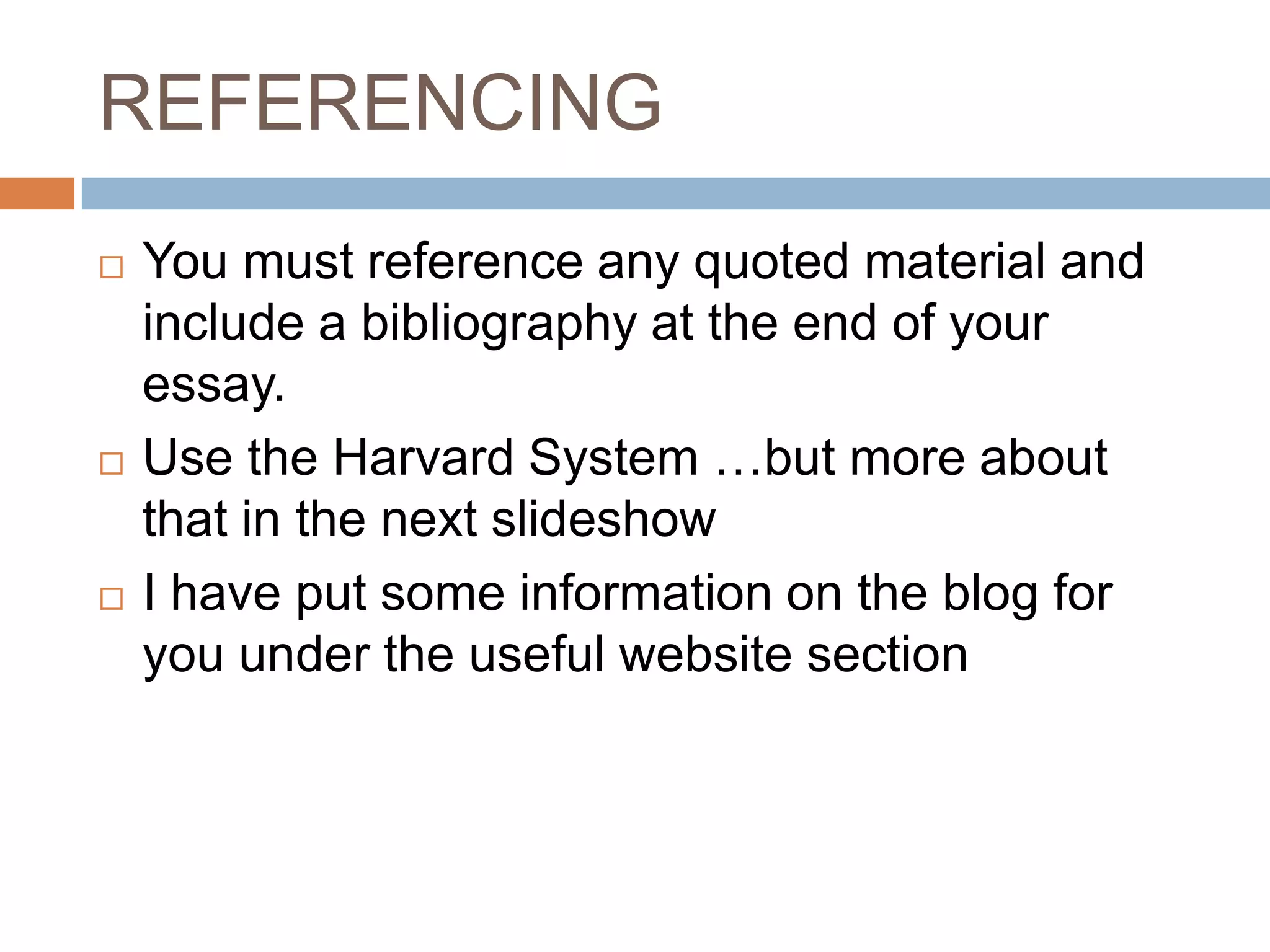
REFERENCING
   You must reference any quoted material and
    include a bibliography at the end of your
    essay.
   Use the Harvard System …but more about
    that in the next slideshow
   I have put some information on the blog for
    you under the useful website section

Essay writing

  • 1.
    ESSAY WRITING HOW TO PLANAND WRITE YOUR ESSAY
  • 2.
    Types of essay– discursive and persuasive  Discursive - systematically presents arguments in favour of both sides through specific examples, reasons, and justifications. After finishing this type of discursive essay, the informed reader should be able to reach a concrete conclusion given available information.  Persuasive - to persuade readers and often deals with a contentious topic or one over which there are conflicting opinions.  Current affairs issues are a rich source of persuasive essay topics - whether the monarchy is an outdated institution and same-sex marriage etc.
  • 3.
    Essays are important because… It deepens your learning of the subject you are studying  You learn to use ideas to argue a case  It enables you to enter into a dialogue with your tutors  You can extend and refine your thinking and your writing skills
  • 4.
    PLAN YOUR ESSAY Introduction – what the topic is and what it involves. Signpost what you will be looking at in the essay.  3 paragraphs which deal with points in favour of the issue.  3 paragraphs which deal with points against the issue.  A conclusion in which you reflect upon the issue and detail your own point of view.
  • 5.
    STYLE  The styleshould be formal  No contractions such as didn‟t, couldn‟t, wouldn‟t, shouldn‟ t  No slang  No use of “I”  Use quite long, complex sentences
  • 6.
    STYLE - LINKING  Introducing a contrast  Making connections  However  Furthermore  On the other hand  Additionally  Alternatively  In addition to  Despite this  As well as  Having said that  Moreover  Although  Therefore  Nevertheless  Likewise  but  also
  • 7.
    Top essay mistakes!  The student fails to address what is being asked of them – for example, they are asked to „discuss‟ an issue but they present a one-sided-argument  The essay is poorly structured, perhaps missing an introduction or failing to reach a conclusion based on the evidence presented  The arguments are weak, not supported by evidence/reason or authority, or are non existent  The materials used are not properly referenced or no supporting material is cited  The student has included too much background or description and not enough critical analysis
  • 8.
    REFERENCING  You must reference any quoted material and include a bibliography at the end of your essay.  Use the Harvard System …but more about that in the next slideshow  I have put some information on the blog for you under the useful website section